
Normální zobrazení

Received before yesterday

If Xbox is 'recommitting' to its console, what does that mean for its recent 'everything is an Xbox' strategy?

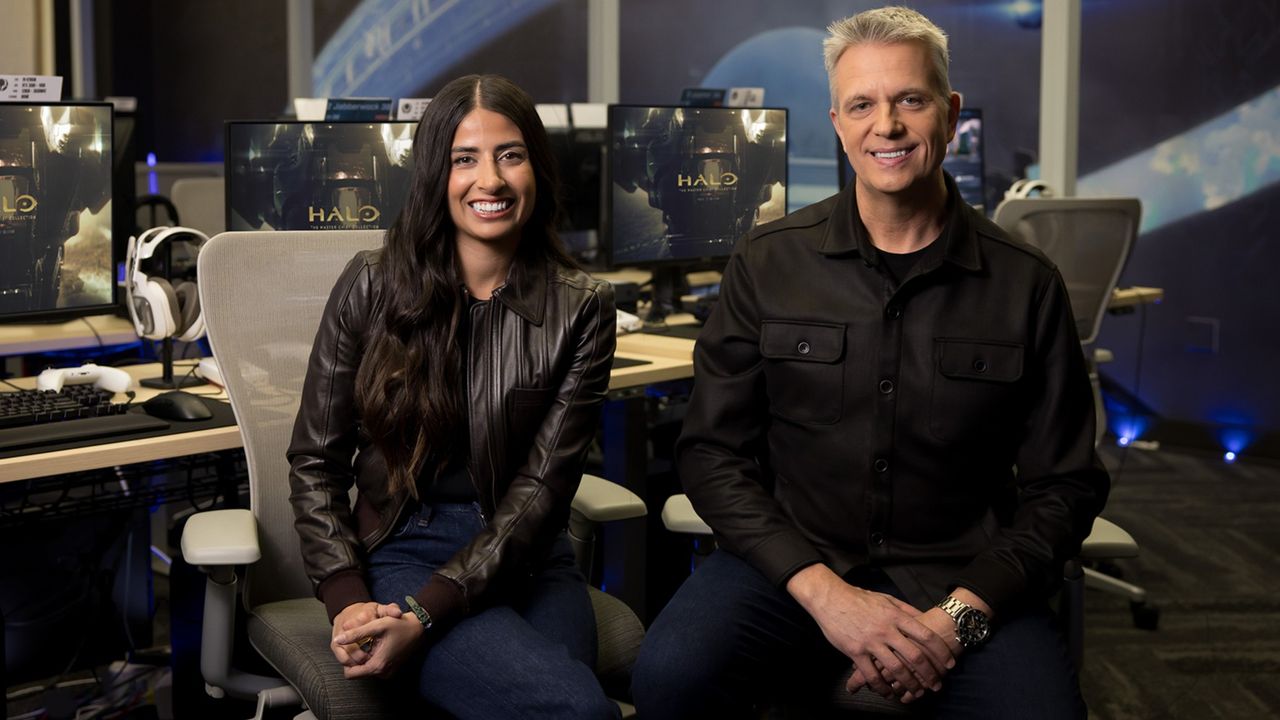
After struggling to compete with the PlayStation and Nintendo Switch, Microsoft's gaming division has spent the last few years trying to remake the Xbox brand into a software label first and foremost: it started with Steam releases and cloud streaming, continued with the painful "This is an Xbox" ad campaign, and culminated in phrases like "We're able to honor the Halo legacy on PlayStation" which could only be read as admissions of defeat. Now with the abrupt retirement of longtime boss Phil Spencer, incoming Microsoft Gaming CEO Asha Sharma has said that the company "will celebrate our roots with a renewed commitment to Xbox starting with console."

What, exactly, does that mean for the last few years of Microsoft's gaming strategy?

Maybe it means precisely nothing. It's the sort of reassuring but nonspecific language we expect from executives who want to soothe fan (and more importantly, investor) worries that shit's about to get cray cray. And Xbox leadership has repeatedly stated it will continue making consoles, though we have to imagine that the RAMpocalypse has made some plans that seemed on solid ground just a few months ago now much less certain.

The full text of Sharma's introductory message to her team, made public on Microsoft's blog, follows the carefully polished C-suite playbook of implying a bold sense of direction while committing to nothing in particular. In Sharma's words, Microsoft Gaming will:

  • "Recommit to our core Xbox fans and players" while also "enter[ing] new categories and markets where we can add real value"
  • Move with "urgency because gaming is in a period of rapid change," but also "not chase short-term efficiency or flood our ecosystem with soulless AI slop"
  • "Celebrate our roots with a renewed commitment to Xbox starting with console" yet simultaneously "expand across PC, mobile and cloud … [and] break down barriers so developers can build once and reach players everywhere without compromise"
  • "Return to the renegade spirit that built Xbox in the first place," while Microsoft is worth some $3 trillion.

It seems very unlikely that the gaming division of a company so devoted to AI and cloud computing will pull back from putting its software on as many devices as possible to "recommit" to selling games on a single console. It seems just as unlikely that it would stop selling its PC games on Steam, when years of work on the Xbox app have yet to result in an interface that anyone particularly likes.

Perhaps there's a hint here that Microsoft is ready to jettison its all-in-on-Game-Pass strategy, now that it's abundantly clear the service will never pull in the tens of millions of anticipated subscribers and that it might have even cannibalized sales of the games Microsoft spent billions of dollars to acquire.

I mean, really, what else could Sharma's statement "We are witnessing the reinvention of play" possibly mean?

Okay, it could mean literally anything.

But if I may pick out one single phrase that I think I can accurately translate from CEO speak into human language, it's this line, from near the letter's end:

"We will invent new business models and new ways to play by leaning into what we already have: iconic teams, characters, and worlds that people love. But we will not treat those worlds as static IP to milk and monetize. We will build a shared platform and tools that empower developers and players to create and share their own stories."

Emphasis above is mine, and here's what it means:

The kids love Roblox, and they make all the games themselves! How do we get a piece of THAT?

2026 games: All the upcoming games
Best PC games: Our all-time favorites
Free PC games: Freebie fest
Best FPS games: Finest gunplay
Best RPGs: Grand adventures
Best co-op games: Better together
The RAM crisis is just getting started: Micron makes the 'difficult decision' to abandon the consumer memory business to focus on supplying AI data centers

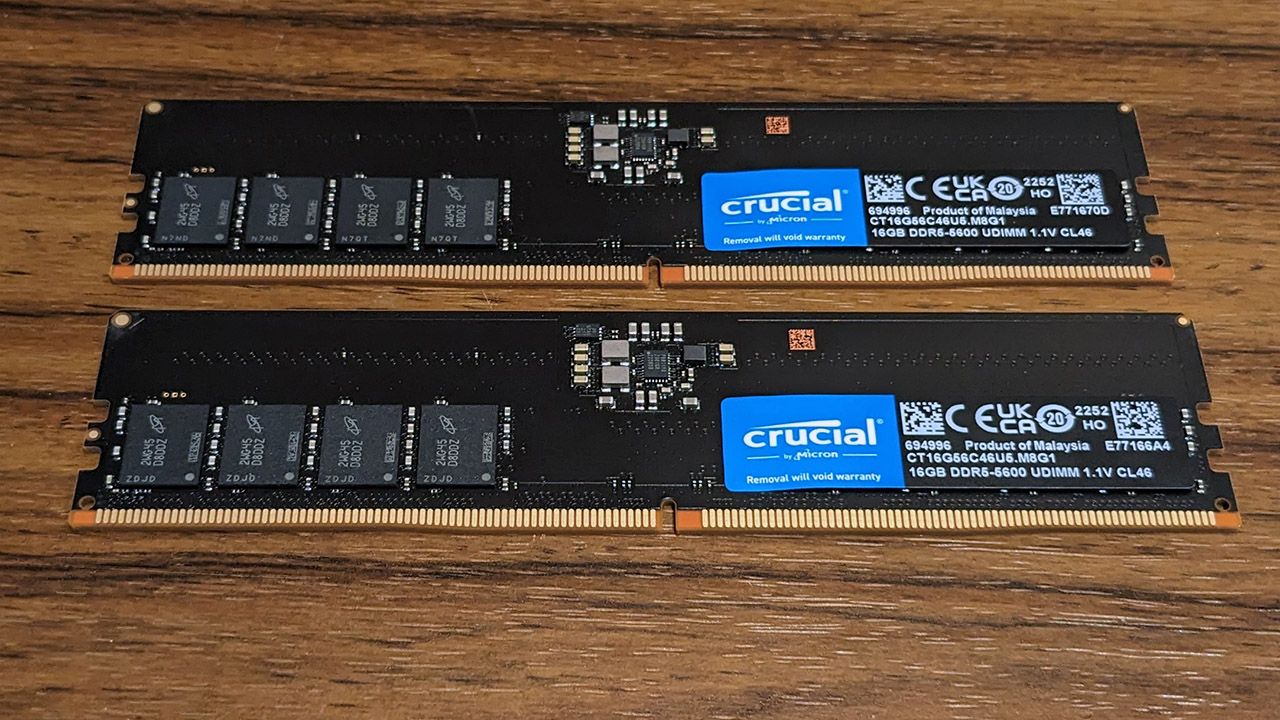
Citing a "surge in demand for memory and storage" driven by AI data centers, Micron announced on Wednesday that it's made the "difficult decision to exit the Crucial consumer business in order to improve suply and support for [its] larger, strategic customers in faster-growing segments."

In other words: sorry, PC gamers, but you're no longer worth selling RAM to. The server farm next door has way more cash to burn.

Just yesterday we were reporting that high memory prices may well continue into 2028, as Samsung and SK Hynix, who produce roughly 70% of the DRAM currently on the market, are focusing on supplying the enterprise business without dramatically increasing their production capacity. In that same story we reported that Micron, the other big player in memory, is planning to ramp up production that won't be online until late 2028.

But now it sounds like those new assembly lines won't be sending any RAM our way even when they're online.

You may know the Crucial brand name better than Micron, despite the tech company being established in the United States way back in 1978. Crucial is Micron's consumer-focused brand and has been used on RAM, SSDs, even SD cards for years and years. A quick look at the Crucial website reveals just how much RAM it still sells to everyday computer users. That will end in February 2026, Micron said today.

"This decision reflects Micron's commitment to its ongoing portfolio transformation and the resulting alignment of its business to secular, profitable growth vectors in memory and storage," the company said in a press release. "By concentrating on core enterprise and commercial segments, Micron aims to improve long-term business performance and create value for strategic customers as well as stakeholders."

Presumably this means Micron will also cease selling Crucial-branded NVMe and SATA SSDs, which have so far not been as affected as RAM by the increase in memory prices but are certainly also on the rise.

How bad will this be for the ongoing memory supply crisis? Well, that's about 25% of the world's DRAM production capacity now fully devoted to enterprise, and Crucial also makes our favorite budget SSD. So I would say: Not good for us!

Good for Micron's shareholders, though. The stock has gained 180% in value this year on the strength of its HBM (high bandwidth memory) business used to supply GPUs and other tech in high demand due to, you guessed it, AI.

My new favorite deep Windows lore: Microsoft once broke its Bluetooth driver code by sticking a ® symbol in the name of its own mouse

There's something I find deeply funny about the use of copyright and trademark symbols in games. I get why these symbols are important in legal contexts, but, like, was it actually vital to display ® or ™ next to every character's name in the Dragon Ball Z Budokai 3 fighting game on the PlayStation® 2? Everybody knows you own Goku, dawg. They can't steal him just because you didn't slap down that icon somewhere.

But I suppose corporate legal departments often get their way, even when the end result looks silly or causes actual headaches. I recently learned about a perfect example of the latter by reading about Windows Bluetooth drivers, and I swear to god it's both more interesting and funnier than you're expecting any story about Windows Bluetooth drivers could possibly be.

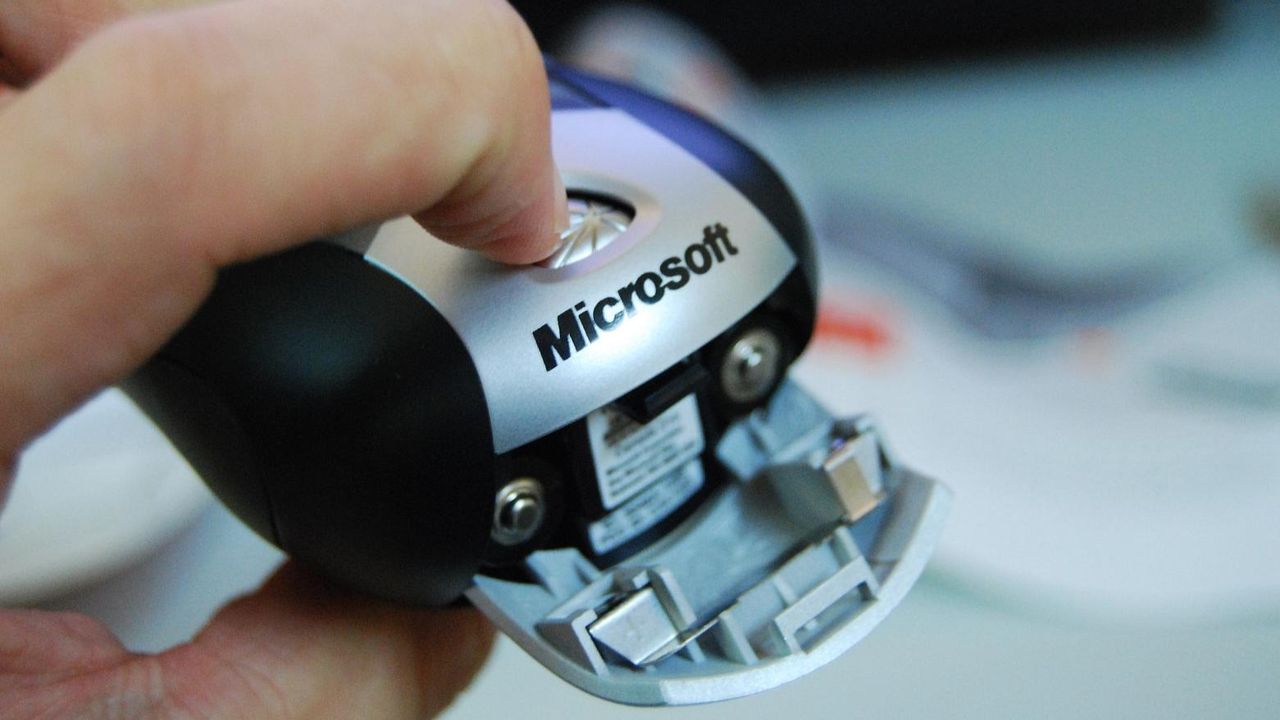
Back in 2006, Microsoft released a seemingly innocuous device called the Microsoft Wireless Notebook Presenter Mouse 8000. This was only about four years after the company's first-ever Bluetooth mouse; the technology was still pretty new at the time and wouldn't become the go-to for wireless office mice for another decade. The Presenter Mouse wasn't focused on accuracy or polling rate like a gaming mouse; its gimmick was that it had a bunch of buttons on the bottom for going forward and backwards in a PowerPoint presentation, changing volume, etc. It was for presentations. Like I said, innocuous.

Seemingly.

Turns out the Microsoft Wireless Notebook Presenter Mouse 8000 is also infamous, at least among programmers who regularly go digging through the bowels of Windows driver code. Because deep inside Windows' Bluetooth drivers you can actually find the name of the mouse, written out in plain English. This is highly unusual.

"Does the Microsoft Wireless Notebook Presenter Mouse 8000 receive favorable treatment from the Microsoft Bluetooth drivers? Is this some sort of collusion? No, it’s not that," veteran Microsoft developer Raymond Chen recently wrote on his insider blog The Old New Thing.

As Chen explained, there are loads of sketchy devices out there that don't behave how they're supposed to when you plug them in. Maybe they don't properly follow the rules of the USB protocol. Maybe someone made a tiny typo that slipped through the cracks. Maybe they thought they were following the rules because the version of Windows they tested on wasn't actually validating some security requirement, but a later update tightened up its standards.

Occasionally these sorts of mistakes can cause a computer to crash outright. But usually funky hardware just requires the Windows driver code to include some kind of small workaround to parse what they were supposed to do. Far, far more unusual is a device failing at the very first step: literally getting its own name right.

"Most of the time, the code to compensate for these types of errors doesn’t betray its presence in the form of hard-coded strings. Instead, you have 'else' branches that secretly repair or ignore corrupted values," Chen wrote. "Unfortunately, the type of mistake that the Microsoft Wireless Notebook Presenter Mouse 8000 made is one that is easily exposed via strings, because they messed up their string!"

Okay, what does all that mean exactly? Hard-coding (embedding some specific data right in the source code) is generally a programming no-no, so if the Windows team had to hard code something in the Bluetooth driver, it must've been really screwed up.

Every hardware device has a "local name" in its code that identifies it. This name is meant to be encoded with the UTF-8 standard, by far the most common encoding standard for digital text. This article and pretty much the whole internet follow it today. But you know what didn't follow it? The Microsoft Wireless Notebook Presenter Mouse 8000.

Here's how Chen explained the problem:

"The Microsoft Wireless Notebook Presenter Mouse 8000 reports its name as Microsoft⟪AE⟫ Wireless Notebook Presenter Mouse 8000, encoding the registered trademark symbol ® not as UTF-8 as required by the specification but in code page 1252. What’s even worse is that a bare ⟪AE⟫ is not a legal UTF-8 sequence, so the string wouldn’t even show up as corrupted; it would get rejected as invalid."

Windows 3.1

(Image credit: Microsoft)

Code page 1252, aka Windows-1252, was the dominant encoding standard for Windows devices from the '80s to the late '90s. If you remember ever opening a document created in Windows on a Mac and seeing a bunch of question marks, that's because Windows-1252 included characters that couldn't be rendered by other operating systems. Thankfully with the ubiquity of UTF-8 those sorts of annoyances are rare these days.

But back when the Wireless Notebook Presenter Mouse 8000 was designed, someone at Microsoft was apparently still stubbornly (or accidentally) using the old encoding format. Or maybe the mouse was actually the victim of a lazy copy/paste gone horribly wrong.

"Thanks, Legal Department, for sticking a ® in the descriptor and messing up the whole thing," Chen wrote. "There is a special table inside the Bluetooth drivers of 'Devices that report their names wrong (and the correct name to use).' If the Bluetooth stack sees one of these devices, and it presents the wrong name, then the correct name is substituted.

"That table currently has only one entry."

❌