Zobrazení pro čtení

AMD leaves the door open to an official 'beta' version of its latest AI-enhanced FSR upscaling tech for older RDNA 3 GPUs

Call them FSR 4, FSR Redstone, FSR Whatever, AMD's latest generation of AI-enhanced upscaling technologies are definitely a major step forward. Which makes it a great pity that they're not available for older generations of AMD GPUs, like RDNA 3. The just possibly good news is that, in a new interview, AMD has left the door ever so slightly ajar for that happening in future.

For many, the frustration is that many of these new upscaling features can be made to run on RDNA 3 graphics and indeed, community-based hacks have achieved just that, albeit with mixed results. So why won't AMD give that effort some official support?

Speaking with PC World, Andrej Zdravkovic, Senior Vice President at AMD and the guy responsible for various driver features, including FSR upscaling technologies, explained that the lack of official support for the latest FSR tech on RDNA 3 basically comes down to the difficulty in delivering a consistent experience.

But when asked if there could be "an opportunity to make a beta version of Redstone that will run on RDNA 3," his answer is at least a little promising.

"That's currently not in the plan, but thanks for the hint. We may want to think about something like that and provide that to people who want to play with that. The challenge is always how to clearly define that," Zdravkovic says.

Without being overly optimistic, that's definitely not a "no."
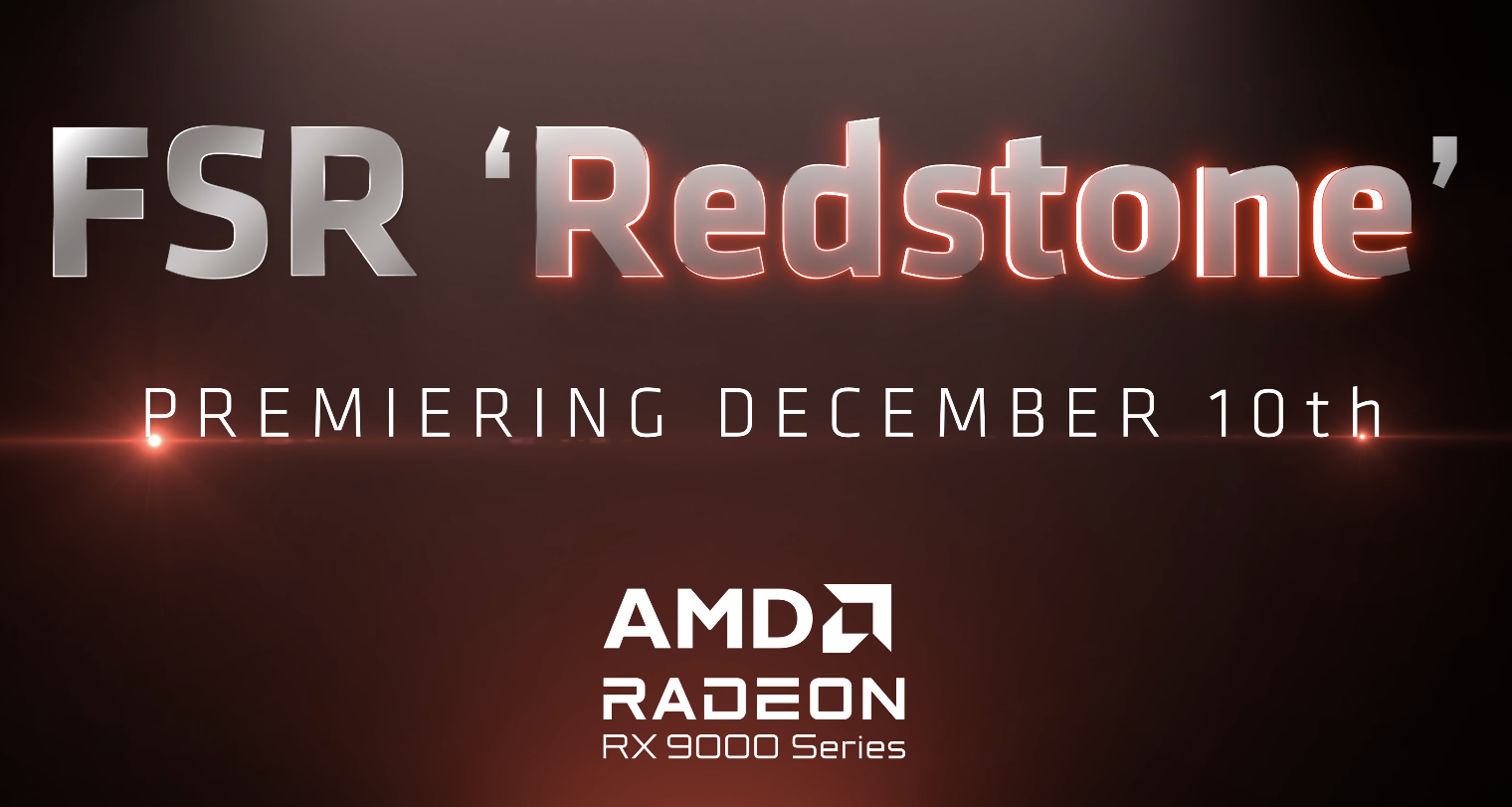
AMD Redstone

You FSR 4, I say Redstone, let's call the whole thing upscaling! (Image credit: AMD)

Of course, there are good technical reasons why it's tricky to get the new features running on older GPUs. There are hardware differences between RDNA 3 GPUs, like the Radeon RX 7800 XT and newer RDNA 4 graphics cards, including the RX 9070 XT when it comes to machine learning acceleration. This means it's simply not possible to achieve the same performance on the older GPU generation. The code can be made to run, just not as well.

At what point "not as well" becomes bad enough that the feature becomes worthless is a subjective call, of course. So, the point being made here is that maybe it would be nice to allow end users to make that call.

AMD's concern is no doubt a combination of not wanting to deal with support issues thrown up by a half-baked and poorly performing set of features and, likewise, concerns over the impression it will give of overall product quality.

Of course, what would be really interesting is if AMD could add a little of its technical nous to supporting newer upscaling tech on older GPUs and get it all running a bit better than the community efforts have managed thus far.

For now, AMD isn't committing to anything like that or, indeed, committing to anything at all. So all I can say is, here's hoping!
  •  

Nvidia reveals DLSS 4.5 with anti-aliasing upgrades and a dynamic, if slightly mad, 6x frame gen mode

CES 2026 is underway in Las Vegas, and while Nvidia have passed on the opportunity to announce any new RTX 50 Super graphics cards – perhaps in the knowledge that they’d be hurled directly into the raging vortex of an ongoing component pricing snafu – the tech show has yielded some interesting GeForce news. Namely, there’s a new version of Nvidia DLSS, 4.5, launching today, that promises to sharpen up and boost performance on any RTX GPU.

Read more

  •  

The $4,000 limited edition Asus ROG Matrix RTX 5090, rated to 800 W, is officially out and oh it's sold out already never mind

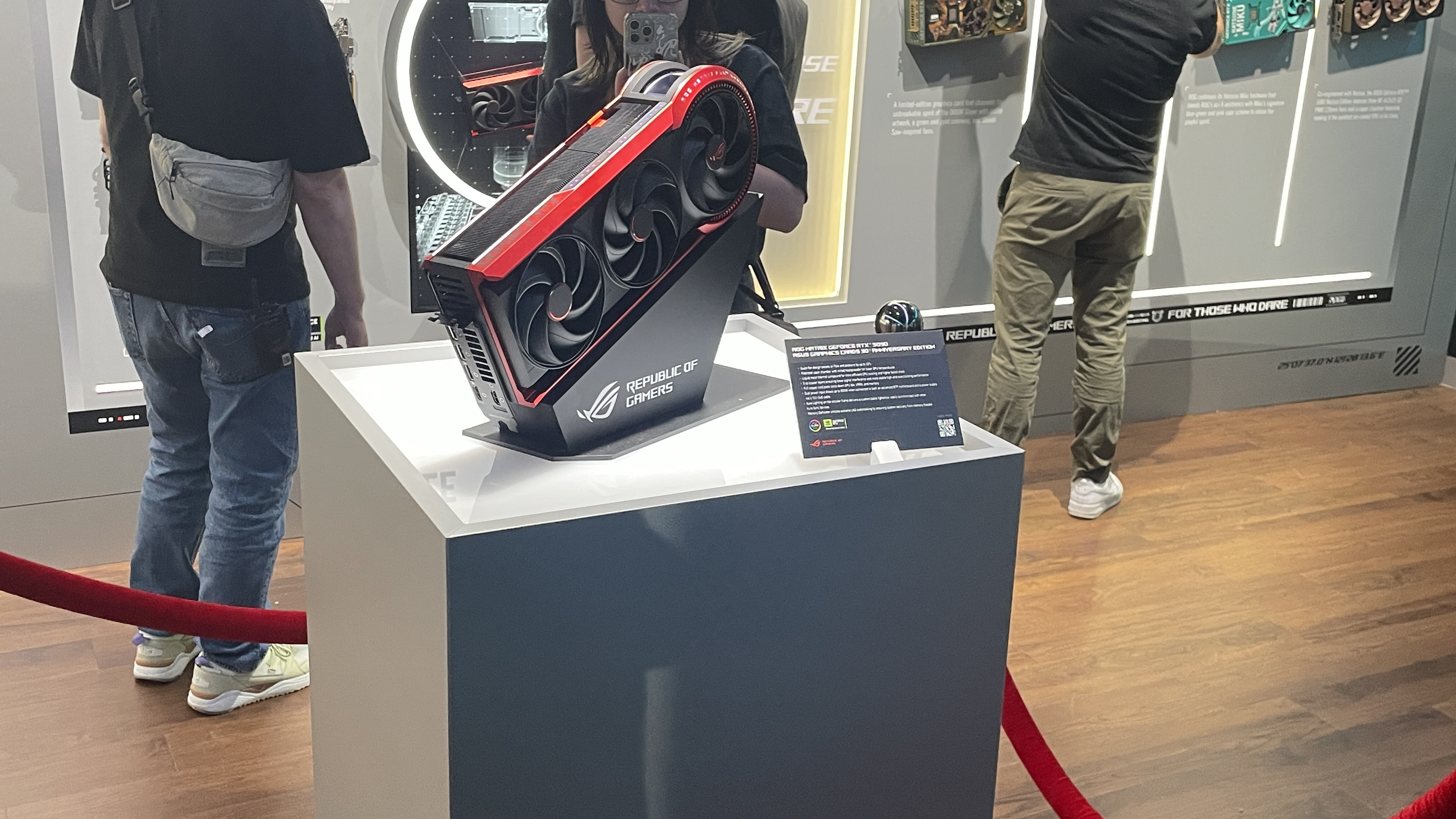
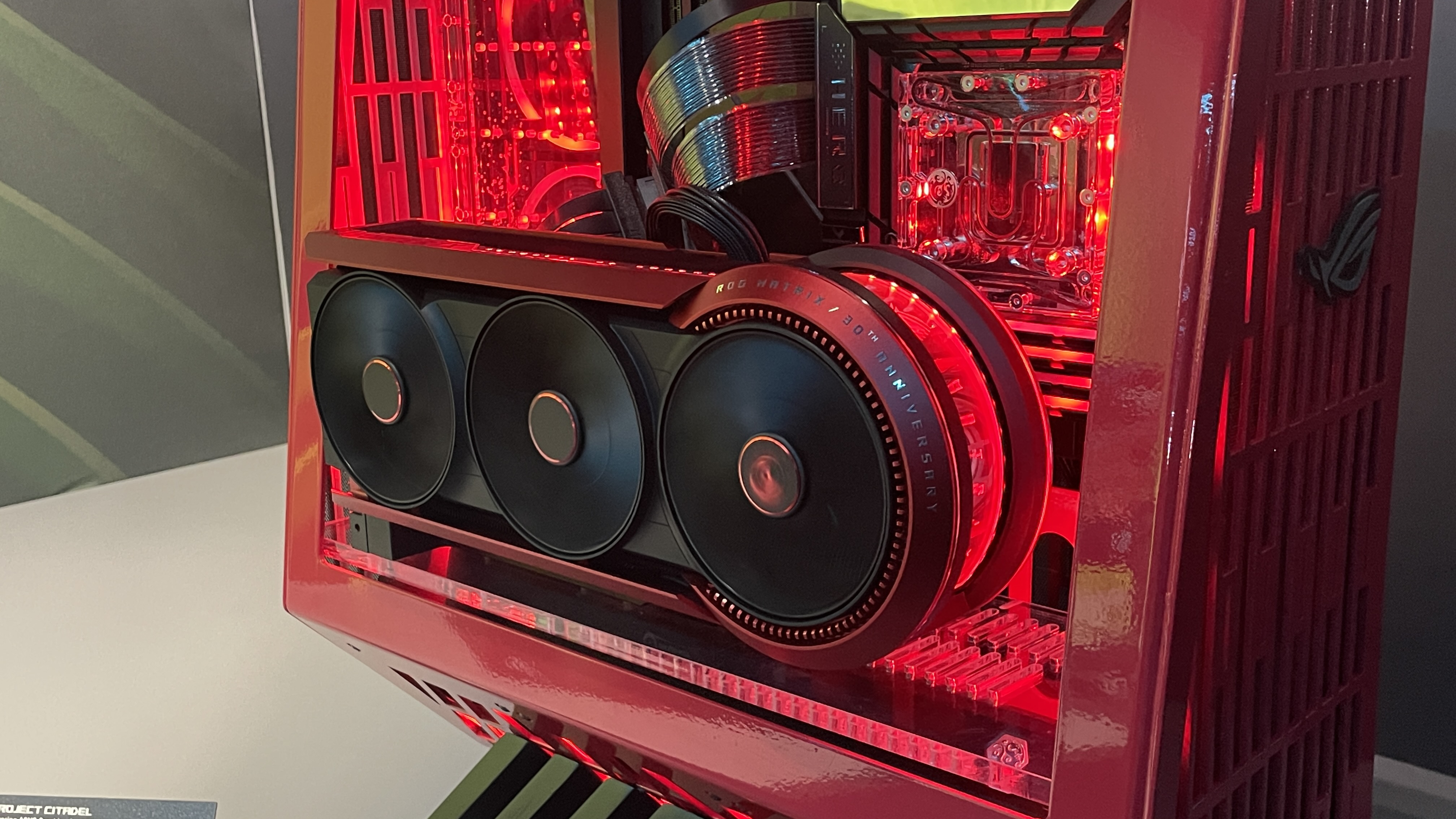
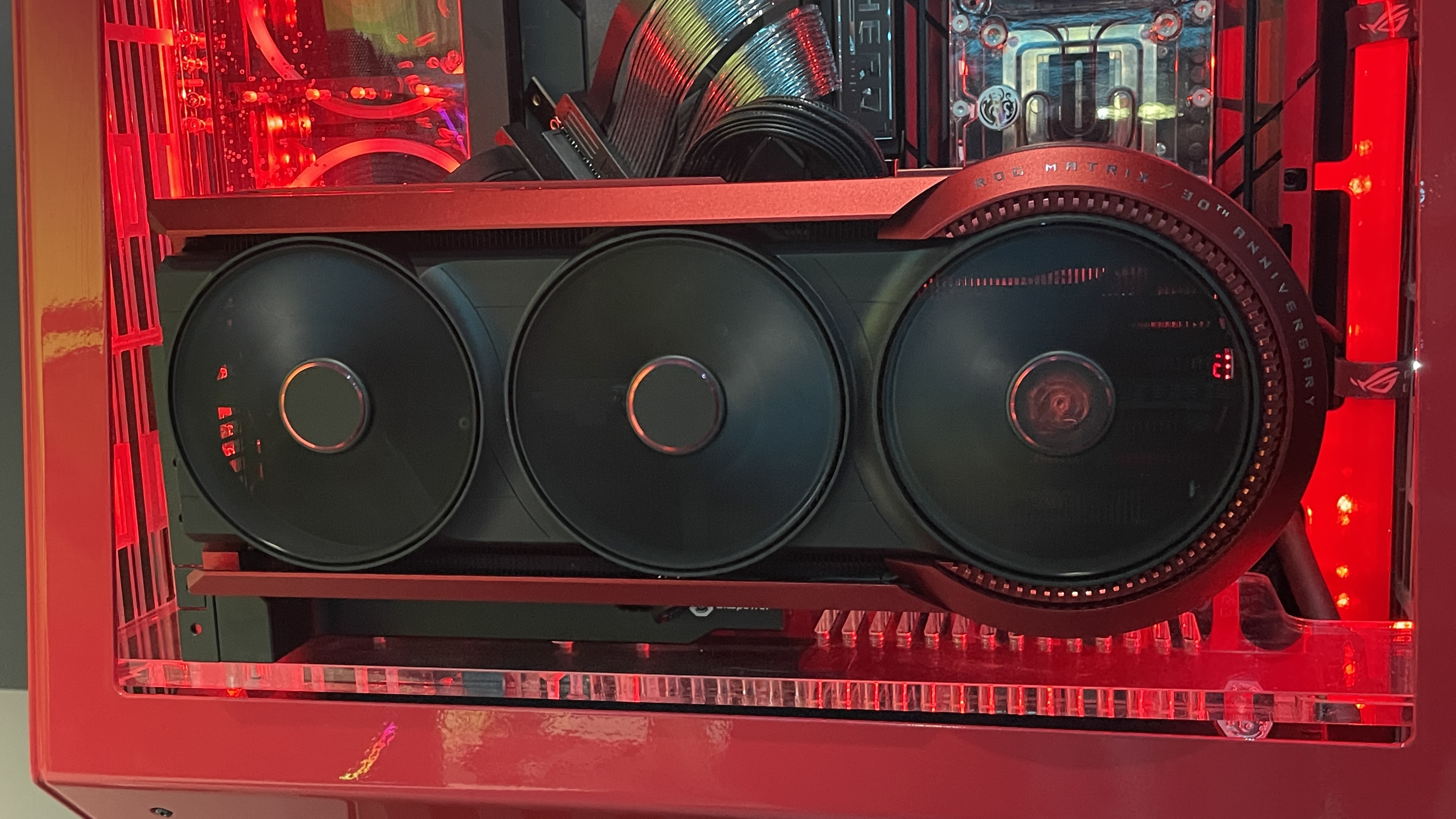
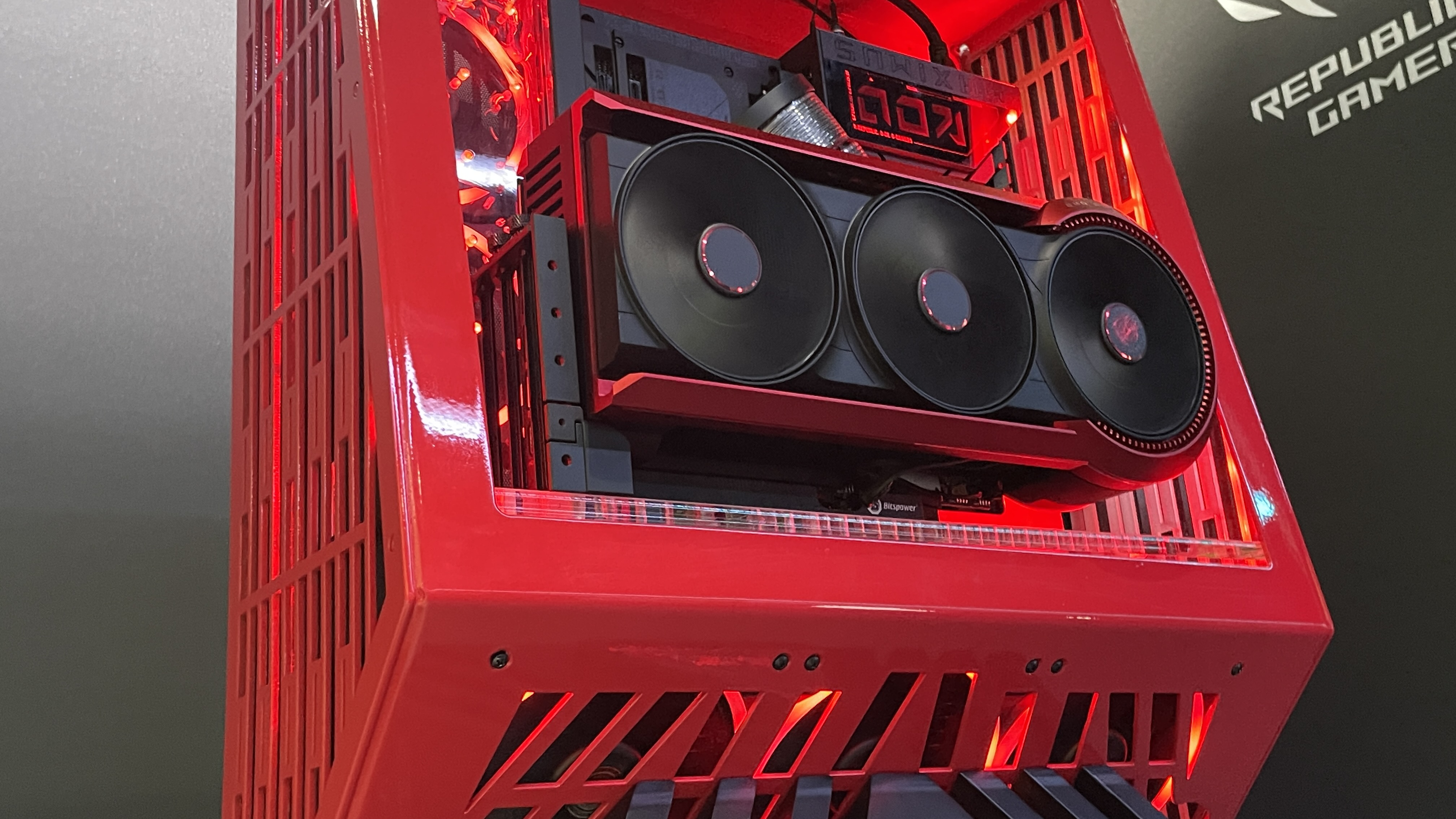
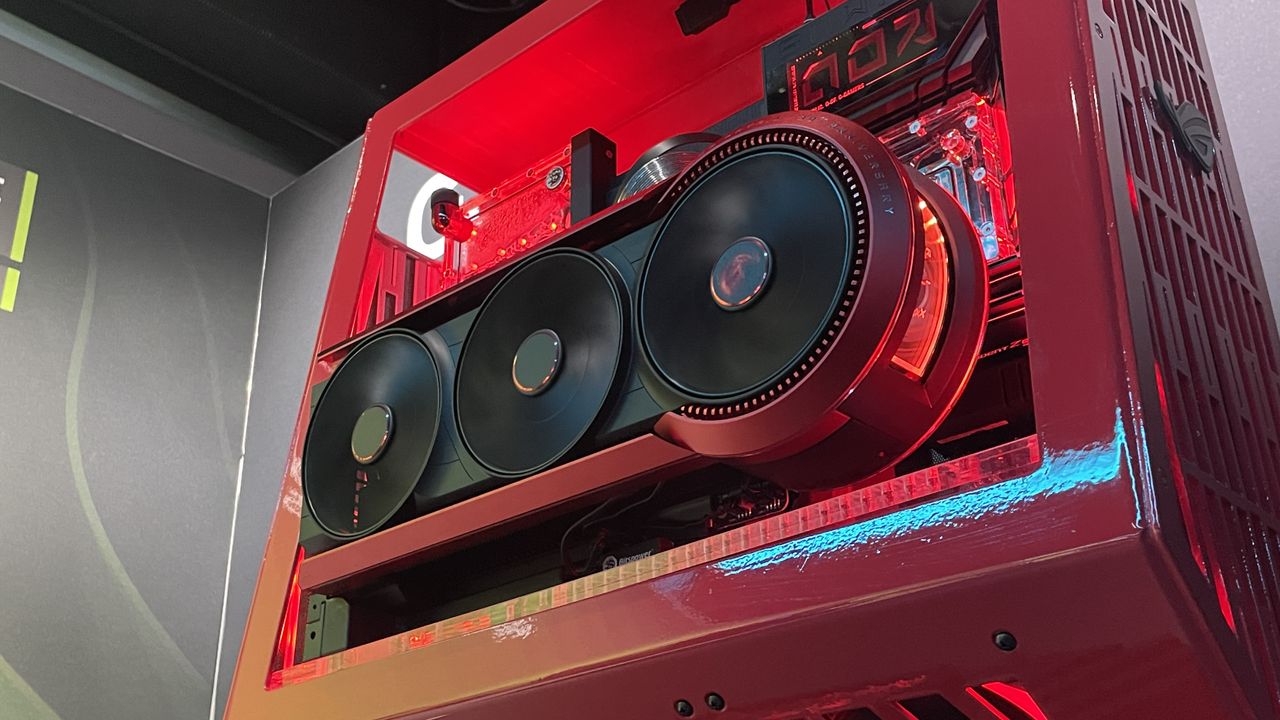
Earlier in the year, I got a look at what I called the ideal GPU physique in the form of the Asus ROG Matrix GeForce RTX 5090. This card was announced as a celebration of the company's 30th anniversary of selling graphics cards, and it's now officially launched at a price of, er, $4,000.

To be fair, while that's over $1,000 more expensive than you can find some other RTX 5090 cards going for, and $2,000 more than the Founders Edition RTX 5090's MSRP, it is also $3,000 cheaper than the gold-plated RTX 5090 Dhahab OC, which started retailing for about $7,000 back in May. There are levels to these things, I suppose.

The new card's price tag isn't just down to its dashing good looks, which it does admittedly have in spades, and it's not only to do with its limited supply of 1,000 cards. It's also down to its buffed 800 W power draw. Given the default RTX 5090 pretty much maxes out the 12V-2x6 connector's max wattage, a second power connection is needed to get it up to 800 W.

That's where the BTF connection comes in. To get this special edition GPU hooked up to all the juice that its cooling and VBIOS is designed to make use of, you'll need an "Advanced BTF motherboard" in addition to the 12V-2x6 PSU. Then the ROG Matrix RTX 5090 can receive an extra dose of power through the BTF connection via the motherboard and the extra little card edge connector next to the PCIe slot.

Tech YouTuber der8auer has already torn apart and tested the newly released card, and discovered that the performance gains are pretty meagre compared not just to the price premium but also the additional power consumption. According to der8auer, in practice the ROG Matrix RTX 5090 "always consumed about 26% more power, while it was only about 10% faster."

Image 1 of 4

An Asus ROG Matrix RTX 5090 graphics card

(Image credit: Future)
Image 2 of 4

An Asus ROG Matrix RTX 5090

(Image credit: Future)
Image 3 of 4

An Asus ROG Matrix RTX 5090

(Image credit: Future)
Image 4 of 4

An Asus ROG Matrix RTX 5090

(Image credit: Future)

That's after cranking power limits and voltage up in the software. And the GPU's reported power consumption isn't the full 800 W it's rated for. The YouTuber found it to typically consume between 680–730 W in practice at full load, also hitting over 3,000 MHz clock speeds.

In actual gaming workloads, they found this extra power to net pretty small gains compared to a standard RTX 5090, all things considered. Star Wars Outlaws saw a boost from 89 fps to 98 fps at 4K comparing the two cards, and Assassin's Creed Mirage a boost from 143 fps to 150 fps.

To be fair, though, Asus is very open about this. It says the card can "achieve up to a 10% performance boost" if it's used with a BTF motherboard that's feeding it the extra 200 W of power. Which even on paper is just a 10% performance boost for up to 33% extra power.

And this isn't all too surprising, really, given it's common that the higher up the premium ladder you go in a product stack, the smaller the gains tend to be. Ie, you pay a lot more for those final small bumps that put it in front of the rest of the mainstream and less premium competitors.

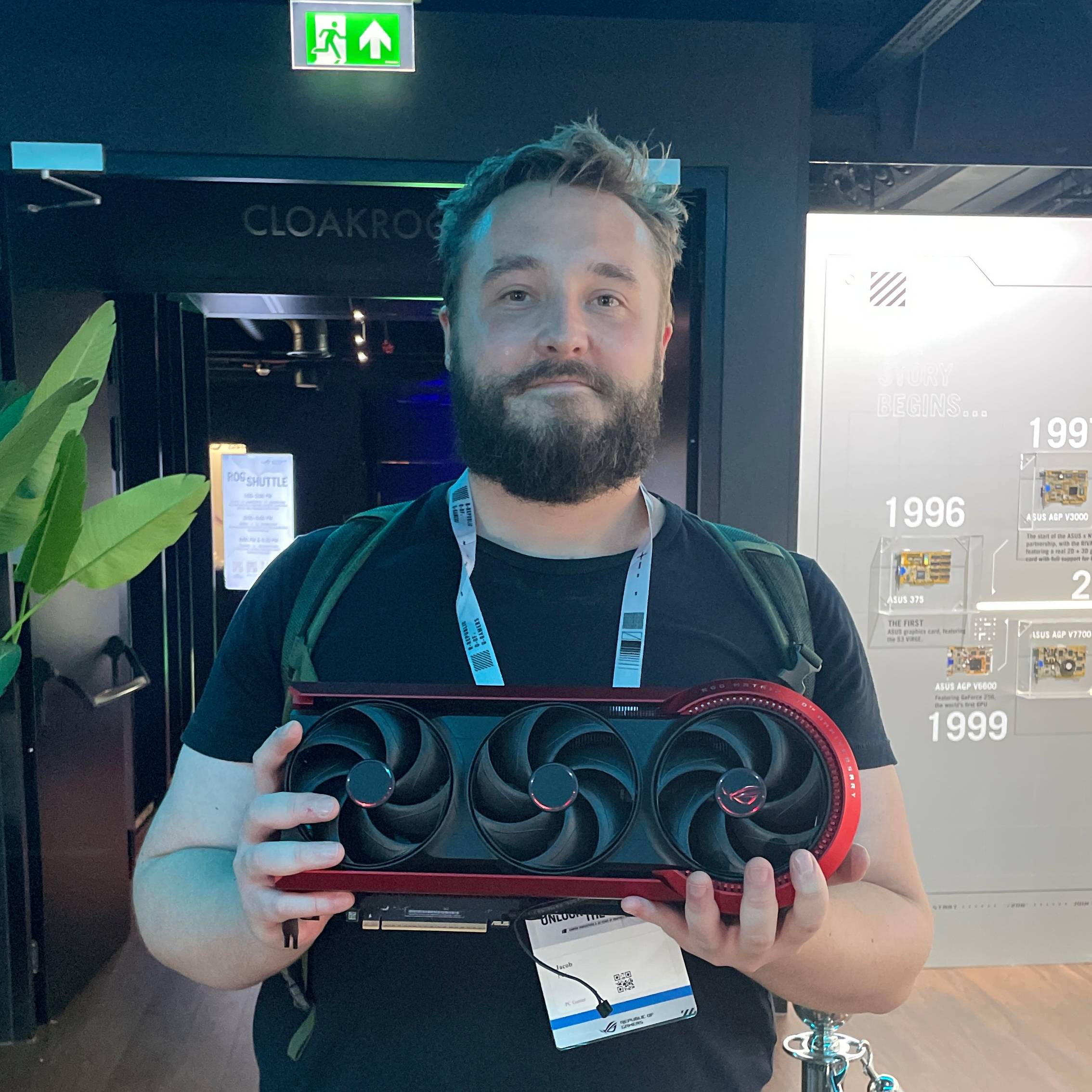
Jacob Fox holding an Asus ROG Matrix RTX 5090 graphics card

Me, holding the Asus ROG Matrix RTX 5090. (Image credit: Future)

Plus, it's not all about the performance. In addition to the rarity factor—just 1,000 cards—it looks genuinely stunning. I discovered this in person when I was lucky enough to get up close and personal with one in August. It really is a beautiful card.

After getting an extended period of time with it for testing, der8auer ends up concluding that it is "pretty close to perfection", from its lovely red and rounded design to its performance. It even runs significantly quieter than the Asus ROG Astral RTX 5090, the company's main high-end offering.

That's only "pretty close" to perfection, though, because the YouTuber, who's certainly done enough tinkering over the years to be a good judge of this, says the application of liquid metal onto the GPU "is not what I would consider perfection." And while "pretty close to perfection" is great for a standard card, for a limited edition $4,000 product, it might not be too unreasonable to ask for perfection in all areas.

None of this judgment in relation to the price might matter, anyway, because as of the time of writing, the card is all sold out. Which presumably means if you want one, you might have to brave the second-hand market, where I can only assume lucky owners will be able to ask what they like for it, likely well above $4,000.

PC Gamer Logo

Best graphics card 2025

All our current recommendations


Read the full guide: Best graphics card 2025
POWERED BYPC Gamer Logo

  •