
WordPlayer: Underneath The Snark, Dispatch Believes in Heroes
Dispatch, the new superheroic choice-focused narrative game from AdHoc Studio, almost lost me in its opening ten minutes.
In the first action sequence of the game, you control Mecha Man pilot Robert through a series of quick-time events as he takes on the Red Ring gang that has assembled under Shroud, the villain who killed Robert's father. As you fight Toxic, a poison-themed villain who can coat his body in a self-produced sludge, his clothes burn away, leaving him naked. The camera frames Mecha Man through Toxic's legs, his penis hanging down from the top of the screen. "Cool dick," Robert quips.
It's not that I am a prude or that I think that superhero stories need some decorum. The thing I'm actually burned out on, I've realised, is when superhero stories turn and wink at the screen and assure us that they're not like the other superhero stories - that this one's snarky and self-aware and knows that, in real-life, a lot of these folks would be psychopaths. You can imagine the conversation in a hypothetical writer's room about how silly the Hulk's stretchy pants are.
This is a wider symptom of the general oversaturation of superhero storytelling: many "different approaches" to the genre have now been taken multiple times. I also think that James Gunn's excellent, fairly sincere Superman movie really reset something in me earlier this year. I'm finding the winks and nudges in the new Marvel movies increasingly unbearable! Or maybe it's just that I watched four seasons of The Boys and kind of lost my stomach for this whole endeavour.
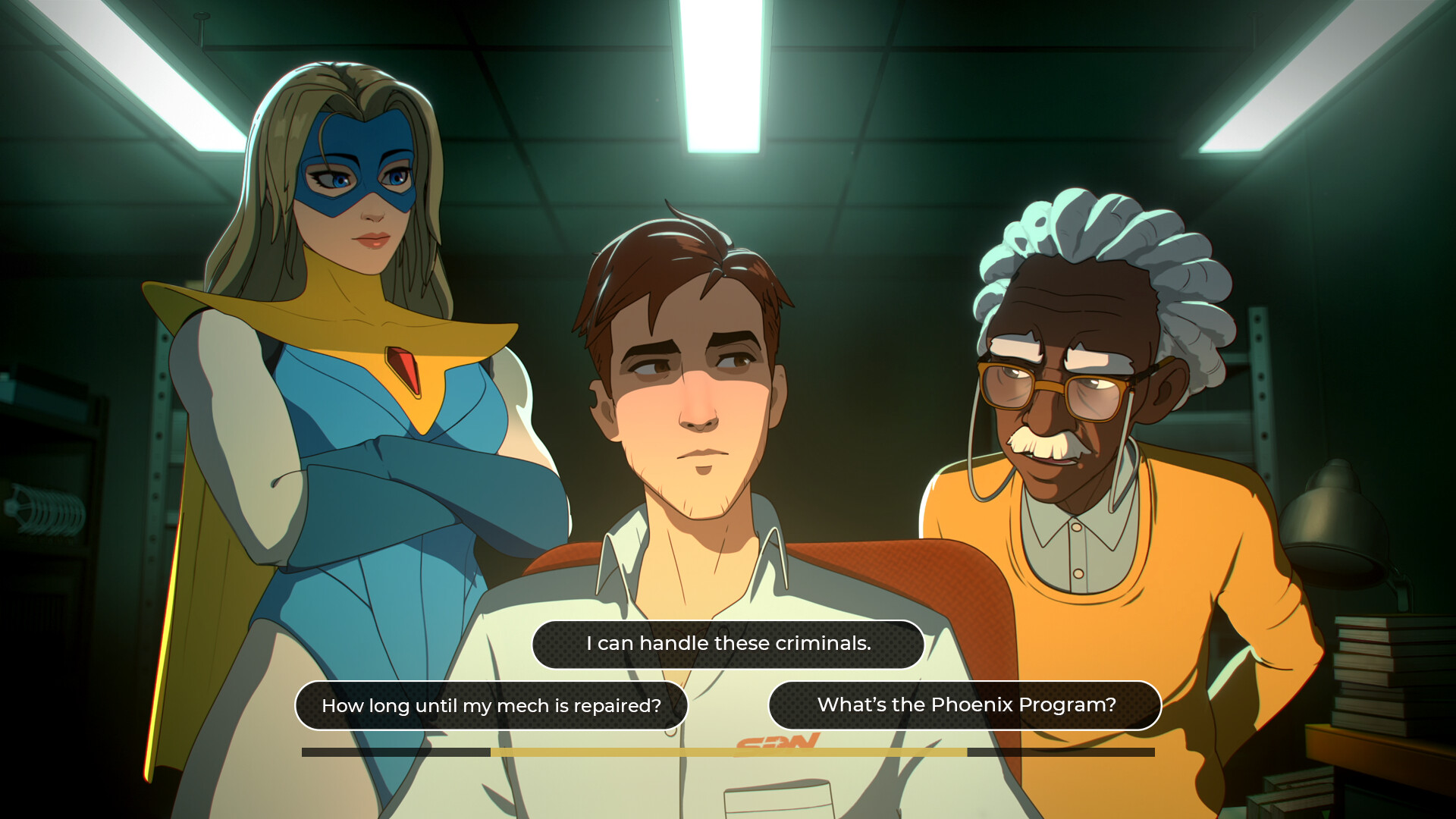
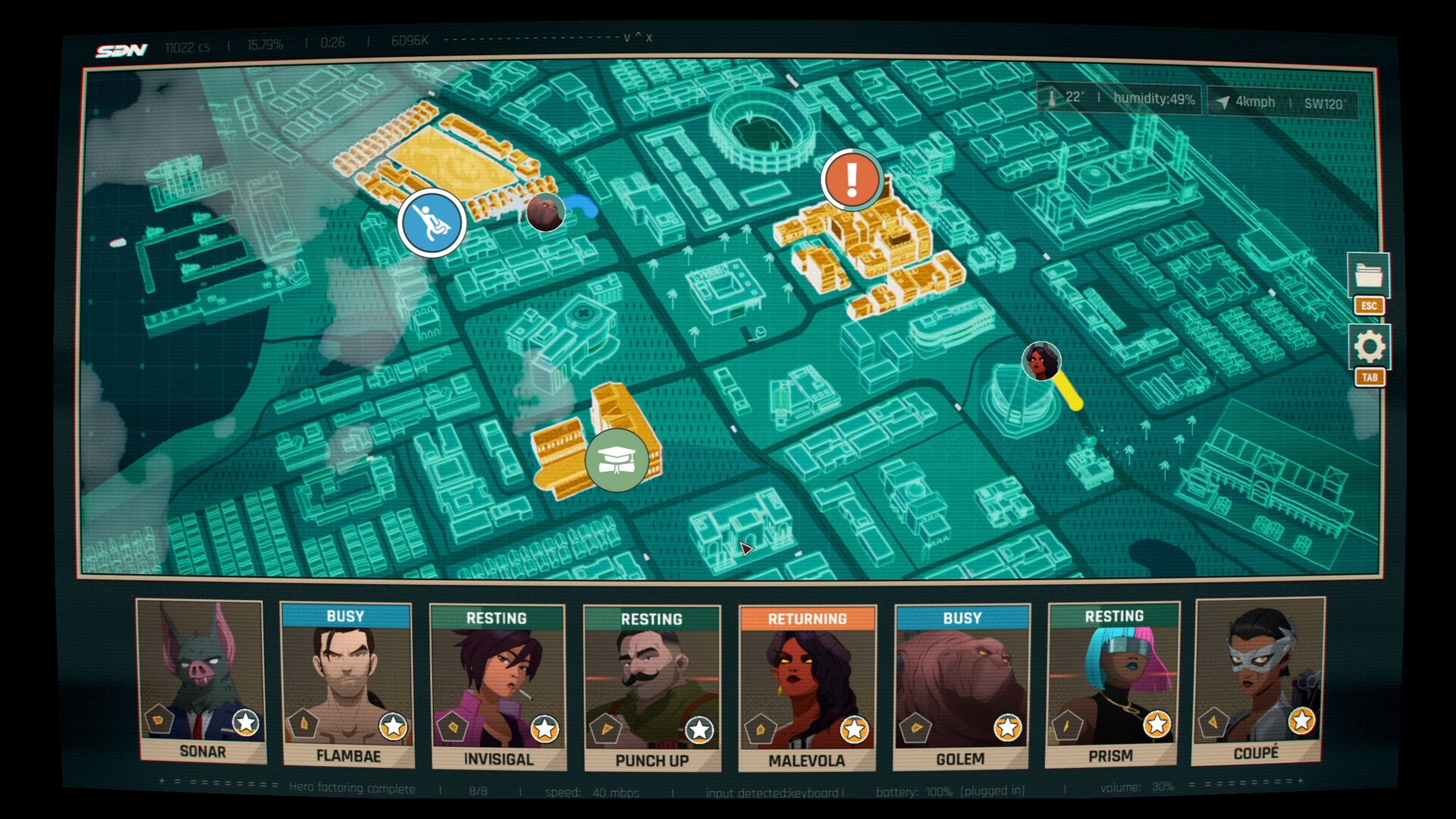
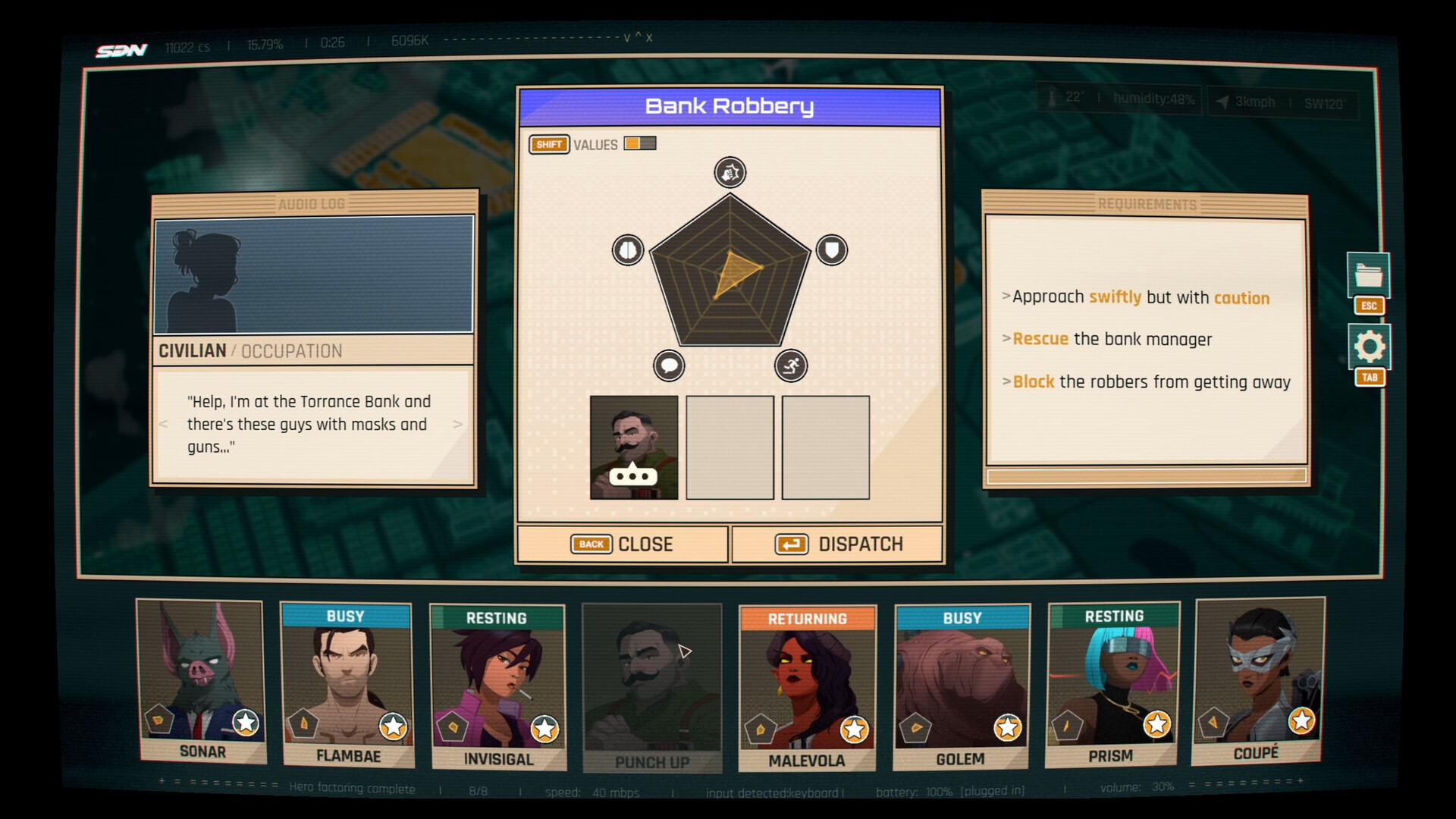
Pulling back a bit: Dispatch is an episodic superhero dispatcher game, split between Telltale-style choose-a-response narrative moments and a map interface where you decide which superheroes to send where during a crisis. It's a fun system, one where you need to balance the skills and abilities of each member of your team against what the situation seems to be calling for, and hope that you've made good judgments.
Robert, a character with no innate superpowers beyond his suit - which is out of commission following a major battle at the game's opening - accepts the job with the promise that the Superhero Dispatch Network will repair his suit and let him return to his role as a hero by the end of his contract. As the network's newest dispatcher, he's given the least promising squad they have - the infamous "Z-Team", made up of former villains who have been flipped, but who still retain a lot of the spikiness that defined their past lives.
For the first half of Dispatch, I found myself quite liking the dispatcher gameplay, and the general idea of directing superheroes across a city, but struggling to connect to this team of heroes - former villains who had been recruited to the Superhero Dispatch Network, all of them seeking a new start. Robert, their snide, irritated dispatcher (played ably by the great Aaron Paul) was difficult to empathize with, even as the "Z-Team" he was commanding continued to needle, provoke and antagonise him at every turn. Conversations turn into arguments so quickly, and characters snipe and insult each other in a way that felt, to me, a bit forced.
The script, I thought, was cringey in places. The jokes weren't totally landing. And the most consequential choices were all focused on which office romance to pursue, which is the sort of choice that bothers me in a game - not because I don't like romance, but because the "here's two girls, choose one" approach feels reductive (especially when one is your boss and the other is your direct report). The other most significant choice in the first half of the game is, as far as I'm concerned, fairly contrived, a real signpost for future conflict that felt awkwardly integrated. So I got to the end of episode 4 (of 8), interested to see where the game was going, but not totally won over.
But in the back half of Dispatch, something changed. At the end of Episode 5, Robert is asked to make a decision that is, to my mind, an example of a good choice for a branching game - whether or not to tell his team the truth about himself, which will make most of the team respect him more, but one member of the team really hate him. I made my decision - I told the truth - and felt both the weight and consequences of it. My in-game team did, too. And here, I started to feel a shift in the story. The elements I'd had a hard time with in the first half were, in fact, building towards something.
Dispatch is a game about trying to run a squad of superpowered people who, you realise over time, really want to find a good outlet for their potential. As it turns out, this is not as cynical a game as I thought - it's a story about a team of people realising the true value of actually using their gifts to make the world a better place. And in the back half of Dispatch, a game full of twists and turns, interpersonal drama and snappy one-liners, it starts to really consider what does or doesn't make a person a hero - whether they're a former villain, a bitter old retired superpowered person, a civilian, or someone who has moved into administrative work and finds themselves increasingly disconnected from work in the "field". The SDN itself is often taken advantage of for vanity projects or the capricious whims of the rich and famous, but as you get better at your job - and more connected with your team - you start to see better the real opportunities that exist here, for you and for your team, to do good.
The heroes under your command take orders from Robert, directed to deal with issues he never needs to touch, and all the characters handle complex situations without ever necessarily thinking too deeply about their work being "heroic". What eventually turns this team around isn't the work itself, or the adoration of the public; it's Robert (and by extension, you, the player) refusing to abandon or turn on them. At his desk, Robert thinks of himself as someone who has had to abandon heroism while his suit is fixed, but his persistence with this difficult team is really his most heroic act.
The notion that the Z-Team has started to see the actual value of doing good - that making the world better is actually rewarding and worthwhile - plays out across the last three episodes of the season, and as this happens, the stakes of the choices you make start to feel much higher. You're being asked to make judgments about an increasingly functional team, one that has really grown under your leadership. By the end, I could truly see the cumulative impact of my choices playing out, and I found myself much more invested in the importance of my decisions.
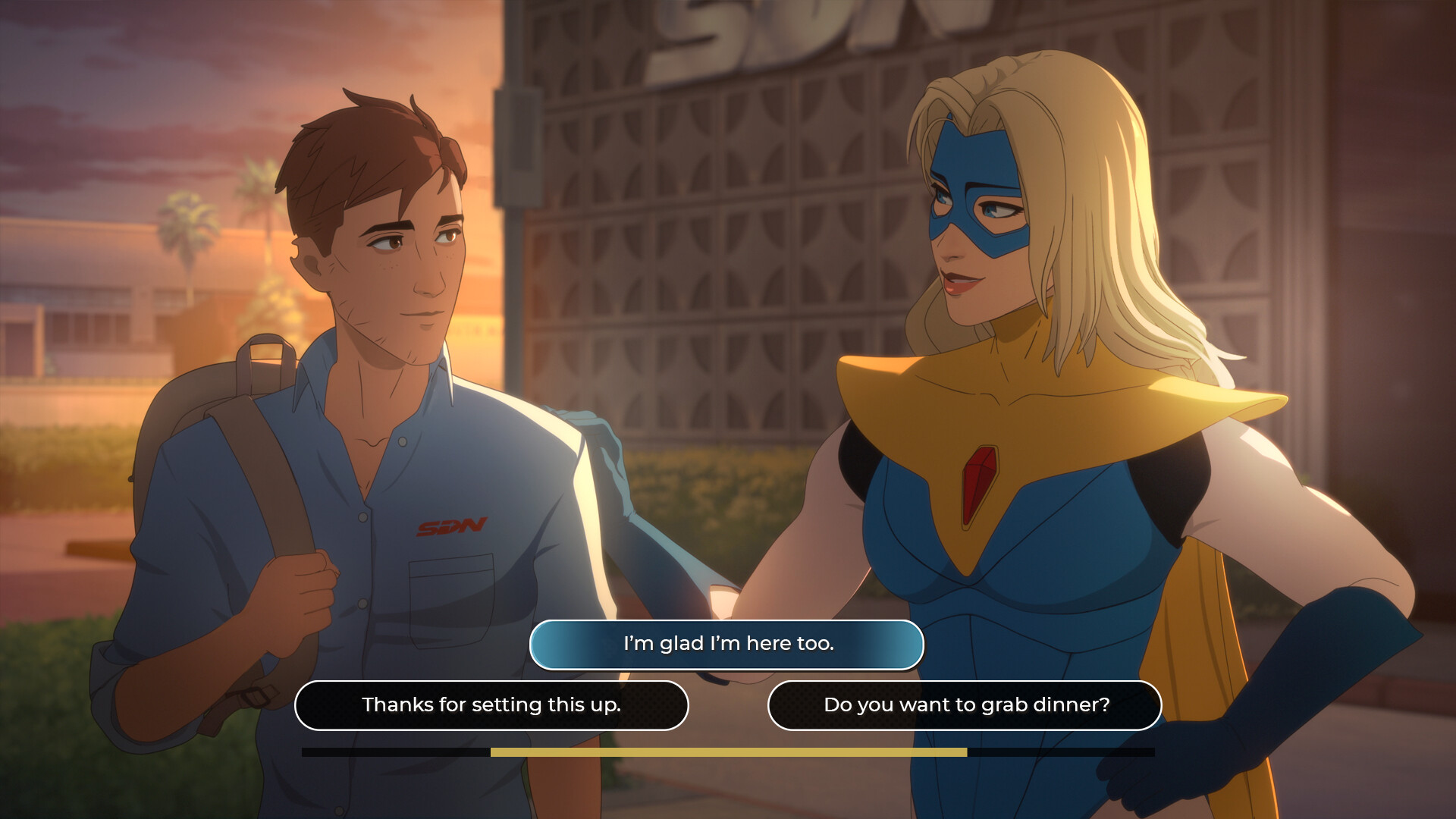
The biggest surprise of the game's final episode - and again, I promise not to spoil anything - is that it gives you the option of making a choice so generous, so understanding, so right, and yet so against the established order. I found myself thinking hard, at least for a few seconds, about what should have been an easy choice. Does a character deserve the best possible outcome when they've acted in bad faith? Is redemption always possible?
I made the choice I made - the choice most players made, according to the stats - because Dispatch had reminded me that the most important first step to being a hero is finding the courage to forgive the people who most need your forgiveness. That's a pretty nice lesson to fit into a game that features a toxic green dick 20 minutes in, I think.
It's a bit of a cliché, but I'm going to say it - some of the best superhero stories remind us how we can do better in our own lives, too. We can't create portals, or turn invisible, or punch a demon really hard in the nards like the folks in this game, but we can think a little bit more about the net results of our actions on the people around us. For all its snark, Dispatch is not totally cynical about heroes - super or otherwise.