Zobrazení pro čtení

Diablo Immortal Set Dungeon Walkthrough and Farming Routes: Complete Location Guide

Set dungeons represent your primary source for acquiring the legendary set items that define endgame builds, with each dungeon containing specific set pieces in its loot table. Understanding which dungeons drop which sets, mastering efficient clear routes, and optimizing your farming strategy dramatically accelerates set completion compared to random grinding.

This comprehensive set dungeon guide provides detailed walkthroughs for every dungeon in the game, reveals the most efficient farming routes and group strategies, explains difficulty optimization for maximum drops per hour, compares solo versus group efficiency, and identifies exactly which set items drop from each location to eliminate wasted farming time.

Understanding Set Dungeon Mechanics and Loot Tables

Set dungeons function as instanced content where you fight through enemy-filled corridors toward a final boss that drops guaranteed equipment upon defeat. The predictable loot structure makes dungeons the most reliable method for targeted set farming compared to random world drops.

Each dungeon has a predetermined loot table containing specific set items that can drop from enemies and the final boss. These loot tables remain constant regardless of difficulty level, meaning the same sets drop from a dungeon whether you run it on Hell 1 or Hell 5. Understanding which dungeon drops which sets prevents wasting time farming incorrect locations.
Drop rates increase at higher difficulty levels, providing more frequent set item drops per run without changing which sets are available. The relationship between difficulty and drop quantity isn’t perfectly linear, with each difficulty tier providing moderate improvements rather than exponential increases. This scaling creates optimization decisions about whether higher difficulties with slower clear times provide better returns than lower difficulties cleared quickly.

Set items drop as random pieces from their respective sets rather than in any particular order, meaning you might receive three chest pieces before seeing a single helm from the same set. This randomness requires patience and volume of attempts to overcome bad luck streaks. Completing sets typically requires 15-30 dungeon runs depending on luck, though extreme outliers exist in both directions.

The final boss guarantees at least one legendary item drop which has a chance to be a set piece from the dungeon’s loot table. Regular enemies throughout the dungeon can also drop set items, making complete clears more rewarding than rushing directly to bosses. However, the time investment for full clears versus boss rushes creates efficiency trade-offs.

Difficulty unlocks occur progressively as your Combat Rating increases, with each Hell difficulty tier requiring substantially higher power levels than the previous. You cannot enter difficulties above your qualification threshold, preventing undergeared players from being carried through content far beyond their capabilities. This system ensures players farm appropriate difficulties for their progression level.

Party size affects enemy health and damage scaling, with larger groups facing tougher enemies but benefiting from combined damage output and faster clear times. The scaling isn’t perfectly proportional, meaning four-player groups clear content faster than solo players despite enemies having more health. Group farming provides superior efficiency for players willing to coordinate with others.

Temple of Namari – Issatar Imbued Set Location

The Temple of Namari drops pieces from the versatile Issatar Imbued set that enhances mobility-based abilities for multiple classes. This dungeon features relatively straightforward layouts that enable quick clear times once you’ve memorized the paths.

The dungeon entrance sits in the Bilefen zone, accessible after completing the main story campaign. Navigate to the western portion of Bilefen and look for the distinctive temple structure that marks the dungeon entrance. Fast travel to the nearest waypoint and follow the main path west to minimize travel time between runs.

The initial corridor contains scattered enemy groups that you should pull together for efficient area damage elimination. Classes with strong area abilities can group these enemies into dense packs before unleashing burst damage. The corridor opens into a larger chamber with a central platform surrounded by elevated walkways where ranged enemies spawn.

Priority targets in the first major room include the ranged enemies on elevated platforms who chip away at your health while you fight melee enemies below. Either eliminate them with ranged attacks or use movement abilities to reach the platforms quickly. The room also spawns a mid-dungeon elite enemy that drops additional loot chances.

The path continues through winding corridors with moderate enemy density that shouldn’t challenge geared characters but can overwhelm undergeared players who pull carelessly. Pace your progression to avoid pulling multiple groups simultaneously unless your power level allows handling the increased damage. The corridors eventually open into the boss arena.

The final boss uses telegraphed area attacks that require positioning awareness to avoid. Red circles indicate upcoming damage zones that you should immediately exit. The boss periodically summons add waves that should be eliminated quickly to prevent being overwhelmed. Focus adds first before returning damage to the boss.

Efficient farming routes involve pulling enemy groups strategically to minimize backtracking and movement between packs. The relatively linear layout makes routing straightforward compared to more complex dungeons. Groups can assign roles with tanks pulling while damage dealers follow, creating smooth progression through the dungeon.

Issatar Imbued serves Crusaders, Barbarians, and Monks particularly well, making Temple of Namari one of the most frequently farmed dungeons. The high traffic means finding groups rarely proves difficult, as many players need these sets simultaneously. Join or create farming groups through clan chat to chain multiple runs efficiently.

Destruction’s End – Windloft Perfection Set Farming

Destruction’s End contains the highly sought Windloft Perfection set that Demon Hunters and Wizards require for optimal damage builds. This dungeon sees heavy traffic from damage dealers farming their best-in-slot sets.

Located in the Frozen Tundra zone, Destruction’s End entrance appears in the northern section of the map. Fast travel to the Frozen Tundra waypoint and head north through the icy landscape. The distinctive ruined fortress marks the dungeon entrance from a distance.

The opening area features frozen pathways with crumbling sections that don’t actually affect gameplay despite appearing dangerous. Enemy groups spawn in clusters along the main path, with some groups positioned on side platforms requiring brief detours. Pull these side groups to the main path to consolidate kills.

The first major chamber contains a large central area with enemies spawning from multiple doorways around the perimeter. Position centrally to intercept enemy groups as they funnel toward you rather than chasing them individually. The convergent spawn pattern allows efficient area damage if you position correctly.

Mid-dungeon elites appear at specific checkpoints throughout Destruction’s End, telegraphing their spawns through environmental cues. These enhanced enemies drop additional loot chances making them valuable to prioritize. The elite spawns occur at consistent locations allowing you to anticipate and prepare for their arrival.

The boss arena features environmental hazards including ice patches that don’t slow movement but create visual clutter during combat. The boss alternates between ranged ice attacks and melee rushes, requiring you to maintain medium range for optimal reaction time. Add waves spawn at health thresholds requiring temporary target switching.

Speed farming Destruction’s End involves pulling aggressively through the linear sections while being careful in the multi-doorway chamber to avoid simultaneous pulls from multiple spawns. Experienced farmers develop routes that minimize time between enemy groups while maintaining safety.

Windloft Perfection’s popularity for top-tier damage dealers creates abundant group opportunities. Demon Hunters and Wizards farming this dungeon find compatible farming partners easily through server chat or clan recruitment. The shared goal of set completion creates natural cooperation.

Kikuras Rapids – Vithu’s Urges Set Location

Kikuras Rapids drops Vithu’s Urges, the cooldown reduction focused set that enables ability-spam builds across multiple classes. This dungeon features water-themed environments with some backtracking that slightly reduces farming efficiency compared to more linear alternatives.

The dungeon entrance hides in the Ashwold Cemetery zone, tucked into the southeastern corner near water features. Navigate to Ashwold Cemetery’s waypoint and follow the river south until you locate the cave entrance that leads to Kikuras Rapids. The somewhat hidden entrance catches new players off guard.

Initial sections wind through cave passages with water flowing along the dungeon floor. Enemy groups spawn in the wider cavern sections with narrow passages connecting different chambers. The layout forces some backtracking after clearing dead-end branches that contain enemy groups and potential loot.

The main challenge area features multiple levels with enemies spawning on upper and lower tiers. You’ll need to navigate ramps and platforms to reach all enemy groups, creating opportunities to miss enemies if you rush carelessly. Thorough clears require checking all elevation levels before proceeding.

Environmental hazards include water currents that push your character if you stand in flowing sections, though the effect is minor and rarely impacts combat. The visual effect creates more distraction than actual mechanical challenge. Focus on enemy positioning rather than environmental navigation.

The boss chamber sits at the deepest point of the rapids system, accessed after clearing the multi-level sections. The boss uses water-based attacks with area denial zones that limit your positioning options. Adaptability in positioning matters more than perfect execution of predetermined patterns.

Farming efficiency in Kikuras Rapids suffers slightly from the backtracking required to clear all branches thoroughly. However, the time difference compared to linear dungeons amounts to 1-2 minutes per run, negligible over extended farming sessions. The quality of Vithu’s Urges justifies the minor efficiency loss.

Cooldown reduction builds appeal to players seeking active gameplay with constant ability usage rather than auto-attack focused builds. The specialized nature means Kikuras Rapids sees less traffic than universal sets like Issatar Imbued. Finding groups requires more effort but remains viable through dedicated recruitment.

Cavern of Echoes – Shepherd Set for Necromancers

Cavern of Echoes provides the Shepherd set pieces that enhance summon-focused gameplay for Necromancers and other classes with summoning abilities. This relatively compact dungeon allows quick clear times making it pleasant to farm repeatedly.

Located in the Dark Wood zone, Cavern of Echoes entrance sits in the central-western area accessible from the main zone waypoint. Travel west from the waypoint through the forest until you reach the distinctive cave opening marked by environmental storytelling elements.

The initial cave sections feature tight corridors that funnel enemies into favorable positions for area damage abilities. Necromancers particularly benefit from the natural chokepoints that allow their summons to create defensive lines. The confined spaces sometimes create targeting difficulties for precision abilities.

The main cavern opens into a larger space with elevated platforms around a central depression. Enemy groups spawn both at floor level and on the surrounding platforms, requiring awareness of threats from multiple elevations. Ranged enemies on platforms should be prioritized to prevent them from freely attacking while you engage melee enemies.

Echo mechanics in this dungeon involve ghost-like enemies that phase in and out of visibility, creating brief invulnerability windows. These enemies don’t represent serious threats but require slight patience to damage during their vulnerable phases. The mechanic adds minor complexity without substantially slowing progression.

The final boss summons add waves more frequently than most dungeon bosses, testing your ability to manage multiple threats simultaneously. Necromancers excel at this encounter through their natural add-clearing capabilities with area damage and summons. Other classes should prioritize adds before focusing the boss.

Efficient Cavern farming involves pulling aggressively through the corridor sections while being more measured in the multi-elevation main cavern to avoid overwhelming pulls. The compact layout means even cautious players clear runs quickly compared to sprawling dungeons.

Shepherd’s popularity among Necromancers creates steady group availability despite the class-specific nature of the set. Mixed-class groups work fine as other classes can need different sets from the same dungeon or simply help clan members. Social connections often matter more than optimal efficiency.

Mad King’s Breach – Feasting Baron’s Set for Barbarians

Mad King’s Breach contains Feasting Baron’s set pieces that transform Barbarian Whirlwind into a devastating primary ability. This dungeon features dense enemy packs that ironically make it ideal for testing your completed Whirlwind build.

The dungeon entrance sits in Ashwold Cemetery’s northern section, accessible from the main zone waypoint. Head north through the graveyard areas until you reach the distinctive castle ruins that mark Mad King’s Breach. The gothic architecture makes the entrance unmistakable.

Initial sections navigate through ruined castle corridors with enemies spawning in throne rooms and guard chambers. The enemy density rivals the highest in any dungeon, providing constant combat that Whirlwind builds absolutely excel at clearing. Barbarians farming their own set get to showcase the playstyle they’re building toward.

The main throne room features a large open area with enemies flooding from multiple entrances around the perimeter. This encounter type favors mobile area damage builds while challenging single-target focused characters. Position centrally to intercept enemy waves as they converge on your location.

Environmental storytelling includes ghostly apparitions and spectral effects that create atmospheric immersion without affecting gameplay mechanics. The visual effects can create some target selection difficulty in chaotic combat, though experienced players adapt quickly to identifying real threats among the visual noise.

The final boss represents a buffed version of a story campaign enemy with enhanced abilities and health pools. Pattern recognition from the campaign encounter helps, though the difficulty scaling creates substantially more dangerous versions of familiar attacks. Previous experience provides advantages without trivializing the encounter.

Farming Mad King’s Breach efficiently requires embracing the dense enemy packs rather than trying to avoid them. The high enemy count means thorough clears generate exceptional loot volumes compared to dungeons with sparse enemy placement. Speed comes from killing quickly rather than avoiding combat.

Feasting Baron’s dominance for Barbarian builds creates consistent farming groups seeking the same set pieces. The shared goal of Whirlwind optimization bonds farming groups through common purpose. Many Barbarians form long-term farming partnerships while completing their sets.

Tomb of Fahir – Untouchable Mountebank Defensive Set

Tomb of Fahir drops Untouchable Mountebank pieces for players prioritizing survivability over pure damage. This dungeon sees less traffic than damage-focused alternatives but provides valuable defensive sets for players struggling with content difficulty.

Located in the Shassar Sea zone, Tomb of Fahir entrance appears in the southwestern desert region. Fast travel to the Shassar waypoint and navigate southwest through the sandy terrain. The pyramid structure housing the dungeon stands prominently against the desert landscape.

The initial tomb corridors feature classic dungeon aesthetics with sarcophagi lining the walls and undead enemies shambling toward you. Enemy density remains moderate allowing measured progression without overwhelming undergeared players. The defensive set’s natural audience benefits from the forgiving encounter design.

Trap mechanics appear throughout Tomb of Fahir with pressure plates triggering arrow volleys and spike walls. These environmental hazards deal modest damage that experienced players largely ignore while learning players might find threatening. The traps add flavor without creating serious obstacles.

The main burial chamber contains a large central sarcophagus surrounded by smaller tombs that spawn waves of undead enemies. The encounter tests your sustained damage and survivability as enemy waves continue until you’ve eliminated all spawners. Players farming defensive sets get to test their improved survivability during this extended fight.

The boss encounter emphasizes survival mechanics over burst damage checks, appropriate for the defensive set theme. The boss deals heavy sustained damage requiring you to balance offensive output with defensive positioning. Players testing Untouchable Mountebank builds find this encounter validates their gear choices.

Farming efficiency in Tomb of Fahir favors methodical clears over aggressive rushing, as the trap mechanics punish careless sprinting while rewarding measured progression. The slightly slower pace feels appropriate given the defensive nature of the set being farmed.

Untouchable Mountebank’s niche appeal means finding dedicated farming groups requires more effort than popular damage sets. However, the reduced competition means less pressure to rush through runs or compete for loot. Solo farming remains perfectly viable given the encounter design.

Forgotten Tower – Grace of the Flagellant Healing Set

Forgotten Tower provides Grace of the Flagellant set pieces that enhance healing and life steal for sustainable solo play. This dungeon attracts players seeking independence from healer support through self-sufficient builds.

The dungeon entrance hides in the Darkwood zone’s eastern section, tucked among dense forest that obscures sight lines. Navigate east from the Darkwood waypoint through increasingly thick foliage until you locate the tower ruins. The overgrown appearance makes the entrance blend into surroundings.

Initial tower sections climb through crumbling staircases and collapsed floors that create vertical progression unusual among Diablo Immortal dungeons. The elevation changes don’t create platforming challenges but add variety to the typical horizontal dungeon navigation. Enemy groups spawn on landings and in side chambers.

The main tower chamber features a circular room with enemies spawning from doorways around the perimeter. The encounter design mirrors other dungeons with similar layouts, creating familiarity that experienced farmers appreciate. Position centrally to intercept enemy groups efficiently.

Environmental hazards include crumbling floor sections that appear dangerous but don’t actually create death pits or fall damage. The visual threat without mechanical danger creates atmospheric tension without punishing exploration. Focus on enemy threats rather than environmental navigation.

The final boss uses life-drain attacks that heal the boss while damaging you, creating thematic opposition to the healing set you’re farming. The encounter tests whether your existing gear provides sufficient damage to overcome the boss’s self-healing. Players with completed Grace sets trivialize this mechanic through superior healing.

Farming Forgotten Tower efficiently involves pulling aggressively on the staircase sections where enemies can’t surround you easily. The vertical layout creates natural chokepoints that favor defenders over attackers. Experienced farmers exploit these terrain advantages.

Grace of the Flagellant’s specialized focus on sustainability over burst damage creates a specific player audience seeking this playstyle. Finding like-minded farmers builds community among players who value independence over pure efficiency. The shared philosophy creates strong social bonds.

Difficulty Optimization and Drop Rate Scaling

Choosing appropriate difficulty levels dramatically impacts your farming efficiency by balancing clear speed against drop quality improvements from harder content.

Hell difficulty tiers scale from Hell 1 through Hell 5 and beyond, with each tier requiring progressively higher Combat Rating to enter. Your effective farming difficulty depends on your current power level and should be the highest tier you can clear quickly rather than the highest you can barely complete.

Drop rate increases at higher difficulties provide more frequent set item drops without changing which sets are available. The exact scaling remains somewhat opaque, but community testing suggests each Hell tier provides approximately 20-30% more legendary drops than the previous tier. This moderate scaling means dramatically slower clear times often don’t justify the marginal drop improvements.

The efficiency breakpoint occurs where increasing difficulty one tier reduces your clear speed by more than 30%, at which point the additional drops don’t justify the time investment. Most players find their optimal farming difficulty 1-2 tiers below their maximum accessible difficulty to maintain comfortable clear speeds.

Combat Rating requirements gate higher difficulties, preventing undergeared players from entering content far beyond their capabilities. This system protects players from wasting time in difficulties where they’d struggle to clear efficiently. Always farm at your appropriate power tier rather than being carried through content you can’t meaningfully contribute to.

Group composition affects optimal difficulty selection, as balanced groups with tanks and healers can comfortably farm higher difficulties than glass cannon groups of pure damage dealers. Coordinate with your group to select appropriate difficulties that challenge without frustrating.

Time per run matters more than drop quality per run when optimizing long-term farming efficiency. Completing three Hell 2 runs in the time one Hell 4 run takes often provides more total loot despite lower individual drop rates. Track your actual runs per hour rather than optimizing individual runs.

Solo vs Group Farming Efficiency Comparison

Choosing between solo and group farming involves trade-offs between convenience, clear speed, and social enjoyment that vary based on personal preferences.

Solo farming provides complete control over pacing, route selection, and session duration without requiring coordination with others. You can start and stop farming sessions instantly without waiting for group formation or feeling obligated to continue when you want to break. The convenience factor makes solo farming appealing for players with unpredictable schedules.

Clear speed in solo farming depends entirely on your personal power level and class capabilities. Some classes clear dungeons efficiently solo while others struggle with sustained damage or survivability. Necromancers and Barbarians generally solo farm more effectively than Monks or support-built Crusaders.

Group farming accelerates clear times through combined damage output and role synergy, with balanced four-player groups clearing dungeons significantly faster than solo players. The time reduction often reaches 40-50% faster clears than solo despite enemy health scaling, providing superior efficiency for players willing to coordinate.

Loot distribution in groups means you see more total set items but only receive items randomly assigned to you. A four-player group might see 6-8 set items per run but each player only receives 1-2 of them. The increased volume partially compensates through trading possibilities when you receive items your groupmates need.

Social benefits of group farming include building relationships with regular farming partners and accessing clan resources through cooperative play. Many long-term Diablo Immortal friendships form through repeated dungeon farming sessions. The social fulfillment often outweighs pure efficiency considerations.

Finding farming groups requires investment in social systems like joining active clans or using server chat recruitment. Shy players or those with social anxiety might prefer solo farming despite efficiency losses. Your comfort and enjoyment matter more than marginal efficiency gains.

Hybrid approaches where you solo farm during off-peak hours and group farm when your regular partners are online provides flexibility without committing exclusively to either method. Most experienced farmers naturally develop mixed habits based on circumstances.

Looking for More Diablo Immortal Guides?

Master every aspect of Diablo Immortal with our complete guide collection:

New to the game? Start with our Complete Beginner’s Guide to Diablo Immortal covering class selection, core systems, and essential tips to avoid common mistakes that cost new players weeks of progress.

Building your character? Check out our Complete Sets and Legendary Items Guide for best-in-slot recommendations, essence transfer strategies, and complete breakdowns of every set bonus in the game.

Optimizing your gems? Our Legendary Gems Guide ranks all gems, explains awakening mechanics, and provides class-specific recommendations to maximize your power without wasting precious upgrade materials.

Playing free-to-play? Don’t miss our Free-to-Play Progression Guide with realistic expectations, efficient resource management, and strategies to compete effectively without spending money.

FAQ: Set Dungeon Farming and Optimization

How many dungeon runs does it take to complete a set?

Completing a four-piece set typically requires 15-30 dungeon runs depending on luck with duplicate drops. Extreme outliers exist with some players completing sets in 10 runs while others struggle through 50+ attempts. The randomness requires patience and volume of attempts to overcome bad luck.

Should I farm solo or in groups?

Groups provide 40-50% faster clear times than solo farming despite enemy scaling, making them more efficient for players willing to coordinate. However, solo farming offers convenience and flexibility that some players value over pure efficiency. Choose based on your schedule and social preferences.

What difficulty should I farm for best results?

Farm the highest difficulty you can clear quickly and comfortably, typically 1-2 tiers below your maximum accessible difficulty. Struggling through harder content usually wastes time compared to efficiently clearing easier difficulties. Speed matters more than individual drop quality.

Can I get set items from dungeons I’m not supposed to farm?

No, each dungeon has a fixed loot table containing specific sets regardless of difficulty level. Farming the wrong dungeon wastes time as you’ll never receive the sets you need. Verify loot tables before investing hours of farming time.

Is it faster to full clear or rush bosses?

Full clears provide more total drops through regular enemies while boss rushes complete runs faster. Community consensus suggests full clears provide better returns for most players, though the difference is modest. Personal preference and clear speed capabilities should guide your choice.

How do I find farming groups?

Join active clans that organize regular farming sessions or use server chat to recruit compatible players. Many players form long-term farming partnerships that persist across weeks of progression. Social investment pays dividends through reliable group availability.

Should I farm multiple sets simultaneously or focus one at a time?

Focus on completing one set at a time through dedicated farming of appropriate dungeons. Spreading attempts across multiple dungeons dilutes your volume per set and delays any completions. Complete your priority set before diversifying to alternatives.
  •  

Diablo 30th Anniversary: Complete Guide to Immortal’s 2026 Roadmap, Warlock Class, and Lut Gholein’s Return

The Diablo franchise reaches a monumental milestone as Blizzard Entertainment commemorates three decades of demon-slaying action with the Diablo 30th Anniversary Spotlight. Originally released in 1996, Diablo revolutionized the action role-playing game genre and spawned one of gaming’s most iconic franchises. The anniversary celebration centers on Diablo Immortal’s ambitious 2026 roadmap, introducing transformative content that bridges the narrative gap between Diablo 2: Resurrected and Diablo 3.

During the livestream event, the development team unveiled four major pillars of upcoming content: the demon-summoning Warlock class, the corrupted city of Lut Gholein, the return of Lesser Evil Andariel, and comprehensive quality-of-life improvements based on community feedback. Each element represents months of development work designed to expand Sanctuary’s ongoing struggle against the forces of Hell.

Anniversary Celebration Promo Code: Players can claim exclusive rewards by entering promo code EASTGATE at diabloimmortal.com/redeem to receive 10 Legendary Crests, Legendary Gear, 50,000 Gold, and additional anniversary rewards.

The Warlock Class: Diablo Immortal’s Newest Demon-Summoning Powerhouse

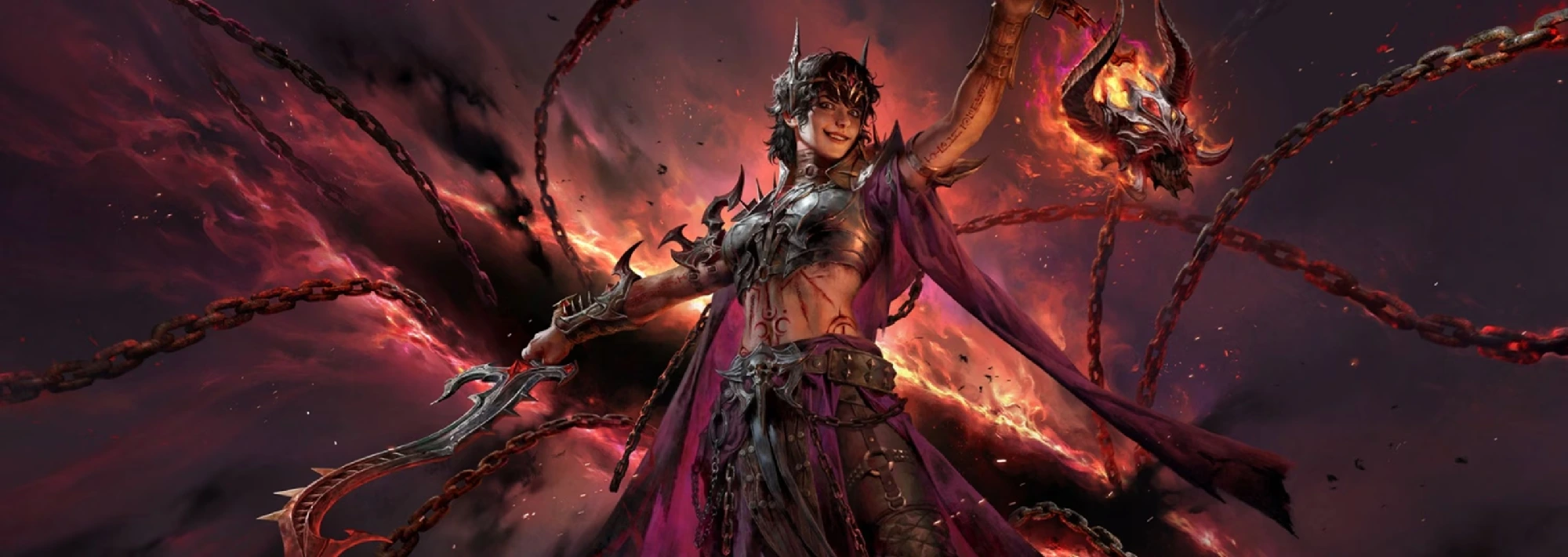
The Warlock represents Diablo Immortal’s most ambitious class design to date, scheduled for release in June 2026. This demon-commanding spellcaster harnesses forbidden Vizjerei magic to open portals directly to the Burning Hells, summoning and controlling demonic forces against Sanctuary’s enemies. The Warlock’s unique mechanics center on turning Hell’s own legions against themselves through powerful taboo magic.

Warlock Class Identity and Playstyle

The Warlock embodies reckless destruction and terrifying power, maintaining a demeanor that unsettles both allies and enemies. This character archetype draws from the long-buried practices of Vizjerei magic, an ancient and dangerous form of spellcasting that involves directly manipulating demonic entities. The class fantasy centers on a practitioner who has crossed moral boundaries to wield unprecedented magical power.

Warlock Weapons and Combat Mechanics

The Warlock’s weapon configuration reflects her demonic mastery:

  • Main Hand: Demon Skull – A sentient skull artifact that channels dark magic and serves as the primary casting implement
  • Off-Hand: Sacrificial Blade – A ritual weapon used for blood magic and demonic binding ceremonies
  • Signature Summon: Soulgorger – A massive beast that devours other demons and absorbs their characteristics through its gargantuan maw, growing more powerful with each consumed enemy

The Warlock’s core gameplay loop involves opening hell portals mid-combat, carving rifts through reality to summon demonic reinforcements. These summoned entities can be commanded strategically, creating complex tactical situations where players pit hellish forces against each other while maintaining control of the battlefield.

Warlock Release Timeline and Accessibility

The Warlock class launches in June 2026 as a completely free-to-play addition to Diablo Immortal, following Blizzard’s established pattern for major content updates. At launch, players will experience narrative content exploring the dark origins of Vizjerei magic and sample the Warlock’s demon-commanding abilities through introductory questlines. The class will be immediately available to all players without purchase requirements or level gates.

Lut Gholein Returns: Exploring the Corrupted Desert City

Lut Gholein’s return marks one of Diablo Immortal’s most significant location additions, bringing back the iconic desert metropolis from Diablo 2 in a dramatically transformed state. Once a gleaming jewel of desert civilization, Lut Gholein now stands as a desolate testament to demonic occupation, warped by Hell’s corrupting influence and serving as the primary setting for 2026’s narrative arc.

Lut Gholein Geographic Overview and Zone Structure

The Diablo Immortal interpretation of Lut Gholein preserves recognizable landmarks from Diablo 2 while significantly expanding the explorable area. The city divides into two major districts, each representing different aspects of the demonic occupation:

The Common Ward: Demonic Occupation Zone

The Common Ward represents the heart of demonic control in Lut Gholein, characterized by blood-spattered ruins and active demon encampments. This district serves as the primary combat zone where Hell’s forces have established permanent presence. Players navigating the Common Ward encounter:

  • Ruined marketplaces converted into demonic fortifications
  • Corrupted residential areas serving as demon spawning grounds
  • Former trade routes now patrolled by hellish guardians
  • Environmental hazards created by demonic corruption of desert sands

The High Ward: Preserved Architecture Mystery

The High Ward presents a disturbing contrast to the Common Ward’s obvious destruction. This district remains mysteriously intact, preserving its former architectural glory while radiating an unsettling atmosphere. The preservation itself suggests sinister purpose rather than coincidence, with the buildings serving as a haunting mockery of Lut Gholein’s prosperous past. This zone likely contains narrative revelations about Andariel’s plans and the nature of the demonic occupation.

The Undercity: Vizjerei Ruins and Ancient Secrets

Beneath both wards lies the extensive undercity network, containing ancient Vizjerei ruins that hold crucial connections to the Warlock class narrative. These subterranean chambers preserve forbidden summoning knowledge through ancient runic inscriptions, providing the magical foundation that empowers modern Warlocks. The undercity represents not just an explorable zone but a direct narrative link between Lut Gholein’s past and the Warlock’s present-day capabilities.

Lut Gholein Content Expansion Strategy

Unlike traditional zone releases, Lut Gholein employs a progressive expansion model throughout 2026. The development team designed this approach to maintain player engagement through continuous content additions:

  1. Initial Launch: Core Common Ward and High Ward districts with primary campaign questlines
  2. Rocky Wastes Subzone: Desert frontier region available immediately for exploration and farming
  3. Quarterly Subzone Additions: New explorable areas introduced every few months with unique enemy types and farming opportunities
  4. Progressive Narrative Reveals: Story developments that unfold across multiple content updates

Each subzone arrives fully developed for immediate engagement, designed specifically for exploration and farming activities from day one. This structure diversifies farming locations and prevents content stagnation by regularly introducing fresh challenges and reward opportunities.

Andariel: The Maiden of Anguish Returns as Primary Antagonist

Andariel, the Maiden of Anguish and one of the four Lesser Evils, serves as the primary antagonist throughout Diablo Immortal’s 2026 narrative arc. This formidable demon lord has successfully conquered Lut Gholein, establishing the corrupted city as her seat of power while pursuing dark ambitions of godhood. Her presence represents one of the most significant demonic threats yet introduced in Diablo Immortal’s storyline.

Andariel’s Character Design and Abilities

Blizzard’s character design team has enhanced Andariel’s appearance for Diablo Immortal while preserving her iconic anguish-fueled aesthetic from Diablo 2. The updated design emphasizes her regal bearing and sadistic nature, presenting a demon lord who commands through both physical might and psychological terror. Her visual presentation reinforces her status as a Lesser Evil – powerful enough to conquer cities yet driven by specific thematic domains of suffering and torment.

Andariel’s combat capabilities manifest through dual threat vectors:

  • Physical Devastation: Monstrous strength capable of overwhelming any opposition through direct combat
  • Psychological Warfare: Specialized abilities that instill terror, despair, and anguish in her victims, often proving more effective than physical attacks

Her domain over anguish grants her unique abilities to harvest suffering itself, converting the emotional torment of Sanctuary’s inhabitants into demonic power. This thematic focus on psychological horror distinguishes her from other demon lords who rely primarily on physical destruction or magical corruption.

Andariel’s Role in Diablo Lore Continuity

Andariel’s appearance in Diablo Immortal occupies a crucial position in franchise chronology. The game’s narrative deliberately bridges events between Diablo 2: Resurrected and Diablo 3, with Andariel’s conquest of Lut Gholein representing a significant chapter in Sanctuary’s ongoing struggles. Her triumphant stance over the conquered city fulfills twisted plots hinted at throughout Diablo’s extended universe, with her pursuit of dark godhood suggesting ambitions beyond typical demonic conquest.

The development team’s narrative choices position this storyline as approaching Deckard Cain’s prophesied end of days, suggesting that Andariel’s schemes may have implications reaching far beyond Lut Gholein’s walls. This connection to broader Diablo mythology ensures that 2026’s content updates contribute meaningfully to the franchise’s overarching narrative rather than existing as isolated storylines.

Diablo Immortal 2026 Roadmap: Complete Content Calendar

The Diablo Immortal development team unveiled an extensive 2026 content roadmap during the anniversary spotlight, outlining major feature additions, quality-of-life improvements, and new gameplay systems. This roadmap represents the team’s response to community feedback while establishing a foundation for long-term content delivery throughout the year.

New Battleground Event: Equalized PvP Competition

The introduction of Diablo Immortal’s first equalized Bout of Realms competition addresses long-standing community requests for skill-based PvP content. This new Battleground event normalizes player power levels, creating competitive environments where tactical decisions and mechanical skill determine victory rather than resonance disparities or gear advantages.

Equalized competition provides critical benefits for the player ecosystem:

  • New players can compete meaningfully against veterans without months of progression
  • Casual players gain access to competitive PvP without massive time investments
  • Skilled players can demonstrate mechanical mastery regardless of account progression
  • The competitive scene gains legitimacy through skill-based matchmaking

This represents a significant philosophical shift for Diablo Immortal, acknowledging that progression-based power systems, while core to the ARPG experience, can create barriers to competitive PvP enjoyment. The Battleground event maintains separate reward tracks and progression systems to ensure participation remains attractive to players of all investment levels.

Quality-of-Life Improvements Based on Community Feedback

The development team committed to substantial quality-of-life enhancements throughout 2026, directly addressing player concerns raised through official forums, social media channels, and in-game feedback systems. These improvements span multiple game systems:

Legendary Gem Accessibility Improvements

One of the most requested changes involves improving access to specific Legendary Gems. The current system’s randomization often frustrates players seeking particular gems for build optimization. Planned improvements include:

  • Targeted acquisition methods for specific gem types
  • Increased drop rates or alternative earning paths for rare gems
  • Trading or exchange systems between duplicate and desired gems
  • Pity systems or guaranteed progression toward specific gems

Classic Zone Event Revamps

The development team acknowledged that classic zone events have grown stale for veteran players. Planned revamps aim to inject fresh challenges and improved rewards into existing zones, preventing content obsolescence as new areas release. These updates ensure that the entire game world remains relevant for farming and progression rather than concentrating all activity in the newest zones.

Combat and Progression System Refinements

Additional quality-of-life changes target combat responsiveness, progression clarity, and world interaction smoothness. While the spotlight presentation didn’t detail every planned improvement, the team emphasized their commitment to addressing friction points that accumulate over a live service game’s lifespan. These refinements aim to polish the core gameplay experience while maintaining Diablo Immortal’s fundamental design philosophy.

Additional Roadmap Content and Future Announcements

The development team explicitly noted that the anniversary spotlight represented an initial roadmap overview rather than comprehensive coverage of all planned 2026 content. Several features and updates remain under development and will receive detailed announcements throughout the year as they approach release readiness. This approach allows the team to refine features based on ongoing player feedback while maintaining flexibility in their development schedule.

Players should expect additional announcements covering:

  • Seasonal content and limited-time events
  • Additional class balance updates and skill reworks
  • New item sets and legendary equipment
  • Endgame progression system expansions
  • Social feature improvements and clan system enhancements

Narrative Implications: Bridging Diablo 2 and Diablo 3

Diablo Immortal occupies a unique position within franchise chronology, set during the twenty-year gap between Diablo 2 and Diablo 3. The 2026 content updates deliberately advance the timeline toward this critical junction point, with the development team explicitly acknowledging their intention to bridge these major installments through Immortal’s ongoing narrative.

The choice of Lut Gholein as the central location carries significant narrative weight. Players familiar with Diablo 2 remember Lut Gholein as a vibrant desert trading hub, making its demonic corruption particularly impactful. Andariel’s conquest of this iconic location creates narrative symmetry with her defeat in Diablo 2’s second act, suggesting that her return represents unfinished business from previous encounters.

Deckard Cain’s prophesied end of days serves as the narrative framework connecting these events. The anniversary spotlight’s reference to approaching this prophesied catastrophe suggests that 2026’s storylines contribute to escalating tensions that ultimately culminate in Diablo 3’s opening events. This narrative approach transforms Diablo Immortal from a standalone mobile experience into an integral chapter of the franchise’s overarching mythology.

The Warlock class introduction also carries lore significance beyond gameplay mechanics. The revival of Vizjerei magic and demon-summoning practices connects to broader themes of forbidden knowledge and desperate measures against overwhelming demonic threats. These narrative threads suggest that Sanctuary’s defenders increasingly resort to morally questionable tactics as the prophesied end times approach, setting the stage for the darker tone that pervades Diablo 3.

Community Engagement and Anniversary Celebration

The Diablo 30th Anniversary celebration extends beyond content announcements to encompass community appreciation initiatives. Blizzard’s provision of the EASTGATE promo code demonstrates their commitment to rewarding player loyalty with meaningful in-game resources. The code grants:

  • 10 Legendary Crests for endgame progression
  • One piece of Legendary Gear
  • 50,000 Gold for crafting and upgrades
  • Additional anniversary-themed rewards

These rewards provide tangible value for both new and veteran players, with Legendary Crests representing particularly valuable progression resources in Immortal’s endgame systems.

Official Community Channels and Ongoing Communication

The development team actively encourages community engagement through multiple official channels, particularly emphasizing the Diablo Immortal Discord server as the primary hub for player discussion and feedback. This platform facilitates direct communication between players and developers, allowing for rapid iteration on community concerns and transparent discussion of upcoming features.

The team’s closing message to the community – “We’ll see you in Hell” – reinforces the franchise’s signature dark humor while emphasizing their commitment to delivering another year of demon-slaying content. This approach to community management balances professional development updates with the passionate enthusiasm that has characterized the Diablo community for three decades.

Accessing Diablo Immortal: Platform Availability and Requirements

Diablo Immortal operates as a cross-platform free-to-play action RPG available on multiple devices, ensuring accessibility for players regardless of their preferred gaming platform. The game supports:

  • iOS devices through the Apple App Store
  • Android devices through Google Play Store
  • Windows PC through Battle.net client

Cross-platform progression allows players to maintain a single account across all supported devices, enabling seamless transitions between mobile and PC gameplay. The promo code redemption system operates through the official Diablo Immortal website at diabloimmortal.com/redeem, accessible from any web browser regardless of primary gaming platform.

Frequently Asked Questions: Diablo 30th Anniversary and 2026 Content

When does the Warlock class release in Diablo Immortal?

The Warlock class launches in June 2026 as a free-to-play addition to Diablo Immortal. All players will have immediate access to the class without purchase requirements or level gates.

What is the Diablo 30th Anniversary promo code?

The anniversary promo code is EASTGATE. Players can redeem this code at diabloimmortal.com/redeem to receive 10 Legendary Crests, Legendary Gear, 50,000 Gold, and additional rewards.

What zones are included in Lut Gholein’s return?

Lut Gholein includes the Common Ward (demonic occupation zone), the High Ward (mysteriously preserved district), the undercity with Vizjerei ruins, and the Rocky Wastes subzone. Additional subzones will release throughout 2026.

Is Andariel the main villain in Diablo Immortal’s 2026 content?

Yes, Andariel, the Maiden of Anguish, serves as the primary antagonist for 2026. She has conquered Lut Gholein and pursues dark godhood through harvesting anguish from Sanctuary’s inhabitants.

What quality-of-life improvements are coming to Diablo Immortal?

Major improvements include enhanced Legendary Gem accessibility, revamped classic zone events, combat refinements, progression system updates, and the new equalized Battleground event for competitive PvP.

How does Diablo Immortal connect to Diablo 2 and Diablo 3?

Diablo Immortal takes place during the twenty-year gap between Diablo 2 and Diablo 3. The 2026 content deliberately bridges this timeline gap, with events approaching Deckard Cain’s prophesied end of days that leads into Diablo 3’s opening.

What weapons does the Warlock class use?

The Warlock wields a demon skull in the main hand and a sacrificial blade in the off-hand. The class also commands Soulgorger, a beast that devours demons and absorbs their traits.

Is the new Battleground event available to all players?

Yes, the equalized Battleground event is designed for players of all resonance levels. Power normalization ensures that skill determines victory rather than gear or progression advantages.

Will there be more announcements beyond the initial roadmap?

Yes, the development team confirmed that additional content and features remain under development for 2026 and will be announced as they approach release readiness.

Conclusion: Diablo’s Next Chapter in Sanctuary

The Diablo 30th Anniversary Spotlight demonstrates Blizzard Entertainment’s continued commitment to expanding the franchise through Diablo Immortal’s evolving content ecosystem. The 2026 roadmap addresses long-standing community requests while introducing ambitious new features that advance both gameplay systems and narrative continuity.

From the demon-summoning Warlock class to the corrupted streets of Lut Gholein, from Andariel’s reign of anguish to the equalized competitive Battleground, each announced feature contributes to a comprehensive vision for Diablo Immortal’s future. The development team’s emphasis on community feedback integration alongside original content creation suggests a mature understanding of live service game development and player engagement.

As the franchise celebrates thirty years of demon-slaying action, Diablo Immortal positions itself as more than a mobile spinoff – it serves as an essential narrative bridge connecting the franchise’s classic era to its modern incarnation. The journey through Lut Gholein’s fallen streets, wielding forbidden Vizjerei magic against Andariel’s anguish, promises to deliver the dark fantasy action that has defined Diablo for three decades.

Players eager to experience these updates should redeem promo code EASTGATE for anniversary rewards and join the Diablo Immortal Discord community for ongoing news and discussion. The development team’s promise rings clear across Sanctuary: another bloody year awaits, and they’ll see us all in Hell.

  •  

Diablo Immortal Free-to-Play Progression Guide: Compete Without Spending Money

Diablo Immortal offers a complete gaming experience accessible to free-to-play players, though the path to competitive power differs dramatically from paying players. Understanding realistic expectations, optimizing your limited resources, and focusing on the right progression systems allows you to enjoy all content and compete effectively without spending money.

This comprehensive free-to-play guide establishes realistic power level expectations, reveals the most efficient resource allocation strategies, provides a complete daily and weekly optimization checklist, explains which systems to prioritize over others, and offers psychological strategies for maintaining enjoyment despite the temptation of premium shortcuts.

Setting Realistic Free-to-Play Expectations

Understanding what’s achievable as a free-to-play player prevents frustration from unrealistic goals while helping you appreciate the substantial content available without spending money. The free-to-play experience differs from paying players in progression speed rather than content access.

All story content, dungeons, raids, and PvP modes remain fully accessible to free players without restrictions. You can experience every piece of content Diablo Immortal offers regardless of spending, with the only differences involving how quickly you progress and your competitive ceiling in top-tier PvP. Casual and mid-tier content remains completely viable for optimized free-to-play characters.

Power progression as a free-to-play player follows a slower but steady trajectory that reaches competitive levels for most content within 3-6 months of consistent play. While paying players accelerate past you initially, the gear and Paragon systems that dominate mid-game progression are equally accessible to everyone. You’ll lag behind whales permanently in legendary gem quality, but other systems allow closing substantial power gaps.

Legendary gems represent the primary bottleneck for free-to-play progression, with five-star gem acquisition requiring months of Fading Ember accumulation or extraordinary luck from free crests. Accept that you’ll primarily use two-star gems with occasional five-star acquisitions rather than the multiple rank 10 five-star gems that paying players obtain. This limitation matters most in top-tier PvP where gem disparities become insurmountable.

The time investment required for competitive free-to-play progression involves 2-4 hours of daily play focusing on efficient activities rather than aimless grinding. Casual players who log in occasionally will struggle to keep pace with server progression, while those maintaining consistent daily engagement reach and maintain competitive power levels. The game rewards regular participation more than occasional marathon sessions.

Social advantages available to free players include joining active clans and Warbands that provide group content access and community support unavailable to isolated players. Many successful free-to-play players leverage social connections to access difficult content and receive occasional material donations from generous clan members. Building relationships provides intangible value beyond pure progression.

Mental approach matters significantly for free-to-play sustainability, as constantly comparing yourself to paying players breeds resentment and dissatisfaction. Focus on your personal progression rather than relative standing against whales who’ve spent thousands of dollars. The journey from level 1 to competitive endgame power provides hundreds of hours of engaging gameplay regardless of how you compare to top spenders.

Daily Activity Optimization for Maximum Efficiency

Establishing an efficient daily routine maximizes your progression by ensuring you never miss time-limited rewards that compound dramatically over weeks and months. Smart free-to-play players optimize their limited playtime by prioritizing high-value activities.

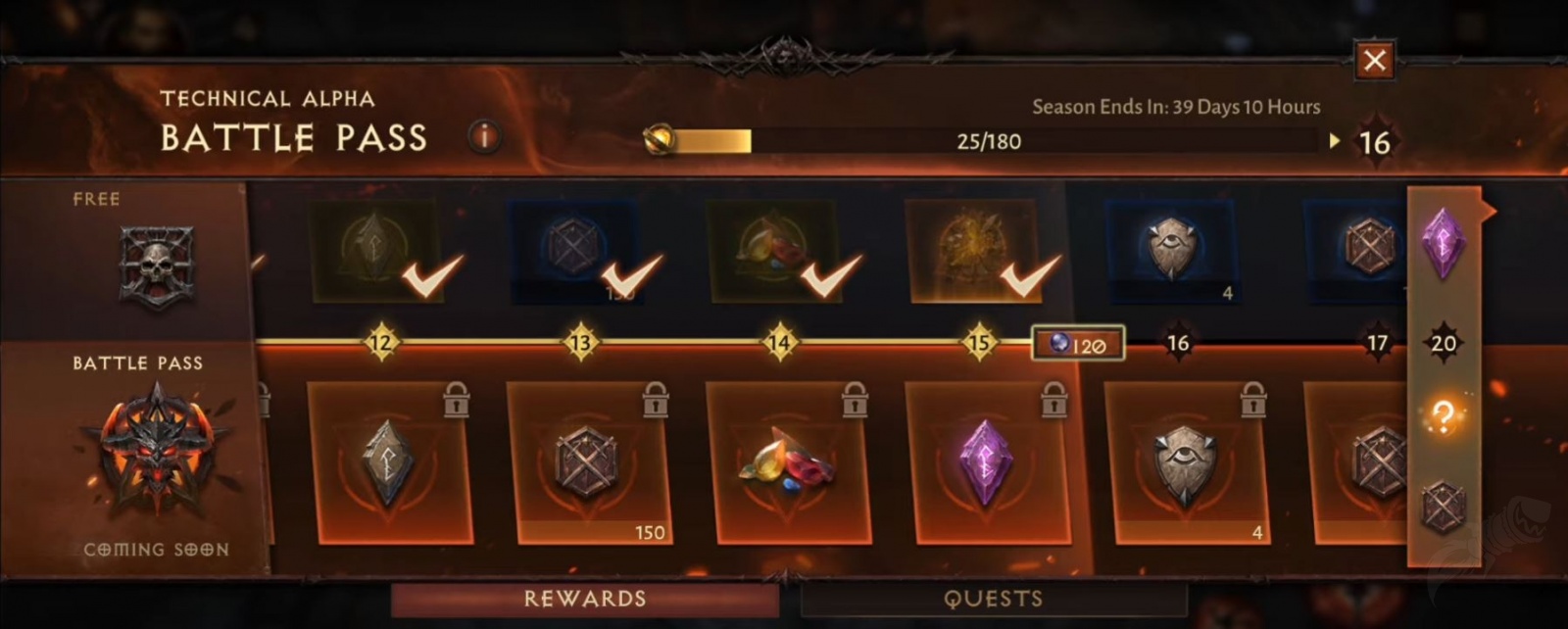
Battle Pass objectives should be your first daily priority, as they provide legendary crests, materials, and experience for minimal time investment. Completing all daily objectives takes approximately 30 minutes and provides rewards worth far more than equivalent time spent in other activities. The legendary crests from Battle Pass represent your primary source of free crested Elder Rift runs.

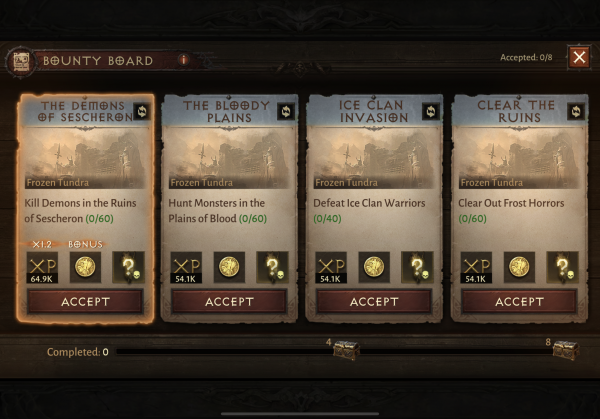
Bounties offer daily gold and experience with guaranteed rewards for completing simple objectives throughout the game world. While individual bounty rewards seem modest, the accumulated value over months funds significant portions of your upgrade expenses. Never skip daily bounties as the time invested provides excellent returns compared to farming activities with random reward structures.

Codex tracking should guide your farming route selection, as completing Codex pages provides one-time bonuses worth pursuing when convenient. You shouldn’t detour excessively to force Codex completions, but choosing farming zones with multiple incomplete pages generates bonus rewards without dedicated grinding. Check your Codex progress daily to identify nearly complete pages.

Shadow or Immortal faction activities provide unique currencies unavailable through other means, making faction participation mandatory for accessing faction-exclusive rewards. These daily activities take 15-30 minutes and reward materials that accelerate progression substantially. Join a faction immediately upon unlocking the system and maintain consistent daily participation.

Elder Rifts should consume any remaining daily playtime after completing time-limited activities, as they provide consistent experience, gold, and gear upgrades. Running rifts at appropriate difficulties generates steady progression across multiple systems simultaneously. Use your free Rare Crests during daily rift runs to maintain a chance at legendary gem drops.

Hidden Lair hunting during your farming routes provides bonus gold and equipment from quick mini-dungeons that spawn randomly throughout the world. Developing awareness of common spawn locations allows checking them naturally during other activities without dedicated searching. The brief time investment for checking potential spawns provides worthwhile returns when lairs actually appear.

Warband activities become available based on your Warband’s schedule, providing enhanced rewards for group content completion. Coordinating with your Warband to ensure you can participate in scheduled activities prevents missing valuable rewards. Even if your Warband schedule doesn’t perfectly match your availability, finding a Warband with compatible timing dramatically improves your progression.

Weekly Lockout Priorities and Time-Limited Content

Weekly activities provide disproportionate rewards compared to their time investment, making them absolutely mandatory for competitive free-to-play progression. Missing weekly lockouts means permanently losing rewards you can never recover.

Helliquary raid bosses represent the highest priority weekly activity, providing materials to upgrade your Helliquary that permanently increases your Combat Rating. Each boss can be defeated once weekly for full rewards, with the accumulated materials over months adding thousands of Combat Rating points. Never miss weekly boss kills regardless of other obligations.

Finding consistent raid groups through your clan or server chat ensures you can complete weekly bosses reliably without scrambling for groups each week. Many clans schedule weekly boss runs at specific times, allowing you to plan your schedule around guaranteed group availability. Joining a raid-focused clan dramatically improves your consistency with weekly completions.

Challenge Rift completion provides weekly rewards scaled to your performance tier, with even poor performances generating worthwhile materials. The time investment rarely exceeds 15 minutes while the rewards justify participation regardless of your leaderboard placement. Complete Challenge Rift early each week to avoid last-minute rushes that might conflict with unexpected obligations.

Warband weekly activities provide substantial rewards for coordinated group content that resets every seven days. These activities require teamwork and coordination but reward materials unavailable through solo play. Prioritize Warband weekly content over less efficient daily activities when time is limited.

PvP weekly rewards accumulate based on your total battleground participation regardless of win rate, making even casual PvP engagement worthwhile. A few battleground matches weekly provide materials that supplement your PvE progression while exposing you to different gameplay. The rewards justify participation even if you dislike PvP.

Special events often run on weekly schedules with unique rewards available only during the active period. Staying informed about current and upcoming events allows you to prioritize them appropriately during their limited availability. Missing event rewards means losing unique items or materials you might never obtain otherwise.

Market Board listing strategies benefit from weekly price cycles, with weekends typically seeing higher supply and lower prices as more players farm and list items. Timing your purchases for weekend market crashes and sales for weekday demand spikes maximizes your Platinum efficiency. Track prices over several weeks to identify patterns specific to your server.

Resource Allocation Strategy for Free-to-Play Players

Limited resource income as a free-to-play player demands careful allocation decisions that maximize impact per resource spent. Wasting precious materials on low-value upgrades sets your progression back weeks or months.

Gold should be reserved exclusively for mandatory upgrades like equipment enhancement, gem socketing, and essential reforges that dramatically improve your gear. Avoid frivolous spending on cosmetics, unnecessary reforges chasing perfect stats, or vendor purchases you can farm naturally. Every gold piece saved accelerates your ability to afford meaningful upgrades.

Equipment enhancement should focus on set pieces you’re confident will remain in your build long-term rather than spreading enhancements across gear you’ll replace while farming. Concentrating enhancement investment on permanent equipment prevents wasting materials on temporary gear. Wait until you’ve completed your primary set before heavily enhancing individual pieces.

Legendary gem upgrade priorities should emphasize two-star gems over one-star alternatives, as two-star gems provide dramatically better scaling while remaining accessible to free players. Only upgrade one-star gems to minimum ranks required for awakening thresholds, reserving serious Gem Power investment for two-star and eventual five-star acquisitions.

Fading Ember spending should target guaranteed two-star gem purchases rather than gambling on random one-star gems from the basic vendor option. The guaranteed acquisition provides better value than random chances, though the higher cost requires patience to accumulate sufficient Ember. Save your Ember for specific gems your build needs rather than buying whatever’s available immediately.

Eternal Legendary Crests obtained through Battle Pass and events should be saved for highest difficulty Elder Rifts you can comfortably clear. Using premium crests on low-difficulty rifts wastes their potential for better gem quality from harder content. Group with other players using crests to multiply your effective returns through shared gem drops.

Normal gem upgrades provide meaningful stat increases that free players sometimes neglect while focusing on legendary gems. The materials for normal gem upgrades come naturally through salvaging unwanted gems, making this progression system essentially free beyond time investment. Maintain normal gem upgrades alongside legendary gem progression.

Reforge attempts should target equipment with egregiously bad secondary stats rather than chasing marginal improvements on already functional gear. The exponentially increasing costs for repeated reforges make perfection prohibitively expensive. Accept good enough stat distributions and move to optimizing other equipment pieces.

Legendary Gem Strategy for Free-to-Play Progression

Legendary gems create the largest power gap between free and paying players, requiring careful strategy to compete effectively with limited gem resources.

One-star gem selection should prioritize universally strong options like Everlasting Torment and Berserker’s Eye that provide consistent value for all classes. These gems form your baseline power while you slowly accumulate two-star alternatives. Only upgrade one-star gems to rank 5 for awakening requirements unless you’re extremely confident you’ll use them long-term.

Two-star gem focus represents your primary progression path as a free-to-play player, with gems like Phoenix Ashes and Frozen Heart providing competitive power without requiring extraordinary luck or spending. Acquiring complete two-star gem sets takes 2-4 months of consistent Fading Ember farming but provides power sufficient for all content except top-tier competitive PvP.

Five-star gem acquisition happens slowly through Fading Ember purchases of Seeping Bile or occasional lucky drops from free crests. Expect acquiring one five-star gem every 2-3 months as a free player, making each acquisition a significant milestone. Prioritize Seeping Bile from the Fading Ember vendor when it rotates into availability, as it provides the most accessible five-star option.

Rank priorities for five-star gems should target rank 3-5 initially rather than pushing for rank 10, as the exponential cost increases make high ranks impractical for free players. A rank 3 five-star gem provides substantial power and enables awakening bonuses without requiring months of dedicated Gem Power accumulation. Spread your investment across multiple five-star gems at moderate ranks rather than maxing one gem.

Group crested runs multiply your effective Fading Ember income by allowing you to benefit from other players’ Eternal Legendary Crest investments. Find dedicated farming groups through your clan where players take turns using crests or coordinate to ensure everyone uses crests simultaneously. The multiplied Ember gains dramatically accelerate your gem acquisition timeline.

Gem Power management requires discipline to avoid wasting this precious resource on suboptimal gems you’ll eventually replace. Create a clear upgrade plan identifying which gems you’re targeting for rank increases and stick to that plan rather than impulsively upgrading whatever gems you happen to acquire. The focused approach reaches meaningful power thresholds faster than scattered investment.

Market Board gem sales provide Platinum income when you receive valuable unbound legendary gems you don’t need. Even two-star gems sell for reasonable Platinum amounts that fund future purchases. List unneeded gems immediately rather than hoarding them, as the Platinum gains provide more flexibility than unused gems gathering dust.

Competing in PvP as a Free-to-Play Player

PvP creates the starkest divide between free and paying players, though free-to-play players can compete effectively at moderate tiers through skill and optimization.

Realistic PvP expectations as a free player involve competing successfully in casual and low-to-mid ranked battlegrounds while accepting that top-tier Legend rank remains dominated by heavily invested players. The gem disparity becomes insurmountable at the highest competitive levels, but 80% of PvP content remains accessible to optimized free players.

Class selection impacts your PvP viability as a free player, with tankier classes like Barbarian and Crusader competing more effectively than damage dealers who need premium gems to match paying player burst damage. The survivability and utility of tank classes matters more than raw power, allowing skill and positioning to overcome some gear disadvantages.

Build optimization for free-to-play PvP should emphasize two-star defensive gems like Phoenix Ashes and Frozen Heart that provide survivability and utility rather than competing on pure damage. You cannot out-damage whales with five-star offensive gems, but you can outlast and outplay them through superior mechanics and teamwork.

Team coordination allows free players to contribute meaningfully by focusing on objectives, protecting teammates, and enabling carries rather than attempting to solo carry matches. Communicate with your team through pings and chat to coordinate pushes and defense. Your value comes from playing your role effectively rather than dominating kill counts.

Objective focus over kill hunting plays to free player strengths by rewarding tactical awareness over raw power. Controlling objectives generates more points than kills, allowing skilled free players to contribute equally to whales who only chase kills. Develop strong map awareness and positioning to maximize your objective impact.

Ranked progression as a free player should target Gold or Platinum ranks as realistic goals, with Diamond requiring exceptional skill and optimization. Don’t feel discouraged by inability to reach Legend, as 95% of players never reach that tier regardless of spending. Enjoy the competitive matches at your appropriate skill tier rather than obsessing over unattainable goals.

Faction warfare through Shadow activities provides PvP content where coordination and numbers matter more than individual power. The large-scale battles dilute individual power disparities through sheer participant counts. Contribute to your faction’s success through consistent participation rather than attempting to hard-carry.

Psychological Strategies for Long-Term Free-to-Play Enjoyment

Maintaining satisfaction as a free player requires mental approaches that emphasize personal progression over competitive standing against paying players.

Progress tracking through screenshots or spreadsheets allows appreciating your advancement over time rather than fixating on your current power relative to top players. Documenting your Combat Rating, Paragon level, and gem collection at monthly intervals reveals substantial progression that feels invisible during daily grinding. Celebrating personal milestones provides motivation independent of competitive standing.

Goal setting should focus on achievable objectives like completing sets, reaching specific Paragon levels, or acquiring particular gems rather than competing against whales. Breaking long-term progression into smaller milestones creates regular achievements that maintain engagement. Adjust goals based on your available playtime rather than comparing to no-life grinders.

Community engagement through active clan participation provides social fulfillment beyond pure power progression, with friendships and shared experiences creating value independent of competitive viability. Many players continue enjoying Diablo Immortal primarily for their social connections rather than progression treadmills. Invest in building relationships with clan members who share your approach to the game.

Content focus should emphasize activities you personally enjoy rather than forcing yourself through optimal but unenjoyable grinds. If you hate PvP, accept slightly slower progression by skipping it rather than burning out through miserable forced participation. Sustainable long-term play requires enjoying your daily routine.

Spending temptation management involves recognizing that small purchases rarely provide meaningful competitive advantages while larger spending commitments create slippery slopes toward excessive investment. If you’re tempted to spend, wait 24-48 hours to ensure it’s a considered decision rather than impulse. Most spending urges pass with time.

Comparison avoidance with top spenders prevents the resentment and dissatisfaction that kills free-to-play enjoyment. Recognize that whales exist in every free-to-play game and their spending funds the servers you play on free. Your progression path differs from theirs without being inferior.

Break scheduling prevents burnout from excessive grinding, with regular days off allowing mental recovery and preventing the game from feeling like obligation. Diablo Immortal remains available whenever you return, making breaks cost nothing beyond slightly slower progression. Your enjoyment matters more than maximizing every possible daily reward.

Common Free-to-Play Mistakes That Waste Months

Free-to-play players frequently sabotage their progression through preventable errors that compound over months into devastating time losses.

The most damaging mistake involves heavily investing in one-star legendary gems early in progression, wasting Gem Power that could fund competitive two-star gem ranks. New free players see cheap one-star upgrade costs and max them immediately, only realizing months later that those resources would have been better spent elsewhere. Resist the temptation of easy early power for sustainable long-term progression.

Another critical error involves using Eternal Legendary Crests on low-difficulty Elder Rifts, receiving poor quality gems that don’t justify the crest expenditure. Free crests are precious and limited, making each use a significant decision. Wait until you can clear high-difficulty rifts before using premium crests to maximize returns.

Many free players spread equipment enhancement investments across gear they’re actively trying to replace while farming sets. This wastes gold and materials on temporary items that quickly become obsolete. Focus enhancement resources on set pieces you’re confident will remain in your build long-term.

Some free players ignore daily activities in favor of activities with potentially higher but inconsistent returns, creating unstable progression that falls behind consistent daily participants. Skipping Battle Pass objectives or bounties because they seem boring costs you the accumulated rewards that compound into substantial advantages. Consistency beats occasional excellence in free-to-play progression.

Neglecting to join active Warbands and clans isolates you from the social systems that provide substantial free rewards and group content access. Solo free players progress significantly slower than equally skilled players leveraging social features. Invest time finding compatible social groups rather than suffering alone.

Spending Platinum on convenience items or cosmetics rather than impactful Market Board purchases wastes the limited premium currency free players can earn. Every Platinum spent on non-essential items delays your ability to afford game-changing gem or gear purchases. Maintain strict Platinum discipline regardless of tempting cosmetics.

Finally, some free players quit prematurely after comparing themselves to paying players and deciding they can never compete. The comparison ignores that 90% of content remains completely accessible to free players with reasonable time investment. Don’t let whale comparisons rob you of hundreds of hours of enjoyable progression.

FAQ: Free-to-Play Progression and Viability

Can you really compete as free-to-play in Diablo Immortal?

Yes, free-to-play players can compete effectively in all PvE content and casual-to-moderate PvP with 3-6 months of consistent progression. Top-tier competitive PvP remains dominated by heavy spenders, but 90% of game content is fully accessible to optimized free players who invest time intelligently.

How long until a free-to-play player reaches competitive power?

Expect 3-6 months of consistent daily play to reach competitive power for most content, with the exact timeline depending on your efficiency and time investment. Server Paragon catch-up mechanics help newer players reach viable power faster than this timeline suggests for established servers.

What’s the most important system for free-to-play players to focus on?

Two-star legendary gems provide the most impactful progression for free players, followed by equipment set completion and Paragon leveling. These systems offer the best returns on time invested while remaining fully accessible without spending. Prioritize two-star gems over chasing rare five-star alternatives.

Is the Battle Pass worth buying as a mostly free-to-play player?

The Battle Pass represents the best value purchase in Diablo Immortal, providing rewards worth far more than the cost compared to any other spending option. If you’re willing to spend small amounts, Battle Pass should be your only purchase. However, the free track still provides worthwhile rewards for completely free players.

How much playtime does competitive free-to-play require?

Maintaining competitive free-to-play power requires 2-4 hours of daily play focusing on efficient activities. Casual players logging in occasionally will struggle to keep pace, while this time investment allows reaching and maintaining server average power. Quality of playtime matters more than pure quantity.

Can free players participate in Shadow War and faction content?

Yes, all faction content remains fully accessible to free players without restrictions. Shadow War success depends more on coordination and numbers than individual power, allowing free players to contribute meaningfully. Join an active faction immediately upon unlocking the system.

Should free players avoid PvP entirely?

No, free players should participate in casual PvP for the unique rewards and Battle Pass objectives while accepting they won’t reach top-tier competitive rankings. Low-to-mid ranked PvP remains accessible to free players who optimize their builds and play skillfully. Avoiding PvP entirely sacrifices valuable rewards.

  •