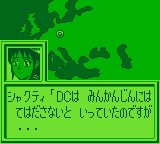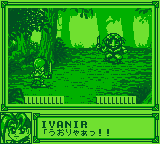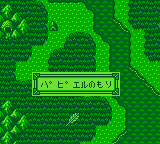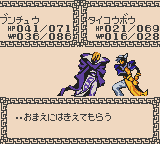
Zobrazení pro čtení

The History of Portable Tactical RPGs, Part 1: Game Boy (1989–2003)

The History of Portable Tactical RPGs, Part 1: Game Boy (1989–2003)

While the Super Famicom in Japan was home to several tactical RPGs that rank among the most influential, acclaimed, and successful of all time, most titles in the genre were never released internationally. In subsequent console generations, tactical RPGs became especially prominent on portable platforms: their fully turn-based gameplay loop (movement and actions), small-scale maps, and stage-based progression proved well suited to systems with limited hardware capabilities, small (sometimes touch-sensitive) screens, and less ergonomic control design with fewer buttons.

In this SUPERJUMP series, we will present an overview of the history of tactical RPGs on portable consoles, from the original Game Boy to the current Switch Lite. We will show how the evolution of portable hardware went hand in hand with the development of tactical RPG mechanics, resulting in a diverse body of titles within this hybrid genre.

Two criteria are being used to include a video game in this chapter:

  1. The title was released for early Game Boy models (GB) or Game Boy Color (GBC) between 1989 and 2003.
  2. The title is a turn-based RPG whose main gameplay sessions are in grid-based scenarios, in which the player can move the units of a party or battalion. Although in some cases the player can control a single unit, combat primarily takes place against a coordinated party or battalion, not monsters that spawn or inhabit the world with relative independence. This is not a universal definition for tactical RPGs, but rather a functional definition of the genre for the Game Boy line of handheld consoles.

See the essay Origins of the Strategy RPG (1982-1995) (SUPERJUMP, 2022) for historical details on the definition of the tactical RPG genre.

Table of Contents

I. Hardware features
I.i. Game Boy
I.ii. Game Boy Pocket
I.iii. Game Boy Light
I.iv. Game Boy Color

II. Major tactical role-playing games
II.i. Super Robot Taisen
II.ii. Little Master
II.iii. Little Master 2
II.iv. Yugioh Capsule Monster GB
II.v. From TV Animation One Piece: Yume no Luffy Kaizokudan Tanjou

III. Minor tactical role-playing games

IV. Cronology

V. Honorable mentions

VI. Generation shift

I. Hardware Features

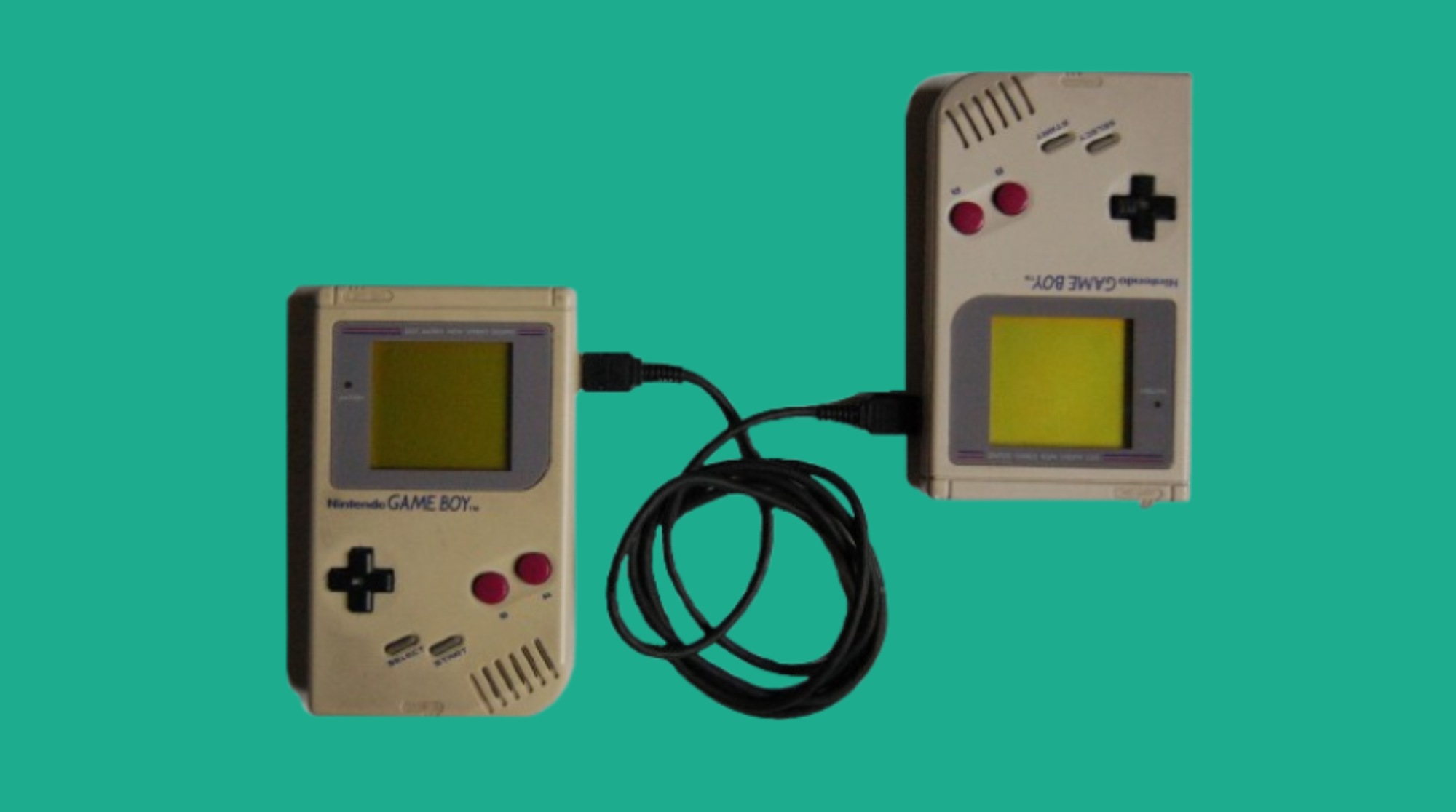
Announced in 1989, the Game Boy was conceived by Nintendo’s R&D1 team under Gunpei Yokoi as a portable gaming system that prioritized affordability, durability, and long battery life over cutting-edge specifications. It used low-power technology and debuted with a greenish dot-matrix screen and a simple control layout derived from the NES controller. The system’s early success was amplified by bundling the iconic Tetris with the hardware, a strategy that helped establish the Game Boy as a defining platform in portable gaming. The Pokémon series, of course, was also largely responsible for the success of this handheld console. Games like Tetris and Pokémon used Game Link cables for local co-op or multiplayer.
The History of Portable Tactical RPGs, Part 1: Game Boy (1989–2003)
Two original Game Boys connected with a Game Link Cable. Source: Wikicommons/Authors.

Core Technical Characteristics (Shared Architecture)

  • CPU: Sharp LR35902 (8-bit hybrid of Z80 and Intel 8080)
  • Base Clock Speed: ~4.19 MHz
  • Display Resolution: 160 × 144 pixels
  • Graphics Model: Tile-based backgrounds (8 × 8 tiles) with hardware sprites
  • Sprite Limits: Up to 40 sprites on screen; 8 × 8 or 8 × 16 pixels per sprite
  • Input: Digital D-pad; A / B buttons; Start / Select
  • Cartridge-Based Storage: Banked ROM and RAM via Memory Bank Controllers (MBCs)

The Game Boy and its direct evolutions (Game Boy Pocket, Game Boy Light, and Game Boy Color) sold approximately 118.69 million units worldwide; the family is currently the fourth best-selling video game platform of all time. However, while turn-based RPGs flourished on the system, tactical RPGs were scarce on that platform. The two most important tactical RPGs in the Game Boy line are Super Robot Taisen, which is the first in one of the most classic and prolific tactical RPG series, and Yu-Gi-Oh! Capsule Monster GB, which laid the groundwork for a spin-off sub-series in the Yu-Gi-Oh! video game franchise.

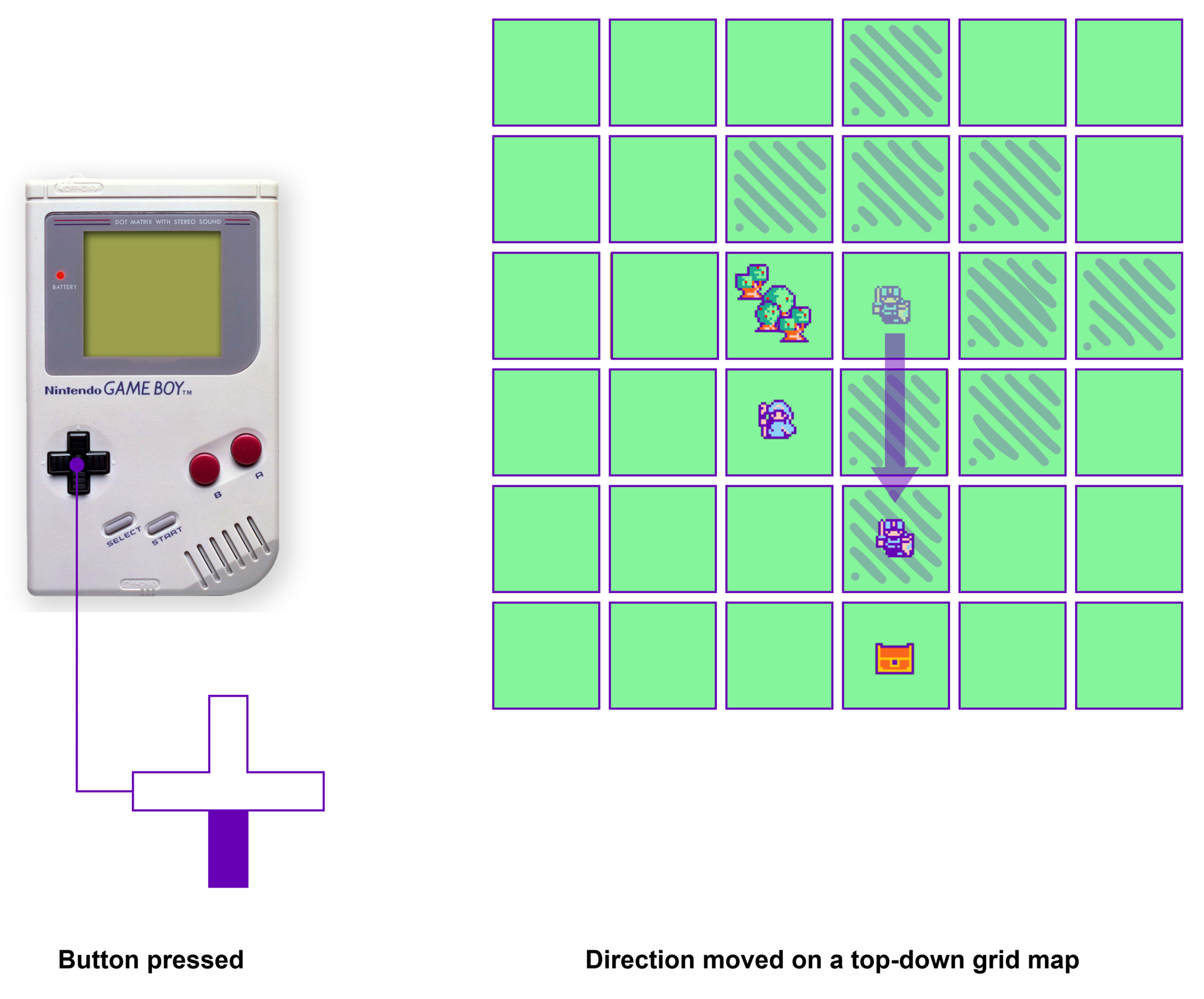
Despite their severe technical limitations, the Game Boy models offered a basic ground for tactical role-playing games. Their low-resolution grid-based displays, turn-based input model, and modest processing capabilities aligned with the requirements of small-scale tactical gameplay. Tactical RPGs developed for these handhelds often featured concise and episodic narratives, succinct dialogue, few simultaneous units, discreet movement with few variations, small top-down grid-based environments lacking verticality, few objects, menu-driven combat, and interfaces that simplified and sometimes omitted specific information (such as the chance to dodge or block an attack). Furthermore, the portable format encouraged short and intermittent gaming sessions. The Game Boy's D-pad is ideal for top-down grid movement, and the A / B buttons on this handheld are used to select a playable unit and its turn-based action.
The History of Portable Tactical RPGs, Part 1: Game Boy (1989–2003)
Artwork depicting grid-map movement in a style typical of tactical RPGs on a Game Boy. Source: Authors.

Games often favored a top-down view for clear readability of the grid, and possible routes of movement were often shown by making unreachable tiles darker or by adding a mark like Little Master’s dark dot to indicate where players could take the currently selected unit. Simple cursors highlighting the current tile the player was interacting with were already a staple, letting players move units and check areas on the map. Cancelling movement wasn’t present on the first Super Robot Taisen, but other titles, like Little Master, had this function.

For battles, the most popular format was to use transitions from the map grid to a separate screen that showed the attacker and defender in action, in a similar fashion to Fire Emblem, but often with simpler movement animations. One exception was Yu-Gi-Oh! Monster Capsule GB, which represented attacks as hit animations directly on the map.

The video below offers a sample of the audiovisuals of a tactical RPG on the Game Boy. In the subsequent subtopics, we present, in general terms, updates to the original Game Boy that impacted the experience of playing a tactical RPG.

0:00
/0:26

Super Robot Taisen emulated via Visual Boy Advance. Source: Banpresto/Authors.

I.i. Game Boy (DMG-01, 1989)

  • Display: 160 × 144 pixels; 4 grayscale tones (2-bit)
  • RAM: 8 KB system RAM; 8 KB video RAM
  • Sound: 4 audio channels (2 square wave, 1 wave table, 1 noise)
  • Power: 4 × AA batteries

High-contrast monochrome screens favor symbolic iconography and grid-based design, the basis for tactical maps, RPG interfaces, and menus.

The console's non-backlit LCD screen features a greenish background.
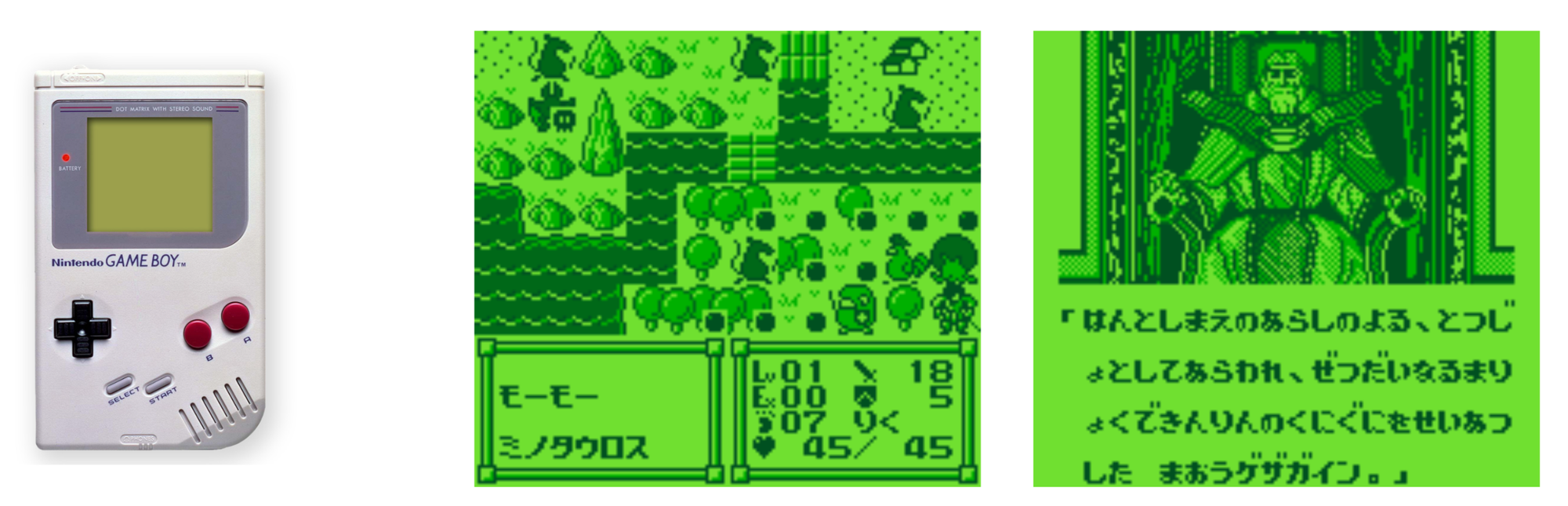
The History of Portable Tactical RPGs, Part 1: Game Boy (1989–2003)
Little Master (GB, JP: 1991) on Game Boy. Source: Authors.

I.ii. Game Boy Pocket (1996)

  • Display: Improved passive-matrix LCD with higher contrast; still monochrome (4 grayscale tones)
  • Form Factor: Smaller and lighter chassis
  • Power: 2 × AAA batteries;

The Pocket introduced significantly improved screen clarity, indirectly enhancing the readability of tactical interfaces and small map tiles.

The Game Boy Pocket also uses a monochrome four-shade palette, but with true grayscale tones.

I.iii. Game Boy Light (1998, Japan-only)

  • Core Hardware: Equivalent to Game Boy Pocket
  • Display: Monochrome LCD with electroluminescent backlight
  • Power: 2 × AA batteries

The backlit screen greatly improved visibility in low-light conditions.

On the Game Boy Light, when the backlight is turned off, the display appears identical to that of the Game Boy Pocket.
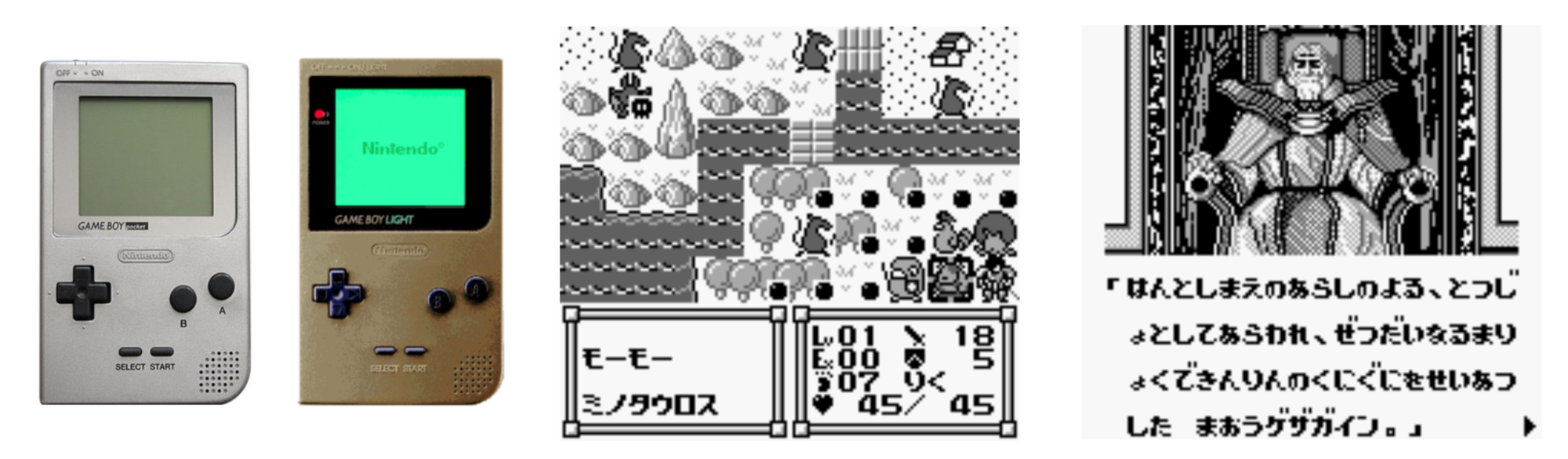
The History of Portable Tactical RPGs, Part 1: Game Boy (1989–2003)
Little Master (GB, JP: 1991) on Game Boy Pocket or Game Boy Light. Source: Authors.

I.iv. Game Boy Color (CGB-001, 1998)

  • CPU: Enhanced LR35902
  • Clock Speed: 4.19 MHz (DMG compatibility mode); ~8.38 MHz (native CGB mode)
  • Color Capability: 32,768-color master palette; up to 56 colors on screen simultaneously, without advanced tricks
  • RAM: 32 KB system RAM; 16 KB VRAM (two banks)
  • Backward Compatibility: Full support for all original Game Boy titles

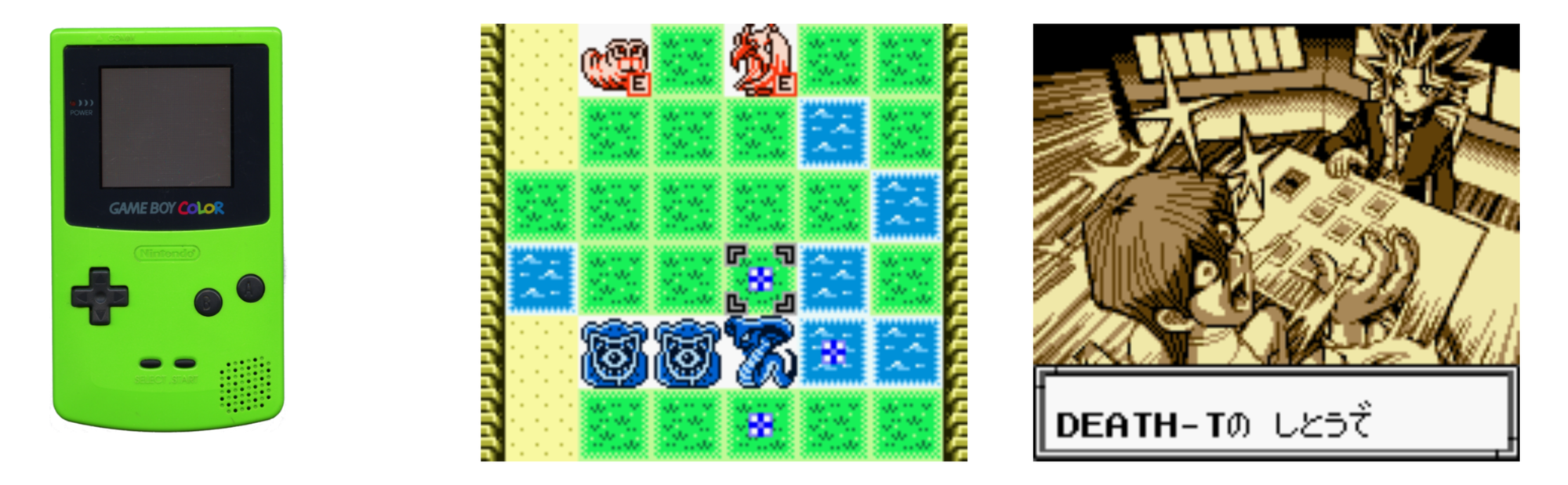
Color palettes enabled clearer unit differentiation, terrain encoding, and status signaling, while increased RAM and clock speed supported more complex AI routines and larger battlefields.

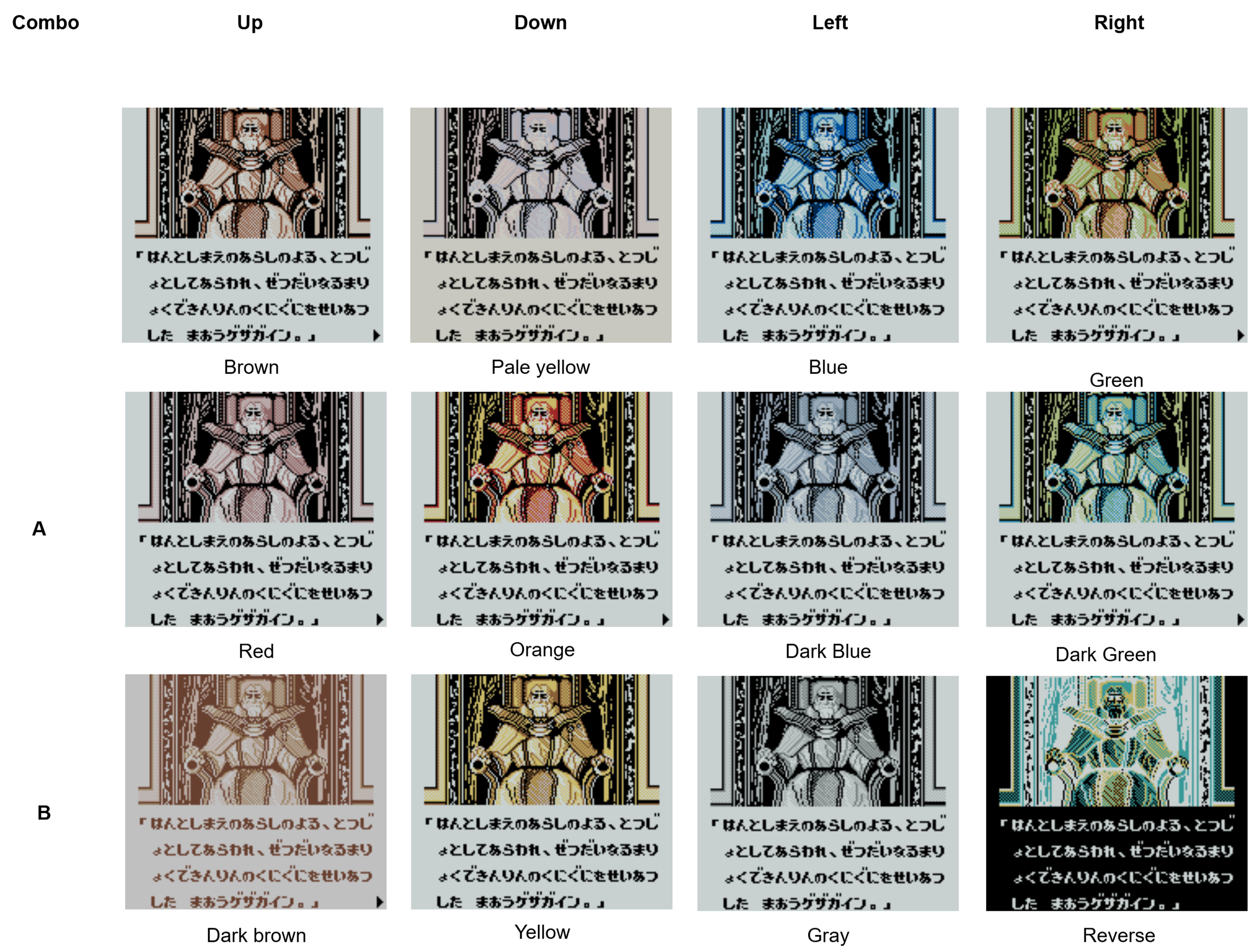
For GBC-exclusive games, the hardware supports a 15-bit RGB palette, but color usage is strictly palette-based: each background tile references a 4-color palette, with up to 8 background palettes and 8 sprite palettes available per frame. For sprites, one color is always transparent, resulting in a practical maximum of 56 on-screen colors (32 from backgrounds and 24 from sprites). When running original Game Boy games, the four grayscale tones of the monochrome game are mapped to predefined color palettes, either automatically selected based on the cartridge header or manually chosen by the player via button combinations at boot, preserving the original light–dark relationships while adding hue.
The History of Portable Tactical RPGs, Part 1: Game Boy (1989–2003)
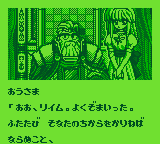
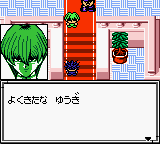
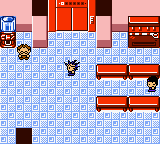
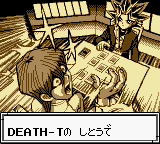
Yugioh Capsule Monster GB (GBC, JP: 2000) on Game Boy Color. Source: Authors.
The History of Portable Tactical RPGs, Part 1: Game Boy (1989–2003)
Little Master (GB, JP: 1991) on Game Boy Color. Source: Authors.

II. Major Tactical Role-Playing Games

We say that a tactical RPG (TRPG) is "major" when it satisfies at least one of the following criteria:

  1. The title has an average score of 35/40 or higher on some review aggregator (EGM or Famitsu)
  2. The title sold more than 100,000 copies
  3. The title is part of a main series
  4. The title is the first in a subseries
  5. The title was significantly influential in the development of later major titles.

If a spin-off surpasses the original series in sales and critical acclaim, we say that it has become a main series. By that definition, Super Robot Wars and Tactics Ogre are main series, while Final Fantasy Tactics and Shin Megami Tensei: Devil Survivor are not.

In chronological order, this topic presents all the major tactical RPGs from the Game Boy line, including narrative introduction, gameplay, and critical and commercial reception. Each game is accompanied by cover art plus up to 6 screenshots from the game:

  1. Tactical battle grid;
  2. In-game dialogue (if any);
  3. Transition to combat (if any);
  4. World map (if any);
  5. Exploration (if any);
  6. Cutscene without in-game graphics (if any).

II.i. Super Robot Taisen (GB, 1991)

After having done a similar crossover project called Compati Hero back in 1990, Bandai’s subsidiary Banpresto decided to create a project to mix multiple mecha series into a single game. This gave birth to Super Robot Taisen, a tactical RPG that let players move various giant robot units through grid-based battlefields.

When starting the game, players have to choose which series they’d like to comprise their army. The choices include Mobile Suit Gundam, Mazinger, and Getter Robo, and the main unit can be selected as the player’s favorite from the list, allowing players to add extra points to their attack, HP, speed, or charisma. As the player progresses through the maps, it is possible to obtain more allies using a chance-based persuasion system.

0:00
/0:26

Super Robot Taisen emulated via Visual Boy Advance. Source: Banpresto/Authors.

Also known as Super Robot Wars in the West, the series would become very prolific, with over 70 releases across multiple systems, including Super Famicom, Game Boy Advance, DS, 3DS, and all PlayStation consoles and handhelds. Most titles remain available only in Japanese, but all games since Super Robot Wars OG: The Moon Dwellers (2016), have been released in English.

The first game sold 190,000 units and was a best-seller in the first years of Game Boy in Japan. While reviews from back in the day are hard to find online, back in 2020, Famitsu commented on how the title already introduced some of the appeal of the crossover franchise, even if, compared to later releases, it is noticeably limited:

“The story is unique, and the appeal of the series lies in how it skillfully blends together works with completely different settings into a single narrative. While it's common to read the story with excitement, wondering how your favorite works will connect, the adventure section of the first game was quite simple. [...] Due to hardware limitations, the battle animations in this game were simple, with missiles flying about, giving the game a feel similar to that of early command-based RPGs. However, with the background music from each game playing and the robots on both sides being depicted, it's interesting to see a glimpse of the powerful battles of today.”

Full text (Famitsu’s retrospective of the game’s launch date): https://www.famitsu.com/news/202004/20196852.html
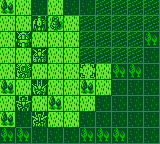
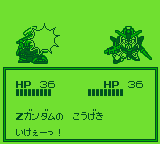
The History of Portable Tactical RPGs, Part 1: Game Boy (1989–2003)

Super Robot Taisen emulated via Visual Boy Advance. Source: Banpresto/Authors.

II.ii. Little Master (GB, JP: 1991)

Tokuma Shoten’s Little Master: Raikuban no Densetsu was another game starting a brand-new series on the GameBoy. The title would eventually span a sequel on the same platform in 1992 and another on the SNES in 1995. An English translation was planned, and the title would have been released as Doomsayer: A Hero’s Crusade, but this Western version was ultimately cancelled back in the day.

In Little Master, players control Raikuban and the kingdom’s troops, which include anthropomorphic animals. Land effects on the characters were presented right before each combat, which happened in a separate screen like the Fire Emblem series. Attack animations were considerably more detailed than Super Robot Taisen of the same year, with each individual moving towards the enemy to unleash an attack, and the battle background depicting which terrain they were on. It was also possible to fuse units to create even stronger allies.

Sales data or reviews from back in the day are hard to find, and the game remains an obscure gem from the Game Boy, which is also the case for its sequels. Nonetheless, in 2018, Zatos Hacks released an English fan translation of the game, pointing out some of its qualities:

“Little Master is the first game in the Little Master trilogy. This game and the series as a whole are quite terrific! The game is a strategy RPG which features great gameplay and music. Levels are varied to keep the gameplay fresh. The game also features a unity system, where you can combine troops to form more powerful ones! A standout game for the Game Boy!”

Romhacking.net Description: https://www.romhacking.net/translations/3647/
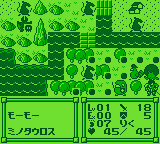
The History of Portable Tactical RPGs, Part 1: Game Boy (1989–2003)

Little Master emulated via Visual Boy Advance. Source: Konami/Authors.

II.iii. Little Master 2 (GB, JP: 1992)

Coming a little less than a year after the first game, Little Master 2 is a straight sequel that keeps much of its structure. Even visually, the game is very similar, reusing units and some maps but expanding the game to have more than double the number of missions and adjusting the balance so that some units aren’t too strong and there’s more of a challenge overall.

As far as major additions to the genre, the game doesn’t truly bring anything major to the table, focusing on presenting what’s mostly a revamped, improved version of what Little Master offered. One of its few significant additions was introducing a healer unit to the team that can transform into a different fighter afterward.

0:00
/0:19

Little Master 2 emulated via Visual Boy Advance. Source: Konami/Authors.

Like its predecessor, there’s a lack of data on its sales and reviews available online. However, the series would continue with a third game, called Little Master: Nijiiro no Maseki on the Super Famicom, which would bring further gameplay improvements. Unfortunately, Little Master 2 is still only available in Japanese, not even receiving any English fan translations.

One of the only online reviews for the game comes from a user on the gaming site GameFAQs, commenting on how the game is now improved:

“Released less than a year after its predecessor, Little Master comes back to the Game Boy. Despite being, at first glance, almost the same exact game, this second entry is bigger and better in nearly every aspect. [...] But all in all, Little Master 2 is a compelling TRPG that deserves to be played. Although technically a sequel to the first game, it is not mandatory to play it before jumping into this one. Whether you’re looking for a great game to play on your original Game Boy or looking for a tactical RPG to satisfy your gray matter cravings, you can’t go wrong with Little Master 2: Knight of Lightning. A definite must.”

Full retrospective review: https://gamefaqs.gamespot.com/gameboy/569771-little-master-2-raikou-no-kishi/reviews/160203
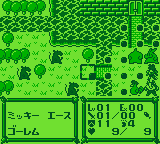
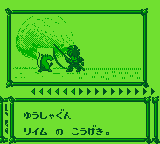
The History of Portable Tactical RPGs, Part 1: Game Boy (1989–2003)

Little Master 2 emulated via Visual Boy Advance. Source: Konami/Authors.

II.iv. Yugioh Capsule Monster GB (GBC, JP: 2000)

Yu-Gi-Oh! Monster Capsule GB was developed and published by Konami for the Game Boy Color and released exclusively in Japan as part of the expansion of the Yu-Gi-Oh! franchise. The game is directly inspired by the “Monster World” and “Capsule Monsters” story arcs from the original manga, offering a self-contained adventure outside the traditional card-duel format that came to dominate the series. In the narrative, the iconic Yugi Muto confronts the antagonist Seto Kaiba, whose possession by the Millennium Ring precipitates a tournament-based journey through the “Monster World” in order to rescue friends and family.

In terms of gameplay, Monster Capsule GB employs a turn-based tactical RPG system in which players deploy and move “capsules” (each representing a monster) across square battlefields, exploiting movement ranges, unit-specific abilities, and terrain effects to defeat opponents. The system distinguishes itself from other portable tactical RPGs of the period by integrating traditional RPG progression with rigid spatial positioning and mechanics derived directly from the Yu-Gi-Oh! universe, resulting in a hybrid experience situated between board game design, role-playing progression, and tactical combat.

Battles take place on a 6x6 field, where each square represents a field. You can position up to four Monster Capsules (MCs), and on each turn, you move and attack a monster. If there are no more MCs on the field, you lose. Dice rolls determine the success of an attack; If the result is less than the hit rate, the attack is a hit. Hit rate and power can also be increased by field energy sources or support effects, such as enemies being within the attack range of other allies. Excepting battles, everything else, including route selection, is decided by dice.

0:00
/0:27

Yugioh Capsule Monster GB emulated via Visual Boy Advance. Source: Konami/Authors.

Commercially, Yu-Gi-Oh! Monster Capsule GB achieved a modest performance in the Japanese market, with cumulative sales of approximately 129,095 units (Wiki/GameDataLibrary/Famitsu). The title peaked at over 36,000 units sold in its first week (yugiohdata), securing prominent positions in domestic sales rankings throughout 2000. There is scarce information about reviews from the 2000s, but subsequently,in Yu-Gi-Oh! Monster Capsule GB has been praised in comparison to other titles in the franchise on the same platform.

“Although the subject matter differs, this title surpasses other GB Yu-Gi-Oh! games in quality and is definitely in the category of a good character game.”

[ 題材としているゲームが違うとはいえ、他のGBの遊戯王のゲームを上回る出来であり、キャラゲーとしても間違いなく良作の部類に入る。]

Full retrospective review: ゲームカタログ@Wiki,
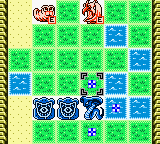
The History of Portable Tactical RPGs, Part 1: Game Boy (1989–2003)

Yugioh Capsule Monster GB emulated via Visual Boy Advance. Source: Konami/Authors.

II.v. From TV Animation One Piece: Yume no Luffy Kaizokudan Tanjou (GBC, JP: 2001)

With licenses to some anime at their disposal, Banpresto invested in creating an RPG adapting One Piece’s early events. As with all the other tactical RPGs for the handheld system, it was only released in Japan.

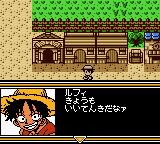
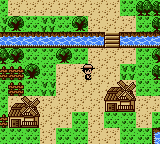
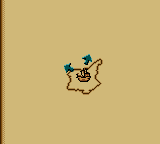
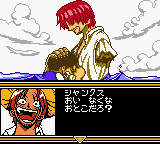
Gameplay has a structure very similar to the traditional command-based, turn-based games. Outside of battles, players can explore the world in a top-down perspective, moving around to reach specific points in the map to trigger dialogues with characters. When moving around specific areas, it’s possible to trigger random battles, which will take the player to grid-based, tactical combat. At first, the player starts only with the protagonist Luffy, though more characters join the team as the story progresses, and it’s possible to change the order of events compared to the original manga/anime.

0:00
/0:45

From TV Animation One Piece: Yume no Luffy Kaizokudan Tanjou emulated via Visual Boy Advance. Source: Banpresto/Authors.

From TV Animation One Piece: Yume no Luffy Kaizokudan Tanjou sold approximately 375,962 units (Video Game Sales Wiki). On release, Famitsu reviewed the game with a 23/40 (Wiki/Famitsu No. 646). When it comes to the game's qualities, Yuki Ogata points out the scenario variations as one of its big draws:

"You can create a pirate crew with your favorite characters and progress through the story however you like. It's a game where you can enjoy 'what if' One Piece scenarios, such as putting 'Sanji' and 'Gin' or 'Zoro' and 'Helmeppo' in the same party."

[自分の好きなキャラを集めた海賊団を作り、自分が好きなようにストーリーを進める。「サンジ」と「ギン」や、「ゾロ」と「ヘルメッポ」を同じパーティにするなど“もしも”のワンピースが楽しめるゲームだったのだ。]

Full retrospective review: Futabanet Manga plus
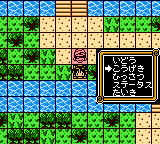
The History of Portable Tactical RPGs, Part 1: Game Boy (1989–2003)

From TV Animation One Piece: Yume no Luffy Kaizokudan Tanjou emulated via Visual Boy Advance. Source: Banpresto/Authors.

III. Minor Tactical Role-Playing Games

Not all tactical RPGs released for the Game Boy line were prominent in their time, but all deserve their place in the chronology. Below, we present the minor tactical RPGs released for the Game Boy line.

Dai-2-ji Super Robot Taisen G (GB, JP: 1995)

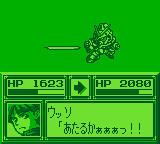
Dai-2-ji Super Robot Taisen G (or “2nd Super Robot Wars G” in an English name translation effort) is a remake of  Dai-2-Ji Super Robot Taisen, originally released for the Family Computer (Famicom). The game’s mostly similar to the first one in structure, though it offers a much denser narrative with pilots having a notable presence in dialogue (this would become the norm for later games in the series). Battle animations were also improved to better reflect damage. Upon release, Famitsu magazine (then known as Famicom Tsushin) reviewed the GB edition of Dai-2-ji Super Robot Taisen with a 28/40 (Wiki/Famitsu No. 342). In its release week, the game sold 57.163 units (Game Data Library).
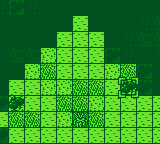
The History of Portable Tactical RPGs, Part 1: Game Boy (1989–2003)

Dai-2-ji Super Robot Taisen G emulated via Visual Boy Advance. Source: Banpresto/Authors.

Another Bible (GB, JP: 1995)

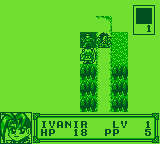
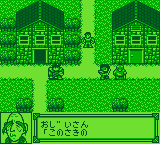
Another Bible was developed by Multimedia Intelligence Transfer and published by Atlus, exclusively in Japan, as a spin-off of the Megami Tensei series. While less philosophical than the mainline Megami Tensei titles, Another Bible preserves the series’ thematic interest in fate, moral conflict, and the ambiguity of divine authority. Unlike traditional tactical RPGs, the game integrates simplified demon management mechanics reminiscent of Megami Tensei. Another Bible was a niche release with scarce reviews, and there are no reliable sources for its sales.
The History of Portable Tactical RPGs, Part 1: Game Boy (1989–2003)

Another Bible emulated via Visual Boy Advance. Source: Atlus/Authors.

Senkai Ibunroku Juntei Taisen (GBC, JP: 2000)

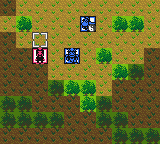
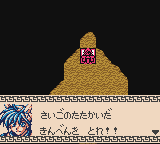
Another tactical RPG developed by Banpresto was Senkai Ibunroku Juntei Taisen, which was also based on an anime IP, in this case, Hoshin Engi. Like other games in this list, it was only released in Japan. The game was generally structured like the Super Robot Taisen games, with the interesting element of being able to spend a turn to recharge the energy gauge needed to activate special attacks with longer range, as well as having the ability to equip different skills to each ally unit. This is another obscure game with scarce reviews. In its release week, Senkai Ibunroku Juntei Taisen sold only 15,699 units (Game Data Library).
The History of Portable Tactical RPGs, Part 1: Game Boy (1989–2003)

Senkai Ibunroku Juntei Taisen emulated via Visual Boy Advance. Source: Banpresto/Authors.

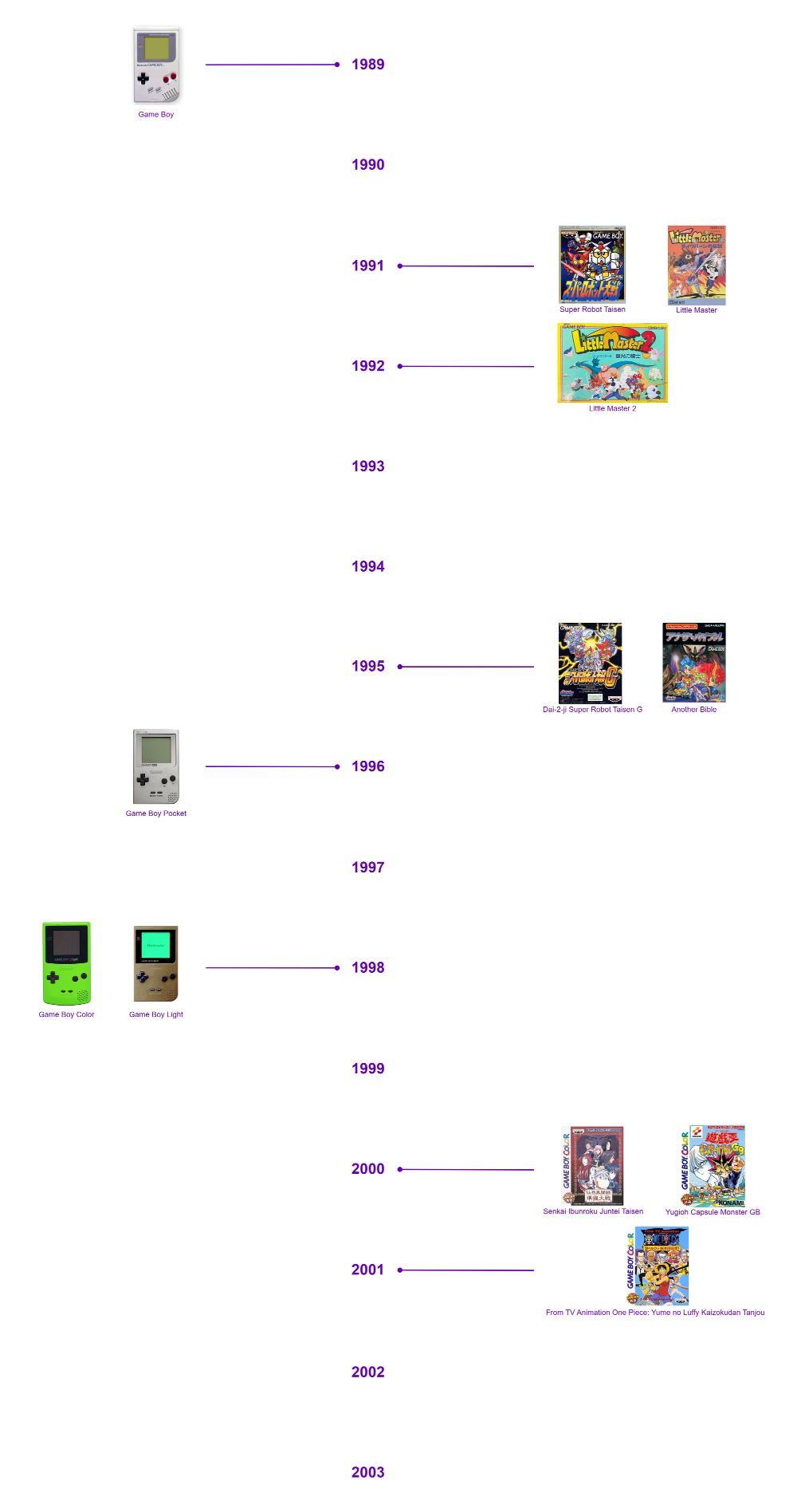
IV. Cronology
The History of Portable Tactical RPGs, Part 1: Game Boy (1989–2003)
Source: Authors.

V. Honorable Mentions

We begin this timeline with the Game Boy, but there are handheld consoles released before the Game Boy line (Wiki) that don't have tactical RPGs in their libraries:

  • Microvision
  • Entex Select-A-Game
  • Entex Adventure Vision
  • Palmtex Portable Videogame System
  • Digi Casse
  • Epoch Game Pocket Computer
  • Etch A Sketch Animator 2000

The list below includes titles released for the Game Boy line between 1989 and 2003 that do not strictly fit the definition of a tactical RPG, but are close to or share important affinities with it.

  • SD Gundam: SD Sengokuden – Kuni Nusiri Monogatari (GB, JP: 1990)
  • Fushigi no Dungeon: Furai no Shiren GB2: Sabaku no Majou (GBC, JP: 2001)
  • Azure Dreams (GBC, JP: 1997, NA: 1998, EU: 1998)
  • Sakura Taisen GB (GBC, JP: 2000)
  • Sakura Taisen GB2 (GBC, JP: 2001)

Curiously, even though the Sakura Taisen franchise is composed of tactical RPG titles in its mainline, the GameBoy entries discard the grid, and instead, battles play in a traditional gridless turn-based structure. For the first game, battles are adapted to work within the LIP's choice frame, letting players pick an action like in a text adventure. Meanwhile, the second game is akin to traditional Japanese RPGs like Final Fantasy, with the player choosing commands in the menu once a unit’s turn comes around.

When one defines tactical RPGs to include those with turn-based grid movement and combat, it’s also important to highlight the Mystery Dungeon format of roguelikes. While not commonly associated with the genre due to not having organized enemy troops, they also share the grid structure in the exploration of the randomly generated dungeons. Three major examples of the genre were available on the GB and GBC: two Shiren entries and Azure Dreams, which is the only officially translated game in this whole retrospective of the handheld.

Finally, the SD Gundam: SD Sengokuden trilogy on Game Boy mixes the tactical format with action combat. Players move the units around a grid-based structure and then must directly control their robots to fight against the enemies in an action format. The game is closer to a mix of tactical strategy and action, seemingly not bringing significant RPG elements to the table.

VI. Generation shift

By the early 2000s, the Game Boy Color remained in production even after the arrival of its generational successor, the Game Boy Advance (GBA) in 2001, but both original and Color models were finally discontinued by March 2003. Even after nearly a decade and a half on the market, the Game Boy line never released any tactical RPGs with an official English translation, unlike its rival handheld consoles, such as the Neo Geo Pocket. In Part 2 of our series, we will discuss the history of tactical RPGs on the rival handhelds of the Game Boy family (i.e., the Game Boy line along with the Game Boy Advance line).

  •  

The Quest for Knowledge in The Witness

The Quest for Knowledge in The Witness

The Witness is one of the few video games, even within the puzzle genre, that has epistemological questions at the core of its game design, such as "what is knowledge?" "How can we know something?", and "What are the limits of what we can know?" At the same time, this game is also one of the first in its genre to be a 3D open world, and it is the first to attempt to reconcile a complex progression of puzzle mechanics with freedom of exploration in an open world without any tutorial or interaction with NPCs. Our goal in this essay is to show how the gaming experience in The Witness is closely related to logic and epistemology.

First of all, it is important to clarify that The Witness does not offer answers to the epistemological questions. It is the job of philosophers to propose solutions and to precisely formulate theoretical problems, while the role of artists like Jonathan Blow (director, designer, and writer of The Witness) is to reveal issues in an inspiring yet vague way and to show perspectives on how to look at them. In this sense, while its gameplay is enjoyable enough for puzzle fans to enjoy it solely for its puzzles, The Witness is also a remarkable expression of video games as art, and can be appreciated for both aesthetic and conceptual reasons.

This essay is divided into three sections: first, we will address the logic and knowledge of The Witness; second, we will discuss archaeological interpretations during the exploration of the Island; third, we will analyze epistemological commentary in audio logs, videos, and metafictional elements.

Table of Contents

I. Logic and Knowledge
I. i. Knowing-that and knowing-how
I. ii. Formal puzzles, empirical puzzles and logical reasoning
II. Archaeological interpretation
III. Metafiction and intertextuality

I. Logic and Knowledge

I. i. Definition of Knowledge

This section argues that The Witness stages an epistemological experience in which players acquire non-linguistic propositional knowledge through rule discovery, hypothesis testing, and logical abstraction. Before addressing the specific puzzles or audiovisual and narrative strategies of The Witness, it is necessary to clarify what kind of knowledge the game deals with. In classical epistemology (based on Plato's Theaetetus), knowledge (Stanford Encyclopedia of Philosophy, 2017) has often been defined as justified true belief: to know something is

  1. to believe a proposition (e.g., to believe that "The Witness is a videogame"),
  2. the proposition being true (by correspondence theory of truth, this means that there exists an object called "The Witness" and that this object is classifiable in the category of what is called a "video game," according to some definition of video game), and
  3. that belief being supported by some form of justification. For example, it is found that The Witness is classified as a game in an app store. Note that the definition does not require strong empirical justification or a formal demonstration.

Although contested in contemporary philosophy, particularly through Gettier-style counterexamples that question the adequacy of justification in certain supposed knowledge, this classical definition remains a useful conceptual framework as a starting point, as well as for distinguishing knowledge from mere opinion, guesswork, or habit. In this section, our focus will not be on the notion of truth. It is worth mentioning that it is possible to apply other theories of truth besides correspondence theory to interpret the epistemological experience in this game.

At first glance, the player's epistemological experience in The Witness seems far removed from the classic definition of knowledge. The game has no NPCs or dialogue, offers no explicit propositions to be true or false, no textual statements of rules, and not even direct explanations that could be classified as beliefs or justifications. No phrase tells the player "this is how the puzzle works" or "this scenario is a city." However, throughout the experience, the player undeniably acquires knowledge: which lines are allowed, which restrictions matter, which visual elements inside and outside the puzzle space are relevant and which are merely decorative. This apparent paradox forces us to be more precise about the types of knowledge involved.

A useful starting point is the traditional distinction between knowing-that (propositional knowledge) and knowing-how (practical or procedural knowledge). Much of The Witness clearly involves knowing how to solve certain types of puzzles, all inspired by maze puzzles. However, reducing the player's learning to the mere acquisition of skills would be to ignore that the game design compels the player to develop a conscious understanding of the rules.
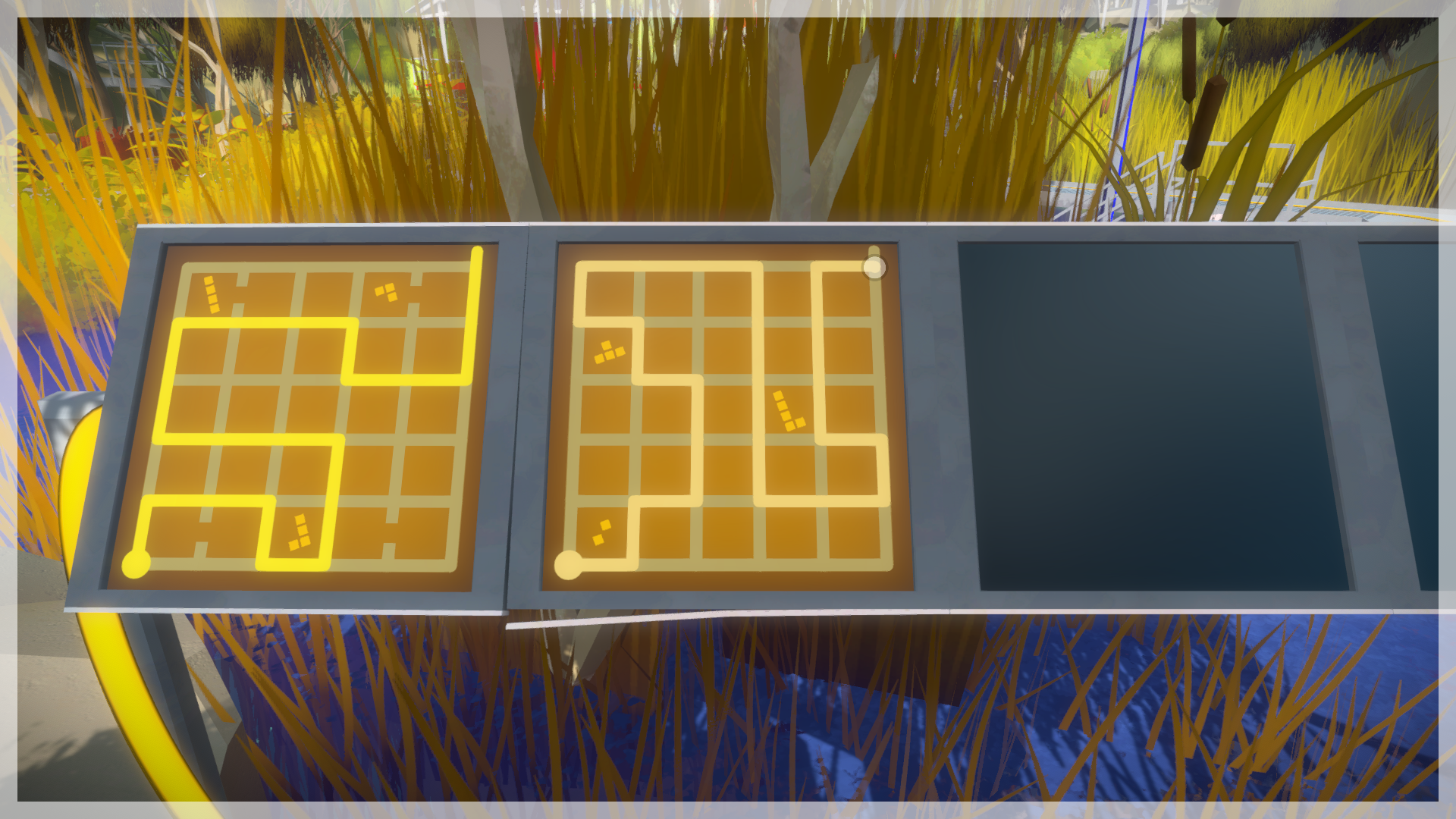
Solving a panel by mechanically reproducing a pattern is not equivalent to understanding it, and the game is carefully designed to expose this difference: players who rely solely on imitation or trial and error quickly reach a point where they can no longer progress, as more complex problems require the player to have abstracted a general rule from the initial puzzles of an area. Of course, as an open world, the player can choose to abandon that type of puzzle and explore another part of the Island, but they will also face similar obstacles in that other place. What is indirectly required is not just how to solve the problem, but an implicit understanding of why certain actions by the panel are correct.

The Quest for Knowledge in The Witness

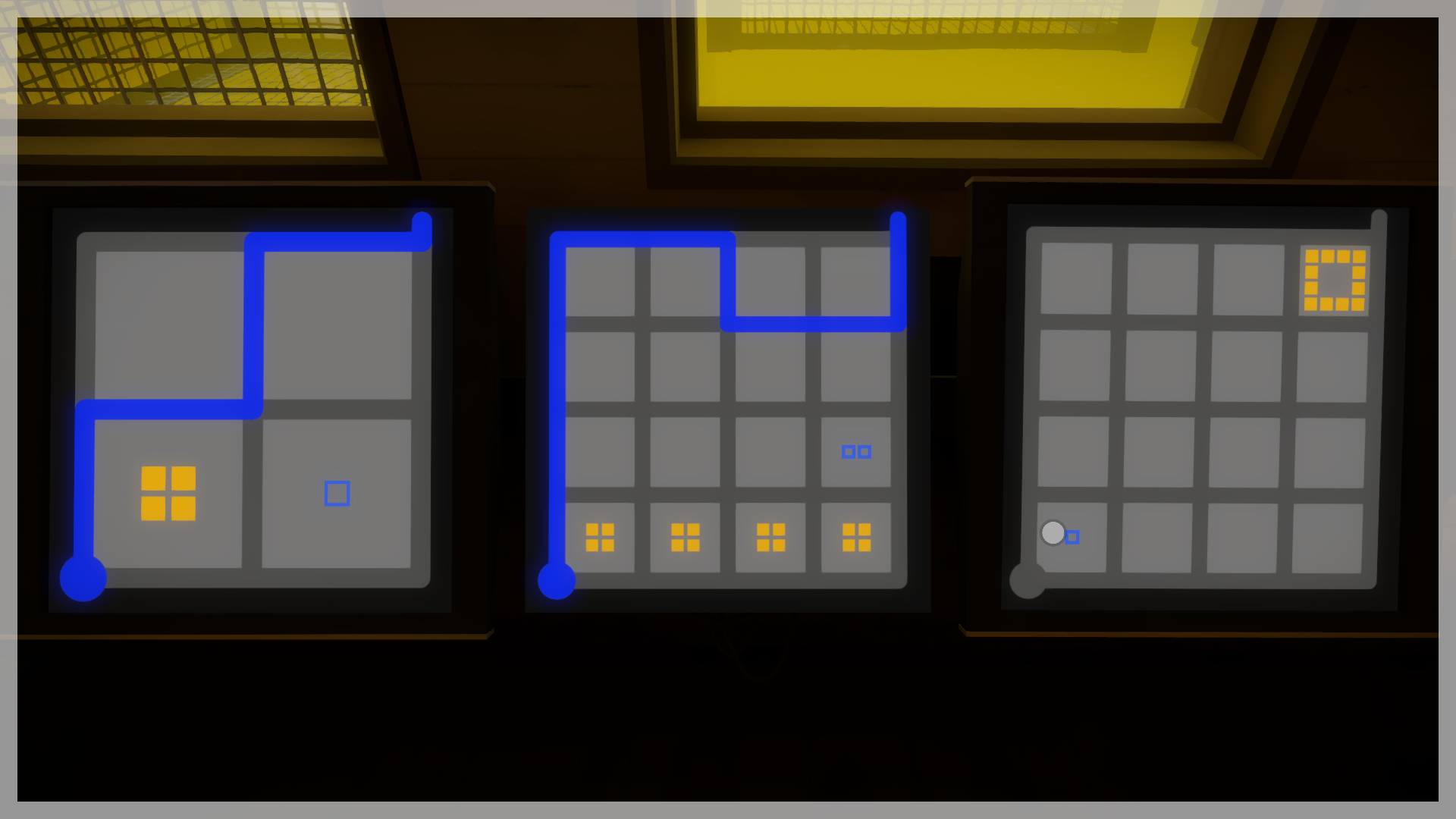
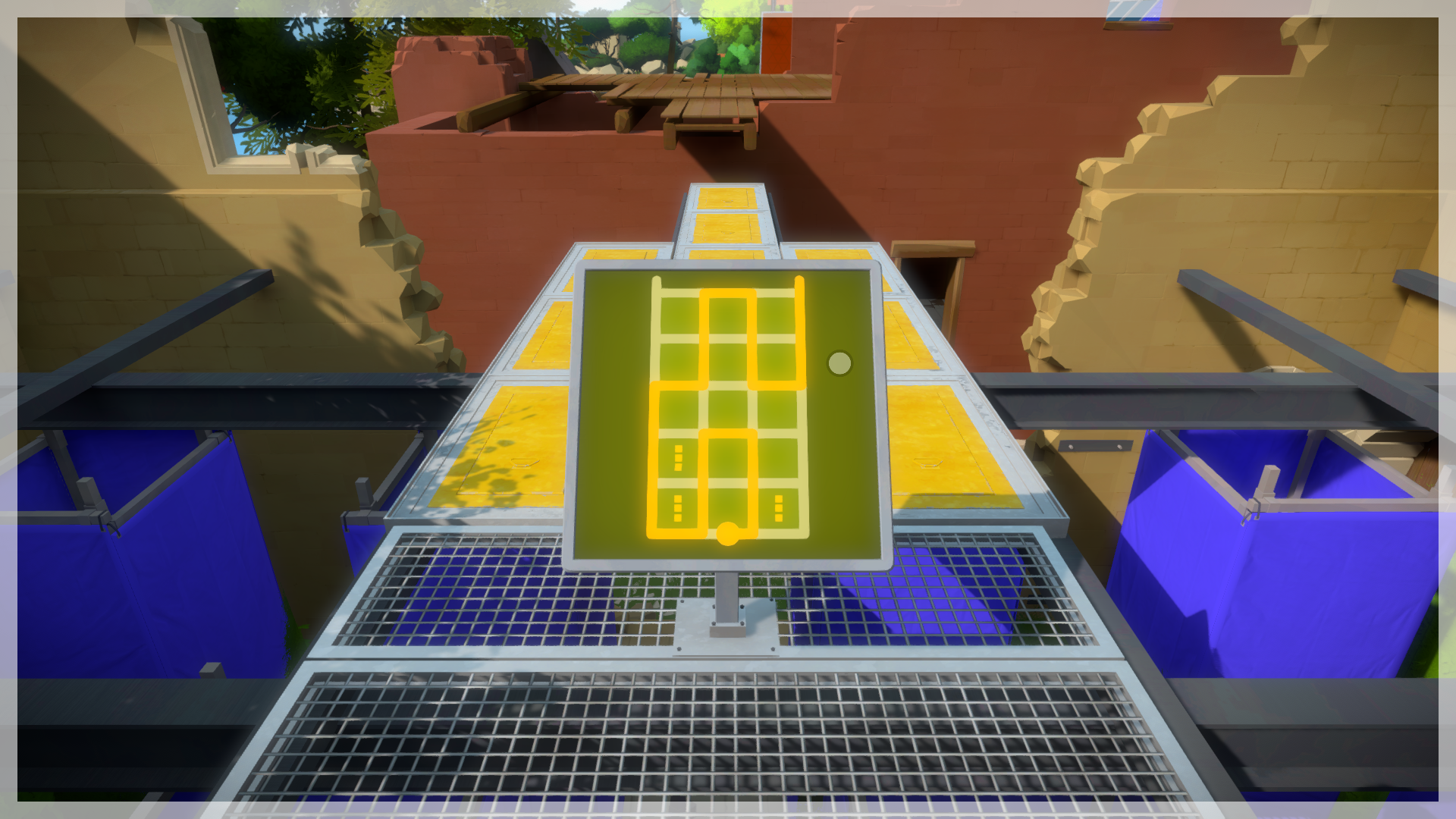
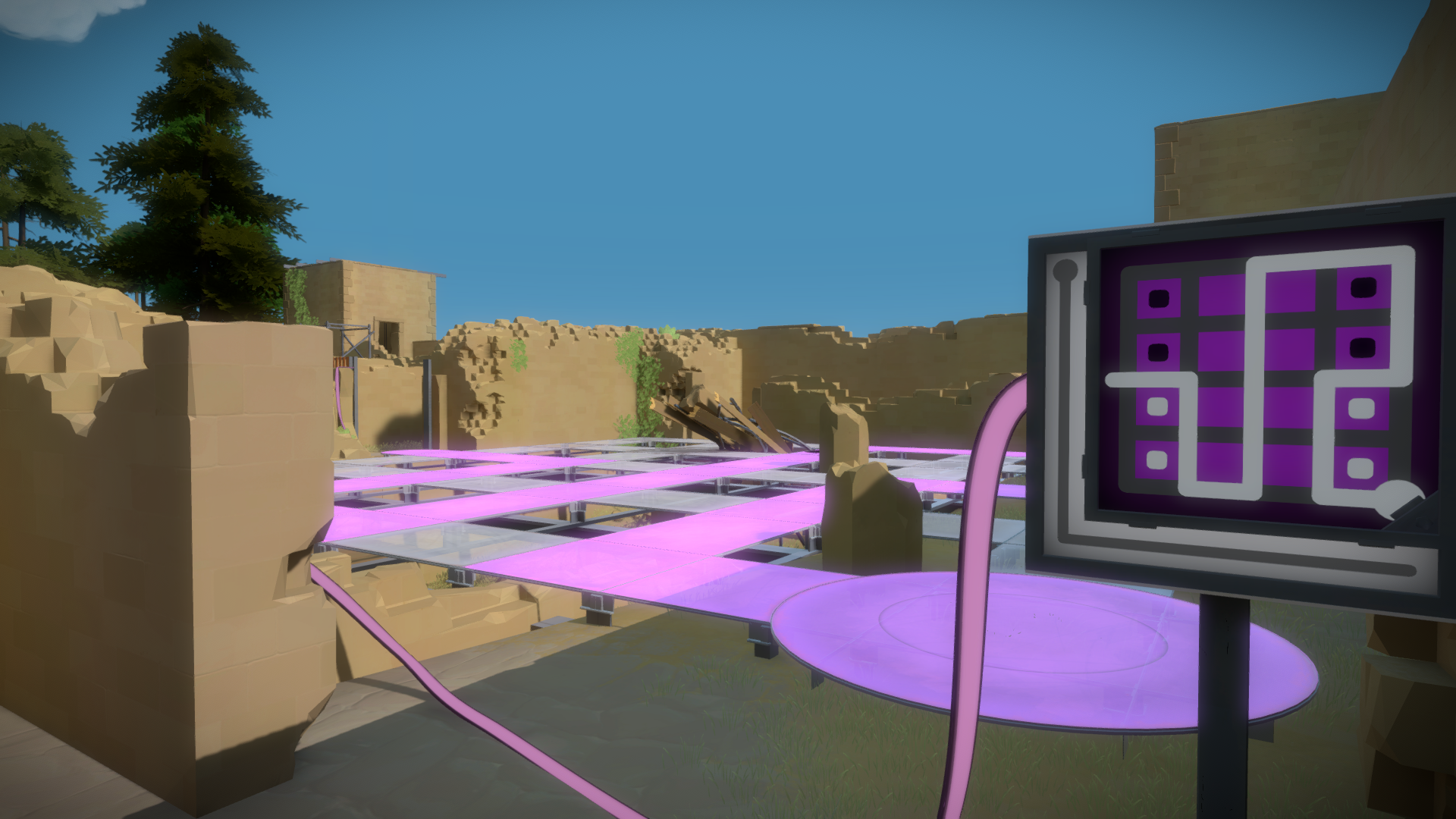
The series of puzzles in the image on the right assumes that the player has understood the rules of the puzzles on the left and introduces certain blue squares as an extra element of difficulty, which obeys another implicit rule of operation. Source: Thekla / Author.

In this sense, The Witness involves a form of propositional knowledge that is never linguistically articulated. Although never formulated as sentences, the rules inferred by the player have determinate truth conditions and generality, which justifies treating them as propositional in content, even if not in form.

I. ii. Formal puzzles and Empirical puzzles

The player formulates hypotheses (for example, that a certain symbol imposes a restriction, or that a certain spatial relationship matters) and tests them in the point-and-click intervention spaces of the game world, which function as empirical testing spaces. When a solution based on a rule hypothesis works consistently in different contexts, the player's belief about that rule gains justification. Interestingly, as with empirical tests in real sciences, it is often not easy to ascertain whether a hypothesized rule is "true" or whether it worked by coincidence, while there is another rule behind it. In general, the puzzles in this game can be categorized as follows:

  • Formal puzzles: these can be solved using the syntactic rules governing the symbols on the panel. Example: the puzzles in the previous image, which can only be solved by considering the Tetris Block rule (you must use the line to draw the shape of the Tetris icon, and subtract yellow squares from the icon proportional to the number of blue squares on the panel).
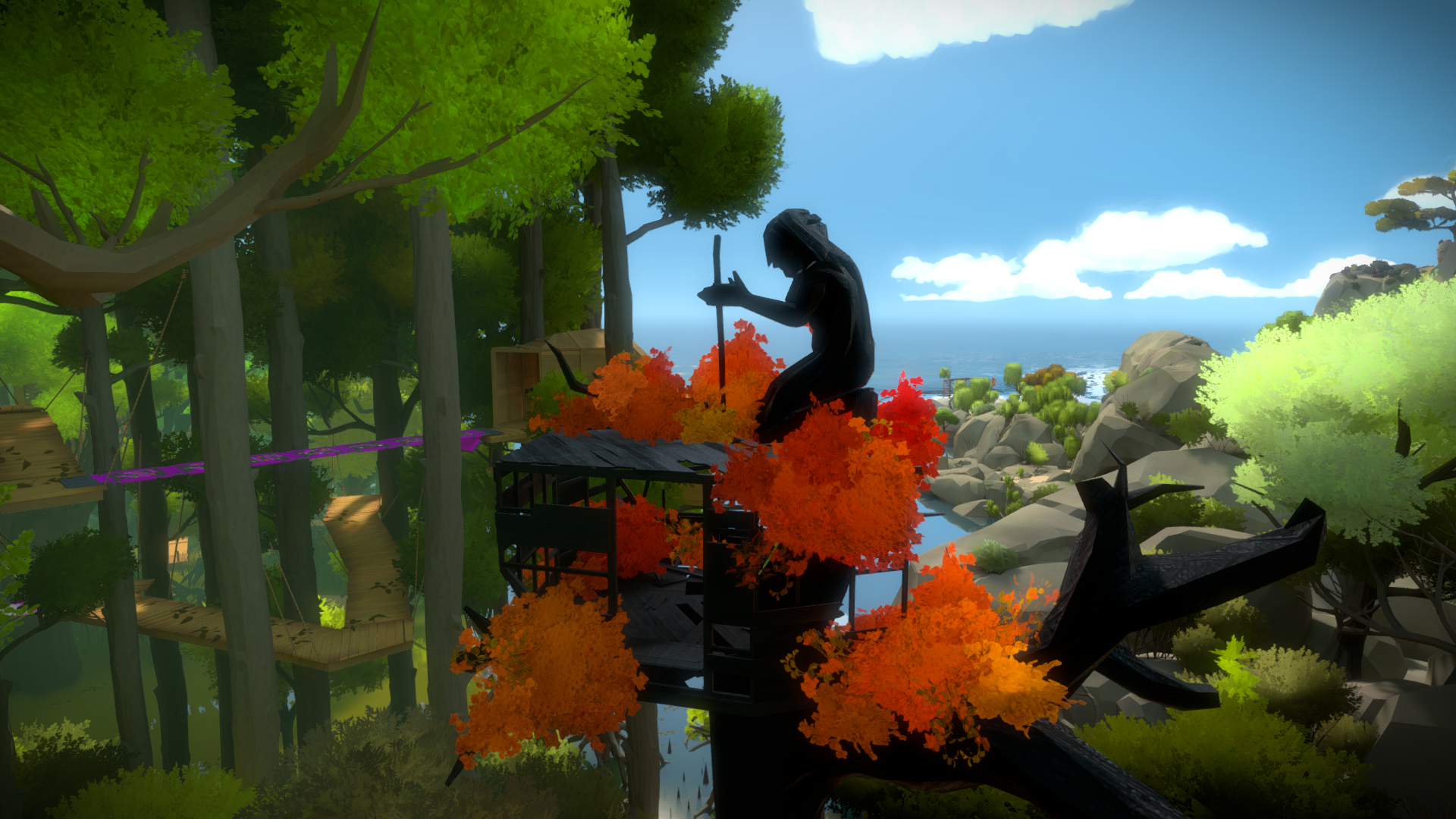
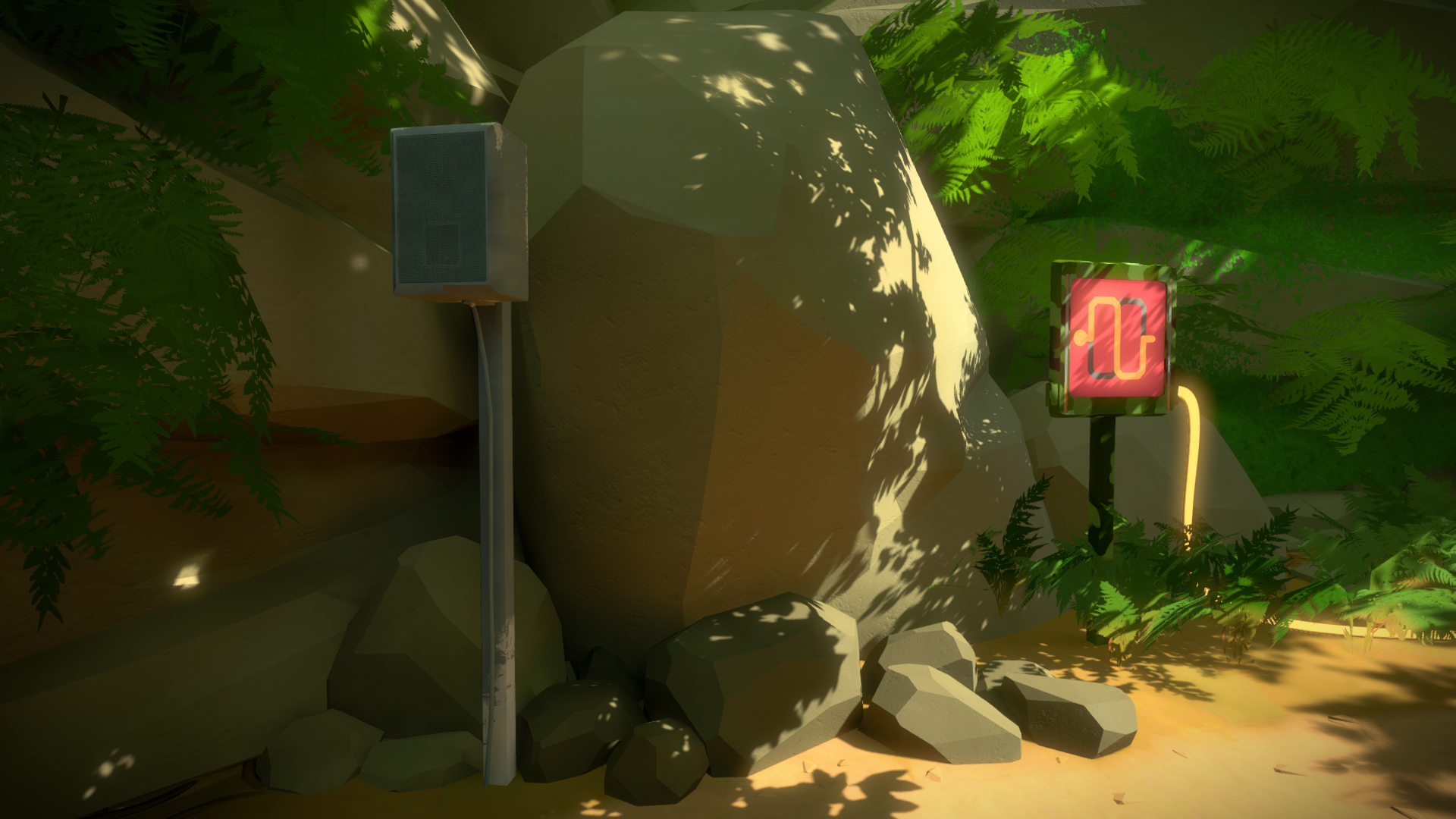
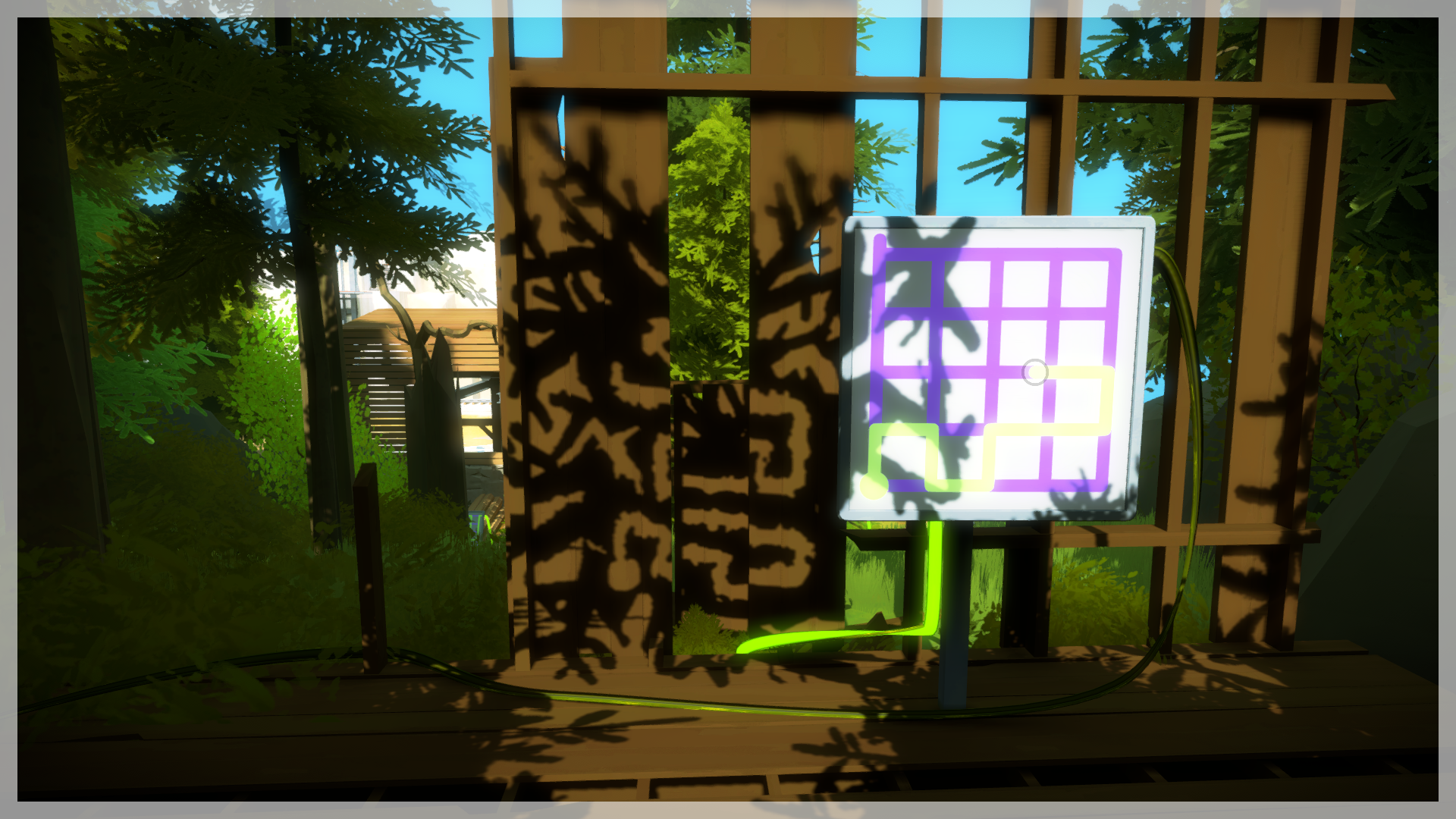
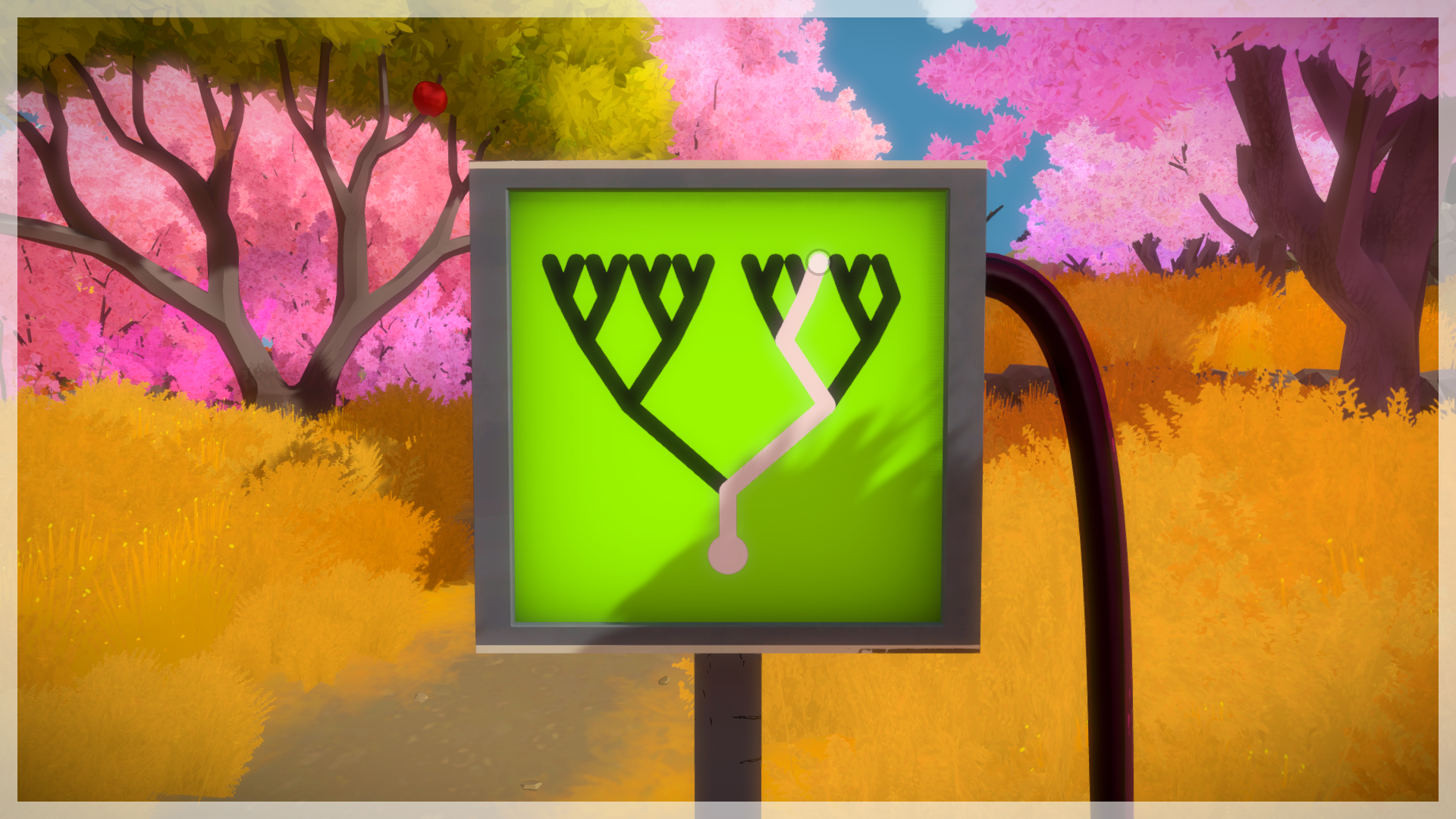
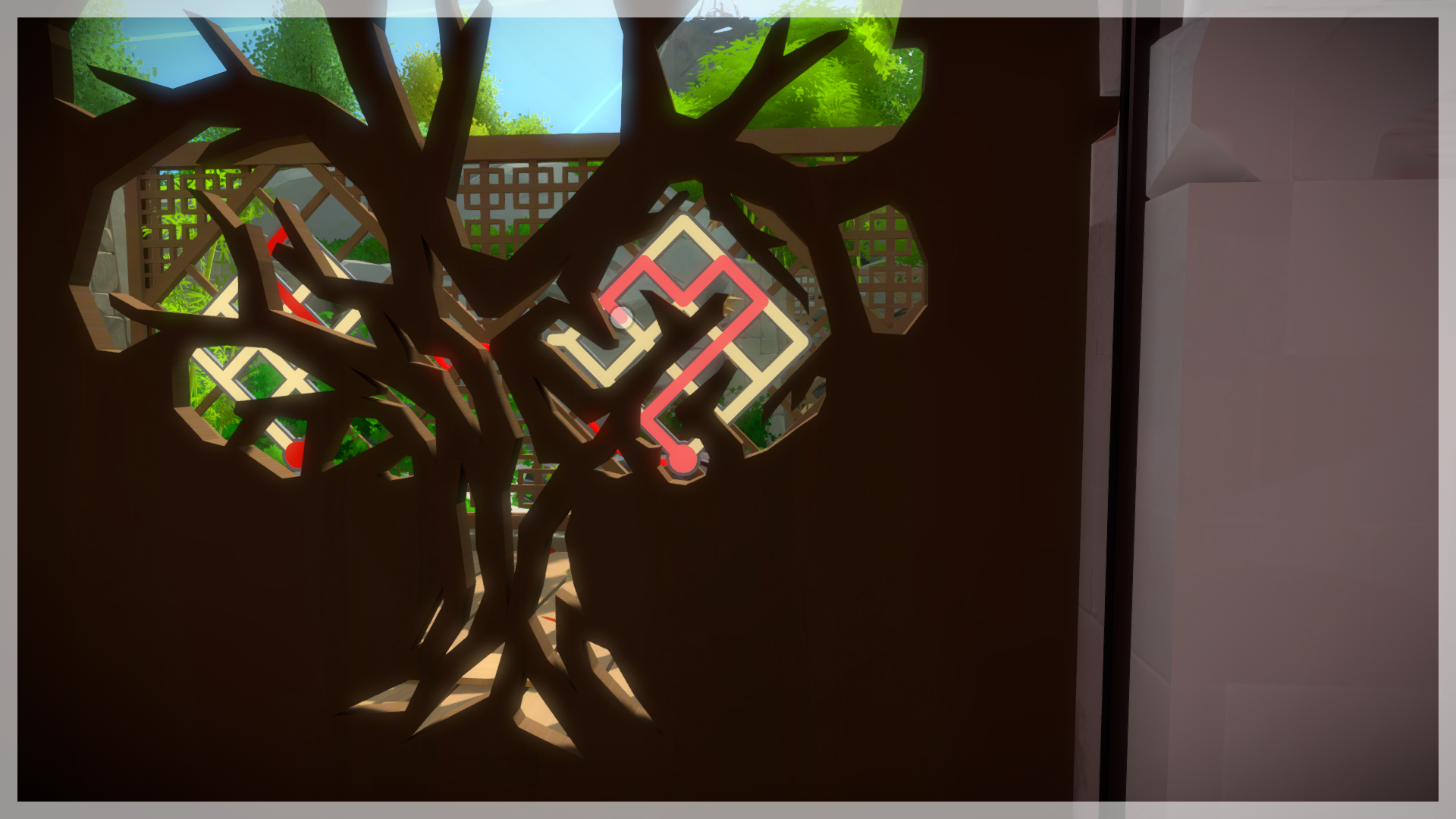
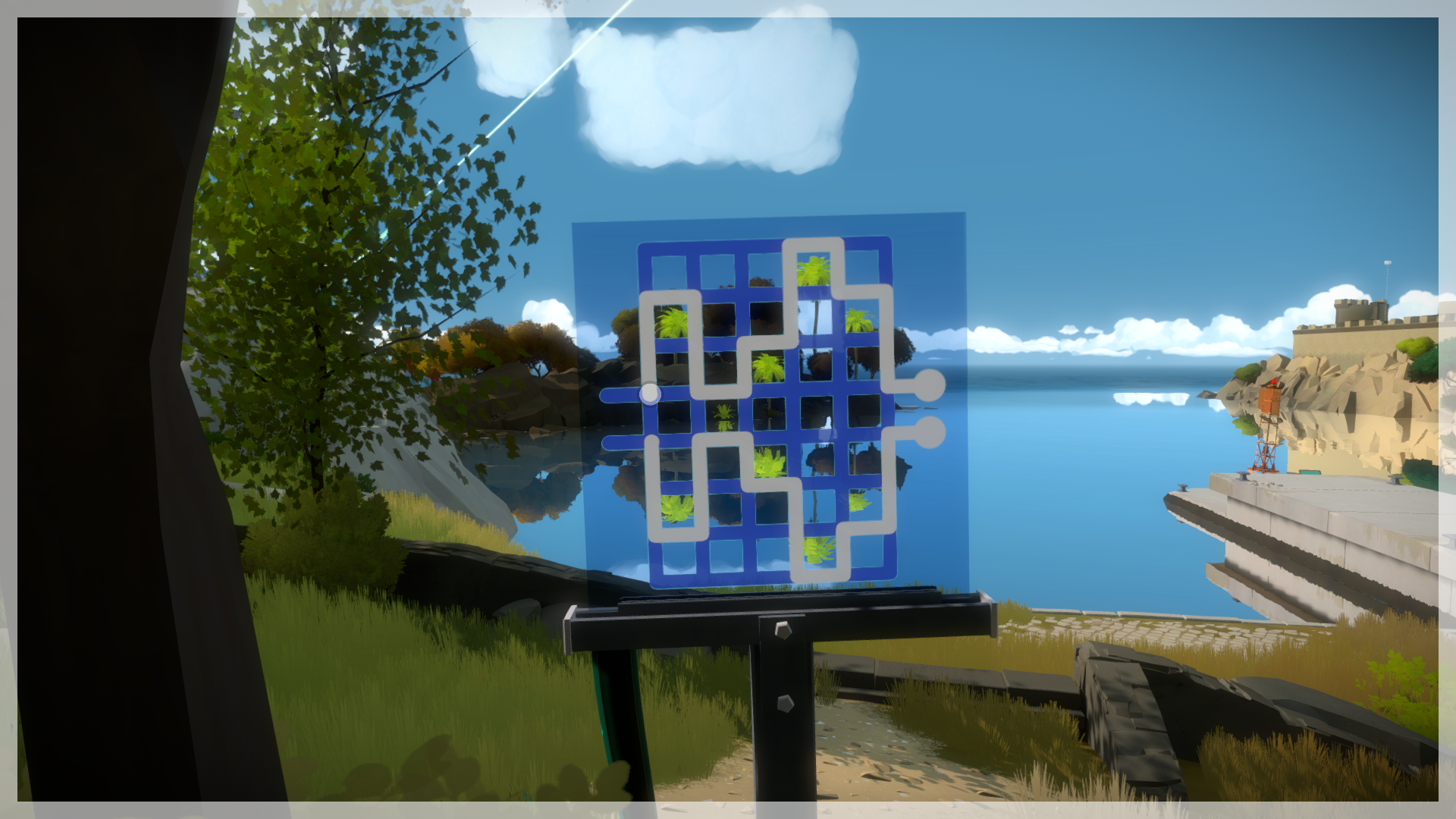
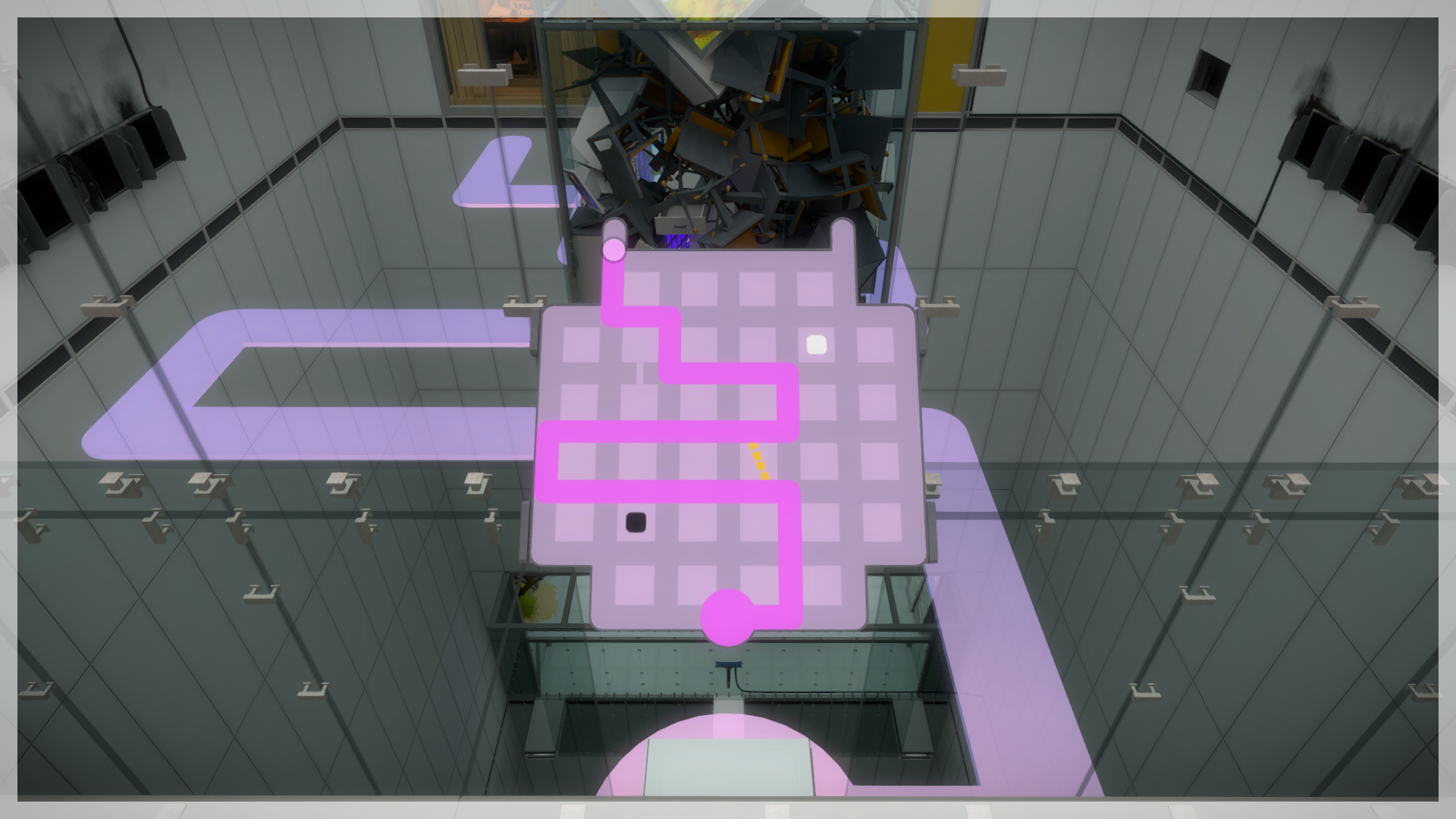
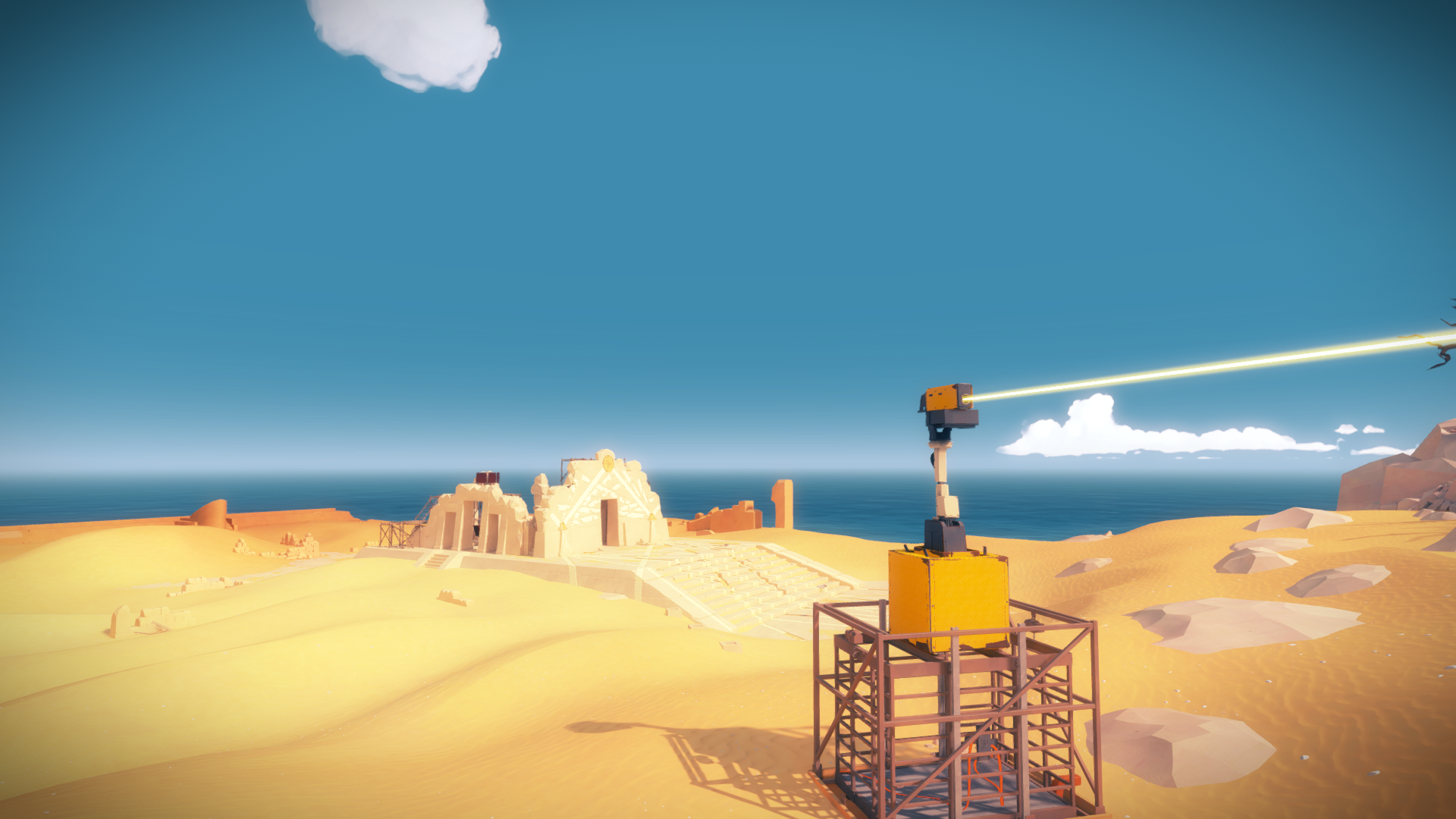
  • Empirical puzzles: these require the player to investigate the environment around the panel and relate the space of logical possibilities on the panel to visual or auditory elements outside the panel, including the color and angle of the lighting falling on the panel, or even trees, branches, and other objects that can be visually related to the maze puzzle.
The Quest for Knowledge in The Witness

Examples of empirical puzzles in The Witness. In these cases, solving the puzzles requires taking into account environmental factors, such as musical patterns (mixed with noise), reflection, lighting, shadow, representation, point of view, overlapping, and symmetry. Source: Thekla / Author.

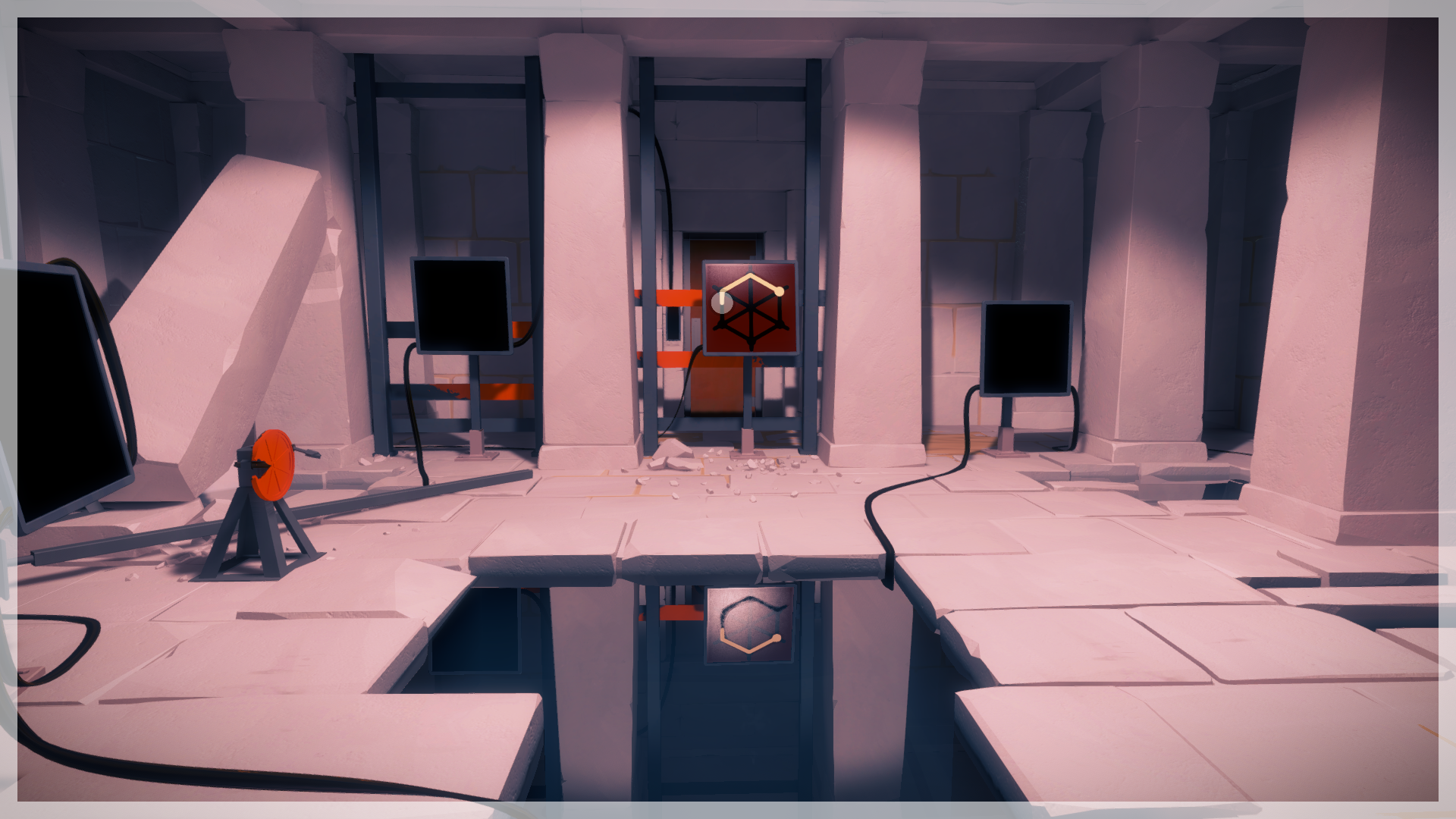
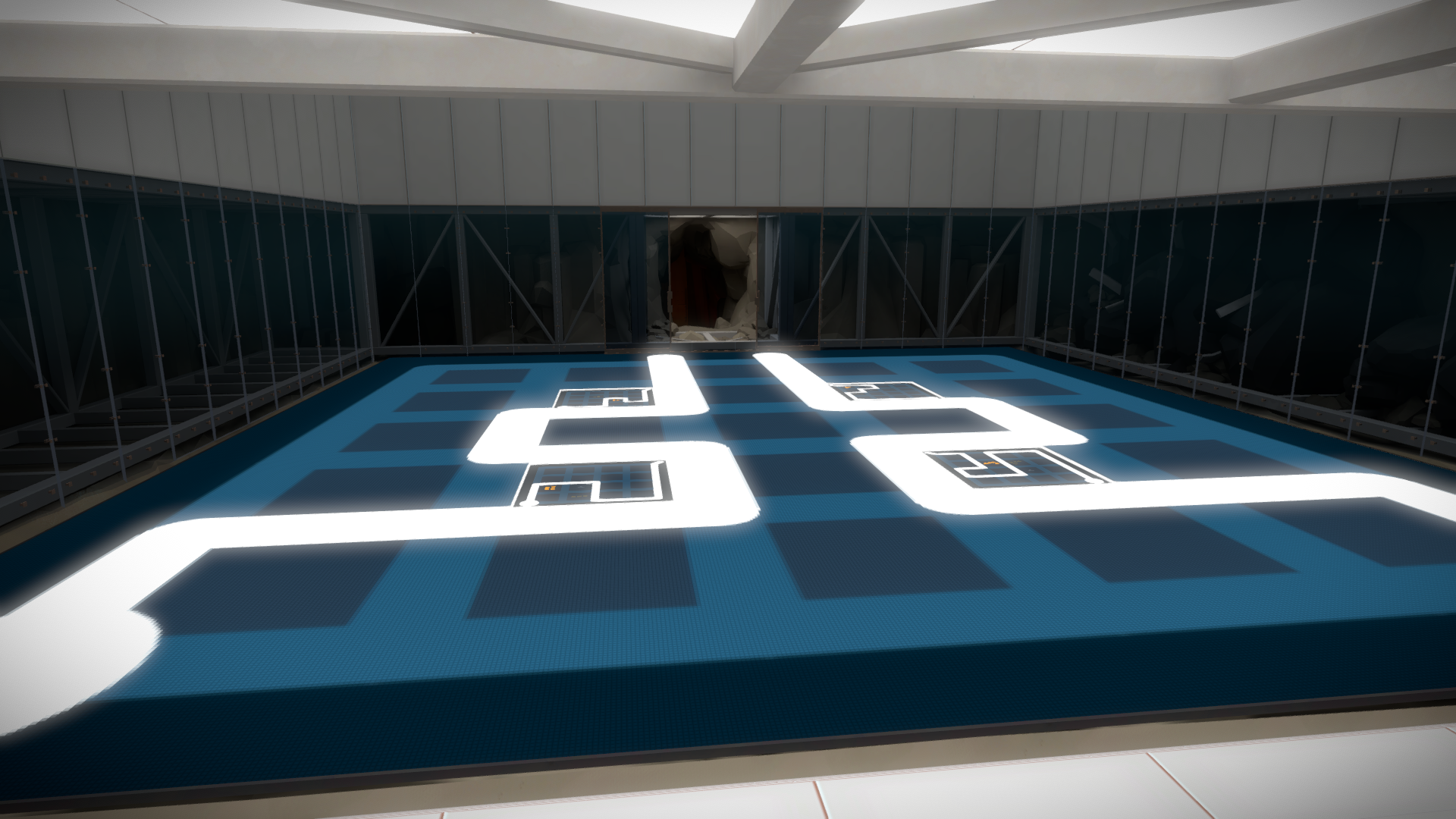
Several formal puzzles in The Witness do not have a single solution; they are non-linear puzzles, a concept discussed by Josh Bycer in The Philosophy of Video Game Puzzle Design here at SUPERJUMP. Although the resolution of formal puzzles is independent of the experience within the environment, in some cases, there are formal puzzles whose possible solutions directly affect movement within the environment, as each solution will result in the construction of a bridge that can provide access to different areas. Furthermore, there are formal puzzles whose solution directly affects a higher-order puzzle (usually represented by a larger-scale maze puzzle).

The Quest for Knowledge in The Witness

Examples of puzzles with possible solutions that result in different bridges that can provide access to a certain area. Source: Thekla Inc. / Author.

The Quest for Knowledge in The Witness

Examples of maze puzzles directly related to other maze puzzles. The example on the right is a metapuzzle. Source: Thekla / Author.

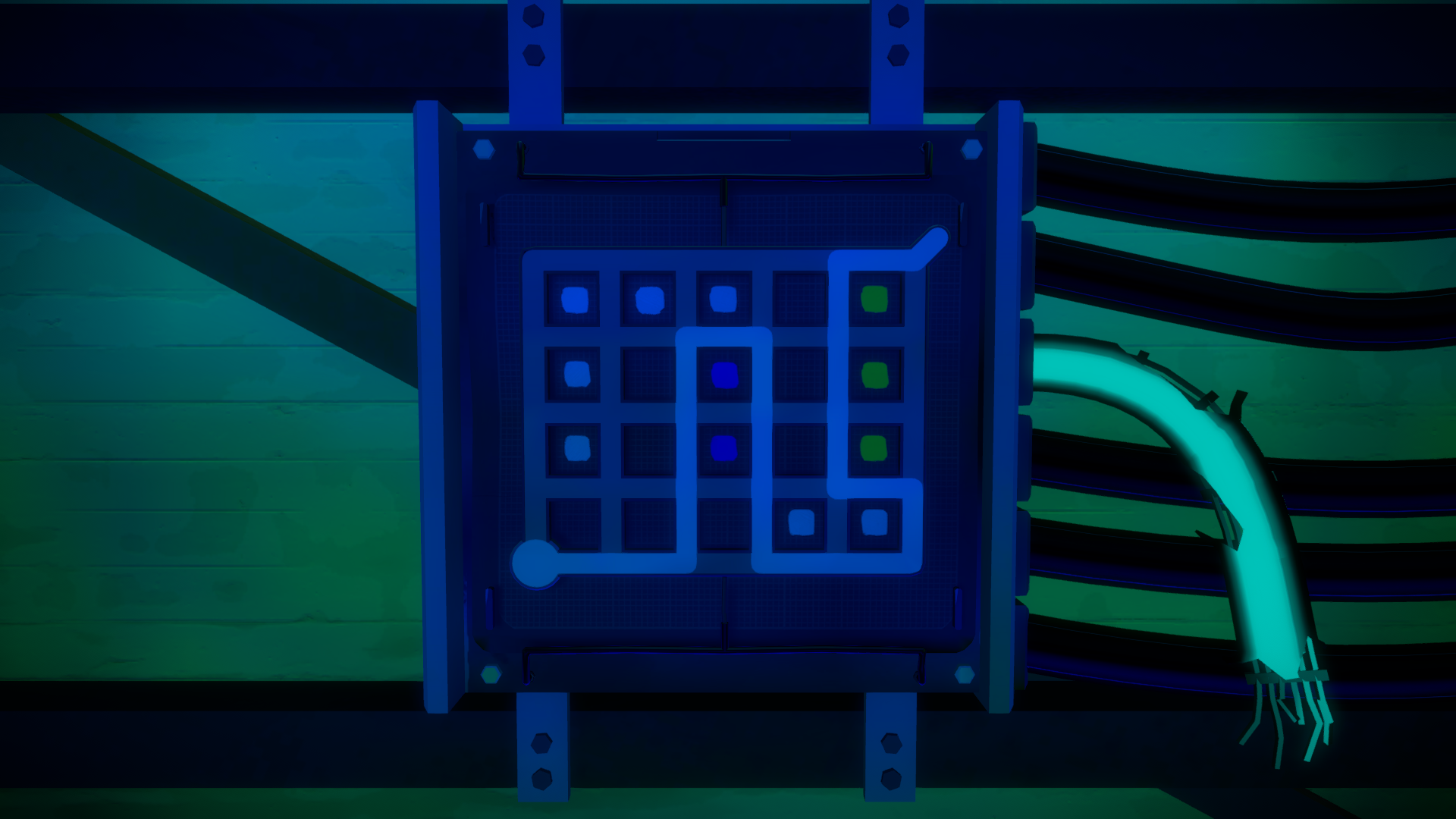
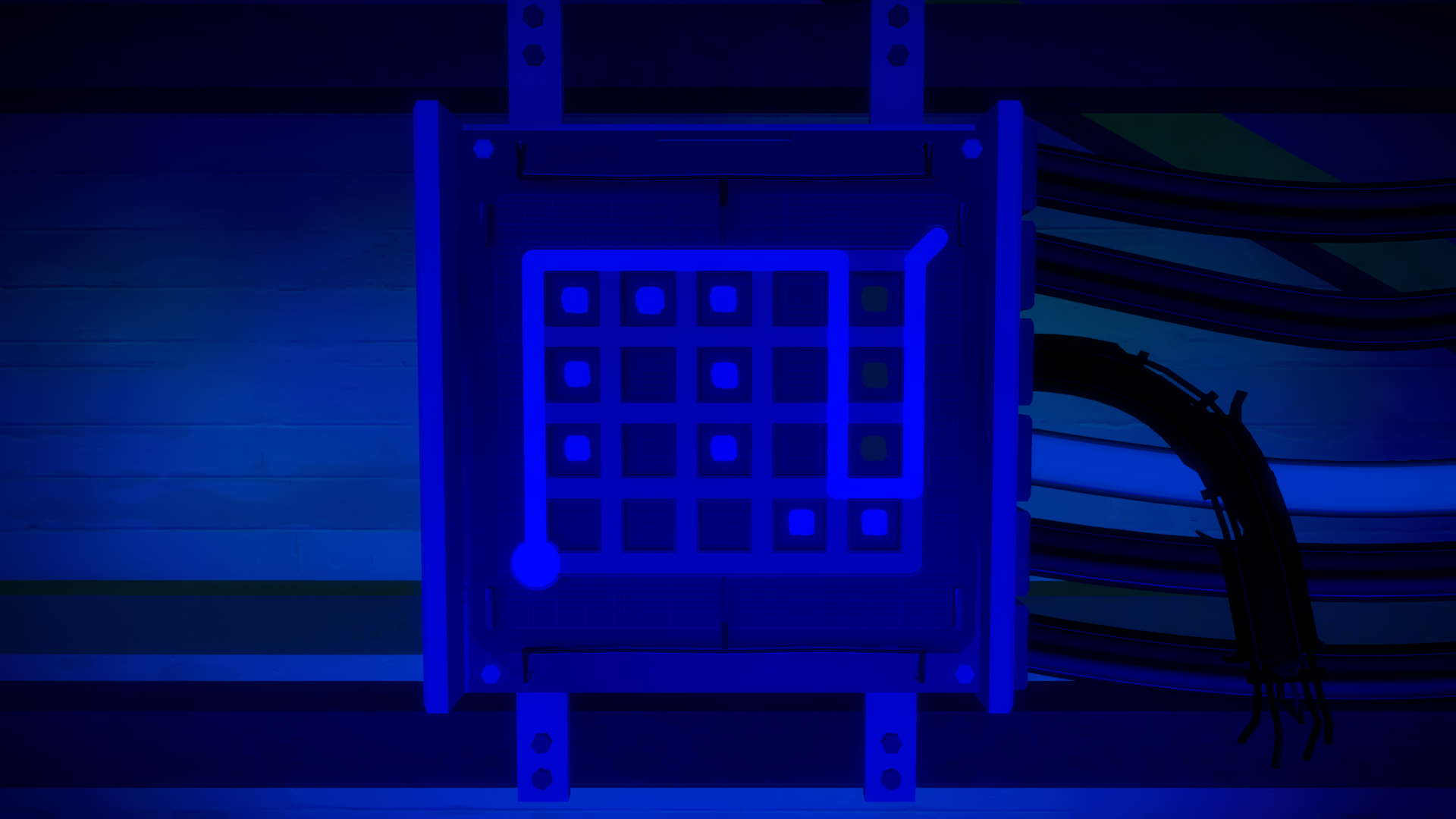
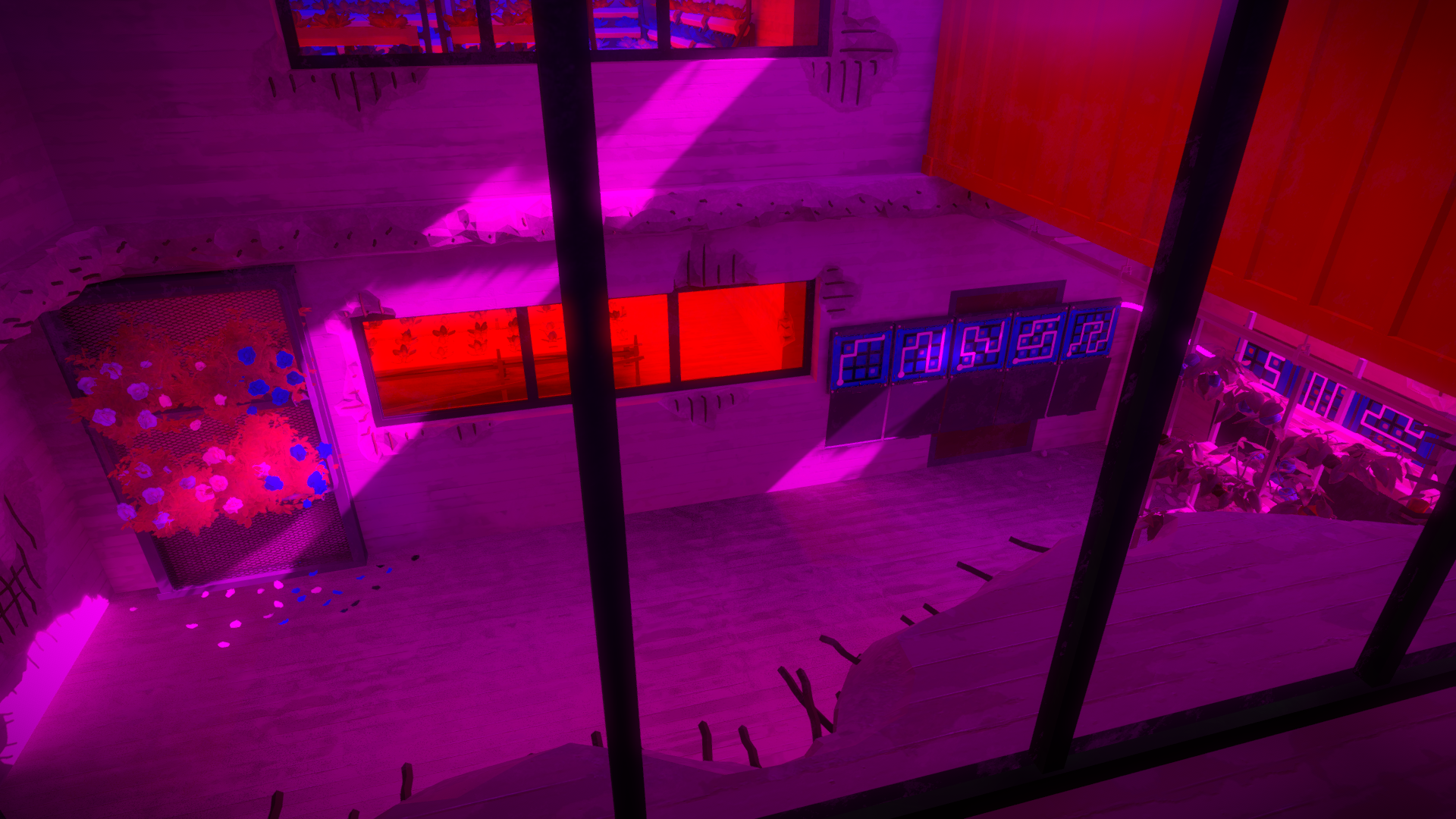
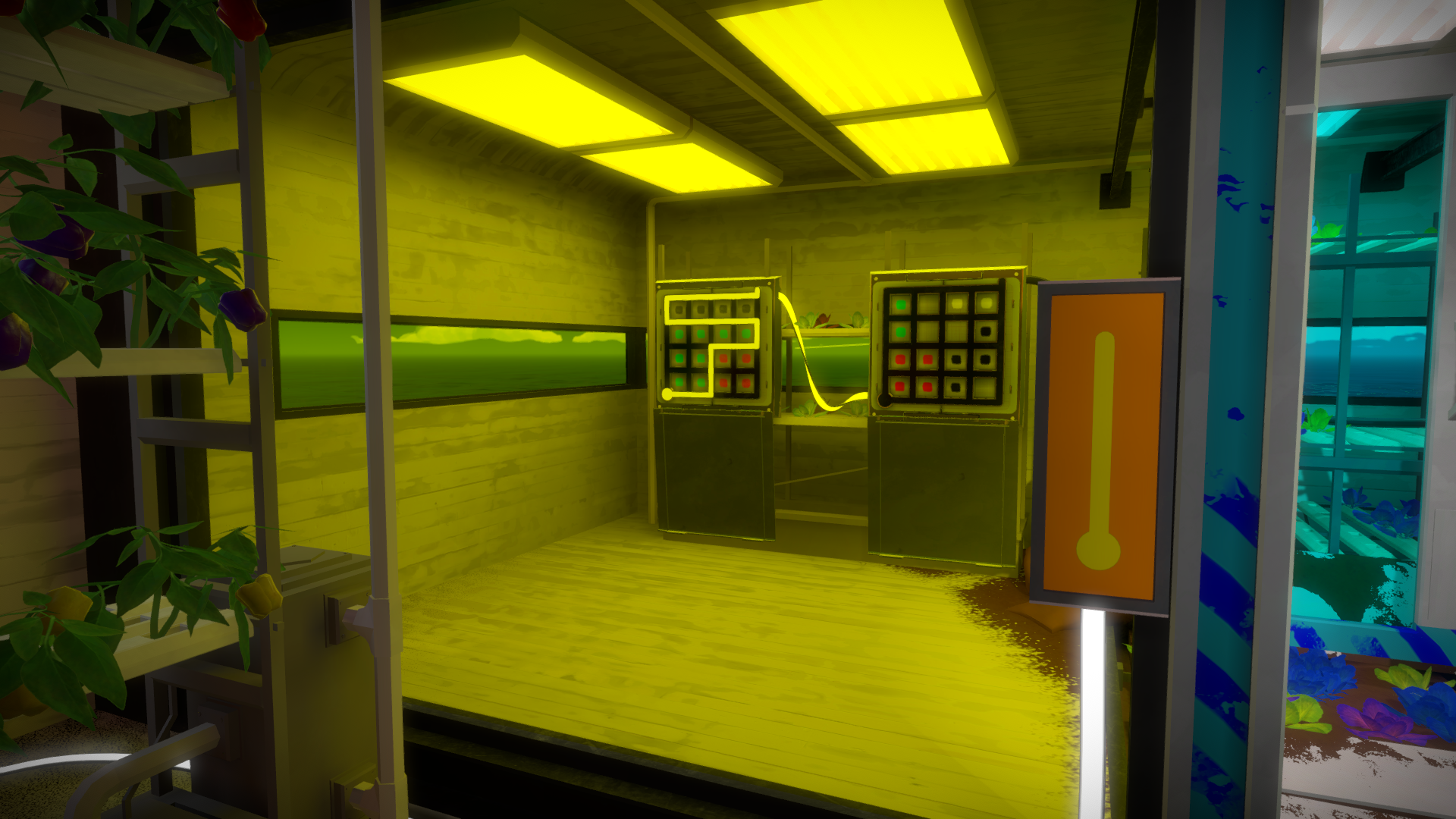
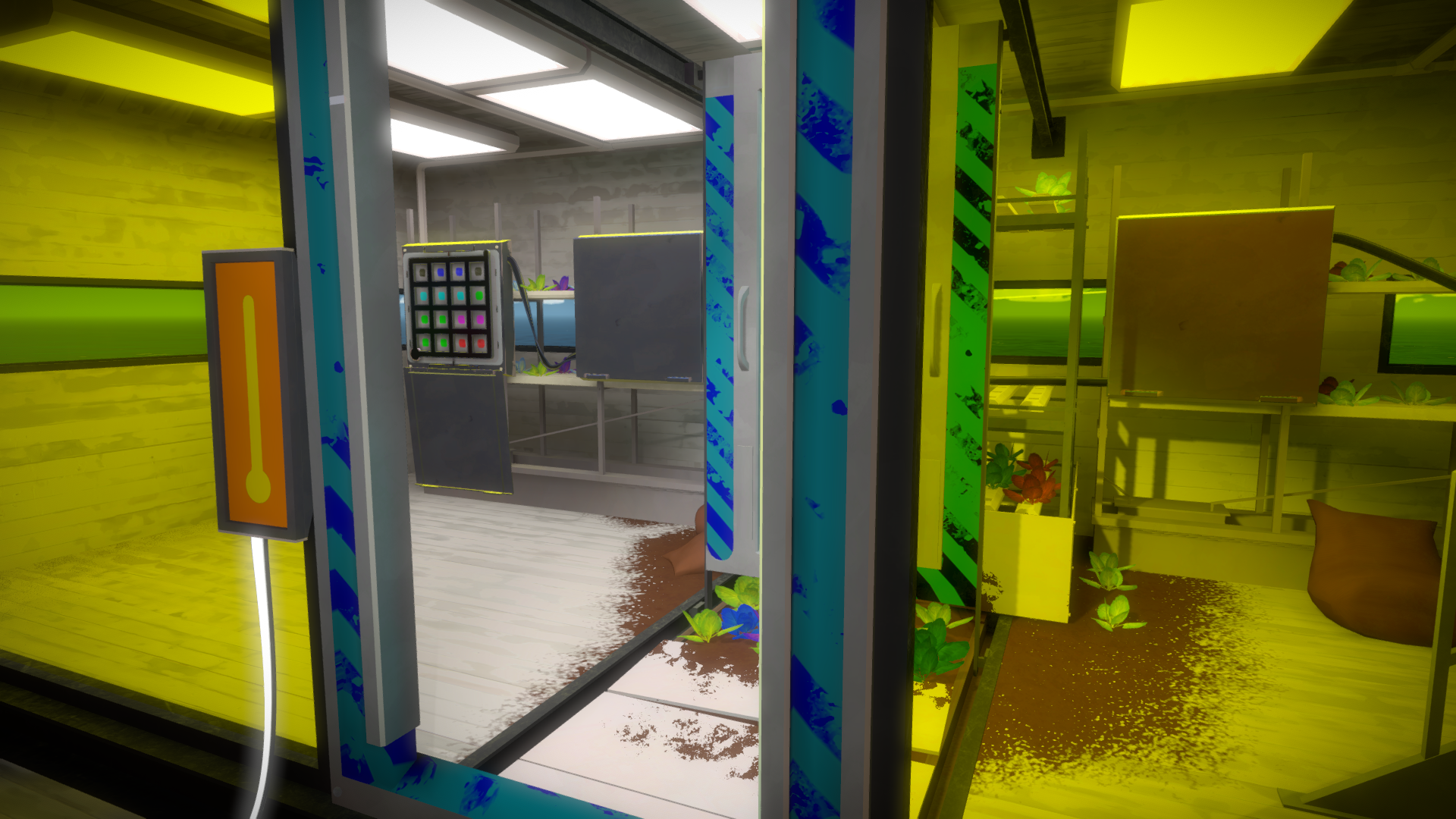
In my piece at SUPERJUMP from 2022, The Reasoning Behind Video Game Puzzle Design, we discussed the differences between deductive, inductive, and abductive reasoning in puzzles. The empirical puzzles in The Witness frequently require inductive or abductive reasoning; that is, they presuppose experimental testing of hypotheses or an investigation of the function of certain objects or effects in the scenario. Let's take as an example the puzzles involving colored stones on the panels and colored lighting in the scenario. In a scenario with this type of puzzle, the player will easily infer that there is something intentional in the emphasis on rooms with colored lighting. Upon realizing that the colored lighting modifies the colors of the stones on the panels, the next step will be to test the hypothesis that this is part of the puzzles in that area.

The Quest for Knowledge in The Witness

Puzzles involving colored stones and colored lighting. Source: Thekla / Author.

On the other hand, in the case of formal puzzles, once the rules of the symbols on the panels are known, deductive reasoning (typical logical-mathematical reasoning) is all that is needed to solve them. Formal puzzles in the game can, in principle, be modeled within a Boolean or constraint-satisfaction framework. Consider the equation "A v B". Assuming the classical definition of "v" (or), this equation is not satisfied if A = false and B = false, but it can be satisfied by three choices of values: (1) A=true and B=false; (2) A=false and B=true; (3) A=true and B=true. Logical equations like this can be mapped onto the language of maze puzzles.

Starting from a subset of the symbols (like Suns) used in The Witness, Chris Patuzzo developed an interesting method for drawing a parallel between the formal mechanics of the game and Boolean Satisfiability (SAT), in Reducing Boolean Satisfiability to The Witness (MakerCasts, 2016).

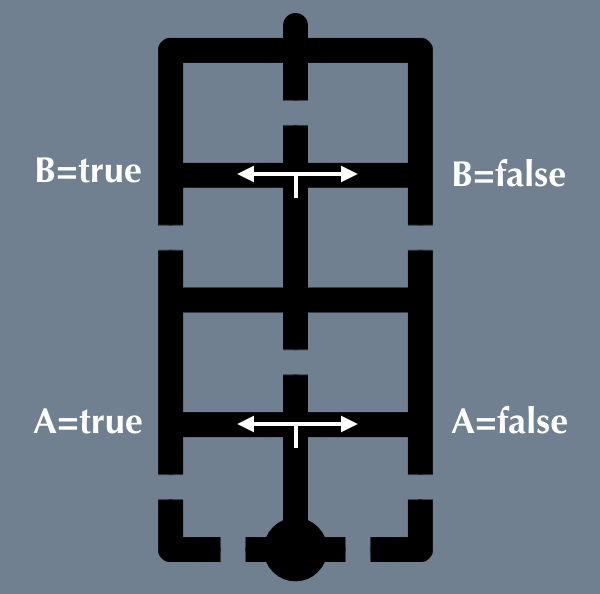
The way to solve a SAT problem is by choosing between true and false for each of the variables in the equation. There's a notion of 'choice'. What does it mean to 'choose' something in a Witness puzzle? What's the corresponding action for choosing? Well, the only influence a puzzler has over a Witness puzzle is to choose their path from start to finish. Do I go North, East, South or West at this junction?

So perhaps we could model variables as forks in the road that the puzzler must choose between. Taking the left fork could correspond to A=true and the right fork could be A=false. Now let's try to put this together with our Suns idea. Let's invent a red Sun to represent the first clause. In our SAT problem, if assigning A=true satisfies the clause, we should design our puzzle so that the Sun is paired up. If they choose to go right, the clause has not been satisfied so this should be an incorrect solution to the puzzle:

— Chris Patuzzo (MakerCasts, 2016)
The Quest for Knowledge in The Witness

Left panel: Fork representing A=true. Center panel: Fork representing A=false. Right panel: Stacking forks. Source: Chris Patuzzo (MakerCasts, 2016).

In this first section, we discussed how logic and knowledge work in The Witness to solve puzzles, but the gameplay experience is not limited to that. Open-world exploration allows the player not only to solve puzzles in different orders, but also to freely interpret the traces of different historical periods scattered across the Island.

II. Archaeological Interpretation

From a first-person perspective, the player is projected as an idealized observer walking through a virtually static world; their avatar (with a human shadow) cannot jump or directly touch objects in the environment. In this sense, The Witness provides a dense and contemplative experience of an extended present, one that is largely detached from narrative futurity, as well as vestiges of a past without explicit chronology. In this context, Ian Bogost's reading of the role of the player fits perfectly: "In videogames, the player’s hands operate the lost instruments of the designer’s tiny secret society. A player is the archaeologist of the lost civilization that is the game’s creator" (quoted in Kotaku, 2010). Bogost’s metaphor of the player as archaeologist resonates not merely at the level of game mechanics, but at the level of epistemic posture.

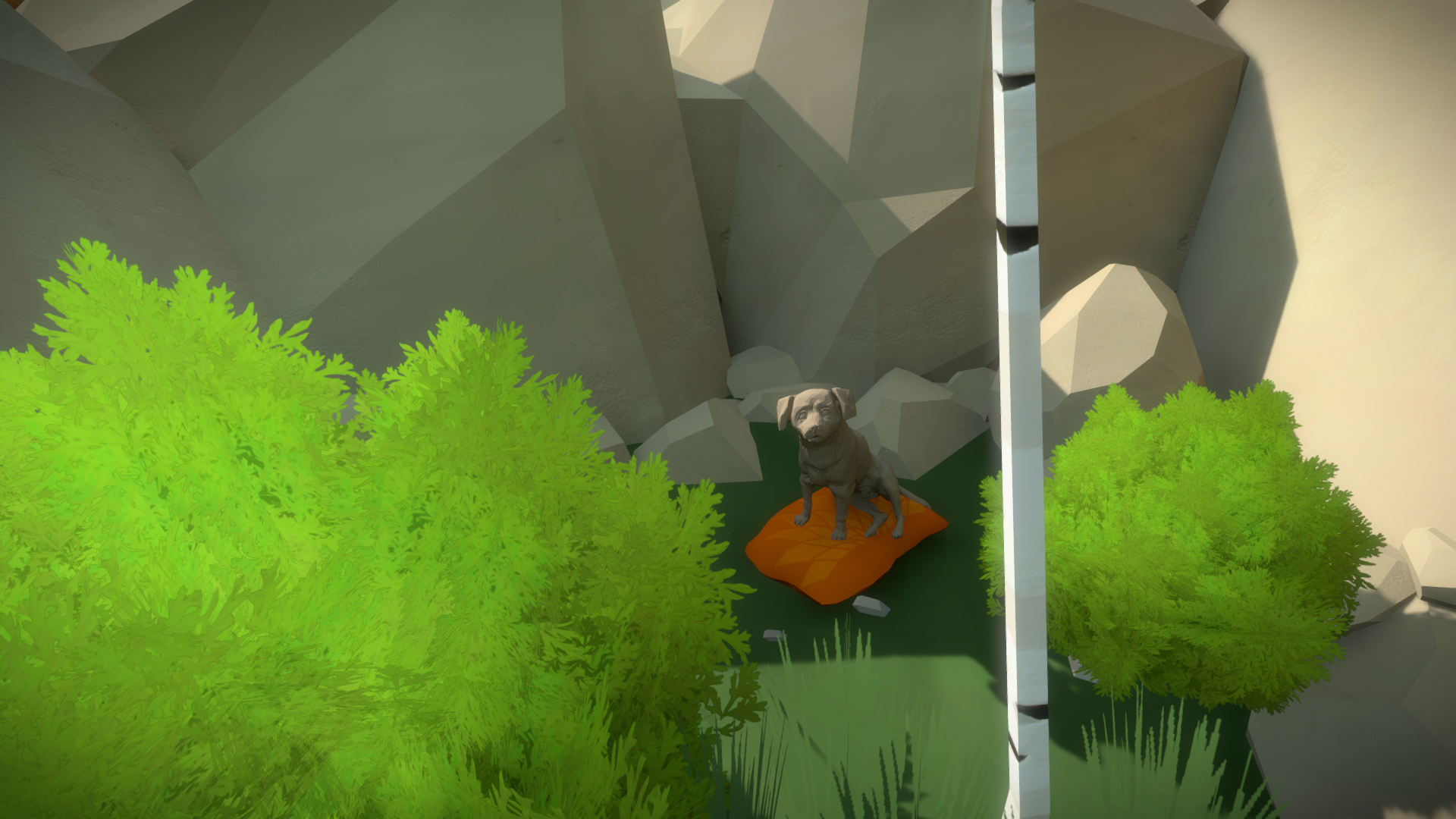
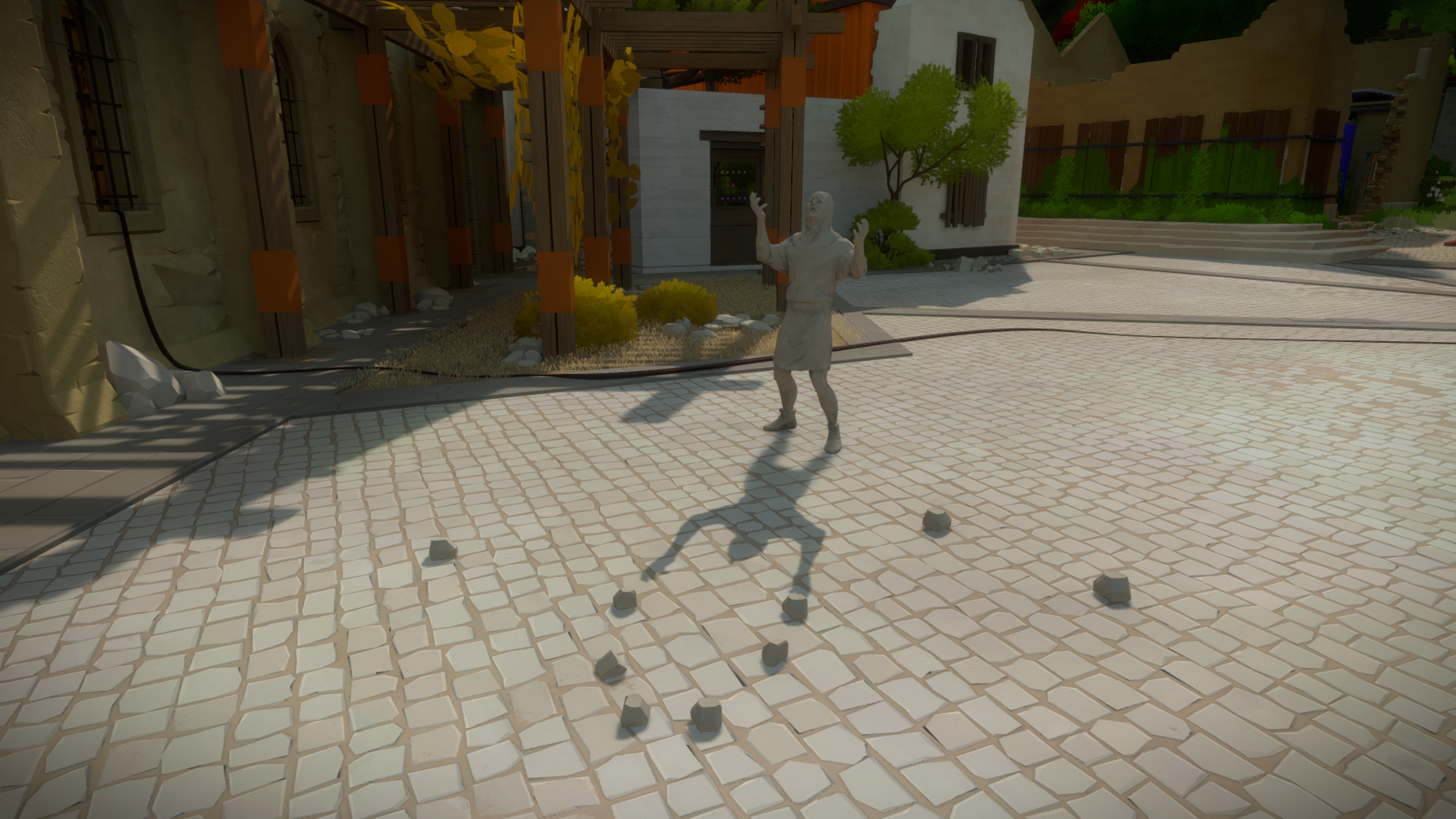
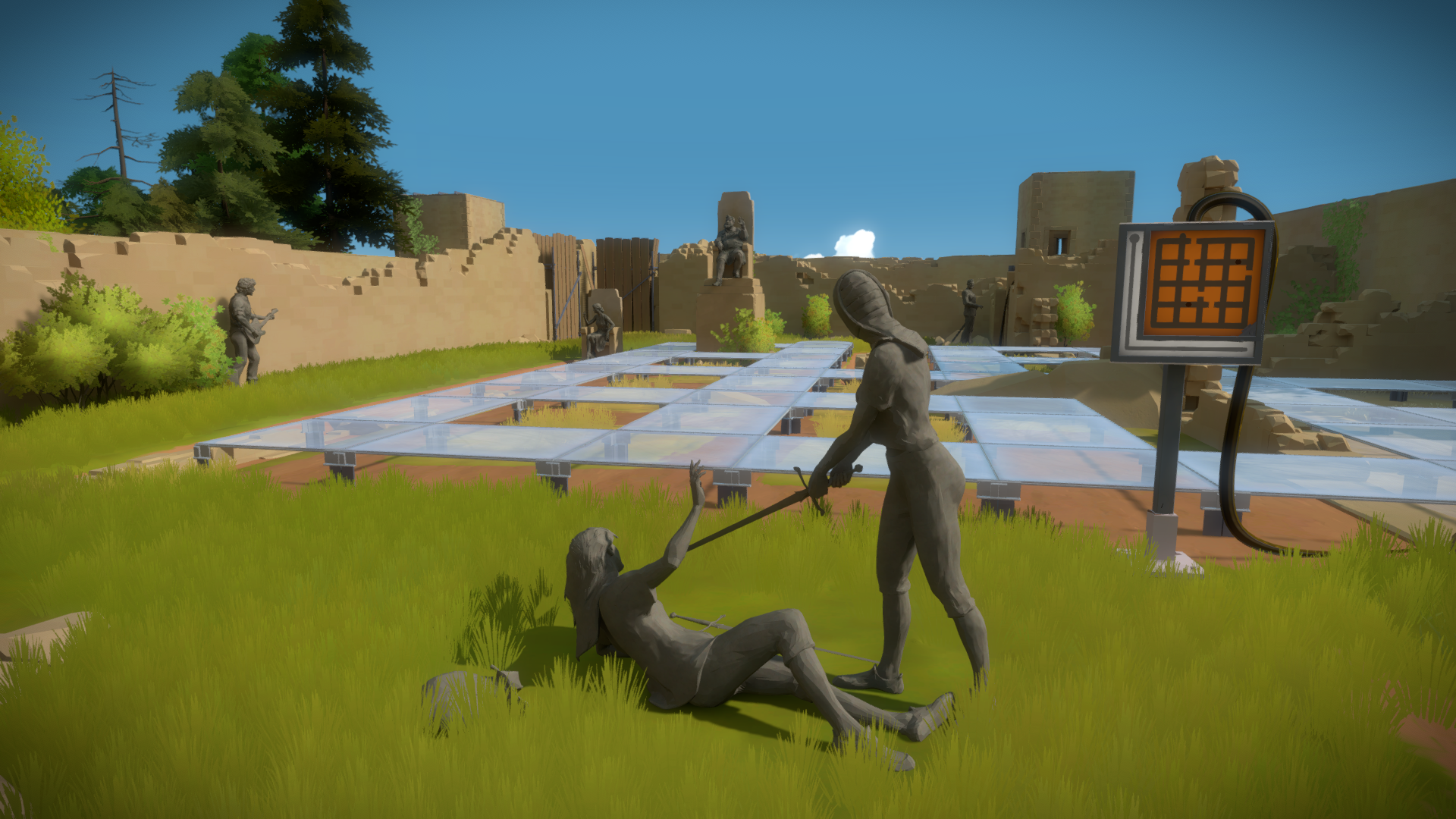
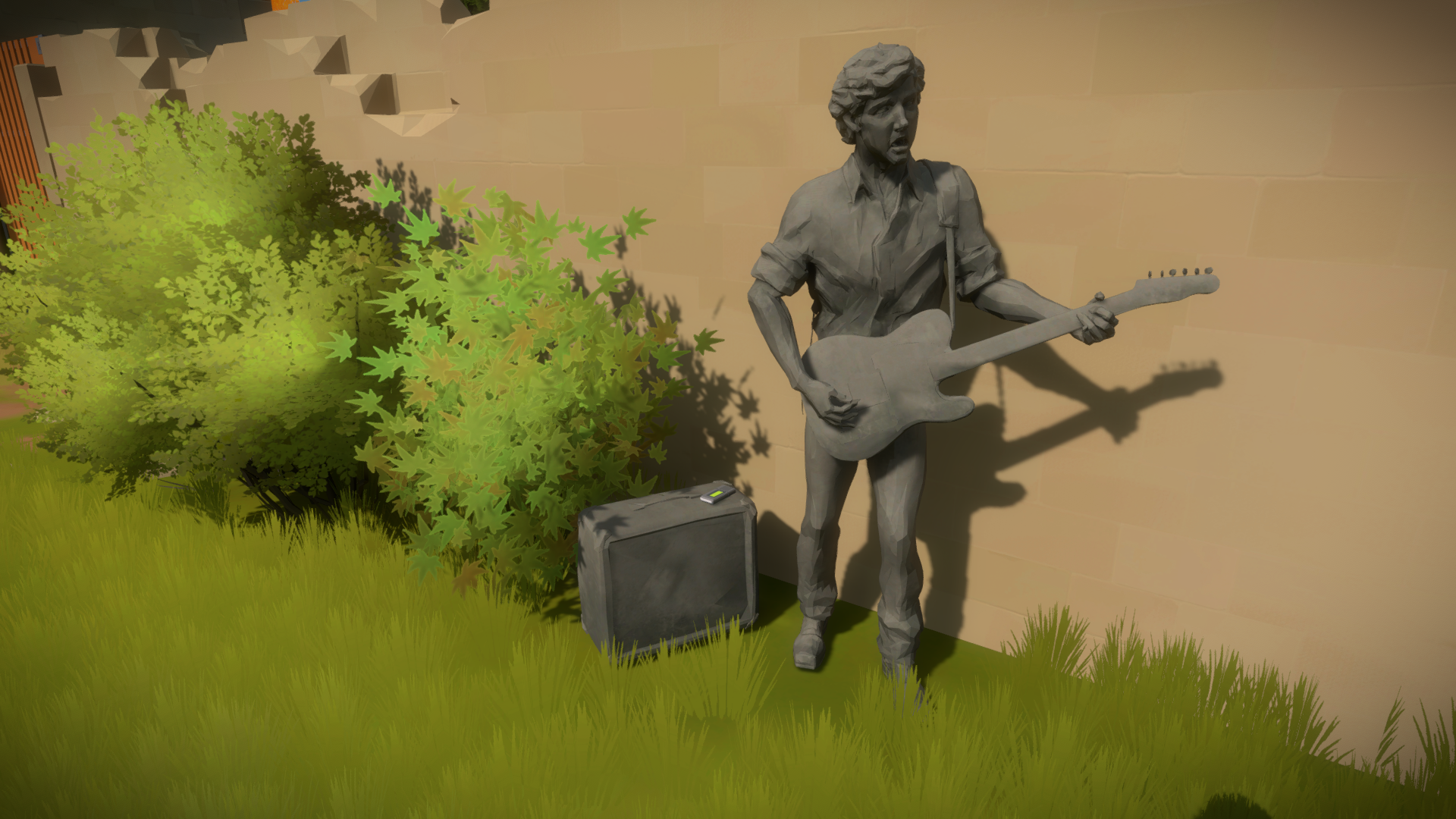
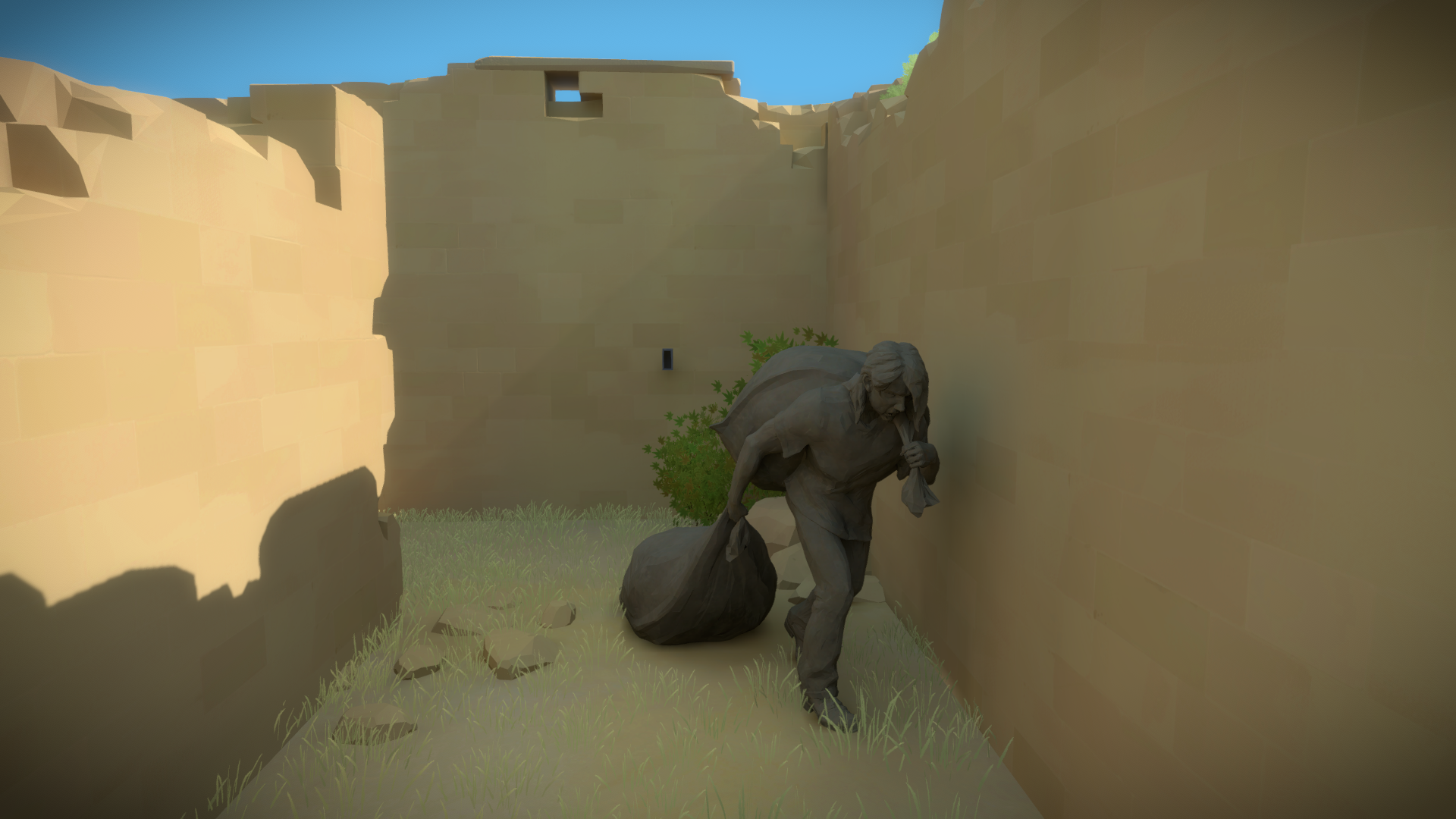
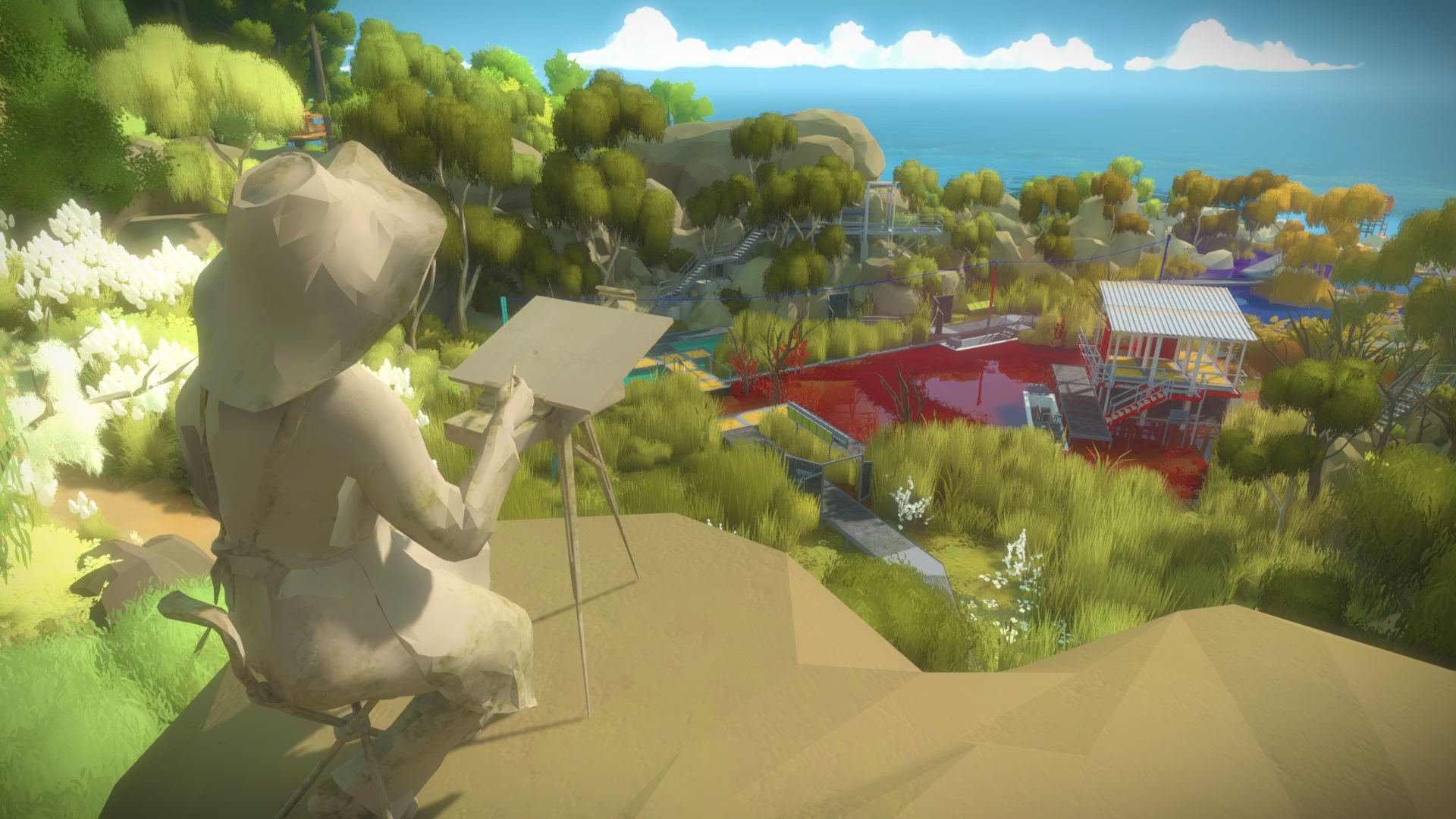
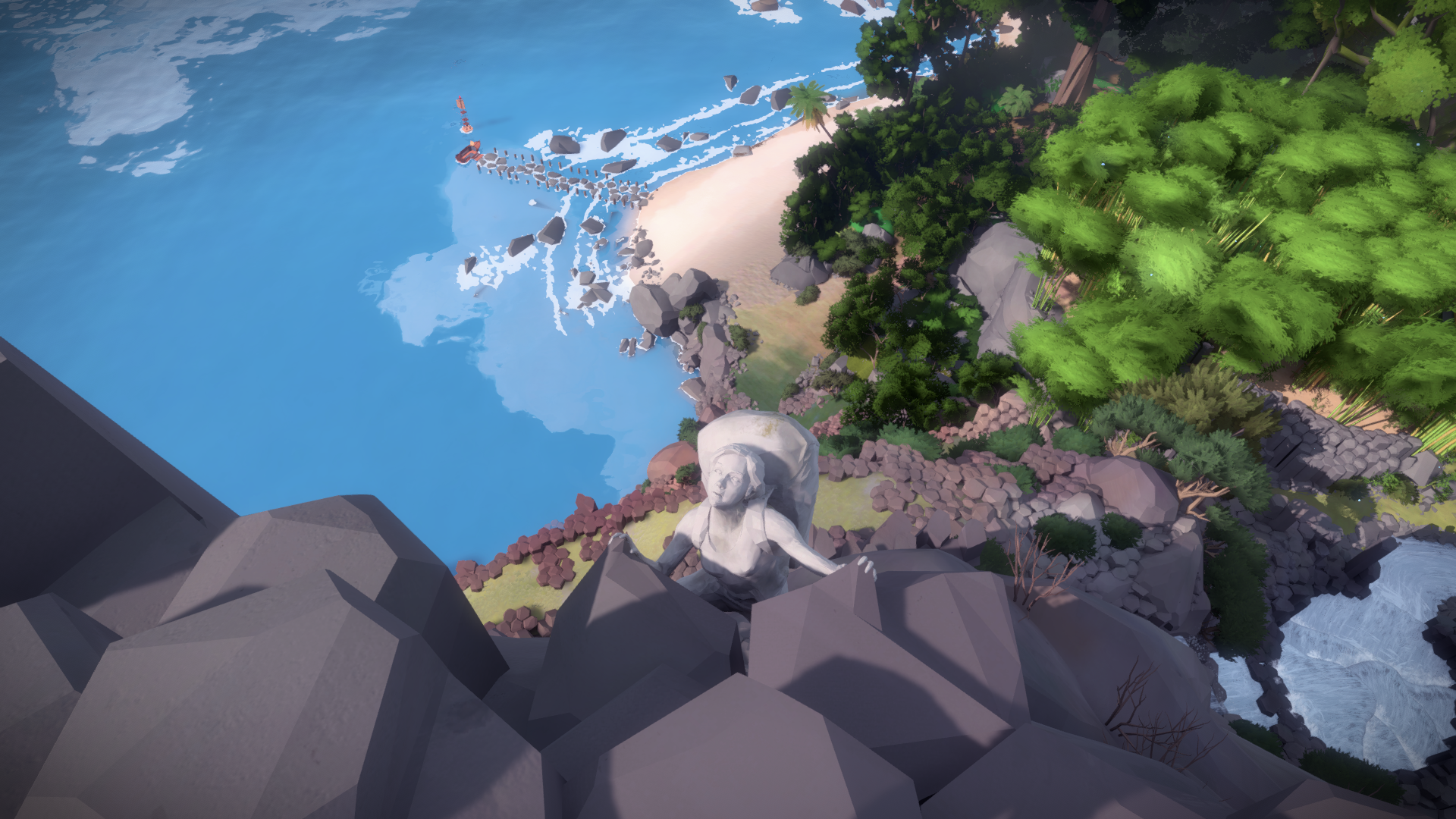
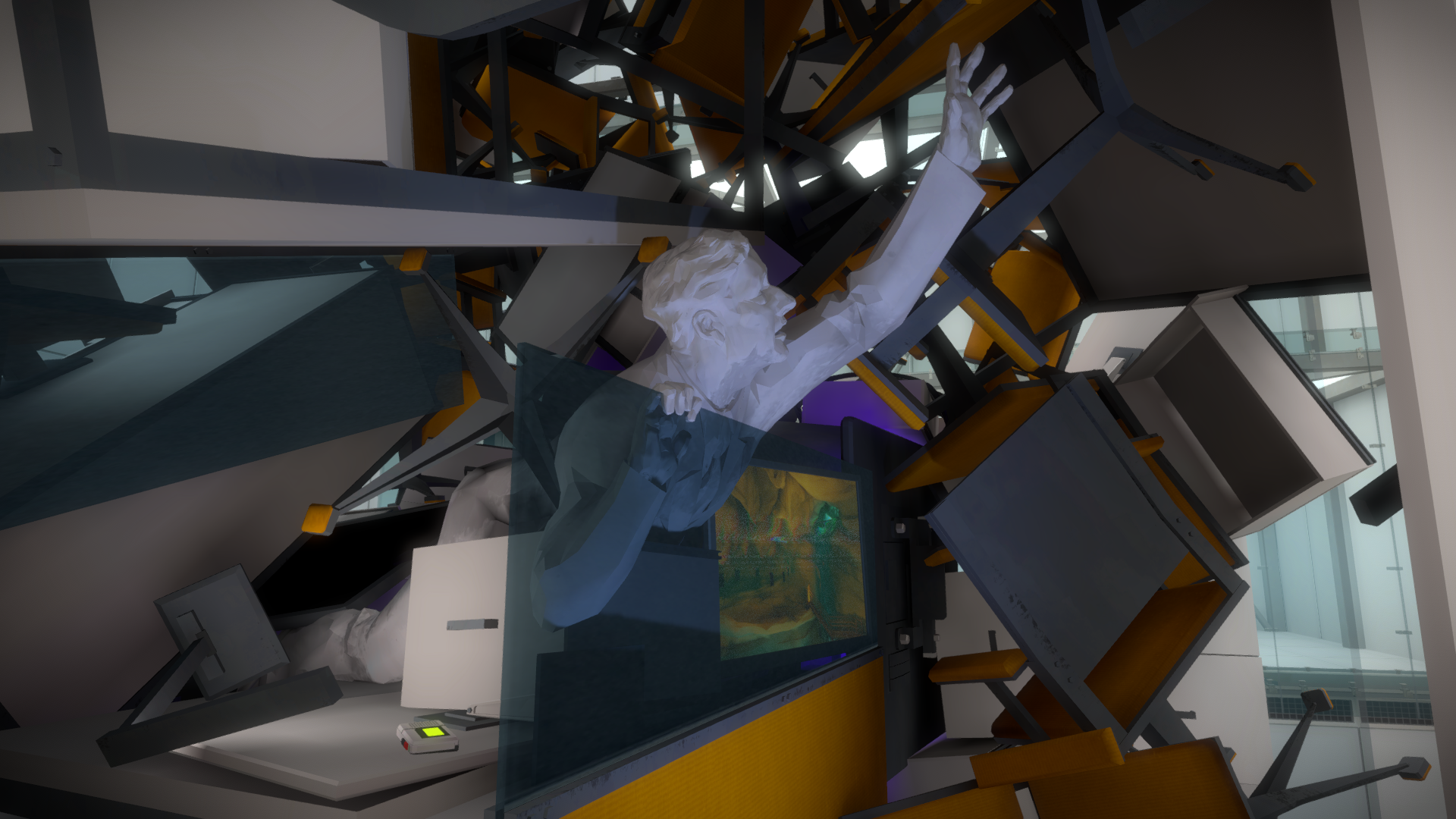
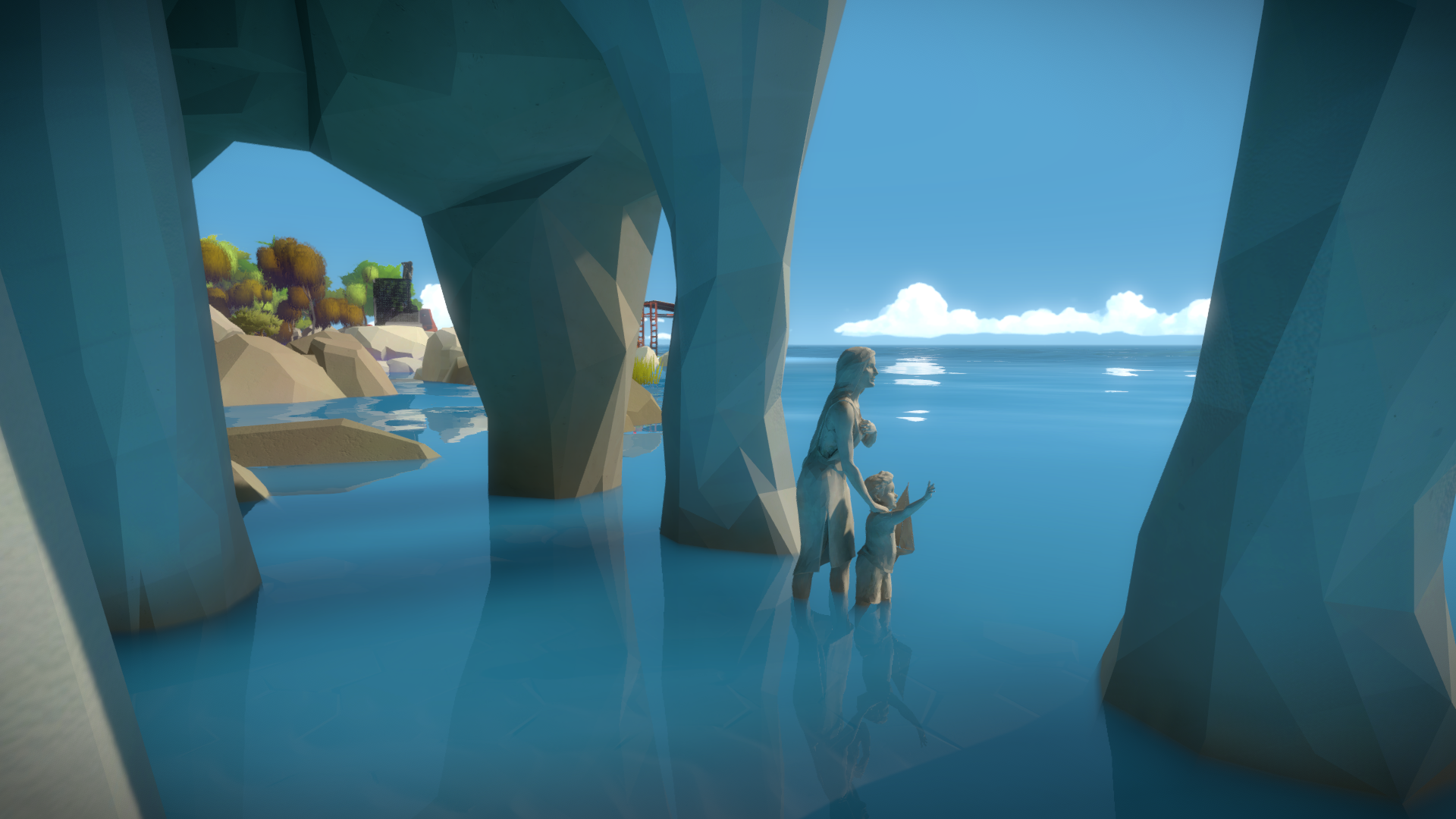
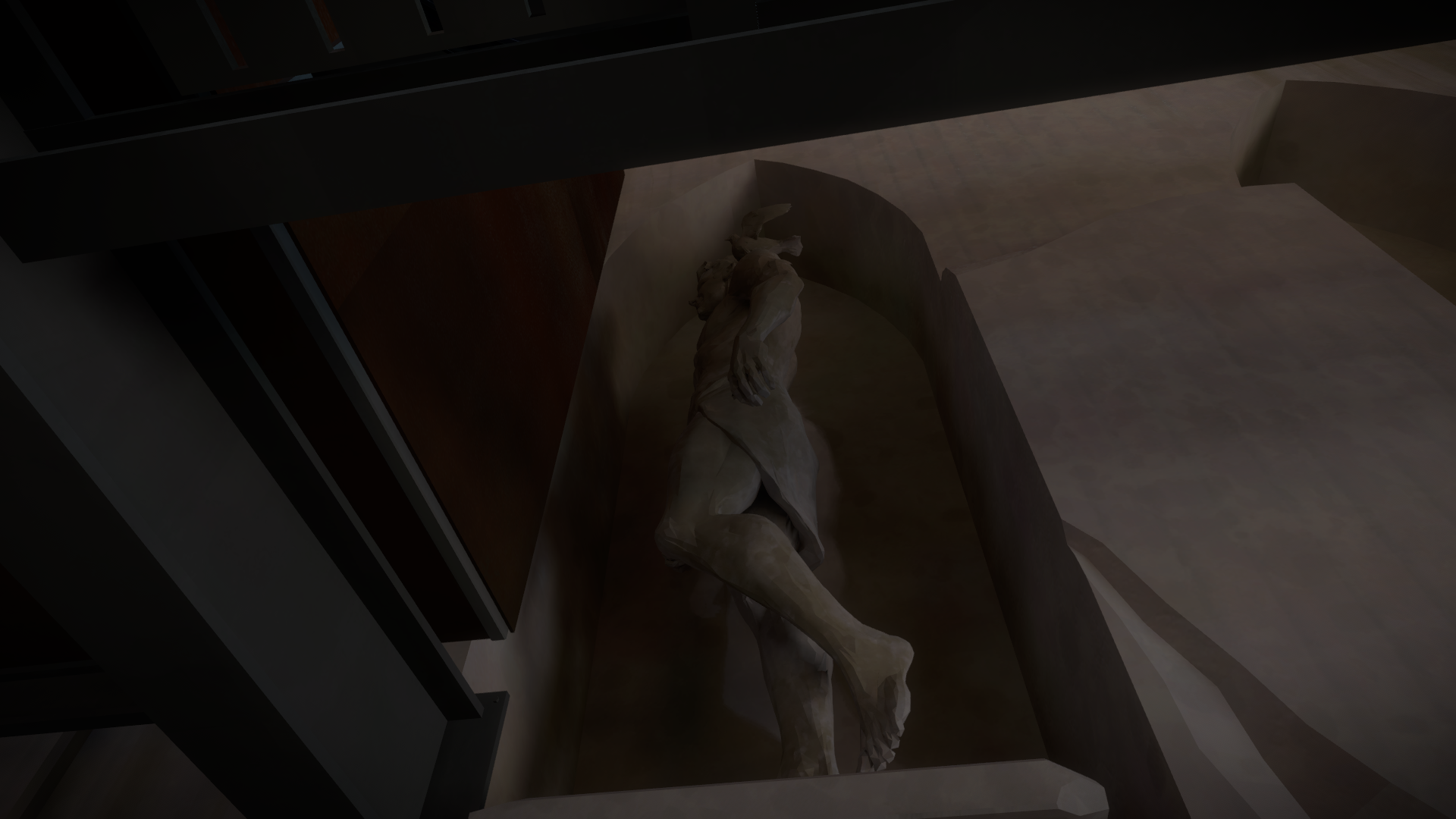
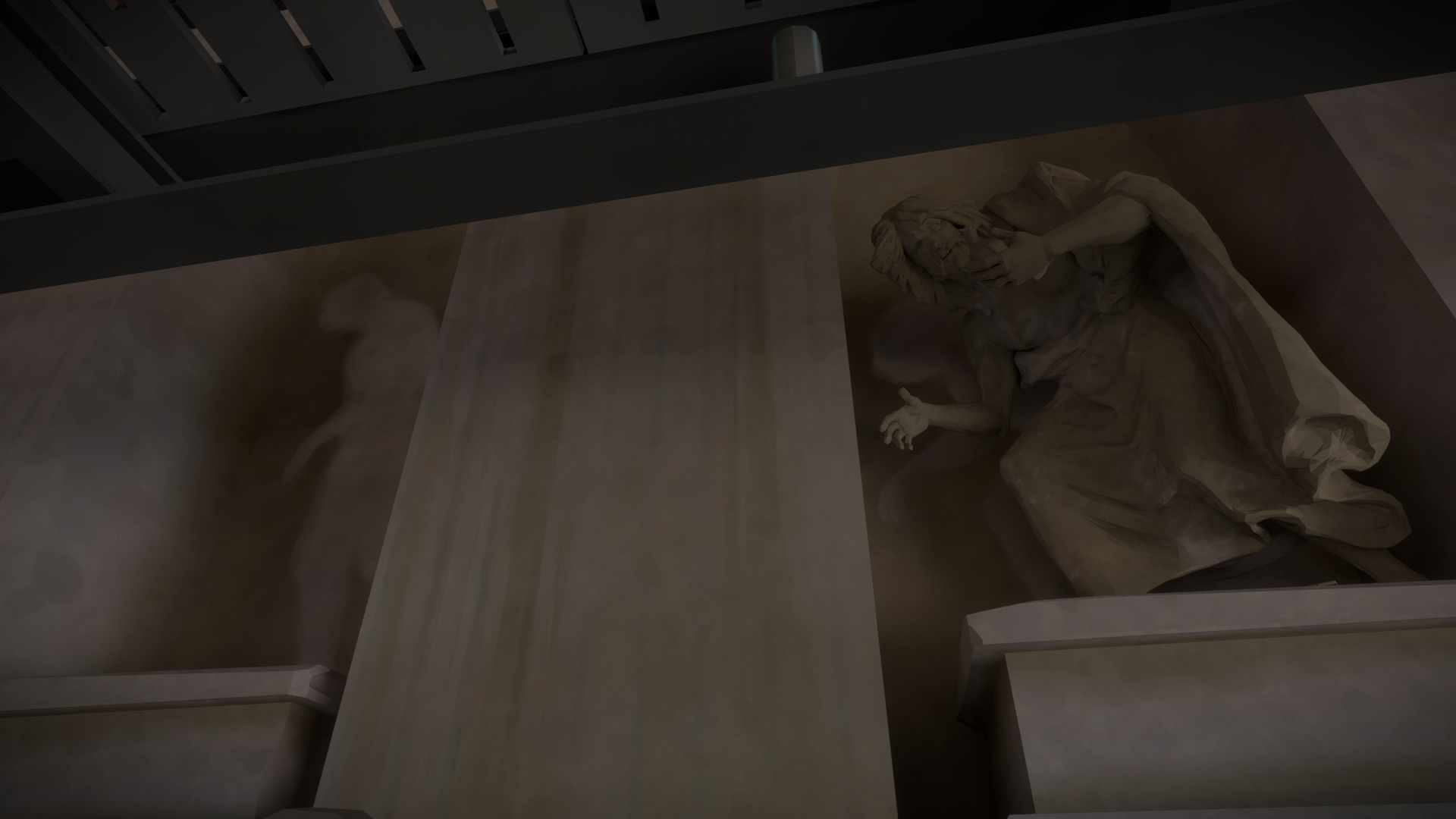
The presence of petrified human figures reinforces this archaeological logic. These figures, frozen in postures that suggest everyday activities, evoke archaeological sites such as Pompeii, where bodies function as material traces of lived practices rather than as narrative characters. In The Witness, these petrified individuals serve as silent evidence of past actions, gestures, and intentions. Their placement within the landscape invites conjectures about what people once did in those locations, how they interacted with the environment, and what kinds of practices were considered meaningful. Yet, as in interpretative archaeology, such conjectures remain interpretative rather than demonstrative. This stands in sharp contrast to the epistemic regime governing the panel puzzles.

The Quest for Knowledge in The Witness

Petrified human bodies in the ruins of Pompeii. In 79 CE, the Vesuvius volcano in Southern Italy erupted, destroying settlements around it and taking the lives of up to 16,000 residents. Sources: Peter's big adventure / The Colector.

The Quest for Knowledge in The Witness

A petrified modern domestic dog and petrified people who apparently lived in different historical periods. Source: Thekla / Author.

Outside the panels, the player is no longer confronted with well-defined problems whose solutions are mechanically verifiable. Instead, the environment presents itself as a dense field of material traces: ruins, abandoned structures, statues, inscriptions, unfinished buildings, and scattered artifacts whose meaning is never explicitly articulated. The material remains suggest multiple layers of the past, but these can only be contemplated; the player can only reconstruct their meaning through interpretation.

This mode of engagement closely aligns with the principles of interpretative archaeology as developed by Ian Hodder: "an interpretive postprocessual archaeology needs to incorporate three components: a guarded objectivity of the data, hermeneutic procedures for inferring internal meanings, and reflexivity." Interpretative archaeology, as articulated by Ian Hodder within postprocessual archaeology, rejects the notion of material culture as a neutral repository of facts.

The Quest for Knowledge in The Witness

A series of paintings and sculptures that can be interpreted as an allusion to human evolution. Source: Thekla / Author.

For Hodder, meaning is not extracted from objects as if it were hidden within them; it is produced through the interaction between observer and material culture. In The Witness, the material culture of the fictional world is intimately linked to the material culture of the real world in which the player and the creator reside. The player’s interpretive freedom is itself historically situated, shaped by modern archaeological and museological ways of seeing. The island is thus not merely interpreted as a past world, but as a past legible through contemporary epistemic habits.

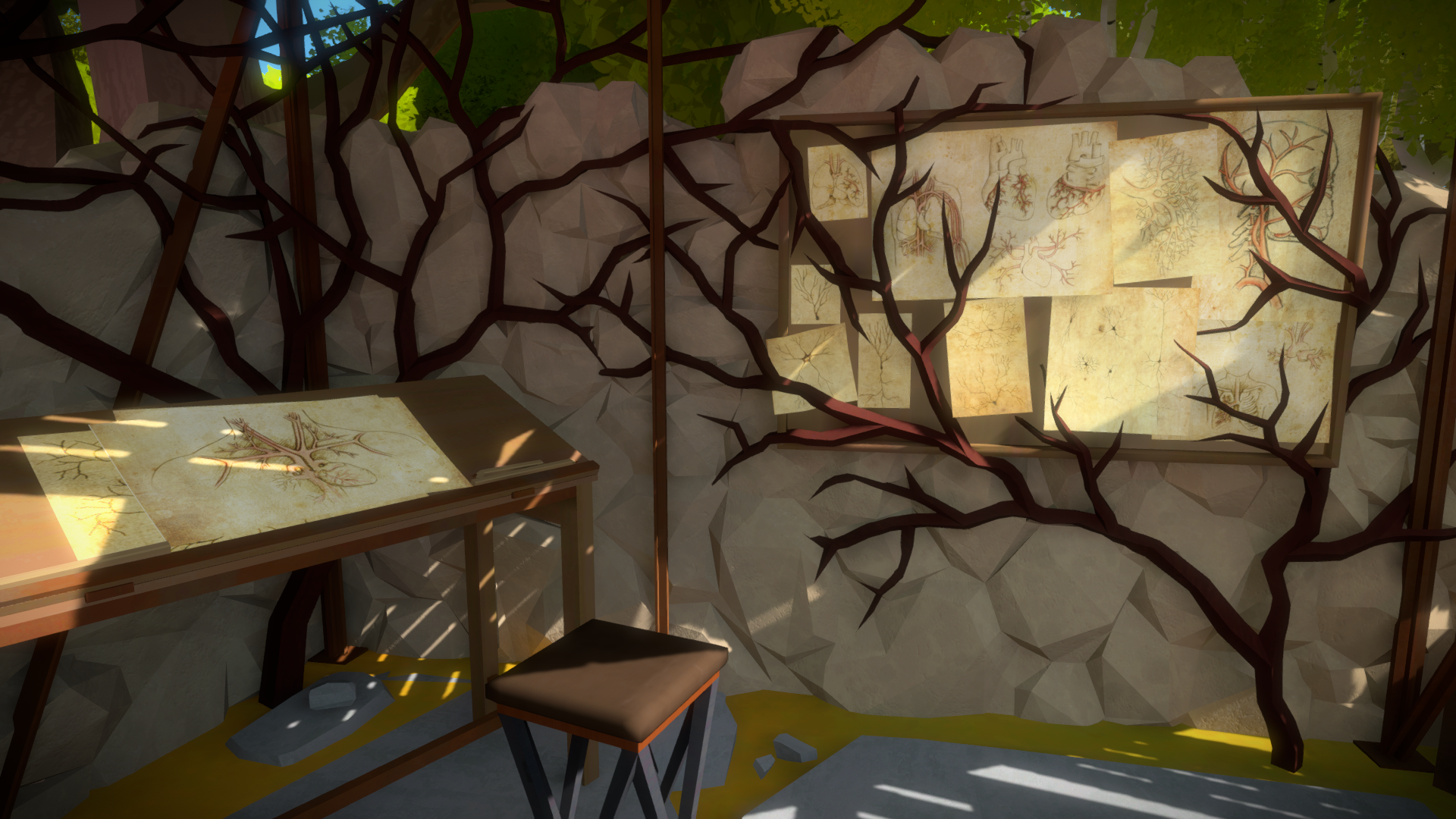
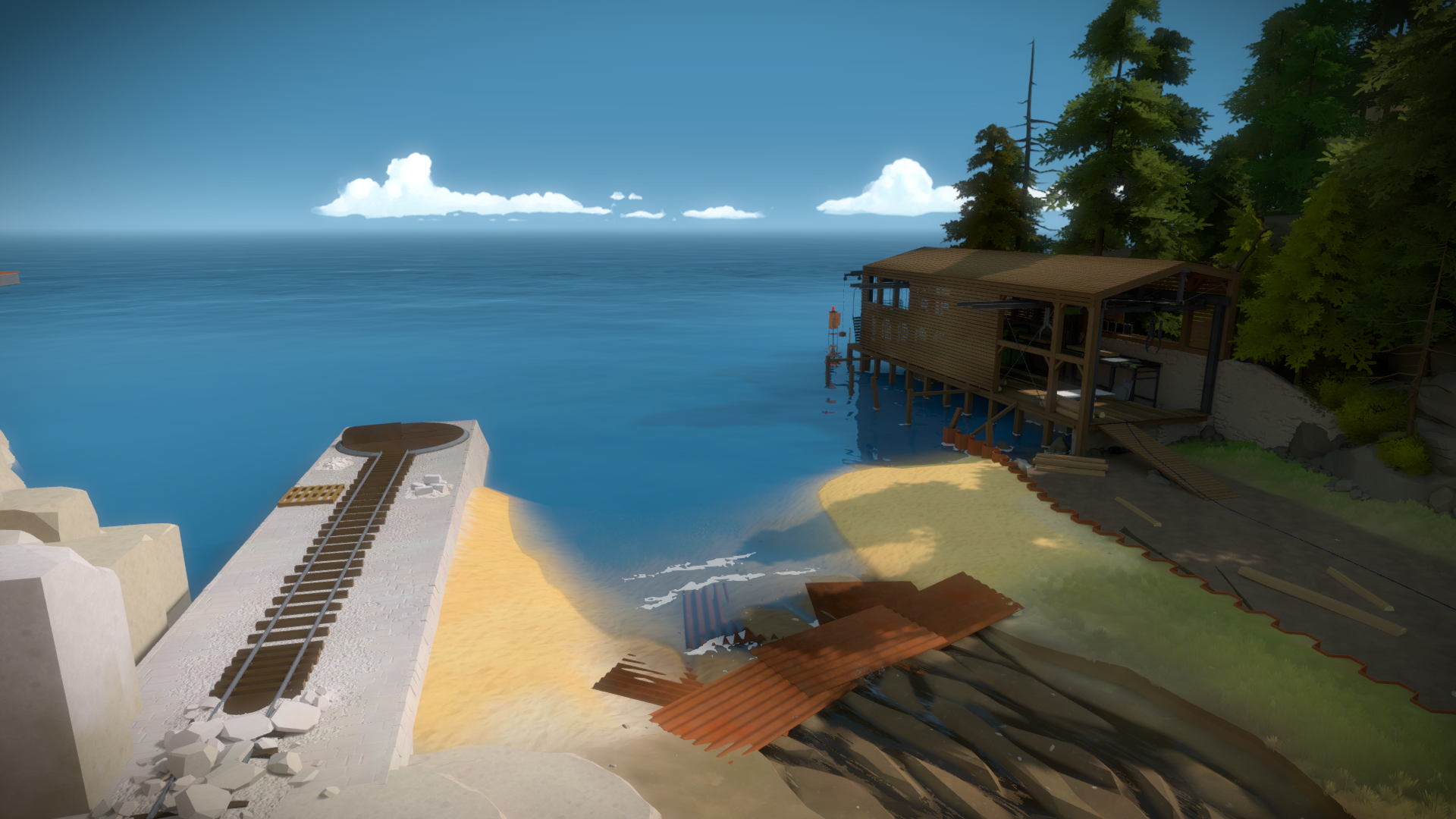
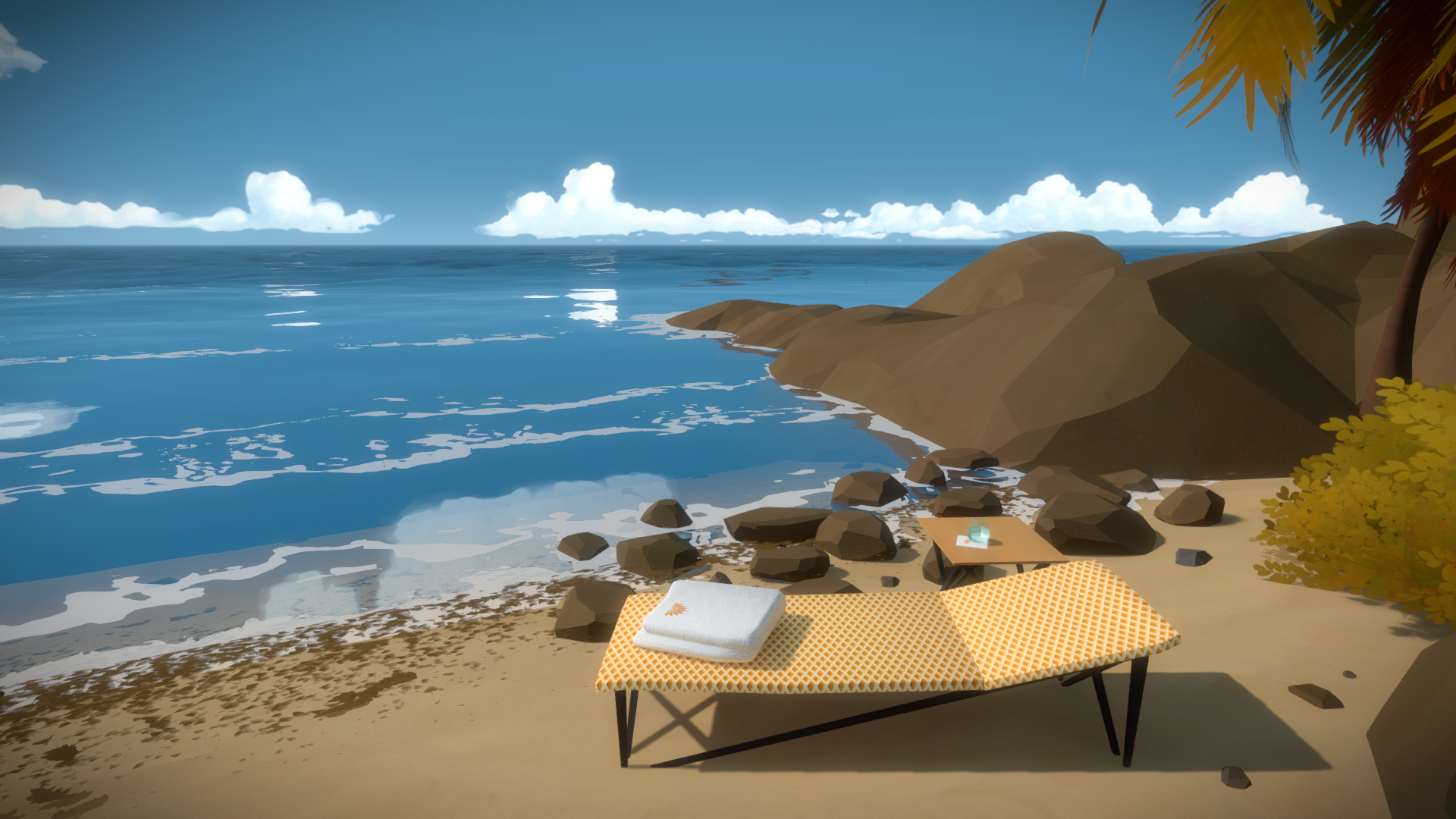
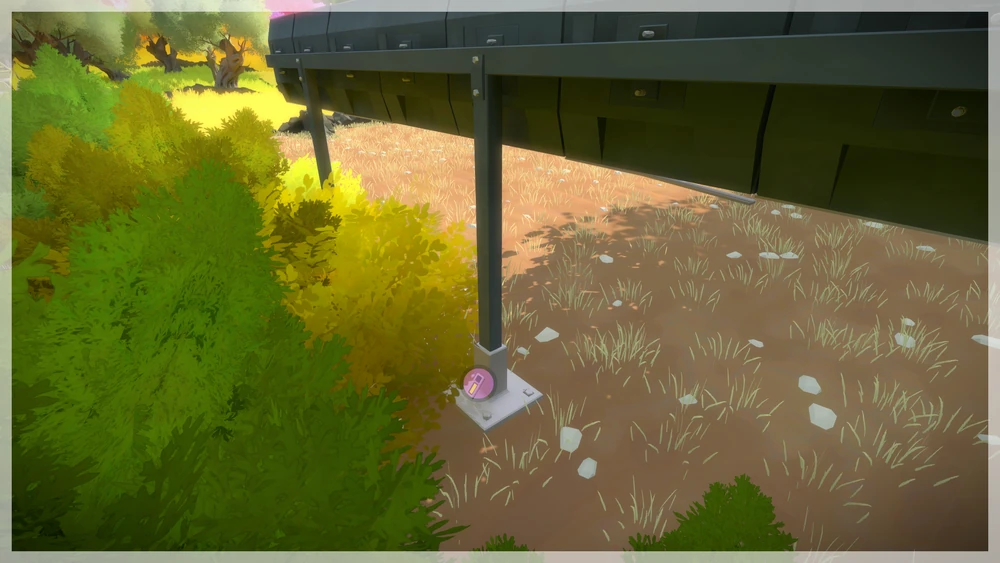
Based on our knowledge of real-world human history, we can interpret the objects (rails, abandoned chairs, drawings, ruins, etc.) in such a way as to reconstruct multiple anthropic interventions throughout the past: an ancient civilization, the settlement of a native tribe, the construction of a medieval village, the establishment of a port with industrial technology, an exploration expedition in the mountains, the appropriation of the island as a tourist destination, etc. However, the game never confirms whether these layers correspond to a linear historical progression, a coexistence of traditions, or a symbolic juxtaposition. In Hodder’s terms, the stratigraphy is meaningful but underdetermined. This underdetermination is not a failure of historical reconstruction, but the very epistemic condition through which the game stages archaeological knowledge.

The Quest for Knowledge in The Witness

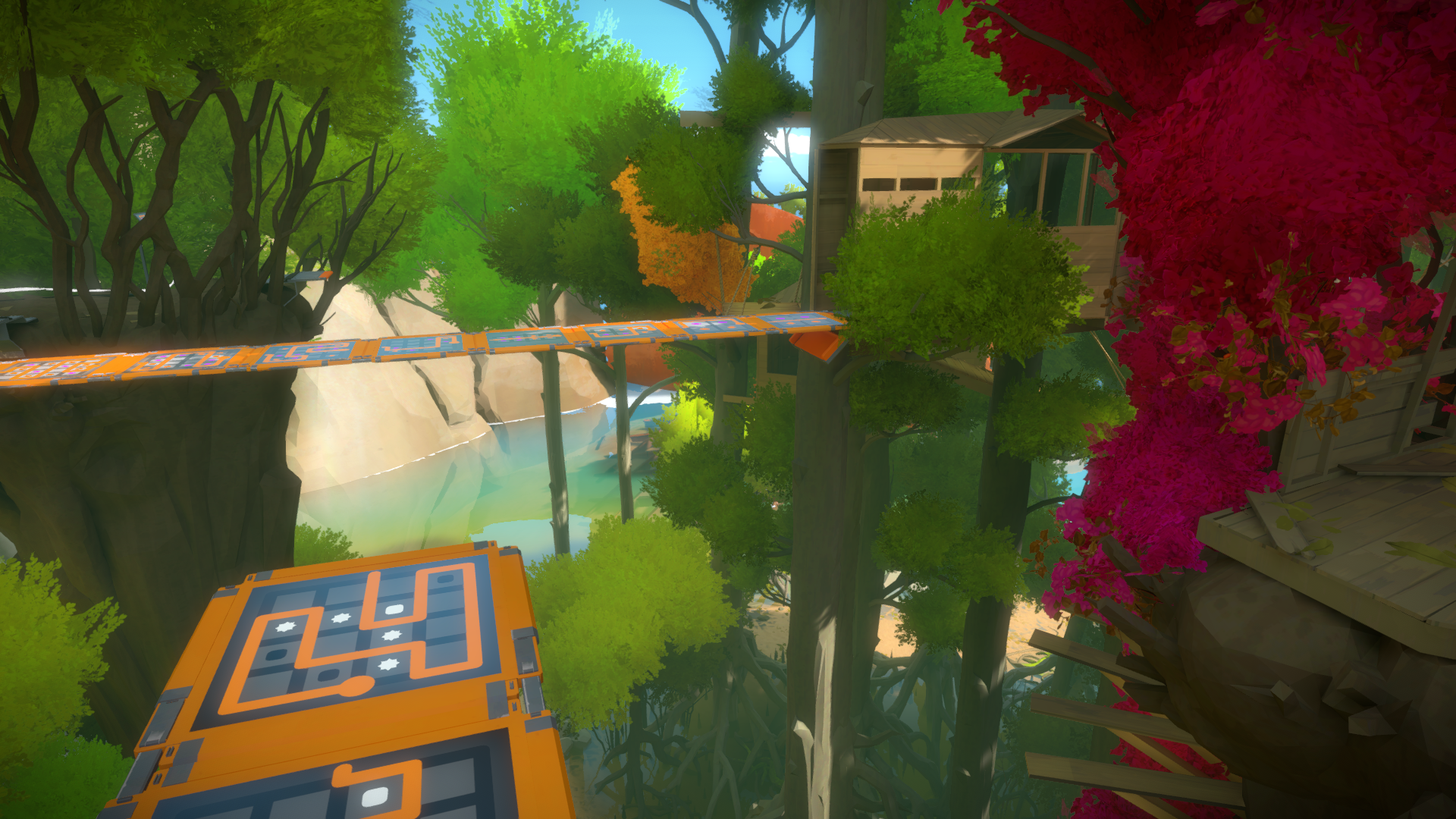
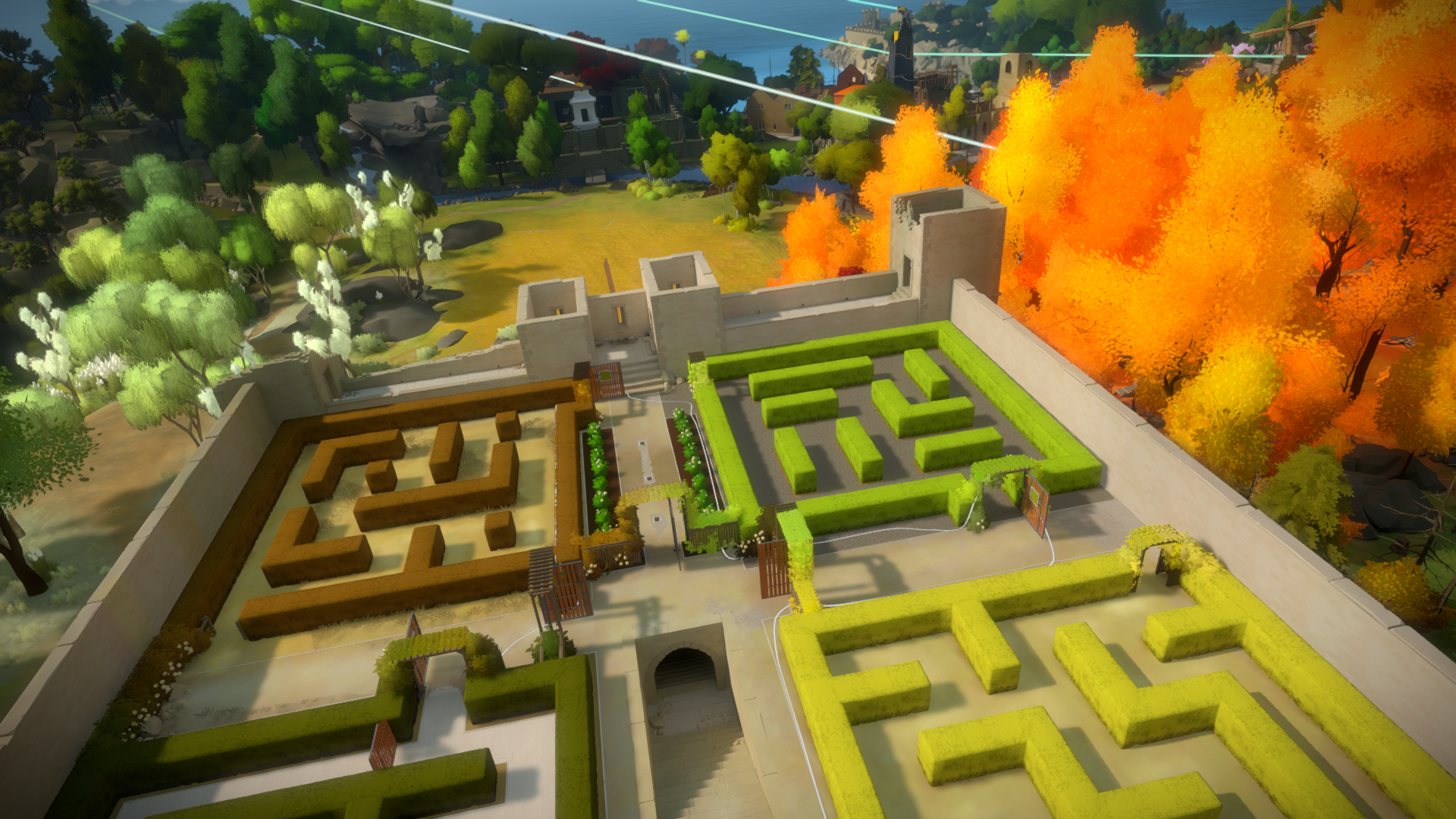
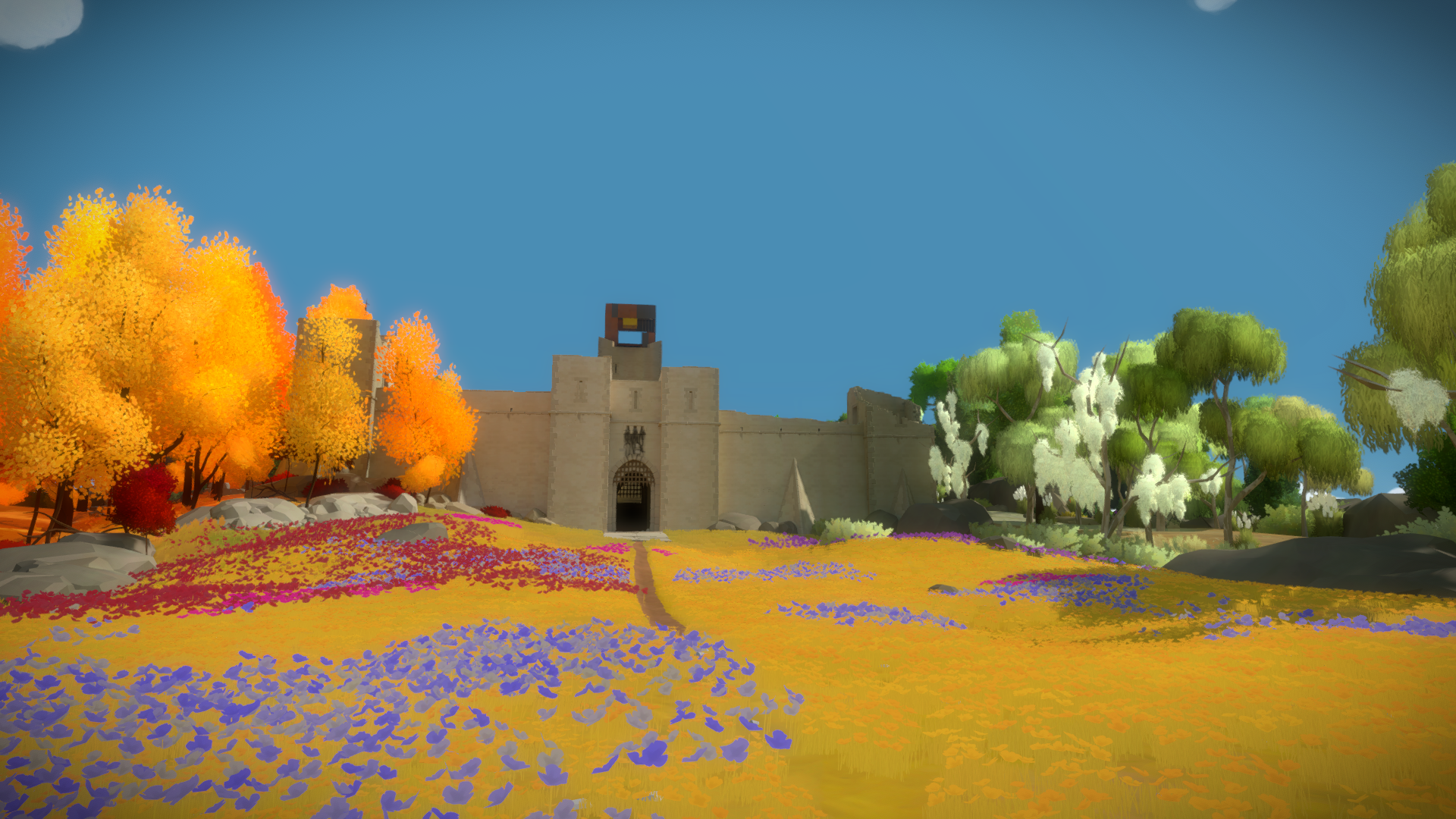
Architectural structures that allude to a tribal society that lived in trees (left), ruins of an ancient civilization (center), and a medieval castle (right). Source: Thekla / Author.

The Quest for Knowledge in The Witness

Typical Renaissance sketches (left); industrial infrastructure elements (center); objects of modern tourism (right). Source: Thekla / Author.

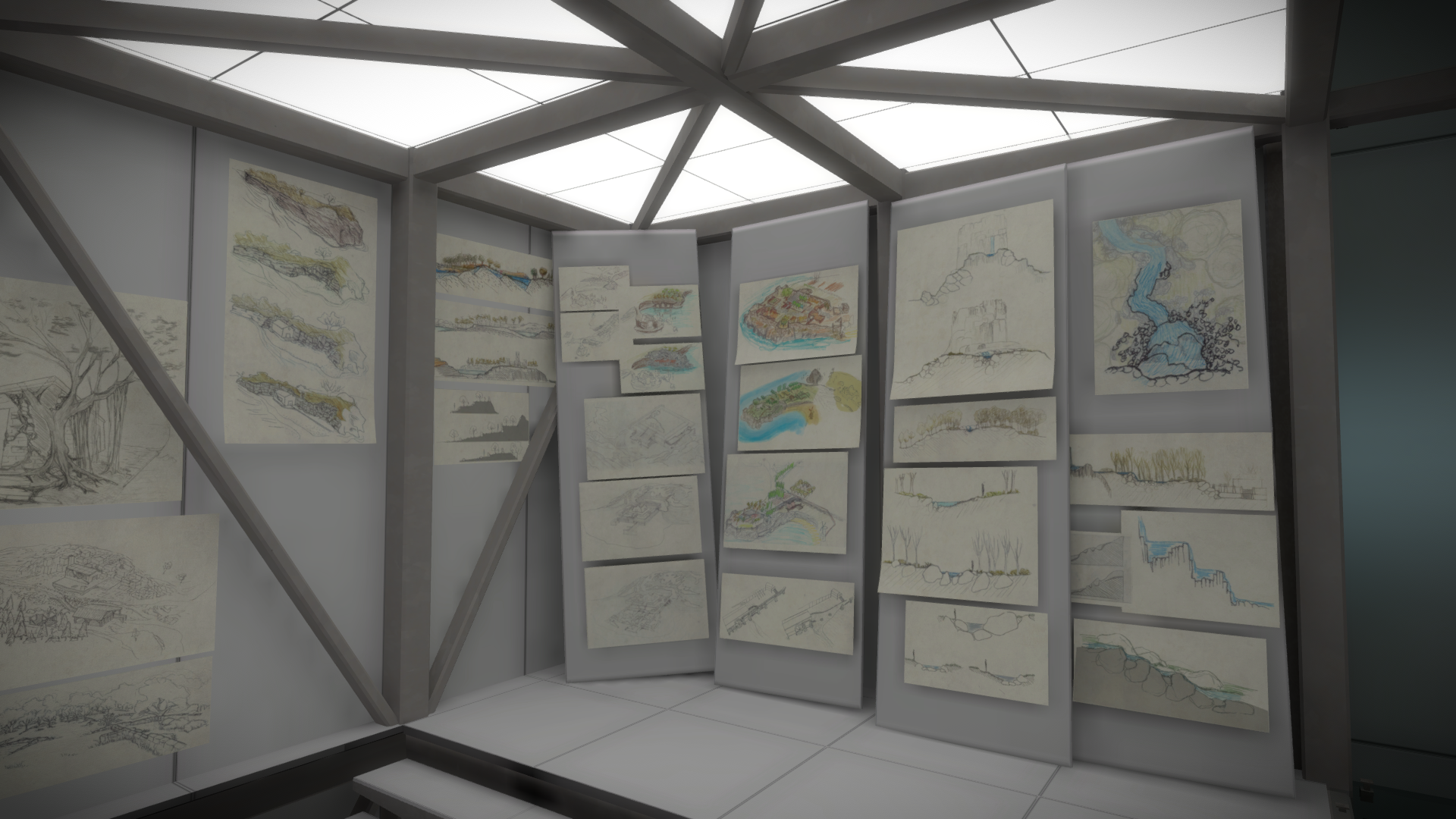
The game's audiovisual production directly engages with real-world island references. Most of the ambient sounds were recorded during a walk around Angel Island in San Francisco Bay. Blow's team also collaborated with a landscape architecture firm, Fletcher Studio, to develop the environments for The Witness. In The Witness: Designing Video Game Environments (2017), Fletcher Studio explains that the Azores archipelago (known as Europe's secret islands) served as inspiration for the game.

The layers of different cultures, from ancient civilizations to the Portuguese monarchy, to present day fishing villages, proved most analogous. Available aerial imagery was collected from the Azores and then collaged together to create a fictional Island in plan, now with topography, beaches, water bodies, etc.

[...]

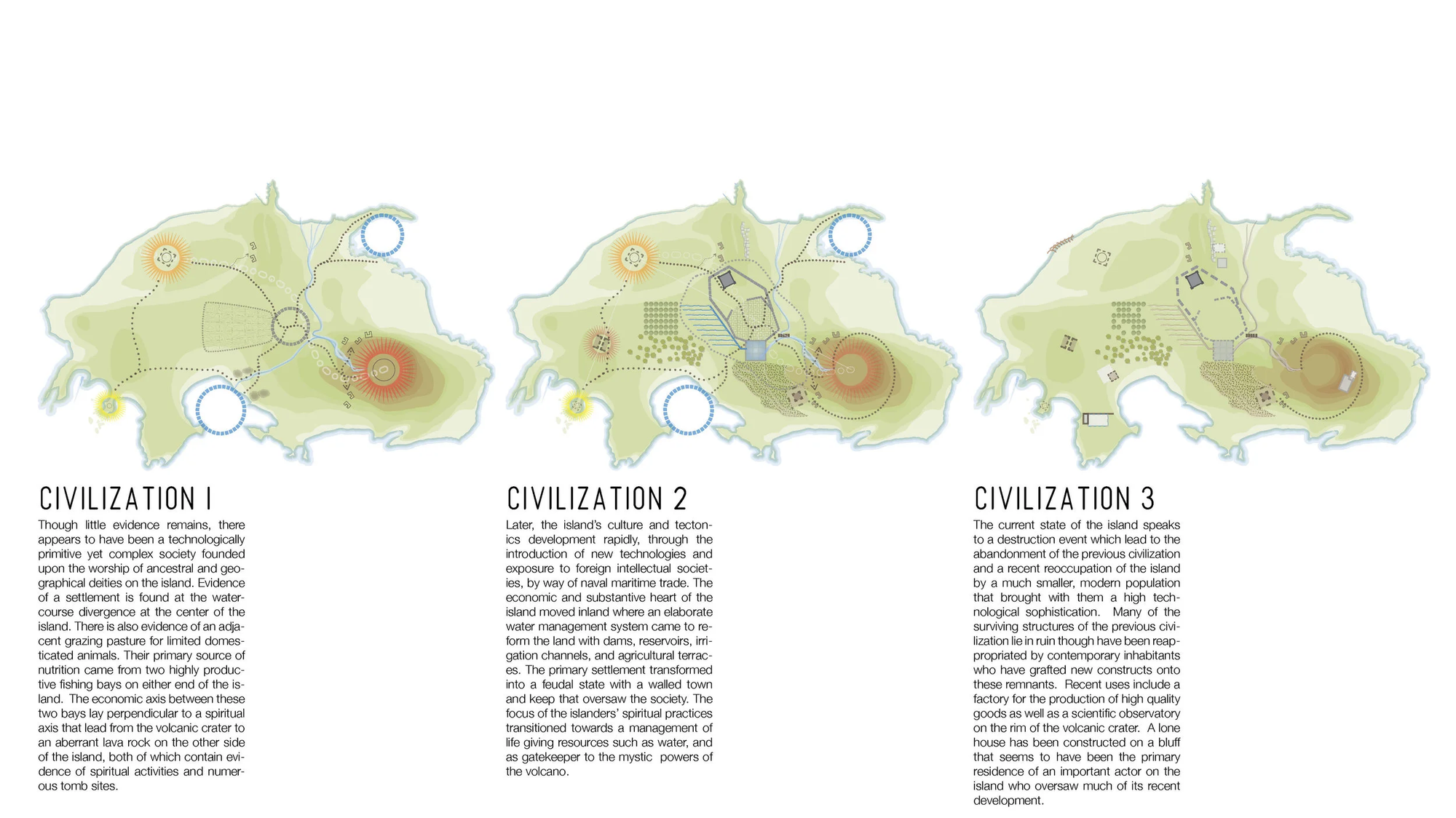
In the beginning, the island was a cultural tabula rasa. In order to make sense of the existing and constantly introduced structures and spaces, it’s cultural history had to be written. The projective devices that we had developed, were applied to the Island in reverse. The past was divided into three successive epochs, which we termed Civilizations (CIV’s) One, Two and Three. A simple description of each was developed, and then a larger matrix, was produced that related to each in terms of infrastructure, architecture, and landscape. Each of these three categories had their technologies, agriculture, religion, and cultures. Materially, each epoch had its own techniques of building, based on assigned resources and technologies, with each CIV methodologies and products growing more refined over time.

Fletcher Studio, 2017.
The Quest for Knowledge in The Witness
Three fictional civilizations. Source: Fletcher Studio, 2011.
The Quest for Knowledge in The Witness

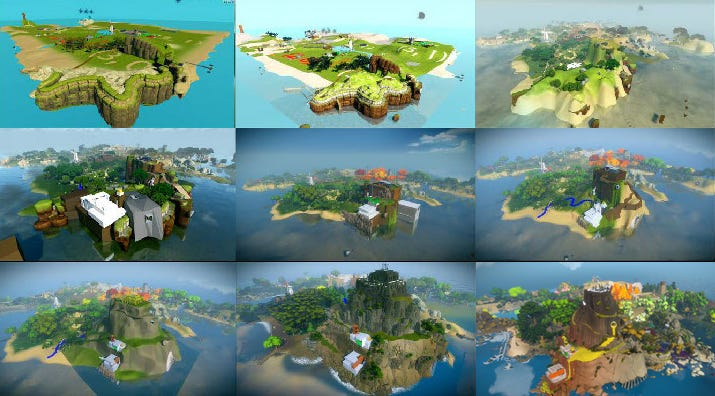
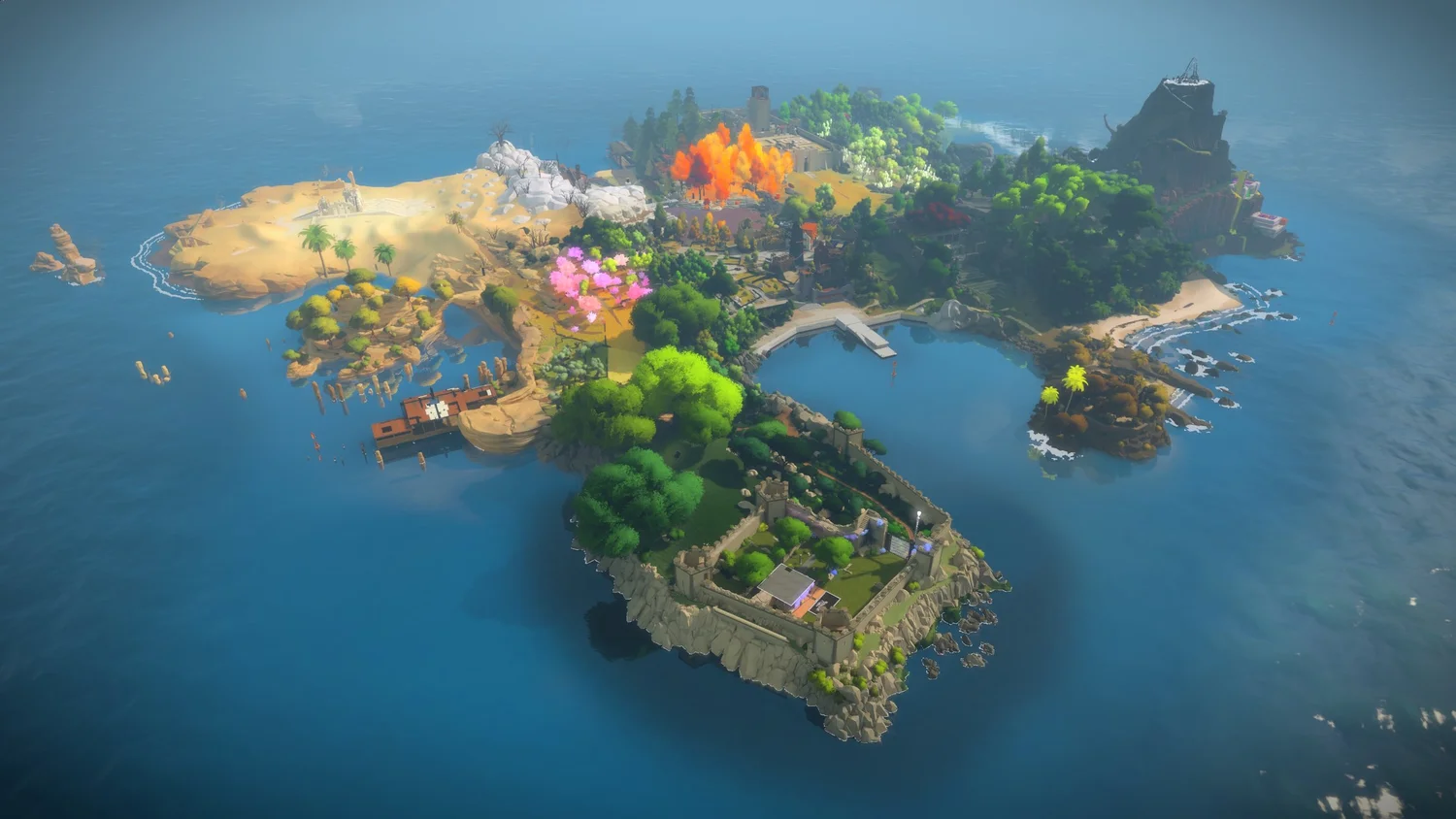
From left to right: evolution of the Island through time; The Witness Island at the time of game publishing. Source: Fletcher Studio / Thekla, 2010-2014.

The Quest for Knowledge in The Witness

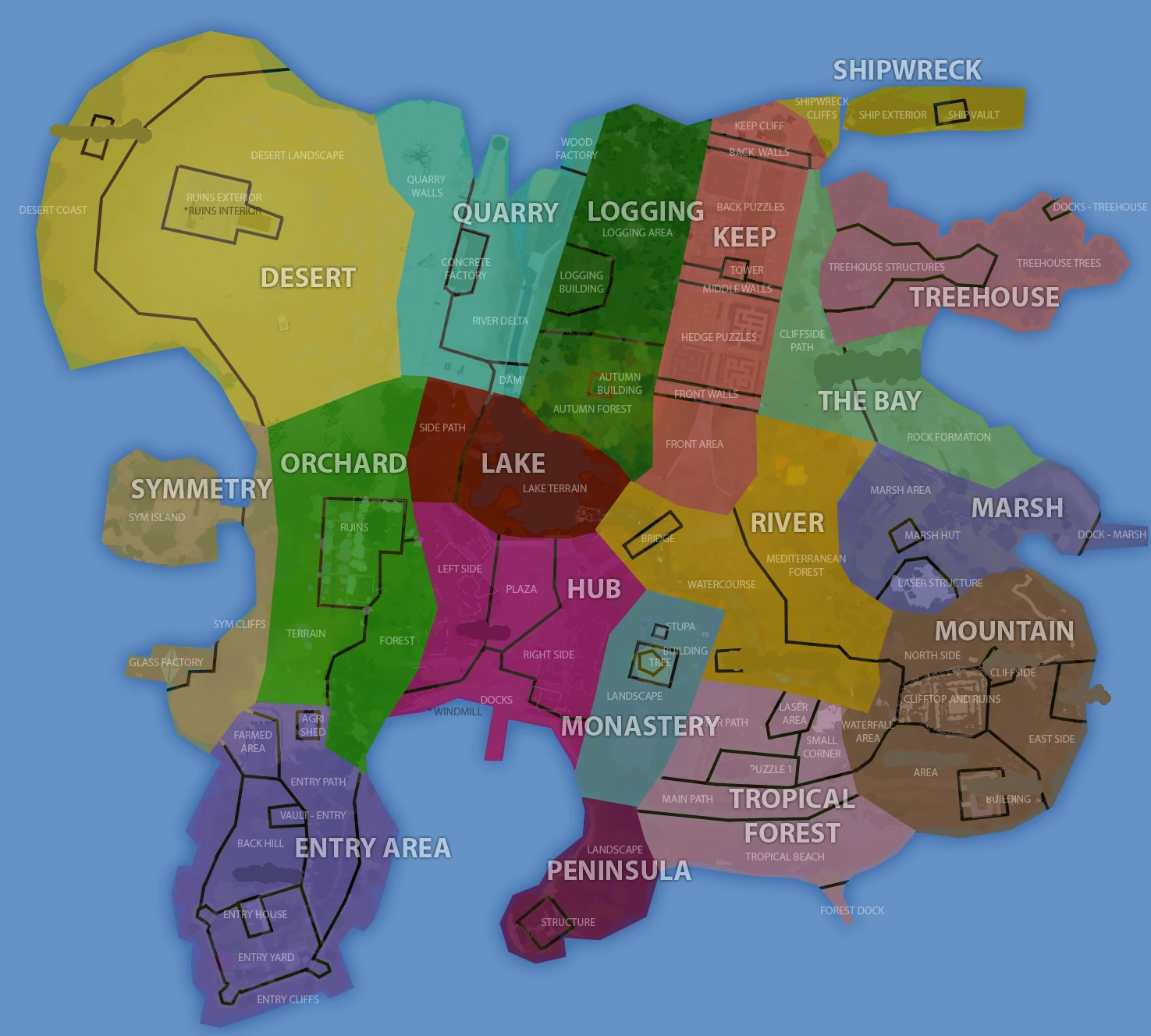
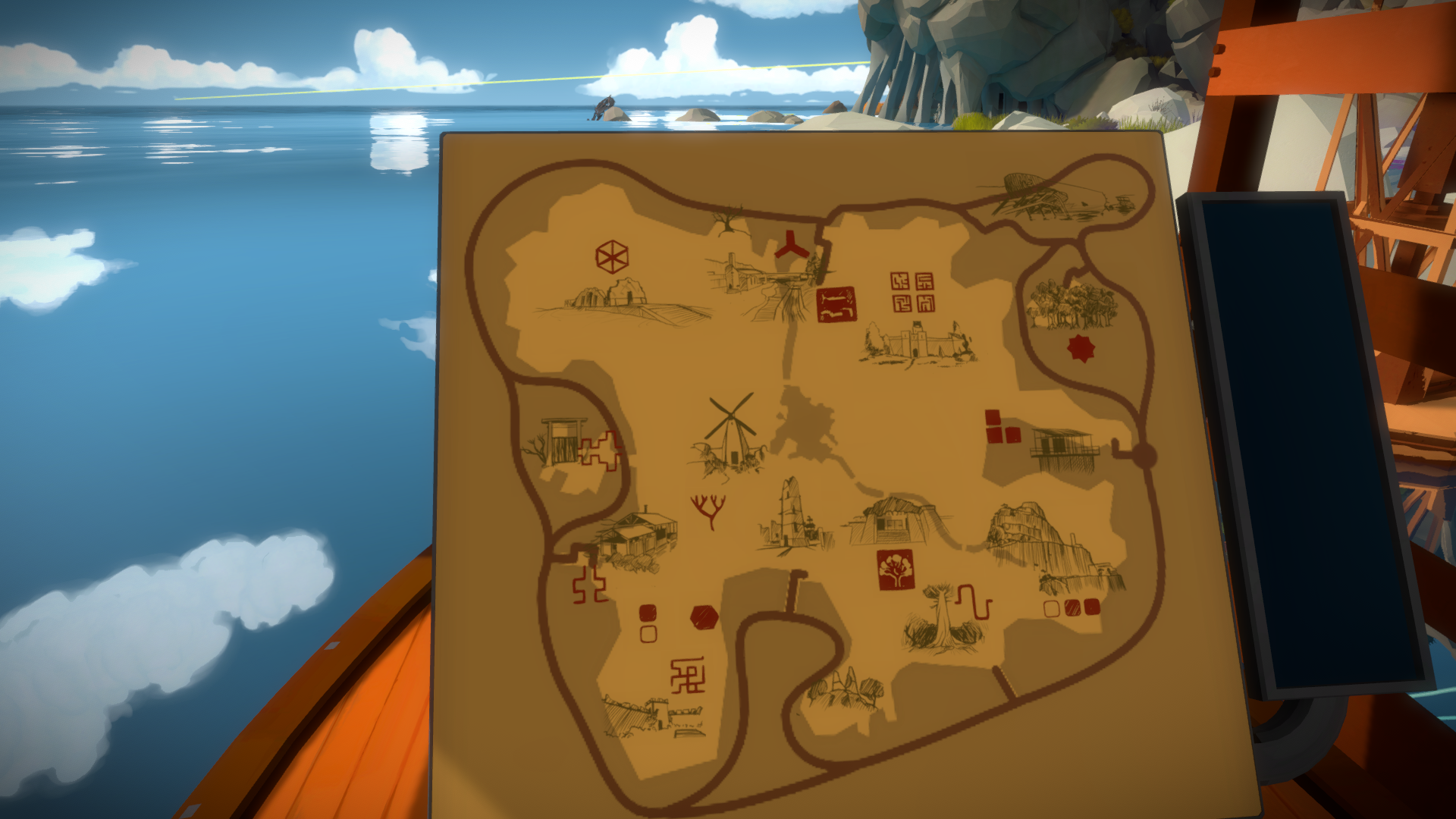
From left to right: map of Island zones; Island map attached to the boat that serves as a vehicle in the game. Source: Thekla / Author.

Ironically, the meticulous predesign of fictional civilizations does not resolve interpretive ambiguity, but actively produces it. In this sense, the game mirrors Hodder’s critique of positivist archaeology: even exhaustive documentation and planning do not eliminate interpretation. Unlike formal puzzles, there is no possible final reconstruction of the island's history, nor a privileged account that resolves conflicting interpretations; archaeological knowledge remains provisional. Knowledge, in this context, is not measured by correctness but by interpretative coherence.

The Witness juxtaposes two distinct modes of knowledge: formal, rule-governed knowledge and archaeological, interpretative knowledge; consequently, the difference between solving problems and understanding worlds. Although the distinction is analytically useful, the game occasionally blurs that boundary. This tension is central to the metafictional and intertextual elements in the game.

III. Metafiction and Intertextuality

While the formal puzzles and the archaeological reading of the island structure two distinct epistemic regimes within The Witness, the game introduces a third and more reflexive layer of knowledge through its metafictional and intertextual elements. These elements are primarily conveyed through audio logs, short video recordings, and, most strikingly, through the final sequence of the game, which destabilizes the ontological status of the island itself.

The audio logs scattered throughout the island consist of excerpts from philosophers, scientists, artists, and religious thinkers, ranging from Plato and Heraclitus to Simone Weil, Feynman, and contemporary writers. These recordings function as intertextual fragments, disconnected from each other and from any explicit justification within the game. Their arrangement is deliberate, but not instructive: they are neither rewards nor keys; instead, they operate as epistemic provocations. Listening to a quotation about perception, certainty, or illusion after struggling with a sequence of puzzles does not resolve the puzzle retroactively; it reframes the player’s understanding of what they have been doing all along. In this sense, the recordings function less as narrative exposition and more as meta-commentary on the act of knowing itself (in addition to related topics, such as faith and skepticism).

The Quest for Knowledge in The Witness
Location of the audio log with a quote from Heisenberg. Source: Thekla / The Witness Wiki.
The physicist Wolfgang Pauli once spoke of two limiting conceptions, both of which have been extraordinarily fruitful in the history of human thought, although no genuine reality corresponds to them.

At one extreme is the idea of an objective world, pursuing its regular course in space and time, independently of any kind of observing subject; this has been the guiding image of modern science.

At the other extreme is the idea of a subject, mystically experiencing the unity of the world and no longer confronted by an object or by any objective world; this has been the guiding image of Asian mysticism.

Our thinking moves somewhere in the middle, between these two limiting conceptions; we should maintain the tension resulting from these two opposites.

Werner Heisenberg, 1974

— Audio log: Heisenberg on Pauli (The Witness Wiki)

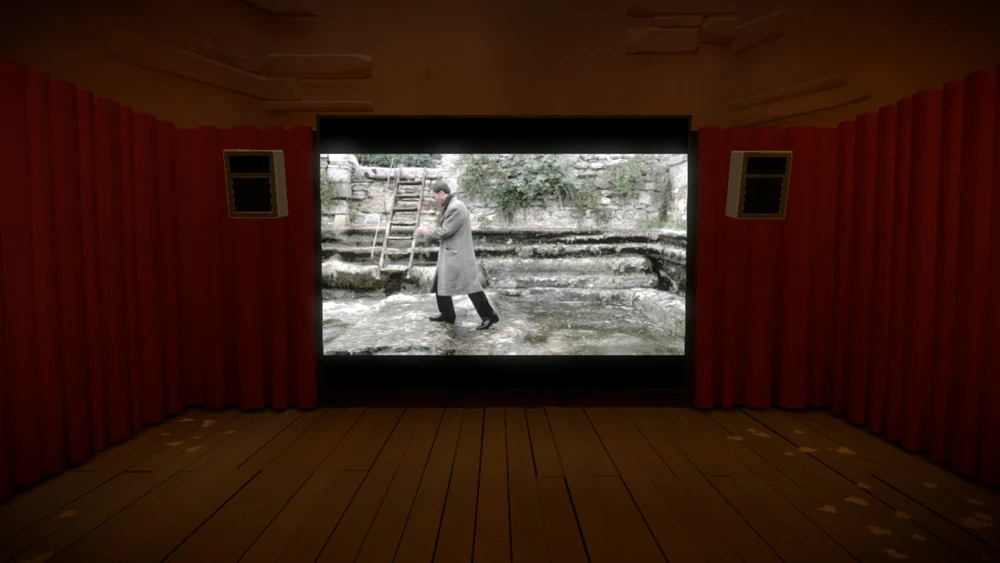
A similar function is performed by the short video recordings accessible in certain locations. These videos show real people (often scholars or artists) speaking directly to the camera about themes such as attention, learning, perception, and the limits of understanding. The abrupt shift from the stylized, silent world of the island to these unmistakably real audiovisual artifacts creates a moment of ontological friction.

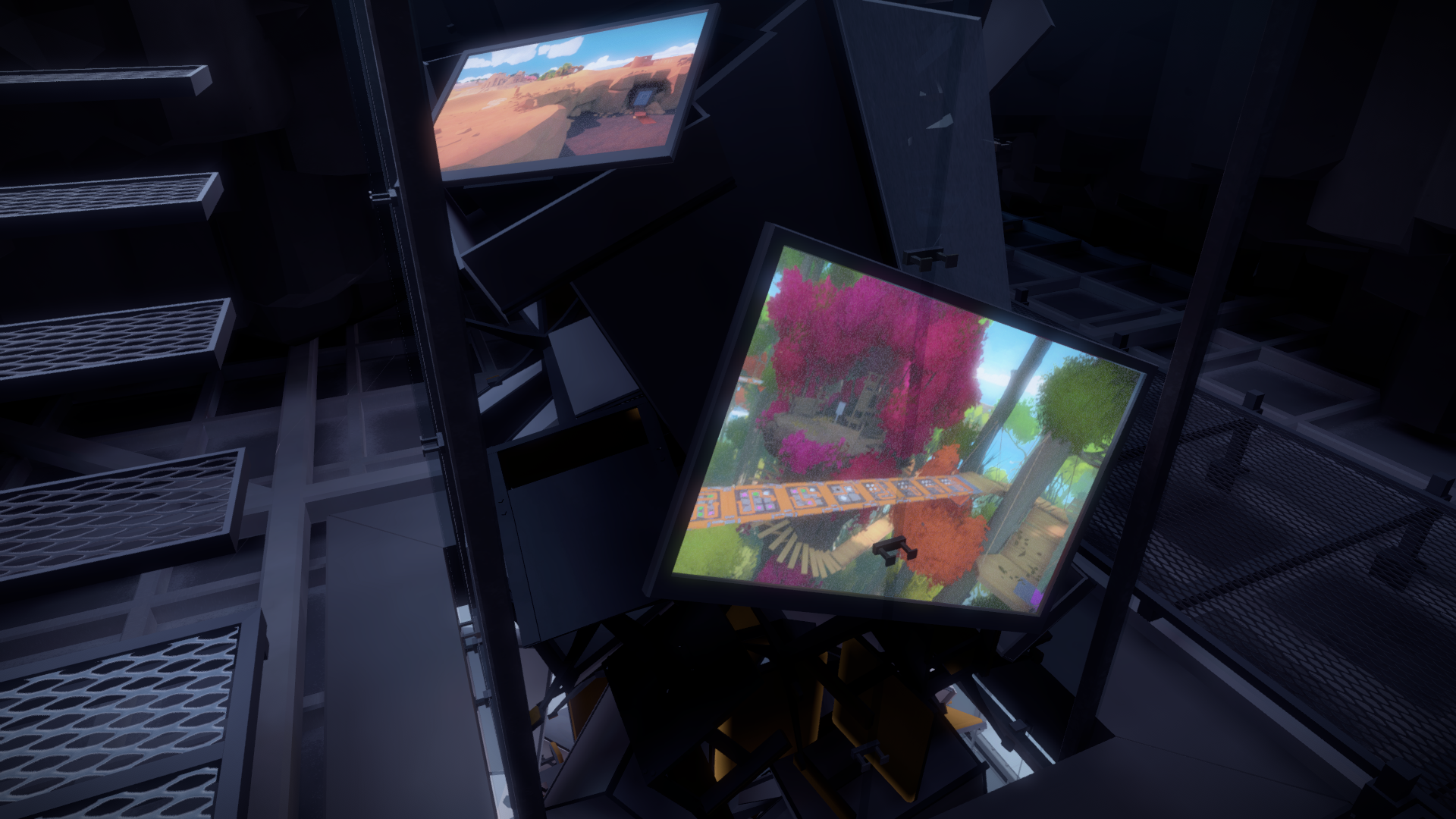
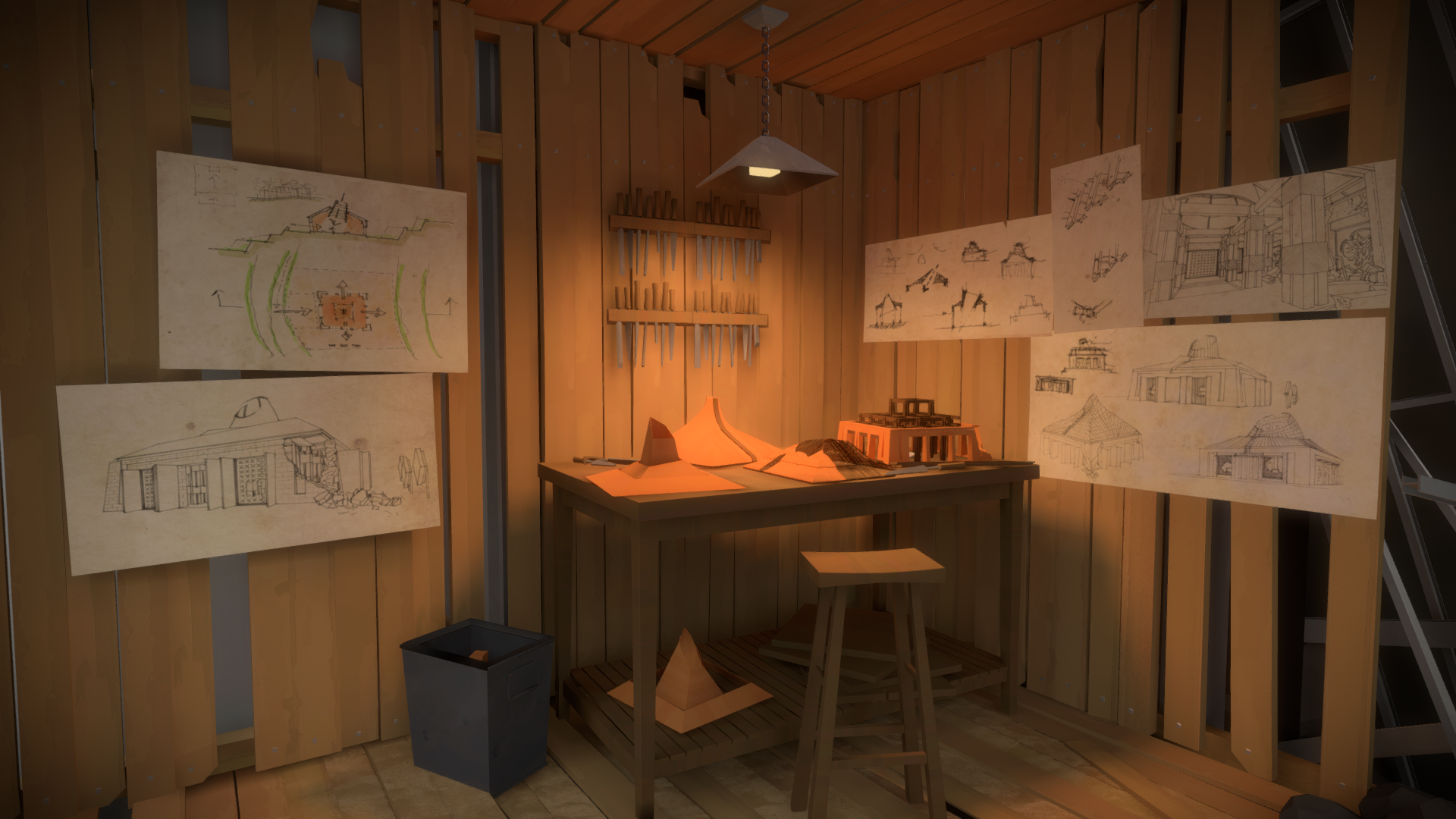
The player is reminded that The Witness is not merely a fictional world to be decoded, but an object designed and embedded within the epistemological problems discussed in the real world. This ontological friction is revisited and developed in the final part of the game, where the fictional and the real progressively merge until the player reaches the creator's real world.

The Quest for Knowledge in The Witness
Andrei Gorchakov in the final segment of Nostalgia (1983) by Andrei Tarkovsky. This film and other videos can be viewed at the Windmill, located east of the Orchard. Source: Thekla / The Witness Wiki.
The Quest for Knowledge in The Witness

Images from the final part of the game, featuring footage and design sketches of the island and some puzzles. Source: Thekla / Author.

The ending can be understood as a form of metadesign disclosure. Throughout the game, the player has been encouraged to infer rules, reconstruct histories, and interpret traces, all while remaining within the diegetic boundaries of the island. The final sequence retroactively reframes this entire process: knowledge, here, is no longer about mastering mechanics or reconstructing fictional pasts, but about recognizing the conditions under which understanding takes place. The conclusion exposes the player to the limits of comprehension, forcing them to recognize the structures through which meaning becomes possible in a fictional world.


This essay set out to show that The Witness is not merely a sophisticated puzzle game, but a carefully constructed epistemic experience in which different modes of knowing are staged, contrasted, and ultimately problematized. The game operates as an experimental space in which the player is invited to enact, test, and reflect upon distinct epistemological attitudes, temporality, empirical perspectives, types of logical inference, and levels of logical complexity.

In the first section, we examined how logical knowledge structures the core gameplay. The panel puzzles require the player to infer abstract rules, formulate hypotheses, and justify beliefs through repeated testing. Although these rules are never linguistically articulated, they exhibit propositional structure, generality, and determinate truth conditions. The second section shifted focus from formal problem-solving to environmental interpretation, framing the island as an object of archaeological inquiry. Here, knowledge is no longer validated by mechanical correctness, but by interpretative coherence. In the third section, we examined how metafictional and intertextual elements further destabilize epistemic certainty. The player is prompted to recognize not only what they know, but how their ways of knowing have been shaped.

By intertwining logic, archaeology, and metadesign within a single interactive framework, the game provides a dense space for reflection on epistemic questions and stages a progression, not toward truth, but toward epistemic self-awareness.

If you're interested in discussions surrounding puzzle game design, you might like Intellectual Difficulty and Fairness in Tactical and Puzzle Games (SUPERJUMP, 2022).
  •