Zobrazení pro čtení

Review: Pinball FX – Williams Pinball: Elvira and the Party Monsters (Nintendo Switch)

It’s time to party like it’s 1989, with Elvira and the Party Monsters. It’s a year I look back on fondly, even if I was too young to appreciate it at the time. Of course, I remember it more for summer blockbusters and the start of the peak NES era, not this “Mistress of the Dark.” But that doesn’t mean I’m not nostalgic for the Party Monsters, because I am.

And nostalgia is a very good thing in this case, because this is the fourth Pinball FX DLC I’ve reviewed this year alone. Memories keep me from feeling burnt out. I first experienced Party Monsters a few years after its release, in video form on my Atari Lynx. Many years later, I’d own a much closer approximation of the real deal via the Pinball Arcade. Now with Pinball FX, I can experience the most “faithful recreation” yet.
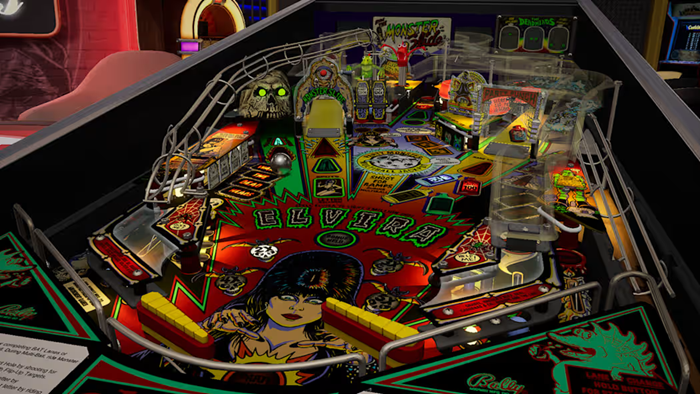
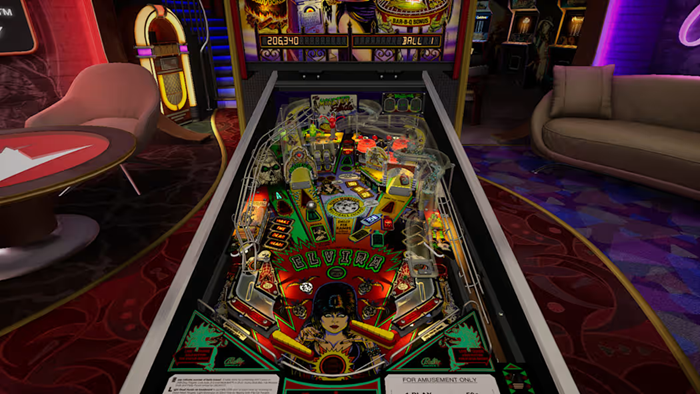
Party Monsters promises players “a frightful evening packed with creepy creatures.” In reality, it’s more of a fun-filled evening packed with campy creatures. Ghastly this is not, with its bright and colorful presentation. The boogie man, Frankenstein, and the wolfman are at their wackiest. There’s even Dracula, arriving via “Taxi” from Williams Pinball Volume 9, perhaps? And this is just to name a few; it is a party after all. The remaining monstrous guests I’ll leave as a surprise.

I was rusty, but muscle memory must’ve quickly come back. Party Monsters is one of the easier tables to achieve multiball on, as you only need to get a trio of balls into the skull cave, accessible via the far left.  Of course, I don’t mind, as this game lacks any ball saver. So, don’t hesitate to check out the “Practice” mode (the only one with a default ball save) and focus on the scoring areas you need to. Things have a way of evening out at this party, advantageous for players who were dropping 50 cents all those decades ago.

Music (typically a focus of mine) tends to stand out less when I’m playing pinball games due to all the table sound effects. Party Monsters is an exception, with highly memorable tunes. You could say some of that stems from my youth and the unique sound of the Atari Lynx, and that’d be fair. Still, Party Monsters sounds great on the Nintendo Switch, with tracks that really complement the visual presentation. Various vocal clips from Elvira augment the audio package and the game as a whole.
Earlier, I joked about the 50-cent cost, but “Elvira is no cheap date,” even all these years later. At $9.99 for a single table, this doesn’t mesh with Zen Studios’ recent pricing structure. I get licensing and all. But Tomb Raider Pinball would’ve had the same issue, but gave you two tables for the same price. It’s something to consider moving forward. Because, unless you have nostalgia, Party Monsters is easy to wishlist for a future sale (along with its follow-up, Scared Stiff), while you play some other DLC that offers more bang for your buck.

Elvira and the Party Monsters embraces its campy theme, with a bright and vivid presentation, backed up by an impressive audio package. This table offers plenty to keep you busy, with a range of scoring challenges. It’s arguable if it’s worth the launch price of $9.99. But if and when you pick this up, don’t be surprised if your thoughts line up with Elviras’ invitation, “How ’bout another ball”?

The post Review: Pinball FX – Williams Pinball: Elvira and the Party Monsters (Nintendo Switch) appeared first on Pure Nintendo.
  •  

Review: Pinball FX – Williams Pinball: Scared Stiff (Nintendo Switch)

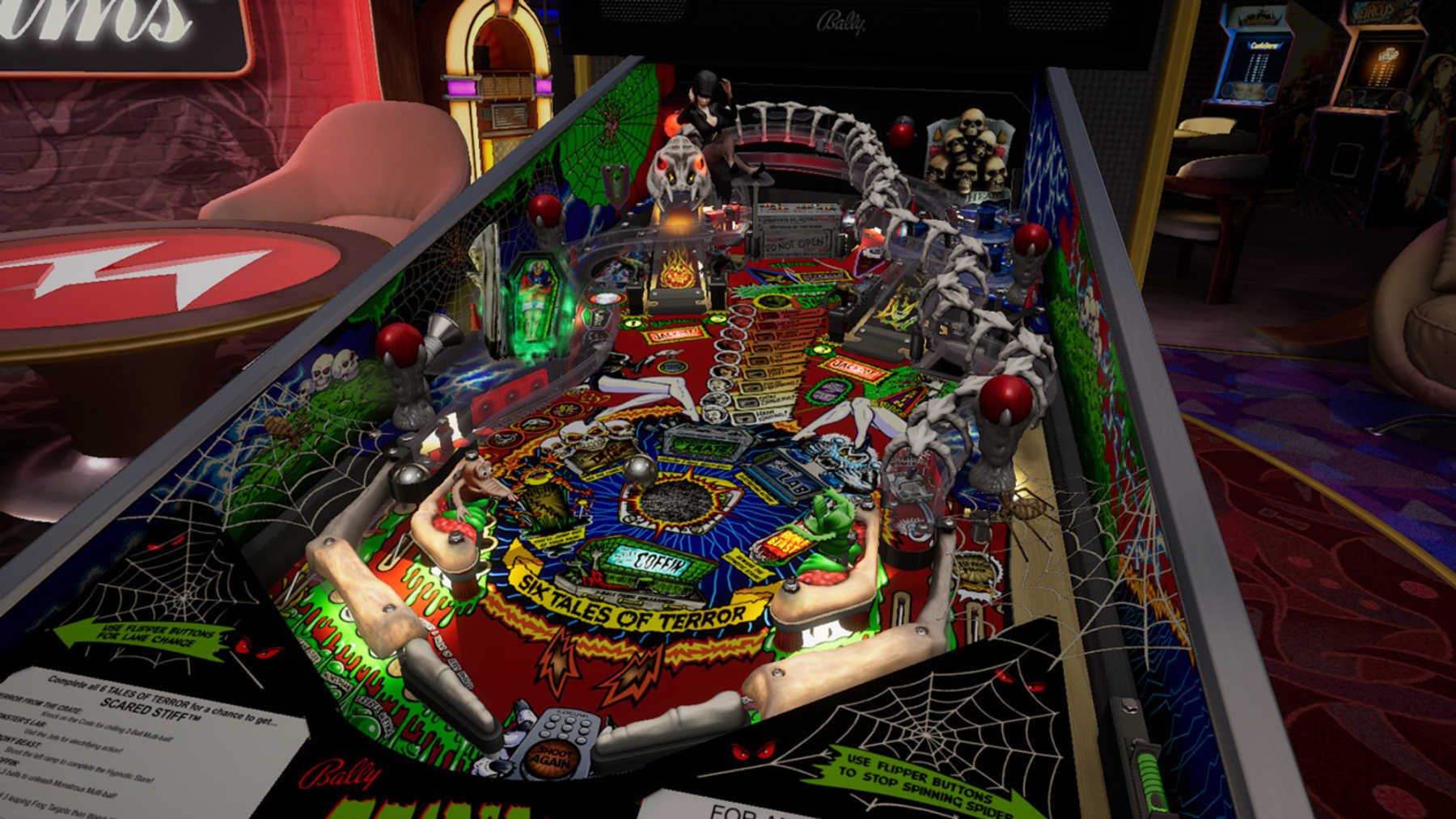
Although I’ve played a lot of pinball in my time, I have no recollection of ever playing Scared Stiff. Originally released by Bally in 1996, it was the second machine to feature Elvira, Mistress of the Dark. The first was Bally’s Elvira and the Party Monsters, also now available in Zen’s Pinball FX (and also reviewed by Pure Nintendo).

So, I came into Pinball FX – Williams Pinball: Scared Stiff with no preconceived notions, and I’m enjoying it enough to seek out the actual machine.

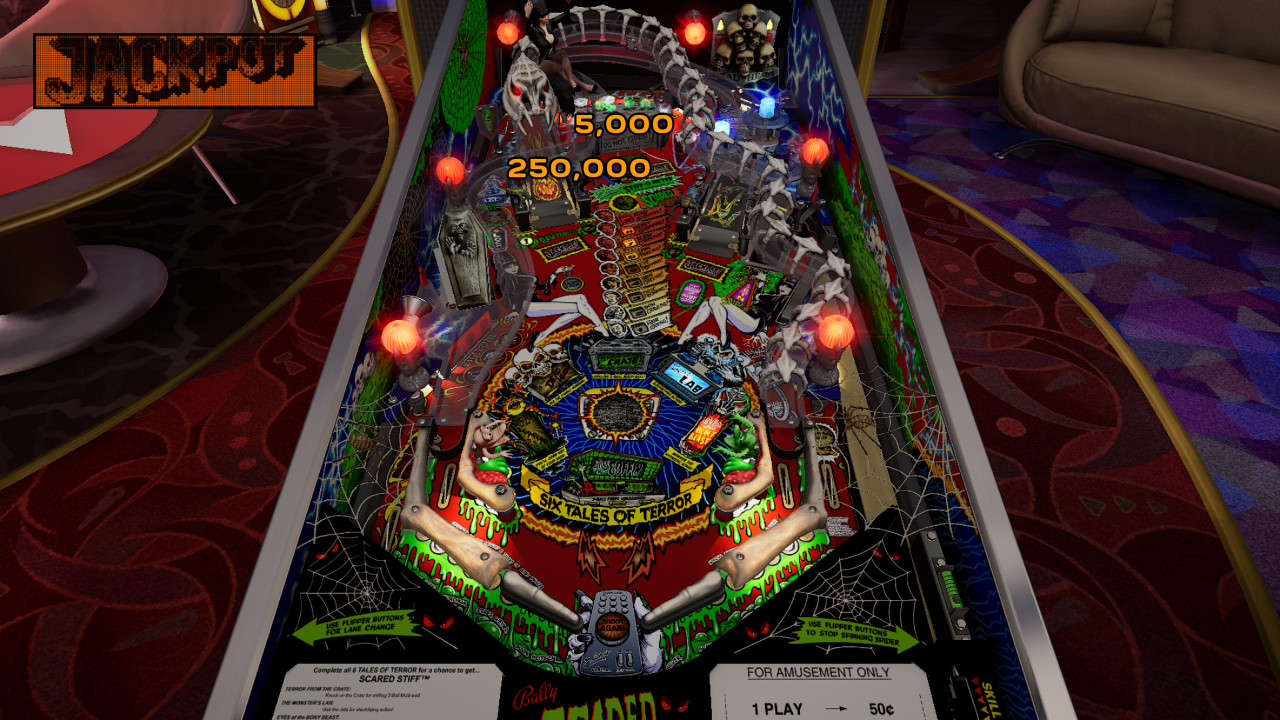
The task here is to work your way through the Six Tales of Terror. These have varying degrees of difficulty, of course, and completing them all is an extreme challenge. Doing so levels up the Stiff-o-Meter, with the goal of hitting level 10 (Scared Stiff). It’s a lot to take on. Elvira herself provides some guidance, but, as you’d expect, you’re mainly left relying on lights and your knowledge of the game to find the right target.

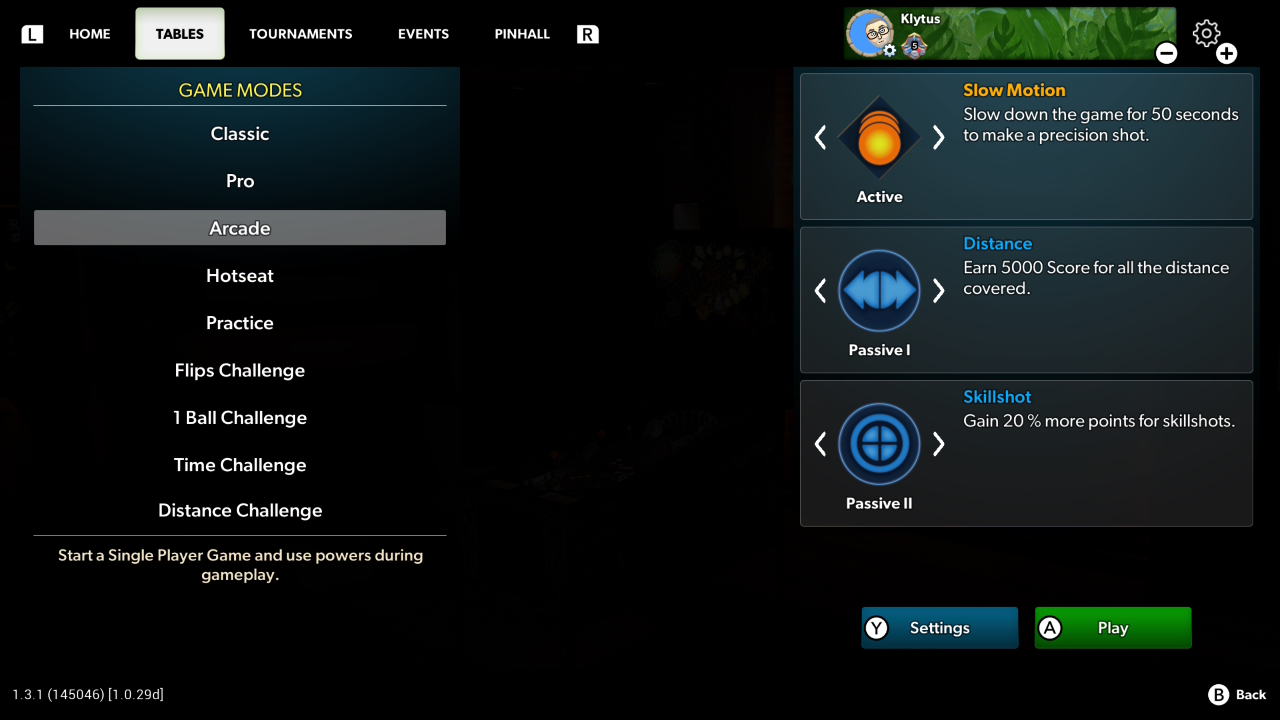
As is customary with Pinball FX games, though, you get plenty of ways to practice. The most fun option is to just hop into Classic Mode and play the machine as you would at the local pinball parlor (if you’re lucky enough to have a local pinball parlor). Amongst the numerous other options available, however…

…is a Practice mode in which you can play for an hour without losing your progress. Your scores here aren’t recorded for the achievement board, of course, but it affords you enough time to work towards the ultimate goal. And that’s something to consider with pinball; it’s more fun when you aim to complete the “missions.” The high scores will follow.

Scared Stiff’s audio is very good, especially the quotes from Elvira herself. As you’d expect from the title, the game is rife with innuendo, and you can tell the original designers were in sync with what Elvira was about. It adds levity that’s usually missing from pinball.

I think the game’s original design, however, does muddy up the virtual presentation. The playing field is extremely busy. That may work in an arcade, but—when combined with the darker visuals of Pinball FX—it makes it very hard to follow the action, especially in multi-ball. It’s often hard to track the ball(s) until it’s too late. You’ll also have to determine when to allow yourself to be distracted by the various animated and backglass animations. They’re quite clever, but you really can’t afford to lose your focus.

Even when you can track the ball, Scared Stiff’s center drain is wildly unfair. Someone will have to tell me if this was the case with the physical machine. If so, Zen did nothing about it, for better or worse. Alternatively, the side drains are almost nonexistent. I can count on one hand (mabye two) the number of times I lost a ball to an outlane.

Oh, speaking of which, if you have a Switch 2 Pro Controller, I highly recommend mapping Zen’s nudge functions to the G buttons. Much easier to use…although it does make accidental nudging an issue.

Anyway, the inability to stay focused on the action means there’s quite a bit left to chance. Thankfully, catching the ball with the flippers is a fairly easy task here. This allows you to slow things down and aim accordingly, so there are fewer blind shots than I’ve seen in other Zen recreations. Again, I’m not sure if this was simple on the actual machine, but I did find it easier than on other Pinball FX tables—fewer odd bounces and occasions where the ball rolled up and over the flipper.

As I said up top, Scared Stiff is a good machine. It’s the first one I go to now when I launch Pinball FX, but I do have a problem with the pricing. For $9.99, there’s no reason Scared Stiff and Elvira and the Party Monsters shouldn’t have been released as a bundle. Even at Zen’s standard $14.99 bundle price, it would’ve made more sense. You’ll get more for your money by going back to any of the Williams bundles you haven’t yet moved from Pinball FX 3 to FX.

The post Review: Pinball FX – Williams Pinball: Scared Stiff (Nintendo Switch) appeared first on Pure Nintendo.

  •