Zobrazení pro čtení

Five new Steam games you probably missed (February 23, 2026)
Best of the best

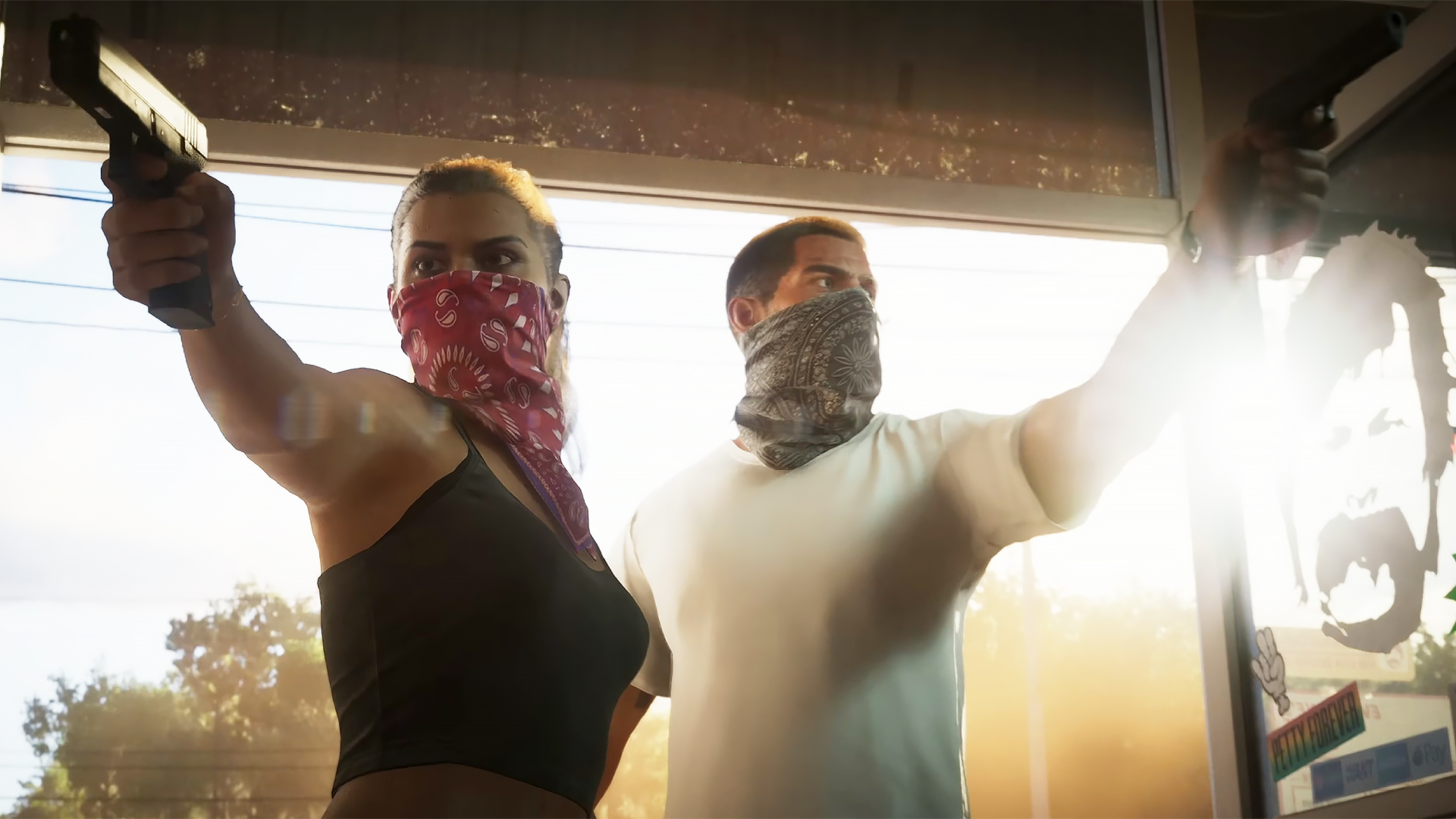
Close-up of a masked man and woman holding guns as they enter a convenience store during a robbery

(Image credit: Rockstar)

2026 games: Upcoming releases
Best PC games: All-time favorites
Free PC games: Freebie fest
Best FPS games: Finest gunplay
Best MMOs: Massive worlds
Best RPGs: Grand adventures

On an average day about a dozen new games are released on Steam. And while we think that's a good thing, it can be understandably hard to keep up with. Potentially exciting gems are sure to be lost in the deluge of new things to play unless you sort through every single game that is released on Steam. So that’s exactly what we’ve done. If nothing catches your fancy this week, we've gathered the best PC games you can play right now and a running list of the 2026 games that are launching this year.

Horripilant

Steam ‌page‌
Release:‌ February 21
Developer:‌ Alexandre Declos, Pas Game Studio

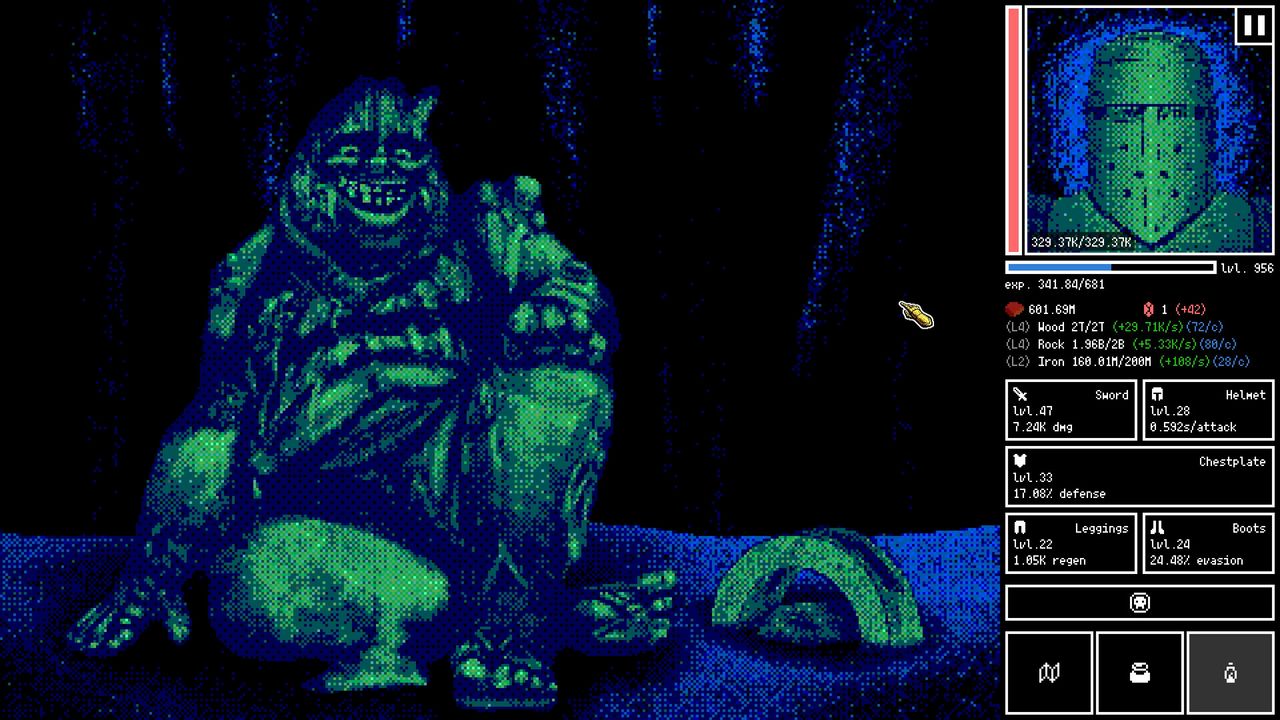
Horripliant is a horror grid-based dungeon crawler, or blobber, that borrows systems from the autobattler and idle game genres. The unnamed knight protagonist must gather resources to bolster their camp and upgrade gear, and as you'd expect, there are increasingly lucrative ways to expedite this process beyond lowly manual clicking. During enemy encounters the combat takes care of itself, essentially pitting the baddie's stats against yours. Don't worry though, Horripliant doesn't play itself: it also features some especially cryptic puzzles. The art style is appealingly rugged, drenching the whole affair in the aura of a long-forgotten shareware nasty.

F-22: Air Dominance Fighter

Steam ‌page‌
Release:‌ February 17
Developer:‌ Digital Image Design Ltd.

F-22: Air Dominance Fighter originally released in 1997, and while this thorough revamp is published my Microprose and certainly looks a lot like a ye olde Microprose sim, it was originally published by Ocean Software. F-22 may look like one of those steely flight sims of yore that require a 200+ page manual to figure out, but it actually leans arcade-ward: the Steam page claims it "couples deep modelling of avionics, flight dynamics, and radar with easy controls". The graphics have been marginally improved, but not so much that it F-22 doesn't retain its distinctive '90s charm.

Screaming Head

Steam‌ ‌page‌
Release:‌ February 17
Developer:‌ JZPS Games

Here's a deliberately garish 2D platformer about guiding a disembodied head—and an ugly one, to boot—through increasingly challenging gauntlets. If that's not your idea of a good time, I feel sorry for you, but it gets better: the ugly head's attack is a guttural, quite chilling scream (hence the name, I suppose). There's not much more I can say about this: get a load of the art style, and if it doesn't have you smashing that 'add to cart' button then it's clearly not for you.

Love Eternal

Steam page
Release:‌ February 20
Developers:‌ brlka

Love Eternal is another 2D action platformer, and despite its pared back approach to pixel art it's by all reports a quietly disturbing "psychological horror" with a richly discomforting atmosphere. In terms of the things you do with your hands, it looks like what would happen if you jammed VVVVV's gravity-switching mechanic into Celeste. In the words of one Steam review, Love Eternal is what happens when "VVVVVV woke up after having a rough tummy night and decided to eat Mulholland Drive."

Carmencarmen

Steam page
Release:‌ February 17
Developer:‌ Colectivo Rayente, Juanjo GarBas, Juanma Cabrera

Carmencarmen is a free game about exploring a rundown urban wasteland in a quaint yellow hatchback. It's an hour-long narrative-driven affair about talking with the people (or things) you meet, but there's a simple pleasure in handling the hatchback—it can drift and you really must drift it—and honking its horn. If I'm making this sound carefree and whimsical, do be warned that this outing gets very weird, and the early 3D art style only exacerbates its surreal-verging-horror leanings.
  •  

A weird, never-released NES horror JRPG no one knew about 2 years ago is now translated and fully playable

Splatterhouse was a sidescrolling beat 'em up series that first appeared in Japanese arcades in 1988. It and subsequent Splatterhouse games were novel for their gory horror approach to a genre we more readily associate with street fighting or Ninja Turtles. The series is mostly forgotten to all except a small diehard community, but it turns out Namco had bigger and more ambitious plans for it that never officially materialised.

Namco did release one Splatterhouse spin-off in the form of 1989's platformer Splatterhouse: Wanpaku Graffiti, a watered down and "cutesy" take on the more mature (but still quite tongue-in-cheek) beat 'em up outings. It can nowadays be played via the Namco Museum Archives.

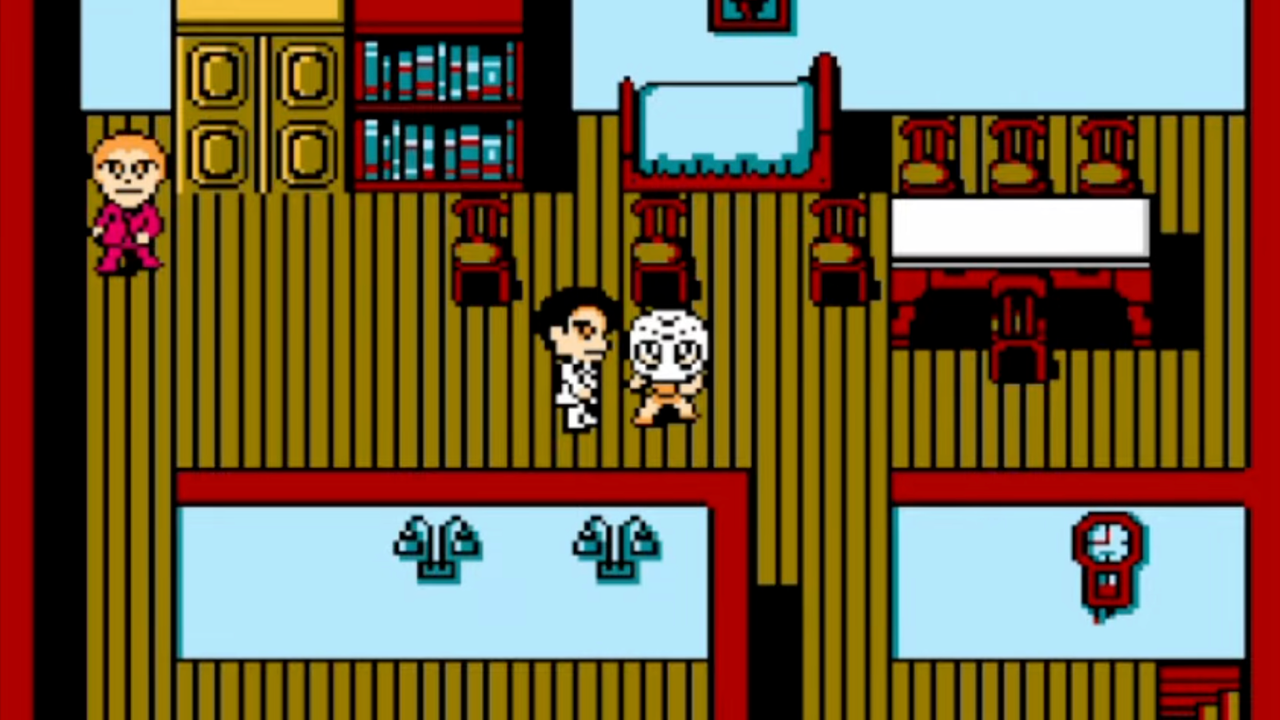
But there was another unreleased Famicom Splatterhouse game. That was proven in October when a fully playable ROM of something called Splatterhouse: World was dumped on 4chan. Taking the form of a ye olde 8-bit JRPG, it's a truly fascinating artefact, not least because there are very few horror-themed JRPGs from that era: Capcom's Sweet Home is the only other one that comes to mind.

While the October dump was a huge moment, seemingly undeniable proof of Splatterhouse: World's existence can be traced back to May 2024, according to this dedicated Splatterhouse fan website. That was when a Japanese researcher and blogger posted about a promotional VHS in their possession depicting something called Splatterworld: Rick to Kyofu no Daiou. According to that source, the Namco promo video was sent to retailers in December 1992, and featured material for products slated for a March 1993 release.

In other words, Splatterhouse: World was very close to release before it was—for still unknown reasons—cancelled. Here's what it looks like in action:

Yes, its format is very familiar: a player-character roams a topdown world, ambushed every minute or so by random encounters resulting in turn-based combat. But instead of the picturesque green fields and forests of Final Fantasy and Dragon Quest, we have uber-grim graveyards. The sprites are noticeably chunkier than in other contemporary JRPGs, in a style similar to Mother or Earthbound Beginnings, and the 8-bit approach to spooky horror music is fun to hear as well.

When the ROM appeared in October there was one obvious obstacle: this Japanese RPG, which was never officially confirmed to be planned for release outside of Japan, is probably impenetrable for anyone without a working knowledge of Japanese. But in record time, a fan translation has been completed with the title Splatterworld, courtesy of Aeon Genesis. Given the ROM only appeared on October 31, that's impressive.

That means a fully playable, unreleased Famicom game is now playable in English, which is the kind of thing retro enthusiasts dream of. The ROM is archived on the West Mansion fan page, and will need to be patched with the Aeon Genesis translation at the link above if you want to play it for yourself.

  •  

Latest viral Game Awards tease could be teasing any videogame with hellish imagery from the last 70 years of the medium, but it's probably Elder Scrolls Online

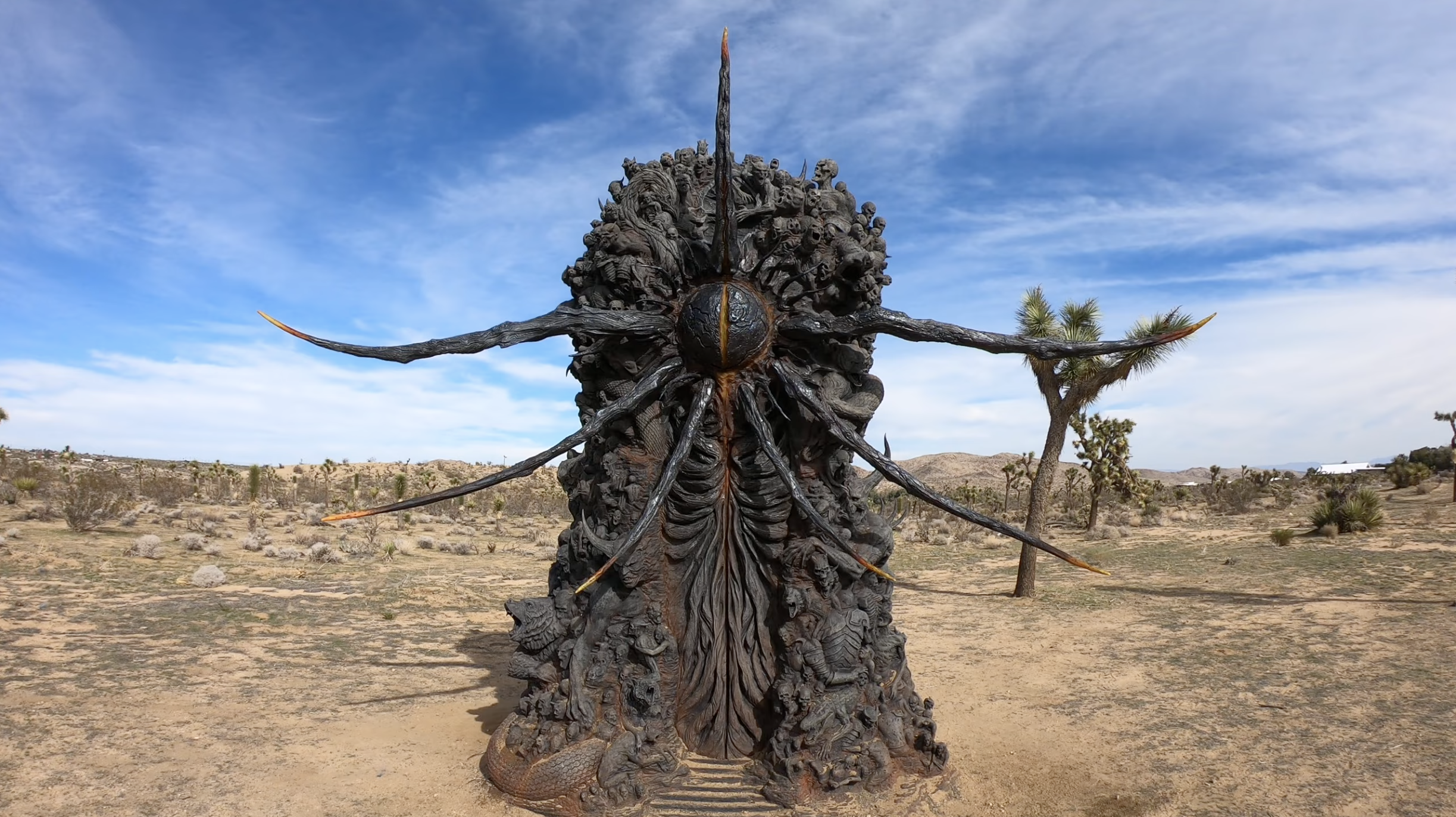
Game Awards host Geoff Keighley posted a cryptic image on X on Monday, showing a hellish monument in a desert locale, accompanied by the text regal.inspiring.thickness. If you plug those three words into a website called What3Words, a map appears showing a location somewhere near Joshua Tree in California. If you visit that location, you'll see the viral artefact in question, just like YouTuber KingVision18 has done.

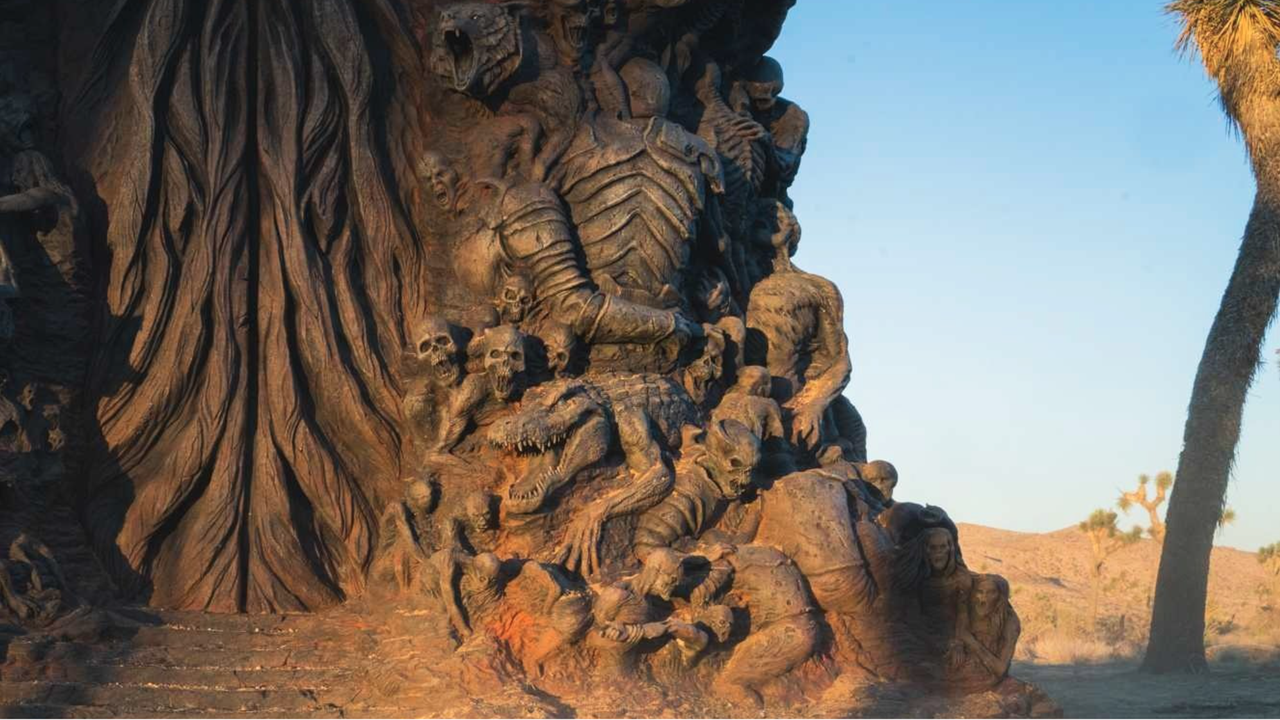
If you watch that video or visit the monument, you'll see that Geoff's initial image—posted above—doesn't really capture the real scale of the thing. In reality it's a large freestanding portal smothered in pained skeletons and the odd animal predator. Some kind of eye is pinned to this shuttered portal, or maybe it's a dying flower.

Here's what it looks like in full:

A monument in the Californian desert designed to promote a videogame

(Image credit: KingVision18)

Speculation over what Game Awards announcement it's designed to tease has been endless ever since, but we know at least one thing: it's not the next God of War, as series director Cory Barlog confirmed himself. Meanwhile, journalist Jason Schreier writes on the ResetEra forum that it's not a Diablo 4 expansion.

So what is it? The imagery is so generic that it could be dozens, hundreds of things. There are so many videogames with anguished skulls, ominous looking doorways, and sinister leering eyes.

But the crocodile-looking thing shown prominently in Keighley's own photo is a bit of an outlier, and because it's an outlier it has inspired the one genuinely compelling line of speculation: that this is teasing a new expansion for Elder Scrolls Online.

As a Redditor pointed out on Monday, the crocodile's hand is a bit of a giveaway that it's not your everyday freshwater beastie. They argue that the croc is actually a Daedroth, or in other words, a croc-looking creature you can find roaming around Tamriel in Oblivion. And it's possible the desert theme could allude to various Elder Scrolls deserts, like Alik'r Desert in Hammerfell.

Look: There's every chance it's not Elder Scrolls Online. Perhaps it's Elder Scrolls 6, but I highly doubt that, and if it is shown, the showing will not be substantial. Todd Howard said last month that the game is "still a long ways off". Bethesda generally waits until just before launch to show games properly.

It could also be true that this is teasing something that no one, or at least very few people, will feel excited about at all, except perhaps the publisher paying Keighley and co. through the nose to execute on this marketing stunt. Whatever the case, The Game Awards takes place on December 11.

  •  

It turns out Saudi Arabia will own 93.4 percent of EA if the buyout goes through, which is effectively all of it

When EA announced in October that it will go private via a $55 billion leveraged buyout, a consortium of three investment firms were listed as buyers: Saudi Arabia's Public Investment Fund, Jared Kushner's Affinity Partners, and Silver Lake. A breakdown of the ownership between these parties wasn't given at the time, but as it turns out, one is committing significantly more cash than the others.

According to the Wall Street Journal, the PIF will own 93.4 percent of EA—a gargantuan amount that renders the other stakeholders insignificant by comparison. Silver Lake and Affinity Partners are set to own 5.5% and 1.1%, both of whom PIF is also a "significant investor" in.

In other words, if the buyout passes regulatory and shareholder approvals, the PIF will effectively own EA.

The report lists some other finer details about the transaction, now public thanks to a filing with Brazil's antitrust regulator. $36.4 billion of the $55 billion cost will be funded in equity, while the remaining $20 billion will debt. Remove an existing $5.2 billion stake PIF already has in EA, and it looks like PIF has, according to WSJ, put up "about $29 billion" for EA's buyout.

PIF's huge majority may not come as a surprise to everyone: the fund is famously trigger happy when it comes to buying stakes in the games industry, with tentacles in Take-Two, Capcom, Nexon and Nintendo, among others. But with such a large stake, it seems increasingly unlikely that, as EA CEO Andrew Wilson said in October, the "values and our [EA's] commitment to players and fans around the world remain unchanged". (For more on this, it's worth reading Lincoln Carpenter's in-depth feature on the buyout's ramifications).

The PIF itself is running at a low ebb when it comes to cash to fund its investments, though as Rick Lane noted last month, its videogame interests aren't really to blame. The chief culprit there would be a futuristic megacity built in the desert.

  •  

Like a Dragon creators won't buckle to mainstream western tastes: 'people start making strange things when they misunderstand what their business is supposed to be'

The Yakuza series has spawned well over a dozen games since it debuted in 2005, and I haven't included any of the substantial remasters in that figure. As prolific as Ryu Ga Gotoku is, they're also remarkably consistent: the same bonkers mix of melodrama and absurd humour is threaded through every one of these games, even the ones set in the 17th century.

It's a formula that took a while to cotton on outside of Japan: it didn't really land as a big commercial success in the west until 2015's Yakuza 0. And that game landed loudly, despite making no overt compromises for western audiences.

But now that western audiences are paying attention, will Ryu Ga Gotoku indulge them more? It seems unlikely, according to a new Automaton interview with three RGG Studio big wigs. Asked whether the studio might abandon its credo of "making what feels true to RGG Studio" in the event that their games became huge global concerns, series executive producer Yokoyama Masayoshi was unequivocal.

"No, it won’t," he said. "If we really wanted to make a game for overseas audiences, it would obviously be better to make a foreign protagonist and set the story overseas. But if we did that, it wouldn’t be Like A Dragon. There would be no point in us making it."

He went on: "Instead, we have to preserve what makes us us, and communicate that to the world. If we’re not doing that, we might as well dissolve the team right now and make a totally different game."

Masayoshi sees it as RGG Studio's job to make Like A Dragon games and to "spread it globally", adding that "I think people start making strange things when they misunderstand what their business is supposed to be." (If those strange things come in the form of Binary Domain, though, I'm inclined to say they should give it a shot more often.)

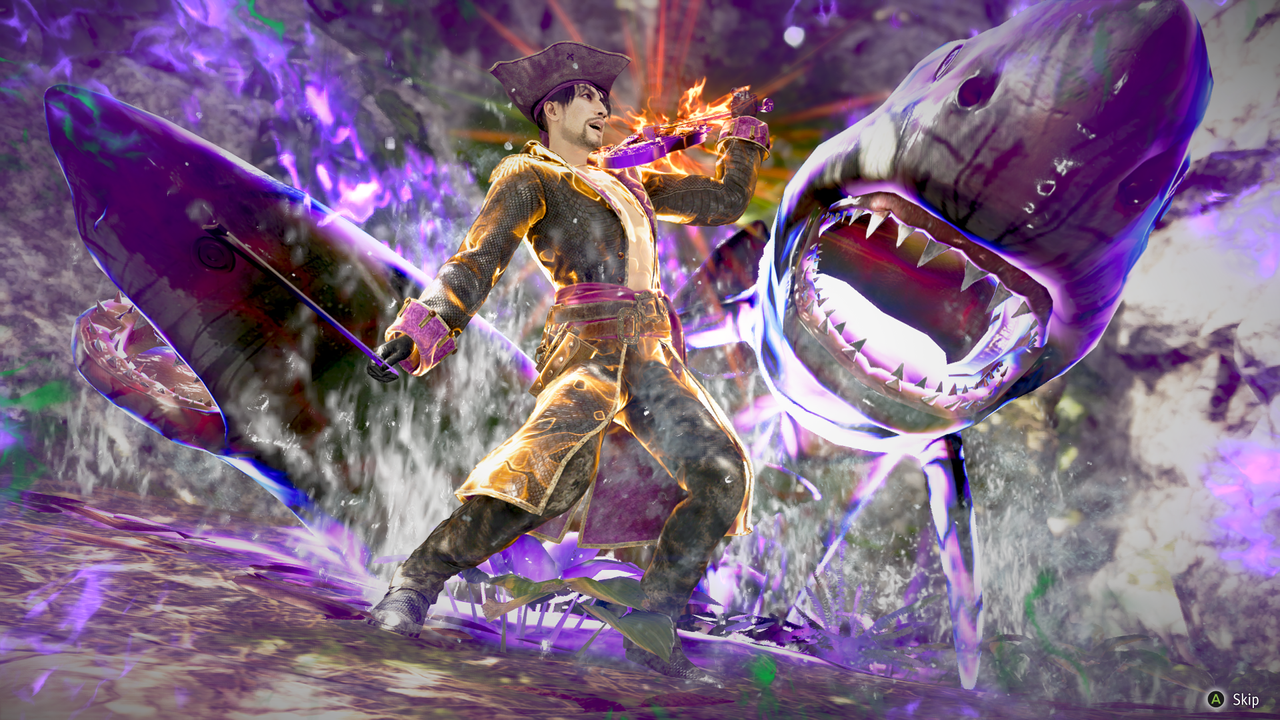
The way the Yakuza series has evolved since 2015 is solid evidence that RGG Studio doesn't care about selling countless million units in the west. It controversially pivoted to a turn-based format with 2020's Yakuza: Like a Dragon, before controversially pivoting to a Hawaii setting with 2024's Like a Dragon: Infinite Wealth (Hawaii has a huge Japanese population). Earlier this year, they released a pirate spin-off. Oh, RGG Studio, you genius loons, whatever will you think of next?

It's well worth reading the full Automaton interview for some interesting—and unusually candid—insight into how and why RGG Studio makes its peculiar Japanese crime capers.

  •