Zobrazení pro čtení

Unfortunately, all of that doomsaying last year was correct and SSD prices are surging as a result of the memory crisis

For the last year and a bit, I've sat down every Friday morning to update our guide to the best SSD deals for gaming. Today, I sat down for the first time in 2026, only to see that the memory supply crisis is well and truly having a knock-on effect on SSD pricing.

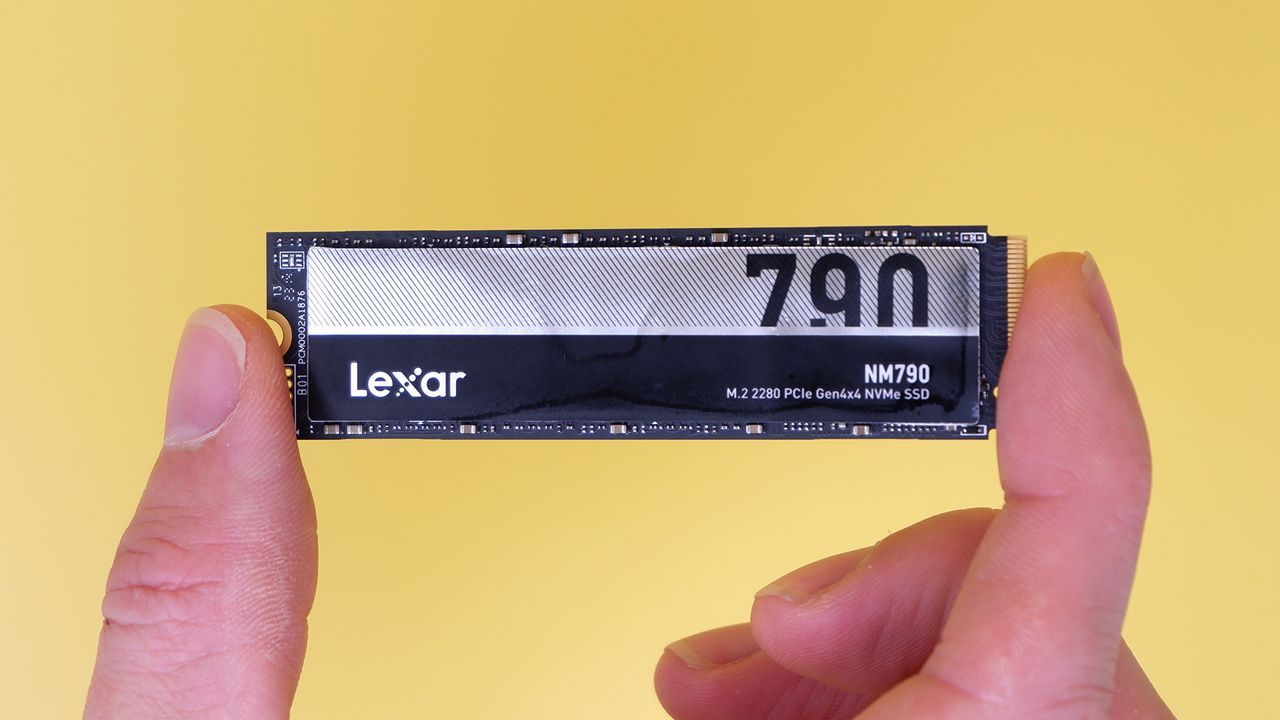
Our Jeremy has already been keeping an eye on surging PC hardware prices, but this morning presented a more recent example. I just wrote a deal post about the 1 TB version of the Lexar NM790 NVMe SSD which, today, is going for $118. Not terrible, right? Well, that's what I thought until I remembered I had in fact written about the same SSD back in October of last year—when it was only $66.

That is a close to 50% price increase in about four months. Even worse, this same drive cost almost $150 within the last month according to Amazon price tracker Camelcamelcamel.

The Lexar is far from the most egregious increase I've seen, with higher capacity SSDs more severely affected. For one extreme example, Best Buy is currently asking for over a grand for the 4 TB version of the WD_Black SN850X SSD. It's hard to rule this out as simply a listing error when Newegg is asking for $520 for the same drive. If we look back at my Amazon price tracker of choice, you can see an almost runaway spike from between November last year to now.

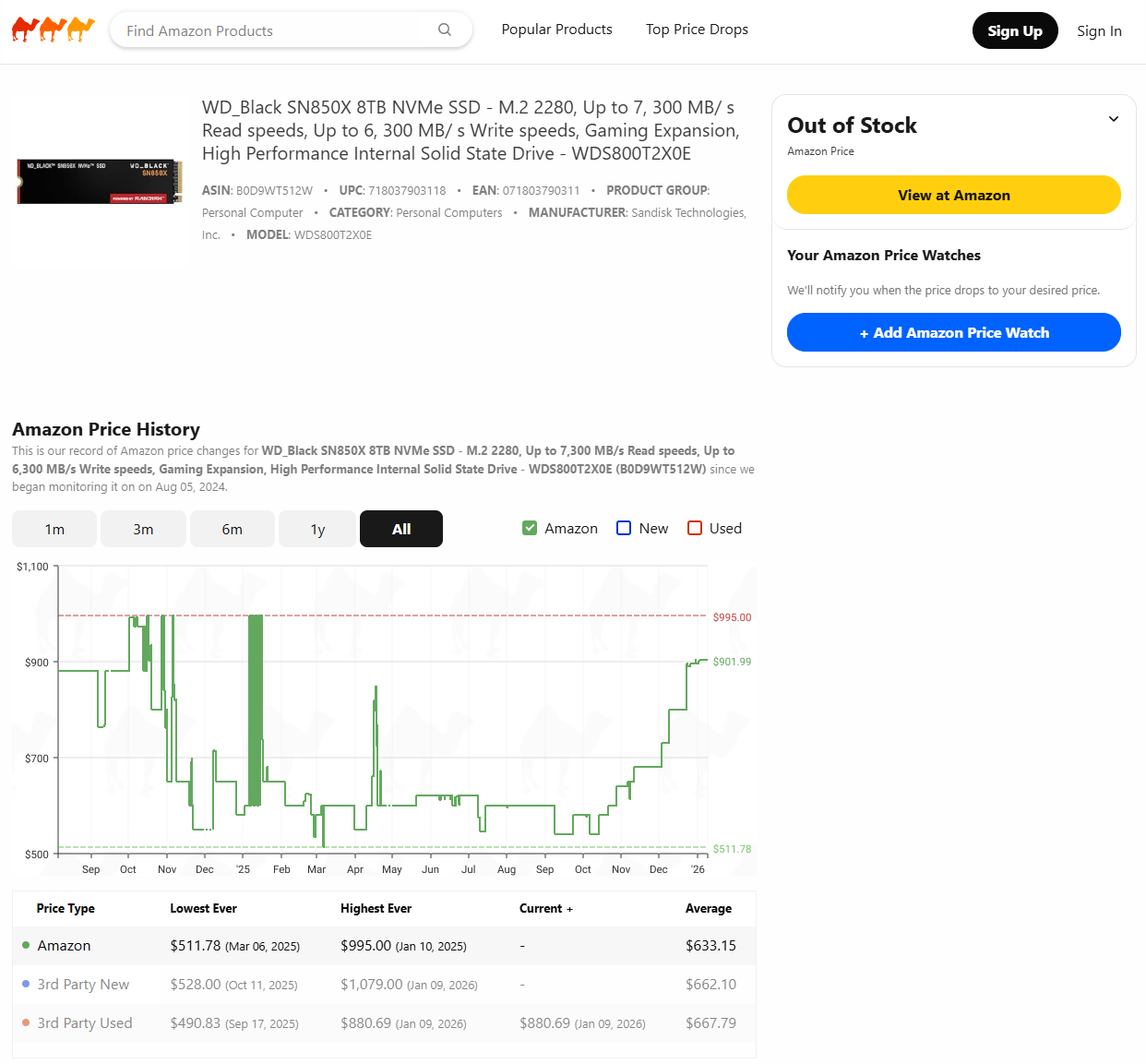
As for the 8 TB model of the WD_Black SN850X, that's now $1,080 at Newegg, an almost 55% price increase compared to when I last wrote about it in May. It's also important to note that this is all arguably older stock too, as none of these drives are sporting Sandisk's recent rebrand. The 8 TB version of the drive is out of stock on Amazon, but taking a peek at the price tracker reveals another massive spike beginning November 2025 and continuing into January 2026.
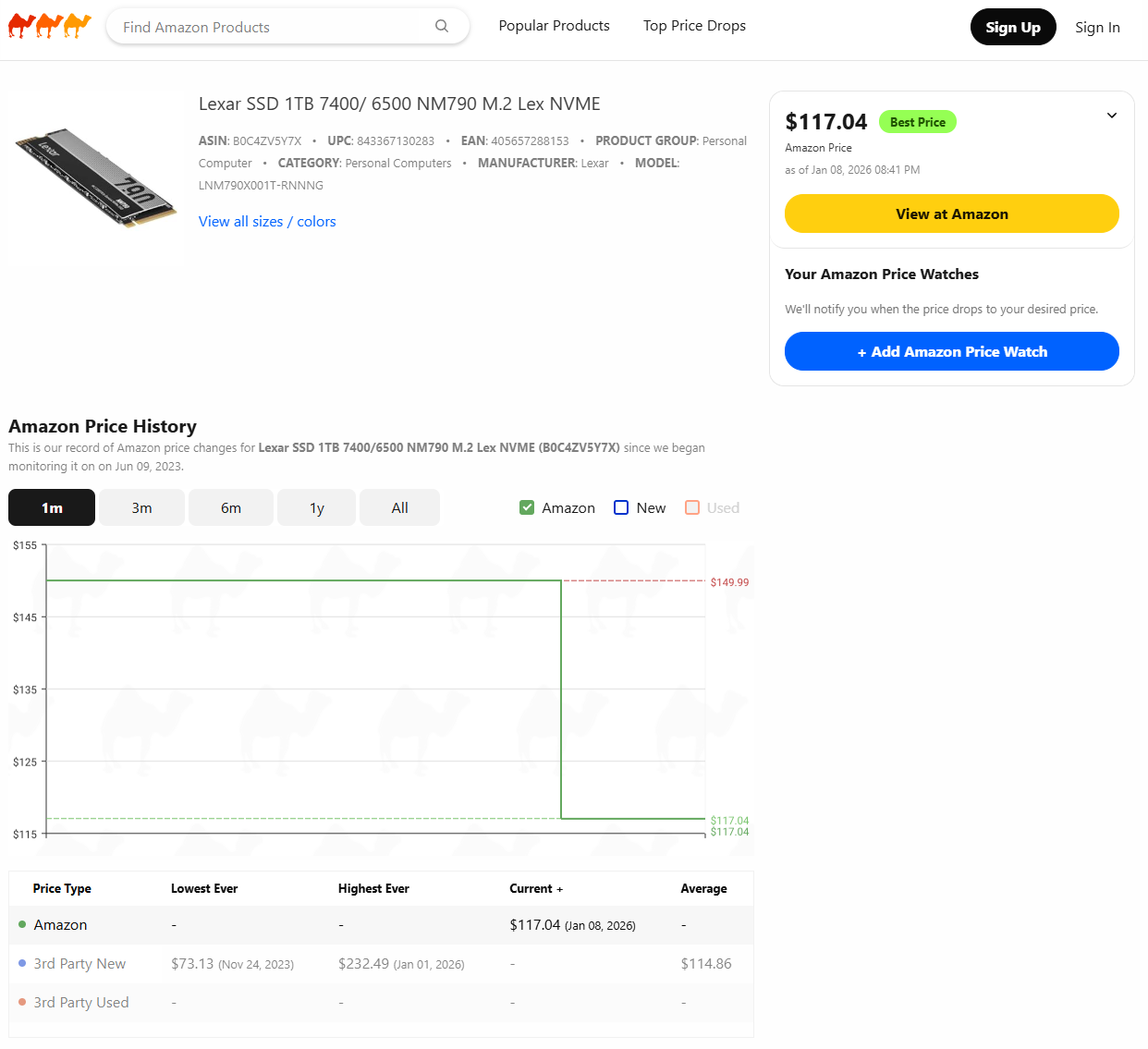
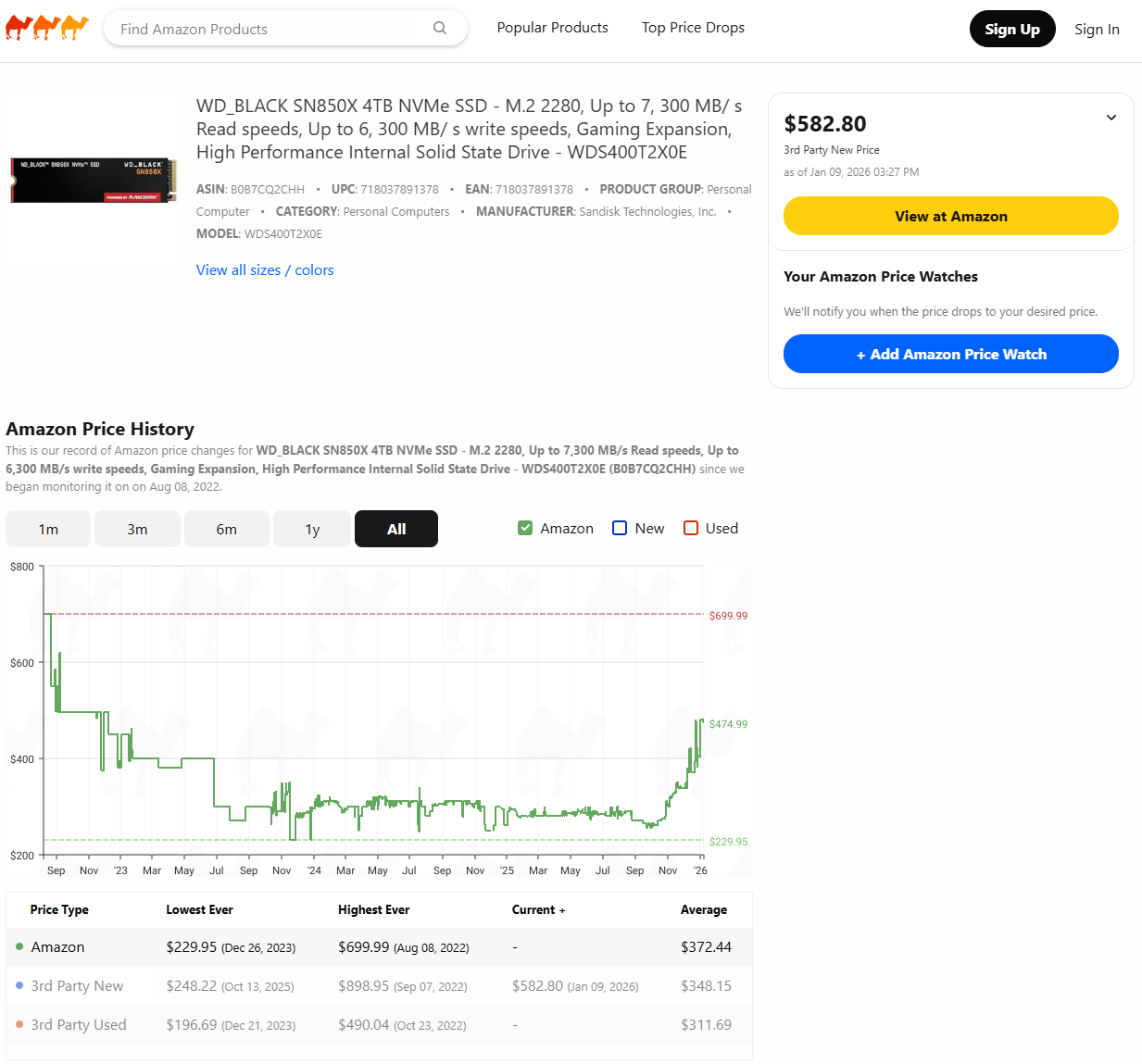
Image 1 of 3

Screenshots of Amazon price tracking website CamelCamelCamel. These screenshots show massively fluctuating SSD prices between winter 2025 and the start of 2026.

(Image credit: CamelCamelCamel)
Image 2 of 3

Screenshots of Amazon price tracking website CamelCamelCamel. These screenshots show massively fluctuating SSD prices between winter 2025 and the start of 2026.

(Image credit: CamelCamelCamel)
Image 3 of 3

Screenshots of Amazon price tracking website CamelCamelCamel. These screenshots show massively fluctuating SSD prices between winter 2025 and the start of 2026.

(Image credit: CamelCamelCamel)

These are just a few examples, but it's clear that the realm of SSD now finds itself thoroughly caught up in the memory apocalypse. Long story short, as the AI industry builds more and more data centres (often in ill-advised climes for the hardware inside), it's going to need more and more system memory like DRAM, as well as storage media like SSDs. Moving at a swift clip and throwing a great deal of money around, that means a memory shortage for us normal folk, due to the limitations in manufacturing facilities. Perhaps worst of all, these surging prices are far from wholly unexpected either.

In October, Adata's Chen Libai observed that most major memory and storage technologies were experiencing a shortage for the first time in about 30 years. In November, Phison's CEO Khein-Seng Pua shared in an earnings call that "every NAND manufacturer" has said they're "sold out" for 2026. Then in December, Kingston's Cameron Crandall also sounded the SSD pricing alarm, explaining that the company had very recently seen a 246% increase in NAND wafer prices.

But even in December, I was less keen on the advice Crandall gave at the time, saying if you were thinking about a hardware upgrade, you should "do it now and [don't] wait, because prices are going to continue to go up." On the one hand, yes, there's a chance prices have yet to peak. On the other, panic-buying is never the answer in the midst of a shortage. If you can, wait or simply use what you already have. If you can't, buying an entirely new rig may actually work out cheaper in some select circumstances.
  •  

'Just last week alone, we were notified that costs had risen by 50–100%': SSD maker Transcend further tightens its belt amid delayed Samsung and Sandisk shipments

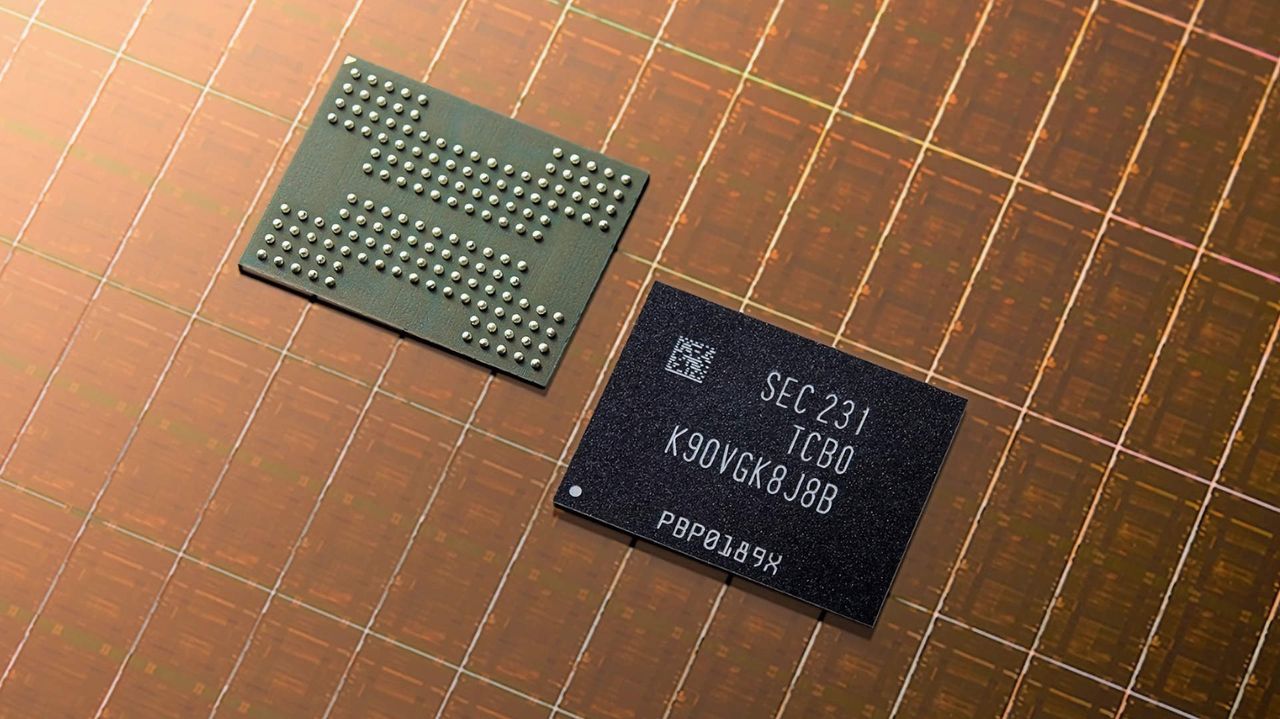
Between shortages and surging prices, the memory apocalypse is likely to get worse before it gets better. Case in point, Taiwanese memory manufacturer and distributor Transcend has apparently not received a new NAND Flash shipment since at least October, when prices first really started to spike.

According to company communication shared by @jukan05 on X, NAND Flash suppliers Samsung and Sandisk have delayed the latest planned shipment once more (via Techpowerup). As a result, Transcend's "Q4 chip allocation has been significantly reduced."

“The situation worsened in Q4 due to increased demand from large data centers and hyperscalers driven by major cloud service providers’ expansion plans. All major chip manufacturers are prioritizing supply for these customers, which has led to price increases and extremely… pic.twitter.com/q5Wp6N38dmDecember 3, 2025

Long story short, SSD pricing will likely rise in the near future. The internal document goes on to echo many of the same reasons Jacob points to in his excellent memory price crisis explainer. In short, yes, you can blame AI at least in part.

The memo reads, "At the moment, the market is experiencing a serious shortage of both DRAM (DDR5/DDR5) and NAND Flash (for SSD, SD, and MicroSD). The situation worsened in Q4 due to increased demand from large data centers and hyperscalers, driven by major cloud service providers’ expansion plans.

"All major chip manufacturers are prioritizing supply for these customers, which has led to price increases and extremely limited availability. Just last week alone, we were notified that costs had risen by 50–100%. The price-up trend continues at a very rapid pace and at an abnormal rate. This situation is expected to persist for at least the next three to five months."

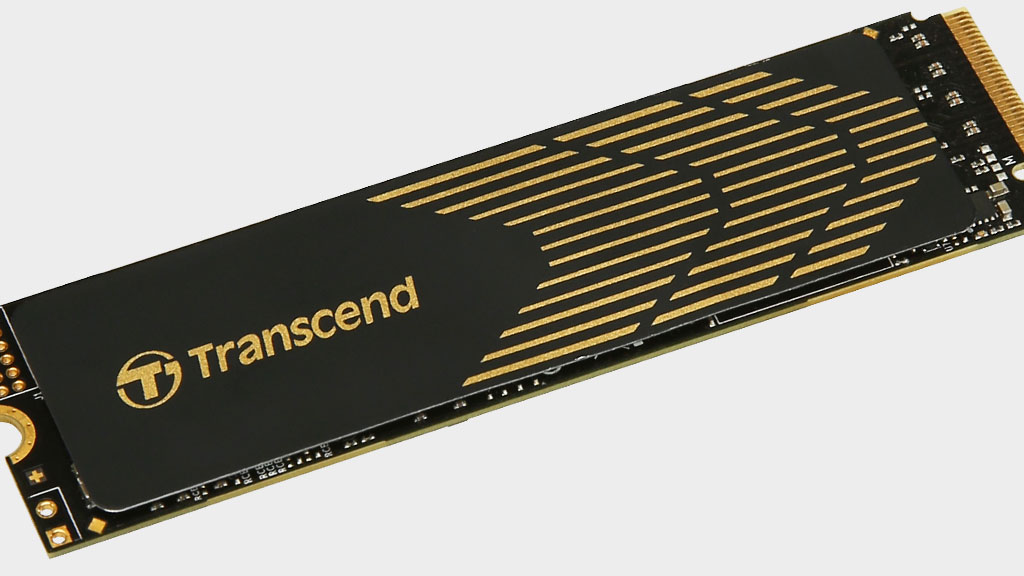
Transcend MTE240S SSD

(Image credit: Transcend)

We've already heard the memory apocalypse will carry on into 2026, with some especially dour forecasts predicting it will last all the way through to 2028, as Samsung and SK Hynix attempt to 'minimize the risk of oversupply'.

And, while we're on the subject of Samsung, delayed deliveries are perhaps no surprise as the company is currently negotiating with itself over DRAM contracts. With all of that in mind, "three to five months" is a projection that sounds downright optimistic.

We're already seeing wide-ranging ripple effects, beyond RAM and SSD prices surging. For instance, the humble Raspberry Pi—the cheapest computer any tinkerer can pick up—will raise the price of some of its models by as much as 21% due to the RAM shortage.

Along similar lines, Framework, purveyors of premium modular computers, have begun straight-up delisting standalone memory in order "to head off scalpers and preserve inventory for people buying it with our DIY Edition laptops."

Speaking of more do-it-yourself PC building, some reports also suggest motherboard sales are down by as much as 50% year-on-year as PC gamers delay their upgrade plans while waiting for components to become more reasonably priced. CPU sales are likely to soon see a similar story play out. 2025 is truly the best of times for PC gaming, and truly the worst of times for PC building.

  •