

Clair Obscur: Expedition 33 Story and Characters – Complete Belle Époque World Guide
Clair Obscur: Expedition 33 transports players into a haunting Belle Époque fantasy world where an ancient entity called the Paintress condemns humanity to slow extinction through an annual ritual known as the Gommage. This award-winning narrative, which earned Best Narrative and Best Game Direction at The Game Awards 2025, weaves together themes of loss, hope, sacrifice, and human connection against the backdrop of turn-of-the-century France.
The game’s title carries profound meaning – “Clair Obscur” translates to “light and dark,” perfectly encapsulating the story’s core themes of hope and despair, life and loss, courage and fear. Set in the isolated city of Lumière, the narrative follows a desperate band of volunteers who risk everything to break the Paintress’ deadly cycle and reclaim humanity’s future.
This comprehensive guide explores the complete Clair Obscur story, from the Fracture disaster that started it all to the complex character journeys that earned Jennifer English the Best Performance award. Understanding these narrative elements enriches your experience while exploring this visually stunning world inspired by Belle Époque France and the Art Deco movement.
The World of Clair Obscur – Understanding the Belle Époque Setting
The world of Clair Obscur takes place in a dark fantasy interpretation of Belle Époque France, a period that literally means “the beautiful age” and spans from 1871 to 1914. This specific historical period provides more than aesthetic window dressing – it serves as the thematic foundation for the entire narrative experience.
Director Guillaume Broche and his Montpellier-based team at Sandfall Interactive chose this setting deliberately. After initially exploring a steampunk Victorian setting with science fiction elements including zombies and aliens, potential investors encouraged Broche to “think bigger” about six months into development. This led to a complete narrative reset.
The Belle Époque represents a period of peace, progress, and hope in French history – characteristics that seem almost antithetical to Clair Obscur’s world defined by stagnation and never-ending loss. This juxtaposition creates powerful narrative tension, as the expedition fights to reclaim the very ideals this historical period represents.
The City of Lumière
Lumière serves as humanity’s final refuge, isolated amidst an ocean and scarred by decades of the Gommage. The city features iconic landmarks like the Eiffel Tower and Arc de Triomphe, placing its timeline roughly at the turn of the 20th century based on architectural details and period-accurate costuming.
City streets blend Art Nouveau and Neoclassical architecture, creating a visually distinctive environment that honors real Parisian history while establishing its own identity. Men wear narrow suiting while women sport shirtwaist and skirt ensembles characteristic of the late 1890s, grounding the fantasy elements in historical authenticity.
The Art Deco movement heavily influenced the game’s visual design, creating a unique aesthetic that blends classic beauty with haunting surrealism. Every character, environment, and enemy showcases meticulous attention to detail, immersing players in an emotionally charged adventure where style becomes substance rather than surface decoration.
The Gommage – Understanding the Central Threat
The Gommage represents the existential horror at the heart of Clair Obscur’s narrative. Every year, the mysterious Paintress awakens and paints an ever-decreasing number on an enormous rock formation called the Monolith. All humans whose age matches or exceeds that number immediately disappear, turning to smoke and fading from existence without explanation or pattern.
This annual event threatens humanity with eventual extinction as the number ticks downward year after year. The Paintress first appeared 67 years before the game’s events during a catastrophic disaster known as the Fracture, which isolated Lumière from the rest of the continent and began the cycle of death.
The inevitability of the Gommage shapes every aspect of society in Lumière. Characters live under constant temporal pressure, knowing their final year approaches when their age matches the current number. This creates a culture simultaneously resilient and fatalistic, where people cherish each day while accepting the brutal reality of their world.
Previous Expeditions
After each yearly Gommage, Lumière sends an expedition of volunteers to head to the mainland in an effort to slay the Paintress before she can paint a new number. These expeditions rarely succeed – most are decimated by hostile monsters called Nevrons that populate the fractured continent.
Expedition 33 represents the latest attempt to break the cycle. The group’s name reflects that the Paintress painted “33” on the Monolith, meaning everyone aged 33 was erased. This expedition carries the hopes of everyone remaining in Lumière, who understand that time runs out faster with each passing year.
The remnants of past expeditions scatter across the continent – journal entries, abandoned equipment, and ruined camps tell stories of courage, desperation, and ultimate failure. These discoveries provide context for your journey while honoring those who attempted the mission before you.
Main Characters – The Heroes of Expedition 33
The core cast of Clair Obscur: Expedition 33 features six playable characters, each bringing unique abilities, personalities, and narrative significance to the journey. Their relationships, personal struggles, and character development form the emotional backbone of the experience.
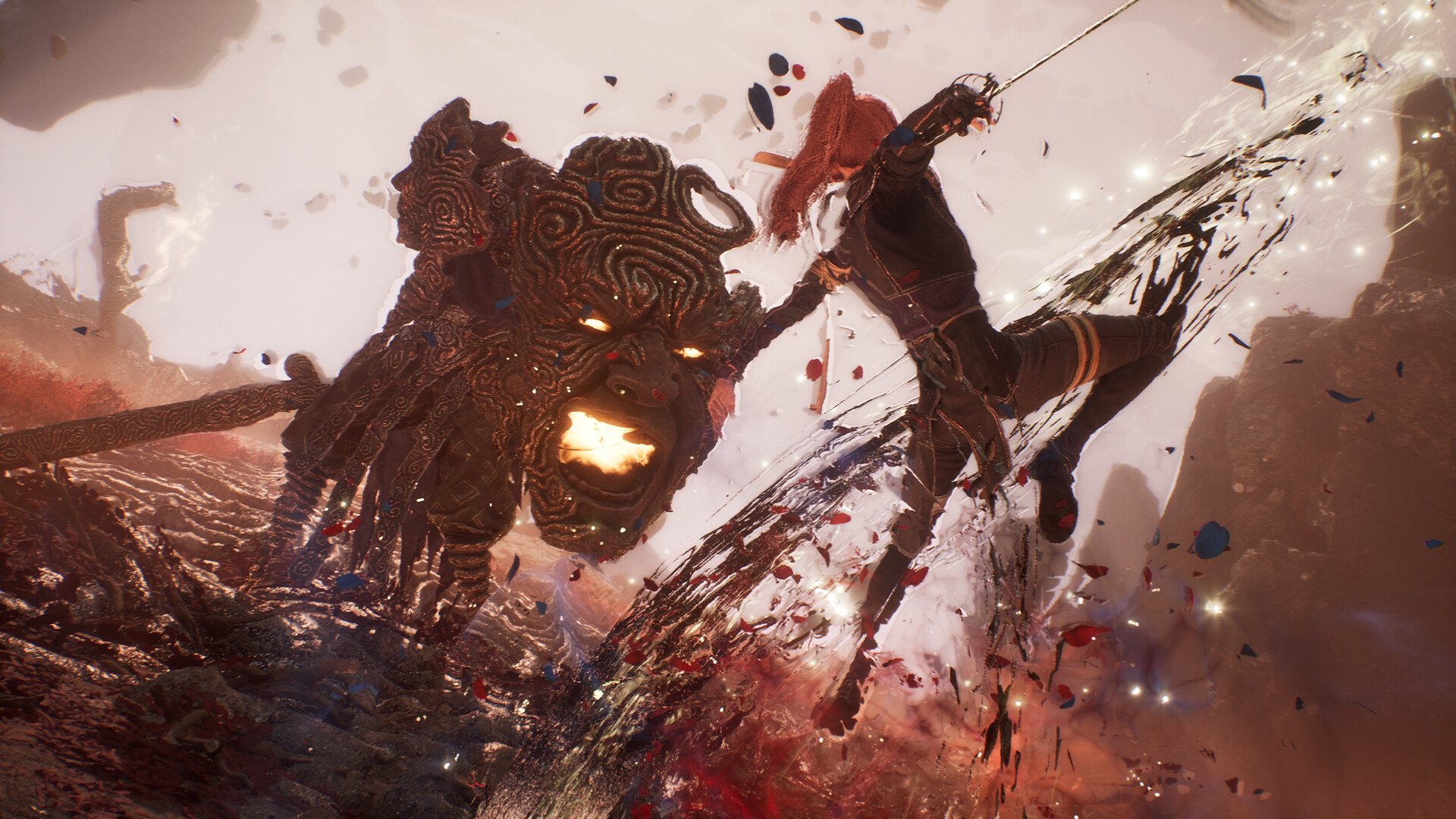
Gustave, voiced by Charlie Cox (Daredevil: Born Again), serves as the initial protagonist. This resourceful and dedicated engineer spent his life developing technology to protect Lumière, including the revolutionary Lumina converter that gives Expedition 33 advantages previous groups lacked. With his final year ticking away after reaching age 33, Gustave risks everything to defeat the Paintress and reclaim a future for Lumière’s children.
Gustave wields a mechanical arm that charges through combat actions and unleashes devastating damage when fully powered. His engineering background translates into gadget-based abilities offering both offensive pressure and utility support. As the foster brother and father figure to Maelle, his protective instincts drive many crucial story decisions.
Maelle – The Heart of the Expedition
Maelle, voiced by Jennifer English in an award-winning performance, represents the youngest member of Expedition 33 at just 16 years old. Orphaned at age 3, she’s never felt at home in Lumière and has difficulty connecting with and trusting others beyond her foster brother Gustave.
Unlike other Expeditioners motivated by duty or desperation, Maelle views the expedition as her chance to explore the world beyond Lumière and finally forge her own destiny. Her character arc contains major spoilers, but Jennifer English’s nuanced portrayal captures both vulnerability and strength, earning her the Best Performance award at The Game Awards 2025.
Maelle wields a rapier and employs dynamic swordfighting stances that alter her available abilities and stat distributions. Switching between Defensive, Offensive, and Virtuose stances mid-combat allows tactical adaptation to changing battlefield conditions, making her extremely versatile in skilled hands.
Lune – The Brilliant Scholar
Lune, voiced by Kirsty Rider (Sandman), brings intellectual prowess and magical expertise to Expedition 33. As the daughter of prominent researchers, she possesses a deep thirst for knowledge and has sacrificed everything to complete her parents’ work. Her singular goal focuses on unraveling the mystery of the Paintress.
Entrusted with charting the expedition’s path, Lune feels the weight of responsibility and the stakes involved keenly. She cannot and will not allow this expedition to fail. Her magical abilities create elemental stains through spellcasting that can be consumed for additional effects, rewarding thoughtful spell sequencing and strategic resource management.
Lune’s elemental magic exploits enemy weaknesses through four affinities: Weakness (50% increased damage), Resistance (50% reduced damage), Nullify (no damage), and Absorb (heals instead of damages). Understanding and exploiting these mechanics becomes crucial for combat efficiency.
Sciel – The Calm Warrior
Sciel, voiced by Shala Nyx (The Old Guard), represents wisdom, warmth, and acceptance in a world defined by loss. A former farmer turned teacher, she embraces life day by day with genuine joy, masking the pain of a tragic past. Despite accepting the brutality of their world, her commitment to the expedition’s success never wavers.
Sciel’s philosophical nature and resourceful creativity help herself and others navigate difficult situations. Her calm demeanor and playful spirit provide emotional balance for the team during dark moments, while her combat prowess proves she’s more than capable of handling threats.
At ease with death after years of witnessing the Gommage, Sciel approaches each day with gratitude and wonder. This positive outlook contrasts sharply with the grim reality surrounding them, making her an invaluable emotional anchor for the expedition.
Supporting Characters and Their Significance
Beyond the main expedition members, several key characters shape the narrative trajectory and provide crucial context for understanding the world’s mysteries. These individuals each carry their own burdens, secrets, and motivations that intersect with Expedition 33’s journey.
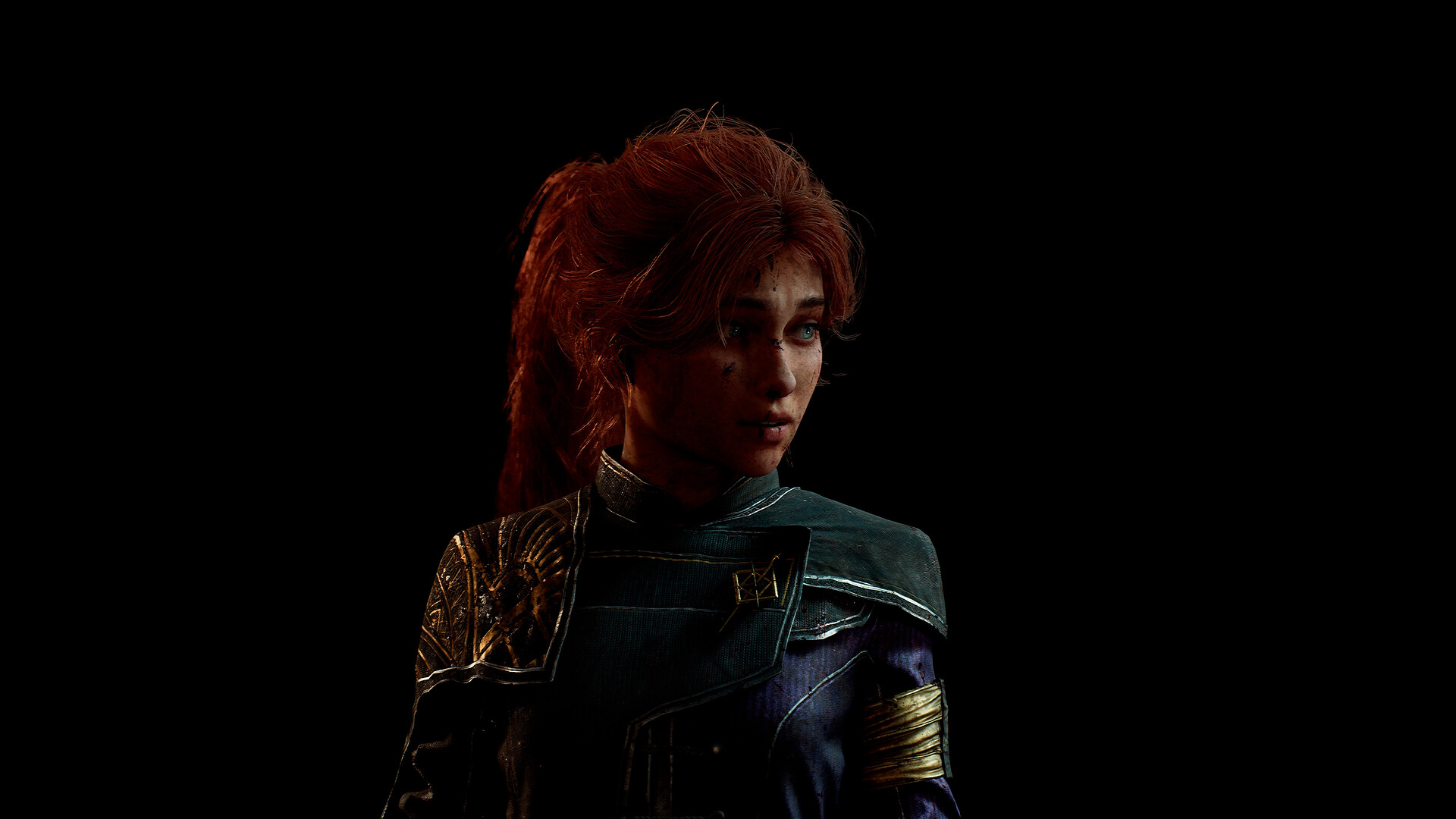
Renoir, voiced by Andy Serkis in a powerful performance, initially appears as a mysterious old man attacking expeditions. His true identity and motivations reveal themselves gradually, connecting deeply to the Paintress’ origins and the Fracture disaster that started everything. Serkis brings gravitas and emotional complexity to this conflicted character.
Renoir’s ruthless determination stems from protecting his family and preserving what remains of his world. As a member of the first expedition who received immortality from the Paintress, he guards her not out of malice but from a twisted form of love and duty. Understanding his perspective adds moral complexity to what initially seems like straightforward antagonism.
Verso – The Mysterious Stranger
Verso, voiced by Ben Starr (Final Fantasy XVI), tracks Expedition 33’s every move with unclear motives. His dangerous aura and moral ambiguity create tension throughout the early acts. Ben Starr describes the role’s appeal: “The moral ambiguity of Verso was so immediately enticing. He’s such a darkly mysterious character.”
Verso eventually joins the expedition after revealing shocking connections to both Renoir and the Paintress’ history. As Renoir’s son and a fellow immortal from the first expedition, Verso has grown tired of eternal life and wishes to kill the Paintress to finally end his existence. This death wish drives his willingness to help despite the risks.
His friendship with Monoco adds another dimension to his character. The bond between immortal human and ancient Gestral creature demonstrates that meaningful connections persist even across centuries of existence and suffering.
Monoco and Esquie
Monoco, voiced by Rich Keeble, represents the Gestrals – mysterious creatures untouched by the Paintress’ Gommage. As a Gestral warrior associated with Verso, his specialized skillset offers unique combat options unavailable to other party members. Rich Keeble describes voicing a “Loyal, eloquent, terrifying” character.
Esquie, voiced by Maxence Cazorla, belongs to another category of mythical creatures inhabiting the mainland called Grandis. This local creature aids the expedition during their journey, showcasing that not all inhabitants of the fractured continent oppose humanity’s survival. Esquie’s underwater swimming ability unlocks new areas during exploration.
These non-human allies demonstrate the expedition’s willingness to forge alliances across species boundaries when fighting existential threats. Their unique perspectives and abilities prove invaluable for overcoming challenges human expeditions couldn’t handle alone.
The Paintress and the Fracture
The Paintress, voiced by Tracy Wiles, serves as the central antagonist whose annual rituals condemn humanity to gradual extinction. Understanding her true nature, motivations, and origins requires piecing together clues scattered throughout your journey. The complete picture reveals a tragedy far more complex than simple villainy.
The Fracture occurred 67 years before the game’s events, isolating Lumière from the rest of the continent and beginning the Gommage cycle. This catastrophic disaster fundamentally altered reality in ways that become clearer as you progress through the narrative’s three acts.
The Paintress’ connection to Aline Dessendre and the Dessendre family forms the emotional core of the narrative’s final revelations. Without spoiling specifics, the story explores how grief, loss, and desperate attempts to preserve loved ones can twist into something monstrous that threatens everyone.
The Monolith and Its Significance
The Monolith represents more than just a canvas for the Paintress’ numbers – it stands as a physical manifestation of the curse affecting humanity. This enormous rock formation visible across the continent serves as a constant reminder of mortality and the ticking clock counting down to extinction.
Each year when the Paintress awakens and paints her cursed number, the Monolith becomes the focal point of humanity’s fear and despair. Its presence dominates the psychological landscape as much as the physical one, shaping how people view their limited futures.
Narrative Structure – Acts and Story Progression
The narrative unfolds across a prologue and three acts, each shifting focus to different expedition members as protagonists. This rotating perspective approach allows deeper exploration of individual character arcs while maintaining overall narrative cohesion.
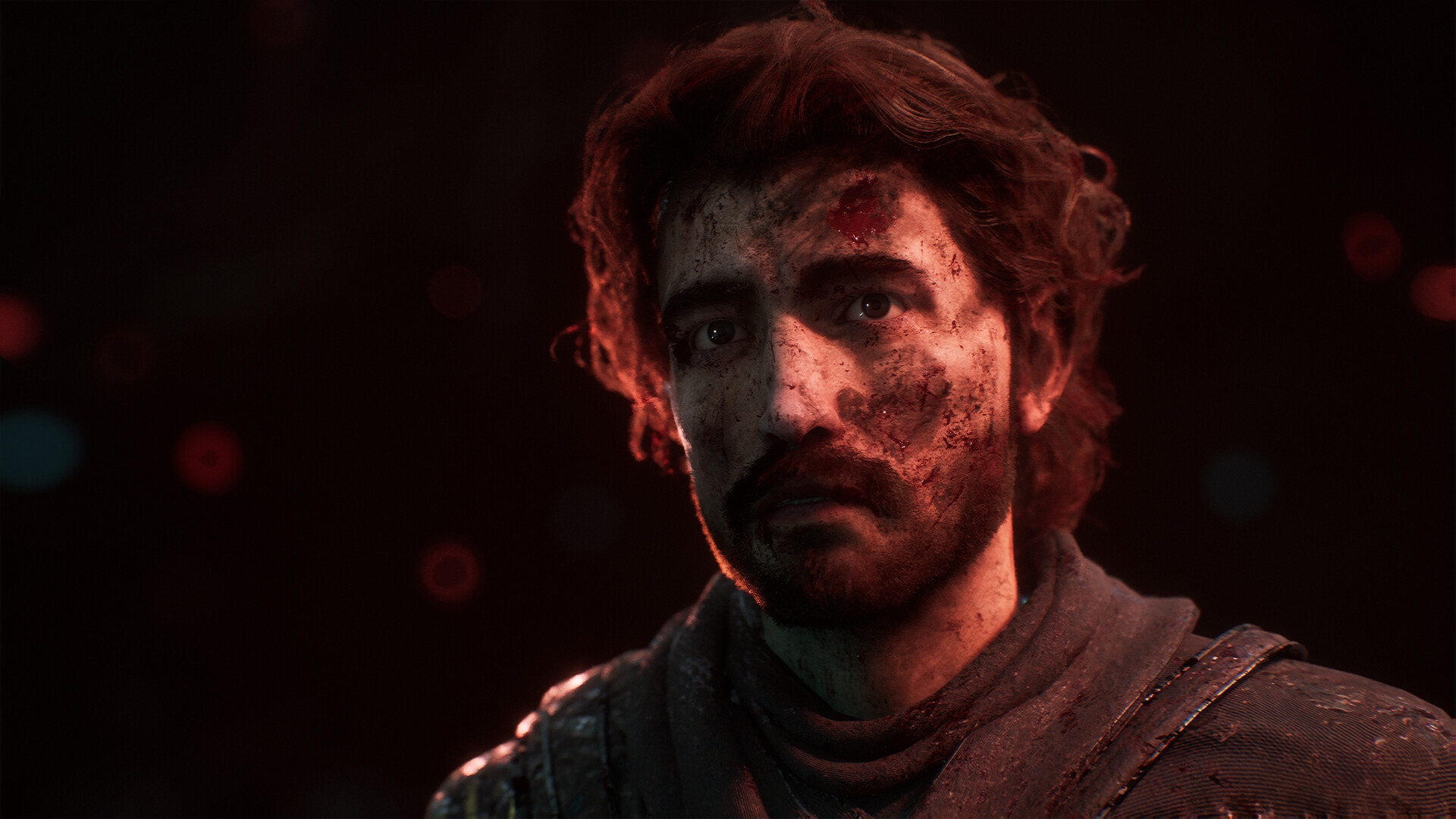
The prologue introduces the main cast and establishes the world’s stakes efficiently. Within an hour, players understand the Gommage threat, meet key characters, and witness the expedition’s departure from Lumière. This compressed introduction creates immediate investment before the journey truly begins.
Act I centers on Gustave as the primary protagonist, establishing his relationships, engineering expertise, and protective instincts toward Maelle. The act concludes with a shocking development that writers Jennifer Svedberg-Yen and Guillaume Broche planned from the earliest stages as part of the emotional journey they envisioned.
Acts II and III
Act II shifts focus to Verso following Act I’s conclusion. This perspective change allows exploration of immortality’s burden, complicated family dynamics, and moral ambiguity surrounding the Paintress conflict. The act expands understanding of the world’s history while introducing new locations and challenges.
Act III centers on Maelle following major revelations about her true identity and connection to the overarching narrative. This final act brings together all story threads, forces difficult choices with lasting consequences, and delivers the emotional catharsis the journey builds toward.
The story offers multiple endings based on player choices, with the final decision between Maelle’s path and Verso’s path determining the fate of Lumière, the expedition, and the painted world itself. Each ending provides satisfying resolution while honoring the themes explored throughout.
Themes and Narrative Depth
Clair Obscur: Expedition 33 explores profound themes that resonate beyond its fantasy setting. The core theme of loss of loved ones originated with director Guillaume Broche’s mother. When stuck on the narrative draft, Broche asked what would be the worst thing that could happen to her – she answered losing any of her children.
This answer became the foundation for Aline’s character and the catalyst for her decision to dwell in her departed son’s canvas. The entire narrative spirals outward from this central trauma, examining how grief can consume individuals and societies when left unresolved.
Hope versus despair creates constant tension throughout the journey. The Belle Époque aesthetic represents humanity’s dreams of peace and progress, while the harsh reality of the Gommage embodies crushing despair. The expedition fights not just for survival but to reclaim the possibility of hope itself.
Sacrifice and Human Connection
Sacrifice defines the expedition experience. Every volunteer knows the likely outcome – most won’t survive the journey. Yet they embark anyway, driven by duty, love, desperation, or the simple recognition that someone must try. This willingness to sacrifice for others’ futures provides the emotional weight behind combat encounters and exploration.
Human connection emerges as the antidote to isolation and despair. Characters who open themselves to relationships – Gustave and Maelle’s bond, the growing trust between expedition members, alliances with Gestrals and Grandis – find strength unavailable to isolated individuals. The narrative rewards emotional vulnerability alongside tactical skill.
The Relationship Interactions system mechanically reinforces this theme. Building connections between characters through camp conversations unlocks Gradient Attacks, powerful combination moves impossible for individuals alone. This design choice elegantly ties gameplay benefits to narrative themes of cooperation and trust.
Voice Acting and Performance Capture
The exceptional voice performances in Clair Obscur significantly contributed to the game’s narrative impact and critical acclaim. Recording took place at Side UK under voice director Joanna Green, with motion capture and performance capture bringing additional authenticity to character expressions and movements.
Jennifer English’s portrayal of Maelle earned universal praise and the Best Performance award at The Game Awards 2025. Her ability to convey Maelle’s emotional complexity – vulnerability, determination, fear, and growing confidence – resonated deeply with players. English described Maelle as “the epitome of a dream character for me – captivating, intricately layered, exquisitely written.”
Charlie Cox brings warmth and paternal protectiveness to Gustave while maintaining the character’s technical expertise and tactical mindset. Cox’s previous work as Daredevil prepared him for portraying heroes carrying heavy responsibilities, making Gustave’s leadership feel authentic and grounded.
Star-Studded Supporting Cast
Andy Serkis delivers a haunting performance as Renoir, bringing decades of motion capture expertise to the role. His ability to convey complex emotions through subtle facial expressions and body language enriches Renoir’s conflicted motivations. Serkis’ involvement raised the production’s profile significantly.
Ben Starr portrays Verso with appropriate moral ambiguity and dangerous charisma. Fresh from his acclaimed work as Clive Rosfield in Final Fantasy XVI, Starr brings similar intensity and emotional depth to this mysterious character. His chemistry with other cast members enhances ensemble scenes.
Kirsty Rider (Lune) and Shala Nyx (Sciel) round out the core expedition with distinct personalities that complement rather than compete with each other. Rider emphasizes Lune’s intellectual drive and vulnerability beneath confidence, while Nyx captures Sciel’s philosophical warmth and hidden melancholy perfectly.
Exploring the Continent – Key Locations
Leaving Lumière’s relative safety, the expedition ventures across the Continent – a monster-infested mainland featuring diverse environments each hiding secrets, enemies, and journal entries from past expeditions. These locations progressively reveal the world’s history and the true nature of the Paintress’ curse.
Spring Meadows provides early exploration opportunities with relatively manageable enemy encounters. The area’s deceptive beauty contrasts with lurking dangers, establishing the pattern of environments that seem peaceful until hostile Nevrons appear. Collectible journals here establish context for failed past attempts.
Flying Waters showcases the game’s visual artistry with surreal landscapes that challenge normal physics and spatial understanding. This location exemplifies how the Fracture distorted reality across the continent, creating areas where normal rules don’t apply. Navigation requires attention to environmental storytelling and careful observation.
Ancient Sanctuary and Beyond
The Ancient Sanctuary holds crucial lore about the world before the Fracture. Ancient texts, preserved artifacts, and architectural details provide clues about how society functioned when the continent remained whole. This historical context makes the current tragedy feel more profound.
Renoir’s Mansion represents a pivotal location where major narrative revelations occur. The mansion’s preservation amidst continental decay raises questions about its occupants and their relationship to the Paintress. Exploring this location triggers irreversible story progression, so thorough exploration beforehand proves wise.
The Thank You Update added Verso’s Drafts, a new area accessible during Act III once players acquire Esquie’s swimming ability. This colorful, whimsical environment contrasts with the typically serious tone, offering fresh experiences for completionists and late-game challenge seekers.
Narrative Inspirations and Creative Influences
Director Guillaume Broche drew inspiration from multiple sources when crafting Clair Obscur’s narrative. The French fantasy novel “La Horde du Contrevent” by Alain Damasio influenced the core concept of explorers traveling through hostile territory on a crucial mission. The novel’s focus on group dynamics under extreme pressure resonates throughout the expedition’s journey.
The initial concept originated from a painting Broche admired, which led him to envision a giantess and a doomsday clock. This visual starting point shaped the Paintress’ design and the Monolith’s role as a literal countdown to extinction. Translating this striking image into interactive narrative required building an entire world around the central concept.
Final Fantasy, Persona series, Lost Odyssey, and Blue Dragon provided gameplay and narrative structure inspiration. These JRPGs demonstrated how turn-based combat could coexist with cinematic presentation and emotional storytelling. Clair Obscur builds on these traditions while establishing its own identity through unique mechanics and themes.
Belle Époque as Narrative Fiction
Understanding the Belle Époque’s historical context enriches appreciation for Clair Obscur’s narrative choices. Historian Dominique Kalifa explains that “the term was adopted by public opinion after the First World War” as “a generation that had known terrible suffering tried to forget the blood and mud from 1914-1918 by exalting the long period of peace and stability that had preceded it.”
The Belle Époque represents nostalgia for a time before suffering – a fiction created by those who experienced horror and desperately wanted to believe something better existed before. This perfectly mirrors how Clair Obscur’s world views its own past before the Fracture, creating thematic resonance between historical reality and fantasy narrative.
Collectibles and Lore Discovery
Expedition Journals scattered across the continent provide crucial backstory about previous attempts to defeat the Paintress. These written accounts offer perspectives from doomed expeditions, revealing their discoveries, struggles, and final moments. Collecting journals creates a more complete understanding of the world’s history.
Nevron Quests involve tracking down and defeating specific monsters while uncovering their origins and connection to the Fracture. These optional challenges provide both combat variety and lore expansion. Understanding Nevrons’ true nature becomes important for comprehending the continental transformation.
Gestral Games and Lost Gestrals encourage thorough exploration while revealing information about these mysterious creatures unaffected by the Gommage. Their existence raises questions about why the Paintress’ curse only affects humans and what makes Gestrals immune to this existential threat.
Environmental Storytelling
Beyond explicit collectibles, environmental storytelling communicates narrative details through visual design and world layout. Ruined buildings, abandoned camps, and scarred landscapes tell stories without words. Attentive players discover additional context by observing how different areas changed after the Fracture.
Paint Cages and Paint Spikes represent physical manifestations of the Paintress’ influence across the continent. These mysterious structures hint at how her power extends beyond annual Monolith paintings to actively shape and corrupt the physical world. Their distribution patterns provide clues about her true nature.
FAQ: Frequently Asked Questions About Clair Obscur’s Story
Q: What is the Gommage in Clair Obscur: Expedition 33?
A: The Gommage is an annual event where the Paintress awakens and paints a descending number on a massive rock formation called the Monolith. Everyone whose age matches or exceeds that number immediately turns to smoke and disappears from existence.
Q: Who is the Paintress in Clair Obscur?
A: The Paintress is the central antagonist responsible for the annual Gommage. Her true identity, motivations, and connection to the Dessendre family are revealed gradually throughout the three-act narrative. Tracy Wiles provides her voice performance.
Q: How long is the Clair Obscur story?
A: The main story takes approximately 25-30 hours to complete, with an additional 30 hours available for side content, collectibles, and optional activities. Completionists can expect 50-60 hours of total gameplay.
Q: What happened during the Fracture?
A: The Fracture was a catastrophic disaster that occurred 67 years before the game begins. It isolated the city of Lumière from the rest of the continent and began the annual Gommage cycle. The complete story behind this event unfolds throughout the narrative.
Q: Who are the main playable characters?
A: Six characters become playable: Gustave (Charlie Cox), Maelle (Jennifer English), Lune (Kirsty Rider), Sciel (Shala Nyx), Verso (Ben Starr), and Monoco (Rich Keeble). Each brings unique abilities and perspective to the expedition.
Q: Does Clair Obscur have multiple endings?
A: Yes, the game features different endings based on player choices. The final decision between supporting Maelle’s path or Verso’s path determines the fate of Lumière, the expedition members, and the painted world itself.
Q: What is Belle Époque and why is it important?
A: Belle Époque means “the beautiful age” and refers to a French historical period from 1871-1914 characterized by peace, progress, and hope. The game uses this setting to create thematic contrast between humanity’s dreams and the harsh reality of the Gommage.
Q: What are Gestrals and Nevrons?
A: Gestrals are mysterious creatures untouched by the Paintress’ Gommage who inhabit the continent. Nevrons are hostile monsters that populate the fractured mainland and are the primary cause of failed past expeditions.
Clair Obscur: Expedition 33 delivers a masterclass in video game storytelling that honors JRPG traditions while establishing its own narrative identity. The Belle Époque setting provides more than aesthetic appeal – it creates meaningful thematic resonance between historical nostalgia and the story’s exploration of loss, hope, and human resilience.
The character-driven narrative earned universal critical acclaim for good reason. From Gustave’s protective determination to Maelle’s emotional journey and Jennifer English’s award-winning performance, every expedition member contributes meaningfully to the story’s emotional impact. Their relationships, sacrifices, and growth create investment that transforms combat encounters into personally meaningful moments.
Understanding the complete lore and world-building enriches every aspect of gameplay. The Paintress’ true nature, the Fracture’s aftermath, the expedition’s desperate mission, and the moral complexity surrounding potential solutions all reward players who engage deeply with narrative elements. This depth contributed significantly to the game’s historic Best Narrative award at The Game Awards 2025.
Whether experiencing the story for the first time or replaying to discover hidden details, Clair Obscur offers narrative rewards that match its acclaimed gameplay mechanics. The fusion of turn-based combat, reactive real-time elements, and emotional storytelling creates an unforgettable journey through a world where light and dark, hope and despair, constantly struggle for dominance.
