
Mewgenics Review: A Deep Tactical RPG Hidden Inside a Cat Breeding Simulator
I need to be honest with you right from the start – Mewgenics is absolutely unhinged, and I mean that as the highest compliment I can give. Edmund McMillen and Tyler Glaiel have crafted something that sounds completely ridiculous on paper: a tactical RPG mixed with cat breeding simulator wrapped in roguelite mechanics. Yet somehow, this bizarre combination works far better than it has any right to.
After sinking about 35 hours into building mutant cat armies, I’m still discovering new mechanics and laughing at the sheer absurdity of it all. This isn’t your typical strategy game – it’s a weird, gross, surprisingly deep experience that manages to balance juvenile humor with genuinely complex tactical gameplay.
The Core Loop: Breeding Warriors and Watching Them Fight
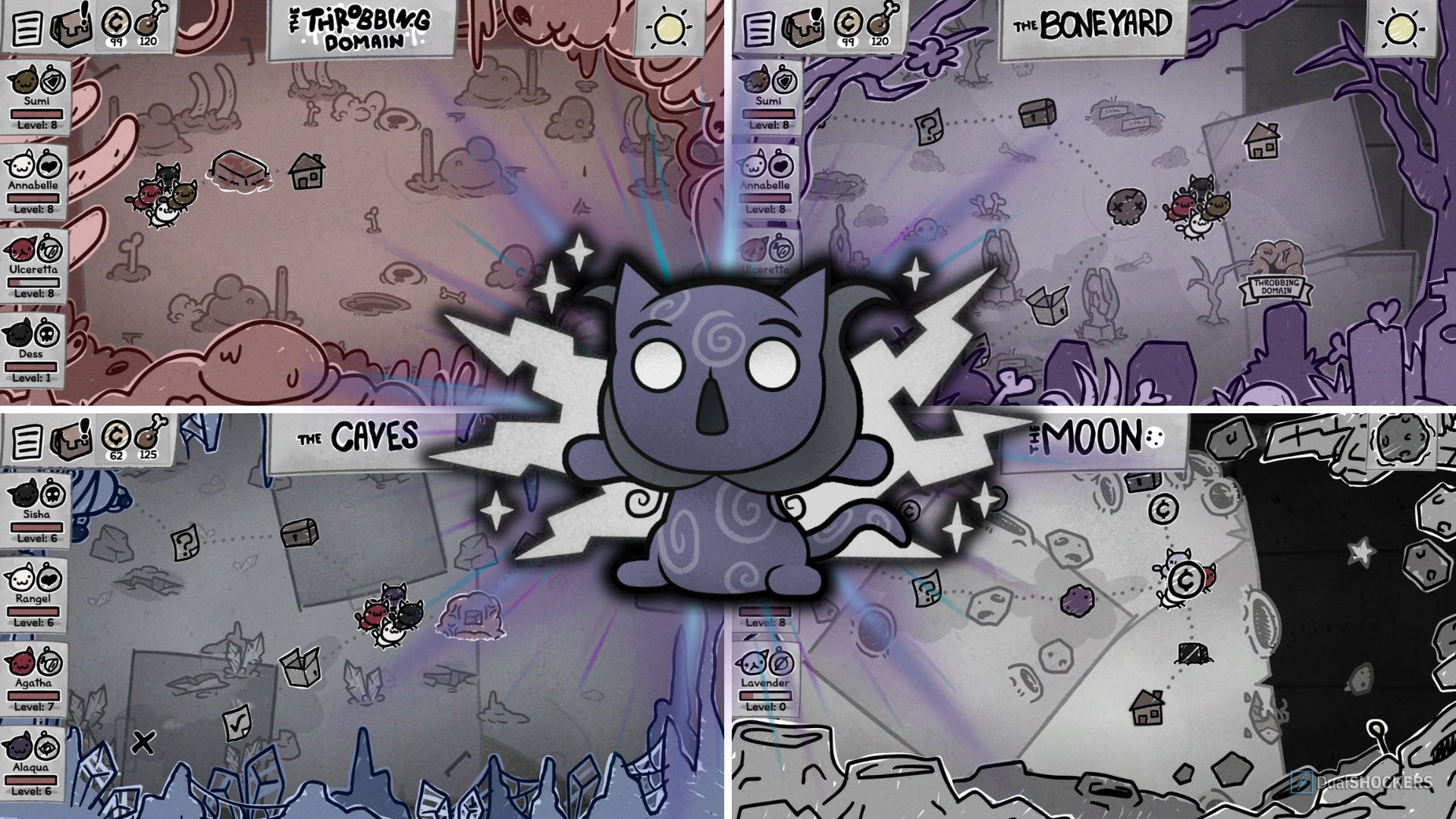
Here’s how Mewgenics works at its most basic level. You manage a house full of cats who breed to produce new generations of fighters. These cats go on turn-based tactical adventures across three acts, battling through areas like alleys, sewers, deserts, and boneyards. Once a cat completes a run, they retire from combat duty and become dedicated to making more kittens. It sounds simple, but there’s massive depth hiding beneath this structure.
Combat happens on 10×10 isometric grids where positioning matters, environmental effects can completely change your strategy, and every action has consequences. Your cats have equipment slots, class-specific abilities determined by collars they wear, passive traits that can fundamentally alter how they function, and stats that influence everything from damage output to how likely they are to succeed at random events.

What sets Mewgenics apart from other tactics games is the sheer freedom it gives you. You can use almost any ability on allies or enemies. Got a skill that confuses a character but buffs their strength? Use it on an enemy to make them attack themselves, or risk using it on your own tank to deal massive damage if the confusion roll fails. Skills that petrify can protect your cats from incoming attacks or lock down dangerous foes. This flexibility creates scenarios I’ve never seen in other tactical RPGs.
The environmental systems add another layer of chaos. Puddles conduct electricity, grass can be frozen into damaging spikes, desert heat prevents natural healing between battles unless you have water-based abilities. I’ve had fights completely turned around by random lightning strikes during storms or rubber tire obstacles bouncing around the battlefield. The game constantly throws curveballs at you, and learning to adapt on the fly is essential.
Breeding Mechanics and Long-Term Progression
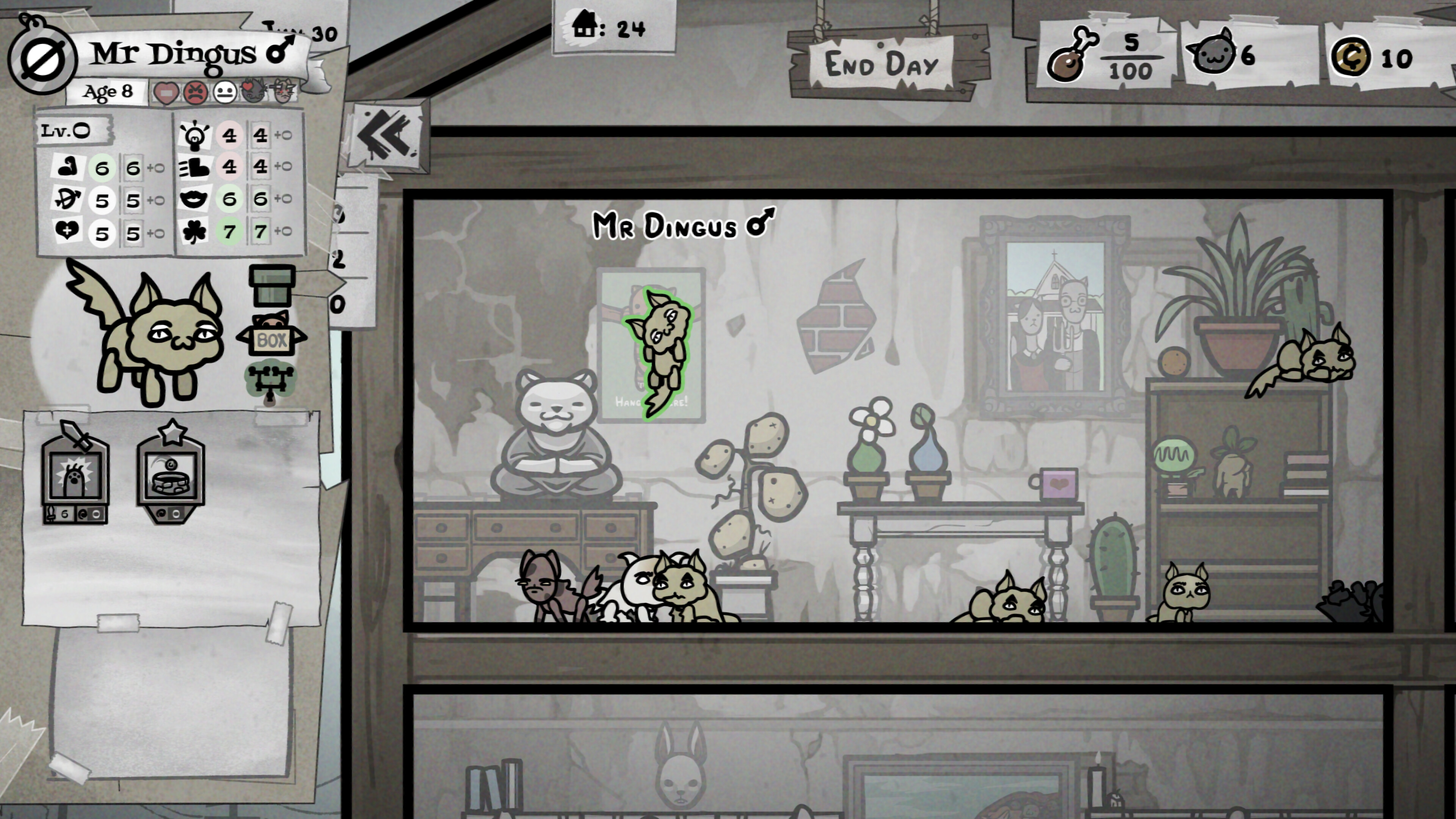
Between runs, you’re managing your cat house and hoping the right pairs breed to create superior offspring. You can’t directly control who mates with whom – instead, you influence breeding through furniture that affects house stats like comfort and stimulation. Too little stimulation and cats might fight each other instead of breeding. Make the house too unappealing and quality strays won’t show up at your door.
The randomness here is simultaneously frustrating and delightful. I’ve spent entire evenings trying to breed the perfect tank bloodline, only to end up with a bunch of half-cleric-half-fighter hybrids instead. But sometimes these accidents turn into happy surprises, like when I got a cat with incredible charisma and defensive stats who became an unkillable support unit.
Mutations add even more unpredictability to the breeding process. These genetic quirks provide mixed bonuses and penalties – my favorite was a mouth mutation that gave gills, providing constant health regeneration while wet. Combined with water-based abilities, this became incredibly powerful in certain environments. The game encourages experimentation and embracing the chaos rather than trying to perfectly min-max everything.
One minor frustration I’ve encountered is the cat management interface. Once your house fills up with dozens of cats across multiple generations, sorting through them to find specific traits or stats becomes tedious. I wish there was better filtering to highlight cats I need for particular runs rather than clicking through each one individually. It’s a small complaint in an otherwise excellent system, but it does slow down the pace between adventures.
Combat Depth and Class Combinations
The class system offers incredible variety through collar assignments. Tanks absorb damage and control space, necromancers summon minions and leech life, druids shapeshift into different forms, clerics heal and support. Each class has distinct ability trees that you build through level-ups after every battle, and the random nature of which abilities appear keeps each run feeling fresh.
What really makes combat shine is discovering broken ability combinations. I had a fighter with a passive trait that gave extra turns after killing enemies face a boss that split into multiple smaller units. I watched in amazement as he autonomously took eight consecutive turns, mowing through the entire enemy formation. Another time, I created a necromancer build that could multiply leech effects across the entire battlefield, dealing hundreds of damage per turn to enemies with barely 50 health.
The game actively wants you to break it. With around 1,000 items and countless ability combinations, finding overpowered synergies is part of the fun rather than something to avoid. That said, death is always lurking nearby. Cats can permanently die if their corpses get hit three times while downed, taking their equipped items with them. The brutality keeps you engaged even when you think you’ve created an unstoppable team.
The Edmund McMillen Aesthetic
You can’t talk about Mewgenics without addressing its distinctive style. This game features copious amounts of poop, weird mutations, gross-out humor, and sexual content that some players will find off-putting. It’s the same aesthetic McMillen brought to The Binding of Isaac, just applied to cats instead of crying children in basements.
Personally, I find the humor juvenile but charming in its commitment to being ridiculous. Ability descriptions that just say “he go” for movement, the absurd boss designs, the random events that can give your cats parasites or disorders that make them eat poop – it’s all so deliberately over-the-top that it loops back around to being funny. Your tolerance for this style will significantly impact your enjoyment of Mewgenics.
Verdict: A Weird Masterpiece of Strategic Chaos
Mewgenics isn’t for everyone. The learning curve is steep, the humor is polarizing, and the randomness can feel overwhelming at first. But if you embrace the chaos and dive into its systems, you’ll find one of the most unique tactical RPGs in recent memory.
The combination of meaningful tactical decisions, long-term breeding strategy, and absurd humor creates something special. I’m 35 hours in and still encountering new enemy types, items, and mechanics. McMillen estimates there’s 200 hours of content here, and I absolutely believe him.
This game rewards experimentation, adaptation, and creativity rather than perfect execution of optimal strategies. Every run tells a story – sometimes of triumph, sometimes of hilarious disaster. That’s exactly what makes Mewgenics so compelling. It’s messy, chaotic, occasionally frustrating, and absolutely brilliant.