

Normální zobrazení

Received before yesterday

Hidden Gems of Game Design Vol 43

7. Leden 2026 v 15:00
Hidden Gems of Game Design Vol 43

Plenty of amazing games go unnoticed and are not played widely, for various reasons. Maybe it’s a diamond in the rough, or the marketing wasn’t there, or it could be a game ahead of its time. For this monthly series, I’ve asked my fellow writers at SUPERJUMP to pick a game they think is deserving of a chance in the spotlight. Please share your favorite hidden gems in the comments.

Josh Bycer

Gemcraft Series

Hidden Gems of Game Design Vol 43
Source: Author.

For this month’s pick, I want to go with an indie series that I’ve hoped could be an inspiration for other developers. Gemcraft started as one of the many online games featured on the site/portal Armor Games, and two of the five in the series are currently available on Steam.

Gemcraft is, to my knowledge, the first tower defense roguelite. The story follows wizards who are doing battle against monsters using magic towers with gems to keep them at bay.

Three main systems make up each game, starting with the tower defense. Your mission is to defeat waves of varying enemy types using the gems and buildings provided. You have almost-free rein to build wherever you want on the map, but you must protect your wizard orb to win. Gems come in different colors that affect their properties, with different gem colors appearing in each game.

The gems themselves are your actual weapons, and can be put in different structures to change their role and be upgraded. Towers are the default structure, while traps do less damage but enhance the special properties of a gem. On many maps, wizard stashes can be opened to provide you with a reward that goes with the other systems.

Winning maps and getting a new high score will reward you with experience that can level up your wizard. This provides skill points that can be applied to unlockable skills, grant passive bonuses, or unlock powerful spells that can be used during a map. Any unused skill points will provide you with bonus mana (which purchases and upgrades gems).

Each game has a “talisman” that acts as the meta progress. Randomly, while playing maps, a talisman piece can drop, and the higher the number, the rarer the talisman. These provide bonuses that affect damage, how much mana you get, and other buffs. But to get the best parts, you have to take Gemforge into overdrive.

Each map can be played three ways – the story mode, trial (AKA puzzle mode), and endurance. Endurance mode is the best way to get high scores and talisman pieces. One of the unlocks you can get is battle traits that can be applied to a map, cranking up the difficulty while increasing drops and experience. The more traits you have, the greater the rarity of the talisman pieces you can obtain. This is when playing Gemcraft almost turns into the game-breaking style of Disgaea.

Hidden Gems of Game Design Vol 43
Knowing how far you can push with battle traits is important, or you end up like me here. Source: Author

Filling out your talisman is going to take a long time, as you need shadowcores to unlock more spaces, and the cost gets progressively more expensive as you get further into it. There comes a breakaway point in every Gemcraft title, where the player goes from barely being able to survive endurance mode to cranking up the difficulty and getting a boatload of cores and powerful talisman pieces.

Learning and mastering any Gemcraft game is going to take some time, and you can easily get dozens of hours in each if you want to do it all. However, when it comes to onboarding and helping the player learn how to improve, the game falls a bit short.

Maps are easy until they’re not. Each wave increases the attributes of the enemies, and the killer of your run at the start will come from a horrible 5-letter word – armor. For each point of armor an enemy has, it will block incoming damage. Pylons ignore armor, and the armor shred gem outright counters it. However, on maps when you don’t have access to armor shred, or the armor shred is too weak, you can go from one-shotting every enemy, to the lightest enemy shrugging off all your attacks.

Hidden Gems of Game Design Vol 43
Talisman pieces get progressively more powerful, and are the keys to the high-end play. Source: Author.

This requires you to build nothing but towers aimed at your pylons to be able to smash through them, up until the point when critical damage becomes the predominant damage dealer. This gets to a fundamental crack in the design and how it scales up. Your ability to deal with stronger and stronger waves is dependent on the skill tomes you find, which affect your viable options. There is a distinct difference in how you approach these maps as a beginner, moderate, and advanced player. While the game offers multiple ways of playing, this comes at the cost that there is often one preferred strategy per map.

Traps are great against slow or medium-speed enemies, but don’t fire fast enough without upgrades to deal with swarmlings. Putting points into your trap skill means that you’ll have fewer points for the skills that give you a base damage increase. I absolutely did not like lanterns, which hit multiple enemies at once, but deal far less damage. If you plan to play multiple games in the series, however, mastering one of the games means you should be able to handle anything that gets thrown at you in the others.

At some point, no matter how skilled you are at maze design or building the perfect choke points, you either have enough DPS to get through the enemy defenses and numbers, or you don’t. The difficulty also gets tuned up when RNG comes into play; while the waves and map are fixed, apparition attacks are not. After you reach a certain map point, the game will start spawning different kinds of ghost enemies throughout the map. The spawn timings are fixed, but what spawns is not. You could get something easy, like a passive specter that flies around, or you could get a demon that summons more enemies, attacks your orb directly, and is just a horrible nuisance.

What I find fascinating about Gemcraft today and why I wanted to talk about it, is that the tower defense genre faced an evolution crisis in the mid 2010’s to remain relevant as the market changed. It could have gone in three directions – following the roguelite progression set by Gemcraft, the character as a tower style of Defender’s Quest and popular mobile games like Arknights, or turning the tower defense itself into a roguelike.

Hidden Gems of Game Design Vol 43
While writing this piece, I managed to beat Frostborn for the first time. Source: Author.

Developers have responded by making their games more like the latter two, and leaving Gemcraft’s design all but gone in today’s market. The series remains an interesting branch of tower defense design, and if you ever wanted to see just how powerful you can make a tower, and have a lot of hours to play, then you need to check it out.

It remains up in the air as to whether we will get another game and a conclusion to the story. The developer sadly developed a rare liver disease, and updates have been sporadic. I’m hoping that they are doing well and that more people hear about this series.

Ben Rowan

Beyond Sunset (2025)

Hidden Gems of Game Design Vol 43
Source: Author.

I grew up on Doom, Quake, and Half-Life, so I’ve been chasing that boomer shooter buzz since way before we called them boomer shooters. I’ve sunk plenty of hours into modern spins like Ion Fury, Dusk, Turbo Overkill, and Prodeus, always hunting for that latest hit of speed, violence, and retro attitude. Beyond Sunset is the most recent one to grab me, and its mix of old-school DNA with modern touches and a slick cyberpunk style certainly helps it stand out.

Developed by an elusive one-game studio, Metacorp/Vaporware, Beyond Sunset is a cyberpunk RPG shooter built on the modern GZDoom engine. It runs incredibly smoothly, even on my ageing MacBook Pro (M1 Pro), and that fluidity matters in a game like this. Movement is fast and responsive, which is ideal for a game where, like the modern Doom reboots, pushing forward into combat encounters is usually the right answer.

In fact, combat is where the game really shines. There’s a wide variety of enemies, and lately I’ve been ploughing through hordes of robots of varying difficulty. Some are clearly designed to be mowed down, and they drop health and ammo generously, which keeps you playing aggressively and staying in motion. You’re not hiding behind cover or aiming down sights here either, you're constantly moving, dashing, and clearing rooms at speed. When tougher enemies show up, like shielded guards, flying drones, or flame-wielding mechs, the level design gives you enough space to reposition, heal up, and swap to heavier firepower.

Hidden Gems of Game Design Vol 43
Source: Author.

The weapons feel great across the board, too. The pistol has a strong alt-fire that’s perfect for cracking shields. The assault rifle is reliable and satisfying, and the shotgun is exactly what you want when a giant robot stomps into the room. And yes, there’s a samurai katana that lets you carve through enemies and even reflect bullets, Jedi-style. It’s the first weapon you get in-game, and definitely the most fun.

Beyond Sunset has more going on than most boomer shooters, adding RPG elements that deepen the experience. You can boost your character’s stats, buy upgrades in shops, experiment with power-ups, and talk to NPCs for side quests. It’s not quite classic Deus Ex, but it has that same sense of a deeper world that rewards exploration. The neon palette and synthwave score lighten the tone compared to Ion Storm’s dead-serious classic, but the intent is similar. This is a shooter that wants you to poke around and engage, not just sprint to the exit.

Hidden Gems of Game Design Vol 43
Source: Author.

Like vintage Deus Ex, level design is ambitious, too; these aren’t straight corridors. They’re sprawling, maze-like spaces with multiple floors and multiple objectives, though sometimes they’re a bit too sprawling, and it’s easy to lose your bearings. But with a little patience, plus help from in-game computer terminals that let you access CCTV feeds, you can usually piece together where to head next.

Beyond Sunset isn’t reinventing the genre, and it doesn’t need to. It’s a solid, stylish boomer shooter with personality that understands why these games worked so well in the first place. Considering how well this GZDoom-based game runs on my Mac, it gives me hope we might finally see the brilliant-looking Selaco land on macOS once it leaves Early Access. For now, I’m genuinely having a great time with Beyond Sunset. It’s a certified hidden gem for anyone who wants that old-school shooter energy with a bit of classic RPG flavour.

Anonymous

Zoo Tycoon (2001)

Hidden Gems of Game Design Vol 43
source: Gamespot

The passing of an ill lion cub was a difficult subject for Lincoln Park Zoo’s communications manager when I spoke to her in Chicago. It stirred a memory I had almost forgotten: my encounter with death in Zoo Tycoon (2001).

Seeing green smiley faces pop up over my pride of lions meant I was doing something right as a kid. I picked the right trees, the right terrain, everything they could ever need. Ever the utilitarian, I let my lions keep their default names: Lion 1, Lion 2, and so on. After a couple of hours, Lion 1 was missing.

The next few minutes of frantic searching confirmed my worst fear: he was dead.

I loved spending time with animals at zoos or with plastic toys at home. In-game, I’d spend hours crafting environments and appeasing guests, often at the cost of profit. The animals’ info panels were a goldmine of real-world facts that made it simple to build habitats and meet their needs. 

Once your animals showed their satisfaction with the aforementioned smiley faces, it was the guests’ turn. Attractions and shops kept visitors busy when they weren’t waiting in restroom queues. By getting funds from tickets, concession stands, and donations, you’d earn enough to build your next enclosure.

As a game that promotes animal preservation, it’s ironic that there’s no simple way to play the original Zoo Tycoon. Despite working on a sequel and teaming up with Nintendo for World of Zoo on the Wii in 2009, the studio shuttered in 2011. Zoo Tycoon remains a great tool to explore nature’s ecosystems by raising a zoo of miniature animals.

A Final Message for 2025

This is Josh again. Thank you so much for reading these monthly pieces and enjoying the series throughout 2025. It has been a pleasure giving smaller games a chance to be seen, and I hope that a few of you were inspired to check them out.

Thanks for reading! Come back next month for another entry and more great hidden gems to check out. You can find all previous Hidden Gems stories here.

Thoughts on Silent Hill F

26. Listopad 2025 v 15:00
Thoughts on Silent Hill F

Silent Hill F is not only the first brand new survival horror game in the franchise in a long time, but also the series' first spin-off, bringing the action to new locales and situations. We leave the horrors of America for a trip to 1960s Japan. While the game presents a fresh take on the series, its gameplay feels like it's being pulled between two horrors.

Cursed All Over

The story follows Hinako, a teenage girl in a rural mountain town. One day, a fog rolls in that seems to cause everyone to disappear, and the town is now full of strange monsters out to get her. She not only needs to navigate the town with the remaining survivors, but a strange man haunts her nightmares.

The story is great, and the game avoids retreading the themes and plot of prior games in the series. Hinako is portrayed as a tomboy and someone who does not like that women are seen as nothing more than a traditional housewife to a man. This upsets her father, who views her as less than her older, married sister. The girls of the village treat her as an outsider and a freak because she doesn't act like the other girls, and because her best childhood friend is a boy. The impact of misogyny and how it can be inflicted by both men and women is on display here.

While the story may be different, you're still going to wander around seemingly normal environments, getting into fights and puzzle-solving. Silent Hill F, however, does things a bit differently with both.

Spooky Soulslike?

The combat system here feels like an attempt to mirror the more personal and methodical fighting of a Soulslike. You'll pick up weapons from the environment in the everyday world, while the nightmare world has stock weapons. The everyday weapons have durability and can break after being overused, but tool kits can be found to enact repairs. Inventory management is a big deal, as you start with limited inventory slots and will want to fill them up with the various recovery items that heal or provide other bonuses. You can find inventory upgrades that are definitely worth seeking.

Thoughts on Silent Hill F
Combat plays a far larger role here than in previous entries, which does distract from the exploration. Source: Author.

Sanity is a new resource that works with the advanced techniques for fighting. You have a light and heavy attack, which both drain stamina on use. By holding down the focus button, you'll consume sanity to either charge for a strong attack or attempt to counter the enemy when they flash to perform a stunning blow. Sanity can also drain if you are hit by certain attacks, and running out means you take increased damage. You can sell certain items for "faith" at the local shrines/save points that can be used to upgrade your stats and equip Omamoris that provide passive boosts.

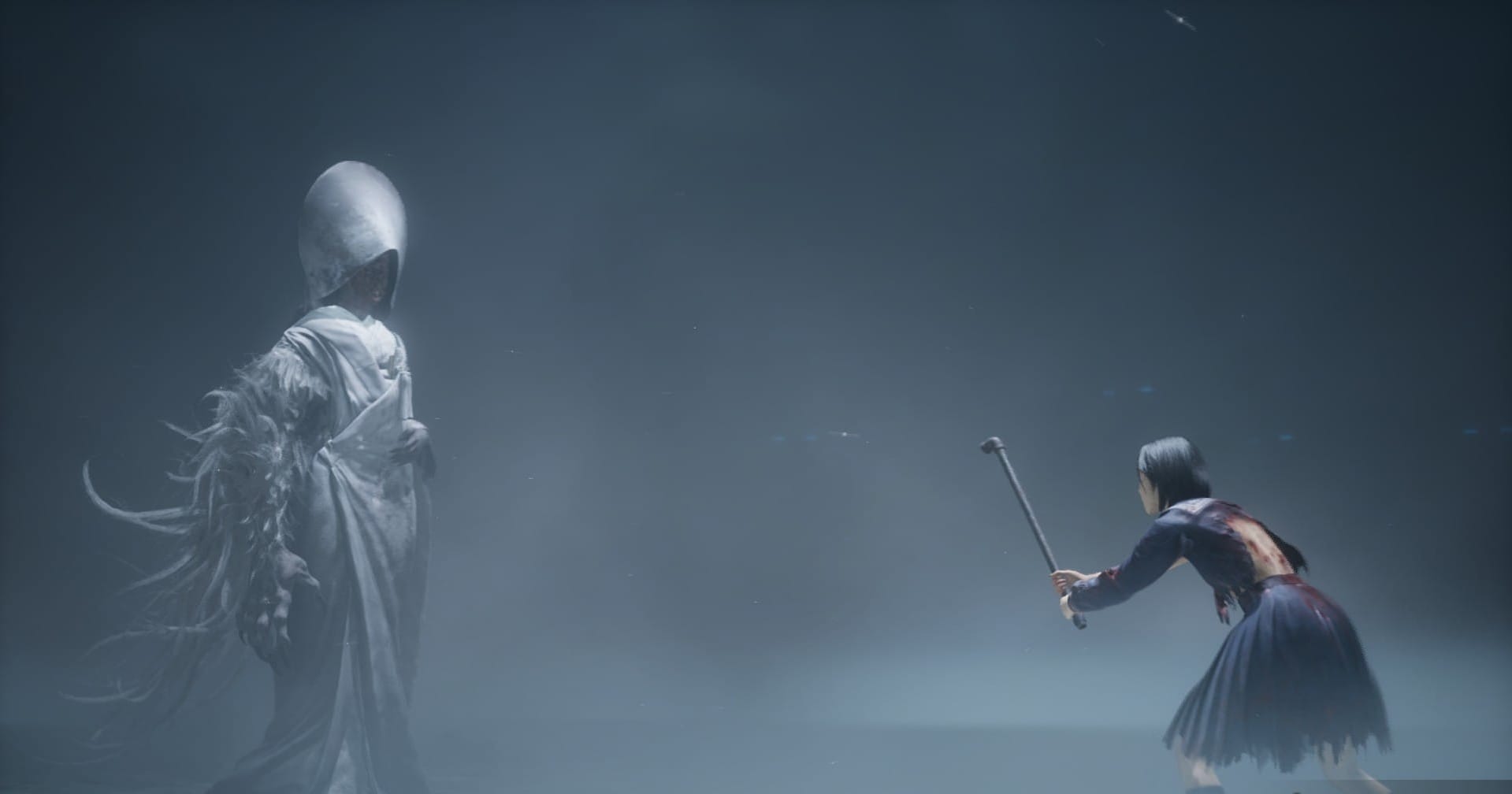
The enemy design here is great despite the presence of just a few main types. Each one moves and behaves differently, with a lot of idle animations and weird posturing to make it hard to read them. These are not your basic mannequin monsters from the previous games, and that extends to the newly designed boss fights that are far more lively than previous ones. I'll talk about this further down, but the combat feels less about survival horror and more like a slower take on a Soulslike.

Brain Scratching Scares

For those fearing that a new Silent Hill wouldn't have fiendishly difficult puzzles, I can put those fears to rest. The puzzle design returns to the roots of the series and survival horror, as you must use knowledge both in and outside of the game if you want to solve them.

I played on the highest puzzle difficulty, and it was certainly a challenge. Some of the puzzles require you to understand logic or information without giving you the reference points or material you need, which can lead to frustration. For the very first and last puzzles, I had to look up the solutions, and even knowing it, I had no idea how the clues were supposed to reference the answer. That represents a breakdown in puzzle design – if the clues still don't make sense after you solved it, then the puzzle and/or clues weren't good to begin with.

It's like asking someone to solve a puzzle related to John and Jane's favorite colors, but the game never tells you who John and Jane are and expects you to know who the game developer's friends are as a reference. This feels like a return to the player-unfriendly puzzle design that dominated the adventure genre starting in the 80s.

The one upside is that the puzzles come paired with an excellent journal system, not only keeping track of the characters and monsters, but also providing a collection of all found hints and their relation to each puzzle. This is something I would love to see standardized among adventure games. However, this does come at a cost; there are far fewer puzzles compared to previous entries, and a greater focus on combat, which takes me to my main issues with the game.

Thoughts on Silent Hill F
While the game purports to be survival horror, there are a lot of action game and Soulslike design features, including unblockable grabs. Source: Author.

All the Action and Survival Horror

Combat has never been the focus of a Silent Hill game, and has functionally been a bit janky at best. This is the first game to have a fully built combat engine; however, "combat engine" and "survival horror" don't really work together.

The aforementioned Soulslike style, on paper, seems like it would work for a survival horror game – Hinako has very long wind-up and recovery animations, so every attack has to be planned out. However, you also have a dodge with I-frames and a punish attack. The game is heavily focused on stunning enemies to deliver more damage, which heavy strikes, focus strikes, and your punish can achieve, and the game is really going to make you use them.

This is by far the most combat-intensive Silent Hill game I've seen yet. The horror of being in a town beset by a curse starts to fade after your umpteenth fight as you rip apart your enemies. What I really didn't like from a horror standpoint is that the game wants you to avoid combat and gives you the option to sneak by enemies in spots...and then it locks you into arenas to fight your way out. At one point, the game practically gives you a devil trigger and asks you to rip and tear until it is done.

Regarding enemy design, I understand the subtext of featuring an enemy that is about the horror of birth in a game about a girl struggling with misogyny. That said, having an enemy that can infinitely respawn other enemies, in a required arena, in a survival horror game, starts to get annoying, not scary.

When you are in those high-action segments, you are still using the very slow, very stilted combat system. While you can upgrade your stamina and sanity, along with the help of the Omamoris, they don't suddenly make the combat faster or provide a new dynamic, such as the auto locks featured in the Callisto Protocol. Sometimes, the enemies just refuse to use any counter-able attack, and you'll need to rely on hopefully getting the stagger off, or you will be attacked easily. There are some Omamori that are really good, but they are tied to the random draw, proving the real psychological horror is gacha. The very fact that there are repeated arena fights in a Silent Hill game makes it tempting for me to give this game an F just on that alone.

Thoughts on Silent Hill F
Even with different endings, you're still going to be hacking and slashing through the game's combat portions. Source: Author.

Not So Final

Perhaps the biggest disappointment is that all this was designed around playing the game a minimum of 3 times, with a total of 5 endings. This is the only horror game I could think of that actually adds new challenges and puzzles on repeated playthroughs of the main quest, but it's all built on the same annoying puzzle design and repetitive combat. I do like that the world is different, leading to more information and additional content, but you must go through the entire game again to begin seeing this. The best parts of this game are when you get to wander around looking for clues and investigating, and you can do far more of that on your second playthrough and beyond.

Besides having upgraded stats to decrease the difficulty, just having more inventory space to hold and experiment with the additional items also makes things easier. An item I neglected on my first run that would have helped tremendously is the one that gives you infinite stamina for a few minutes.

However, asking the player to repeat the majority of what they just did so that the story makes sense doesn't really work in my opinion. Either the game needs to feel like a different experience, such as Madhouse mode from Resident Evil 7, offer a brand new experience like the Route A/ Route B setup in Resident Evil 2, or just let the player tear through everything they've already done to get to the new stuff.

A Loud Failure

For me, Silent Hill F fails when it comes to puzzle and combat; as a survival or action horror game, it just doesn't work. I wonder if the developers saw the success of Resident Evil 7 and its successors, and felt that the solution to bring back Silent Hill was just to add more combat and action. The story and monster designs are great, but focusing so much on combat, even to the game's difficult final boss, feels like a bit of a betrayal of the series. It's hard to be introspective and learn more about yourself and society when you're busy dodging multi-hit combos from all sides while trying to find the punish tell.

(Note: This review was written with the 1.0 version of Silent Hill F. Following the release, the game has had a balance patch that has reduced the difficulty and the amount of encounters, but I have not had a chance to replay it to see the exact changes).

Be sure to follow me on Bluesky for all my updates on design talks and random game design questions

Hidden Gems of Game Design Vol 41

2. Listopad 2025 v 15:00
Hidden Gems of Game Design Vol 41

Plenty of amazing games go unnoticed and are not played widely for various reasons. Maybe it’s a diamond in the rough, or the marketing wasn’t there, or it could be a game ahead of its time. For this monthly series, I’ve asked my fellow writers on SUPERJUMP to pick a game they think is deserving of a chance in the spotlight. Please share your favorite hidden gems in the comments.

Josh Bycer

Tactical Nexus (2019)

Hidden Gems of Game Design Vol 41
Source: Steam.

This month, we turn to one of the most niche of the niche games. Tactical Nexus is a game designed by, and for, every tactical RPG sicko out there who has ever thought to try and master one of these games.

Are you someone who:

  1. Has taken a character to level 9999 in Disgaea?
  2. Has not only learned, but broken, an SRPG?
  3. Is looking for a game that has at minimum 1000 hours of gameplay?

If you answered yes to any of those points, then this is the game for you. Tactical Nexus is a Puzzle RPG in a similar style to Desktop Dungeons. The idea is that you must conquer a stage by figuring out the exact order of items to pick up and enemies to fight. Where the challenge comes in is that every stage is made up of multiple maps, with enemies and items strewn about. Fighting stronger enemies early can net you more experience, allowing you to level up, but if you take too much damage, then you won’t survive to the end.

Multiple keys unlock different routes, and you must figure out which routes to take, given what you have in a level so far. All combat is handled simply by bumping into the enemy and letting the stats do the talking.

After a level is over, you are graded on how much of it you managed to clear and on finding bonus score items hidden behind the harder gates. The reason why this matters is what takes Tactical Nexus’ gameplay into overdrive. With Desktop Dungeons, while there was meta progression with unlocking new characters and items, the character’s progression always resets to 0. Here, the meta layer allows you to permanently boost your starting stats – enabling you to fight enemies more easily, take on harder fights earlier, or access the many harder gates that you couldn't before. 

Hidden Gems of Game Design Vol 41
I don't think I can post a single screenshot that would make sense to someone who hasn't played this. Source: Steam.

The game only tracks your highest score per stage – if you want more juicy rewards, you’ll need to play better. And yes, all these upgrades carry across all stages. The different levels start out being balanced around having no upgrades, but you will eventually need those boosts if you have any hope of continuing.

Tactical Nexus’ MO is about quality over quantity; it’s not about giving you hundreds of stages to play, but stages that take a long time to master on top of the meta progression.

The developers understand that their game won't be a mainstream success, and have factored that into their monetization structure. The first two chapters of the game are 100% completely free to play, and you can easily get dozens of hours just out of those two alone. If you want more, there are multiple chapters available as DLC that add more challenge, new mechanics, and more meta progression. The developers have gone on record stating that they will never put their DLC on sale, with the idea that the DLC is meant for the hardcore fans who want more.

This is the perfect game for the Hidden Gems series, as most of you reading this probably have no idea that it even exists. It is not for everyone, but if you fall into the highly specific group that wants this kind of game, I hope you enjoy your next obsession.

Hidden Gems of Game Design Vol 41
Source: Author.

B. Cantrell

Flinthook (2017)

Lately, I’ve been grappling through the galaxy with Flinthook, and it didn’t take long for this roguelite to hook me in. Another hidden gem from Montreal’s Tribute Games (hot off last month’s Steel Assault), it casts you as a masked space pirate armed with an anchor hook, plasma pistol, and time-slowing belt, raiding wooden spaceships for randomised loot. The snappy controls give you instant agility, making it feel like you’re a tiny pirate Spider-Man zipping through zero-gravity galleons.

Swinging through procedurally generated levels, fighting bandits, and hoovering up treasure is the order of the day here. You latch onto golden rings and ping pong around enemies and traps, with a generous aim assist that lets you flow from ring to ring without touching the ground. Combat blends with movement as the hookshot crosshair doubles as a blaster reticle, so you can fire in any direction mid-swing. Slowing time with the Chrono Belt to slip between lasers, blasting foes, and grappling out feels super fluid and satisfying.

True to its roguelite roots, Flinthook delivers an addictive loop of looting and leveling up after death. Each run is a fresh gauntlet of gold, enemies, traps, and surprises. One moment you’re dodging spike balls and laser beams, the next you’re dueling mutant buccaneers. Cracking open chests and crates is super satisfying as coins burst out, just like smashing up urns on a Hades run. Flinthook passes the pottery test with flying colours.

Hidden Gems of Game Design Vol 41
Source: Author.

As with any good roguelite, you start lightly equipped and grow stronger through steady meta-progression. Treasure and experience unlock perk cards and permanent upgrades that boost health, extend slow motion, or enhance attack power. It nicely captures that ‘one more run’ feeling, where even after a sudden defeat, you’re eager to jump back in. I died plenty early on, but I never felt like quitting. The responsive controls turn every setback into a lesson, and finally conquering a brutal room or boss feels genuinely rewarding. Using that right trigger to fire the hook shot is just really addictive.

Flinthook’s fluid pixel-art and catchy chiptune soundtrack capture the spirit of the 16-bit era while layering in modern design touches that add depth and replayability. It reminds me most of Flying Oak’s ScourgeBringer, with its classic roguelite map grid and flowing, omnidirectional movement that keeps you in constant motion. Released in 2017 on Steam, consoles, and later Switch, Flinthook slipped under the radar despite earning solid reviews, likely overshadowed by the wave of major releases that made 2017 one of gaming’s all-time great years. Regardless, Flinthook remains an overlooked gem that deserves another chance to shine.

Hidden Gems of Game Design Vol 41

Priya Sridhar

Tiny Terrors (2025)

As I was trolling Steam for Halloween-themed games, Tiny Terrors popped up as a free-to-play new release. The art style matched what I like, so I started playing.

Tiny Terrors is hard. You play as a ghost teaming up with a jack-o-lantern to collect candy amid hostile monsters and spirits. Rather than fighting or jumping, you have to strategize to dodge everything and everyone coming your way while grabbing candies. It’s a case where going in circles is a good idea. Though I won a few times, more times my ghost got their candy stolen. The replay value was fairly high as a result. 

The animation is gorgeous with apropos background music. I hope the developer, Shiromi, has other games in the pipeline.

Julia Hu

Tyranny (2016)

Hidden Gems of Game Design Vol 41
source: Developer

Tyranny is a 2016 CRPG developed by Obsidian Entertainment and published by Paradox Interactive. Though both developer and publisher are household names among gamers, this particular title tends to be the forgotten child on their resumes. This is a shame because Tyranny offers such a unique premise among RPGs, as it is one of the rare games that lets players indulge in being the bad guy. 

The game opens with our player character, a Fatebinder serving the mysterious god-emperor Kyros, being tasked with crushing a rebellion in a conquered land while navigating the conflict between two bickering factions, the Scarlet Chorus and the Disfavored. Unlike most RPG protagonists, our Fatebinder is not some no-name warrior but starts as a high-ranking officer in Kyros' army, capable of invoking an Edict of Kyros (a magical weapon of mass destruction that only Kyros can deploy) as a way to both channel Kyros’ authority and as a threat to achieve Kyros’ aims.

Along the way, we enjoy classic CRPG mechanics such as recruiting a colorful cast of companions, managing their gear, seeing their interactions, and making impactful decisions that change the story. We ultimately choose whether to ally with the Scarlet Chorus or the Disfavored as their war escalates (or neither and ally with the rebels themselves!). Then, after a plot twist, we choose how we manage the resulting conflict with the other Archons and potentially Kyros themself. These dramatically branching choices make multiple playthroughs of Tyranny feel like wholly different stories. 

Hidden Gems of Game Design Vol 41
Tyranny. Source: Steam.

Yet, I think one reason why Tyranny has been underappreciated is that the game's plot feels awkwardly unfinished. As engaging as the game's story and worldbuilding is, Tyranny feels like the middle installment of a trilogy. The game opens with a retrospective text sequence, similar to Mass Effect 2 or 3’s, asking about your Fatebinder’s key decisions during Kyros’ unseen past campaign, with these answers determining the starting state of the world and its factions for the playthrough. The ending of the game is jarringly abrupt, wrapping up with a narrated summary of the wider consequences of our choices on the state of the world and Kyros. As one gamer aptly said, Tyranny feels "more like a proof of concept than a game." 

We can only guess why the game was made in this rushed, incomplete state and then barely marketed. A potentially morally gray game in a niche genre would point to a low sales forecast, which likely impacted the amount of funds Obsidian had to work with. Whatever the reason, no plans for a sequel have followed in the nine years since launch. 

Even so, I greatly enjoyed my 70+ hours spent completing all story paths in Tyranny. I hope the industry will continue taking creative risks and making experiences for the moments when gamers want to fantasize about not being the hero. 

Anonymous

Tarzan: Return to the Jungle (2002)

Hidden Gems of Game Design Vol 41
source: Amazon

Tarzan: Return to the Jungle built upon the foundation of its 1999 Game Boy Color predecessor with combat, improved character sprites, and stronger backgrounds. His acrobatic abilities grew, bringing activities like tree surfing into the fold.

While the Game Boy Advance game still had the film star collect bananas, they were no longer essential to beat levels. Instead, objectives ranged from stampeding boars and mining cart hops to finding dinosaur eggs. Tarzan was a joy to control, with his love for bananas taking him on sprints, slides leading to leaps, and vine swinging into vibrant water pools.

The platforming segments tested your timing and attention to detail, with vines often concealed just out of sight. Foes included beehives, leopards, and hogs that looked like The Lion King’s Pumbaa.

I fell in love with Return to the Jungle’s playgrounds. With vivid colors, gorgeous backgrounds, and the occasional instant-death obstacle, I enjoyed exploring every level for collectibles. The deep water swimming areas, filled with secret sections, were particularly memorable. 

If you tapped the L-button, Tarzan let out a mighty scream or a scrawny squeak, depending on how old he is in-game. Doing so near statues brought jungle creatures to your aid, bringing an elephant to clear a path or an eagle to lift you to your next objective. 

Crash Bandicoot and Mario indeed got more creative with their levels and mechanics. But if you loved watching the jungle man’s exploits on the big screen, you’d have a great time with Return to the Jungle.

Thanks for reading! Come back next month for another entry and more great hidden gems to check out. You can find all previous Hidden Gems stories here.
❌