

Normální zobrazení

Received before yesterday

From final boss battles to the dangers of open-world bloat, TV and film can learn a lot from video games

7. Leden 2026 v 16:00

In this week’s newsletter: Stranger Things’ climactic showdown is the latest pop culture spectacle to feel like its been ported straight from a console. The industries’ reciprocally influential relationship can be to everyone’s gain

Don’t get Pushing Buttons delivered to your inbox? Sign up here

It had begun to feel like an endurance test by the end, but nonetheless, like the sucker I am, I watched the Stranger Things finale last week. And spoiler warning: I’m going to talk about it in general terms in this newsletter. Because approximately 80% of the final season comprised twentysomething “teenagers” explaining things to each other while using random 1980s objects to illustrate convoluted plans and plot points, my expectations were not high. After an interminable hour, finally, something fun happens, as the not-kids arm themselves with machine guns and molotovs and face off against a monstrously gigantic demon-crab. Aha, I thought – the final boss battle!

The fight was like something out of Monster Hunter, all scale and spectacle with a touch of desperation. For a very long time, video games sought to imitate cinema. Now cinema (and TV) often feels like a video game. The structure of Stranger Things’ final season reminded me a lot of Resident Evil: long periods of walking slowly through corridors, with characters exchanging plot information aloud on their way to the action, and occasional explosions of gunfire, screeching monsters or car chases. Those long periods of relative inaction are much more tolerable when you’ve got a controller in your hands. I am all for TV and film embracing the excitement, spectacle and dynamism of video games, but do they have to embrace the unnecessary side-quests and open-world bloat, too?

Continue reading...

© Photograph: Courtesy of Netflix/PA

© Photograph: Courtesy of Netflix/PA

© Photograph: Courtesy of Netflix/PA
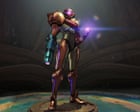
Metroid Prime 4: Beyond review – Samus Aran is suited up for action again. Was it worth the 18-year wait?

2. Prosinec 2025 v 16:56

Nintendo Switch/Switch 2 (version tested); Retro Studios/Nintendo
The bounty hunter – Nintendo’s most badass and most neglected hero – returns in an atmospheric throwback sci-fi adventure that’s entirely untroubled by the conventions of modern game design

In a frozen laboratory full of cryogenically suspended experimental life forms, metal boots disturb the frost. A lone bounty hunter in a familiar orange exosuit points her blaster ahead. Making my way towards the facility’s power generator, scanning doors and hunting for secret entrances, broken hatches and hidden keys, I suspect that I know exactly what’s going to happen when this place begins to thaw; every clank and creak sounds as if it could be a long-dormant beast busting out of one of those pods. And yet Samus Aran delves deeper, because she has never been afraid of anything.

This section of Prime 4 is classic Metroid: atmospheric, eerie, lonely, dangerous and cryptic. Samus, Nintendo’s coolest hero, is impeccably awesome, equipped here with new psychic powers that accent her suit with pulsing purple light. (I have taken many screenshots of her looking identically badass all over the game’s planet.) She is controlled with dual sticks, or – much better, much more intuitive – by pointing one of the Switch 2’s remotes at the screen to aim. Or even by using it as a mouse on a table or your knee, though this made my wrist hurt after a while. She transforms into a rolling ball, moves statues into place with her mind, and rides a futuristic shape-shifting motorcycle across lava and sand between this distant planet’s abandoned facilities, unlocking its dead civilisation’s lost knowledge.

Continue reading...

© Photograph: Nintendo

© Photograph: Nintendo

© Photograph: Nintendo

From Gears of War to Uno: the 15 most important Xbox 360 games

As the Xbox 360 turns 20, we celebrate its most influential and memorable games – both exclusives, and those that came to the console first

Originally featured as a minigame in Project Gotham, this 80s-style twin-stick shooter was rebuilt as a standalone digital-only release, attracting a huge new fanbase. Fast, frenetic and super stylish, with lovely vector visuals, it was the game that first showed the potential of Xbox Live Arcade.

Continue reading...

© Photograph: Microsoft

© Photograph: Microsoft

© Photograph: Microsoft

T​he era-defining Xbox 360 ​reimagined ​gaming​ and Microsoft never matched it

26. Listopad 2025 v 16:00

Two decades on, its influence still lingers, marking a moment when gaming felt thrillingly new again

Don’t get Pushing Buttons delivered to your inbox? Sign up here

Almost 20 years ago (on 1 December 2005, to be precise), I was at my very first video game console launch party somewhere around London’s Leicester Square. The Xbox 360 arrived on 22 November 2005 in the US and 2 December in the UK, about three months after I got my first job as a junior staff writer on GamesTM magazine. My memories of the night are hazy because a) it was a worryingly long time ago and b) there was a free bar, but I do remember that DJ Yoda played to a tragically deserted dancefloor, and everything was very green. My memories of the console itself, however, and the games I played on it, are still as clear as an Xbox Crystal. It is up there with the greatest consoles ever.

In 2001, the first Xbox had muscled in on a scene dominated by Japanese consoles, upsetting the established order (it outsold Nintendo’s GameCube by a couple of million) and dragging console gaming into the online era with Xbox Live, an online multiplayer service that was leagues ahead of what the PlayStation 2 was doing. Nonetheless, the PS2 ended up selling over 150m to the original Xbox’s 25m. The Xbox 360, on the other hand, would sell over 80m, neck and neck with the PlayStation 3 for most of its eight-year life cycle (and well ahead in the US). It turned Xbox from an upstart into a market leader.

Continue reading...

© Photograph: Damian Dovarganes/AP

© Photograph: Damian Dovarganes/AP

© Photograph: Damian Dovarganes/AP

❌