The Duffer brothers, creators of Stranger Things, have said the final battle of the TV series was partially inspired by Baldur's Gate 3. Matt Duffer was apparently playing the game while devising the showdown.
In this week’s newsletter: Stranger Things’ climactic showdown is the latest pop culture spectacle to feel like its been ported straight from a console. The industries’ reciprocally influential relationship can be to everyone’s gain
It had begun to feel like an endurance test by the end, but nonetheless, like the sucker I am, I watched the Stranger Things finale last week. And spoiler warning: I’m going to talk about it in general terms in this newsletter. Because approximately 80% of the final season comprised twentysomething “teenagers” explaining things to each other while using random 1980s objects to illustrate convoluted plans and plot points, my expectations were not high. After an interminable hour, finally, something fun happens, as the not-kids arm themselves with machine guns and molotovs and face off against a monstrously gigantic demon-crab. Aha, I thought – the final boss battle!
The fight was like something out of Monster Hunter, all scale and spectacle with a touch of desperation. For a very long time, video games sought to imitate cinema. Now cinema (and TV) often feels like a video game. The structure of Stranger Things’ final season reminded me a lot of Resident Evil: long periods of walking slowly through corridors, with characters exchanging plot information aloud on their way to the action, and occasional explosions of gunfire, screeching monsters or car chases. Those long periods of relative inaction are much more tolerable when you’ve got a controller in your hands. I am all for TV and film embracing the excitement, spectacle and dynamism of video games, but do they have to embrace the unnecessary side-quests and open-world bloat, too?
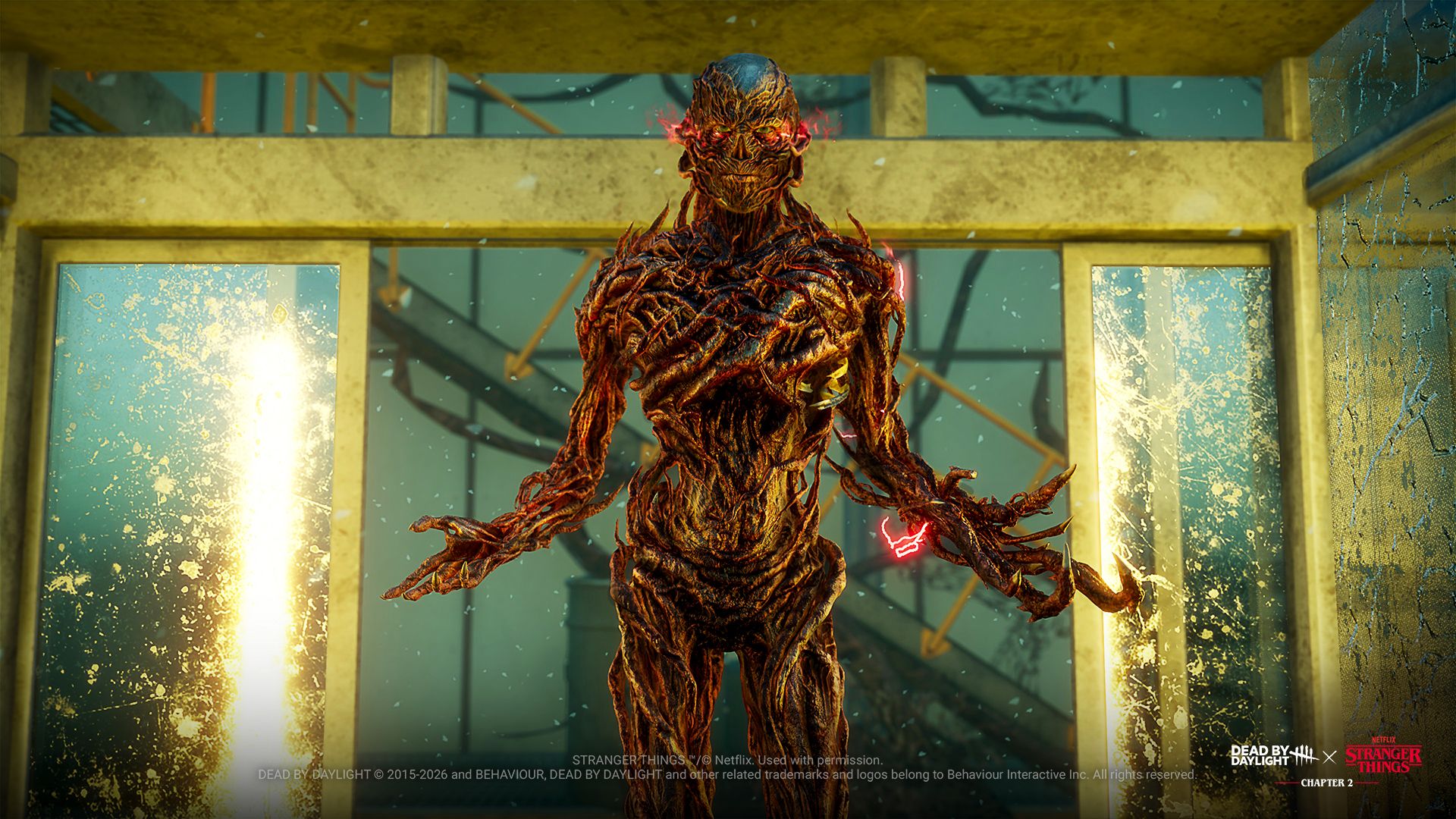
Dead by Daylight is officially reopening the gateway to Hawkins with the official reveal of Stranger Things Chapter 2, bringing iconic heroes and villains from Stranger Things back into The Fog. Available now via the Steam Public Test Build and launching January 27, the new chapter expands the crossover with new Survivors, a powerful Killer, and Legendary cosmetic content.
As a show built around 1980s nostalgia, Stranger Things and video games have been intertwined ever since the series began in 2016.
Many episodes, across all five seasons, have featured nods to classic games from the era, with the second season memorably featuring arcade cabinets for Dig Dug and Dragon’s Lair. This continues in the fifth and final season, where Derek is seen playing Ghosts ‘N Goblins on the NES, and Steve Harrington’s skills on Duck Hunt are used as a punchline.
But now, the show’s creators, Matt and Ross Duffer, have explained how the final battle with Vecna and the Mind Flayer was inspired by the much more recent Baldur’s Gate 3.
Speaking to Variety about the staging of the climactic fight in the two hour final episode, Matt Duffer said: ‘We were thinking about [Dungeons & Dragons] and I was playing Baldur’s Gate 3 at the time, and we felt it was very important that the only way for them to defeat it was for the entire party to work together.
‘Everyone had fully realised – either through self-acceptance or they’ve resolved all their various issues – moving into that final battle, they’re absolutely primed. They’re the ultimate team, and it’s the party working all together to defeat this thing.
‘And they each have their own individual skills, right? And that’s where I go back to Dungeons & Dragons, and something like Baldur’s Gate. Because that’s how you take down these monsters that seem otherwise unstoppable. Lots of video game references were applied to that final battle.’
Digital D&D (Larian Studios)
As Baldur’s Gate 3 is an adaptation of Dungeons & Dragons, which is a key inspiration for Stranger Things, it’s unsurprising to hear Larian’s role-player had some influence on the show – even if a party coming together to defeat the big bad isn’t exactly unique to that game.
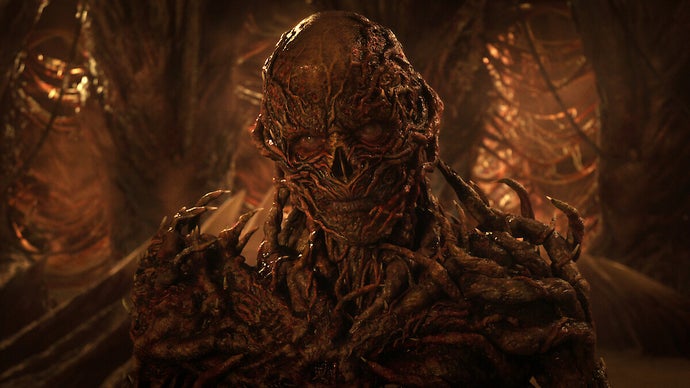
While it’s unclear what other game references are in the final battle, the overall setup is very reminiscent of a final boss fight. In the battle (spoilers ahead), a large group of the core cast go up against the Mind Flayer and Vecna in the Abyss (a term borrowed from Dungeons & Dragons).
All the characters get a moment to shine, and at one point Mike, Lucas, Robin, and Jonathan climb a cliff to bombard the spider-like beast – with the staging very reminscent of a classic video game boss fight.
The Baldur’s Gate 3 nod has since caught the attention of Larian CEO Swen Vincke, who shared an article with Matt Duffer’s comments on X, adding: ‘That’s pretty cool.’
As revealed last month, Larian’s next game after Baldur’s Gate 3 is Divinity. While there’s no confirmed release date, it’s the seventh game in the series, following 2017’s acclaimed Divinity: Original Sin 2.
A classic boss fight setup (Netflix)
Expert, exclusive gaming analysis
Sign up to the GameCentral newsletter for a unique take on the week in gaming, alongside the latest reviews and more. Delivered to your inbox every Saturday morning.
When I was a university student 10 years ago (oh dear, I am getting old), I was on the committee of the adventure gaming society. We were a small, but lovable, group of geeks who gathered together every Saturday to play board games and tabletop RPGs of every persuasion. We played a lot of Fantasy Flight’s Game of Thrones board game, which is at its best and bloodiest when you can get a whole table full of players scheming and plotting together. At that time, Game of Thrones was moving towards its sixth season, all the pieces were still in motion, and advancing towards what we were all certain would be one of the greatest climaxes in television history… right?
Then, when 2016 rolled around, a new challenger arose for the crown of the best nerdy show in town: Stranger Things, which launched on Netflix on the 15th July. With its strong emphasis on 1980s nostalgia, Stranger Things revitalised interest in everything from Kate Bush’s Running Up That Hill to “New Coke” (which, despite its name, is more than a decade older than I am).
Welcome to the Hellfire Club. Source: Wizards of the Coast.
Dungeons and Dragons stood at the centre of the spotlight that Stranger Things shone on 80s pop culture. The game is a major plot point in the show, several characters play it, and the antagonists share their names with monsters and mythical figures from the Forgotten Realms.
That major public promotion did wonders for the popularity of my modestly-sized university gaming club. We saw a massive influx of new members, something I want to emphasise is unambiguously good. Gaming is a big tent, and bringing more people with diverse ranges of interests and experiences into that tent serves to make the stories that we can tell together more authentic and more interesting.
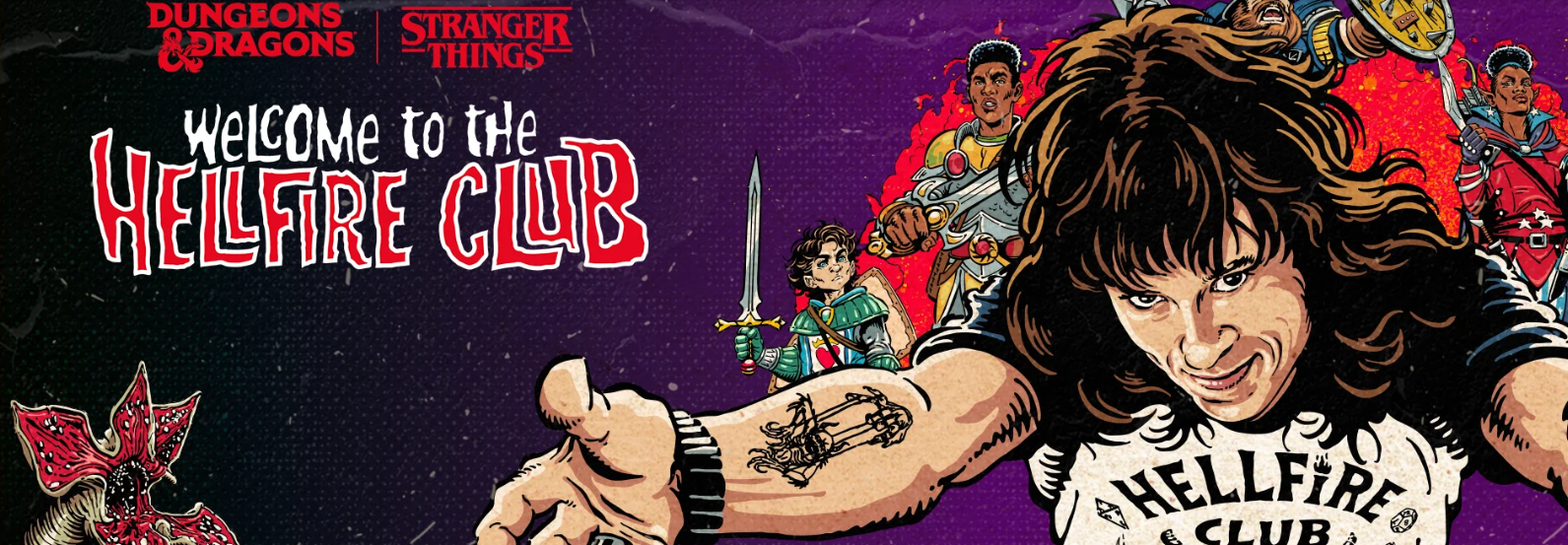
Now, as Stranger Things blazes through its final season, Wizards of the Coast has launchedWelcome to the Hellfire Club, a module containing four Dungeons and Dragons adventures, designed to replicate the experience of playing alongside fictional Dungeon Master Eddie Munson from the Netflix show.
RPG Taverns invited me to play the first of these adventures, “The Vanishing Gnome.” Evidently, they still had my contact information after I included them in my piece on TTRPGs and community building.
Naturally, I was more than happy to do some dungeoneering, but there was just one issue…
I’ve never seen an episode of Stranger Things in my life.
"Max, the Daredevil" Magic: the Gathering art. Source: Wizards of the Coast.
Everything that I’ve recounted about the show so far, I know either because I have absorbed it from popular culture or I’ve been able to piece it together after some research.
I’ve played with the Stranger Things-themed Magic: The Gathering cards, and YouTube’s algorithm has popped a handful of Stranger Things shorts in front of me over the years, but when it comes to actual concrete knowledge of the show, I don’t know the Upside Down from Benny’s Burgers.
Nevertheless, I endeavoured to give it a shot anyway. Here’s what I learned.
In Pursuit of Vanishing Gnomes
On a chilly Thursday evening in mid-November, I found myself down in the Hawkins Room of RPG Taverns, which had been decked out with a broad selection of 80s paraphernalia. I had a Stranger Things-themed cocktail in one hand, a collection of colourful dice in the other, and I was ready to search for some missing gnomes.
RPG Taverns, Hawkins Room. Source: Author.
This adventure, and I would assume the other three in this set, was clearly designed to mimic D&D as it was during its early days. While the game uses the 2024 edition of the rules (you won’t be making any fortitude saves here), tonally it harkened back to an earlier era. There wasn’t much of an emphasis on storytelling or deep characterisation; the focus was on the fundamentals of travelling into dungeons, bashing monsters, and grabbing loot.
A selection of character sheets was fanned out before my fellow adventurers. I chose to play as Nog, the dwarven cleric. Nog, and all of the other options available, are the characters played by the Stranger Things kids in their own campaign. Having never seen the show, I didn’t have much to inform my characterisation. I knew that I was neutral good, that as a cleric, I would presumably be reasonably pious, and that I had a truly magnificent beard. This lack of knowledge was a blessing in disguise, as it gave me a blank canvas I could fill with my own vision of who Nog was. I had a great deal of fun portraying him as pretentious and smug, but ultimately well-meaning. I clashed frequently with Will the Wise, our party’s Wizard, on the issue of science vs faith, and Tayr the Paladin about which of us was truly the most devout.
Welcome to the Hellfire Club. Source: Wizards of the Coast.
There will undoubtedly be other Nogs out there who are significantly more humble and less argumentative than my portrayal, and there’s a degree of charm to that. While other groups will run characters with the same names and based on the same broad archetypes, my Nog was uniquely my own. He was a bit of a jerk, but he was my jerk.
As for the quest itself, the titular vanishing gnome gave us a literal call to adventure, inviting us to seek them out, before living up to their title and disappearing. We were off! We ventured into a nearby dungeon, beat up some spiders, entered what was very strongly implied to be the Upside Down from the show, and fought a Demogorgon (that’s the faceless fiend from Stranger Things, not the Demon Prince from the Abyss who would have completely eviscerated our poor Level One party).
The adventure was an effective tutorial on how to plunge into dungeons, from the pre-generated character sheets to the streamlined story that guided our party immediately towards the action. This box is clearly designed to show new players the ropes, and in that goal, it’s successful. Personally, I prefer roleplaying experiences that are a bit more narrative-heavy; I’m more of a fan of delving into character motivations than into dungeons. That’s just my own perspective, though, and as an introduction to D&D, the Vanishing Gnome makes the game approachable.
Maybe the Real Vanishing Gnomes Were the Friends We Made Along the Way
Welcome to the Hellfire Club. Source: Wizards of the Coast.
So despite my lack of awareness about Stranger Things, I was able to pull off a successful gnome rescue. Were there some winks, nudges, and other scraps of fan service that flew over my head due to my lack of Stranger Things knowledge? Frankly, I have no idea. There weren’t any moments where I felt out of my depth or lost, though, and I glided through the experience comfortably enough.
RPG Taverns is based at 16 Harper Road in Southwark, London, and they will be running the first two adventures from Welcome to the Hellfire Club (The Vanishing Gnome and Scream of the Crop) from December 14th - 23rd, and then again from the 27th - 30th.
Welcome to the Hellfire Club can also be purchased from a variety of online retailers if you’re looking to try it out at home. It’s a good welcoming point to Dungeons and Dragons for fans of Stranger Things, and if you’re not a fan, you’ll probably be able to stumble through as I did.
“Something is coming. Something hungry for blood. A shadow grows on the wall behind you, swallowing you in darkness. It is almost here.” The first dialogue spoken in Netflix’s “Stranger Things,” 12-year-old Mike Wheeler’s (Finn Wolfhard) scene-setting for a fictional attack he’s about to unleash on friends Will Byers (Noah Schnapp), Dustin Henderson (Gaten Matarazzo) […]
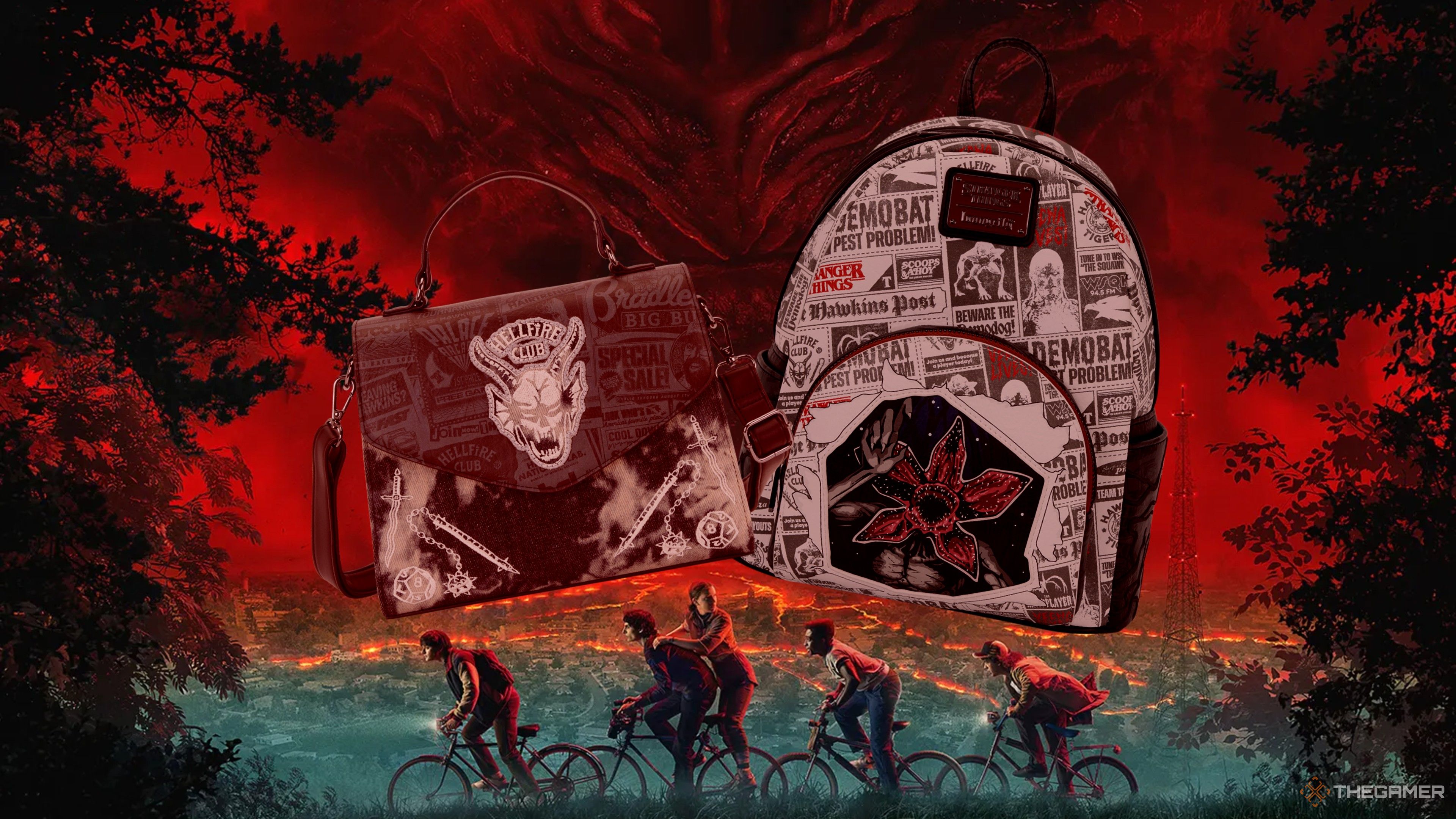
Almost a decade on from its groundbreaking Netflix debut, Stranger Things is about to come to an end. Season five will start streaming exclusively on Netflix from November 26, 2025, and to celebrate, TheGamer can exclusively reveal Loungefly's brand new Stranger Things collection.