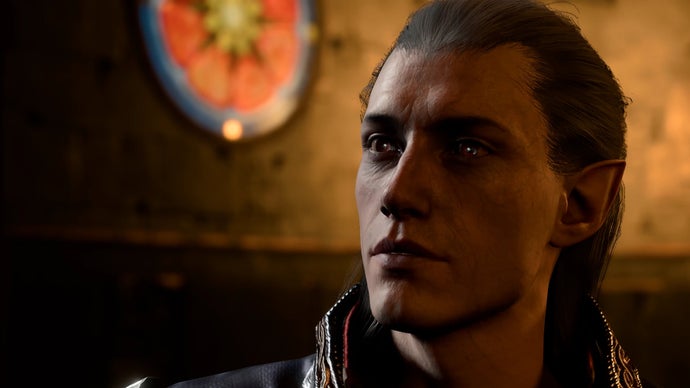
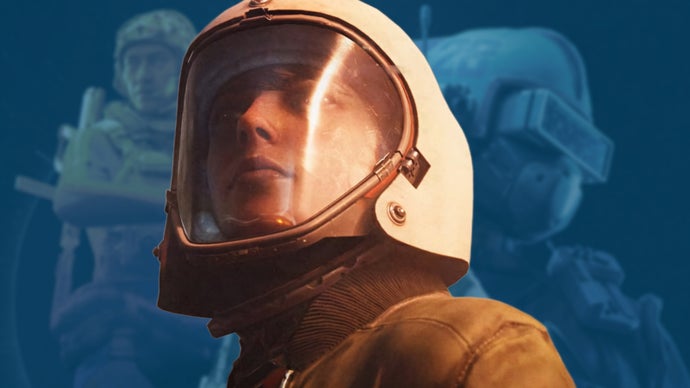
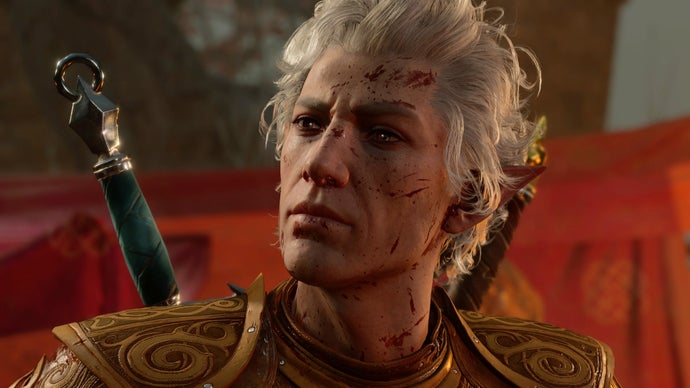
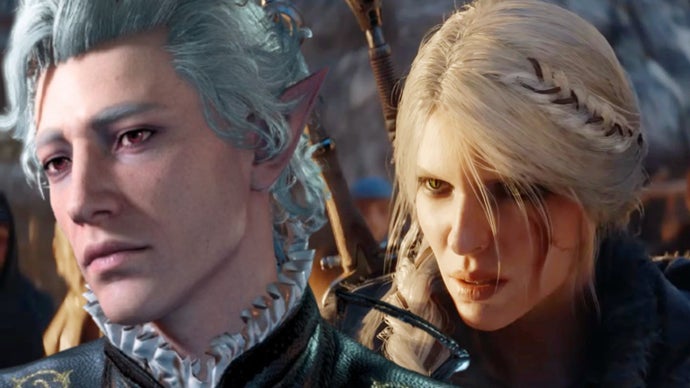
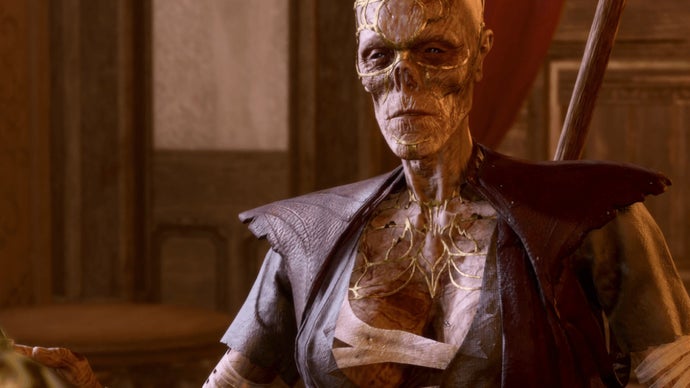
Another intriguing Baldur's Gate 3 custom campaign mod has emerged to confront your party of quirky RPG adventurers. This one's a short story which lets you take a break from BG3's main story to attend a dinner party at the house of a not-at-all creepy rich bloke, who happens to be very good at jamming out on the organ via illusions.
The Duffer brothers, creators of Stranger Things, have said the final battle of the TV series was partially inspired by Baldur's Gate 3. Matt Duffer was apparently playing the game while devising the showdown.
43.8 million player votes later, the winners of the 2025 Steam Awards have been announced, with Hollow Knight: Silksong securing top prize, Game of the Year.
With Baldur's Gate 3 and its gang of rowdy adventuring mates in the rear view mirror, Larian are hoping to improve a couple of aspects of how they handle companions going forwards - a process that'll likely kick off in Divinity. In particular, the development of deeper relationships between party members and a more subtle build to the moment when the player's relationship veers into deeply horny territory are on their list of learnings.
A senior developer who worked on Larian's much loved and critically acclaimed Baldur's Gate 3 has moved studios, and is now working with Witcher 4 and Cyberpunk studio CD Projekt Red.
More people have downloaded mods for Baldur's Gate 3 than Larian ever expected. "Way more than we ever expected," studio founder and Baldur's Gate 3 director Swen Vincke shared on X. The total downloaded-mods number now stands at more than 350m, the studio revealed, and more than 10,000 mods have been uploaded for other people to play.
Some gamers label Marvel Rivals a “gooner game” to criticize its fan-service heavy, often revealing skins. These include swimsuit-themed looks and over-the-top outfits that feel more lewd than classic.
The game’s creative director, Guangyun Chen, defends the designs, explaining they draw from classic comic book styles and real-world fashion trends, not just prurient appeal. He claims these elements celebrate comic-book legacy and storytelling, not merely shock value.
But many fans still feel that characters like Emma Frost or a skull-themed Punisher Speedo cross a line between homage and fetishization.
2. Why Labeling the Bear Scene as B*stiality Its Own Problem
In Baldur’s Gate 3, one romance option involves Halsin, a druid who shapeshifts into a bear. While the game treats this as a comedic, absurd choice, it's still frequently described by critics as “b*stiality with a bear”.
That description is pushing it, but here's the context: Halsin retains his human intelligence and consent, thanks to D&D’s Wild Shape rules, meaning he's not an actual animal but a humanoid in bear form, which in-game justifies it as consented fantasy.
Still, many viewers understandably perceive it as crossing a moral boundary, especially because the visual implies s*x with a bear, not a person.
3. Even Framed as a Joke, This Is Far Worse Than Sexy Characters
There are key reasons why even joking b*stiality is more troubling than alluring character designs:
Innate moral taboo: Real-world morality regards any s*xual act with animals as fundamentally non-consensual and deeply wrong. Even in fantasy, the imagery can trigger discomfort and distaste.
Social media fallout: The scene went viral, causing intense reactions. For instance, Larian was briefly banned from TikTok for featuring the bear romance, and the director’s son was bombarded with bear memes.
Reddit commentary summed it well:
“The actual 1 to 1 comparison here would be if Larian made it so you could romance or f*ck the various animals you can speak to… That would be weird and problematic because those are actual animals, not a sentient adult humanoid...”
Other users added:
“It’s literally played for laughs. The devs know how ridiculous it is.”
While the scene was clearly meant to be absurd, it's difficult to argue it’s harmless just because it’s comedic.
4. Hypocrisy: Judging Sexy Characters While Celebrating the Bear
Think about it:
In one case, fans call Marvel Rivals fan-service, criticizing visual designs they see as shallow or pandering.
In the other, the same fans enjoy the bear s*x joke, celebrating an explicit fantasy that, by most ethical standards, is far more disturbing.
That double standard is hard to ignore: disapproving something intended to be stylish or appealing, while embracing something inherently taboo, even if framed as a joke, is a glaring inconsistency.
TL;DR (High‑School Version)
Marvel Rivals uses sexy, comic-inspired skins, some love them as nostalgia, others call them fan service.
Baldur’s Gate 3 includes a deliberate joke about shapeshifting romance with a bear, easy to label as b*stiality, even if the character is still human mentally.
Even in fantasy, b*stiality, joking or not, touches on deep ethical discomfort that sexy costumes don’t.
Judging the sexy stuff while enjoying the crazy bear moment is a double standard, and frankly, that’s hypocritical.