EA Play: Bring Glory Home in EA Sports College Football 26, Available February 19
Juliet Niczewicz, Senior Director, Corporate Communications, EA
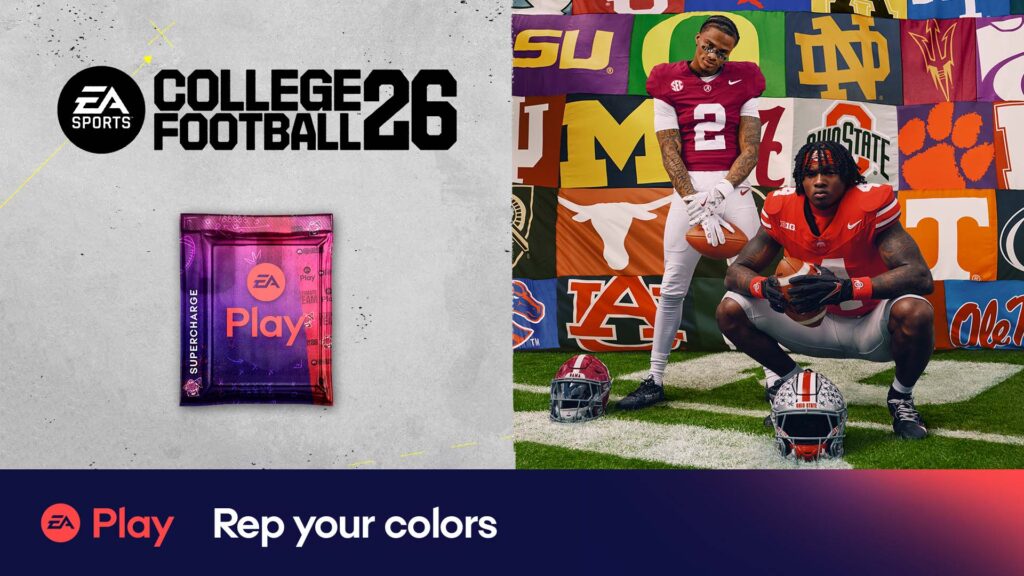
Bring glory home in EA Sports College Football 26. Get unlimited access with EA Play, then score a Supercharge Pack in Ultimate Team by March 20.
Rep your colors with unlimited access to all the new explosive gameplay and feature updates.
Members can blitz for days with unlimited access to all the new explosive gameplay and feature updates.
EA Sports College Football 26 is available on the Play List on February 19.
Play with Xbox Cloud Gaming or Game Pass Ultimate with EA Play.
Members can also score a Supercharge Pack in Ultimate Team, available from February 19 – March 20.
Game Pass Ultimate members can get unlimited access today, as well as 10% off EA digital purchases including College Football Points.
Snag your Supercharge Pack, filled with 10 91-93 OVR player items, simply by entering Ultimate Team before March 20. Get a head start on building your roster so you can take on Challenges, face other players in H2H, and more.
Take your career from high school recruit to Heisman or coach your team to the top. With thousands of new plays, players, and upgraded abilities, there are more ways than ever to Bring Glory Home.
February Member Rewards
Love is in the air, along with a fresh batch of member rewards for EA’s hottest games. Celebrate the love of gaming by claiming special items for your favorite titles.
Apex Legends
Pick up the Gold Fortune Cat Weapon Charm, available through March 2.
EA Sports F1 25
Get a 5,000 XP Boost, good for unlocking tiers of the Podium Pass, available until February 28.
EA Sports FC 26
Play Clubs mode by March 12 to grab a special membership reward that’ll help you compete in style.
EA Sports Madden NFL 26
Keep building your dream team with a Madden Ultimate Team EA Play February Pack (available until February 28) & EA Play Supercharge Pack (available until March 6).
EA Sports NHL 26
Score 2 Season Pass Multiplier Tokens & 3,000 CHEL Coins by March 12.
EA Sports College Football 26
Available until March 20, grab an EA Play Supercharge Pack, which comes with 10 91-93 OVR Players.
Battlefield 6
Equip yourself with the Season 2 EA Play Pack, available until May 11
Membership for EA Play is included with Game Pass Ultimate and PC Game Pass subscriptions at no extra cost.
Whether you’re scoring an unbelievable hat-trick in the EA Sports FC franchise, showing no mercy on suburban battlegrounds in the Battlefield series or timing a perfect hit to dominate the gridiron in the Madden NFL franchise, you can feel the thrill with EA for just $5.99 a month. Membership unlocks unlimited access to a collection of top titles, trials of select new games, in-game member rewards and more. Members also save 10% off EA digital purchases — including game downloads, points packs, and DLC.
For more details on all the EA Play member benefits this month, visit: EA Play Member Benefits
Conditions, limitations and exclusions apply. See EA Play Terms for details.
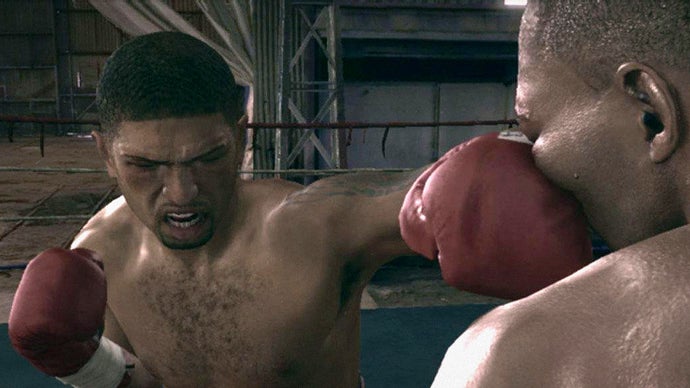
I miss boxing - not that I ever did it. It used to be a kind of combat-sport backbone running through the country. I remember sleeping at a friend's house when Frank Bruno was fighting Mike Tyson in 1989, and us kids were listening to the fight on a radio upstairs while our parents listened to it on a radio downstairs. Their cheers led ours. Boxing matches were big deals, they were moments where everyone seemed to turn around, but where are they now? Lying on the canvas alongside Jake Paul.
Match of the Day football commentator Guy Mowbray has revealed he gave EA permission to create an AI voice clone of himself in order to assist with some of the more onerous aspects of recording commentary for EA Sports FC.
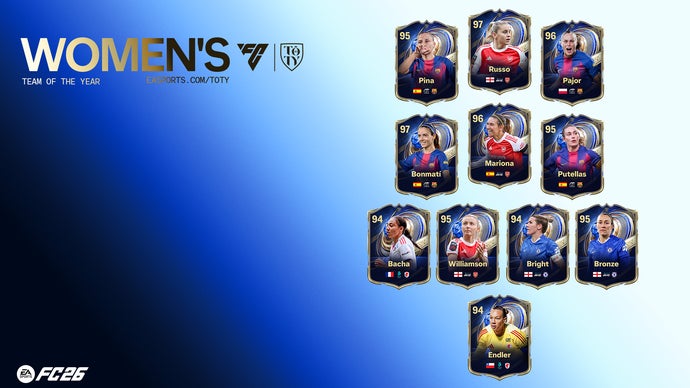
EA Sports has revealed the much-anticipated Ultimate Team of the Year cards for the 2025/26 season, including a slew of meta favourites from the likes of the evergreen Virgil van Dijk, super-fast Kylian Mbappe and unplayable queen of FC 26 Claudia Pina.
EA Sports has revealed 3 new Heroes coming to FC 26 Ultimate Team as part of Team 1 of the Winter Wildcards promo: Ivan Zamorano, Claudio Pizarro and Jill Scott.
Electronic Arts is expanding its long-running Accessibility First Patent Pledge once again, making eight additional patents freely available to any developer or publisher looking to build more accessible games. The new batch includes technologies ranging from grapple assist systems to advanced speech generation tools, as well as key improvements to EA’s text-size and contrast solution, Fonttik.
The headline addition is “Intent-based Models for Use in Selecting Actions in Video Games” — better known internally as “Grapple Assist.” Already used in the company’s UFC series, the tool streamlines complex grappling inputs by automatically determining the optimal transition from a single player command. EA says the system is designed to reduce both cognitive load and fine-motor demands, opening the door for more players to enjoy games with intricate control schemes (per GamesIndustry).
Several of the new patents focus on speech, audio generation, and communication. These include “Expressive Speech Audio Generation”, “Robust Speech Audio Generation”, and “Speech Prosody Prediction.” According to EA, the technologies help players with speech disorders — or those who simply prefer audio assistance — communicate more effectively. They also allow developers to add voice to experiences that may not otherwise include narration, making feedback and in-game guidance easier to understand.
EA is also expanding its open-source text-accessibility toolkit. New updates to Fonttik introduce color-blindness simulation filters and further refinements for evaluating readability, text size, and contrast, all of which can be applied across genres and platforms.
Here is EA SVP Kerry Hopkins’ official statement on the new technologies, per GamesIndustry’s original report:
For players with speech disorders or who prefer or need assistance with verbally expressing themselves, these technologies provide more control and creativity over the way they communicate, including through speech that is clearer and more authentic.
These technologies also increase game accessibility by making it possible to add speech to experiences that would otherwise have no voice at all, creating narration and feedback that is more personalized, engaging, and easier for players to understand.
First launched in 2021, the Accessibility First Patent Pledge began with five patents and has grown steadily every year. EA added six more in 2022, four in early 2024, and a massive drop of 23 additional patents that December. With today’s announcement, EA has now opened 46 patents for free use across the games industry.
As someone who’s played more hours of sports games than I care to admit, I’ve always held a special place in my heart for full-contact titles. While franchises like NBA 2K and PGA Tour 2K scratch the itch of strategic gameplay and competitive spirit, UFC games have always felt like the rawest, most personal expression of sports competition. EA Sports UFC 5, to my delight, finally delivers the kind of tightly-tuned, physically immersive, and richly satisfying gameplay I’ve been waiting for.
If UFC 4 felt like a well-meaning but frustrating training camp, UFC 5 is the seasoned fighter stepping into the octagon with confidence. Gone are the clunky minigames that derailed fights and shattered immersion. Instead, we now have a flow-based grappling system that feels like it belongs, and more importantly, gives you agency in the heat of battle.
Grappling That Breathes With the Fight
One of my biggest gripes with UFC 4 was the way grappling felt detached from the rest of the fight. You’d slam into a minigame that demanded a totally different play style, often punishing players who were otherwise dominating. UFC 5 fixes that brilliantly. With the new left-stick-based transitions and hybrid controls, the ground game now plays out like a physical chess match instead of a controller test.
What struck me most was how much more engaged I felt even from disadvantaged positions. While playing as a striker-heavy fighter, I found myself using the simplified controls to escape from bottom mount far more often than I could in UFC 4. With just a well-timed push of the stick, I could wiggle into a safer position or even reverse the momentum.
On top of that, the rebalanced power of submission specialists feels fairer without neutering their threat. In UFC 4, getting caught in a grapple often meant kissing the round goodbye. Now, even when facing off against a high-tier wrestler, you feel like you still have a shot — if you know how to time your transitions and keep calm under pressure. That shift brings UFC 5 closer to the kind of challenge-and-reward loop that makes other top-tier sports games so beloved.
A Surprisingly Addictive Career Mode
Let me be honest: sports game career modes are usually my least favorite part. They tend to feel like glorified tutorials wrapped in lukewarm storytelling. UFC 5’s career mode is no exception in terms of narrative quality, but somehow, it still managed to hook me more than I expected.
The journey from backyard brawler to octagon headliner isn’t groundbreaking, considering players who usually buy PS5 sports games, but it’s structured in a way that rewards incremental mastery. You’re not just grinding stats or unlocking flashy outfits; you’re actually learning how to fight smarter. That’s something many career modes in other franchises miss. Sure, the acting is flat and the writing won’t win any awards, but there’s something genuinely compelling about the rhythm of the mode. Maybe it's the way your fighter evolves organically as you get better. Maybe it's the quiet satisfaction of landing your first KO after losing the last three matches. Whatever it is (magic!), I found myself caring more than I thought I would.
UFC 5 vs. NBA 2K25: Action Over Flash
When comparing UFC 5 to a giant like NBA 2K25, the differences highlight what makes each game unique — and also where UFC 5 shines. NBA 2K25 is about rhythm and finesse, and while it's unmatched in presentation, it often leans too far into spectacle. Microtransactions are deeply woven into its core progression, and unless you’re ready to drop money or time, your MyPlayer is more benchwarmer than star.
UFC 5 avoids that pitfall. There are microtransactions, sure, but they’re largely cosmetic and unobtrusive. You can create a competent, dangerous fighter without spending a dime, and even more importantly (in a sense), every fight feels personal. There’s no team to carry you, no fast breaks or buzzer beaters. It’s you, your opponent, and your skill. That purity — that absence of flash and focus on grit — is where UFC 5 outshines even the best basketball simulation.
UFC 5 vs. PGA Tour 2K25: Technical Precision Meets Physicality
While I have immense respect for PGA Tour 2K25’s commitment to detail and precision, UFC 5 offers something it can’t: physical stakes. Golf rewards patience, timing, and focus, but UFC demands it while also testing your reflexes, composure, and game sense under pressure. The new grappling system in UFC 5 reminds me of the nuanced swing mechanics in PGA 2K25 — both give you layers to peel back over time, rewarding players who invest in mastering their system.
However, where PGA Tour 2K25 can sometimes fall into a rhythm that feels meditative (or monotonous), UFC 5 never lets you zone out. There’s always a risk, always an opportunity for your opponent to punish a mistake. That constant tension — the sense that every second matters — makes UFC 5 the more exhilarating experience for those who want a sports game that keeps the adrenaline flowing.
Where UFC 5 Still Needs a Corner Coach
Not everything in UFC 5 hits cleanly. Online matchmaking during the review period was hit or miss, with long wait times and sporadic connections. And while the visual fidelity and animations have improved, there’s still an occasional stiffness that betrays the immersion, particularly in the clinch game. Some players might also find the lack of deep character customization a bummer, especially with so many cosmetic options locked behind the in-game store.
UFC 5 - A New Standard for Contact Sports Games?
At the end of the day, UFC 5 from EA Sports is a reminder of why I love sports games (and I hope you are made from the same material). It respects the complexity of its source material without overwhelming the player. It rewards practice without demanding perfection, and it can easily satisfy all guys who are into fighting games or buy PS5 games of this kind. Most importantly, it brings full-contact sports action to life in a way that feels deeply human - and yes, this kind of fighting in the octagon is human - where every jab, feint, and scramble for position tells a story. If you're a sports fan who values strategy, impact, and the thrill of a good fight, UFC 5 is not just a worthy successor — it's a genuine leap forward. In a crowded sports game landscape, UFC 5 doesn't just hold its own — it throws the cleanest punch in the game.




.png?width=690&quality=85&format=jpg&auto=webp)