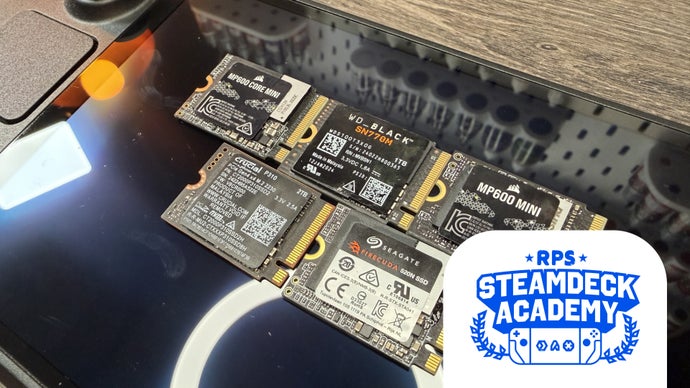
Valve currently have three Steam Deck models on offer: you've got the standard 256GB LCD variant (basically no longer in production), the 512GB Steam Deck OLED, and a beasty 1TB edition of the latter. All of them are lovely handheld PCs, but whether you've got one of these or you invested earlier in a smaller model, you might still be itching for a little more capacity to make that 32-hour flight to New Zealand a lot more bearable. At this point you have two options: a microSD card, or for storage with more clout, one of the best Steam Deck SSDs.
Amid soaring SSD prices, slower-but-cheaper mechanical hard drives may have offered an attractive reprieve for anyone wanting to embiggen their PC storage on a – and I know it’s increasingly difficult to use this word without breaking down into desperate laugh-crying – budget. Unfortunately, that probably ain’t happening either, as leading HDD manufacturers Western Digital and Seagate have both revealed that they’ve already sold “pretty much” all of their mechanical drive stock that was allocated for 2026.
Diamond Dynasty is widely considered one of the most extensive and rewarding card-collecting modes in any sports game. Fans of MLB The Show 25 really enjoy the mode with the current game, and it’s engaging enough that people have stuck with it year-round. However, after such a long cycle with the game, fans have various criticisms about the mode and how it can improve for MLB The Show 26.
The power creep issue is one of the main critiques, but there are other potential problems that you only learn by playing the game for a long period. With MLB The Show 26 just around the corner, here are some key improvements we want to see with Diamond Dynasty.
Overhaul Team Affinity
Operation Sports App
Your ultimate companion for sports gaming. Access in-depth coverage, thoughtful discussion, and a community built around the games—and sports—you love.
Team Affinity was created to encourage themed squad-building with boosts related to specific MLB teams. But in The Show 25, there are quite a few aggravating points with this system.
One of the biggest problems with Team Affinity is the pre-locked lineups that are set a month before real-time roster changes. This makes the players feel trapped, as they are forced to grind on cards that become outdated almost instantly. The chapters are extremely long, and even dedicated grinders complain about how replacing outdated cards with powerful ones resets their progress, sometimes completely.
If the franchise wants player satisfaction, it should focus on resetting affinities every month and adding wildcard slots for upgrades. Also, to prevent the grind from becoming boring, the game could introduce boosts that scale with performance or affinity-specific events.
Cut The Offline Grind And Supercharge Online Rewards
Image: Sony Interactive Entertainment
The game’s structure puts players who have limited time on their hands at a constant disadvantage. Despite its fascinating elements, it suffers from inconsistent rewards and unlucky pulls that do not validate the investment.
In order to stay in the competition, you have to complete lengthy Conquest maps and Mini Seasons. This often requires you to play 50+ games just for one usable diamond card.
The online play has comparatively slow progression, and offline modes often feel insufficient in terms of scaling. This balance of power between players who don’t spend money and those who buy stubs is quite strange. To prioritize skill above all else, player progression needs to tie itself to online wins rather than total games played.
Stability And Balance Improvements
Image: Sony Interactive Entertainment
There’s a lot to talk about when it comes to overall gameplay and network stability. Major community complaints consist of frequent disconnects, mid-game freezes, and “DD not loading” errors. Every game can have unexpected glitches; that’s fair. But the real problem with MLB The Show 25 was that hotfixes arrived weeks later from when the issue occurred. This is extremely problematic for a game that is built around quick matches and events.
Another crucial topic is overpowered 99-rated cards being released too early, which makes later progression make no sense. If you feel the game is too easy for you and want to play on greater difficulties, there are other problems. Perfect inputs often result in weak contact, while somehow, late swings produce home runs.
MLB The Show 26 needs quick patches, a focus on prioritizing servers, and better overall netcode. To control the meta, early-game cards need a lower overall rating to balance the power curve.
For the last year and a bit, I've sat down every Friday morning to update our guide to the best SSD deals for gaming. Today, I sat down for the first time in 2026, only to see that the memory supply crisis is well and truly having a knock-on effect on SSD pricing.
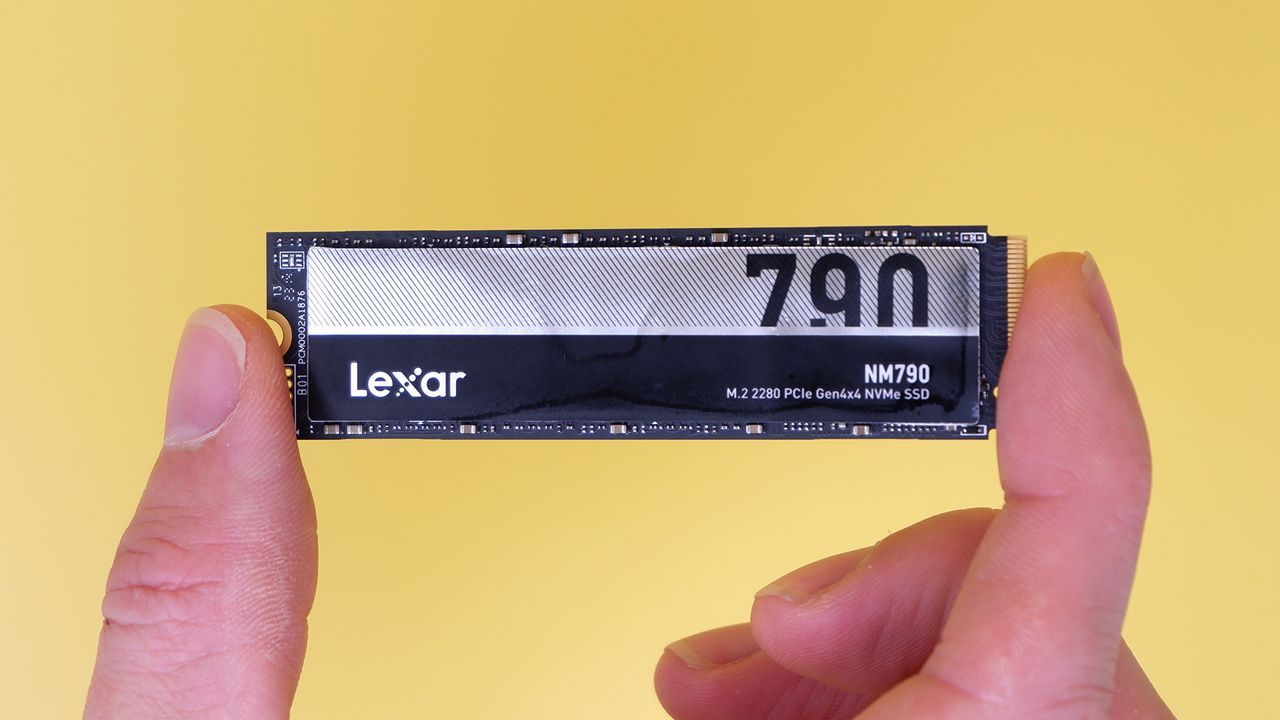
Our Jeremy has already been keeping an eye on surging PC hardware prices, but this morning presented a more recent example. I just wrote a deal post about the 1 TB version of the Lexar NM790 NVMe SSD which, today, is going for $118. Not terrible, right? Well, that's what I thought until I remembered I had in fact written about the same SSD back in October of last year—when it was only $66.
That is a close to 50% price increase in about four months. Even worse, this same drive cost almost $150 within the last month according to Amazon price tracker Camelcamelcamel.
These are just a few examples, but it's clear that the realm of SSD now finds itself thoroughly caught up in the memory apocalypse. Long story short, as the AI industry builds more and more data centres (often in ill-advised climes for the hardware inside), it's going to need more and more system memory like DRAM, as well as storage media like SSDs. Moving at a swift clip and throwing a great deal of money around, that means a memory shortage for us normal folk, due to the limitations in manufacturing facilities. Perhaps worst of all, these surging prices are far from wholly unexpected either.
But even in December, I was less keen on the advice Crandall gave at the time, saying if you were thinking about a hardware upgrade, you should "do it now and [don't] wait, because prices are going to continue to go up." On the one hand, yes, there's a chance prices have yet to peak. On the other, panic-buying is never the answer in the midst of a shortage. If you can, wait or simply use what you already have. If you can't, buying an entirely new rig may actually work out cheaper in some select circumstances.