Zobrazení pro čtení

NVIDIA Virtualizes Game Development With RTX PRO Server

Game development teams are working across larger worlds, more complex pipelines and more distributed teams than ever. At the same time, many studios still rely on fixed, desk-bound GPU hardware for critical production work.

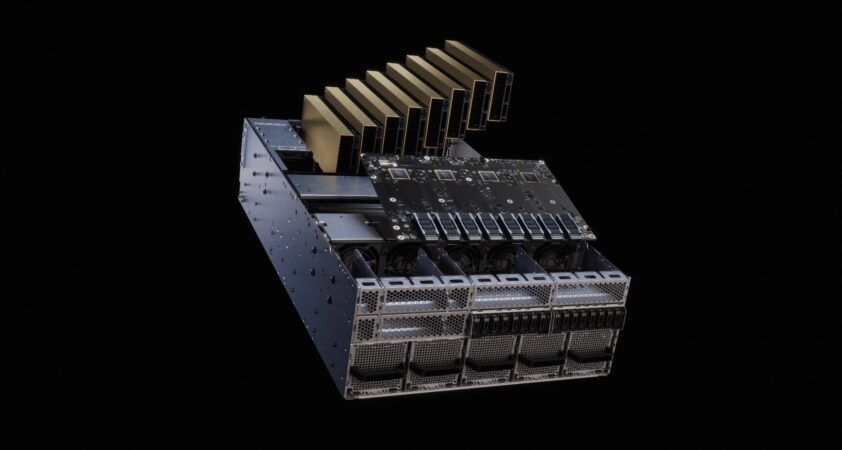
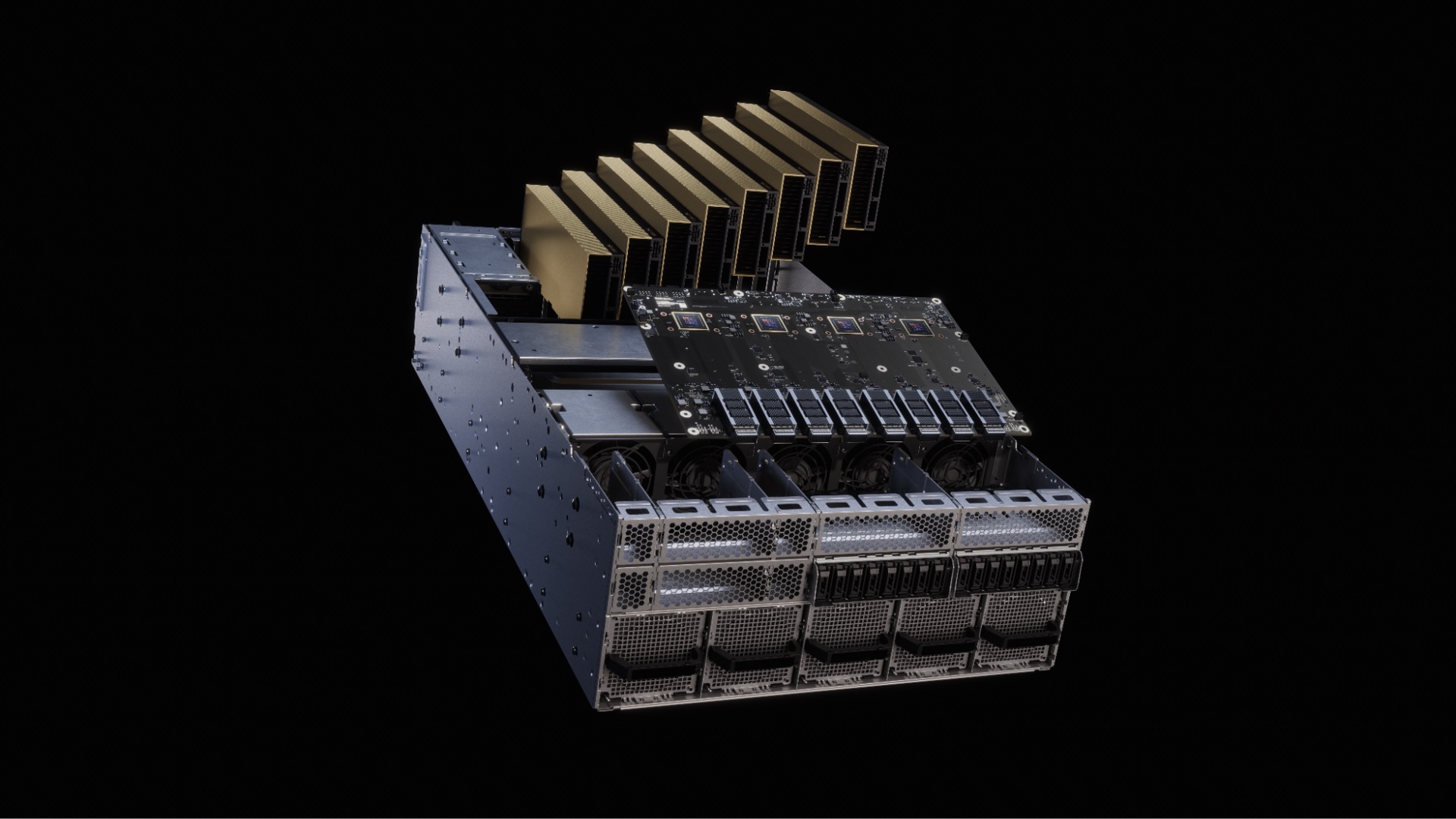
At the Game Developers Conference (GDC) this week in San Francisco, NVIDIA is showcasing a new approach to bring together disparate workflows using virtualized game development on NVIDIA RTX PRO Servers, powered by NVIDIA RTX PRO 6000 Blackwell Server Edition GPUs and NVIDIA vGPU software.

With the RTX PRO Server, studios can centralize and virtualize core workflows across creative, engineering, AI research and quality assurance (QA) — all on shared GPU infrastructure in the data center. 
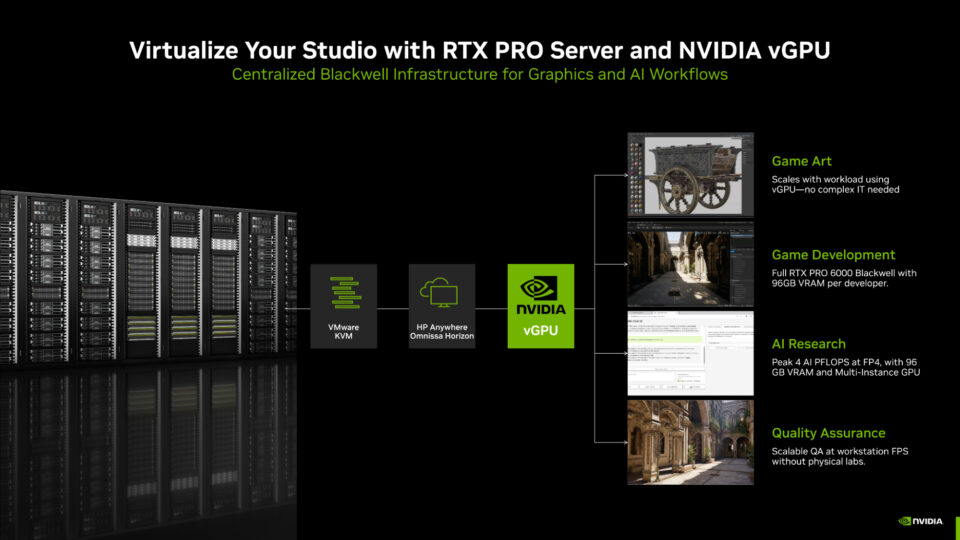
This enables teams to maintain the responsiveness and visual fidelity they expect from workstation-class systems while improving infrastructure utilization, scalability, data security and operational consistency across teams and locations.

Simplifying Complex Workflows

As game development studios scale, hardware can often sit underutilized in one location while other teams wait to access it for production work. QA capacity is hard to expand quickly. Over time, workstation hardware, drivers and tools diverge, making bugs harder to reproduce. AI workloads are often isolated on separate infrastructure, creating more operational overhead. 

The NVIDIA RTX PRO Server helps studios move from workstation-by-workstation scaling to centralized GPU infrastructure. Studios can pool resources, allocate performance by workload and support parallel development, testing and AI workflows without expanding physical workstation sprawl.

Centralized GPU infrastructure enables studios to run AI training, simulation and game automation workloads overnight, then dynamically reallocate the same resources to interactive development during the day, improving overall utilization and reducing idle capacity.

The NVIDIA RTX PRO Server supports virtualized workflows for 3D graphics and AI across the game development lifecycle for:

  • Artists: Providing virtual RTX workstations for traditional 3D and generative AI content-creation workflows.
  • Developers: Powering consistent, high-performance engineering environments for coding and 3D development.
  • AI researchers: Offering large-memory GPU profiles for fine-tuning, inference and AI agents.
  • QA teams: Enabling scalable game validation and performance testing using the same NVIDIA Blackwell architecture used by GeForce RTX 50 Series GPUs.

This allows studios to support multiple teams — including across sites and contractors — on one common GPU platform, improving collaboration and reducing debugging issues that can arise from disparate hardware.

Supporting AI and Engineering on Shared Infrastructure

AI is becoming a core part of everyday game development, spanning coding, content creation, testing and live operations. As these workflows expand, studios need infrastructure that can support AI alongside traditional graphics workloads without introducing separate, siloed systems.

With the RTX PRO Server, studios can support coding agents, internal model experimentation and AI-assisted production workflows without spinning up a separate AI stack for every team.

The NVIDIA RTX PRO 6000 Blackwell Server Edition GPU features a massive 96GB memory buffer, enabling developers to run multiple demanding applications simultaneously while supporting AI inference on larger models directly alongside real-time graphics workflows.

NVIDIA Multi-Instance GPU (MIG) technology partitions a single GPU into isolated instances with dedicated memory, compute and cache resources. Combined with NVIDIA vGPU software, MIG can help studios securely allocate GPU capacity across users and workloads. In combined MIG and vGPU configurations, a single RTX PRO 6000 Blackwell Server Edition GPU can support up to 48 concurrent users, maximizing utilization while maintaining performance isolation.

Enterprise-Ready Deployment for Game Studios

NVIDIA RTX PRO Servers are designed for enterprise-grade data-center operations. Studios can deploy virtual workstations on RTX PRO Servers via NVIDIA vGPU on supported hypervisor and remote workstation platforms.

That means RTX PRO Servers can fit into studios’ existing infrastructure and IT practices, rather than requiring one-off deployments.

Major game publishers already use NVIDIA vGPU technology to scale centralized development infrastructure and improve efficiency at studio scale.

Learn more about the NVIDIA RTX PRO Server.

See these workflows live by joining NVIDIA’s booth 1426 at GDC or attending NVIDIA GTC, running March 16-19 in San Jose, California. 

See notice regarding software product information.
  •  

NVIDIA DLSS 4.5, Path Tracing and G-SYNC Pulsar Supercharge Gameplay With Enhanced Performance and Visuals

At the CES trade show, NVIDIA today announced DLSS 4.5, which introduces Dynamic Multi Frame Generation, a new 6X Multi Frame Generation mode and a second-generation transformer model for DLSS Super Resolution, so gamers can experience the latest and greatest titles with enhanced performance and visuals.

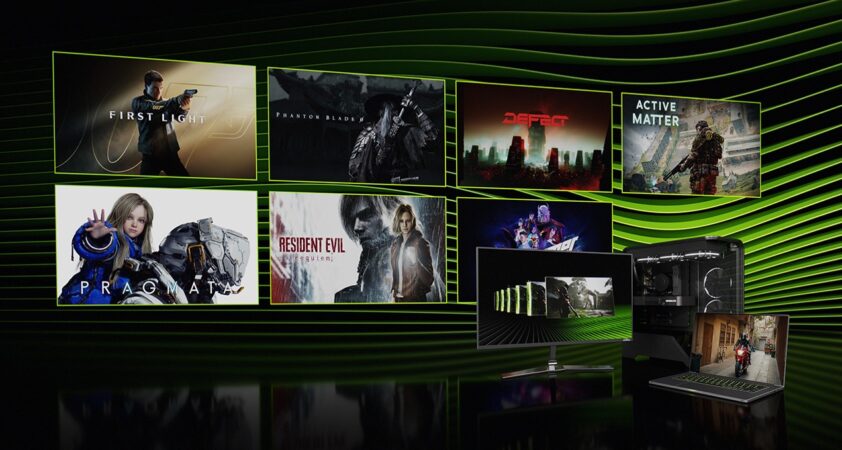
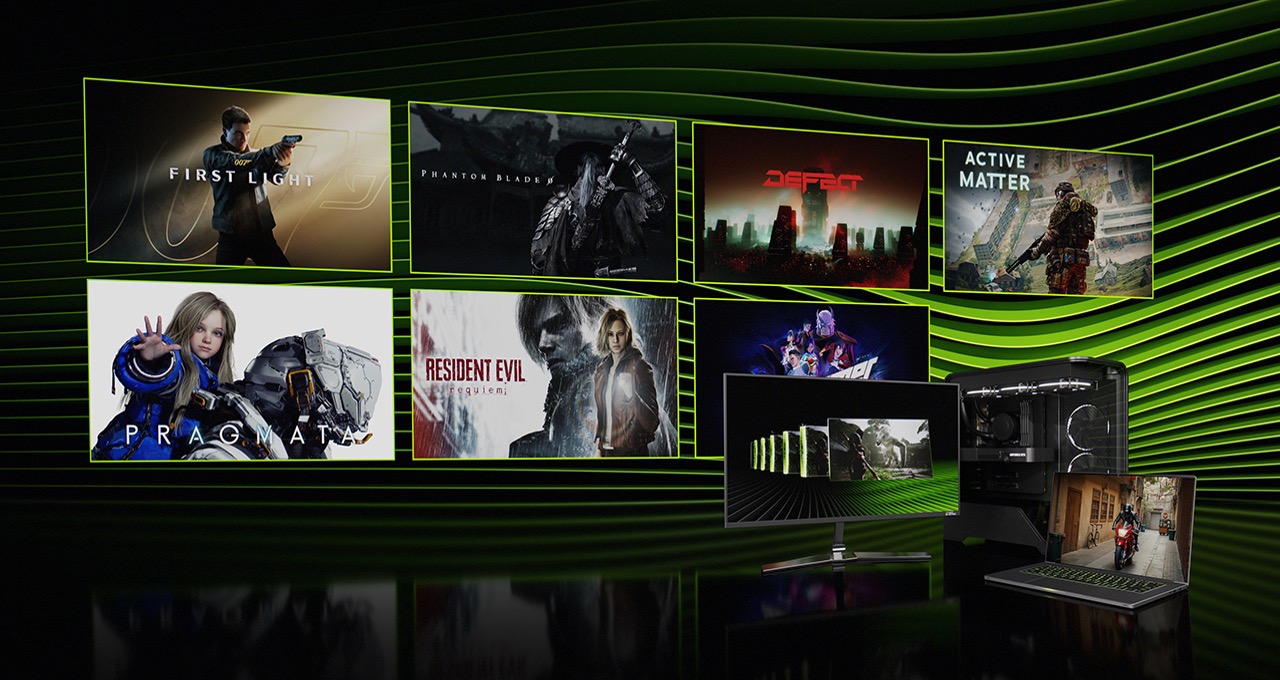
Over 250 games and apps now support NVIDIA DLSS 4 technology, with this year’s biggest titles adding support, including 007 First Light, Phantom Blade Zero, PRAGMATA and Resident Evil Requiem at launch.

In addition, RTX Remix Logic debuted, expanding the capabilities of the Remix modding platform to enable modders to trigger dynamic graphics effects throughout a game based on real-time game events.

Plus, NVIDIA ACE technology demonstrated in Total War: PHARAOH showcases how AI can assist players in navigating the complexities of the game’s many systems and mechanics.

In PUBG: BATTLEGROUNDS, PUBG Ally powered by NVIDIA ACE adds long-term memory, evolving its intelligence and capabilities.

And G-SYNC Pulsar monitors are available this week, delivering a tear-free experience together with a perceived 1,000Hz+ effective motion clarity and G-SYNC Ambient Adaptive Technology — all setting a new gold standard for gamers.

NVIDIA DLSS 4.5 Will Power 4K 240Hz Path-Traced Gaming

NVIDIA DLSS 4.5 introduces Dynamic Multi Frame Generation and a new 6X Multi Frame Generation mode.

DLSS 4.5 can generate up to five additional frames per traditionally rendered frame, dynamically boosting performance and enabling 240+ frames-per-second gaming with path tracing using GeForce RTX 50 Series GPUs. This delivers the smoothest gameplay experiences yet. Dynamic Multi Frame Generation and 6X Multi-Frame Generation are expected to be available in spring of this year.

A second-generation transformer model for DLSS Super Resolution also arrives with NVIDIA DLSS 4.5, bringing state-of-the-art image quality to over 400 games and apps for all GeForce RTX GPUs. The second-generation transformer is available to try now via the NVIDIA App for all GeForce RTX GPUs. Learn more.

Over 250 DLSS 4 Games and Apps Available Now

DLSS 4 with Multi Frame Generation launched at CES last year with 75 games and apps supported. Now, more than 250 games and apps are supported, including 2025’s most-played titles, such as ARC Raiders, Battlefield 6, Clair Obscur: Expedition 33 and Where Winds Meet.

New and upgraded titles announced today that will support the latest GeForce RTX technologies include 007 First Light, Active Matter, DEFECT, Phantom Blade Zero, PRAGMATA, Resident Evil Requiem and Screamer. Learn more.

Next-Generation G-SYNC Pulsar Gaming Monitors Available Now

The launch of G-SYNC in 2013 revolutionized displays and gaming, introducing Variable Refresh Rate (VRR) technology that all major display manufacturers now incorporate. This meant gamers no longer had to experience screen-tearing glitches when optimizing for responsive gameplay.

G-SYNC Pulsar displays mark the latest evolution of NVIDIA’s pioneering VRR technology. Through the invention of variable frequency backlight strobing, they deliver effective motion clarity of over 1,000Hz, significantly increasing the clarity and visibility of content in motion so gamers can track targets with increased precision and maintain consistent smoothness in gameplay.

In addition, new G-SYNC Ambient Adaptive Technology uses a built-in light sensor, letting users automatically tune color temperature and brightness for optimal viewing at any hour, day or night. Learn more.

RTX Remix Logic Brings Dynamic Graphics Effects to Classic Games

Many iconic PC games remain beloved for their unforgettable stories, characters and gameplay. However, as technology advances, their visuals can become dated, making it harder for gamers to immerse themselves in the titles.

NVIDIA RTX Remix, a modding platform for RTX AI PCs built to reimagine the graphics of these timeless classics with cutting-edge path tracing, lets longtime fans relive their favorite adventures in stunning visual detail, while opening opportunities for a new wave of players.

A new RTX Remix update — RTX Remix Logic — will be available later this month via the NVIDIA App. Remix Logic is a logic system for making RTX Remix mods visually reactive to the moment-to-moment, in-game action, equipping modders with 900+ configurable settings to trigger dynamic graphics effects based on a wide variety of in-game events.

Historically, modifying a game’s graphics in response to real-time game events was restricted to those with source code or engine access. RTX Remix eliminates this barrier so modders can customize visuals across 165+ classic games without touching the original engine code. Learn more.

NVIDIA ACE Powers New AI Teammates and Advisors

Non-playable characters (NPCs) traditionally follow strict rules designed to provide scripted interactions with players. NVIDIA is expanding the NVIDIA ACE suite of AI technologies to turn conversational NPCs into autonomous game characters that use AI to perceive, plan and act like human players.

Creative Assembly, creator of the award-winning Total War franchise, is experimenting with NVIDIA ACE in Total War: PHARAOH to power a new, dynamic AI advisor that assists players in learning the game’s many systems and mechanics.

By processing the player’s prompts, current game state and data retrieved from the game’s complex database, the advisor delivers real-time, context-aware guidance that adapts to what the player is doing, while staying in-character and faithful to the game’s lore and time period.

KRAFTON is adding long-term memory for PUBG Ally — an NVIDIA ACE-powered AI teammate in PUBG: BATTLEGROUNDS that allows players to issue commands and communicate plans of attack or other tactical maneuvers with each other.

With long-term memory, the Ally can remember previous performances and gameplay interactions, and inject commentary into their responses that refers to past events. PUBG Ally will initially be released as part of a limited-time user test event in the first half of this year via PUBG: BATTLEGROUNDS Arcade for players using English, Korean or Chinese.

GeForce NOW Expands RTX Cloud Gaming Across More Devices

NVIDIA continues to push the limits of PC gaming accessibility with new GeForce NOW updates unveiled today at CES, delivering GeForce RTX 5080-class performance to an even broader range of devices. Gamers can now experience ultrahigh-fidelity RTX visuals through new native apps for Linux systems and Amazon Fire TV Sticks. This answers top community requests.

New support for hands-on throttle-and-stick flight control peripherals provide immersion in simulation titles, enabling precise input and smooth streaming responsiveness for flight and space combat games. GeForce NOW also introduces streamlined single sign-on for Gaijin titles, minimizing setup time and getting players into their favorite experiences faster.

GeForce NOW’s ever-expanding library continues to grow with day-and-date cloud launches of major upcoming titles — including 007 First Light, Active Matter, Resident Evil Requiem and Crimson Desert — ensuring that gamers can stream the latest blockbusters the same day they arrive on PC, all powered by NVIDIA RTX technology. Learn more.

RTX AI PCs Accelerate AI Video, Image and Text Generation

At CES, NVIDIA announced a wave of AI upgrades for GeForce RTX GPUs and laptops that unlock the performance and memory needed for developers to deploy generative AI on PC, including:

  • Up to 3x performance and 60% reduction in VRAM for video and image generative AI via PyTorch-CUDA optimizations and native NVFP4/FP8 precision support in ComfyUI.
  • RTX Video Super Resolution integration in ComfyUI, accelerating 4K video generations.
  • NVIDIA NVFP8 optimizations for the open weights release of Lightricks’ state-of-the-art LTX-2 audio-video generation model.
  • A blueprint for generating 4K AI video using a 3D scene in Blender to precisely control outputs.
  • Up to 35% faster inference performance for SLMs via Ollama and llama.cpp.
  • RTX acceleration for Nexa.ai’s Hyperlink new video search capability.

These advancements will allow users to seamlessly run advanced video, image and language AI workflows with the privacy, security and low latency offered by local RTX AI PCs. Learn more.

See notice regarding software product information.
  •