I’ll be honest, I thought I was perfectly content with my standard BT router for years. It did the job, kept us online, and I never gave it much thought. But here’s the thing: my household has grown into a proper digital ecosystem. With two children, my wife, and myself, we’re running four laptops, two games consoles, four phones, three iPads, four smart TVs, smart lights, smart plugs, and a video doorbell… and that’s just what springs to mind. The Wi-Fi traffic in our house is relentless, and the old BT box was starting to buckle under the pressure. Buffering during film night, lag spikes mid-game, and video calls dropping out became the norm. Something had to change.
Enter the D-Link Aquila Pro AI R95, and what a difference it has made.
First impressions matter, and the R95 cuts a striking figure. With its four adjustable external antennas and sleek design, it looks like a piece of kit that means business. It’s not trying to hide in a cupboard, it’s a statement piece that says your home network is being taken seriously.
Under the bonnet is where things get truly impressive. The R95 is a tri-band Wi-Fi 7 router operating across the 2.4 GHz, 5 GHz, and 6 GHz bands, delivering combined speeds of up to 9.5 Gbps. That’s a staggering amount of bandwidth, and thanks to the ultra-wide 320 MHz channels and 4096 QAM modulation, it translates into real-world performance that you can actually feel. The kids can be streaming on their iPads, my wife can be on a video call, I can be gaming online, and the smart home devices carry on ticking away in the background without a single hiccup.
One of the standout features is Multi-Link Operation (MLO), which allows devices to connect across multiple bands simultaneously. This means lower latency and far more reliable connections, a genuine game-changer for online gaming and video conferencing. I’ve noticed a marked improvement in ping times and an almost complete elimination of the random dropouts we used to suffer.
The AI-driven optimisation is another highlight. The AI Traffic Optimiser intelligently prioritises bandwidth where it’s needed most, whilst the AI Wi-Fi Optimiser selects the best channels to minimise interference. It’s the sort of clever, behind-the-scenes management that means you set it up and forget about it; the router simply handles everything.
On the wired side, there’s a 2.5-Gigabit WAN port and three 2.5-Gigabit LAN ports, which is brilliant for connecting a gaming PC or NAS directly. Setup through the Aquila Pro AI app is refreshingly straightforward, with parental controls and guest network options that are genuinely useful for a family household. WPA3 encryption and dedicated IoT zones provide peace of mind for security, too.
If your home is anything like mine… packed with devices and demanding users, the D-Link Aquila Pro AI R95 is an absolute revelation. It’s taken our home network from struggling to seamless, and I genuinely wish I’d upgraded sooner. Highly recommended.
Kyoto-based developer 17-BIT has released a fresh demo for their upcoming physics-fueled co-op brawler AWAYSIS as part of Steam Next Fest. The game, which was featured in Day of the Devs – The Game Awards Edition 2025, promises a chaotic blend of momentum-based movement and slippery melee combat that’s bound to test friendships.
Players take control of a group of small critters on a mission to save the floating paradise of Awaysis from encroaching darkness. The gameplay combines momentum-based movement with both melee combat and ranged magic attacks, creating what the developers describe as inherent slapstick comedy. Battles against the Dark Lord’s “Grimlins” form the core of the adventure, which spans environments from lush grasslands to lava-filled underground caves.
The Steam Next Fest demo includes the first three campaign missions, giving players a taste of what’s to come when the full game launches with 24 levels. Beyond the main campaign, AWAYSIS offers various multiplayer modes including competitive minigames like King of the Hill and the football-inspired Brawly Ball. The game supports both local and Remote Play co-op, with online multiplayer modes also planned for the complete release.
AWAYSIS is heading to PC via Steam, Xbox Series X|S, and PlayStation 5, though no specific release date has been announced yet. The full game will support nine languages including English, Japanese, French, German, Spanish, Korean, Portuguese, and both Traditional and Simplified Chinese, though the current demo is English-only.
More information about AWAYSIS and 17-BIT can be found on the developer’s official website, with updates available through their social media channels on Instagram, Twitter, and YouTube.
Steam Next Fest has welcomed a high-octane addition with the updated demo for Moto Rush Reborn, an action-arcade runner that combines breakneck motorcycle racing with supernatural storytelling. Set against the neon-soaked backdrop of Neo-Tokyo, players will navigate their demonically possessed bike through obstacle-laden streets at speeds reaching up to 299 km/h.
The demo showcases seven levels from the full game’s promised 45, offering approximately 20 minutes of core gameplay that can be extended by collecting demonic symbols scattered throughout each stage. Players must master three distinct skill challenges per level: achieving record completion times, maintaining zero collisions with traffic, and performing nail-biting near misses with other vehicles. Successfully completing these objectives unlocks beautifully illustrated manga pages that gradually reveal the dark story behind the protagonist’s supernatural predicament.
Gameplay mechanics centre around high-speed navigation through dense traffic, with players able to pop wheelies for speed boosts, slide across asphalt surfaces, and launch off ramps to clear congested streets below. The updated demo includes a previously unseen level and introduces fully functioning bike mirrors, adding extra detail to the racing experience.
The visual presentation emphasises vibrant, neon-drenched environments filled with dynamic obstacles, tight traffic lanes, and high-risk shortcuts that reward skilled players. The hand-drawn manga storytelling elements provide narrative depth beyond the core racing mechanics, exploring themes of demonic possession through striking artwork.
Moto Rush Reborn’s demo is available now through Steam Next Fest, with interested players able to join the game’s Discord community for ongoing development updates and news about the full release.
Crimson Herring Studios has launched their Victorian steampunk RPG Sovereign Syndicate on Xbox, PlayStation 4, and PlayStation 5. Published by Zugalu Entertainment, this single-player adventure swaps traditional dice rolls for a unique tarot card-based chance system, promising a fresh take on RPG mechanics.
The game casts players as three different characters, each with distinct skills and motivations, as they investigate the mysterious disappearance of society’s most vulnerable members. This investigation leads to the discovery of a shadowy cult, with players experiencing three interconnected stories that weave together across the campaign.
Set in a sprawling open world, Sovereign Syndicate offers 20 different locations to explore throughout the city’s east docklands. The game features a branching narrative system where player choices matter, with dialogue options and story decisions affecting character customisation and unlocking new tarot cards for the chance-based gameplay system.
Crimson Herring Studios has positioned itself as a developer focused on crafting profound narratives through immersive gaming experiences. The studio has also emphasised their commitment to working with marginalised communities to ensure authentic representation in their character development and storytelling.
Sovereign Syndicate is available now on Xbox, PlayStation 4, and PlayStation 5 as a single-player experience.
ProbablyMonsters has revealed Crimson Moon, a Gothic High Renaissance action-RPG that casts players as a powerful half-angel warrior fighting to save a fallen city. Set for release in 2026, the game promises intense combat and replayable missions as players take on the role of a Nephilim, a being caught between human and angelic nature, sworn to protect humanity as a Knight of the Crimson Moon.
The game’s story centres around reclaiming the city of Gildenarch from the Infernal Legion, battling through districts filled with demons, vampires, and undead gods. Players can tackle this challenge alone or team up with a friend in optional co-operative play, unlocking devastating combination attacks that make the most of both players’ divine abilities. The combat system emphasises precision and timing, blending brutal melee combat with explosive celestial transformations that promise to make each battle feel suitably epic.
What sets Crimson Moon apart is its focus on replayability through dynamic level design and evolving enemy compositions. No two runs through the city will play out identically, and difficulty modifiers allow players to increase the challenge in exchange for better rewards. Between missions, players will return to the War Table hub to upgrade their angelic powers, craft new equipment, and plan their next assault on the demon-occupied districts.
The game made its debut during PlayStation’s State of Play showcase, giving viewers their first glimpse of its dark fantasy world. Mark Subotnick, Head of Studios at ProbablyMonsters, highlighted the unique power fantasy of wielding both angelic abilities and powerful weaponry in the fight for Gildenarch. As players progress, they’ll uncover the truth behind the city’s fall and discover a destiny that only they can fulfil.
Crimson Moon will launch in 2026 for PC via Steam and Epic Games Store, PlayStation 5, and Xbox Series X|S, carrying an M for Mature rating. Those interested can follow the game’s development through its official website and social media channels, or join the ProbablyMonsters Discord community for updates.
Award-winning time-bending adventure Whirlight – No Time To Trip has received a brand new playable demo featuring Margaret, one of the game’s two main protagonists. Developer imaginarylab has released this fresh slice of gameplay ahead of Steam Next Fest in February 2026, where the demo will also be showcased.
The Margaret demo focuses on a later, spoiler-free segment of the story and presents puzzles and gameplay situations that haven’t been seen before. This gives both newcomers and returning players a different entry point into the adventure, highlighting the game’s varied puzzle design and narrative beats. A new trailer accompanies the demo launch, showcasing Margaret’s story segments in the game’s distinctive blend of 2D artistry and 3D rendering.
Whirlight has been making waves across the indie gaming scene, earning selection for the PAX Rising Showcase 2025 and winning Best Narrative Game at Chainsaw Festival 2025. The game has also secured a top 5 spot in IndieDB Players’ Choice Best Upcoming Indie and has been officially showcased at major events including IndieCade, DevGAMM, Tokyo Game Show, and DreamHack.
The point-and-click adventure promises over 100 explorable locations spanning from prehistory to the distant future, each with their own unique scenarios and characters. Players can expect creative puzzles that blend logic and imagination, all wrapped up in what the developer describes as an “irresistible cartoon aesthetic” with an original soundtrack tailored to each era.
The demo is available now on Steam in nine languages with English and Chinese voice-over options, and will remain playable throughout Steam Next Fest until March 2nd. Whirlight – No Time To Trip is set to launch on PC via Steam in 2026, with Nintendo Switch, PlayStation 4/5, and Xbox versions planned to follow.
Yogscast Games has revealed fresh details about Rhell: Warped Worlds & Troubled Times, showcasing the ambitious spell-casting system that lies at the heart of this mystical adventure. Set to launch on Steam on 12th March 2026, the game promises to let players experiment with magic in ways that go far beyond traditional spellcasting mechanics.
The magic system revolves around combining over 40 unique runes, creating a staggering 102 million possible spell combinations. Rather than memorising predetermined spells, players are encouraged to discover magic through experimentation. Some combinations produce wonderfully unexpected results, such as mixing ice and smoke to create snow, which can then be cast on protagonist Rhell to transform her into a rolling snowball that grows larger as it picks up more snow.
Developer SlugGlove has designed the system to feel more like problem-solving than simple spell execution. Players can manipulate time by rewinding, slowing, or speeding it up, and combining opposing time effects will pause time completely. Other examples include casting red-hot fire magic into rivers to transform them into flowing lava. Game creator Alice Jarratt notes that “the most exciting spells you cast in Rhell are the ones you stumble upon, and potentially ones we’ve not even discovered.”
The game has also earned a spot at the London Games Festival, running from 13th to 19th April 2026, where SlugGlove developers will be on hand to demonstrate Rhell’s magical world. Players interested in following the game’s development can find more information on the Yogscast Games website, join the Rhell Discord, or follow updates on social media platforms.
Tarsier Studios has unleashed their latest nightmare with REANIMAL, a co-operative horror adventure that’s now available across PlayStation 5, Xbox Series X|S, Nintendo Switch 2, and PC. The Swedish developer, known for creating the unsettling Little Nightmares series, has crafted what they describe as a deeply personal horror experience that can be enjoyed both solo and with friends.
The game centres around two orphaned siblings navigating a world filled with unimaginable monsters and unspeakable horrors. Players can tackle this grim tale through local couch co-op, online multiplayer, or single-player mode with AI assistance. The developers have implemented a shared, directed camera system specifically designed to ramp up the claustrophobia and tension as players explore the mysterious gameworld.
According to Oliver Merlöv, Managing Director at Tarsier Studios, REANIMAL represents the studio’s commitment to creating deeply detailed, personal gaming experiences. The game has already garnered positive reviews from critics worldwide, with generally favourable scores appearing across Metacritic for all platforms. Beyond the main storyline, the game promises additional narrative layers hidden within each location, rewarding curious players who venture off the beaten path.
For those brave enough to dive deeper into the horror, Tarsier Studios has revealed plans for The Expanded World DLC campaign. This three-part season pass content will introduce new child protagonists and fresh environments across the war-torn REANIMAL island, with the first chapter scheduled for release in summer 2026. Players can secure access to all three DLCs by pre-ordering the Deluxe Edition, which also includes a 10% discount.
Indie developer Chashu Entertainment has announced that their post-apocalyptic Soulslike adventure Sands of Aura will launch on Nintendo Switch, Xbox Series X|S, and PlayStation 5 on 26th February 2026. The game transports players to the devastated world of Talamhel, where ancient wars have buried civilisation beneath endless sandseas, leaving only mountaintop refuges for humanity’s last survivors.
Players take on the role of a newly inducted member of the Order of the Remnant Knights, humanity’s final line of defence against both the harsh elements and hordes of undead that roam the sandy wastes. The game promises exploration across this desolate landscape aboard a vessel called a grainwake, as players uncover secrets that might hold the key to restoring their dying world. Combat features seven distinct fighting styles alongside an extensive crafting system that lets players create weapons and armour with magical enhancements.
The open world of Talamhel offers freedom to explore at your own pace, with side quests and optional challenges scattered throughout the sandseas. A central hub called the Starspire serves as both sanctuary and base of operations, where players can build communities, unlock story elements, and gain access to unique services and perks through their leadership choices.
This console release includes all the improvements and updates from the original PC version, plus console-specific enhancements such as a new targeting assist system and reworked exploration interface. The developers have also tweaked combat mechanics and the in-game economy specifically for the console experience.
Sands of Aura is available to wishlist now on all console platforms ahead of its 26th February 2026 release date.
A new murder mystery has arrived that puts players in the shoes of detective John Smith, tasked with solving Lord Robert Anderson’s death before Scotland Yard takes over the case. Clue: Murder by Death launched today across PC, mobile, Nintendo Switch, Xbox, and PlayStation, offering a 1930s-inspired whodunnit experience set in a sprawling Victorian mansion.
Developer Cocodrolo Games has built the investigation around what they call a “multi-perspective narrative system.” Players can step into the roles of all 10 mansion residents, with each character seeing people, objects, and environments differently based on their personal background. For example, the butler Mr Benson might find a missing kitchen knife suspicious, whilst socialite Lady Rose could completely overlook the same clue.
The game structure revolves around two-hour story loops, with each playthrough revealing more pieces of the puzzle. With 166 rooms to explore and numerous suspects to interrogate, players must identify contradictions and uncover hidden motives. The investigation culminates in a dramatic accusation scene reminiscent of classic Agatha Christie or Sherlock Holmes stories, where players must answer the crucial questions: “Who did it?”, “How did they do it?” and “Why did they do it?”
Clue: Murder by Death is available now on Steam, Nintendo eShop, PlayStation Store, Xbox Marketplace, and mobile app stores. Players looking for more information can visit the official Cocodrolo Games website or follow their social media channels on X, Instagram, and TikTok.
Note: This is an in-progress review after one week of playtime. I’m still discovering online multiplayer dynamics and will continue to update as I spend more time in the arena.
Growing up, my little brother (and my mates) used to play Speedball 2 on the Amiga absolutely religiously. They’d gather around the screen for hours, screaming at each other as they battered through matches with the kind of intensity usually reserved for actual sports. That game was legendary, and honestly, after a run of attempts (Speedball Tournament, Speedball 2100 and even Speedball 2 HD which was just weird), I never thought we’d see a proper return to the arena. HOWEVER… Speedball has arrived, and it’s doing something genuinely promising.
The Soul Is Still There
Speedball’s return isn’t some diluted modern interpretation. This is brutal, uncompromising, and unapologetically violent. Two cybernetically enhanced teams clash in enclosed arenas packed with hazards, traps, and environmental chaos. The crowd roars, mega-corporations run the show, and victory is earned through speed, precision, and raw aggression.
From a top-down perspective reminiscent of the original, you’re immediately thrust into fast-paced matches where split-second decisions matter. Passing, tackling, shooting, dodging—it all feels responsive on the controller. That “flow state” moment where you’re chaining hits, ricocheting the ball off multipliers, and steamrolling toward the goal is satisfying in the way only Speedball can be.
The visual style updates the franchise for modern hardware whilst keeping the industrial, sci-fi brutality that made the original special. It’s loud, relentless, and designed to keep your heart rate elevated from kickoff to final buzzer. There is a certain Fortnite influence here in the character style.
Multiple Ways To Play
There’s genuine variety here. League Mode lets you tackle a full season against AI opponents. Online multiplayer pits you against other players worldwide. Prefer the classic approach? Couch multiplayer is here for settling scores the traditional way, with local co-operative options as well. For a game launching at £24.99, the range of modes is impressive.
The tactical layer sits beneath the arcade action. Team composition matters. Player traits matter. Whether you build an aggressive wrecking crew or a disciplined defensive unit impacts how you’ll perform. Each player has strengths and weaknesses based on their cybernetic augmentations. Understanding your squad and exploiting opponent weaknesses creates strategic depth that transcends the immediate chaos.
The Early Access Reality
Here’s where complete honesty is essential: Speedball is still evolving. The game launched following a lengthy Early Access period on PC, and whilst Rebellion has clearly listened to community feedback, there’s still content coming. Arena variety is somewhat limited currently, which can make matches feel repetitive after extended sessions. The level of team customisation will expand further in future updates.
This isn’t a criticism, more an observation. Rebellion has committed to ongoing development, gradually introducing new features, improved progression systems, and expanded content. Early adopters literally watch the game evolve as it develops, which is either genuinely exciting or frustrating depending on your patience for “works in progress.”
The community has been integral to development. Rebellion set up a dedicated Discord server where players share ideas, report bugs, and contribute to shaping the game. That collaborative approach avoided previous Speedball revival missteps. This time, it genuinely feels like the developers are listening.
What Currently Shines
The core gameplay is absolutely solid. Matches are short, chaotic bursts of action that demand your full attention. The control scheme is intuitive enough that you can dive straight in without excessive tutorials. The “Slam Cam” slow-motion moments capturing bone-rattling hits, crunching tackles, and medical bots carting off injured players add theatrical brutality that celebrates impact.
Online multiplayer latency has been smooth in my early sessions. Arena hazards like flamethrowers, ice shotguns, grind rails, and environmental traps keep matches unpredictable. No two games play out identically, which is crucial for long-term engagement.
The soundtrack and sound design capture the industrial sci-fi atmosphere perfectly. The crowd noise, the crunch of impacts, the roaring intensity—it all reinforces that you’re in a corporate-controlled future sport where violence is entertainment.
Some Growing Pains
With only a week of playtime under my belt, I’m still learning matchmaking nuances and online dynamics. Initial matchmaking can occasionally feel imbalanced, pairing new players against experienced ones, though this may settle as the playerbase stabilises. The limited arena variety is noticeable but not gamebreaking at this stage.
Learning the optimal team compositions and player positioning requires more time than I’ve had. Some mechanics still feel like they need explanation—the instruction manual could be more comprehensive for newcomers unfamiliar with the original series.
Visually, the game is solid without being stunning. Character models are clear and functional, arenas are detailed enough, but it’s not pushing graphical boundaries. That’s absolutely fine for a sports game where clarity matters more than cinematic fidelity.
A Genuine Revival With Potential
After years of failed Speedball revivals, Speedball 2100’s awkwardness, and various half-hearted attempts, this feels different. Rebellion has treated the franchise with respect, understanding what made the original special whilst delivering the speed and spectacle modern players expect.
This isn’t a nostalgia cash-grab. It’s a confident revival that recognises the original’s legacy whilst building something that works today. The commitment to ongoing development based on community feedback is genuinely encouraging.
First Thoughts (not Final)
My early verdict is that Speedball is a promising return to the arena that captures the brutal essence of its heritage. The core gameplay is solid, the multiple play modes offer genuine variety, and the commitment to ongoing development feels authentic. Yes, it’s still evolving. Yes, there’s limited arena variety currently. But what’s here is genuinely fun, and the trajectory is heading in the right direction. I’m continuing to play daily, and I’ll likely revisit this review after more online multiplayer time.
For fans of the original, this is a genuine homecoming. For newcomers, it’s an excellent entry point into a unique brand of brutal, fast-paced sports action. At £24.99, it’s reasonably priced for the content on offer, especially considering Xbox Play Anywhere means you’re getting console and PC versions.
Whether you’re reliving old rivalries or stepping into the arena for the first time, Speedball hits hard. I’m genuinely excited to see where it goes.
Space simulation fans have something exciting to look forward to this spring, as Stellar Wanderer DX prepares to launch across PC, Nintendo Switch, PlayStation 5, Xbox Series X|S, and Xbox One on 12th March. Developer Dream Builder Studios and publisher Leoful have announced this enhanced version of their space combat game, promising a proper old-school experience inspired by classics like Freelancer.
The game puts players in control of their own spacecraft in a vast open galaxy where they can choose their own path. Four different classes are available – Fighter, Trader, Tank, or Engineer – each offering unique abilities and bonuses that shape how you approach the universe. Whether you fancy following the main storyline or striking out on your own to complete side missions, the choice is entirely yours.
Combat looks to be a major highlight, with dogfights against pirates, rival factions, and alien threats available from multiple camera angles including first-person, third-person, and cockpit views. Beyond the shooting, there’s a full trading system where players can buy and sell goods between star systems, mine valuable resources, or even try their hand at smuggling illegal cargo whilst avoiding police patrols.
This DX version represents a significant upgrade over the original game, with rebuilt space systems, enhanced visuals, and improved gameplay mechanics throughout. Players can customise their ships using over 100 different items across more than a dozen unique vessels, whilst a 10-hour fully voice-acted campaign promises to deliver an engaging story alongside all the sandbox exploration.
A free demo is currently available on Steam as part of Steam Next Fest, giving curious pilots a chance to try before they buy. The announcement trailer is also live on YouTube for those wanting to see the game in action ahead of its March release.
The game that started the Dark Quest saga is getting a proper console debut, with Brain Seal announcing that Dark Quest: Remastered launches on 6th February across PC, PlayStation 5, Xbox Series X|S, and Nintendo Switch. The remastered edition promises to deliver the definitive version of the classic dungeon crawler, rebuilt from the ground up using the same engine that powered Dark Quest 4.
Set in the village of Darkwood, players must assemble a party of heroes to venture into the depths of a dungeon constructed by a dark sorcerer whose minions are terrorising the surrounding lands. The game draws inspiration from classic board games and old-school RPGs, featuring strategic turn-based combat that revolves around party management and meaningful tactical decisions in a tabletop-inspired fantasy setting.
The remastered edition introduces significant improvements over the original, including a brand-new 3D perspective engine, enhanced lighting effects, and refined gameplay balance. Players can expect to discover new spells and items alongside improved audio design and overall polish. The game maintains its grid-based tactical combat system whilst offering a more accessible experience through full controller support and Steam Deck compatibility.
Existing Steam owners will receive the remastered version as a completely free update when it launches, ensuring long-time fans can experience the enhanced edition at no additional cost. The game will feature full localisation for various languages and promises a comfortable experience whether played on desktop, handheld, or console platforms.
Scott Pilgrim fans have something exciting to look forward to this March, as developer Tribute Games has unveiled fresh gameplay footage of Scott Pilgrim EX. The latest entry in the beloved franchise promises to shake up the traditional beat ’em up formula by letting players freely explore a sprawling version of Toronto rather than being locked to linear progression. Set to launch on 3rd March for PC, PlayStation 5, Xbox Series X|S, Nintendo Switch and Nintendo Switch 2, this adventure-brawler has been developed in partnership with series creator Bryan Lee O’Malley himself.
The core gameplay revolves around saving Toronto from an eclectic mix of enemies including militant vegans, demons and robots, but Scott Pilgrim EX takes a quest-driven approach that feels quite different from typical brawlers. Players can chat with NPCs scattered around the city who’ll hand out objectives that span multiple locations, rewarding thorough exploration with gameplay-changing upgrades. The interconnected environments are packed with secrets to discover, making it worthwhile to poke around every corner between the action-packed battles.
Up to four players can team up to tackle the chaos, choosing from a diverse roster that includes series favourites Scott and Ramona alongside some unexpected options. Former villains Roxie Richter, Lucas Lee and Matthew Patel are all playable, as is the fan-favourite Robot-01, with one additional mystery fighter yet to be revealed. Each character brings their own unique moveset inspired by their appearances throughout the Scott Pilgrim universe, and players can upgrade their abilities as they progress through the adventure.
The story centres around the kidnapping of Sex Bob-omb band members and the theft of their instruments, which coincides with gangs terrorising different parts of the city. Scott and Ramona must battle their way through various Toronto locations, from streets to beaches and even through time itself, to rescue their friends and restore order. The game features an all-new storyline co-written by Bryan Lee O’Malley and Tribute Games, plus fresh music from Scott Pilgrim alumni Anamanaguchi.
Those interested in seeing more can check out the gameplay overview trailer above, or wishlist the game on Steam ahead of its March release.
There’s something instantly appealing about the promise of running your own tavern. That age-old fantasy of starting in a run-down establishment and building it into a thriving hub for adventurers and townsfolk? Tavern Manager Simulator delivers exactly that. It’s a cosy management sim wrapped in fantasy charm, and despite some minor rough edges, it’s a genuinely satisfying experience that captures the essence of hospitality work without the actual exhaustion.
The Charm Is Immediate
Tavern Manager (we’ll drop the “Simulator” part, as it feels somewhat bolted on) starts you in a crumbling shack that you’ll need to clean and restore. The visual style is whimsical and vibrant, reminiscent of classic fantasy illustrations. Everything has a hand-crafted quality that makes the world feel lived-in and inviting. The developers have leaned into fantasy aesthetics brilliantly, creating an atmosphere where you actually want to spend time.
The game respects your time by letting you set the pace. You can open your tavern when you’re ready, work at your own speed, and close up whenever you’ve had enough. There’s no Kitchen Nightmares-style pressure where you’re failing if you’re not constantly busy. This flexibility is genuinely refreshing.
The Management Loop Actually Works
The core gameplay revolves around multitasking. You’ll be cooking meals, pouring ale, serving customers, maintaining cleanliness, ordering stock, and managing your finances. Each task is represented by a minigame with varying complexity. Some are simple point-and-click actions, whilst others feature moving-target gauges that reward precision with higher quality items and better tips.
Pouring ale is a perfect example. You hold a tankard beneath a keg, turn the handle, and stop in the sweet spot. Get it right, and you’ll have a beautifully crafted pint with a perfect golden body and frothy head. Get it wrong, and you’ll either have an underfilled glass or an overflowing mess. These minigames are satisfying enough that you won’t mind repeating them dozens of times, and there’s a genuine skill element that keeps things engaging.
As your tavern grows, you hire adorable fairy assistants who gradually improve their skills at assigned tasks. This is brilliantly designed because the fairies retain their expertise even when reassigned to different duties. Early on you’re doing everything yourself, which teaches you all the systems. Once fairies arrive, you can choose your playstyle. Do you want to focus on cooking whilst fairies handle service? Or would you prefer to work the floor, greeting customers and building relationships?
The Simulation Has Real Substance
Customer satisfaction matters. Greet guests warmly, seat them promptly, and anticipate their needs. Conversations with patrons earn polite customer points and build your reputation. Your tavern’s cleanliness and decoration directly impact customer satisfaction. A filthy establishment with cobwebs and scattered crates won’t attract quality clientele, whilst a well-maintained tavern with thoughtful décor becomes a destination.
Stock management adds strategic depth. Run out of ingredients mid-service, and customers will leave unhappy. Overstocking ties up capital you could use for upgrades. There’s a balance to strike between preparation and financial efficiency.
The narrative unfolds gradually through quests and interactions with quirky characters. It’s a slow burn, but that suits the game’s pacing. You’re uncovering the tavern’s history, forging alliances, and building a reputation that genuinely matters within the game world.
Some Minor Roughness
Tavern Manager isn’t without its issues. Some aspects can feel repetitive after extended play sessions. The lack of energy consumption mechanics, whilst allowing for seamless night-time preparation, does feel slightly at odds with the “simulator” branding. You can prep through entire nights without fatigue, which is convenient but not particularly realistic.
Visually, there’s some jankiness. The delivery cart sometimes drifts into position oddly, and conversation text could be significantly larger within its oversized text box. These are minor presentation issues rather than gameplay problems, but they’re noticeable.
The sound design, whilst mostly excellent with satisfying audio for pouring drinks and sweeping floors, does have one repeating element that becomes mildly annoying. The whirling cogs of the well, when you’re grinding through water collection, can feel tedious after the hundredth time.
The Hospitality Authenticity
Having worked various hospitality jobs from university bars to proper establishments, Tavern Manager captures something genuine about the work. It’s the rhythm of service: prep during quiet periods, execute when customers arrive, clean and reset afterwards. That cycle of building a station, delivering service, then breaking it down for the next shift is authentically represented.
It’s satisfying in a way that real hospitality work often isn’t. You get all the satisfaction of managing a busy service without the actual aching feet, stress-induced headaches, or genuinely rude customers. The game removes the suffering whilst keeping the accomplishment.
Creative Freedom and Replayability
You can decorate and expand your tavern however you wish. Place tables at multiple angles, buy decorations that reflect your personality, and shape the aesthetic to match your vision. Experiment with different management styles, prioritise different aspects of the business, and create a truly unique establishment. The depth here ensures no two playthroughs feel identical.
Worth a Pint!
Tavern Manager Simulator is a charming, engaging management experience that delivers genuine satisfaction through its well-designed systems and cosy atmosphere. The minigames are satisfying, the progression feels meaningful, and the flexibility to play at your own pace is genuinely refreshing. Yes, it has minor rough edges and some aspects can feel repetitive, but these don’t significantly diminish what is fundamentally a delightful game. If you’re drawn to management sims, fantasy settings, or simply enjoy the idea of building something meaningful, Tavern Manager deserves your attention. It’s a warm, inviting experience that respects your time and rewards your effort.
Developer False Memory Dept. and publisher TwoCakesStudio have announced that their Orwell-inspired dystopian simulator Ministry of Truth: 1984 will launch its public playtest on 16th February 2026. The story-driven game puts players in the role of government officials tasked with manipulating facts and rewriting history in a totalitarian society.
Based on George Orwell’s classic novel, Ministry of Truth: 1984 challenges players with moral choices as they work within the regime’s propaganda machine. The game involves editing historical documents, fabricating evidence, and erasing inconvenient truths to maintain the Party’s version of reality. Players must navigate relationships with colleagues whilst living under constant surveillance, deciding whether to serve loyally or risk everything to resist.
The upcoming playtest includes significant improvements based on community feedback, featuring full localisation into 22 languages, controller support, English voice acting, and Steam Deck compatibility. The game’s branching narrative tracks players’ obedience versus resistance, leading to multiple distinct endings based on the psychological toll of their choices.
The oppressive atmosphere extends to mandatory ideological rituals like the Two Minutes Hate, where players experience how fear and hatred transform into loyalty. Every decision carries weight as Big Brother watches constantly, with any sign of doubt threatening both position and life in this tense exploration of truth under authoritarian power.
Players can sign up for the Ministry of Truth: 1984 public playtest and add the game to their Steam wishlist now. The developers welcome interviews and have made a press kit available for media coverage.
Valentine’s Day is nearly here, and if your other half would rather save the world than sit through a candlelit dinner, we’ve got you covered. Whether they’re a casual player or a hardcore completionist, here are some cracking gift ideas that’ll earn you serious bonus points.
A Co-Op Game You Can Play Together
Nothing says romance quite like teaming up to solve puzzles, survive the apocalypse, or argue about who’s pulling their weight. It Takes Two remains the gold standard for couples gaming, it won Game of the Year for good reason, and Hazelight Studios’ follow-up Split Fiction is another brilliant shout. Both are designed specifically for two players and offer hours of entertainment you can share from the same sofa. If your partner has Game Pass, there’s a good chance one or both are already waiting to be downloaded, too.
A Voucher For Uninterrupted Game Time
Sometimes the greatest gift isn’t something you can wrap, it’s permission. Write up a proper voucher (or get fancy and print one) promising your gamer an evening of completely uninterrupted game time. No asking them to put the bins out. No “are you still playing that?” Just pure, guilt-free gaming. It costs absolutely nothing and yet it might be the most appreciated gift on this entire list.
A Displate of Their Favourite Game
If your gamer has a favourite title they never shut up about, a Displate metal poster is a fantastic way to bring it into the real world. These magnetic metal prints look brilliant on a wall and come in hundreds of gaming designs from The Legend of Zelda to Dark Souls and everything in between. They’re easy to mount without drilling holes, which is a bonus if you’re renting. A subtle, stylish nod to what they love.
A Custom Keyboard
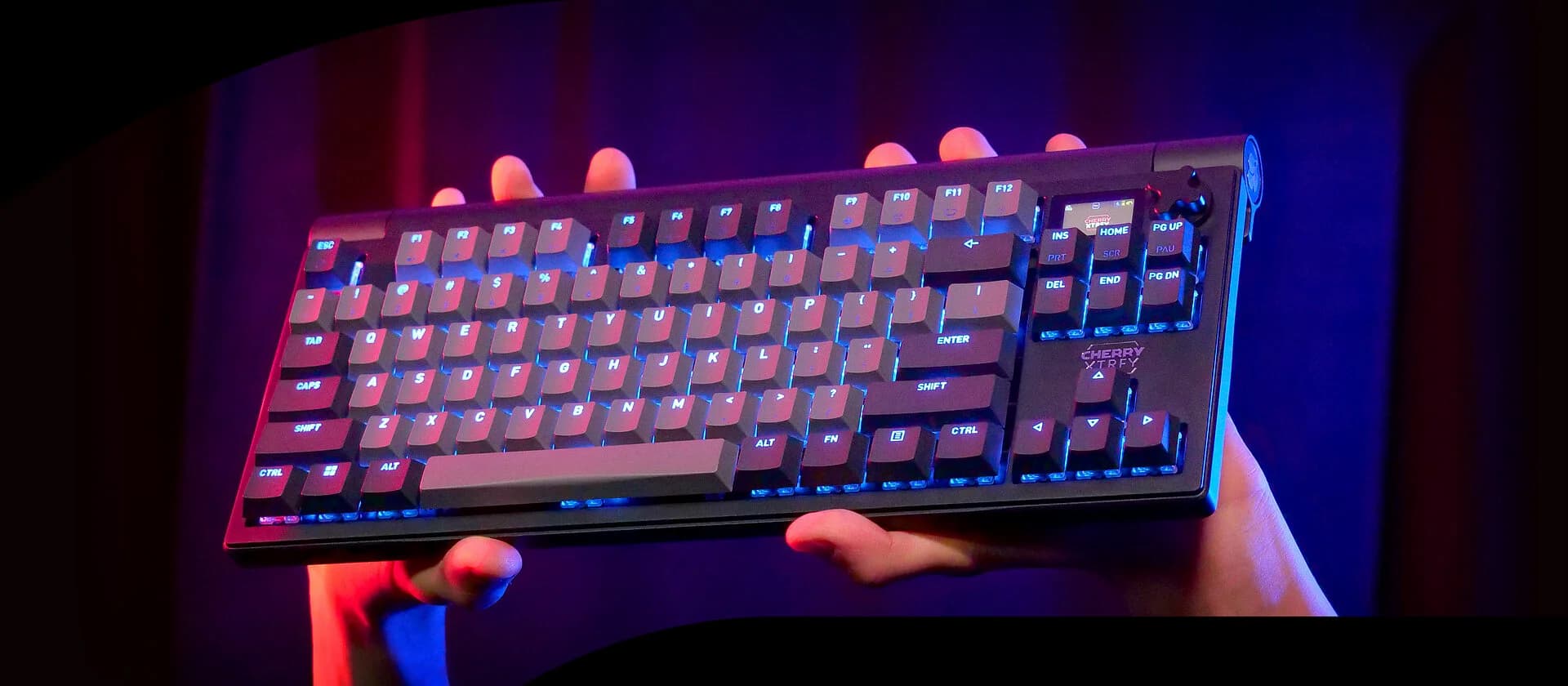
For the PC gamer in your life, a custom mechanical keyboard from Cherry is a gift that’s both practical and personal. Choose their favourite colours, pick the switch type that suits their style, and you’ve got something they’ll use every single day. It’s the kind of thing most gamers would love but would never buy for themselves. That’s what makes it a perfect Valentine’s gift.
A Game Character Phone/Controller Stand
These little device holders shaped like game characters from EXGPro are genuinely useful and look great on a desk. You can find stands featuring characters from Minecraft, Sonic, Pokémon, Halo, and dozens of other franchises. They hold phones and controllers alike, and they double as a mini figurine. Practical, fun, and surprisingly affordable.
Who doesn’t love a Taviden and can of Ghort – lol *AI image
A Game Time Hamper
Put together a hamper filled with everything your gamer needs for the ultimate session. Think their favourite snacks, a few cans of their go-to drink, a comfy pair of gaming socks, maybe a cap from their favourite franchise, and perhaps a gift card for their platform of choice. Present it all in a nice box or basket and you’ve got something that feels properly thoughtful without breaking the bank. Bonus points if you include a handwritten note promising to leave them alone while they enjoy it.
Gamer Clothing
Gaming fashion has come a long way from oversized novelty t-shirts. Brands like Qlutch (qlutch.cc) offer stylish, subtle clothing that nods to gaming culture without screaming it. Hoodies, tees, and accessories that your gamer can actually wear out in public and feel good about. It’s streetwear with a gaming twist, perfect for someone who wants to represent their hobby without looking like a walking advert.
A Sandwich Toaster
Stay with us on this one. A sandwich toaster might not scream “romance,” but any gamer will tell you that a perfectly toasted cheese sandwich during a late-night session is one of life’s great pleasures. Chuck in some steak, add a bit of onion, go wild. It’s quick, it’s easy, and it means they don’t have to pause the game to cook a proper meal. Honestly, this might be the most underrated gift on the list.
Gaming Figurines
A quality figurine of their favourite character makes for a brilliant display piece. Sites like Hobby Figures (hobbyfigures.co.uk) stock a huge range of gaming collectibles, from detailed statues to more affordable options. Whether they’re into Resident Evil, Final Fantasy, The Witcher, or something else entirely, there’s almost certainly a figure out there that’ll make them light up. Just make sure you know which character is their favourite, getting it wrong could be worse than no gift at all.
Perfume or Aftershave
Let’s be honest: long gaming sessions don’t always lead to the freshest of environments. A nice bottle of perfume or aftershave is a classic Valentine’s gift for a reason, and it works just as well for gamers as anyone else. It doesn’t need to be gaming-themed (please, no Axe body spray). Just pick something they’ll enjoy wearing. Think of it as a gentle, fragrant reminder that personal hygiene and gaming can coexist.
A Retro Console or Handheld
If your gamer has a nostalgic streak, a retro mini console or handheld could be the perfect shout. The Analogue Pocket is a premium option for someone who loves their Game Boy-era classics, while the various mini consoles from Nintendo, Sega, and others offer a plug-and-play trip down memory lane. Even something like a Powkiddy or Anbernic handheld can open up an entire library of retro games for under £50. Great for playing together in bed, too, if that’s not romantic, what is?
A Gaming Cookbook
Yes, these exist, and some of them are genuinely excellent. Official cookbooks inspired by The Elder Scrolls, Final Fantasy, World of Warcraft, Street Fighter, and Destiny let your gamer recreate dishes from their favourite worlds. Even if they’re not the most confident cook, following a recipe for Sweetrolls or Ignis’s favourite dish from Final Fantasy XV is a fun activity you can do together. Dinner and gaming, sorted.
A Pair of Gaming Glasses
If your gamer spends hours staring at screens (and let’s face it, they do), a pair of blue-light filtering glasses from a brand like GUNNAR can make a genuine difference. They reduce eye strain, help with headaches, and some of them actually look quite stylish. It’s a thoughtful gift that says “I care about your wellbeing” rather than “I think you play too much”, and that distinction matters.
Whatever you choose, the best Valentine’s gift for a gamer is one that shows you understand what they love. You don’t have to be a gamer yourself to get it right, you just have to pay attention. Happy Valentine’s Day!
Saber Interactive has announced that Turok: Origins will launch across all major platforms in fall 2026, including the recently revealed Nintendo Switch 2. The sci-fi action shooter was initially announced for PC, PlayStation 5, and Xbox Series X|S, but today’s Nintendo Direct confirmed the expanded platform lineup for the latest entry in the legendary dinosaur-hunting franchise.
Players will step into the role of the ancient Order of the Turok, described as heroic guardians battling against ferocious creatures and an alien threat bent on destroying humanity. The game promises both first-person and third-person combat perspectives, allowing players to unleash devastating attacks using powerful weapons and special abilities. A particularly interesting mechanic involves harvesting DNA from defeated enemies to upgrade your arsenal and unlock new powers called EchoSyncs.
The adventure takes place across the Lost Lands, featuring diverse environments from ancient temples and wasteland canyons to dense jungles spread across multiple planets. Players can tackle this journey solo or team up with friends in cooperative multiplayer. Combat encounters will feature a variety of enemies including dinosaurs and bosses that inhabit different terrains, from ground-based threats to aerial predators lurking in caves and swamps.
Weapon variety appears to be a key focus, with the developers promising plasma rifles, ray guns, sniper rifles, bows, shotguns, and more in the player’s expanding arsenal. The DNA extraction system will allow players to evolve their “mantle” and gain tactical advantages as they progress through what’s described as an epic story filled with twists and turns.
Turok: Origins is set to launch in fall 2026 for PC via Steam, PlayStation 5, Xbox Series X|S, and Nintendo Switch 2. More information can be found at TurokOrigins.com, with additional reveals planned leading up to the launch.
There’s a particular charm in games that know exactly what they are. Cakey’s Twisted Bakery is a short, focused stealth survival horror experience that takes the twisted-mascot concept and runs with it. At around £10 on Xbox, this is a lean package thats short and sweet (lol), and honestly, that’s precisely what makes it work so well.
The Concept Is Genuinely Unsettling
The premise is wonderfully odd. You’re a lost child searching for your missing brother inside a bakery where children are apparently the secret ingredient. Rather than relying on gore and graphic horror, Cakey’s Twisted Bakery uses something far more effective: the contrast between cute and creepy.
The mascot monsters, Cakey, Frostina, and Candy Bane, have family-friendly appearances with damaged, decaying details that make them genuinely unsettling. They’re reminiscent of Five Nights at Freddy’s in the best possible way. These candy-eyed abominations with far too many teeth create a specific kind of dread. When they hunt you, their high-pitched screams and the deep bass music getting progressively louder as they close in creates real tension. It’s effective stuff.
The visual design of the bakery itself reinforces this perfectly. Pastel-coloured corridors, smiling signs, and child-friendly aesthetics twisted into something genuinely nightmarish. You’re constantly aware that this was once innocent and is now very much not.
Stealth and Strategy Over Action
The core gameplay loop is straightforward. You sneak through the bakery, collect colour-coded ingredients scattered throughout the environment, and craft pies that act as weapons against the monsters. Different pies work better against different enemies, so you need to learn which recipe defeats which creature.
The stealth mechanics work well. Hiding under tables and in open crates actually hides you, as long as you don’t do something silly like shining your torch directly at a pursuing monster. Timing matters. Patience matters. It’s about reading patrol patterns and moving only when it’s safe.
Gathering ingredients adds genuine tension to every step. You’re out in the open, vulnerable, whilst simultaneously looking for scattered items. The knowledge that a monster could round a corner at any moment forces you to be efficient. Do you grab just what you need and risk making runs? Or do you stockpile ingredients for future use?
Once you’ve defeated a monster, a key drops that unlocks the next area, but also unleashes the next threat. The sense of dread builds naturally as you progress.
The Catch: Limited Scope
Here’s where complete honesty is necessary. Cakey’s Twisted Bakery is a two-hour experience, give or take. There’s essentially one level with three enemies, and once you’ve learned the layout and memorised the recipes, the challenge diminishes significantly. Experienced horror game players might find themselves breezing through it.
The game doesn’t explain itself well. Trial and error teaches you what you need to know, which is fine but occasionally frustrating. A slightly stronger tutorial would have helped. The limited content also means replay value relies entirely on the two different endings, which might not be enough for everyone.
The story, whilst intriguing, barely scratches the surface. Handwritten notes scattered throughout add atmosphere but remain too vague to meaningfully expand the lore. There’s potential here for something deeper, but it’s not realised in this version.
What Makes It Special Anyway
Despite these limitations, Cakey’s Twisted Bakery works because it’s honest about what it is. It’s not trying to be a sprawling horror epic. It’s a focused, bite-sized experience that delivers genuine scares and creative gameplay for a reasonable price.
The audio design is excellent. Rather than relying on constant musical accompaniment, silence becomes the primary tool. Occasional noises, the deep bass of approaching monsters, and those unsettling screams create more tension than many full-length horror games manage.
The mechanics are simple but cleverly designed. The concept of baking pies as weapons is bizarre enough to feel fresh. The colour-coding system makes the puzzle element intuitive without feeling condescending. Hide, gather, craft, defeat, progress—it’s a satisfying loop even if it doesn’t evolve significantly.
For the price point, this is excellent value. You’re getting a complete, polished experience, not a half-finished concept. The jump scares land, the atmosphere genuinely unsettles, and the ending feels earned.
Short & Sweet… & Horrid
Cakey’s Twisted Bakery is a short but effective stealth survival horror that proves you don’t need hundreds of hours of content to create something memorable. Yes, it’s limited in scope and won’t challenge experienced horror gamers for long. Yes, it could do more with its story and setting. But what it does, it does brilliantly. At £10 (usually less), it’s an easy recommendation for horror fans looking for something different.
Publisher Dotemu has unveiled a new trailer for Starship Troopers: Ultimate Bug War, introducing players to Major Samantha “Sammy” Dietz for the first time. The retro-style first-person shooter, developed by Auroch Digital, promises intense battles against swarms of deadly alien bugs when it launches in early 2026.
The game will feature open battlefield environments where players can choose their own path through warfare. Players will explore large-scale areas to defend zones, take down massive bugs with explosives, and rescue fellow soldiers. Each stage contains hidden secrets alongside unlockable weapons and pilotable mecha units to support the fight against various enemy types, from close-range attackers to flying and tank-like creatures.
Set across familiar locations like the Arachnid homeworld of Klendathu and new destinations such as Planet P, the single-player campaign follows Major Dietz’s military career. Players will have access to an arsenal of 14 weapons, including the iconic Morita rifle, plus 11 tactical support options and mech vehicles, all rendered in a distinctive 3D pixelated art style.
Starship Troopers: Ultimate Bug War is scheduled to release on PC, Nintendo Switch 2, PlayStation 5, and Xbox Series X|S in early 2026. The game is now available to wishlist on Steam, with Dotemu promising more gameplay details in an upcoming briefing trailer.