Zobrazení pro čtení

Stardew Valley Fishing Guide: Locations, Seasons, and How to Catch Every Legendary Fish

Fishing in Stardew Valley provides one of the best early-game money sources, supplies ingredients for cooking and bundles, and offers a relaxing activity during rainy days when you can’t water crops. Mastering the fishing mechanics, understanding where and when each fish spawns, and successfully catching the five legendary fish transforms fishing from a frustrating mini-game into a profitable and enjoyable skill. This comprehensive guide covers fishing basics, optimal locations by season, and detailed strategies for landing every legendary fish in the game.

Mastering the Fishing Mechanics and Leveling Up

The fishing mini-game challenges many new players because it requires timing, precision, and understanding of the underlying mechanics. Each fish has different behavior patterns, and your fishing level dramatically affects success rates. Learning how the system works before diving into specific fish locations saves hours of frustration and wasted energy.

When you cast your line, you wait for a bite indicated by an exclamation mark and controller vibration. Click immediately when you see the bite notification to hook the fish. This triggers the fishing bar mini-game where a green rectangle appears with a fish icon bouncing inside. Your goal is to keep the fish icon inside the green bar by clicking to raise the bar and releasing to lower it. A progress meter on the right fills when the fish is inside your bar and drains when it escapes. Fill the meter completely to catch the fish.

The green fishing bar starts very small at fishing level 0, making catches extremely difficult. Each fishing level increases the bar size by approximately 8 pixels, with dramatic improvements in catchability around levels 3-4. By fishing level 10, your bar is nearly twice the starting size, making even difficult fish manageable. This means your first priority should be leveling up fishing as quickly as possible rather than targeting specific valuable fish.

Fishing experience comes from any successful catch, with more difficult fish providing more experience. You also gain experience from catching trash items like broken glasses, driftwood, and soggy newspapers. While trash gives minimal experience, it still contributes to leveling, so don’t ignore trash catches early on. You gain experience when hooking fish even if you fail to catch them, though successful catches provide significantly more.

The fishing rod progression matters enormously for success rates. You start with a Bamboo Pole that cannot use bait or tackle, severely limiting your effectiveness. At fishing level 2, purchase the Fiberglass Rod from Willy’s shop for 1,800g – this allows bait attachment, which makes fish bite 50% faster. At fishing level 6, purchase the Iridium Rod for 7,500g – this allows both bait and tackle attachments. Tackle provides various benefits like larger fishing bars, slower fish escape, or increased treasure chest chances.

Bait significantly improves fishing efficiency by reducing wait times between bites. Regular Bait costs 5g each from Willy or can be crafted from Bug Meat. Wild Bait crafted from fiber, bug meat, and slime provides better catch quality chances. Magnet increases treasure chest spawn rates. Always use bait once you have the Fiberglass Rod or better – the speed increase pays for itself many times over.

Tackle becomes available with the Iridium Rod and provides powerful bonuses. The Trap Bobber slows fish escape speed by 66%, making it the single best tackle for beginners and for catching legendary fish. Cork Bobber increases fishing bar size by 24 pixels. Dressed Spinner reduces minimum fish size. Lead Bobber prevents fish from escaping the bar during downward movement. Treasure Hunter increases treasure chest spawn rates to 20%. Barbed Hook prevents fish from escaping the bar when you’re not clicking, essentially giving you brief rest periods.

Perfect catches occur when you catch a fish without the progress meter ever decreasing – meaning the fish never escapes your bar throughout the entire catch. Perfect catches grant double experience and better fish quality. Achieving perfect catches becomes easier as your fishing level increases and with better tackle. They’re nearly impossible at low levels but become routine at level 10 with good tackle.

The treasure chest mechanic adds complexity to fishing. Occasionally a treasure chest icon appears behind the fish during the mini-game. If you keep the chest icon inside your fishing bar long enough, the chest opens and you receive items after catching the fish. Treasure chests contain geodes, resources, artifacts, and rarely very valuable items like Neptune’s Glaive or Ancient Seeds. However, focusing on treasure chests while catching fish increases difficulty substantially. Beginners should ignore chests until higher fishing levels.

Spring Fishing Locations and Target Fish

Spring offers excellent fishing opportunities for building your fishing skill and earning early-game money. Understanding which fish spawn in which locations during Spring helps you target valuable catches and complete bundles efficiently.

The mountain lake provides the easiest fishing location for beginners because many Spring fish here have simple behavior patterns. Smallmouth Bass spawn year-round in this lake from 6am to 7pm, making them reliable catches at any time. They have moderate difficulty and sell for 50g. Carp also spawn here year-round and are extremely easy to catch due to slow, predictable movement – perfect for practicing at low fishing levels. Carp sell for only 30g but provide essential early experience.

Bullhead appear in the mountain lake during Spring, Summer, and Fall at any time of day. They’re moderately difficult and sell for 75g. Largemouth Bass spawn from 6am to 7pm year-round and have moderate difficulty with a 100g sale price. The Rainbow Trout appears only during Spring and Summer in the mountain lake, spawning from 6am to 7pm on sunny days. Rainbow Trout are moderately difficult and sell for 65g. Shad spawn during rainy weather in Spring, Summer, and Fall from 9am to 2am in rivers and lakes, selling for 60g.

The river running through town offers different fish varieties than the lake. Catfish spawn exclusively during rainy Spring and Fall days from 6am to midnight, making them weather-dependent targets. Catfish are moderately difficult and sell for 200g, making them excellent money when available. Sunfish appear in rivers during Spring and Summer from 6am to 7pm on sunny days. They’re extremely easy to catch and sell for 30g, making them perfect beginner fish despite low value.

Bream spawn in rivers during all seasons at any time of day or night. They’re easy catches selling for 45g. Chub also spawn year-round in rivers at any time and are very easy to catch, though they sell for only 50g. Smallmouth Bass and Shad also appear in the river with the same spawn conditions as the mountain lake.

The ocean accessible from the beach provides saltwater fish varieties. Sardines spawn during Spring, Fall, and Winter from 6am to 7pm and are very easy to catch, selling for 40g. Anchovies appear in Spring and Fall from 6am to 2am and are extremely easy catches at 30g each. Herring spawn in Spring and Winter from 6am to 8pm, are very easy to catch, and sell for 30g. Red Mullet spawn only during Summer and Winter from 6am to 7pm in the ocean, so they’re not available in Spring.

Flounder appear in the ocean during Spring and Summer from 6am to 8pm and are moderately difficult, selling for 100g. Halibut spawn in Spring, Summer, and Winter from 6am to 11am and 7pm to 2am, are quite difficult to catch, and sell for 80g. Eel spawn in the ocean during Spring and Fall from 4pm to 2am when it’s raining, making them weather and time-dependent. Eels are moderately difficult and sell for 85g.

The Secret Woods pond accessed by cutting the large log with a Steel Axe or better contains exclusive fish. Woodskip spawn here year-round at any time and are moderately difficult, selling for 75g. This location also spawns Carp and Catfish during their normal seasons. The Woodskip is needed for the Specialty Fish Bundle, making the Secret Woods essential to visit.

The optimal Spring fishing strategy focuses on the mountain lake during sunny days to catch Largemouth Bass, Rainbow Trout, and build fishing levels with Carp. Switch to river fishing during rainy days to catch Catfish for excellent profits at 200g each. Ocean fishing works well for completing the Ocean Fish Bundle with Sardines, Anchovies, and Flounder. Save at least one of each fish type for Community Center bundles rather than selling everything.

Summer and Fall Fishing Opportunities

Summer and Fall expand fishing opportunities with new seasonal fish and continued access to many year-round species. These seasons provide the best fishing income potential as your fishing skill reaches higher levels.
Summer ocean fish include several valuable targets. Tuna spawn from 6am to 7pm and are moderately difficult, selling for 100g. Red Mullet appear from 6am to 7pm, are easy to catch, and sell for 75g. Octopus spawn from 6am to 1pm, are quite difficult, and sell for 150g. Super Cucumber appear from 6pm to 2am in Summer and Fall, are difficult to catch, and sell for 250g – making them one of the most valuable regular fish. Tilapia spawn from 6am to 2pm in Summer and Fall, are moderately easy, and sell for 75g.

Red Snapper appear in the ocean during Summer and Fall when it’s raining from 6am to 7pm. They’re moderately difficult and sell for 50g. Pufferfish spawn only during Summer from 12pm to 4pm on sunny days, are quite difficult to catch, and sell for 200g. The Pufferfish is needed for the Specialty Fish Bundle and has a narrow spawn window, making it easy to miss.

Summer river and lake fishing continues many Spring fish while adding new varieties. Pike spawn in rivers during Summer and Winter from 6am to 2am, are moderately difficult, and sell for 100g. Dorado appear in rivers during Summer from 6am to 7pm, are quite difficult to catch, and sell for 100g. Rainbow Trout continue spawning in the mountain lake during Summer with the same conditions as Spring. Sturgeon appear in the mountain lake during Summer and Winter from 6am to 7pm, are very difficult to catch, and sell for 200g. Sturgeon are needed for the Lake Fish Bundle and represent one of the harder bundle fish to catch.

Fall brings unique seasonal fish to all locations. Walleye spawn in rivers and the mountain lake during Fall and Winter from 12pm to 2am when it’s raining. They’re moderately difficult and sell for 105g. Walleye are required for the Night Fishing Bundle. Tiger Trout appear in rivers during Fall and Winter from 6am to 7pm, are quite difficult to catch, and sell for 150g. Salmon spawn in rivers during Fall from 6am to 7pm, are moderate difficulty, and sell for 75g.

Midnight Carp appear in the mountain lake and forest pond during Fall and Winter from 10pm to 2am. They’re moderately difficult and sell for 150g. Sea Cucumber spawn in the ocean during Fall and Winter from 6am to 7pm, are quite difficult to catch, and sell for 75g. Super Cucumber continue spawning with the same Summer conditions. Albacore appear in the ocean during Fall and Winter from 6am to 11am and 6pm to 2am, are difficult to catch, and sell for 75g.

The mines offer unique fishing opportunities when you fish in the underground lake on floors 20+. Ghostfish spawn year-round in the mines from 6am to 8pm, are easy to catch, and sell for 45g. Ghostfish are needed for the Specialty Fish Bundle. Stonefish spawn on floors 20+ year-round from 6am to 8pm, are difficult to catch, and sell for 300g. Ice Pip spawn in the mines on floors 60+ during all seasons from 6am to 8pm, are quite difficult, and sell for 500g. Lava Eel spawn on floor 100 of the mines year-round from 6am to 8pm, are extremely difficult to catch, and sell for 700g – making them the most valuable regular fish.

The Summer fishing strategy prioritizes the ocean for Tuna, Pufferfish, and Super Cucumber. Fish in the mountain lake for Sturgeon needed for bundles – this may take multiple attempts due to difficulty. Rainy Summer days offer excellent ocean fishing for Red Snapper. Fall strategy focuses on completing the Night Fishing Bundle by catching Walleye during rainy evenings, plus targeting valuable Super Cucumber and Ice Pip if you’ve reached the deeper mines.

Winter Fishing and Year-Round Locations

Winter eliminates many fish species but introduces winter-exclusive fish and forces strategic fishing during limited windows. This season is perfect for deep mine fishing since you can’t grow crops anyway.

Winter ocean fish include several returning species plus new additions. Sardines, Anchovies, Herring, Red Mullet, Halibut, Tuna, Sea Cucumber, Albacore, and Squid all spawn during Winter. Squid appear from 6pm to 2am during Winter only, are difficult to catch, and sell for 80g. The Nautilus Shell can be found on the beach during Winter, selling for 120g. Spook Fish spawn in the ocean during Winter from 6pm to 2am on the Night Market submarine ride only, are difficult to catch, and sell for 220g.

The Night Market runs from Winter 15-17 each year and features a submarine ride that takes you to new fishing areas. The submarine offers three different fishing zones with exclusive fish like Spook Fish, Blobfish, and Midnight Squid. This limited-time event provides unique fishing opportunities unavailable elsewhere.

Winter river and mountain lake fish focus on cold-water species. Pike, Walleye, Tiger Trout, Midnight Carp, Perch, and Lingcod spawn during Winter. Perch appear in rivers during Winter from 6am to 2am, are easy to catch, and sell for 55g. Lingcod spawn in rivers during Winter from 6am to 2am, are quite difficult to catch, and sell for 120g. Sturgeon continue spawning in the mountain lake from 6am to 7pm.

Crab Pots become especially valuable during Winter when regular fishing options decrease. Crab Pots placed in ocean water catch Lobster, Crab, Shrimp, Oyster, Cockle, Mussel, Clam, and Snail. Freshwater Crab Pots catch Crayfish, Snail, Periwinkle, and Mussel. The Mariner profession at fishing level 10 (choosing Fisher at 5) prevents trash catches in Crab Pots, making them purely profitable passive income sources.

Calico Desert fishing becomes accessible after completing Vault bundles and repairing the bus. The desert oasis pond contains Sandfish year-round from 6am to 8pm. Sandfish are moderately difficult and sell for 75g. They’re needed for the Specialty Fish Bundle. Scorpion Carp also spawn in the desert from 6am to 8pm, are quite difficult to catch, and sell for 150g.

The Winter strategy emphasizes mine fishing for Ghostfish, Stonefish, Ice Pip, and potentially Lava Eel if you’ve reached floor 100. Set up 10-20 Crab Pots in various water sources for passive income. Visit the Night Market during Winter 15-17 for exclusive submarine fish. Fish in the ocean for Squid and complete any remaining Ocean Fish Bundle requirements.

The Five Legendary Fish: Locations and Catching Strategies

Legendary fish represent the ultimate fishing challenge with extreme difficulty, unique spawn conditions, and one-catch-only availability. Each legendary fish can only be caught once per save file, sells for substantial gold, and provides significant satisfaction upon successful capture. Attempting legendary fish before fishing level 10 with good tackle is nearly impossible.
The Legend spawns in the mountain lake during Spring only when it’s raining. The spawn window is 6am to 8pm. The Legend has the most erratic movement pattern of any fish, darting rapidly up and down with sudden direction changes. Without preparation, catching The Legend is almost impossible. The fish sells for 5,000g and provides 5 gold star fish when caught, making it the most valuable single fish.

The strategy for The Legend requires fishing level 10, the Iridium Rod with Trap Bobber tackle, and preferably a Dish O’ The Sea food buff that gives +3 fishing. Wait for a rainy Spring day, go to the mountain lake, and cast into the deeper water areas. When you hook The Legend, remain calm and use small, controlled clicks to keep the bar near the fish. The Trap Bobber slows escape speed by 66%, giving you crucial reaction time. Expect to spend 30-60 seconds on the mini-game with the progress bar moving very slowly.

Crimsonfish spawns in the ocean east of Pelican Town during Summer from 6am to 8pm. You must fish from the eastern pier area – standing on the wooden pier that extends into the ocean east of Willy’s shop. Crimsonfish has extremely fast, aggressive movement patterns that challenge even skilled players. The fish sells for 1,500g.

The strategy for Crimsonfish is similar to The Legend but requires positioning on the eastern pier. Use Trap Bobber tackle, maximize your fishing level to 10, and consider food buffs. Crimsonfish moves faster than The Legend but slightly more predictably once you recognize its pattern. It tends to make rapid upward or downward charges followed by brief pauses. Anticipate these charges and position your bar accordingly.

Angler spawns in the river north of Jodi’s house during Fall from 6am to 8pm. The specific location is the wooden bridge area north of town. Angler has moderate-to-high difficulty with relatively smooth movement compared to other legendaries. The fish sells for 900g.

The Angler strategy requires fishing from the bridge or riverbank just north of the wooden bridge. This legendary is considered the “easiest” of the five, though still extremely difficult compared to regular fish. Use Trap Bobber tackle and fishing level 10. Angler moves in longer, smoother patterns rather than erratic darting, making it slightly more predictable. You still need excellent timing and concentration.

Glacierfish spawns at the south end of Arrowhead Island in Cindersap Forest during Winter from 6am to 8pm. You must fish from the specific island area accessible by crossing the bridge south of Marnie’s ranch. Glacierfish has very difficult movement with sudden direction changes and fast swimming. The fish sells for 1,000g.

The Glacierfish strategy requires reaching the island location first – cross the bridge south of Marnie’s ranch and position yourself on the southern tip of the forested island area. Glacierfish behavior resembles Crimsonfish with rapid movements but slightly less aggressive. Use Trap Bobber, maintain fishing level 10, and consider Cork Bobber if you struggle with bar size. This fish often surprises players with sudden downward plunges followed by rapid upward movements.

Mutant Carp spawns in the sewers year-round from 6am to 8pm. Accessing the sewers requires obtaining the Rusty Key from Gunther after donating 60 items to the museum. Mutant Carp has difficult but manageable movement patterns compared to other legendaries. The fish sells for 1,000g.

The Mutant Carp strategy is unique because it’s available year-round once you access the sewers, removing seasonal pressure. Fish anywhere in the sewer water. Mutant Carp moves in jerky, unpredictable patterns but slower than Crimsonfish or The Legend. Use Trap Bobber tackle. Many players consider this the second-easiest legendary after Angler, though it still requires solid fishing skills and level 10.

General legendary fish tips apply to all five catches. First, always save your game the night before attempting a legendary fish – if you fail the catch, you can reload and try again since legendaries only spawn once. Second, use Trap Bobber tackle exclusively for legendaries – the 66% slower escape speed is more valuable than any other tackle effect. Third, maximize your fishing level to 10 before attempting any legendary – the larger fishing bar makes a massive difference. Fourth, consider food buffs like Dish O’ The Sea (+3 fishing), Seafoam Pudding (+4 fishing), or Lobster Bisque (+3 fishing and +50 magnetism) to further increase bar size and catch likelihood.

Fifth, perfect your clicking technique – use rapid small clicks to make tiny adjustments rather than long holds that overshoot the fish position. Sixth, stay calm and patient – legendary catches often take 45-90 seconds of sustained concentration. Don’t panic when the progress bar seems stuck or moving backward. Seventh, practice on difficult regular fish first – catch Octopus, Lava Eel, and Sturgeon successfully before attempting legendaries to build confidence and skill.

Frequently Asked Questions

What fishing level do I need to catch legendary fish? Fishing level 10 is strongly recommended for all legendary fish. Technically you can attempt them at lower levels, but success rates are extremely low. The larger fishing bar at level 10 combined with Trap Bobber tackle gives you the best chance. Some players have caught easier legendaries like Angler or Mutant Carp at level 8-9, but it requires exceptional skill and luck.

Can I catch legendary fish more than once? No, each legendary fish can only be caught once per save file. Once caught, they never spawn again in that save. This makes legendary catches permanent achievements. However, if you have multiple save files or start a new game, you can catch them again in the new save.

What’s the best tackle for fishing? Trap Bobber is the best all-purpose tackle, especially for difficult fish and all legendaries. It slows fish escape speed by 66%, giving you crucial reaction time. Cork Bobber increases fishing bar size and helps at lower fishing levels. Treasure Hunter is useful when specifically farming treasure chests. Lead Bobber prevents escape during downward bar movement, helping with fish that dive frequently.

Where can I fish in Winter when most fish are gone? Winter is perfect for mine fishing since crops aren’t growing. Fish in the mines on floors 20+ for Ghostfish, Stonefish, and Ice Pip. Floor 100 offers Lava Eel, the most valuable regular fish at 700g. The ocean still has Squid, Tuna, and several other species. Set up Crab Pots for passive income. The desert oasis remains accessible if you’ve unlocked the bus.

How do I increase my chances of finding treasure chests while fishing? Treasure chests spawn randomly but can be increased with Magnet bait (doubles treasure chest spawn rate) and Treasure Hunter tackle (increases spawn rate to 20%). The Pirate profession at fishing level 10 doubles treasure chest spawn rates. Combining these methods maximizes treasure finds. Fish in areas with higher difficulty ratings, as treasure chests appear more frequently in challenging fishing spots.

  •  

Stardew Valley Crop Profitability Guide: Most Profitable Crops by Season (with Processing)

Maximizing your farm’s profit potential requires understanding which crops generate the most gold per day, how processing multiplies their value, and which planting strategies optimize your limited time and energy. This comprehensive profitability guide breaks down the math behind every crop, reveals the hidden champions of each season, and shows you exactly how to transform basic produce into massive profits through kegs and preserves jars.

Understanding Crop Profitability: The Key Metrics

Calculating true crop profitability involves more than comparing sell prices to seed costs. The most profitable crop isn’t necessarily the one with the highest sale price or even the biggest profit margin. Instead, you need to understand gold per day, regrowth mechanics, processing multipliers, and opportunity costs to make informed planting decisions.

Gold per day is calculated by taking the total profit from a crop and dividing it by the number of days required to grow it. A parsnip costs 20g, sells for 35g, and takes 4 days to grow, giving you 15g profit over 4 days or 3.75g per day. A cauliflower costs 80g, sells for 175g, and takes 12 days, giving you 95g profit over 12 days or 7.92g per day. This metric reveals that cauliflower is more than twice as profitable per day despite taking three times longer to grow.

Regrowth crops fundamentally change the profitability equation because you only pay the seed cost once but get multiple harvests. Strawberries cost 100g and sell for 120g, giving you only 20g profit on first harvest. However, they regrow every 4 days after that initial 8-day growth period. If you plant strawberries on Spring 13 (Egg Festival), you get approximately 3-4 additional harvests before Spring ends, turning that 100g investment into 480-600g total revenue with only one seed purchase. The gold per day calculation becomes dramatically better when accounting for multiple harvests.

Processing through kegs and preserves jars multiplies crop value by transforming produce into artisan goods. A basic wheat worth 25g becomes beer worth 200g in a keg – an 8x multiplier. Strawberries worth 120g become jam worth 290g in a preserves jar. The choice between kegs and preserves jars depends on base crop value and processing time. Kegs take 3-7 days depending on the input, while preserves jars always take 3-4 days. Higher value crops benefit more from preserves jars, while lower value crops often see better returns from kegs.

Quality modifiers affect selling prices but not processing. A gold star blueberry sells for 80g instead of 50g, but when processed into jam, both qualities produce the same 150g jam. This means you should sell high-quality crops raw and process normal quality crops into artisan goods for maximum profit. The Tiller profession increases crop prices by 10%, while Artisan increases artisan good prices by 40%, making Artisan dramatically more valuable once you have processing infrastructure.

Fertilizer investment changes profitability calculations by increasing quality chances and sometimes growth speed. Quality Fertilizer costs 10g to craft (1 Sap, 1 Fish) and significantly increases gold/silver/iridium star chances. Speed-Gro reduces growth time by 10-25%, letting you fit additional harvests into a season. Deluxe Speed-Gro reduces growth time by 25% and is incredibly powerful for expensive crops like Ancient Fruit and Starfruit. The investment in fertilizer pays for itself many times over when used on valuable crops.

Spring Crop Profitability Rankings

Spring offers fewer standout money-making crops compared to Summer and Fall, but strategic planting still generates solid early-game income. Understanding which Spring crops to prioritize sets up your financial foundation for the entire year.

Strawberries dominate Spring profitability but only if you buy seeds at the Egg Festival on Spring 13. Each seed costs 100g and produces strawberries worth 120g base price (132g with Tiller). The first harvest takes 8 days, then strawberries regrow every 4 days. Planting on Spring 13 gives you harvests on Spring 21, 25, and 29 if you’re lucky with timing – that’s 3-4 total harvests from one seed. Total revenue ranges from 360-480g per plant, minus the 100g seed cost, yielding 260-380g profit per plant over 16 days. This calculates to roughly 16-24g per day per plant, making strawberries the clear Spring champion.

Processing strawberries into jam using preserves jars increases their value to 290g per jar. If you harvest 4 strawberries per plant over Spring and process all of them, you generate 1,160g total (4 x 290g) from a single 100g seed investment. However, preserves jars take 3-4 days to process, so you’ll need multiple jars working simultaneously to keep up with harvests. The Artisan profession increases jam value to 406g per jar, making the total from four harvests equal to 1,624g per plant.

Rhubarb is the second most profitable Spring crop when measured by raw gold per day, but it requires access to the Calico Desert which isn’t available until you complete the Vault bundles. Rhubarb seeds cost 100g from the Desert Trader and produce rhubarb worth 220g (242g with Tiller) after 13 days. The profit of 120-142g over 13 days equals 9.2-10.9g per day. Rhubarb doesn’t regrow, so you need to replant after each harvest. Processing rhubarb into jam creates 440g jars (616g with Artisan), more than doubling the base value.

Cauliflower ranks third with seeds costing 80g from Pierre’s and selling for 175g (192.5g with Tiller) after 12 days. The profit of 95-112.5g over 12 days equals 7.9-9.4g per day. Cauliflower has a small chance to form giant crops when planted in 3×3 patterns, which harvest for 15-21 regular cauliflowers worth significantly more than nine individual plants. This random bonus can dramatically increase profitability but shouldn’t be relied upon for planning.

Potatoes offer reliable early Spring income at 50g per seed with a 6-day growth time and 80g sale price (88g with Tiller). The profit of 30-38g over 6 days equals 5-6.3g per day. Potatoes also have a 20% chance to drop extra potatoes when harvested, averaging 1.2 potatoes per harvest. This bonus increases the effective profit to approximately 36-45.6g per harvest, or 6-7.6g per day. Potatoes allow multiple replanting cycles in Spring, making them excellent for early game when you can’t afford expensive strawberry seeds at the festival.

Green Beans provide decent returns for multi-harvest crops at 60g per seed, 40g sale price (44g with Tiller), and a 10-day initial growth with 3-day regrowth. The first harvest loses 16-20g (negative profit), but subsequent harvests every 3 days generate 40-44g pure profit. Over a full Spring season starting day 1, you can get approximately 5-6 harvests (1 initial + 4-5 regrowth), totaling 200-264g revenue against 60g cost for 140-204g profit. This equals roughly 5-7.3g per day per plant.

The optimal Spring strategy combines early potatoes (days 1-12) with transition to strawberries at the Egg Festival. Plant potatoes immediately on Spring 1, harvest on Spring 7, replant and harvest again on Spring 13. Use profits to buy maximum strawberry seeds at the festival, plant them on Spring 13, and enjoy superior returns for the rest of Spring. This approach maximizes both early capital building and late-Spring profitability.

Summer Crop Profitability: The Money-Making Season

Summer is the most profitable season for raw crop farming because blueberries and other multi-harvest crops generate exceptional gold per day. Having significant capital entering Summer lets you plant massive blueberry fields that fund your entire year.

Blueberries are the undisputed Summer champion and one of the best crops in the entire game. Seeds cost 80g from Pierre’s and take 13 days for first harvest, then produce every 4 days afterward. Each harvest yields 3 blueberries worth 50g each (150g total, or 165g with Tiller). The first harvest generates 70-85g profit, while each subsequent harvest generates the full 150-165g since you’ve already paid the seed cost. Planting on Summer 1 allows harvests on Summer 14, 18, 22, and 26 – that’s 4 total harvest cycles producing 12 blueberries worth 600g (660g with Tiller) minus the 80g seed cost for 520-580g profit per plant over 28 days, or 18.6-20.7g per day.

Processing blueberries into jam increases their value to 150g per jar (210g with Artisan). However, since each harvest gives 3 blueberries and processing takes 3-4 days, you need 3+ preserves jars per blueberry plant to keep up with production. The math favors processing – four harvests of 3 blueberries each equals 12 jars of jam worth 1,800g (2,520g with Artisan) from a single 80g seed investment. This represents a 22.5x return on investment with Artisan, or 90g per day per plant when processed.

Starfruit becomes available in Summer after unlocking Calico Desert and represents the highest value single-harvest crop. Seeds cost 400g from the Desert Trader and produce starfruit worth 750g (825g with Tiller) after 13 days. The profit of 350-425g over 13 days equals 26.9-32.7g per day, making starfruit technically more profitable than blueberries on a per-day basis for single harvests. However, starfruit’s high seed cost requires significant capital investment.

Processing starfruit into wine using kegs creates 2,250g bottles (3,150g with Artisan) from 400g seeds. Wine takes approximately 7 days to process in kegs. The return on investment is 5.6x base (7.9x with Artisan), generating 285-393g profit per day when accounting for both growth and processing time. Starfruit wine becomes the foundation of late-game wealth but requires substantial infrastructure.

Hops offer the fastest regrowth in Summer at only 1 day after the initial 11-day growth period. Seeds cost 60g and each harvest produces 1 hop worth 25g (27.5g with Tiller). The first harvest loses 33-35g, but subsequent daily harvests generate pure 25-27.5g profit. Over 28 days, you get approximately 17 harvests (1 initial + 16 regrowth) totaling 425-467.5g revenue against 60g cost for 365-407.5g profit, or 13-14.6g per day.

However, hops’ true value lies in processing them into Pale Ale using kegs. Each hop becomes Pale Ale worth 300g (420g with Artisan) after 1-2 days in a keg. The limiting factor becomes keg quantity – you need one keg per hop plant to keep up with daily production. With sufficient kegs and Artisan profession, hops generate 420g every 1-2 days after initial growth, making them potentially more profitable than blueberries if you have the infrastructure.

Melons provide solid single-harvest profit at 80g seeds, 250g sale price (275g with Tiller), and 12-day growth time. Profit of 170-195g over 12 days equals 14.2-16.3g per day. Melons have a chance to form giant crops like cauliflower. Processing into jam creates 550g jars (770g with Artisan), making processed melons worth 470-690g profit per plant over 15-16 days total (including processing), or 29.4-43.1g per day when processed.

Hot Peppers offer multi-harvest potential at 40g seeds, 40g sale price (44g with Tiller), 5-day initial growth, and 3-day regrowth. The first harvest breaks even, but subsequent harvests every 3 days generate pure profit. Over Summer, you get approximately 7-8 harvests totaling 280-352g revenue against 40g cost for 240-312g profit, or 8.6-11.1g per day.

The optimal Summer strategy focuses on massive blueberry fields supported by processing infrastructure. Plant blueberries on 90% of your farmable land on Summer 1, using fertilizer if possible. Dedicate the remaining 10% to melons for bundle completion and giant crop chances. Build 30-50 preserves jars before Summer to process blueberries into jam. If you have kegs, consider a small starfruit or hops operation, but blueberries should dominate your Summer planning.

Fall Crop Profitability: Sustained Income

Fall offers profitability nearly matching Summer through cranberries and provides additional opportunities with pumpkins and grapes. Having strong Summer earnings lets you invest heavily in Fall crops that carry you into Winter with substantial savings.

Cranberries mirror blueberries’ multi-harvest dominance with some key differences. Seeds cost 240g from Pierre’s and take 7 days for first harvest, then produce every 5 days. Each harvest yields 2 cranberries worth 75g each (150g total, or 165g with Tiller). The first harvest generates -90 to -75g (negative profit due to high seed cost), but subsequent harvests generate full 150-165g profit. Planting on Fall 1 allows harvests on Fall 8, 13, 18, 23, and 28 – that’s 5 total harvests producing 10 cranberries worth 750g (825g with Tiller) minus 240g seed cost for 510-585g profit per plant over 28 days, or 18.2-20.9g per day.

The high seed cost makes cranberries riskier than blueberries for players with limited capital, but the returns are nearly identical. Processing cranberries into jam creates 150g jars (210g with Artisan). Five harvests of 2 cranberries each equals 10 jars worth 1,500g (2,100g with Artisan) from a 240g seed investment – an 8.75x return with Artisan, or 75g per day per plant when processed.

Sweet Gem Berries represent the highest value single crop in the game but require special acquisition. Seeds (Rare Seeds) cost 1,000g from the Traveling Cart and produce Sweet Gem Berries worth 3,000g after 24 days. The profit of 2,000g over 24 days equals 83.3g per day – dramatically higher than any other crop. However, Sweet Gem Berries cannot be processed into wine or jam, and their high cost requires substantial capital. Most importantly, Rare Seeds are only available in limited quantities from the Traveling Cart, making mass farming impossible.

One Sweet Gem Berry should always be saved for gifting to Old Master Cannoli in the Secret Woods, who rewards you with a Stardrop (permanently increases max energy). Selling additional Sweet Gem Berries provides excellent profit but shouldn’t form your primary Fall strategy due to availability constraints.

Pumpkins offer the best single-harvest Fall crop for mass farming at 100g seeds, 320g sale price (352g with Tiller), and 13-day growth time. Profit of 220-252g over 13 days equals 16.9-19.4g per day. Pumpkins have giant crop potential and are needed for several bundles. Processing into jam creates 690g jars (966g with Artisan), making processed pumpkins worth 590-866g profit per plant over 16-17 days total, or 34.7-50.9g per day when processed.

Grapes become harvestable in Fall after planting Grape Starters in Spring or Summer. Grape Starters cost 60g and take 10 days to grow, then produce every 3 days. Each harvest yields 1 grape worth 80g (88g with Tiller). Over a full Fall season with grapes planted on Fall 1, you get approximately 9-10 harvests totaling 720-880g revenue against 60g cost for 660-820g profit, or 23.6-29.3g per day.

Processing grapes into wine creates 240g bottles (336g with Artisan). Ten grape harvests equal 10 bottles worth 2,400g (3,360g with Artisan) from a 60g seed investment. However, wine takes 7 days to process, meaning you need multiple kegs per grape plant. Grape wine offers excellent keg efficiency since the input cost (80g grapes) is low compared to output value.

Artichokes provide steady mid-tier profit at 30g seeds, 160g sale price (176g with Tiller), 8-day growth, and 5-day regrowth. Over Fall, you get approximately 5-6 harvests totaling 800-960g revenue against 30g cost for 770-930g profit, or 27.5-33.2g per day. Processing into jam creates 420g jars (588g with Artisan).

Wheat serves as a keg-filling crop rather than a direct money-maker. Seeds cost 10g and produce wheat worth 25g (27.5g with Tiller) after 4 days. The profit of 15-17.5g over 4 days equals 3.75-4.4g per day raw. However, processing wheat into beer creates 200g bottles (280g with Artisan), representing a 20x multiplier with Artisan. Beer processes in only 1-2 days in kegs, making wheat an efficient keg-filler when you lack higher-value crops.

The optimal Fall strategy splits between cranberries and processing crops. Plant cranberries on 60-70% of your farmland on Fall 1 for sustained daily income. Use 20-30% for pumpkins to process into high-value jam. If you have abundant kegs, dedicate 10% to grapes for wine production. Save space for at least one Sweet Gem Berry if you can afford Rare Seeds. Build or expand your preserves jar collection to 50-100 jars to handle cranberry and pumpkin processing.

Processing Strategies and Infrastructure Priorities

Understanding when to process versus sell raw determines whether your farm generates 100,000g or 500,000g annually. Processing infrastructure requires significant resource investment but multiplies your crop value by 2-4x depending on the product.

Preserves jars convert fruits into jam and vegetables into pickles, using the formula: (Base Crop Value x 2) + 50. A blueberry worth 50g becomes jam worth 150g. A cranberry worth 75g becomes jam worth 200g. Processing time is 3-4 days regardless of input. Preserves jars cost 50 wood, 40 stone, and 8 coal to craft, making them resource-intensive but worthwhile. The Artisan profession increases output value by 40%, so that 150g blueberry jam becomes 210g.

Preserves jars work best with moderate-to-high value crops (50-200g base value). Very low value crops like wheat or hops see better returns from kegs. Very high value crops like ancient fruit or starfruit also favor kegs. The sweet spot for preserves jars includes blueberries, cranberries, strawberries, melons, and pumpkins.

Kegs convert crops into wine, juice, or other drinks using different formulas depending on input. Most fruits become wine worth (Base Crop Value x 3). Wheat becomes beer worth 200g flat. Hops become Pale Ale worth 300g flat. Coffee beans become coffee worth 150g. Processing times vary – wine takes 6-7 days, beer takes 1-2 days, Pale Ale takes 1-2 days. Kegs cost 30 wood, 1 copper bar, 1 iron bar, and 1 oak resin to craft – more expensive than preserves jars and requiring oak resin from tappers.

Kegs excel with high-value fruits (ancient fruit, starfruit) and specific low-value crops with flat-price outputs (wheat → beer, hops → Pale Ale). A starfruit worth 750g becomes wine worth 2,250g (3,150g with Artisan). An ancient fruit worth 550g becomes wine worth 1,650g (2,310g with Artisan). The long processing time (7 days) means you need many kegs to keep up with harvests.

Infrastructure planning should prioritize 20-30 preserves jars by end of Spring, 50-100 preserves jars by end of Summer, and 20-50 kegs by end of Fall. Place processing equipment in your farmhouse basement (unlocked via house upgrade) or in organized sheds for efficient collection. Group kegs and preserves jars together to minimize walking time when loading and unloading.

Crop selection for processing follows these priorities: First, process all blueberries and cranberries into jam using preserves jars – these crops are abundant and jam provides excellent value. Second, process starfruit and ancient fruit into wine using kegs – these are the highest value wines. Third, process melons and pumpkins into jam if you have extra preserves jar capacity. Fourth, process wheat into beer or hops into Pale Ale to fill empty kegs when you lack fruit. Fifth, sell low-value crops like parsnips raw unless you have massive excess processing capacity.

The quality consideration matters significantly. Always sell gold and iridium star crops raw since quality doesn’t affect processed goods. Process only normal and silver star crops. This strategy maximizes revenue by capturing the quality bonus on raw sales while processing lower quality items into quality-independent artisan goods.

Greenhouse and Late Game Optimization

The greenhouse unlocked from completing Pantry bundles transforms crop profitability by allowing year-round growth of any crop regardless of season. Optimizing greenhouse usage creates passive income streams that dwarf regular farming.

Ancient Fruit dominates greenhouse profitability as the single best crop for sustained income. Ancient Fruit seeds come from planting Ancient Seeds (rare drops from bugs and artifact spots) or using the Seed Maker on Ancient Fruit. Seeds take 28 days for first harvest, then produce every 7 days indefinitely without replanting. Each fruit sells for 550g (605g with Tiller) and processes into wine worth 1,650g (2,310g with Artisan).

A fully planted greenhouse contains 116 tillable tiles (considering sprinkler placement). Planting all tiles with Ancient Fruit produces 116 fruits every 7 days, worth 63,800g raw (70,180g with Tiller) or 191,400g as wine (268,560g with Artisan). This equals 9,120-13,020g daily raw or 27,342-38,365g daily as wine. Annual greenhouse income from Ancient Fruit wine with Artisan exceeds 10 million gold.

The challenge is acquiring 116 Ancient Seeds. Most players plant 10-20 initially from various sources, harvest the fruit, and run it through Seed Makers to generate more seeds. Each Ancient Fruit has a ~2% chance to produce Ancient Seeds when processed in a Seed Maker. This slow multiplication means it takes 1-2 years to fill the greenhouse completely, but once established, Ancient Fruit runs perpetually with zero replanting.

Starfruit offers higher per-harvest value but requires replanting. Starfruit in the greenhouse takes 13 days to grow, sells for 750g (825g with Tiller), and processes into wine worth 2,250g (3,150g with Artisan). Over 28 days, you can get 2 harvests producing wine worth 6,300g with Artisan per plant, or 225g per day per plant. This is lower than Ancient Fruit’s 330g per day per plant when accounting for the 7-day wine processing time.

However, Starfruit can be accelerated with Deluxe Speed-Gro (reduces growth time by 25%), bringing growth time to approximately 10 days. This allows nearly 3 harvests per 28 days, increasing daily profitability to ~337g per day per plant – slightly better than Ancient Fruit. The downside is constant replanting labor and seed costs (400g per seed from Sandy).

Sweet Gem Berries can be grown year-round in the greenhouse but lack processing options and have limited seed availability. Their 3,000g sale price over 24 days (125g per day) is profitable but significantly lower than Ancient Fruit wine or Starfruit wine.

The optimal greenhouse strategy plants Ancient Fruit on all 116 tiles, surrounds them with Quality Sprinklers or Iridium Sprinklers, and harvests every 7 days to process into wine. Build 116+ kegs to process all fruit simultaneously. This setup requires minimal daily maintenance (just harvest and load kegs once per week) while generating millions annually. Position kegs in sheds near the greenhouse for efficient workflow.

Frequently Asked Questions

What is the single most profitable crop in Stardew Valley? Ancient Fruit processed into wine generates the highest long-term profit at approximately 330g per day per plant with the Artisan profession. However, Ancient Fruit requires the greenhouse and 1-2 years to establish. For seasonal farming, blueberries in Summer and cranberries in Fall offer the best returns at 18-21g per day raw or 75-90g per day when processed into jam.

Should I focus on one crop or diversify? Focus on the most profitable crop for each season while maintaining small quantities of bundle-required crops. Plant 80-90% blueberries in Summer, 70-80% cranberries in Fall, and diversify only for Community Center completion or personal preference. Specialization maximizes profit, while diversification offers variety but lower total income.

Is it worth processing crops or should I sell them raw? Processing multiplies crop value by 2-4x and is absolutely worth it once you have infrastructure. A blueberry worth 50g becomes jam worth 210g with Artisan – a 4.2x increase. However, you need preserves jars or kegs, which require resources to craft. Start with 10-20 preserves jars in Summer, expand to 50-100 by Fall, and build kegs throughout Year 1 for Year 2 wine production.

When should I start growing Ancient Fruit? Start as soon as you unlock the greenhouse from Pantry bundles, typically late Year 1 or early Year 2. Plant any Ancient Seeds you find immediately and run harvested Ancient Fruit through Seed Makers to multiply seeds. It takes 6-12 months to fill the greenhouse, but once established, Ancient Fruit wine generates millions annually with minimal effort.

What fertilizer should I use for maximum profit? Use Quality Fertilizer on expensive crops like strawberries, starfruit, and Ancient Fruit to increase gold/iridium star chances. Use Deluxe Speed-Gro on crops where fitting an extra harvest matters, like planting starfruit early in Summer to get 2 harvests instead of 1. Regular Speed-Gro offers moderate benefits. Basic Fertilizer provides minimal value compared to crafting costs.

  •  

Anno 117: Pax Romana – Everything You Need to Know About the Roman Empire City Builder

Anno 117: Pax Romana marks the latest entry in Ubisoft’s legendary city-building franchise, taking players back to the height of the Roman Empire. This historical strategy game combines intricate production chains, complex economic management, and stunning visuals to create an immersive experience set during one of history’s most fascinating periods. Whether you’re a veteran Anno player or new to the series, this comprehensive guide covers everything from gameplay mechanics to release information.

What Is Anno 117: Pax Romana?

Anno 117: Pax Romana is a city-building strategy game developed by Ubisoft Mainz and published by Ubisoft. Set during the reign of Emperor Trajan around 117 AD, the game places you in the role of a provincial governor tasked with expanding Rome’s influence across the Mediterranean. The title represents a significant departure from previous Anno games by embracing a historical setting rather than futuristic or fantasy themes.

The game builds on the foundation established by Anno 1800 while introducing new mechanics specific to the Roman era. Players will manage complex supply chains, construct iconic Roman architecture, and navigate the political challenges of maintaining peace across a vast empire. The Pax Romana period, meaning “Roman Peace,” provides the perfect backdrop for a game focused on economic prosperity and territorial expansion through both diplomacy and military might.

Anno 117 Release Date and Platform Availability

Anno 117: Pax Romana is scheduled to release on November 12, 2025. The game will be available on multiple platforms, including PC via Steam, Epic Games Store, and Ubisoft Connect, as well as PlayStation 5 and Xbox Series X|S. This marks one of the first times an Anno game launches simultaneously across console and PC platforms, making the city-building experience accessible to a broader audience.

Pre-orders are currently available with several special editions offering exclusive content. The Standard Edition provides the base game, while the Deluxe Edition includes additional ornamental building packs and the Season Pass. Players who pre-order any edition receive early access bonuses and cosmetic items themed around Roman military regalia.

Core Gameplay Mechanics and Features

Anno 117: Pax Romana delivers deep strategic gameplay that requires careful planning and resource management. The game centers around building thriving Roman settlements, establishing trade routes, and satisfying the increasingly complex needs of your population. As your settlement grows from a small outpost to a bustling metropolis, you’ll unlock new building types, production chains, and citizen tiers.

The production chain system forms the backbone of Anno 117’s economy. Raw materials like wood, stone, and iron must be harvested, processed, and transformed into finished goods. For example, wheat fields supply grain to bakeries, which produce bread to feed your population. As citizens advance through social tiers – from Plebeians to Patricians – their demands become more sophisticated, requiring luxury goods like wine, jewelry, and fine pottery.

Key Gameplay Systems

The game introduces several interconnected systems that create challenging strategic decisions:

  • Population Management – Balance housing, employment, and happiness across different social classes while meeting their evolving needs for goods and services
  • Trade Networks – Establish maritime trade routes across the Mediterranean to import rare resources and export surplus production for profit
  • Military Campaigns – Lead legions to secure new territories, protect trade routes from pirates, and defend your settlements from barbarian incursions
  • Political Influence – Navigate relationships with the Roman Senate, rival governors, and local tribal leaders to advance your position
  • Infrastructure Development – Plan efficient road networks, aqueducts, and public buildings to maximize productivity and citizen satisfaction

Roman Architecture and City Planning

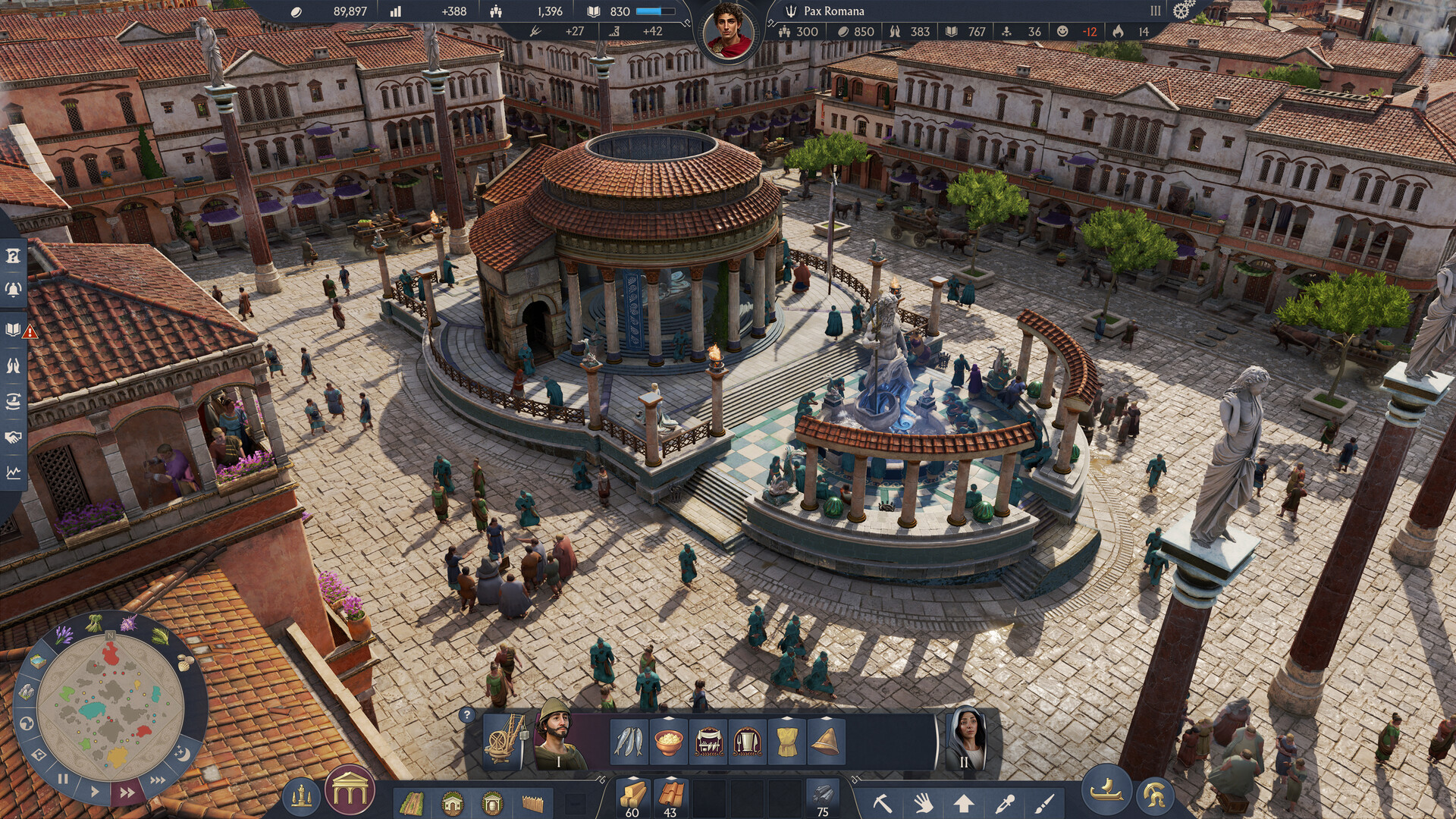
One of Anno 117’s most impressive features is its authentic recreation of Roman architecture and urban planning principles. Players can construct iconic structures like the Colosseum, Forums, Temples to various gods, and luxurious bath complexes. Each building serves both functional and aesthetic purposes, with monuments providing significant bonuses to productivity or happiness.

The game emphasizes historically accurate city layouts. Roman cities were organized around a central forum, with residential districts arranged in orderly blocks called insulae. Major roads connected important structures, while aqueducts supplied fresh water to public fountains and private homes. Recreating these authentic urban designs isn’t just visually rewarding – it’s mechanically advantageous, as proper city planning improves efficiency and reduces transportation times.

Ornamental items allow for extensive customization. Players can add statues, gardens, decorative walls, and plaza designs to create unique cities that reflect their personal style. The game’s graphics engine showcases these details beautifully, with dynamic lighting, seasonal changes, and realistic weather effects bringing the Roman world to life.

Anno 117 Maps and Mediterranean Setting

The Mediterranean Sea serves as the primary theater for Anno 117’s empire-building gameplay. The game features multiple regions representing different parts of the Roman Empire, from the Italian Peninsula to North Africa, Greece, and the Near East. Each region offers unique resources, building styles, and challenges that require adaptive strategies.

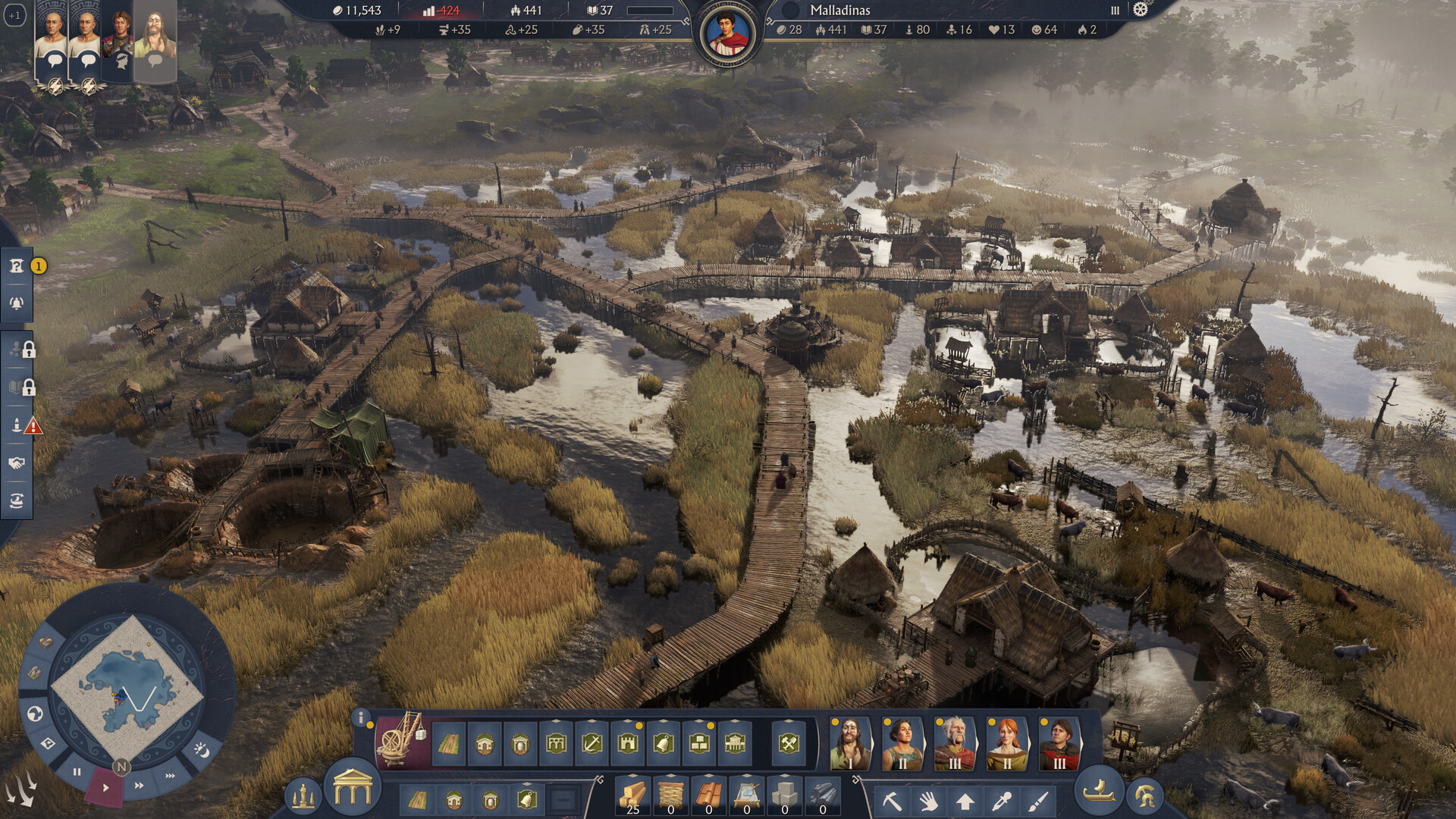
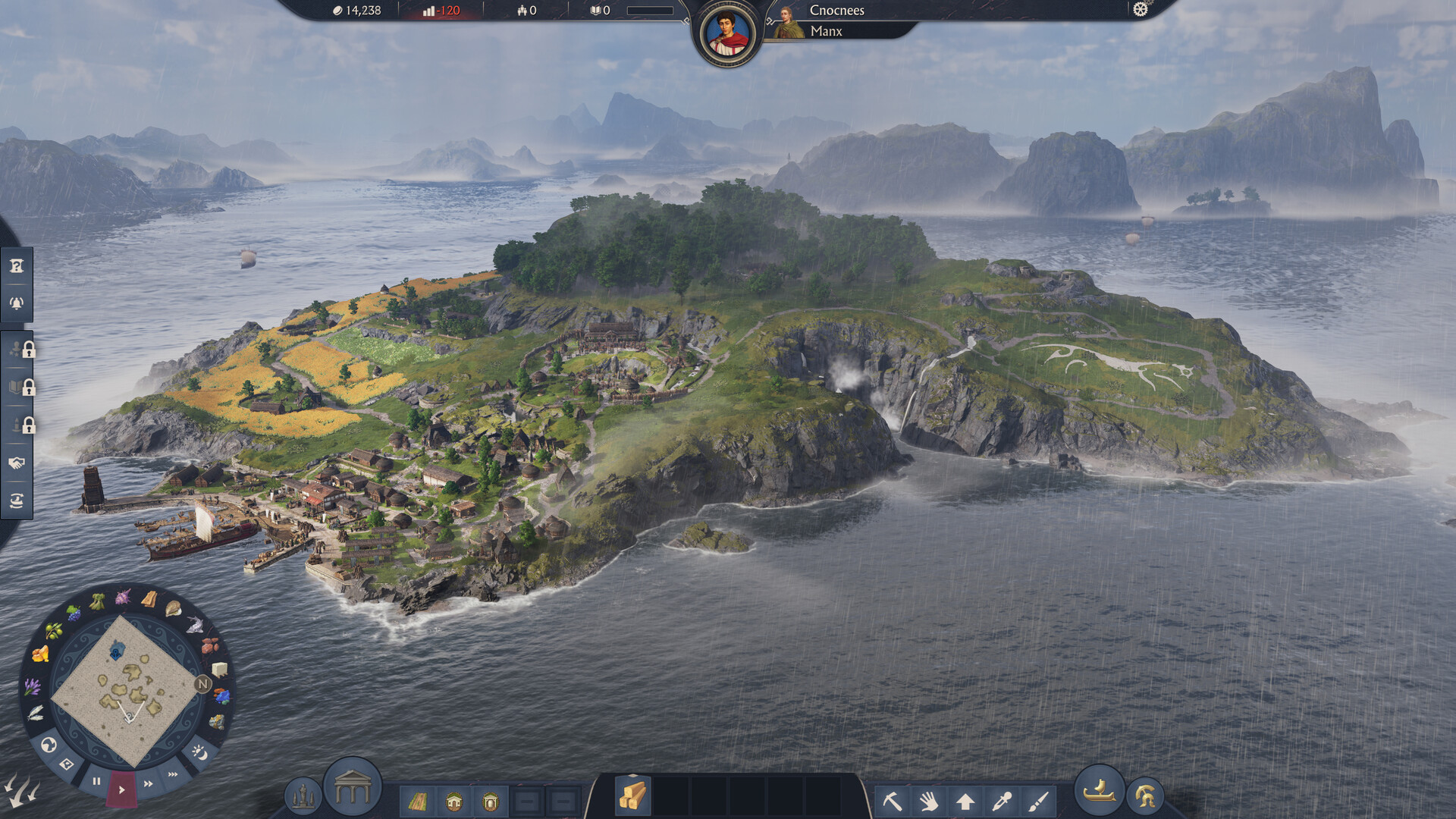
Maps in Anno 117 combine land and sea in intricate configurations. Coastal settlements form the foundation of your empire, with harbors serving as hubs for trade and naval operations. Players must carefully select settlement locations based on available resources, defensive positions, and proximity to trade partners. Some maps include multiple islands, creating natural barriers that require naval dominance to overcome.

Regional specialization becomes crucial as you expand. Northern territories might excel at timber production and mining, while southern regions provide access to exotic spices, silk, and precious metals. Managing trade between these specialized settlements creates satisfying gameplay loops where every region contributes to your empire’s overall prosperity.

Production Chains and Economic Systems

Mastering Anno 117’s production chains separates successful governors from struggling ones. The game features dozens of interconnected production buildings, each transforming raw materials into increasingly valuable goods. Understanding these chains and optimizing their placement is essential for efficient city management.

Basic chains start simple but branch into complex networks. Iron ore mines supply smelters, which produce iron ingots for blacksmiths, who craft tools for other industries. Meanwhile, clay pits feed pottery workshops, sheep farms supply wool for textile production, and olive groves provide oil for both cooking and lamp fuel. As citizens advance through social tiers, new production chains unlock, requiring rare imported materials and specialized craftsmen.

The game introduces a warehouse and logistics system that automatically distributes goods across your settlement. However, poorly planned production areas create bottlenecks and inefficiencies. Strategic players position related industries near each other, ensuring smooth material flow and minimizing cart travel time. Balancing production rates to match consumption prevents wasteful overproduction while avoiding shortages that anger citizens.

Military and Expansion Strategy

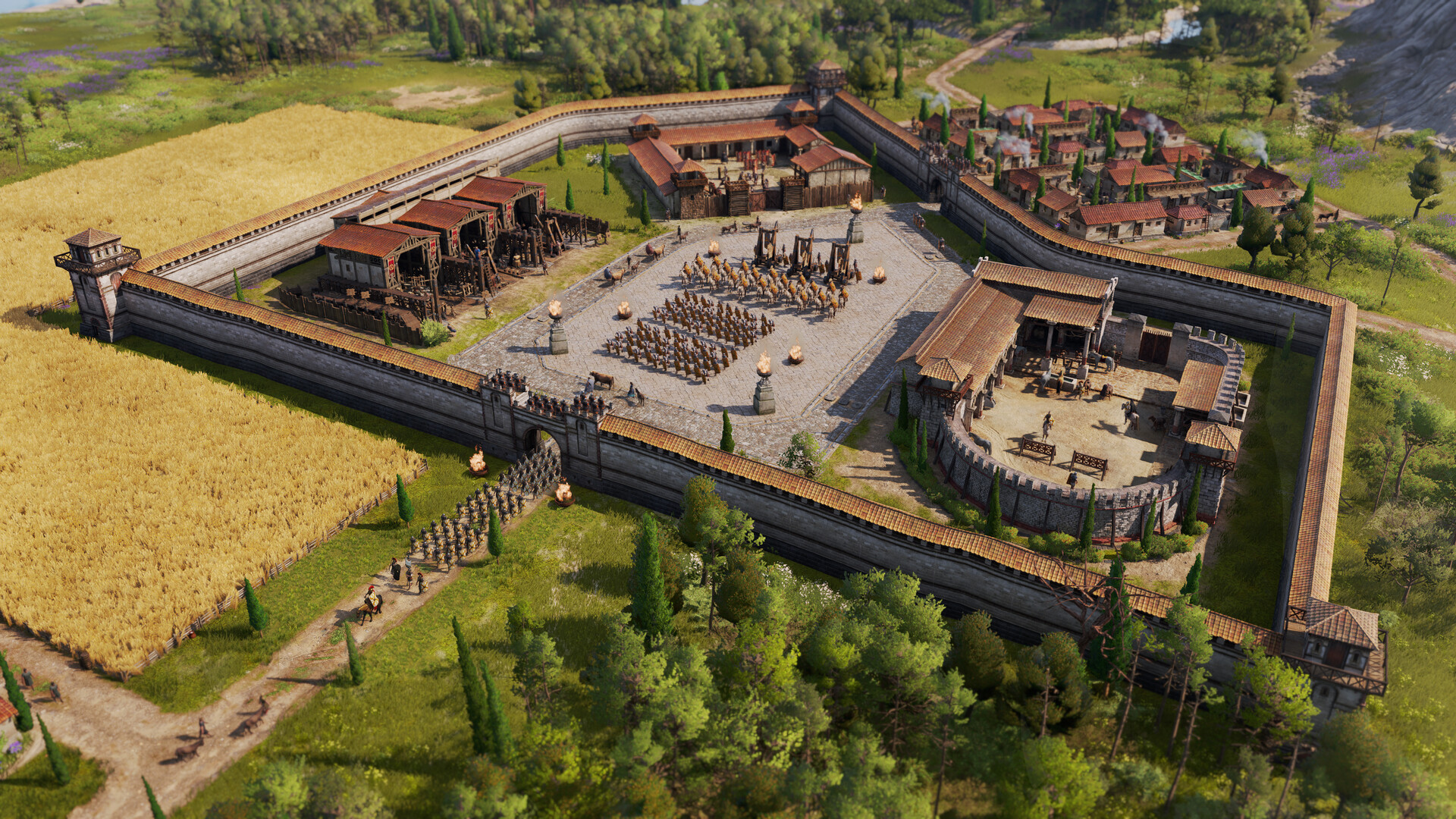
While Anno 117 focuses primarily on economic gameplay, military forces play an important supporting role. Roman legions can be recruited, trained, and deployed to secure new territories, eliminate pirate threats, and defend against barbarian invasions. Military strength also influences diplomatic negotiations, as powerful armies command respect from potential trade partners.

Naval supremacy is particularly crucial given the Mediterranean setting. A strong fleet protects your trade routes from piracy, blockades rival ports during conflicts, and transports legions to distant battlefields. Players must balance military spending against economic development – maintaining large armies is expensive, but inadequate defenses leave you vulnerable to attacks that can cripple your economy.

The expansion system allows peaceful and military approaches. Diplomatic annexation of neighboring settlements through trade agreements and cultural influence provides a non-violent path to growth. However, some territories require military conquest, especially those controlled by hostile barbarian tribes or rival governors. Each approach has strategic advantages depending on your playstyle and current situation.

Combat Unit Types

Anno 117 features authentic Roman military units organized into specialized roles:

Unit TypePrimary RoleStrengthsWeaknesses
LegionariesInfantry coreStrong in formations, versatileVulnerable to cavalry charges
ArchersRanged supportEffective against infantryWeak in melee combat
CavalryMobile strike forceFast, flanking attacksExpensive to maintain
Siege WeaponsFortification destructionBreaks defensive positionsSlow, requires protection
WarshipsNaval combatControls sea lanesCannot fight on land

Diplomacy and Political Systems

The diplomatic layer in Anno 117 adds strategic depth beyond simple military conquest. You’ll interact with various factions including other Roman governors, independent city-states, barbarian tribes, and merchant guilds. Each faction has distinct personalities, objectives, and relationship mechanics that influence how they respond to your actions.

Trade agreements form the foundation of diplomatic relations. Establishing mutually beneficial trade routes improves relationships and unlocks access to exclusive goods. Gift exchanges, marriage alliances, and military support pacts further cement friendships. However, aggressive expansion, trade competition, and broken promises can turn allies into enemies.

The Roman Senate represents an additional political challenge. Your performance as governor is constantly evaluated based on economic prosperity, military victories, and citizen satisfaction. High Senate approval unlocks special privileges like tax relief, military reinforcements, and prestigious building permits. Poor performance results in sanctions, reduced funding, or even removal from office in extreme cases.

Graphics, Performance, and Technical Features

Anno 117: Pax Romana showcases impressive visual fidelity powered by modern gaming technology. The game engine renders thousands of individual citizens going about their daily routines, with each character model displaying unique behaviors and interactions. Buildings feature intricate architectural details that become more elaborate as structures are upgraded through progressive tiers.

Dynamic weather and day-night cycles create atmospheric variety. Morning mist over harbors, afternoon sunshine illuminating marble temples, and dramatic storms at sea all contribute to immersion. Seasonal changes affect not just visuals but gameplay – winter reduces agricultural output while summer enables faster construction. These environmental factors require adaptive planning and resource management.

Performance optimization ensures smooth gameplay even in late-game scenarios with massive cities. The UI provides comprehensive tooltips, production statistics, and economic reports that help players understand complex systems. Customizable difficulty settings allow both casual players seeking relaxed city-building and hardcore strategists wanting maximum challenge to enjoy the experience.

Comparison with Previous Anno Games

Veterans of the Anno series will find familiar core mechanics while discovering meaningful innovations. Anno 117 retains the signature complex production chains, multi-tier population system, and beautiful presentation that define the franchise. However, the Roman setting introduces unique elements that distinguish it from predecessors like Anno 1800.

The historical setting allows for more grounded mechanics compared to futuristic entries. Instead of electricity and advanced technology, players work with ancient Roman engineering like aqueducts, Roman roads, and primitive machinery. The military system receives greater emphasis, reflecting the Roman Empire’s martial culture. Naval warfare becomes more prominent given the Mediterranean’s strategic importance.

Monument construction plays a larger role in Anno 117. Iconic structures like the Colosseum, Circus Maximus, and Pantheon serve as mega-projects that consume enormous resources but provide empire-wide bonuses. These monuments create long-term goals that give direction to your economic planning and territorial expansion efforts.

Frequently Asked Questions About Anno 117: Pax Romana

When does Anno 117: Pax Romana release?

Anno 117: Pax Romana launches on November 12, 2025, for PC, PlayStation 5, and Xbox Series X|S.

What platforms will Anno 117 be available on?

The game releases simultaneously on PC (Steam, Epic Games Store, Ubisoft Connect), PlayStation 5, and Xbox Series X|S.

Is Anno 117: Pax Romana multiplayer?

Yes, Anno 117 includes multiplayer modes allowing cooperative empire-building and competitive scenarios with other players.

Do I need to play previous Anno games to understand Anno 117?

No, each Anno game features a self-contained story and setting. Anno 117 is accessible to newcomers while offering depth for series veterans.

What historical period does Anno 117 cover?

The game is set during the Pax Romana period around 117 AD, during the reign of Emperor Trajan at the Roman Empire’s territorial peak.

Can you build famous Roman monuments in Anno 117?

Yes, players can construct iconic structures including the Colosseum, various temples, aqueducts, forums, and other famous Roman architecture.

What is the main objective in Anno 117: Pax Romana?

The primary goal involves building prosperous Roman settlements, managing complex economies, expanding your territory, and maintaining citizen happiness across different social classes.

Will there be DLC content for Anno 117?

Ubisoft has announced a Season Pass with additional content planned post-launch, including new regions, building packs, and gameplay scenarios.

Tips for New Players Getting Started

Beginning your journey as a Roman governor can feel overwhelming given Anno 117’s mechanical complexity. Start small by focusing on basic production chains that supply food, tools, and building materials. Don’t rush expansion – establish a stable economic foundation before attempting to grow your empire rapidly.

Pay close attention to citizen needs and satisfaction levels. Unhappy populations become unproductive, reducing tax income and potentially triggering unrest. Ensure consistent supply of required goods and place public buildings that improve quality of life. Forums, temples, and entertainment venues keep citizens content even during resource shortages.

Learn to read production statistics and identify bottlenecks early. The game provides detailed economic reports showing consumption rates, storage levels, and production efficiency. Use this information to adjust building counts and balance your economy. It’s better to slightly overproduce essential goods than face shortages that cascade into larger problems.

Trading with other settlements provides access to resources unavailable in your territory. Establish trade routes early and maintain friendly diplomatic relations with merchant partners. Import expensive luxury goods rather than attempting to produce everything locally – specialized production is more efficient than self-sufficiency.

The Future of Anno 117 and Post-Launch Support

Ubisoft has committed to substantial post-launch support for Anno 117: Pax Romana. The Season Pass promises multiple content updates throughout 2025 and beyond, including new regions that expand the map with additional territories to conquer and colonize. These expansions will introduce region-specific resources, building styles, and gameplay mechanics.

The development team actively engages with the community through forums, social media, and regular developer diaries. Player feedback influences balancing adjustments, quality-of-life improvements, and future content direction. This collaborative approach has become a hallmark of Anno games, with developers incorporating community suggestions into patches and expansions.

Modding support remains an important consideration for PC players. While official modding tools haven’t been fully detailed, previous Anno titles supported extensive modification through community-created content. Players anticipate similar flexibility in Anno 117, potentially allowing custom maps, new production chains, and visual enhancements that extend the game’s longevity.

Why Anno 117: Pax Romana Stands Out in 2025

In a gaming landscape dominated by fast-paced action and competitive multiplayer, Anno 117: Pax Romana offers a refreshing alternative for players seeking thoughtful, methodical gameplay. The Roman setting provides immediate recognition and appeal while allowing developers to explore historically grounded mechanics. The combination of economic simulation, light military strategy, and creative city-building creates a uniquely satisfying experience.

The game’s accessibility across platforms breaks down barriers that previously limited the Anno audience primarily to PC players. Console optimization ensures controller interfaces work smoothly for complex city management, bringing the franchise to millions of potential new players. Cross-platform multiplayer further enhances the community by uniting players regardless of their preferred gaming system.

Anno 117 represents Ubisoft’s continued commitment to the city-building genre during an era when many publishers focus exclusively on live-service games and microtransactions. The traditional premium game model with substantial post-launch DLC provides clear value while avoiding predatory monetization. For strategy fans and history enthusiasts, Anno 117: Pax Romana promises dozens of hours of engaging empire-building set during one of civilization’s most influential periods.

  •