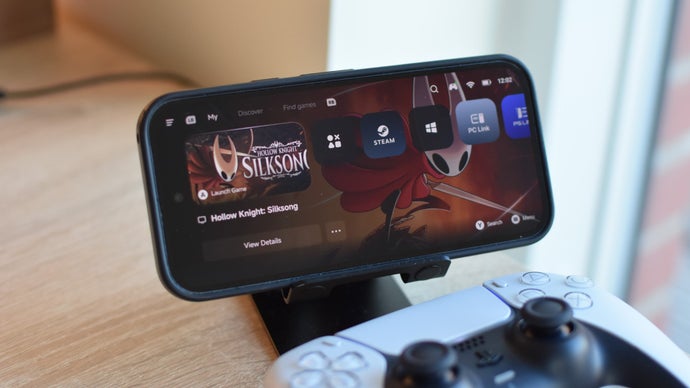
I wasn’t immediately sure who the latest Steam client beta update, which allows Steam review writers to optionally attach their hardware specs and anonymised framerate data, was for. The reviewers? Not unless they want to inadvertently reveal that the reason they aren’t getting 360fps in Space Marine 2 is because they’re trying to run it on a 3DFX Voodoo Banshee. Developers? Performance data could be useful but if I ran a QA department, I’d want that coming from observable tests, not from the bottom of a slur-filled missive from ViperSniper69 (0.2hrs on record).
Then I read the words "This feature is currently in Beta with a focus on devices running SteamOS," and realised: this is for Valve themselves. A devious ploy to record how thousands of hitherto unbenchmarked games run on the Steam Deck and, eventually, the new Steam Machine.
Steam Deck OLED stock is the latest victim of the AI boom-related explosion in RAM and SSD prices, it seems. Valve has just added a notice to its Steam Deck store page explaining that "Steam Deck OLED may be out-of-stock intermittently in some regions due to memory and storage shortages." Steam Deck supply has often been hit with outages, particularly during the early days of the launch of both the Steam Deck LCD and Steam Deck OLED, thanks to Valve's gaming handheld simply being so popular that it regularly sold out. However, several years into its existence, stock of the Steam Deck OLED has generally been fairly consistent, up until now.
It seems it will be easier to be Steam Machine Verified when compared with Steam Deck Verified, according to a Valve designer speaking with Game Developer.
The Steam Machine, announced in late 2025, is yet to make a proper price announcement, with Valve eluding that information since first mentioning the thing. Amid rising RAM costs, it's understandable that waters have been muddled, but recent leaks indicate the company is planning to sell the device at a ludicrous price, even with the current situation.
As per a Jan. 9 Reddit post, which showed a Czech retailer's listing for the Steam Machine, Valve's latest and greatest hardware release is allegedly going to cost between $950 and $1070 for the 512GB and 2TB models, respectively.
Even considering that this figure likely includes VAT (21 percent, indicating a $785 or $885 pre-tax price), this would put it leagues above the base PlayStation 5, which it rivals in terms of raw power, despite its advantages as a PC rather than a specialized console. At this stage, you can get yourself a used PS5 for around $300 in the second-hand market with no extra tax on top, making it more than twice as cheap as the Steam Machine, which can in no way compete even at the usual $499 retail price point.
The increased price is likely due to the steep jump in undiced DRAM prices lately that have affected not only proper RAM, but every single hardware module that uses memory, including storage, motherboards, graphics cards, and everything in between. It's an unprecedented market situation at the moment, worse than even those COVID years when Bitcoin mining ate through the entirety of the global GPU supply.
However, at this price, it's basically dead on arrival. No one who has any other options would settle for purchasing a frankly low-range machine for over a thousand bucks when that same money could be funneled into consoles or even a much better PC in the used (or on-sale retail) market.
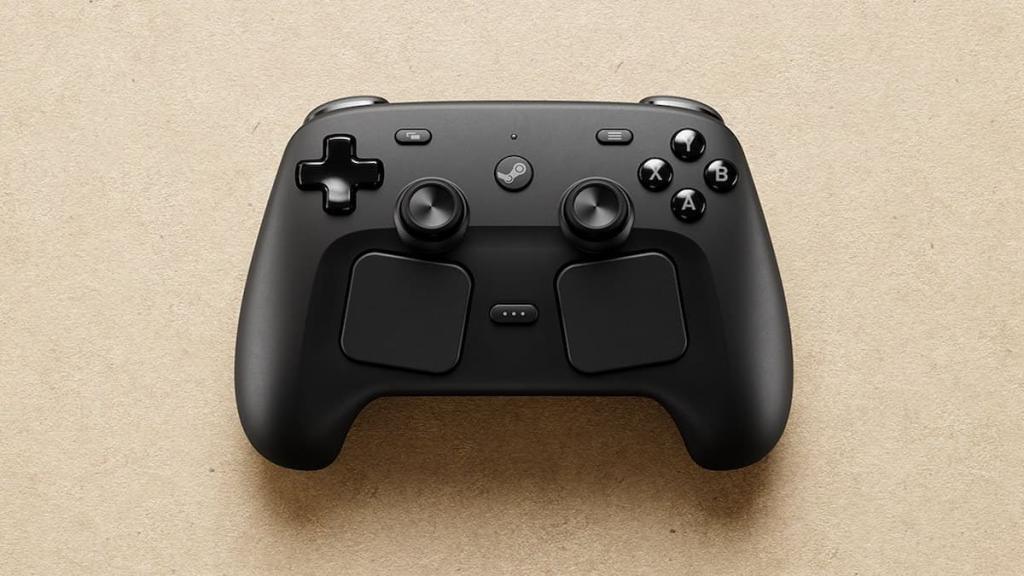
The Steam Controller is starting to look like the best of the newly announced Valve hardware. Image via Steam
You could literally buy a PS5 with two controllers, a 4K OLED, and probably a game to play on them for the same price as just the Steam Machine itself, which is a Linux-based, Steam-oriented PC coming with its own fair share of base limitations.
It just does not make sense to release the Steam Machine at this price, at least not if it's aimed at the average Joe and not corporations and their use cases, where Valve can't expect to make up for a loss leader strategy through game sales. However, as Valve usually sells its hardware through Steam and not retailers, it's safe to say that the price above also includes their cut, somewhat increasing the official listing. Even so, I don't believe it's a big factor, given how large the base price probably is. Soon, we will know for sure.
Update 09/01/2026: In response to the publication of this article, a separate user on X (formerly Twitter) dug into the Smarty.cz source code to verify the Steam Machine pricing estimates for themselves, and went a step further to look into Alza, another Czech retailer and one of the country's largest. On Alza's listing for the Steam Machine, user Hajedan also found that it had a similar pricing structure for the Steam Machine, though added that the original post's indication that the actual price will be lower than the conversion estimates is almost definitely correct due to Alza and Smarty.cz including […]
With the Steam Frame and Steam Machine launching with SteamOS Linux this year, we're going to again see a nice boost for Flatpaks and desktop Linux overall.
Valve’s quiet bankrolling of open-source emulation tools could make it heaps easier to play your PC games library on a humble smartphone, though it sounds like Gabe-made SteamOS phones are unlikely to be joining the company’s growing hardware catalogue. In an interview with The Verge, Valve engineer Pierre-Loup Griffais confirmed that they’ve been funding the development of Fex – a free compatibility tool that gets Windows apps functioning on mobile ARM processors – since well before revealing the ARM-based Steam Frame standalone VR headset.
This week’s most popular game is not a robovoiced extraction shooter or a buggy martial arts RPG, but Guess The Steam Machine Price: a well-meaning (if largely speculative) timepasser wherein whoever most accurately converts Valve’s teasing into a final street price for the resurrected SteamOS mini-PC wins. In 2026, when it launches.
I feel left out, so will have a go myself below, though there’s quite a serious kink in mine or indeed anyone’s plan to ticket the Steam Machine by speccing an equivalent DIY PC. Alas, RAM prices have gone stratospheric, in a manner not seen among computing components since the Great Graphics Card Dumpster Fire of 2020.
Valve has revealed its refreshed Steam Machine, a compact PC designed for living-room or TV-attached gaming. Unlike the old partner-built Steam Machines from the 2010s, this version is entirely made by Valve and runs SteamOS 3 (Arch-based) with a KDE Plasma desktop interface. Launch is expected in early 2026. Key Features & Specs Component Specification…
Valve tried making Steam Machines a thing once, long ago, but they flopped so hard that we barely even remember them. Still, Valve has changed, and the new Steam Machine looks like an entirely different machine, so let's look at why they might actually pull it off this time around.
The first time I saw a PS1 controller was in a TV ad, and it just looked too different from any controller of its time to have me sold on it. It was only when I tried it out at a store's display that I realized it was the most ergonomic controller at that point.
The original Steam controller was actually pretty good, but its radically unique design just threw so many off before they even got to try it. That was made worse by how people could only buy it online, missing out on the chance to test it themselves before passing a harsh judgment. The new Steam controller keeps the features of the original, while looking a lot more like a regular controller would. The Steam Machine isn't meant to work solely with the new Steam Controller, but that's a great way to conquer the more casual-oriented family demographic. The device used to interact with the new system must look ergonomic and accessible even before potential users experience it.
ARM Support is a great strategic advantage
As caught by Digital Foundry, the new Steam Machine might have a powerful trick up its sleeve. Long story short, the new Steam Machine features ARM support, which will allow it to fight on all fronts. The main reason why the original Steam Machine failed was that it ran on Linux, and just didn’t entice enough developers to create native Linux ports of their games, which resulted in a killer lack of output. The new Steam Machine will run on Steam OS 3, which comes from Linux as well, yes, but it'll be compatible not only with PC games, but also mobile ones.
One Steam Machine to rule them all
Everything about the original Machine was too confusing, to the point that there wasn’t even just "one" Steam Machine, but a bunch of different machines from different manufacturers with the Steam Machine brand slapped on them. On top of adding extra layers of confusion, this exacerbated existing problems. The original Steam Machine was meant to compete with PCs, but it had a limited or null range for upgrades, depending on its manufacturer. It was, somehow, both a more limited and more confusing product than a PC.
We still don't know the range of upgradeability of the new Steam Machine, but it'll feature a unified hardware and, also very importantly, design. It might seem stupid, but this is what makes people see the machine as a strong product, and not as one of many confusing and less alluring alternatives to a PC. Have you noticed its cube shape and how everyone has been calling it the "Gabe Cube"? That sounds a lot like Valve might've cooked themselves behind the scenes to take off in a seemingly organic way, and, either way, it sure has. That's a sign that something is happening.
Consoles are too comfortable right now
The console market currently sucks, with the output of games at an all-time low and prices at an all-time high. Back then, even the cheapest Steam Machine would cost you $499, rendering it incapable of competing with the PS4. Today, even at the higher price point that Valve is hinting at for the Steam Machine, a lot of people might just shell out a few more dollars to get a more powerful system with access to a much larger library—one that even includes many of the best PlayStation games out there.
Why the Steam Machine can really pull it off
In case you're still not aware of it, I must break it to you that we're currently in the era of "Enshittification", a term coined by Sci-Fi author Cory Doctorow that describes the process by which online platforms become less effective and sometimes straight-up sillier for no apparent reason. Sadly, that also rings true regarding tech products, despite all manner of technological advances. Valve, however, seems serious about delivering something new that also performs old functions better.
Also, Valve is simply in a much better position to promote its own hardware right now. The Steam Deck is a massive success, a miraculous non-Nintendo piece of mobile hardware that's not only selling like hot cakes but has even inspired a wide array of competitors, effectively creating a new line of hardware in the mobile-PC hybrid arena.
Despite its current ubiquity, Steam wasn't always the juggernaut it currently is. The idea of a launcher might sound pretty useful, so long as it's not competing with a bunch of others, but not everyone was immediately keen on an extra step required to play a game. Valve, however, ended up improving Steam until it became essential to every PC gamer. Steam Machines might just follow suit, regardless of how silly that sounds right now.
Rumors of Valve’s upcoming Steam Machine console not being cheap has been going around for a while now especially with Linus Tech Tips claiming that the energy after asking the team if it would be around $500 “wasn’t great.” Following this, Valve Software Engineer Pierre-Loup Griffais, revealed on the Friends Per Second Podcast that the console will be priced similarly to a PC with the “same level of performance,” and not like other consoles or the Steam Deck. When asked about the price, Griffais said, “It’s more in line with what you might expect from the current PC market. Obviously, our goal is for it to be a good deal at that level of performance. And then you have features that are actually really hard to build if you’re making your own gaming PC from parts.” “Things like the small form factor and I think the noise level that we achieved or lack thereof is really impressive,” he continued. “And we’re excited that the people are going to find out how quiet this thing is.” The Steam Machine will launch in early 2026.
The device’s details:
Steam Machine
Your Steam Library in More Places
With over six times the horsepower of Steam Deck, Steam Machine has the power to play your whole Steam library, including your favorite AAA titles. Just sign in with your Steam account and your entire library is there.
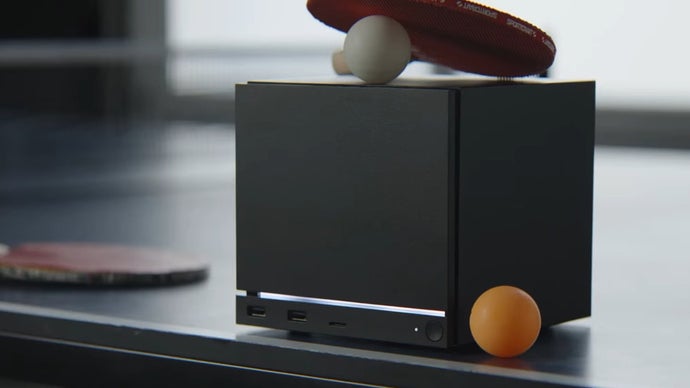
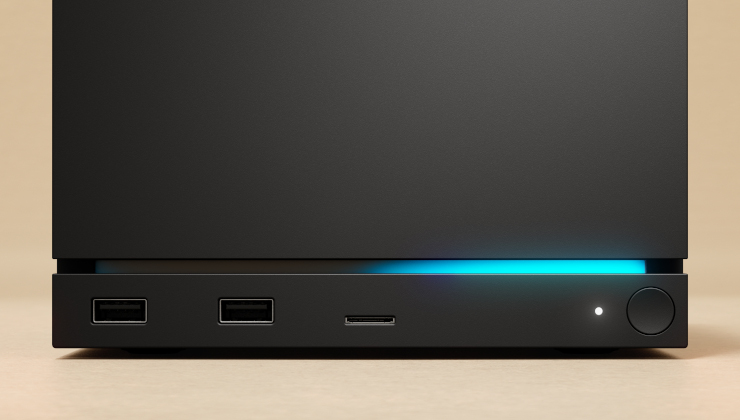
There’s an LED Strip, Y’all!
Keep tabs on system status like download progress, even when your screen is off. Customize it with different colors and animations. Or turn it off!
Optimized for Gaming…
It Runs SteamOS – Steam Machine runs Valve’s gaming-first operating system. SteamOS is designed to provide a plug-and-play user experience, while keeping the power and flexibility of a PC. Experience SteamOS in the same way as other Steam hardware, like Steam Deck and Steam Frame.
Steam Machine Verified – We are expanding our Verified program to include ratings for Steam Machine, so customers can understand how their games will run.
…and it’s a PC
Yes, Steam Machine is optimized for gaming, but it’s still your PC. Install your own apps, or even another operating system. Who are we to tell you how to use your computer?
Steam Machine Plays Well, Wherever Steam is
Made for Steam Controller – Steam Machine comes with a built-in wireless adapter, just for pairing with Steam Controller. (Up to four with a single adapter!) This means you can pair your Steam Controller without its puck, and you can wake your Steam Machine without leaving your couch.
Great for Streaming – With enough horsepower to take on the most demanding games, Steam Machine is the perfect host PC for streaming to other devices. Easily stream to your Steam Deck, Steam Frame, or any other device running Steam or Steam Link.
Key Features
SteamOS – An OS optimized for gaming, with fast suspend/resume, and cloud saves. And that’s just the start.
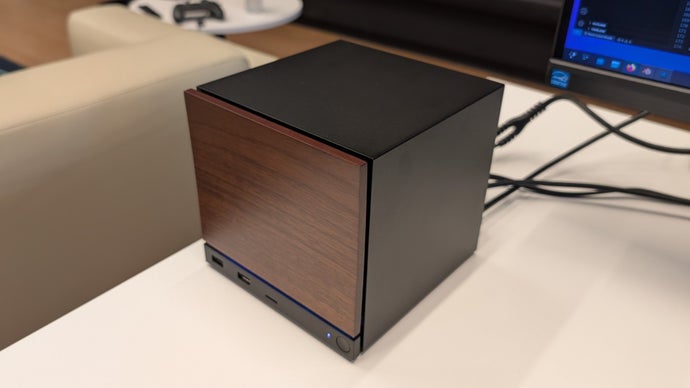
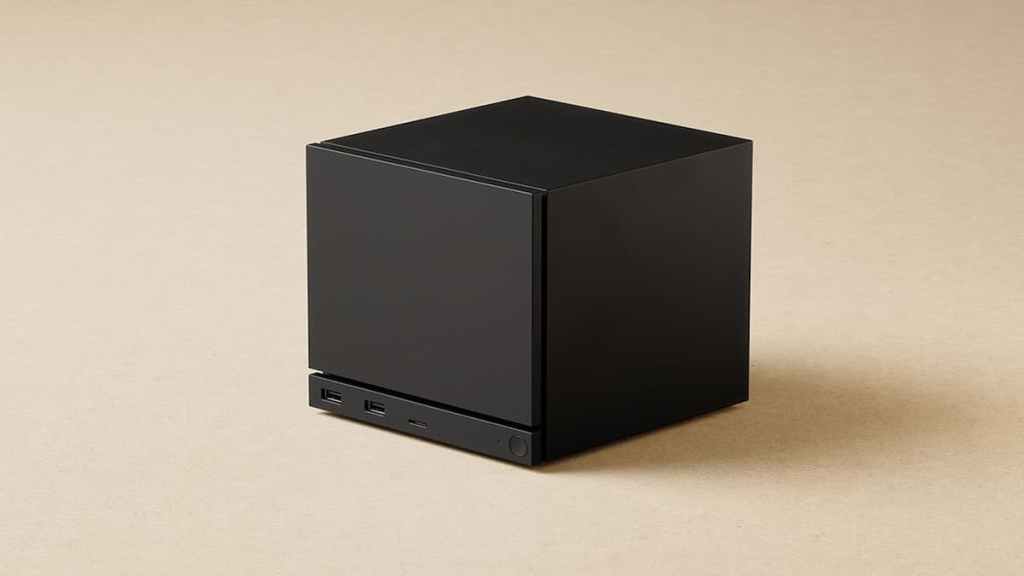
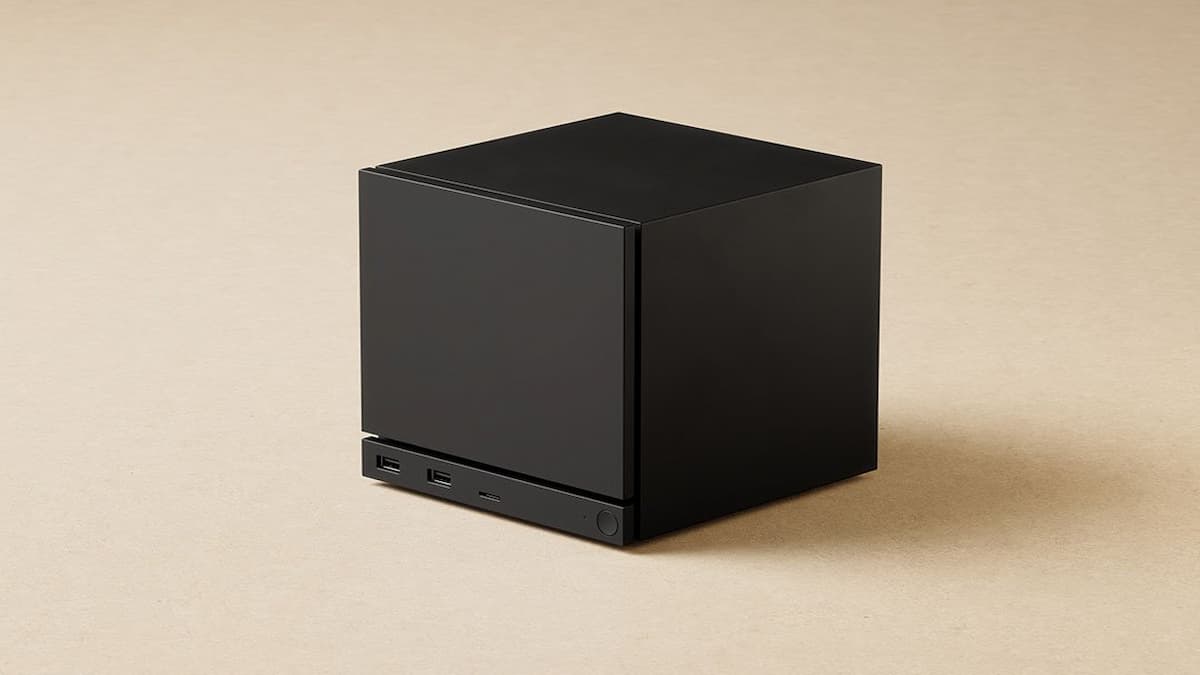
Small Form Factor – Put it under your TV. Set it on your desk. Hide it under a banana. It’s powerful PC gaming packed into a roughly 6-inch (~160mm) cube. Cool and Quiet – Steam Machine keeps cool and runs whisper-quiet, even while running the most demanding games.
I/O for Days – Ready for all the peripherals and monitors you can throw* at it: 1 Gigabit Ethernet. DisplayPort 1.4. HDMI 2.0. One USB-C and four USB-A ports. *But, like, don’t actually throw things at it.
CPU and GPU – 4K gaming at 60 frames per second with FSR, thanks to a discrete semi-custom AMD desktop class CPU and GPU.
Storage – Available in two storage sizes: 512GB and 2TB. Both come with expandable storage via microSD.
Connectivity – 2×2 Wi-Fi 6E, plus Bluetooth 5.3 with a dedicated antenna. Steam Controller’s wireless adapter is built right into Steam Machine for direct pairing. Power – No giant brick! Steam Machine’s power supply is built right in.
Technical Specifications
General
CPU
Semi-custom AMD Zen 4 6C / 12T
up to 4.8 GHz, 30W TDP
GPU
Semi-Custom AMD RDNA3 28CUs
2.45GHz max sustained clock, 110W TDP
RAM
16GB DDR5 + 8GB GDDR6 VRAM
Power
Internal power supply, AC power 110–240V
Storage
Two Steam Machine models:
512GB NVMe SSD
2TB NVMe SSD
Both models include a high-speed microSD card slot
While Valve has noted that it will price the Steam Machine so that it’s “more in line” with the “current PC market”, the company is yet to confirm what exactly this means. Former Xbox executive and Blizzard president Mike Ybarra, however, believes that the company should be more open with its operating system – SteamOS – and allow other companies to use it as well. In a social media post, Ybarra said that a key to the adoption of SteamOS would be to allow more companies to ship it with their own systems.
“Dear Valve Software, please just let 3rd parties use SteamOS and make the [hardware] with many different configurations,” wrote Ybarra. “SteamOS will take off and your Store revenue will only go up.” Ybarra went on to note that using SteamOS like this would also be a great move for Xbox, rather than the company sticking to Windows.
“This is what Xbox should do, btw,” his post continued. “But they will likely be forced to push Windows with AI, co-pilot, teams, and more. They could do GREAT if they embraced SteamOS on HW.”
It is worth noting that, since it is a Linux-based operating system, SteamOS is quite open even in its current form, with some users even finding success when they attempt to use the Steam Deck’s SteamOS recovery image on a desktop PC with AMD hardware. However, Valve hasn’t yet released SteamOS on its own to the public, and the operating system is still largely limited to specific sets of hardware, like the aforementioned Steam Deck and Lenovo’s Legion Go S.
The decision to not open it out the public is likely a technical one, since the operating system would need wider driver support in order to run on more hardware. Currently, the company is more focused on ensuring that its own hardware – the Steam Deck and the upcoming Steam Machine and Steam Frame – and is working with AMD to ensure the correct drivers are available in for the operating system. In fact, the company is likely keen on opening the operating system up to more hardware companies, but doesn’t have the bandwidth to ensure that all of the required driver development for different hardware configurations can be supported.
While SteamOS on its own might be “officially” limited to only Valve’s hardware releases, the Linux community has stepped up to fill in the gaps on its own. One of the more popular Linux distribution that offers a SteamOS-like experience is the Fedora-based Bazzite, which allows users to set it up to be quite similar to SteamOS, including booting right into Steam’s Big Picture mode.
On the subject of Xbox and the Steam Machine, NYU Stern Schoool of Business professor and industry analyst Joost van Dreunen has referred to Valve’s upcoming compact gaming PC as “Microsoft’s worst nightmare”.
“Steam Machine basically turns Microsoft’s worst nightmare into a shipping product,” said van Dreunen. “It pushes Microsoft further down the path it’s already walking, where Game Pass and cloud access matter more than plastic boxes.”
Dear @valvesoftware, please just let 3rd parties use SteamOS and make the HW with many different configurations. SteamOS will take off and your Store revenue will only go up.
This is what Xbox should do, btw. But they will likely be forced to push Windows with AI, co-pilot,… https://t.co/ZFzcxLZqnj
A lot of people are expecting that the Steam Machine will bridge the gap between PC and consoles, and that’s certainly what Valve is hoping for. From what we’ve seen so far, it looks to be a really neat little PC, and Valve promises it can play games at up to 4K at 60 FPS. If you know anything about PC gaming, you know that’s no easy (or affordable) feat.
There’s been a lot of debate around the Steam Machine’s pricing, but Valve has now addressed the matter directly. In the Friends Per Second podcast, Valve’s Lawrence Yang and Pierre-Loup Griffais were asked tough questions about Valve’s ambitions with the console/PC hybrid, and they said the following regarding pricing:
“I think that if you build a PC from parts, and get to the same level of performance, that’s the general price window we aim to be at.”
The Duo also stated that the Steam Machine’s price would be closer to the expectations people have from the PC market. No exact figure was given, but for context, you can build a similar gaming PC to the Steam Machine for around $800, in terms of performance.
Will The Steam Machine Be Too Expensive For Most People?
As someone who is very in-tune with PC gaming hardware, I’m not surprised that the Steam Machine won’t be around $500. With the boom of AI, massive companies are buying up all the memory and storage they can get their hands on, inflating the price of DDR5 RAM kits and NVMe SSDs. Both of these components are highly important for modern gaming PCs, and with prices going higher, PCs are getting expensive once again.
I think this so-called “GabeCube” will cost anywhere between $700-$800. That puts it right next to the PS5 Pro in terms of pricing, and I reckon most casual gamers will pick the Sony console. Heck, most would go with the standard PS5 that sits at $550. In the same Friends Per Second podcast (great podcast, by the way, I watch it regularly), Valve’s Pierre-Loup Griffais confirmed that the Steam Machine won’t be subsidized hardware.
What that means is that Valve won’t be taking a loss on hardware and trying to recoup costs from game profits. So, it looks like the Steam Machine will still be a good entry point for new PC gamers, thanks to the streamlined SteamOS, but it won’t come cheap.
How about that Steam Machine, 'ey? Consoles are now computers and computers are now consoles. What a topsy turvy world we're living in! I'm sure you have lots of questions, a lot of which I hope can be answered by James' hands-on look at the thing, but you may still be wondering how you'll know what games will actually work on it. The Steam Deck has its fancy verified badge that certifies that a game runs on the handheld, and it turns out that same badge is one that'll come in handy for the Steam Machine.
Valve has announced three new devices that will be added to its set of hardware offerings, confirming past rumors. They are the Steam Machine, Steam Frame, and Steam Controller. While prices for the devices have yet to be revealed, they will all launch sometime in early 2026. An announcement trailer for the devices was also released. The Steam Machine is a new Steam console “with over six times the horsepower of Steam Deck,” while the Steam Frame is “a streaming-first, wireless VR headset + controllers that can handle your whole Steam library.”
The full details and specs for each device:
Steam Machine
Your Steam Library in More Places
With over six times the horsepower of Steam Deck, Steam Machine has the power to play your whole Steam library, including your favorite AAA titles. Just sign in with your Steam account and your entire library is there.
There’s an LED Strip, Y’all!
Keep tabs on system status like download progress, even when your screen is off. Customize it with different colors and animations. Or turn it off!
Optimized for Gaming…
It Runs SteamOS – Steam Machine runs Valve’s gaming-first operating system. SteamOS is designed to provide a plug-and-play user experience, while keeping the power and flexibility of a PC. Experience SteamOS in the same way as other Steam hardware, like Steam Deck and Steam Frame.
Steam Machine Verified – We are expanding our Verified program to include ratings for Steam Machine, so customers can understand how their games will run.
…and it’s a PC
Yes, Steam Machine is optimized for gaming, but it’s still your PC. Install your own apps, or even another operating system. Who are we to tell you how to use your computer?
Steam Machine Plays Well, Wherever Steam is
Made for Steam Controller – Steam Machine comes with a built-in wireless adapter, just for pairing with Steam Controller. (Up to four with a single adapter!) This means you can pair your Steam Controller without its puck, and you can wake your Steam Machine without leaving your couch.
Great for Streaming – With enough horsepower to take on the most demanding games, Steam Machine is the perfect host PC for streaming to other devices. Easily stream to your Steam Deck, Steam Frame, or any other device running Steam or Steam Link.
Key Features
SteamOS – An OS optimized for gaming, with fast suspend/resume, and cloud saves. And that’s just the start.
Small Form Factor – Put it under your TV. Set it on your desk. Hide it under a banana. It’s powerful PC gaming packed into a roughly 6-inch (~160mm) cube. Cool and Quiet – Steam Machine keeps cool and runs whisper-quiet, even while running the most demanding games.
I/O for Days – Ready for all the peripherals and monitors you can throw* at it: 1 Gigabit Ethernet. DisplayPort 1.4. HDMI 2.0. One USB-C and four USB-A ports. *But, like, don’t actually throw things at it.
CPU and GPU – 4K gaming at 60 frames per second with FSR, thanks to a discrete semi-custom AMD desktop class CPU and GPU.
Storage – Available in two storage sizes: 512GB and 2TB. Both come with expandable storage via microSD.
Connectivity – 2×2 Wi-Fi 6E, plus Bluetooth 5.3 with a dedicated antenna. Steam Controller’s wireless adapter is built right into Steam Machine for direct pairing. Power – No giant brick! Steam Machine’s power supply is built right in.
Technical Specifications
General
CPU
Semi-custom AMD Zen 4 6C / 12T
up to 4.8 GHz, 30W TDP
GPU
Semi-Custom AMD RDNA3 28CUs
2.45GHz max sustained clock, 110W TDP
RAM
16GB DDR5 + 8GB GDDR6 VRAM
Power
Internal power supply, AC power 110–240V
Storage
Two Steam Machine models:
512GB NVMe SSD
2TB NVMe SSD
Both models include a high-speed microSD card slot
Two USB-A 3.2 Gen 1 ports in the front
Two USB-A 2.0 High speed ports in the back
One USB-C 3.2 Gen 2 port in the back
Networking
Gigabit ethernet
LED Strip
17 individually addressable RGB LEDs for system status and customizability
Size and Weight
Size
152 mm tall (148 mm without feet), 162.4 mm deep, 156 mm wide
Weight
2.6 kg
Software
Operating System
SteamOS 3 (Arch-based)
Desktop
KDE Plasma
Steam Frame
VR and Non-VR Gaming
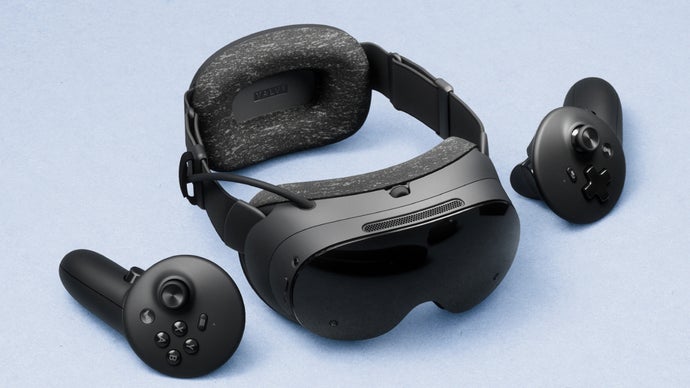
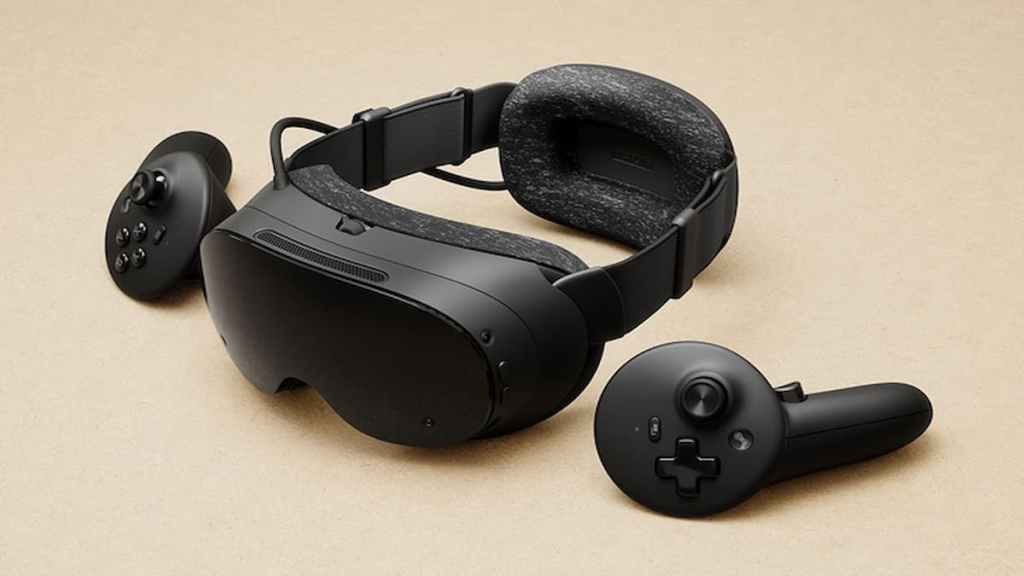
Steam Frame is a streaming-first, wireless VR headset + controllers that can handle your whole Steam library. Step into immersive VR, or lean back and enjoy your non-VR catalog. And it supports stand-alone play too.
Designed for Comfort. Easy to Use
The Steam Frame headset is lightweight and compact, with the weight balanced front-to-rear for a comfortable experience. It’s also easy to just slip on and play, with no wires and no setup.
A High Quality Streaming-First Experience
Streaming can be highly variable, so we prioritized making Steam Frame a stable, high quality streaming experience.
Wireless Adapter and Dual Radios – The included plug-and-play 6GHz wireless adapter provides a dedicated link for both VR and non-VR streaming. Steam Frame’s dual radios make this connection even more stable: One radio is dedicated to streaming the audio and visuals, and the other connects to your Wi-Fi. Two dedicated links, no competition for bandwidth.
Introducing Foveated Streaming – Foveated Streaming is a new feature that optimizes detail where your eyes are looking, and typically offers over a 10x improvement in image quality and effective bandwidth. Behind the scenes, we’re using low-latency eye tracking data to steer the best quality pixels only to where you’re looking. This is all happening without you noticing, and works for your entire Steam library.
Key Features
Jump Right Into Your Games – Just wake up the headset, and you’re gaming. No fuss, no setup; just games
Who Wants Pancakes? – Thin and light custom pancake lenses provide edge-to-edge sharpness and a large eye box. Optics feature 2160 x 2160 LCD panels, one per eye. Supported refresh rates are 72-144Hz.
Seamless Audio Experience – Steam Frame has high fidelity audio via dual stereo speakers on each side. The speakers within each pair are oriented in opposite directions to cancel out vibrations, which can be a tracking system buzzkill.
Camera Tracking – No setup required. Four high-resolution, monochrome cameras provide controller and headset tracking. Infrared LEDs on the outside make tracking great even in dark environments.
Controllers for All Your Games – Hop between your VR and non-VR games. Steam Frame Controllers are designed with a split gamepad layout to work with your whole Steam library.
The VR Inputs You’d Expect… – Steam Frame controllers are tracked in space by the headset, and come with all the inputs needed for your VR games. Capacitive finger tracking enhances immersion. These controls are fully backwards compatible and support the full SteamVR catalog.
…And Inputs for Non-VR Games, Too – The Steam Frame controllers also have all the familiar inputs you need to play non-VR games: D-pad, ABXY, thumbsticks, triggers, and bumpers, all right where you’d expect them.
Magnetic Thumbsticks – Steam Frame includes next-generation magnetic thumbsticks for precision and capacitive finger sensing. These are the same thumbsticks included in Steam Controller.
Easy Battery Access – Each Steam Frame controller runs on a single AA battery, offering ~40 hours of play time.
Supports Standalone Play, Too
Steam Frame is a PC, and runs SteamOS powered by a Snapdragon 8 Series Processor. With 16GB of RAM, Steam Frame supports stand-alone play on a growing number of both VR and non-VR games without needing to stream from your PC.
Steam Frame is a PC
It Runs SteamOS – Quick suspend / resume. Cloud saves. All the features of SteamOS that make for a great user experience are now available in VR. Just like any SteamOS device, install your own apps, open a browser, do what you want: It’s your PC.
Steam Frame Verified, for Standalone Games – Just like Steam Deck and Steam Machine, Steam Frame will have a verified program that helps you see which games in your library (VR and non-VR) will work stand-alone.
Yes, There’s a Developer Kit!
Hi devs! We want a great experience on Steam Frame for as many Steam games as possible, whether it’s via streaming or stand-alone. We’re opening up a Steam Frame Developer Kit program to help.
The more developers with Steam Frames in hand, the more feedback we can grab; and the better we can make Proton and SteamOS and improve compatibility for the entire Steam library. You can request a Steam Frame developer kit in your Steam partner dashboard. Supplies are limited, but we will be sending out kits on an ongoing basis.
Steam Frame Plays Well, Wherever Steam Is
Your Steam Frame headset easily pairs with your Steam Controller; you’ll even see a virtual Steam Controller floating in your VR space. Stream from your PC, laptop, Steam Deck or Steam Machine for an immersive experience with any of your favorite games.
Rechargeable 21.6 Wh Li-ion battery
One USB-C 2.0 port in the rear, for charging and data
Charge with USB-C, 45W
Modular Headstrap
Headstrap includes integrated dual audio drivers and and rechargeable battery on rear.
Headstrap weight: 245g
Core module can be separated from headstrap, for other headstrap solutions.
Wireless adapter included in the box
Wi-Fi 6E (6GHz)
Provides direct, low-latency link between headset and PC
Bluetooth
Bluetooth 5.3
Audio
Speakers
Dual speaker drivers per ear, integrated into headstrap
Microphone
Dual microphone array
Size and Weight
Size
175mm x 95mm x 110mm (core module + facial interface)
Weight
440 g – core module + headstrap
185 g – core module
Software
Operating System
SteamOS 3 (Arch-based)
Desktop
KDE Plasma
Controller Technical Specifications
Controls and Input
Motion Controls
Full 6-DOF tracking and IMU support
Gamepad Controls
A B X Y buttons (right controller)
D-pad (left controller)
Full-size magnetic thumbsticks (TMR) with capacitive touch
L & R analog triggers
L & R bumpers
View / Menu / Steam buttons
Dual stage grip buttons
Haptics
Haptic motor in each controller
Finger Tracking
Capacitive sensing for all input surfaces
Capacitive finger tracking
General
Wi-Fi
2.4ghz link to dedicated headset radio
Size
126mm x 73mm x 87mm per controller
Weight
With battery 130 g per controller
Without battery 107 g per controller
Power
One replaceable AA battery per controller
40hr battery life
Steam Controller
Play Your Whole Steam Library
Built for Steam, and configurable with Steam Input. Play all your games however you like, on whatever you like: PC, laptop, Steam Deck, Steam Machine, Steam Frame, and more.
Key Features
Plug and Play With the Steam Controller Puck – One puck, two jobs: It’s a wireless transmitter that provides a fast, stable connection for your Steam Controller. It’s also a charging station, connecting to your Controller magnetically with a satisfying click. Prefer using Bluetooth or USB? Steam Controller supports those too.
Next-Generation Magnetic Thumbsticks – Steam Controller comes with magnetic thumbsticks using TMR technology, designed for improved feel, responsiveness and long-term reliability. They also support capacitive touch to enable motion controls.
High Definition Rumble – Steam Controller’s powerful motors are capable of handling complex waveforms for immersive, accurate haptics.
Grip-Enabled Gyro – We’re calling it Grip Sense, and it’s a new input for Steam Controller that enables gyro with capacitive touch. Hold and release to enable and disable gyro aiming. You can also map it like any other button.
All the Inputs You’d Expect
Control and Comfort – Steam Controller is built for comfortable extended play, with thumbsticks, buttons, bumpers, and triggers positioned for hands of all sizes. Trackpads – Use Steam Controller to play even your favorite mouse and keyboard games. With increased precision and customizability, it’s another way to enjoy fast-paced FPS games.
Motion Control – Aim more naturally with gyro, capacitive touch thumbsticks, and the new grip-sense feature, to achieve even more precision.
Grip Buttons – Four buttons on the back; you choose how to use them, all while leaving your thumbs on the trackpads or thumbsticks.
Steam Button – The Steam button is both the power button and the quickest way to navigate to your library, the store, game controls, settings, and more. Quick Access Menu – Easily access notifications, friends list, Steam Chat, and more. Press and hold to get a handy list of shortcut options in Steam.
Customizable for Steam Input
Steam Controller was designed with all the inputs for all your games. Paired with Steam Input, it’s the ultimate customizable controller. Thanks to its input parity with Steam Deck, Steam Controller will be pre-populated with community configurations for thousands of games from day one, or you can make and share your own.
Steam Controller plays well, Wherever Steam Is
With Anything Running Steam – Steam Controller works with any PC or device running Steam or the Steam Link app. This includes Windows, Mac, and Linux PCs, as well as tablets and smart phones.
Steam Deck – Whether your Steam Deck is docked or on the go, Steam Controller is a great companion, with all the same familiar inputs.
Steam Machine – Steam Controller pairs easily to Steam Machine without its puck. Wake your Steam Machine without leaving your couch.
Steam Frame – Infrared LEDs make Steam Controller trackable by Steam Frame’s cameras when you’re immersed in VR. Perfect for playing all of your non-VR games on a giant virtual screen.
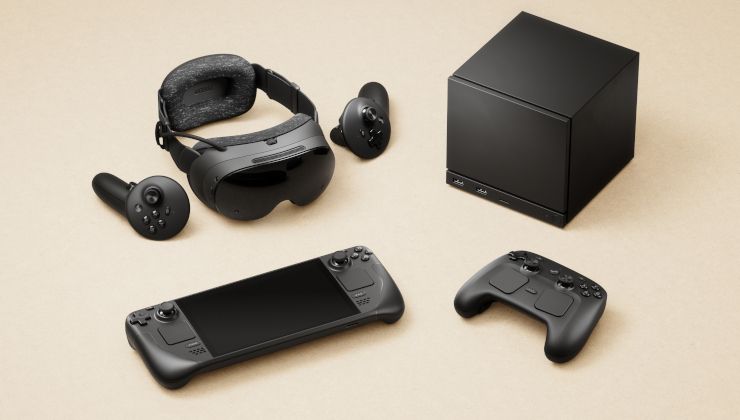
After much anticipation and endless leaks, Valve has finally come forward with what it's been cooking all this time: a trio (shocker!) of new devices, including Steam Machine (form-factor PC), Steam Frame (a new VR set), and the infamous Steam Controller, now improved and actually (seemingly) quite good.
The Steam Store pages have not yet been updated at the time opf writing, but Valve's own sites are already up and running for each of the devices, which also do not feature any prices as of this article.
Image via ValveImage via ValveImage via Valve
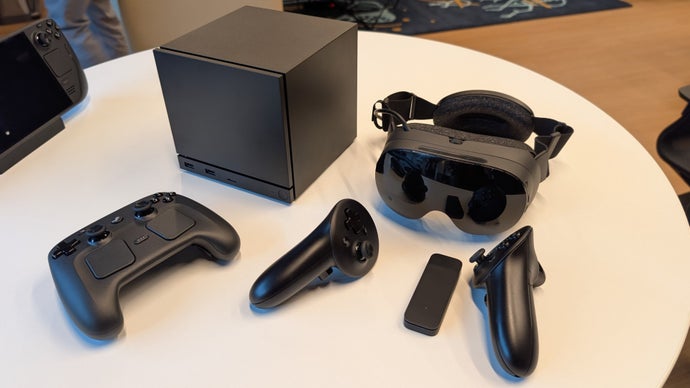
The Steam Machine is a successor to Valve's previous device of the same name, and is now a portable, powerful, small, and quiet mini-PC that can be used on the go and placed literally anywhere. It runs on the SteamOS and is, as Valve argues, six times more powerful than the Steam Deck. Much like the latter, the Steam Machine will have its own set of "Steam Machine Verified" games on the company's storefront, ensuring you get the most out of it in anything you fire up.
Meanwhile, the Steam Frame is a new pair of VR goggles that aims to revolutionize the technology by turning the set into an actual PC that can be used, as is the Valve philosophy lately it seems, on the go. It is a lightweight VR system that Valve outfitted with the SteamOS and, like the above, is going to verify individual titles as "Steam Frame Verified."
It's integrated with Steam and can be used in both VR and non-VR scenarios, and I can't wait to see how the latter plays out, as it might very well be a necessary first step toward total VR integration in everyday use.
Lastly, Valve is offering a new, improved, and reformed Steam Controller that is much like the previous one but with a more traditional design. It's similar in most aspects to the DualSense controller by Sony, but has two trackpads that can act as mice for particular PC-specific scenarios. Everything about the controller can be edited and attuned to yourself via Steam Input, and since it's integrated with Steam itself, running it on any device with Steam installed is going to be a breeze.
It also supports both Bluetooth and USB connections, but can also be paired with your PC via Steam's own "Steam Controller Pluck," if that's your prerogative.
Valve typically follows up these hardware announcements with some big video game news, whether they're just small-time projects to promote the devices themselves or actual, full-blown games like Half-Life: Alyx, after Valve Index was shown to the world.
Many leakers and hopium addicts like myself believe Half-Life X could be the game announced this time around, but that could be just hope and cope. At any rate, it's good to see Valve actually doing things and pushing the boundaries in the industry, which is sort of its thing.



 .
.


 .
.