
Europa Universalis V: Complete Guide to Paradox’s Grand Strategy Epic
Europa Universalis V launched on November 4, 2025, marking the triumphant return of Paradox Interactive’s flagship grand strategy franchise. This massive historical simulator lets you control any nation across nearly 500 years of world history, from 1337 to 1837. Whether you’re guiding the mighty Ottoman Empire, building a colonial powerhouse as Portugal, or transforming a tiny European duchy into a continental hegemon, EU5 delivers unprecedented depth and complexity for strategy gamers.
After five years of development by Paradox Tinto, this sequel to 2013’s Europa Universalis IV brings revolutionary changes to the beloved formula. The game eliminates the controversial mana system, introduces sophisticated population simulation, and features over 20,000 locations across an enhanced world map. With generally favorable reviews from critics and an 82% positive rating from players, Europa Universalis V represents the series at its most ambitious.
What Makes Europa Universalis V Different from Previous Games
The new population system features individual population units with their own needs, making independent decisions shaped by cultural and religious influences. This complex simulation appears directly on the world map and replaces many abstract systems from earlier Europa Universalis games. Each pop contributes to your economy, military, and social stability in ways that feel organic and historically authentic.

The removal of monarch mana fundamentally changes how you develop your nation. Instead of abstract points, the game introduces situations – dynamic challenges based on real historical events or structural crises. These situations create meaningful decision points that reflect the actual problems rulers faced during the early modern period. You’ll deal with noble revolts, religious reformations, succession crises, and economic disruptions that demand strategic responses rather than simple point spending.
Unlike previous editions, most gameplay elements can be automated at your discretion, allowing you to focus on specific mechanics like trade or military while delegating other systems to the AI. This automation feature makes the game accessible to newcomers while letting veterans concentrate on their preferred aspects of empire management. You can toggle automation for population management, trade, diplomacy, and military operations through a simple menu system.
Core Gameplay Systems and Mechanics
Population and Society Management
Your nation consists of living, breathing populations with distinct characteristics. Nobles demand political power, clergy seek religious influence, burghers want economic opportunities, and peasants need food security. The Crown Estate system positions you as one estate among many, with your interests often conflicting with other power brokers. This creates realistic tension between centralization and autonomy that defined the era.
Population growth, migration, and promotion happen dynamically based on local conditions. A prosperous province with good trade connections will attract migrants and see populations advance from peasants to burghers. War, plague, and economic collapse devastate your demographics in ways that take decades to recover. Managing these demographic shifts becomes crucial for long-term success.
Economy and Trade Revolution
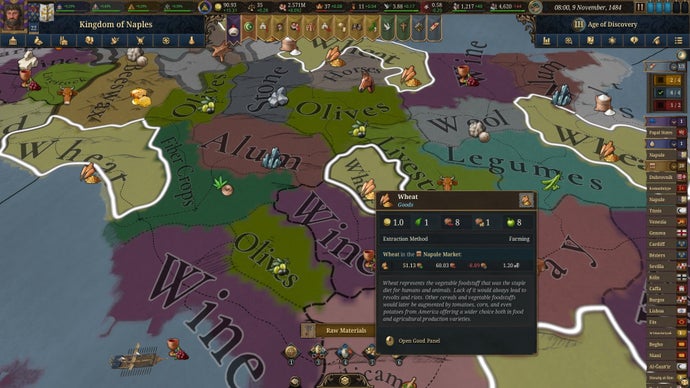
EU5’s market system represents the most sophisticated trade mechanics in any Paradox game, featuring actual supply and demand for specific goods across dynamic markets rather than abstract trade nodes. Local markets handle basic goods like grain and livestock, responding to population changes and external disruptions. Regional markets connect territories, enabling profitable arbitrage opportunities when you buy cheap agricultural surplus and sell it to urban centers at premium prices.
Production chains matter significantly. You’ll need to ensure provinces have necessary input goods for specialized industries. A textile manufacturer requires wool or cotton, shipyards need timber and iron, and luxury goods production demands specific raw materials. Price fluctuations reflect real economic forces – plague reduces grain demand while potentially increasing textile prices due to reduced supply.
Diplomacy and International Relations
Diplomacy has evolved into a living system where influence and trust are tracked, making betrayals leave lasting marks on your reputation. Alliances aren’t static commitments anymore. Former rivals can become trusted allies, while long-standing partnerships may dissolve when strategic interests diverge. The AI now proposes deals, breaks pacts, and manipulates alliances based on sophisticated calculations of relative power and mutual interests.
Trust building takes time and consistent behavior. Honor your commitments, support allies in wars, and avoid aggressive expansion that threatens neighbors. One misstep can cascade into coalition formation where multiple nations unite against your ambitions. Managing antagonism scores through diplomatic relations becomes essential for avoiding catastrophic multi-front wars.
Military System and Warfare
Military forces evolve from medieval levies and mercenaries to vast standing armies and impenetrable fortresses through social development. Early game warfare relies on raising temporary levies and hiring expensive mercenaries for campaigns. As your society advances, you can maintain professional standing armies that provide consistent military power without constant mobilization costs.
Commanders matter significantly. Skilled generals and admirals provide crucial advantages in battle through superior tactics and morale management. Logistics play a bigger role than previous entries, with supply lines, attrition, and terrain creating realistic challenges for military operations. A numerically superior army can starve in enemy territory without proper supply infrastructure.
Best Nations for Beginners
Starting your first Europa Universalis V campaign can feel overwhelming with hundreds of playable nations. Selecting the right nation shapes your entire learning experience, providing space to master core mechanics without immediate existential threats.
Top Starter Nations
France stands as the ultimate beginner choice. This European powerhouse offers a forgiving economy, strong military traditions, and sufficient resources to recover from mistakes. You’ll learn warfare, diplomacy, and internal management while protected by natural borders and powerful vassals.
Portugal excels at teaching colonial mechanics and trade networks. Your small size means manageable armies, while your alliance with England provides security. You’ll master exploration, trade companies, and overseas expansion without juggling massive European politics.
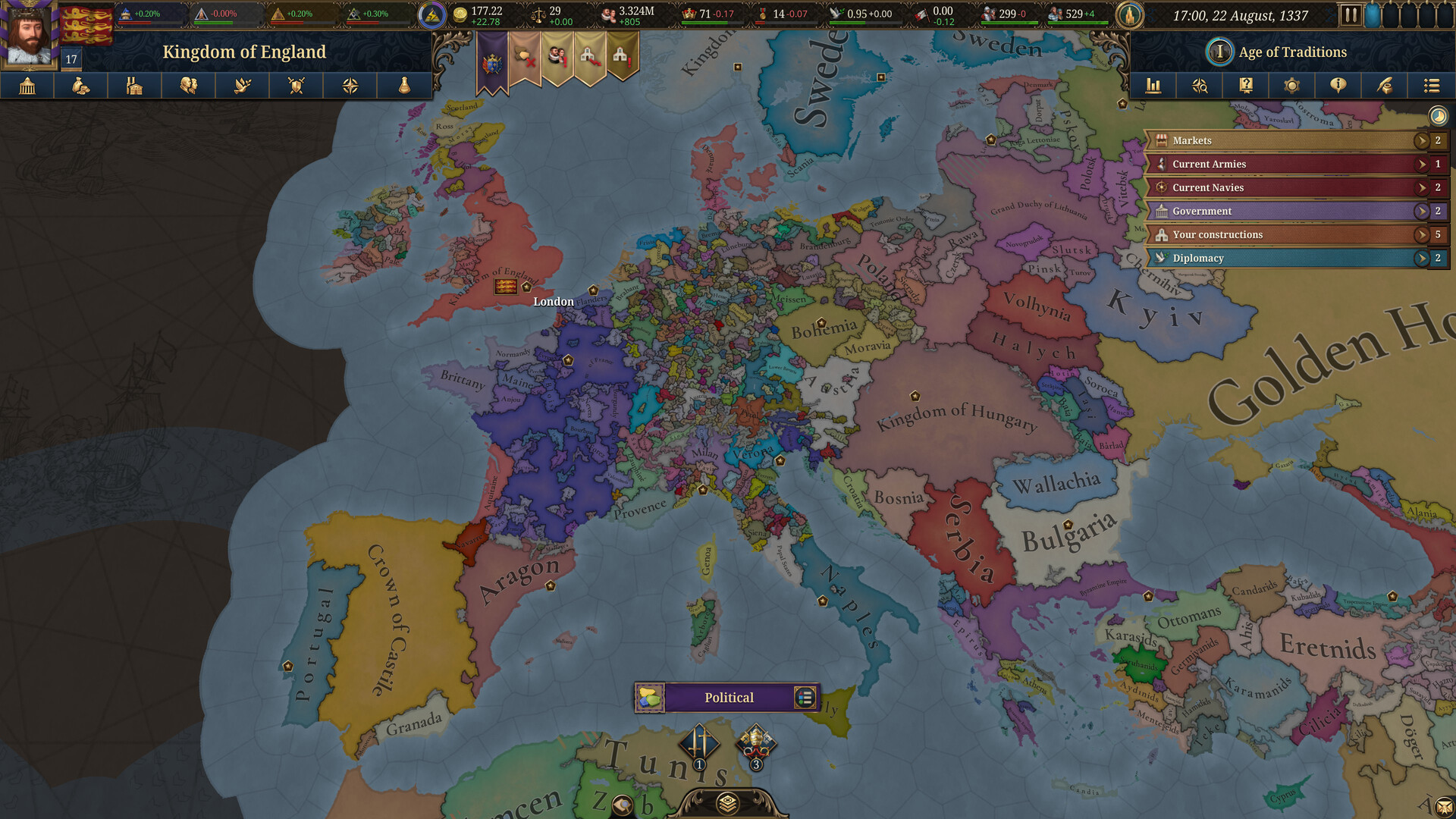
England provides a completely different learning path. Island protection allows you to focus on naval supremacy and colonial expansion. The English economy thrives on trade, teaching market mechanics without constant invasion threats. Your early continental holdings in France create interesting strategic decisions about defending or consolidating island power.
Ottoman Empire delivers immediate action for players seeking dynamic gameplay. The Rise of the Turks event provides rapid territorial expansion opportunities while teaching conquest mechanics. Your strong military position enables bold moves, but overextension can create dangerous rebellions and economic instability.
Nations to Avoid Initially
Avoid Byzantium, Granada, or Holy Roman Empire minors for your first campaign, as these nations require advanced knowledge of specific mechanics and face immediate existential threats. The Byzantine Empire struggles against overwhelming Ottoman power, Granada faces imminent Spanish conquest, and HRE minors navigate incredibly complex imperial mechanics while surrounded by aggressive neighbors.
Essential Beginner Tips and Strategies
Leverage Automation Systems
EU5 provides intelligent automation that handles complex systems while you learn, with Population Management Automation being the highest priority to enable immediately. The AI handles population promotion, migration, and growth decisions far better than beginners. You’ll observe optimal patterns without micromanaging thousands of decisions.
Trade Automation deserves special attention. The new market system feels overwhelming initially, but automation teaches through observation as you watch the AI manage supply chains, price fluctuations, and resource allocation. Enable market automation and study the patterns before taking manual control.
Focus on Key Relationships
Start with one strong alliance and steadily improve relations with nearby powers. Watch your antagonism scores with neighboring nations and use diplomats to improve relations with countries showing high antagonism to encourage them to leave coalitions. Aggressive expansion without diplomatic groundwork leads to devastating coalition wars where half of Europe unites against you.
Manage Estates Carefully
Provinces are living parts of your empire with autonomy levels and estate influence, with each estate playing roles in taxes, levies, and loyalty. Focus on infrastructure and stability early. Keep provinces loyal, build roads and production hubs, and integrate new territories slowly. Rapid expansion without addressing autonomy or estate management triggers rebellions that can tear your nation apart.
Build Economic Infrastructure First
Don’t rush military expansion. Invest in economic buildings, improve trade infrastructure, and ensure your population has access to necessary goods. A strong economic foundation enables sustained military campaigns later. Players who expand rapidly without economic support often face bankruptcy and collapse when war costs exceed income.
Technical Specifications and Performance
System Requirements
To run Europa Universalis V, you’ll need substantial hardware given the game’s simulation complexity. Minimum requirements include Intel Core i7-8700K or AMD Ryzen equivalent, 16 GB RAM, and Nvidia GeForce GTX 1060 (6GB) or AMD Radeon RX 580 (8GB) on Windows 10 Home 64-bit.
Recommended specifications target Intel Core i7-14700K or AMD Ryzen equivalent, 32 GB RAM, and Nvidia GeForce RTX 3060 Ti (8GB) or AMD Radeon RX 6700 XT (12GB) on Windows 11 64-bit. These specs provide smoother performance during late-game campaigns when simulation complexity peaks.
The game requires up to 100GB of storage space, with future DLC likely expanding these demands significantly. Installing on an SSD dramatically improves loading times and day-turn processing speed.
| Component | Minimum Specs | Recommended Specs |
|---|---|---|
| OS | Windows 10 Home 64-bit | Windows 11 64-bit |
| Processor | Intel Core i7-8700K / AMD Ryzen equivalent | Intel Core i7-14700K / AMD Ryzen equivalent |
| Memory | 16 GB RAM | 32 GB RAM |
| Graphics | GTX 1060 (6GB) / RX 580 (8GB) | RTX 3060 Ti (8GB) / RX 6700 XT (12GB) |
| Storage | Up to 100GB | Up to 100GB (SSD recommended) |
Platform Availability
Europa Universalis V launches exclusively for PC via Steam, with no plans for PlayStation, Xbox, Linux, macOS, or Xbox Game Pass releases. This PC-exclusive focus allows Paradox Tinto to maximize the simulation depth and modding capabilities that define the series.
Editions and DLC Roadmap
Available Editions
The Standard Edition costs $60/€60/£50 and includes the complete base game with all core mechanics. The Premium Edition at $85/€85/£75 includes three DLC packs, a cosmetic pack featuring eight sacred sites, and the Europa Universalis IV soundtrack.
Premium Edition DLC includes Fate of the Phoenix (Immersion Pack focused on Byzantine Empire), Across the Pillars (Chronicle Pack covering Iberian struggles), and additional regional content. Paradox has announced first downloadable content packs releasing in 2026, following their traditional post-launch support model.
Expected Playtime
Single campaigns require at least 50+ hours, with many careers stretching well beyond 100 hours, especially for players attempting the full timeline from April 1337 to the final end date nearly 500 years later. The game features 45 achievements across various difficulty levels, providing long-term goals for dedicated players.
Multiplayer and Community Features
Europa Universalis V includes multiplayer features allowing you to browse other players’ games, join specific server IDs, or host your own save games, with chat options including whispering to players alongside public chats. Multiplayer campaigns offer unique diplomatic challenges as you negotiate with human opponents whose strategic thinking exceeds any AI.
The modding community will undoubtedly create extensive content, though mods rarely exist at launch. Paradox games traditionally attract talented modders who expand historical depth, add new nations, and create total conversion mods. The developer provides modding tools similar to EU4, ensuring community creations flourish.
Frequently Asked Questions (FAQ)
Is Europa Universalis V available on console? No, Europa Universalis V is exclusively available on PC through Steam. There are no announced plans for PlayStation, Xbox, or Nintendo Switch versions.
Can beginners enjoy Europa Universalis V? Yes, the automation systems make EU5 more accessible than previous entries. New players can automate complex mechanics while learning, then gradually take manual control as they gain experience.
How long does a complete campaign take? A full campaign from 1337 to 1837 typically requires 50-100+ hours depending on your nation, playstyle, and how much you engage with different mechanics.
What’s the main difference between EU5 and EU4? EU5 eliminates mana points, introduces detailed population simulation, features dynamic situations instead of abstract events, and includes comprehensive automation options while maintaining the core grand strategy experience.
Does Europa Universalis V require previous series experience? No, EU5 is designed to welcome new players through automation features and improved tutorials. Veterans will recognize familiar concepts but must adapt to significantly revised systems.
Are there multiplayer options in Europa Universalis V? Yes, the game supports multiplayer gameplay where you can join or host campaigns with other players, creating dynamic diplomatic situations impossible with AI opponents.
What DLC is planned for Europa Universalis V? Paradox has confirmed multiple DLC packs releasing throughout 2026, including Chronicle Packs and Immersion Packs focused on specific regions and historical scenarios.
Can I play tall instead of expanding aggressively? Yes, EU5’s refined economy and development systems support tall gameplay focused on internal development, trade dominance, and diplomatic influence rather than territorial conquest.
Final Thoughts
Europa Universalis V represents Paradox Interactive’s most ambitious grand strategy project to date. The revolutionary population system, sophisticated economic simulation, and intelligent automation create an experience that feels both historically authentic and approachable. Whether you’re a series veteran adapting to new mechanics or a strategy newcomer discovering grand strategy gaming, EU5 offers hundreds of hours of compelling empire management.
The game’s launch state shows strong fundamentals with room for refinement through patches and expansions. Performance optimization continues, but the core systems deliver the depth and complexity strategy enthusiasts demand. With robust modding support and years of planned content updates ahead, Europa Universalis V establishes itself as the definitive historical grand strategy experience for this generation.
Your journey from medieval backwater to global superpower awaits. Will you restore Byzantine glory, unite the Holy Roman Empire, build a colonial empire spanning continents, or rewrite history entirely? The choice is yours across five centuries of ambition, conflict, and triumph.