Normální zobrazení

Received before yesterday

Death Howl’s Gameplay and Narrative Help It Fit on Switch

21. Únor 2026 v 21:00

Death Howl’s Gameplay and Narrative Help It Fit on Switch

Death Howl is one of those unique strategic roguelikes that someone could play for 15 minutes for five hours straight, and it means the Switch version couldn’t come soon enough. I thoroughly enjoyed this brutal game when I played it on the PC. But there’s something about the nature of it that makes the gameplay loop and narrative beats feel highlighted so well here.

As a quick refresher, Death Howl is a strategic roguelike with a nearly monochromatic kinds of color palettes and melancholy story. Based on Scandinavian folklore, we follow a grieving mother named Ro searching the other side for her dead son Olvi who was stolen away from her. This means traversing different areas, facing all sorts of entities and beasts with abilities she gathers. 

https://www.youtube.com/watch?v=FGF-v--wGhk

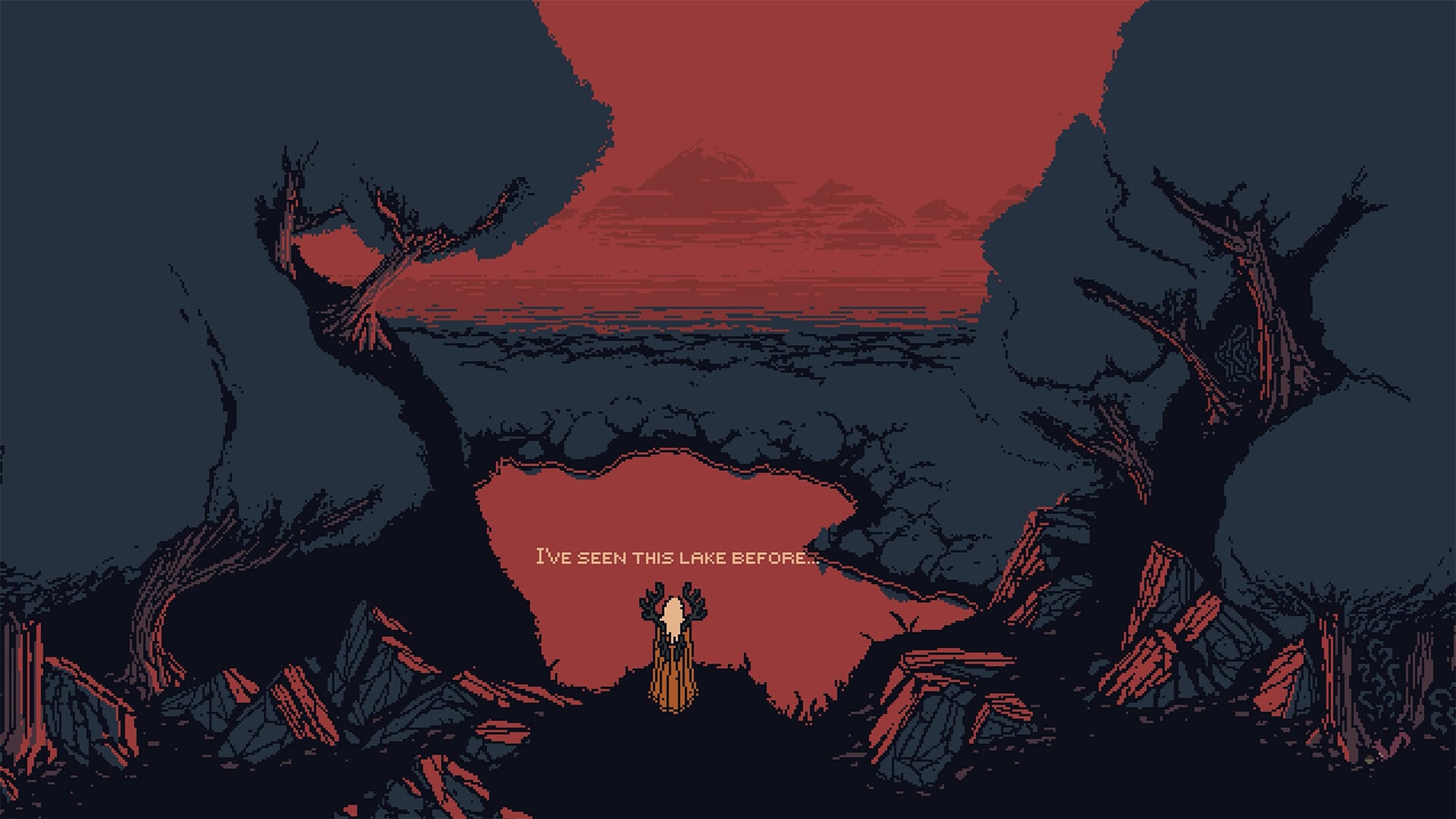
The narrative is fantastic. There are so many themes running through it. Revenge is a critical one, since there’s a central stag figure associated with her son’s death and apparent abduction. Not to mention she’s angry with Death itself over the loss. Coming to terms with the situation is another, since this is a journey about grief and clearly she’s going through the bargaining and depression stages while also being angry about everything and denying that this is a situation that can’t be undone. But there’s also this veil of uncertainty over everything. Due to the use of symbolism and design choices, Ro is an unreliable narrator and there are gaps in our knowledge as players. Which means part of the motivation that keeps us going is to finally know the truth of it all. Having the game on the Switch makes it easy to keep going so we can absorb the information and take in what possible truths could be hinted at as we play.

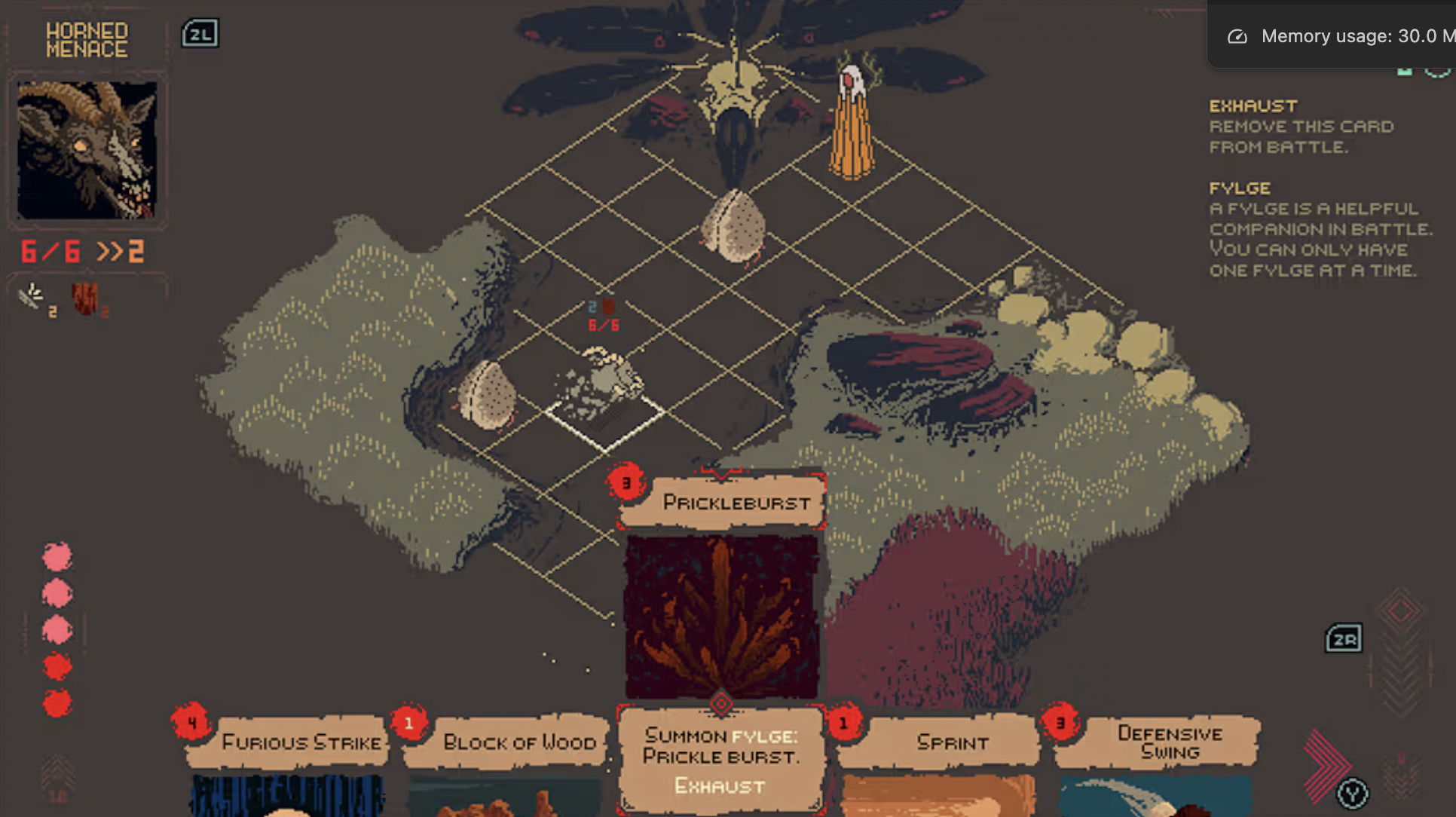
The Switch also makes for a good way to appreciate the art direction in Death Howl in the same way that the Steam Deck and other handheld gaming PCs do. This is a strategy game with sprite-based designs, an isometric perspective of the board, and limited color palettes for each region. Actual spirit designs play with shading and color options to depict details that wouldn’t otherwise be possible with the limitations. When there are effects from actions and spell usage, we see intricate animations. While it is possible to view these and take away the excellence, I feel like having it in handheld mode where you could really take a moment to look closer at details.
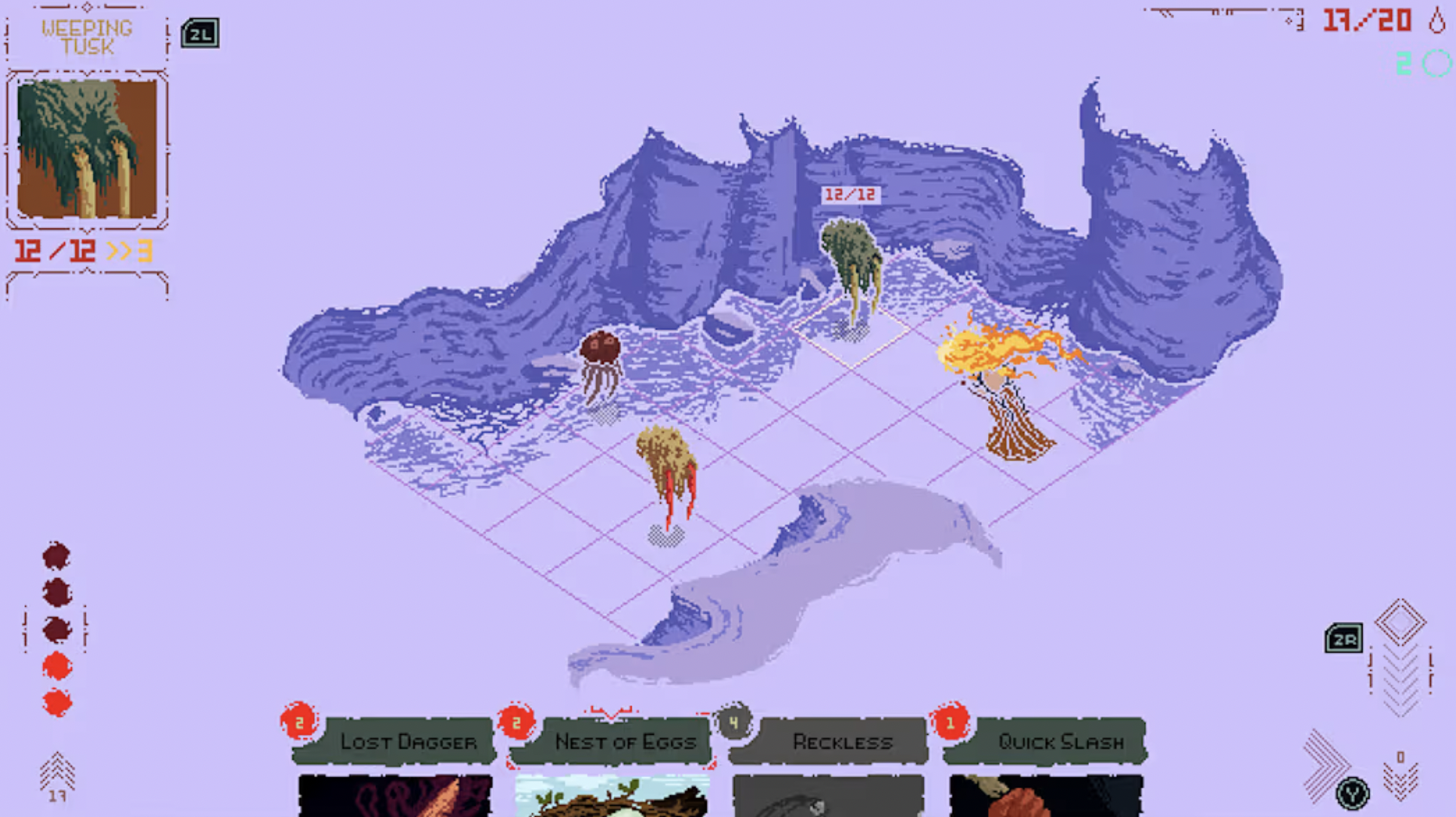
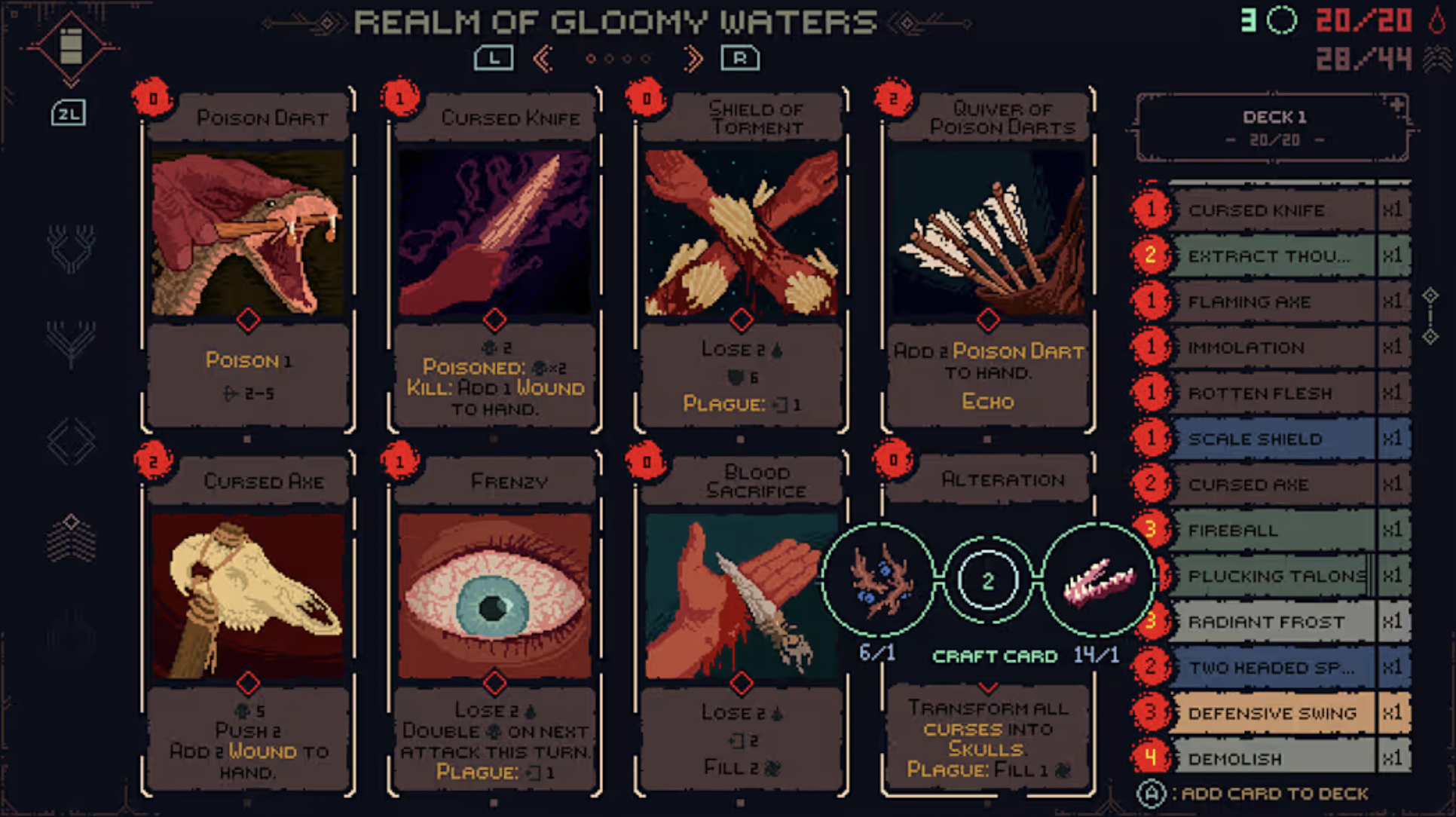
Image via The Outer Zone

It also helps that the Switch port is a great version of Death Howl. Given how text-heavy it is for cards and combat, the color and font choices make it clear even when the lettering is little. It’s almost always clear and legible. Pair that with the great controller-based scheme carried over from the PC release, and it is quite comfortable to play.

Handhelds are a good fit for roguelike games, and the artistic direction, narrative, and gameplay of Death Howl make it feel especially strong on the Switch. It’s a great port that plays well on the system. The nature of the storyline makes it a perfect game to play in a darkened room. Since the gameplay encourages deck experimentation and strategic decisions, you can really get cozy and experience it. It feels exceptionally at home here.

Death Howl is available on the Switch, PS5, Xbox Series X, and PC. 

The post Death Howl’s Gameplay and Narrative Help It Fit on Switch appeared first on Siliconera.

How open world Soulslike deckbuilder Death Howl was built

16. Únor 2026 v 21:00

When we first started working on Death Howl, if you had told me we were building an “open world, soulslike deckbuilder,” I would have looked at you with a fair bit of confusion. It sounds like a recipe made out of components that don’t naturally fit together. Yet, as we prepare to bring the journey of Ro to a new audience on PlayStation 5 from February 19, I’ve been reflecting on how this genre blend came to be.

The truth is, the “soulslike” tag wasn’t part of the original design document.

A foundation of cards and tactics

At its core, Death Howl began as a prototype that I made as a school project back in 2015 after playing the unique and brilliant game called Dream Quest. I’ve always been inspired by Magic: The Gathering and the idea of traversing a world to collect materials for crafting power. Our initial goal was to create an alternative to the traditional roguelite deckbuilder – something that traded linear, “always-start-from-beginning” runs for a free-roaming open world.

We also looked at the character skill building where cards replaced traditional weapons and spells, with all combat taking place on a grid.

How open world Soulslike deckbuilder Death Howl was built

The accidental Soulslike

In general, we never intended to blend so many genres. At its core, Death Howl is an open world deckbuilder. But to achieve that vision, many different designs had to merge. We combined tactical, grid-based combat with deck building. We merged open world exploration with turn-based battles. And as the design evolved, other genre elements emerged organically – including soulslike mechanics.

Honestly, I wasn’t even especially familiar with soulslike games when we started. It was something that came about from testers telling us it felt like one.

Some elements were already in place. “Sacred Groves” – checkpoint locations much like the bonfires you might know from other games-allow you to heal, but they also respawn all enemies. We had designed these early on. But testers pointed to other traces of the genre in our game.

They felt Death Howl earned the soulslike label because of how it rewards pattern recognition. You need to observe enemy behaviors – learning to avoid the frontal charge of a boar, for instance – and embrace the punishing but fair loop of death and adaptation.

We made one key adjustment to fit our card-based structure. Instead of sending players back to the last checkpoint, dying in Death Howl returns you to the moment just before the encounter you lost. When Ro dies, she drops “Death Howls” – the currency earned from defeating enemies, used to craft new cards and upgrade abilities. These can be retrieved after respawning, much like souls in other games. This mechanic was perhaps the biggest direct inspiration we took from the genre once we became more familiar with it.

The rest emerged more indirectly. But embracing the soulslike direction as an overall concept helped us add even more layers to the experience.

For me, it’s still an open world deckbuilder. For others, it’s a soulslike card battler. Both are true.

Balancing the dark and the ethereal

Genre-blending is one part of Death Howl’s identity. The other is its mood.

The world of Death Howl is a spirit realm born from grief, distant memories, and the unknown. To capture that otherworldly feeling, we leaned into a “linocut” or woodcut art style-inspired by heavy metal t-shirts and old-school Scandinavian illustrations – all rendered in minimalistic pixel art.

This visual approach mirrors the gameplay in a way. Just as shapes emerge from deep shadows in our art, players must piece together the narrative of Ro’s quest to reunite with her son. The pixel art forces the viewer to imagine the details left in the darkness, creating space for their own interpretation.

A journey to PlayStation

Building Death Howl taught us that creating something unique often means combining elements that don’t obviously fit together. The result is a game that balances the calm of exploration with the intensity of turn-based combat, all wrapped in a story of resilience and loss.

As we bring this experience to PlayStation 5 on February 19, we’re incredibly excited for a new community to step into our Spirit World and discover its secrets. Whether you’re a deckbuilding veteran or a soulslike fan looking for a tactical twist, we hope you’ll find something here that resonates.

Death Howl is more than the sum of its genres-it’s a reflection of the creative journey that shaped it.

💾

💾

❌