Normální zobrazení

Received yesterday — 6. Červen 2026 English

'If A Game Wants Mirrors It Has To Be Prepared To Make A Big Technical Commitment': Let's Talk About 007's Many, Beautiful Mirrors

'If A Game Wants Mirrors It Has To Be Prepared To Make A Big Technical Commitment': Let's Talk About 007's Many, Beautiful Mirrors

When I wasn't digging around the game's kitchens, one of the most striking things about playing through 007 First Light was just how reflective the game is. There are mirrors everywhere, and in 2026 that was such a jarring experience in a AAA video game that I wanted to learn more.

If you're wondering why I got so excited about mirrors of all things, allow me to explain. For the longest time, video games didn't have working mirrors–that was absurd, how would an 8-bit console even do that? But by the mid-90s, games like Duke Nukem 3D had pioneered actual, functioning video game mirrors. You could walk in front of one and it would reflect the world back at you. It was sorcery, one of the most "next-gen" moments in the history of the medium, and for a while there it felt like something you could just get used to seeing in big, AAA video games forever.

We'll come back to this explanation as to why mirrors are rare in video games in a minute...

Or not. It turns out that, even back in 1996, developers knew that if you wanted a proper mirror in your game the performance cost would be immense, and usually not worth the effort. So by the time the 2010s rolled around we started to see fewer and fewer player characters staring back at us through bathroom mirrors.

This decline culminated in the reception to Cyberpunk 2077, a game that featured a mirror as its central viewpoint for character customisation, but which--despite having other reflections present in the game if you crank the settings up, like in puddles--didn't actually let the player look at themselves outside a specific scripted editor, a frankly astounding decision considering customisation seemed such an important part of the story. People got so worked up about it that they built mods to get mirrors working and tried to explain it away using MS Paint.

One series that has maintained working mirrors throughout recent years, though, is Hitman, so it shouldn't have been such a surprise to see them feature in 007 as well. But there aren't just mirrors in First Light; there are enough of them to compel me to write a blog this long about them. There's an abundance of them, and just some absolutely over-the-top placement, from club bathrooms featuring enormous triple-pane vistas to expensive apartments featuring floor-to-ceiling mirrors to cracked mirrors that reflect multiple, cracked versions of Bond back at you. Other people have noticed this, and they are excited.

'If A Game Wants Mirrors It Has To Be Prepared To Make A Big Technical Commitment': Let's Talk About 007's Many, Beautiful Mirrors
While some mirrors are normal-sized, others are so enormous that they got me thinking so much about them that I wrote this blog

To learn more about this game--which really could have been called 007 Mirrorverse--I spoke with Dag Bjärum Bengtsson, Senior Technical Artist at developers IO Interactive. If one person could answer my deeply specific questions about the workings and placement of a bunch of mirrors in a single video game, it'd be Bjärum.

My first question was a historical one: why don't we see mirrors anymore in big video games? "Supporting functioning, good-looking mirror reflections in more modern games has become increasingly difficult with the ever-growing number of advanced rendering techniques/features which generally don’t scale or work well with having extra cameras rendering the whole world multiple times in a convincing manner", he tells me.

"If a game wants mirrors it has to be prepared to make quite a big technical commitment, and there is a performance cost to them that has to be accounted for and balanced all the way from the technology side to the art implementation side."

Bjärum says “many modern games”--I name-dropped Cyberpunk specifically when chatting with him--have not wanted to pay this cost, saying they'd rather prioritise other features, or that mirrors are rarely accounted for when scheduling for the development time needed to implement them.

'If A Game Wants Mirrors It Has To Be Prepared To Make A Big Technical Commitment': Let's Talk About 007's Many, Beautiful Mirrors
When not one but multiple cutscenes are making use of the game's enormous mirrors, you know the team knew they had a good thing going

The reason First Light is able to throw so many of them at the player is a fairly simple one: like I've already mentioned above, the Glacier engine--which powers First Light but also the last few Hitman games--has simply never stopped doing it, so IO has never had to worry about changing their processes or adjust their resource allocation.

Which led me to my next question: just how do those mirrors work, exactly? "For mostly flat surfaces we have the possibility to configure a plane which describes the desired reflective object’s surface", Bjärum says. "Using the position, size and angle of this plane together with the position of the player camera, we have a secondary camera which renders the world using these parameters. The rendered image is then sampled by the material of any surface which we want the reflection to appear on."

"On the technical side, a lot of the heavy optimisation work done for Hitman carried over to 007 First Light, and in First Light we further enhanced them, with motion vector support so antialiasing techniques can better resolve the image, global illumination support, and more", Bjärum adds. "We also have many scalability settings to maintain stable performance across platforms.”

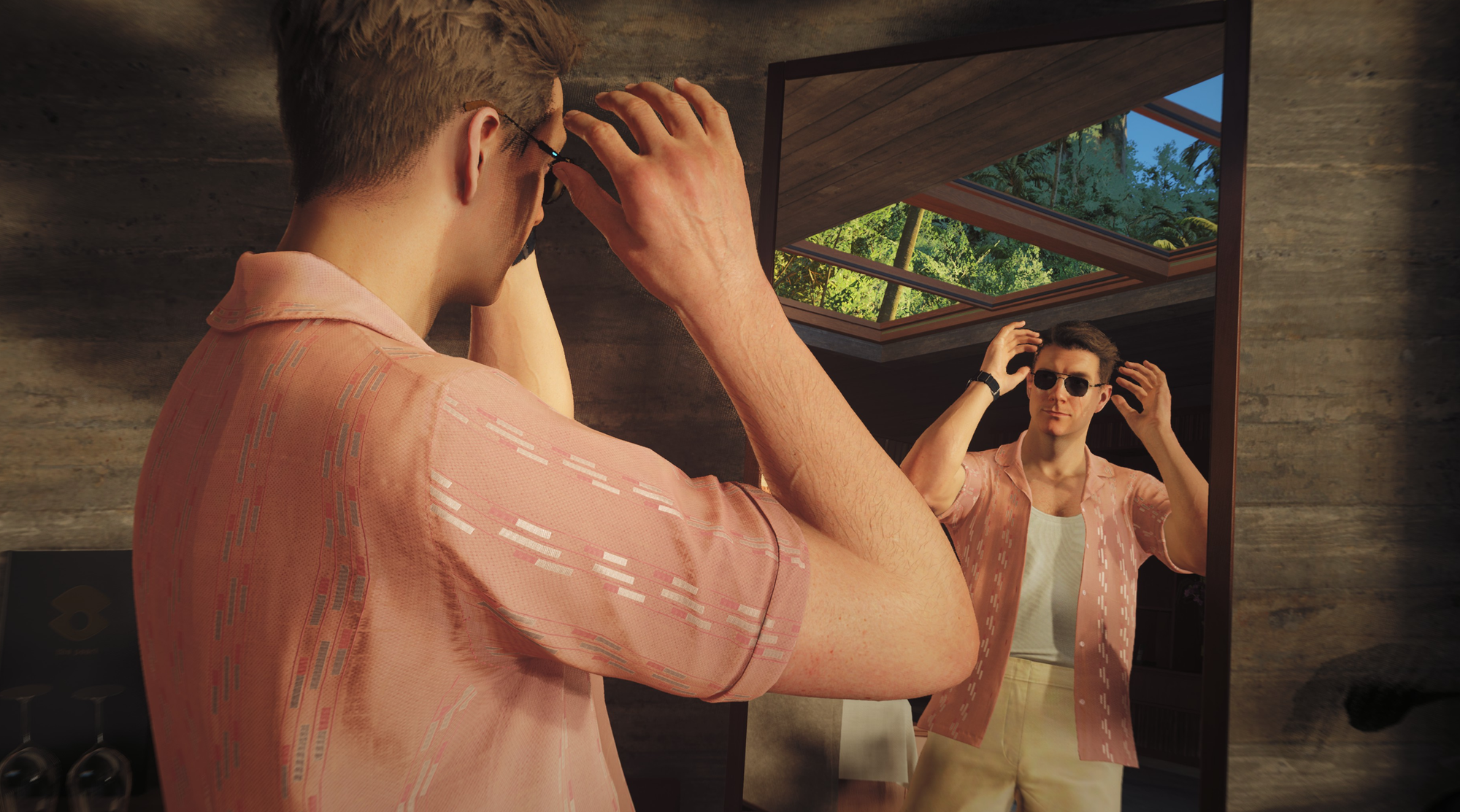
Which answers how they work, but what I really wanted to know is why there are so many big mirrors in this game. By the time I was one or two hours into First Light I was appreciating the working mirrors, but by the time I was five to six hours in I was thinking "man, there sure are a lot of mirrors in this game". By the time there's a cutscene that directly involves Bond trying on a pair of sunglasses in a bedroom mirror, I was convinced the developers knew what they'd accomplished and were taking the piss. So I asked Bjärum: were there so many mirrors because the concept artists just imagined the world that way, or was this an enormous flex from the technical artists because the mirrors worked so well?

"It came from both sides", he says. "The technical team’s confidence in the mirrors gave the artists the freedom to go big, and the artists going big pushed the technical team to keep optimising. Our artists really love the visuals of mirrors and embrace them to a very large extent, and we also have some special moments in 007 First Light (without spoiling anything) that could not really be achieved in alignment with the vision set out by our directors without them".
You Lost Me At 'We Leverage AI Tools To Help Our Teams Iterate On Ideas'

You Lost Me At 'We Leverage AI Tools To Help Our Teams Iterate On Ideas'

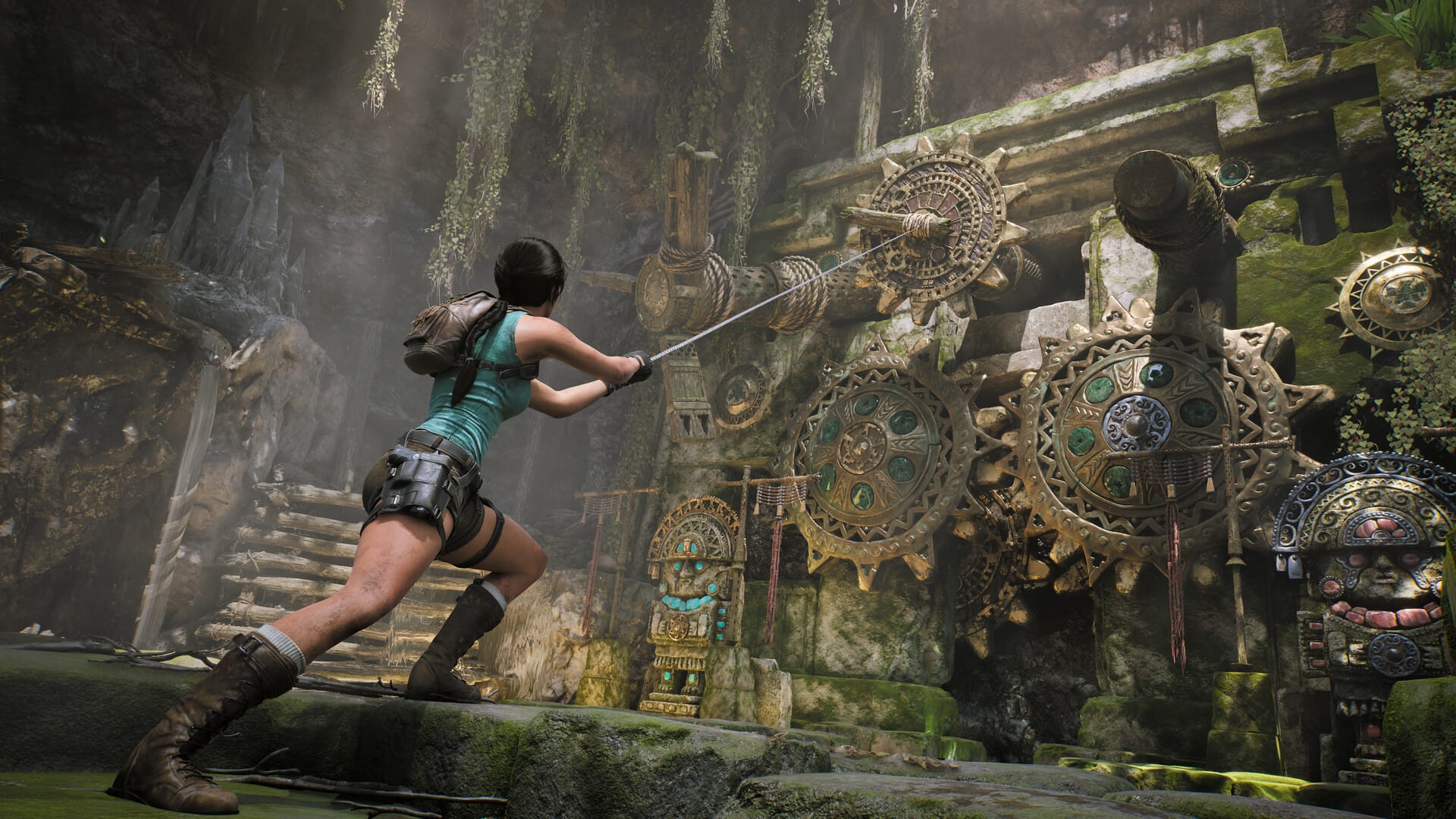
Shortly after the release of a new trailer for the upcoming Tomb Raider remake, Legacy of Atlantis, some folks spotted on the game's Steam page that there was a disclaimer outlining the team's use of AI in its development.

It reads:

AI-assisted tools were used during development to support some early exploration and temporary development content. Any AI-assisted assets were either replaced or refined by humans in order to maintain the creative and artistic vision of the development team.

No thanks! I feel like we've been through this, a bunch of times now, but it bears repeating: I don't want AI-generated content anywhere in my video games, but I especially don't want it anywhere near things that can be described as "creative and artistic".

One of the great delusions with the AI bubble is that the executive class feel compelled to argue that its implementation is about eliminating waste, cutting corners, streamlining processes, no matter where and no matter the cost. And one of the great battlegrounds in the fight against the adoption of AI tech is that, when it comes to art– even the most mundane aspects of it--there are no corners to cut. The iterating is the point.

One of the real joys of this medium is that, as chaotic and broken as the development process can be, video games are works of art. Every line of dialogue, every wooden crate, every colour palette you see in a game is the result of decisions made by a person, drawing on their own ideas and values and collaborations with their colleagues.

And those things you're seeing in a game didn't just magically appear there. They were workshopped, improved on, drawn up then thrown out then drawn up again. That's the artistic process; it's how everything we've ever made as humans has been made. That's how it works! You can't cut corners on ideas! It'd be like me asking ChatGPT to provide an outline of this blog, then me saying I'd gone over it and made some edits, added an extra paragraph or two; I could put my byline on it and add a disclaimer, but...this wouldn't be my blog anymore.

I realise we don't know the degree to which the team have made use of this tech; it could have been extensive, it could have been used on a single lamppost. But in many ways that makes it even worse; like I said with The Alters, the suspicion and uncertainty over AI's presence in a game is exhausting in its own right.

In response to swift backlash online, co-developers Crystal Dynamics provided a statement to Eurogamer that basically repeated the disclaimer:

At Crystal Dynamics, we leverage AI tools to help our teams iterate on ideas faster and more efficiently, while ensuring that all finished content in the final product is human-crafted. Our goal is to empower the creativity and flexibility of our developers to deliver the highest-quality experiences for players everywhere.

Come on, your goal is to cut corners and save some cash, maybe lay off some artists down the line. You could at least be honest about it.

007 First Light Can Make A Good Cup Of Coffee (And Tea!)

007 First Light Can Make A Good Cup Of Coffee (And Tea!)

Because I am no longer capable of playing video games like a normal human being, when I fired up 007 First Light earlier this week to ostensibly play as a globe-trotting secret agent, I instead quickly found myself poking around its kitchens and break rooms looking at how everyone in the game was making their coffee.

And I'm pleased to report that, for the most part, everyone in this game is doing just fine! Maybe better than fine. Cast your eyes on these excellent espresso machines:

007 First Light Can Make A Good Cup Of Coffee (And Tea!)

There are two variants of the same espresso machine found throughout the game. On the left is the home/office version, while on the right is a bigger, three-grouphead machine used in cafes and restaurants

That's a good espresso machine! It's got fictional in-game branding, and with buttons along the top in logical places, and a big lever for the steam wand. It looks very functional as well. The portafilter looks great, having cups on top being warmed by the boiler is also a nice touch and, with a hot water dispenser present and a pressure gauge on the front, I get the impression that whoever worked on this actually knew how an espresso machine worked, unlike those found in some other video games.

Coffee expert Jesse Raub helpfully tells me that the machine appears to be very closely based on La Speziale's Mini Vivaldi II, which might explain why it works so well. One of the biggest issues with so many other games’ coffee machines is that they're often nonsensical, collections of random buttons and visual cues that might present something that looks like an espresso machine at a glance, but which up close reveals itself to be something that simply wouldn't be able to make coffee. In this case, by just seeming to base First Light's machine on a real one, that problem is easily avoided!

My only criticism, then, is down to either the art team or, more likely, the game's inhabitants themselves. What's the big bag of coffee doing there if there's no grinder? If those are beans, you're not going to be able to use them, and if it's pre-ground coffee, purchased with the intent of using it in an expensive espresso machine, you have fucked up. THAT SAID: I have seen too many workplaces and homes where people have splashed out on an espresso machine and then had no intent on learning how to use it properly, so while having a 1kg bag of ground coffee is a very bad idea (not only will it not extract properly in the machine, but it'll go stale REAL fast), it's also something I can absolutely see being included in the various homes and offices you see this setup in throughout the game regardless.

007 First Light Can Make A Good Cup Of Coffee (And Tea!)
Gains

Those who prefer their coffee dripping all morning and tasting like an ashtray are also being looked out for, as the game also includes good old-fashioned drip coffee machines. Presumably the above is for use by the same character who has the blender and protein shakes everywhere, because for them, the joys of taste and flavour are secondary to crunching numbers and maximising gains (in this case, caffeine intake).

Below is an example of another one of these 'cup of Joe' stations in action; not only does it feature a different colour scheme on the machines, which is a nice touch, but we can see the pots themselves as well, along with some sugar. This looks exactly like you'd expect a workplace coffee setup to look!

007 First Light Can Make A Good Cup Of Coffee (And Tea!)
If you think this looks like shit, don't worry, the rest of this SAS barracks looks even worse

Actually, while we're here looking at screenshots from kitchens, can I quickly mention how nice the kitchen is in this safehouse? Architecture in video games is nearly always prioritising space and level design, and so rarely comes across as being something "real" or even liveable, but this kitchen looks exactly like the kind of kitchen you'd expect from an expensive London apartment. The scale of it, the amount of storage, the bench space, the appliances; this absolutely looks like something you'd see in an aspirational architecture or interior design video, so good job!

007 First Light Can Make A Good Cup Of Coffee (And Tea!)
Also very impressive: the lighting in this game

Wonderfully, the game doesn't just make a couple of machines and call it a day. There are more! Not too far into the campaign Bond finds himself in a smuggler's marketplace in the Mauritania desert where the locals, short on amenities in the rusting hulks of old cargo ships, are brewing themselves cups of coffee (and tea, more on that soon) on stovetops:

007 First Light Can Make A Good Cup Of Coffee (And Tea!)
The Aleph level is full of little stovetops like this, serving both tea and coffee

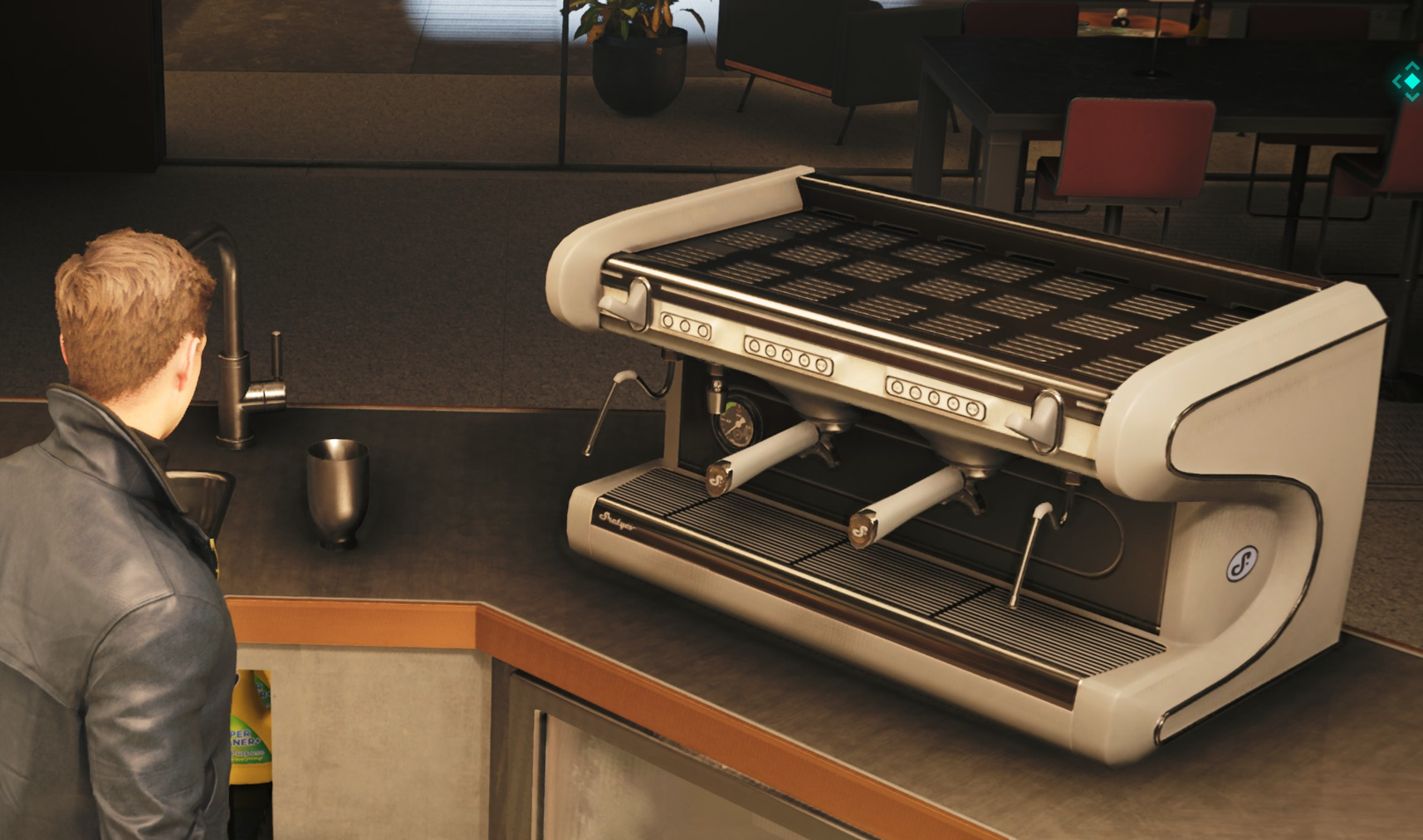
Later in the game, situated in the dystopian corporate offices of a military arms manufacturer, we have an example of an automatic coffee machine (which grinds, stores milk and produces loads of different types of coffee at the press of a button), the ideal coffee solution for a company that values aesthetics and perceived cost over the actual quality of the coffee being produced. Again, this looks real and workable, a sign that the art team knows their coffee, or at least cared enough to do some research on how coffee machines worked before making some for the game.

007 First Light Can Make A Good Cup Of Coffee (And Tea!)
Please remember to keep your fresh milk in the fridge

Note that these cold, glistening halls aren’t just home to expensively terrible coffee machines that are pretending to make passable coffee, they’re also home to even more terrible coffee machines that don’t even bother. There aren’t many of these to be found in the game, but when you find one of these 7-Eleven-ass units, you just know the security guards and cleaners on this floor are having a very bad time.

007 First Light Can Make A Good Cup Of Coffee (And Tea!)
Espresso con panna? How do they get the whipped cream in there?!

All of which is leading me to my favourite device in the game, and the one that shows IO's artists really knew what they were doing when it came to making First Light's coffee: Q's manual espresso machine (below). Every other unit in the game (outside the desert stovetop kettles) makes coffee electrically; it's either got computer programming or, at the very least, needs power, circuits and/or motors to work. This lovingly-maintained antique relies solely on physics and that big lever, which is used to push pressurised water through the coffee. To have it in the game at all is neat. To have it belong to Q, a man whose job is literally building the latest gadgets, while trapped in a game whose story centres around the dangers of adopting and trusting in modern technology, is a very nice touch.

007 First Light Can Make A Good Cup Of Coffee (And Tea!)
You can absolutely buy more modern iterations on this classic design, but this is clearly an antique

I love all of this! The reason I like peering into this one particular subject of set dressing over and over is not just that I've become an insufferable coffee weirdo in middle age; it's that checking out how closely the art team pays attention to coffee can serve as a window into how they feel about decorating the rest of the game. If, like me, you find yourself spending hours poking your nose into a game's quieter corners, admiring the craft and the work that's gone into them, it can be so rewarding to find that world to appear real and lived-in, full of secrets and flourishes, especially when it concerns something you're interested in! For me that's coffee, but I can also tell that 007 is full of detailed stuff for all kinds of sickos, from audio visual nerds to book collectors.

I'd be remiss to let this blog end without an acknowledgement that, while there's plenty of coffee to go around, the game is largely set in the UK, and so there are still lots of options for tea-drinkers as well. A particular favourite of mine is this office setup at MI6, which aside from the 'Your Nan's House' decorations on the teapot and cups is again very fully realised. There's multiple varieties of tea, there are spoons, there's some sugar, a kettle (not sure where it's plugged into, but whatever) and, most importantly of all, some bikkies.

007 First Light Can Make A Good Cup Of Coffee (And Tea!)
"Will England Take The Ashes?" No, no they will not

All in all, a great job! And testament to a level of detail that you see throughout First Light. As you'd maybe expect from the folks who made Hitman, the entire game is full of quiet spaces that are begging to be explored, and I've been having as much fun checking out newspaper headlines and listening in on fake radio broadcasts of the Manchester Derby as I have knocking dudes unconscious.

I've Never Seen A Games Industry Veteran Talk Shit About Someone Like Mike Fischer Talks Shit About Yuji Naka

I've Never Seen A Games Industry Veteran Talk Shit About Someone Like Mike Fischer Talks Shit About Yuji Naka

Yuji Naka is a man famous for two things: being credited as the 'creator' of Sonic the Hedgehog and, more recently, of pleading guilty to serious insider trading charges. Mike Fischer is a games industry veteran who has worked everywhere from Sega to Square Enix to Epic to Microsoft.

These two men, a very long time ago, used to work with each other at Sega, and in a recent interview with Sega-16 Fischer recalls several moments where his paths crossed with Naka. Rather than being standard video games industry platitudes like"I learned a lot from him", "We really supported each other" or"It was a great time", it turns out Fischer hates Naka's fuckin guts, and would like the world to know exactly why.

Some examples include the creation of Sonic:

I was there for the birth of Sonic the Hedgehog, and when the memo came out, they said to every employee, “We want to come up with the new Mario-killer mascot character. We want everyone to come up with an idea.” I watched them pick the winners. I watched Yuji Naka steal credit for it, and yeah, I was very hands-on.

Then there's the time Fischer, while at Microsoft years later, got to work with some of his old Sega colleagues again on Blue Dragon:

...it was wonderful to go back and and reconnect with those people. It was less pleasant to deal with Naka-san (Yuji Naka). I didn’t miss him and wasn’t happy to work with him again.

And here are Fischer's thoughts on Naka wanting to change Billy Hatcher And The Giant Egg's name to...Giant Cock:

He is literally the most miserable person I have ever worked with in games or anything else in my life, just a horrible human being, and you can quote me on that. As you know, he’s also now also a convicted felon.

I need to stress I'm just posting some select excerpts here, there's so much more throughout the interview, which is a fantastic read not just for the drama, but just for gaining a fuller understanding of how Sega operated internally at the time as well! There's stuff there about the creation of Sonic and the company structure and the place of women leaders within it that I'd never known before, so if reading about a man talking shit has inspired you to spare some time for a greater understanding of Sega history, please go read the full thing.

There Is Still Good In This World, Because It Is Once Again Time To Enjoy Famicase

There Is Still Good In This World, Because It Is Once Again Time To Enjoy Famicase

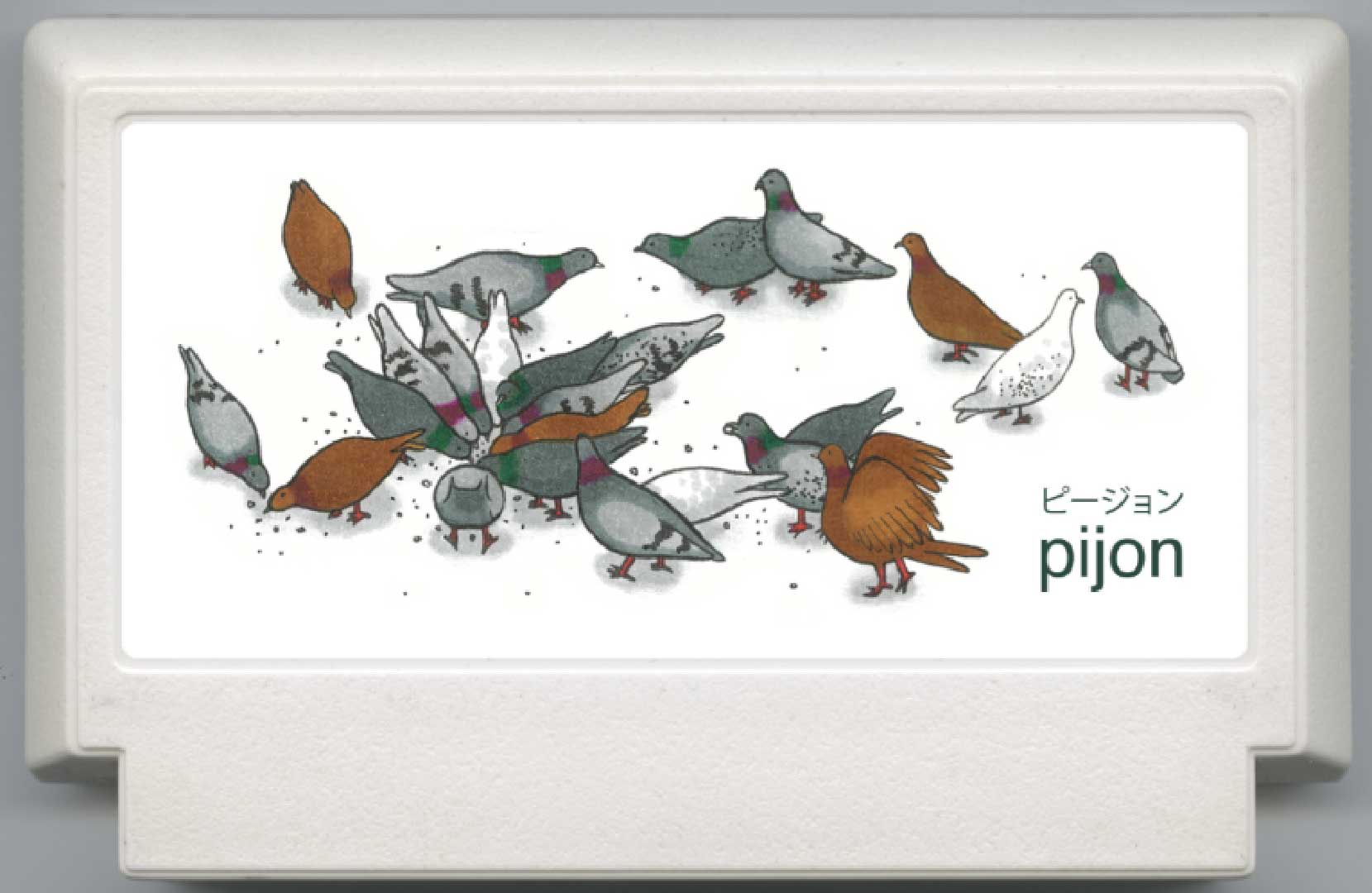
Famicase! I love it! If you're new to the word, Meteor in Tokyo have an annual exhibition where artists from around the world dream up an interesting/funny video game and design a cartridge for it, even though the game itself does not exist.

It's been going for a very long timethis is the 20th successive year I've covered it, and for every one of those instalments it's been a blogging highlight of the year for me. I love all of these little ideas, and want all of them to be actual video games.

If you're in the neighbourhood you should absolutely pop in, as these pieces are all live and in the flesh, actual stickers stuck on actual cartridges. Since most of us aren't in the neighbourhood, sadly, all that's left is to browse the complete online gallery, of which there are just a handful of highlights posted below.

Oh, and Meteor are also selling books showcasing every submission if you'd like to flick through the designs on the couch!

There Is Still Good In This World, Because It Is Once Again Time To Enjoy Famicase
Received before yesterday English

Sony Buys Remake Studio In 2021, Shuts Them Down In 2026 And Lays Off 70 Workers Without Them Releasing A Remake

Sony Buys Remake Studio In 2021, Shuts Them Down In 2026 And Lays Off 70 Workers Without Them Releasing A Remake

Bluepoint Games, an American studio specialising in remakes like the God Of War Collection, the Ico & Shadow Of The Colossus bundle, Uncharted Collection and Demon's Souls, has been shut down by Sony after five years of ownership, during which time the company did not release a single remake, with Bloomberg reporting that "roughly 70 employees will lose their jobs" as a result.

Having worked closely with PlayStation for over a decade (the God of War Collection was released in 2009), Sony decided to buy Bluepoint in 2021 and bring them in-house, after which they were promptly...set to work as a support studio on God of War Ragnarok, before then being assigned a live-service God of War game, before that project was cancelled in January 2025.

Sony Buys Remake Studio In 2021, Shuts Them Down In 2026 And Lays Off 70 Workers Without Them Releasing A Remake

And today they're done. The studio, first founded in 2006, will be shut down next month. In an internal email sent to PlayStation staff (shared on resetera), Sony Interactive Entertainment Studio Business Group CEO Hermen Hulst says:

...we're operating in an increasingly challenging industry environment. Rising development costs, slowed industry growth, changing player behavior, and broader economic headwinds are making it harder to build games sustainably.

To navigate this reality, we need to continue adapting and evolving. We've taken a close look at our business to ensure we're delivering today while still well-positioned for the future. As a result, we will be closing Bluepoint Games in March.

This decision was not made lightly. Bluepoint is an incredibly talented team and their technical expertise has delivered exceptional experiences for the PlayStation community. I want to thank everyone at Bluepoint for their creativity, craftsmanship, and commitment to quality. Where possible, we will work to find opportunities for some impacted employees within our global network of studios.

I have seen some gross acts of mismanagement in my time covering this industry--it feels like the last three to four years have been nothing but--yet this one somehow feels like the worst. Bluepoint was a studio with a very clear speciality and a very successful track record: they took old PlayStation hits, gave them an update and sold them to new generations of fans.

Executives Should Be Facing The Music, Not Laying Off Workers - Aftermath
Bosses need to be held accountable for their failures
Sony Buys Remake Studio In 2021, Shuts Them Down In 2026 And Lays Off 70 Workers Without Them Releasing A RemakeAftermathLuke Plunkett
Sony Buys Remake Studio In 2021, Shuts Them Down In 2026 And Lays Off 70 Workers Without Them Releasing A Remake

For PlayStation themselves to buy Bluepoint, not use them for the one thing they would have bought them for and now close them down is just the most colossal waste. It's industry vandalism, at scale. Former PlayStation boss Jim Ryan, who had live-service game brainworms (see below), deserves some of the scorn here, but the current regime--who have made the decision to close Bluepoint instead of finding something, anything from PlayStation's vast back catalogue for them to work on instead--are equally to blame.

Not pulling this outta my ass either, here's something from Sony's 2022 investor/press thing, where they promised 12 Live Services by 2025. Aside from Helldivers, none of that is paying off, and that was under Jim Ryan who left before shit predictably hit the fan. www.sony.com/en/SonyInfo/...

Casey Explosion (@caseyexplosion.bsky.social) 2026-02-19T19:56:48.644Z

If you were wondering how the rest of PlayStation’s recent purchases were going, the answer is: they’re not doing great either.

PlayStation Is Gonna Screw All Of Us A Little, Instead Of Some Of Us A Lot

PlayStation Is Gonna Screw All Of Us A Little, Instead Of Some Of Us A Lot

Like so many other consumer electronics companies out there at the moment, Sony is about to be in a lot of trouble thanks to the AI-fuelled rush on computer components like storage and memory. The company's solution, at this stage at least, seems to have come from an evening spent looking at the trolley problem.

As Inside report (via GameSpot), Sony CFO Lin Tao spoke about the company's mitigation plans during their latest financial results presentation, saying that while Sony are "[negotiating] with various suppliers to secure enough supply to meet the demand of our customers" when it comes to being able to manufacture more PS5 hardware (there's enough to get them through the 2026 holiday season, apparently), they've decided that in order to "minimize the impact" of further console price increases, they're going to really start "monetizing the installed base" across both games and "network services".

That's all she said, but it doesn't take a crystal ball to see what she means: most likely it'll result in stuff like PlayStation Plus price increases and more expensive games (or more games launching at the most expensive price point). I get the impulse; it's probably easier to squeeze each existing customer a little than try to sell a new one a console that, if costs were passed directly onto them, could be $600-700 by Christmas. And I sympathise to some extent with individuals at Sony who are just trying to sell PlayStations and cameras in a world where the deluded impulses of 13 trillionaires are going to drive us all mad.

But also, as a company, Sony can't "we're all trying to find the guy who did this" their way out of this either.

Please, Tell Me More About The New FIFA Game And The Money Behind It

Please, Tell Me More About The New FIFA Game And The Money Behind It

I may have just been reminded to never judge a book by its cover, but sometimes the cover is so bad that I can't help it.

A few years back EA Sports and FIFA, who had collaborated for decades on the globe-conquering FIFA series of video games, split. EA now makes its own series, EA Sports FC, and FIFA--when not engaging in blatant corruption and cronyism with some of the worst people on Earth--had to find a new partner if they wanted to make some money in the video game space (which they do, all FIFA cares about is making money, see earlier comments).

I’m Taking It As A Bad Sign That Two Big Games Were Announced With No Screenshots
One game overthought it, the other knew exactly what it was doing
Please, Tell Me More About The New FIFA Game And The Money Behind ItAftermathLuke Plunkett
Please, Tell Me More About The New FIFA Game And The Money Behind It

Late last year, it was announced they'd found one! As I said in December:

Earlier today Netflix announced that Delphi, a company you've likely never heard of (they're relatively new, and their only public credit is as support on IO's upcoming 007 game) will be both developing and publishing a new FIFA game.

That was all we knew at the time, but now, courtesy of an interview Delphi recently conducted with GI.biz, we know more. And what we know sucks.

"Delphi has evolved into a full-fledged developer and publisher," [executive producer] Tang-Peronard says. "We believe in a lean, highly experienced core team, supported by best-in-class co-development and outsourcing partners." For FIFA, that includes Refactor Games, based at Delphi's LA headquarters, part-owned by Delphi and backed by venture capital giant A16z's Speedrun fund. Founded in 2021, it launched physics-heavy American football title Football Simulator into Early Access in 2022. The studio employs alumni of VR dev Survios and blockchain dev N3TWORK.

A16z is Andreessen Horowitz, a terrible company even by venture capital's vampiric standards, run by some of the most overt technofascists operating in Silicon Valley today. Refactor's site boasts of hires from rights licensing company OneTeam (whose partners are currently under investigation by the FBI) and N3TWORK (a blockchain studio), and their single published sports game, Football Simulator, is not exactly a smash hit.

None of that guarantees anything! For all we know a new FIFA could turn out to be the sleeper hit of the decade, a true middle finger to complacent AAA sports gaming, a rebirth of the FIFA brand and a reward for the millions of gamers exhausted by EA's near-monopoly on the sport.

Or, you know, it could show FIFA have no idea what they're doing, and they're going to get exactly the game they deserve for it.

PlayStation Reveals, RAM Chaos & RIP To A Sega Legend: All The News From February 8-15

PlayStation Reveals, RAM Chaos & RIP To A Sega Legend: All The News From February 8-15

Welcome to Recap, our weekly feature--running every Monday morning--where we round up what’s been going on around video games, the internet and beyond.


Legendary Sega hardware designer (and one-time acting President) Hideki Sato has died at the age of 77.

Hideki Sato, designer of all Sega’s consoles, has died | VGC
Sato helmed design for consoles including Mega Drive, Saturn…
PlayStation Reveals, RAM Chaos & RIP To A Sega Legend: All The News From February 8-15Video Games ChronicleAndy Robinson
PlayStation Reveals, RAM Chaos & RIP To A Sega Legend: All The News From February 8-15

Just four years after a LEGO game needed only 8GB of RAM on PC, the upcoming Lego Batman: Legacy of the Dark Knight--which originally said it would need 32GB--last week dropped that number to 16GB, just in time for RAM prices to continue going through the roof.

Lego Batman Slashes RAM Requirements On PC As Prices Spike
Lego Batman just cleaved its recommended RAM in half
PlayStation Reveals, RAM Chaos & RIP To A Sega Legend: All The News From February 8-15KotakuEthan Gach
PlayStation Reveals, RAM Chaos & RIP To A Sega Legend: All The News From February 8-15

PlayStation announced some new games last week, then rounded them all up on the company blog. There's a new Castlevania in there!

State of Play February 2026: all announcements, trailers
Game reveals, new looks, and release date confirmations.
PlayStation Reveals, RAM Chaos & RIP To A Sega Legend: All The News From February 8-15PlayStation.BlogGillen McAllister (he/him)
PlayStation Reveals, RAM Chaos & RIP To A Sega Legend: All The News From February 8-15

Discord's UK users have been told they "may be part of an experiment", which is very interesting wording for a user's age verification data now being sent to the third-party age-assurance vendor Persona instead of being processed on their phone locally as had originally been announced.

Discord advises UK users that they “may be part of an experiment” where instead of their age verification data never leaving their phone, it will now actually leave their phone
UK Discord users have raised concerns about the company’s new age verification processes, claiming that while it had or…
PlayStation Reveals, RAM Chaos & RIP To A Sega Legend: All The News From February 8-15Eurogamer.netVikki Blake
PlayStation Reveals, RAM Chaos & RIP To A Sega Legend: All The News From February 8-15

The DICE awards were held last week, with winners including Clair Obscur, Blue Prince, Hades II and Ghost of Yōtei.

Clair Obscur: Expedition 33 rides high at 2026 DICE Awards
Clair Obscur: Expedition 33, Ghost of Yotei, and Blue Prince were among the big winners in a group of high-quality nominees.
PlayStation Reveals, RAM Chaos & RIP To A Sega Legend: All The News From February 8-15Game DeveloperBryant Francis
PlayStation Reveals, RAM Chaos & RIP To A Sega Legend: All The News From February 8-15

Mewgenics creators Edmund McMillen and Tyler Glaiel certainly made some choices when it came to the game's guest voice cast, then McMillen certainly tried to explain those choices in an interview with RPS.

Edmund McMillen on assembling Mewgenics’ meow cameo list: “the inclusion of people with clashing ideologies felt appropriate”
We spoke to Mewgenics co-developer Edmund McMillen about putting together the game’s list of internet celebrity meow cameos.
PlayStation Reveals, RAM Chaos & RIP To A Sega Legend: All The News From February 8-15Rock Paper ShotgunMark Warren
PlayStation Reveals, RAM Chaos & RIP To A Sega Legend: All The News From February 8-15

I Have Seen Video Game Industry Hell, And Now You Must Also Gaze Upon It

I Have Seen Video Game Industry Hell, And Now You Must Also Gaze Upon It

I saw one of the wildest things I've ever seen on Linkedin earlier today--and that's saying something--when I saw people posting in earnest about a story called "Jynxzi slams Supercell over 'spit in the face' Clash Royale statement".

"This can't be a real news item", I thought, before checking all those words were actually in order and meant something. But hey, it turns out this was definitely a thing, and it was a thing so degrading to the medium of video games and the people who cover it that it caused me spiritual damage, to the extent that if I had to see it, now you all have to see it.

The basic summary of events is: Supercell, the developers of mobile juggernaut Clash Royale, released their annual roundup of how the game's been going the other day, and in doing so thanked, you know, the people who made and are working on the game.

This led to a tweet by streamer and YouTuber Jynxi, in which he quoted a section of the roundup with the words "Probably the biggest spit in the face i've ever seen", suggesting that he, a content creator streaming video games for money, should have also been thanked by Supercell for contributing to that success, because by streaming the game he had led to an increase in the playerbase.

He later went on Twitch and said “Don’t you dare take credit for 2025 being the best year that that game’s had since 2016, let’s not do that, because now you’re fucking rage-baiting.”

As Dexerto report, this was not an isolated sentiment! Mr. Beast himself replied to Jynxi’s tweet, saying many people had "only started playing again because of you", while other big streamers and content creators agreed.

The fact these creators, who exist in an economy of their own, where they're paid via ads and deals and subs in their own space, feel so entitled to official thanks from the makers of the actual video games they're playing seemed absolutely absurd to me, a strain of entitlement so virulent it crosses over into delusion. Like yeah, content creators can affect sales, we’ve known that since the dawn of streaming, but streamers have their own rewards and spaces for achievement, just like we do as media. Your audience is your business; nobody should be expecting pats on the head from developers just because you happened to play their game and not someone else’s. 

Imagine my horror, then, when not long after reading that news I saw the headline "Supercell CEO sorry for failure to acknowledge role of content creators in Clash Royale's success", in which the CEO of Supercell Ilkka Paananen says:

I failed to acknowledge the role that creators, pro players, and the broader community played in Clash Royale's resurgence. That was my mistake — no one else's — and it runs counter to everything I believe about the impact creators have on our games and our business. I am sorry.
The intent was never to diminish anyone's contribution, but intent doesn't matter when the impact is real. I understand why it hurts, and that's on me.

I don't know Paananen, but man, if I had woken up one day and felt compelled to write a grovelling apology to a streamer because I didn't show them enough deference in my company's reports to thank them for helping boost income from my cash-grab mobile game that's built on a succession of 'dark pattern' design elements, I would maybe look in the mirror and wonder what it was, exactly, I was doing with my life.

April 1761 - Hills Are Now Battlefields

April 1761 - Hills Are Now Battlefields

The name makes this sound like something that’s either a mobile strategy game with deeply misleading Facebook ads, or something for the ‘Oceans are now battlefields’ crowd to play while they all wait and hope for Total War to go back to its historical roots. Lucky for me, you and all of us, Master of Command is the latter.

It’s a roguelike Total War game (bear with me!) set in 18th-century Europe during the Seven Years’ War, and puts you in command of an army that has to roam the countryside attracting new recruits, scavenging for supplies and upgrading your gear. Which sounds slightly mad given the historical context–I’m a general in the British Army, surely I have maps and supply chains, why am I wandering around fields looking for boxes of apples and hiring French regiments–but the narrative justification for all this meandering makes enough sense that I stopped questioning it pretty quickly and just rolled with it.

It’s not like the idea of coats-and-muskets armies being multinational forces was an alien one; the British army regularly included German troops, and Napoleon’s Grand Armee featured everyone from Poles to Austrians to the Irish. And living off the land was also a legitimate tactic; Napoleon himself relied on it all the time, which is one of the biggest contributors to his disastrous retreat in Russia, whose winter left nothing for him to scavenge. Putting a roguelike slant on all this is close enough to the time period’s reality for it to make sense. 

And in this context it’s maybe the most interesting thing about Master of Command. We’ve played tactics games and shooters and card games with roguelike tendencies, but Total War’s enormous real-time battles are something new, and as a huge fan of that series I’ve been really impressed with Master of Command’s attempts at replicating Creative Assembly’s formula. And I do mean replicate: from the main menu down to the in-battle interface, Master of Command isn’t so much looking over Total War’s shoulders as it’s just tracing right over its lines. 

Which is fine, because aside from cavalry being kinda broken and OP, and there being a few less tactical options for your units, for the most part Master of Command plays exactly like a battle in Empire or Napoleon Total War. In some ways it’s even better, like the way units will break much more easily here, resulting in lower and more realistic casualty counts, while some nice battlefield additions like a musket reloading progress bar over your units helps you better plan your tactics. 

April 1761 - Hills Are Now Battlefields

There’s a campaign and a loose act-based structure here, where you have to complete sidequests before tackling an end-of-level army, but the basic loop throughout remains the same. You fight real-time battles, you wander around reinforcing, having random encounters and messing with your army, then you get back on the battlefield and do it all again, juggling your resources and keeping an eye on your objectives the whole time. 

I really like it. The battles are snappy enough that I never feel too bogged down playing so many of them in quick succession, and the roguelike structure makes me very invested in keeping as many of my guys alive as possible. I’d also like to take this opportunity to apologize to both the game and its art; I was recommended this game by many, many people last year and noped out immediately because the art shown in the game’s trailer looked so bad. On the screen, though? It’s fine! Many of the loading screens are better than fine, they look great!

Even if you’re not a huge muskets and horses person, the roguelike implementation here is still really interesting. Seeing these trappings added to an existing genre is something we all encounter at every waking moment of our lives these days, but the way it’s done here, and how it slides so seamlessly into your feeling of investment and control over your army, is fantastic. If this had just been a tactical RTS I’d be nowhere near as into it as I am, knowing how much it costs to replace every casualty I suffer and every musket ball I expend.

Naughty Dog, Having Tried To 'Eliminate Crunch', Is Still Crunching

19. Prosinec 2025 v 00:36
Naughty Dog, Having Tried To 'Eliminate Crunch', Is Still Crunching

In 2020 workers at Naughty Dog, developers of the Uncharted and Last Of Us series, came forward with reports of brutal, 12-hour work days and sustained periods of what's known as crunch:

Many who have worked at Naughty Dog over the years describe it as a duality—as a place that can be simultaneously the best and the worst workplace in the world. Working at Naughty Dog means designing beloved, critically acclaimed games alongside artists and engineers who are considered some of the greatest in their fields. But for many of those same people, it also means working 12-hour days (or longer) and even weekends when the studio is in crunch mode, sacrificing their health, relationships, and personal lives at the altar of the game.

In 2021, in response to those reports, Naughty Dog bosses Evan Wells and Neil Druckmann said they were 'assessing ways the studio can improve', with Druckmann insisting there wasn't one single solution to the problem:

...in the past where we’ve said, “Okay, no working past this hour,” or, “It’s mandatory that no one can work on Sunday,” and they’re always a lot of corner cases of someone saying, “Well, I couldn’t work on Friday because I had to be with my kids. It’s actually more convenient for me to come in on Sunday.” When you try to have a silver bullet, like one solution, you’re always leaving someone behind. That’s why we feel like we need multiple solutions. We have to approach this from multiple angles.

In 2024, in a documentary detailing the production of The Last Of Us 2, Druckmann said, "We now have the goal for Naughty Dog to eliminate crunch", before quality assurance lead Patrick Goss added, "When we onboard people, we tell them that we have a reputation as a studio for crunching, and it's something that we don’t want. And it's something we're not going to do anymore".

In December 2025 (as in, today), Jason Schreier at Bloomberg has reported:

For the past seven weeks, the Santa Monica-based studio behind The Last of Us has been pushing its staff to work long hours to get ready for an upcoming review of the [Intergalactic: The Heretic Prophet] demo by its parent company, according to people familiar with the situation. Starting in late October, staff were asked to begin working a minimum of eight extra hours a week and logging their overtime in an internal spreadsheet, said the people, who asked not to be identified because they weren’t authorized to speak publicly. This overtime period was an attempt to get the production back on track after several missed deadlines.

Workers were also told to get back into the office five days a week (they had only been required for three). What's notable here is that this cycle of crunch--which lasted for just under two months--wasn't even to finish the game, which isn't due until 2027, but just to finish a demo.

Also of note, from the end of Jason's story:

Earlier this year, members of the production team were each given customized metal coins that seemed to capture, purposefully or not, the current state of the studio’s workplace attitude. On one side was the company’s paw-print logo. On the other, a quote from the trailer for Intergalactic: The Heretic Prophet: “The suffering of generations must be endured to achieve our divine end.”

Cool, cool, cool.

Flotsam Builds Some Hope At World's End

18. Prosinec 2025 v 21:48
Flotsam Builds Some Hope At World's End

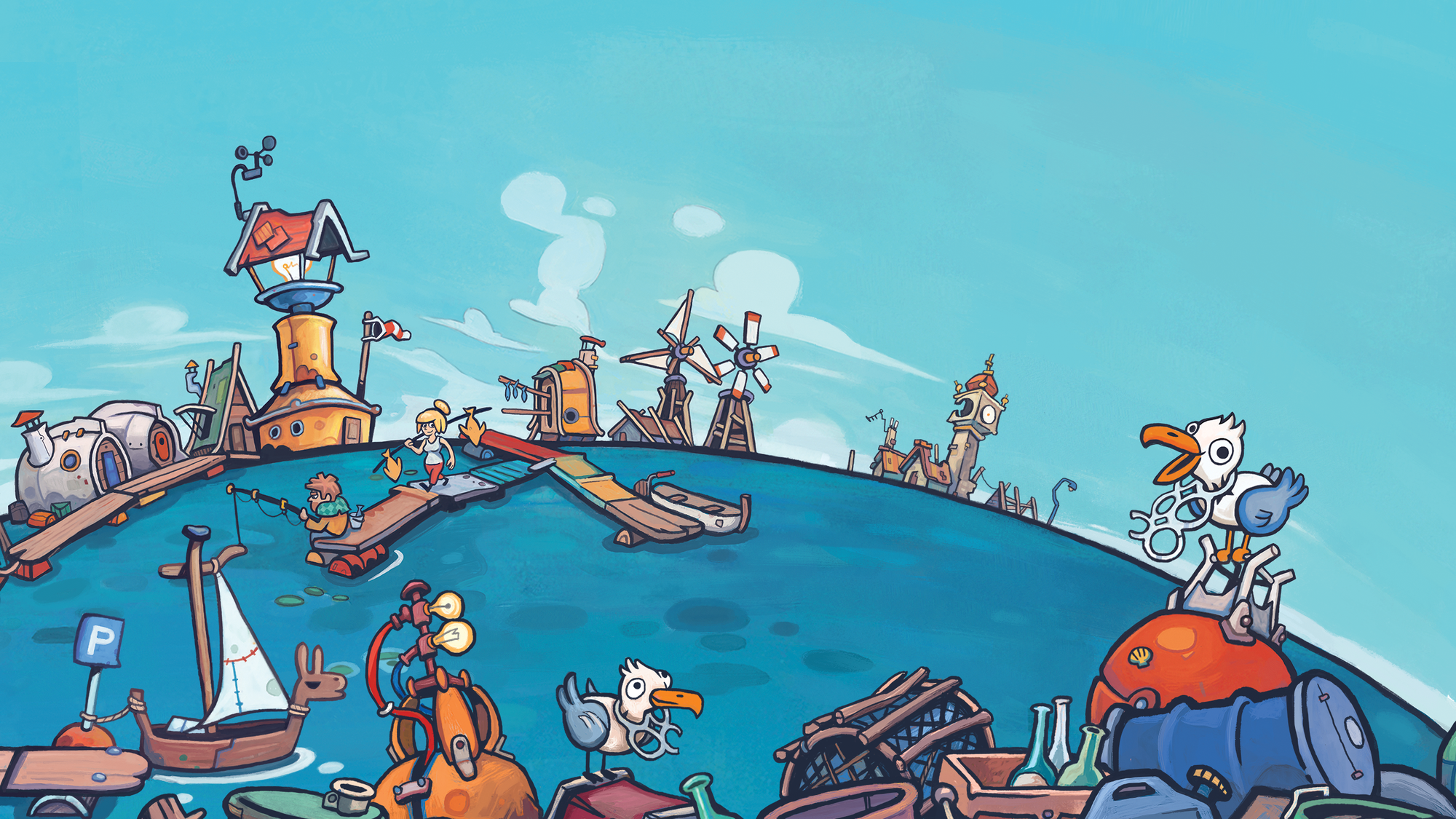
A survival city-builder in broadly the same vein as stuff like Frostpunk and Ixion, Flotsam is a game set at the end of the world that, thanks to its vibrant art style and optimistic outlooks, actually feels more like the start of the world instead.

You play as a tug boat that poots around a flooded world, ala Waterworld, and as you go--on a kind of strategic overworld map--you need to scrounge for resources and pick up survivors. Zoom in, though, and the game becomes a city-builder, where you can attach buildings to your boat and use those resources to craft stuff, build more buildings and keep everyone happy by giving them nicer houses and places to hang out.

The cheery, hand-crafted visuals are a joy to be around. For an apocalyptic game, Flotsam's glass is very much half-full, its flooded wastes featuring crystal-blue oceans, storybook islands and fantastic character art, while the survivor's chatter is mostly interested in everyone working together to build something new and communal from the wreckage. To give you an idea of just how cheery things are, here's the game's website:

The world of Flotsam is a colorful and cheerful place. It’s about going on adventures, seeing the world and cleaning it up as you go. The sun is shining, the sky is clear and the ocean is calm… mostly at least.

Does this change the way the game plays? Not really. Does it dictate the way I feel while playing it? Absolutely. As I've explained in my impressions of Town To City, I like these games because they let me build stuff, and I hate the stresses so many of them bring along for the ride. Flotsam has those stresses--you need to keep everyone fed and supplied with fresh water--but meeting those needs is so straightforward, and everyone looks and works so happily while they're in danger, that it never feels like a crisis.

I should note that this isn't really a city-builder in the traditional sense. While you are definitely building a settlement around your boat, and it needs walkways and power and all that stuff, the overworld navigation is a place you spend a lot of time exploring, finding resources and picking up survivors. What's cool is that the two are linked; you cruise around a map screen where everything is abstract, but when you find something to explore, the view zooms into the boat-scaled view, and the objects that appeared as points on the map are now islands represented off the stern of your town, on which you can see your survivors clambering over and harvesting supplies.

Flotsam has a more involved supply chain and production management slant than many of its peers, which I really enjoyed; the loop of harvesting raw resources from the overworld, then using your city to refine them and turn them first into processed resources, then things, is always satisfying. There are a ton of different materials and items, some you can only get by scrounging, others that can be grown and others that you have to craft, and it's an interesting challenge having to prioritise your survivors and various buildings to churn out exactly the things you need at any given time.

I said earlier in the year that I'm tired of apocalyptic futures where humanity is resigned to living off scraps, where the overriding themes are those of defeat and despair. Flotsam's optimism and resolve to build something new from the ashes are exactly what I was talking about; the fact it's a game where you're directly responsible for the building only makes it better.

Give Me A Future Worth Fighting For - Aftermath
I want to build a better world, not live in the ruins
Flotsam Builds Some Hope At World's EndAftermathLuke Plunkett
Flotsam Builds Some Hope At World's End

I'm Taking It As A Bad Sign That Two Big Games Were Announced With No Screenshots

18. Prosinec 2025 v 01:49
I'm Taking It As A Bad Sign That Two Big Games Were Announced With No Screenshots

I don't want to be the Game Announcement Police here, ACAB, but over the last month there have been two big, new video games revealed that were notable not for what they showed off, but for what they didn't.

First up was Total War: Medieval III, which was announced via a live-action trailer (below) and blog post:

Amazing news! There hasn't been a proper historical Total War release since Three Kingdoms (I'm not counting Pharaoh's mea culpa), and Medieval is a long-time fan favourite, so this should have got people excited. Only problem is that there wasn't any gameplay shown. There weren't any screenshots. There wasn't even much art for the game, aside from a single piece shown at the top of a follow-up blog.

Only days later, Creative Assembly announced a second upcoming Total War game coming out much sooner, this time set in the Warhammer 40K universe, and its debut trailer was packed with gameplay footage, right down to giving us a look at the menus and interface.

I'm not drawing a very long bow here to speculate that the Medieval announcement was made a few days prior in an attempt to head off any uproar over the 40K announcement. For those unfamiliar with the franchise, there's a kind of uneasy divide among some in the community, with Total War's longest-serving fans (going back to 1999's Shogun) preferring the series' historical focus over the wilder, more fictional stuff that has featured in the Warhammer (and now 40K) entries. They look at how much money and effort has been poured into the Creative Assembly collab, then look at the relative neglect shown to the historical games (from ending Three Kingdoms support early to whatever the hell happened with Pharaoh), and get pretty mad.

While getting Medieval III out in front like that probably made diplomatic sense to publishers Sega and developers Creative Assembly, I dunno, I think I'd rather a game be announced on its own merits and with something genuine to show off and talk about, rather than shoot a clip and write a blog just so you make some of your own fans less angry. Medieval III is clearly years away (they didn't even hint at a broad window for it to come out), and you went and announced a whole other game a few days later– you didn't have to Elder Scolls VI-ify your next big game!

The Elder Scrolls 6 Announcement Is Now as Old as Skyrim Was When The Elder Scrolls 6 Was Announced - IGN
The Elder Scrolls 6 announcement is now as old as predecessor Skyrim was when The Elder Scrolls 6 was announced, and developer Bethesda hasn’t shared another snippet since.
I'm Taking It As A Bad Sign That Two Big Games Were Announced With No ScreenshotsIGNryan_dinsdale
I'm Taking It As A Bad Sign That Two Big Games Were Announced With No Screenshots

The second game I wanted to talk about is even funnier. Earlier today Netflix announced that Delphi, a company you've likely never heard of (they're relatively new, and their only public credit is as support on IO's upcoming 007 game) will be both developing and publishing a new FIFA game. You might remember that back in 2022 EA Sports (developers of the long-running series) and FIFA (the world governing body for football) split, and ever since EA's series has been called EA Sports FC, or EAFC for short.

Netflix's announcement contains zero images or video of the game. And there's probably a good reason for that: the press release says stuff like "All you need is Netflix and your phone", and "We want to bring football back to its roots with something everyone can play with just the touch of a button", suggesting that whatever Delphi is cooking up, it'll be a lot closer to a casual mobile experience than the blockbuster simulation football fans have long come to expect from series like FIFA (now EAFC) and Pro Evo (now called eFootball).

That obfuscation has paid off handsomely, though, with a ton of mainstream coverage of the announcement hitting today with headlines like:

Fifa video game to return after four years in Netflix exclusive
The game will be made by Delphi Interactive and released in time for the 2026 World Cup.
I'm Taking It As A Bad Sign That Two Big Games Were Announced With No ScreenshotsBBC News
I'm Taking It As A Bad Sign That Two Big Games Were Announced With No Screenshots

There's a small mention of what I've just said above at the bottom of that BBC article, but as a mainstream article intended for a mainstream audience, I guarantee Delphi and FIFA will be thrilled at the number of water cooler and group chat conversations this week that will revolve around the talking point "Boys, did you hear FIFA is coming back?"

I should point out that this isn't the first FIFA game to "return" since the body split with EA; there's already a game called FIFA Rivals, which is basically an antique NFT scam with a playerbase best summed up by the fact the game's official site has a Telegram account.

I Don't Think Larian's CEO Understands How Art Is Made

16. Prosinec 2025 v 22:52
I Don't Think Larian's CEO Understands How Art Is Made

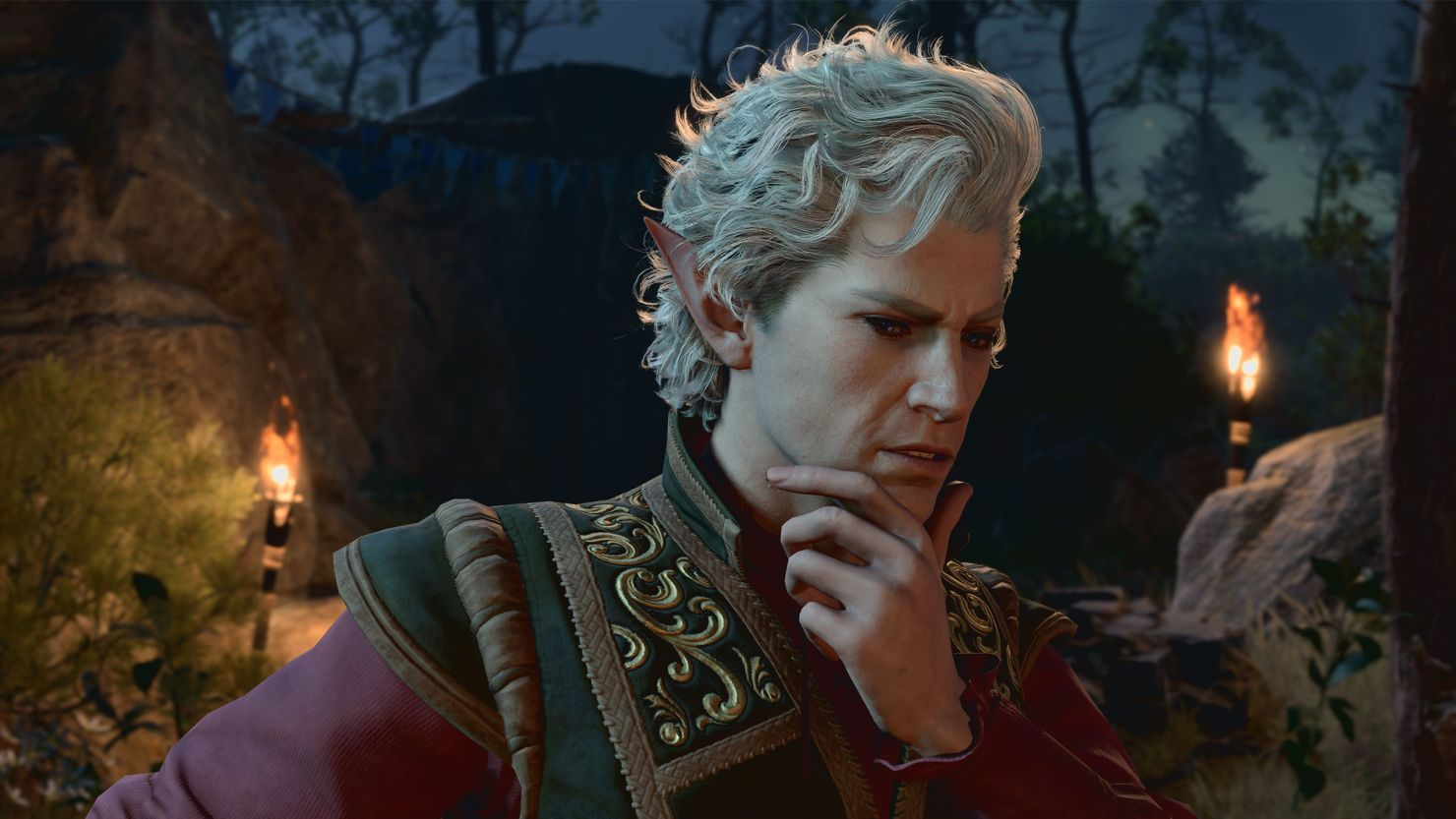
Earlier today Bloomberg's Jason Schreier published an interview with Swen Vincke, the CEO of Larian, the company behind the internet's favourite video game and demonic relationship simulator Baldur's Gate 3. It could not have gone worse for the guy.

Among all the expected pre-release interview talk about how their next game, Divinity, will be making all kinds of improvements over their last game, there was this:

Under Vincke, Larian has been pushing hard on generative AI, although the CEO says the technology hasn’t led to big gains in efficiency. He says there won’t be any AI-generated content in Divinity — “everything is human actors; we’re writing everything ourselves” — but the creators often use AI tools to explore ideas, flesh out PowerPoint presentations, develop concept art and write placeholder text.
The use of generative AI has led to some pushback at Larian, “but I think at this point everyone at the company is more or less OK with the way we’re using it,” Vincke said.

The quote made an audible record scratch on social media before leading to a ton of blowback from artists and beyond, so much so that Vincke took to Twitter to try to explain himself:

Holy fuck guys we’re not "pushing hard" for or replacing concept artists with AI.

We have a team of 72 artists of which 23 are concept artists and we are hiring more. The art they create is original and I’m very proud of what they do.

I was asked explicitly about concept art and our use of Gen AI. I answered that we use it to explore things. I didn’t say we use it to develop concept art. The artists do that. And they are indeed world class artists.

We use AI tools to explore references, just like we use google and art books. At the very early ideation stages we use it as a rough outline for composition which we replace with original concept art. There is no comparison.

I talked about how we use ML here if you would like to know more.

We've hired creatives for their talent, not for their ability to do what a machine suggests, but they can experiment with these tools to make their lives easier.

Which only made things worse! Because instead of explaining himself, all his follow-up showed is that Vincke does not appear to understand what it is that his art teams actually do, or indeed how their art is made.

consider my feedback: i loved working at @larianstudios.com until AI. reconsider and change your direction, like, yesterday. show your employees some respect. they are world-class & do not need AI assistance to come up with amazing ideas.

anoxicart🍤 (@anoxicart.bsky.social) 2025-12-16T16:20:58.862Z

That's OK, Swen, let me explain it for you! Firstly, any use of AI fucking sucks. It's a creative, economic and societal disaster, so really, there's no excusing its use in any circumstances. That's why people got so upset about the initial quote. But to get more specific, let's take a look at your justification.

Saying you only use AI for "reference" is wild. Artists use image searches and books as inspiration because they are drawing on art (but also everything else from colour palettes to photos to the weather). There's experience there, things they can relate to, be inspired by. There is no inspiration in slop! Everything AI is presenting to you is simply stolen and amalgamated. It's like asking your phone's autocorrect for relationship advice.

If you are using AI to generate ideas to explore, that is using AI in your game. This is duplicitous spin to say otherwise. The entire history of creative industry happened just fine without using AI, there is no need to shoot your game in the foot by using it now.

— RJ Palmer (@arvalis) December 16, 2025

There's an unsurprising tendency across leaders in the tech world (games included) to see art as merely part of something's production line, a box that needs to be ticked before copies can be sold. It's why AI is often justified as something that saves time, or saves money. But with art, that process is the point. The themes and ideas artists draw on, the way they iterate through those ideas with sketches, the work itself is what creates art. There are no shortcuts.

In a lot of ways, Larian was a poster child (alongside folks like Remedy) for how retaining a team and continuing to refine a toolset makes seemingly impossible things achievable. Why spend 2 years talking about how critical this was to BG3's existence--and then say major parts of it don't matter?

Xalavier Nelson Jr. (@writnelson.bsky.social) 2025-12-16T19:50:58.603Z

A 23GB Helldivers 2 Is Better Than A 154GB Helldivers 2

A 23GB Helldivers 2 Is Better Than A 154GB Helldivers 2

When Helldivers 2 first launched on PC, its installation size was a whopping 154GG. It is now, thanks to the magic of Going Back And Taking A Look At Things, a measly 23GB. Please, God, let this be the one good trend in video games for 2026.

Developer Arrowhead first announced plans to shrink the PC version's size down last month, saying that 154GB figure was "roughly three times larger than the same game installed on consoles!" The reason given for this was that the team wanted to support older mechanical hard drives found on older PCs (all modern consoles have solid state drives), and so in order to give players with those HDDs a playable experience, they "duplicated" a bunch of assets like textures and sound effects, so that a mechanical hard drive didn't need to go reaching all over its surface area just to respond to what was happening at speed on the screen.

Which sounds wonderful in theory, but months of analytics post-release have revealed that not only are a small number of Helldivers 2 players actually using a mechanical HDD--around 11%--but that the pre-release industry standard figures Arrowhead used to make the decision to accommodate them in the first place were off.

They've found that it's the generation of levels causing the biggest slowdown, not the constant loading of assets, and that their projections for how slow HDD users were going to find things were also "very conservative". So a new "slim" version of the game is now being tested in a public beta (which you can join here), clocking in at just 23GB, and this version--optimised for everyone--will only "result in minimal changes to load times - seconds at most".

I'm fascinated by this. We live in an age where video game studios and publishers obsess over metrics, yet these numbers were so wrong! And in fixing them, a major video game is going to free up so much precious space–something that could get very expensive soon--that I can install at least 13 indie city-builders where those 131GB used to be!

[This Is Where My Anno 117 Impressions Were Going To Go]

17. Listopad 2025 v 10:24
[This Is Where My Anno 117 Impressions Were Going To Go]

A few weeks back I got a copy of Anno 117, and was really looking forward to playing it. I've been on a city-building and management streak lately, and was excited at the prospect of spending some time with a Roman one that also featured the Anno series' quaint obsession with city-building narrative campaigns.

So I started it up, dabbled in the sandbox mode for a bit, found out I was probably better off playing the campaign instead (it’s got a gentler, longer tutorial) and settled in for what I thought was going to be a month or two of good times. The game looked great on my new PC, and in terms of city-building it seemed like one of the better ones I've played recently. Its production queues require some tricky planning to get right, and the 4X/RTS stuff layered over the top--like controlling army units, exploring uncharted islands and having diplomatic relations with neighbouring islands--was all pretty interesting.

Over the weekend, I hit a loading screen (pictured above) I hadn't noticed before and something immediately felt off. The game's other loading screens had also been weird, but I'd assumed that was because they appeared simply unfinished, raw sketches of an idea for an eventual, more-polished loading screen, in much the way many of Civ VII's were at launch. But this one in particular wasn't that; it was clearly AI-generated. People's arms were gone, hands were strange, outfits warped in unnatural ways, the entire composition was wacky. I'm not the only one to have picked up on this, either; after jumping online to see if anyone else had noticed, I found that so many had noticed and posted about it that Ubisoft had issued a public statement defending it:

This image was a placeholder asset that unintentionally slipped through our review process...With Anno 117: Pax Romana being our most ambitious Anno yet, we’ve assembled the largest team of artists ever for the franchise and to help meet the project's unique scope, they use AI tools for iterations, prototyping, and exploration. Every element players will experience in the final game reflects the team’s craft, artistry, and creative vision.

After reading this I immediately stopped playing, and won't be back. This is 2D art, for a series dating back to the 90s and which has made it through seven previous games using 100% human-made art just fine, and you're telling us that somehow AI is needed now? Are we honestly supposed to take Ubisoft at its word that this dogshit image was the only one? And that it just magically slipped through multiple layers of supervision before appearing in a shipped product?

[This Is Where My Anno 117 Impressions Were Going To Go]
The full screenshot in question. I've circled the most obvious examples of AI-generated slop, but the more you look, the more you can see. It's incredible that this made it off someone's desktop, let alone into the final release of a commercial video game.

In addition to the above statement Ubisoft have shown an updated version of the art, which will be added to Anno 117's next update, but the public-facing damage has already been done. As I've said with The Alters previously, once players can see one instance of AI being used, how do we know it hasn't been used throughout?

I’m Getting Real Tired Of Not Being Able To Trust That A Video Game Doesn’t Have AI Crap In It - Aftermath
It sucks that players are having to scour every asset and line of dialogue
[This Is Where My Anno 117 Impressions Were Going To Go]AftermathLuke Plunkett
[This Is Where My Anno 117 Impressions Were Going To Go]

And just like I said with The Alters, I'll say again here: the presence of this stuff inside a game (and in such an obvious case) sends a very clear message to your fans and customers that you do not give a shit. You don't care that this technology is threatening art jobs (and beyond), that it's dehumanising the medium, that it's creating slop that makes your own product look like garbage to the degree that it's causing people playing what had seemed an otherwise good video game to jump online and re-enact the Jose Mourinho headphones meme.

All of that for a piece of loading screen art! Something that older games in the series, like 2019's Anno 1800, were especially noted for. Gah!

❌