We’re still catching up on games from 2025, which is fine for me. January is usually pretty slow for big releases as everyone recovers from the holiday period with alcohol and copious amounts of food. I’ve been playing a bunch of games this month including Powerwash Simulator, that new Fantasy Life title, Rune Factory: Guardians of Azuma, and a heavily modded playthrough of Cyberpunk 2077. It’s only my fifth playthrough of Cyberpunk after all, and I had to do something special for it. Seriously, play Cyberpunk 2077 with mods if you can.
As you can imagine, that’s a lot of gaming. However, I’ve not been idle with my game coverage and I have plenty of fun things planned! Today I’m featuring Angeline Era, a late bloomer in 2025 that I have greatly enjoyed my time with so far. It launched in December which was too late to hit my Top 10 criteria, but this is an impressive indie title by Analgenesic Productions that’s received solid reviews across the board. You can pick it up for around $25, which is a solid price for the package available. I haven’t had too much time with the game yet, so consider this an early impressions review for now. After a few hours with Angeline Era however, you can bet I’m going to play more.
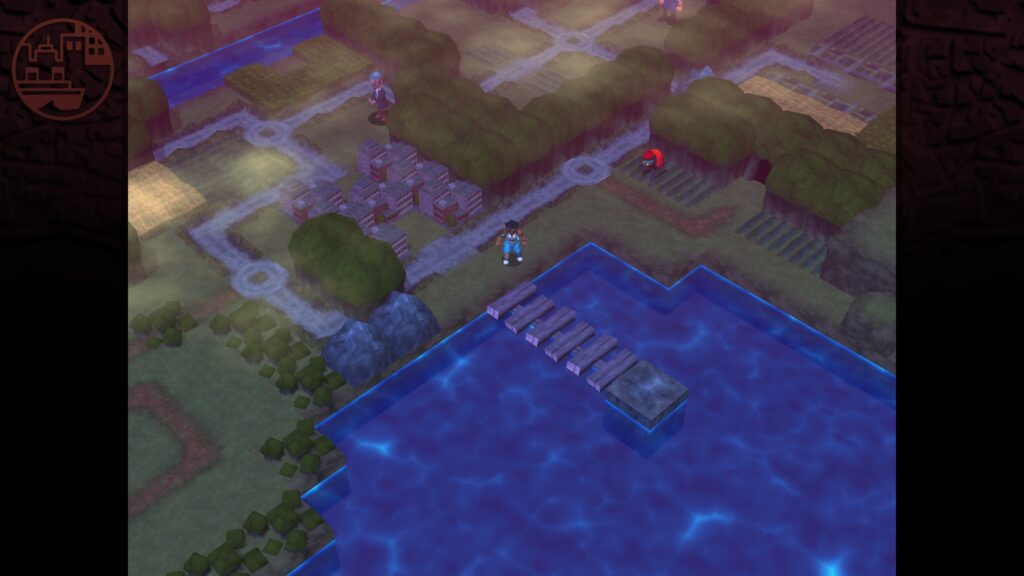
At its heart, Angeline Era is a 3D action RPG that carries some solid inspiration from classics from the old days such as Zelda. The studio also made Anodyne and Sephonie, and the artistic style from those games carries over into this one. I was a big fan of Sephonie back when I played it, so it’s good to see studios succeed. Out of the three, Angeline Era is by far my favorite game they have released so far. Given the Overwhelmingly Positive reviews it currently holds on Steam, it seems a lot of people agree with that!
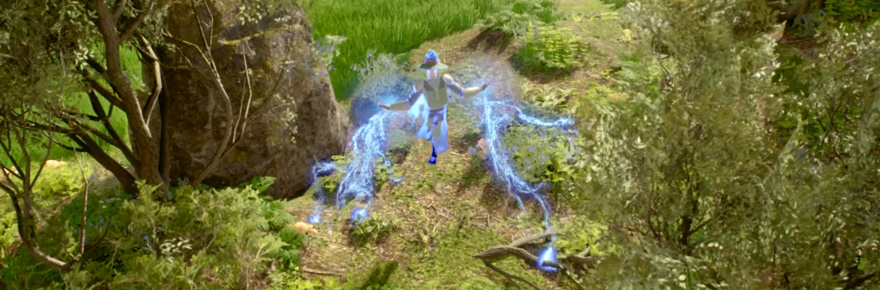
The story in this one is surprisingly captivating, as is the world design. Set in the fantasy realm of Era, you play as a former soldier called Tets Kinoshta who embarks on a journey to uncover a mysterious angel ship called the Throne, delving into the world of humans, angels, and fae with all the secrets and beauty. It’s an interesting story so far, and despite the lack of voice acting involved I’ve gotten invested in the characters.
The combat is an odd thing that reminds me of very old games such as the Ys series and (shudders) Hydelide. Angeline Era’s system is very simple. Instead of pressing an attack button, you strike enemies by walking into them, creating a fast-paced and fluid combat experience. Success hinges on careful positioning, timing, jumping, and evasion through movement. Additionally, you can employ ranged weapons and other tools to help turn the odds, especially when it comes to the boss battles. The first boss fight took me a long time to work out!
The biggest strength of Angeline Era for me however is the exploration, which is done in a really interesting way. While the overworld looks basic, the levels are hidden on the unmarked map, and they require a lot of work on the player to experiment and explore. There’s no time pressure either, so players can explore the world at their own pace. Dungeons, forests, mountains, mines, and towns are filled with traps, hazards, foes, and sometimes surprising encounters that blend humor with challenge. The writing is surprisingly good, and the lore is pretty nice as well.
Overall, Angeline Era seamlessly blends freeform exploration, inventive bump-based combat, and an atmospheric world into an action RPG that stands out for its personality, pace, and its encouragement of curiosity.
The moment I first saw Witchspire was a thing, I knew the exact people in my life for whom the title alone was an alluring promise. I’m not exaggerating with that; there are people who mean the world to me who are here precisely for big witch hats, witch cottages, and everything that goes along with endless […]
The other evening, in those weird hours when it’s too early to go to bed but too late to dig into a new task without ruining any chance of going to bed, I was looking for a new game to play. I remembered seeing mention of the demo for Titanium Court, a game that in its Dawnfolk vibes felt like it might be something small and lightweight to poke around in at the end of the day. It was not that. I don’t quite know what it is, but I like it.
Titanium Court appears to be several games in one. There’s a match-3 section, and a battle section, and a whole narrative of a fantasy kingdom in which you wander into a party one night and then discover you are the queen, tasked with fighting enemy forces while you try to get out of there. Here’s a trailer that doesn’t explain anything:
The gameplay part of all this involves fighting enemies in a two-phase battle that takes place on a tiled grid. In the first phase, called High Tide, you match resource tiles into lines of three to remove them from the grid. Matching features like water, hills, and fields gives you resources like food, rocks, and wood. You can also arrange the landscape to better protect the square representing your kingdom from enemy troops, surrounding it with hills or water. Matching multiple groups of three in a row also gives you more turns to play during this phase, making the whole thing a complicated mini-strategy game.
In the second phase, called Low Tide, you spend the resources you’ve gathered to deploy soldiers or farmers. The farmers gather more resources as the battle rages (provided you left some resource tiles on the field for them to harvest), while the soldiers go out to destroy enemy strongholds or fight to keep enemies from reaching your kingdom. You don’t control your troops; you just watch their tiny fights take place interspersed with images of cricket players, cats knocking things off tables, and Jenga towers that represent the tide of battle.
AP Thomson
Complications get added as the demo goes on. Special buildings can appear on the grid that you can access during Low Tide, but only if you keep them on the grid during High Tide, trying not to match them even when it’s very tempting. These can be hospitals that heal you, or shops where you can buy items; I was especially fond of a mirror I could arrange next to my kingdom to get two-for-one troops. Enemies get more varied, with catapults you can fend off by surrounding your kingdom with hills, or flying enemies who frequently mobbed by kingdom.
Layered atop all this is moving your kingdom along a roguelike map that even the game admits is confusing as hell, trying to make it to some kind of exit. And surrounding all that is the narrative element, which frequently breaks the fourth wall and is full of surreal jokes, talking cats, and a seeming conflict between the in-game narrative and the demo’s tooltips.
AP Thomson/Aftermath
It would be easy for all this to become grating, but instead these narrative bits never overstay their welcome, lasting just long enough to be funny without becoming too much. Absurd maximalism is deeply not my thing, but it totally works here; characters in the game seem just as confused as you, and it creates this vibe that you're all in this together, trying to survive and make sense of this very strange world.
AP Thomson
Titanium Court is weird as hell and completely charming, enjoyable both to play and just to experience, which feels like an impressive balance to pull off. The demo is available now, and the full game is "coming soon" according to Steam, though there's no release date yet.
We had these report cards in elementary school that, in addition to grading us on school subjects, also evaluated how we were doing on general life skills. I did pretty well in classes besides math, but the two skills I repeatedly failed were “penmanship” and “following directions.” I am simply not very good at reading and understanding explanations before I begin a task, and it’s this tendency that’s making the game Uncle Chop’s Rocket Shop a bit of a nightmare for me, but also really fun.
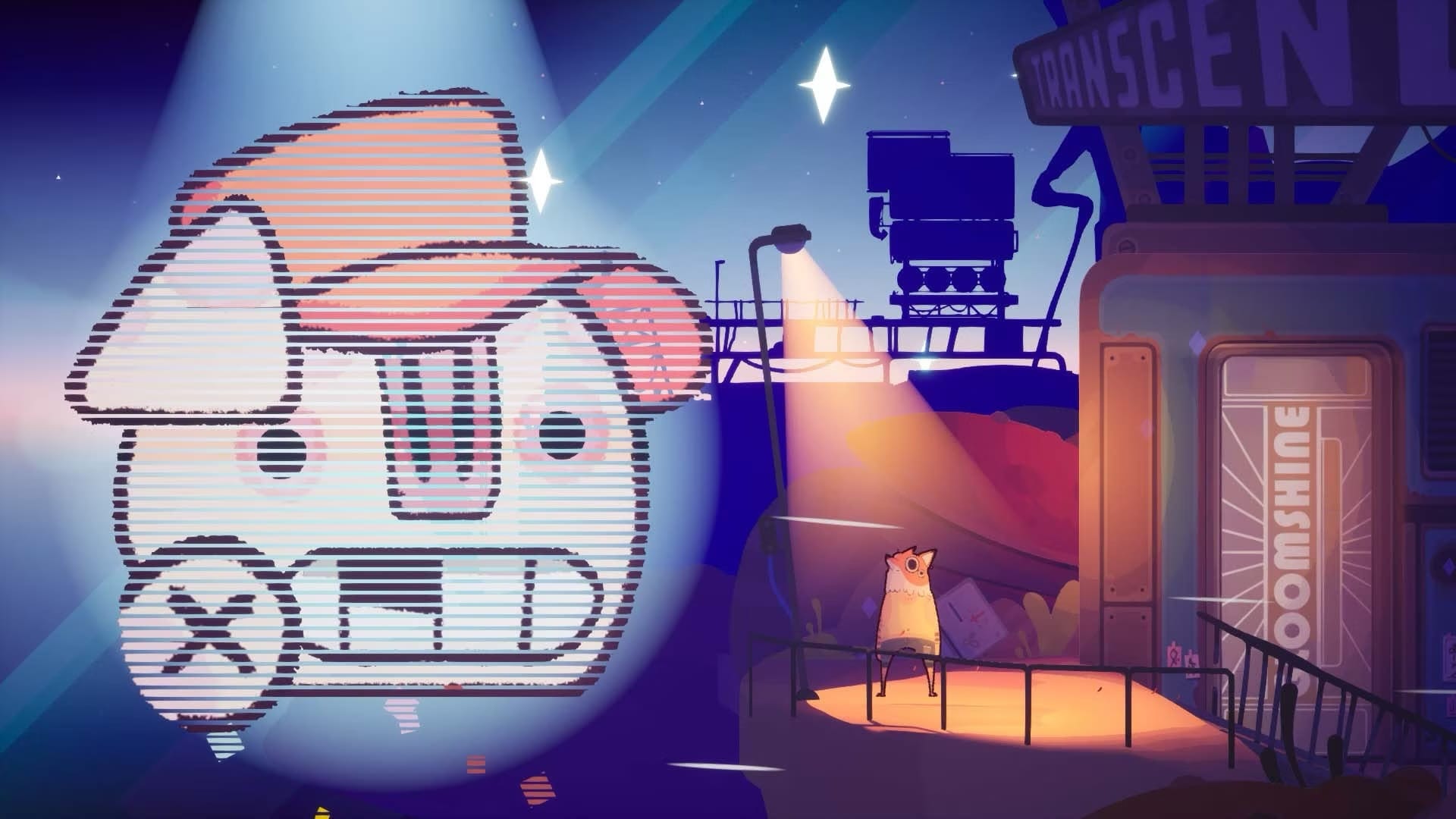
Uncle Chop’s Rocket Shop came out in 2024, and it’s been sitting in my Epic store library for a while before I finally decided to check it out this week. You play as Wilbur, a fox-headed dude who inherits an intergalactic mechanic’s shop and has to fix enough spaceships to make growing rent payments. There’s more plot than this– I’m only a few in-game days in, and I’ve already encountered mystical beings, thieves, meteor showers, and other hints that this isn’t just a job simulator. It’s possible to die, but the game is also a roguelike, with upgrades to your mechanic’s shop persisting between runs. But the bulk of your day is taken up by choosing from a number of repair jobs and getting them done to the customer’s satisfaction.
There are two modes to choose from: one with time pressure, where customers will get angry if you don’t fix their ships fast enough, and one that does away with the clock but makes the repairs harder and more exacting. I hate time pressure in games so opted for this more chill mode. This seems like a good way to learn the game, and especially how to come to grips with its giant, weird manual.
When you go to refill a customer’s fuel pump, for instance, you’ll see a symbol that will tell you which tab in the manual to go to, which you do by physically pulling the book out of your inventory and clicking through its pages. There, you’ll get a variety of images, brisk instructions, and references to other parts of the manual that will help you troubleshoot and solve the problem. My fuel jobs have been pretty basic–remove the fuel cell, refill it at my fuel station without filling it too far and exploding it, putting it back in. Oil is a little more complicated–in addition to the oil levels, there’s the oil quality to consider, as well as a pump, heat gauge, and other gadgets that could be busted. A recent job included both of these tasks and two new complications. There was an alarm that wouldn’t stop timing out and locking me out of the other ship modules, which had to be disarmed with a series of puzzles, and a “tomfoolery” module that required buying a new repair station to fix and then playing a whole other video game to calibrate.
Beard Envy
The actual fixing is wonderfully tactile, with lots of buttons to press and levers to pull and bolts to unscrew. Just like in real life, you have to make sure you do all these things–I’ve lost money for forgetting to close a panel back up, or gotten stuck because I was flipping switches in the wrong order. The manual tells you all this, but it’s written like a real professional manual that assumes a certain familiarity with the objects at hand. Everything you need to know is in there, but it can be a little baffling to get your head around, especially if you’re not a great visual learner or are me, who cannot help himself from skimming the instructions before diving into a ship’s guts. In the game’s time-pressure mode, I imagine learning a new task for the first time requires an overwhelming amount of speedreading and making good choices, but in my chill mode I have no justification for not taking the time to look everything over first besides being a dumbass. I find it hard to understand the manual without experiencing the thing it’s describing, but going step-by-step often gets me stumped if a problem is deeper in the book. I’ll plunge ahead with unearned confidence, run into problems, give the manual the most cursory glance, dive back in, and get stumped again, in an absurd loop I have no one to blame for but myself.
Beard Envy
I hate reading directions, but I do like research, so I enjoy looking stuff up in the manual even if I’m not fully digesting it. It’s hard not to get impatient to fiddle with all the strange machines, which give me some great Spaceteamvibes. The computer I’m playing Uncle Chop’s on sits next to an Ikea bookshelf I put together myself also without reading the instructions in full, and which is now listing to one side because I didn’t pay enough attention to the importance of rigorously attaching its shitty plywood back. Looking up from a game that reminds me I apparently haven’t grown at all as a person since third grade to real-world proof of the fact that I haven’t grown at all as a person since third grade is a lot, and the in-game consequences for my bad habit feel like a reminder that there will also be real-world consequences when my bookshelf inevitably collapses. At least in the game I’ll get a chance to start again, unlike my bookshelf, which will destroy everything around it when it forces me to pay for my hubris.
Uncle Chop’s Rocket Shop is available on PC and consoles.
To steal a line from Unbeatable, I could feel the game's last chapter in the space between my eyes. It's the place where tension builds before you're about to cry—a unique feeling of feelings that manifests through pain. Played in episodes, the sixth of which is the culmination of it all, Unbeatable is set in a world where music is illegal. So illegal, in fact, that the world's become a fascist police state; musicians and music lovers still exist, but they’re pushed to the margins of society. Music is the key theme here both narratively and mechanically; the story is centered around it, tied to traditional rhythm-based gameplay where you push buttons to a beat.
Storywise, where Unbeatable lands is the idea that music and art are not only "amplifiers" of feelings, as Unbeatable's characters put it, but are feelings. The last chapter is where all of this becomes clear, and the game's rhythm gameplay, stylish animation, incredible music, and high-stakes story work together to reinforce that.
The problem is that it takes five episodes to get there. When Unbeatable is good, it's really good, but there's just too much time where it's not. Up until the last episode, I couldn't tell you why music is illegal, how the main character Beat was dropped into this world, or even who she really is. After the last episode, I still can't answer some of those questions, but it doesn't really matter. Unbeatable feels like the sort of game that's supposed to be a bit messy. This ending section of Unbeatable, though, is where the game gets to the heart of its characters, what drives it all—not the overly complicated story and slow pacing. For most of Unbeatable, the game gets in its own way.
Image: D-Cell Games/Playstack
Unbeatable is about music, but it's also about grief. It's about making mistakes, creating good and bad art, about feeling things. There's one scene, at the end, where the main character, Beat, is talking to her much younger companion, Quaver, about loss. The circumstances of their losses are different—from each others' and my own–but the feeling is universal. Just last night, I was talking about this: It's too painful to remember what I've lost. If I don't think about it, I don't feel it—that tension between my eyes. But in refusing to remember, I lose the overwhelming love that makes the loss much too painful. Beat and Quaver don't necessarily have the answers, and I don't either.
From this conversation, the screen cuts to white. Quaver starts to sing. The instruments come in, and I can start hitting stuff on beat—the perfect emotional release after the game's most poignant moment.
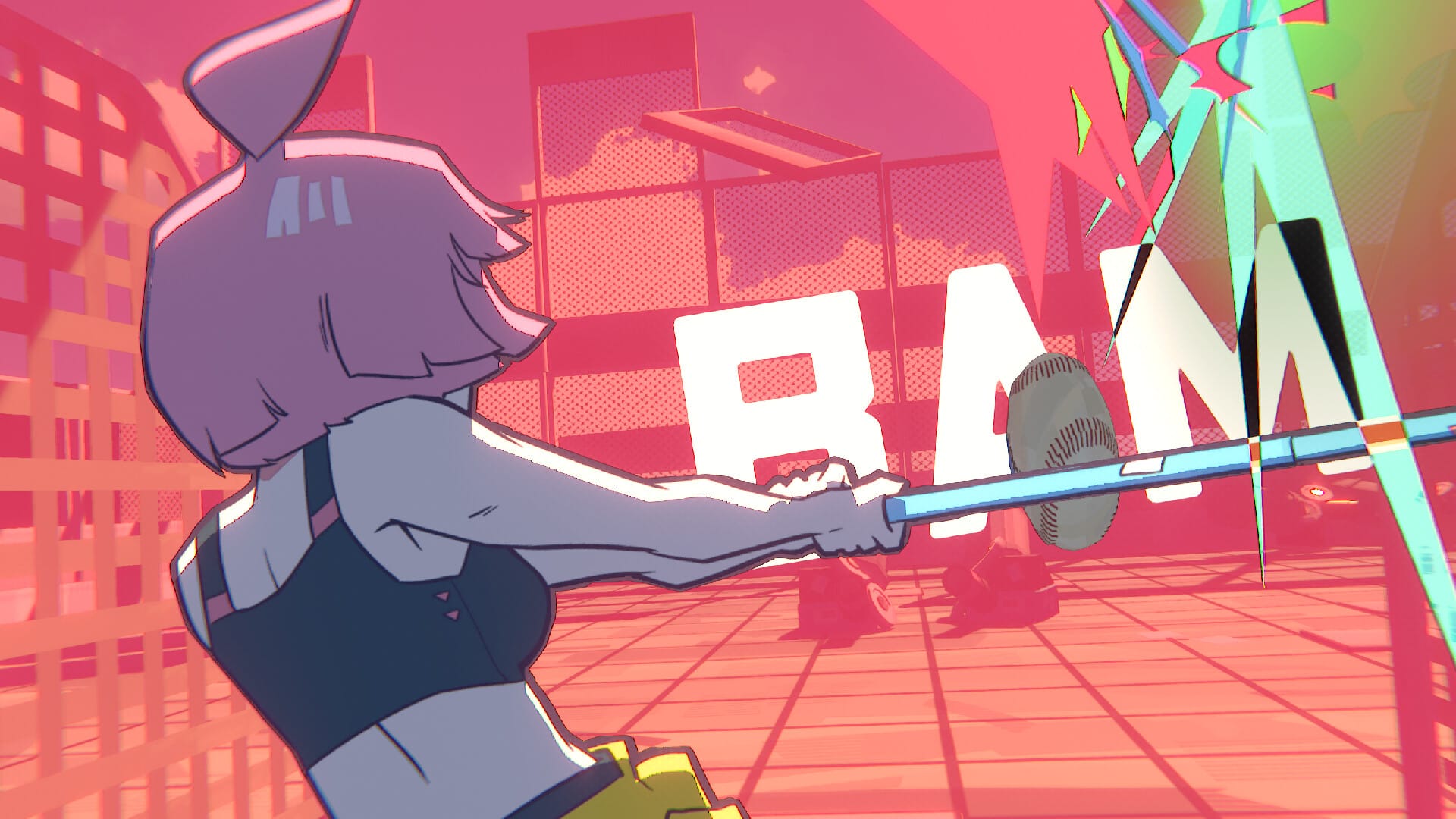
But the rest of the game, aside from several other moments here and there, move too slowly, with too many extraneous details, and way too much walking around. There's one section, early on, where the crew is trying to escape from prison. There's some rhythm elements, and it works as a sort of tutorial. There's a part where you get a prison job. A baseball minigame. A lot of walking around with bad camera work. It's so painfully slow, while also somehow moving way too fast—narratively, I have so many questions. Later, there's a random platforming part to restore power to an arcade that never comes back up in the story. The problem with these sections and several of the others is that the material within doesn't necessarily point towards the core of the story, what's at the center of the last chapter. Unbeatable is shrouded in a mystery that makes this feel intentional. I haven't mentioned this yet, but there's also a supernatural element: Cops are arrested musicians and music lovers, but there's also a big black hole that's threatening to engulf the whole world. You're kind of fighting both at the same time, but it's not until the last few chapters where Unbeatable reveals why. (I still don't entirely get it.)
There were a lot of times during Unbeatable when I wanted to quit the game's story mode. And right when I was thinking that, I hit one of the moments where the visuals, music, and writing really work. Those moments do a lot of work in forgiving the bad parts. It's easy to see the vision of developer D-Cell; the game drips both heart and an undeniable cool. But you can also see where the focus was—rightfully on these big, key moments—and where everything went off the rails.
Yet, by the end, I found myself shrugging off its failures. That's kind of the takeaway of Unbeatable, no? It's messy. Sometimes bad. And yet it still made me feel.
A survival city-builder in broadly the same vein as stuff like Frostpunk and Ixion, Flotsam is a game set at the end of the world that, thanks to its vibrant art style and optimistic outlooks, actually feels more like the start of the world instead.
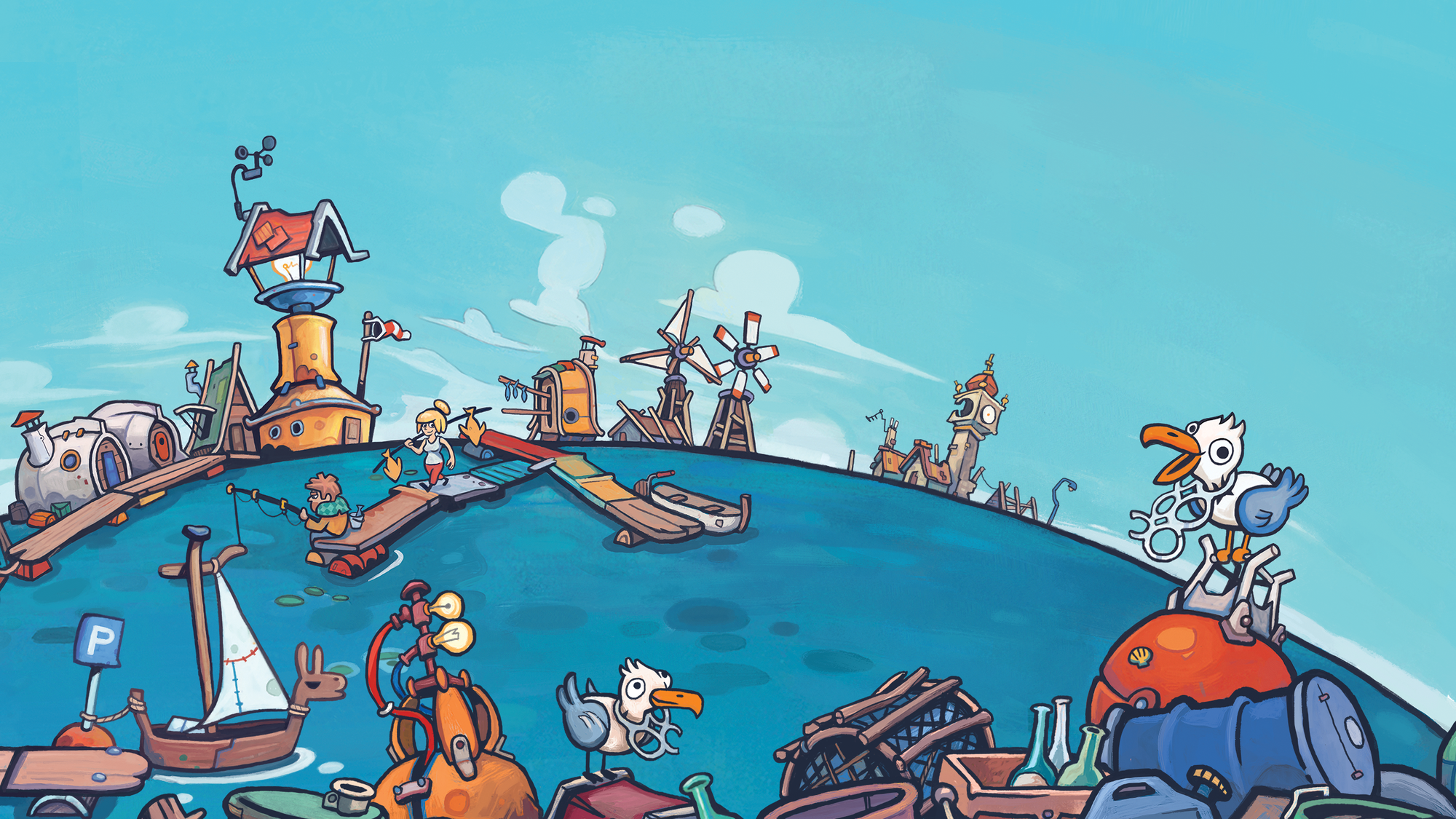
You play as a tug boat that poots around a flooded world, ala Waterworld, and as you go--on a kind of strategic overworld map--you need to scrounge for resources and pick up survivors. Zoom in, though, and the game becomes a city-builder, where you can attach buildings to your boat and use those resources to craft stuff, build more buildings and keep everyone happy by giving them nicer houses and places to hang out.
The cheery, hand-crafted visuals are a joy to be around. For an apocalyptic game, Flotsam's glass is very much half-full, its flooded wastes featuring crystal-blue oceans, storybook islands and fantastic character art, while the survivor's chatter is mostly interested in everyone working together to build something new and communal from the wreckage. To give you an idea of just how cheery things are, here's the game's website:
The world of Flotsam is a colorful and cheerful place. It’s about going on adventures, seeing the world and cleaning it up as you go. The sun is shining, the sky is clear and the ocean is calm… mostly at least.
Does this change the way the game plays? Not really. Does it dictate the way I feel while playing it? Absolutely. As I've explainedin my impressions of Town To City, I like these games because they let me build stuff, and I hate the stresses so many of them bring along for the ride. Flotsam has those stresses--you need to keep everyone fed and supplied with fresh water--but meeting those needs is so straightforward, and everyone looks and works so happily while they're in danger, that it never feels like a crisis.
I should note that this isn't really a city-builder in the traditional sense. While you are definitely building a settlement around your boat, and it needs walkways and power and all that stuff, the overworld navigation is a place you spend a lot of time exploring, finding resources and picking up survivors. What's cool is that the two are linked; you cruise around a map screen where everything is abstract, but when you find something to explore, the view zooms into the boat-scaled view, and the objects that appeared as points on the map are now islands represented off the stern of your town, on which you can see your survivors clambering over and harvesting supplies.
Flotsam has a more involved supply chain and production management slant than many of its peers, which I really enjoyed; the loop of harvesting raw resources from the overworld, then using your city to refine them and turn them first into processed resources, then things, is always satisfying. There are a ton of different materials and items, some you can only get by scrounging, others that can be grown and others that you have to craft, and it's an interesting challenge having to prioritise your survivors and various buildings to churn out exactly the things you need at any given time.
I said earlier in the yearthat I'm tired of apocalyptic futures where humanity is resigned to living off scraps, where the overriding themes are those of defeat and despair. Flotsam's optimism and resolve to build something new from the ashes are exactly what I was talking about; the fact it's a game where you're directly responsible for the building only makes it better.
You don’t need me to tell you that the world is a hellscape lately, but a fun thing about living in it is that it’s full of people with specific interests or niche areas of expertise, and they know all kinds of things you don’t know that you can go learn from them. Recently-released video game Morse is about Morse code, a very niche interest, and is even getting some people into telegraphy, an even more niche interest.
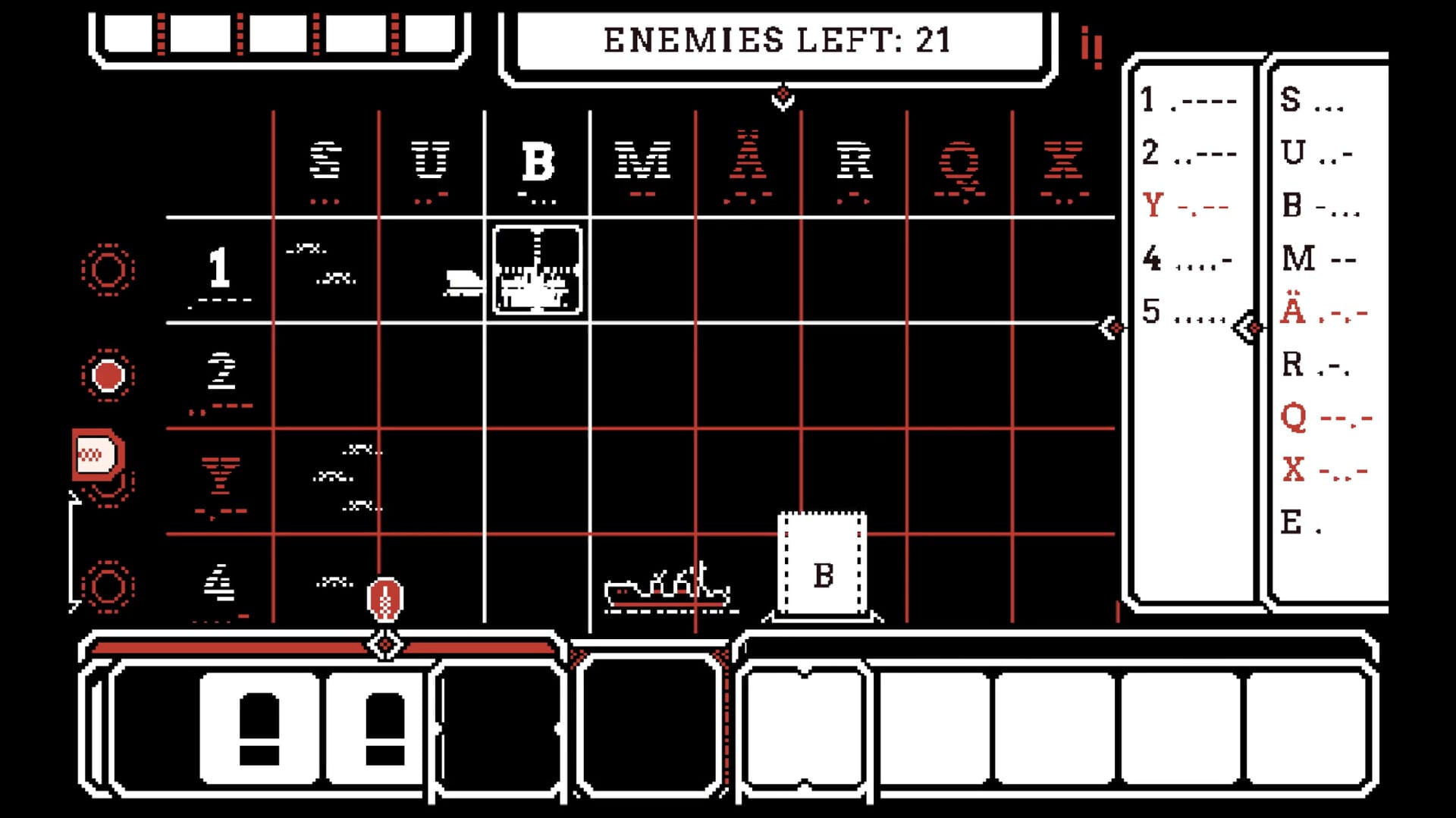
I feel like I’ve been hearing about Morse for years (10 years, apparently!), and it finally released in November. It’s changed quite a bit from the demo I played last year, which featured a narrative; now, you fend off growing waves of enemy ships on a grid you navigate with Morse code.
You tap out letters to move your cursor between grids and squares, all while enemy ships steadily approach from the right side of the screen. You can’t see them at first, so you need to set up mines to reveal them, or fire exploratory rounds to get a sense of what’s happening. As you move through the game, you unlock and upgrade weaponry, but things also get tougher: more ships to beat back, and more rows and columns to frantically dot-and-dash your way around.
I’ve only spent about an hour with the game, but I’ve really enjoyed its very specific mix of stressful and calm. In one way, it’s frantic; there’s way more ground to cover and problems to deal with than I feel like I can, and I’m constantly scanning the field and clicking away with my mouse to dart around. On the other hand, there’s something particularly slow about the whole thing. Tapping too fast will cause you to enter the wrong letter or nonsense instead of letters, so you need to take your time to keep from getting jumbled up. There’s a bit of a delay before you move, and shells take some time to load in. So peppered among a chaotic battle are all these micro-moments of downtime, and the whole game requires a kind of intentionality and level-headedness to succeed at that, when I pull it off, really makes me feel like I’m mastering a skill.
The ideal way to play this game, obviously, would be with an actual telegraph, which has been an option at festivals but less so at home. The Steam forums have a guide on how to get, build, or use one, and players have shown off their ownversions online. It’s a game that invites weird controllers and making your own weird controllers. While I am not a controller sicko like Chris Person, I can respect people who are, and the pared-down input required for Morse seems like an approachable way to get into tinkering.
Morse code and its preservation isn’t something I’ve thought a lot about, but there’s a whole world of enthusiasts out there keeping it alive. In an email, developer Alex Johansson said he hopes to use Morse to introduce more people to a hobby with an aging population, which is an issue I have literally never considered before–what happens if there’s no one left alive who knows Morse code? I love how such a simple little game has given me a peek into a whole world I knew nothing about, with its own customs and lingo and values. Instead of doomscrolling the news, you could be learning Morse code! Maybe the world isn’t so bad.
I’m in a fight with my landlord over getting a dog, if “fight” means I texted him about it a couple times and he never answered and now I just drive myself nuts wondering if he’s purposefully not answering so that he doesn’t have to say “no” or if he just regular isn’t answering and I should harangue him. I am a person who should have a dog, and in the absence of one, I get my fix wherever I can: friends’ dogs, convincing dogs on the street to notice me and then pretending to be surprised, and video games that have dogs in them, like Dogpile.
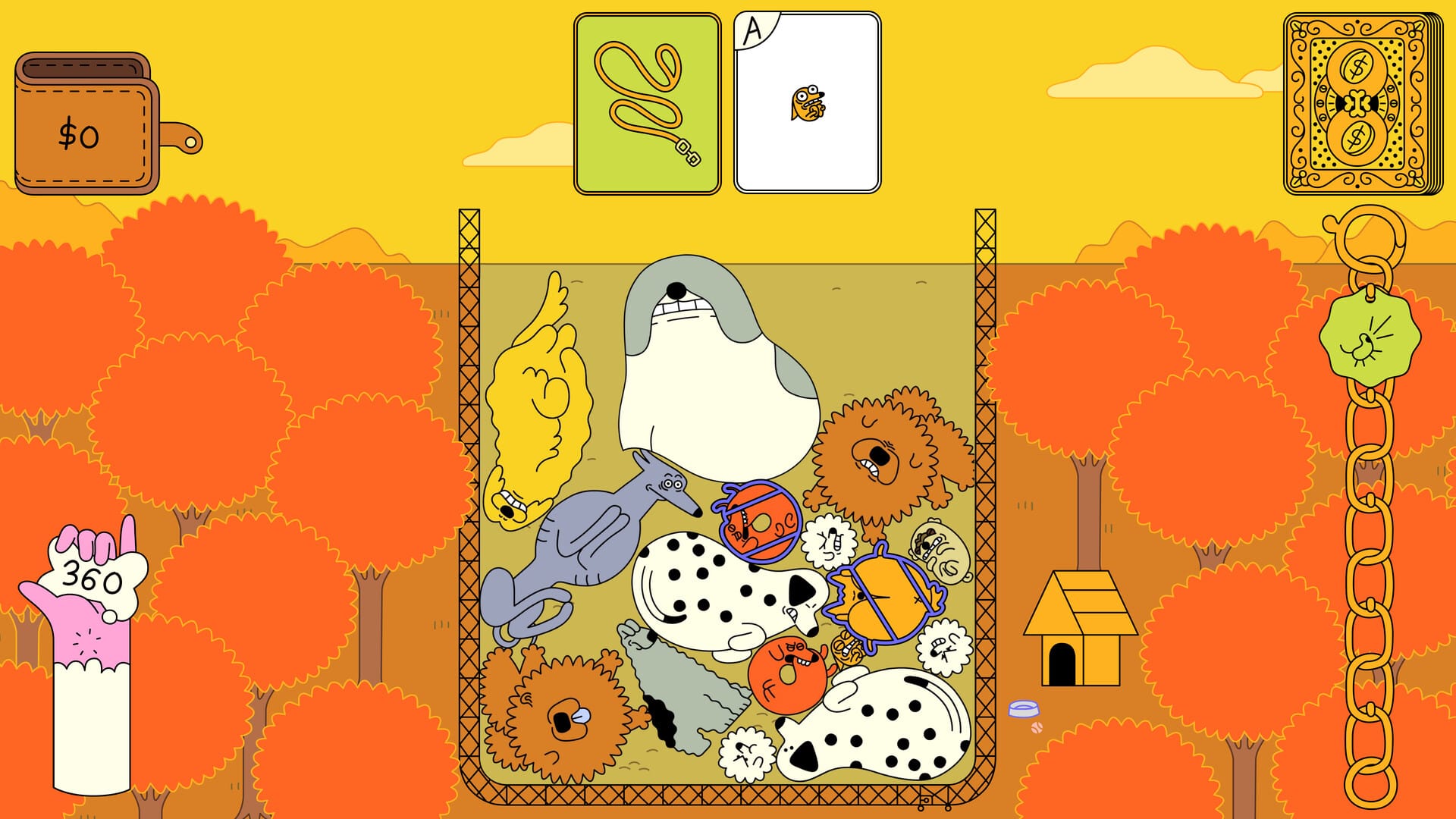
Dogpileis a collaboration between two Australian studios, Studio Folly and Toot Games. You have a deck of dog cards, which you play to drop dogs into a yard. If two dogs of the same type touch, they merge to form a bigger dog. Those bigger dogs merge to form even bigger dogs, and you keep merging dogs until you either win by getting the biggest dog, or your dogs spill out of your yard and you have to start over. There’s also the smaller goal of earning an increasing amount of “bones” in a certain number of hands, with penalties coming into play if you don’t make the requirement.
I appreciate a game that understands that the best dog is a big dog (a problem for my own desire to have a dog, since I have a very small apartment). The game’s dogs are very charming, from tiny angry chihuahuas to greyhounds that look like they’ve been up too late doomscrolling to golden retrievers that just look happy to be included.
Size isn’t the only quality of a dog you have to pay attention to. Dogs can have traits: friendly dogs will be drawn toward dogs of their type, while timid dogs will move away from other dogs. This can be really useful for space management, helping jostle dogs around to get them to touch. Some dogs can be unusually big or small, and dogs can also get fleas that make their traits not work. My least favorite trait is “crated,” which prevents a dog from merging for several turns. You can change dogs’ traits in an interface stylized like a dog wash, removing bad ones or adding good ones.
In the game’s pet shop, you can buy new dog cards or “tags” that modify your game, such as by making all the dogs super bouncy (I thought this would be great, but it backfired on me). The tags add a metagame over the whole thing that I’m sure will appeal to strategy nerds, but honestly I most like just dropping the dogs into the yard, watching them tumble and then pop into another kind of dog, and seeing all of them pile up in an awkward, jostling crush.
The whole thing is bright, cute, and chill, and it ate up most of my Friday night as I said things like “get over there, butt dog” and “aah, no more puffballs” at my computer. Dogpile is out now on Steam.
Moonlighter was an odd little game. Released back in 2019 by 11 Bit Studios, the first game was a strange little duck hybrid of running a shop and dungeon crawling, with an interesting gameplay loop. The game was a decent experience, if a little bland. When Digital Sun announced they were making the sequel, I was excited.
Digital Sun is a pretty cool studio, and I adored their last game, Cataclismo. It was a grimdark mix of basebuilding and RTS with a dark story that I really enjoyed, and they have taken their experience to good effect with Moonlighter 2: The Endless Vault. I was surprised by the long gap between the games, but I am glad to see Moonlighter 2 is finally out. Big thanks to 11 Bit Studios for the review code, by the way!
The game is out in Early Access right now, with a decent amount of content at launch and a solid framework to start with. It has had some teething troubles, but I have been enjoying myself with this one so far.
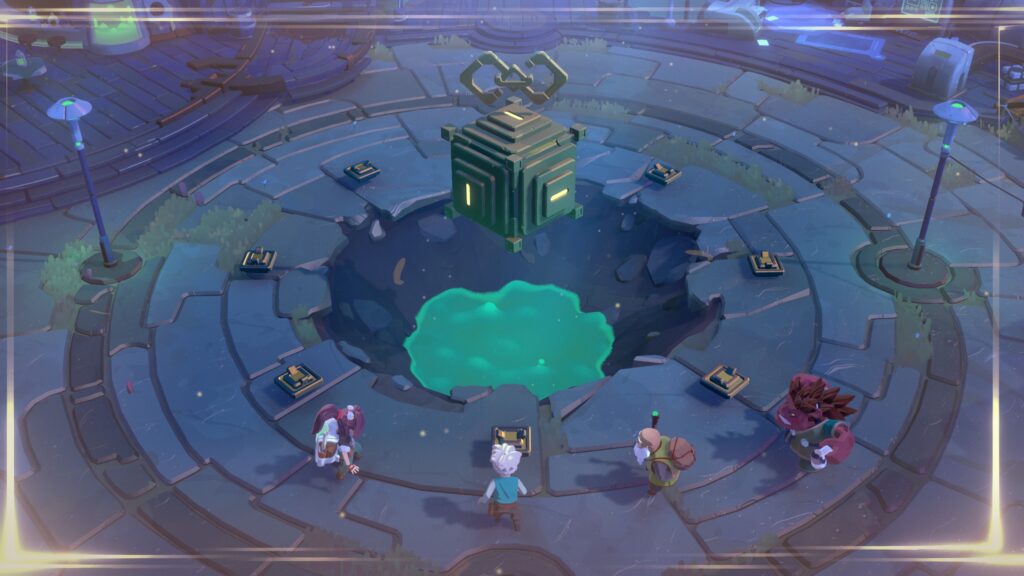
Moonlighter 2: The Endless Vault continues the adventure of the first game, but with some critical changes. This time, the art style is fully 3D and presented in an isometric perspective. You step into the shoes of Will, the shopkeeper-adventurer, starting anew in a strange dimension within the village of Tresna. There’s some pretty funny dialogue and interesting story beats here, with Will effectively being treated as a servant by their big orc shopkeeper boss. Things escalate into a ‘save the world’ kinda thing, which won’t win any originality prizes, but the beats are decent. So far, so good.
When not running the shop, you delve into shifting, roguelike dungeons across ever-changing dimensions in search of relics and treasure. The combat and exploration feature roguelike elements, requiring you to adapt to new dungeon layouts and foes using a variety of weapons and tactics. That loot carries into the shop mechanics during the day, in which you price items that were salvaged during the dives. Why only one random jock can do this is anyone’s guess, but it’s a good enough excuse. Money earned goes into new equipment for you and helps to rebuild the village.
More dungeon crawlers could benefit from this management system, like a shop, and Moonlighter 2 definitely feels more refined than the original. I think the combat and loot systems are much stronger than in the first, with more varied dungeons, more interesting combat, and a wider range of systems. The gameplay is fairly satisfying despite the early access build. I am a fan of the combat, and exploring the dungeons is more exciting than it was in the original. It is now more dynamic, featuring a variety of weapons and perks that add depth beyond simple attack mechanics. Roguelike-style perks, relic modifiers, and inventory management keep things fresh.
Despite the early access model and the content being incomplete, there is a fair amount of playtime here, including multiple biomes, over 120 relics to discover, various shop and dungeon perks to unlock, and customization options for your shop and town.
Moonlighter 2 does have some issues. I’ve had a lot of performance problems. Even on higher-end systems, I’ve had crashes and slowdowns, especially during combat. I also had some horrendous issues with the Steam Deck at launch, though patches have improved it slightly.
While I’m enjoying the overall story, they feel somewhat lacking, and some promised features, such as shop customization, deeper NPC interactions, and more variety in dungeons or bosses, feel a little underdeveloped right now. Early Access exists for a reason, and I am confident these things will be addressed, but it is essential to note. Overall, I’m enjoying my time with Moonlighter 2: The Endless Vault, and I’m excited to see where it goes.
We’re back! We’ve had snow this week, and the cold snap is rather irritating when you have a long commute to work. The Game of the Year discourse continues to be entertaining, and I find it funny how seriously people take it.
As always, we are back with the video games, and today’s review features SWAPMEAT, a colorful roguelite shooter that’s been enjoying a fairly solid reception. It is one of those games I hope gets more attention, and while it’s in early access with a long way to go, it has a solid core that nails one of the main reasons we play video games. We play them for fun, and SWAPMEAT is oodles of that, wrapped in an artistic style that drips with character. It’s not perfect, of course, but I am enjoying myself with this one so far.
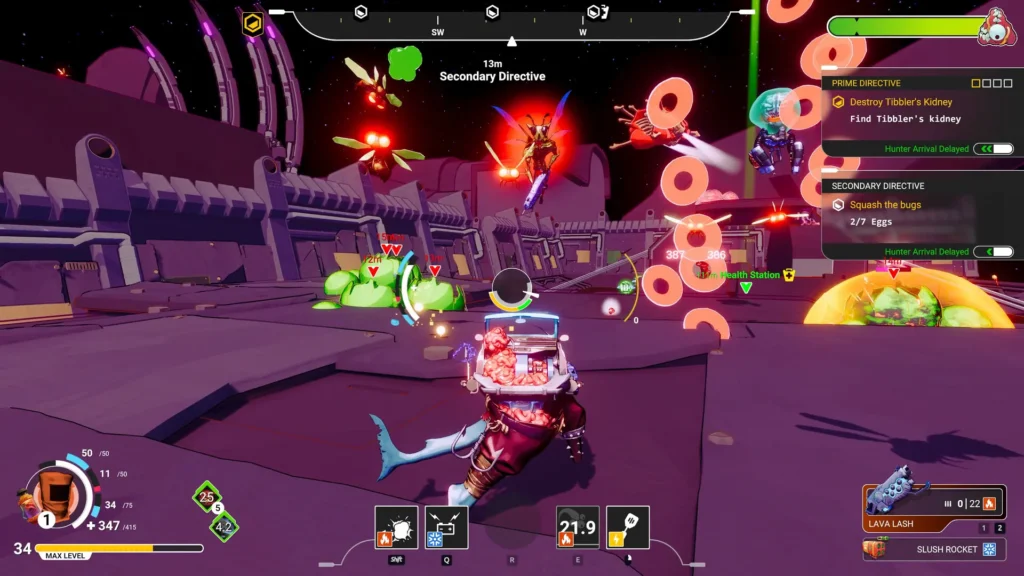
SWAPMEAT has some interesting mechanics that set it apart from the torrent of roguelikes and ‘boomer shooters’ on the market, making it more engaging for players interested in innovative gameplay. I make a lot of jokes about how the indie market has its own version of the ‘AAA Open World’ model, and that’s usually the roguelike and deckbuilder genres. Regardless, I appreciate what SWAPMEAT has on offer. In this galactic adventure, players can take on body parts from the monsters they butcher, swapping out fleshy appendages for different bonuses. That is a creative way of powering yourself up. Most games offer dull methods like picking up the weapons of the fallen to bolster yourself in the big fight for survival.
Pulling off somebody’s arm and wielding it as a weapon against the poor corpse’s mates sounds disturbing and hilarious, and it is how I prefer to do things. SWAPMEAT comes with a decent amount of content for its alpha Early Access build, featuring a partially complete campaign, several difficulty levels, co-op multiplayer, and random solar systems to run through after finishing the campaign. I quite like how the devs are approaching this one, providing a solid core of progression and gameplay systems, a tasty campaign, and promising replayability that hints at more content to come, keeping players’ interest alive for future updates.
I’ve been having fun with this one so far, with both the visual design and core gameplay loop keeping me engaged. I do sometimes wonder, though, about the value of playing story campaigns while they are incomplete during Early Access. It usually means having to replay everything when it’s complete and polished for full release, which can lead to a rough first impression. Besides that quibble of mine and a few weird bugs, however, SWAPMEAT is living up to my expectations.
The price tag of $24.99 is relatively high for an indie game in Early Access, especially a FPS, but the combination of content and decent polish makes it a fair value. As with all Early Access games, though, I would purchase based on what is available now rather than what is planned, because anything can happen in this industry. This approach helps readers make informed choices and manage expectations. Regardless, however, I do recommend the game for its sheer creativity alone, which is evident even in its current state.
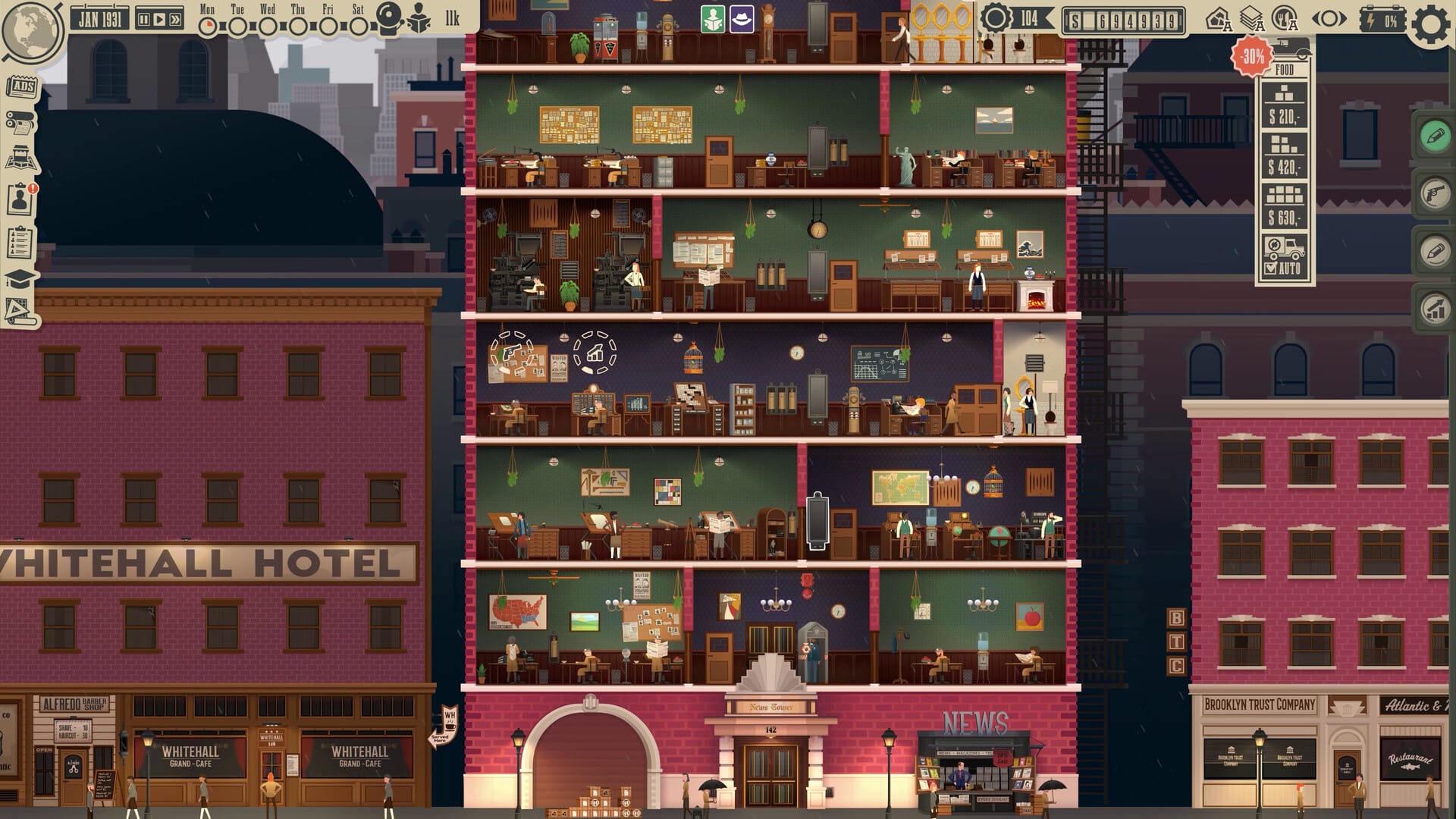
I’ve finally been playing News Tower, a management game where you’re put in charge of every facet of a 1930s newspaper. Like, every facet, from which reporters cover which stories to making sure the bathroom is clean. It’s the kind of video game stuff I tend to love, but all of it taking the form of running a news outlet hits a little too close to home.
One of the last freelance pieces I wrote before starting as managing editor of Kotaku in 2016 was a review of The Westport Independent, an indie newspaper management game that was mostly focused on the editorial end of things. I remember finding both the game and writing the review emotional, making me think about what my editing career had been up to that point and what it would look like in my new role. And while being managing editor involved, well, both managing and editing, there were still big chunks of the business that were firmly other people’s problems.
Not so now, and not so in News Tower. In the game, you inherit a struggling paper and, most crucially, the building it’s housed in. The newsgathering is pretty simple: your telegraph operators find news across the city and globe, and then you send a reporter to cover it based on their strength in its subject area, such as sports, crime, politics, or economy. When a reporter is done they hand their story off to be typeset and assembled, and at the end of the week, you arrange your stories onto the pages of a newspaper and print it off to be sold. All of this takes in-game time; you have to juggle how long stories take to report to make sure you have enough to fill your pages, and I’ve spent a lot of the game’s Sunday evenings muttering “come on, come on” as the assembly person’s progress bar slowly filled and the clock ticked down.
But you play as the publisher, not the editor-in-chief. Beyond the work of the paper itself, there are all kinds of other things to oversee. You lay out your newsroom, buying and placing everything from reporters’ desks to lamps to trash cans. The printing press takes up a ton of space, and it’s also hot and noisy, which saw me sequestering it to its own floor and then desperately arranging acoustic panels and tiny fans around it. You need paper, someplace to store the paper, and someone to carry the paper where it needs to go. Your employees get hungry and thirsty, so you need a water cooler and food for them. They need to use the bathroom, so you need air vents to keep the bathroom from stinking and an employee to keep it clean. Things break, so you need a repairperson to fix them.
Employees will get uncomfortable if their physical needs aren’t met, slowing them down. I’m early in my first run with the game, and my person in charge of stocking supplies is unhappy with everything: it’s too dark at his desk, the printer is too loud and hot when he has to put paper in it, the bathroom is too stinky when he has to go in it. I’ve literally carried out his duties for him, using my mouse to drag boxes of paper from outside the news office up to the shelves as he meandered up and down the stairs, all while bemoaning our lack of paper.
I’d like to give him another lamp or more fans or some help, but I currently have barely enough money to keep us in business. I’ve refused to take out a loan, even though I’ve been making extra money by doing deals for the mafia instead. I’ve sold off odds and ends to scrape together handfuls of dollars for something I need more urgently, swiping up reporters’ potted plants and clustering their desks around a single light bulb, swearing I’ll fix things later if we can just sell enough papers this week. This money stress has made me unkind to my virtual employees; I swung from making my reporters a lovely little newsroom to snapping “You wouldn’t complain about the lighting if you were out reporting” within a handful of in-game time.
Sparrow Night
News Tower is paced such that none of this is too stressful mechanically. Since the reporting largely happens on its own once you set it ticking, you have plenty of time for this day-to-day management, and you can move and re-do your layout easily. The game gives you plenty of clues to what’s wrong, if you have the means to fix it. But emotionally, I’m finding it a lot. It feels like there’s so much to handle, and so much of it relies on money I don’t have, and I still want to make everyone happy and not fire anyone. On top of all that, I still really want to make a good, honest paper that highlights the most important news, even as I promise the mafia I’ll do the opposite. There’s so much to do and so few resources to do all of it perfectly, but I’m still so certain I can, even as this commitment just digs me deeper into an early-game hole.
I’ve never really had the experience of a management game not feeling fun because it’s too similar to my real life. A game like Frostpunk is a harsh setting I’ll never find myself in; Stardew Valley is a lovely escape that sands all the rough edges off actual farming. I usually love little chores in games like this, but all the little chores in News Tower are just pinging all my brain cells attuned to my real life chores. I recently got access to the game’s financial reports, and I’ll be honest I can barely look at them without thinking about my own real-life financial reports and all the responsibilities they entail.
I’m drawn to the game because it’s about journalism, but maybe I’m not in a place to play a journalism management game right now. This might be praise for News Tower: It definitely feels like running a news outlet, or at least running a news outlet if you’re me, someone with an over-developed sense of responsibility and a self-imposed mandate to do everything perfectly that I should probably work out in therapy instead of in a video game. There’s definitely a lesson in here about priorities and time management that I badly need to learn. At least my real life news outlet is doing a lot better than my virtual one, and at least the only bathroom I have to deal with there is my own. (Which is also currently dirty, oh no.)
The baffling trailer for There Are No Ghosts At The Grand, some kind of supernatural mystery/ home renovation/ musical game, has stuck with me since I saw it back in June. The game has a Steam demo out now, and though it’s just a brief look, I was pleasantly surprised by how well all those disparate genres fit together.
You play as a man named Chris David, who inherits a hotel called The Grand from his missing father. During the day you renovate the hotel, and at night you investigate a mystery involving monsters, a talking cat, and different characters with connections to different rooms of the hotel. In addition to all that, characters sometimes break into song, with your dialogue choices becoming part of the lyrics.
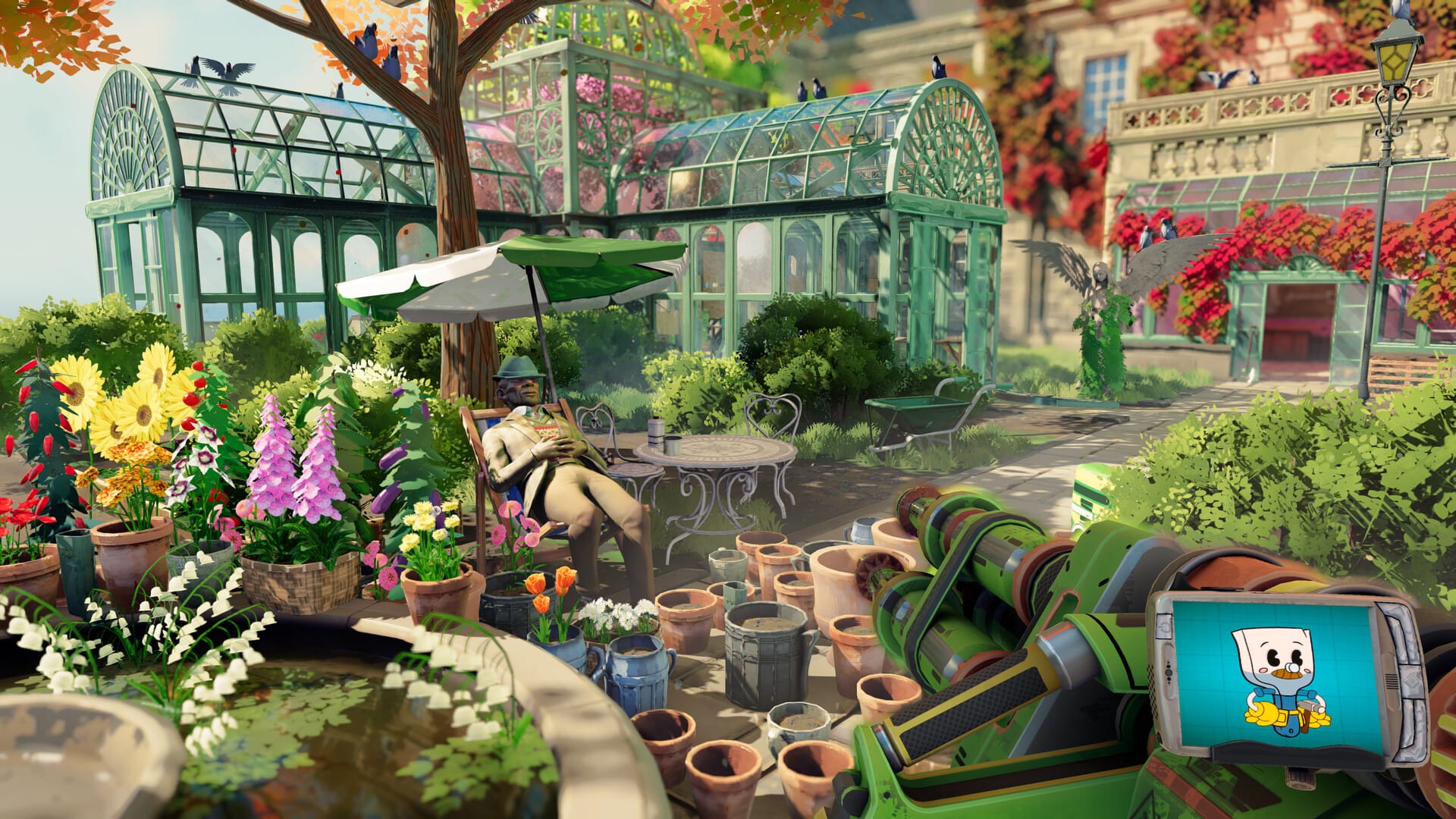
I did not, alas, see the hot priest from the trailer above in the demo, but I did get a sense of how all the game’s different bits play. When the demo opens, you use a gun-like tool to fix up a room of the hotel: vacuuming debris, righting furniture, and blasting off wallpaper and replacing it with paint. The renovation mechanic isn’t super-detailed–you only have to paint a bit of a wall before it gets fully coated, for instance–but it felt nicely forgiving after how much time I’ve spent painstakingly blasting nooks and crannies in Power Wash Simulator 2 lately.
Your renovations get interrupted by a woman named Maddie, who wants your help investigating some black slime that’s washed up on the town’s beach. Here your renovation tool serves a different function, letting you move pieces around to repair a boat. Once we set sail, as I followed waypoints toward an abandoned island, I noticed the soundtrack had gotten unusually loud. When I turned my head, I realized the music was coming from Maddie, who was singing an upbeat pop number about the situation in town.
She's just singing! I love it! (Aftermath/ Friday Sundae)
I don’t know if there’s some moment in the full game that explains why characters spontaneously burst into song, but the whole thing was so disarmingly weird that I forgot all about steering the boat while I gaped. Like the trailer song, Maddie’s song was super-catchy; at the end of it, I chose between dialogue options to add a funk-inflected verse sung by Chris that included the lyric “I’m not some venture capitalist.” Creative director Anil Glendinning told PolygonThere Are No Ghosts At The Grand becoming a musical was “a little bit unexpected… as it was just because of the music we were listening to at the time,” which included “[a] lot of music from the British scene around the late ‘80s, early ‘90s.” As a musical theater nerd, the idea that the game is a musical just because sounds great to me, and while what I experienced of it was definitely jarring, I was totally delighted by it.
On the island, the supernatural stuff kicks in, and while I won’t spoil it, it was both an interesting mystery and mechanically appropriate to the idea of home renovation. Your renovation tool has different functions, such as switching the mode on the vacuum to fire stuff back out in order to repair things or place objects. Everything being done through your tool helps the game’s different pieces feel connected and keeps the demo from feeling too busy. The challenges and puzzles I faced on the island were pretty basic, and at times things even felt a little too hand-holdy, but I appreciated the guidance when being dropped in the middle of the game.
The demo lasts about 40 minutes, and it basically feels like that reveal trailer: an interesting kind of weird, but one that hasn’t come down on the side of good weird or bad weird yet. I wasn’t completely sold on the demo’s humor, which could feel a little try-hard, but the whole thing felt surprisingly cohesive and very charming. I’m psyched that it’s a musical because everything should be musicals, and I’m really curious to see if that part holds up. There Are No Ghosts At The Grand is set to release for PC and Xbox in 2026.
It’s time to express your class-specific opinions, Neverwinter fans! Also it’s time to sign up to the MMORPG’s Discord server if you haven’t already. That’s because that server is the place where DECA Games is gathering feedback on specific class paragon specs to guide its upcoming focus on class balance. The threads in question, which […]
One of our internal running gags at Massively OP is that there’s this hypothetical bingo prediction chart that’s full of incredibly specific events that absolutely nobody could see coming — until those events occur, and then we claim that they were on the bingo sheet all along. So I like to imagine that square G-4 […]
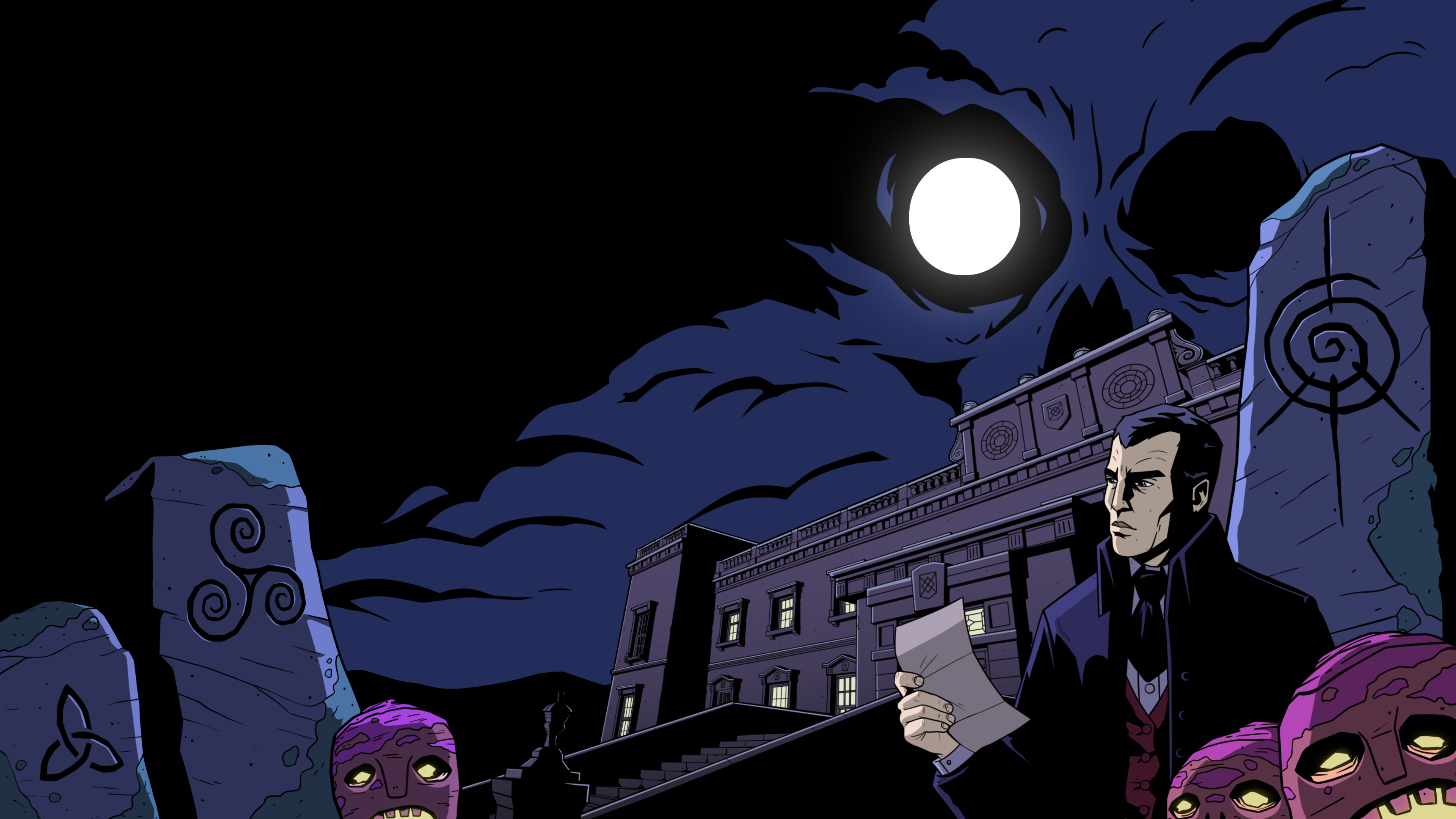
The first time I saw Vampire: The Masquerade Bloodlines 2 in action was during a preview demonstration during the 2019 Game Developers Conference. I watched a member of the development team leap around the rooftops of Seattle and return to an apartment for a conversation with a grimy side character named Dale. The next time I saw that digital apartment was in 2025. It was mostly unchanged from how it looked back then, but the final product I was playing was one that had undergone a truly hellish development cycle.
Was this the same game? Was this truly the long-awaited sequel to the 2004 cult-classic I loved? Those felt like complicated questions to consider. As I grimaced and pushed my way through Bloodlines 2, the disappointments I felt—this was in many ways absolutely not a fitting successor game—gave way to a begrudging acceptance. This wasn’t what I expected, and it wasn’t what most fans wanted, but I am not sure if that even matters. There was something interesting happening here, and I thought that, perhaps, if I could sit and play the game that was actually in front of me, there might even be something good.
When we play a game, we’re arguably playing two games at once. The first is the thing on the screen—Kratos swinging his chain blades at a legion of monsters, our latest Assassin’s Creed protagonist leaping from the rafters upon unsuspecting targets—and the other is the game in our minds. The game in our minds is hazy and messily defined. It is the game we imagined when our best friend said “Bro, you need to play this.” It is the game we were told about in magazines. It is this latter game that I am trying to ignore as I play Bloodlines 2. The game I was promised in that dark hotel room demonstration in 2019 is not the game on my screen. But what is it?
The hard truth of Bloodlines 2 is that the most obvious answer to this question is that the game is a mess. It is a game whose troubled development (starting development with Hardsuit Labs before bleeding key writers and project leads and ultimately ending up finished by the team at The Chinese Room) is impossible to ignore. The final product was kitbashed together like a puzzle whose final image was made by smashing the wrong pieces into place such that they finally lock together anyway. Bloodlines 2 feels obviously wrong.
But it mostly feels wrong when the game in front of players is held up to the game they imagined, or the game they were promised. When trying to decide what a game is, a player or critic doesn’t just ask themselves “what is this game doing?” but also “what is it trying to do?” With Bloodlines 2, its title is a statement of intent: “We’re trying to be a sequel to the first game.”
In this, Bloodlines 2 largely fails. Vampire: The Masquerade Bloodlines was a messy game in its own right—the promising story gives way to a mostly linear and vaguely racist final act— but it generally functioned the way that you’d expect a roleplaying game to work. You created a character by choosing some initial stats and what mysterious vampire clan you belonged to and then were thrust into a moody mystery plot in what was, at the time, modern day California. The game world was peppered with various quests to accept, with outcomes depending on player choice. There were dialogue trees that you could navigate, sometimes using stats or your vampiric powers to affect the outcome of a conversation. You know, a roleplaying game!
Bloodlines 2 has minimal character creation. You choose a gender and your starting vampire clan, but this hardly has an impact on the game. There is a lack of stat management entirely and, at least for the main segments of the game, essentially no way for the way you navigate dialogue trees to change depending on your powers. There is a branching story, but the hub lacks meaningfully structured side quests; you can take some missions to kill rogue ghouls or deliver various packages around the city, but this is not a game world packed with interesting side quests with unique characters. It was so dull that after a point, I avoided doing anything but the main quest at all. If the goal was to make a comparable roleplaying game to the original Vampire: The Masquerade Bloodlines, this game is mostly a failure.
This sucks, and accepting the reality of the situation can be hard. For players eager to find something on par with the cult-classic they’re nostalgic for, it’s positively heartbreaking. If you’re looking for an in-depth roleplaying experience where your character customizations can drastically alter the outcome of quests, you’ll need to look elsewhere. The promise made by the Bloodlines 2’s title is a false one. It wants to be the guy but it ain’t that guy. And yet, in spite of the bluntness with which I report this to you all, I’m here to tell you that I am actually very happy I played this game. This might even be the most interesting game I’ve played all year.
The moment you move on from the question of “what was this trying to do?” and the disappointment it brings, you are immediately free to engage with the actual goddamn game. For all the letdown and limitations, I think there’s something here worth engaging with. It’s hardly revolutionary, but it is interesting, and in a games ecosystem defined by free-to-play attention grabbers and rote prestige formula fare, a middling seven out of ten game manages to feel downright refreshing. If you sit and play what’s here, removing it from a long lineage of hype and expectation, you might have a good time.
So what is Bloodlines 2 actually doing? Two things, and while neither feels entirely realized to their full potential, they mix together into a strangely compelling cocktail. I meant it when I said there’s two games here. You follow your customized character the Nomad, an Elder vampire waking up in modern day Seattle who finds themselves thrust into a new generation of vampiric politics. While there’s a snowy, moody nighttime hub to explore, the core experience is not one of diverging side quest chains and reactive dialogue. You don’t really roleplay, but do something closer to a feature-light immersive sim in the vein of the Dishonored series.
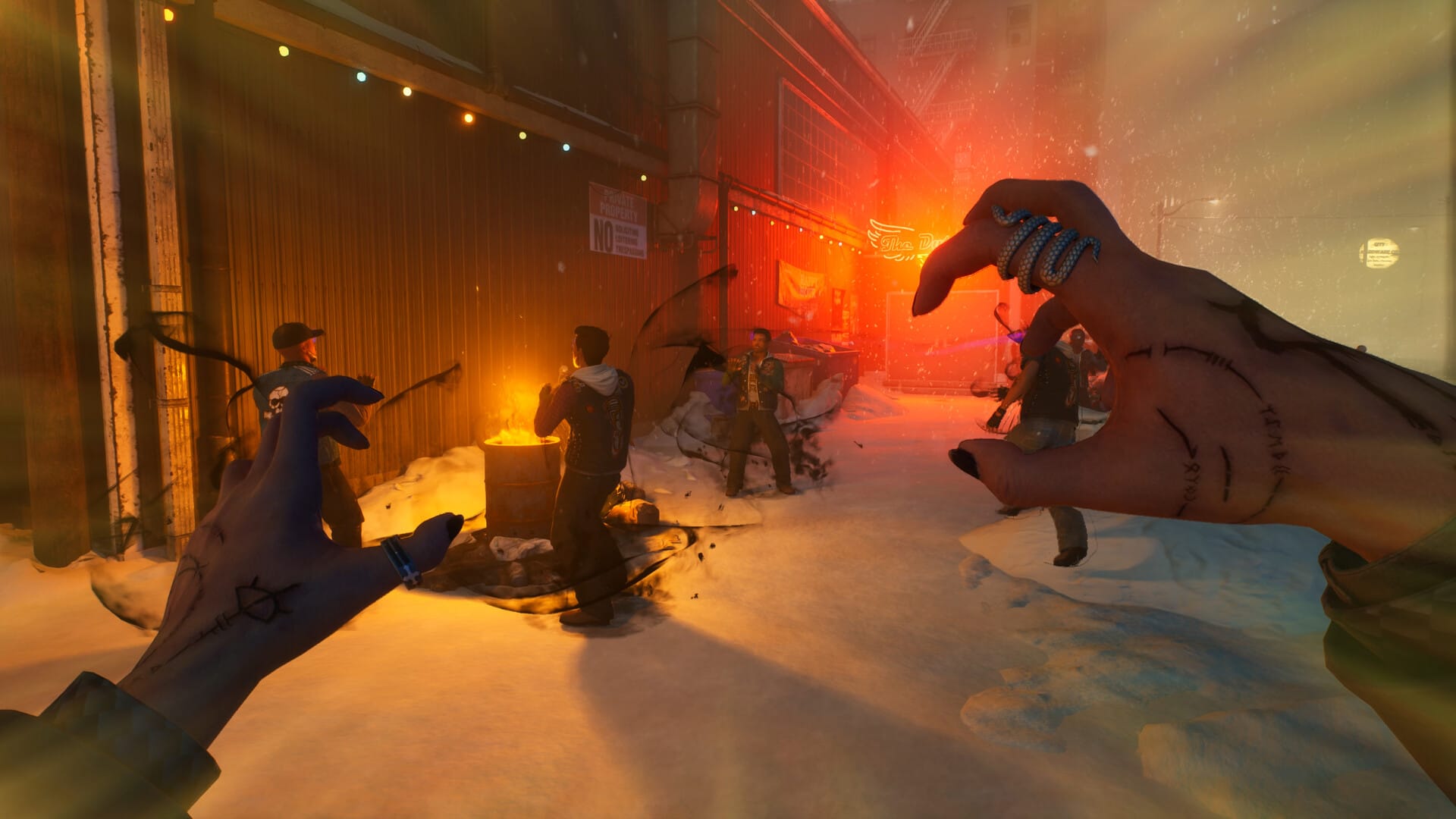
Once Bloodlines 2 pushes through the initial stage-setting and starts to drive you from one infiltration set piece to another—a construction site full of anarchic vampires, a nightclub packed with human sacrifices and the violent devotees of an egotistic artist—it starts to forge an identity other than “sequel to that game I like from over twenty years ago.” The powers you unlock for the Nomad are mostly bent towards combat and stealth exploration. You can mark targets with a blood curse and make them explode from the inside out, literally drag them into a shadow realm, hurl blood-forged daggers at them, or mark points to instantly teleport back to in the event you’re spotted in enemy territory. Mixing and matching these skills can create moments where you truly feel like the most dangerous undead son of a bitch in all of Seattle.
These various Dishonored-esque sequences are threaded together by a narrative that gets quite compelling if you surrender your initial disappointment. Warring vampiric nobles clash with both each other and with chaotic “Anarchs” for supremacy of Seattle, all while the sudden influx of vampire hunters into the city threatens to ignite a purge. The Nomad has been marked with a mysterious sigil and let loose into the city for purposes unknown. And oh yeah, there’s another vampire in your head too, a snub-nosed detective who shares your body.
From time to time, your perspective shifts to that of “Fabien,” the Malkavian vampire detective who somehow is riding shotgun in your body. He’s been in Seattle for centuries, and the emergence of a strange murderer hunting down the city’s vampires seems connected to a long unsolved case from the 1920s. At periodic moments of the story, you flashback to play through Fabien’s old cases.
These sections can vary from recent detective adventures to cases from a century ago, and it all plays out like a bloodier, more magical Raymond Chandler tale. Armed with powers unique to Fabien—the ability to force characters to see you as someone else, a power that allows you to talk to inanimate objects—suddenly there’s actual dialogue puzzles and more playfulness to the trees that you navigate. Let’s say there’s a club you need to enter to find your next clue, but the bouncer won’t let you in. Muddling his mind so that he perceives you as someone else is a fun course of action, but when you use this power, there’s no sense of who he sees you to be. “How was today’s shoot?” he might ask, and you need to figure out what he means. Does he think you’re a movie star? A politician shooting a commercial? A hunter?
These dialogue puzzles are ultimately more linear than their first impression. There’s not really any penalty for navigating the options incorrectly; you can always try again if you fail. But they fit the character while offering a playfulness that the Nomad’s initial dialogue trees lack. Need to get some files from the evidence drawer in the police department? Well, you can’t just open it. You need to use your powers to talk to it and coax out permission to browse the station’s reports. These sections tease of a more functional roleplay experience, and while returning to the Nomad can be frustrating after this, the ways in which Fabien’s old investigations mix with the Nomad’s ongoing foray into Seattle’s bloody politics is enthralling.
Fabien’s sections are a highlight, but as Bloodlines 2 progresses and moves away from its mediocre starting hours, there’s a lot to like. You might infiltrate a vampire hunter operation at the docks as the Nomad, culminating in a BioWare choice about whether to turn their leader into your own vampiric thrall. These moments aren’t many but can drastically alter Bloodlines 2’s ending. In another moment, you’ll flash to Fabien’s early life as an investigator in the Roaring Twenties or guide him through a more modern investigation that culminates with him having a conversation with a dying iPhone. Don’t die on me! Not before you tell me who the killer is!
None of this ever feels as cohesive as the first game, and the experience is not as replayable or customizable, but there’s a fun story here for the taking. But you’re only going to find it if you’re devoted to answering that ever-important question: “Okay, what is this game actually doing?”
I want to be clear here that I’m not saying Bloodlines 2 gets better and that you “just need to play ten hours to get there, man.” I’m saying that this experience is there essentially from the start if you want to engage with it. This is true of all games, and all it really takes is a willingness to discard certain assumptions about what you want or what a game needs to be. Yes, Bloodlines 2 doesn’t live up to the implicit promise of its title, or to the expectations many players might have for it, but that doesn’t mean there’s nothing there.
I’m not saying people should push through the game if they aren’t enjoying it. That’s a matter of economics–is this thing worth the money I’ve paid for it, and am I willing to push forward beyond my initial impression? It’s a bit crass of a calculus, but one that I can accept. But I think that if you are able to put yourself aside, shifting your tastes and desires and embracing an honest assessment of what’s before you—be it a game or film or anything else—there’s usually artistry to enjoy. Most art, even the worst of it, holds some beauty when viewed at the right angle.
It is possible to bring too much of ourselves to an experience, to insist too heavily on our own biases when we play a game. As a games critic, like others charged with playing a game professionally, it is important to develop the particular skill of keeping your finger off the scale when you’re examining a game. To play a game in this way means engaging in a conversation with the work and by extension the people who make it. Like any conversation, it is possible to turn the subject too insistent on yourself, your feelings, or your desires. As a writer, I eventually have to speak before an audience, but there’s a portion of a critic’s work that must involve active listening. This only happens if you don’t hog the conversation.
I was gripped with deep frustration when I started Bloodlines 2. Pushing that frustration aside, accepting that what I wanted was not what was there, allowed me to see what actually was. It’s a mess of a game, but within the chaos is an exciting story that I’m going to be thinking about even after I’m done writing this. Whatever next game comes along that frustrates me—even if it pisses me off—will receive the same courtesy. In return, I will receive the opportunity to have fun and perhaps even grow a little bit as a person.
I just need to honestly ask “what’s happening here?”
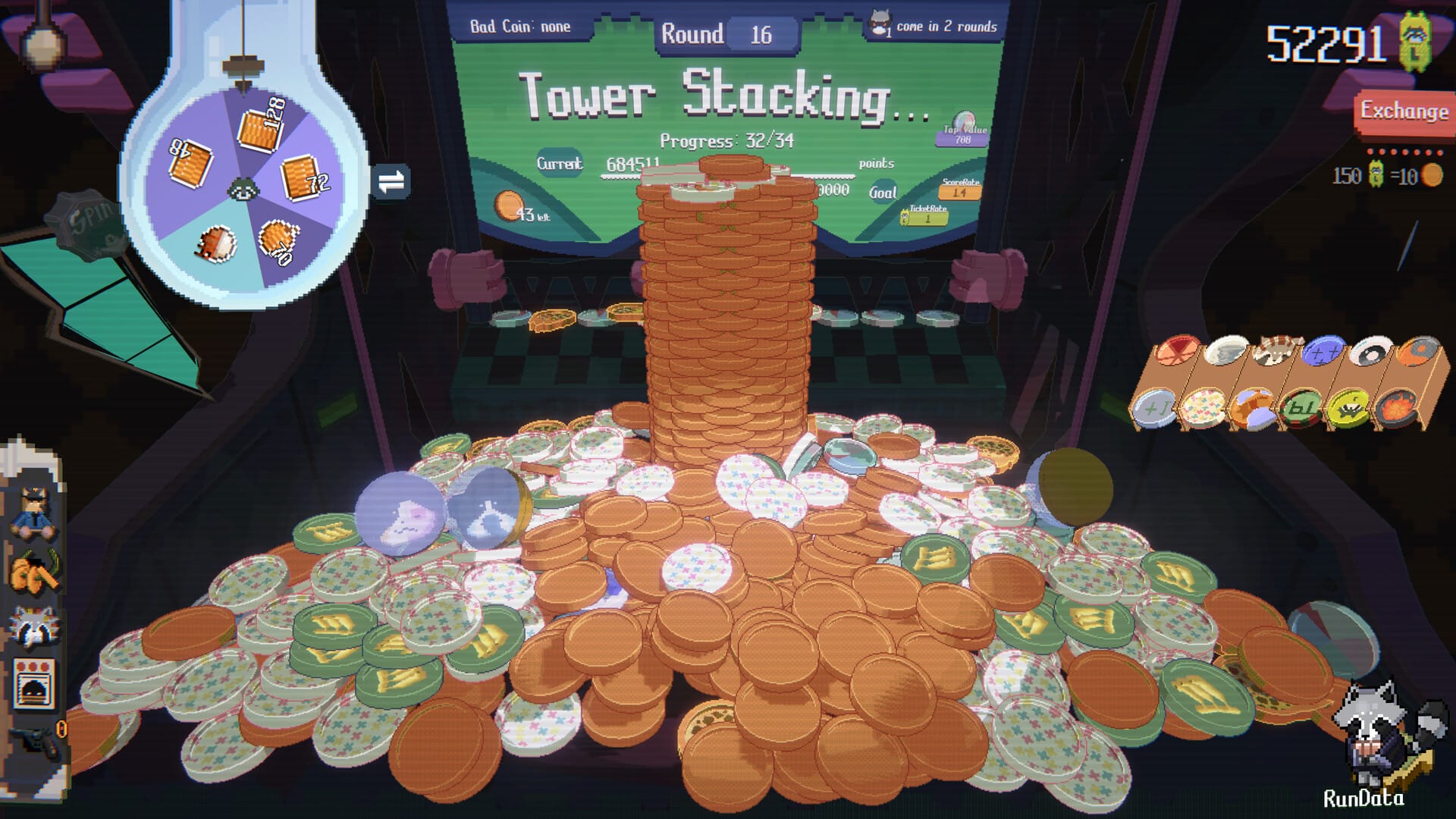
You don't see a lot of coin pusher arcade machines anymore. Raccoin: Coin Pusher Roguelike, from developer Doracoon and Balatro publisher Playstack, is played within one.
The decline of coin pusher arcade machines came with increased restrictions on real-money prizes for largely luck-based games—i.e., gambling—and the closure of arcades themselves. A child of the '90s, I spent a lot of time in arcades putting tokens into coin pushers. The one at my local arcade was brightly lit with lots of vibrant colors, set up with six different stations so multiple people could play at once. No strategy in mind, I'd bounce between setups tossing coins into the machine at entirely random intervals, hoping one would eventually pay off.
The thing about the coin pusher is that its prizes—largely more coins, which equal tickets—always look tantalizingly close to the edge. Just one more coin! Coins or tokens are inserted into the machine and slide onto a moving shelf. The idea is that the new coins, laid flat behind the mess of coins in front, cause a chain reaction when the shelf moves. The coins closest to the edge fall off the shelf, onto another playing field with more coins. And then newly fallen coins then continue the cycle: When the shelf moves, coins at the edge of the machine fall into the prize slot. If you do it right, perhaps, you'll win a ton of coins—an avalanche of coins.
Credit: Doraccoon/Playstack
A demo version of the game is playable now on Steam, and it's exactly the experience I'd always hoped a coin pusher would be. There are lots of coins—so, so many—and with a little strategy, you'll be raining coins into the prize slot repeatedly. Doraccoon lays it out quite plainly in its Steam description: "It's a nonstop dopamine rush packed into one unpredictable, coin dropping ride."
From a moving chute, you'll drop coins into the game quickly and generously. Where Raccoin strays away from the traditional coin pusher is that it's also a roguelike with lots of different modifiers designed to create huge payouts. The different items, abilities, and coins combine to shift the playing field and enhance effects. These are unlocked gradually, as the goals of your runs get higher. You're able to get through the first levels of the demo without much strategy, but you'll need one in the later levels. Some coins do things like create an explosion. One item creates a black hole that sucks coins in.
But Raccoin's strategy can get pretty complicated when you start thinking about the ways coins can interact with each other, much like a Balatro run with its different joker cards. So, for instance, you can combine coins that represent seeds with water coins or with a fertilizer item to create coin trees. Spam that even more by using a special prize that rains down your most purchased coin—if you've done things right, that should be the seed coin—to take it even further.
Credit: Doraccoon/Playstack
What you end up with is an absolutely constant cascade of coins overflowing into the prize slot, lighting up the machine with the satisfying sound of coins clinking around. Shaking the arcade machine won't get you kicked out of the arcade, either: It's just another way to hear that gratifying sound.
Raccoin's demo is available now on Steam, but there's no release date announced just yet. The demo is just a fraction of what will be available in the full game, allowing you to unlock two separate characters, 50 different coins, and 60 ability items. It's more than enough to keep me busy until the game's out; it's got the same sort of feel as Balatro in that it's hard to step away. Just like the coin pushers of my youth, I find myself saying: just one more coin.
Everybody lovedBlue Prince, and at this point it feels like everybody has finished (or, “finished”) Blue Prince, but I’m still here thinking “boy, I really should get back to Blue Prince” while knowing there’s a good chance I won’t. As much as I liked what I played, it just didn’t get its hooks in my brain the way it did with others, and it’s the kind of game that needs passion to see it through. But I have finally found my sicko mode, “can’t stop thinking about it and need to talk to everyone about it” puzzle game: The Seance of Blake Manor.
The Seance of Blake Manor casts you as Declan Ward, a detective in 1890s Ireland who’s been called to a mysterious manor hotel to investigate the disappearance of a woman named Evelyn Deane. A diverse crew of guests has gathered at the manor to attend a seance, and it quickly becomes clear that they all have their reasons to wish Deane harm. You have the weekend to figure out what happened to Deane and who’s responsible before the seance occurs on Sunday night.
The time limit can feel pressuring, but time only passes when you undertake certain clearly-marked actions, such as examining objects, questioning guests, and attending events like meals and lectures. An important first step in solving the mystery is filling your timetable with the weekend’s activities and guests’ schedules, so you’ll know who will or won’t be where every hour. The latter is particularly helpful; one fruitful avenue of investigation is to break into everyone’s rooms and go through their stuff, and you definitely don’t want to get caught. Ask me how I know.
Analyzing a character tells you more about them and gives you topics to discuss (Spooky Door)
Every guest and staff of the hotel has a backstory, motive, and relationships with other characters. And they’re not just cursory stuff for atmosphere; I almost immediately forgot about the game’s central mystery as I dug into secret love affairs, thwarted career ambitions, cryptic plots, mystical societies, class and race tensions, failed romances, and people struggling to square their faiths with a changing Ireland and with the popularity of Spiritualism, a 19th and early 20th century movement to communicate with the dead that threatened much of society’s status quo. (Spiritualism is one of my top niche interests, and I’m also currently learning the Irish language; the fact that there’s a game about both is very exciting for me specifically.) To add to the plot stuff, the game is also full of things to learn about the history of the manor, Chrisitian gnosticism, and Irish folklore, politics, and history–a lot of this information is kept in the manor’s library, where you can research plot-essential stuff, but also browse the shelves for more detail on a topic. I’ve spent way more time doing this than I have actually trying to figure out what happened to Deane; I’m currently just before Saturday dinner and feel like I have no hope of solving her mystery and preventing whatever horrors it’s hinted will happen at Sunday night’s seance. With over 20 characters to learn about and whose problems to solve, I’m constantly panicking about the time limit, though players who’ve beaten the game tell me not to worry and that they ended things with time to spare.
The library (Spooky Door)
The game has a robust set of menus to help you keep track of all this and figure out what to do next. When you talk to characters, available topics are represented by icons to choose from, and while characters will only talk about certain topics so you don’t fritter away your time too badly, not all of them are essential for your investigations. Discovering more about the topics that are important places those topics on a mind map/ conspiracy board that shows how they’re connected and paints an overall picture of a character and their story. (I’d show you images, but they would be full of spoilers; you can see a glimpse of this in the trailer above.) When you’ve connected enough bits of information, you’re given a Mad Libs-style screen in which to create a hypothesis by filling in words from your conspiracy board, and then you can confront that particular character about it. I found these Mad Libs a little fiddly on occasion to express my hypothesis exactly how the game wanted me to, but it’s a fun mechanic with a lot of guardrails to make sure you know what’s going on. So far, some of my confrontations have wrapped up a character’s story, while others have introduced actions I need to take to fully resolve things, which means more investigating.
The game menus do their best to keep everything organized for you and to nudge you about where to go next, but I haven’t always found it to be quite enough, so I also keep a notebook beside me while I play. Occasionally I’ve been frustrated when I feel like I know enough to confront a character but haven’t discovered all the things to let the game know I know them, but those instances have been pretty rare. My main problem is that everything is so interesting that I’m constantly getting off track, suddenly remembering that time is ticking down and I’m no closer to putting my top priorities to bed.
Story cutscenes are told through dialogue and static images (Spooky Door)
For me, The Seance of Blake Manor echoes Blue Prince’s interlocking mysteries and sense of place without having to contend with its life-eating RNG and open-endedness (I’ve also seen some players compare the two game’s art styles.). There’s some Lorelei and the Laser Eyes vibes too (a game I actually didfinish!), and I’ve wrestled with wanting to start again to introduce the game to the friend I played Lorelei with, and not wanting anything to come between me and seeing its end. But at the same time, I’m tempted to start again just so there’ll be more game to play, even though I have a full in-game day and evening left; like a good book, I both want to know what happens in the end and to never be done with it.
It sucks to be writing about Blake Manor on a Monday morning because now I want to be playing it but a whole work day stands in the way. There is just so much in this game, all of it given so much detail and attention that I’m thoroughly lost in it, while still providing enough guidance to keep me from getting totally washed away. It’s captured the obsession and passion of all those puzzle games I couldn’t get into this year, while still being a constrained experience I can actually tackle, with that time limit bringing a tension that feels essential to the game’s story and atmosphere. There’s a free demo on Steam if you want to get a feel for it first; you should do this not just because the game is good, but because then I’ll have more people playing alongside me to talk about it with.
Sometimes, it’s the simple games that entertain me for hours. Who thought that a new spin on playing Poker could be so refreshing? It even wins several awards at the game awards 2024. Now, my good streaming buddy Klamath bought me this game for my birthday. I decided to give it a go, and I was surprised. In this article, I want to share my honest first impression. I will also discuss what I like about this game. Additionally, I will mention what I don’t like about the game. I have played Balatro on my PC. But, if this game looks interesting to you, feel free to discover it on other platforms like mobile and consoles. Before I dive into this card game, please leave a comment with your thoughts. Share your opinions on this game or the content of this article.
The good
The visual presentation and style of this game is something that blew me away. Visually, this game looks amazing. The subtle animations of the cards, the way the UI hints pop up, the little hints on the planet cards…
The UI offers something nice during boss fights. It gives you hints when a hand isn’t going to score. But there are other little things in this game that are just fun. Like, you can click and drag the bind chip while you are thinking of a next move.
The gist of this game is quite simple. You have to play poker hands from the cards that you are given. You don’t always have to play 5 cards, in case you want to keep a certain card. Each ante has 3 rounds. A small and big blind and a boss fight. Each time, the goal of chips you need to earn raises. In between each blind, you earn money. This money, you can use to buy from a shop where a few joker or other special cards are offered.
These cards add multipliers to certain hands. This is a list of examples:
The chip’s multiplier doubles. This only happens if you have spades and clubs left in your hand.
The gained points for a played and scored ace doubles.
Gain 2 extra chips per card left in your deck after playing each hand.
Some of these Joker cards can be a lifesaver. Especially the free chips ones. Others, force you into a certain playstyle. Each time you hit the shop, it’s a difficult decision. Should I continue with this set of Jokers, or should I replace one? You only have 5 slots. Changing one out might increase your points just enough to survive another round.
This game is the perfect blend of strategy and luck. You need to get lucky with the cards and not use up all your discards quickly. Since, you don’t get them back easily. The rougelite elements in this game give the usual poker game should a fresh spin. How far do you get with all the jokers and how high will you score? Since, it doesn’t matter if you survive a round just barely. Survival is survival, and maybe then you can buy a new joker card that elevates your run.
You restart with zero points and new hand and full deck each round anyway. Or you can gamble it all and skip a round for an interesting bonus. And if you loose, you reset to the start of the game for a whole clean run. Once this game clicked, it became the perfect “one more run” game. Betting with myself how far I would get this time.
This game is quite responsive. In terms of controls, this game is quite easy to control. The UI is perfect as well. I’m also glad that there are various accessibility options in the game. Things like reduced motion and high contrast cards are important. The more people can play the game, the better.
The save system is easy to use. You can just exit the game and restart from where you left off with ease. Also, there are three player profiles. You can also name the profiles, so you easily know which profile is which. Not to mention, you can unlock everything, but then you won’t be able to go for those sweet Steam achievements.
The bad
If you are unfamiliar with the rules of poker, you might be in trouble. Thankfully, the valid poker hands don’t take a long time to learn. You also have the “run info” button to help you. In game, you don’t get too many lessons on making valid poker hands, so keep that in mind.
Now, this is a difficult one to write. While the music in this game is amazing, the track variety is something of a mixed bag. Some of the tracks use the same sound font and melody. Sometimes, I don’t recognize that the pitch and instruments had changed. Don’t get me wrong, the soundtrack in this game is pretty good, but more variety would have been welcome. A few more ambient tracks would do the trick. Now, this is a major nitpick. To be honest, it only bothered me when I started to pay attention to it.
The small tutorial at the start of your first game is extremely helpful at explaining things. Yet, some information will be only told once in that tutorial. So, if you put the game down for a while and don’t remember everything… You have no real way to re-read the rules. Thankfully, most (if not all) concepts in this game aren’t hard to grasp. But a small refresher like having the option to replay the tutorial wouldn’t hurt.
If I may give an extreme nitpick, I think it will be this. In this game, you can modify the picture cards with references to different games. Now, this is per suit and each suit has a different set of games. I wish this was a fleshed out a bit further. Like, I love the art for Cult of the Lamb and Slay the Princess. But only having those face cards in one suit be changed, it didn’t scratch the itch enough for me. Maybe using smaller images on the number cards of the suit would make it even more enjoyable. Then again, how could you do this? It would require massive development time and designing a whole card deck per reference. So, I can totally see why the developers made this choice.
The conclusion
In the end, Balatro is a fantastic blend of strategy. It has elements of luck and engaging roguelite mechanics. These features keep me coming back for “just one more run.” Its polished visuals, clever gameplay twists, and thoughtful accessibility options make it a standout experience. The game has a few minor drawbacks. These include the limited tutorial recall, the music’s slight repetitiveness, and the poker learning curve. Despite these, the issues don’t overshadow the sheer enjoyment this game offers. If you want a new take on poker, try Balatro. It challenges your planning skills and keeps the stakes high.
I’m happy that Klamath gave me this game for my birthday. It took me quite the while to actually give this game a shot, but I’m happy that I did. I can easily play this game during short downtimes. It’s easy to pick up and play. I also think that this game might be even more fun on a tablet or on the go. During long play times, it can become repetitive. However, this is oh, so fun in short bursts. It’s also exciting if you are able to string together a long combo or run.
I want to congratulate the team behind this game. LocalThunk and Playstack, you made an awesome card game. It has a unique spin that makes me come back for more. The praise and awards are totally deserved. I am eager to delve deeper into the game. I am excited to discover what else some jokers I haven’t discovered yet may have in store for me.
And with that, I want to thank you all for reading this article. I hope you enjoyed reading it as much as I enjoyed writing it. I hope to welcome you in a future article. Until then, have a great rest of your day and take care.