The Daily Grind: Which MMORPG has the login music you like the least?
22. Únor 2026 v 14:00




Stories in video games are controversial. Many games in today’s market offer impressive, engaging storytelling efforts, which could rival blockbuster movies. Other games prefer to keep things simple by focusing on gameplay, while the plot remains insignificant or exists only through hints and optional side quests.
Like any controversial topic, each side has its supporters. Some prefer video games to be video games and just get engrossed in the challenges ahead. Others believe that a satisfying narrative and characters encourage them to keep playing, as the destination is just as important as the journey. I could make arguments for each side of the debate, but I’d also argue it depends on the game in question and what it’s aiming for.
A series that attempted both approaches to storytelling is Metroid. Nintendo’s long-running franchise, which basically created a whole genre (hence the name Metroid-Vania), is no stranger to storylines and continuity. While the games in the series haven’t been released in chronological order, there is a sense of continuity between each title.
Unlike other Nintendo franchises, such as Mario or Zelda, Metroid has a mostly clear narrative structure. Super Metroid carries on from the ending of Metroid 2. We know for a fact that Metroid Other M starts right after Super Metroid concludes, but it takes place before the events shown in Metroid Fusion. The status quo doesn’t just reset like in Mario. There’s no split timeline like in Zelda. Metroid has a set chronological order.
The main difference between Nintendo’s two golden boys and Metroid, however, is none other than the lead protagonist, Samus Aran.
Samus Aran is a bounty hunter who goes on intergalactic missions, oftentimes on behalf of the Galactic Federation, in order to ensure peace and prosperity across the galaxy. She suffered a tragedy at a young age, watching her family being murdered by the monstrous Ridley. Raised and trained by a group of aliens called The Chozo, Samus grew from that tragedy into a strong, determined, and no-nonsense fighter who would stop at nothing until her mission is accomplished.
That’s the basic backstory. The games themselves have gone several ways in characterizing her. In the first two games, Metroid and Metroid 2: The Return of Samus, there isn’t much to her. Even the backstory I just summarized isn’t present outside of manuals and supplementary material. To be fair to these games, though, besides being on consoles that couldn’t fit much of a story, they didn’t need any deep plots and characters.
Samus was nothing more than your avatar. You interacted with both planet Zebeth and SR-388 through her, all by yourself. Metroid relies a lot on the atmosphere created in exploring these planets by yourself as part of a dangerous mission. There was no need for Samus to have a set character because it didn’t matter. You reacted to the dangers she’s facing instead of her, just like she faced those threats instead of you. Metroid 2 did give her one character moment, in which she spears the baby Metroid she encounters at the end of the adventure.
Things changed in later entries. Super Metroid incorporated more story elements, which became possible on the new hardware. While nothing grand, a prologue connects this new game directly to the ending of its predecessor. Before touching back on Zebeth, there is a whole storyline focusing on Ridley kidnapping the baby Metroid that Samus found in Metroid 2. There's even the first bit of Samus' inner monologuing, shown via the opening text briefing to fill us in on the events of the game. It wasn’t much, but it was a start.
Metroid Fusion was the first game in the series to have a full-fledged story with a beginning, middle, and end. You didn’t just read the manual or watch a small recap, and then go off to the mission. There was a plot that progressed the more you played, had some twists and turns, and Samus’s character had more to say. In addition to more monologues, which provided exposition to her relationship with her former commander, Samus also spoke to characters in the game itself.
Aside from that instance, however, the bounty hunter never spoke much, nor did she really need to. Metroid: Zero Mission, as a remake of the first game, didn’t give her any reason to talk, and neither did the first two Metroid Prime games, despite the much bigger emphasis on lore. While Metroid Prime 3 had other characters interacting with Samus, she herself never speaks. It’s an odd decision, but we’ll loop back around to it.
Metroid Other M is notorious among fans of the franchise. Baffling gameplay aside, the story and characterization received a lot of backlash. The strong and determined bounty hunter was turned into a confused girl with daddy issues. Not to mention that she doesn’t get anything done in the story itself, as everyone else completes the missions she’s supposed to complete as the protagonist. It’s not all bad, as we also get to see Samus’s calm and nice side when she’s talking to survivors, but the game’s storyline didn’t do her character any favors.
Games like Metroid: Samus Returns (a remake of Metroid 2) and Metroid Dread seemed to have corrected the characterization issue. Samus doesn’t talk in any of them, save for one scene in Metroid Dread in which she’s speaking Chozodian. Considering she doesn’t have many characters to speak to yet again in these games, it’s not much of an issue. All of this recap is leading us to the recently released Metroid Prime 4: Beyond (MP4).
Before discussing the recent entry in the Metroid series, I have to give a spoiler warning as I will be discussing many plot details in this article, including the game’s ending. Also, I would like to thank Nintendo for providing a review code for the game.
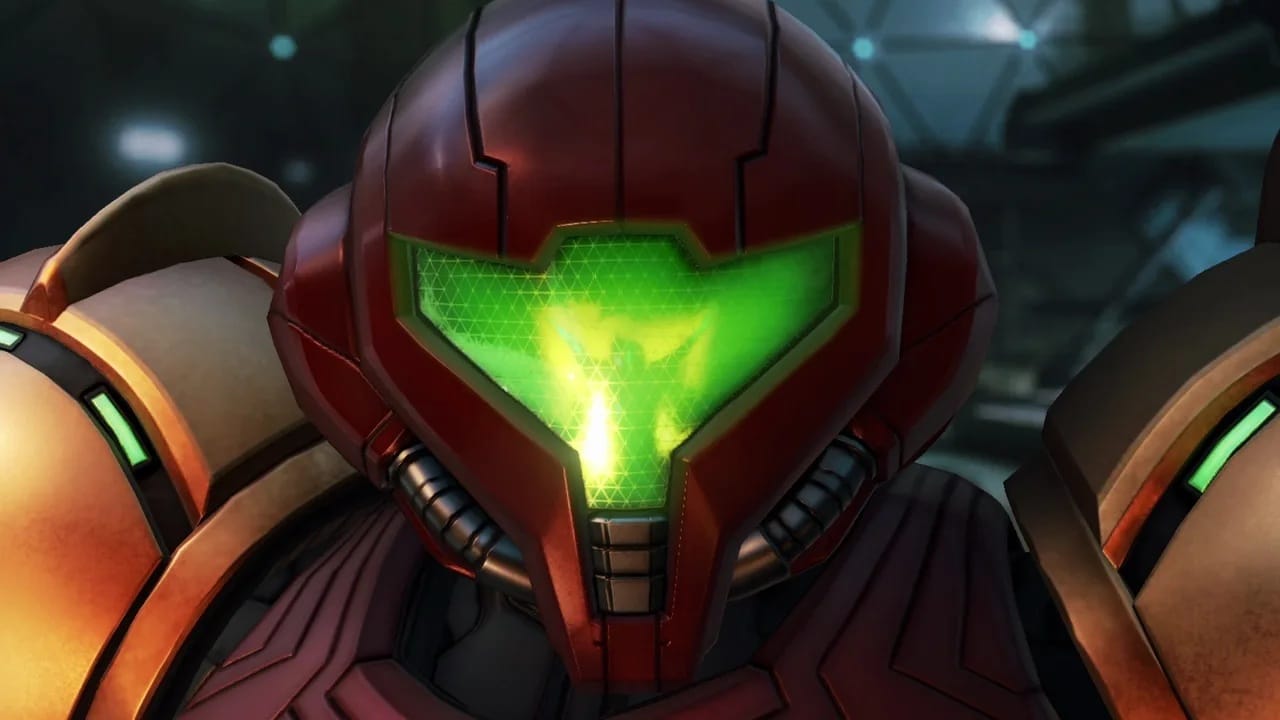
MP4 features one of the most confused characterizations of Samus Aran in the history of this franchise. While nothing reaches the levels of absurdity that Other M did, the newest entry in the series seems to have the opposite problem. If Other M tried giving Samus a character to the point it betrayed her character, then MP4 doesn’t even try to give her depth at all, which also betrays her character.
MP4 starts with Samus answering yet another distress call from the Galactic Federation. Space pirates are attacking the facility to steal an artifact that the Federation has obtained. Samus arrives amidst the chaos and discovers that the pirates are led by a former enemy of hers, Sylux. While duking it out, Sylux breaks the artifact in question, which teleports him, Samus, and a few other Federation soldiers to the planet of Viewros.
While exploring the new planet, Samus learns the story of the ancient civilization, the Lamorn, which once inhabited the planet. Throughout the game, the bounty hunter reunites with some of the Federation soldiers who were caught in the crossfire. Myles MacKenzie, Reger Tokabi, Ezra Duke, Nora Armstrong, and the battle robot VUE-995 are Samus’s companions for this adventure. In each area, you encounter a different character, who serves as your companion in various sections of the game. Samus’s goal is to find a way to get back home with the troops, while also navigating The Lamorn’s technology and Sylux’s vendetta.
Now, contrary to some discourse I’d seen before the game was released, the side characters aren’t all that bad. MacKenzie may be a quippy nerd, but his technological skills provide Samus with new weapons throughout the adventure. Tokabi is a tough warrior who lends a hand in fights, despite his old age. Duke is a tough, but caring, commander. VUE-95 serves its role as a devastatingly powerful battle robot that brings the pain. Armstrong ended up being my favorite, not just because she’s the rookie who grows more and more confident as the adventure continues, but also because she’s a fangirl of Samus. Call me cheesy, but she represents the fans, and I think it’s adorable.
I really don’t have any issues with the character; they’re not amazingly well-written or anything, but who said they need to be? They get the job done, and the voice acting helps the personalities shine through. If anything, the biggest problem I have with them isn't even about them. You can probably tell where I’m going with this: My biggest problem is their interaction with Samus… or lack thereof.
Similar to Metroid Prime 3, all the characters speak except the galactic bounty hunter. However, while there was no real reason for Samus to talk in that game, in MP4, the silence actually hurts the narrative. There are several moments in the game where one of the characters would ask Samus a direct question, and she just doesn’t answer. From her thoughts on a current situation to how a problm should be solved, Samus remains completely mute.
Now, even in games in which she did talk, Samus is always presented as a “less talk, more action” type of character. There’s nothing wrong with that. The problem here is that she doesn’t talk AT ALL. Besides an occasional nod of her head, Samus doesn’t react to anything her comrades are saying, which honestly makes her out to be an emotionless jerk towards them. I get that she’s not much of a talker; that’s what makes her Samus. However, when a person address her directly, the silence is taking it too far. What, did she forget to unmute her helmet or something?
Metroid Dread is another game in which Samus is mostly silent. She’s in constant silent badass mode throughout the whole adventure. The main difference is that in Metroid Dread, Samus is alone throughout her journey. She has her ship’s computer, yes, but there aren’t any situations where she’s required to talk. The one time she does talk is when she meets another Chozo, and in the Chozo native tongue no less! That’s how you do it! Keep her silent most of the time, but let her speak up when the situation requires it.
The Samus we see in MP4 barely shows any signs of caring for the people accompanying her in this scenario, and that’s not Samus Aran in my eyes. It’s also a problem when, throughout the gam,e there are moments where a character might sacrifice themselves for Samus to succeed. That's a tough situation that would be hard to process, but the bounty hunter barely reacts. If she doesn’t care… why should I? She doesn’t care whenever a character supposedly dies, and she doesn’t care when the same character ends up being alive. Our hero, ladies and gentlemen…
Nothing in MP4 does Samus’s character more disservice than the ending. To quickly summarize the plot: Samus has to find 5 ancient keys in order to operate a teleporter, which will take her and the other troops back home. When they all get to the teleporter, however, Sylux shows up because the game suddenly remembered he’s the villain.
The start of the battle is actually pretty cool because for the first time, you’re fighting alongside all of the other Galactic Federation soldiers. They may require some reviving here and there, but I found them helpful in the fight when they actually landed crucial shots on the boss. That’s pretty cool and allows me to connect with these guys through Samus’s eyes; (Literally, since this is a first-person game).
When Sylux is eventually defeated, Samus activates the portal, and the gang is ready to head home. The portal begins to operate when Sylux suddenly returns. To make sure Samus gets home, the team is holding Sylux back, keeping him busy for long enough time so that Samus can return to their planet. She does and… that’s it! These guys are still stuck on the other planet with no way back, and Samus doesn’t seem to show any emotion to that. She doesn’t even remove her helmet unless you beat the game 100%! She’s just… moving on. What happened here!?
For all intents and purposes, finding a way to bring these guys home was Samus’s mission in the game. She rescued all of them, helped them out, they helped her when they could, and now she’s just leaving them there!? That’s not Samus! Talking or not, Samus Aran wouldn’t leave her teammates behind, teammates she took upon herself to bring back home! I get that it’s supposed to be an emotional scene where we see these troops standing up for Samus and helping her. But the way events play out make it seem like Samus didn’t really care for these people.
Now, there is another bit of the story I didn’t really talk about; The Lamorn. This ancient civilization is referenced a lot throughout the game, as Samus is essentially gathering information about their history before they were eradicated. The Lamorn had a lot of knowledge that they wished to spread out via the life seed Samus obtains during the journey. Considering Samus grew up with the Chozo, another race of aliens with great knowledge that is no more, I can understand how she could relate to this story. Some characters even comment on how they know this may hit a sour note for her.
On paper, this is an interesting idea. Samus has the chance to help a civilization, which resembles the one that raised her, expanding its knowledge from beyond the grave. In theory, this makes her choice a lot more tragic, since she has to choose between her friends and something which holds sentimental value for her. The problem is that once again, the story does nothing with it. If the idea is to make Samus relate to The Lamorn, then I simply don’t feel it.
It all comes back to the scene where she plants the seed in the ground once she goes back home. It grows a small tree, on which Samus hangs the amulet that one of the troops gave her. This tree now provides a new beginning for The Lamorn, while also honoring the Galactic Federation soldiers who sacrificed themselves in order to preserve their history. In any other game, I’d call that ending beautiful as much as it is heartbreaking.
What sadly lessens the impact is that Samus doesn’t really have a connection to anything this ending represents. Her silence throughout the game and lack of connection with anyone and anything prevents the ending from landing in the way the developer surely intended. This tragic choice Samus has to make falls flat because, as the player who’s supposed to relate to her, I don’t feel much of a connection to any of the things that came before the ending.
It is unclear what the future holds for Metroid. Will there be a new 2D game? Is there going to be a Prime 5? Would Prime Pinball get a sequel? The answers may be unclear at the time of this article, but I’m sure of one thing: If you’re going to write a story surrounding Samus Aran, you need to treat this character better. She can speak if she has reason to. She can show emotions if the time calls for it. She’s a silent and determined bounty hunter who’s achieved incredible feats, but she’s also a heroic and caring person whom we want to root for and not just question.
In January 1968, British science fiction writer Arthur C. Clarke wrote to Science magazine to articulate what would become the third and final principle of his now famous “three laws”, a set of observations about technology, discovery, and humanity’s relationship to them. In this, the most famous of the three adages, Clarke stated: “Any sufficiently advanced technology is indistinguishable from magic."
Fast forward thirty-two years, I’m six years old, and I’ve invited myself round to a friend’s house under the pretence of a sleepover.
In reality, I was there because I knew he owned a PlayStation.
Up to that point, I’d only ever had a passing relationship with videogames. A friend’s birthday party here, playing pinball on the family PC there; but outside of that, my chances to play had been slim to none.
After some debate, we settled on the latest addition to his collection: a game called Action Man: Destruction X. We slid the disc into the tray, the CRT flickered to life, and then, the sonic boom etched into the skulls of millennials the world over.
After negotiating a menu screen and the opening cutscene, the television gave way to the game itself. There was my childhood hero rendered in glorious, pixelated form - equipped with only a boomerang - facing off against a Tyrannosaurus Rex in what felt like a chasmic arena. Now, I don’t wish to be hyperbolic, but at that admittedly early point in my life, this was easily one of the coolest things I’d ever seen. To me, it was indistinguishable from magic.
It didn’t matter that the game was clunky, borderline incoherent and, on reflection, somewhat shit. What mattered was the feeling: the sense of discovery, imagination, and possibility that videogames offered in a way nothing else quite did. That moment set the tone for a lifelong relationship with games, a medium in which I could explore entire worlds built with care, craft, and creativity.
But somewhere along the way, something curdled.
If I really interrogate why I still play videogames, I’d say that they’re a way for me to reconnect with that younger version of myself, a window I can slip through to retrieve some of the wonder that came so freely in childhood, but which adulthood takes too readily. Games still do that for me, but increasingly, the culture which surrounds them seems determined to crush it.
It’s not hard to see why. Today, social platforms shape much of the conversation we have about games, and those sites - Twitter, Reddit, YouTube - are designed first and foremost to reward engagement, not understanding. Invariably, then, nuance doesn’t travel; anger does, and in gaming spaces, that anger metastasises quickly.
The depressing part is that the warning signs have been there for over a decade. Flashpoint moments like Gamergate didn’t mark the advent of toxicity in games; they marked its industrialisation, with harassment campaigns masquerading as “consumer advocacy,” sustained abuse directed at developers and critics, and a lasting lesson learned by bad actors in the community - outrage is profitable. Later crossroads, like the backlash to The Last of Us Part II, followed the same template: review bombing, death threats, and petitions demanding creative works be rewritten to better align with audience entitlement. These moments matter, but not because they’re shocking. They matter because they’re no longer exceptions.
This pernicious behaviour is a dime a dozen today. A studio’s creative decisions are pre-emptively litigated on social media before a game even releases - for example, Bungie’s Marathon hasn’t even been released yet, and it’s already being dissected and denounced online. Developers don’t have to worry about abuse; they expect it. Marginalised players quietly disengage, not because they don’t love games, but because the surrounding culture keeps reminding them they’re not welcome. The question, then, is simple: is this the culture we want to exist within, at a time when games are pushing the medium further than ever?
Videogames today are more ambitious, more expressive, and more artistically confident than they’ve ever been. Yet the way we talk about them, publicly, performatively, online, has grown smaller, meaner, and more caustic. Games are treated less like shared experiences and more like battlegrounds where identity, politics, and personal grievance collide.
I’d like to apologise in advance for this next example. Earlier this week, my Twitter algorithm served up this little gem for my viewing displeasure. Go watch it, I’ll wait…
Now, to me, Asmongold is amongst the worst offenders in turning our modern gaming culture into such a poisonous place. In this clip, he neatly illustrates why. Here is a prominent streamer, with a sizeable audience, openly expressing a willingness to make the lives of strangers more difficult on a whim, and framing it as entertainment. There is no insight here, no critique, no value, just spite, amplified by a platform that rewards it.
Asmongold is not a thought leader, a cultural authority, or a policymaker. He is a Twitch streamer whose influence far outweighs the responsibility he shows in wielding it. And every time his behaviour is normalised, rewarded, or defended, the culture around games becomes a little more hostile, more fractured, and less worth participating in.
If you’ll allow me to zoom out further for a moment, this behaviour isn’t confined to games; it reflects a broader pattern playing out across society in general. Just this past weekend, Bad Bunny performed at the Super Bowl LX halftime show, and I’ve watched as some of the world’s pre-eminent grifters and walking, talking human mudslides have used this not as an opportunity to widen their world, but instead to foment hatred along national and ethnic lines.
It’s tempting to dismiss this as a “bad fans” problem. It isn’t. It’s a systemic one.
Platform incentives reward outrage. Algorithms flatten complexity. Identity becomes tribal. Disagreement turns instantly into moral failure. In that environment, games stop being art to engage with and become symbols to defend or destroy. The loudest voices dominate, not because they’re representative, but because they’re profitable.
This all has consequences; not abstract ones, but real, human costs. Developers burn out or leave the industry entirely. Players self-censor or withdraw. The medium’s public reputation is shaped not by its best work, but by its ugliest behaviour. It only makes it easier for traditional media to dismiss videogames as immature or unserious, and why shouldn’t they when the culture surrounding them seems so allergic to reflection?
This is the part where I’m supposed to present a solution. I don’t have one. Not a clean one, anyway. But I do know what I want.
I want a gaming culture that remembers games are made by people, that creative risk isn’t betrayal, that discomfort isn’t failure, that art doesn’t owe us validation, only honesty. I want conversations that prioritise curiosity over condemnation, and criticism that engages with craft rather than identity.
Most of all, I want us to reclaim the magic that drew so many of us here in the first place. With that in mind, I’ve compiled a list to help move the needle back to a more acceptable, more human place, a ruleset that I like to call…
When all is said and done, I’d like to leave you with this.
In Blood, Sweat, and Pixels, Jason Schreier recounts a conversation he was having with a developer, after hearing about a gruelling production cycle, “Sounds like a miracle that this game was even made.”
“Oh, Jason,” the developer replied. “It’s a miracle that any game is made.”
I wish the people who claim to love games remembered that.
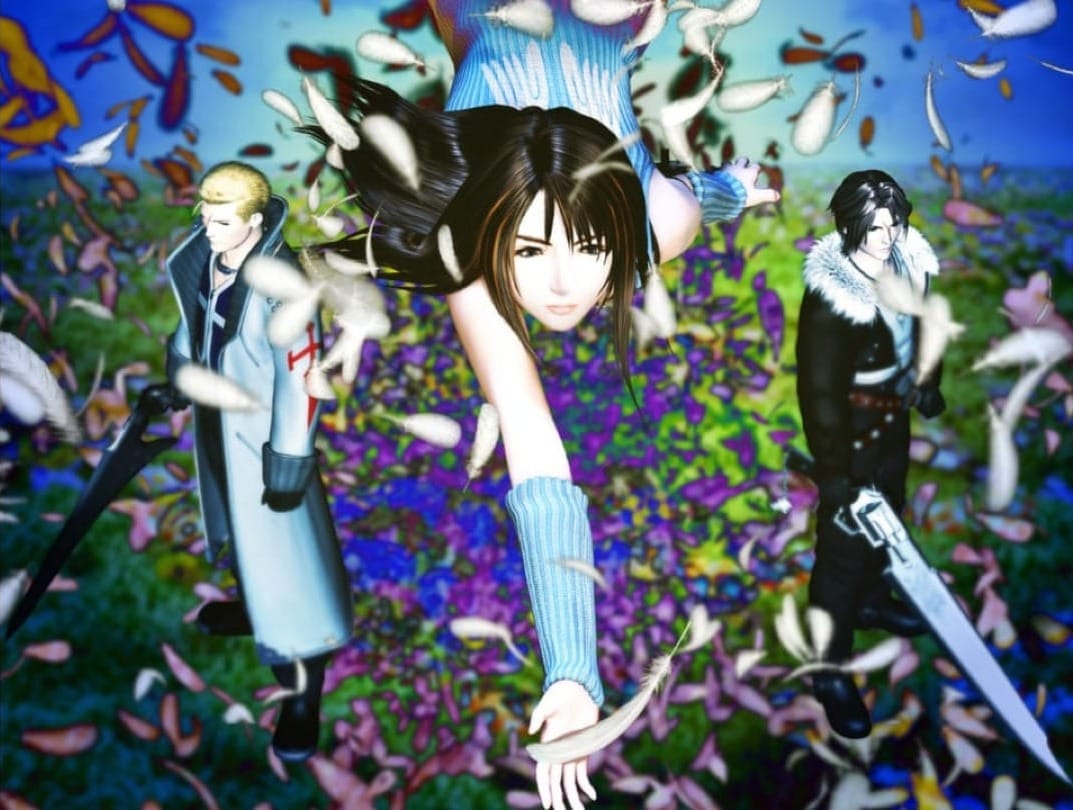
The day is long. Beginning with an early morning training session that ends in blood and scars, followed by a teacher-led field test against the Guardian Force Ifrit, Squall finds himself on unfamiliar shores, the intrepid pre-graduate SeeD mercenary tasked with securing a portion of the Galbadian-occupied city of Dollet.
Pridefully, Seifer Almasy pushes Zell and Squall onward, where they meet the new transfer, Selphie, at the top of a ridge. Tired, battered, and sidling war crimes mid-seige, they follow Seifer to an abandoned radio tower, where the abandonment of their post has them play unwitting heroes before a withdrawal order.
Briefly, Seifer asks Squall about his personal dream.
"The way I look at it," says Seifer. "As long as you make it out of battle alive, you're one step closer to fulfilling your dream."
It's a romantic one, Seifer says, though players familiar with Final Fantasy VIII know the outcome of his misguided aspirations. Inspired by action films and the abandonment of boyhood, Squall's rival dedicates his solipsistic dream to manipulating another. And Seifer's dream is this: to be a sorceress' knight, to follow in the footsteps of a childhood motivation, to play the hero. Seifer may come across as a bully, but he's very critical of the world as presented. Despite being part of the student-retained "Disciplinary Committee," Seifer's laid-back attitude underpins a character that doesn't respect the status quo.
Later in the game, after Squall and company have been abducted and imprisoned by the Galbadian military, Squall faces torture at the hands of an opportunistic guard. The torturer demands to know the true goal of SeeD—something that Seifer, a failed student who didn't graduate, supposes is a secret universal truth of those who complete their exams.
While Squall's sophistry (and frequent apathy) are defensive, this dismissive joke ties into the game's underlying themes, driving the anti-violence philosophy espoused when the party reaches Fisherman's Horizon, and deeper still, the thematic identity of adept child soldiers in a world of ineffectual adults.
"...Flower." Squall can barely lift his head from the pain of torture. "The true goal of SeeD is to spread seeds all over the world, to fill the world with flowers."
No, the goal of SeeD isn't anything ecological. Seifer and Squall both experienced caged, manipulated dreams. The only environments affected by these young soldiers become battlefields.
Squall is faced with the sins and circumstances of his actions more than once in the course of Final Fantasy VIII's story. At Fisherman's Horizon, a sealevel utopia governed by a socialist mayor and populated by peace-loving engineers, Squall confronts the reality of his actions as a student of warfare. The apathy that guards him from responsibility is stripped away as he is forced to face the fact that war and peace are not a simple binary.
SeeD mercenary interference, even when left to small squads of two or three, can be enough to upset governments, political agendas, and entire communities. Paid warfare shapes the world, allowing both activists and opportunists to recreate the setting, law, and standard.
Squall tells Mayor Dobe at Fisherman's Horizon:
"It's hard for me to explain. I wish everything could be settled without resorting to violence...and there would be no need for battles. Like you've been preaching, it would be wonderful if things could be settled by discussion. The only problem with that is that it takes too much time. Especially if the others are not willing to listen. So I believe that fighting is inevitable at times. [...] I think the world needs both people like you and people like us."
The Timber region's early-game exploitation by SeeD is framed as salvation. Rinoa, revealed to be an excitable activist and the rebellious daughter of a Galbadian general, begs Balamb's headmaster to grant her Squall, Zell, and Selphie. These newly graduated cadets do not have the life experience or the political acumen to comprehend the gravity of their duties. The 18-year-long Timber rebellion has been fronted by underground resistance groups who, in the wake of the second Sorceress War, fight for independence from Galbadia.
While Timber rots beneath fascist rule and faces continual hardships due to the clashes between resistance groups and the military, its retrograde standards assign it as an independent nation. Galbadia's firmer "peacekeeping" force shuts down railroads and prevents mainstream outside news from reaching local citizens.
Rinoa's misguided activism and Team Squall's violent interference feel like justice and salvation. Inevitably, their actionable plan leads to a disruption in the city; the party attempts to assassinate a high-profile Galbadian leader, only for Squall to clash again with Seifer. Their naive tactics result in further retribution for Timber; instead of sticking with the citizenry, Rinoa and the others abandon the region as the war escalates and their mission changes.
Timber, while temporarily "saved," must contend with the Galbadian army alone. As resistance groups continue to fight for independence, the ever-changing direction of SeeD manipulates the political atmosphere—a wedge between countries and regions imbalanced by warfare. Initially, they are presented as guns-for-hire who have the power to enact regime changes or defend war-torn regions, and Squall is a representative of the sort of apathy the apolitical Gardens espouse.
SeeD are not heroes; they are the willing but naive weapons of a private military.
A corps brigade of military students, a mercenary force, a private army—SeeD is made up of young operatives who graduate from Garden, an international military academy that deploys their undergrads, students-in-training, and graduates on paramilitary missions that range from battle support to undercover operations. SeeD members provide support, protect civilians, slay monsters, and can also be utilized for surgical missions.
Balamb Garden is the centralized base that trains SeeD cadets, but sends its members to other Gardens, including Galbadia and Trabia. SeeDs are set apart from other world militaries because their operatives can utilize para-magic (a synthetic recreation of Sorceress magics) and brutally powerful but heavily controversial Guardian Forces.
SeeD forces are primarily made up of children. Many undergraduates are homeless orphans displaced by previous wars. In that fact, the SeeD organization does not have to worry about refilling its ranks—the continued military actions and violent regional shakeups all but ensure more children will be absorbed into the SeeD program.
While the true purpose of SeeD is more mythological than its leaders initially admit, it is fronted by the Headmaster's desire to have a military corps that can do some good in the world. His flat naivety is repeated post-graduation, where he tells the cadets he wants SeeD candidates to "think and act for themselves." A cold, disconnected, haughty sentiment to place at the feet of human weapons.
Child soldiers are not a fantasy fiction. While they may be used as plot devices in games such as Final Fantasy VIII and Metal Gear Solid, this is a real-world problem that grew exponentially between 2005 and 2022. Dangerous military organizations rely on child soldiers because they are easily captured and coerced. Children are conscripted as anything, from fighters to scouts to messengers to guards.
The density of Final Fantasy VIII's plot casts a shadow on the dispensability of Garden and its child soldiers. It is not by accident that SeeD members must be between the ages of 15 and 19, or that the organization prefers the malleable minds and bodies of children. The anti-humanitarian actions of Garden are the ultimate example of "the ends justify the means." Headmaster Cid and his cronies place unbelievable pressure on cadets like Squall, whose young lives are so entangled by the pursuits of Garden that they cannot envision themselves in a place without it.
To this end, there is no happy ending in Final Fantasy VIII. Garden is not dissolved, and its place in the world is actually reinforced by Squall's incidental run-in with Matron at the end of the game, where he seals his destiny by creating a causal loop.
War never changes, because SeeD doesn't know anything else.
If you bear the misfortune of being in your 30s (or older), you have no doubt borne witness to the war crimes of the United States military during the 20th and 21st centuries.
The invasion of Iraq happened in 2003, when I was just fifteen years old. America is an oil-dependent country, poor in its own resources, historically ignoring the needs of its citizens as it pours taxation into military might. America, as an empire, rules and defends through fear, invading other countries to create regime changes or dismantling other governments entirely by replacing figureheads with American-approved political powers. We are reactive, violent, and cruel.
In Metal Gear Solid V, the Militaires Sans Frontières is headed by Big Boss in the 1970s. This "Army Without Borders" is a private military that provides its resources to all clients, and its self-appointed "soldiers without borders" program does not make judgments based on nation, creed, or ideology. Noble, certainly, but militaries for hire commonly care about resources above all else, and the actions of Big Boss and Master Miller show this. Big Boss's ideology initially prevents him from becoming a warmonger. Still, the nomadic, Cold War-era MSF carries out operations that destabilize entire regions, recruiting and kidnapping soldiers from all over the world to join their operation. Like SeeD, they stabilize their recruits with propaganda, creating a mighty force that owes singular allegiance to a mythology.
While the tyrannical military actions of Galbadia in Final Fantasy VIII cannot be defended, Garden's less-than-scrupulous tactics allow an apolitical third party to create and recreate the world at will. The rise of Galbadian and Estharian powers in Final Fantasy VIII is the direct result of the fallout of the Sorceress War two decades prior, just as SeeD is a reaction to the potentiality of another powerful sorceress like Adel.
Players are shown early on that SeeD can be used for good, such as thwarting Galbadian forces in the Dollet region or aiding Rinoa and the Timber resistance in defending their city. However, the will of the Garden is, ultimately, up to its Headmaster and investors, and the so-called "good" they generate is backed by bureaucracy and gil.
It is the nature of SeeD to die in someone else's war. The love story between Rinoa and Squall is underlined by the fact that Rinoa has the luxury of choosing her battles and battlefields; Squall, in contrast, is a creature of Garden.
The characters themselves exhibit various pathologies and traumas that emerge during the course of the combat. Squall's cold disposition and disconnectedness are a shielding apathy. "As long as you don't get your hopes up, you can take anything...You feel less pain." Selphie's dogged, dark humor strips down the reality of their cause, from absurdity to direct violence. Irvine, his traumas most notable to the story itself, fails as a sharpshooter, choking at the exact moment he is to assassinate the Sorceress in Galbadia. Zell says, "You tell us to go, we go. Even if it is a losing battle," resigning the cocky humor of his character to the reality of being a SeeD.
During wartime, the more conscientious among us ask ourselves how we can go on enjoying our daily lives in the face of such despair. Like Balamb and Galbadia, America is often at war with itself: we watch via social media as masked cowards use lethal force on everyday citizens, and entire cities are caught up in the wake of violent chaos, pushed onward by a military engine that neither makes sense nor has the favor of the people.
Rinoa does her best to undo Squall's emotional armor, occasionally needling him in an effort to remind him that he's an actual person, and not just a mercenary of Garden.
"Gosh, you're such a pessimist. There are no guarantees in the future. That's why TODAY, the time we have now, is important. Squall, we wanna help you, as much as we can, for as long as we can. We all love you. There, I said it. Please don't freak out. We just wanna live, y'know, live through this time with you, together."
Every action has an equal and opposite reaction. During their mission in Timber, Zell lets his anger get the best of him, reacting strongly to Seifer's rogue actions. Hearing this, President Deling threatens to use the entire military force of Galbadia to crush Garden. As retribution for the attempted assassination of the Galbadian Sorceress, missiles are sent to Trabia Garden, and the player is only allowed to see the aftermath. SeeD soldiers become unwitting heroes as war escalates and the Sorceress takes control of the Galbadian military. Children are placed on the frontlines.
"What's the point of talking about it now!? You don't know what's going on, either! This is crazy. I don't know what's goin' on anymore. I feel like a helpless puppet being manipulated in some major scheme."
Later, when Squall must face the truth of Garden's dark investments, he realizes that the true goal of SeeD is not so simple as he was led to believe. His childhood naivete is stripped away as he is forced to confront the darker truths of being a child soldier. Directionless, Squall doubts those around him, including the Headmaster of Balamb Garden.
"SeeD will defeat the sorceress. The Garden will train SeeD members. The many missions around the world are only training for the final battle against the sorceress. But now that the sorceress has become a major threat, our true mission has begun."
Headmaster Cid admits that all of SeeD's training, including their real-world tactical missions that have resulted in student and civilian death, has all been for a singular purpose. Garden may not be a sovereign nation, but it operates as one. As with America's invasion of Iraq or Venezuela for oil, warfare is rarely ever about the pursuit of freedom or emancipating a beleaguered citizenry from a dictator. It's an opportunity disguised as a revolution.
"Right and wrong are not what separate us and our enemies. It's different standpoints, our perspectives that separate us. Both sides blame one another. There's no good or bad side. Just two sides holding different views."
Squall is forced to reckon with the human cost of warfare. SeeD missions are not just extensions of Garden's power; they have real human costs.
"We're not kids anymore... We're strong enough to take care of ourselves. Make our own decisions...We're confronting a big one right now. Do we fight Matron or not...? I say we fight...Shoot for a common goal...Hey, at least it'll keep us together a little longer."
Irvine reminds Squall that it doesn't matter what's come before; it's the actions of today that make a difference. Ultimately, it is camaraderie that forces Squall to change. As a group, they no longer owe allegiance to Garden. Squall admits that he wishes they didn't have to fight, that maybe a path of peace could be possible if they had the time and resources to explore it. When he becomes Commander, he realizes he can no longer weigh the cost of individual lives; Squall is responsible for every single person who fights on behalf of Garden.
Too often, children must carry the sins of authority, stripped of any choice by the adults and figureheads in their lives. Even into adulthood, there are moments when our lives feel choiceless, when we are forced between despicable action and frustrating inaction. Irvine reminds the party that it was never their choice to join Junction Guardian Forces, it was never their choice to fight, it was never their choice to be part of someone else's army.
Irvine resigns himself to his past.
"You've all heard this before. How life has infinite possibilities. I don't believe that one bit. There weren't many paths for me to choose. Sometimes, there would only be one. From the limited possibilities I faced, the choices I made have brought me this far. That's why I value the path I chose...I want to hold true to the path that HAD to be taken."
As children whose lives have been ripped apart by war, Squall and the others continue on the only path they've ever known. These children of fate have been born into a world that only wishes to use them. Irredeemably, "fate" and "destiny" are utilized against them, limiting possibility and potential. But Squall makes an effort to face this destiny head-on, to cut away the worn paths laid out for him.
Quotes from Final Fantasy VIII were pulled from the game script.
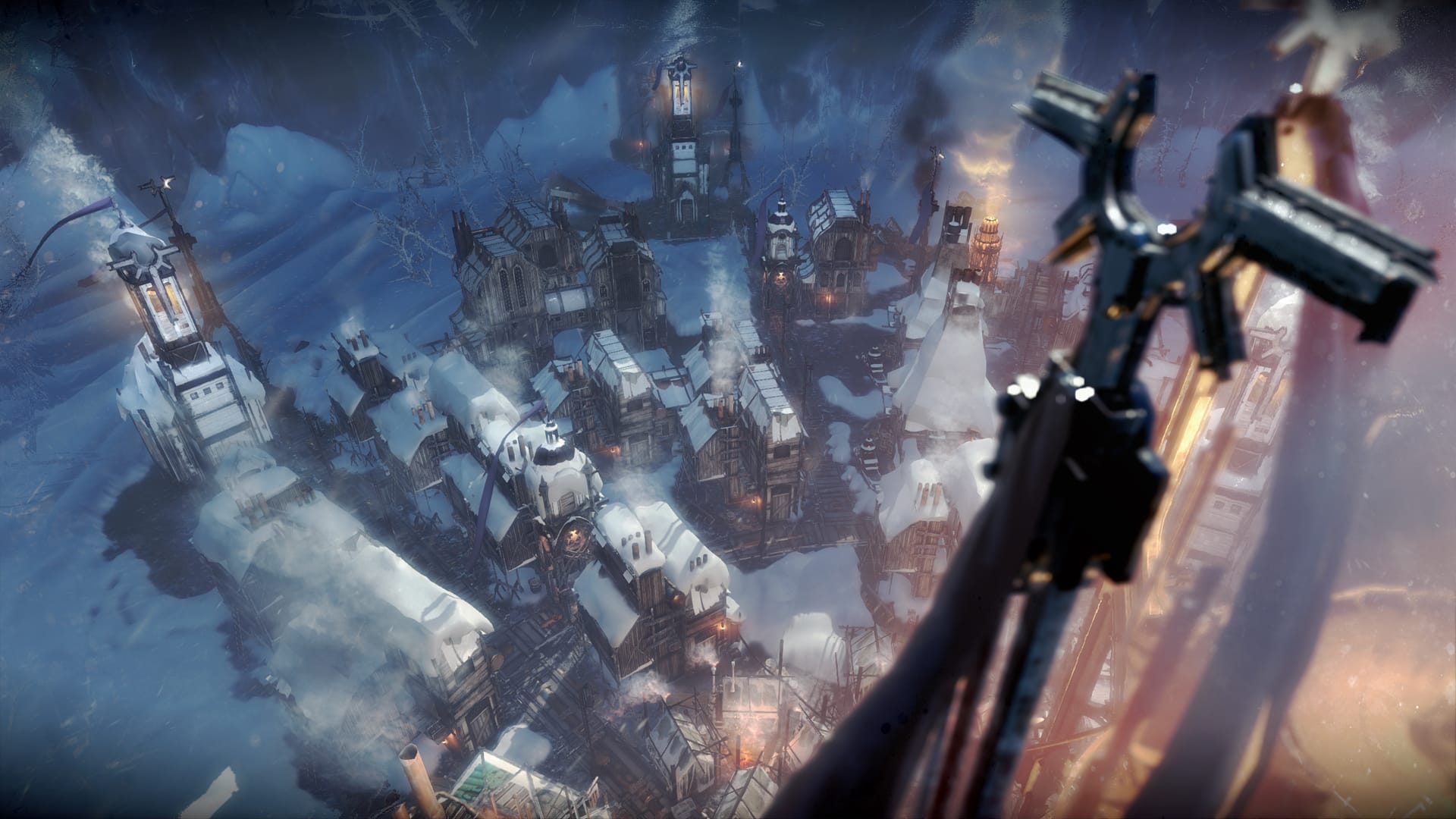
I've been playing Frostpunk for the better part of two weeks (well, I stopped for travel, but I was obsessively playing it). I even listed it as one of my favorite games, not of this year. It's a game I'd seen pop up in the PS5 subscription-based game collection, but in the past, it'd just float by my periphery whenever I browsed for new titles to play. And listen – I love me a cold winter game. I really love me a cold-winter, steampunk-inspired story sim.
Frostpunk, though, is a different kind of game. It's notoriously difficult and completely unforgiving. It's a game that frustrated me to no end, yet I could not put it down.
I've never been the biggest fan of strategy-based games. I am, to put it plainly, very daft when it comes to forethought. I'm a 'one thing at a time' kind of gal. I can wear many hats; I just need to carefully take one off before I put a new one on. I am focus-based. I like minutiae. I panic like that little penguin when too many things go wrong at once, and this game is essentially 'too many things going wrong at once.' Frostpunk forces you to contend with a variety of wildly changing factors, with public opinion and weather being the most volatile among them. You have to resource manage, and, if you can, future-proof some of your stockpiles. Considering the climate and various limiting factors you're up against, this is an insane ask.
The game's core story is compellingly simple, though, and it forms the boning to the game's corset (okay, so I just got done with wedding dress shopping), the pressures of which are cinched so tightly against the player that it often feels like you're being set up to fail. This is a world ending due to the sudden and inexplicable onset of an ominous, frigid winter. No one's quite sure where it came from or how it came to be. Early expeditions north seeded the arctic landscape with heat-producing generators. The choice to go north, although it seems irrational, is largely due to the prolificity of its rich resource deposits. Massive, manufactured dreadnoughts were expected to bring hordes of desperates to the last bastions of human civilization. Your job, then, is to successfully be that last bastion.
Frostpunk's conceptual challenges stem from the cruelty of its environmental factors and the understandable exhaustion of its populace. You're saddled in the initial scenario with a ragtag group of citizens – including children – who you need to command to gather coal, wood, and steel. It's simpler, in the beginning, when you have relatively mild temperatures and a smaller ring of homes to heat. As time goes on, though, the demands inevitably increase.
The generator at the center is your city's beating heart, with coal as its lifeblood. It provides heat to an expanding area at an expanding strength (both of which you'll need to upgrade to) and will be your final defense when the 'weather anomaly' reaches your city. There are various scenarios you can try besides the "main" storyline, and each of these tailors the challenge to a specific circumstance. But the beginning one – where you settle into a new city – offers the best opportunity to learn the game's systems and cadences.
This initial story, titled "A New Home", introduces you to all the clanking gears of the game's mechanics. You have a day-night cycle, shifting weather, ore and steel deposits, hope and discontent meters, hunter huts and hothouses where you can requisition food, and you can introduce either draconian or more palatable laws depending on the severity of your circumstances. I tend to play games with a cleaner moral edge, so I tend towards gentler choices, even if it results in my failure, which in this case is banishment. You can create a cemetery to bury the dead respectfully, or you can simply dump bodies in snow pits to harvest organs later. Your people will, of course, have things to say about either choice.
The game's exceedingly interdependent systems mean you need to be aware, at all times, of what is going on where.
Beyond the laws that you can enact for survival, there are two paths that your city can take to succeed: order or faith.
The path you choose for your city's direction – and this is the direction for the people's wellbeing, not necessarily just their survival – will hinge somewhat on how easily you can navigate the beginning setup. That setup is, depending on your difficulty, 150 people and a few scattershot deposits of coal, steel, and wood. You have to build the homes for your citizens (using wood), run the generator (using coal), and eventually build other buildings (using steel and wood) to then produce more of all three. My first priority was always to build houses, and after that, I tackled building workshops for research, which is the most important little part of the strategic gameplay. Research allows you to "level up" your abilities, such as better insulating medical tents or adding heaters to workplaces. You have two kinds of labor available to you as well: workers and engineers (and children if you're feeling really, you know, pragmatic).
Engineers can work pretty much anywhere, but workers cannot work where engineers do, such as in specialized fields like research, medical tents, etc. Your first few days of trekking to piles of stuff to gather stuff to then use that stuff to build other stuff is fairly cyclical. But when the first cold day hits, you need to make sure your people have heated shelters and workplaces. If they don't, they get sick, and then you need to build more medical tents, and if you don't build enough, people die, and other people complain, and then bodies litter the streets, and then hope falls and discontent rises, and you are in deep crap by then.
The game's exceedingly interdependent systems mean you need to be aware, at all times, of what is going on where. Are the outer workplaces too cold? When citizens get frostbite, do we amputate or give them extra rations? How do we afford those? Is there enough food coming in and being prepped at the cookhouses? Will we have enough coal stockpiled to ramp up heat during the next cold front? When you choose a path of order or faith, you essentially give yourself a plaintive "oh shit" button to potentially tackle upcoming issues. Faith gives people places to worship and rekindles purpose in otherwise miserable lives. Order does much the same, but there is a level of authoritarianism that slips into each if you see them to their fully realized pathways. Order has a city watch, faith has faith keepers, and either can be deployed against your people if needed (or wanted).
This system of laws makes your choices permanent, so you need to decide fairly early on if you want to do more morally contestable things, such as legalizing child labor (and as my fiancé and I quoted whenever we did it: "the children yearn for the mines") or helpful (if unpopular) things, like resorting to soup rather than full meals. As you gather resources and level up research for new items in the workshop, the real flow of the game begins to ripple outward. You must juggle myriad pressing issues with very little grace given, so there are times you have to make decisions that you typically would not make as a more beneficent ruler. There are also moments when things become so bleak that you regret not making an earlier situation possible – such as prioritizing leveling up the generator's output rather than workplace insulation, or vice versa. You only have so much time, so many days, and so many people, and every new attempt saw us faced with a different challenge.
For all its beauty, cold is a desolately quiet monster.
At one point, we'd think we had it down pat, and then discover we'd run out of food, or that we stored too much coal and wasted resources building tons of storage depots rather than sawmills. Other times, we'd fail to properly plan the city layout, resulting in houses having to be built farther from the generators' warmth as more and more survivors seek out your city. One of the most interesting and lore-heavy components of the game is its topside exploration. You can send scouts to various locales, and each of the locations in the main scenario has a story to tell. I regretted, one time, not sending back an extremely helpful automaton my scouting team had encountered, and instead broke it down for parts. I could have used that cold-immune, 24/7 workhorse when the going got tough, because automatons – which you can eventually produce yourself – don't have the caveats of human fragility that your people do and can work, albeit less efficiently, virtually forever.
I was lucky enough that during the great (real-life) winter storm of '26, we did not lose power. This was odd, as most of the city I live in had huge swaths that went dark. It was bitterly cold. I played Frostpunk the entirety of the time we were stuck inside. I was lucky to be able to do so, but boy, did it paint a bleak picture. Any time my fiancé and I heard ice crackle on the rooftop – because something heavy kept falling onto it – I would think "this is it, the power's going out." I figured we'd have to bundle our cat in blankets, light our tea lights, and huddle together until repairs were made to the lines.
When we went outside a day after the storm blew past, we saw trees beaded with thick ice. It was beautiful, but the weight of that ice on the limbs had cracked so many of them right down the middle. It reminded me, once I "woke up" from my Frostpunk obsession to stare at a blue sky, just how deadly ice and snowstorms really are. For all its beauty, cold is a desolately quiet monster.
Frostpunk is a game I will play again, but it's not necessarily an easy game to play, in terms of "vibes." It's not just difficult, it's also a very hard place to settle in for a quiet night of gaming. You are beset by pensive music and constant reminders that people are cold, or starving, or desperate. In the main scenario, you even eventually have an antagonistic faction – the Londoners – who seek to go back to London in hopes of having a better shot than they currently do in the middle of the northern wastes. In this game, London has pretty much already fallen, so the fruitlessness of the pursuit is more indicative of people's delusional desperation to survive rather than actual practicality. Your additional job then becomes to sway them to stay. Frostpunk is, I would say, the opposite of a cozy game. It is a very tense game. And the honest truth – I did not play this game at its original difficulty. I was too overwhelmed by the constant failures and, in order to see it play to the end, figured I would give it a shot on an easier setting.
The easy setting is much easier, but I also think I did myself a bit of a disservice by backsliding into it, although I would have undoubtedly put it down before beating it if I'd had to truck through it on the basic difficulty. I also played this game a lot during those few days we were stuck inside from the storm, so perhaps my impatience was a product of repetition ad nauseam. I have since played one other scenario, called the Fall of Winterhome, on its basic difficulty setting. I then customized two of the settings to be gentler on me, while keeping the others at their standard difficulty. I'm the last person to deny when a game is "too hard." I will openly admit to lowering difficulty, because I think, in a way, perfecting those systems is part of how I learn systems. I get something "down," and I can move on to the next.
All in all, Frostpunk is a beautifully crafted game with a system of resource management and reputational upkeep that manages to seamlessly integrate challenge and reward successes. If you can manage to keep your workers warm and fed and circumvent frostbite, you can focus more on providing people with extra rations, or you can keep children from working by building them the equivalent of daycare centers. You can build prosthetics, create public houses, and provide people with a stress outlet in the form of fighting rings.
When I finally got my people past the "weather anomaly" that serves as the main scenario's final phantom boss, I felt a sense of immersive relief and pride. Sure, I wasn't playing the game at its most challenging, but it still kept me constantly on my toes. There's something so satisfying about having a functioning city, where you can revolving-door materials to build, where all of your citizens have a house, where you level up your generator and outfit your workhouses with automatons so that the city can be almost hands-off. I haven't gotten there yet, but I desperately want to try. You can attempt this on the game's nifty Endless Mode, which is exactly as it says: an endless cycle of days and nights that you play until you fail.
I've since tried a few other simulation games – with far lower stakes – but nothing has quite scratched that Frostpunk itch. I might try Frostpunk 2, but I've heard it has a different focus of management. This original one is a clever little game, with a very palatable UI (there's even the above-pictured heat map toggle, and I lived in that view) on console. It's currently available as a part of the game collection for PS+ subscribers, and since we still have six more weeks of winter to schlep through (thanks a lot, Punxsutawney Phil!), now's a good time as ever to cuddle into a quilt and try to keep the fire lit.
One of the most important parts of history is the rise and fall of the various dynasties littered across cultures. As empires come and go, the families atop these governments become staples, immortalized in culture through the arts, coming in the form of sculptures, books, and of course, video games.
Old World, the 2022 grand strategy game from developer Mohawk Games, features interesting innovations on the nation-building game formula. Rather than offering a selection of global nations, it focuses its sights on the diverse cultures that made up the Ancient Mediterranean. From here, each of these civilizations has multiple leaders to choose from, influential in the culture's development, and with a family to follow them throughout history. Each of these leaders is different, offering players a variety within each different nation to begin their dynasty. While each culture has its own hallmark research topics and structures, the starting characters and decisions that follow propel the events of this narrative-driven strategy game.
In my playthrough, I began my journey as “Pericles the Founder," a versatile statesman and founder of Greece, married to Queen Consort Aspasia, who, for some reason, was already upset with me. I focused on trapping as my initial research to take advantage of the resources around Athenai, the capital of what would be Greece, and set off into this new world. It only took a year for me to realize why Aspasia was disgruntled with me – pregnancy will make anyone irritable. In an effort to please my unhappy wife, I chose to name our newborn daughter after her, born in the second year of our nation's founding.
Old World has some familiar trappings of the strategy simulation genre. I can eventually become governor of my capital or offer the role up to somebody else in my court, the former bolstering my city's development. As I take the job with honor, it's only two years later that I become “Pericles the Settler,” with the foundation of Trapezus, the second settlement under my control. It's also worth noting that the years of Old World are depicted as "Year One" and so on, rather than having an assigned year or date.
The key actors of this game always seem to bring something with them, turning the pages of your nation's history with their own stories. Leonidas enters Greece with his knowledge of civil government to help propel us forward to a modern civilization. Sappho is exiled after a political scandal, allowed to roam freely in other lands, and eventually joins a rival family. Cultists are found living in ruins on a hill near a mountain range, and I allow them to continue their worship and even put up a shrine in what is now my land.
The daughter who soured my wife's mood towards me in the early years has finally turned 10, meaning it's time I formally teach her about the world. It's here that I must confess that my knowledge of world history is limited – it's been quite some time since I've been graded on my ability to remember dates and why they matter, and I was only ever so good at that anyway. I took the time outside the game to glance at who Pericles was when he was alive, and thus decided to teach Aspasia about commerce so she could go down a similar path as an Orator.
My time as a Grecian statesman comprised my first playthrough, and while I've managed a handful of other nations since then, I found that this first endeavor into Old World was more narratively fruitful. My first mistake would ring out through the rest of my playthrough – not knowing how to manage my money. Where Greece had been making some small profits for Years 1-12, it hadn't been enough to hire a philosopher to the court that my wife wished for. Her opinion of me soured more, yet I would not give up any of our resources. In a sort of irony, my daughter would ask me about a situation with money. Since Pericles isn't wise enough to tell her that money isn't everything, I tell her that she can spend money with her friends however she pleases, and this decision would set her on a path from which I could not save her.
Old World is made of ebbs and flows, bouncing gameplay developments with characters and stories that will throw a wrench into things. By Year 24, King Pericles the Pioneer turns ill. Rather than ride out my golden years sick and on the throne, I abdicate the throne to my daughter. Remember how earlier I told her she could spend her money with her friends as she pleases? That lesson alone formed her into a lackadaisical sort of person, and as an adult, she's become an alcoholic. The first thing she does is remove the cult of Aphrodite, those who have been dwelling in the mountains since before our arrival; their religion is gaining too much influence over the city. To make matters worse, we've been at war with foreign invaders for a few years now. I, as Pericles, lived a taxing life, and I can't help but feel guilty for my ignorance. Maybe my wife was right about that philosopher after all.
By the 33rd year, Aspasia had brought many positive developments to the throne. The neighboring Danes offered their leader, Rorik, to be her husband in an effort to unify the countries, and he sits on the throne as King Consort. Through this, it's discovered that the people of Carthage have been spying on Aspasia, and their agent is dispatched expeditiously. Where Pericles' time was focused on building a nation, Aspasia's era is to make the people of Greece happy and safe as we advance towards the future. Only a year later, Rorik and Aspasia give birth to Arisonoe, and in a similar fashion, the throne still can't afford to hire a philosopher to the court.
Some of the narrative events of Old World can feel more random than others, harder to pinpoint their causes. From a narrative standpoint, combining self-prescribed ideas with flavorful text that drives the concepts home, Pericles' sickness comes and goes while his daughter is on the throne. He's healthy again the year she takes over and only gets sick again towards the end of his lifespan while he's back in the political seat as governor of Athenai.
In the early 40s, things continue to take a turn for the worse. War erupts across the country from both the people of Carthage and Persia. Our lack of military might holds us back as we scrounge up soldiers, but governors in the cities fall ill and perish as well or simply make poor decisions. In Year 44, only a year after the passing of Pericles, Aspasia is doomed, sick, and close to death, and Arisnoe is only 10 years old.
In Year 45, disaster falls. Both the King and Queen die from their illnesses as war ensues on Greece's borders. Arisnoe is still just a child, so a court member arrives to take the throne until she turns 18. By year 52, Arisnoe has been raised as an orphan during nearly a decade-long war with Carthage. Rather than pursuing commerce like her mother, she learns military training, the last chance to stop the nation from collapsing. As she turns 18, Polyxena, the regent queen dies of a sudden illness, making way for Arisnoe. As the 50s arrive, city after city falls to barbarians from the south and Carthaginian soldiers from the north. First, Trapezus. Then Thebes. Then Argos. At 25-years-old, Arisnoe takes to the battlefield in Corinth, and in an insane twist of fate, she's spared from death after being rescued by one of her soldiers and returns to the capital. It doesn't take long before Athenai falls to constant attacks.
In my story, Greece is a nation that couldn't make it to a century, with three rulers to take the throne, each bearing the sins of the last. An unwise settler, a listless queen, a daughter forged in war. When I play strategy games like this, or games in the Civilization series, I tend to go with the flow, making decisions on the fly and doing whatever feels natural. While this isn't optimal, Old World rewarded that behavior with a developing story.
I've started new playthroughs in Old World a handful of times since this initial story, and each of them has been different. No two rulers have been the same, nor have their developing moments and national impacts. Each war has demanded something different, each bloodline resonates with different ideals, and each story branch has led to something new.
For a long time now, I’ve thought about ways to transcribe my playthroughs in nation-building games, opting to recount the events as if they were going into a history textbook. The issue I’ve found with this, after multiple attempts, is that the focal point of a nation isn’t gripping when a face isn’t attached to it. Where other games draw on distinct historical figures that work as gameplay mechanics rather than characters, Old World bridges the gap through story developments that act as motivators for gameplay. I applaud Old World for its ability to weave story and gameplay in a way that the historical strategy genre has very much inspired its players, and very clearly benefits from.
It's 2026. I'm looking at my Twitch profile, and it reminds me that I haven't streamed in January. 35 followers, all real people.
The statistics remind me of what I have neglected. It means I have to look beyond the dashboard and ask myself a few questions.
Truth be told, I haven't streamed in months, not since August. I told myself that I would, with all the new games coming out in 2025, be ready to test. Heck, I've even managed to avoid spoilers for Deltarune's third and fourth installments. And yet, with all the chaos that ensued in 2025 from the real world, gaming, and the speculative fiction industry, setting up the area where I stream has become harder.
It's not because that area is in our guest room. No, the reason is more emotional: I streamed for myself and other people. Now I need to stream for myself again this year and have fun regardless of who comes to watch.
I enjoy streaming on Twitch because it allows me to connect with my friends. Part of the reason I streamed Spelunky for so long, despite taking several years to beat the game, was that more than a few people who had heard me on voice chats were surprised to hear me swear. My online bestie even started a "fuck" counter after I ran into multiple hazards. Geometry Dash went even worse, as I immediately switched back to Spelunky after a few minutes of navigating a colorful shape through an obstacle course.
Sharing a gaming experience means going on a journey through story-rich games. I've struggled with Celeste as mentioned, but I ,also gave therapy to a robot and used a friendship to save a girl and her monster. The iffy games allow me to commiserate with the viewers who are similarly disappointed with the payoff.
Sharing a gaming experience with others also allows me to measure my amateur skills against professionals who can remain charming and hilarious. I like finding the underdogs, the games that an average Steam customer may not see on a first perusal.
Thanks to real-life events kicking me in the teeth and the heart at the same time, I left a friend group that I had joined nearly ten years ago. I won't go into the details, but it wasn't fun. Mainly, I'd stream, and people from that group tended to join. They're the ones that helped inspire how I would stream because some had the know-how, and others had the spark. One iconic moment had our friend group trying to guess how to find a star in one of the Deponia games; the answer left everyone, including the player and us viewers, baffled. (In hindsight, Deponia always goes for the absurd answer, but at the time I was saying "What?!" a lot when we got to that moment.)
I'm still friends with some of those individuals, and others I have held at arm's length. Since then, however, preparing a stream has taken more physical and emotional effort. When you lose that many people after realizing you both have changed too much, it leaves you feeling empty. The void didn't register until halfway through the year, as I had games I wanted to stream but lacked the energy for setup and timing. I was sad and upset, letting the pain weigh on me. But I didn’t realize the consequences of sadness until the very end of December.
If I were to stream for myself again and not worry about the emptiness, I would find a balance between troubleshooting the lag issues and enjoying the ride. Instead of worrying that I get boring when I get serious, as I stop talking and completely focus on the screen, I'd be me. That means accepting all the flaws.
In February, I hope to carve out that time and find the fun in streaming again. That means diving into Deltarune as well as new Steam arrivals. So many new creators want to show their games, and I want to give them a fair shake and an audience, even if it's a small one. First, though, I have to recover from this head cold. It's harder to say "fuck" when your voice comes out as a groaning squeak.
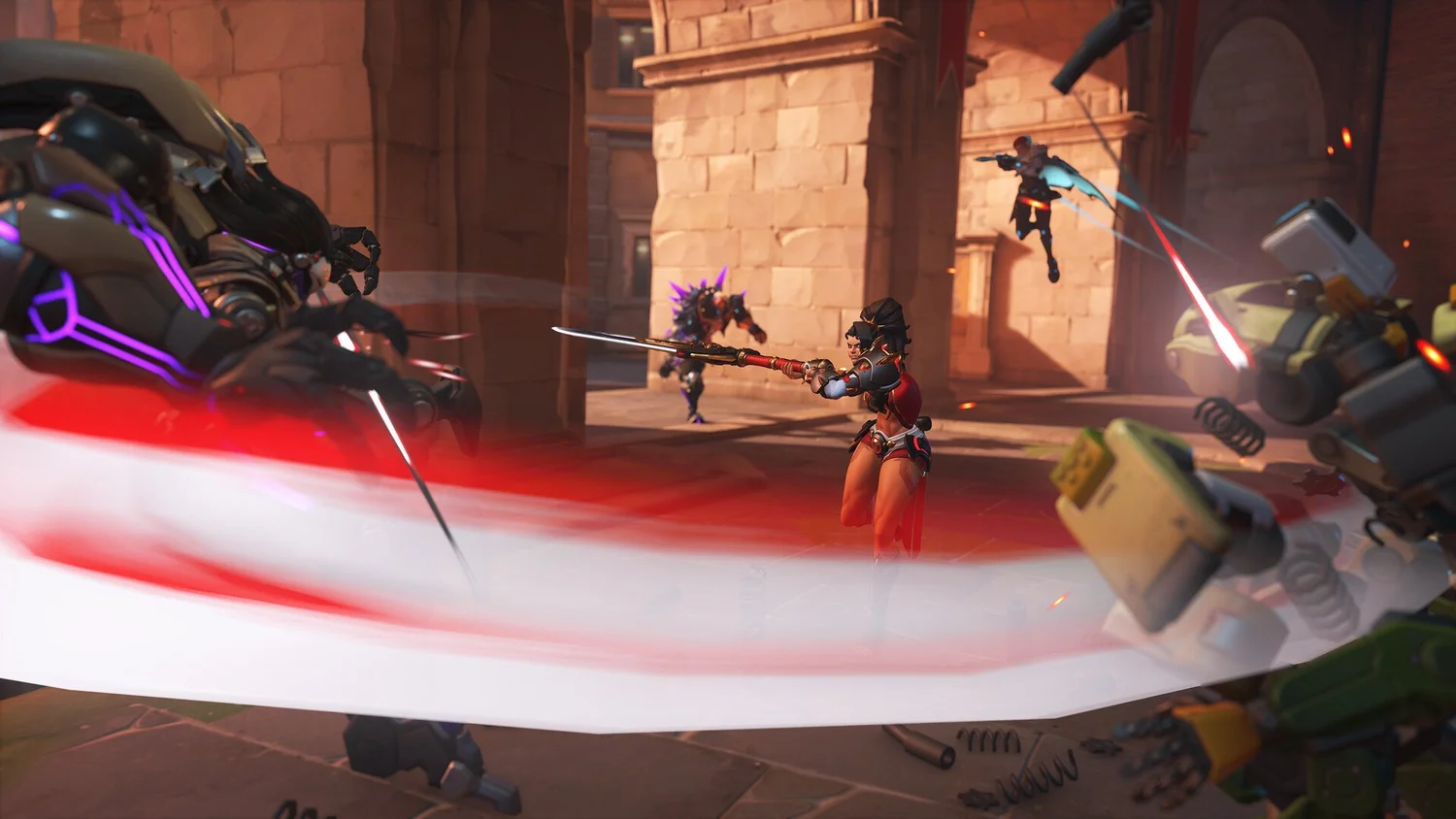
Blizzard released a massive update that reverts Overwatch 2 back to just Overwatch, a move that shifted their direction for the game to a more familiar territory, with five new heroes to spice up the ever-growing roster.
Blizzard didn’t do anything unique here. There’s no special feature that changes the game as they just leaned heavily into what the game is good at, which to me is fun characters and addicting gameplay. Booting up Overwatch now feels like we’re back in the game’s early years. Everything that made the sequel different from the first game is now in the background. Heroes are now free for all players despite the game being free-to-play, and we now have a more interesting narrative for the overall game that comes with this massive seasonal drop plan.
Mizuki, Jetpack Cat, Emre, Anran, and the boss tank lady Domina. These five new heroes join the Overwatch roster in the new season and are a reminder how Blizzard is still capable of making interesting characters that don’t feel like a replacement of something they already have available.
Each of the new additions bring something new to the table. They cover their specific roles relatively well, having personality and a fun playstyle that entices a player to master each one. Jetpack Cat brings the ability to make any other hero a menace in the skies or toss a key opponent off the map, while Domina can hold positions with a shield that only sections of her shield peel off when damaged. Mizuki’s weapon is a glaive that throws blades that damage over time when it connects, helping his healing efficiency.
Even Emre, the more basic one compared to the other four, gives a different shooter-focused approach for those that love to play Soldier 76. From a three-burst gun to a terror in the skies like Pharah, he can be a deadly force when used properly.
The real beauty is how in a casual sense, older heroes still feel effective despite the new additions through recent years, making my return to the game feel not completely alien.
I went towards familiarity in my first few hours of returning, playing my previous staples like Orisa for the Tank role or Zenyatta for healing, all feeling just as effective, especially during a time where everyone is eager to play the new characters. The new maps and objectives were easy to follow and quick matchmaking resulted in me killing three hours in a blink of an eye through the Quick Play game mode.
I was having a blast playing with unknown players again. It felt like I never left as the game hits that balance of playing a role, focusing on the objective, and naturally working on your team despite the lack of proper communication. My time with Overwatch 2026 gave me the impression that Blizzard is still has the chops at being a big player in the team-based hero shooter genre 10 years later.
Overwatch’s return wasn’t intimidating one bit. In fact, it felt inviting as I didn’t feel pressed to play specific heroes. Quick Play does its job well as they are 5-10 minute skirmishes of either 5v5 or the original 6v6 format, where you control if you want a more flexible team composition in 12-player matches, or a more fixed role setup in 10-player matches. Game modes rotate between pushing a robot to a certain point, covering locations for as long as possible, to escorting a payload that, to this day, people still has the tendency to ignore.
Reward systems are now focused on their take on the battle pass system, which is nothing surprising as almost anything multiplayer-related has a form of it for progression and rewarding players for constant play. Loot boxes are still a thing but have different rarities, with a “pity” system that guarantees a legendary skin after how many boxes opened.
We then have the event for season 1, a mode that asks players to choose a side - Will you side with team Talon or Overwatch? No real commitment found here as players can switch sides when they feel like it, but each have their own set of rewards when completing certain objectives daily and weekly. There’s also a meter showing which team has more players joining their cause.
There’s also lore dumps that seem to unlock as the season progresses, giving players context to the new ongoing conflict in the narrative through visual comics, audio logs, and other mediums to tell the game’s overall narrative happening in the background.
The big winners are the original players of the game, those avid players before the sequel launched. That was me, someone who jumped into the sequel one weekend and never booted the game again. It’s a big gap, years of inactivity then coming back again after so long has given me this treasure trove of new characters to slowly learn. I can jump in, play my favorite characters like it’s 2016 again and feel like a big contributor one way or another. The only difference is the new passives you get to unlock in a match that slightly change a Hero’s abilities, a nice touch as you can adapt your Hero based on what’s needed, or how you want to a play a specific character.
There’s also sub-roles now, giving heroes unique passives like how Bruiser Tanks earn movement speed when their health is critical, to DPS Heroes in the Specialist sub-role gaining an increase in reload speeds when contributing to an elimination, something i’m slowly learning to appreciate and capitalize on for certain characters.
It’s a good feeling that the core foundation of the game remains intact despite these new additions, and accessibility remains not very demanding in weaker PC setups. It’s been two weeks since the launch of the new season but so far so good. Ranked is as sweaty as it can get, but it’s to be expected, but I like how there’s enough variety here to have people enjoy the game their way. there’s also no more effort from Blizzard in justifying why the Overwatch community needed a sequel, as that has now left the building.
People and the developers can just move on and work towards loving the game again, and that’s where a 10-year old game should aim for in the end, as it’s positioned itself to return to its glory days. It’s too soon to tell, but at the very least it feels like they are finally on the right path at last.
Carlos Hernandez is the founder and Editor-in-Chief of Too Much Gaming, where he writes about video games, reviews, and industry news. A lifelong gamer, he would do anything to experience Final Fantasy Tactics for the first time again and has a love/hate relationship with games that require hunting for new gear to improve your character.
Dragon Quest VII Reimagined is a slow-burn JRPG, one telling the story of a group of kids who can travel to the past and experience adventures that affect the present. Despite weaving multiple storylines, the late introduction of the class-changing system leaves the game relying heavily on its narrative and characters to keep players engaged. After 30 hours, it’s clear that patience is required before the gameplay fully opens up.
That alone is a tough sell for a remake to what many Dragon Quest fans consider one of the best from the series. We now live in a world where we demand instant gratification, and while I do appreciate the game’s basic nature, I see many falling off because of the game’s pacing.
This isn’t a problem with the game itself, as Dragon Quest VII Reimagined stays true to the original game. It’s slow compared to standard designs in that you’ll probably encounter your first battle 40 minutes in, as the game takes its time setting the stage for your party discovering different islands in the past. When it gets going, combat is the traditional turn-based combat system with no real twist. It’s Clair Obscur: Expedition 33 without the over-the-top flair and parry system. Characters and enemies take turns, you have skills, and occasionally you can do this game’s version of Limit Breaks to get a major advantage in battle. That’s it.
Vocations is the game’s class system that allows a character to get a new set of skills and different bonuses in certain stats. Changing my character’s Vocation is when things start picking up; the problem is it becomes available to my party at the 25th hour. Before Vocation changing, every character was stuck with their starter class, and with me having the tendency to over-level, I maxed them out 5 hours prior, making any Vocation experience completely wasted.
That stung a bit, as it felt like I was punished for going off the main path to fight special monsters and run for extra experience. Even equipment isn’t all that complicated at this point in the game as every character has four equipment slots and two accessory slots, and I was mostly doing fine by making sure I’m loaded with the best stats.
That’s the main hurdle that I encountered while playing Dragon Quest VII, as the first 20 hours is basic JRPG combat, with players going through multiple story arcs that come and go. Each island discovered is truly a new adventure each time, with their own set of characters and issues that need to be addressed by you. You’re a silent protagonist too, so most of the interactions are left with the rest of the party. It’s like another filler episode of your favorite anime, as some can be engaging, while others feel like they’re there to pass time.
When Vocation changing became available, I could quickly see the difference it brought to combat, as it felt like a wake up call to start paying attention. I started thinking about party compositions, setting them up for more advanced Vocations, as mastering specific Vocations unlocked newer ones.
The basic turn-based combat was looking more appealing now, and it did a few hours after too, as it all of a sudden gave me the ability to hold two Vocations at once, effectively doubling the amount of skills a character can hold, opening up this treasure trove of possibilities for me to just go nuts and experiment. I started throwing myself at every roaming enemy because I wanted experience. This is the point i’m at right now, and i’m now having a blast.
Patience is key for those eager to play Dragon Quest VII, something I struggled with past titles, as I wasn’t fond of the first-person perspective, and other titles were of the same slow pace. I’m finally over the hump and i’m now at a point of looking forward to booting the game and picking up where I left off. This is also the point in the game where the main story is finally taking shape.
I know at this point, I have a long way to go, so i’ll check back to see how the game feels 50 hours in. Pacing aside, this is an impressive remake to bring a classic JRPG to modern platforms that has the potential to be a kid’s Final Fantasy VII, but in 2026, it’s a hard sell as kids are steered to other things easily, with attention spans for the average player at an all-time low.
No issues with performance, and I appreciate quality of life features like speeding up combat or instantly beating low level enemies upon contact, showing that the game respects at least some of your time. I see people questioning the new visual doll-like style in Reimagined, but I think it works as it's bright and charming, but most of all it respects Akira Toriyama’s unique art style
Carlos Hernandez is the founder and Editor-in-Chief of Too Much Gaming, where he writes about video games, reviews, and industry news. A lifelong gamer, he would do anything to experience Final Fantasy Tactics for the first time again and has a love/hate relationship with games that require hunting for new gear to improve your character.
Despite Abrams and his team’s Herculean efforts to deliver a massive blockbuster spectacle that could also neatly tie together three trilogies' worth of story and character, The Rise of Skywalker was an abject failure. The movie was panned by fans and critics alike, and performed worse at the box office than Episodes VII or VIII. To quote the director’s prophetic interview again: “Sticking this landing is one of the harder jobs that I could have taken.”