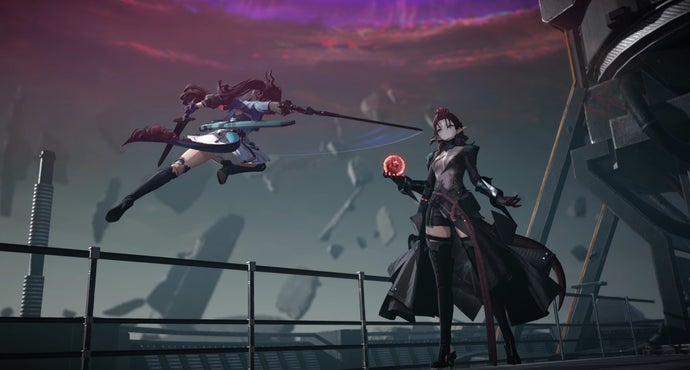
Arknights: Endfield developer Gryphline has a good reason to celebrate, as the upcoming free-to-play action RPG has achieved yet another milestone. The developer announced today that Endfield already has over 35 million pre-registrations.
The Game Awards 2025 ceremony brought us yet more gacha game news, this time a big announcement for Arknights: Endfield. The free-to-play game set in the the universe of Arknights has been in various forms of closed tests for a while, but it finally has a release date.
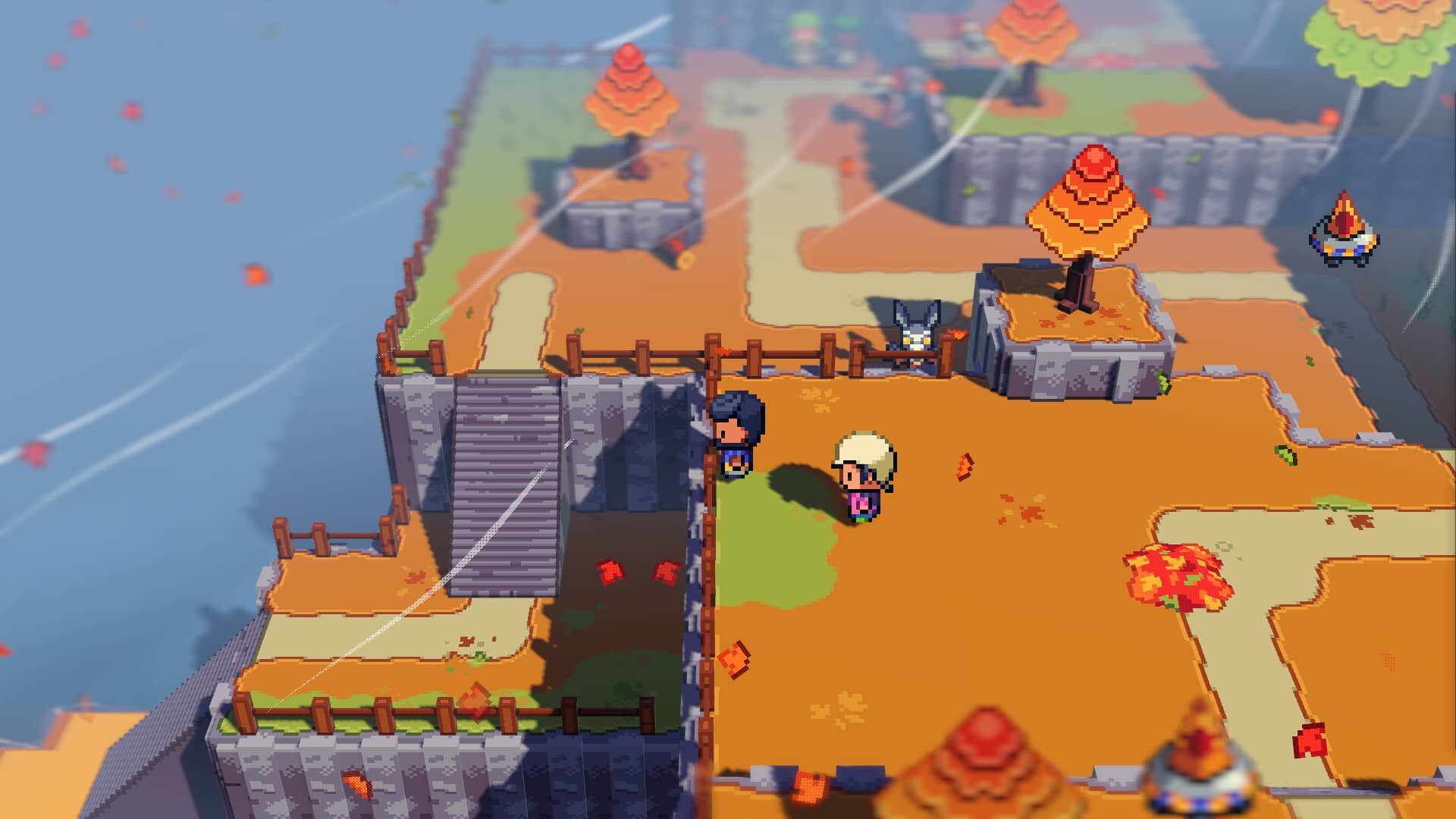
While the big-budget leaks continue to fall flat, Epic is handing out a genuine gem for anyone who grew up with monster-collection games but wants something with more mechanical grit. Today, December 27, you can claim Cassette Beasts for free. If you happen to miss the 24-hour Epic window, don’t worry because there is a second chance to snag it at a deep discount. The Steam Store currently has the game at 60% off through January 5, but the even bigger deal is on G2A (affiliate link) where you can pick it up for just $1.55, which is a massive 92% discount compared to its standard price. Whether you want it for free right now or for a couple of coins later, it is an essential addition to your JRPG library.
Cassette Beast – Cooperation game
Transforming the Genre Formula
The central hook here is that you don’t just “summon” monsters; you record them onto tapes and then play them back to transform into those creatures yourself. It creates a weirdly personal connection to the roster because your character is the one doing the fighting. The game also features a massive Fusion System that allows you to combine any two monster forms into a unique, fully-animated hybrid. This isn’t just a cosmetic change either—there are thousands of possible fusions that impact your stats and movesets. It encourages you to experiment with your human companions, as the strength of your relationship directly influences how powerful your fused forms become during combat.
Cassette Beast – Gameplay
Exploration and Elemental Chemistry
Unlike the linear paths found in typical monster catchers, the island of New Wirral is a true open world. You’ll need specific monster abilities to navigate, such as gliding through the air, swimming across lakes, or using magnetism to solve environmental puzzles. The combat itself is built on a chemistry-based elemental system that goes beyond simple “type advantages.” For example, hitting a plastic-type monster with fire will melt it, changing its attributes and creating new tactical problems to solve. It is a smart, resourceful system that rewards players who actually read the status effects instead of just spamming their strongest attack.
Cassette Beast Free on Epic
Why It’s Worth the Download
Cassette Beasts is a 2023 release that usually retails for $19.99, and it has maintained a high reputation for its incredible synth-pop soundtrack and its willingness to let the player break the game with clever builds. You have until December 28 at 11:00 AM ET to claim it for free on Epic. Whether you are in it for the 80s aesthetic or the deep tactical combat, it is one of the most refreshed takes on the genre we’ve seen in years.
Nearly seven years after the release of the original Code Vein, Bandai Namco Studios has returned to the series with Code Vein 2. Designed as an evolution of the anime-styled, Souls-like-inspired combat and exploration that defined its predecessor, Code Vein 2 builds upon the foundations of the original while pushing the formula forward in meaningful ways. From expanded combat systems to reworked world design, the sequel aims to stand as both a worthy continuation of a cult favourite and a substantial action-RPG experience in its own right.
Be sure to keep this Code Vein 2 guide bookmarked to stay up to date with everything from the release date, story so far, and gameplay details, through to trailers, pre-order bonuses, special editions, and more.
Code Vein II Release Date
Code Vein 2 is officially scheduled for release on PC via Steam, PlayStation 5, and Xbox Series X/S on January 29, 2026. At present, the game has not been confirmed for PlayStation 4 or Xbox One. Similarly, while there has been no official announcement regarding a Nintendo Switch or Switch 2 release, future platform expansions remain a possibility.
Code Vein II Pre-Order Bonuses
Players who choose to pre-order Code Vein 2 can access a selection of bonus items, including the following:
Stylized Forma Set
Forma Face Paint: A cosmetic item that applies a forma design to the corner of your eyes.
Twin Fangs of the Lone Wolf (Weapon): Twin blades engraved with a special forma, delivering a powerful lunging slice attack inspired by a wolf’s ferocity.
Additionally, those who pre-order the Deluxe or Ultimate Editions receive early access to the game up to 72 hours ahead of the standard launch.
Code Vein II Special Editions
In addition to the Standard Edition, Code Vein 2 is available in Deluxe and Ultimate Editions. Each version includes a range of digital bonuses aimed at players looking for additional content beyond the base game.
Deluxe Edition
Code Vein II base game
Custom Outfit Pack: Contains three costume sets and one weapon
Expansion DLC: Mask of Idris (available by January 2027)
Ultimate Edition
Code Vein II base game
Custom Outfit Pack: Contains three costume sets and one weapon
Expansion DLC: Mask of Idris (available by January 2027)
Code Vein Character Costume Set: Six costumes inspired by characters from the original Code Vein
Code Vein II Digital Mini Artbook & Soundtrack
Code Vein II – The Story So Far
The original Code Vein is set within the quarantined ruins of Vein, a post-apocalyptic zone sealed off by a supernatural barrier known as the Red Mist. Far more than simple fog, the Red Mist protects the inhabitants within from the dangers beyond. These inhabitants, known as Revenants, are resurrected remnants of humanity—immortal soldiers who must consume blood, or Blood Beads, to retain their sanity. Without it, they risk devolving into feral creatures known as the Lost.
Players take on the role of a uniquely gifted Revenant capable of cleansing corruption and exploring memories. As Blood Beads begin to disappear, the survival of the Revenants is thrown into jeopardy. The situation worsens with the revelation of Cruz Silva, a Revenant Queen whose failed attempt to save humanity resulted in catastrophic consequences.
To prevent her resurrection, Cruz Silva’s immortal form is split into powerful relics that must be recovered and contained. In the canon ‘True Ending’, companion Io sacrifices herself by transforming into an immense Amber Blood Bead tree, ensuring a stable supply of Blood Beads for the future. With the Queen’s relics stabilised within them, the protagonist ultimately ventures beyond the Red Mist into the unknown.
Code Vein II Gameplay – What’s New?
Code Vein 2 retains the core Souls-like combat and exploration of the original while introducing several notable changes. New weapon types, such as Dual Swords and Rune Blades, expand combat variety, while the new Assimilation system allows players to directly command partner abilities, offering greater tactical control during battles.
World design has also seen a significant overhaul. Rather than relying heavily on linear, corridor-based environments, Code Vein 2 features larger open areas and a broader selection of distinct dungeons. A time-shifting mechanic allows players to travel 100 years into the past, altering environments and unlocking new routes in the present, adding a puzzle-oriented layer to exploration.
Further enhancements include an expanded character creator and a reworked progression system that supports more detailed build customisation. One of the sequel’s most significant changes is the removal of multiplayer co-op, placing a stronger emphasis on a refined single-player experience with improved balance, pacing, and AI partner behaviour.
Where Can I Watch The Latest Trailer?
The most recent Code Vein 2 trailer can be viewed above. With a strong focus on character presentation, it highlights Lyle McLeish, also known as ‘the solitary swordsman’. A stoic yet principled Revenant, Lyle showcases precise sabre techniques alongside a powerful array of spells. The trailer also features extended combat footage, offering a clear look at how Code Vein 2’s systems and visual style come together in action.
Bandai Namco is readying its next remaster in the beloved Tales of series and it is Tales of Berseria Remastered. The Japanese company has revealed the target framerate and resolution for the game and on the Nintendo Switch it is targeting 30fps, but that can change depending on what is happening on screen. The PlayStation… Read More »Tales of Berseria Remastered on Nintendo Switch targets 30fps
Final Fantasy VII: Remake Intergrade is one of my favourite PlayStation 5 games, a perfect reintroduction to the heart and soul of all things PlayStation and Final Fantasy. Much like how the original Final Fantasy VII gave the original PlayStation its identity, I feel this Director's Cut expanded release of FFVII Remake reminded me of all the intangibles which collectively come together to define the style and culture of PlayStation. Stepping into a fully realised Midgar was a surreal and enchanting experience for me, and more than the dazzling combat system, it was the intimate moments shared between characters which helped me lose myself in the setting. Returning to Midgar, along with the heartfelt cast, rolled together feelings of nostalgia and wonder into one beautiful sensation of escapism.
The game is now making a comeback of sorts, with a brand-new port for Xbox platforms and Switch 2. No matter the era,Final Fantasy VII is one of those games that's almost too easy to place into the "overrated" camp, and yet even its biggest naysayers are closeted fans.
As the premier RPG showcase for the original PlayStation, I've had an on-and-off relationship with the game, having spent more time with the follow-up, Final Fantasy VIII. My first time with Final Fantasy VII involved a one-sitting playthrough in the absence of a memory card (occasionally there would be shortages of those darn things!), where I made it all the way to Disc 3 (remember disc swapping mid-adventure?) before I finally hit the Game Over screen. I was pretty pleased with myself, but in hindsight, I realise just how linear and cinematic this RPG really was, and how dead-easy it was for me to be make it as far as I did without saving progress.
Final Fantasy VII Classic. Source: Steam.
I eventually did play it again on the rather disappointing PSOne Classic mini-console, and then on Nintendo Switch, which is perhaps the best possible way to enjoy the classic at this point. A lot of things about the game obviously don't hold up (random battles are irritating), but the thing I enjoy the most, time and time again, is the time I get to spend in Midgar. This underground urban dystopia serves as the main hometown, so to speak, a fascinating fusion of sci-fi, fantasy, and steampunk, featuring both Western and Oriental cultural influences. Midgar is a melting pot of culture and inspiration, and each time I have replayed the original PlayStation game, it's only just to immerse myself in the early areas of the adventure once more.
Then there are the characters, and honestly, it feels to me that every RPG since 1998 has tried their hardest to be just like Final Fantasy VII, particularly in the effort to replicate the same chemistry and synergy of the cast. Since 1998, there have been so many JRPGs attempting the same magic; the cast of Final Fantasy VII, once known for their unique personalities, consequently created these now laughable tropes. The brooding amnesiac has been done to death, but when Cloud did the then-novel character gimmick, it was cool and edgy. To this day, no one does it better. Yes, Cloud has the mood swings of a teenager, but he also has a sense of humour with his witty comebacks. His personality certainly has more range in the remake, with lines like "I'm sorry about your ass."
I was initially hesitant about Final Fantasy VII Remake; for one thing, I didn't quite like the idea of it being episodic, with the uncertainty surrounding whether they would even be able to complete the project. The game first landed on PS4, as part of the apex lineup of swansong hits for the console. It came to PS5 as Final Fantasy VII Remake Intergrade, and now has landed on Xbox and Switch 2. At the time of its PS5 release, I hesitated, yet something about it called to me, as I desperately needed an epic JRPG experience for my new console, especially sinceScarlet Nexus was not quite what I hoped it would be.
Source: Press Kit.
One of the biggest complaints from critics was how VII Remake "never left Midgar," and then it hit me: every time I have replayed the original game, it was simply to relive Midgar all over again. I actually don't really want to leave Midgar; I'd rather perpetually live in a hyper-realistic recreation of it for as long as possible. Even now, my save progress is at the point of no return in Chapter 14, because once the party infiltrates Shinra headquarters, it's a rollercoaster into the endgame sequence. To be honest, I'm still not ready for it, as I'd much rather just roam the Sector slums. It's been a blast to explore every nook and cranny and meet all sorts of interesting characters.
The slums of Midgar are downtrodden and rustic, and yet they brim with so much life and personality. It's a multicultural hub in the truest sense, a dystopian future setting most video games struggle to create. Not everyone is friendly here, but even with so much pollution and rampant corruption, there are moments of quiet beauty and genuine kindness from its citizens. It needs to be experienced to be believed, and the level of detail present provides an unreal level of intimate immersion.
Then there is the cast, whom I've gotten to know over the years via the main game and various spin-off games and media, including full-fledged motion pictures. I don't claim to be the biggestFinal Fantasy VIIfan, nor was I ever a diehard fan of the cast, but over a period of two decades, I can't help but have a nostalgic sentiment towards it all. They're a bit like old friends I rarely keep in touch with, but getting in touch with them takes me back to a moment in time. I have lived through the anticipation, hype, magazine covers, stellar reviews, and everything else since. It's hard for Final Fantasy VII not to hold some meaning to anyone who grew up during that magical time.
Source: Press Kit.
At this point, the death of Aerith is the worst-kept spoiler in pop culture. Everyone knows about it, even those who still don't plan to play Final Fantasy VII any time soon. In hindsight, Aerith's character development was a little rushed in the original game, but in VII Remake, the depth of her development makes it so easy to genuinely care about her, and even sadder knowing what inevitably lies ahead for her (unless.. well, we'll see). One of my favourite moments in the original was the brief duration spent in Aerith's house, from its warm, cosy interior to the beautiful flowerbeds. In VII Remake, this humble setting is brought to life in rich detail, everything from creaky staircases to lush sun-kissed flowerbeds. It's an area where I can't help but stop to take it all in, an unexpected respite for mindfulness.
This is exactly what VII Remakedoes so well: the way it goes from moment to moment, allowing both its cast and setting to grow with the narrative pacing. The most profound moments are quiet yet interactive segments of intimate vulnerability, such as when Cloud and Aerith simply walk through the slums, talking just to overcome the awkwardness of being strangers to each other, or when Cloud and company visit Jessie's family home, as the cast walk through her childhood neighbourhood, complete with a park and a swing set.
These are the moments, so intimate and authentic, which defined my experience with VII Remake Intergrade, even more than the excellent battle flow and the sheer depth of its intricate systems. These quiet yet profound moments of immersion are what I hope to see more of in video games, daring moments rarely seen in gaming since the original Shenmue on Dreamcast.
Source: Press Kit.
I love a lot of things about Final Fantasy VII: Remake Intergrade, but the lasting moments to me are when things slow down to a mindful halt, where the game world simply allows itself to be, and allows me to be a part of it, and gives me the agency in allowing the cast to bravely be their vulnerable selves.
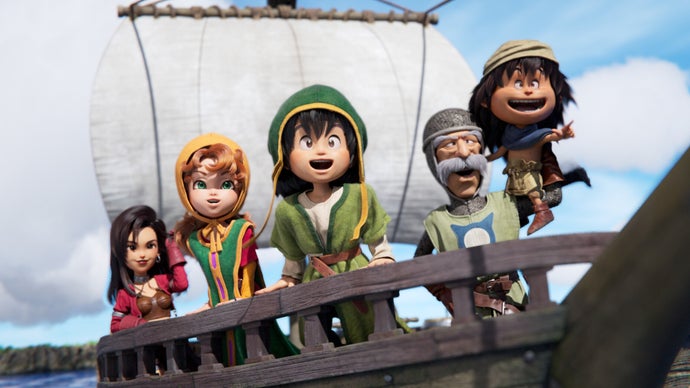
Grab your dragons and don't forget those quests, as a Dragon Quest VII Reimagined demo is set to pop up on Steam this week. It'll offer a taster of the revamped RPG ahead of full release next month, and any progress you make in the demo'll transfer right over, so you don't have to worry about sprinting through early game sections again.
The legendary Yuji Hori may have let the cat out of the bag by revealing that he is seemingly involved in the rumoured Chrono Trigger remake for current generation consoles. Asked about the celebrations happening around the anniversary of the series he was asked if there were any game developments happening. In his reply he… Read More »Yuji Hori appears flustered and says he can’t talk about a Chrono Trigger remake
With Octopath Traveler I and II carving out a reputation as opulent strategy RPGs with style to spare, it’s also true that this success leaves Octopath Traveler 0 carrying a substantial weight of expectation. A deeply evolved expansion of mobile entry Champions of the Continent, Octopath Traveler 0 is shaping up to be every bit the essential tactical JRPG that genre fans have hungered for all year.
Be sure to keep this Octopath Traveler 0 guide bookmarked to stay across everything, from the release date, story so far and gameplay details, through to the latest trailer and PC specifications.
Octopath Traveler 0 Release Date
Octopath Traveler 0 has been confirmed for release on PC via Steam, PlayStation 4, PlayStation 5, Xbox Series X/S, Nintendo Switch and Nintendo Switch 2 on December 4, 2025. A last-gen Xbox One release remains unconfirmed.
Octopath Traveler 0 Gameplay
While Octopath Traveler 0 draws inspiration from mobile spin-off Champions of the Continent, expanding its story with new characters, scenes and dialogue, plus full voice acting—it also confidently forges its own gameplay identity, revisiting the series’ defining mechanics with the polish and attention to detail long associated with the franchise.
Starting with the iconic HD-2D art style, popularised by the first Octopath Traveler, this new entry raises the bar yet again with increased texture resolution, upgraded lighting and reworked particle effects. Simply put, HD-2D has never looked quite this good.
Beyond presentation, Octopath Traveler 0 rethinks the protagonist setup entirely. Rather than selecting from eight predefined travellers, players craft a fully customisable main hero who can explore the world and recruit 30+ travellers, deploying up to eight in any one battle. So yeah, calling this a change in scope would be underselling it by quite some margin.
That shift extends to narrative structure, too. Instead of eight loosely connected personal tales – which could feel disjointed at times – Octopath Traveler 0 unifies its cast under an overarching story. Here, the player’s hero seeks revenge for the destruction of their hometown, Wishvale, while working to rebuild it into something that echoes its former glory.
Town building itself becomes a key pillar of progression. New to the series, these systems capture some of that Stardew Valley magic by letting players gradually restore Wishvale by completing story events and other turning points. The recruited travellers’ personal arcs now feed directly into this larger tale of revenge and restoration, rather than existing orbitally as they often did before.
In combat, Octopath Traveler 0 preserves the series’ essence while adding real mechanical muscle. The familiar Break and Boost fundamentals return, but now sit alongside a brand-new Action Skill system, allowing characters to learn certain skills and share a selection of them with allies. Add to that new Ultimate Techniques for every character, plus special Ultimates that unlock as Wishvale grows, and it becomes obvious that the series’ combat is evolving with intent, not imitation, refreshing the formula without losing the spark.
Octopath Traveler 0 – The Story So Far
The original Octopath Traveler chronicled the journeys of eight heroes across Orsterra, each confronting personal trials while ultimately uniting to prevent the rise of the dark god Galdera. Octopath Traveler II shifted to the industrial continent of Solisita with a new cast, battling the Moonshade Order (an unhinged cult chasing the nothing-god Videm), telling a story deliberately detached from the first. Built with similar motifs and the same eight-traveller framing, the sequel leaned into anthology, not continuity.
As a prequel, Octopath Traveler 0 predictably shares more DNA with the original. Set in Orsterra, it works to define the foundations of the first game and may even include familiar faces whose paths could diverge wildly from established canon.
PC Specifications
Though Octopath Traveler 0 proudly carries the stunning 2D-HD visual signature seen across Square-Enix’s HD-2D catalogue, it runs remarkably well across a huge range of PC configs. Even rigs approaching a decade old meet its notably generous minimum specification, giving older hardware more than a shot at a satisfyingly playable experience. The confirmed minimum and recommended PC specs appear below.
The latest Octopath Traveler 0 trailer is available to watch now, and you can catch it above. Acting as a comprehensive gameplay showcase, it offers extended looks at the returning Break and Boost system, eight-character battles, world map traversal and much more besides. It also brings its retina-searing 2D-HD presentation roaring back into view again. Which is nice.
Although its popularity doesn't reach the heights of other established series like Final Fantasy and Dragon Quest, the Octopath Traveler franchise is proving to be rather seminal for the JRPG genre as a whole, mainly thanks to its HD-2D visual style which has been employed to great success in other titles, including the tactical role-playing game Triangle Strategy, the upcoming action role-playing game The Adventures of Elliot: The Millennium Tales, and remakes of classic games such as the first three entries in the Dragon Quest series and in Star Ocean: The Second Story R, remake of the second entry in […]
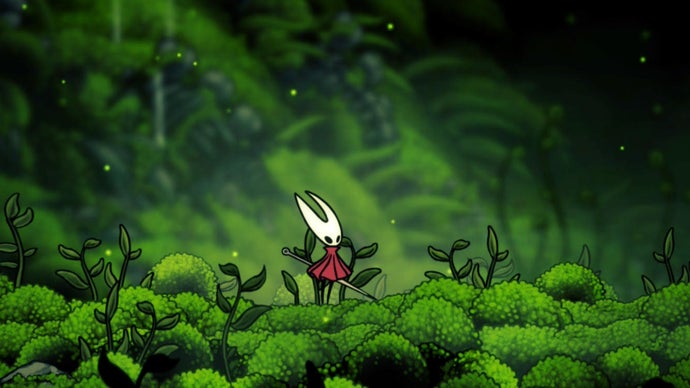
Hollow Knight: Silksong developer Team Cherry has revealed it won't be making the trip to The Game Awards next month, as the team believes Clair Obscur: Expedition 33 will sweep the Game of the Year award.
Get ready for a new adventure, Octopath Traveler fans. Octopath Traveler 0, the third installment in the JRPG franchise, has arrived with the confidence only a series this established can have, and it's welcoming back players who’ve been hungry for another epic HD-2D journey.
We're travelling back to the continent of Orsterra this time around, but the franchise doesn’t just return to its old ways and slap a new number on it. Octopath Traveler 0 is full of new features, companions, and collectibles to find, making for a gameplay experience that truly pushes the series in a new and exciting direction.
In 0, you create your very own character instead of taking on the role of one of eight premade characters—a franchise first. Customization options are limited, but you can select your hair, voice, victory pose, class, and a few items to start your journey with. You play as a resident of the small village of Wishvale, which is tragically burned to the ground. That’s when the real story begins, and it’s one of vengeance and rebirth as you hunt for the villains responsible for the destruction of your hometown.
You get to choose one of eight classes. Screenshot by Destructoid
Set prior to the events of the original Octopath, the game is split into two main narratives: one to get revenge, and one to rebuild Wishvale. The first evolves into something much larger than you originally imagined, circling themes of greed, self-sacrifice, and companionship as you take on the role of the Ringbearer Chosen. You’re bestowed a powerful ring from Aelferic, one of Orsterra’s many gods, and you must hunt down and seal away other rings that have fallen into the wrong hands. Though the story’s pacing can be odd at times and some key players are introduced without much buildup later in the game, there’s plenty of twists and turns, and I’d be lying if I said I didn’t audibly gasp at certain reveals or shocking moments.
The narrative line to rebuild Wishvale involves gathering residents, erecting homes and shops, and decorating the town. It’s not a free-for-all, though; you have to progress through the questline to unlock various structures, decorations, and building areas. Certain residents won’t appear until later on in the questline, but their return transforms what was scorched earth and piles of rubble into a bustling town full of life. This slow build makes the storyline successful; it really does feel as though you’re rebuilding the town one house at a time. Your version of Wishvale evolves in front of your eyes, and it’s a heartwarming story of perseverance that you play an active role in.
You can decorate your town to make it your own. Screenshot by DestructoidRebuilding Wishvale makes for a wholesome and satisfying experience. Screenshot by Destructoid
Octopath games are known for their companions, but in 0, the teammates just don’t seem to end. With over 20 companions, you’re not just assembling a team—you’re building a small army. Just when I thought I was done enlisting characters to my cause, another one would pop up on the map, and by the 15th, I started to feel a little fatigued from my recruiting efforts. There are about two to three companions for each archetype, with a few new classes thrown into the mix (though these new classes are more like a combination of older ones). You don’t have to recruit all of the companions—or any of them, really. But if you’re like me and want to experience everything the game has to offer, you’ll be parading around Orsterra with what feels like, at times, a literal parade of people.
With so many teammates, you’re sure to have an A and B team, and likely even a C team. On one hand, this leads to experimentation with tons of different playstyles and party compositions. On the other hand, keeping up with equipment and distributing attribute nuts becomes a hassle. There’s also always going to be a character who’s under-leveled and ends up sitting in your reserve as your A team sweeps up. The Training Ground, a structure at Wishvale that trains up allies while you battle from afar, helps alleviate this issue slightly, but it didn’t prevent the constant need to juggle your companions if you want to make use of all of them.
Unlike other Octopath Traveler titles, very little of the main story involves your teammates outside of the core cast. Sure, they’re there to accompany you on your own travels. But most don’t have their own questlines, or the ones they do have when you first recruit them are very short. It doesn’t defeat the purpose of an Octopath game, but it deviates from the norm and could frustrate franchise fans who enjoyed the emphasis on companions. At times, it feels as though the only part of the game that retains the “Octo” is the fact you fight with a maximum of eight party members at a time.
For the combat experience, you’ve got the same turn-based system, backline and frontline mechanics, weak points, and stats that influence your power or speed in battle. 0 spices up the formula by introducing a new weapon type and allowing you to mix and match attacks with the use of Masteries, equippable skills you can find around the world or by spending JP to purchase them from your teammates. The game also adds Ultimate Techniques, powerful attacks that generate slowly the longer a character spends in battle. If you enjoy the gameplay loop from the previous games, you’re sure to appreciate it in 0 since the core mechanics have remained the same outside of these few new additions.
Alexia's Ultimate Technique, Ancient Magic. Image via Square Enix
What’s hard to appreciate, however, is the lack of difficulty, especially in the earlier stages of the game. I had battles where one character would singlehandedly mollywhop an entire group of monsters with just one attack while my other companions looked on. Roads connecting the first few towns where a third of the story takes place all housed extremely low-level beasts, and I found myself fast-traveling more often than not to avoid the repetitive and often annoying random encounters. But when I hit the later stages of the game? Oh, how the turn tables. Suddenly, I was the one receiving a beating, as all my teammates were one-shot. Perhaps it was my inability to properly distribute stronger armor across my company of companions, or perhaps it’s just an issue with the game's balancing. Either way, it was a jarring transition from earlier in the game, and suddenly I was grinding encounters and spending all my hard-earned Leaves at local shops to outfit my teammates in the best gear—gear that I had, up until that point, almost completely ignored.
What 0 loses in the series’ companion-first narrative focus, it gains in customization options. From building your team to altering your character’s look, 0 gives you the reins and lets you tailor your experience to your own desires. Now, don’t get me wrong, the options aren’t endless. I could spend hours decorating my town, meticulously landscaping and readjusting buildings to get them to look just right. But with each town level, you’re capped to a specific number of decoration items and structures you can have at one time, meaning you can’t just decorate to your heart’s desire. Limiting the number or types of buildings you can have? Fine, I get that. We have to play along with the story, after all. Preventing me from planting the flower garden of my dreams? C’mon, devs! While it encourages progressing through the game’s storyline and completing challenges to raise your town’s level and up the number of decorations, it’s still a head-scratching limitation.
Town-decorating isn’t the only place where the developers pull back on the leash. On multiple occasions, the game gives you dialogue options in a quest. An NPC will ask you to assist them in fixing their problem, and you’ll have the option of telling them to kick rocks. But don’t be fooled—you don’t actually have a choice. If you reject them, you get stuck in a dialogue loop until you agree to help. Why game developers waste resources on adding this illusion of choice is baffling. It adds nothing to my experience if I chooseto help someone when I know I’m going to have to if I want to progress the storyline. And if I reject them, skipping through the same lines of dialogue to get back to the original choice is no fun either.
Despite all this, I found myself hooked on this game for the several weeks I spent with it. With the first Octopath Traveler, the experience dragged on. But with 0, there was always something to do. Want to take a break from the story? Go hunt for some lumber to build your next house. Done tweaking your town to your liking? Stop by a neighboring town to pick up your next companion. You can cook, recruit NPCs to live at Wishvale, hunt mega beasts to fill the Monster Arena, or search for collectibles to fill your museum. There's plenty to do, and I never found myself bored while exploring Orsterra, even when my time with the game ticked past the 60-hour mark.
Your companions and fellow Wishvale residents are there to see your journey to the very end. Screenshot by Destructoid
Whatever you choose to do, it's done against an incredibly gorgeous backdrop. If you’ve played an Octopath Traveler game, you’re more than familiar with how far Square Enix has pushed the boundaries of what it can do with pixelated, 2D graphics. The scenery is truly breathtaking, and there were plenty of moments where I stopped just to take in the visuals. How the development team gets that water looking so crispy or those snowflakes so beautiful is an enigma to us all, but boy, is it striking.
All in all, Octopath Traveler 0 is a delightful experience that offers something new to the franchise. Though it deviates from the franchise’s narrative formula, it’s worth picking up if you want a solid, turn-based JRPG experience. And if you’re already a fan of the series? Start packing your bags, friend, we’re heading back to Orsterra.
The complicated world of intellectual property ownership is one that has fascinated me for years. Who owns an IP, as well as who used to own it is oddly compelling to me.
The implementation of so much innovation rarely goes as well as it does in Final Fantasy IV. In every area, Cecil’s fantastical road trip to the moon innovates and improves on the mechanics and writing that Final Fantasy III set out to do. For the first time, we see Final Fantasy begin its inexorable crawl towards action gameplay by implementing the ATB (Active Time Battle) system. The extra storage afforded by the Super Famicom allowed for a story and characters deeper than we had previously seen in the series. All of this culminated in the incredible adventure that finally redeemed the Dark Knight and sent Final Fantasy into space.
Major spoilers ahead for Final Fantasy IV.
An Epic Tale
Final Fantasy IV’s story is in stark contrast to the tale of the four nameless Warriors of Light seen in the previous game, even though a surprising number of elements have remained the same. We start our story as Dark Knight Cecil, who is in service to the King of Baron and tasked with bringing the mad King all of the world's crystals of light. The crystals are currently owned by each region's ruling group, and Cecil comes to realize that his task would involve robbing these mostly defenseless people. This task leads him out of Baron and through a cave to the small town of Mist.
I want to highlight our main party quickly, as I think that they are the strongest part of this game. They help tie the narrative together and give me a better reason to care about the fate of this world.
Cecil is our main character; overcoming his manipulation at the hands of the Baron and becoming the warrior of light is his heroic trait throughout the story. Seeing his unwavering dedication to his mission, while watching Kain continue to serve Golbez, makes him an outstanding main character that is easy to grow attached to.
Ah the Mist Dragon of Mist Cave on my way to Mist Village. Source: Author.
Kain is the foil to Cecil; his betrayals lead us to believe that the manipulation Golbez achieved while Kain was in the Dragoons and Cecil commanded the Red Wings was so absolute that Kain would give up his best friends for the mad sorcerer. Out of all of the comings and goings, I really only appreciated how they handled Kain's. Also, jumping is the best move in Final Fantasy, and I know it’s not actually stronger than other moves, but the big number makes me feel really good.
Rosa is Cecil's main love interest, characterized by her loyalty to Cecil, never straying far from his side. She also never gives up on Kain, making the friendship between the three of them shine amongst all of the other characters. Rydia is the girl that Cecil finds after destroying all of Mist. I kind of wish that there were more of a father-daughter relationship between her and Cecil; however, I also really like that she gets to find her spiritual plane and have the independence to learn her craft on her own.
Battling With Time
Coming in pretty hot off Final Fantasy III, the ATB bar caused me immediate distress. Even though I knew that wait mode was enabled, I still felt the pressure of that little bar pleading with me to navigate the actions menu as fast as possible. This isn’t so bad after a few battles when you have only Kain and Cecil to worry about, but seeing a wizard's whole spell book caused me to concede to the clock as I would decide which spell to use.
Bone Dragon. Source: Author.
After beating the game, I admit that I really enjoyed the ATB system. It’s no Chrono Trigger, but unfair comparisons aside, it helps make battle much more engaging. I hadn’t realized, but from the NES trilogy, I had developed a habit of taking a drink or throwing a few chips in my mouth as soon as a battle started. That is NOT something that you can do in this game. Well, you can with the wait mode; it’s hard to explain, but that little meter demands your attention even if it does wait for you. After 20 hours, I still could never convince myself that the enemies would actually wait in wait mode.
Another growing pain that I faced was just having to pay attention to both the menu bar and the action happening above. Very often, an enemy would attack at the exact moment that one of your character's ATB meters filled. My attention was drawn to the menu, causing me to miss the damage number shown after the enemy took a swing at a party member. There were so many times that I would choose to heal a party member only to find that a different party member had just lost half their life, chunked away by an enemy attack. Mastering the ability to watch these numbers is really thrilling. I used to play healer in Final Fantasy XIV for exactly the same rush of managing multiple health bars and timing them with your own cooldowns.
I think many of the damage dealers also function in such interesting ways. Queuing up damage feels so good as you are inputting new moves while watching Kain come down from a Jump that you sent him on a few seconds before, then all the action stops as Rydia calls in an epic Summon. Removing the turn-based action and allowing the characters' actions to be just slightly delayed brings us a bit closer to actually seeing a live battle happening in the main window.
Cecil finds out too late that the price of his loyalty to the King was to genocide the summoners living in the town of Mist. He then learns that the King was only a puppet to a dark sorcerer named Golbez, who wants the crystals so he can activate the Tower of Babel and reach the Moon.
I QUIT! Source: Author.
My only complaint with the story is that the pacing is absolutely atrocious. Every single dungeon in the first half of the game will swap party members and tell all of their stories in fairly compact chunks that I wish were expanded throughout the journey. Many of the characters are actually put on bed rest after the overworld section, as they don’t have any story left to explore. The side quest format of Final Fantasy III is used to tell these characters' tales when they easily could have been woven into the main plot and explored over many hours instead of only one or two.
I thought that I really disliked the ATB system in the first hours of Final Fantasy IV because of the overload of looking through the enormous spell libraries of Tellah, Palom, Porom, and Rosa. After finishing the game, I know now that my problem was not with the ATB system, but the storytelling method in which characters are so frequently added and removed from your party. Perhaps fans of this game think that this type of gameplay variety enhances the experience. I found that it caused combat encounters to feel slightly rushed, as you fumble through spell selections to cast something from a list that you only received about 30 minutes prior, which won't be used again after that specific cave.
Notably, this section contains Cecil’s redemption, in which his class is changed from Dark Knight to Paladin. Veterans of the series up to this point will be familiar with the Dark Knight twist, which most Final Fantasy games rely on; the classic Star Wars reveal, where the dark knight is revealed to be truly good at their core. The Paladin transformation, however, is wholly unique to Final Fantasy, and for the first time, we see a true departure from the “Dark Knight is Darth Vader” plots that we’ve seen before. Well, at least for now, that is; more on that when we discuss the ending.
The child of light. Source: Author.
It is soon revealed that Rosa has been captured by Golbez, who demands the final crystal as the price for setting her free. Cecil hands it over without any other plan, and the group makes their escape from what was definitely a trap to kill all of them. Their destination is quickly revealed: Apparently, there is a whole other land that lies beneath Earth's surface, and they must go there to stop Golbez from taking the four crystals of darkness.
This underworld segment puts the gang on a bit of a losing streak. They are, time and time again, unable to stop Golbez from taking all of the crystals. I had really started to feel bad for the party, and even worse, almost all of their friends had to sacrifice themselves to effect the narrowest of escapes. Towards the end of this act, Kain even comments on how insane it is that people keep giving their lives without thinking about another way first. In the wake of losing Yang, Cid, and Tellah, it’s becoming too much.
So let’s talk about Tellah. He is, without a doubt, my favorite character, with only Kain as a close second. Tellah’s daughter Ana runs away with Prince Edward early on in the game and is consequently blown to smithereens by the Red Wings during a bombing raid. Tellah then tracks down Edward and beats him black and blue while calling him a “spoony bard” until they are forced apart. He then swears to learn the most powerful spell in Final Fantasy and kill Golbez all by himself.
There is a section where he learns Meteor and yells, “I am doom itself!” and runs out of the room to go find Golbez. The man was crazy. He gets his encounter with Golbez, but it doesn’t go well, as ultimate magic in the Final Fantasy universe drains your life force if you aren’t strong enough to use it. He fails to kill his mark and loses his life in the process.
Oh Tellah, you legend. Source: Author.
Throughout Final Fantasy IV, you have to fight the four elemental lords much like you do in Final Fantasy I. These fights are largely unremarkable except for Rubicante. In the underworld, you team up with a young Ninja named Edge, whose parents have been turned into monstrosities by Doctor Lugae. They are being held by Rubicante in the Tower of Babel. In a heartbreaking scene, you watch Edge's parents kill themselves to prevent harming their son, then you must face Rubicante.
This is an extremely difficult boss fight and becomes one of the biggest failings of this early implementation of the ATB system. Without telegraphed moves like you would see in a game like the beloved Chrono Trigger (which came along 4 years later), timing these hits the way that the game wants you to is hit or miss (literally). Many online guides recommend that in most of these fights that ask you to learn timings, you are advised to just smack with Cecil and ignore the mechanic almost entirely. This is easier than timing casts of Blizzaga, but Rubicante is still no pushover, and if you can’t survive his larger attacks, you won’t be able to pass him.
Golbez finally arrives on the moon with all of the crystals. We still don’t know what he wants there, but we know that we have to stop him. In the same town that you rob at the beginning of the game, the village elder raises an excellent airship (spaceship?), the Lunar Whale, from the ocean to send you and your party to the moon. At this point in the game, you are free to do a few side adventures that involve getting all of the summon spells for Rydia and smacking Yang on his bald monk nogin with a frying pan. I really enjoyed the Land of Summons quest line, and its rewards make it a great detour. Bahamut's Mega Flare is the coolest magic spell in the game, and it never gets old.
On the moon, you learn that Cecil is actually the descendant of a race of Lunarian people and that Golbez is his brother (see, I told you we’d still get our Darth Vader story). Golbez was being used as a puppet by Zemus, which makes Kain a puppet’s puppet, which is hilarious but also shows the reach of Zemus’s manipulation. Golbez uses the crystals to summon the Giant of Babel from the black pit to destroy the entire world. One giant kaiju robot fight involving dwarven tanks and mage airships later, and we are in the final dungeon, on our way to the core of the moon to stop Zemus for good.
Zeromus, Master Manipulator. Source: Author.
As always, the final dungeon in a Final Fantasy game is the most intense and the most fun. You command the main party that you’ve been honing for the past 5 hours, and your skill in ordering them should shine through brilliantly across all of the challenges on the moon. Sadly, though, the final segment highlights all of the issues that I had with the early hours of the game. Swapping party members over and over doesn’t let you feel the progression of your party, and to see all five main protagonists operating at full strength right at the end emboldens that fact. Cecil watches as FuSoYa and Golbez fight with Zemus. Killing him sheds his physical body to reveal something else. With the prayers of your friends aiding you, you dispel the illusion and reveal Zeromus (the spirit and hate of Zeromus made incarnate).
This fight was tough, but I’m four Final Fantasy games in, so I know the drill. There was no way that I could survive the final boss's party nukes, so I ground out ten more levels on the moon. Thank god for the Pixel Remaster; I just cranked experience gain up to 4X and fought 8 Behemoths and 6 Dragons, and I was ready.
With proper management of my health and good Dragoon-jump timing, Zeromus goes down without a sweat, and the world is saved. Typically, I would have given this a few more tries before grinding out levels to see if I could beat it with some skill and a big spoonful of luck, but they had placed a five-minute unskippable cutscene right before the fight, so my tolerance was a little lowered. All in all, I enjoyed this fight just as much as Chaos from the first game, though out of the four games so far, Chaos is still the most fun to actually fight.
I love the cyclical nature of Final Fantasy. For me, there doesn’t have to be any additional reason why evil exists. Good and evil are forces of nature, two sides of the same coin. Zeromus reminds us of that as he is defeated, and our heroes despair. “How can we truly win?” they ask, a little dejected.
Cecil is the warrior of light and the embodiment of good, the force of nature sent to balance all things. And when the light grows too strong, the warriors of darkness will be sent to balance things just as Cecil has. Every Final Fantasy to this point follows this ideology: for every dark god possessing a power-hungry man, there is a warrior of light sent to stop him.
That's my bestie Bahamut. Source: Author.
Final Fantasy IV treads very neatly in the lines of tradition while striking out and blazing a new action-combat trail that will eventually lead to Final Fantasies more resembling Devil May Cry than its Dragon Quest roots. Despite lulls in the story's pacing, I relished every bit of character development and each fast-paced battle. This is widely recommended as an excellent starting point for the series, and I wholeheartedly agree. Final Fantasy IV feels like the start of something big, and if I were playing this as a kid in 1991, I would be on the edge of my seat waiting for whatever Hironobu Sakaguchi would make next.
A strong RPG, building on the foundations of the Persona series yet taking a distinct path. "Metaphor: ReFantazio" includes a heavy focus on combat, which might not appeal to everyone. This focus can become grating and less appealing to those who favor character interactions and narrative depth similar to games like "Persona 5".