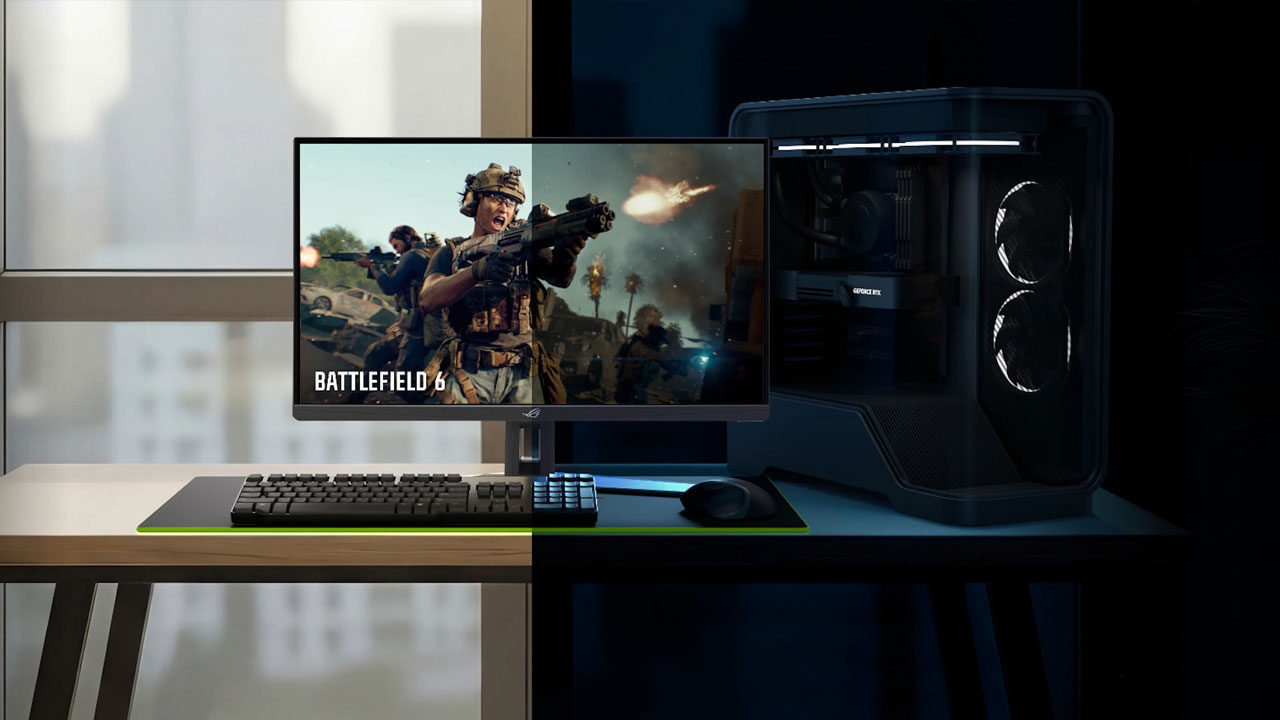
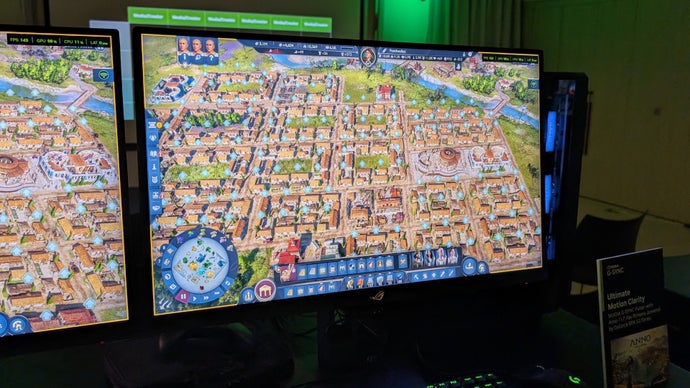
Nvidia’s relationship with PC gaming doesn’t always feel like a loving one. Sometimes they’re gifting us a useful new version of DLSS, sometimes they’re helping drive RAM prices up to £300 a stick. Even so, it’s hard not to look at G-Sync Pulsar – a new bit of monitor cleverness that seeks to remove unwanted motion blur from its LCD panels – and see some goodness still inside that big, green eye. After trying it out at a demo event this week, I’m hopeful that Pulsar can clean up how games look in motion as well as anything since the original G-Sync.
What does “fake” even mean in a video game? Seriously, how do we define it exactly? “Fake” has become a wildly popular term among a vocal group of keyboard justice warriors camping out in internet comment sections. From YouTube to Reddit to website article threads, there’s a particular breed of PC gamer that just can’t […]
Get 20% off DeleteMe US consumer plans when you go to http://joindeleteme.com/LTT20 and use promo code LTT20 at checkout.DeleteMe International Plans: https:...
The PC graphics market might be in peril in hardware terms, with prices spiraling and availability inconsistent, but on the software side things are at least reliably moving forward - with Nvidia today announcing the latest upgrade to its DLSS technology.
According to a new report, both AMD and Nvidia will raise the prices of their consumer GPUs "significantly" this year. If this report is true, both companies will have pushed these price hikes by next month.
I've certainly seen some outlandish graphics card cooler designs in my time, but few have evoked such nostalgia as this one. Maybe it's just me, but the Gigabyte Aorus RTX 5090 Infinity 32G immediately brought to mind 1986's movie masterpiece, Short Circuit, and its not-at-all-a-killer-robot hero, Johnny Five. Thankfully, while Nvidia continues to push its AI prowess on all fronts, there's little chance of its best graphics card suddenly becoming sentient, sporting a spiked metal mohawk, and making puns about recycling... unless Gigabyte has implemented some features it hasn't publicly mentioned.
Nvidia has just unveiled its latest G-Sync technology aimed at making gaming monitors as responsive and smooth-feeling as can be. Nvidia G-Sync Pulsar combines the refresh rate/frame rate-syncing tech of G-Sync with a new type of monitor backlight strobing, which works a bit like old CRT screens, to provide ultra-smooth, low-motion-blur gaming. I've long been a fan of G-Sync technology, even if few options on our best gaming monitor guide still use an official G-Sync module. Unlike some Nvidia tech, such as DLSS upscaling, frame gen, and RTX, which have not always had the most obvious beneficial impact, G-Sync just worked. Every single game running on your monitor immediately looked better if you had a G-Sync monitor and an Nvidia graphics card. Now, G-Sync and its free equivalents - adaptive sync and Freesync - are effectively ubiquitous, but with Nvidia Pulsar, the company has come up with a new reason to make you consider buying a proper G-Sync Pulsar-certified display.
Nvidia DLSS 4.5 is here, and it brings some surprisingly significant changes, for a tech that you might have thought was already close to being as good as it can get. A new second-gen transformer model greatly improves upscaling image quality, according to Nvidia, while frame gen has seen the addition of both up to 6x multi-frame gen and the option to have frame generation work dynamically, only adding AI-generated frames when frame rate drops demand it. With AMD FSR having only recently caught up with DLSS, thanks to FSR Redstone, it looks like Nvidia is about to stretch its 'fake frame' and 'fake resolution' advantage even further. What's more, the new upscaling is also available for all RTX GPU owners, so most Nvidia gamers will be able to experience the improved image quality, not just those with the latest and best graphics cards.
CES 2026 doesn’t technically end until tomorrow, but then if it were a football match, it’d be the kind where the home side gets battered 4-0 and the cameras keep cutting to a stream of season ticket holders slumping towards the doors with 20 minutes left. An all-timer in the history of Consumer Electronics Show, it has not been.
CES 2026 is underway in Las Vegas, and while Nvidia have passed on the opportunity to announce any new RTX 50 Super graphics cards – perhaps in the knowledge that they’d be hurled directly into the raging vortex of an ongoing component pricing snafu – the tech show has yielded some interesting GeForce news. Namely, there’s a new version of Nvidia DLSS, 4.5, launching today, that promises to sharpen up and boost performance on any RTX GPU.
Announced at CES 2026, NVIDIA G-Sync Pulsar is rolling out this month on a range of 27-inch QHD screens aimed squarely at competitive players.
If you have played PC games in the past decade, you have likely seen the NVIDIA G-Sync logo. At CES 2026, NVIDIA is pushing what is possible with gaming displays even further. NVIDIA G-Sync Pulsar is a new display technology designed to make fast games look sharper in motion, without the usual trade-offs associated with blur-reduction modes. The first wave of monitors with the feature is expected to arrive shortly, giving PC players a chance to try it at home sooner rather than later. Based on the demo NVIDIA showcased at the show, the results are impressive.
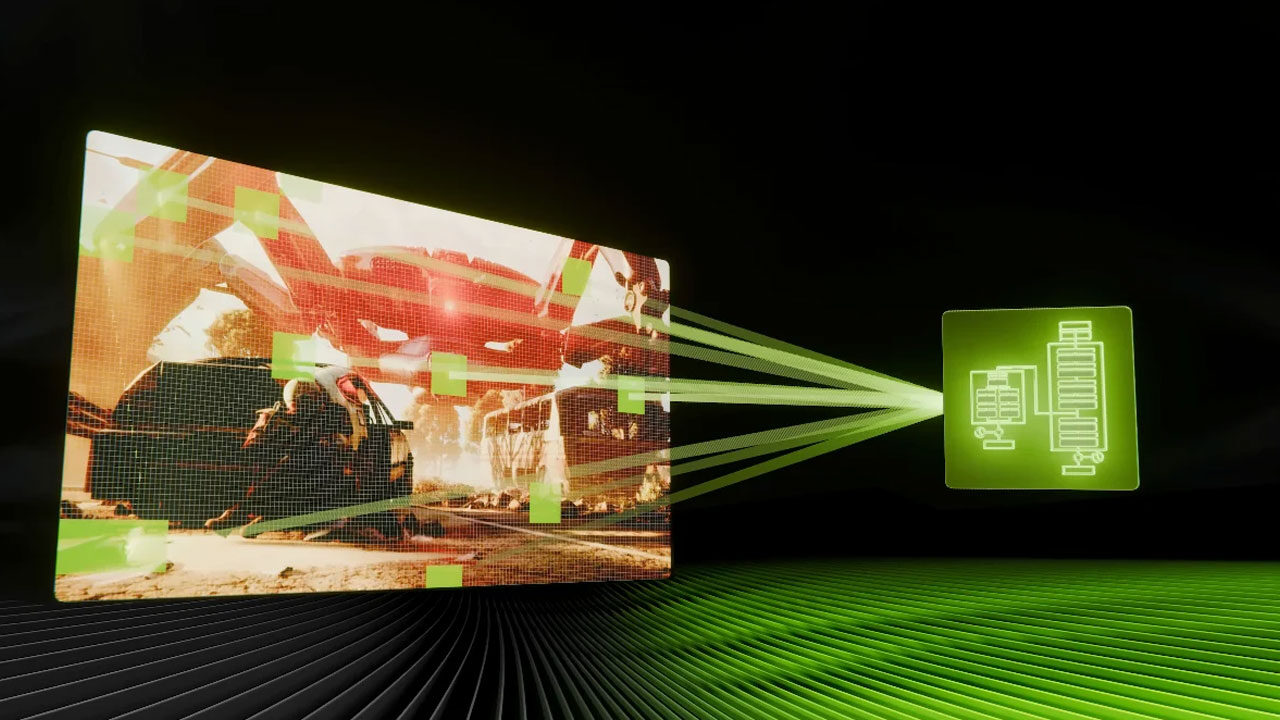
While NVIDIA is not manufacturing the monitors itself, it is working with MediaTek to integrate G-Sync technology directly into the display scaler. NVIDIA has explained that this approach would eliminate the need for dedicated G-Sync modules. G-Sync Pulsar builds on NVIDIA’s long-running variable refresh rate technology by adding a variable-frequency backlight that strobes in sync with the refresh cycle. Instead of lighting the entire panel at once, the backlight is divided into horizontal zones that fire sequentially as each line of the image is updated. This timing gives pixels more time to settle before they are lit, reducing smearing and the double images that can appear when you flick the mouse or track a fast-moving target.
Rather than forcing players to choose between strobing and variable refresh rate, Pulsar is designed to run both simultaneously, a move many esports and competitive players are likely to welcome. NVIDIA says this combination can deliver what it describes as more than 1,000 Hz of effective motion clarity on a 360 Hz panel, or roughly four times the perceived sharpness of the same screen without Pulsar enabled.
Based on demos showcased at CES 2026, the results are impressive. In games such as Anno 117: Pax Romana, improvements were noticeable in on-screen text, even when the camera moved quickly across the map. With Marvel Rivals, text clarity also improved significantly when characters moved rapidly through the environment. For the average player, these gains may seem minor. For competitive players, however, the added clarity provides better insight into what is happening during a match, helping support quick, split-second decisions that might otherwise be missed.
Four 27-inch QHD monitors with G-Sync Pulsar are launching around CES, all built around 2560 x 1440 IPS panels with a native 360Hz refresh rate. The list includes Acer’s Predator XB273U F5, AOC’s Agon Pro AG276QSG2, Asus’ ROG Strix XG27AQNGV and MSI’s MPG 272QRF X36, with prices starting near US$599 depending on region and retailer.
Alongside Pulsar, NVIDIA is rolling out G-Sync Ambient Adaptive, a feature that uses a built-in light sensor to adjust brightness and colour temperature based on the room. Some Pulsar models, including Asus’ ROG Strix XG27AQNGV, will support Ambient Adaptive out of the box.
You can find full coverage from CGMagazine from the CES 2026 show floor, including our Best of CES 2026 selections, along with additional news, features and previews from our time in Las Vegas.
Last year at CES, NVIDIA introduced its RTX 50-series GPUs and DLSS 4, offering an early look at what was possible with multi-frame generation. This year, the company has improved on that formula significantly.
NVIDIA used its CES 2026 stage to unveil DLSS 4.5, the latest update to its AI-powered upscaling technology for GeForce RTX graphics cards. The update promises smoother gameplay, cleaner image quality and a stronger push toward ultra-high frame rates in modern PC games. While DLSS 4 was impressive, it also came with several issues that critics, myself included, noted while evaluating the GPUs and the broader potential of the technology. The new version relies on a second-generation transformer model and a revised approach to frame generation. On RTX 50-series Blackwell GPUs, performance can scale up to 6X the original frame rate. Older RTX hardware also sees performance gains, although with clear limitations.
For anyone who has not been following the latest features introduced with each new DLSS launch, DLSS 4.5 builds on NVIDIA’s existing Deep Learning Super Sampling system. The technology renders games at a lower internal resolution and then uses AI to reconstruct a higher-resolution image, delivering genuinely impressive results.
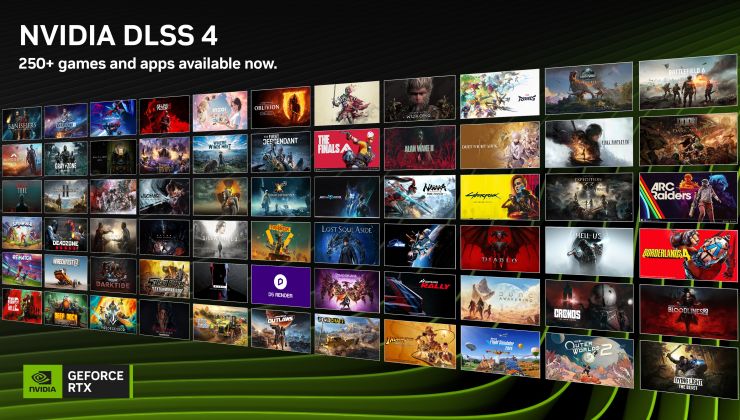
The company says more than 250 games and applications already support DLSS features. The new version is designed to slot into existing integrations, allowing developers to roll it out through relatively simple updates rather than rebuilding pipelines or completely rewriting existing software. In practice, this means many current PC titles that already use DLSS could see image-quality and performance improvements once DLSS 4.5 support arrives through driver and application updates.
The biggest feature NVIDIA showcased during on-site demos at CES 2026 is what the company calls Dynamic Multi Frame Generation, paired with a new 6x Multi Frame Generation mode designed for RTX 50-series cards. In this mode, DLSS 4.5 can generate up to five AI-created frames for every frame the game actually renders. This allows the system to target 240 frames per second and beyond on supported high-refresh displays, even in path-traced games.
Dynamic Multi Frame Generation monitors how closely the GPU’s output aligns with a display’s refresh rate and adjusts the multiplier on the fly. The goal is to keep gameplay feeling fluid without overproducing frames when system load decreases, and surprisingly, it looked excellent during demonstrations. If you are trying to hit a specific frame-rate target, it makes sense to allocate resources toward reaching that goal rather than generating frames that will never be displayed. It is a smart approach, and one I am eager to test further as support rolls out across more titles.
DLSS 4.5 introduces a second-generation transformer model for DLSS Super Resolution, which sits at the core of how the technology cleans up and scales images. The updated model has been trained on a larger, higher-quality dataset and uses significantly more compute than the first transformer-based version introduced with DLSS 4. The goal is to make challenging scenes, including fast motion, fine detail and high-contrast edges, appear more stable and less noisy.
NVIDIA has also focused on addressing specific visual issues, such as shimmering on static surfaces and ghosting around weapons or objects close to the camera. These have been among the more common complaints with older DLSS versions. We have noted these issues before, so it is great to see NVIDIA taking the time to address them and deliver fixes that still allow users to enjoy the titles they prefer, even if they cannot afford the absolute best GPU on the market.
NVIDIA says the updated transformer model is available across all RTX generations, meaning RTX 20-, 30-, 40-, and 50-series owners can access the improved super-resolution path once they update to the latest software. That said, the largest performance gains are reserved for RTX 50-series GPUs. On that hardware, the combination of DLSS Super Resolution, 6x Multi Frame Generation and Reflex low-latency technology is designed to deliver the best 4K, path-traced experiences at more than 240 frames per second on supported monitors.
Earlier RTX generations are expected to see improved image stability and some performance uplift, but without access to the full 6x frame-generation feature set. That limitation makes sense based on what the technology allows, even if it is disappointing for those waiting on the next generation of NVIDIA GPUs, which were notably absent from this year’s CES.
NVIDIA is also positioning DLSS 4.5 as a straightforward upgrade path for developers already shipping DLSS-enabled games. The company’s latest PC app, currently available in beta, allows players and studios to move existing DLSS titles to the new version with only a few configuration changes. Future updates will roll out 6x frame-generation capabilities to RTX 50-series owners later in the year. For players, that means many games they already own could quietly gain higher, more consistent frame rates and cleaner visuals as studios patch in support.
You can find full coverage from CGMagazine from the CES 2026 show floor, including our Best of CES 2026 selections, along with additional news, features and previews from our time in Las Vegas.
Is anyone actually buying the RTX 5090? Because Nvidia can't stop giving them away. The latest in its steady stream of RTX 5090 giveaways sees the company handing out an Arc Raiders-themed RTX 5090 FE, and all you need to do to win it is tell Nvidia why you're worthy. Ok, so there's a little more to the process of potentially winning the best graphics card in the world. Nvidia wants you to reply to an X post - or one of the similar posts on one of its other social media channels, such as Instagram - making sure to add the words "GeForce Season" in your comment and to say "why you deserve this Holiday upgrade."
Mega giveaways on top gaming tech often require you to put in some effort for your entry. Answer a question correctly, send in a ridiculous gameplay clip, post a pet pic, that kind of thing. But for Nvidia's latest giveaway - which puts a Battlefield 6-wrapped GeForce RTX 5090 on the line - things are far easier.




_lkEvjfO.jpg?width=690&quality=85&format=jpg&auto=webp)