
How Changing One Mechanic Elevated Reus 2 Beyond Its Predecessor

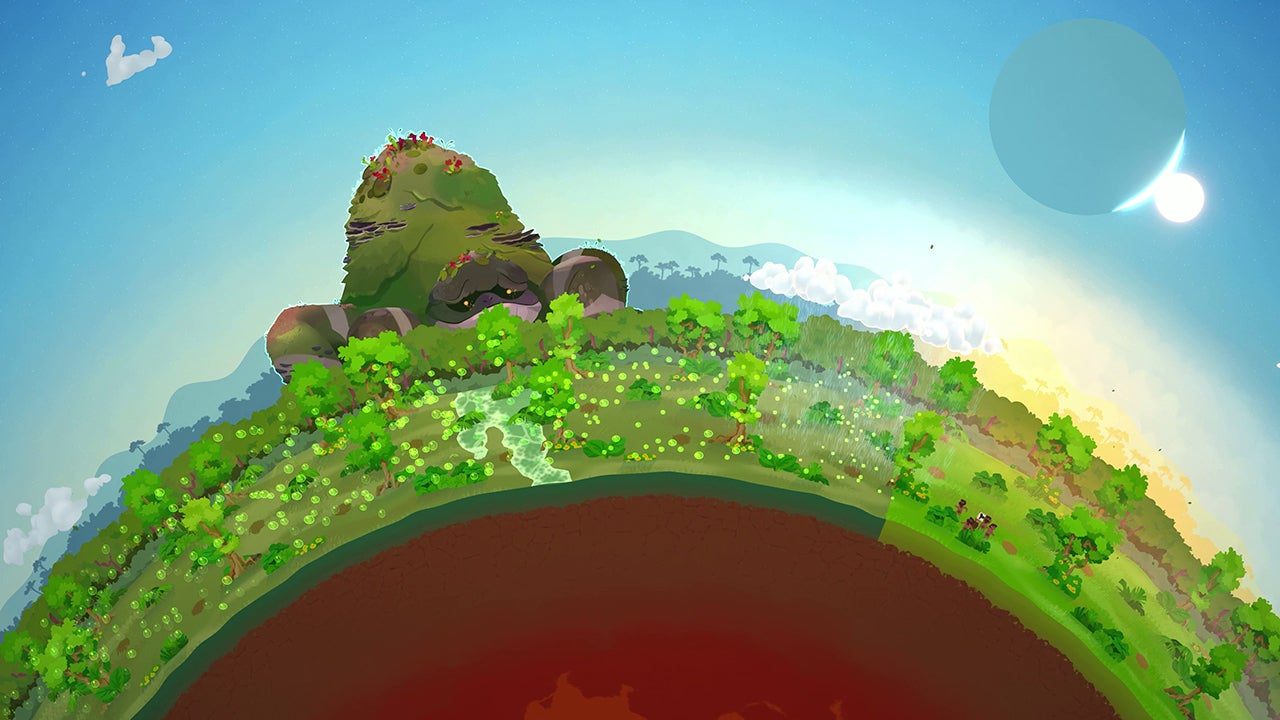
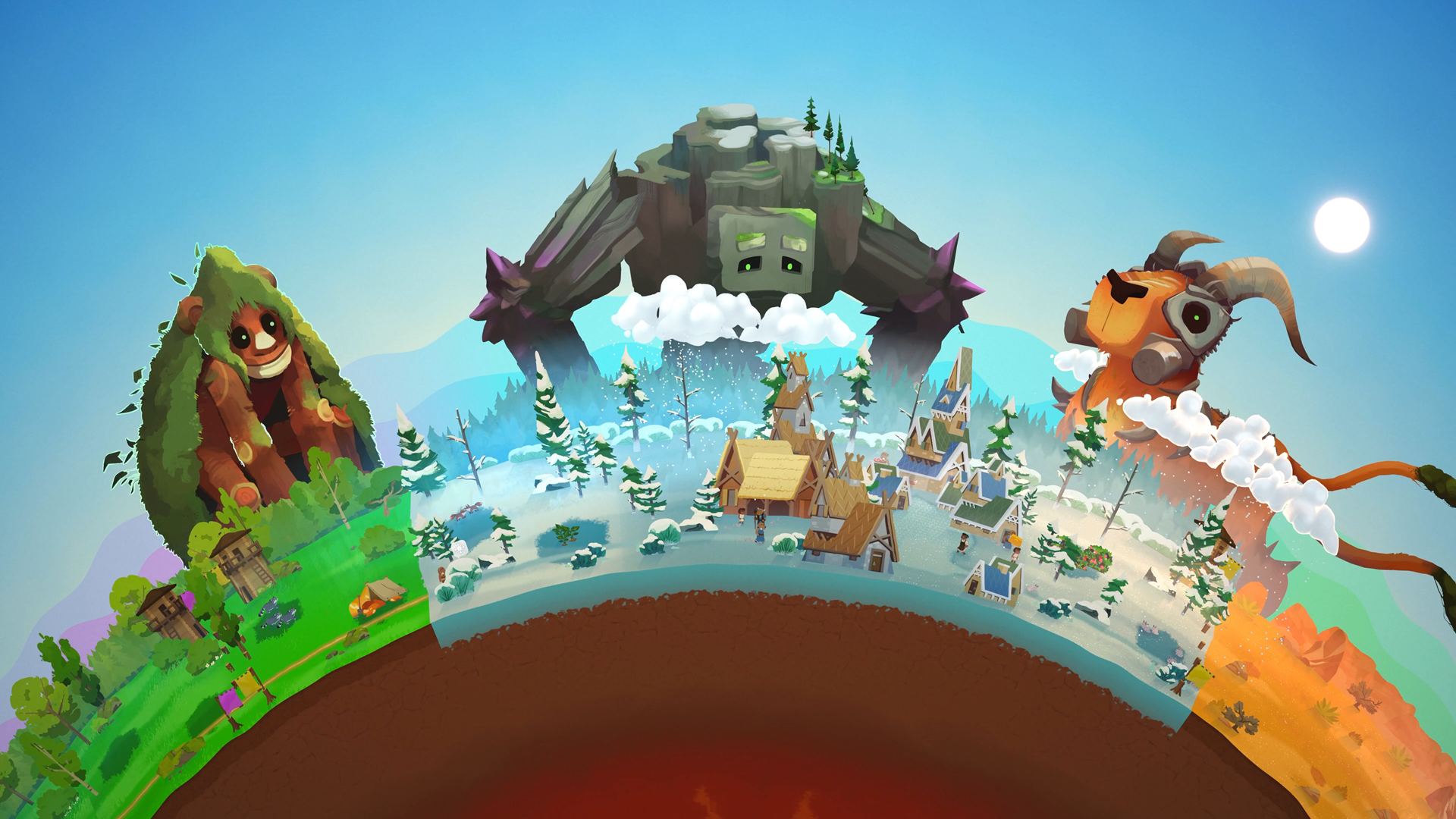
Reus, designed by Abbey Games, is a simulation game about gods, giants, and growth. You start with a barren planet and gradually fill it with life. First, you place down biomes like swamps, forests, oceans, and deserts. Then you fill these wild spaces with animals, minerals, and plants. When humans come to settle the land, you support the development of their communities so that they can flourish, but you also need to ensure that you don’t give any one group too many resources too quickly, otherwise they might become proud and start waging war against their neighbours.
At its core, Reus is about balancing ecosystems and encouraging synergies. Herbivorous animals want to live near plants, different clusters of minerals provide different effects when placed down in different combinations, and predators require prey. If you can keep all of these relationships in mind, as you gradually unfurl the sprawling web of nature on your planet, then the world will thrive.
There are two Reus games, and while both have the same central concept of making an initially barren planet prosper, they approach it in very different ways.
The first game employs a real-time management system, which, while intuitive, clashes with the game’s nature. The second learned from its predecessor’s mistakes and implemented an approach that lets players experience the game at their preferred pace.
On Borrowed Time
Worlds in Reus aren’t designed to be played in perpetuity. The game wants you to develop one, see it grow, and then move on to another. This is similar to how in Rollercoaster Tycoon, you’re constantly shifting from one park to the next, except on a galactic scale.
Both games use different methods to let players know when they should move on to their next project. When sitting down for a play session in the first Reus, you must choose whether you want to work on your world for 30, 60, or 120 minutes.
It can be awkward choosing this upfront. You might know exactly how long you intend for your current play session to last, but chances are you’re just sitting down to unwind for a while, and putting a timer on your fun makes the experience feel a lot less relaxing.
These time limits can also be uncomfortable at times because they’re either too long or too short.
In a 30-minute game, you really have to sprint to get everything completed on time. Watching the worker giants, who terraform the world for you, slowly trudge around the map can make you feel truly impatient.
In 120-minute games, meanwhile, you can sometimes be left waiting out the last 10 or so minutes of the timer as everything slowly crawls towards a conclusion.
While the game itself is a compelling puzzle, Reus does itself a disservice by only allowing players to tinker with their worlds under strictly timed constraints.
It was clear that any future instalments in the series would need a new way of encouraging players to move along once their work on a particular planet is finished. Sure enough, the sequel succeeds in developing an innovative solution.
Eons to spend
In Reus 2, you’re unconstrained by time. Instead of needing to get everything done before the clock runs out, your actions are only limited by a newly implemented resource system.
Every time you place something down on your planet, it costs a small amount of “eon.” You’re only given a finite amount of eon, meaning that you must place down every animal, ore formation, and plant carefully. You need to think strategically and ensure that you’re always placing everything in the optimal location.
The game is split into three eras, each with objectives that must be fulfilled. If you can complete these goals, you’re granted more eon, and are allowed to advance into the future. If you can’t, then your progress stalls, and you need to move on to another planet.
As well as clearing away the discomfort of the timers from the first game, Reus 2’s approach also pays off in other areas.
The era system makes the civilisations that develop feel more grounded in history. The ability to move from prehistory to the Iron Age, and then into the present, gives you a sense of progress. The tiny people on your planet feel more like they are changing, growing, and developing.
Additionally, needing to spend your eon carefully to advance through the eras adds an element of welcome challenge to proceedings. If you scattered everything across the world randomly in the first game, there was no real penalty beyond receiving a low score once time ran out. In Reus 2, playing without purpose will quickly lead to your pool of eon depleting, and the need to end your current efforts and try again. This incentivises you to learn the game’s system and ensure that your next try will be more successful.
Conclusion
Games are truly great when all of their systems click together harmoniously. For example, part of the secret behind why Minecraft has endured for so long is that its vast, explorable open world provides a wealth of resources that perfectly complement its crafting system.
Both Reus games offer a cosmic sandbox that you can sculpt and develop as you watch life grow. They’re both good fun; however, the first tries to weld real-time and puzzle-based elements together, creating an uncertain experience where you need to charge through an otherwise relaxing game. The second, meanwhile, takes its time and allows players to move at their own pace. By limiting the number of actions players can take, rather than the time available to take them in, it better understands its nature as a tactical puzzle requiring the correct approach.
Reus and Reus 2 are both available on Steam. The former is also available on the PlayStation 4 and Xbox One, while the latter is available on Switch and Xbox Series X/S.