As Mozilla promised they would, Firefox version 148.0 has been released and with it you now get to control what generative AI features are enabled or disabled.
Meta is making its biggest play yet in the political arena, launching what’s set to be its largest push to back political candidates in the company’s history. This significant move comes at a time when the social media giant is dealing with a lot of negative attention and some of its toughest legal challenges ever.
The company is kicking off a massive $65 million effort ahead of this year’s midterm elections, as reported by MS Now. The goal is to boost state politicians who are friendly to the artificial intelligence industry, with initial efforts focusing on Texas and Illinois. This is a record-breaking sum for Meta’s election investments.
Company representatives have indicated that this huge investment is fueled by worries over potential regulatory threats to the artificial intelligence industry. Meta is looking to fight back against legislation in various states that it fears could slow down or hinder AI development. It’s a pretty clear signal that they want to shape the future of AI without too much government interference.
What’s really interesting is that Meta isn’t picking sides; they’re backing both Democrats and Republicans
They’re using two different super PACs to do this. One group, called Forge the Future Project, is throwing its weight behind Republican candidates. The other, Making Our Tomorrow, is supporting Democrats. These new PACs are joining two others Meta already had, one of which focuses specifically on California, while the other is a broader organization that funds the company’s spending in other states.
For years, Meta and its CEO, Mark Zuckerberg, have shown support for President Donald Trump, who, in turn, has pushed to stop states from regulating companies that invest in artificial intelligence tools. So, in a way, what Meta is doing now with this spending spree feels a lot like the bold, almost oligarchic behavior we’ve seen from other tech leaders who use their financial power to influence midterm elections and the political system more generally.
NEWS:
Meta is about to start a $65 million midterms push — its biggest political effort in its 20 years in business.
Meta is standing up two super PACs that this week will drop money in races in Texas and Illinois to push A.I.
However, I think there’s a unique level of public frustration directed at Meta and its platforms right now. You can see it in the numerous lawsuits they’re facing and the public condemnations from former employees. In recent years, the company has had to navigate various scandals where its algorithm-based platforms have been accused of being used to undermine democracy, facilitate child predation, and even incite violence, including in the lead-up to January 6, 2021.
Meta is currently fighting multiple lawsuits, some of which could be landmark cases. These lawsuits accuse its executives of knowingly creating products with addictive qualities that have been particularly harmful to children. The company, for its part, has denied these claims. Beyond the legal battles, Meta is also looking to expand its number of data centers, those massive, resource-intensive facilities that have drawn significant criticism from communities across the nation.
With all of this in mind, Meta’s decision to back candidates this election cycle presents a pretty big question for voters. It makes you wonder whether, and to what extent, people will support a candidate who is financially backed by a company that operates some of the world’s most widely criticized platforms.
As well as praising Hitler and banging on about white genocide and creating naked images of actual women and children, apparently Grok can be a resource for answering questions about videogames. According to an investigation by Business Insider into what's been going on at xAI since Elon Musk stopped being the de facto leader of the Department of Government Efficiency and started micromanaging the chatbot, that's been one of Musk's top priorities.
Business Insider's sources say that "a model release was delayed for several days because Musk was dissatisfied with how the chatbot answered detailed questions about the video game 'Baldur's Gate,' according to people familiar with the matter."
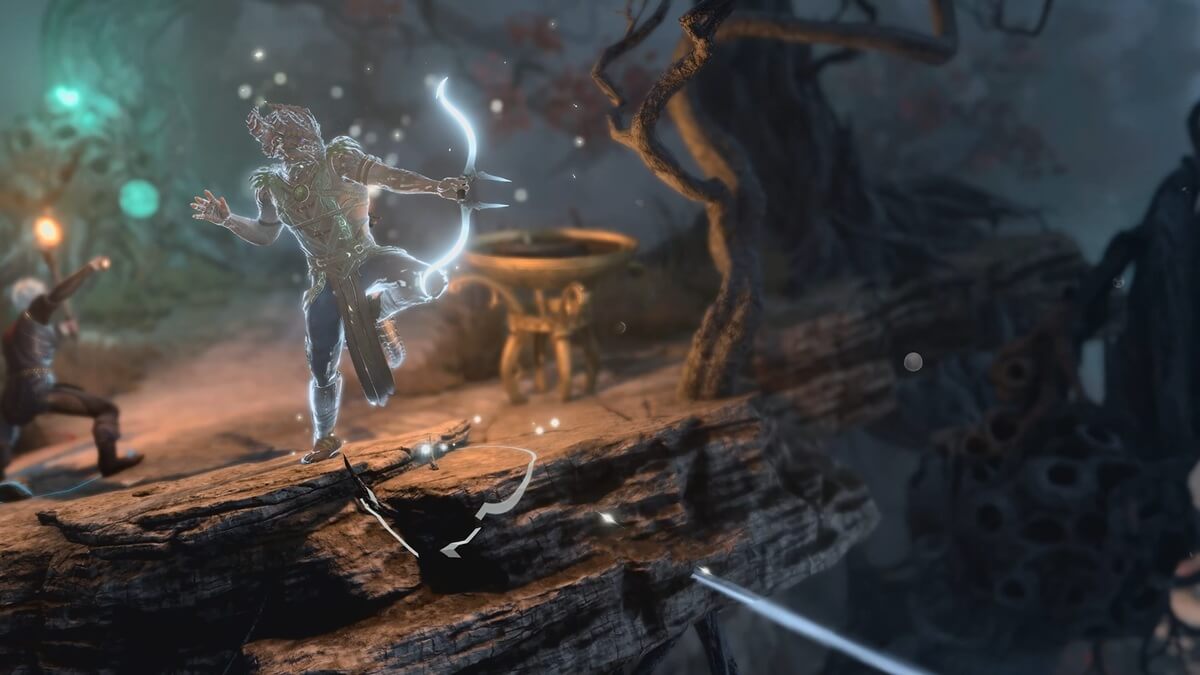
I assume they mean Baldur's Gate 3, unless Musk really did prioritize teaching Grok where to find the Ring of the Princes +1 on the Coast Way.
Employees make xAI sound like it's become a hectic place to work, saying, "Because the company is so small, everything is a fire drill". When a problem occurs, it's solved by relocating teams of workers to a "war room" for months at a time until it's solved. Three of Business Insider's sources corroborated that, late last year, there were at least five war rooms running at the same time. "One, they said, was dedicated to teaching Grok how to play one of Musk's favorite video games, 'League of Legends.'"
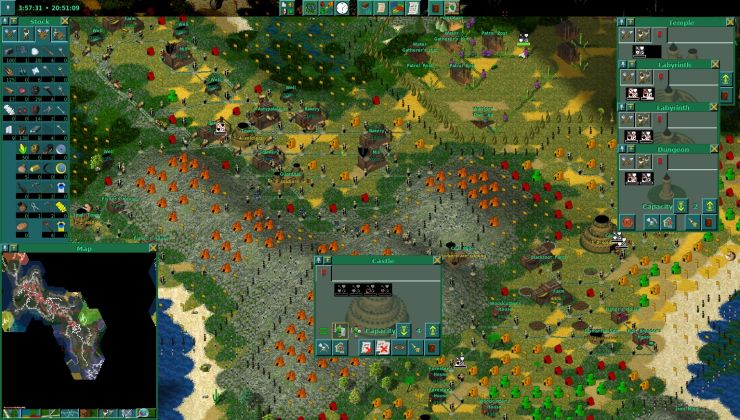
Widelands is a free and open source Settlers-like strategy game, and their developers appear to be setting a firm stance against any AI generated contributions.
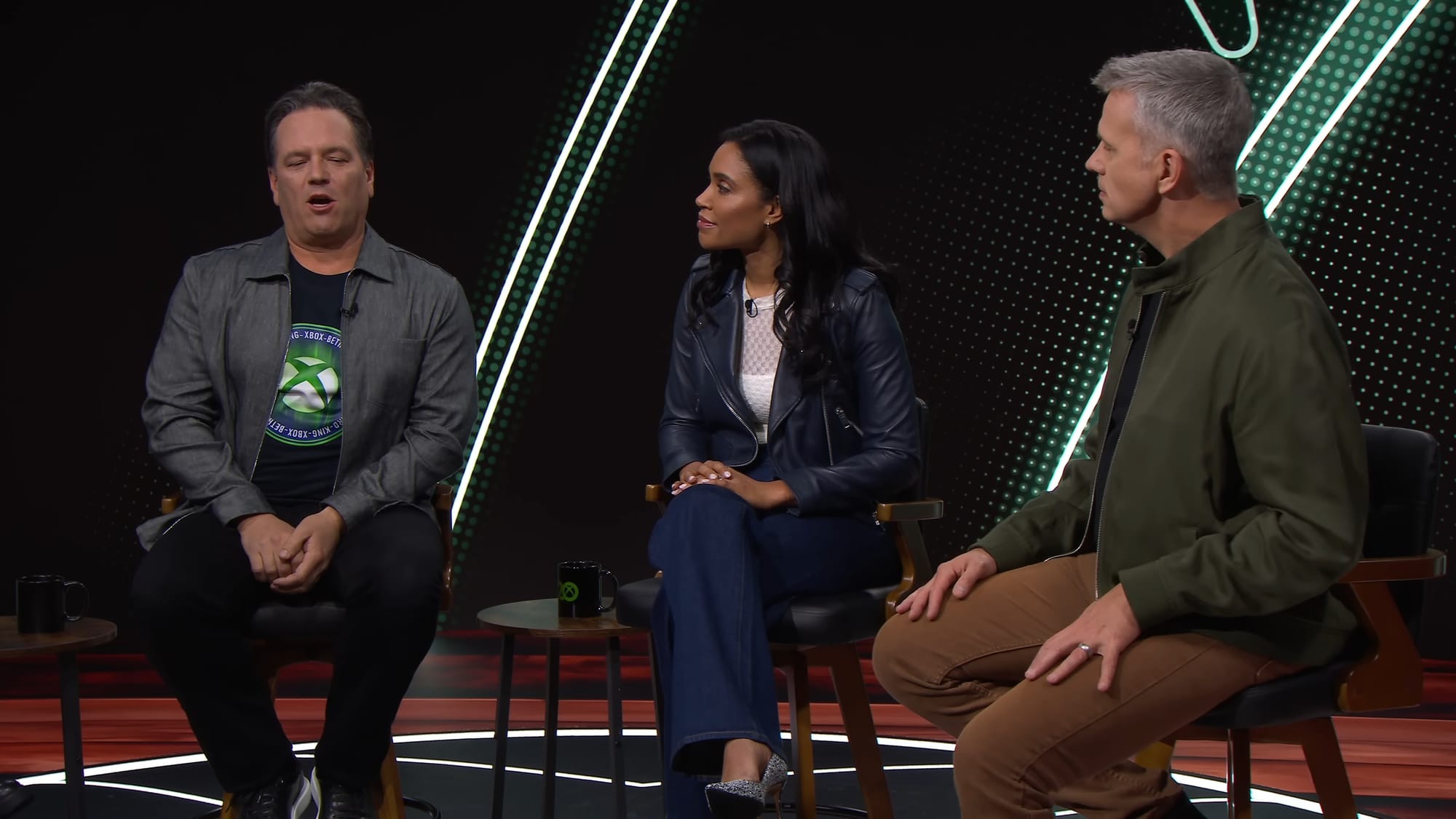
After a disastrous series of events dating back to the launch of the Xbox One and repeatedentreaties from us to lay off a few high-paid executives instead of thousands of workers, somebody has finally taken the hint: Phil Spencer. The Xbox boss is retiring from his job at Microsoft, a wannabe AI company whose various chunks are precariously held together by increasingly enshittified vestigial tentacles, and being replaced by… the current president of Microsoft’s CoreAI product. It’s unlikely that things will get better from here on out, but it’s not like we’re sad to see Spencer go.
“Last fall, I shared with Satya [Nadella] that I was thinking about stepping back and starting the next chapter of my life,” Spencer wrote in a memo to staff published today by IGN. “From that moment, we aligned on approaching this transition with intention, ensuring stability, and strengthening the foundation we’ve built. Xbox has always been more than a business. It’s a vibrant community of players, creators, and teams who care deeply about what we build and how we build it. And it deserves a thoughtful, deliberate plan for the road ahead. … I’m incredibly proud of what we’ve built together over the last 25 years, and I have complete confidence in all of you and in the opportunities ahead. I’ll be cheering you on in this next chapter as Xbox’s proudest fan and player.”
Instead of staying on and assuming Spencer’s role, as many assumed she eventually would, Xbox president Sarah Bond is resigning, which sure is conspicuous! Asha Sharma, who spent years at Instacart and Meta before taking up the aforementioned AI job at Microsoft, promises her appointment somehow won’t lead to more AI slop from a company that seems determined to foist AIon every sector imaginable.
“As monetization and AI evolve and influence this future, we will not chase short-term efficiency or flood our ecosystem with soulless AI slop. Games are and always will be art, crafted by humans, and created with the most innovative technology provided by us,” Sharma wrote in her own memo to staff, adding that Microsoft plans to “recommit” to Xbox fans and players, but also that Xbox, conceptually, is still kinda, you know, whatever. “Gaming now lives across devices, not within the limits of any single piece of hardware. As we expand across PC, mobile, and cloud, Xbox should feel seamless, instant, and worthy of the communities we serve. We will break down barriers so developers can build once and reach players everywhere without compromise.”
In his wake Spencer leaves a smouldering swathe of games industry destruction which is not solely his burden to bear – Microsoft employs other execs as well, after all, and also has a board and bloodsucking shareholders to satisfy – but for which he should have suffered significantly more consequences than he did. During Spencer’s tenure, Xbox made a series of ruinously bad bets on everything from console naming schemes to Game Pass uprooting the traditional model of how games are purchased and becoming a bonafide Netflix competitor.
In service of this, the tech behemoth unhinged its rotten maw and swallowed up dozens of video game studios, including all of Activision Blizzard, which cost Microsoft an eye-wateringly gargantuan $68.7 billion. Many studios have since been closed or fallen victim to oneofmultiple rounds of mass layoffs that ultimately impacted thousands of workers. Resulting brain drain has been immense, and thanks to the actions of Spencer and others at the highest echelons of power at Microsoft and other major companies, the video game industry may never fully recover. Unions, a silver lining of the current Xbox regime, are doing their best, but have frequently found themselves in damage control mode so far.
It might be hard to remember now, but once upon a time, not all that long ago, press and fans ate up Spencer’s smirking “just another average gamer” act, lauding him for putting hundreds of hours into Xbox releases large and small. If nothing else, he was determined to portray himself as a man of the people, proudly announcing that he’d spent the equivalent of 23 work weeks playing games in 2023 alone before dropping to a paltry 17 in 2024. At least now he’ll have more time for his true passion, which is obviously not keeping people gainfully employed.
The expansion of generative AI continues with Cygames recently announcing the formation of an AI studio. Fans weren't happy, and now Cygames have apologised.
According to a new report, both AMD and Nvidia will raise the prices of their consumer GPUs "significantly" this year. If this report is true, both companies will have pushed these price hikes by next month.
In the midst of increasing AI usage across the board, one publisher is taking a firm stance against the technology, labeling it "cancerous." It has therefore issued a total ban on the use of AI in the games it publishes.
The publisher in question is Hooded Horse, known for supporting countless indie games, some of which are immensely popular and successful. Some of its most notable published games include Manor Lords, Against the Storm, Cataclismo, Endless Legend 2, and Darkwood 2, among others. It's certainly one of the most prominent indie publishers on the market, and it's now using its position to fight against what it perceives as a harmful technology.
In an interview with Kotaku, chief executive Tim Bender said the only thing AI ever did was "[make] our lives more difficult."
"I fucking hate Gen AI art," Bender said, adding that Hooded Horse's publishing contracts include a clause for "no fucking AI assets."
Bender went on to say that the publisher "got to the point" where it communicates to its potential partners that no AI should be used, even as placeholders, because there is always a chance it would "slip through" into the final build.
"Because of that, we’re constantly having to watch and deal with it and try to prevent it from slipping in, because it’s cancerous," he said.
Bender concluded by saying that it'd be a "betrayal" of all the people in the company's marketing team who produce all sorts of promotional art if they were to be forced into working with something that relies on generative AI. "I wouldn’t be able to face them if we had that," he said, indicating that this is more of an ethical stance than a PR-related one.
Enforcing these rules is difficult, but I for one believe it's the right course of action. Sure, some of these devs will use AI and mask it well, especially as the technology gets better, but it's important to have rules in place that openly stand in defiance of this worldwide corporate push toward a reality where things are purely artificial, built on the foundations of millennia of human work and effort just so some CEO somewhere could rake in even more cash than he does now.
At least before that selfsame CEO had to produce something of value, something original and striking enough for people to want to experience, so he could rake in the cash. Now, it's a machine doing everything, regurgitating borderline stolen art into pure slop for the enjoyment of absolutely no one and in the service of exclusively a small portion of people who never cared about art in the first place.
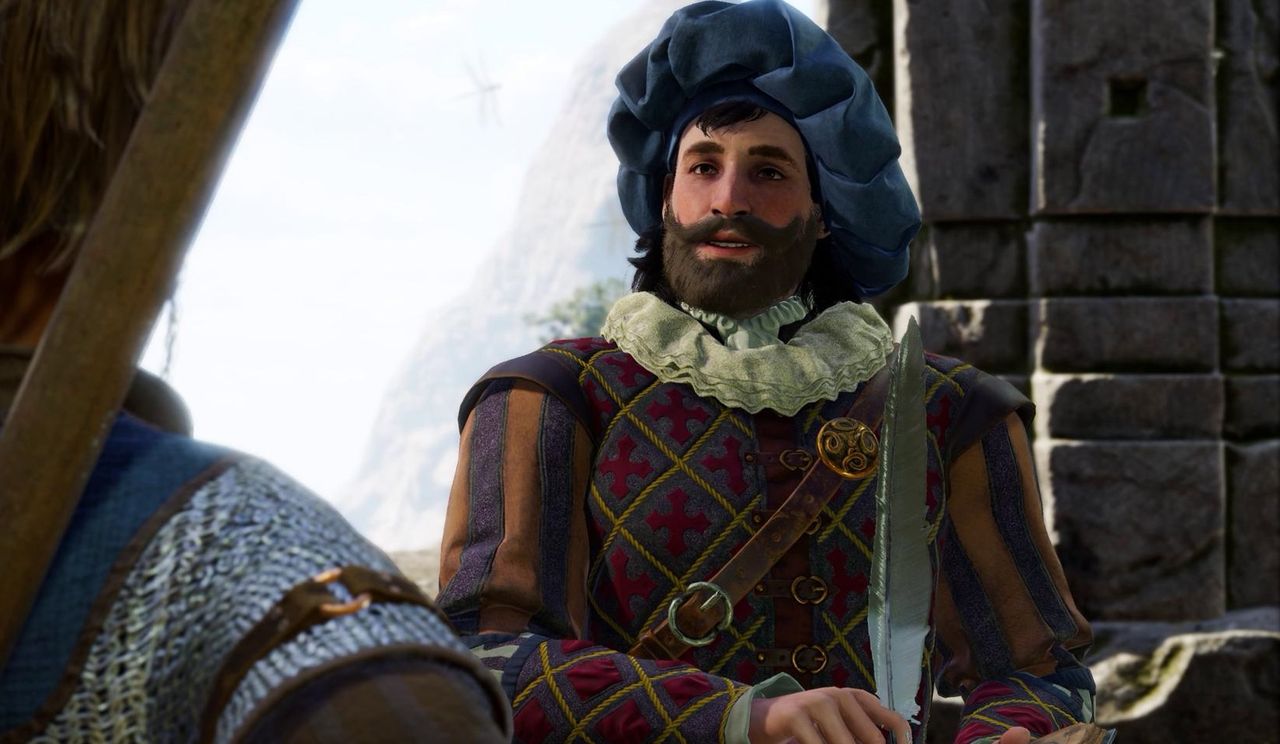
As announced, Larian Studios is hosting an AMA, following a massive controversy over generative AI in its upcoming game, Divinity. The studio's devs, including chief executive Swen Vincke, answered all sorts of questions, including those related to this controversial technology.
In the AMA, held on Jan. 9 on the r/games subreddit, a user asked the studio about its use of generative AI. "What is your opinion on the role of (generative) AI in the game development process, and for your studio in particular," they asked, additionally inquiring if the AI is being used in some departments and not in others.
Vincke first said that "there is not going to be any generative AI art in Divinity," saying that a lot of confusion had been caused in the past over how the tech is used, which led the studio to completely "refrain from using generative AI tools during concept art development." This last caused the greatest amount of controversy in December, with players strongly opposed to AI in art in any capacity.
"That way there can be no discussion about the origin of the art," Vincke added.
However, Larian Studios will not give up on generative AI entirely, as Vincke believes it can "help" with speed, allowing for way more iterations and testing that further leads to better and, apparently, more refined gameplay. "We're trying things out across departments," he said.
"Our hope is that it can aid us to refine ideas faster, leading to a more focused development cycle, less waste, and ultimately, a higher-quality game," Vincke added.
Vincke concluded that creative assets could still be generated by AI, but only by AI trained on data created by Larian itself and fed into its seemingly self-hosted model.
"If we use a GenAI model to create in-game assets, then it’ll be trained on data we own," he said, which does confirm AI will be used in art, but only to iterate on what Larian had already created itself, rather than what Call of Duty recently did with Ghibli-filter AI all over the place.
In the same thread, Divinity's writing director, Adam Smith, also noted that no AI is being used in writing whatsoever. While the studio did apparently try to make the technology work for dialogues and other text, it failed to provide satisfactory results, with even the most random human writing ending up being better, so that department seems to be completely AI-free.