
Normální zobrazení

Received before yesterday

Cthulhu: The Cosmic Abyss brings investigation to the fore in a way that you’ll love(craft) to see

23. Únor 2026 v 10:00

His many personal faults notwithstanding, H.P. Lovecraft’s writings continue to cast a profound shadow over the horror genre. While his own views were reprehensible (even by the standard of his time) the continuing fascination with cosmic horror can be seen across many media. Big Bad Wolf are the latest developers to take influence from this mythos in their upcoming horror adventure game Cthulhu: The Cosmic Abyss, but have moved away from the beaches of Innsmouth and out to sea to take advantage of the thalassophobia (fear of deep water) that underlines much of Lovecraft’s work.

Cthulhu: The Cosmic Abyss begins in 2053 with you playing as Noah, an investigator charged with following the trail of a missing colleague who finds that an occult cosmic threat is spreading across the world. His investigations lead him to a mining facility located deep within the Pacific Ocean wherein he discovers that the missing miners have stumbled upon a passage to R’lyeh. So far, so Lovecraftian, and I was impressed by how well the content I played in the preview build slotted into the wider Mythos whilst also maintaining an identity of its own.

The Cosmic Abyss is played out through a first-person perspective, but this is no action shooter and combat plays no real role in this game. There were no direct engagements with enemies during the section I got to play, though there was still plenty of threat and dread. The full version promises some confrontations with unknown horrors that will require quickness of thought rather than trigger finger to survive. This fits perfectly with cosmic horror as no small part of the terror comes from your insignificance in the face of the unknowable.

Cthulhu: The Cosmic Abyss – station investigation

With no combat to speak of, the gameplay mechanics instead revolve around investigation and puzzle solving, with a focus on a mind palace method of connecting clues that is reminiscent of Frogwares’ Sherlock Holmes games. In order to interact with the environment you can call on your AI companion, Key, who can scan, assess, and record the information that you acquire. This digital compendium can be called up in order to make connections between clues and objects that you scan, reveal deeper insights and even give you the direct solution to riddles.

The Unreal Engine 5 powered graphics are breathtaking at times, with the scale of the underwater environment being overwhelming. Relatively early on you have to venture outside of the submersed facility to explore a mysterious labyrinth and even though there was no pressure of oxygen limits in place I found the whole section almost unbearably tense. This wasn’t helped by my stubbornness in trying to brute force my way through when a more direct route via further investigations was the more efficient solution.

Cthulhu: The Cosmic Abyss – object observation with Key

Major puzzles and obstacles in the world of The Cosmic Abyss will often have more than one solution with the main division between each being the effect they have on your sanity. Leaning into the world of R’lyeh for answers will drive you further into madness whereas presumably more rational and scientific solutions will help keep you sane. This mechanic was hinted at in the preview but I look forward to seeing its full effects in the full game.

As is often the case with early preview builds, there were a few small bugs and glitches, but these were refreshingly infrequent with the game just a couple months from release in April. One that took me a while to work out was that the controls would occasionally revert to AZERTY (to match the Big Bad Wolf’s keyboards as a French studio) so I couldn’t move forward. For a while I thought this was a deliberate effect in keeping with the classic Eternal Darkness’ manipulation of your controls, but checking with the team, it became clear that this was just a bug. Rebranding it as a feature wouldn’t be the worst idea, though!

Cthulhu: The Cosmic Abyss – strange growth

The world of Cthulhu: The Cosmic Abyss has certainly got its claws into me and I’m eagerly awaiting getting stuck into the full version when it launches in April. What I’ve seen so far promises a twisting and tense narrative that will challenge the grey cells rather than the trigger fingers and, as such, should be a truly cosmic horror experience.
The Prisoning: Fletcher’s Quest Review

20. Únor 2026 v 10:00

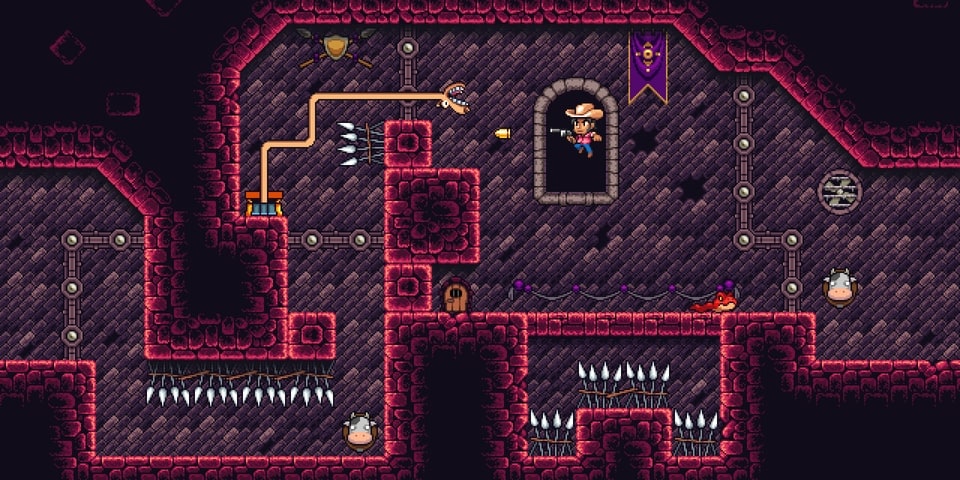
You can tell that a medium has reached some form of maturity once things start getting meta and titles appear that draw attention to the process of being constructed and the dilemmas that are faced by their creators. Countless great modern novels and films that are as lauded as Citizen Kane are clear examples of this and, whilst not in the same league as these, The Prisoning: Fletcher’s Quest is of a similar vein. You play as a burned out developer who undergoes hypnotism in a therapy session only to find himself trapped inside his own creation, a search adventure game with procedurally generated layouts.

The pixel-art aesthetic in Fletcher’s Quest is really nicely done and the various areas of the game look distinct whilst enemies and characters are well designed. Bosses are particularly memorable and everything benefits from a bright and colourful approach. Music is solid enough with a few standout tracks, again often in boss fights.

The game’s narrative is clearly nonsense and is all presented in a suitably tongue-in-cheek fashion. This is perhaps most obviously seen by the fact that the early rooms of the game have to be traversed not just devoid of weapons or skills but also of clothing. The pixel graphics mean that you are saved the detail of such nudity, whether you’d like it or not, but characters do comment on it. Your first mission, therefore, is to find clothes and a means of defending yourself.

The Prisoning exploration

While billed as a Metroidvania (I prefer ‘search adventure’ myself) the game actually reminded me more of classic home computer titles such as Jet Set Willy and Manic Miner. The flip-screen traversal and assortment of ludicrous enemy types brought me right back to my earliest days of gaming in the mid to late-1980s, but without the extreme frustration that accompanied those often nigh-on-impossible games. The main difference, however, is actually an unintended consequence of the choice to use procedural generation – rooms and areas are relatively forgettable, lacking the intricate design that the genre really requires to succeed.

The generated layout is completely functional with areas blocked until you beat bosses and unlock new skills, but many rooms feel interchangeable and the extreme frequency of save and travel points mean that backtracking is rarely required. Indeed, on the default difficulty it was generally quicker to collect items and then die to return to the last save point. As collection progress is maintained, the game seems to actively encourage you to avoid playing it. If I’m being generous this might be a deliberate move in keeping with the meta view of the genre, but I think it’s just another result of the use of procedural generation.

In terms of skills, you play through the whole game with just a pistol, and one that initially is a real pea-shooter. You can fire one bullet at a time and if you miss then you have to wait until the bullet disappears from view before you can fire another. This adds a level of strategy and reward for accuracy that does help to keep things interesting. As you defeat each boss you’ll be granted an additional bullet (a fact that I forgot, which made the second main boss unnecessarily difficult) as well as a traversal skill like double-jump and butt bounce.

The Prisoning side-scrolling shoot 'em up section

As well as standard single screen platforming challenges, The Prisoning occasionally breaks things up with horizontal shooter sections and the final boss is an auto-runner minigame that treads a fine line between challenging and downright annoying. That said, given my first playthrough was under three hours, the variety is restricted by the short length of the game. This, again, helps to make the game feel like a lost retro title.

The four boss fights are the most memorable part of the game, not coincidentally because they are clearly the most hand-crafted moments. You’ll find yourself up against a giant robot, a skateboarding shark and more, with all offering distinct challenges and necessitating different approaches. The one that stood out for me was the shark, both because of the uniqueness of the antagonist, but also the slippery slope of forced humour it introduced.

The Prisoning shark boss battle

The whole game has a lot of lol random’ humour that is very hit or miss. The nudity is the most obvious example but the shark boss features a lot of dialogue about how badly it is designed and frustratingly difficult it is. This kind of meta-joke is so often undermined by the content being as annoying as the joke pokes fun at. Admittedly this boss was rendered more challenging by my forgetfulness, but the battle goes on for a long time with you only having two hits before death.

The 9th Charnel Review – A Less than Divine Comedy

19. Únor 2026 v 12:00

Another week, another indie horror game and once again, it’s from a solo developer. Fortunately, this one feels less derivative and phoned in than Ebola Village, but it still suffers from optimisation issues and a story that takes a turn into the weird, albeit not in a good way. As a first game from a solo developer, there is promise, however, so hopefully the criticism here can be taken as constructive.

The 9th Charnel takes its name from a mysterious cult that is trying to connect with their idea of God in order to find out the hidden truths of the universe. This is slowly revealed to the player through multiple protagonists in an interesting design choice that doesn’t quite work out. The main player character, Michael, has sections that involve puzzle-solving and exploration (and eventually combat), but Jacques is stuck wandering around a familiar-looking Unreal 5 house, waiting for doors to open on cutscene triggers. I think the game would have been better if the Jaques parts were removed completely, although it’s clear that the developer, Saikat Deb, has ambitions to be a film director in the lengthy and unskippable cutscenes.

Graphically, the 9th Charnel is inconsistent. Player models have that uncanny Unreal sheen, and there is little to no attempt to make lip sync match the dialogue. The close-up focus on character faces only serves to exacerbate this, and it is often difficult to take the story seriously due to the visual style. Levels are a little more successful, even if a lot of the game defaults to different corridors. Enemies are relatively varied, but I don’t know if they are original designs or assets, as is often the case with low-budget Unreal Engine games.

There is little in the way of audio to comment on. No memorable tunes, enemy screams that are horrific for all the wrong reasons, footsteps that don’t seem to match your movement and voice acting that ranges from functional to downright awful. The script doesn’t give the actors a lot to work with, to be honest, but some of the performances are comical rather than dramatic.

Midway through the game, the two protagonists meet, with an interesting twist to the tale when they do. Unfortunately, the narrative takes a nosedive from that point on. Once combat becomes an option, the game turns into one long corridor until the end. The Charnels are in fact the genetically enhanced individuals that the cult uses to further their search for God, and there was potential for an interesting critique of the lengths that people will go to in order to assuage their guilt and despair. Instead, the final act of the game seems to turn into a Christian sermon on forgiveness and repentance. I mean, all power to those who will benefit from such a tale, but it doesn’t really flow from the story itself.

The first two-thirds of the game involve a mixture of environmental puzzles and hiding from dangerous enemies. Medpacks are relatively common but only restore 15% of your health, and the various stalker types hit hard. This would make for a tense experience were it not for the fact that the stalkers have all had lobotomies, as they will stand there and let you enter a hiding space right in front of them before wandering off. It is still possible to get killed if you get stuck in a corner, but it never feels like you’ve been outwitted rather than made a mistake.

A high point are the puzzles, which are well-designed and range from finding keys and levers to more developed logic puzzles and looking for clues. A couple of tile-based puzzles were genuinely enjoyable, and I think the game would have benefited from leaning into this aspect more than the flawed stealth. Once combat becomes an option, then sadly the game abandons puzzles and morphs into a janky action game. Enemies take an inconsistent number of shots to go down, but tend towards being bullet sponges, ruining the good work elsewhere. The noise they make when dying is horrific and jarring, which doesn’t help matters.

Interview: A whole new style of horror beckons in Abide, from the team behind Judero

19. Únor 2026 v 10:00

The stop-motion aesthetics of previous games by two-man dev team Talha and Jack have always been uniquely striking, with 2024’s Judero being the title that really gained critics’ and players’ attention. Judero’s take on Scottish folklore combined the handcrafted art of Jack King-Spooner with the coding prowess of Talha Kaya to produce a title that was brimming with humour and style. The duo followed this up with the fun mining game, Mashina, last year, and are now back with a Kickstarter campaign for a surreal and disturbing horror game called Abide. I had the opportunity to sit down and share a virtual coffee and conversation with the pair to find out more.

TSA – Thanks for talking to us. I’m not used to these virtual interviews, but how are you doing?

Talha – Good, good, very excited, very anxious (all of the things) about our new game.

TSA – How is the Kickstarter going so far?

Jack – It’s tracking very closely with the timelimit. Midway point we were midway, and now 64% through we’re 64% funded so it’s going to be tight. It’s different every time; there tends to be a slight flurry towards the end as people who have wishlisted it will get notifications towards the end ‘hey this is finishing’, but it’s not something I want to bank on or anything like that.

TSA – Is the Kickstarter an all or nothing situation for the game?

Jack – It’s all or nothing basically. The other options are work on it part-time and get a zero-hour contract job or try getting a publisher but there’s a whole kind of smorgasbord of things that go along with that and a lot of publishers would just not consider this kind of game at all.

TSA – That’s the problem with being actually original in a way. Also some of the more challenging aspects of the game given the current climate with titles like Horses and Vile: Exhumed

Jack – Yeah, with both of those games it’s kind of baffling that they should be deplatformed from marketplaces.

TSA – What’s your background interest in horror, Jack? I see your dissertation was on extreme horror?

Jack – It was on Kristeva’s idea of the abject and how it ties to visual media and also lots of Lacanian writing about the cinema screen.

[Jack and I went on for quite a while about these psycho-analytical approaches to horror which I’ll spare you here!]

I’ve always had this thing about storytelling and horror and what that says about the present culture and how it can be seen in retrospect. Violence was so in vogue with things like Saw and Hostel.  Does this media desensitise you? Are people trying to be desensitised?

TSA – That all tracks with the tangible nature of your art and games. It’s uncanny as it’s very unreal but also uses real handmade materials. With Judero I’m constantly moving between appreciating the beauty of the models and being repulsed by some of the more grotesque aspects.

Your Kickstarter highlights that you’ve consulted with clinical therapists to make sure that the difficult topics you’re including are treated correctly. This speaks to wanting to engage with horror more deeply rather than use it just as an aesthetic.

Jack – I think this is a conversation to be had, an aspect of shock is the unexpected but there’s another type of shock that Abide is about, like the splash of cold water. The horror of the truth which is getting parsed through some of the conversations I’m having with psychologists who have worked with offenders and people who have been in controversial situations. Sometime being honest to these things can amplify the horror.

[Jack and I now went on another long tangent about the history of psychology…]

Lots of horror is just big men with knives are scary – oooh but one of the ways that Abide feels so fresh is that it has a really strong metatext that is coming through as I’m researching it and writing it.

TSA – It’s interesting to hear that you’re digging deeper than the basic jumpscare tropes of so much horror gaming.

Jack – I wouldn’t dismiss the importance of jumpscares though. They are an important tool and can be really interesting in the way they build up with the music and atmosphere etc.

Talha – When it comes to the whole mechanical game design of a horror game there is a lot of stuff that is very animalistic. This whole conversation is making me think that when there is an intellectual base to it than that jumpscare can have more meaning behind it. But when you’re making the game it is just a tool, to keep the player entertained.

 TSA – I’m interested in your creative process. Do you make the models etc first or do you have the game outline in mind?

Jack – The game idea comes first and then the artstyle doesn’t necessarily make the game better or worse, it’s just the artstyle. There’s an interpretable element to the art – I mean, with a horror game it’s really fun to make it out of dolls because that’s a trope. Spooky dolls. When you’re making it, everything kind of feeds into itself and becomes part of the creative practice.

Talha – It is trickier to prototype this game because you already need a really well made and decorated house and you need the characters so there is a huge time budget for art and assets.

TSA – This has been a fascinating and wide-ranging conversation. Thank you both for taking the time to talk to me about all of this. Good luck with the Kickstarter and I can’t wait to get hands on with Abide!

The Kickstarter for Abide runs until the 28th February with digital copies of the game being available from the £12 pledge. Speaking to Jack and Talha highlights to me just how crucial these kinds of genuine artistic approaches to gaming and horror are in a world that is becoming increasingly commodified and handed over to Generative AI. I would urge you to check out the Kickstarter and pledge if you are able.

Gothic narrative roguelite Curse of Resthaven unveiled at Indie FanFest

19. Únor 2026 v 00:59

Hilltop Studios, the team behind Lil’ Guardsman, have announced their next title, and it is a vast departure from the cute cartoony aesthetic of their breakthrough game. Curse of Resthaven is billed as an Eldritch time loop adventure and takes the form of a single–player narrative roguelite in which you must govern a cursed colony and decide who (or what) to trust.

The gaming loop involves a seven day structure, at the end of which the island is destroyed, only for a goddess to send you back to the beginning again. During each week loop you’ll need to carry out a range of activities to try and break the curse:

  • Uncover the truth: Interrogate the townspeople, earn their trust, and discover their secrets. Question them wisely, and exploit your knowledge to gain new leverage.
  • Master the art of trade: Strike a deal with every merchant that visits Resthaven to gather resources and upgrade the colony, improving the lives of those you serve.
  • Explore a cursed island: Venture beyond the colony walls on branching, card-driven expeditions into the wilds. Build a deck of resource and companion cards to survive unpredictable encounters and confront eldritch horrors.
  • Trapped in a time loop: Each week-long cycle unlocks new advantages, new story paths, and deeper truths. Use what you have learned to discover Resthaven’s darkest secrets.
  • A hand-drawn world: Every character and environment is rendered in a unique graphic novel style, blending gothic intrigue with cosmic dread
  • The sound of mystery: Features more than 25 fully voiced characters and an original score from the composer of Lil’ Guardsman’s award-winning soundtrack.

“Despite being a radical shift from the cartoon world of Lil’ Guardsman, Curse of Resthaven builds on everything we learned making that game,” said Scott Christian, Studio Director at Hilltop Studios. “It’s evocative, story-rich gothic horror, like if Twin Peaks and Lost had an eldritch baby raised by Edgar Allen Poe. We want it to move people, spook them, and be a lot of fun to play.”

You can now add Curse of Resthaven to your wishlist on Steam.

Crisol: Theater of Idols Review – Putting the Pain Into Spain

16. Únor 2026 v 16:00

I play a lot of horror demos during each and every Steam Next Fest, and more often than not, games that I am unaware of make their way into my Wishlist. Crisol: Theater of Idols was a strange case that went the other way as Blumhouse’s latest game looked superb, but the demo emphasised an unkillable stalker enemy that felt at odds with the gunplay and atmosphere of the game. I kind of took my eyes off Crisol after that, but I am very happy to declare that I was wrong to do so. Having now spent the past few days absolutely immersed in the world of Crisol, I consider it to be one of my favourite action horror games in years, and one that feels an absolute steal at its bargain retail price.

The story and world-building of Crisol is absolutely superb, and genuinely feels up there with the best of Resident Evil and FromSoft. You begin as Gabriel, a stranded captain on a mysterious shore, entrusted with a mission by the God of the Sun to seal the evil power of the God of the Sea. Gabriel is a devout soldier but one who seems tormented by the conflicting voices of doubt and conviction – conveyed through some fabulous audio design that rewards wearing headphones. Soon after beginning his adventure, Gabriel is confronted by automaton mannequins that seem invulnerable to his pistol and he is swiftly dealt with.

What should be the end, however, proves to just be the beginning as the God of Sun offers his power to Gabriel in the form of a grotesque link between his blood and his weapons. Normal firearms become magical guns when they are absorbed by his magical blood and can hurt the uncanny foes that stalk the streets and buildings of Hispania. It is not just the nature of the weapons that is transformed, though, as the ammunition they fire is manifested from your blood as well. What follows is a unique twist on the conventional risk and reward of survival horror as you must manage your health and ammo from one pool.

Cristol – Theatre of Idols bull headed enemy

Hispania is a darkly beautiful setting, with ruined streets and interiors that defy periodisation as the game could be taking place any time from the late 19th century to the current day (the only clear nod to a more modern date being a radio that you use to communicate with friends and sometimes antagonists). The architecture evokes the timeless splendour of Spanish cities, whilst reminding me a lot of the world of Resident Evil 4 – a game that is a clear influence here. Voice acting is mostly very strong – although I will be playing again in Spanish to really set the mood. There have been some complaints about your companion Mediodia being too upbeat for the tone but I quite liked the contrast this enables. Music is excellent and songs can be unlocked by collecting hidden vinyl records in the game.

Your starting pistol is relatively underpowered even when bloodily enhanced but you can level it up as you progress. In the middle of the game it was my primary weapon with a great balance between power and blood cost for ammunition. A shotgun and a rifle are found later in the game and are hugely effective but come at a much higher blood cost. You also have a knife which can be used to parry attacks but has a limited durability to manage. I struggled to time the parry in my playthrough but will practice in future ones – hopefully the window is patched to be a bit more forgiving.

Cristol – Theatre of Idols mannequins

Combat is brutal and visceral as the mannequin enemies are unrelenting in their attacks. Their rigid, inhuman movements are terrifying in the gloom of many areas, and their horrifying appearance is exacerbated by the fact that they keep on coming even when decapitated or dismembered. Managing your ammo and targets when multiple foes are lurching, crawling or even firing ranged weapons at you is truly thrilling in a way that few games manage aside from Leon Kennedy’s best adventures. There is some welcome variety in enemy as the game progresses, with a later crystal/glass foe being particularly difficult to counter.

The aforementioned invincible stalker is far more cohesive in the full game than I found in the early demo. Delores is a twisted mix of robot and statue with a tendency to taunt you as she stomps unerringly towards you. The stealth sections featuring her are not my favourite parts of the game but they were not frequent enough to disrupt my enjoyment and actually offered a great change of pace from the more action-orientated moments.

Cristol – Theatre of Idols Delores

The final aspect of the game is a focus on puzzles that goes even beyond the influence of Capcom’s legendary series. Aside from finding key items and environmental puzzles involving gears and timed gates, there are regular logic puzzles that range from enjoyable to truly infuriating without ever being too frustrating. Some of these are takes on the familiar but all benefit from fitting the unique aesthetic to perfection. I will admit that one particular late game example involving making up an image from two concentric circles made me pause the game and take a break for a while.

Gothic narrative roguelite Curse of Resthaven unveiled at Indie FanFest

Hilltop Studios, the team behind Lil’ Guardsman, have announced their next title, and it is a vast departure from the cute cartoony aesthetic of their breakthrough game. Curse of Resthaven is billed as an Eldritch time loop adventure and takes the form of a single–player narrative roguelite in which you must govern a cursed colony and decide who (or what) to trust.

The gaming loop involves a seven day structure, at the end of which the island is destroyed, only for a goddess to send you back to the beginning again. During each week loop you’ll need to carry out a range of activities to try and break the curse:

  • Uncover the truth: Interrogate the townspeople, earn their trust, and discover their secrets. Question them wisely, and exploit your knowledge to gain new leverage.
  • Master the art of trade: Strike a deal with every merchant that visits Resthaven to gather resources and upgrade the colony, improving the lives of those you serve.
  • Explore a cursed island: Venture beyond the colony walls on branching, card-driven expeditions into the wilds. Build a deck of resource and companion cards to survive unpredictable encounters and confront eldritch horrors.
  • Trapped in a time loop: Each week-long cycle unlocks new advantages, new story paths, and deeper truths. Use what you have learned to discover Resthaven’s darkest secrets.
  • A hand-drawn world: Every character and environment is rendered in a unique graphic novel style, blending gothic intrigue with cosmic dread
  • The sound of mystery: Features more than 25 fully voiced characters and an original score from the composer of Lil’ Guardsman’s award-winning soundtrack.

“Despite being a radical shift from the cartoon world of Lil’ Guardsman, Curse of Resthaven builds on everything we learned making that game,” said Scott Christian, Studio Director at Hilltop Studios. “It’s evocative, story-rich gothic horror, like if Twin Peaks and Lost had an eldritch baby raised by Edgar Allen Poe. We want it to move people, spook them, and be a lot of fun to play.”

You can now add Curse of Resthaven to your wishlist on Steam.

Terrifier: The ARTcade Game Review – Horrifying

26. Listopad 2025 v 16:00

The Terrifier films have been a massive success in recent years, bringing a renewed focus to practical effects and extreme gore. They haven’t been without controversy, of course, with its extremes being divisive, but the cultural impact of Art the Clown can’t be overstated. The sinister silence and sadistic enjoyment of violence embodied by Art feels like the natural conclusion to the mute killer tradition so familiar in slasher films. The sheer power of David Howard Thornton’s performances combines the best of physical acting and practical effects, so choosing to translate this into a pixelated 2D beat ’em up is a brave choice. Unfortunately, in the case of Terrifier: The ARTcade game, what we get is blood over substance, and repetition over innovation.

The early announcement trailers for Terrifier were promising, obviously coming with a major departure in art style, but a clear continuity in how blood-soaked everything was. The demo was less convincing, however, with clunky combat and repetitive level design leaving many feeling apprehensive. I was willing to give the game the benefit of the doubt, but any optimism was quickly quashed once the story mode was finished in under two hours and I was left searching for positive points to make.

First up, let’s deal with the aesthetics. Pixel comic takes on horror can be handled well, and titles like the recent Halloween and Evil Dead 2D platformers show this. To give this game full credit, the sprite work for the main characters is great and the cartoon versions embody their grotesque nature. Environments are pretty bland, though, and there are only about eight enemy variants in the whole game outside of boss fights. The choice to splatter the screen with blood and leave corpses lying around suits the franchise, but makes visibility extra difficult and leads to taking damage with no chance to avoid it.

Music is exceptionally repetitive. There are some nice riffs and hooks but it all plays on a loop that quickly begins to grate and feels at odds with the silence so identified with Art the Clown. Sound effects are severely limited although they do provide a suitable amount of squish to attacks.

Terrifier The ARTcade Game beat 'em up combat

The cluttered nature of the graphics is compounded by odd decisions such as having the ‘press to join’ text at the top of the screen constantly flash, which proves highly distracting when solo. It being a four-player game is a plus point, though the implementation is annoying. Other graphical issues included the VHS filter simply not working on my desktop computer – it was fine on Steam Deck, but just covered the whole screen in white when I tried multiplayer on the big screen. This is a real shame as that filter suits the game perfectly, far more so than the overly crisp and clean filterless mode.

Combat is where a beat ’em up lives or dies. The four characters all have very similar attacks with light and heavy strikes, dash attacks, jumping attacks, and a special with a bar that needs to be charged through executions. While this sounds like a decent range of attacks, in practice there are no real combos or indeed any skill required. Every enemy outside of bosses can be stun-locked by tapping the light attack and nothing else is particularly effective. Weapons can be picked up, but they have very limited uses.

Terrifier The ARTcade Game boss battle

The four characters have little to distinguish them in terms of gameplay either. They look like they should fit the usual range you’d expect in a beat ’em up but they all handle practically the same. The special moves are unique to each, but they only have one to use. Even executions are underwhelming, with each character having two different animations that become incredibly repetitive after the first ten or so, with literally hundreds by the end.

Bosses are nicely designed in terms of sprite work and all represent figures from the Terrifier production team, with cameraman, sound guy etc. leading up to the final boss fight with director Damien Leone. That encounter is frustrating rather than challenging as there is a tiny window to inflict damage on him. Even series heroine Sienna Shaw gets a disappointing fight with only three moves to memorise and avoid.

❌