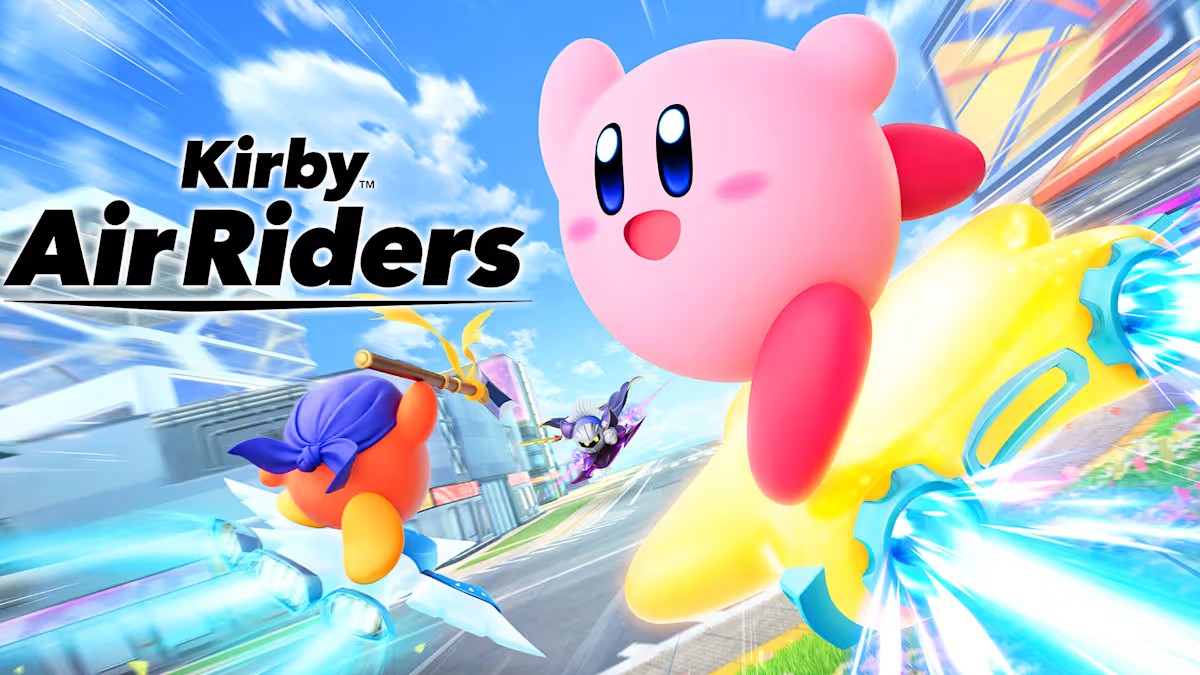
The machine you’re driving in Kirby Air Raiders plays a big part in determining how successful you can be as a racer because the different stats and abilities of different machines have a big impact in your performance on the course.
The Vampire Star machine is a strong racer that is well-suited to participating in each of the game’s various racing modes, making it a potential target for players looking for a better machine to get better results. Its most notable feature is the high Lift rating it carries and the unique way it allows you to, as the name implies, sap your opponents with your attacks. This makes it a fun and functional option for players with an offensive, pestering style.
If you’re looking to add the Vampire Star to your repertoire there are two ways to accomplish this and get racing on this machine.
How Machine Unlocks Work In Kirby Air Riders
Image: Nintendo
When you first begin playing Kirby Air Riders, you begin with a default set of courses and machines you can race with and on, but you can begin unlocking new options as you play the game. There are two ways you can unlock a new machine in Kirby Air Riders for use: either through miles or accomplishments. With miles unlocks you simply pay the associated miles cost for the vehicle. Alternatively, you can unlock the machine by meeting its accomplishment checklist requirements. Either method allows you to use the machine going forward.
How To Unlock Vampire Star In Kirby Air Riders
Image: Nintendo
There are two approaches to unlocking the Vampire Star. The first option is to pay for your Vampire Star with miles. It is a pricier option, costing 8,400. If you want help farming miles to spend on a Vampire Star, you can check out our guide on how to farm miles in Kirby Air Riders for help. Finding a quick way to gain miles for your account may make the Vampire Star a more attainable option through this method.
Alternatively, you can opt to unlock the Vampire Star by completing the required checklist mission. To do so, you need to be taking part in Road Trip mode. After you have defeated 15 enemies in Road Trip mode, you will complete the challenge and unlock the Vampire Star for use in the game’s various racing modes.
The Vampire Star and its unique perks can be yours if you follow this guide, so go unlock it and take it to the races today!
Football Manager 26 is a game of many systems, all tied together into one game about leading a group of footballers to the absolute top of the footballing world. Unfortunately, not all these systems are always the easiest to understand and get the most out of, particularly for newer players. If you find yourself struggling with your club training, these tips will help you more effectively manage your work and maximize your player growth.
Delegation Is Your Friend
Image by Operation Sports
An important thing for any new FM player to understand is that you are fully in control of how much, or how little, you are responsible for when playing Football Manager. This means you have control over just how much responsibility you take over training, and this can be an excellent way to get your feet wet without sabotaging your team or its development.
There are two excellent ways to lower your training stress while getting familiar with the system. Your first option is to simply delegate it to another staff member. This ensures your training is being managed until you’re comfortable taking over. Alternatively, you can turn to resources like FM Scout or FM Arena, where other players upload their training schedules for you to plug and play in for your side.
Improve Your Infrastructure
Image by Operation Sports
Although not a part of setting your schedule itself, your infrastructure at the club is an important part of how effective your planned training schedule is. Both the facilities that your players are practicing at and the coaching staff you have impact how well or not the players progress from their Current Ability to their Potential Ability, and the corresponding change in attributes that brings.
By investing in your facilities, you raise the ceiling on your players’ benefits from your training, and increasing coaching quality likewise means they will get more out of the plans you make. Making improvements in these areas a priority will also improve your training performance.
Prioritize Pace
Image by Operation Sports
Football may be the beautiful game because of the wondrous things players do with the ball, bending and shaping it to their will, but none of that matters if you can’t get within five yards of the opposition when you don’t have it or make space when you do. Through the years, testers have done many experiments into the mechanics of the game, and while it’s early in this new engine’s life, physical tools remain critical to players.
To that end, individually training your players to be faster and with better acceleration is one of the easiest ways to improve the performance of your players and club. If you have players still in their early 20s or younger who are developing well, and they don’t have elite Pace or Acceleration for their position, then throw on a Quickness individual training to prioritize boosting these key attributes.
Assess Your Needs And Adjust
Image: Sega
The amount of overall growth or decline a player experienced in FM training is decided not by the type of training they’re doing. Instead, what you have control over is how that growth and decline impact the key attributes of your player. While factors like age, Current Ability, and Potential Ability will determine how much your players’ overall attributes move up or down, the training they’re on determines which attributes actually move and in what direction.
To this end, your training is an opportunity to work on areas where your team struggles or where improvement would most benefit you. Consider both your overall team needs as well as the individual player areas that would provide the most benefit from individual training after you’ve improved physical tools to an acceptable level.
Don’t Run Them Into The Ground
Image: Sega
Remember the purpose of all this training you’re having your team do: winning football matches. Making your players better is all about making them perform better on match days, and they can’t do that if they’re dog tired every time they step foot on the pitch. This is particularly important at clubs at either end of the size spectrum, with big sides playing congested schedules which routinely feature two games every week and smaller sides lacking the squad size or fitness for overly intensive work all week long.
Rest and Recovery sessions are critical on the day before and after matches, respectively. Using these training schedule entries wisely allows your players to benefit from training while not expending everything they have, so that your opponents are running circles around you between the whistles.
Training is important for making your team reach its height, but there’s no reason to be stressed micromanaging it. Apply these tips, tweak as you and you’ll have your team developing to plan in no time.