Zobrazení pro čtení

Mixtape Isn't Just a Video Game
Mixtape Isn't Just a Video Game

I wasn't a cool teen, as much as I wanted to be.

I had cool friends. Gratefully, in the throes of my nerddom, I found the alternative kids, the ones who listened to My Chemical Romance and Senses Fail and Alkaline Trio and Brand New, the ones who wore ripped jeans and band shirts, with mediocre grades and skateboards who spent the lunch period looking for trouble.

I was never one of them, but I was thankful to be adopted into their scene congregation for a time.

The cool kids don't survive for very long. You can only be cool, alternative, and rebellious while there's something to rebel against. Eventually, you go to college or pick up a part-time job over the summer, and suddenly, your life belongs to someone or something else. The camaraderie you fostered reveals itself to be Stockholm Syndrome, and twenty years pass, and you don't talk to anyone from that crowd anymore. You romanticise your high school years, adding layers to the nostalgia, telling yourself that the brief moments of youthful invincibility weren't a distraction from the existential threat of growing up.
Mixtape Isn't Just a Video Game
Source: Author's PS5 screenshot.

Make Memories to Good Music

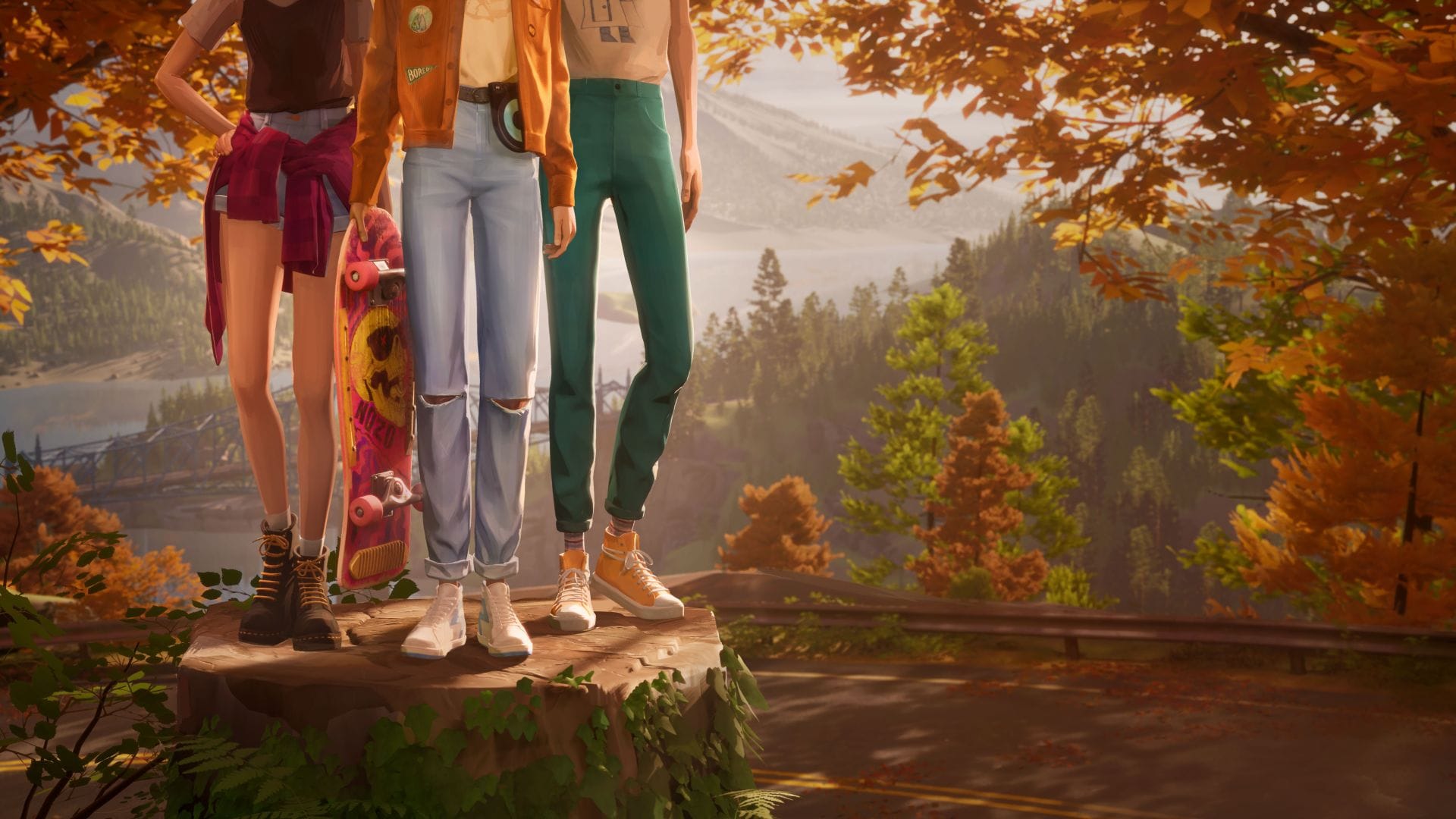
Mixtape says those afternoon hangouts and wild parties; the emotional frisson of sharing burned CD mixes and bundling up in the back of your friend's car for a drive-in movie; and spending the weekend rained out in a campsite, eating marshmallows and cold hot dogs, are all real. They happened; you and your friends loved each other intensely for an instant. And then you went your own way, but maybe without the fireworks. The ghosts of your younger self still drift around somewhere behind you, poltergeists that emerge when you watch Garden State or listen to Taking Back Sunday.

"On their last night together, three friends embark on one final adventure. Play through a mixtape of memories, set to the soundtrack of a generation."
- Annapurna website

More than a visual novel on wheels, Mixtape is an ode to the shared dream of growing up. Like John Hughes or Steven Spielberg, Mixtape's creators attempt to convey the unhinged majesty of a particular, fleeting, indescribable moment in life, one that many of us ache to return to. Unlike other teeny-bopper narratives that try to portray the high school years as sacred or overly profound, Mixtape lets itself play out over just a few hours, showing a snippet of life shared among three best friends on their last night together. And, of course, it's all about a killer party.

To many, Mixtape will feel like Life is Strange or other similar titles that have tried to convey the bittersweet ache of growing up. I have complicated thoughts about our societal obsession with high school, and why this albatross dictates so much of our creative and material aspirations. Was high school good for anyone, or do we desperately wish it had been, and craft narratives around the imaginary? Mixtape's whimsical yet stoic sincerity is illuminated by the game's interspersed mini-games, eclectic soundtrack, and heartfelt themes.

You Might Miss It

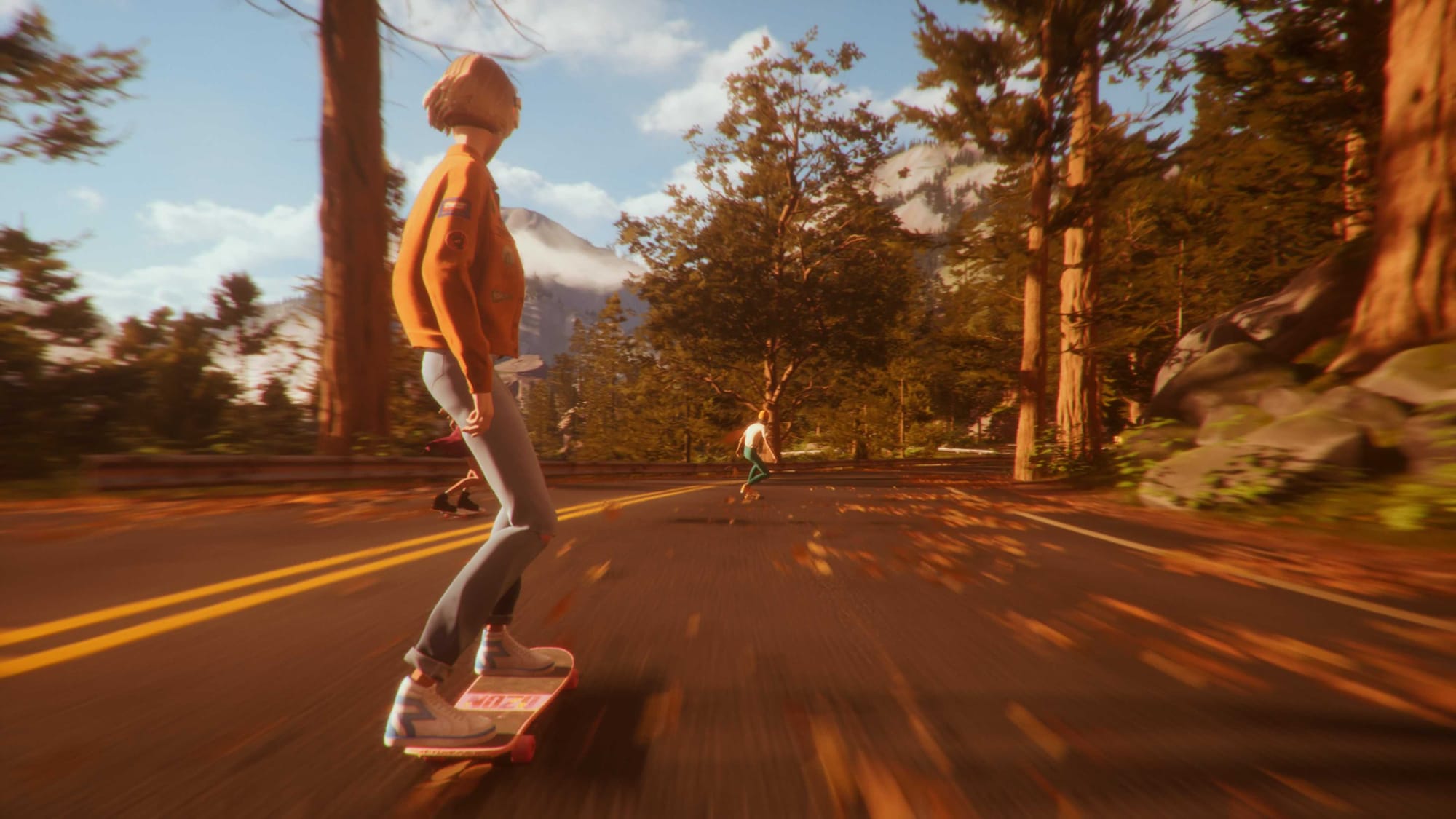
I must admit, I was moved by Mixtape from the jump—er—downhill skate. Developer Beethoven & Dinosaur may have created a title light on engagement, but every moment connected me with the characters, with not one second of emotional grandiosity wasted. As with Firewatch or Life is Strange, I felt myself in the game, connected to the characters through something more than desire or whimsy. The unusual graphical direction, coupled with the game's intensely film-motivated editing, endeared the experience to me right away. While some players might not vibe with the dialogue and cutscenes driving most of the action, there's plenty of variety in the playable segments, and the game does occasionally slow down long enough to explore moments lost in time.
Mixtape Isn't Just a Video Game
Source: Author's PS5 screenshot.

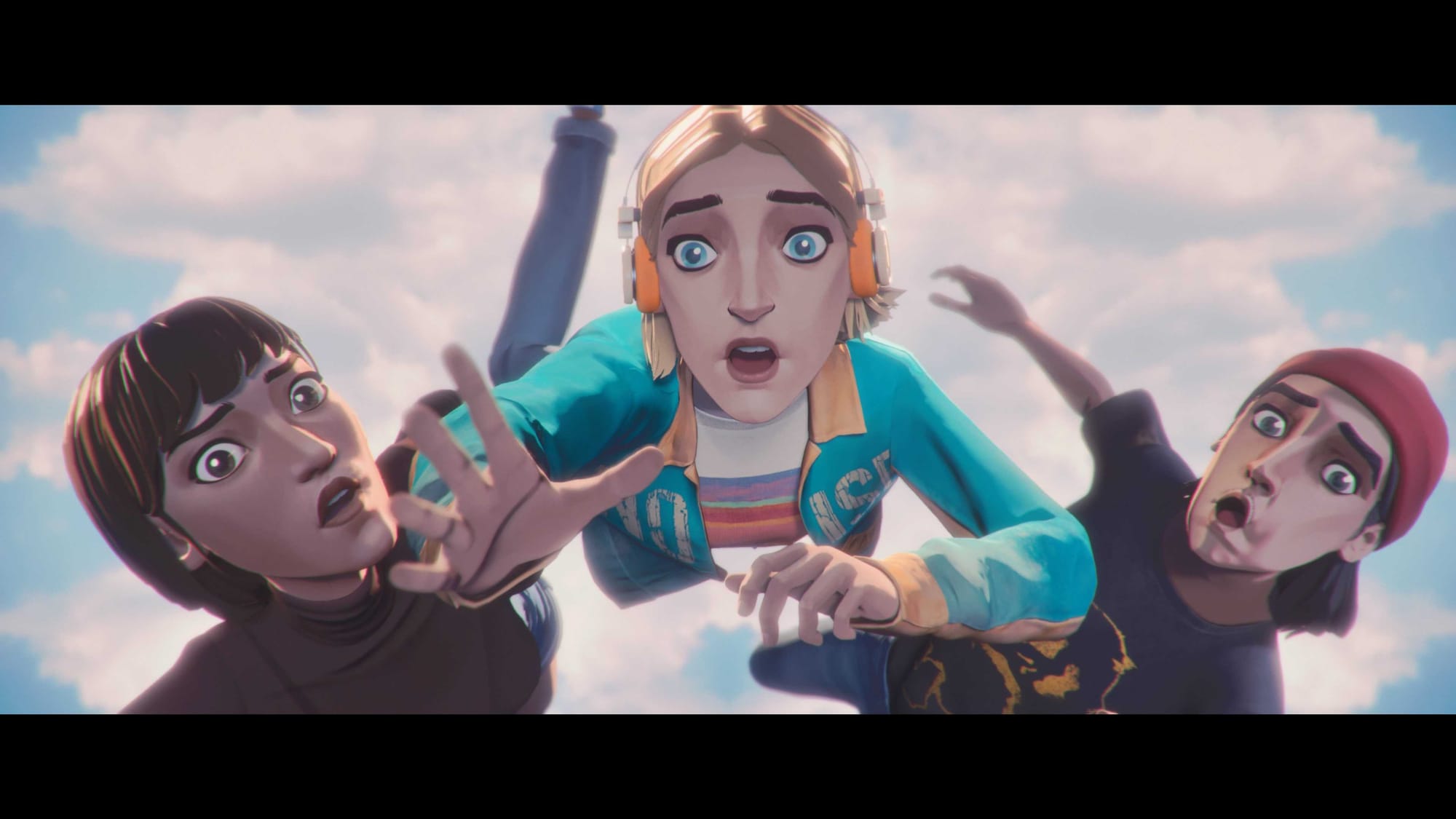
Rockford, Cassandra, and Slater are all bravely written characters, each realistic enough in their archetypes to coincide with iconic Ferris Bueller or Breakfast Club favorites, while retaining their own unique personalities along the game's limited course. Instead of baiting us with a collapsing love triangle or granting too much audience to any individual character, each of our ne'er-do-wells is allowed to spread their wings in the short time allotted them, especially Rockford. Mixtape is aware of its mechanical strengths and plays into them, relying on the audio cues of its pin drops to flesh out this "mixtape game."

Rockford, Cassandra, and Slater all have an overly romantic view of the world at large; each is undercut by the interplay of their dynamic perceptions, with Rockford's obsession with music balanced by Cassandra's violent dynamism and Slater's laissez-faire California hippy philosophies.

Mixtape also doesn't backseat its raucous Gen-X soundtrack. Depending on your age (and audio mileage), you may only immediately recognise a quarter of the twenty-plus songs that play out across the game's linear narrative. Rockford's tastes aren't singularly post-punk and heavy metal, but pull from decades of musical history, backed by a meta-directional explanation of the song, its place, and its meaning. The developers further ensured the songs were edited to fit the narrative and mechanical moment, with many of the audio drops perfectly aligning with an emotional beat or press of a button.
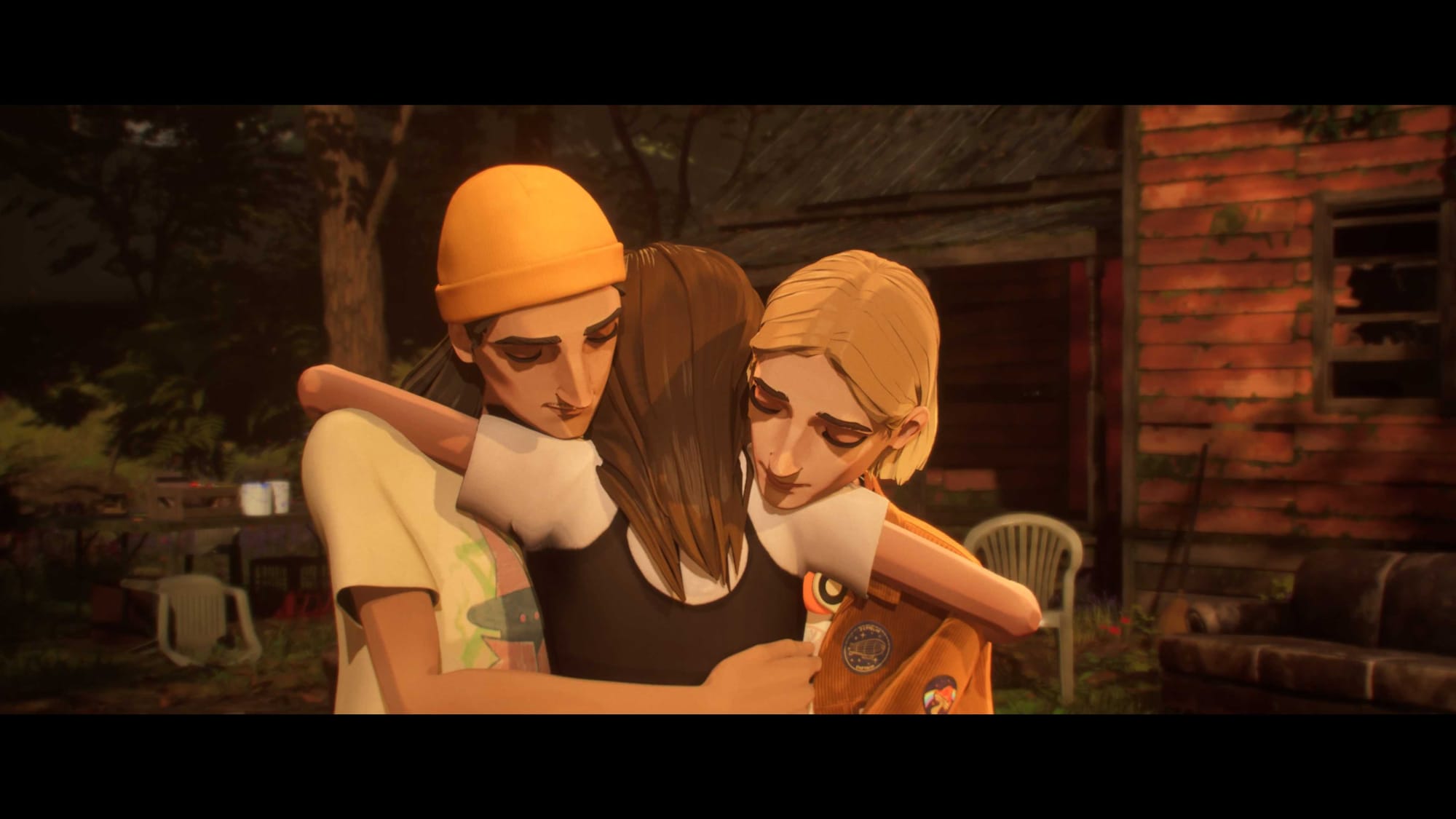
Mixtape Isn't Just a Video Game
Source: Author's PS5 screenshot.

Optimal Teenage Experience

While refreshingly punchy, plenty of moments left me wanting more. More time to be in the moment, more time to enjoy the buildup, more time to fall into the unique experience. But I have a feeling that developer Beethoven & Dinosaur wanted to rob us of this saccharine meditation, to some degree. Life doesn't wait for us. Our best moments are here and then gone, contained in hazy memory. Mixtape can be replayed again and again, but the initial experience is a gut-punch firing on all cylinders, meant to evoke strong feelings while simultaneously reminding the player that life marches on at an uneven, frustrating pace.

Coming-of-age stories make us nostalgic for lives we haven't lived. Gone Home, To The Moon, Florence, and Life is Strange place us in a very particular slice of someone's life, and then yank it all away. The Beullerian "Life moves pretty fast. If you don't stop and look around once in a while, you could miss it" is ever true because it punishes those of us who are supremely anecdotal and sentimental.

You don't have to have lived any of the experiences within Mixtape to feel for its characters. The serviced nostalgia isn't based solely on lived tableaus, it's a historical reference of pop culture, a framed eccentric network of bite-sized vignettes recognizable to players who have come across movies, songs, even other video games that pull from our recognizable collective consciousness. Empathizing with the characters doesn't require placing yourself in your shoes—Mixtape is the sort of emotional microdosing that's perfect for a weekend afternoon.

For the aging adult who recalls a more formless world free of pressures and responsibilities, Mixtape is a vacation into the fantasy of teenager-hood, a risk-free celebration of the possibility and imagination that comes with raging hormones, close friends, and misplaced ambition.

Art Supersedes Knowledge

Video games like Mixtape straddle a fine line of established convention, eschewing traditional gaming aspects for artfully conducted episodes. Predictably, there is a slew of the gaming public who cannot stand when a game dares to edge outside of the corporate zeitgeist. A game can't be for them; it has to fit into the binary of good or bad, mine or yours, and, vexingly worse, necessary or unnecessary. It's difficult to imagine a video game like Ico, Flower, or Journey being released in such a hostile climate. Even tremendous, medium-shifting titles like Kentucky Route Zero are not immune to the guile of the internet, where any interactive experience outside of Elden Ring, Baldur's Gate 3, or Grand Theft Auto is condemned.

Mixtape deserves to live on its own outside of the monocell derision of a culture that has shifted so completely into negativity and monotony. If the video game industry is not allowed to take chances on experiences far outside of the realm of expectation, it is doomed to orbit the same list of corporate-approved genres, ancient franchises, and unoriginal stories.
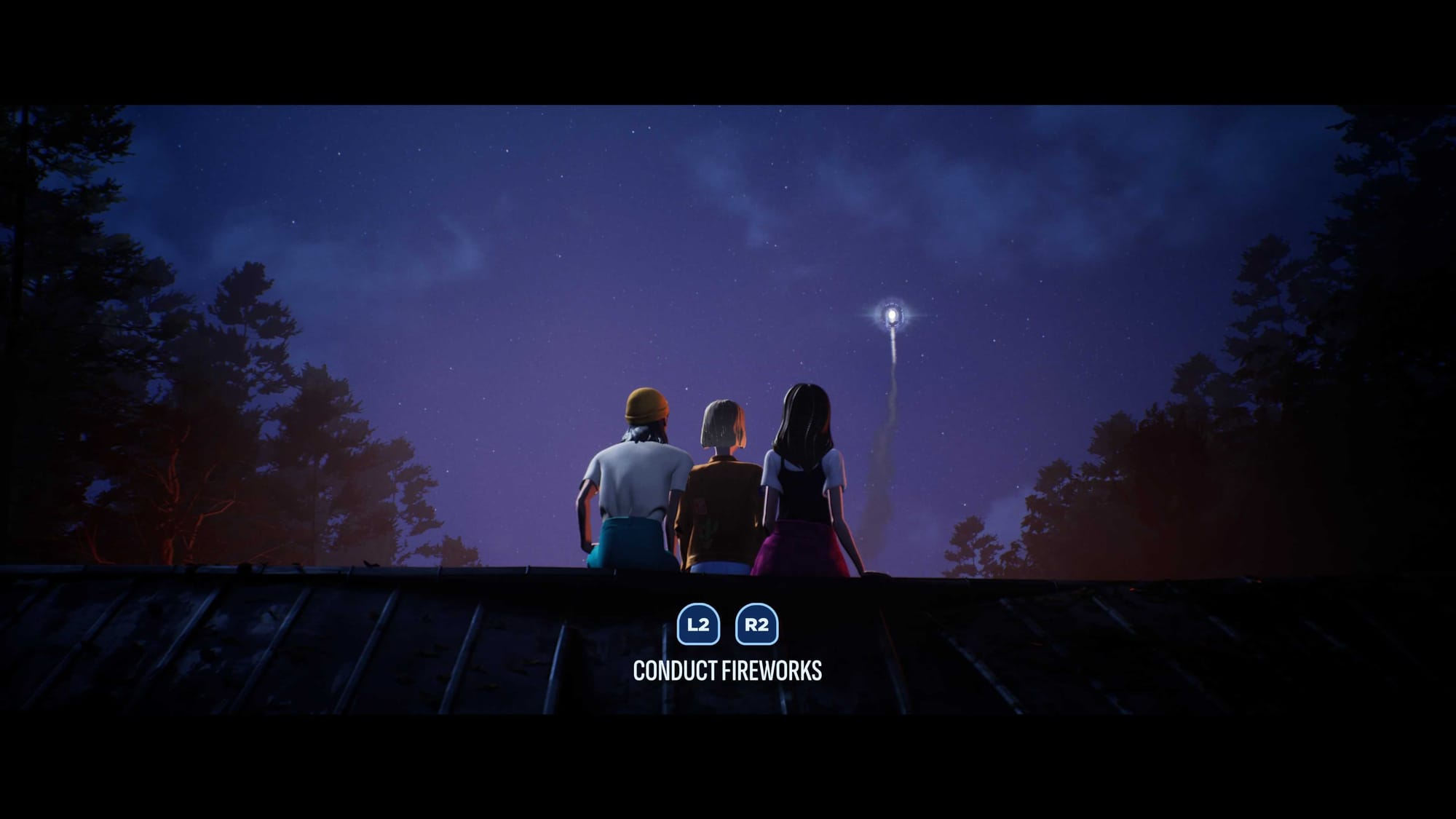
Mixtape Isn't Just a Video Game
Source: Author's PS5 screenshot.

Growing up isn't a singular, linear path from childhood to adulthood. Mixtape's dynamic, romantic approach to the tedious normalcy of everyday life is what brings art to the form. Even if Mixtape had fallen flat for me, we must continue to admire the intense labor, ambitious creativity, and team effort required to bring these experiences to life (denigrating everything to "slop" is not only trite, it's dull). As the video game medium is flooded year by year with new games, gamers must continually choose between the played, the unplayed, and the terminally backlogged. Short, punchy, transformative adventures have forever been the backbone of gaming's most dynamic presentations.

Whether you're invading an alien planet or skateboarding down a hill, video games allow us to leave the real and become comfortable in the fantasy.

Nostalgia or Niche

Nostalgia is an oft-criticized catch-all trap, potentially and routinely utilized to soften the unstoppable lows of aging and capitalism. However, nostalgia can also be used protectively and intelligently, calling back to different eras of comfort, or softening the edges of memories that we often return to. Not everything is baited by the intents of nostalgia, and the recreation of art and the timelessness of pop culture can often be reformed through a more eclectic, powerful lens. Maybe you grew up listening to John Paul Young and Devo, Mondo Rock and Smashing Pumpkins, Silverchair and Iggy Pop. Maybe you came late to these icons. Nostalgia—or the feeling of comfort it exudes—can be reached through the expertly crafted designs of the artist, calling us back to a place we never lived, reaching out to our communal desire to return to the "good times."

None of us is the person we imagined we would be as teenagers. Video games are a powerful, all-encompassing medium, and an amalgamation of dozens of different art forms banded with interactivity. Games like Mixtape allow us to jump into foreign or familiar roles, evoking an emotional resonance undisputed by other media. Thomas Was Alone had me empathize with basic shapes. Kingdom Hearts added layers to well-known animated Disney characters. In Ghost of Yotei, I truly would've done anything to avenge my Japanese family from the Edo period. Video games transcend time, space, and personhood. Mixtape's familiarity is a trick, and a good one.

Video games are art. Mixtape is a video game. These are undisputable, objectionable facts. Maybe this ride isn't for you. Maybe the next one will be.
  •  

Still With Me, Dear Reader?

Still With Me, Dear Reader?

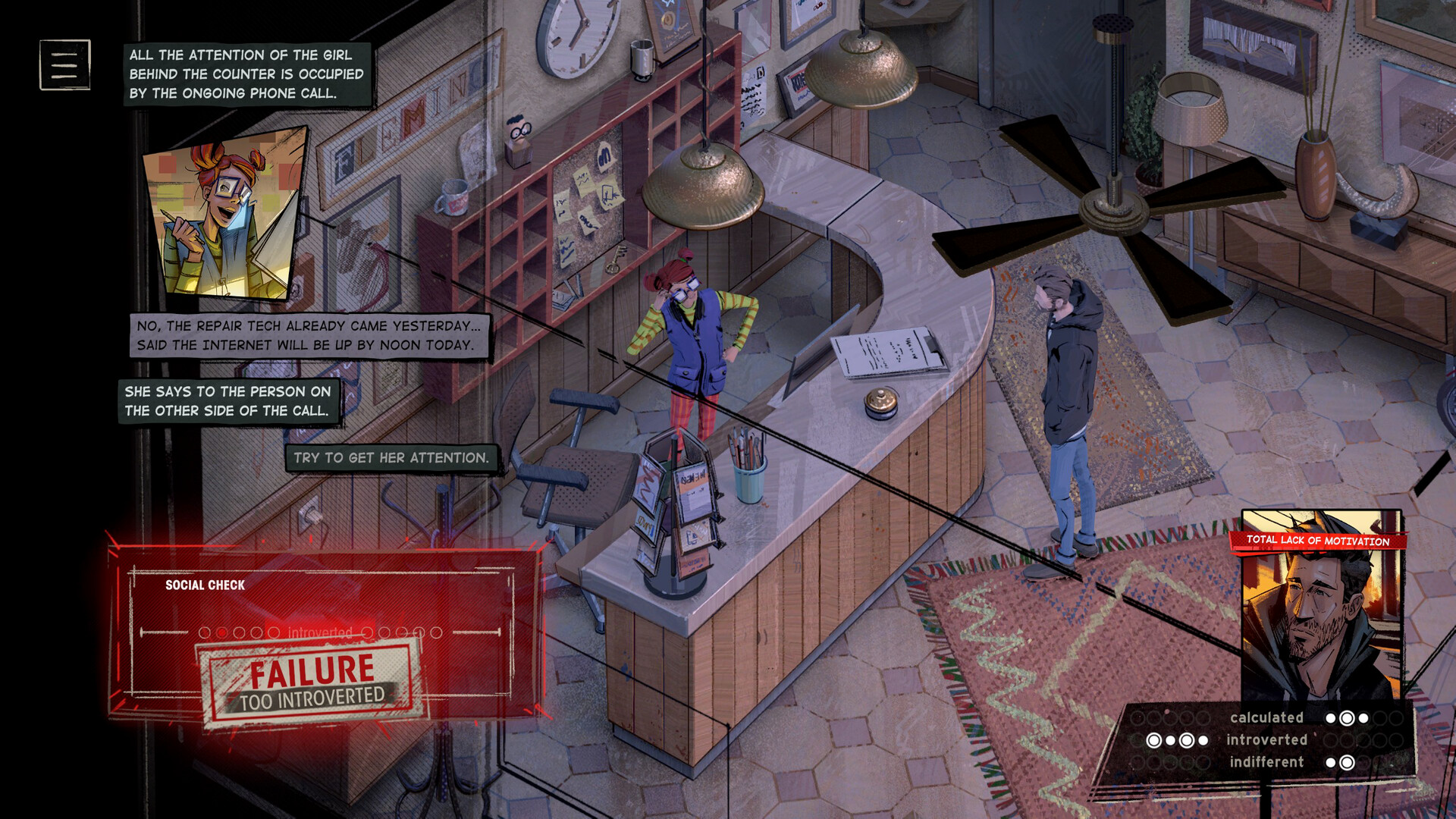
Ever played Disco Elysium? That's probably the game that'd pop into your mind if you saw Rue Valley. Yet, to compare it to Disco Elysium undermines and reduces Rue Valley to be "like" it. It is only in spirit where they intertwine – a familiar-feeling interface, a sweet gift for words, a tragic hero to accompany you. But Rue Valley stands on its own two feet, far away from the realms of Disco's controlled insanity.

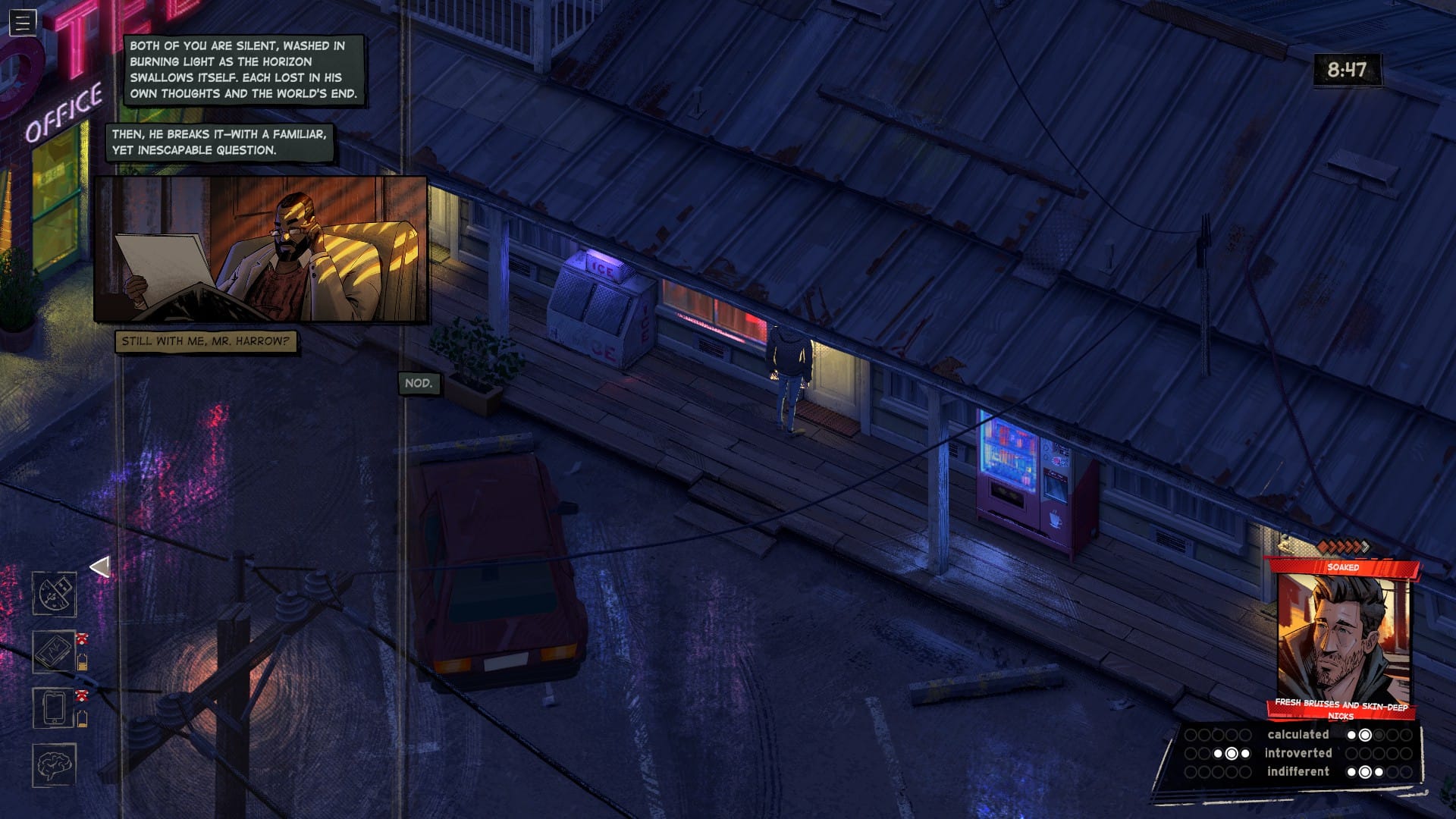
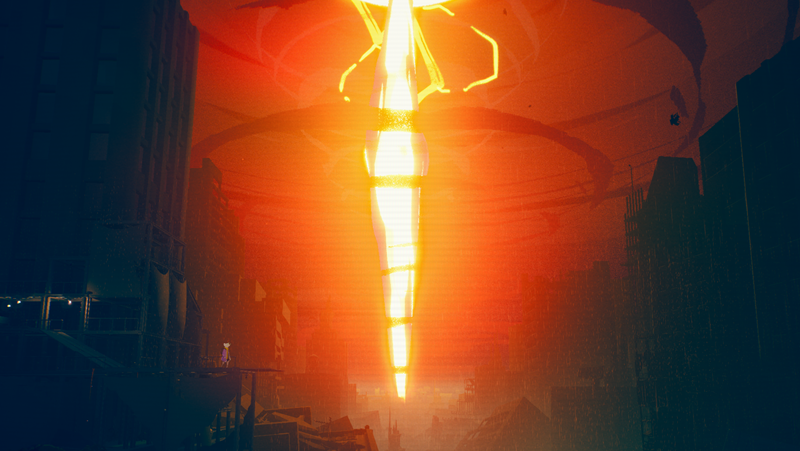
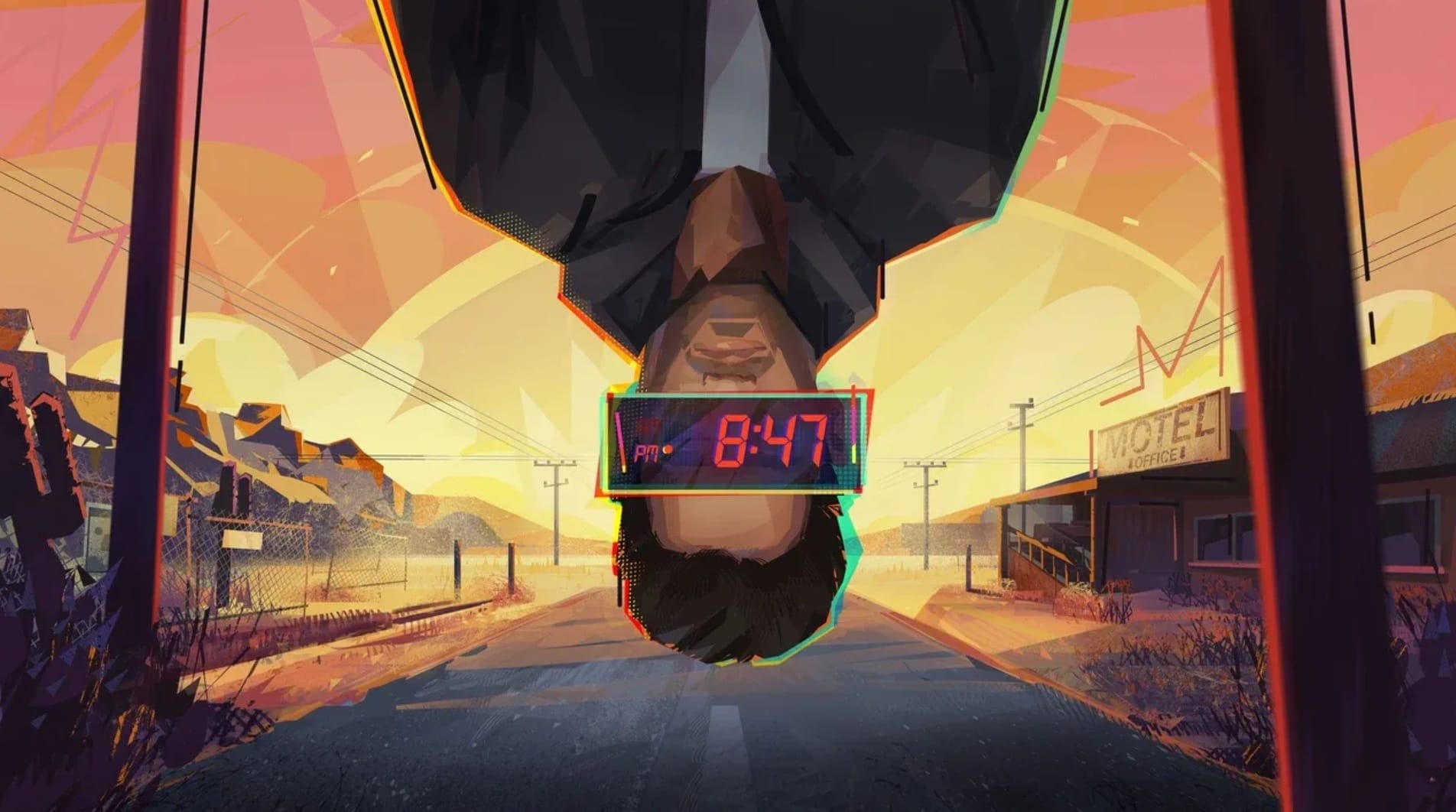
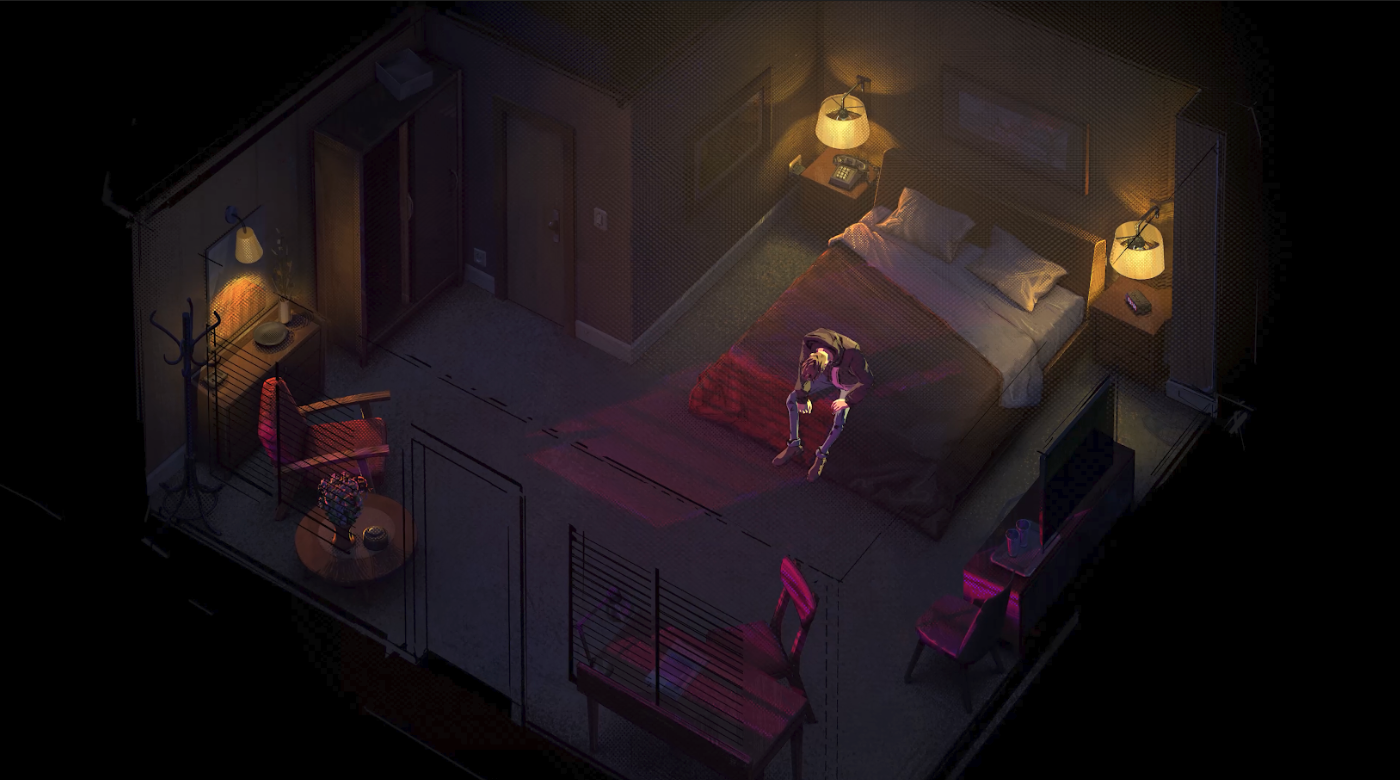
At 8:47 pm on the dot, a blinding light fires up on the horizon offscreen, scorching everything in its path and pitting the screen to black, before you're back in the shoes of Eugene Harrow, sitting in his therapist's room at 8 pm. The next 47 minutes turn into an opportunity, your opportunity to dig right into a mystery shrouded across the desolate town of Rue Valley… and forsake yourself of this loop once and for all. That is, if you can get past your own self-defeatist nature. The game is a linear experience about the quest for reason, tragedy, acceptance… wrapped together in a 47-minute in-game time slot that you’ll no doubt burn through. Over. And over. And over again. Till you've turned all the stones you could find to patch together the final truth. My record is 121 loops until the climax.

Still With Me, Dear Reader?
Eugene Harrow in his motel room. Credit: Owlcat Games Ltd.

The game is not verbose. It does not paint a red nose on the quasi-complexities of human relationships and sociopolitical intricacies for gags. It does not allegorize absurdist themes across the different threads of its stories. It does not pit you with an amnesiac protagonist to figure out, as if they were under your microscope. Hell, it does not have a Seolite darling in a bomber jacket for you to appease.

Instead, it clenches us with a hero's tale that could tug at our hearts hard enough you'd swear the writers kept a watchful eye on your personal life. Thus, one could argue that Harrow is an extension of the player — me, and perhaps even you, dear reader, who's faced challenges in life that can leave them feeling tired, even broken. We see Harrow, ravaged by the serrated edges of nihilism and helplessness, continue to dwindle down the abyss, sabotaging themselves enough to fail so as to justify striving forward. And the 47-minute constraint creates the perfect microcosm to challenge the pessimist notions they carry, pitting ourselves against some strange yet familiar demons we loathe to confront.

That right there is the real story. The mystery quest he's thrust into is just enough adventure to reel us in, but not too deep that it becomes subtext; a tactic packed with strong intent on the writers' part. Rue Valley is one of the few gems that continues to push the bar for writing stories about mental health. While Disco Elysium at times caricaturizes the hero's festering abyss for us to cackle at, Rue Valley takes a more empathetic approach, offering us a chance to explore the abyss with him and drive ourselves through him to the core of its existence. This was something I resonated with. Deep. In. My. Bones.

Still With Me, Dear Reader?
Source: Steam.

In a time when the four walls I reside in felt like a stuffy cage, the folks I hung with felt like plastic mannequins, and the drive for my passions flickered in the turbulent winds of stress, exploring Harrow's story in Rue Valley felt akin to kneeling over a bonfire. It was a brief respite coursing through my eyes, my mind, and my body like a cool breeze in the meadows — a strong resonance bound between the player and the player-character, a phenomenon quite rare in games today.

Though it may not magically fill the void that begins to fester within most of us Over-Thirty-Somethings after eons of facing invalidation and staleness, what Rue Valley imparted through Harrow's journey is wisdom as old as time itself, reinforcing something for us to remember it by when the tough gets tougher.

Coming out of the game left me feeling just a mite validated by the fact that engaging with this dreaded loop, despite the weight of cynicism, only makes us stronger and more adept at evading the snapping jaws of the abyss. That by reaching the other side, we tell it that it holds no grip over us. That we're still standing, okay, still here.

With that in mind… I hope you're still with me, dear reader. Still pushing through your days, keeping to your goals, reaching out to folks, placing your heart before yourself, and letting go of what you can't control. If you find the times today difficult to contend with, perhaps a journey through Rue Valley could bring a semblance of connection, of groundedness, of the validation your heart seeks with the story it tells.

Even if just for a moment.

Still With Me, Dear Reader?
Still with you, Dr. Finck. Source: Author.

Rue Valley currently sits at Mixed reviews, a laudable story limited only by its clunky game design. With that said, I cannot recommend playing this game enough. Give it a shot, and enjoy the journey.

To those who feel they’re clinging to hope by mere threads, mental health resources are available. Check in with your local mental health clinic or hotlines, and open up to them. The developers also collaborated with Movember, a global non-profit that brings attention to mental health and men’s health. Check out their site if you’re curious to find out more.

  •  

WordPlayer: Underneath The Snark, Dispatch Believes in Heroes

WordPlayer: Underneath The Snark, Dispatch Believes in Heroes

Dispatch, the new superheroic choice-focused narrative game from AdHoc Studio, almost lost me in its opening ten minutes.

In the first action sequence of the game, you control Mecha Man pilot Robert through a series of quick-time events as he takes on the Red Ring gang that has assembled under Shroud, the villain who killed Robert's father. As you fight Toxic, a poison-themed villain who can coat his body in a self-produced sludge, his clothes burn away, leaving him naked. The camera frames Mecha Man through Toxic's legs, his penis hanging down from the top of the screen. "Cool dick," Robert quips.

It's not that I am a prude or that I think that superhero stories need some decorum. The thing I'm actually burned out on, I've realised, is when superhero stories turn and wink at the screen and assure us that they're not like the other superhero stories - that this one's snarky and self-aware and knows that, in real-life, a lot of these folks would be psychopaths. You can imagine the conversation in a hypothetical writer's room about how silly the Hulk's stretchy pants are.

WordPlayer: Underneath The Snark, Dispatch Believes in Heroes
Source: Steam.

This is a wider symptom of the general oversaturation of superhero storytelling: many "different approaches" to the genre have now been taken multiple times. I also think that James Gunn's excellent, fairly sincere Superman movie really reset something in me earlier this year. I'm finding the winks and nudges in the new Marvel movies increasingly unbearable! Or maybe it's just that I watched four seasons of The Boys and kind of lost my stomach for this whole endeavour.

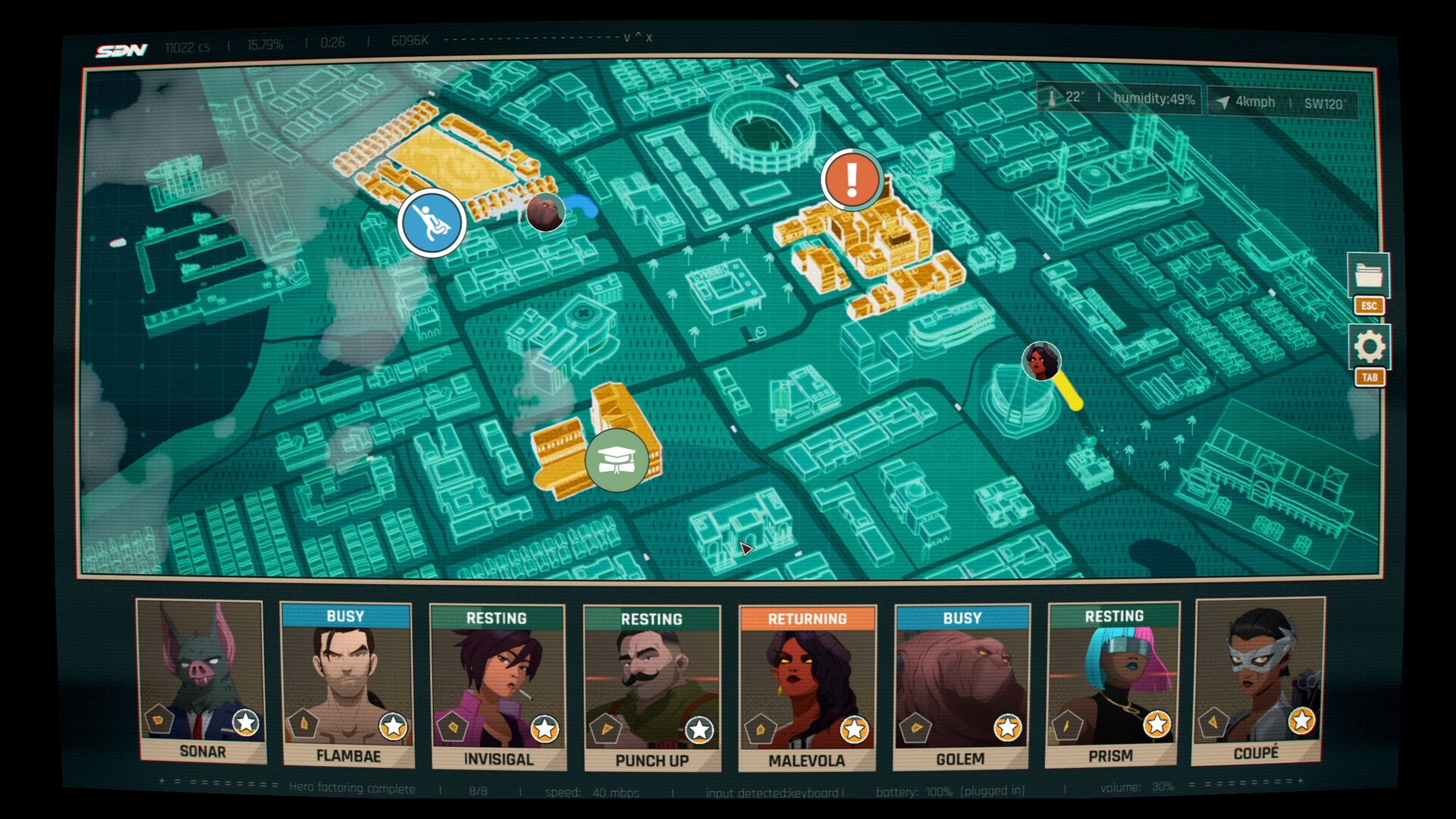
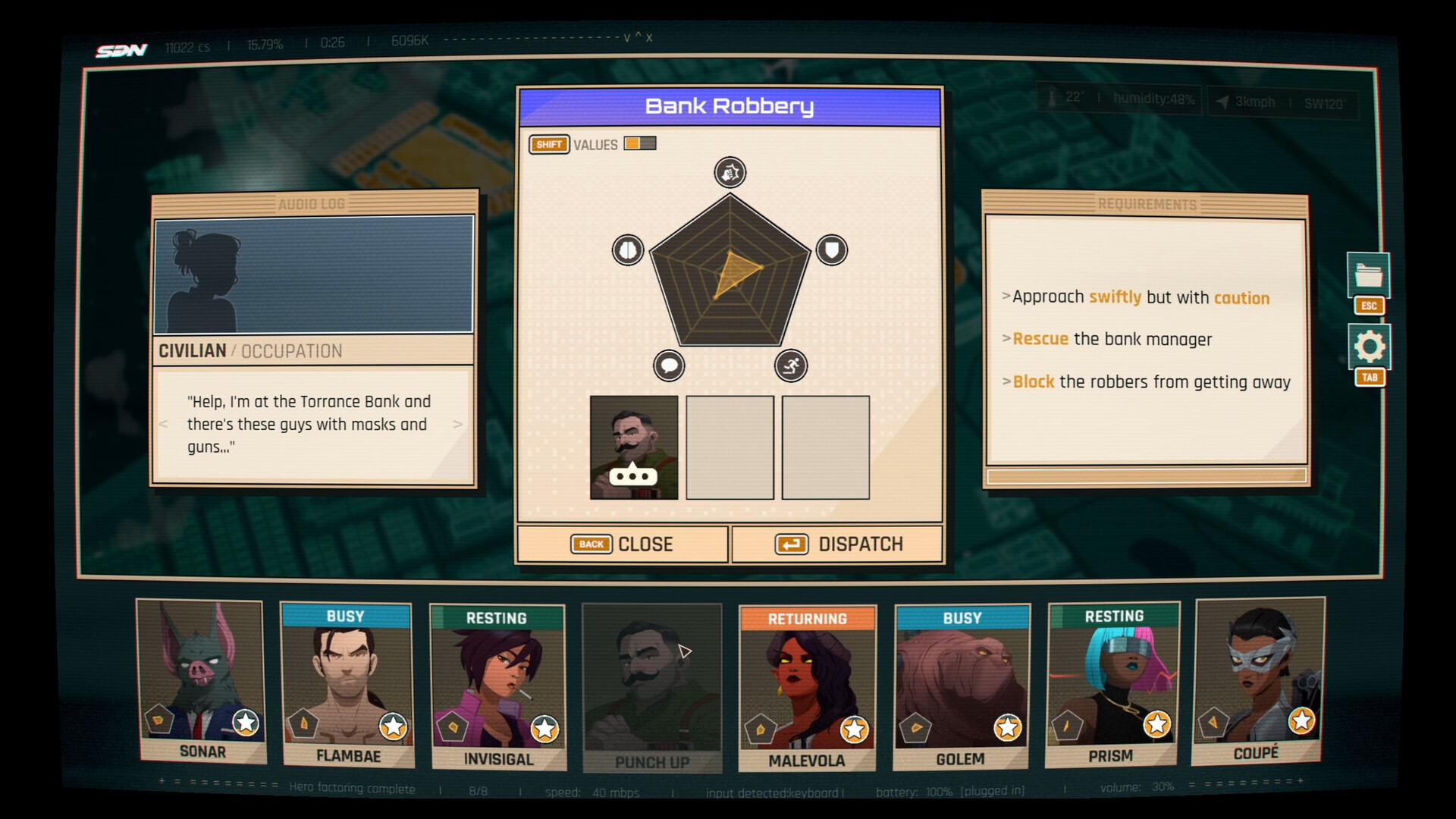
Pulling back a bit: Dispatch is an episodic superhero dispatcher game, split between Telltale-style choose-a-response narrative moments and a map interface where you decide which superheroes to send where during a crisis. It's a fun system, one where you need to balance the skills and abilities of each member of your team against what the situation seems to be calling for, and hope that you've made good judgments.

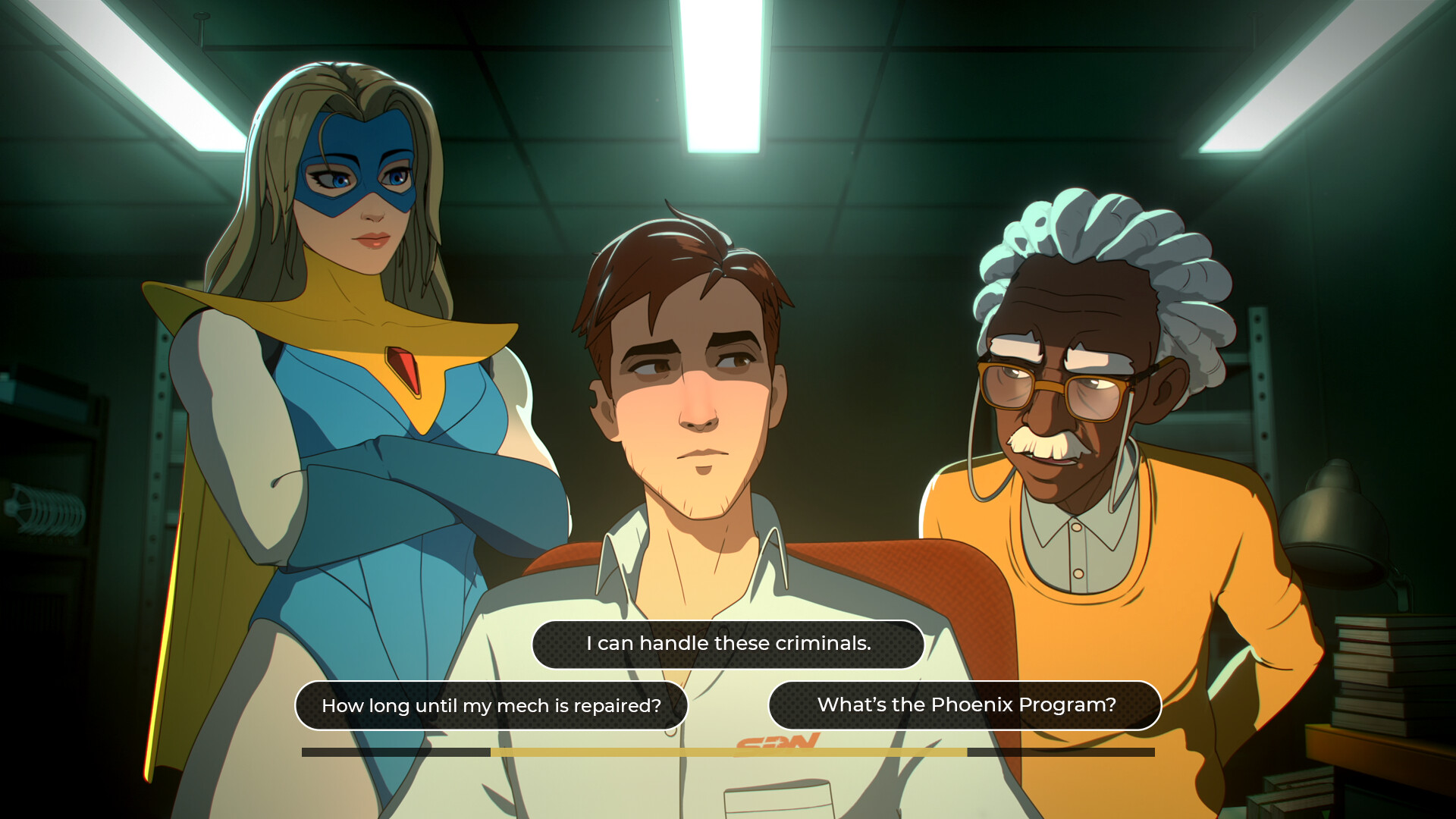
Robert, a character with no innate superpowers beyond his suit - which is out of commission following a major battle at the game's opening - accepts the job with the promise that the Superhero Dispatch Network will repair his suit and let him return to his role as a hero by the end of his contract. As the network's newest dispatcher, he's given the least promising squad they have - the infamous "Z-Team", made up of former villains who have been flipped, but who still retain a lot of the spikiness that defined their past lives.

WordPlayer: Underneath The Snark, Dispatch Believes in Heroes
Source: Steam.

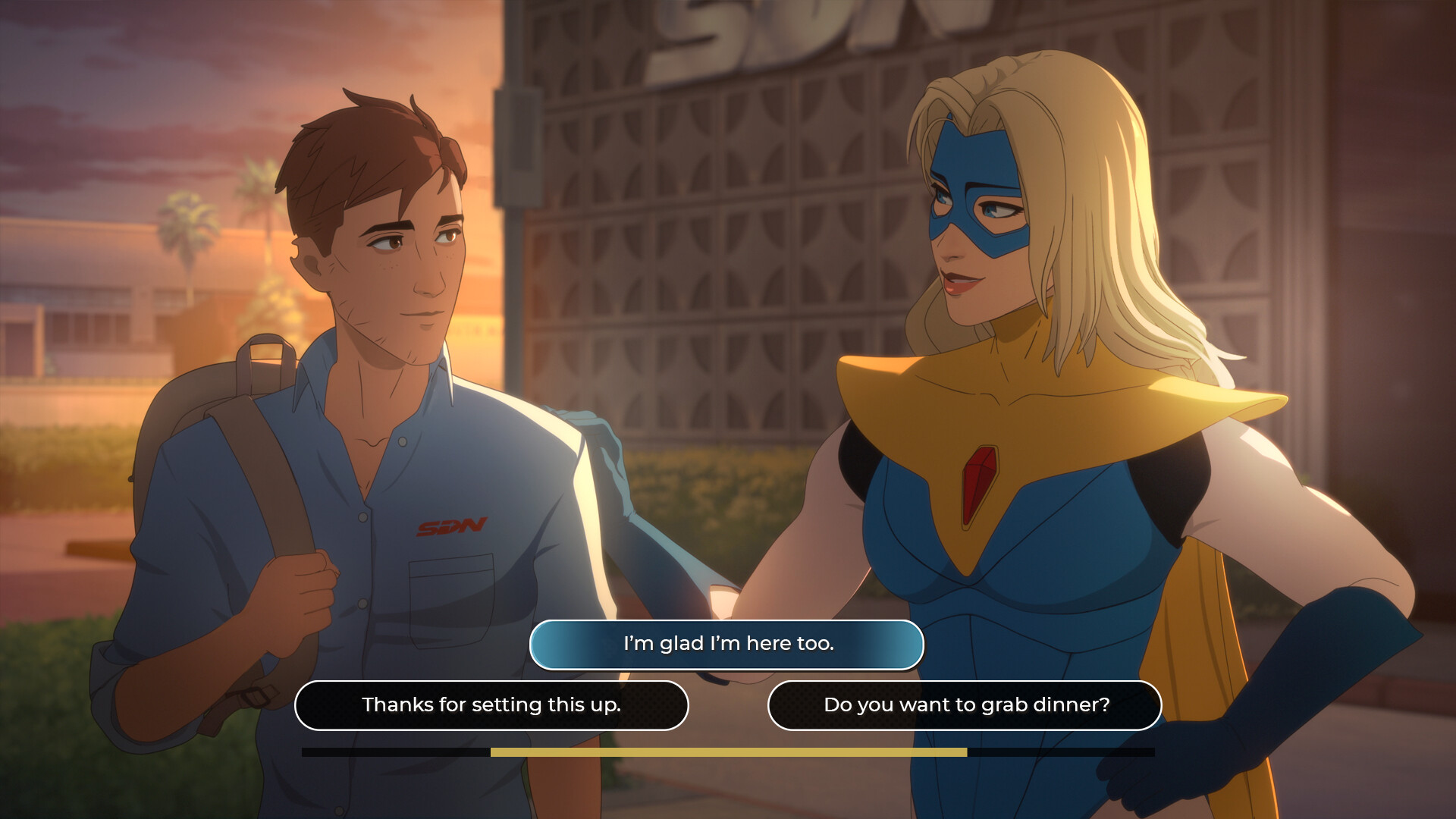
For the first half of Dispatch, I found myself quite liking the dispatcher gameplay, and the general idea of directing superheroes across a city, but struggling to connect to this team of heroes - former villains who had been recruited to the Superhero Dispatch Network, all of them seeking a new start. Robert, their snide, irritated dispatcher (played ably by the great Aaron Paul) was difficult to empathize with, even as the "Z-Team" he was commanding continued to needle, provoke and antagonise him at every turn. Conversations turn into arguments so quickly, and characters snipe and insult each other in a way that felt, to me, a bit forced.

The script, I thought, was cringey in places. The jokes weren't totally landing. And the most consequential choices were all focused on which office romance to pursue, which is the sort of choice that bothers me in a game - not because I don't like romance, but because the "here's two girls, choose one" approach feels reductive (especially when one is your boss and the other is your direct report). The other most significant choice in the first half of the game is, as far as I'm concerned, fairly contrived, a real signpost for future conflict that felt awkwardly integrated. So I got to the end of episode 4 (of 8), interested to see where the game was going, but not totally won over. 

But in the back half of Dispatch, something changed. At the end of Episode 5, Robert is asked to make a decision that is, to my mind, an example of a good choice for a branching game - whether or not to tell his team the truth about himself, which will make most of the team respect him more, but one member of the team really hate him. I made my decision - I told the truth - and felt both the weight and consequences of it. My in-game team did, too. And here, I started to feel a shift in the story. The elements I'd had a hard time with in the first half were, in fact, building towards something.

WordPlayer: Underneath The Snark, Dispatch Believes in Heroes
Source: Steam.

Dispatch is a game about trying to run a squad of superpowered people who, you realise over time, really want to find a good outlet for their potential. As it turns out, this is not as cynical a game as I thought - it's a story about a team of people realising the true value of actually using their gifts to make the world a better place. And in the back half of Dispatch, a game full of twists and turns, interpersonal drama and snappy one-liners, it starts to really consider what does or doesn't make a person a hero - whether they're a former villain, a bitter old retired superpowered person, a civilian, or someone who has moved into administrative work and finds themselves increasingly disconnected from work in the "field". The SDN itself is often taken advantage of for vanity projects or the capricious whims of the rich and famous, but as you get better at your job - and more connected with your team - you start to see better the real opportunities that exist here, for you and for your team, to do good.

The heroes under your command take orders from Robert, directed to deal with issues he never needs to touch, and all the characters handle complex situations without ever necessarily thinking too deeply about their work being "heroic". What eventually turns this team around isn't the work itself, or the adoration of the public; it's Robert (and by extension, you, the player) refusing to abandon or turn on them. At his desk, Robert thinks of himself as someone who has had to abandon heroism while his suit is fixed, but his persistence with this difficult team is really his most heroic act. 

The notion that the Z-Team has started to see the actual value of doing good - that making the world better is actually rewarding and worthwhile - plays out across the last three episodes of the season, and as this happens, the stakes of the choices you make start to feel much higher. You're being asked to make judgments about an increasingly functional team, one that has really grown under your leadership. By the end, I could truly see the cumulative impact of my choices playing out, and I found myself much more invested in the importance of my decisions. 

WordPlayer: Underneath The Snark, Dispatch Believes in Heroes
Source: Steam

The biggest surprise of the game's final episode - and again, I promise not to spoil anything - is that it gives you the option of making a choice so generous, so understanding, so right, and yet so against the established order. I found myself thinking hard, at least for a few seconds, about what should have been an easy choice. Does a character deserve the best possible outcome when they've acted in bad faith? Is redemption always possible? 

I made the choice I made - the choice most players made, according to the stats - because Dispatch had reminded me that the most important first step to being a hero is finding the courage to forgive the people who most need your forgiveness. That's a pretty nice lesson to fit into a game that features a toxic green dick 20 minutes in, I think.

It's a bit of a cliché, but I'm going to say it - some of the best superhero stories remind us how we can do better in our own lives, too. We can't create portals, or turn invisible, or punch a demon really hard in the nards like the folks in this game, but we can think a little bit more about the net results of our actions on the people around us. For all its snark, Dispatch is not totally cynical about heroes - super or otherwise.

  •  

Now Playing at SUPERJUMP: Issue 36

Now Playing at SUPERJUMP: Issue 36

We're back with a brand new Now Playing. Our team is playing a bit of everything this month, which isn't a surprise with our diverse roster of contributors who jump in each month. We have the latest FPS, celebrated indies, roguelikes, and AAA masterpieces. No matter what we're playing, we want to share with you and maybe send you down the path to try something new. Let us know in the comments what you're playing and what news has you excited for the future!

Charlotte Huston

Battlefield 6

I found myself rather intrigued by the prospects a new Battlefield game would potentially have to offer. I’ve always had a love for the FPS genre, and we haven’t really seen the genre’s flagship IPs shine in recent years the way they did in the late 2000s or early 2010s.

Those who aren’t familiar with the FPS genre are likely confused about why Battlefield has captivated so many in its launch. It’s been a long time coming for a franchise such as Battlefield to return to glory, to deliver an experience that players truly want. I was hoping Battlefield 2042 could’ve been that game, but it unfortunately had its own fair share of issues while also losing the plot on what makes the Battlefield IP so lovable. Perhaps it sounds simpler than it actually is, but that stellar sandbox-y immersive gameplay fans want from Battlefield does not cater to taking notes from Call of Duty’s Operator format in the way 2042 attempted.

Now Playing at SUPERJUMP: Issue 36
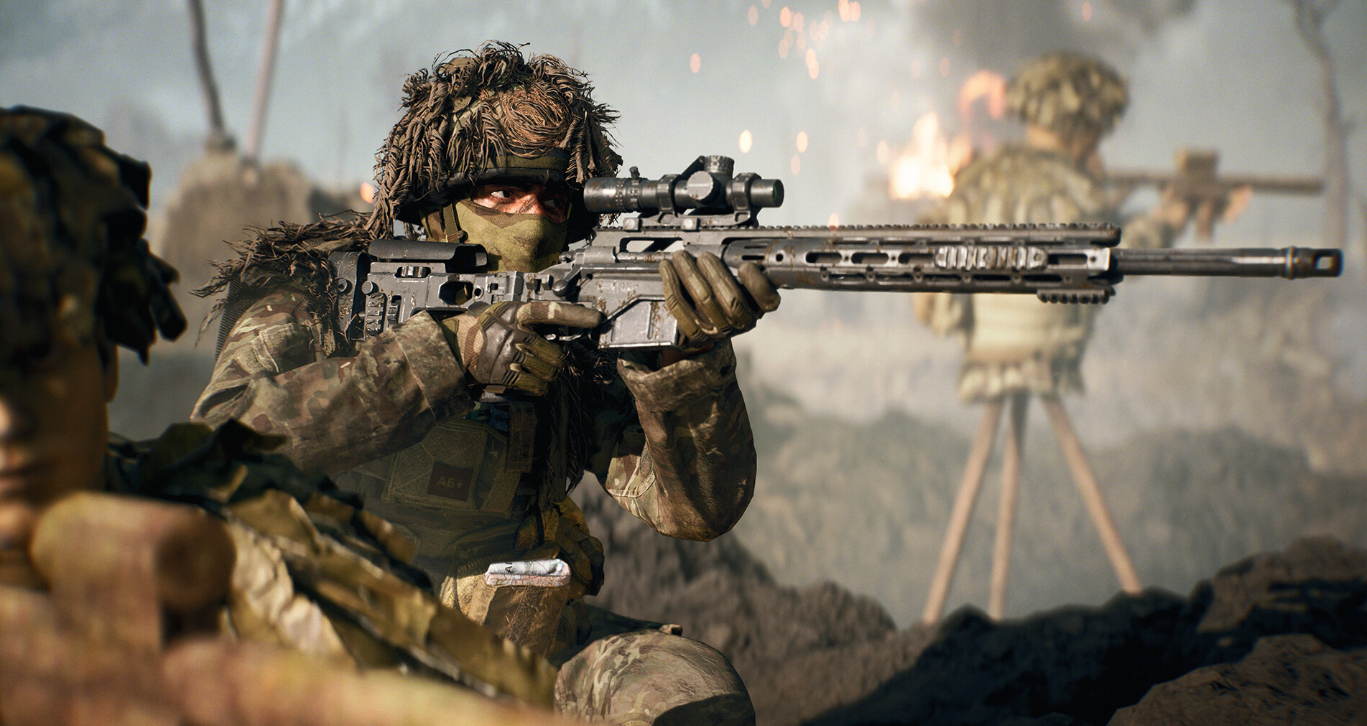
Battlefield 6. Source: Steam.

As much as the two franchises get compared, any FPS fan will tell you that the two games play quite differently. Whereas Call of Duty is known for very fast-paced arcadey gameplay, Battlefield prides itself on playing objectives alongside team cohesion. Now was the right time for Battlefield. This moment in time is the perfect instance for Battlefield to truly nail what their fans want, and they were successful in doing that. Interest in Call of Duty has reached an all-time low, with the franchise cannibalizing its own identity with out-of-place collaborations. The average FPS fan does not want to see animated characters running around in their games. They want a game that invokes the feeling of being grounded in reality; the “mil-sim” experience, if you will.

When a game like Battlefield 6 releases in a state where it provides exactly what FPS fans are starved for, you get a game that blows up the way this one does. It’s beautiful to see, and it’s an absolute blast to play. I’ve always been a casual fan of Battlefield, so you won’t get a nuanced breakdown of what’s different in the gameplay from me. The game is enjoyable, and that’s all that matters. It feels wonderful to have a Battlefield game we can consider great once again. We should be rooting for Battlefield and even Call of Duty to be great.

Call of Duty is feeling clear pressure, as evidenced by the Black Ops 7 beta. Activision is finally giving in and rectifying long-standing fan complaints about the series. When there’s steep competition in a genre, we get better games out of it. The winners here are the consumers, who have higher-quality games that they can enjoy. It’s what we want from AAA shooters, and I’m very happy to see Battlefield doing well for that reason. I’d happily recommend giving it a shot if you are looking to hop back into one of these types of games.

Now Playing at SUPERJUMP: Issue 36
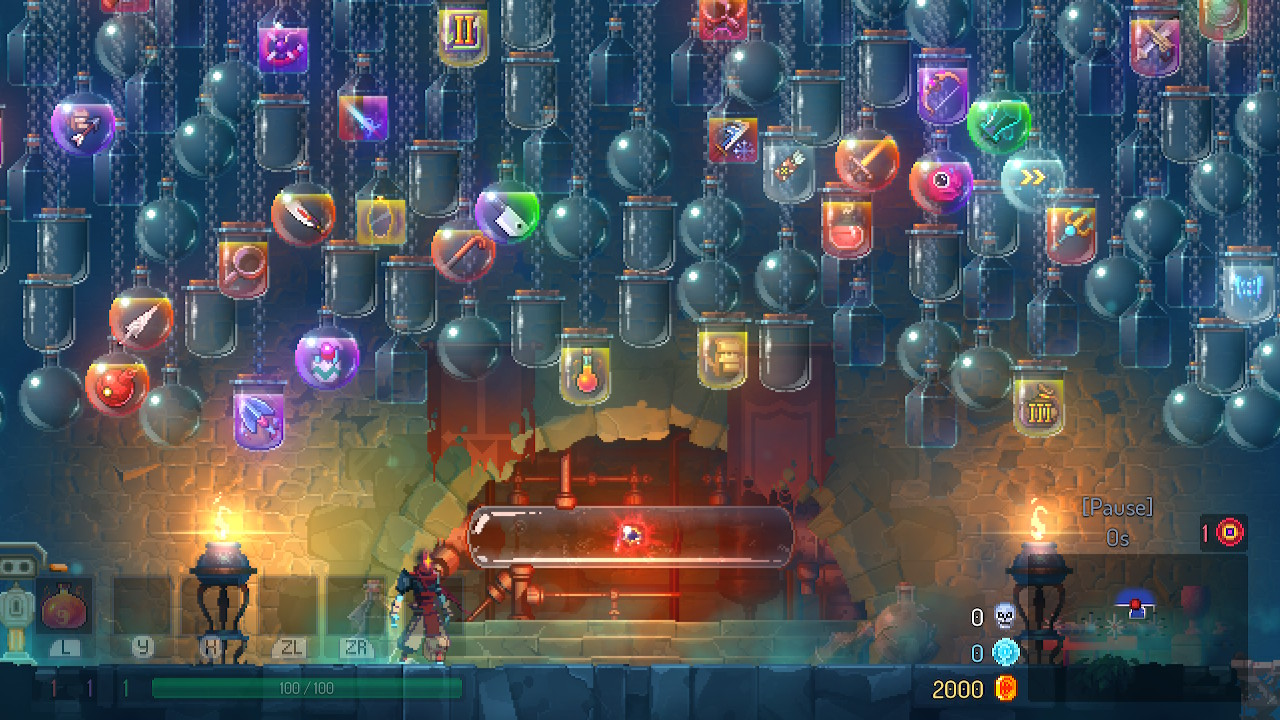
Dead Cells. Source: Author.

B. Cantrell

Dead Cells

OK, I’ll admit it: I’m obsessed with Dead Cells. I’ve bought it on almost every platform I own. The only major frustration for me is the lack of cross progression. With a game this deep, progress ends up scattered across devices, and my hard-earned unlocks stay trapped where they were earned. Cross-platform saves would be a godsend. Of course, the smart move is to stick with one version for the long haul, and for me, that’s on the Switch. Because, you see, Dead Cells is very much a long-haul game.

By sheer hours alone, it sits near the top of my library, and even after six years of playing it still finds new ways to surprise me. By far, the main thing keeping me hooked is the razor-sharp combat. This is pure action, with every slash, arrow shot, and firebomb feeling visceral. I just love the way busted-up baddies burst into smatterings of crunchy pixel-art confetti - it never gets old.

Kills matter too, because enemies drop glowing orbs, which are the currency for permanent upgrades, so you’re incentivised to fight hard and clear every room (unless you're attempting a speed run, of course). Biomes are procedurally generated, and you choose different routes each time, so layouts, mobs, and secrets keep shifting. The roster of levels is huge, too, from toxic sewers and sunset ramparts to haunted shipwrecks and gloomy castles with vampires; there's always something new to see.

Now Playing at SUPERJUMP: Issue 36
Dead Cells. Source: Author.

Have I gushed about the combat enough? No? Well, here's some more. Enemy encounters are fast and fluid, playing out like a Doom-esque dance of two-dimensional combat chess. You weave sword strikes, projectiles, and tossed grenades while dodging and sliding around hazards. On higher difficulties, it becomes a high-stakes ballet. When it clicks, it feels incredible. But when things fall apart, you usually know why, which makes heading back in for just 'one more run' an easy choice.

The epic boss fights really seal the deal, too. Every few biomes, things build up to a frantic test of everything you’ve learned on the run so far. One mistake can end it all and send you back to the start, which makes endgame victories feel like glorious fist-pumping wins. Another aspect I love: beating the final boss is only the beginning. Boss Cells (rewarded after completing a successful run) let you raise the difficulty for bigger rewards. Each Boss Cell added throws down tougher enemies and new hazards, but also higher-tier loot.

That moment I realised that finishing my first run was only a warm-up blew my mind. Years later, I’m still discovering new weapons and hidden rooms I’ve never seen. Dead Cells feels fantastic to play and offers depth and replayability in equal measure. For me, it's easily one of the best action roguelites ever made.

Now Playing at SUPERJUMP: Issue 36
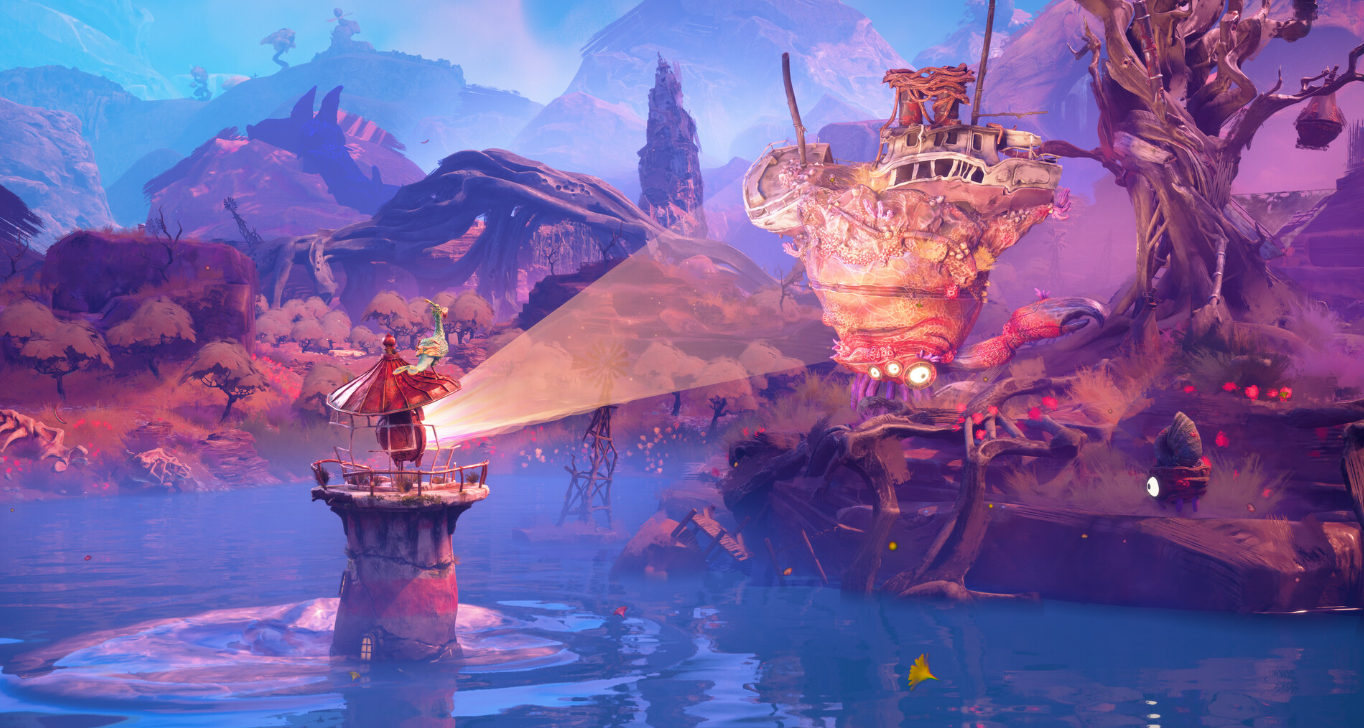
Keeper. Source: Steam.

CJ Wilson

Keeper

Keeper had my interest based on my experience playing many of Double Fine’s previous games, like Psychonauts, Costume Quest, and Stacking. It’s very much a narrative game with some straightforward puzzles to solve. The gameplay largely revolves around you controlling a sentient lighthouse while also moving a bird who opens doors or turns levers to progress to the next level. While there is no spoken dialogue, the game makes you care about the friendship between the lighthouse and the bird as they make their way towards a mountain. The visuals feature some gorgeous landscapes with psychedelic effects that make Keeper stand out from the games I normally play. As something you can play on Xbox Game Pass, I highly recommend you play it if a short, calming narrative experience interests you.

Ryse: Son of Rome

This is an underrated game that I have played several times now, but I just finished it yet again on my Series X on Legendary difficulty. It’s always fun to replay a game that you enjoyed before, and I just wanted to get more achievements after playing some newer releases this year.

Dispatch

I finished playing Dispatch earlier this week, and I was pleasantly surprised by the writing and gameplay. I laughed out loud many times as I went through each episode. I appreciated the management sim elements of choosing which hero would work best for a given scenario and seeing the synergies formed among the heroes you create. Certain emotional narrative moments will definitely stick with me for a long time, along with the tough choices I made along the way. I definitely would want to replay it to see what the other choices would look like and see if there are any meaningful changes within the story. Dispatch is certainly a game that I see being one of my favorites for this year.

Now Playing at SUPERJUMP: Issue 36
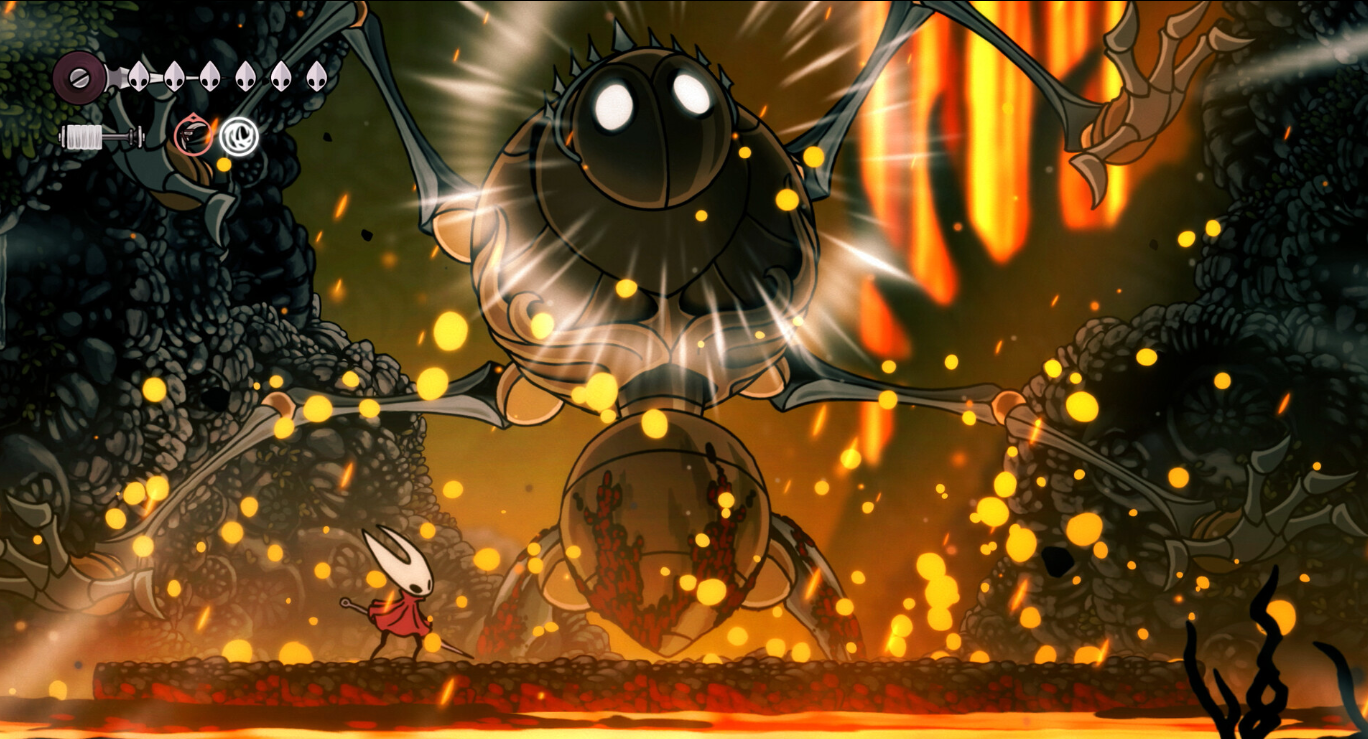
Hollow Knight: Silksong. Source: Steam.

PJ Walerysiak

Hollow Knight: Silksong

Silksong delivers on every expectation I held in my heart and mind. The combat is far more varied and feels more difficult than its predecessor. Its hauntingly beautiful soundtrack enhances both story and environment. And speaking of the story, the narrative threads are woven more tightly throughout every location, every interaction, every item. Yet it doesn’t forcefully drill into your head with its storytelling. It all feels delicately connected yet reactive to your influence. You can see the web and touch the web, even change the web. In short, I’m consistently admiring Silksong’s narrative design; in a word, I’d describe it as thoughtful.

I love how small interactions over time can develop the environment or NPCs, as well as a player’s fondness and understanding of them. It is remarkable how those relationships have the potential to be radically altered in a single moment. I particularly enjoy playing Hornet’s Needolin for every NPC after exhausting their standard dialogue. Each sings a unique song, with words they would not share otherwise. Their tune, their message, gives you an intimate glimpse into their culture and soul: Sometimes it’s funny, and sometimes it’s profoundly sad. Yet it is always an enriching and thoughtful coda from Team Cherry.

Now Playing at SUPERJUMP: Issue 36
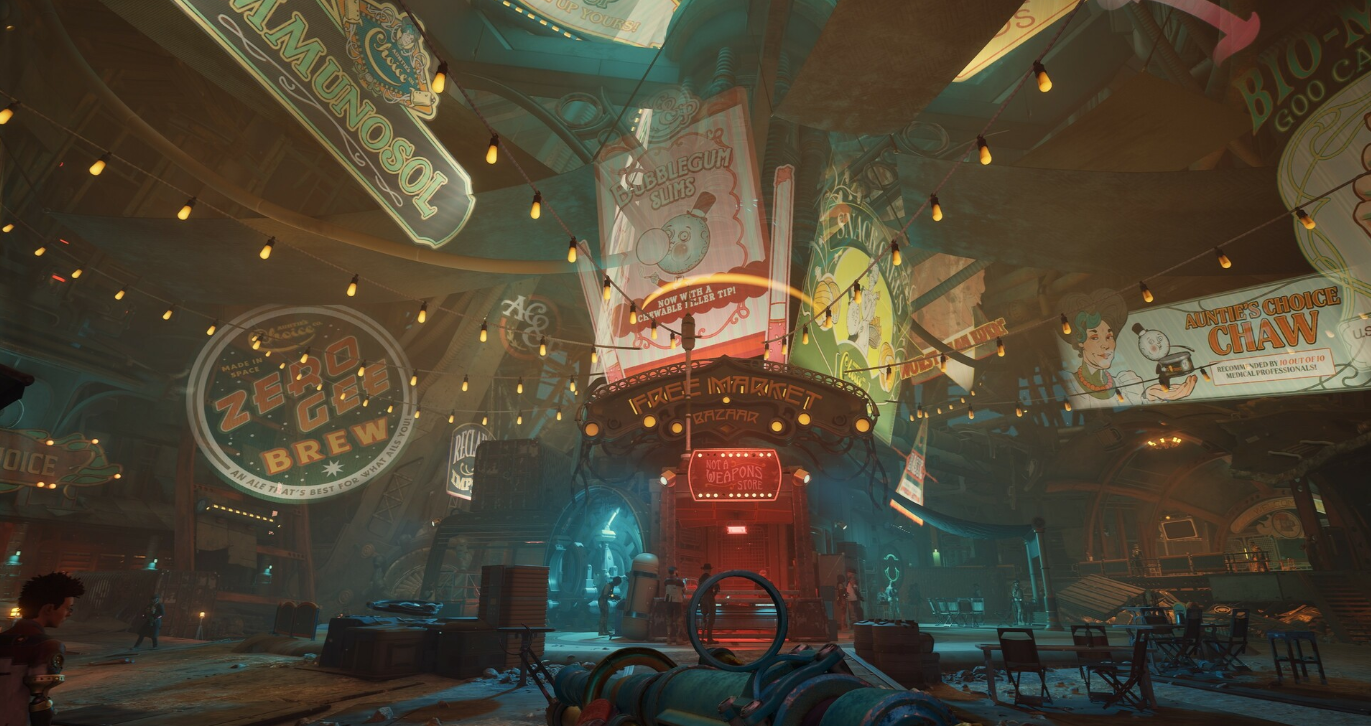
The Outer Worlds 2. Source: Steam.

Fallout: New Vegas & The Outer Worlds 2

I’ve been on an Obsidian kick lately. I’m lumping these two games together since I’m not particularly far in either at the moment. This has been a good year for Obsidian. Avowed is an excellent experience, and one I’ll miss since I cancelled my Game Pass subscription – though I’m eagerly waiting for a Steam sale.

In the meantime, I decided to buy New Vegas on PC and play through it for the first time since 2010. Then I just couldn’t help myself and bought The Outer Worlds 2 as well. It’s great fun so far, making me consistently chuckle at its hilarious writing. It feels very cool to see that Obsidian has kept its core DNA active and alive over the decades.

New Vegas encourages an immersive role-playing experience, constantly offering ways to utilize your chosen skill choices through gameplay mechanics or dialogue. It wants you to commit to a character choice, rather than being a Jack-of-all-trades. The Outer Worlds 2 follows suit, jamming every conversation with skill-related options and presenting various ways to utilize your abilities (as long as they’re leveled up appropriately). Both games wind up feeling very rewarding while simultaneously instilling in you a yearning to build an entirely different character next time.

Between these two games, I feel spoiled. The writing in each is great. Their stories have me captivated and entertained. Both do a good job of signposting where you need to go to progress the story, but neither ever tells you how you should do it. You have the agency to choose, which is what a good immersive RPG is all about.

Now Playing at SUPERJUMP: Issue 36
Possessor(s). Source: Steam.

Bryan Finck

Ghost of Yotei

My main gaming endeavour over the last month has been the fantastic sequel from Sony's first-party studio, Sucker Punch. I'm not quite done with it yet due to the fractured nature of my available playtime, but I'm guessing that the end is near. I've loved the fresh story, enhanced and expanded combat, and the multiple relationships that heroine Atsu develops with the various NPCs in and around Ezo. I think it might be padded out a bit too much, but I've rarely felt that any of the activities are dull or repetitive. The visuals are absolutely stunning, a true testament to the power of the PS5, and I'm constantly staring at the horizon and the incredible level of detail in every corner of the world. Make sure you don't miss this one!

Possessor(s)

I reviewed the new side-scrolling Metroidvania from developer Heart Machine Games over at Seasoned Gaming, and really enjoyed my time with it. Combat and traversal are quite enjoyable, with a wide variety of tools available to aid your destructive tendencies and keep things fresh even after many hours. There is ample reason to chase 100% completion, plumbing the world for all its secrets and goodies. The story made me want to keep playing, and there were plenty of late nights spent just wanting to see what was in the next area because the game simply looks fantastic.


A big thank you to our writers for dropping by and to all our loyal fans for being here to check it out! Be sure to tell us what you're playing in the comments, and check back next month for more of what our team is getting into. 

  •