Zobrazení pro čtení

Samus Aran’s Character Matters
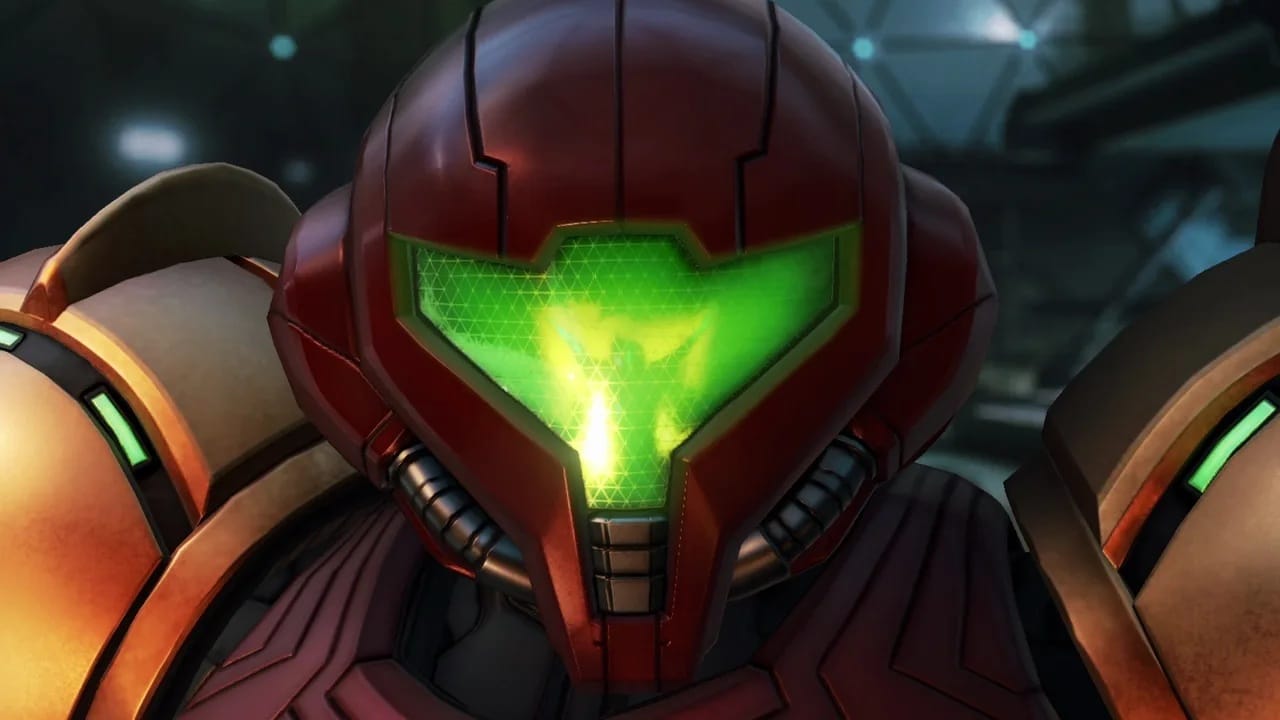
Samus Aran’s Character Matters

Stories in video games are controversial. Many games in today’s market offer impressive, engaging storytelling efforts, which could rival blockbuster movies. Other games prefer to keep things simple by focusing on gameplay, while the plot remains insignificant or exists only through hints and optional side quests.

Like any controversial topic, each side has its supporters. Some prefer video games to be video games and just get engrossed in the challenges ahead. Others believe that a satisfying narrative and characters encourage them to keep playing, as the destination is just as important as the journey. I could make arguments for each side of the debate, but I’d also argue it depends on the game in question and what it’s aiming for.

A series that attempted both approaches to storytelling is Metroid. Nintendo’s long-running franchise, which basically created a whole genre (hence the name Metroid-Vania), is no stranger to storylines and continuity. While the games in the series haven’t been released in chronological order, there is a sense of continuity between each title. 

Unlike other Nintendo franchises, such as Mario or Zelda, Metroid has a mostly clear narrative structure. Super Metroid carries on from the ending of Metroid 2. We know for a fact that Metroid Other M starts right after Super Metroid concludes, but it takes place before the events shown in Metroid Fusion. The status quo doesn’t just reset like in Mario. There’s no split timeline like in Zelda. Metroid has a set chronological order. 

The main difference between Nintendo’s two golden boys and Metroid, however, is none other than the lead protagonist, Samus Aran.
Samus Aran’s Character Matters
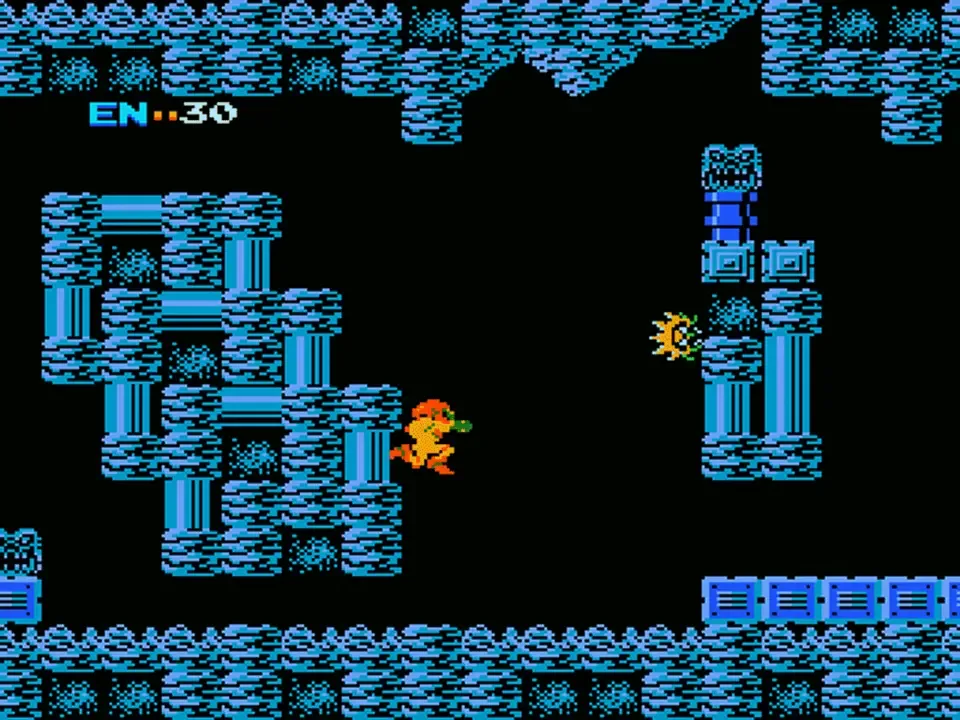
Samus in the original Metroid for NES. Source: IGDB.

Who is Samus?

Samus Aran is a bounty hunter who goes on intergalactic missions, oftentimes on behalf of the Galactic Federation, in order to ensure peace and prosperity across the galaxy. She suffered a tragedy at a young age, watching her family being murdered by the monstrous Ridley. Raised and trained by a group of aliens called The Chozo, Samus grew from that tragedy into a strong, determined, and no-nonsense fighter who would stop at nothing until her mission is accomplished.

That’s the basic backstory. The games themselves have gone several ways in characterizing her. In the first two games, Metroid and Metroid 2: The Return of Samus, there isn’t much to her. Even the backstory I just summarized isn’t present outside of manuals and supplementary material. To be fair to these games, though, besides being on consoles that couldn’t fit much of a story, they didn’t need any deep plots and characters.

Samus was nothing more than your avatar. You interacted with both planet Zebeth and SR-388 through her, all by yourself. Metroid relies a lot on the atmosphere created in exploring these planets by yourself as part of a dangerous mission. There was no need for Samus to have a set character because it didn’t matter. You reacted to the dangers she’s facing instead of her, just like she faced those threats instead of you. Metroid 2 did give her one character moment, in which she spears the baby Metroid she encounters at the end of the adventure. 

Things changed in later entries. Super Metroid incorporated more story elements, which became possible on the new hardware. While nothing grand, a prologue connects this new game directly to the ending of its predecessor. Before touching back on Zebeth, there is a whole storyline focusing on Ridley kidnapping the baby Metroid that Samus found in Metroid 2. There's even the first bit of Samus' inner monologuing, shown via the opening text briefing to fill us in on the events of the game. It wasn’t much, but it was a start.
Samus Aran’s Character Matters
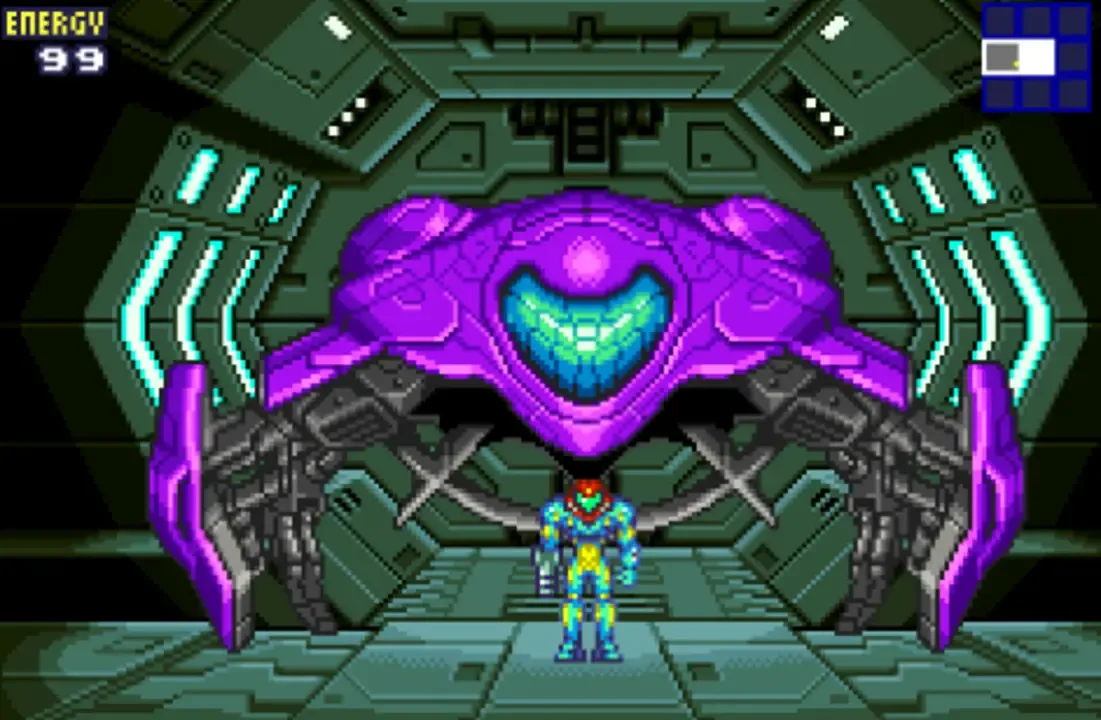
Metroid Fusion. Source: IGDB.

Metroid Fusion was the first game in the series to have a full-fledged story with a beginning, middle, and end. You didn’t just read the manual or watch a small recap, and then go off to the mission. There was a plot that progressed the more you played, had some twists and turns, and Samus’s character had more to say. In addition to more monologues, which provided exposition to her relationship with her former commander, Samus also spoke to characters in the game itself. 

Aside from that instance, however, the bounty hunter never spoke much, nor did she really need to. Metroid: Zero Mission, as a remake of the first game, didn’t give her any reason to talk, and neither did the first two Metroid Prime games, despite the much bigger emphasis on lore. While Metroid Prime 3 had other characters interacting with Samus, she herself never speaks. It’s an odd decision, but we’ll loop back around to it.

Metroid Other M is notorious among fans of the franchise. Baffling gameplay aside, the story and characterization received a lot of backlash. The strong and determined bounty hunter was turned into a confused girl with daddy issues. Not to mention that she doesn’t get anything done in the story itself, as everyone else completes the missions she’s supposed to complete as the protagonist. It’s not all bad, as we also get to see Samus’s calm and nice side when she’s talking to survivors, but the game’s storyline didn’t do her character any favors.

Games like Metroid: Samus Returns (a remake of Metroid 2) and Metroid Dread seemed to have corrected the characterization issue. Samus doesn’t talk in any of them, save for one scene in Metroid Dread in which she’s speaking Chozodian. Considering she doesn’t have many characters to speak to yet again in these games, it’s not much of an issue. All of this recap is leading us to the recently released Metroid Prime 4: Beyond (MP4).
Samus Aran’s Character Matters
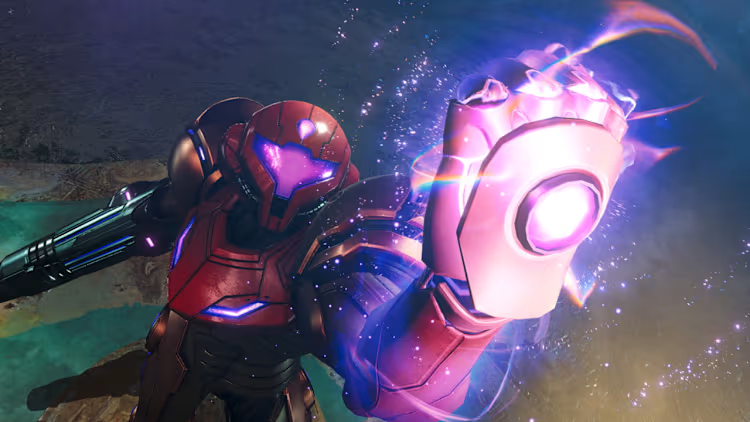
Metroid Prime 4. Source: Nintendo.

How Does Metroid Prime 4 Treat Samus?

Before discussing the recent entry in the Metroid series, I have to give a spoiler warning as I will be discussing many plot details in this article, including the game’s ending. Also, I would like to thank Nintendo for providing a review code for the game.

Samus Aran’s Character Matters
Spoilers ahead for Metroid Prime 4.

MP4 features one of the most confused characterizations of Samus Aran in the history of this franchise. While nothing reaches the levels of absurdity that Other M did, the newest entry in the series seems to have the opposite problem. If Other M tried giving Samus a character to the point it betrayed her character, then MP4 doesn’t even try to give her depth at all, which also betrays her character. 

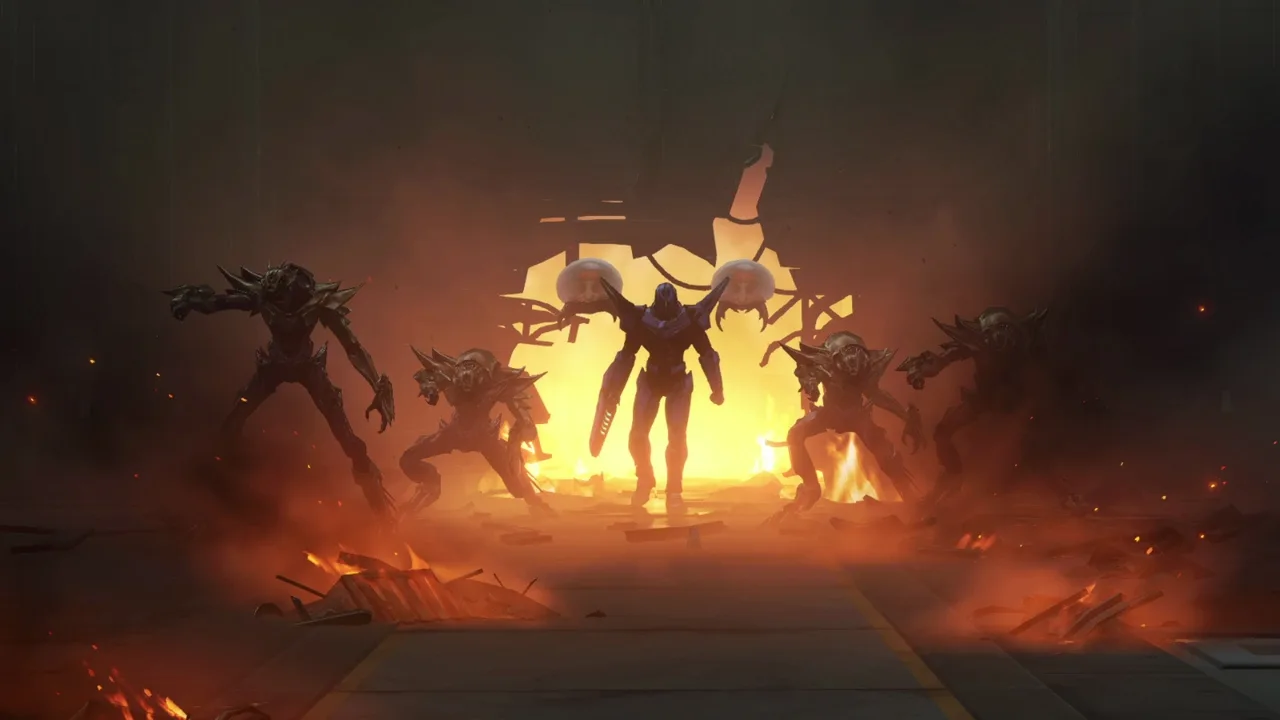
MP4 starts with Samus answering yet another distress call from the Galactic Federation. Space pirates are attacking the facility to steal an artifact that the Federation has obtained. Samus arrives amidst the chaos and discovers that the pirates are led by a former enemy of hers, Sylux. While duking it out, Sylux breaks the artifact in question, which teleports him, Samus, and a few other Federation soldiers to the planet of Viewros.

While exploring the new planet, Samus learns the story of the ancient civilization, the Lamorn, which once inhabited the planet. Throughout the game, the bounty hunter reunites with some of the Federation soldiers who were caught in the crossfire. Myles MacKenzie, Reger Tokabi, Ezra Duke, Nora Armstrong, and the battle robot VUE-995 are Samus’s companions for this adventure. In each area, you encounter a different character, who serves as your companion in various sections of the game. Samus’s goal is to find a way to get back home with the troops, while also navigating The Lamorn’s technology and Sylux’s vendetta.
Samus Aran’s Character Matters
Metroid Prime 4: Beyond. Source: IGDB.

Now, contrary to some discourse I’d seen before the game was released, the side characters aren’t all that bad. MacKenzie may be a quippy nerd, but his technological skills provide Samus with new weapons throughout the adventure. Tokabi is a tough warrior who lends a hand in fights, despite his old age. Duke is a tough, but caring, commander. VUE-95 serves its role as a devastatingly powerful battle robot that brings the pain. Armstrong ended up being my favorite, not just because she’s the rookie who grows more and more confident as the adventure continues, but also because she’s a fangirl of Samus. Call me cheesy, but she represents the fans, and I think it’s adorable.

I really don’t have any issues with the character; they’re not amazingly well-written or anything, but who said they need to be? They get the job done, and the voice acting helps the personalities shine through. If anything, the biggest problem I have with them isn't even about them. You can probably tell where I’m going with this: My biggest problem is their interaction with Samus… or lack thereof.

Similar to Metroid Prime 3, all the characters speak except the galactic bounty hunter. However, while there was no real reason for Samus to talk in that game, in MP4, the silence actually hurts the narrative. There are several moments in the game where one of the characters would ask Samus a direct question, and she just doesn’t answer. From her thoughts on a current situation to how a problm should be solved, Samus remains completely mute. 

Now, even in games in which she did talk, Samus is always presented as a “less talk, more action” type of character. There’s nothing wrong with that. The problem here is that she doesn’t talk AT ALL. Besides an occasional nod of her head, Samus doesn’t react to anything her comrades are saying, which honestly makes her out to be an emotionless jerk towards them. I get that she’s not much of a talker; that’s what makes her Samus. However, when a person address her directly, the silence is taking it too far. What, did she forget to unmute her helmet or something?
Samus Aran’s Character Matters
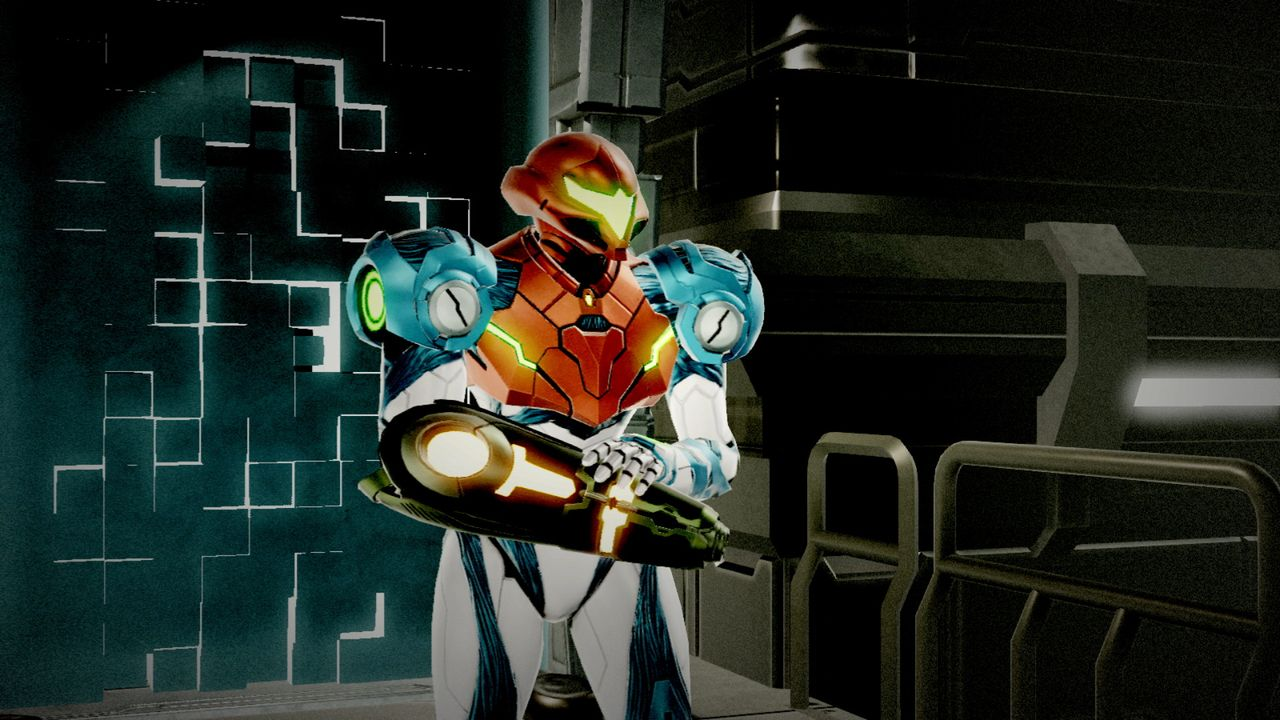
Metroid Dread. Source: IGDB.

Metroid Dread is another game in which Samus is mostly silent. She’s in constant silent badass mode throughout the whole adventure. The main difference is that in Metroid Dread, Samus is alone throughout her journey. She has her ship’s computer, yes, but there aren’t any situations where she’s required to talk. The one time she does talk is when she meets another Chozo, and in the Chozo native tongue no less! That’s how you do it! Keep her silent most of the time, but let her speak up when the situation requires it.

The Samus we see in MP4 barely shows any signs of caring for the people accompanying her in this scenario, and that’s not Samus Aran in my eyes. It’s also a problem when, throughout the gam,e there are moments where a character might sacrifice themselves for Samus to succeed. That's a tough situation that would be hard to process, but the bounty hunter barely reacts. If she doesn’t care… why should I? She doesn’t care whenever a character supposedly dies, and she doesn’t care when the same character ends up being alive. Our hero, ladies and gentlemen…

The Ending That Broke the Bounty Hunter’s Character

Nothing in MP4 does Samus’s character more disservice than the ending. To quickly summarize the plot: Samus has to find 5 ancient keys in order to operate a teleporter, which will take her and the other troops back home. When they all get to the teleporter, however, Sylux shows up because the game suddenly remembered he’s the villain.

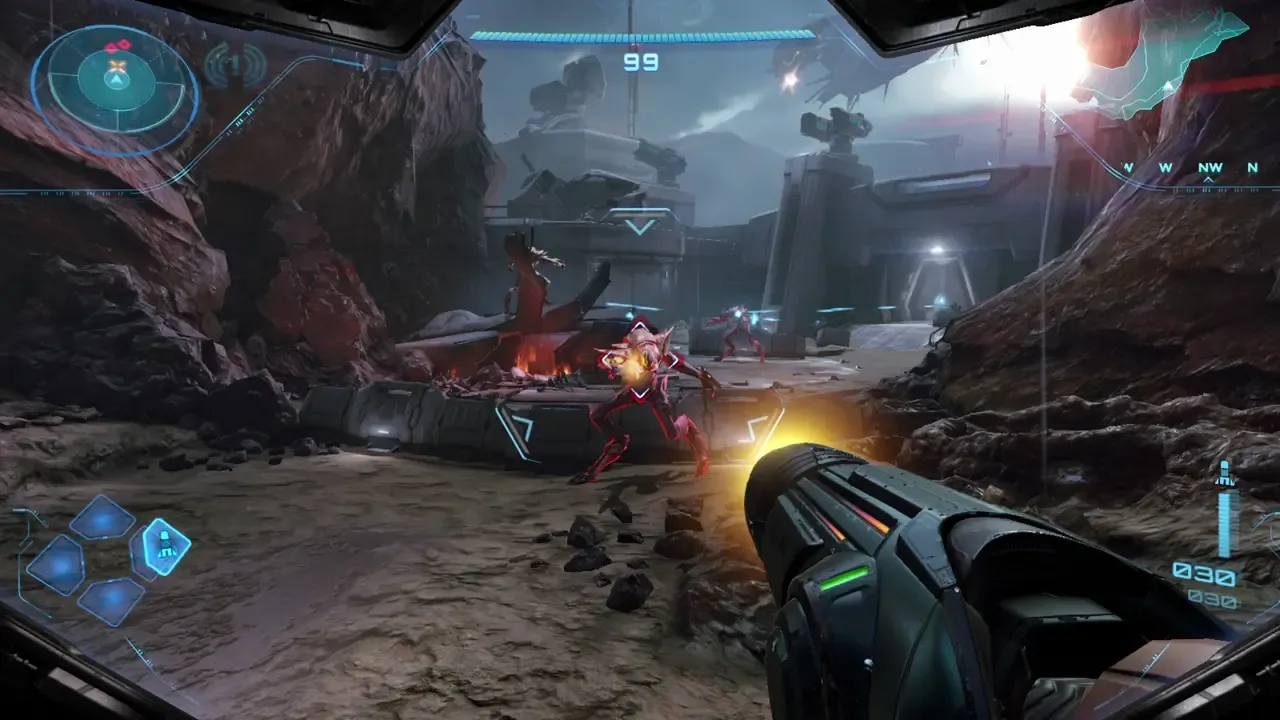
The start of the battle is actually pretty cool because for the first time, you’re fighting alongside all of the other Galactic Federation soldiers. They may require some reviving here and there, but I found them helpful in the fight when they actually landed crucial shots on the boss. That’s pretty cool and allows me to connect with these guys through Samus’s eyes; (Literally, since this is a first-person game).
Samus Aran’s Character Matters
Metroid Prime 4: Beyond. Source: IGDB.

When Sylux is eventually defeated, Samus activates the portal, and the gang is ready to head home. The portal begins to operate when Sylux suddenly returns. To make sure Samus gets home, the team is holding Sylux back, keeping him busy for long enough time so that Samus can return to their planet. She does and… that’s it! These guys are still stuck on the other planet with no way back, and Samus doesn’t seem to show any emotion to that. She doesn’t even remove her helmet unless you beat the game 100%! She’s just… moving on. What happened here!?

For all intents and purposes, finding a way to bring these guys home was Samus’s mission in the game. She rescued all of them, helped them out, they helped her when they could, and now she’s just leaving them there!? That’s not Samus! Talking or not, Samus Aran wouldn’t leave her teammates behind, teammates she took upon herself to bring back home! I get that it’s supposed to be an emotional scene where we see these troops standing up for Samus and helping her. But the way events play out make it seem like Samus didn’t really care for these people.

Now, there is another bit of the story I didn’t really talk about; The Lamorn. This ancient civilization is referenced a lot throughout the game, as Samus is essentially gathering information about their history before they were eradicated. The Lamorn had a lot of knowledge that they wished to spread out via the life seed Samus obtains during the journey. Considering Samus grew up with the Chozo, another race of aliens with great knowledge that is no more, I can understand how she could relate to this story. Some characters even comment on how they know this may hit a sour note for her. 

On paper, this is an interesting idea. Samus has the chance to help a civilization, which resembles the one that raised her, expanding its knowledge from beyond the grave. In theory, this makes her choice a lot more tragic, since she has to choose between her friends and something which holds sentimental value for her. The problem is that once again, the story does nothing with it. If the idea is to make Samus relate to The Lamorn, then I simply don’t feel it.
Samus Aran’s Character Matters
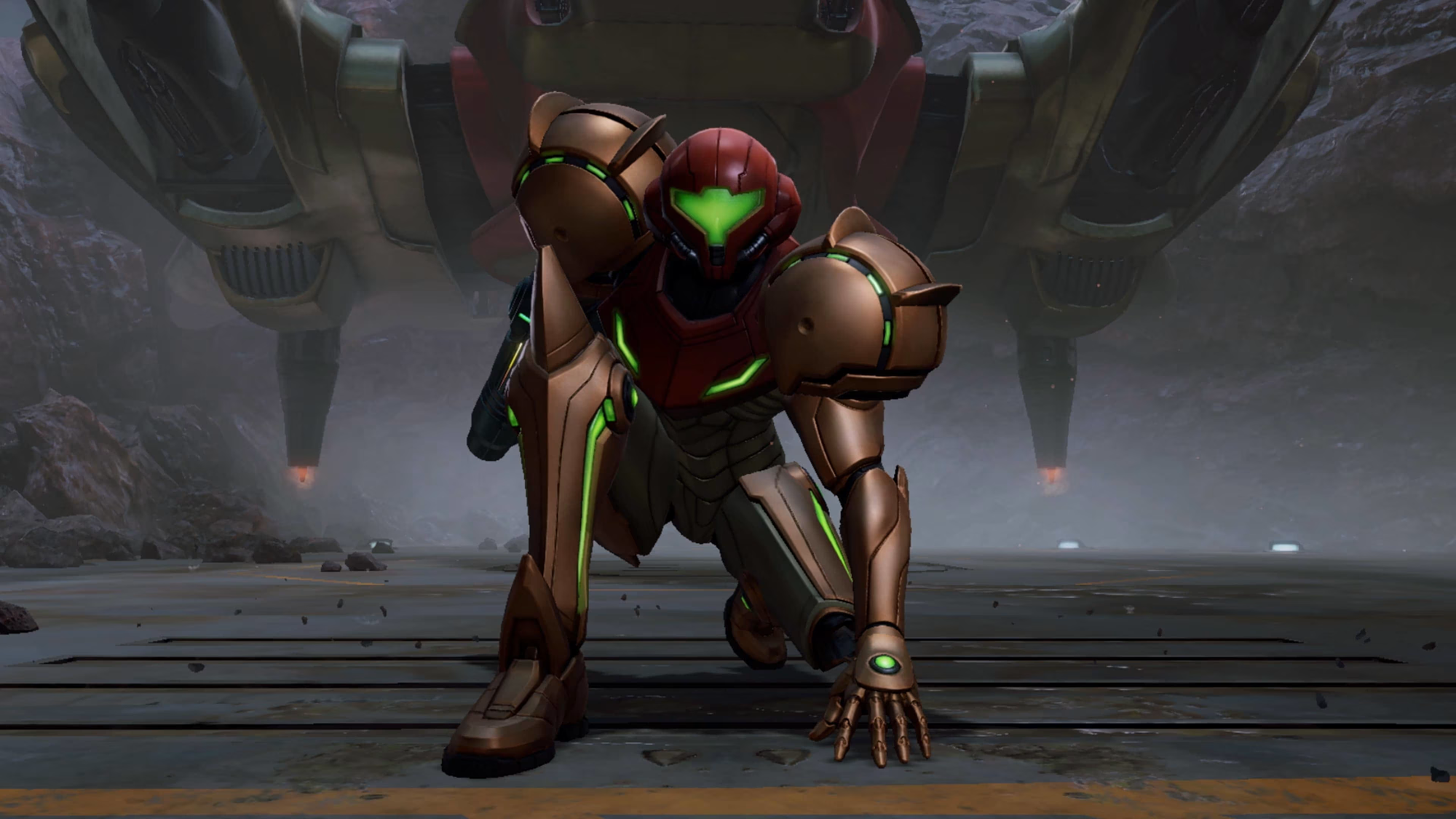
Metroid Prime 4: Beyond. Source: Nintendo.

It all comes back to the scene where she plants the seed in the ground once she goes back home. It grows a small tree, on which Samus hangs the amulet that one of the troops gave her. This tree now provides a new beginning for The Lamorn, while also honoring the Galactic Federation soldiers who sacrificed themselves in order to preserve their history. In any other game, I’d call that ending beautiful as much as it is heartbreaking. 

What sadly lessens the impact is that Samus doesn’t really have a connection to anything this ending represents. Her silence throughout the game and lack of connection with anyone and anything prevents the ending from landing in the way the developer surely intended. This tragic choice Samus has to make falls flat because, as the player who’s supposed to relate to her, I don’t feel much of a connection to any of the things that came before the ending.


It is unclear what the future holds for Metroid. Will there be a new 2D game? Is there going to be a Prime 5? Would Prime Pinball get a sequel? The answers may be unclear at the time of this article, but I’m sure of one thing: If you’re going to write a story surrounding Samus Aran, you need to treat this character better. She can speak if she has reason to. She can show emotions if the time calls for it. She’s a silent and determined bounty hunter who’s achieved incredible feats, but she’s also a heroic and caring person whom we want to root for and not just question.
  •  

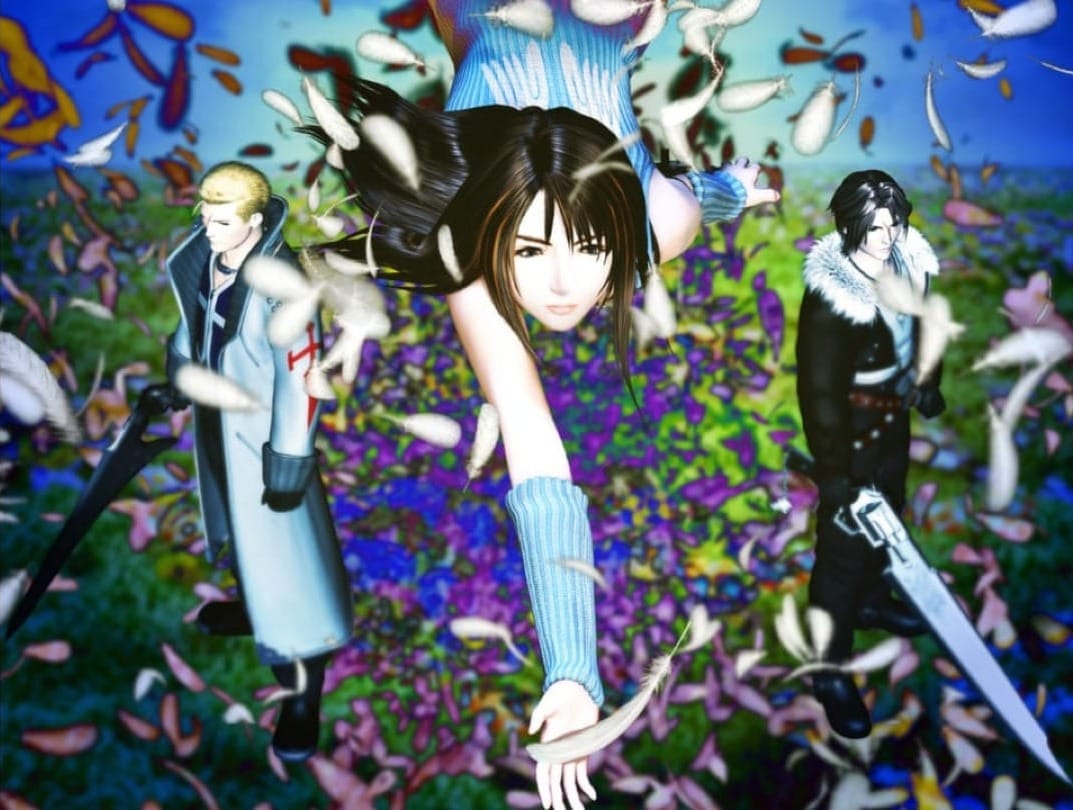
Reality Isn't So Kind: How Final Fantasy VIII's Child Soldiers Defy Destiny

Reality Isn't So Kind: How Final Fantasy VIII's Child Soldiers Defy Destiny

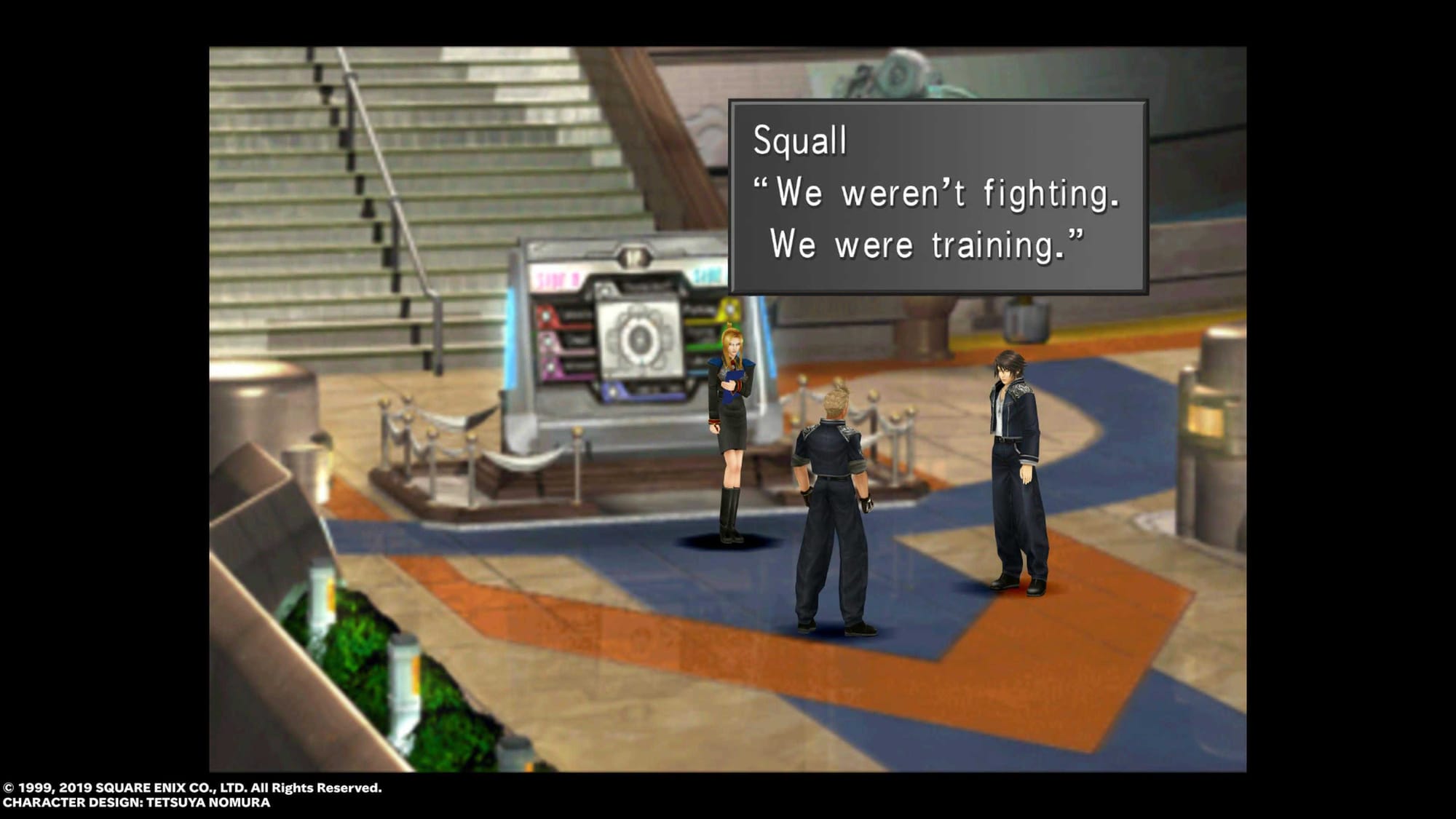
The day is long. Beginning with an early morning training session that ends in blood and scars, followed by a teacher-led field test against the Guardian Force Ifrit, Squall finds himself on unfamiliar shores, the intrepid pre-graduate SeeD mercenary tasked with securing a portion of the Galbadian-occupied city of Dollet.

Pridefully, Seifer Almasy pushes Zell and Squall onward, where they meet the new transfer, Selphie, at the top of a ridge. Tired, battered, and sidling war crimes mid-seige, they follow Seifer to an abandoned radio tower, where the abandonment of their post has them play unwitting heroes before a withdrawal order.

Briefly, Seifer asks Squall about his personal dream.

"The way I look at it," says Seifer. "As long as you make it out of battle alive, you're one step closer to fulfilling your dream."

Reality Isn't So Kind: How Final Fantasy VIII's Child Soldiers Defy Destiny
Screenshot: Author.

It's a romantic one, Seifer says, though players familiar with Final Fantasy VIII know the outcome of his misguided aspirations. Inspired by action films and the abandonment of boyhood, Squall's rival dedicates his solipsistic dream to manipulating another. And Seifer's dream is this: to be a sorceress' knight, to follow in the footsteps of a childhood motivation, to play the hero. Seifer may come across as a bully, but he's very critical of the world as presented. Despite being part of the student-retained "Disciplinary Committee," Seifer's laid-back attitude underpins a character that doesn't respect the status quo.

Later in the game, after Squall and company have been abducted and imprisoned by the Galbadian military, Squall faces torture at the hands of an opportunistic guard. The torturer demands to know the true goal of SeeD—something that Seifer, a failed student who didn't graduate, supposes is a secret universal truth of those who complete their exams.

While Squall's sophistry (and frequent apathy) are defensive, this dismissive joke ties into the game's underlying themes, driving the anti-violence philosophy espoused when the party reaches Fisherman's Horizon, and deeper still, the thematic identity of adept child soldiers in a world of ineffectual adults.

"...Flower." Squall can barely lift his head from the pain of torture. "The true goal of SeeD is to spread seeds all over the world, to fill the world with flowers."

No, the goal of SeeD isn't anything ecological. Seifer and Squall both experienced caged, manipulated dreams. The only environments affected by these young soldiers become battlefields.

Reality Isn't So Kind: How Final Fantasy VIII's Child Soldiers Defy Destiny
Screenshot: Author.

Soft Imperialism

Squall is faced with the sins and circumstances of his actions more than once in the course of Final Fantasy VIII's story. At Fisherman's Horizon, a sealevel utopia governed by a socialist mayor and populated by peace-loving engineers, Squall confronts the reality of his actions as a student of warfare. The apathy that guards him from responsibility is stripped away as he is forced to face the fact that war and peace are not a simple binary.

SeeD mercenary interference, even when left to small squads of two or three, can be enough to upset governments, political agendas, and entire communities. Paid warfare shapes the world, allowing both activists and opportunists to recreate the setting, law, and standard.

Squall tells Mayor Dobe at Fisherman's Horizon:

"It's hard for me to explain. I wish everything could be settled without resorting to violence...and there would be no need for battles. Like you've been preaching, it would be wonderful if things could be settled by discussion. The only problem with that is that it takes too much time. Especially if the others are not willing to listen. So I believe that fighting is inevitable at times. [...] I think the world needs both people like you and people like us."

The Timber region's early-game exploitation by SeeD is framed as salvation. Rinoa, revealed to be an excitable activist and the rebellious daughter of a Galbadian general, begs Balamb's headmaster to grant her Squall, Zell, and Selphie. These newly graduated cadets do not have the life experience or the political acumen to comprehend the gravity of their duties. The 18-year-long Timber rebellion has been fronted by underground resistance groups who, in the wake of the second Sorceress War, fight for independence from Galbadia.

While Timber rots beneath fascist rule and faces continual hardships due to the clashes between resistance groups and the military, its retrograde standards assign it as an independent nation. Galbadia's firmer "peacekeeping" force shuts down railroads and prevents mainstream outside news from reaching local citizens.

Rinoa's misguided activism and Team Squall's violent interference feel like justice and salvation. Inevitably, their actionable plan leads to a disruption in the city; the party attempts to assassinate a high-profile Galbadian leader, only for Squall to clash again with Seifer. Their naive tactics result in further retribution for Timber; instead of sticking with the citizenry, Rinoa and the others abandon the region as the war escalates and their mission changes.

Timber, while temporarily "saved," must contend with the Galbadian army alone. As resistance groups continue to fight for independence, the ever-changing direction of SeeD manipulates the political atmosphere—a wedge between countries and regions imbalanced by warfare. Initially, they are presented as guns-for-hire who have the power to enact regime changes or defend war-torn regions, and Squall is a representative of the sort of apathy the apolitical Gardens espouse.

SeeD are not heroes; they are the willing but naive weapons of a private military.

Reality Isn't So Kind: How Final Fantasy VIII's Child Soldiers Defy Destiny
Screenshot: Author.

What is SeeD?

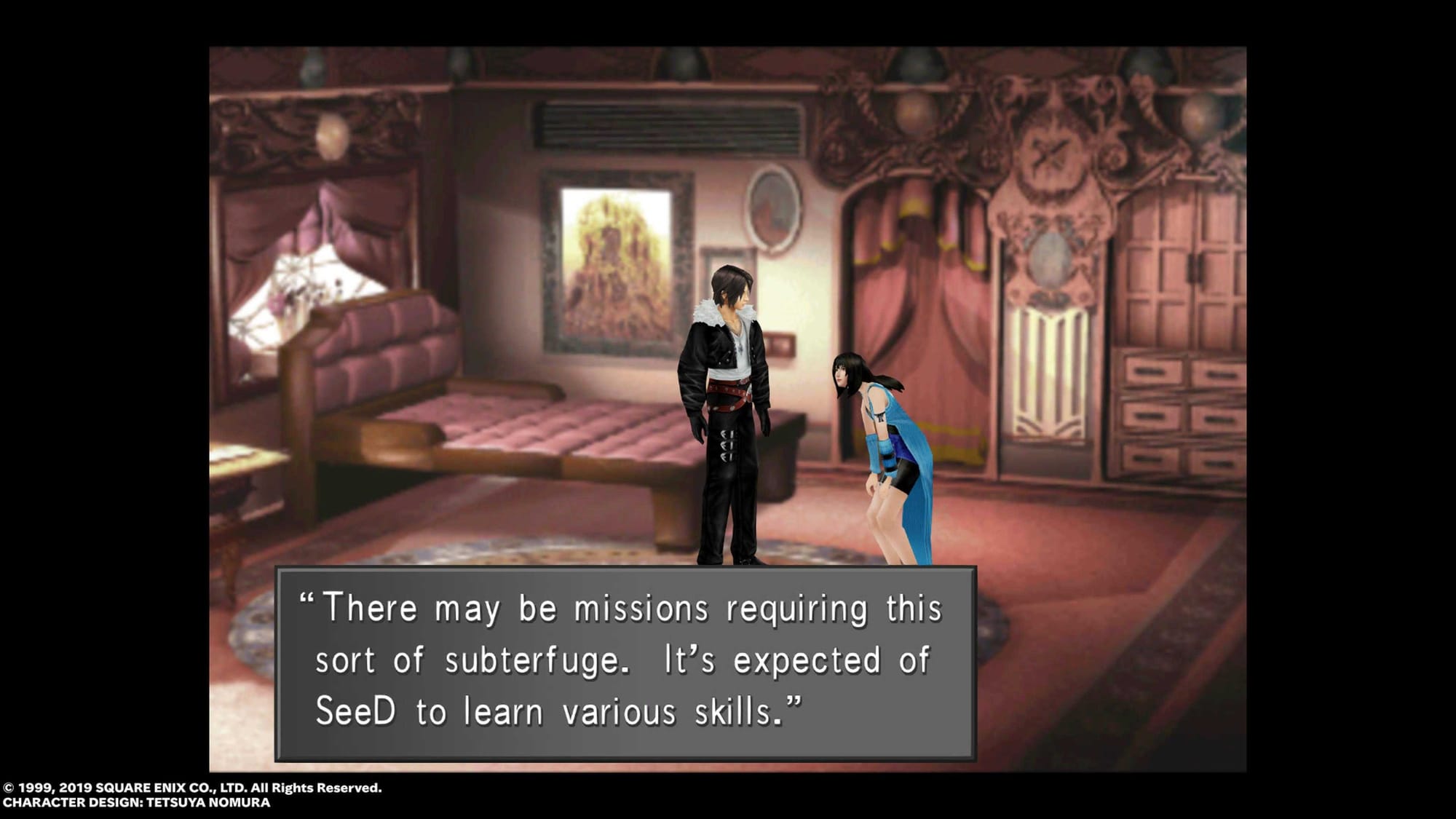
A corps brigade of military students, a mercenary force, a private army—SeeD is made up of young operatives who graduate from Garden, an international military academy that deploys their undergrads, students-in-training, and graduates on paramilitary missions that range from battle support to undercover operations. SeeD members provide support, protect civilians, slay monsters, and can also be utilized for surgical missions.

Balamb Garden is the centralized base that trains SeeD cadets, but sends its members to other Gardens, including Galbadia and Trabia. SeeDs are set apart from other world militaries because their operatives can utilize para-magic (a synthetic recreation of Sorceress magics) and brutally powerful but heavily controversial Guardian Forces.

SeeD forces are primarily made up of children. Many undergraduates are homeless orphans displaced by previous wars. In that fact, the SeeD organization does not have to worry about refilling its ranks—the continued military actions and violent regional shakeups all but ensure more children will be absorbed into the SeeD program.

While the true purpose of SeeD is more mythological than its leaders initially admit, it is fronted by the Headmaster's desire to have a military corps that can do some good in the world. His flat naivety is repeated post-graduation, where he tells the cadets he wants SeeD candidates to "think and act for themselves." A cold, disconnected, haughty sentiment to place at the feet of human weapons.

Uncivil Unrest

Child soldiers are not a fantasy fiction. While they may be used as plot devices in games such as Final Fantasy VIII and Metal Gear Solid, this is a real-world problem that grew exponentially between 2005 and 2022. Dangerous military organizations rely on child soldiers because they are easily captured and coerced. Children are conscripted as anything, from fighters to scouts to messengers to guards.

The density of Final Fantasy VIII's plot casts a shadow on the dispensability of Garden and its child soldiers. It is not by accident that SeeD members must be between the ages of 15 and 19, or that the organization prefers the malleable minds and bodies of children. The anti-humanitarian actions of Garden are the ultimate example of "the ends justify the means." Headmaster Cid and his cronies place unbelievable pressure on cadets like Squall, whose young lives are so entangled by the pursuits of Garden that they cannot envision themselves in a place without it.

Reality Isn't So Kind: How Final Fantasy VIII's Child Soldiers Defy Destiny
Screenshot: Author.

To this end, there is no happy ending in Final Fantasy VIII. Garden is not dissolved, and its place in the world is actually reinforced by Squall's incidental run-in with Matron at the end of the game, where he seals his destiny by creating a causal loop.

War never changes, because SeeD doesn't know anything else.

World at War

If you bear the misfortune of being in your 30s (or older), you have no doubt borne witness to the war crimes of the United States military during the 20th and 21st centuries.

The invasion of Iraq happened in 2003, when I was just fifteen years old. America is an oil-dependent country, poor in its own resources, historically ignoring the needs of its citizens as it pours taxation into military might. America, as an empire, rules and defends through fear, invading other countries to create regime changes or dismantling other governments entirely by replacing figureheads with American-approved political powers. We are reactive, violent, and cruel.

In Metal Gear Solid V, the Militaires Sans Frontières is headed by Big Boss in the 1970s. This "Army Without Borders" is a private military that provides its resources to all clients, and its self-appointed "soldiers without borders" program does not make judgments based on nation, creed, or ideology. Noble, certainly, but militaries for hire commonly care about resources above all else, and the actions of Big Boss and Master Miller show this. Big Boss's ideology initially prevents him from becoming a warmonger. Still, the nomadic, Cold War-era MSF carries out operations that destabilize entire regions, recruiting and kidnapping soldiers from all over the world to join their operation. Like SeeD, they stabilize their recruits with propaganda, creating a mighty force that owes singular allegiance to a mythology.

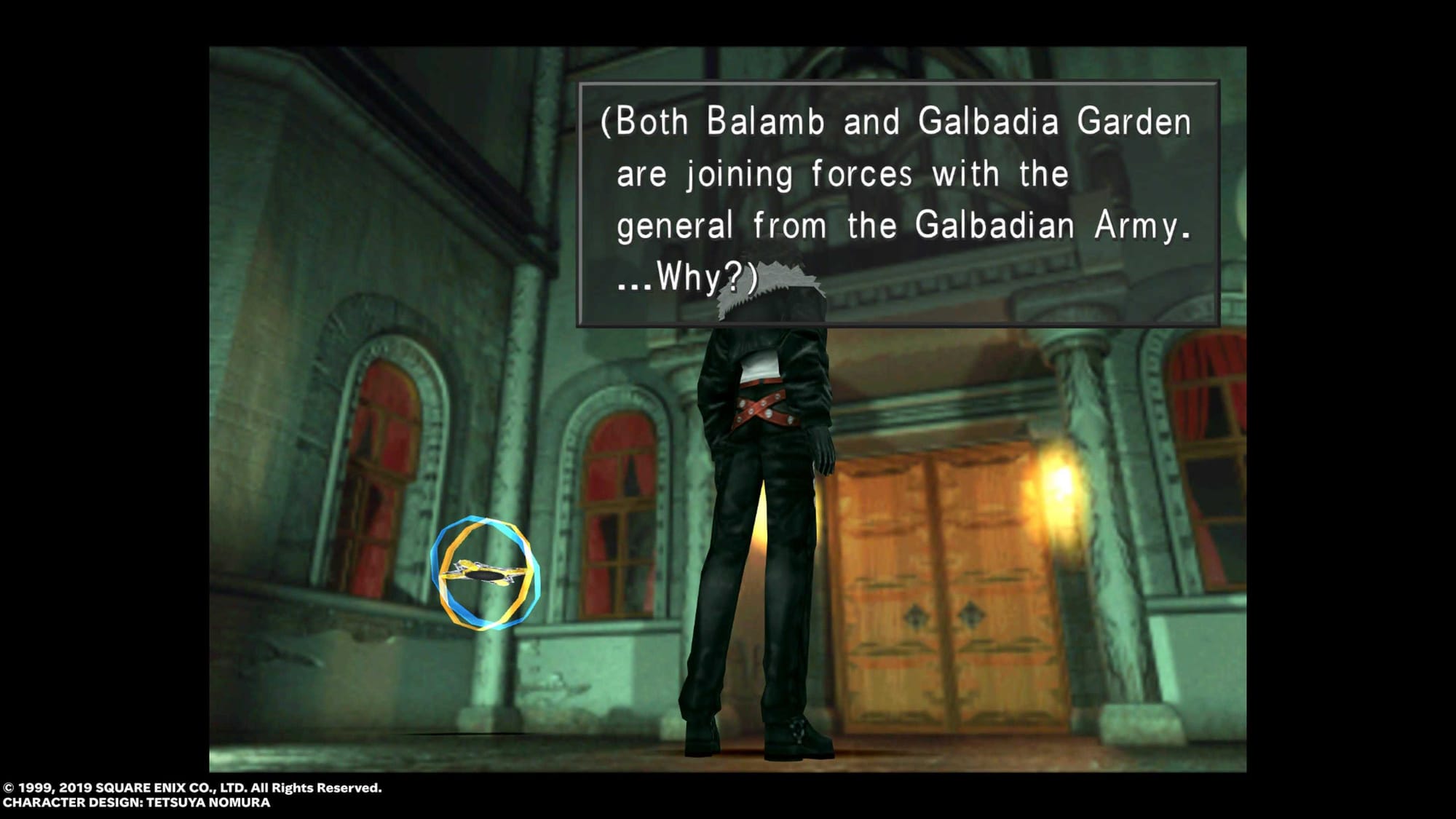
While the tyrannical military actions of Galbadia in Final Fantasy VIII cannot be defended, Garden's less-than-scrupulous tactics allow an apolitical third party to create and recreate the world at will. The rise of Galbadian and Estharian powers in Final Fantasy VIII is the direct result of the fallout of the Sorceress War two decades prior, just as SeeD is a reaction to the potentiality of another powerful sorceress like Adel.

Players are shown early on that SeeD can be used for good, such as thwarting Galbadian forces in the Dollet region or aiding Rinoa and the Timber resistance in defending their city. However, the will of the Garden is, ultimately, up to its Headmaster and investors, and the so-called "good" they generate is backed by bureaucracy and gil.

Love Blooms on the Battlefield

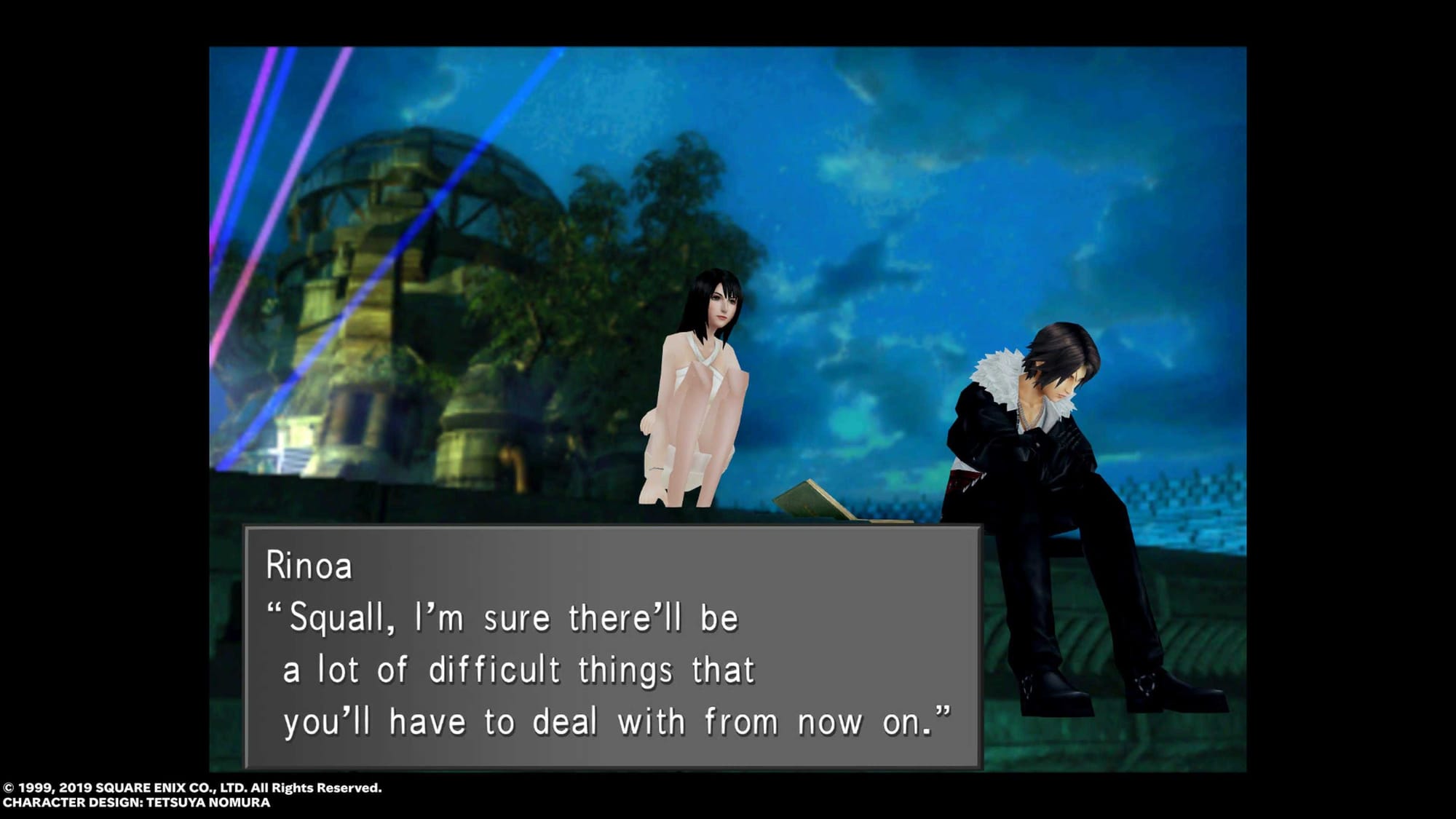
It is the nature of SeeD to die in someone else's war. The love story between Rinoa and Squall is underlined by the fact that Rinoa has the luxury of choosing her battles and battlefields; Squall, in contrast, is a creature of Garden.

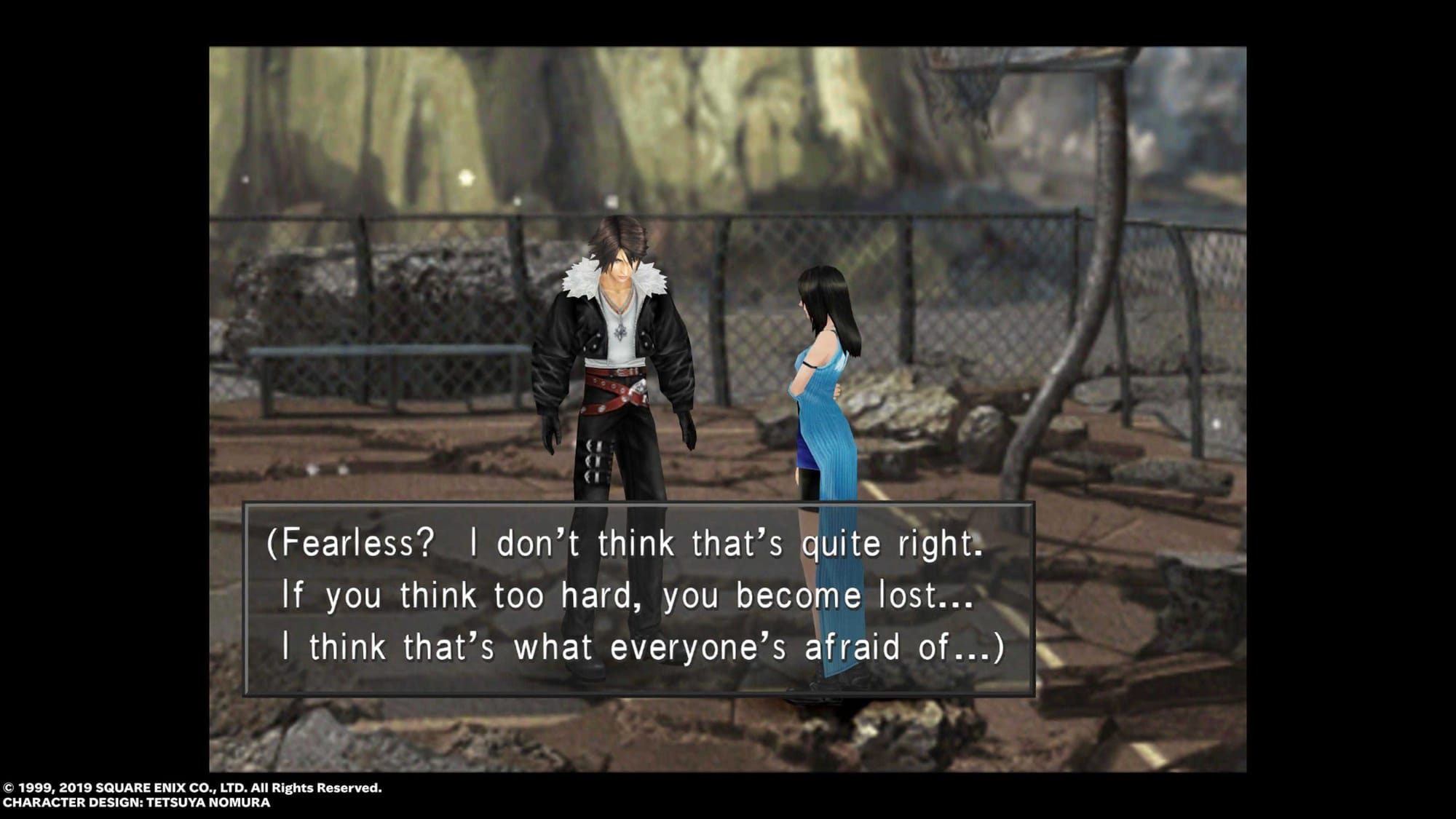
The characters themselves exhibit various pathologies and traumas that emerge during the course of the combat. Squall's cold disposition and disconnectedness are a shielding apathy. "As long as you don't get your hopes up, you can take anything...You feel less pain." Selphie's dogged, dark humor strips down the reality of their cause, from absurdity to direct violence. Irvine, his traumas most notable to the story itself, fails as a sharpshooter, choking at the exact moment he is to assassinate the Sorceress in Galbadia. Zell says, "You tell us to go, we go. Even if it is a losing battle," resigning the cocky humor of his character to the reality of being a SeeD.

Reality Isn't So Kind: How Final Fantasy VIII's Child Soldiers Defy Destiny
Screenshot: Author.

During wartime, the more conscientious among us ask ourselves how we can go on enjoying our daily lives in the face of such despair. Like Balamb and Galbadia, America is often at war with itself: we watch via social media as masked cowards use lethal force on everyday citizens, and entire cities are caught up in the wake of violent chaos, pushed onward by a military engine that neither makes sense nor has the favor of the people.

Rinoa does her best to undo Squall's emotional armor, occasionally needling him in an effort to remind him that he's an actual person, and not just a mercenary of Garden.

"Gosh, you're such a pessimist. There are no guarantees in the future. That's why TODAY, the time we have now, is important. Squall, we wanna help you, as much as we can, for as long as we can. We all love you. There, I said it. Please don't freak out. We just wanna live, y'know, live through this time with you, together."

Right and Wrong

Every action has an equal and opposite reaction. During their mission in Timber, Zell lets his anger get the best of him, reacting strongly to Seifer's rogue actions. Hearing this, President Deling threatens to use the entire military force of Galbadia to crush Garden. As retribution for the attempted assassination of the Galbadian Sorceress, missiles are sent to Trabia Garden, and the player is only allowed to see the aftermath. SeeD soldiers become unwitting heroes as war escalates and the Sorceress takes control of the Galbadian military. Children are placed on the frontlines.

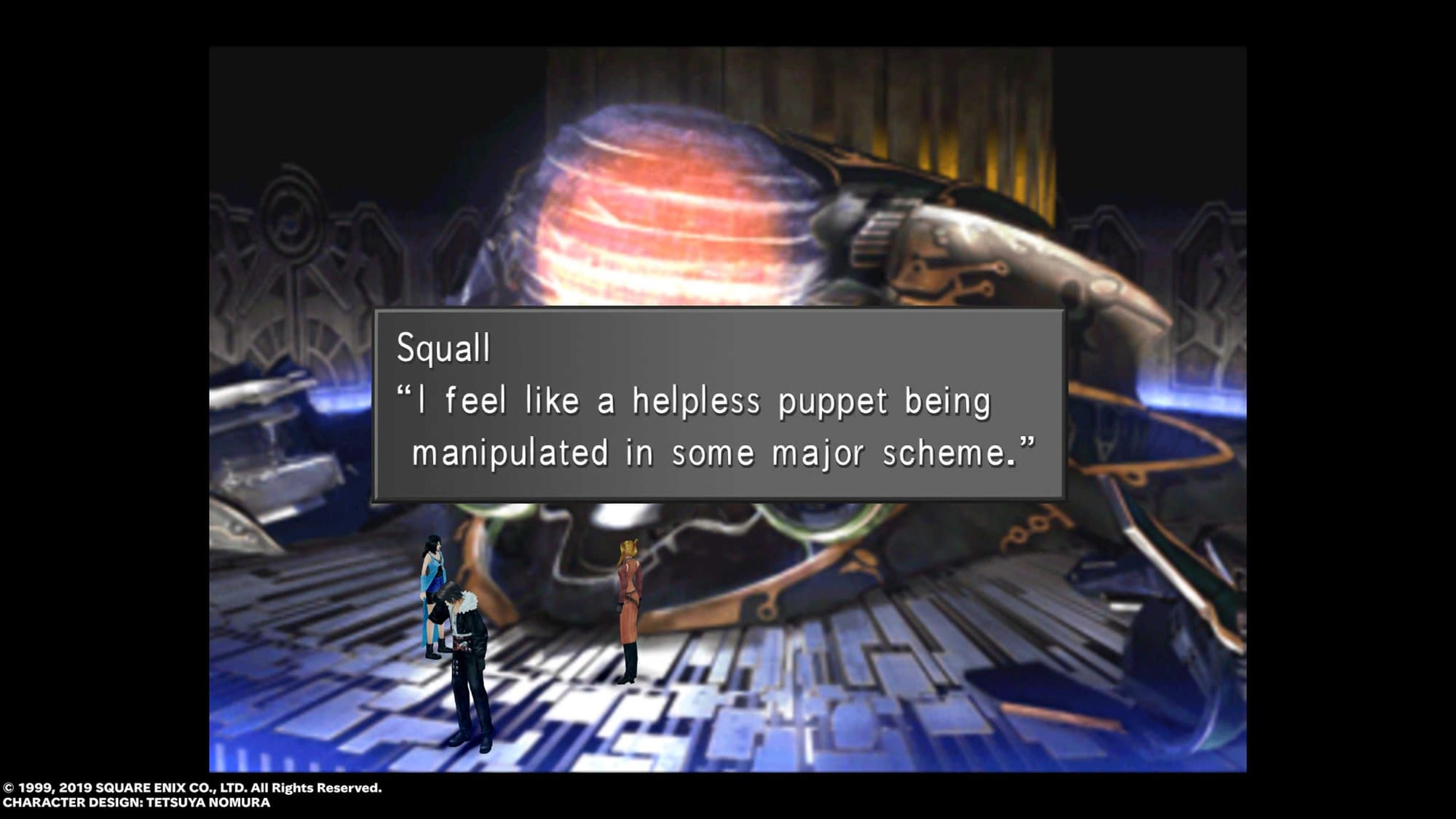
"What's the point of talking about it now!? You don't know what's going on, either! This is crazy. I don't know what's goin' on anymore. I feel like a helpless puppet being manipulated in some major scheme."

Later, when Squall must face the truth of Garden's dark investments, he realizes that the true goal of SeeD is not so simple as he was led to believe. His childhood naivete is stripped away as he is forced to confront the darker truths of being a child soldier. Directionless, Squall doubts those around him, including the Headmaster of Balamb Garden.

Reality Isn't So Kind: How Final Fantasy VIII's Child Soldiers Defy Destiny
Screenshot: Author.
"SeeD will defeat the sorceress. The Garden will train SeeD members. The many missions around the world are only training for the final battle against the sorceress. But now that the sorceress has become a major threat, our true mission has begun."

Headmaster Cid admits that all of SeeD's training, including their real-world tactical missions that have resulted in student and civilian death, has all been for a singular purpose. Garden may not be a sovereign nation, but it operates as one. As with America's invasion of Iraq or Venezuela for oil, warfare is rarely ever about the pursuit of freedom or emancipating a beleaguered citizenry from a dictator. It's an opportunity disguised as a revolution.

"Right and wrong are not what separate us and our enemies. It's different standpoints, our perspectives that separate us. Both sides blame one another. There's no good or bad side. Just two sides holding different views."

Squall is forced to reckon with the human cost of warfare. SeeD missions are not just extensions of Garden's power; they have real human costs.

Liberi Fatali

"We're not kids anymore... We're strong enough to take care of ourselves. Make our own decisions...We're confronting a big one right now. Do we fight Matron or not...? I say we fight...Shoot for a common goal...Hey, at least it'll keep us together a little longer."

Irvine reminds Squall that it doesn't matter what's come before; it's the actions of today that make a difference. Ultimately, it is camaraderie that forces Squall to change. As a group, they no longer owe allegiance to Garden. Squall admits that he wishes they didn't have to fight, that maybe a path of peace could be possible if they had the time and resources to explore it. When he becomes Commander, he realizes he can no longer weigh the cost of individual lives; Squall is responsible for every single person who fights on behalf of Garden.

Reality Isn't So Kind: How Final Fantasy VIII's Child Soldiers Defy Destiny
Screenshot: Author.

Too often, children must carry the sins of authority, stripped of any choice by the adults and figureheads in their lives. Even into adulthood, there are moments when our lives feel choiceless, when we are forced between despicable action and frustrating inaction. Irvine reminds the party that it was never their choice to join Junction Guardian Forces, it was never their choice to fight, it was never their choice to be part of someone else's army.

Irvine resigns himself to his past.

"You've all heard this before. How life has infinite possibilities. I don't believe that one bit. There weren't many paths for me to choose. Sometimes, there would only be one. From the limited possibilities I faced, the choices I made have brought me this far. That's why I value the path I chose...I want to hold true to the path that HAD to be taken."

As children whose lives have been ripped apart by war, Squall and the others continue on the only path they've ever known. These children of fate have been born into a world that only wishes to use them. Irredeemably, "fate" and "destiny" are utilized against them, limiting possibility and potential. But Squall makes an effort to face this destiny head-on, to cut away the worn paths laid out for him.

Quotes from Final Fantasy VIII were pulled from the game script.

  •  

How Bloodlines Change the World

How Bloodlines Change the World

One of the most important parts of history is the rise and fall of the various dynasties littered across cultures. As empires come and go, the families atop these governments become staples, immortalized in culture through the arts, coming in the form of sculptures, books, and of course, video games.  

Old World, the 2022 grand strategy game from developer Mohawk Games, features interesting innovations on the nation-building game formula. Rather than offering a selection of global nations, it focuses its sights on the diverse cultures that made up the Ancient Mediterranean. From here, each of these civilizations has multiple leaders to choose from, influential in the culture's development, and with a family to follow them throughout history. Each of these leaders is different, offering players a variety within each different nation to begin their dynasty. While each culture has its own hallmark research topics and structures, the starting characters and decisions that follow propel the events of this narrative-driven strategy game.  

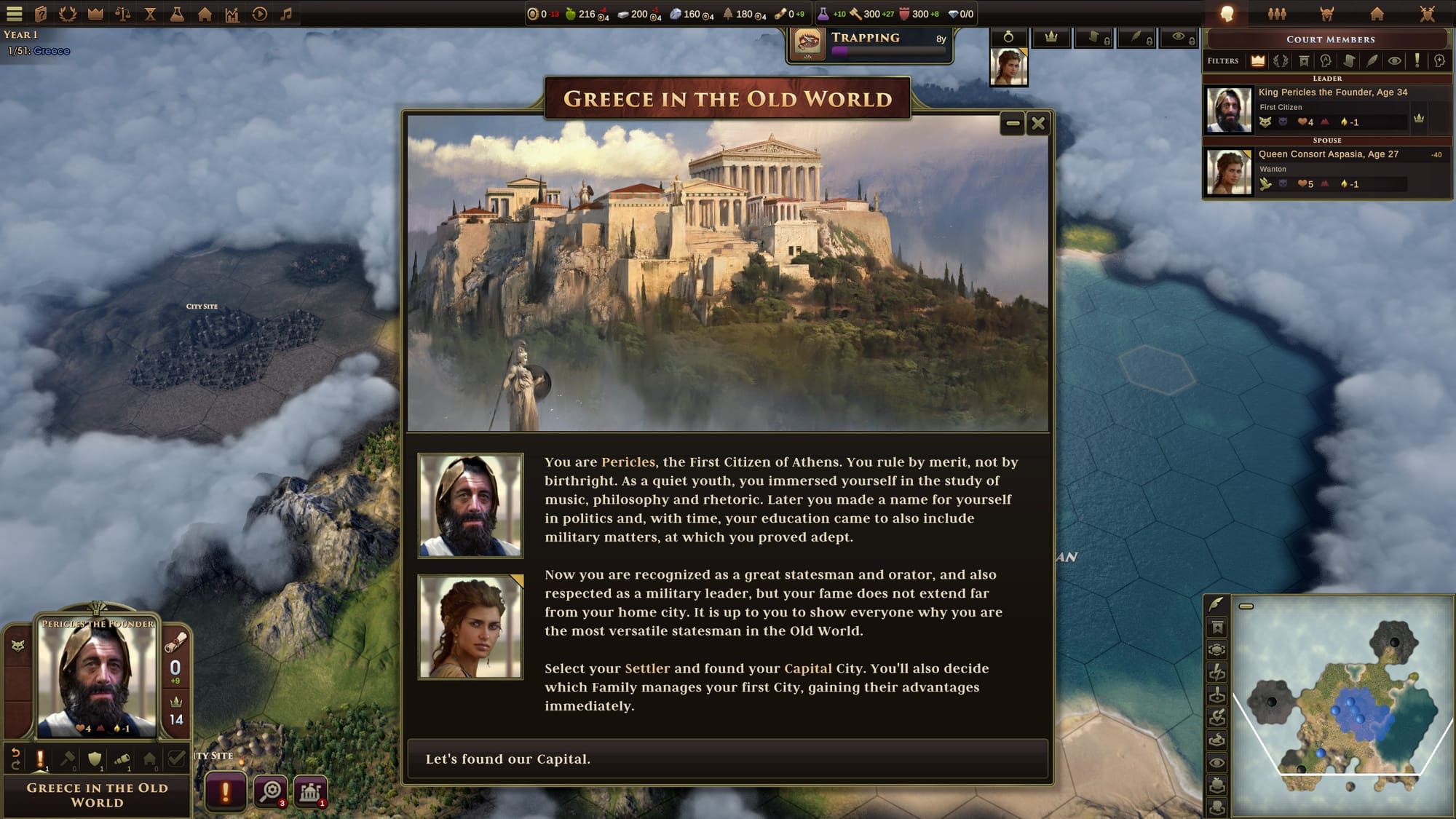
In my playthrough, I began my journey as “Pericles the Founder," a versatile statesman and founder of Greece, married to Queen Consort Aspasia, who, for some reason, was already upset with me. I focused on trapping as my initial research to take advantage of the resources around Athenai, the capital of what would be Greece, and set off into this new world. It only took a year for me to realize why Aspasia was disgruntled with me – pregnancy will make anyone irritable. In an effort to please my unhappy wife, I chose to name our newborn daughter after her, born in the second year of our nation's founding.  

How Bloodlines Change the World
Greece in the Old World | Screenshot taken by the author.

Old World has some familiar trappings of the strategy simulation genre. I can eventually become governor of my capital or offer the role up to somebody else in my court, the former bolstering my city's development. As I take the job with honor, it's only two years later that I become “Pericles the Settler,” with the foundation of Trapezus, the second settlement under my control. It's also worth noting that the years of Old World are depicted as "Year One" and so on, rather than having an assigned year or date. 

The key actors of this game always seem to bring something with them, turning the pages of your nation's history with their own stories. Leonidas enters Greece with his knowledge of civil government to help propel us forward to a modern civilization. Sappho is exiled after a political scandal, allowed to roam freely in other lands, and eventually joins a rival family. Cultists are found living in ruins on a hill near a mountain range, and I allow them to continue their worship and even put up a shrine in what is now my land.

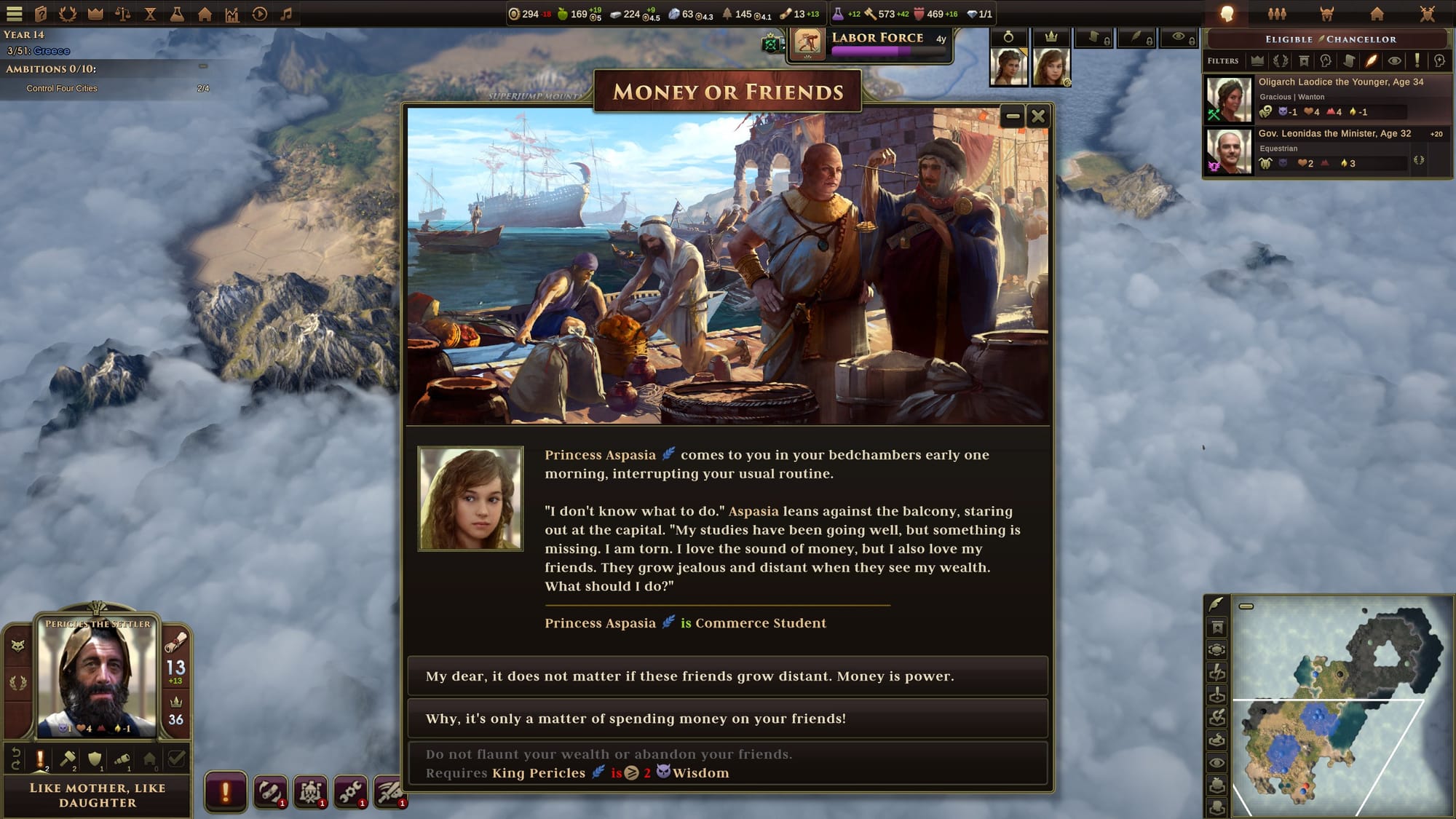
The daughter who soured my wife's mood towards me in the early years has finally turned 10, meaning it's time I formally teach her about the world. It's here that I must confess that my knowledge of world history is limited – it's been quite some time since I've been graded on my ability to remember dates and why they matter, and I was only ever so good at that anyway. I took the time outside the game to glance at who Pericles was when he was alive, and thus decided to teach Aspasia about commerce so she could go down a similar path as an Orator.  

How Bloodlines Change the World
Money or friends? | Screenshot taken by the author.

My time as a Grecian statesman comprised my first playthrough, and while I've managed a handful of other nations since then, I found that this first endeavor into Old World was more narratively fruitful. My first mistake would ring out through the rest of my playthrough – not knowing how to manage my money. Where Greece had been making some small profits for Years 1-12, it hadn't been enough to hire a philosopher to the court that my wife wished for. Her opinion of me soured more, yet I would not give up any of our resources. In a sort of irony, my daughter would ask me about a situation with money. Since Pericles isn't wise enough to tell her that money isn't everything, I tell her that she can spend money with her friends however she pleases, and this decision would set her on a path from which I could not save her. 

Old World is made of ebbs and flows, bouncing gameplay developments with characters and stories that will throw a wrench into things. By Year 24, King Pericles the Pioneer turns ill. Rather than ride out my golden years sick and on the throne, I abdicate the throne to my daughter. Remember how earlier I told her she could spend her money with her friends as she pleases? That lesson alone formed her into a lackadaisical sort of person, and as an adult, she's become an alcoholic. The first thing she does is remove the cult of Aphrodite, those who have been dwelling in the mountains since before our arrival; their religion is gaining too much influence over the city. To make matters worse, we've been at war with foreign invaders for a few years now. I, as Pericles, lived a taxing life, and I can't help but feel guilty for my ignorance. Maybe my wife was right about that philosopher after all.  

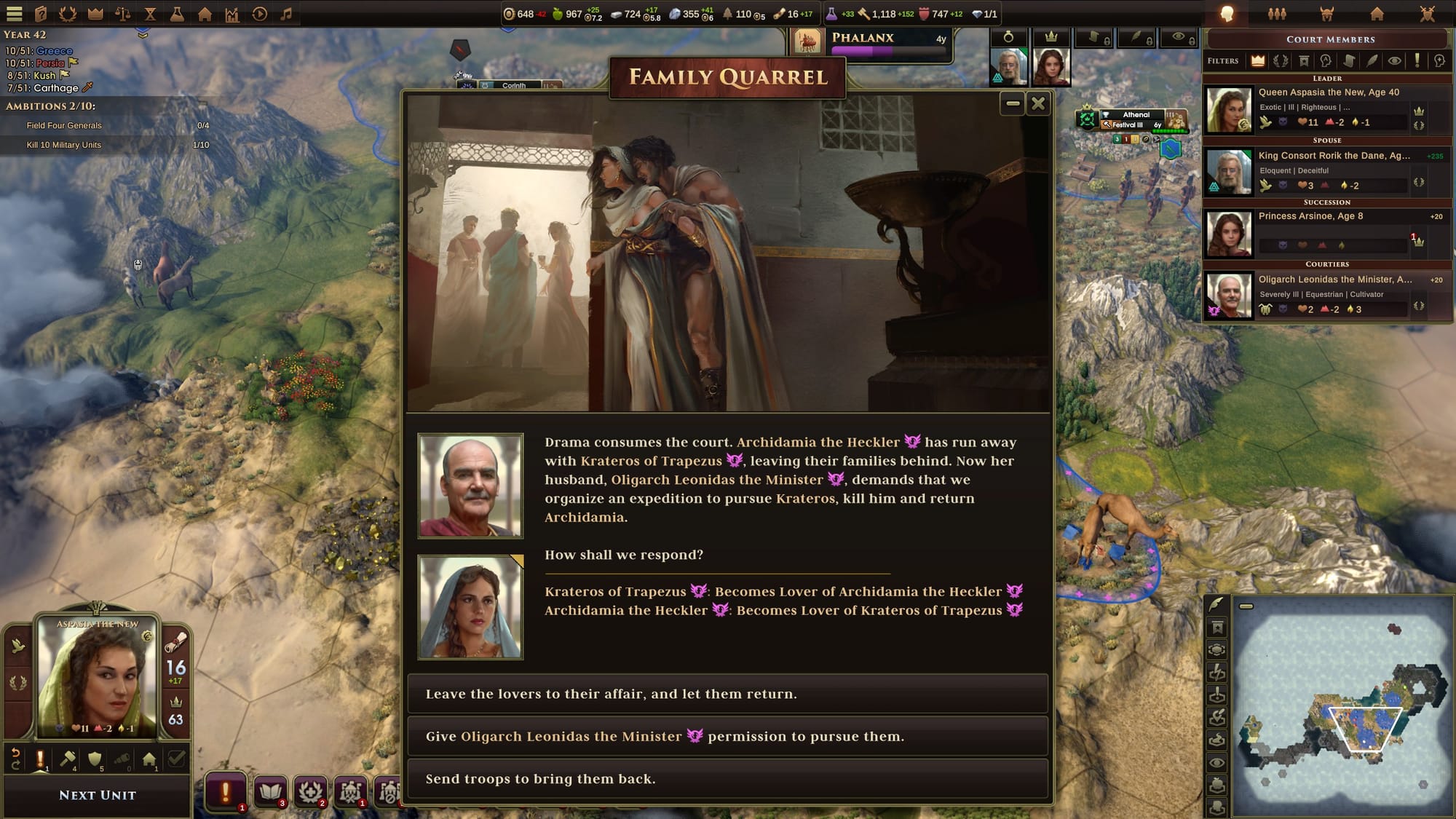
By the 33rd year, Aspasia had brought many positive developments to the throne. The neighboring Danes offered their leader, Rorik, to be her husband in an effort to unify the countries, and he sits on the throne as King Consort. Through this, it's discovered that the people of Carthage have been spying on Aspasia, and their agent is dispatched expeditiously. Where Pericles' time was focused on building a nation, Aspasia's era is to make the people of Greece happy and safe as we advance towards the future. Only a year later, Rorik and Aspasia give birth to Arisonoe, and in a similar fashion, the throne still can't afford to hire a philosopher to the court. 

How Bloodlines Change the World
Family Quarrel | Screenshot taken by the author.

Some of the narrative events of Old World can feel more random than others, harder to pinpoint their causes. From a narrative standpoint, combining self-prescribed ideas with flavorful text that drives the concepts home, Pericles' sickness comes and goes while his daughter is on the throne. He's healthy again the year she takes over and only gets sick again towards the end of his lifespan while he's back in the political seat as governor of Athenai.

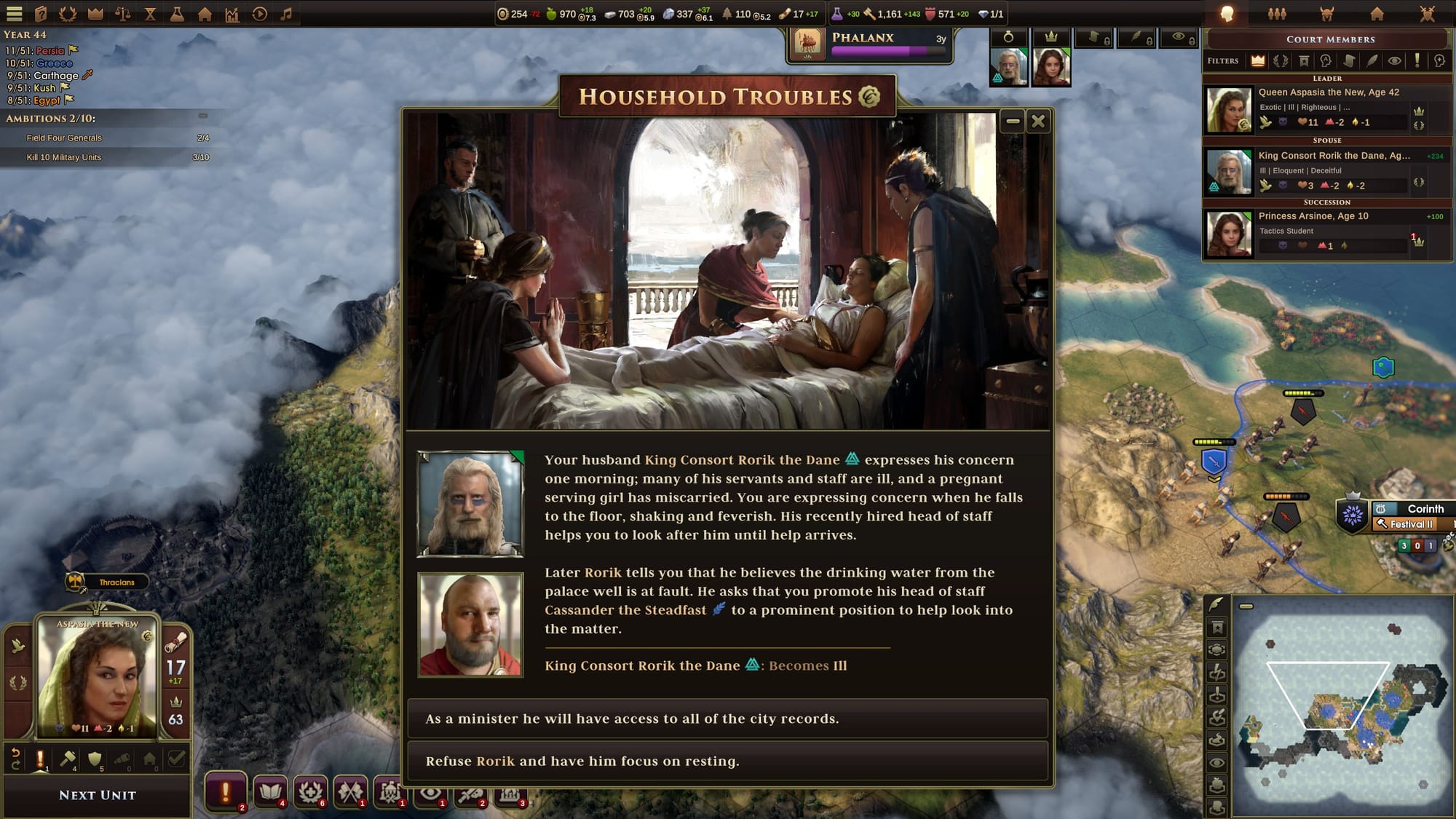
In the early 40s, things continue to take a turn for the worse. War erupts across the country from both the people of Carthage and Persia. Our lack of military might holds us back as we scrounge up soldiers, but governors in the cities fall ill and perish as well or simply make poor decisions. In Year 44, only a year after the passing of Pericles, Aspasia is doomed, sick, and close to death, and Arisnoe is only 10 years old. 

How Bloodlines Change the World
Household Troubles | Screenshot taken by the author.

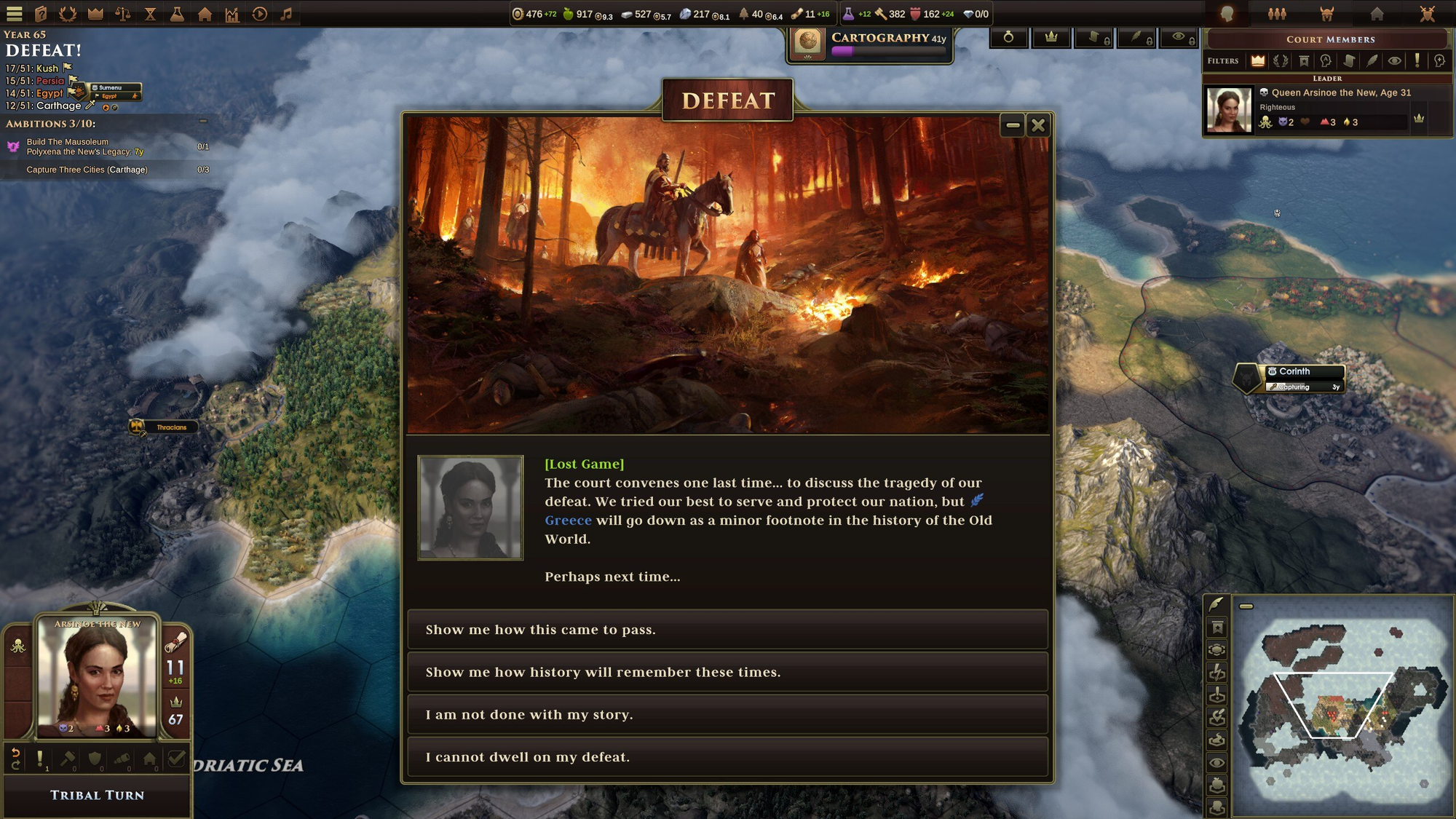
In Year 45, disaster falls. Both the King and Queen die from their illnesses as war ensues on Greece's borders. Arisnoe is still just a child, so a court member arrives to take the throne until she turns 18. By year 52, Arisnoe has been raised as an orphan during nearly a decade-long war with Carthage. Rather than pursuing commerce like her mother, she learns military training, the last chance to stop the nation from collapsing. As she turns 18, Polyxena, the regent queen dies of a sudden illness, making way for Arisnoe. As the 50s arrive, city after city falls to barbarians from the south and Carthaginian soldiers from the north. First, Trapezus. Then Thebes. Then Argos. At 25-years-old, Arisnoe takes to the battlefield in Corinth, and in an insane twist of fate, she's spared from death after being rescued by one of her soldiers and returns to the capital. It doesn't take long before Athenai falls to constant attacks.  

In my story, Greece is a nation that couldn't make it to a century, with three rulers to take the throne, each bearing the sins of the last. An unwise settler, a listless queen, a daughter forged in war. When I play strategy games like this, or games in the Civilization series, I tend to go with the flow, making decisions on the fly and doing whatever feels natural. While this isn't optimal, Old World rewarded that behavior with a developing story.  

How Bloodlines Change the World
Defeat | Screenshot taken by the author.

I've started new playthroughs in Old World a handful of times since this initial story, and each of them has been different. No two rulers have been the same, nor have their developing moments and national impacts. Each war has demanded something different, each bloodline resonates with different ideals, and each story branch has led to something new. 

For a long time now, I’ve thought about ways to transcribe my playthroughs in nation-building games, opting to recount the events as if they were going into a history textbook. The issue I’ve found with this, after multiple attempts, is that the focal point of a nation isn’t gripping when a face isn’t attached to it. Where other games draw on distinct historical figures that work as gameplay mechanics rather than characters, Old World bridges the gap through story developments that act as motivators for gameplay.  I applaud Old World for its ability to weave story and gameplay in a way that the historical strategy genre has very much inspired its players, and very clearly benefits from.

  •  

The Retired Fallout Modder Who Now Writes Novels

The Retired Fallout Modder Who Now Writes Novels

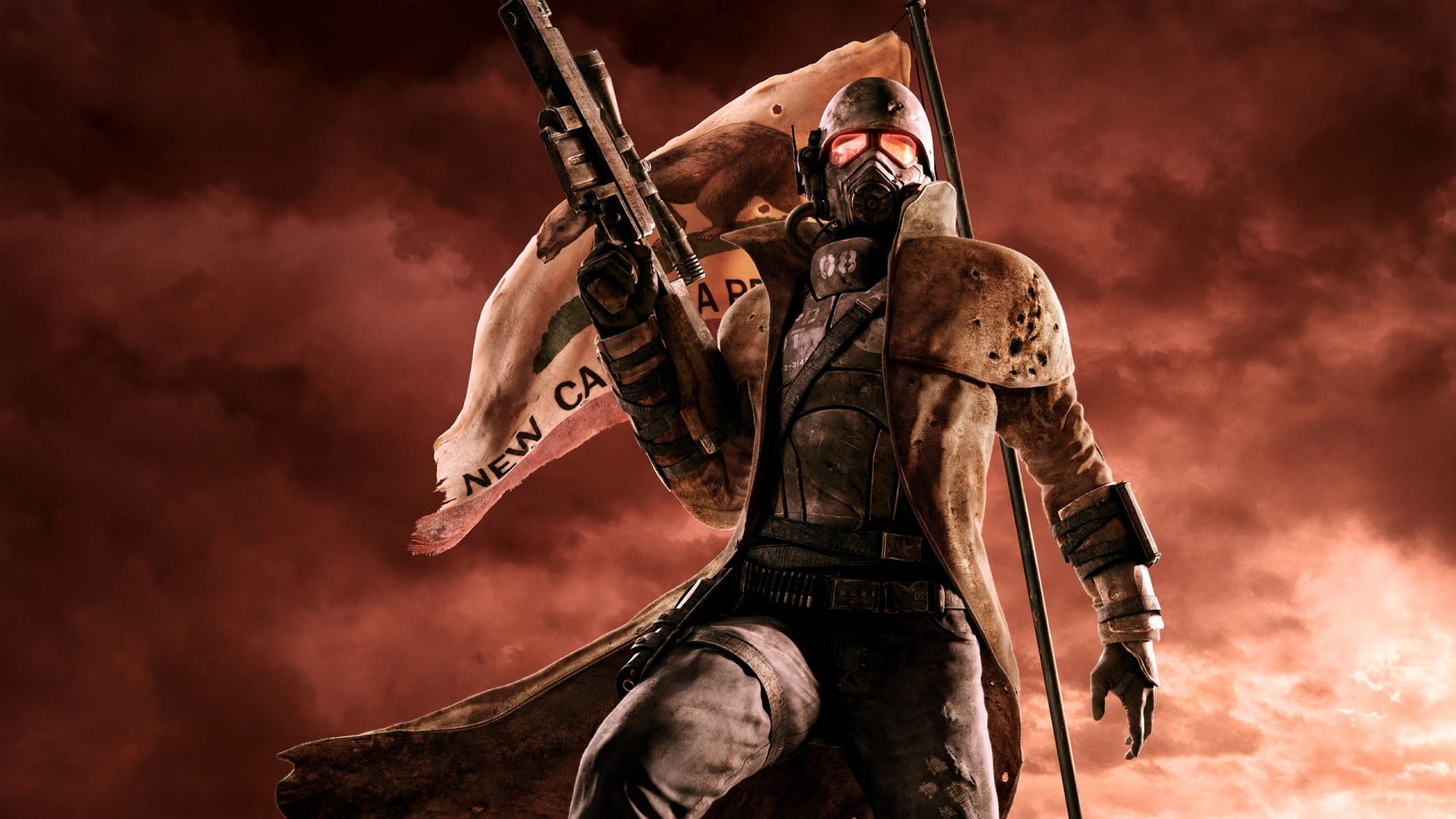
Since its release in 2011, Fallout: New Vegas (FNV) has had no shortage of mods—initially to keep the game from crashing and allow the player to move faster than a snail. Soon, however, the modding market quickly branched out into a vast array of weapon mods, companion mods, sex mods, weapon companion mods, weapon companion sex mods, and most notably, quest mods. The Nexus page for FNV has over a thousand quest mods, among them mods allowing the player to build their own casino in Primm, rebuild the Enclave (but as good guys), or travel to places like California, Utah, or Oregon to spread their ideals.

Many of these mods are ambitious undertakings, with some taking years to build. However, a second category of ambitious quest mods exists in which modmakers make several mods over the years, each with its own story, but also telling an overarching narrative. Though the most prominent such modmaker is Someguy3000, other such modmakers include Rikkurikku, CellblockPsycho, and Th3Overseer, whose six-mod series has racked up nearly 400,000 downloads—and who, in a virtually unprecedented move, is now adapting those very same mods into novels.

The Retired Fallout Modder Who Now Writes Novels
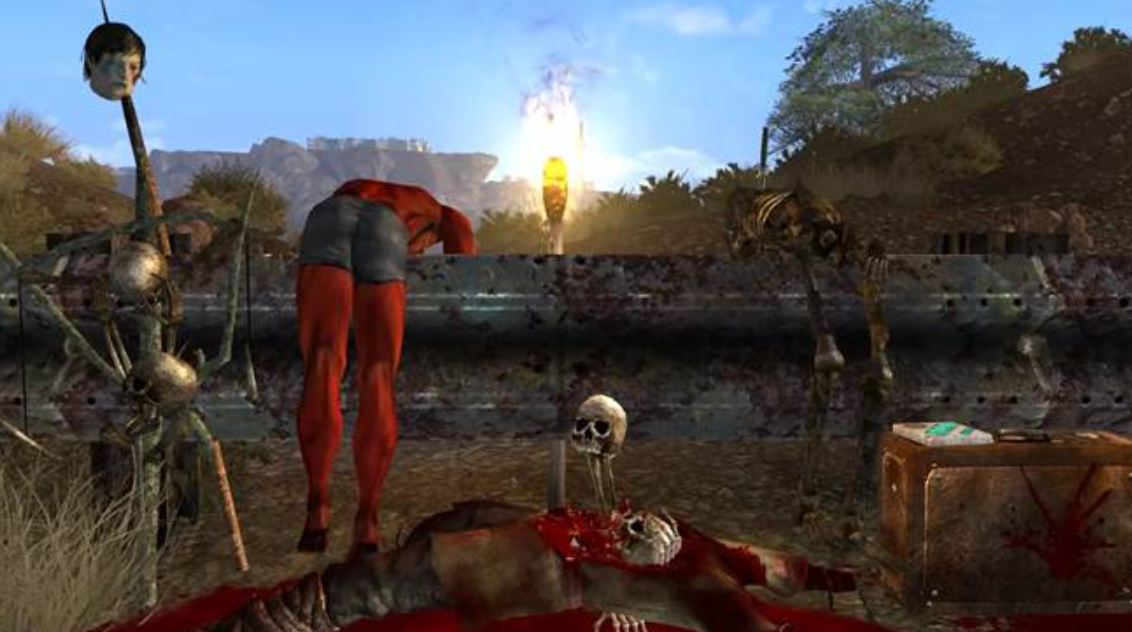
A world of depravity beckons in Fallout: New Vegas. Source: Th3Overseer.

Th3Overseer got into the Fallout series in 2009 with Fallout 3, and loved it so much he preordered Fallout: New Vegas as soon as possible, which was a terrible error as FNV at launch was virtually unplayable. Time went on, however, and he discovered YouTuber Alchestbreach, who both played and made his own mods and showcased them on his YouTube channel. Galvanized by Alchestbreach, he decided to give modmaking a shot, and after a few smaller mods, produced the quest mod “The Initiation,” which expanded the Great Khans’ quest line. “[The Initiation] was atrocious in hindsight, but proved I could make these things,” says Th3Overseer. “The Initiation sucks, and I regret everything. Baby’s first mod, and all that.” Despite its professed shortcomings, the mod has garnered over 2,000 endorsements and nearly 40,000 downloads on Nexus.

Following The Initiation, Th3Overseer began creating a follow up: His next mod, “Eliza,” features a fully-voiced companion of the same name. Eliza, admits Th3Overseer, “genuinely is two mods that are sloppily tied together. One was a western storyline with the Khans and a wacky new companion character, and the other was a thing about criminals and espionage.” He welded them together and got the idea while he was making it to tell an overarching narrative across his mods.

Although he was dissatisfied with the fusion in the mod, “Eliza” remains the favorite of prominent New Vegas YouTuber Mike Burnfire. Burnfire likes Eliza because, in his eyes, “She's a memorable traveling companion that confidently asserts herself without becoming overbearing or obnoxious, which can be a tough line to walk.”

The story of The Initiation continues in Eliza and then into the next mod in the series, Headhunting. During Headhunting, the Courier (the hero of New Vegas) tracks down bounties on people all across the wastelands, from disc jockeys to bridge sellers to ransom-seeking kidnappers. The Courier even has a massive shootout with a sprawling family of inbred moonshine-swigging hillbillies.

Eventually, the skeleton of the series' story arc was formed, with most of the plot driven by two dueling antagonists: Senator Burke, a corrupt New California Republic senator who represents the worst aspects of the Old World; and Sheridan, a notorious psychopathic raider leader who represents the worst aspects of the New World. Sheridan’s associates provide violent, overpowered targets for the Courier to fight across the series, while Burke’s associates try to hamper the Courier politically and send assassins after them when all else fails.

Another recurring organization is the Office of Mojave Affairs, a shady NCR agency working in the background with enigmatic motives and loyalties. The plot line of the series would see the Courier working to take down Burke and Sheridan, taking lots of drugs and making lots of money along the way.

The Retired Fallout Modder Who Now Writes Novels
Ultraviolence plays a large role in Th3Overseer’s mods, as in the main game. Source: Th3Overseer.

"The North Road" came next, where the Courier roams a devastated part of Nevada north of New Vegas to capture or kill a child molester, in a plot line Th3Overseer says was inspired by Sin City. It was followed by "The Depths of Depravity," in which the Courier confronts some of the most evil and corrupt aspects of the NCR. True Detective season one was a major inspiration for Depths; however, as with The North Road, its story quickly became its own unique and fulfilled plot line. “The High Desert” is the unintended conclusion to the series, in which the Courier helps set up a saloon in Primm, goes on a drug trip in a commune of kooky characters, and works for a lesbian pirate.

The series was well-received by the community. Aside from the thousands of downloads and endorsements, other prominent YouTubers like Ramblelime have spoken of their fondness for the mods. “[Th3Overseer’s] mods improve over time and build on each other,” Ramblelime says. He views that as one of their strengths, together with how the mods fill out the world of New Vegas. He added, “My favorite is The Depths of Depravity…it’s a fascinatingly gritty mystery; a mod has never been able to give me that pit-in-my-stomach feeling before or since.” Ramblelime even made a retrospective video essay analyzing the series, speaking to its strengths and weaknesses.


Despite having five or six more mods planned, the series was discontinued after The High Desert. In 2021, Th3Overseer was already taking a break from FNV to focus on other projects. Then Nexus Mods, the massive modding website that hosted all his mods, announced a series of sweeping changes to their policies. Most notably, Nexus removed the right for mod authors to delete their own files from the website, something Th3Overseer publicly protested as unethical. Nexus removed his announcement, accused him of spreading misinformation, banned him from posting images on the site, and threatened to terminate his account if he ever criticized Nexus’s staff again.

Th3Overseer was incensed, deciding to semi-retire from modmaking and not to release any of his future quest mods on Nexus again. He has released a series of humorous mods, such as adding Dr. Gregory House to the Lucky 38; anime girls to Red Rock Canyon, the Pip-Boy, and the Powder Gangers; and Sonic the Hedgehog to a set of armor. He's also made a few serious quality-of-life mods. None of these mods has been released on Nexus.

In 2022, as it became evident he was unlikely to work on any more such mods in the near future, Th3Overseer released an outline of his future unmade mods, explaining how the Courier would wipe out Sheridan’s gang and deal with the Burke family. He answered various questions on his Discord and other social media about his various plans as well as other unresolved plot threads, but for the time, it looked like that would be the end of the Overseer series.

The Retired Fallout Modder Who Now Writes Novels
Source: Th3Overseer.

In 2025, however, things changed. Th3Overseer (just barely) makes ends meet doing various freelance writing gigs and is currently trying his hand at his own low-fantasy series. In the midst of his writing career, an idea came to him: Modmaking had many sloggish elements, and he admits he was never as competent as other modders. The Initiation, in particular, is a coding mess, as he freely admits. Modding also pays very poorly (which is to say not at all). Nevertheless, he wanted to finish the story he was telling and satisfy the fans, and the result is The Sunset Frontier.

The Sunset Frontier is Th3Overseer’s solution, a planned series of novels under the pen name J. Marshall, meant to retell the events of the mod series and eventually draw it out to its originally planned conclusion. The first novel, released on Amazon in September, titled Headhunting, largely adapts the plot of the bounty-hunting mod by the same name. Rather than have the Courier, the protagonist of Fallout: New Vegas, be the main character, Eliza is instead the heroine.

Although all Fallout intellectual property belongs to Bethesda, it was easy enough for Th3Overseer to lift his story lines into a new setting. Though Las Vegas is briefly teased at the start of the story, Eliza ultimately settles in the novel’s new main setting in the ruins of Barstow, California. The New California Republic (NCR) becomes the Western Government Coalition (WCG); Caesar’s Legion becomes the American Restoration Authority; the Fiends and the Great Khans become the Wreckers and the Kestrels. All original characters, such as Burke, Eliza, Sheridan, and so on, retain their names. A few gags are present for longtime fans of the mods, among them references to the prevalence of oldies tunes blaring across the wasteland’s airwaves, as well as the platoons of Legion hit squads that regularly ambush the vilified Courier outside the offices of Tully Headhunting.

The ease of the transition has been a pleasant surprise for Th3Overseer. The sole other main change was realism. “I made a decision very early on that I wanted the adaptations to hew to realism far closer than anything in the game settings would allow.” Though he likes learning things, he admits, “There’s still a lot more moving parts here [as opposed to] the mods, where I can just shrug and go: ‘Yeah, but the vanilla game doesn't care that much about making up fictional landmarks and hand-waving logistical details, so...’” This means no ghouls or other irradiated mutant monsters exist in Barstow that are easily found in the Mojave Wasteland; humans are the real monsters, after all.

Due to differences in storytelling between video games and books, Th3Overseer has a few advantages. The order of events can be more strictly controlled than in a video game, or shuffled around, and a greater sense of progression follows as a result. Headhunting takes place before the events of Eliza’s gang initiation, as told in the Eliza mod. The events of the Eliza mod take place before the events of Headhunting, for various story-related reasons. Other changes can be made based on how Th3Overseer’s writing has matured. Eliza, Th3Overseer felt, was obnoxious in her initial incarnation. With a second crack at things, he can fill out her character better.

The Retired Fallout Modder Who Now Writes Novels
Danger lurks behind every target Tully Headhunting wants dead. (Aside from the radio host.) Source: Th3Overseer.

As of right now, Th3Overseer plans to conclude the series eight years in the making. “Unless I hit some big financial emergency where I must drop everything and devote myself entirely to some horrible job, yes, I intend to finish the book series even if it doesn’t, in and of itself, pay my bills. It's a step in my desired path of being an author.” Eliza is the planned protagonist for most of the series, but other fan favorites from the mods, like depraved junkie Todd and traumatized hitwoman Charlie, are also intended to be point-of-view characters.


Scant literature exists that analyzes story mods in video games, despite their prevalence and popularity. Technically, all story mods are fanfiction, even if they do not contradict canon, and there is a history stretching back two decades now of authors creating successful book series based on their fanfiction. Tremaire by Naomi Novik began as Master and Commander fanfiction; Cassandra Claire's The Mortal Instruments series began as Harry Potter fanfiction; and Tamsyn Muir's breakout hit The Locked Tomb is theorized to have begun as Homestuck fanfiction.

Th3Overseer concedes the point about story mods and fanfiction, but says that "Mods are more technical than fanfiction, but the basic idea is more or less the same. It's unauthorized, third-party writing set in an existing IP that the author doesn't have official permission to use." There are degrees to it, he argues. "A quest mod that purports to give the player the untold early-life story of Fantastic, a vanilla NPC, is very deep in 'fanfiction territory,' whereas my own content, while originally utilizing the setting of FNV, was able to be very cleanly divorced from the Fallout IP and made into its own thing." In any case, Th3Overseer is travelling uncharted waters in the field of video games and literature.

Plenty of novels set in video game franchises exist; some of them are actually good. But a modder adapting their stories for another medium—and even making (some) money off of it—is an unprecedented move. The degree to which the series will become popular is currently unclear; it may only stay in the circle of Th3Overseer's dedicated fans and their immediate friends.

But perhaps one day Th3Overseer may be cited as one of the first transformational authors of the third millennium in a postmodern world. Or maybe he'll win the lottery like Oliver Swanick and ride into the sunset to bury some treasure in Lake Ivanpah before even publishing book two. Whatever the case, his fans can look forward to a true conclusion to the series and the ultimate confrontation with Sheridan and the Burke family.

You can download Th3Overseer’s mods on his Nexus page (be aware you may have to turn on “Show adult content” to see most of his story mods). You can buy the first book in The Sunset Frontier on its Amazon page.
  •