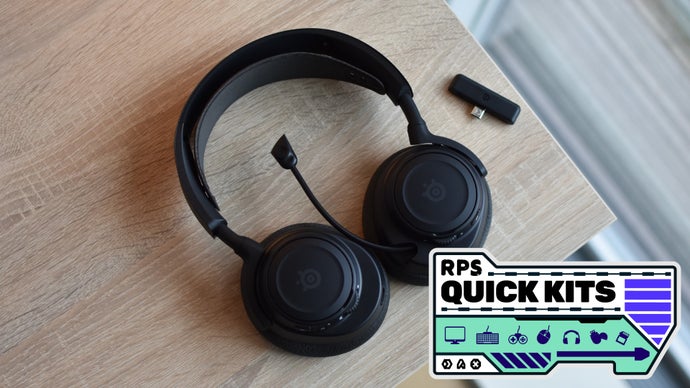
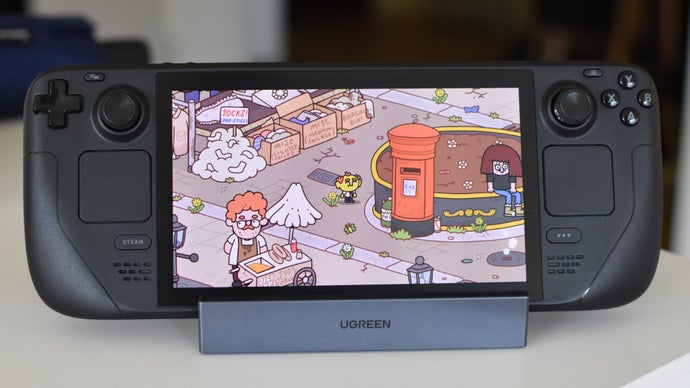
So much of what the SteelSeries Arctis Nova 7X Wireless Gen 2 does, it does right. Its build quality is outstanding, having a thickness and solidity that most wireless headsets lack. Its stretchy headband, as on pretty much all SteelSeries headsets, successfully tricked my entire skull into thinking it was lighter than it is. It’s flexible, working over Bluetooth or a 2.4GHz dongle, the latter’s USB-C connection also making it a plusher Steam Deck alternative to the Arctis GameBuds. And it sounds, both in games and music, fabulous: audio is powerful but detailed, like you could peel apart the stacked-up layers of a song mix or shooter soundscape into its individual tracks.
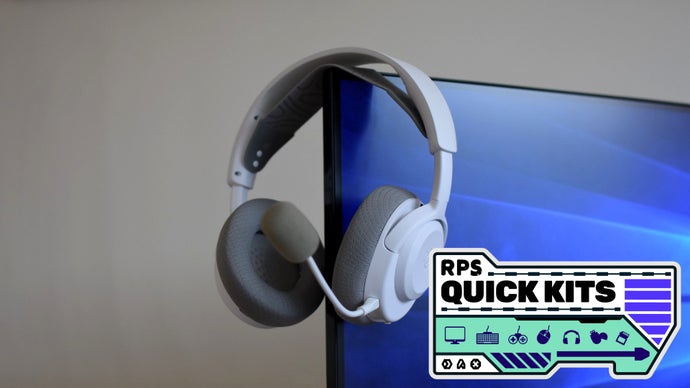
My initial interest in the SteelSeries Arctis Nova 3X Wireless was sparked by it being, essentially, an over-ear version of the Arctis GameBuds, with a near-identical USB-C 2.4GHz receiver that lets it pull double duty with both a main PC and Steam Deck (slash, handheld PC of your choice). Happily, it’s turned out to be a very fine headset in general, performing a convincing impression of a higher-end model despite its current tag falling towards the lower-middle of wirelessdom.
For once, I bring what should hopefully be good news for folks looking to buy or upgrade their PC hardware without having to factor in a bunch of inconveniences they can do nothing about. The RAM crisis is still in full swing, but the US Supreme Court have struck down the majority of President Trump's tariffs on imports. These tariffs have been another of the key annoyances complicating the state of play when it comes to hardware companies being able to sell you the bits you need at prices which haven't been driven far above where they should typically be.
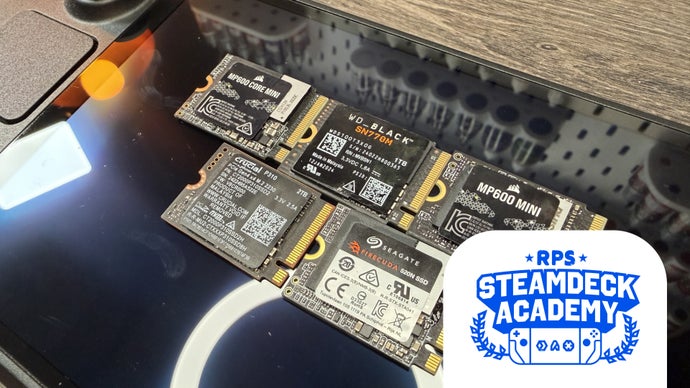
Valve currently have three Steam Deck models on offer: you've got the standard 256GB LCD variant (basically no longer in production), the 512GB Steam Deck OLED, and a beasty 1TB edition of the latter. All of them are lovely handheld PCs, but whether you've got one of these or you invested earlier in a smaller model, you might still be itching for a little more capacity to make that 32-hour flight to New Zealand a lot more bearable. At this point you have two options: a microSD card, or for storage with more clout, one of the best Steam Deck SSDs.
Doubling or tripling street-level outlays without harming sales would, you’d think, make a lot of gaming gear makers – especially their accounting departments – very happy indeed. But as those chips have become a scarce commodity at the supplier level, even the bigger hardware businesses are being squeezed as well, and it shows. Razer can’t decide how much their next laptops should cost. Valve are running out of Steam Deck stock and delaying the new Steam Machine. Zotac Korea called the RAM shortage an existential threat. But what of the industry’s smaller players – those producers of the niche, the quirky, the retro?
Amid soaring SSD prices, slower-but-cheaper mechanical hard drives may have offered an attractive reprieve for anyone wanting to embiggen their PC storage on a – and I know it’s increasingly difficult to use this word without breaking down into desperate laugh-crying – budget. Unfortunately, that probably ain’t happening either, as leading HDD manufacturers Western Digital and Seagate have both revealed that they’ve already sold “pretty much” all of their mechanical drive stock that was allocated for 2026.
As feared, the recent uptick in Steam Decks being noted as out of stock is down to the ongoing memory crisis. RAM prices have been driven through the roof by AI companies gobbling up memory sticks en-masse, with the other downside of that being the tech's very scarce at the moment. Cue companies like Valve stuggling to keep on securing as much as they need to make and sell hardware without interruption.
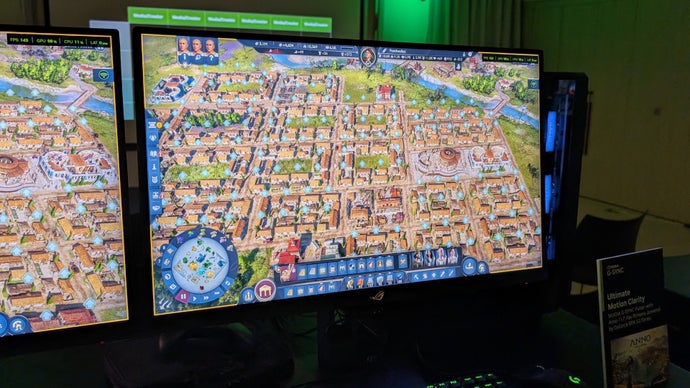
Nvidia’s relationship with PC gaming doesn’t always feel like a loving one. Sometimes they’re gifting us a useful new version of DLSS, sometimes they’re helping drive RAM prices up to £300 a stick. Even so, it’s hard not to look at G-Sync Pulsar – a new bit of monitor cleverness that seeks to remove unwanted motion blur from its LCD panels – and see some goodness still inside that big, green eye. After trying it out at a demo event this week, I’m hopeful that Pulsar can clean up how games look in motion as well as anything since the original G-Sync.
I’m planning to better balance the recent glut of high-endhardware reviews with some genuinely affordable stuff, but in the meantime, here’s something that’s a little of both. The Epomaker G84 HE is another Hall effect keyboard, meaning its magnetically operated switches can be adjusted for actuation height, and/or set up for strafey-strafey, shooty-shooty rapid trigger/Snap Tap shenanigans in compatible games. Both are features you’d normally expect to run pricing up into the triple figures, and yet at £80/$85, the G84 HE costs more like a lower-mid-range, traditionally mechanical 'board.
Self-improvement, growth, development. Ideally, these are tenets to live life by. Whether that’s setting aside time to train and exercise in some weird sport you’ve seen online, learn a new language with a pushy owl, or expand your horizons through travel, though only if you’re not just there for the sake of the ‘gram. Gamesir are a company with this same outlook. They started out with some peripherals of questionable quality, but have spent the following years crafting a wealth of incredible devices that tend to feature cutting-edge technology with seriously competitive pricing.
The G7 Pro was one of 2025’s best peripherals. One so good, it was fractions away from being perfect. Gamesir seem to have known that, and with the Wuchang Fallen Feathers Edition of the G7, they’ve made what is arguably the pro controller to beat, at least if you’re an Xbox or PC gamer.
The G7 already had a spec list to die for – well, if you lust after extra controller inputs, mechanical buttons, trigger lockouts and frictionless TMR sticks – but the one omission was a wireless connection to Xbox consoles. That’s the main addition for this release, thanks to the included 2.4Ghz dongle, and it completes the feature set perfectly.
This gamepad is also stunning. The Wuchang edition is boldly decked out in blue and gold, a colour scheme that’s carried through to the charging base as well, with Chinese iconography and artistic brush strokes sweeping between the two. There’s gold feathering – matching with Wuchang- Fallen Feathers’ malady that affects protagonist Bai Wuchang – that runs across both of the controller feet, doubling up as a textured grip. It immediately feels like a well thought out and intentional collaboration, rather than just a different colourway, and every time you reach for it, there’s a sense of occasion and impact that you’re definitely not getting elsewhere.
In the hand, the G7 Pro Wuchang Edition’ 272g has just the right heft to feel premium and purposeful, but it’s not wearying like the Xbox Elite line can be. Its mechanical microswitch-equipped D-pad is also one of the best out there at the moment, and I love the definition, speed, and the corresponding click that comes with every press.
TMR sticks are the newest frontier in analogue stick tech, and they’re the next step after Hall Effect. Just like Hall Effect, they operate without physical components rubbing together, avoiding the wear and tear that old-school potentiometer sticks could develop, and stopping controller-killing stick drift. TMR sticks use electromagnetic technology, making them more precise than Hall Effect, and they’re tuned to feel closer to traditional analogue sticks. Gamesir’s versions in the G7 Pro feel awesome, and through multiple rounds of Overwatch, they’ve proved blindingly responsive.
A couple of months ago, there was a clear audio lag when using wired headphones via the G7 Pro wirelessly with Xbox Series X|S. The most recent firmware has definitely improved matters, but it still feels like there’s a small measure of latency between the on-screen action and the audio being delivered to you. That can be a dealbreaker for a committed competitive gamer, but if you’re that committed, then you’re going to have your controller wired up too, making it a non-issue. Even so, we hope that Gamesir can squash latency down further for those wireless gamepad folks.
There are other amazing pro controllers out there, but the G7 Pro Wuchang Edition has them absolutely trounced on price. I love the Nacon Revolution X Unlimited, but its list price is £70 more than the G7 Pro (or even more, with the G7 Pro’s regular appearance on AliExpress) While it does have features that Gamesir’s offering doesn’t, I’m not sold that the OLED information screen is worth the sizeable premium.
Currently, I can't check my Bluesky direct messages until I've allowed the Epic Games-owned KWS to look at either my bank card, my ID, or my wizened visage. As I'm based in the UK, it's not just Bluesky I've got to worry about either, with similar verification processes now present on Reddit, Discord, and even my partner's Xbox.
This is all due to the Online Safety Act, which came into effect in the UK last year. For many, these age checks are an annoyance at best—but they also represent something that will have ramifications far beyond the British Isles. The UK's Act was designed in part to ensure children in the UK could not easily access "harmful content." This is a broad term that includes but is not limited to pornography, content that promotes "self-harm, eating disorders, or suicide," and "bullying".
To comply with the act and differentiate children from the adults, many platforms have opted for age-gates like the one I'm encountering on Bluesky. Almost 70% of Brits surveyed shortly after the Online Safety Act came into effect said they supported it…though 64% didn't think it would be all that effective. Indeed, I could log into a VPN to get past the UK-based Bluesky block—though unfortunately for me, I am stubborn, lazy, and cheap (apologies if you've been trying to get ahold of me).
As Jacob has previously outlined, there are better ways to implement age checks. As it stands, though, I'm not naive enough to think the data I keep elsewhere is in hands that are any safer. However, not submitting to an age assurance check makes for one less point of failure from which my likeness or even my official documents can leak out.
On the one hand, yeah, I'd rather children growing up today didn't see all the things I saw thanks to having unfettered internet access throughout the early oughts. I'd also rather young'uns now didn't have to experience all the harassment I experienced at the hands of my own peers, newly empowered by that unfettered internet access.
On the other hand, the internet answered a lot of questions I was absolutely not going to ask my parents; when I see a vague term like "harmful content" I do have to wonder what genuinely educational resources on the wider internet—say, regarding art history or personal health—might end up age-gated because someone somewhere has decided they're tantamount to 'pornography.'
I'm only just the other side of 30, but Section 28 was still in effect for some of my school years. For those who don't know, Section 28 was a law that prevented schools in England, Scotland, and Wales from doing anything that could be interpreted as "intentionally [promoting] homosexuality or [publishing] material with the intention of promoting homosexuality". So, until the law was repealed in the early 2000's, a lot of schools simply pretended LGBTQIA+ folks didn't exist. The internet, for all of its faults, helped to fill that deafening silence for me.
(Image credit: PromptPirate on GitHub)
Even so, I remember there being content blocks back in my day, too, and I know I found more than a few ways around those. Indeed, if we take just Discord today, our James has found not one but two different ways to fool its face scans—though the platform may already be formulating a counter to these workarounds.
Shortly after issuing assurances that not all users will even have to undergo an age check, a since-edited support article revealed that some UK users "may be part of an experiment where your information will be processed by an age-assurance vendor, Persona." Amid reports of folks easily fooling its primary third-party vendor's age verification checks, Discord may have been seeking to diversify its defences.
Persona's investors include Peter Thiel, co-founder of ICE's premier surveillance provider, Palantir. Though Persona and Palantir are two totally separate companies that do not share either data or operations, that's still a pretty grimy connection. Not least of all because earlier this week, the US Department of Homeland Security reportedly subpoenaed a number of major online platforms—including Discord, Reddit, Google, and Meta—in order to obtain the personal details of accountholders who had been critical of ICE or identified the locations of its agents. We don't yet know if Discord complied, though we have reached out for comment.
(Image credit: Artur Widak/NurPhoto via Getty Images)
There is an even worse wrinkle in the Discord-Persona 'experiment': while Discord had previously said that data like age verification face scans would only be stored and processed on users' own devices, those who ended up part of the Persona experiment may have their information "temporarily stored for up to 7 days, then deleted."
All of that said, Persona is not part of Discord's long-term strategy, with the platform telling Kotaku earlier this week that its dealings with the vendor were part of a "limited test" that has since been concluded. That leaves K-id's on-device processing in effect, but even that doesn't necessarily end the privacy nightmare. Data breaches usually leave platforms scrambling for user good will, but Discord seems all too happy to keep walking into rakes.
One could jump ship and shop around for a free Discord alternative as I recently did, but all of the platforms I tested will likely have to implement some sort of age assurance check if they haven't already in order to continue serving users based in the UK in the future. That doesn't mean I'll be letting them scan my face any time soon; I may have to deploy Norman Reedus and his funky foetus before long as third-party age verification vendors have done little to earn my trust or a gander at my actual face.
This week I've been: Spending probably too much time in Counter-Strike 2 deathmatches and aim training maps. It's all work, not pleasure, I assure you... Okay, maybe a little pleasure.
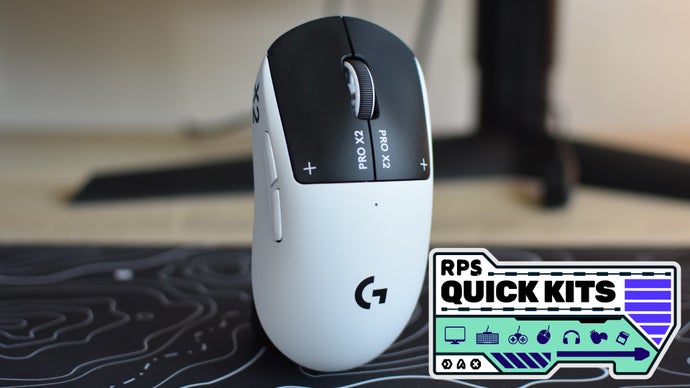
The last couple of weeks have been such a deep breath of fresh air. It's been nice to focus on the positivity of a leap forward in gaming mouse technology with the Logitech G Pro X2 Superstrike rather than doom-maxxing with more 'state of the industry' reflections on high memory prices and high GPU prices and high– well, you get the idea.
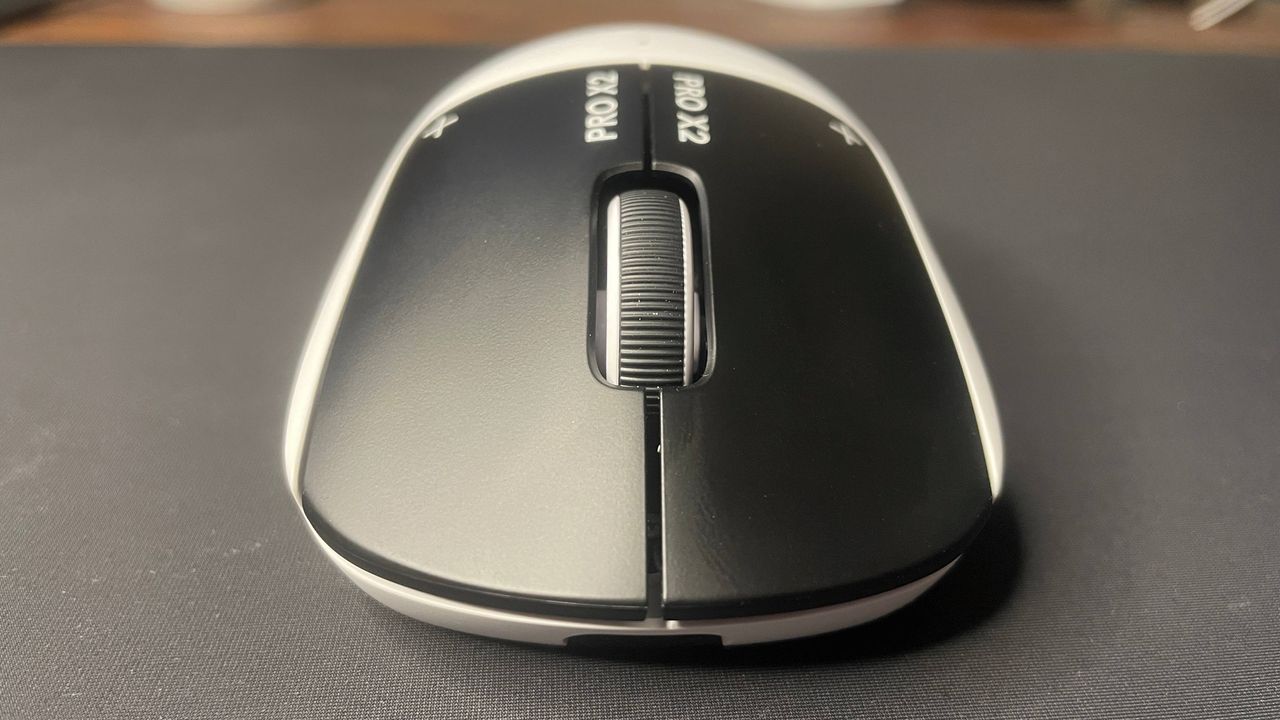
The Superstrike, if you're not already aware, puts analogue switches under the left and right mouse buttons, allowing for adjustable actuation and rapid trigger. Given these are entirely adjustable, they don't make a physical click, so the Superstrike combines this with haptic motors to generate the feeling of a click when the button reaches your chosen actuation point.
We've not had this before in a gaming mouse. Some have pointed out that the Swiftpoint Z series has had pressure-sensitive clicks for a while, but these clicks are nothing like the Superstrike's. The Swiftpoint Z has an initial mechanical click and then uses pressure pads rather than electromagnetic sensing to measure the button press.
The Superstrike's Haptic Inductive Trigger System (HITS), on the other hand, completely eliminates the initial mechanical click and allows for ultra-light actuation, plus rapid trigger. In other words, it's giving the same advantages that Hall effect and other popular analogue technologies give for keyboards.
Speaking of Hall effect keyboards, that's pretty much what we're dealing with here, in terms of how Logitech's HITS tech will likely affect the market. I don't see smaller mouse 'clone' companies ignoring it for very long; I'd expect there to be cheaper copycats within the next few months, especially given the hype over the Superstrike that these companies will no doubt have noticed.
(Image credit: Future)
When analogue gaming keyboards started popping up and gaining traction a few years ago—especially once they started using Hall effect rather than optical tech—there was scepticism in some corners of the internet. Some of that was very justified, because it was about the overall build quality of these keyboards, which didn't match good enthusiast typing experiences.
Now, though, we have budget Hall effect keyboards and ones that sound and feel just as good as traditional mechanical keyboards. In fact, these days, it's often worth opting for a Hall effect or some other kind of analogue keyboard (TMR, optical, induction) even if you're not a competitive gamer, just because you won't be losing out on anything, but you will be gaining the ability to set your actuation point to exactly where you like.
Any scepticism over Hall effect and other analogue technologies for gaming keyboards has been shown to be unfounded. I think the same will be true for analogue technology in gaming mice.
In fact, I think this technology has more of a chance to be vindicated even quicker than Hall effect was on keyboards. That's because we've already seen how well analogue tech can cement itself in the peripheral market, so there should be less resistance from manufacturers. And many companies will already have experience implementing this technology in their keyboards, so there's less risk on that front, too.
(Image credit: Logitech)
Admittedly, there is more of a question about the importance of having adjustable actuation in a mouse than in a keyboard. But after having used the Superstrike extensively for a couple of weeks now, I think this is an argument that will be rebuffed when enough people have tried it. The benefits, at least for tactical FPS games or very click-heavy games like MOBAs and RTS games, feel tangible and can definitely raise the skill ceiling.
And look, I'm not saying the mouse is perfect—it's not—but isn't it nice to actually get excited over something for a change, and to actually have a reason to? This is why many of us get into PC gaming hardware in the first place, is it not: because sometimes there can be exciting developments rather than piecemeal improvements?
I've seen some people complaining about it essentially being a G Pro X Superlight 2 apart from the new click tech, and this is a valid complaint because, yes, it's basically the same mouse, and there are downsides to this. For instance, I've noticed the Superstrike's middle click stops registering after holding it down for a while if you don't use a very firm touch, which was also a known problem with the Superlight 2. And the skates aren't great for cloth pads, either, as they're quite slow UPE ones.
(Image credit: Future)
The counterpoint to the argument that it's essentially a Superlight 2 is that the company has brought the mouse to market very quickly, to get the tech into people's hands ASAP and before another company does. Logitech's chief engineer Regis Croisonnier told me as much:
"Here, we knew we had a golden nugget in our hands, right? We wanted to move fast, so we took all the shortcuts we could… I think for us, it was clear that we had to move fast… we have a fantastic idea. And on the other hand, it's obvious, right? When you know it, when you have it in your hand, it's obvious, right?"
The implication, of course, is that if it wasn't brought to market as quickly as possible, then others might have beaten them to it. Which isn't a very consumer-focused reason, of course, but the benefit for us is that we get this technology quicker.
(Image credit: Future)
Whatever you think of that argument, though—whether you're happy with it or would have rather waited longer for a Superstrike with a different design—there's no denying that the technology is exciting.
Setting aside the specifics of its implementation in the Superstrike, HITS itself has shown the gaming mouse market that analogue and rapid trigger technology in a gaming mouse is possible and useful in some competitive games. I'll take that kind of a leap forward over slight frame rate increases, increasingly ridiculous refresh rates, 8K polling, and any number of other PC gaming hardware changes we've seen over the last few years.
The Superstrike's haptic and induction technology joins the likes of Hall effect for keyboards, OLED for monitors, and 3D V-Cache for CPUs in terms of its market-transforming power. It's just a question of how long it will take for that to come to fruition in the market at large, and even on that front, I think there's reason to be optimistic.
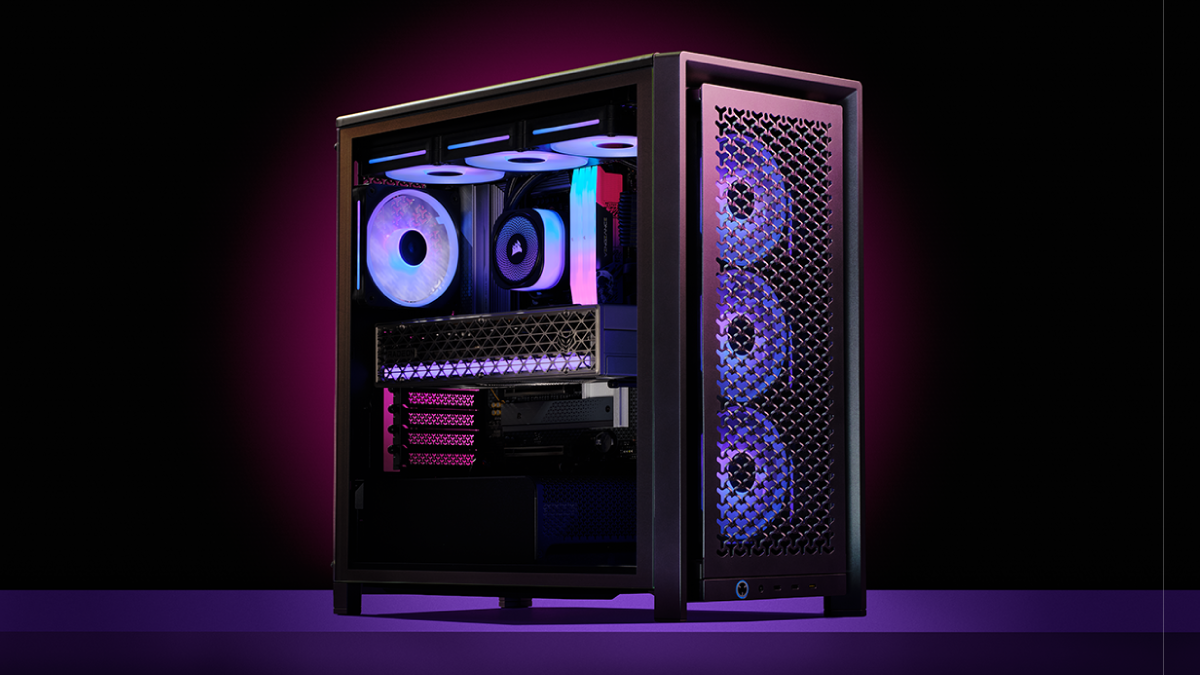
This week, Corsair has announced that its Frame 4000D cases are getting two new colourways: Nova and Galaxy. They have colour-shift paint finishes "that change tone as light moves across the surface". Corsair says this creates "a refined and subtle look that shifts with viewing angle and ambient lighting"
The Nova case appears to be more blue-toned, shifting to purple under the light. Galaxy, on the other hand, appears dark, phasing from grey to green, to a dark pink. These two new colours are part of the 'Vault Series' and don't just come with flashy aesthetic changes.
The Corsair 4000D Vault Series has a compact PSU shroud that Corsair says leaves space for a 120 mm fan on the case floor. The case also has a full tempered-glass side panel (as opposed to the almost full panel of the 4000D) for showing off internals, and an upgraded front-panel IO. That upgraded IO now has three USB Type-C ports (with one being 20 Gbps and the other two being 5 Gbps).
Adding to the aesthetic, these new cases have an ARGB power button, which can be used to match the lighting in the build. There's even an "MX-Style green mechanical switch for a satisfying feel." That ARGB button can be swapped with a different mechanical switch if you don't like the feel, too, which feels like the right kind of 'doing too much.'
Each version of the Vault edition case is limited to just 1337 models and can be bought right now for $140. That means these new cases are just $15 more than the standard 4000D. Well, sort of. The standard 4000D model actually comes with three RS120 ARGB performance fans, and that will cost you $60 extra.
(Image credit: Corsair )
Still, considering what you get for the money, I actually think the Vault Series is rather reasonably priced. On top of the new colours and upgraded front IO, each case is numbered, which is a neat touch.
This is the second time in just a handful of months that a piece of gaming hardware has been limited to 1337 models. Based on L33t (which is fairly retro gaming slang), the Razer Boomslang is also limited to that many units, though it'll cost you $1,337 in return.
However, Razer isn't exactly a stranger to expensive versions of its older gear (here's looking at you, Huntsman Signature Edition). I'd have to see them in person to know for sure, but congrats, Corsair, I think I see the vision with this one. I see that vision so much that I'm a little tempted to cover it in dust and RGB lighting in my gamer den.
Whether you're a Counter-Strike veteran or just picking up the iconic shooter for the first time, we can help you get the most out of your time with the game with our guide to the best CS2 settings. Whether it's graphics, gameplay, controls, or comms, we've got advice that will ensure you are racking up the headshots in no time. The CS2 system requirements don't go into great detail on what you'll need for a high frame rate, but rest assured, you won't need the best graphics card to get a reasonably high frame rate. We put Counter-Strike 2 through its paces on our RTX 4070 Super test rig and Steam Deck to show you what the best settings are.
If you're in the market for a gaming laptop but are limited to a ~$1,000 budget, this Alienware Aurora gaming laptop deal is well worth a look. Normally priced at $1,399.99, it's currently available for just $1,099.99, and its spec is one that's really well balanced with no major compromises. Leading the charge on the spec list for this Alienware laptop is an Nvidia RTX 5060, and even though this laptop GPU isn't as powerful as the desktop RTX 5060 graphics card, it's still a capable GPU that will deliver reliable performance at 1080p in most games. Plus, it gets you access to the latest frame rate-boosting upscaling and frame generation tech available with Nvidia DLSS, which should enable you to game at the screen's native resolution in most titles.
What are the best Overwatch settings? It's important to set yourself up using the most optimal settings for Overwatch to ensure your game runs perfectly. Not only will these settings reduce visual clutter, but having a consistent frame rate will help you even in the most intense fights where ultimates are going off every few seconds. We've picked out the Overwatch settings to both maximize your performance and eliminate any unnecessary graphical effects that could stop you from landing crucial shots. Of course, owning one of the best graphics card picks from our buying guide will undoubtedly help you achieve rock-solid performance in the multiplayer game, so check those out if you're experiencing any issues while playing Overwatch.
Graphics card prices have ballooned in recent years, driven by rising demand initially from the cryptocurrency boom and, more recently, by the AI boom. Adding insult to gamers' bank account injuries, though, is the recent RAM price explosion that has seen DDR5 RAM quadruple in price and caused graphics card prices to rise even more, due to the VRAM they need also getting more expensive. However, fresh data suggests that a lot of buyers just aren't interested in paying even more for their graphics cards, or at least not for those from AMD, and as a result, prices are on their way down again. Back in December 2025, AMD GPU price increase rumors suggested the company would be increasing the cost of its GPU+VRAM bundles to graphics card makers, and that, in turn, consumers would soon be paying more for their cards. Sure enough, prices have steadily risen recently, but new data about stock of AMD's best graphics card options suggest many buyers simply aren't willing to pay even more.