
Normální zobrazení

Received before yesterday

Taking Mario to New Galaxies

5. Leden 2026 v 15:00
Taking Mario to New Galaxies

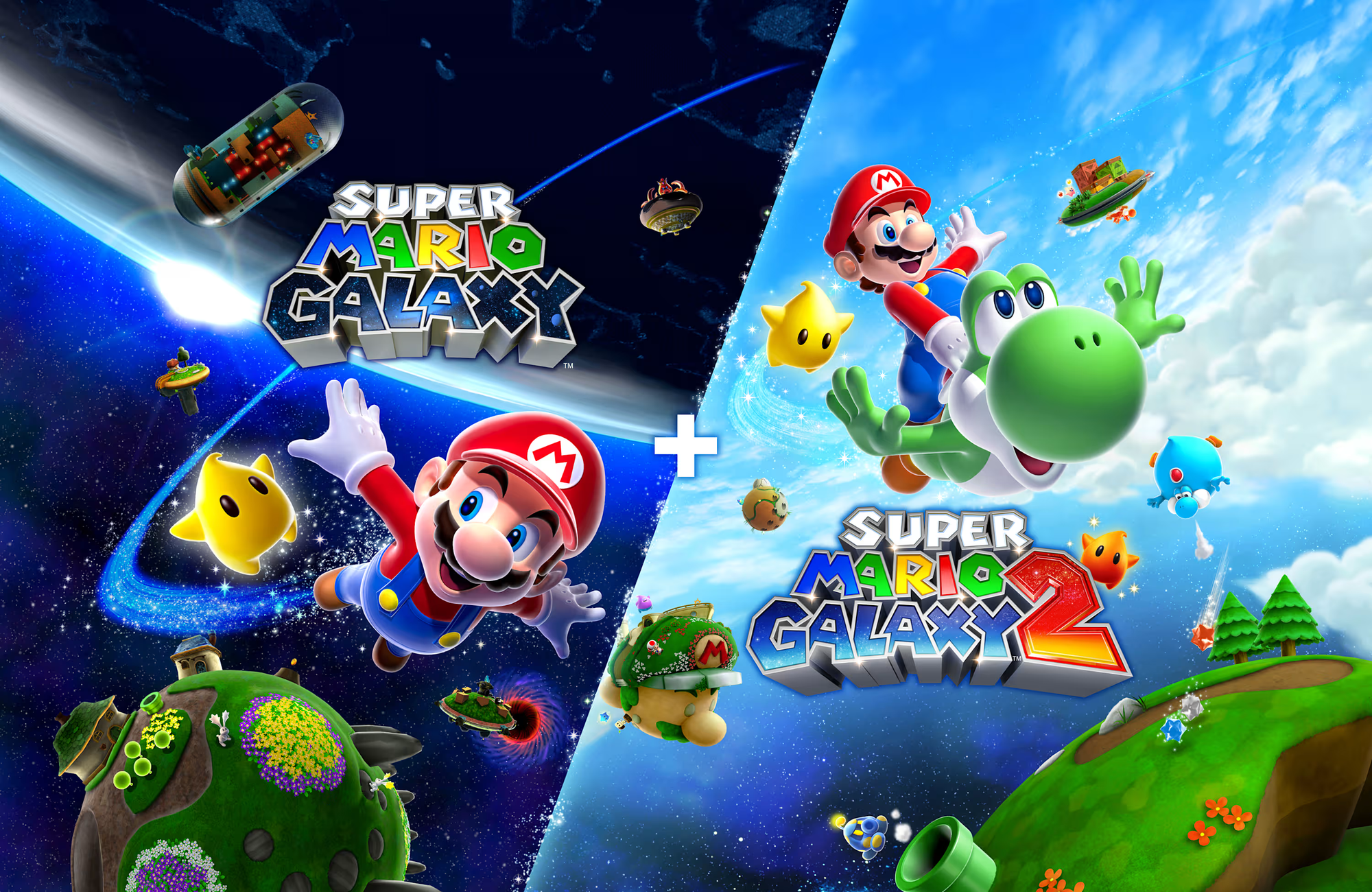
Super Mario Galaxy and its sequel, Super Mario Galaxy 2, are among the best, if not the very best, in the plumber's impressive 40-year platforming career. He's had other careers: entrepreneur, golfer, painter, and English Premier League player, just to name a few, but plumbing will always be his most famous profession.

The pair of games has been released together for Nintendo Switch, and playing on Switch 2 brings stunning improvements to the visuals and gameplay flow with a smoother frame rate and higher resolution. These are easily among the best games released in 2025, and even with Donkey Kong Bananza leading the charge on Switch 2, this Galaxy double pack is a worthy companion. Mario Galaxy is in its best possible shape and form today; in fact, younger players could be forgiven for not realising that it's nearly two decades old. Mario Galaxy itself had quite a journey before it reached its pristine form on Switch 2, and it almost feels like it had to travel light-years to reach this point today.

The initial circumstances surrounding the release of both Galaxy games were far from ideal, and that's largely due to their primary platform: Nintendo Wii. The console is still among the best-selling systems in history, and yet it was always subject to criticism, especially when compared to the PlayStation 3 and Xbox 360. Unlike Sony and Microsoft, who were aggressively pursuing high definition raw power, Nintendo wanted Wii, for better or worse, to distinguish itself from the rest purely on the basis of 'play'. The Wii Remote and Nunchuk were far from everyone's ideal ergonomics, but we can now see how the Switch JoyCons would not exist today without the foundations set by their predecessors.

Taking Mario to New Galaxies
Source: Press Kit.

The Wii was the furthest thing from a graphical powerhouse, but first-party developers made the most of these limitations to create beautiful-looking games. Games that simply should not have worked somehow worked, and so after a weak launch lineup, players wondered how a major 3D Mario would fare, if at all.

Super Mario 64 raised a pretty high bar and also set the blueprint for the very notion of 3D platforming, and its follow up on GameCube, Super Mario Sunshine, couldn't quite be the epic sequel everyone hoped it would be, despite its interesting play mechanics. Most gamers wanted Mario 64 turned up to 11 and more, and Sunshine wasn't quite that with its water hose gimmick. Then, with 'gimmick' being the middle name of the Wii, this mega sequel seemed even less likely, at least until the sheer brilliance of Super Mario Galaxy blindsided the legions of sceptical fans.

On paper, Galaxy should not have worked; from the unconventional control scheme to the even less conventional spherical level design. These ideas would have created a disaster if it were any other developer, but Nintendo gave us a game that not only built upon the strong foundation of their Nintendo 64 hit, but also took this foundation to new galaxies. It crosses the dimensions of 3D platforming, allowing players to experience new perspectives, and the sensation of exploring spherical spaces becomes second nature almost instantaneously. I'm not a game design expert by any means, but I feel only Nintendo could have pulled this off. Decades earlier, believe it or not, there was a title for the SEGA Saturn that attempted almost these very same ideas, but was cancelled after a development hell that resulted in its lead designer nearly dying due to sheer overwork... that game was Sonic X-Treme!

Taking Mario to New Galaxies
Source: Press Kit.

Super Mario Galaxy introduced bold ideas to perfection, and brought it all to life with stellar presentation, stunning orchestral music, and, for the first time, rich lore for Mario that was as emotional as it was whimsical. On Switch 2 today, this is a stunning and engrossing platformer; the core control mechanics translate effortlessly to the JoyCons when playing docked, and the experience feels tight and polished on handheld. This is what makes the game great; it wasn't tied strictly to its original Wii hardware, as the core principles were so strong that they still shine on modern hardware. That's even more true for the visuals; no longer scaled down to fit the hardware limitations of 2007, Galaxy shines today in all of its intergalactic starry-fullness, evoking a sense of discovery and wonder that very few 3D platformers can offer.

Nintendo did something else that they don't often do with Mario: taking a concept and performing an encore remix of the best ideas. Super Mario Galaxy 2 was never intended to be a numbered sequel; in fact, the core story is exactly the same, but it remixes and refines some of the ideas and level design approaches of its predecessors to create a novel and fresh experience. Where Super Mario Galaxy was methodical and challenging with emphasis on exploration, Super Mario Galaxy 2 streamlines the design and pacing for sheer, utter delight. Using Sonic again as an example, it's a bit like going from Sonic Adventure to Sonic Adventure 2, where it's not necessarily one game being better than the other, but rather each game has its own unique philosophy. At the end of the day, it will all come down to player preference. Even now, forums are filled with Galaxy vs. Galaxy 2 debates with no clear or decisive winner.

Super Mario Galaxy 2, from a purely gameplay standpoint, feels like a sequel; while it shares core fundamentals with its immediate predecessor, it adds plenty of layers to make the experience feel evolved. Most notable of all is the inclusion of Yoshi as a playable ally, rekindling the magic of SNES's Super Mario World in a fully 3D space. The experience feels like a roller coaster in outer space, with great thrills and brisk pacing.

Taking Mario to New Galaxies
Source: Press Kit.

Together, Super Mario Galaxy and Super Mario Galaxy 2 are games that other developers could only dream of making. I wouldn't be surprised if Nintendo itself had to fight the temptation to create a Galaxy 3 (fans of the Blue Blur still beg for Sonic Adventure 3, by the way). Paired together on Switch 2, this is an excellent trip that will feel new even to players from 2007. Until the next Mario entry comes along for the current generation console, both longtime fans and newcomers have plenty to discover in the galaxies offered here.

Despite their origins, the games' arrival on Switch 2 feels like a true homecoming. Super Mario Galaxy and Super Mario Galaxy 2 finally look, feel, and play like the games they were always meant to be. It may have taken short of a light-year, but it goes to show that some ideas are not only built to last, but are built with the future in mind.

Diving Into the Heart of Final Fantasy VII: Remake Intergrade

31. Prosinec 2025 v 15:00
Diving Into the Heart of Final Fantasy VII: Remake Intergrade

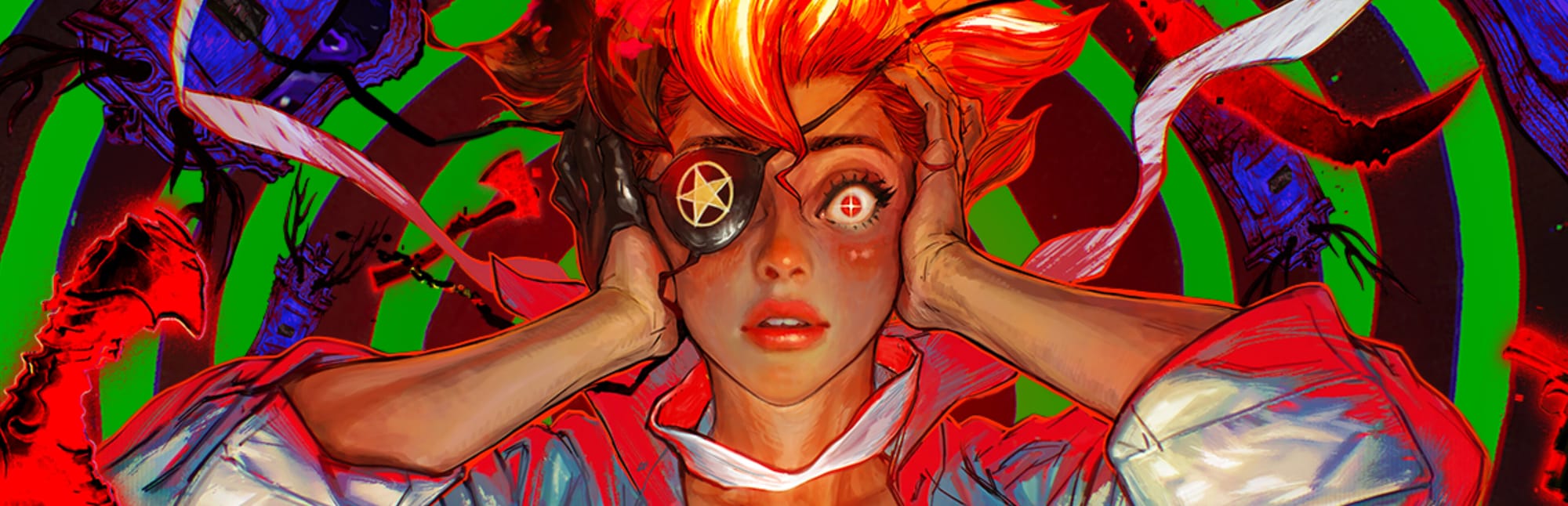
Final Fantasy VII: Remake Intergrade is one of my favourite PlayStation 5 games, a perfect reintroduction to the heart and soul of all things PlayStation and Final Fantasy. Much like how the original Final Fantasy VII gave the original PlayStation its identity, I feel this Director's Cut expanded release of FFVII Remake reminded me of all the intangibles which collectively come together to define the style and culture of PlayStation. Stepping into a fully realised Midgar was a surreal and enchanting experience for me, and more than the dazzling combat system, it was the intimate moments shared between characters which helped me lose myself in the setting. Returning to Midgar, along with the heartfelt cast, rolled together feelings of nostalgia and wonder into one beautiful sensation of escapism. 

The game is now making a comeback of sorts, with a brand-new port for Xbox platforms and Switch 2. No matter the era, Final Fantasy VII is one of those games that's almost too easy to place into the "overrated" camp, and yet even its biggest naysayers are closeted fans. 

As the premier RPG showcase for the original PlayStation, I've had an on-and-off relationship with the game, having spent more time with the follow-up, Final Fantasy VIII. My first time with Final Fantasy VII involved a one-sitting playthrough in the absence of a memory card (occasionally there would be shortages of those darn things!), where I made it all the way to Disc 3 (remember disc swapping mid-adventure?) before I finally hit the Game Over screen. I was pretty pleased with myself, but in hindsight, I realise just how linear and cinematic this RPG really was, and how dead-easy it was for me to be make it as far as I did without saving progress.

Diving Into the Heart of Final Fantasy VII: Remake Intergrade
Final Fantasy VII Classic. Source: Steam.

I eventually did play it again on the rather disappointing PSOne Classic mini-console, and then on Nintendo Switch, which is perhaps the best possible way to enjoy the classic at this point. A lot of things about the game obviously don't hold up (random battles are irritating), but the thing I enjoy the most, time and time again, is the time I get to spend in Midgar. This underground urban dystopia serves as the main hometown, so to speak, a fascinating fusion of sci-fi, fantasy, and steampunk, featuring both Western and Oriental cultural influences. Midgar is a melting pot of culture and inspiration, and each time I have replayed the original PlayStation game, it's only just to immerse myself in the early areas of the adventure once more.

Then there are the characters, and honestly, it feels to me that every RPG since 1998 has tried their hardest to be just like Final Fantasy VII, particularly in the effort to replicate the same chemistry and synergy of the cast. Since 1998, there have been so many JRPGs attempting the same magic; the cast of Final Fantasy VII, once known for their unique personalities, consequently created these now laughable tropes. The brooding amnesiac has been done to death, but when Cloud did the then-novel character gimmick, it was cool and edgy. To this day, no one does it better. Yes, Cloud has the mood swings of a teenager, but he also has a sense of humour with his witty comebacks. His personality certainly has more range in the remake, with lines like "I'm sorry about your ass."

I was initially hesitant about Final Fantasy VII Remake; for one thing, I didn't quite like the idea of it being episodic, with the uncertainty surrounding whether they would even be able to complete the project. The game first landed on PS4, as part of the apex lineup of swansong hits for the console. It came to PS5 as Final Fantasy VII Remake Intergrade, and now has landed on Xbox and Switch 2. At the time of its PS5 release, I hesitated, yet something about it called to me, as I desperately needed an epic JRPG experience for my new console, especially since Scarlet Nexus was not quite what I hoped it would be.

Diving Into the Heart of Final Fantasy VII: Remake Intergrade
Source: Press Kit.

One of the biggest complaints from critics was how VII Remake "never left Midgar," and then it hit me: every time I have replayed the original game, it was simply to relive Midgar all over again. I actually don't really want to leave Midgar; I'd rather perpetually live in a hyper-realistic recreation of it for as long as possible. Even now, my save progress is at the point of no return in Chapter 14, because once the party infiltrates Shinra headquarters, it's a rollercoaster into the endgame sequence. To be honest, I'm still not ready for it, as I'd much rather just roam the Sector slums. It's been a blast to explore every nook and cranny and meet all sorts of interesting characters.

The slums of Midgar are downtrodden and rustic, and yet they brim with so much life and personality. It's a multicultural hub in the truest sense, a dystopian future setting most video games struggle to create. Not everyone is friendly here, but even with so much pollution and rampant corruption, there are moments of quiet beauty and genuine kindness from its citizens. It needs to be experienced to be believed, and the level of detail present provides an unreal level of intimate immersion.

Then there is the cast, whom I've gotten to know over the years via the main game and various spin-off games and media, including full-fledged motion pictures. I don't claim to be the biggest Final Fantasy VII fan, nor was I ever a diehard fan of the cast, but over a period of two decades, I can't help but have a nostalgic sentiment towards it all. They're a bit like old friends I rarely keep in touch with, but getting in touch with them takes me back to a moment in time. I have lived through the anticipation, hype, magazine covers, stellar reviews, and everything else since. It's hard for Final Fantasy VII not to hold some meaning to anyone who grew up during that magical time.

Diving Into the Heart of Final Fantasy VII: Remake Intergrade
Source: Press Kit.

At this point, the death of Aerith is the worst-kept spoiler in pop culture. Everyone knows about it, even those who still don't plan to play Final Fantasy VII any time soon. In hindsight, Aerith's character development was a little rushed in the original game, but in VII Remake, the depth of her development makes it so easy to genuinely care about her, and even sadder knowing what inevitably lies ahead for her (unless.. well, we'll see). One of my favourite moments in the original was the brief duration spent in Aerith's house, from its warm, cosy interior to the beautiful flowerbeds. In VII Remake, this humble setting is brought to life in rich detail, everything from creaky staircases to lush sun-kissed flowerbeds. It's an area where I can't help but stop to take it all in, an unexpected respite for mindfulness.

This is exactly what VII Remake does so well: the way it goes from moment to moment, allowing both its cast and setting to grow with the narrative pacing. The most profound moments are quiet yet interactive segments of intimate vulnerability, such as when Cloud and Aerith simply walk through the slums, talking just to overcome the awkwardness of being strangers to each other, or when Cloud and company visit Jessie's family home, as the cast walk through her childhood neighbourhood, complete with a park and a swing set. 

These are the moments, so intimate and authentic, which defined my experience with VII Remake Intergrade, even more than the excellent battle flow and the sheer depth of its intricate systems. These quiet yet profound moments of immersion are what I hope to see more of in video games, daring moments rarely seen in gaming since the original Shenmue on Dreamcast.

Diving Into the Heart of Final Fantasy VII: Remake Intergrade
Source: Press Kit.

I love a lot of things about Final Fantasy VII: Remake Intergrade, but the lasting moments to me are when things slow down to a mindful halt, where the game world simply allows itself to be, and allows me to be a part of it, and gives me the agency in allowing the cast to bravely be their vulnerable selves.

Hotel Barcelona Is Video Game Counterculture

29. Říjen 2025 v 15:00
Hotel Barcelona Is Video Game Counterculture

Hotel Barcelona is one of those games that everyone really needs to experience for themselves. I'm not suggesting that this is one of those absolute must-have AAA releases; it's no Ocarina of Time or Halo (although mind you, there are perfectly valid reasons for not liking either of those games!) Instead, this is one of those innately polarising games where reviews are all over the place, and so each player needs to make up their own mind about it. This is no surprise, given that the game is the product of a dream collaboration between two of the most controversial game creators today. These equally enigmatic creators each impart their unorthodox game development styles and philosophies upon the game. To step into Hotel Barcelona is to step into a truly one-of-a-kind meeting of the minds.

In an age of big budgets and high production values, the expectations heaped upon video games have never been higher. Everything from a glitch-free experience to the professionalism of the voice acting comes under microscopic scrutiny. Game developers have also become less daring and adventurous (unless your name is Hideo Kojima, that is). There was a time when big game publishers were not afraid to take risks, to sell game design choices that were quirky yet innovative, and they appreciated the value of catering to niche audiences to build a cult following.

This unhindered approach to game development and design really peaked during the sixth console generation, with SEGA's Dreamcast setting the example and Nintendo's GameCube and Sony's PlayStation continuing to be a haven of cool ideas. Not every game needed to score a 90% average on Metacritic to be deemed a success, as it was simply enough to create a compelling title for its intended audience.

Hotel Barcelona Is Video Game Counterculture
Source: Press Kit.

Nowadays, you'd be hard-pressed to find such experiences from big publishers, but there's certainly no shortage of these flawed but creative efforts from up-and-coming developers in the indie scene. There's still a void when it comes to new ideas from true industry veterans, but thankfully, there are two names who continue to march to the beat of their own drum: Goichi Suda (a.k.a Suda51) and Hidetaka Suehiro (a.k.a Swery65).

As game directors, both have incredible resumes, but if one title were to define their respective game development philosophies, then for Suda51, it would be No More Heroes, and for Swery65, it would be Deadly Premonition. These signature titles have garnered a loyal fan following over the decades, and the impact these games have had on the gaming zeitgeist can't be understated.

They are unique in their directorial styles and yet so alike. One thing is clear: their games are all about the profound intangibles, as these games often have subtext within the narrative and game design that tap into a gamer's psyche like no other. As experiences, these are games that challenge the very notion of 'play' in video games, and not only that, they challenge the idea of what it means to be a 'gamer'.

They've always gotten along as comrades in the same industry, but fans have often wondered what would happen if they collaborated on a project. In fact, some wondered if such a thing were even possible, simply because Suda51 and Swery65 are just too alike. Could two uniquely creative volcanoes find compromise and balance when bringing highly volatile ideas together as one?

Turns out, it was possible after all, and the end result of bringing two mad geniuses together to create a video game is Hotel Barcelona.

Hotel Barcelona Is Video Game Counterculture
Source: Press Kit.

A fundamental commonality between the pair is also evident here: their games are unapologetically 'janky'. This 'jankiness' is evident in the gameplay systems that are often simple and effective, but lack fluidity and polish, especially in combat and shooting. The graphics aren't AAA quality either, instead emphasising artistic expression over texture mapping polish. Not only that, but the performance rarely hit a stable 60 frames per second. Some wonder if these passionate game directors deliberately make 'bad' games, and, well, of course they're not; it's just their intentions and emphasis are different from typical game directors.

This can be contrasted with other media like film and music, but let's go with music to illustrate a point. You can pick up the latest mainstream pop record, and chances are you will be treated to a polished musical experience where the vocals are always on key and the instruments are mixed to sound as clean and pleasant as possible. And yet, there is an audience for the unrefined and unpolished, where instruments are allowed to make raw noise and unconventional singers are allowed to express unhinged ideas; that right there is punk. It's a counterculture for the sake of alternative expression, to challenge conventions and the status quo.

That's what games by Suda51 and Swery65 are: the punk rock equivalent of gaming. And so, Hotel Barcelona is the ultimate punk rock album by two industry legends. It's a dream team to be sure, and the result is a game that will be truly appreciated by its intended audience, perhaps even more so over time.

Hotel Barcelona is a roguelite, and while there are numerous roguelikes and roguelites in the indie scene, they don't compare to the vibe and style that Suda51 and Swery65 have created here. Think of it as a punk rock video game by two industry legends who don't need millions to express their wild creativity.

Hotel Barcelona Is Video Game Counterculture
Source: Press Kit.

It's an effective 2.5D action game oozing with style. The core gameplay loop is enough to keep players coming back for more, and each return trip opens up more of the creativity. There are homages to gaming's past here, and plenty of powerful and provoking meta-commentary tucked away in both the game design and narrative flow. It's a violent game, but one for the thinking gamer. In the signature style of these developers, video game violence thrills are presented with a contemplative subtext.

No one writes a protagonist quite like Suda51 and Swery65, and here we have Justine, a complex and reluctant anti-hero who expresses deep monologues as she wrestles with her demonic alter ego. The premise is gruesome and unkind, and yet there is a wicked sense of humour to it all, especially in the playful dialogue flow.

It's all about style, with a range of visual styles delivering a story that only Suda51 and Swery65 could dream up together. Speaking of the former, Suda51 has always been about boss battle presentation, and Hotel Barcelona delivers its cast of eccentrics in a style most game directors could only dream about. Aside from Kojima, nobody writes boss characters quite like Suda51. The first boss theme song samples 'For Whom The Bell Tolls' by Metallica, and the rest of the presentation isn't shy in referencing all kinds of media from heavy metal to horror cinema. The bosses are cool, and their presentation showcases true pop culture passion, but it's just too bad that the core gameplay makes the actual battles feel tedious.

I described the game as effective, and it is, but that's about the most glowing praise the core gameplay earns. Take away the layers of style and personality, and you're left with an action game that features cumbersome combat and dull level design, one where the set pieces and platforming rarely gel well with the clunky mechanics. It's all competent and serviceable enough, but oh so very dull. It also speaks volumes about how attractive the presentation and vibe of Hotel Barcelona can be; it's exciting enough to make the majority of the sluggish gameplay worth enduring.

Maybe persevering through rusty gameplay is the point of it all. Even when parts of the gameplay don't feel great, the sum of the many parts that make up the experience, whether it's the music or character designs, creates a whole that feels special. Put it this way: Black Sabbath didn't have an opera singer on vocals. The point isn't to have a good singer; the point is Ozzy Osbourne was the only voice to bring together the many imperfect yet unique parts of the Black Sabbath sound.

Hotel Barcelona is a flawed and imperfect game; it's not a low-budget indie game created by green developers, nor is it a AAA title backed by reputable industry veterans. Instead, this is a perfect in-between: it has modest production values and yet perfectly expresses lofty and ambitious ideas. It's a bit like when a punk rock band goes from playing small clubs to selling out stadium shows, without losing their artistic edge.

Forget the reviews and forget the accepted norms of AAA gaming; Hotel Barcelona is a title that will be savoured and studied for decades, long after games like Battlefield 6 have shut down their servers.

Review key provided by Neonhive and CULT Games
❌