Logitech G Pro X2 Superstrike gaming mouse review: a new standard in customisable clickery
10. Únor 2026 v 13:51

I don’t want to alarm anyone, but a gaming mouse has just tried something new. New and, it turns out, brilliant.

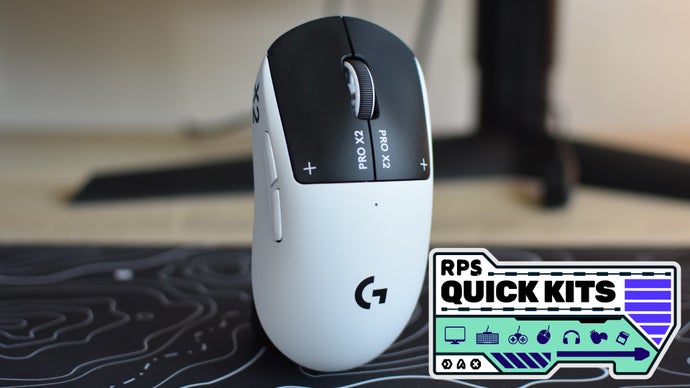

I don’t want to alarm anyone, but a gaming mouse has just tried something new. New and, it turns out, brilliant.
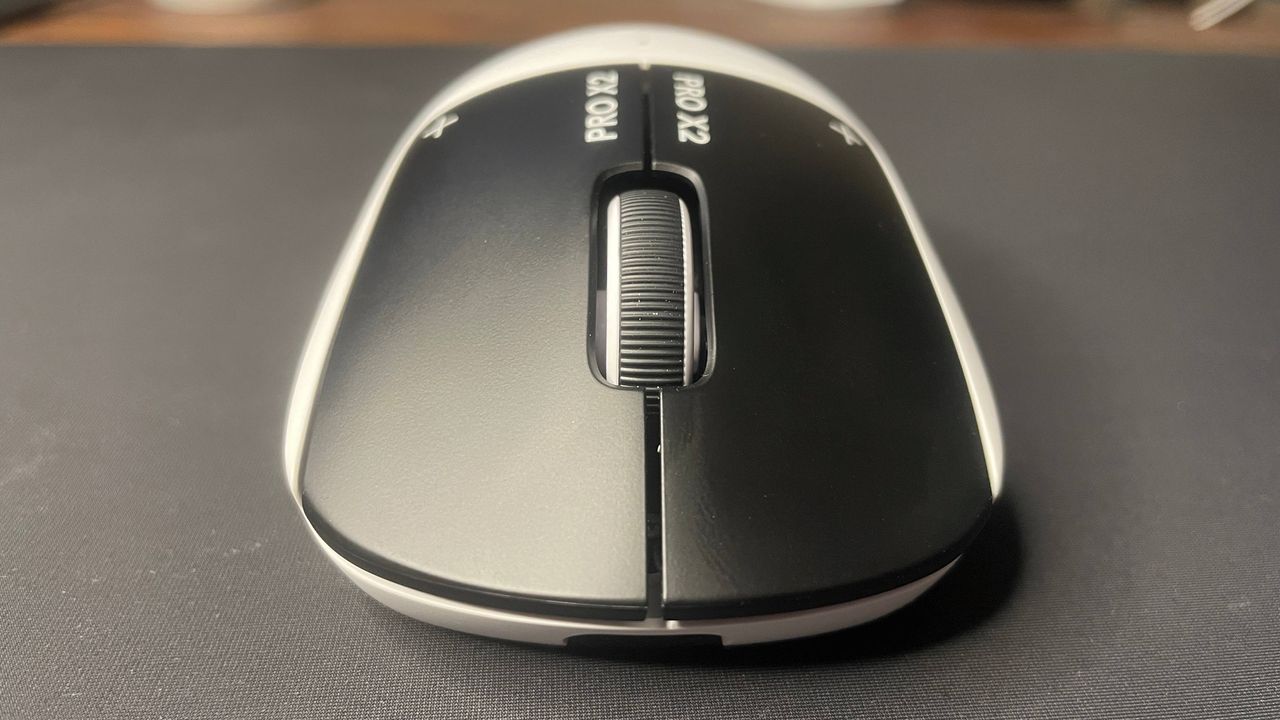
This week I've been: Spending probably too much time in Counter-Strike 2 deathmatches and aim training maps. It's all work, not pleasure, I assure you... Okay, maybe a little pleasure.
The last couple of weeks have been such a deep breath of fresh air. It's been nice to focus on the positivity of a leap forward in gaming mouse technology with the Logitech G Pro X2 Superstrike rather than doom-maxxing with more 'state of the industry' reflections on high memory prices and high GPU prices and high– well, you get the idea.
The Superstrike, if you're not already aware, puts analogue switches under the left and right mouse buttons, allowing for adjustable actuation and rapid trigger. Given these are entirely adjustable, they don't make a physical click, so the Superstrike combines this with haptic motors to generate the feeling of a click when the button reaches your chosen actuation point.
We've not had this before in a gaming mouse. Some have pointed out that the Swiftpoint Z series has had pressure-sensitive clicks for a while, but these clicks are nothing like the Superstrike's. The Swiftpoint Z has an initial mechanical click and then uses pressure pads rather than electromagnetic sensing to measure the button press.
The Superstrike's Haptic Inductive Trigger System (HITS), on the other hand, completely eliminates the initial mechanical click and allows for ultra-light actuation, plus rapid trigger. In other words, it's giving the same advantages that Hall effect and other popular analogue technologies give for keyboards.
Speaking of Hall effect keyboards, that's pretty much what we're dealing with here, in terms of how Logitech's HITS tech will likely affect the market. I don't see smaller mouse 'clone' companies ignoring it for very long; I'd expect there to be cheaper copycats within the next few months, especially given the hype over the Superstrike that these companies will no doubt have noticed.
When analogue gaming keyboards started popping up and gaining traction a few years ago—especially once they started using Hall effect rather than optical tech—there was scepticism in some corners of the internet. Some of that was very justified, because it was about the overall build quality of these keyboards, which didn't match good enthusiast typing experiences.
Now, though, we have budget Hall effect keyboards and ones that sound and feel just as good as traditional mechanical keyboards. In fact, these days, it's often worth opting for a Hall effect or some other kind of analogue keyboard (TMR, optical, induction) even if you're not a competitive gamer, just because you won't be losing out on anything, but you will be gaining the ability to set your actuation point to exactly where you like.
Any scepticism over Hall effect and other analogue technologies for gaming keyboards has been shown to be unfounded. I think the same will be true for analogue technology in gaming mice.
In fact, I think this technology has more of a chance to be vindicated even quicker than Hall effect was on keyboards. That's because we've already seen how well analogue tech can cement itself in the peripheral market, so there should be less resistance from manufacturers. And many companies will already have experience implementing this technology in their keyboards, so there's less risk on that front, too.
Admittedly, there is more of a question about the importance of having adjustable actuation in a mouse than in a keyboard. But after having used the Superstrike extensively for a couple of weeks now, I think this is an argument that will be rebuffed when enough people have tried it. The benefits, at least for tactical FPS games or very click-heavy games like MOBAs and RTS games, feel tangible and can definitely raise the skill ceiling.
And look, I'm not saying the mouse is perfect—it's not—but isn't it nice to actually get excited over something for a change, and to actually have a reason to? This is why many of us get into PC gaming hardware in the first place, is it not: because sometimes there can be exciting developments rather than piecemeal improvements?
I've seen some people complaining about it essentially being a G Pro X Superlight 2 apart from the new click tech, and this is a valid complaint because, yes, it's basically the same mouse, and there are downsides to this. For instance, I've noticed the Superstrike's middle click stops registering after holding it down for a while if you don't use a very firm touch, which was also a known problem with the Superlight 2. And the skates aren't great for cloth pads, either, as they're quite slow UPE ones.
The counterpoint to the argument that it's essentially a Superlight 2 is that the company has brought the mouse to market very quickly, to get the tech into people's hands ASAP and before another company does. Logitech's chief engineer Regis Croisonnier told me as much:
"Here, we knew we had a golden nugget in our hands, right? We wanted to move fast, so we took all the shortcuts we could… I think for us, it was clear that we had to move fast… we have a fantastic idea. And on the other hand, it's obvious, right? When you know it, when you have it in your hand, it's obvious, right?"
The implication, of course, is that if it wasn't brought to market as quickly as possible, then others might have beaten them to it. Which isn't a very consumer-focused reason, of course, but the benefit for us is that we get this technology quicker.
Whatever you think of that argument, though—whether you're happy with it or would have rather waited longer for a Superstrike with a different design—there's no denying that the technology is exciting.
Setting aside the specifics of its implementation in the Superstrike, HITS itself has shown the gaming mouse market that analogue and rapid trigger technology in a gaming mouse is possible and useful in some competitive games. I'll take that kind of a leap forward over slight frame rate increases, increasingly ridiculous refresh rates, 8K polling, and any number of other PC gaming hardware changes we've seen over the last few years.
The Superstrike's haptic and induction technology joins the likes of Hall effect for keyboards, OLED for monitors, and 3D V-Cache for CPUs in terms of its market-transforming power. It's just a question of how long it will take for that to come to fruition in the market at large, and even on that front, I think there's reason to be optimistic.
Now, I know none of us here at the Stew would ever use a roleplaying game as an excuse for spending the evening blatantly flirting with our best friends. Nope. Never. Ever. (If we’re going to flirt with the homies, we’re gonna be up front and ethical about it.)
THAT SAID, this Valentine’s Day, if you want to add a little romance to your games, you should be armed with the knowledge of what goes into creating a satisfying romance arc. The ingredients and…techniques…required to bring two (or more) characters to their…narrative climax.
So sit down. It’s time we have The Talk.
Any sort of romance arc should be vetted by everyone at the table with active and enthusiastic consent. Theoretically, you’ll have covered the topic in session zero, but it never hurts to take the table’s temperature before you get hot and heavy with the RP.
If you’re looking to dip your toe into the waters of narrative smooching, you can steal a page out of BookTok’s book and talk to your group about potential romance arcs using a pepper scale.
0-1 peppers is mild spicy—some flirting, a kiss here or there, maybe some implied hanky panky behind closed doors—all the way up to 5 peppers.
NOTE: I do not advise jumping headfirst into a 5 pepper romance arc as your table’s first foray into romantic RP unless, to quote John Mulaney, “Everyone gets real cool about a bunch of stuff really quickly.”
The chance for emotional bleed at a romantic table is quite high, so make sure to deploy your safety mechanics and use them liberally.
Getting into the thick of it, what are the elements that create a good romance arc? In one of her Patreon classes, award-winning storyteller Mary Robinette Kowal explained it with an acronym: D.R.E.A.M.
If you look at the majority of romance stories—from rom coms to gothics to the latest romantasy epic—you’ll find some version of this template applied to all of them. The trick as a GM is knowing which phase your characters are in and using the appropriate kinds of obstacles for those phases to create a good story.
PRO TIP: Give your players copies of this arc and ask them to track where they think their characters are on it as the story progresses. If your table is crunchy, gamify the progression through the arc with romance points (or some other form of tracking).
Feelings in general — and romantic feelings specifically — mostly happen inside people’s heads. They’re “navel-gazing” character arcs, unless we, as GMs, externalize some of the conflicts and obstacles involved in those arcs.
In standard romances, most of the obstacles the characters face are social and, honestly, have much lower stakes than your standard D&D party faces. So imagine how much fun you can have when the angry ex that comes to break up their date in the exploration phase turns out to be a necromancer or a dragon or the dragon necromancer king of a rival country!
What are some of your favorite examples of romance arcs at the table? Let us know below!
Giants come up a lot in RPGs. They are especially popular in fantasy RPGs, though there are some I would argue deserve a place in one or two other genres. What made me want to write about giants is that, cool as they are, giants are way more interesting in folklore than in most TTRPGs. In fact, to be honest, I think giants are often sadly undersold in TTRPGs, particularly in bestiaries.
Maybe it has something to do with familiarity. They’ve been there in tomes, the bestiaries and the manuals since… well since before a large proportion of the current community could probably read. And especially in those early entries, they were often not amongst the most exciting pictures available. I mean ugly, stupid looking… guys.
Not even cool armour, and unless it was an ettin, not particularly monstrous. Because the scale of a giant just doesn’t come across in a three-inch illustration.
Maybe that’s why, in many TTRPGs, giants have become a simple, escalating challenge. Bigger and bigger versions of essentially the same thing, encountered in tactical fights as your characters progress. A scalable threat, with a side serving of elemental power. Whether shaped by frost, fire, clouds, or the lumpy quality of a hill, they just get bigger, in a series of power showdowns.
All too often, they have little other presence in the world. They are not usually mysterious, and they certainly are not evocative springboards into otherworldly adventure.
It is true that, in many European fairy tales, especially in England, giants are often depicted as being unintelligent, or slow-witted. That is because their purpose in those stories is to give the hero an opportunity to be clever and quick, almost as if, to the original tellers of these tales, these qualities were what defined a hero (rather than any moral compass… ).
The hero doesn’t win by fighting. He wins by being clever. In this way, the stories reflect cultural values: the giant is the larger foe, the seemingly unconquerable enemy who is defeated by cunning alone.
But there are plenty of examples of giants in folklore and mythology that are far more interesting than that. And more three-dimensional than they are sometimes depicted in TTRPG bestiaries.
Are giants just big humans? Or something more monstrous?
How about the one with the beanstalk? Its a classic example: he isn’t just big. He lives in another world, possibly The Otherworld. Jack can only go there by magical means. Magical means, by the way, which seem to be intrinsically tied up with leaving his mother and might be seen as a rite of passage. But the journey also involves sowing beans – a clear reference to agriculture. Planting crops leads to all the treasures Jack brings back, which turn out to include music, livestock and commerce (in the form of gold). Late Stone Age, and the advent of farming, anyone? Or maybe the arrival of horse nomads and the cattle-raiding tradition?
When Jack does get to the other world, not only the giant is super-sized but so is everything else. It is a magical place, connected with the sky. And when Jack returns, he comes back with a magical harp that sings songs and tells poems. The harp is therefore symbolic of either wisdom and learning or the skill of the bard, or both. Jack also has a hen that lays golden eggs.
These are magical items. And by the way, Jack doesn’t go there to slay a monster, protect the community, or rescue a hapless gender-stereotyped aristocrat. He goes there to explore. And then he steals loads of stuff. Sound like any player characters you know?
So am I saying you have to have beanstalks in your game? Definitely not. But if you do want a spookily enchanted means of reaching a special place, what about a magical forest that borders the plane that is the land of giants? Or a haunted marshland? Or even a coast?
We also see wits and cunning in Irish mythology, with Finn McCool defeating the Scottish giant Benandonner. When Benandonner comes to Ulster from Scotland to basically beat up Finn McCool, Finn outwits him by climbing into a crib and pretending to be his own baby.
Many giants in folklore were more hideous than your average frost giant.
These giants, may not have even been giants in the stories’ original forms, but instead ‘heroes’ of an older time (see here for a further explanation…). By ‘Heroes’, of course, I mean heroes in the traditional sense: that of killing loads of your people’s enemies.
Some of these are also berserkers, by the way, who are clearly only giants when they adopt the riastrad. That’s a kind of celtic battle frenzy (that you see Slaine go into in the old 2000AD comics). It’s something like becoming the Hulk, but messier, with blood spouting out of the top of your head and your body all bloating up and getting twisted-Arnie.
Which is something we don’t see in TTRPGs very often. I’m NOT suggesting a were-giant by the way. No, I’m NOT. I’m talking about trained, professional warriors who seem absolutely normal until certain conditions are met (such as being pissed off), when they metamorphose into a nine-foot tall… man? Like a were-man? No, I don’t mean that, I don’t…
It would be cool though. A great recurring foe for your party.
Another Irish giant is Dryantore, who is a sorcerer. He conjures mist and puts the heroes to sleep. And why shouldn’t giants cast spells?
Then there’s Jack of Irons, from Yorkshire in the north of England. An undead giant with blackened skin and the decapitated heads of his enemies tied to his belt and, in some versions, I think, his own head strapped to his own huge club (or did I imagine that…?). This guy’s a ghost, essentially, though whether a ghost of a giant or just a big spook, is unclear. I think both are allowed.
Giants should be wierd, otherworldy creatures, possibly supernatural, and always terrifying.[/caption]
No article on giants would be complete without mentioning the ‘Frost Giants’ of Norse mythology, or Jotnar (Jotunn, singular) as they are properly called. So basically… these are not really ‘giants’ at all. That’s a sort of mistranslation, as being a jotunn did not necessarily denote great size and the root of the word seems to denote eating or gluttony.
The Jotnar are, if anything ‘anti-gods’. Not quite demons, they are in opposition to the Norse gods, perhaps chaotic, in opposition to the ‘order’ the gods bring, but that’s a little over simplistic. The Norse gods don’t seem that ordered or lawful to me, but then I’m not an early medieval Scandinavian. Jotnar are more similar to the Titans of Greek mythology and there’s a good reason for it, but that’s for another post…
Jotnar do all kinds of crazy things, like have stone heads, turn into horses, give birth to monsters. Pretty out there stuff and a license if i ever saw one, to get super creative with giants.
Last, but certainly not least, we cannot forget the Nephilim.
The cut-to-the-chase version of the Nephilim story is this: Angels saw how hot mortal women were and decided to come down to earth to get some. They seduced the women and ‘begat’ children. Who were giants. Nephilim.
There is some debate about the meaning of that word. I’ve seen it translated as meaning ‘fallen’, from the Greek. That doesn’t especially make sense to me but apparently it could also mean ‘giant’ in Aramaic, so I’m guessing that’s probably on the money. Anyway, what works for me here is the connection between giants and the mystical. They are not just a random, mortal breed of human-like thing, they are the offspring of a forbidden supernatural relationship.
How cool is that for world building!
It gets better (at least, in terms of an engaging story, not in terms of the humanitarian treatment of ‘other’…).
Giants should be wierd, otherworldy creatures, possibly supernatural, and always terrifying.
God was so annoyed by the whole situation, not to mention that the Nephilim had started eating people and stealing food and acting like all carry on, that he had a flood to get rid of them. And that is why there was a flood. Only the Nephilim don’t die. They drown, yes, and they die physically, but their spirits linger. Nowhere to go, you see. So they hang around on post-diluvial earth, causing trouble, and because they have no proper place and they don’t know what to do with themselves, one of the things they do is put themselves inside other people…
In other words, they become demons.
When a person in the biblical world (according to this version of the story), gets possessed by a demon, that’s the displaced spirit of a dead giant-offspring of a rebellious angel. Which explains why demons might be in your world, without being summoned. It connects lore and current world issues, and it makes demons, giants and angels ALL more interesting, in my opinion.
I mean, you know, it’s your game. Do what you like…
I’m not saying you have to accept this as ‘gospel’ (no pun intended), and I’m genuinely not trying to sway anyone’s religious beliefs here. I’m saying this is what happens in one of the versions of this story. And I think it’s cool because it means things can be tied together by players or by you.
When player characters meet a giant, that’s a little piece of world lore, stomping around. And when they meet someone who has been possessed, likewise. It’s probably been done in fiction somewhere. Some of these themes definitely appear in John Gwynne’s Of Blood And Bone trilogy (which is awesome, by the way, and you should read it).
I love me a magic skull. And another way of making giants more intrinsic to your world is to tie them to more magical ingredients. Giants need to be more mystical. And what better way to make stuff mystical than to make it about… skulls!
What if giant skulls are magical and can empower magical spells? In whatever genre. Or can be used to animate the undead, because they bridge the gap between the natural and supernatural worlds? Or if giant-size femurs just make better magic staffs because they channel arcane power more readily? Maybe giant bone dust, not chalk, is what needs to be used to draw a pentagon. Or if the teeth, when sown, and the correct incantation uttered, become animated skeletons?
There is a ton of material on the internet about giant-related folklore and a lot of different directions you can take it in. Ultimately, it’s your game and it’s your world (I may have mentioned that…). But we all shouldn’t miss out on the possibilities for making giants much cooler than they sometimes are, by being trapped in ideas presented in published material when there are so many cool stories that were once told by our ancestors.
And if you’ve done anything cool with giants in your campaign, I would genuinely love to know. Because new ideas are always priceless. How do giants work in your world? How do your players interact with them? How often do they come up?
A few weeks ago, I was running my Blades in the Dark campaign, in the Free Play stage, waiting for the players to finish gathering information to kick off their score. I figured they needed to get a few details uncovered to be ready. I had even given them a few hints in the narrative prelude, which I released the day before the session. Roll after roll, and question after question followed, and I started to realize that the players were not even close to what I had prepped for the evening, and had chosen an unexpected chain of actions. The interesting part was that through these actions, they were going to reach the same end scene that I had prepped for in the score, that is, to encounter a powerful Faction that could help them, if they were willing to make a deal. I decided then that we did not have to keep with the prep or even the normal structure that Blades recommends, and rather, just let the session, in its organic way, play out.
Sometimes, play deviates pretty far from prep.
And that is ok.
On some level, all play deviates from prep. No GM can ever prep for everything players could do and for every outcome of the randomizer of the game. When we prep our own material, what we tend to prep is the most probable actions and outcomes. We put a room of Orcs in the dungeon, we prep it for a combat scene, but the players might use stealth or negotiation. When play deviates from prep, the GM needs to improvise what happens, often engaging the rules of the game and their own story skills to come up with how that scene is handled and how it flows into the rest of the story.
In my younger years, before I embraced a “play to discover” mentality (which I credit to both Dogs in the Vineyard and Apocalypse World), I prided myself on being able to anticipate my players so well that my prep tracked extremely closely to my players’ actions. I considered a good session as one where the players stuck close to my prep. Nowadays, to me, this is akin to a Civil War doctor being a good doctor because of how fast they could saw off a limb.
Today, I am much more into the philosophy of prepping situations but not solutions. The players will come up with a solution, and the rules of the game will determine the outcome of their solution. As long as I understand the general story, the setting, and its characters, I can determine how the story incorporates the outcome. Today, I consider a good session one where the players surprise me with their choice of solution or how the outcome of their choices plays out.
This is not to say that “play to discover” is the one true way. I don’t believe in one true way to GM. I am saying that it’s the way that creates my current enjoyment of the game. Before this, when I ran games prepped tight to the expected actions of the players, I enjoyed plenty of those games, and so did my players. Find your enjoyment in this hobby however you like (within the limits of Safety).
All that said, there are small deviations from prep, and there are large ones. Small deviations typically resolve themselves within the same scene or in a scene or two. You might have to move a few things around in your prep to make that happen. For example, the detectives (characters) decide not to interview the bartender, and miss the opportunity for a specific clue, and you decide to move that clue to another NPC, later in the session.
Large deviations in prep are the kinds of things that take a sharp turn from what you expected to happen in the story or session. They may not resolve themselves within the session or story, or open up an entirely other storyline that was not expected. For example, your prep for the night includes the detectives (characters) working the murder at the nightclub, but after getting started on that case, they put it on hold to reopen a case they recently closed, to chase a clue they had left unresolved.
While RPGs have similarities to other media (i.e., movies, streaming, or books), they are by their very nature an improvisational form of entertainment. In other media, you may not know what is going on while you are observing it, but the writers locked in the events of the story through the creation of the media. RPGs are not like that; we are both the writers and consumers of the media at the same time.
Play in RPGs is erratic and sometimes downright strange. Players come up with all sorts of ideas, sometimes based in the game world and sometimes in the real world. They bleed their own emotions into the game, making sometimes irrational decisions for their characters. Dice do not follow “the script,” and key rolls are blown. But it’s supposed to be this way. It is what makes this hobby so much fun.
As a GM, the sooner you get comfortable with handling small and large deviations, the better your games will be. You will never prep the deviations away, so lean into them and get good at handling them.
Here are a few simple tips on handling deviations, but this list can’t do this skill justice. If you are new to GMing, use this as a starting place; if you are a more experienced GM, you likely have done most of these things.
Going back to Dogs in the Vineyard, prep situations and not solutions. Learn to let go of what the “correct” or “optimal” solution is for a given situation, and just create the situation. You can’t deviate from the prep if there is no prep. You may want to, for the sake of efficiency, cover a few bases, but don’t lock anything in as being the only way to conclude the scene. For example, prep some stat blocks for the Orcs, since combat is a possibility, and you don’t want to break out your Monster Manual should the players draw swords.
For smaller deviations, you can always move some elements around. If the key was supposed to be found in room three after the combat, and the players stealthed through room three and never searched it, move that key to another room. Or do away with the lock the key was intended for. As mentioned earlier, this is good for small deviations.
Sometimes you can nudge the players with a hint, a comment from an NPC, or a skill check that gives the characters some information. For instance, the players start to theorize that the blue plasma could be the cause of the ship explosion, which would take them completely off the mystery, so you call for a science check, and when successful, you tell the players that their character knows that blue plasma is ionizing and could not cause an explosion. I like this technique when the characters may know something that the players don’t, and giving them that info helps the game progress more smoothly.
Other times, you have to take more of a direct intervention and speak to the table, GM to players. I reserve this for larger deviations, where the players are going to do something that is going to take us right out of the story that was planned for and into something new. At this point, I will pause play and tell the players what is going on, and offer the choice to continue their new course of action or help to work the game back to the prepped story.
As a caveat, I am comfortable enough as a GM to allow for either of those situations to occur, but you might not be, or you might be playing something published and don’t have anything else to work from, so you may only want to offer how to get back onto the prepped material. That choice is up to you based on your comfort with your game and your table.
Lastly, you can just let the deviation happen. You don’t have to correct it; you can just play the ball where it lies. See what happens and play from there. This is going to require that you be comfortable improvising the game from this point on. If you are, and you are curious about how this deviation could play out, then put your prep away and keep playing.
Prep is a great tool to help you organize your game and minimize the “dead air” of having to look things up or try to think of what to do next. Prep is what we think could happen in the game. Players are a wily lot, and sometimes they don’t do what we think they will. At that moment, we have a choice to make. Do we try to fix the deviation, or do we let the deviation drive the game? There is no right answer. It is a decision that you make as the GM, based on your expectations and comfort levels. In the tenure of my decades of GMing, I have done both and have had both work and fail at different times.
In the case of my recent Blades game, the players were quite satisfied with the outcome of the session, although we never ran the score, but rather Free Played into a solution. When I commented to them about the deviation after the session, they didn’t care. They thought the session was just fine. Next session, I suspect we will go back to a good old score again, but we all had fun playing. The players got the outcome they wanted, and I was entertained by how it came about.
Deviations from prep are an integral part of the game, and the sooner you are comfortable with that, the more relaxed you will be running your games. There are techniques to minimize deviations, correct them, and embrace them. Like all things, these techniques are tools in a toolbox; you use the right one at the right time. That is the real skill, to know which one to employ when.
How do you handle deviations from prep during your sessions? Are you a play-to-discover kind of GM, or are you more ‘stick to the script’? What are your favorite techniques for dealing with deviations?
There’s an idea that adventures are like trains. Each train car is a scene that has an obstacle. You need to overcome the obstacle in the train car before you move onto the next train car. When you get to the last train car the adventure is over. You get off the train at the station and then get on another train to have another adventure. Doing this repeatedly gives you a campaign. All the GM needs to do is keep providing trains and all the players need to do is keep getting on them. Classic. Simple. Easy. Nothing wrong with it.
But what if we don’t just look at creating trains with a series of train cars for PCs to overcome? What if we provide something that is happening? Something that will have a distinct end if the PCs don’t get involved. What if that something has a variety of potential endings depending on: how the PCs get involved, the choices they make, and how those choices have an impact on the something that’s going on? That’s designing a situation.
The “Situation” in RPGs
I like to think of the situation as a moment of instability in the ongoing narrative where multiple forces want incompatible outcomes and time or pressure will push events forward whether the PCs act or not. I don’t think of a situation as a scene, or an encounter, or a plot point. I see it as an evolving problem. By reframing adventure design to fit this idea we can craft and facilitate games where there is a lot of choice, unexpected outcomes, and tension beyond someone living or dying.
A situation begins in motion. The problem exists before the PCs get involved and it doesn’t wait for them to get involved. If nothing is currently happening, you do not have a situation yet.
Practice this by coming up with problems in your own games that exist without having the PCs involved.
At least two entities want different things, and those desires cannot all be satisfied at once. These entities may be people, factions, creatures, institutions, environments, or abstract forces like law or tradition. One of these competing interests should be the PCs and a GM should make it personal to one or more PCs if possible… and it’s almost always possible.
Practice this by taking the problem you came up with and figuring out who the competing interests are and what they want. Make one of them the PCs and decide how you can make it personal for them.
Time, danger, scarcity, or attention applies pressure that escalates the situation. If the players do nothing, the situation changes on its own. This creates tension and a sense of urgency. While things escalate it’s worth asking yourself and maybe even jotting down a note or two about how far an interest will go to achieve their desire and when they’ll back off. What’s too much? When is desperate action their only recourse? That way you can understand how the pressure will push these interests when deciding how things progress and have a better idea of what to do when the PCs apply their own pressure.
Practice this by deciding how the situation ends if the PCs do not get involved. How will the different competing interests fare when the situation resolves itself? Many games have mechanics, formats, or frameworks for how things can escalate. If the game you’re running doesn’t have methods for escalation, just write down a couple of ways you think the situation escalates and what drives those escalations. You should give yourself at least two escalations that can be felt in the setting so the PCs have a way to know what’s going on.
A situation does not assume its ending. Throwing down, talking, switching sides, letting go, success, and failure are all possible outcomes. The GM can think about consequences but their time is better spent understanding how the competing interests think and react when pressured, so when the PCs act the competing interests act in a manner that suits the narrative in the game. People only do something to their ultimate doom or demise when they’re desperate and have no other recourse. It’s worth giving it some thought to when an interest has had enough and will decide to take a different path. Last thing on this: while it’s ok to telegraph potential danger and pay it off when appropriate, this kind of play isn’t about set piece scenes you’re driving the game towards. It’s about making choices matter on a larger narrative scale.
Practice this by asking yourself what the potential outcomes you can see are. If you can’t see more than two then you don’t have enough competing interests with differing desires, ways for the situation to escalate, or moments when a competing interest decides their current desire can’t be satisfied by the way they’re doing things and either need to escalate or deescalate their influence on the situation.
Even when the players “solve” the current situation it should change the setting in some meaningful ways. Their choices shift alliances, have costs, create future problems, and can impact how the setting views the PCs. They can even create the next situation from the complications and costs of the PCs previous choices. Even if the next situation doesn’t have a direct relationship to the previous situation, those events should have had a lasting impact on the setting.
Practice this by answering some of the questions that arise from step four, kind of like a game of make believe in your head. Once you do, ask yourself how the setting would change if those questions you just answered happened.
Situations aren’t much different from other kinds of adventures. There’s just more narrative choices to be made instead of mechanical choices. Instead of which spell to use we ask “What do these interests do?” Instead of spell lists we have desires and how far these interests are willing to go. As the situation evolves you just do the thing that feels like the most reasonable and enjoyable action that interest would take. When the dust settles, make sure things have been affected. The fact that ttrpgs have these features is a strength and we shouldn’t be afraid to utilize that strength.
If you do decide to practice these ideas, I’d love to see what you come up with in the comments. Each of the examples I’ve provided is a very cribbed notes version of games I’ve run. The third example is from the AP on the polygamero.us site called Skritches. All episodes are out right now for you to listen to. Now I’m off to find some stew from the stew pot. I heard we just threw in some JT and Vecchione in there and that makes for some savory stew. Later.
It’s a new year! Time for resolutions (I don’t do those, BTW). Time for fresh outlooks on life. Time to plan some goals (I do make goals for the year, BTW). Time for some fresh starts. These fresh starts can come in many forms. New characters. New campaigns. New games. New Systems. New gaming groups. New you! Let’s talk about that for a bit.
If you feel “stuck” in your current game, maybe it’s time for a new character to come into play. This can be a replacement character for your current campaign if you’re a player. This can be a new, very important NPC for the group to interact with if you’re the GM. Changing things up can really introduce new energy and vitality to your ongoing campaign.
However, don’t rattle the cage too hard. The overseers will hear you and come down with their stun batons. Make the change smoothly and in flow with what’s going on in the campaign.
As a player, if you feel you need a new character to introduce new passion into your gaming, talk about it with the table. Not just the GM. The entire table. See what everyone has to say about your new character concept and how well it’ll mesh with the current party of characters. You definitely need the GM’s permission to swap out characters. You don’t need permission from your fellow players, but you should at least get their buy in. Get them all on board with the chemistry change to their adventuring party.
As the GM, throwing in a new, important NPC can be jarring unless that NPC is somehow related to something else that already exists in the material you’ve presented to the players. Make it a relative of an existing NPC, even if it’s a minor one. Introduce another NPC’s boss and/or subordinate. Show how the new NPC is related (not necessarily by blood) to an existing frame of the campaign. The NPC can be there to help or hinder the PCs. Heck, the new NPC can be there to grant a new mission/job/quest/goal to the PCs, but make sure the NPC is presented as a trustworthy fellow to avoid the PCs from doubting the new job’s sincerity or validity. You can do this by tying the new NPC to ongoing events or other NPCs.
Sometimes (especially after the rough scheduling of holiday break), it’s time for a new campaign. If you can, plan for this. No one likes a surprise “new campaign” at the new year because it was hard to get the group together for the last two months. Yeah. I know this advice is coming a bit late since the holiday season just passed. Keep this in mind for the end of this year. If you can wrap up the current campaign around mid-November in plans for a long hiatus as the multitude of holidays hammers into your family life, you can return after the new year refreshed and ready for a good start on a new campaign.
This isn’t necessary, but it might be easier to launch into something new instead of asking, “Where were we two months ago?” Of course, if you have a good scribe in your group that tracks events, dates, characters, and game status at the end of each session, you should be able to pick up where you left off with relative ease.
If you’re going to change up campaigns, maybe it’s time for a new genre and/or system! Maybe. It depends on your group. Most gaming groups encounter the dreaded monster known as the “Long Hiatus” between November and December, and it’s finally releasing its grip on the group in early January. Of course, for those of us in the northern hemisphere of Earth, January and February (and sometimes March) can bring some pretty miserable winter weather, so that Long Hiatus might increase its grip on the group at random times.
If you are prepared and thoughtful enough for the Long Hiatus, you might have a chance to start an online conversation (email, Slack, Discord, etc.) along the lines of, “What genre or system do we want to tackle next?” Obviously, if everyone is happy with what you currently have, this conversation isn’t necessary. If you need a change of scenery from epic fantasy to something else, then mid-December through early February is a great time to bring up this topic.
Regardless of what you might need or want to change at the new year, make sure you communicate your desires with the rest of your group in an open and honest manner. Don’t surprise folks with a new genre or system or campaign at the start of the new year. Don’t ambush anyone (especially the GM) with a fresh character to integrate into the group just because the Gregorian calendar ticked up a number in years. I guess the point I’m trying to make is collaborate and communicate with everyone at the table on any “fresh start” you want to bring to the table.
Happy New Year!
May your 2026 be wonderful!
We often talk about gaming as a harmless escape, but a new study has finally spotted the line where a fun hobby starts to mess with your health. Researchers at Curtin University looked at over 300 students to see how their play sessions affected their bodies, and the results are pretty eye-opening. Key Takeaways A…
The post Is Your Gaming Habit Hitting the Danger Zone? The 10-Hour Rule Explained appeared first on VGamerz.

Season 2 for Battlefield 6 finally arrived earlier this week after an unexpected one-month delay. While we can hopefully trust the Battlefield Studios teams when they say the length between Season 1 and Season 2 was an isolated case, the new content in Season 2 hasn't exactly set the game's community on fire, and players still have several issues with the new content. Outside of complaints about the new VL-7 gas (which a scroll through the r/Battlefield page will show you players are either very positive on or very against), one thing that Battlefield 6 players agree on is that […]
Read full article at https://wccftech.com/ea-dice-heard-the-message-players-want-larger-maps-battlefield-6/
Highguard's problems are well documented. After its reveal at The Game Awards as the final game, it was heavily slated online, with players calling it yet another generic hero shooter. The game launched, its player count sank, and a significant portion of its developers were sadly laid off. One such developer suggested the game was "turned into a joke from minute one."
Aimbots and wallhacks eventually make their way into every multiplayer shooter, as do duplication glitches. Arc Raiders is no different, as it was recently plagued with duplication glitches, forcing it to drop the ban hammer on almost everyone using it. However, it seems cheaters have gone above and beyond, using hacks you could never have even imagined.
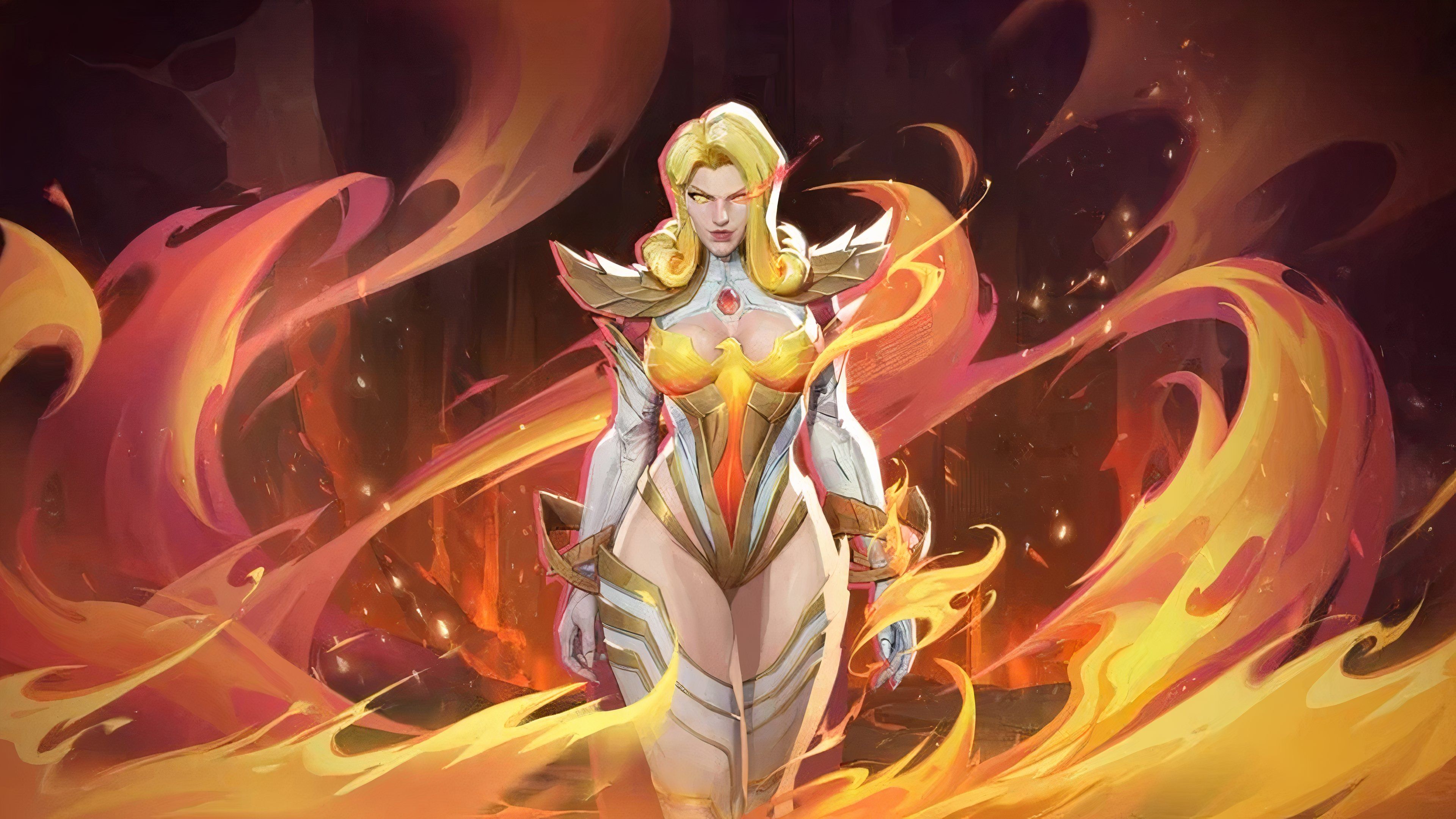
Marvel Rivals definiely doens't dish out skins evenly. It often feels like Jeff and Luna fans are the only ones eating good, while the rest of us fight for what's left. In some cases, getting a bunch of skins isn't even a good thing, because there's no guarantee that they'll actually be any good.
Following in the commendable tradition of gargantuan charity bundles like the Palestinian Relief Bundle and Play For Peace, over 600 game developers have come together to assemble a No ICE In Minnesota bundle. Just one day after release, it has already smashed through its initial $100,000 goal.
“We created this bundle to raise funds for Immigrant Law Center of Minnesota in response to the Trump administration sending ICE agents to the Minneapolis area and the reckless murder of an innocent people by ICE agents,” wrote the bundle’s organizer, a tabletop charity content creator who goes by the handle Jes The Human on the bundle’s itch.io page. “ILCM provides free immigration legal representation to low-income immigrants and refugees in Minnesota and North Dakota. They also work to educate the community about immigration matters and advocate for public policies which respect the universal human rights of immigrants.”
The bundle includes 1,439 games for a minimum donation of $10, which is a steal so preposterous that you’ve gotta admire the audacity. Highlights include modern puzzling classic Baba Is You, fellow modern puzzling classic A Good Snowman Is Hard To Build, cat cafe sim Calico, multiple gun-focused games from Demonschool studio Necrosoft, and Minnesota-made games like Joggernauts. There are also over 1,000 physical games – tabletop role-playing games and things of that nature – ensuring that you’ll never need to rack your brain to figure out something to do when your friends come over ever again.
The bundle will be available until March 13.
"ILCM provides services based on capacity and has a generally high demand for services," wrote Jes The Human. "The more we are able to fundraise, the more people they will be able to assist."
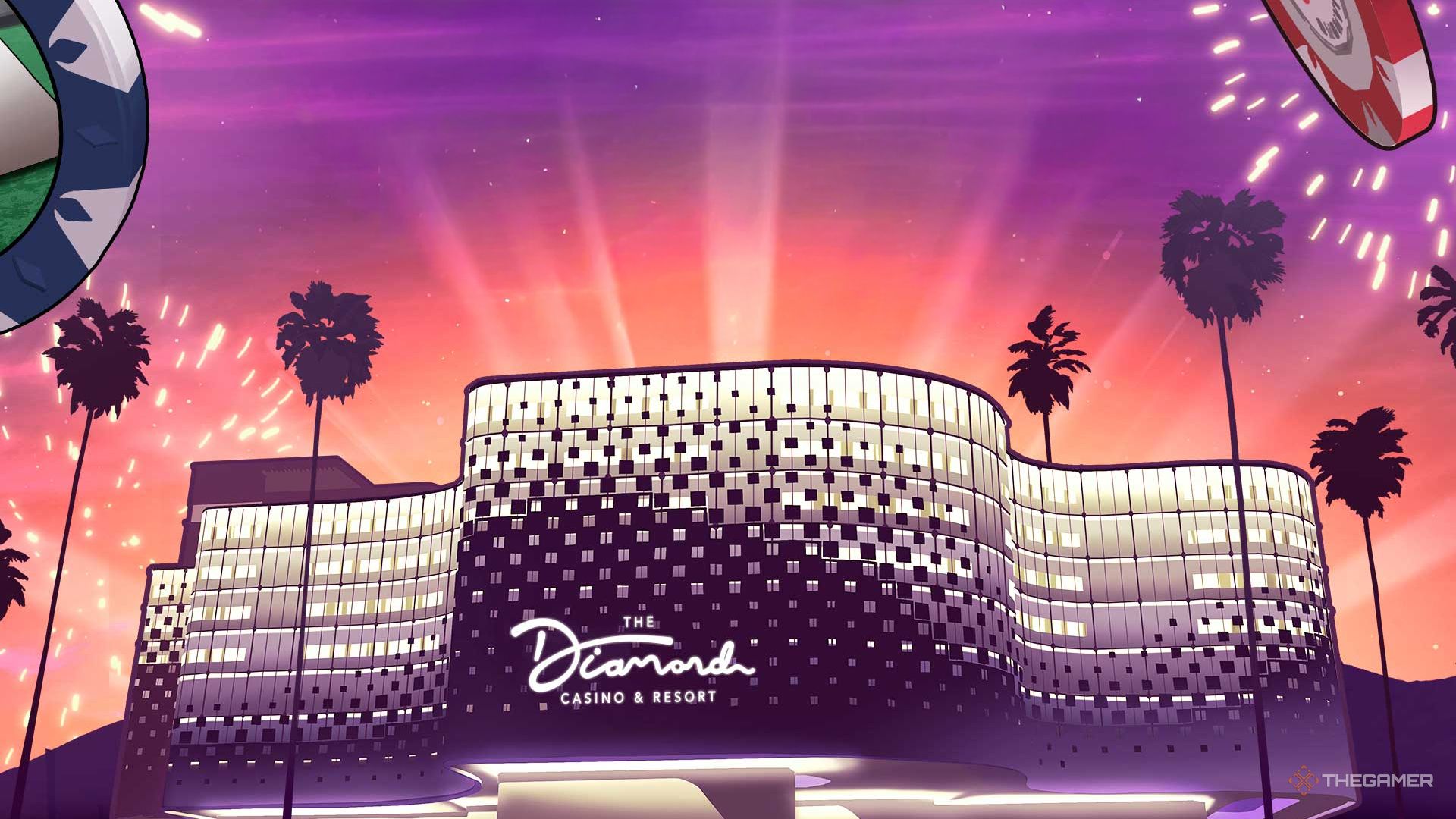
AftermathNathan GraysonJust over six years ago, GTA Online unveiled the Diamond Casino & Resort, a lavish gambling den for players to waste away their hard-earned cash with every pull of the slot machine lever, but it wasn't all risk and reward. Every day you log in, you earn a guaranteed, no strings attached, $1,000 visitor bonus, which you can either immediately splash on a game of chance, or pocket for a rainy day.
Driving the Warthog in Halo all by yourself works just fine if you are trying to enjoy a nice, leisurely cruise around the installation, but if you are trying to take down an enemy stronghold it sure helps to have a support partner manning the turret. The Warthog has room for three for a reason… it was designed for cooperation across multiple different functions. A stationary player in the turret is a sitting duck who won’t get very far on their own, and a lone driver without support will quickly find themselves stranded behind enemy lines, sitting next to a useless flaming pile of metal that no longer resembles a vehicle. Operated individually, the turret is exposed to enemy fire and the driver is ineffective at advancing the objective, but when partnered together they are unstoppable.
There are no “lone wolves” in the body of Christ, and seeking to accomplish His purposes without working in tandem with the rest of the body will leave us feeling alone, overwhelmed, frustrated, and ineffective. Some are called to minister with words or songs, others will use their platforms to share those messages, and the entire body will put those words into action in their daily lives to truly advance the cause of Christ on this planet. Let’s each operate in our God-given roles with excellence and gratitude today… every role is essential, and none work without each other.
For as we have many members in one body, but all the members do not have the same function, so we, being many, are one body in Christ, and individually members of one another. Having then gifts differing according to the grace that is given to us, let us use them. Romans 12:4-6b
I planted, Apollos watered, but God gave the increase. So then neither he who plants is anything, nor he who waters, but God who gives the increase. Now he who plants and he who waters are one, and each one will receive his own reward according to his own labor. 1 Corinthians 3:6-8
For the most part, I pick the games I am going to run by, as the kids today say, vibes. It has always been instinctual. I hear about a game, the right ones set off my Spidey Sense, and I am hooked. That has been my method for the last 43 years. At different points during those years, I have thought to myself, “perhaps there are no more interesting games to play”, only to find time and time again something that I was excited to bring to the table.
Last week, I thought I had hit rock bottom. For the first time in 43 years, I struggled to find a game to bring to the table. One of my game groups reorganized, and I lost a few players, so I was looking for a game to offer up, and my list was empty; the well was dry. I spent several nights wandering my PDF collection and scrolling through DriveThruRPG looking for something that would vibe, that would create that spark. Nothing. I started to worry that perhaps this was the end, no more games to interest me.
I then did what I often do when I get stuck on a problem, and started to break the problem down into parts I could name, so that I could try to get some kind of control over what was going on. I learned some things about that “vibe”.. Oh, and I found a game too.
My attraction to certain games had to be a combination of different factors. When it comes to understanding the larger parts of what makes up a game, I think that Jason Pitre did best with their Four Structures. Read the article for details, but in a nutshell, the four structures are:
When I looked back at past games I have been excited about, I can identify which structures excited me the most. Some games may be just one thing, and others may be multiples, with the best fits being all four structures. When I think about Forbidden Lands, my initial attraction was through the System, because of its rules for travel. For Night’s Black Agents, it was a combination of System (Gumshoe) and Setting (Jason Bourne vs Vampires). For Blades in the Dark, it was the Situation (doing jobs), more than the setting or system. While initially, I liked Underground’s Setting, what really got me was the Subtext of when all you have been trained for is war, how else can you solve any problems?
Those are broad categories. It is entirely possible to like things in a more granular way. My interest in Forbidden Lands was for just one subsystem, not the entire mechanics of the game. There is a point of diminishing returns in granularity; it would be hard for me to be excited to get a game to the table just because I think one character class is interesting. For me, there needs to be a preponderance of interest in one of the Structures for me to connect.
Another thing I observed upon reflection was that the more I connected with one Structure, the less I needed to for the others. I really don’t love the setting of Blades in the Dark, it’s ok. But I really like the Situation of a gang doing jobs to raise their status in the underworld.
Also, if one structure supports another, that is a multiplier for me. In the case of Night’s Black Agents, the Setting and Situation are superbly supported by the System. That is to say, there are rules for all the parts of the Setting and Situation (investigations, combat, chases, vampires, etc). Specifically, I want the System to reinforce the Setting, Situation, Subtext, or all of them. I find that when the System is not tightly coupled to the other structures, it makes it less appealing to me.
Thinking about the four structures and games I enjoyed in the past gave me a framework for looking at games and trying to understand why I was not finding anything I vibed with. While scrolling through lists of games, I now found myself saying things like, “I have played that system before”, “I don’t like to run fantasy”, “What do the characters do in this game?” It made looking at games more ordered, less vibes, and now more formulaic.
During this exploration, I began to uncover two other factors in play. I love to run things I have not run before. I love the novelty of things. I rarely play the same game twice; I would rather play something totally new than run something I have played before. At the same time, I do have favorite game systems, because they are predictable. I like the feel of a PbtA system, and I have recently grown more comfortable with Forged in the Dark games.
As I thought about these two factors in conjunction with the four structures, I realized that there was some nuance. Not every structure had to be novel, but they could not all be predictable. At least one structure had to be novel. Also, I found I get hesitant if everything is novel, meaning I like something to be predictable. For instance, a system could be totally novel if the setting (or genre – a component of setting) were predictable.
This added information about novelty and predictability provided some nuance to my searches, but more importantly, I was finally able to articulate what I was looking for, for this group for this game.
I wanted a predictable system. Where I am right now, I did not want to take on learning a new system. But I need some novelty, which eliminates replaying any past games. The game I was looking for was going to be a system I am comfortable with, but a setting and/or situation that was novel.
This made searching much more efficient. I was now able to eliminate systems I was not comfortable with and games I had played in the systems with which I was familiar. Quickly, a short list of candidates popped up, and within a day, I settled on the game I wanted to try:
Transit by Fiddleback Productions.
Transit is a PbtA game. Very predictable for me. I knew I would have no problem learning the System and being comfortable running it. The general Setting is SciFi, which is also familiar to me, but the characters take the form of AIs embedded into spaceships; a novel Situation! This was a solid combination for me. A System that I was comfortable running, in a general Setting that I am comfortable running and am well versed in its tropes, but a very novel kind of story to tell. I have not, in my 43 years, run a game where the characters were spaceships.
Just like that, I was excited to get this game to the table. The drought was ended, and the age-old question of “are there no more games I am interested in?” was staved off for another day.
The alchemy of why we like games is complex and contains many factors. By giving some of those factors names, we are able to create language for why we are intrigued by and turned off by games. In that naming, we give ourselves the power to move from instinct to rationalization. We no longer have to wander, hoping something will fall in our laps, but rather we can create a set of search parameters and hone in on candidates.
What structures attract you to games? What roles do novelty and predictability play for you? Do you like them in certain structures or not in others?
The killing of US citizen Renee Nicole Good by a federal immigration agent in Minneapolis has sparked a major political controversy, with the Trump administration moving quickly to shape the narrative around the incident. Good, a 37-year-old mother of three and award-winning poet, was shot and killed during an encounter with Immigration and Customs Enforcement officers.
Almost immediately after the shooting, senior administration officials publicly described Good as a violent aggressor. Statements from the Department of Homeland Security and the White House alleged that she attempted to run over officers with her vehicle and framed the incident as an act of domestic terrorism, despite no investigation having yet taken place.
According to The Guardian, those claims were echoed at the highest levels of government, with President Donald Trump and Vice President JD Vance both asserting that Good intentionally attacked law enforcement. The comments drew swift backlash from Minnesota officials, including Minneapolis Mayor Jacob Frey, who sharply rejected the federal narrative and demanded accountability from DHS.
Local Democratic leaders continued to criticize the administration’s response as video evidence became public. Governor Tim Walz said multiple claims made by federal officials were “verifiably false,” while Democratic leaders argued the rush to judgment appeared politically motivated rather than fact-based.
Video footage shows Good reversing her vehicle to allow an ICE vehicle to pass before agents approached her car. As the vehicle began to move forward, an officer walked into its path and was lightly brushed as it passed. The officer remained on his feet and appeared uninjured before firing multiple shots at the vehicle.
Federal officials had claimed that multiple officers were injured during the encounter, but no video evidence supports that assertion. Minneapolis Police Chief Brian O’Hara later confirmed that when he arrived on the scene, he was informed that only Good had been injured.
President Trump also circulated slowed-down video footage presented as evidence of imminent danger, though viewing the clip at normal speed shows the officer was not knocked down or visibly harmed. Footage from the aftermath shows the officer calmly walking away from the scene, further undermining claims that he had been seriously injured.
Additional commentary from conservative media figures targeted Good’s personal life, while political analysts noted that the administration’s statements appeared disconnected from the available evidence. Governor Walz said that a full accounting of Good’s life and the circumstances of her death would come with time, emphasizing that she should be seen as a person rather than a political symbol.
The incident has added to Trump’s mounting political complications, coming as Senate Republicans are already uneasy after he recently blindsided them by urging “flexibility” on the Hyde Amendment during high-stakes health care negotiations.
Billie Eilish has publicly criticized the U.S. Immigration and Customs Enforcement after an officer fatally shot a woman in Minneapolis earlier this week. The artist posted a series of messages on her Instagram Story, responding to the incident and urging her followers to take the situation seriously.
The shooting took place during a federal immigration enforcement operation when 37-year-old Renee Nicole Good was killed by an ICE officer. Federal officials said the agent acted in self-defense, but local leaders and witnesses have challenged that account.
In her social posts, Eilish re-shared graphics labeling ICE a “federally funded and supported terrorist group,” accused the agency of tearing families apart and harming innocent people, and called for its abolition. According to Billboard, she also encouraged people to contact members of Congress to demand accountability for the officer involved in the shooting.
“ICE IS A FEDERALLY FUNDED AND SUPPORTED TERRORIST GROUP UNDER THE DEPARTMENT OF HOMELAND SECURITY THAT HAS DONE NOTHING TO MAKE OUR STREETS SAFER,” one of the graphics Eilish shared read.
The singer also shared a post calling for ICE to be abolished. It listed 32 people who reportedly died in ICE custody last year. Another post urged Americans to call their Congress representatives to demand ICE be defunded and for the officer who shot Good to be arrested and charged right away.
Billie Eilish condemns ICE in new Instagram reposts:
— Pop Crave (@PopCrave) January 9, 2026
“ICE IS A FEDERALLY FUNDED AND SUPPORTED TERRORIST GROUP UNDER THE DEPARTMENT OF HOMELAND SECURITY THAT HAS DONE NOTHING TO MAKE OUR STREETS SAFER.” pic.twitter.com/XnqfdwDHQH
ICE’s actions under President Donald Trump have caused major controversy since he took office. But the backlash reached new heights this week after the Minneapolis shooting. The Department of Homeland Security, Trump, and Vice President JD Vance claimed Good tried to run over agents with her car before the shooting. They said the officer acted in self-defense.
However, video footage shows Good was actually driving in the opposite direction. The widely shared video contradicts the official claims about what happened. The Trump administration has also been targeting narco-terrorists in new operations that have raised concerns among critics.
Trump watched the shooting video in the Oval Office with a New York Times reporter present. He struggled to explain what occurred. “It’s a terrible scene,” Trump said, according to the newspaper. “I think it’s horrible to watch. I hate to see it.”
Eilish has consistently opposed Trump’s policies and endorsed Kamala Harris in the 2024 election. Before Friday, the nine-time Grammy winner had also shared posts criticizing ICE raids happening in her home city of Los Angeles. Recent military actions have also drawn comparisons, with officials comparing certain groups to terror organizations as strike-related casualties continue rising.
Minnesota’s state investigation into the fatal shooting of Renee Good by a federal Immigration and Customs Enforcement officer has been effectively shut down because the FBI and the U.S. Justice Department have refused to cooperate with local authorities. This is a truly awful development for anyone who wants accountability, because it means the state won’t have any say in determining if a crime was committed.
As reported by AP News, Governor Tim Walz immediately demanded that Minnesota be allowed to take part in the process, and it would be “very difficult for Minnesotans” to accept that an investigation excluding the state could possibly be fair. Drew Evans, who heads the Minnesota Bureau of Criminal Apprehension, echoed that frustration. He stated they simply “cannot meet the investigative standards that Minnesota law and the public demands” without full access to evidence, witnesses, and collected information.
Secretary of Homeland Security Kristi Noem, however, has maintained that the state has absolutely no jurisdiction in this matter. This deadly encounter occurred on the second day of what the Trump administration is calling the biggest immigration enforcement operation ever. The crackdown focused on the Twin Cities of Minneapolis and St. Paul, involving more than 2,000 officers. Secretary Noem reported that the operation has already resulted in over 1,500 arrests.
Federal officials, including President Trump, Vice President JD Vance, and Secretary Noem, have repeatedly characterized the Minneapolis shooting as an act of self-defense. They’ve suggested that Ms. Good, a 37-year-old mother of three, used her vehicle as a weapon to attack the officer who shot her, essentially casting her as the villain. Vice President Vance suggested that the shooting was justified and that Ms. Good was a “victim of left-wing ideology.”
Local officials are having none of that narrative. Minneapolis Mayor Jacob Frey flatly rejected the federal characterization, saying video recordings show the self-defense argument is “garbage.” The video evidence captured by several bystanders shows an officer approaching Ms. Good’s SUV, which was stopped in the middle of the road, demanding she open the door and grabbing the handle.
“Is Killer Kristi welcome in New York?” The day after the fatal ICE shooting in Minneapolis, Kristi Noem was met with protests outside her press conference. @danmadler reports. https://t.co/MuVQUWhvUk
— VANITY FAIR (@VanityFair) January 8, 2026
As the Honda Pilot began to pull forward, a different ICE officer standing in front of the vehicle pulled his weapon and immediately fired at least two shots at close range, jumping back as the car moved toward him. It isn’t clear from the recordings if the vehicle actually made contact with the officer. After the shooting, the SUV sped into two parked cars before finally crashing to a stop.
The federal agent involved has been identified in records as Jonathan Ross, an Iraq War veteran who has served for nearly two decades in the Border Patrol and ICE. Secretary Noem hasn’t publicly named him, but a Homeland Security spokesperson confirmed that her description of the officer’s injury last summer refers to an incident in Bloomington, Minnesota.
Court documents identify the officer in that case as Ross. During that previous event, Ross got his arm stuck in a window after a driver fled an immigration arrest. Ross was dragged and fired his Taser, and a jury later found the driver guilty of assaulting a federal officer.