
Normální zobrazení

Received before yesterday

Interview: Creating Beat 'Em Up Sequel Super Alloy Crush

18. Únor 2026 v 15:00
Interview: Creating Beat 'Em Up Sequel Super Alloy Crush

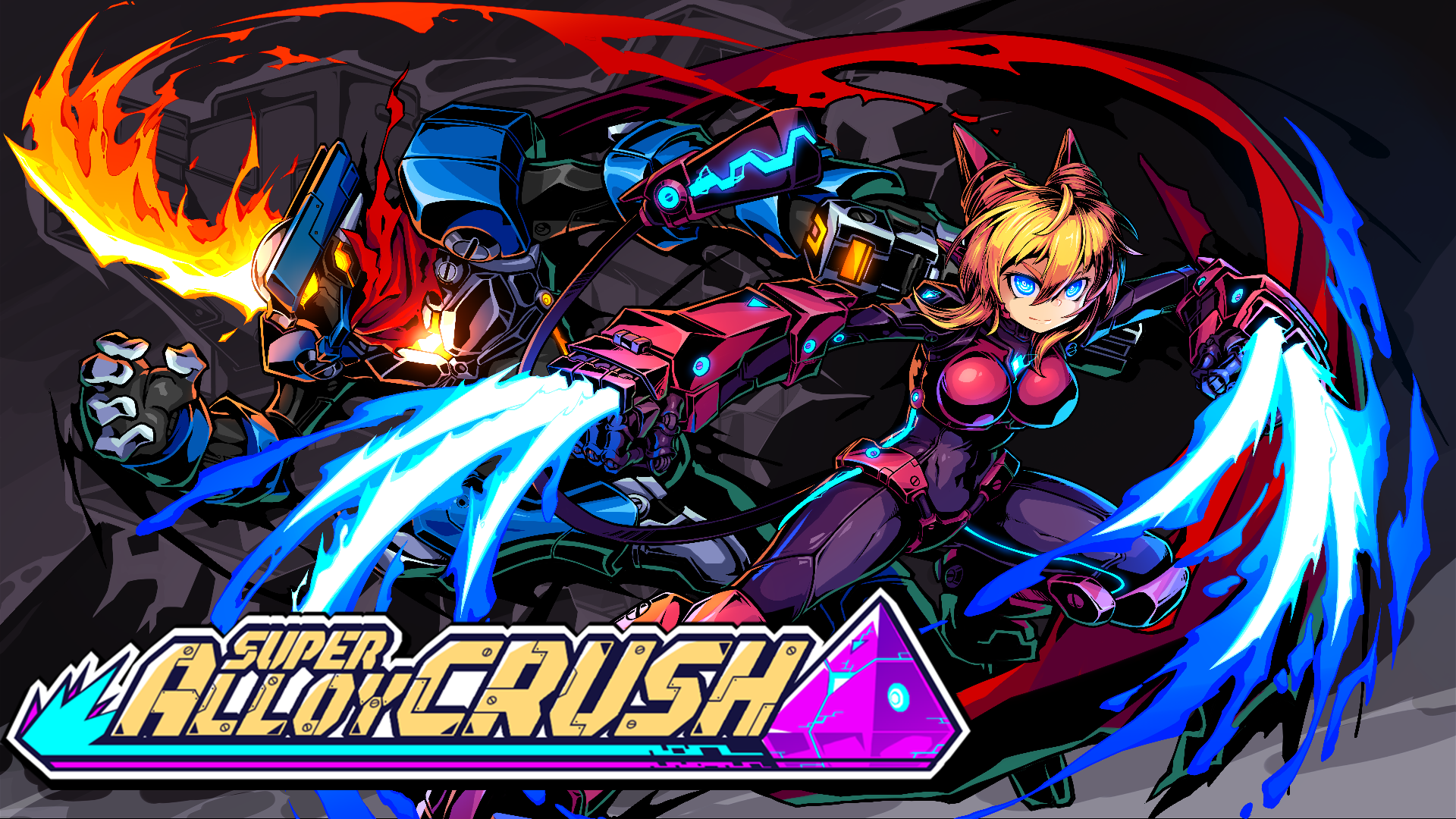
Super Alloy Crush is an upcoming 2D sci-fi beat 'em up. It currently has no announced release date, but a demo is available on Steam. The game is being developed by Alloy Mushroom, a two-person team based in China. I spoke with one half of the duo, who goes by the pseudonym "Mabi Mogu" (which means "paralyzed mushroom"). . What’s

SUPERJUMP

Tell me a bit about yourself. How long have you been developing games, and how did you get into the business?

Mabi Mogu

We are a two-person team called “Alloy Mushroom.”

I (Mabi Mogu) am an indie game designer. I started working in indie game development 12 years ago and created The Vagrant and Super Alloy Ranger. Right now, I’m working on my third project.

My teammate, the programmer Iceprite, is also an excellent indie game developer. Before we worked together, he independently developed Touhou Mystery Reel, and I think he’s really impressive.

What got me into the indie game industry was when my friend and I saw Steam Greenlight and thought that maybe we could do it too. So we started making The Vagrant from there.

Interview: Creating Beat 'Em Up Sequel Super Alloy Crush
Source: Press Kit.


SUPERJUMP

You go by “Alloy Mushroom” online. What’s the story there? Is it linked to your Super Alloy games?

Mabi Mogu

Alloy Mushroom was a name I came up with while developing Super Alloy Ranger.

At that time, I was working on the game completely on my own, and when it was ready to be released, I needed a “studio name.” So I took Paralysis Mushroom (Mabi Mogu) and gave it a “Super Alloy” twist, which is how Alloy Mushroom was born.

SUPERJUMP

In that case, where does the name "paralysis mushroom" come from?

Mabi Mogu

It's an item from Monster Hunter. It's a poisonous material used to craft tranquilizer ammo.

SUPERJUMP

Moving on to the game itself, what’s the elevator pitch for Super Alloy Crush? How would you sum it up in a single sentence?

Mabi Mogu

My goal was to create a two-player side-scrolling action game inspired by Monster Hunter, Devil May Cry, and Mega Man, and I’ve been working toward that vision as much as I can.

Interview: Creating Beat 'Em Up Sequel Super Alloy Crush
Source: Press Kit.

SUPERJUMP

This is the second game in the series, following on from Super Alloy Ranger, which was released back in 2022. What lessons did you learn from the previous game, and what’s different about this installment?

Mabi Mogu

The story continues from Super Alloy Ranger, but the gameplay is completely different.

The most obvious difference is that there are no traps and no contact damage. In this game, you fight enemies head-on and focus on chaining combos together. It’s a side-scrolling action game that puts a strong emphasis on fast, hack-and-slash combat.

On top of that, it includes some roguelike-style modes designed for replayability.

Unlike Super Alloy Ranger, this time I really wanted to create a game that players can enjoy playing over and over again.

SUPERJUMP

Tell me about some of your inspirations. I can see there’s a bit of Mega Man’s DNA in Super Alloy Crush. What else have you drawn from while designing Super Alloy Crush?

Mabi Mogu

The Mega Man influence is easy to spot at first glance, but in reality, a lot of the design this time was inspired by the great move sets and combat systems from games like Street Fighter, Devil May Cry, and Dungeon Fighter Online.

Many of the skills, mechanics, and combo ideas came directly from what those games do so well.

Interview: Creating Beat 'Em Up Sequel Super Alloy Crush
Source: Press Kit.

SUPERJUMP

Combat in beat ‘em up games always needs to feel satisfying. What steps have you taken to ensure that fights in Super Alloy Crush feel engaging?

Mabi Mogu

On my side, I focused on making enemies actually react when they get hit.

I didn’t want players to feel like enemies were solid blocks of steel stuck to the ground. Instead, I wanted them to be able to knock enemies around, launch them into the air, and control the flow of the battlefield through their own actions.

SUPERJUMP

The game has two characters with different playstyles. There’s Kelly, who attacks from range with a blaster, and Muu, who fights up close using energy claws. Is it difficult balancing the game, knowing that players can approach levels in two very different ways?

Mabi Mogu

It was definitely very challenging. In a close-combat system where enemies react to hits and can be launched into the air, characters who can control enemies with bullets easily become too powerful.

So we had to constantly tweak things, like making melee combat more mobile and flexible to make up for its shorter range, while also giving ranged characters some real trade-offs and limitations.

Interview: Creating Beat 'Em Up Sequel Super Alloy Crush
Source: Press Kit.

SUPERJUMP

What made you settle on the names “Kelly” and “Muu” for your protagonists?

Mabi Mogu

The name Kelly comes from a place in China, a city in Guizhou Province. When I first heard it, I thought, “Oh, I like that. It sounds really nice.”

As for Muu, I wanted the name to feel a little strange and unique. What I didn’t expect was that a lot of English players would associate it with the sound a cow makes, like “moo.” But honestly, I kind of like that.

SUPERJUMP

The early access demo has been out since 22nd January. What sort of feedback have you gotten about the game so far? Has it inspired any major changes?

Mabi Mogu

Community feedback was incredibly helpful. Based on that, we added moving attacks for Kelly, adjusted the combat pacing, improved enemy AI, and refined a lot of small details.

We also made many balance changes to the game’s stats, and all of this helped make the gameplay feel much smoother and more satisfying.

Interview: Creating Beat 'Em Up Sequel Super Alloy Crush
Source: Press Kit.

SUPERJUMP

After Super Alloy Crush releases, do you think you’ll keep releasing future games in this series, or do you have other projects in mind?

Mabi Mogu

Game development is our job and our passion. If possible, we would absolutely love to keep adding more content to Super Alloy Crush, and make a third Super Alloy game!

We also have plenty of other ideas constantly flowing from our creative passion. Who knows what might come next?
The demo for Super Alloy Crush is currently available on Steam. The game is due to enter Early Access in the near future.

How Changing One Mechanic Elevated Reus 2 Beyond Its Predecessor

1. Leden 2026 v 15:00
How Changing One Mechanic Elevated Reus 2 Beyond Its Predecessor

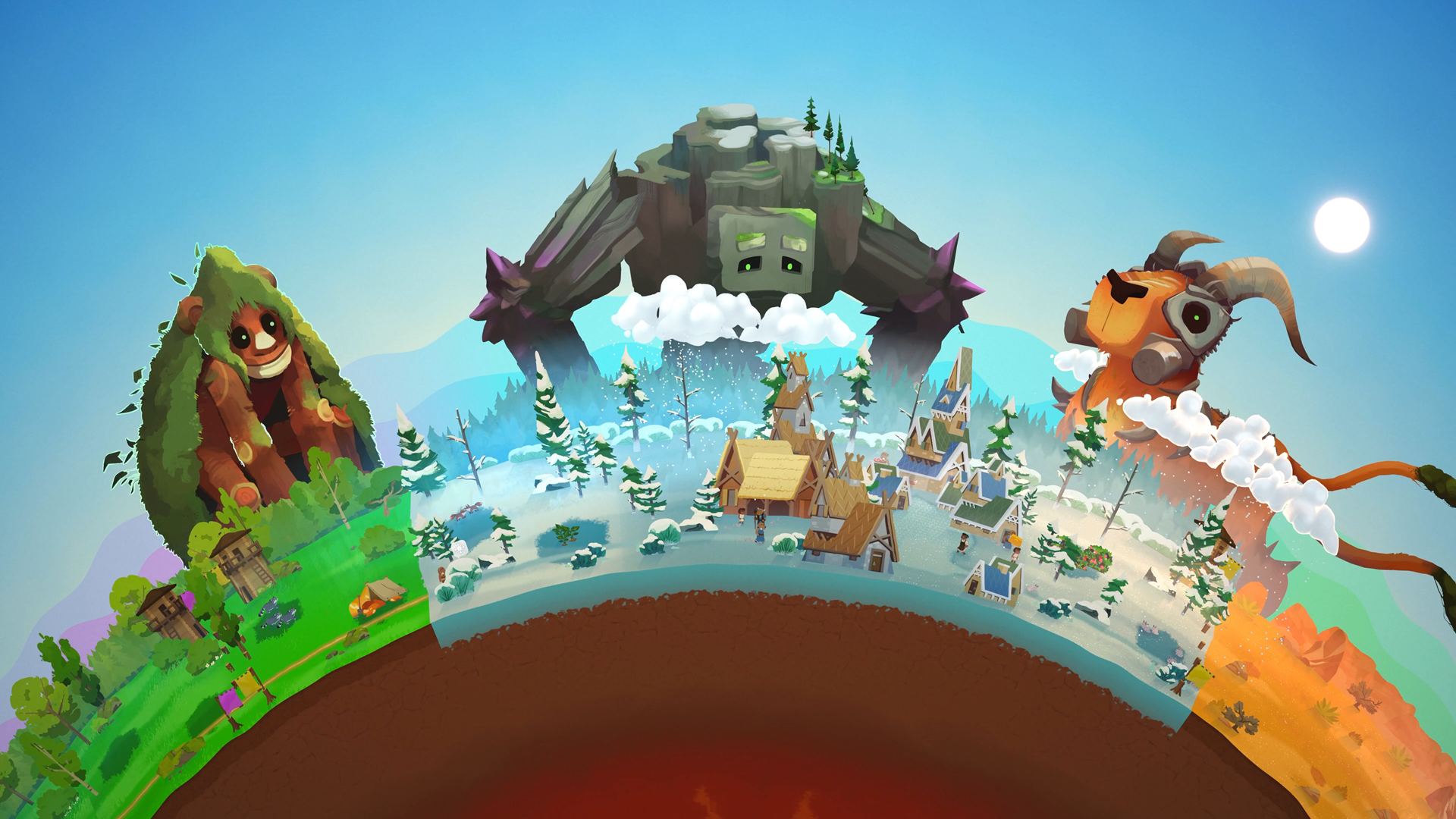
Reus, designed by Abbey Games, is a simulation game about gods, giants, and growth. You start with a barren planet and gradually fill it with life. First, you place down biomes like swamps, forests, oceans, and deserts. Then you fill these wild spaces with animals, minerals, and plants. When humans come to settle the land, you support the development of their communities so that they can flourish, but you also need to ensure that you don’t give any one group too many resources too quickly, otherwise they might become proud and start waging war against their neighbours.

At its core, Reus is about balancing ecosystems and encouraging synergies. Herbivorous animals want to live near plants, different clusters of minerals provide different effects when placed down in different combinations, and predators require prey. If you can keep all of these relationships in mind, as you gradually unfurl the sprawling web of nature on your planet, then the world will thrive.

There are two Reus games, and while both have the same central concept of making an initially barren planet prosper, they approach it in very different ways.

The first game employs a real-time management system, which, while intuitive, clashes with the game’s nature. The second learned from its predecessor’s mistakes and implemented an approach that lets players experience the game at their preferred pace.

On Borrowed Time

How Changing One Mechanic Elevated Reus 2 Beyond Its Predecessor
Reus 1. Source: Abbey Games.

Worlds in Reus aren’t designed to be played in perpetuity. The game wants you to develop one, see it grow, and then move on to another. This is similar to how in Rollercoaster Tycoon, you’re constantly shifting from one park to the next, except on a galactic scale.

Both games use different methods to let players know when they should move on to their next project. When sitting down for a play session in the first Reus, you must choose whether you want to work on your world for 30, 60, or 120 minutes.

It can be awkward choosing this upfront. You might know exactly how long you intend for your current play session to last, but chances are you’re just sitting down to unwind for a while, and putting a timer on your fun makes the experience feel a lot less relaxing.

These time limits can also be uncomfortable at times because they’re either too long or too short.

In a 30-minute game, you really have to sprint to get everything completed on time. Watching the worker giants, who terraform the world for you, slowly trudge around the map can make you feel truly impatient.

In 120-minute games, meanwhile, you can sometimes be left waiting out the last 10 or so minutes of the timer as everything slowly crawls towards a conclusion.

While the game itself is a compelling puzzle, Reus does itself a disservice by only allowing players to tinker with their worlds under strictly timed constraints.

It was clear that any future instalments in the series would need a new way of encouraging players to move along once their work on a particular planet is finished. Sure enough, the sequel succeeds in developing an innovative solution.

Eons to spend

How Changing One Mechanic Elevated Reus 2 Beyond Its Predecessor
Reus 2. Source: Abbey Games.

In Reus 2, you’re unconstrained by time. Instead of needing to get everything done before the clock runs out, your actions are only limited by a newly implemented resource system.

Every time you place something down on your planet, it costs a small amount of “eon.” You’re only given a finite amount of eon, meaning that you must place down every animal, ore formation, and plant carefully. You need to think strategically and ensure that you’re always placing everything in the optimal location.

The game is split into three eras, each with objectives that must be fulfilled. If you can complete these goals, you’re granted more eon, and are allowed to advance into the future. If you can’t, then your progress stalls, and you need to move on to another planet.

As well as clearing away the discomfort of the timers from the first game, Reus 2’s approach also pays off in other areas.

The era system makes the civilisations that develop feel more grounded in history. The ability to move from prehistory to the Iron Age, and then into the present, gives you a sense of progress. The tiny people on your planet feel more like they are changing, growing, and developing.

Additionally, needing to spend your eon carefully to advance through the eras adds an element of welcome challenge to proceedings. If you scattered everything across the world randomly in the first game, there was no real penalty beyond receiving a low score once time ran out. In Reus 2, playing without purpose will quickly lead to your pool of eon depleting, and the need to end your current efforts and try again. This incentivises you to learn the game’s system and ensure that your next try will be more successful.

Conclusion

How Changing One Mechanic Elevated Reus 2 Beyond Its Predecessor
Reus 2. Source: Abbey Games.

Games are truly great when all of their systems click together harmoniously. For example, part of the secret behind why Minecraft has endured for so long is that its vast, explorable open world provides a wealth of resources that perfectly complement its crafting system.

Both Reus games offer a cosmic sandbox that you can sculpt and develop as you watch life grow. They’re both good fun; however, the first tries to weld real-time and puzzle-based elements together, creating an uncertain experience where you need to charge through an otherwise relaxing game. The second, meanwhile, takes its time and allows players to move at their own pace. By limiting the number of actions players can take, rather than the time available to take them in, it better understands its nature as a tactical puzzle requiring the correct approach.

Reus and Reus 2 are both available on Steam. The former is also available on the PlayStation 4 and Xbox One, while the latter is available on Switch and Xbox Series X/S.

A review code for Reus 2 was provided by the developer.

I Tried Out the New Stranger Things D&D Module… Even Though I’ve Never Seen the Show

24. Prosinec 2025 v 15:00
I Tried Out the New Stranger Things D&D Module… Even Though I’ve Never Seen the Show

When I was a university student 10 years ago (oh dear, I am getting old), I was on the committee of the adventure gaming society. We were a small, but lovable, group of geeks who gathered together every Saturday to play board games and tabletop RPGs of every persuasion. We played a lot of Fantasy Flight’s Game of Thrones board game, which is at its best and bloodiest when you can get a whole table full of players scheming and plotting together. At that time, Game of Thrones was moving towards its sixth season, all the pieces were still in motion, and advancing towards what we were all certain would be one of the greatest climaxes in television history… right?

Then, when 2016 rolled around, a new challenger arose for the crown of the best nerdy show in town: Stranger Things, which launched on Netflix on the 15th July. With its strong emphasis on 1980s nostalgia, Stranger Things revitalised interest in everything from Kate Bush’s Running Up That Hill to “New Coke” (which, despite its name, is more than a decade older than I am).

I Tried Out the New Stranger Things D&D Module… Even Though I’ve Never Seen the Show
Welcome to the Hellfire Club. Source: Wizards of the Coast.

Dungeons and Dragons stood at the centre of the spotlight that Stranger Things shone on 80s pop culture. The game is a major plot point in the show, several characters play it, and the antagonists share their names with monsters and mythical figures from the Forgotten Realms.

That major public promotion did wonders for the popularity of my modestly-sized university gaming club. We saw a massive influx of new members, something I want to emphasise is unambiguously good. Gaming is a big tent, and bringing more people with diverse ranges of interests and experiences into that tent serves to make the stories that we can tell together more authentic and more interesting.

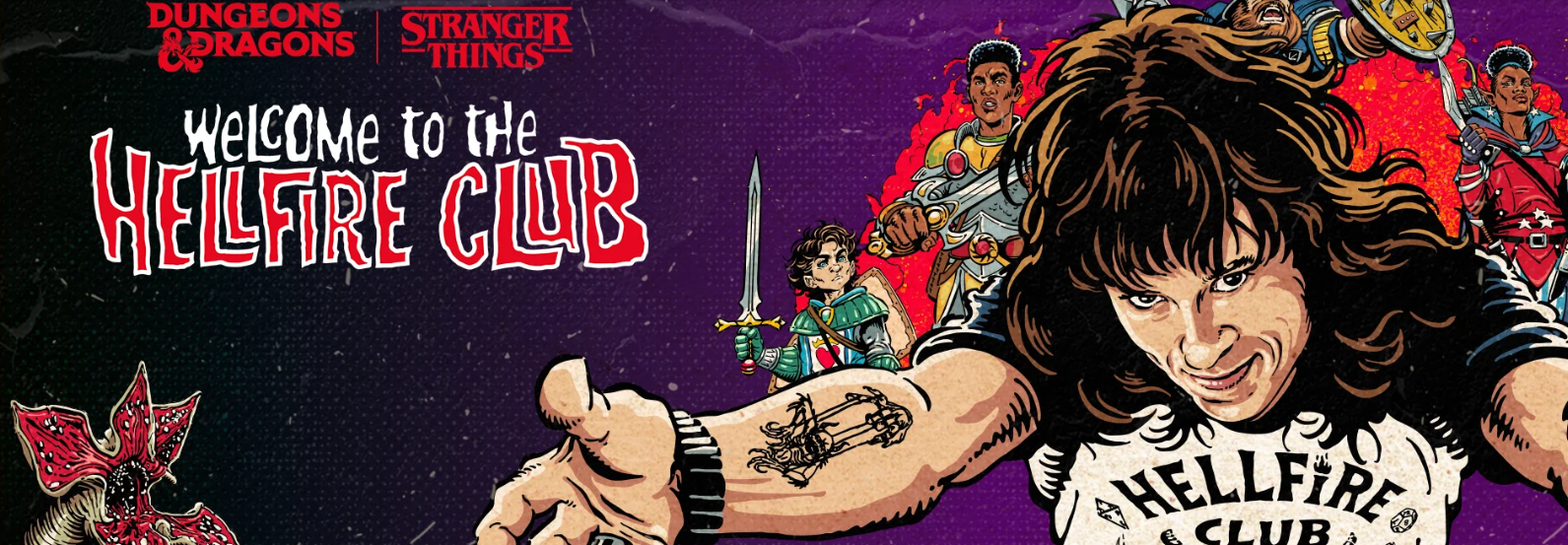
Now, as Stranger Things blazes through its final season, Wizards of the Coast has launched Welcome to the Hellfire Club, a module containing four Dungeons and Dragons adventures, designed to replicate the experience of playing alongside fictional Dungeon Master Eddie Munson from the Netflix show.

RPG Taverns invited me to play the first of these adventures, “The Vanishing Gnome.” Evidently, they still had my contact information after I included them in my piece on TTRPGs and community building.

Naturally, I was more than happy to do some dungeoneering, but there was just one issue…

I’ve never seen an episode of Stranger Things in my life.

I Tried Out the New Stranger Things D&D Module… Even Though I’ve Never Seen the Show
"Max, the Daredevil" Magic: the Gathering art. Source: Wizards of the Coast.

Everything that I’ve recounted about the show so far, I know either because I have absorbed it from popular culture or I’ve been able to piece it together after some research.

I’ve played with the Stranger Things-themed Magic: The Gathering cards, and YouTube’s algorithm has popped a handful of Stranger Things shorts in front of me over the years, but when it comes to actual concrete knowledge of the show, I don’t know the Upside Down from Benny’s Burgers.

Nevertheless, I endeavoured to give it a shot anyway. Here’s what I learned.

In Pursuit of Vanishing Gnomes

On a chilly Thursday evening in mid-November, I found myself down in the Hawkins Room of RPG Taverns, which had been decked out with a broad selection of 80s paraphernalia. I had a Stranger Things-themed cocktail in one hand, a collection of colourful dice in the other, and I was ready to search for some missing gnomes.

I Tried Out the New Stranger Things D&D Module… Even Though I’ve Never Seen the Show
RPG Taverns, Hawkins Room. Source: Author.

This adventure, and I would assume the other three in this set, was clearly designed to mimic D&D as it was during its early days. While the game uses the 2024 edition of the rules (you won’t be making any fortitude saves here), tonally it harkened back to an earlier era. There wasn’t much of an emphasis on storytelling or deep characterisation; the focus was on the fundamentals of travelling into dungeons, bashing monsters, and grabbing loot.

A selection of character sheets was fanned out before my fellow adventurers. I chose to play as Nog, the dwarven cleric. Nog, and all of the other options available, are the characters played by the Stranger Things kids in their own campaign.  Having never seen the show, I didn’t have much to inform my characterisation. I knew that I was neutral good, that as a cleric, I would presumably be reasonably pious, and that I had a truly magnificent beard. This lack of knowledge was a blessing in disguise, as it gave me a blank canvas I could fill with my own vision of who Nog was. I had a great deal of fun portraying him as pretentious and smug, but ultimately well-meaning. I clashed frequently with Will the Wise, our party’s Wizard, on the issue of science vs faith, and Tayr the Paladin about which of us was truly the most devout.

I Tried Out the New Stranger Things D&D Module… Even Though I’ve Never Seen the Show
Welcome to the Hellfire Club. Source: Wizards of the Coast.

There will undoubtedly be other Nogs out there who are significantly more humble and less argumentative than my portrayal, and there’s a degree of charm to that. While other groups will run characters with the same names and based on the same broad archetypes, my Nog was uniquely my own. He was a bit of a jerk, but he was my jerk.

As for the quest itself, the titular vanishing gnome gave us a literal call to adventure, inviting us to seek them out, before living up to their title and disappearing. We were off! We ventured into a nearby dungeon, beat up some spiders, entered what was very strongly implied to be the Upside Down from the show, and fought a Demogorgon (that’s the faceless fiend from Stranger Things, not the Demon Prince from the Abyss who would have completely eviscerated our poor Level One party).

The adventure was an effective tutorial on how to plunge into dungeons, from the pre-generated character sheets to the streamlined story that guided our party immediately towards the action. This box is clearly designed to show new players the ropes, and in that goal, it’s successful. Personally, I prefer roleplaying experiences that are a bit more narrative-heavy; I’m more of a fan of delving into character motivations than into dungeons. That’s just my own perspective, though, and as an introduction to D&D, the Vanishing Gnome makes the game approachable.

Maybe the Real Vanishing Gnomes Were the Friends We Made Along the Way

I Tried Out the New Stranger Things D&D Module… Even Though I’ve Never Seen the Show
Welcome to the Hellfire Club. Source: Wizards of the Coast.

So despite my lack of awareness about Stranger Things, I was able to pull off a successful gnome rescue. Were there some winks, nudges, and other scraps of fan service that flew over my head due to my lack of Stranger Things knowledge? Frankly, I have no idea. There weren’t any moments where I felt out of my depth or lost, though, and I glided through the experience comfortably enough.


RPG Taverns is based at 16 Harper Road in Southwark, London, and they will be running the first two adventures from Welcome to the Hellfire Club (The Vanishing Gnome and   Scream of the Crop) from December 14th - 23rd, and then again from the 27th - 30th.

Welcome to the Hellfire Club can also be purchased from a variety of online retailers if you’re looking to try it out at home. It’s a good welcoming point to Dungeons and Dragons for fans of Stranger Things, and if you’re not a fan, you’ll probably be able to stumble through as I did.

❌