Capcom has said why it is using generative AI in its business, stating its policy is "to improve the efficiency of routine operations so that our developers can devote more time to essential value creation".
Capcom has spent the better part of a decade perfecting its existing franchises — and doing a brilliant job of it, honestly. Resident Evil, Devil May Cry, Monster Hunter; the hits kept coming. But there’s always been a quiet part of me waiting for the company to take a genuine leap into the unknown. With Pragmata, that leap finally arrives, and it sticks the landing in ways I genuinely didn’t expect.
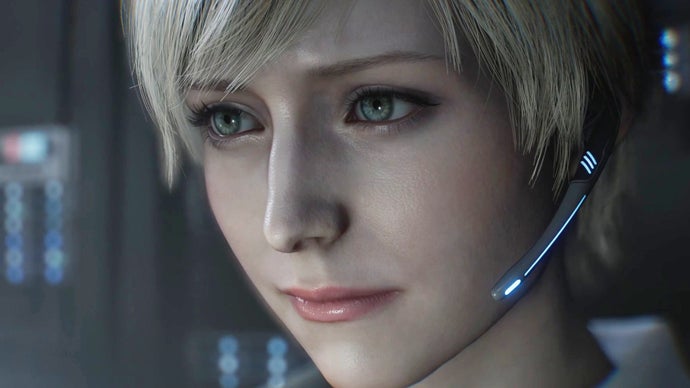
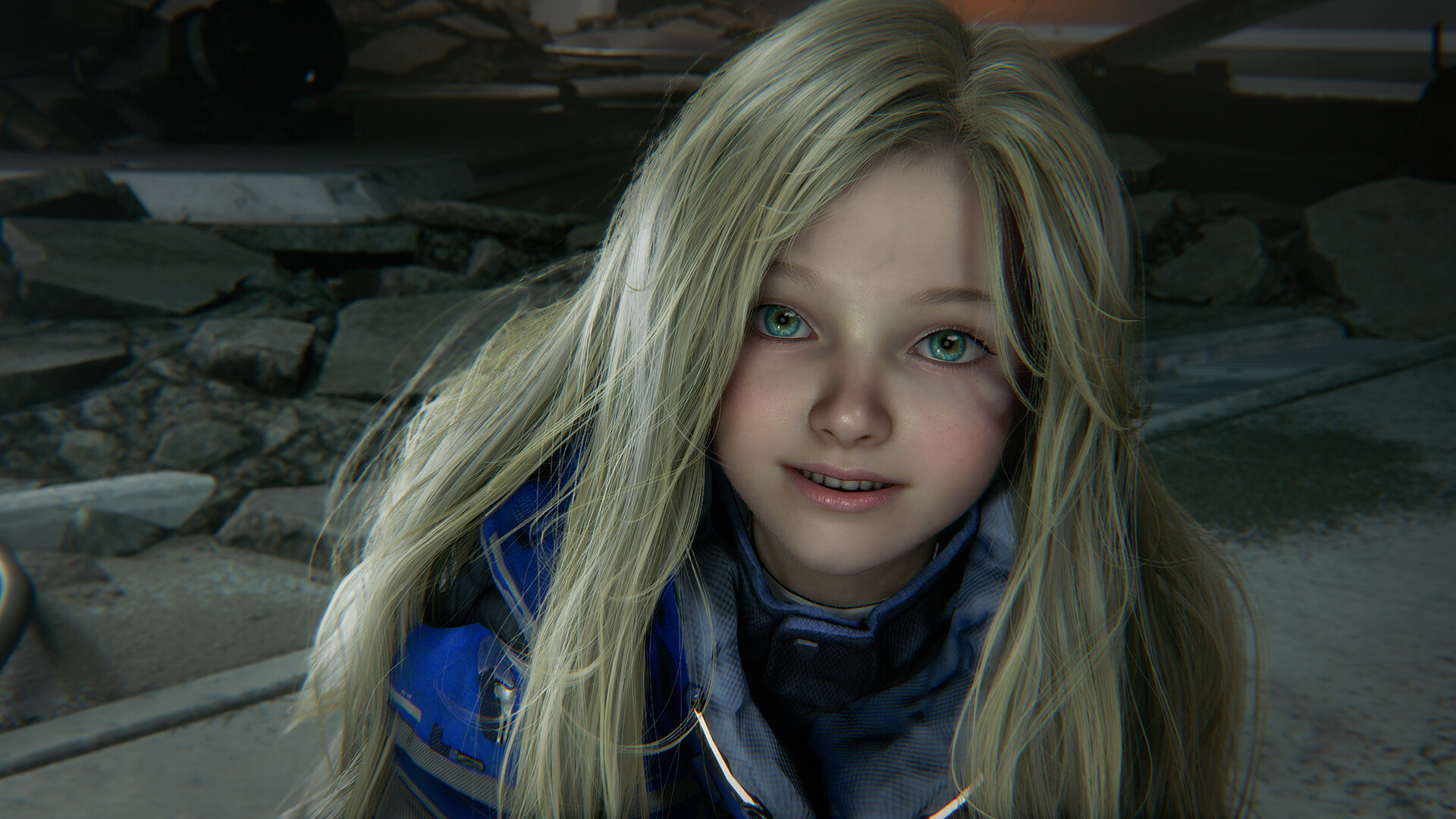
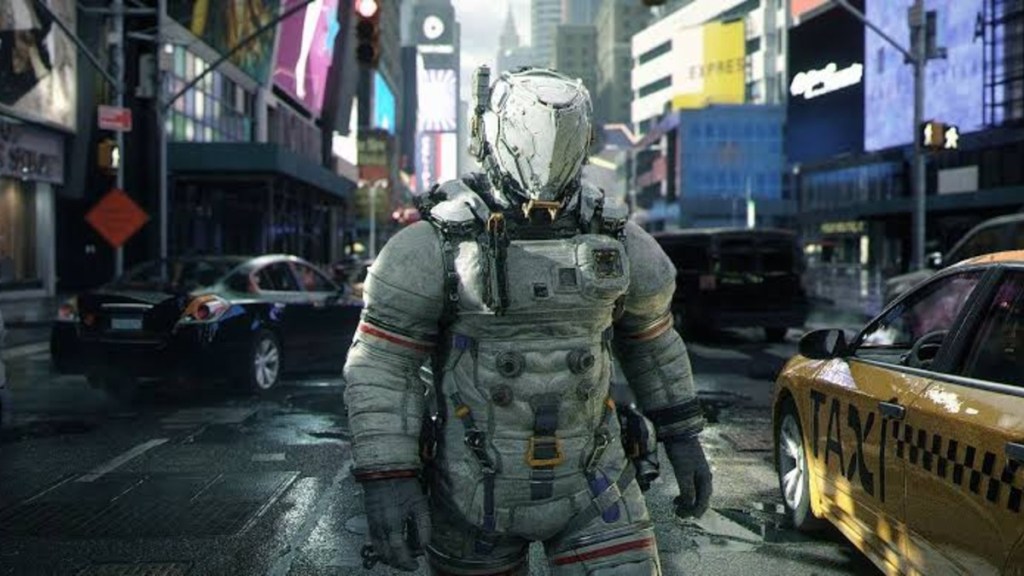
This is a game about a space worker named Hugh Williams who gets sent to a lunar mining base called the Cradle — a facility run by a corporation called Delphi, where a miraculous material known as Lunafilament can essentially 3D-print anything into existence. The base has gone dark. Hugh’s team heads up to investigate, and things unravel almost immediately. A rogue AI called IDUS has taken over, hostile robots are crawling out of printers, and Hugh ends up alone in a hostile, beautiful, deeply strange place. Enter Diana — a sentient android, technically classified as a “Pragmata,” who carries herself with the curiosity and warmth of a child seeing the world for the first time. Together, the two of them try to figure out what happened, and find a way home.
The setup sounds like the first act of a horror film, and in some ways it plays like one. But Pragmata is surprisingly — almost defiantly — optimistic. The game tackles themes I didn’t see coming: found family, the value of experiencing things firsthand, how you explain a cruel world to someone who doesn’t yet understand why cruelty exists. Hugh is not your typical emotionally distant protagonist. He’s warm, earnest, and genuinely good with Diana from the very start — answering her endless questions about Earth with care, never treating her as a nuisance. That dynamic carries enormous weight over the course of the story, and by the end, the bond between them feels less like a game mechanic and more like something you’ve actually witnessed grow.
There are moments in Pragmata — quiet ones, between fights — where Hugh teaches Diana about physics, or describes what it feels like to sit outside on a summer evening. These scenes shouldn’t work as well as they do. But they do. Really well. The music during these exchanges is soft and hopeful in a way that contrasts sharply with the chaos happening everywhere else, and that tonal contrast is one of the game’s most clever tricks. It should feel like a horror game. It mostly feels like a story about a dad and his kid.
The Combat Is Something Else Entirely
Now, the gameplay. This is where Pragmata earns its “original IP” badge in the most concrete possible way.
On paper, it’s a third-person shooter. In practice, it’s something much weirder and more satisfying. Enemies on the Moon are heavily armored — you can’t just shoot them directly. Instead, you rely on Diana, who rides on your back, to hack them first. Holding the aim button opens a hacking grid overlaid on your target, which you navigate using the face buttons (or mouse on PC), hitting special nodes along the path to maximise the damage dealt before the hack completes. Once it does, the enemy’s weak point is exposed, and Hugh’s guns come into play.
What makes this so compelling is that you’re doing both things simultaneously. You’re moving, aiming, dodging, repositioning, and hacking at the same time — and rather than feeling like information overload, it clicks into a genuinely satisfying rhythm. Hugh’s suit is incredibly responsive; you can air-dash, hover, hack mid-jump, and open fire on three different enemies without ever feeling clunky or disconnected from the action. It’s the kind of system that rewards engagement. The more you lean into it, the better it feels.
The hacking abilities expand considerably as you progress. Early on, you’re working with basic node paths. Later, Diana unlocks moves that can confuse robots into attacking each other, freeze enemies in place, fire their own missiles back at them, or expose them to bonus elemental damage. The game also introduces a wide variety of enemy types — fast ones that chain combos, distant snipers, invisible spider-like creatures, missile-lobbing heavies — and each demands a slightly different approach. Just when combat starts to feel familiar, Pragmata throws something new at you. That pacing is one of its strongest qualities.
The Souls-like structure underpinning everything reinforces this nicely. The Cradle’s levels are dotted with checkpoints that function like bonfires — return to the Shelter hub, upgrade your gear, then head back in with enemies reset and waiting. The Shelter itself is an inspired design choice: instead of a maze of menus, it’s a physical space with dedicated areas for each function, which turns what could be a tedious system into something with its own atmosphere.
There’s also a Bingo mini-game — yes, really — that uses Cabin Coins earned through exploration, gifting Diana collectibles, and completing training challenges. It sounds throwaway, but it’s actually a clever incentive layer that rewards players who engage with all of Pragmata’s systems rather than just charging straight through the critical path. Completionists have plenty to chase here.
Where It Stumbles
Credit where it’s due — Pragmata has some friction points worth mentioning. The mod chip system, which lets you slot in small passive buffs, feels underdeveloped. The chips accumulate quickly and the benefits are minor enough that managing them starts to feel like busywork rather than meaningful customisation. It’s the kind of RPG-lite tacking-on that modern action games sometimes can’t resist, and Pragmata would have been tighter without it.
Combat repetition is also a real thing in the mid-to-late game. Once you find a weapon and hacking loadout that suits your style, there’s very little pressure to deviate from it. New abilities get unlocked and often go untried — not because they look bad, but because the game rarely creates situations that force you to experiment. The difficulty on standard doesn’t push hard enough to demand adaptation, which means you can coast through encounters that should feel climactic.
The puzzles, too, lean toward the simple end. They cycle through a handful of hacking mini-game variations — locked door, path tracing, switch hacking — and while they don’t overstay their welcome, they rarely challenge. A little more puzzle complexity would have gone a long way.
Final Verdict
Pragmata is a game that surprised me repeatedly — not just with how good its combat system turned out to be, but with how much it made me think about things that have nothing to do with space stations or robot armies. The relationship at its center is one of the most genuinely affecting in recent memory; Hugh and Diana belong in conversations alongside Joel and Ellie, Geralt and Ciri, and other great gaming duos. That Capcom achieved this with a brand new IP, in a story that runs roughly ten hours, is quietly remarkable.
The gameplay loop is original, intuitive, and — once you’re deep in it — genuinely exhilarating. The RE Engine delivers some of its most impressive work here, and the Lunar Research Station is a fascinating setting that keeps reinventing itself with Earth-like biomes grown from Lunafilament. There’s scope and imagination here that Capcom’s comfort-zone sequels don’t always have room for.
Some systems feel tacked on. The difficulty curve could be steeper. But Pragmata earns its place among Capcom’s best — not because it’s the most mechanically complex thing they’ve made, but because it’s one of the most human. There’s a scene late in the game, quiet and small, that stopped me entirely. I put the controller down for a moment. That doesn’t happen often.
We're back with a brand-new Now Playing! Our team has been playing a wide variety of games, with the usual assortment of new and old titles, and, surprisingly, two of our members playing the same game, Capcom's latest title, Pragmata. No matter what we're playing, we want to share with you and maybe send you down the path to try something new. Let us know in the comments what you're playing and what news has you excited for the future!
Source: James Burns.
James Burns (SUPERJUMP Editor in Chief)
Pragmata
I've been excited about Pragmata ever since it was first revealed. As much as I love great sequels to adored franchises (and the occasional remaster or remake), I'm an even bigger fan of new ideas - show me something I haven't seen before. That's what gets my blood pumping. Pragmata immediately looked like nothing else, thanks to the strange (yet obviously cool) motif of a hulking space dude with a peppy, talkative little girl riding around on his back. I crossed my fingers that the final game would be something special.
And it absolutely is. I haven't quite finished Pragmata, but I'm pretty close to the end now. It's been a thorough delight every step of the way so far. The core premise is utterly brilliant: you engage in combat with a wide range of robotic foes who are almost invulnerable to your weapons. This dilemma is overcome thanks to Diana, your robot companion, who can hack into enemies, opening them up and revealing their weak bits. Early in the game, most enemies move pretty slowly, giving you time to get used to hacking. But soon enough, you'll face larger groups of robots, each with its own unique combat tactics (and, later in the game, some robots actively assist each other in battle). Balancing hacking, shooting, and dodging all at once can often put you in something of a flow state akin to the famous Tetris effect. At its best, the system is truly mindblowing. Better yet, hacking never gets boring because the actual process of conducting a hack is itself a variable puzzle.
This concept is pulled together by a compelling (if not revolutionary) story that contains numerous contemporary elements, such that it feels like an experience that could only be born in the 2020s. Exquisite art design is paired with incredibly sleek sound effects and a gorgeous soundtrack to produce an unmissable experience. This one's already high on my 2026 GOTY list. Don't sleep on it!
Virtua Fighter 5 R.E.VO. World Stage. Source: SEGA.
Jahanzeb Khan
Virtua Fighter 5 R.E.VO. World Stage
I have written 5 published reviews of Virtua Fighter 5, each time a different version of the game on a different console. The final edition has a complex title that would impress even Capcom. SEGA has kept this game relevant for close to two decades now; the latest release is now on Switch 2, and I'm hooked on it just like I was playing it for the first time on PS3 all those years ago.
On Switch 2 handheld mode, the game is borderline addictive thanks to rollback cross-play multiplayer and a single-player mode that's easily one of the best solo experiences in any fighting game. SEGA crafted a masterpiece in Virtua Fighter 5, and they've since enhanced and tuned it to perfection. Between this, Street Fighter 6, and Mortal Kombat Legacy Kollection, the Switch 2 has become my favourite place for fighting.
Final Fantasy Legend 3. Source: Nathaniel Kelly.
Nathaniel Kelly
Final Fantasy Legend 3
Earlier this month, I started Bravely Default, but I pivoted to Final Fantasy Legend 3 so that I could play along with the Four Job Fiesta community. This game was quite a low priority on my backlog, but I’m actually really enjoying my time with it. You play as four time-traveling heroes with the ability to transform into enemies, which gives the game a bit of monster-collecting flavor, even though you don’t collect any actual monsters.
The art is really well done for being on the Game Boy, not to mention the enemy sprites look incredible, and each time you transform, it changes what your character looks like on the overworld, which is an awesome detail. The combat is simple, but you are constantly changing forms to increase power, which adds enough variety to keep it fresh. I also think the game's short length makes its simple nature a positive, especially if you are in the mood for something light and easy.
I don’t enjoy the lack of item or equipment descriptions, as it really forces you to have your smartphone open to a guide during the game. I still have no idea what a lot of stuff does; I just equip whatever is in the newest shop, to be honest, and it’s been working well enough. It’s a fun game, though perhaps not the most suited for a four-job fiesta. It is a unique experience that doesn’t stretch your brain too much, and I’m excited to cross the finish line in the next few days.
Tales of Kenzera: Zau. Source: PJ Walerysiak.333
PJ Walerysiak
Tales of Kenzera: Zau
I started playing Tales of Kenzera: Zau on the second anniversary of my mom’s passing. I didn’t want to talk to anyone outside of my family that day, and had taken time off work to do whatever I felt I needed to do.
Unless you’ve lost someone very close to you, it’s hard to understand how grief manifests day by day; how it forces you down a path of change and reflection; how easily it can light or snuff the fuse of anger, and how it adjusts your perspective and priorities in life.
The creator of Tales of Kenzera: Zau - Abubakar Salim - understands these manifestations very well, for this game was inspired by his father's death. Grief is explored intimately through its characters, story, and gameplay.
I can gush about its vibrant visuals and tight gameplay (which rightfully deserve said gushing), but the story and characters are what hooked me. The protagonist Zau had just lost his father, and charged into their journey of grief and growth. Raw emotion courses through Salim’s powerful voice-acting. Pain, urgency, unwarranted anger, shame, wistful happiness; I recognized those all too well. It was oddly comforting to see those emotions expressed so vividly here.
There is a fine balance in Zau’s journey; Frenetic traversal and combat eventually lead to quiet reflection. Zau meditates on experiences he shared with his late father, and doing so brings up a myriad of emotions. Action may feel satisfying and can convince you that you’re doing something meaningful, but the quiet moments are inevitable, and are where you truly learn how to live within this new world.
Playing Tales of Kenzera: Zau has genuinely helped me these past couple of weeks. I look forward to continuing the story, both in and out of the game. Whether you’ve gone through something similar or not, this game is well worth the journey.
The Binding of Isaac. Source: Kristina M.H.
Kristina M.H.
The Binding of Isaac
After putting over 150 hours into Mewgenics, I wanted to go back in time and give The Binding of Isaac a fair shot. I can see similarities with the Mewgenics animation, from the maggots, fetuses and excrement, to the fart noises, and overall crudeness. And it’s not necessarily a bad thing… I just feel a little out of place as a middle-aged female playing a game that feels like it was made for and by a 14-year-old 4chan edgelord.
While I found Mewgenics humor to be entertaining, Binding of Isaac’s art style, child abuse undertones, cartoonish gore, and dark humor are not as appealing. It causes an almost visceral reaction, which makes it difficult to play.
I don't have a moral problem with the game itself. I've listened to creator Ed McMillen's interviews, and it sounds like this is a healthy and creative outlet for his own trauma and childhood; he is genuinely intrigued and curious about the things he puts in his games.
That being said, the game is extremely fun and addictive. I love how different each run feels, going into the first gold door room and finding the first item that shapes everything that comes after. I’ve had a run where I triggered invincibility and turned every enemy to gold. I’ve had runs where I’ve picked up the wrong item and was doomed to immediate failure.
I guess my biggest complaint is NO ITEM DESCRIPTIONS?!? I realize this was intentional, but with over 400 items, it turns into a game of luck rather than a skill game where I can plan synergies. I have started to leave the wiki open on my phone.
I'll definitely play more. With any roguelike, it's an easy game to just drop in for a few runs, especially at the end of the day when brainpower is zapped.
New Super Lucky’s Tale. Source: Nintendo.
CJ Wilson
New Super Lucky’s Tale
During this past month, I was looking at my backlog, along with the usual new releases, to see what I was in the mood to play. Starting with New Super Lucky’s Tale, I wanted to check out a 3D platformer to get my brain going on solving some of the various puzzles that the game offered. Some of the puzzles were quite challenging to get through, like moving some statues to their respective spots, where I did have to look up a guide on YouTube to figure out the solutions.
Otherwise, the game is a relatively simple platformer with tight mechanics, playful atmosphere, and an easily understood story. I quite like how all the characters were anthropomorphic animals like cats and foxes, giving the game a charming aesthetic. If you're looking for an enjoyable platforming adventure that even a child will like, I would recommend New Super Lucky’s Tale, which is available on Xbox Game Pass.
Lococycle
I was going through my Xbox store backlog, and I decided to check out Lococycle. The developer Twisted Pixel Games, who made Splosion Man and Comic Jumper among others, made this title to launch with the Xbox One before parting ways with Microsoft. The studio was bought out by Facebook/Meta to make VR games, but in early 2026 the studio was unfortunately shuttered.
So in a way, I am honoring their memory by playing one of the last great action games they made. I loved the presentation of Lococycle, where the cutscenes are FMVs (Full Motion Video) and the developers got recognizable actors like James Gunn and Tom Savini, whom I'd completely forgotten about. The gameplay is fairly straightforward; you play as a sentient motorcycle named I.R.I.S., taking down various henchmen as you move along stages automatically. You can also use the motorcycle mechanic Pedro to take out enemies for longer combos.
It’s an enjoyable romp throughout, to where you can beat the game in about 5 to 6 hours. I’m glad to have played Lococycle, as I've loved some of Twisted Pixel’s previous games, even if they are no longer around.
Pragmata. Source: CJ Wilson.
Pragmata
Finally, I've been having a great time playing Capcom's newest, Pragmata. While I haven’t beaten the game yet (only through the first two sectors), I'm really loving the presentation and story.
Playing as Hugh to take out robots with various futuristic weaponry is quite satisfying, complemented by your android companion Diana’s hacking ability to open up opportunities for greater damage. At first, I wasn’t sure how the hacking mechanic would work with the shooting, but it’s balanced enough where you can choose your paths carefully with some nodes like increased damage and staggering other enemies around to make the combat feel intense throughout.
I can’t wait to see where the story goes, as I’ve grown to love the father/daughter relationship that is being formed between Hugh and Diana. I also like to explore as much of the environments as I can to find additional resources and collectibles along the way. It’s easily one of the best games that I have played so far this year.
A big thank you to our writers for dropping by and to all our loyal fans for being here to check it out! Be sure to tell us what you're playing in the comments, and check back next month for more of what our team is getting into.
The long-awaited Capcom PS5 game Pragmatais just a few months from launch. The company recently released a demo on PC, leaving console players eagerly waiting for its arrival on PS5. In a new update, it seems that time will be coming sooner rather than later.
When does the Pragmata PS5 demo release?
In an X (formerly Twitter) post from the official Pragmata account, it is confirmed that the console demo, which should include PS5, “will be arriving shortly.” An exact date is not yet known, but it’s nice to know that console players will be able to check out the long-awaited action-adventure before it launches in April.
Here is a description from Pragmata’s website, as well as a trailer, giving players an idea of what to expect from the upcoming Capcom action-adventure game:
“In the near future. Several years have passed since humanity discovered lunum ore. With it they researched Lunafilament, a material capable of replicating anything, as long as they have its data. One day without warning, they lost all signals to the lunar research station dedicated to the research and development of this Lunafilament. A response team was dispatched immediately. However, a massive lunar quake hit soon after they arrived. Hugh Williams—separated from his team, unconscious and badly injured—is discovered by a mysterious android in the form of a young girl. She is a Pragmata, created using Lunafilament.”
Pragmata will release for PS5 on April 24 on the PlayStation Store. Players can preorder right now for $59.99. The Deluxe Edition, which also includes the Shelter Variety Pack and Hugh & Diana Outfit Set, will cost $69.99.
For players who are unsure if they want to preorder Pragmata, check out our hands-on preview where we said, “from what we played, we’re very excited to try out the full game for ourselves.”
Having rattled off a multitude of our most wanted video game releases of 2026, let’s keep the train rolling. As we enter our top 20, we see the return of some familiar faces as well as some exciting new IP fresh out of Japan. Why don’t we kick off with our first Capcom game on the list?
20 – Pragmata
PS5, XSX|S, NSW2, PC – 24th April 2026
Originally thought to be a PlayStation 5 exclusive, Pragmata is a new sci-fi action adventure from the Monster Hunter and Street Fighter publisher. You play as Hugh and Diana, an astronaut and his android companion looking to uncover the mysteries of a lunar research station that has been overrun by hostile artificial intelligence. The protagonists have a symbiotic relationship that weaves its way into Pragmata’s combat, navigation, and puzzle-solving gameplay with Hugh doing the heavy lifting as Diana employs her hacking abilities right in the middle of battle.
To explain what that’s all about, we went hands on with Pragmata last year, writing in our preview of the curious blend of hacking and shooting gameplay, “Hacking enemies becomes a vital part of combat right away, as it’s used to open up their armour and expose weaknesses for you to blast away at with Hugh’s guns. This is far from a simple button tap, or even a button hold, but rather throws up a minigame for you to complete to launch the hack at the targeted enemy.”
There’s a demo currently available on PC, which will hopefully make its way to consoles ahead of its launch this Spring.
19 – Romeo Is A Dead Man
PS5, XSX|S, PC – 11th February 2026
The latest game to come from the wonderfully wacky mind of Suda51 and the Grasshopper Manufacture studio, Romeo Is A Dead Man knows its audience. Seriously, just go and watch the announcement trailer. For those who love the ultra-violent, super-stylish No More Heroes series, this feels like somewhat of an evolution, dialling the strangeness factor up to 11 as players assume the role of Romeo Stargazer, a reanimated space-time FBI agent tasked with hunting fugitives across the cosmos. The game already looks to have a memorably twisted cast of fun characters – let’s just hope that, amidst the on screen carnage, there’s a decent action game in there too.
18 – The Duskbloods
Nintendo Switch – TBC 2026
For the umpteenth time, no, this isn’t Bloodborne 2. Nintendo and FromSoftware certainly had us going there for a minute during their announcement of The Duskbloods for the Switch 2 Direct showcase. The gothic, Yharnam-like setting and haunting atmosphere seemed to suggest that Nintendo had somehow swept Bloodborne out of Sony’s clutches, but this wasn’t the case.
As a FromSoftware joint, The Duskbloods will naturally inherit some of that Bloodborne DNA, though there are some key distinctions. Firstly, there are vampires. Secondly, it’s a primarily multiplayer game, featuring online PvPvE. Following the success of Elden Ring: Nightreign, it will be interesting to watch FromSoftware continue to pursue its live service gaming ambitions alongside its more traditional brand of action RPG.
17 – Fable
XSX|S, PC – TBC 2026
Oh, to have the patience of a Fable superfan. It’s been 15 long years since the last main entry in this once-beloved Xbox series and while Fable wasn’t perfect (missing many of the lofty features promised by zany franchiser frontman, Peter Molyneux) it felt like a mainstay in the RPG. Until it completely vanished, of course, leaving behind a trail of half-baked spin-offs and the wisp of dream that one day we might see a Fable 4. The wait is finally almost over, hopefully, with a sequel or reboot scheduled to launch sometime this year.
Besides some pre-alpha footage we’ve seen very little of the game in action, though it looks to retain that familiar high fantasy vibe with plenty of witty humour and monster-slaying as players return to Albion.
16 – Tomb Raider: Legacy of Atlantis
PS5, XSX|S, PC – TBC 2026
It’s hard to imagine that Shadow of the Tomb Raider will be celebrating its eighth anniversary later this year. It’s also hard to imagine that 2026 will see yet another reincarnation of gaming’s favourite gunslinging archaeologist, first appearing in a remake of Lara Croft’s original adventure.
Tomb Raider: Legacy of Atlantis will offer a complete modernisation of the first game, rebuilt in Unreal Engine 5 and starring new lead actress, Alix Wilton Regan, who will also take lead in next year’s Tomb Raider: Catalyst.
Check in tomorrow for another handful of games from our Most Wanted list of 2026. We’re getting to the pointy end now, so there’ll be some pretty big hitters!