Hermitcraft is one of the largest Minecraftserver franchises in the game's history. Since 2012, dozens of YouTube's most prolific Minecrafters have consistently banded together to put entertaining, family-friendly content out onto the Internet's bandwaves. Season Eleven of Hermitcraft began in November of 2025, and now, three months in, the results of their labors are staggering. Nearly all the Hermits have made tremendous progress on sprawling megabases that beggar the mind, and are already starting work on complex minigames or finding ways to catapult players halfway across the world.
iJevin has been a Hermit since 2013, participated in ten seasons, and is currently building a pirate-themed base. Welsknight joined Hermitcraft in 2016, has participated in eight seasons, and is currently working on a Japanese village to call his home. Both were more than happy to discuss their experiences with Hermitcraft in the past, plans for the current season, and where they see the Hermits going in the future.
Both interviewees were given the same questions separately; their answers have been edited for clarity
SUPERJUMP
What are your goals and plans for this season of Hermitcraft?
Welsknight
My main goal is just to be more active throughout the season than I have been in recent years. I’m planning to build a sprawling feudal Japanese castle town to serve as my main base, with an industrial area thousands of blocks away for all of my various farms.
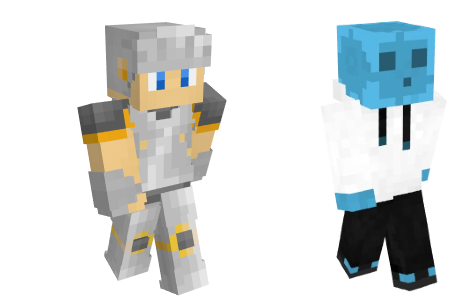
Jevin & Welsknight avatars. Source: Author.
SUPERJUMP
Is there anything you're looking forward to in particular in this season? Like playing around with new Minecraftupdates, or shops and minigames from other Hermits?
Jevin
As with any new season, there is a lot of anticipation. Of course, things like Minecraft updates are fun to play with, but I'm much more interested in the happenings on the server: The new builds and games being built (such as TangoTek's Decked Out 3), plus all the hilarious shenanigans.
Welsknight
TangoTek’s Decked Out 3 will almost certainly be a highlight of the season once he finishes it. Beyond that, I’m just looking forward to all the random interactions and spontaneous shenanigans.
SUPERJUMP
What are some of your favorite moments and builds from last season? Regarding this season's builds, what are you planning to do, similarly or differently?
Jevin
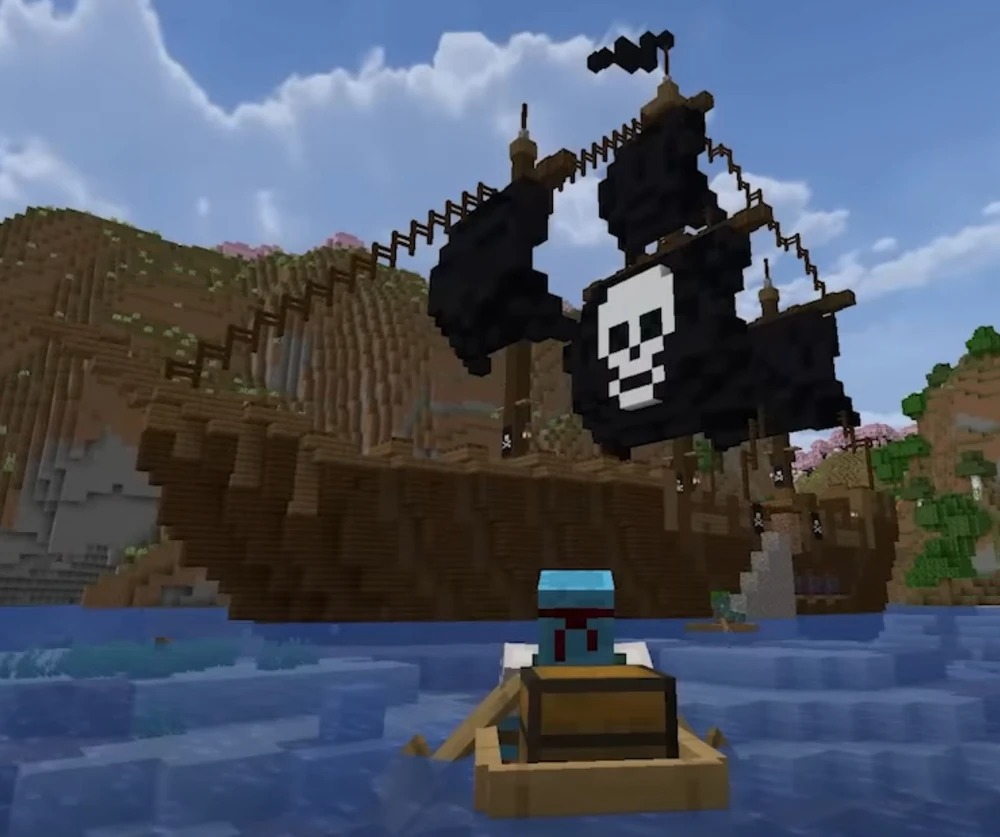
I loved the things I built last season. From the forest to the castle, I was extremely happy with the results. Each season, I strive to do things differently, and this season is no different. The theme this year is pirates!
Welsknight
Despite being inactive for a good chunk of the season, I’m pretty happy with how my fantasy castle turned out in the end. I’ll be following a lot of the same design methodology for my castle this season.
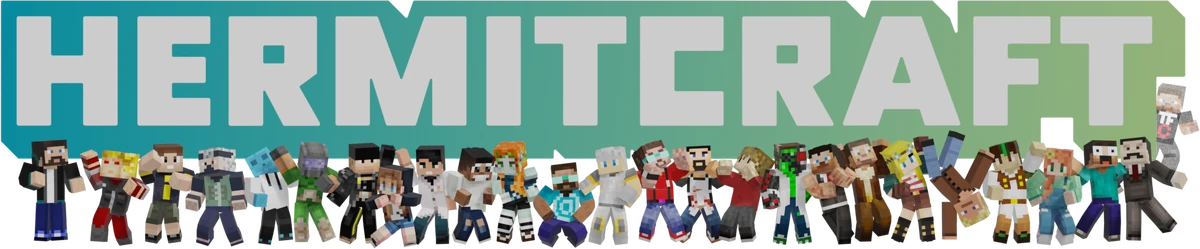
Source: Hermitcraft Wiki.
SUPERJUMP
Jevin, this is your tenth season of Hermitcraft. Does it feel like it's been that long? What's it like, being part of a community and seeing it evolve over the years?
Jevin
Being a Hermit is fascinating. Working alongside some of the most talented Minecrafters is very interesting. At any given point, you can look around and just be floored. The counter to that is I always need to invest and reinvest my skills to keep up. Sometimes it can be stressful, but it's good stress.
SUPERJUMP
Welsknight, for you its been eight seasons; does it feel that long?
Welsknight
No, it doesn’t. The years have flown by. It’s incredible to see how Hermitcraft has grown and evolved into such a prominent part of the greater Minecraft community, and I’m also really proud of how positive and wholesome the Hermitcraft community is despite its popularity. It’s really special.
Jevin's Season 11 pirate ship. Source: Hermitcraft Wiki.
SUPERJUMP
What are your thoughts on Hermitcraft and its history? Did you ever see it becoming as popular and impactful as it's become today?
Jevin
When I joined Hermitcraft all those years ago, I never imagined it would get to this point. I'm just so proud of everyone involved.
Welsknight
When I first started playing Minecraft, some of my largest influences as I learned how to build were GoodTimesWithScar, BdoubleO100, and Keralis. Countless other people learned how to play the game from watching Etho, or learned all about the technical side of Minecraft from people like Mumbo Jumbo or Docm77. It’s wild to me that not only am I playing on a server with those people today, but also that Hermitcraft as a collective has been such a big influence and source of inspiration to Minecraft players all over the world.
SUPERJUMP
Where do you see Hermitcraft's future?
Jevin
As for the future, it's hard to say. I just know I'll continue to keep putting my best foot forward.
Welsknight
I don’t think about that too much. I imagine we’ll be around for a long time. I just like to enjoy the ride.
Special thanks to Jevin and Welsknight for this interview
Since its release in 2011, Fallout: New Vegas (FNV) has had no shortage of mods—initially to keep the game from crashing and allow the player to move faster than a snail. Soon, however, the modding market quickly branched out into a vast array of weapon mods, companion mods, sex mods, weapon companion mods, weapon companion sex mods, and most notably, quest mods. The Nexus page for FNV has over a thousand quest mods, among them mods allowing the player to build their own casino in Primm, rebuild the Enclave (but as good guys), or travel to places like California, Utah, or Oregon to spread their ideals.
Many of these mods are ambitious undertakings, with some taking years to build. However, a second category of ambitious quest mods exists in which modmakers make several mods over the years, each with its own story, but also telling an overarching narrative. Though the most prominent such modmaker is Someguy3000, other such modmakers include Rikkurikku, CellblockPsycho, and Th3Overseer, whose six-mod series has racked up nearly 400,000 downloads—and who, in a virtually unprecedented move, is now adapting those very same mods into novels.
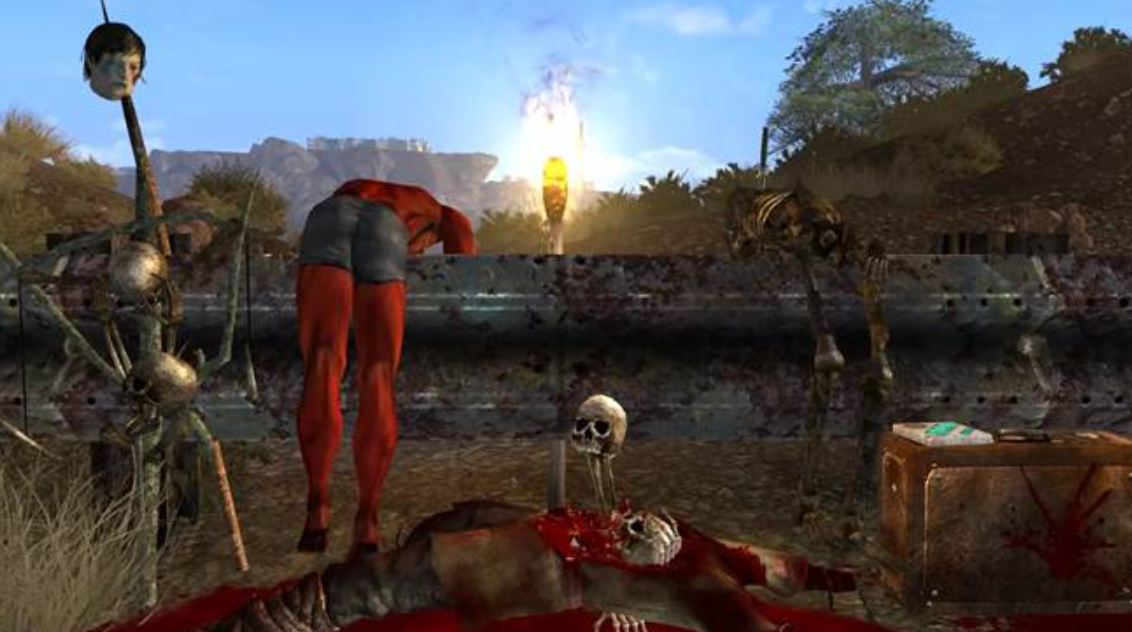
A world of depravity beckons in Fallout: New Vegas. Source: Th3Overseer.
Th3Overseer got into the Fallout series in 2009 with Fallout 3, and loved it so much he preordered Fallout: New Vegas as soon as possible, which was a terrible error as FNV at launch was virtually unplayable. Time went on, however, and he discovered YouTuber Alchestbreach, who both played and made his own mods and showcased them on his YouTube channel. Galvanized by Alchestbreach, he decided to give modmaking a shot, and after a few smaller mods, produced the quest mod “The Initiation,” which expanded the Great Khans’ quest line. “[The Initiation] was atrocious in hindsight, but proved I could make these things,” says Th3Overseer. “The Initiation sucks, and I regret everything. Baby’s first mod, and all that.” Despite its professed shortcomings, the mod has garnered over 2,000 endorsements and nearly 40,000 downloads on Nexus.
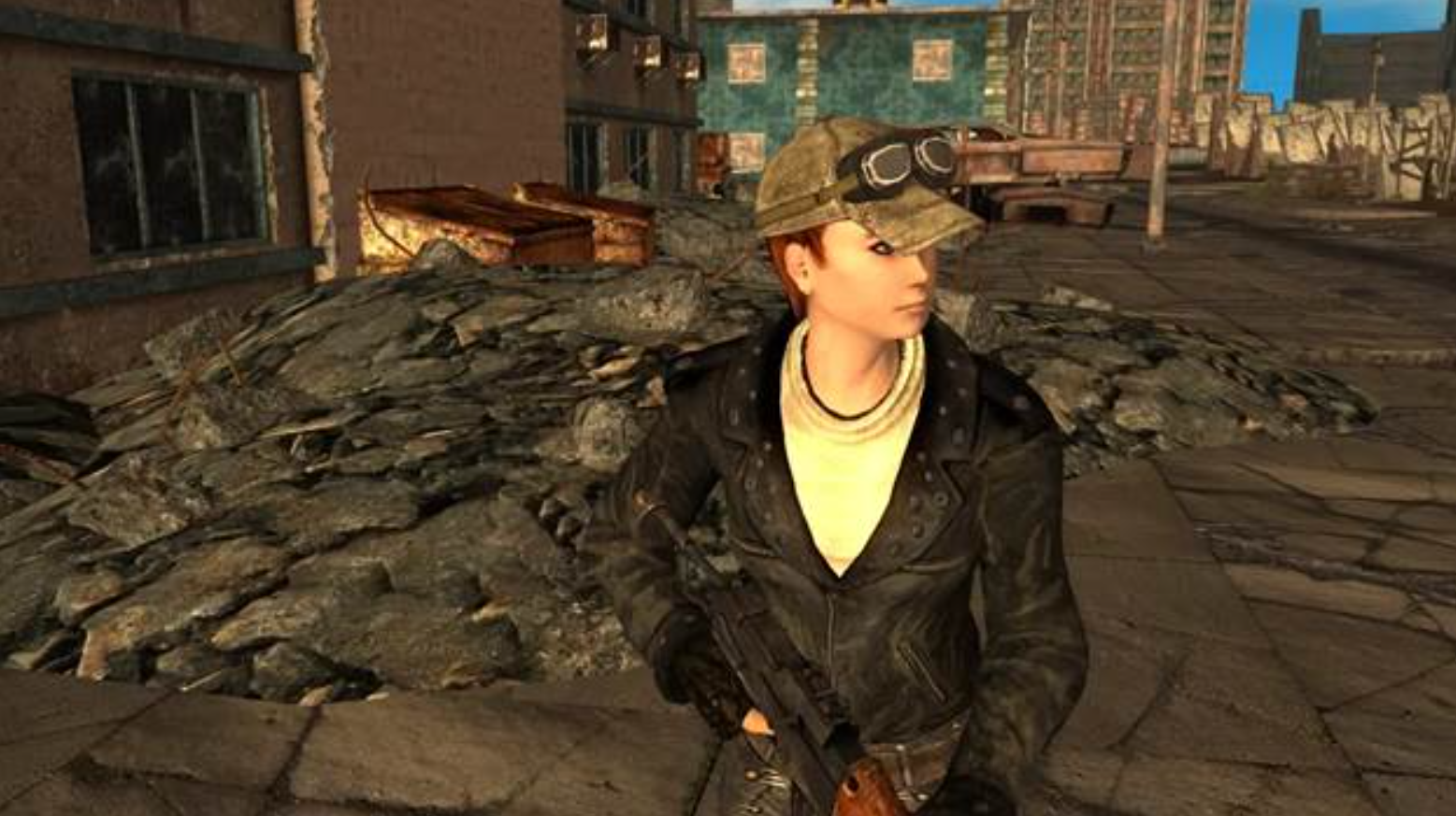
Following The Initiation, Th3Overseer began creating a follow up: His next mod, “Eliza,” features a fully-voiced companion of the same name. Eliza, admits Th3Overseer, “genuinely is two mods that are sloppily tied together. One was a western storyline with the Khans and a wacky new companion character, and the other was a thing about criminals and espionage.” He welded them together and got the idea while he was making it to tell an overarching narrative across his mods.
Although he was dissatisfied with the fusion in the mod, “Eliza” remains the favorite of prominent New Vegas YouTuber Mike Burnfire. Burnfire likes Eliza because, in his eyes, “She's a memorable traveling companion that confidently asserts herself without becoming overbearing or obnoxious, which can be a tough line to walk.”
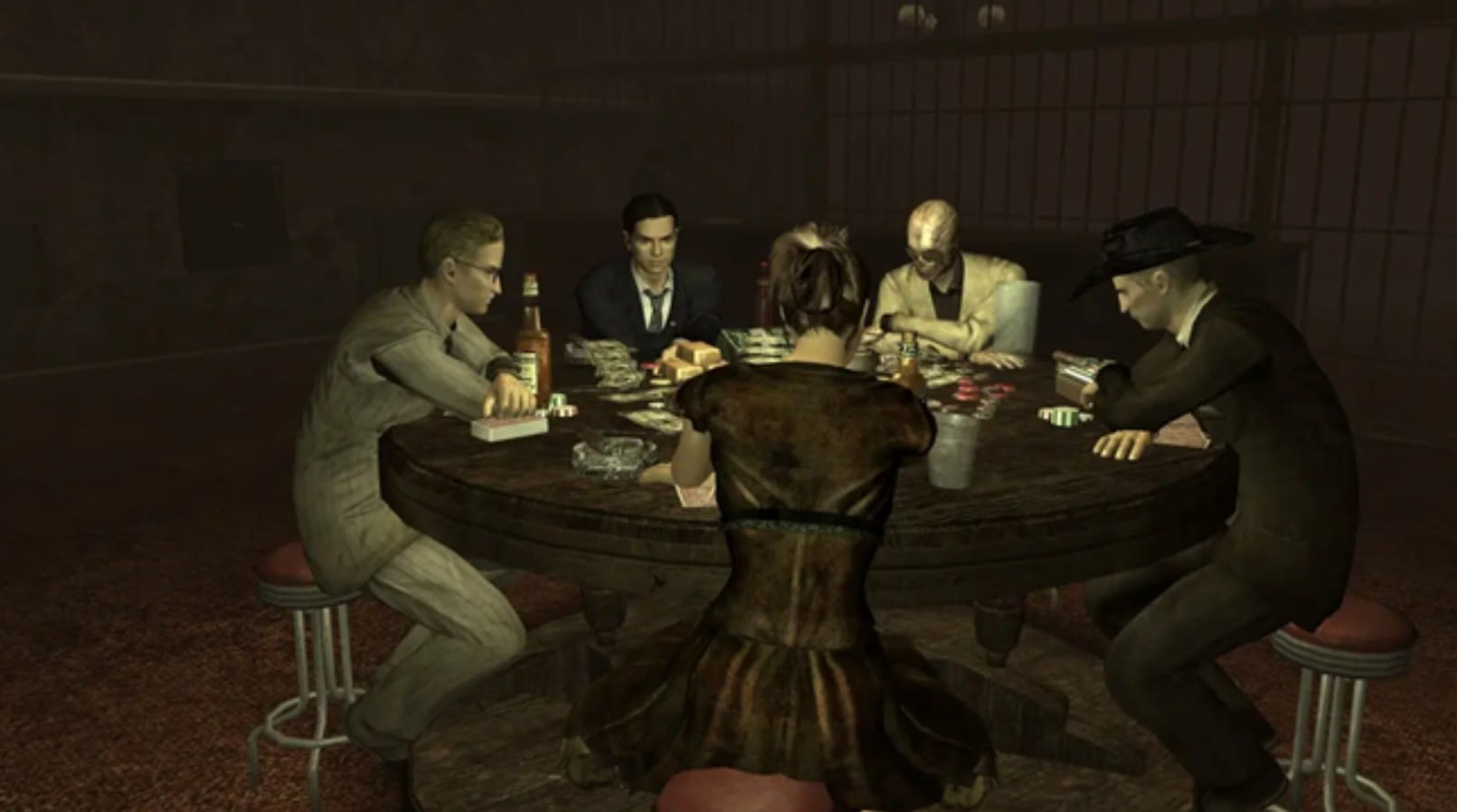
The story of The Initiation continues in Eliza and then into the next mod in the series, Headhunting. During Headhunting, the Courier (the hero of New Vegas) tracks down bounties on people all across the wastelands, from disc jockeys to bridge sellers to ransom-seeking kidnappers. The Courier even has a massive shootout with a sprawling family of inbred moonshine-swigging hillbillies.
Eventually, the skeleton of the series' story arc was formed, with most of the plot driven by two dueling antagonists: Senator Burke, a corrupt New California Republic senator who represents the worst aspects of the Old World; and Sheridan, a notorious psychopathic raider leader who represents the worst aspects of the New World. Sheridan’s associates provide violent, overpowered targets for the Courier to fight across the series, while Burke’s associates try to hamper the Courier politically and send assassins after them when all else fails.
Another recurring organization is the Office of Mojave Affairs, a shady NCR agency working in the background with enigmatic motives and loyalties. The plot line of the series would see the Courier working to take down Burke and Sheridan, taking lots of drugs and making lots of money along the way.
Ultraviolence plays a large role in Th3Overseer’s mods, as in the main game. Source: Th3Overseer.
"The North Road" came next, where the Courier roams a devastated part of Nevada north of New Vegas to capture or kill a child molester, in a plot line Th3Overseer says was inspired by Sin City. It was followed by "The Depths of Depravity," in which the Courier confronts some of the most evil and corrupt aspects of the NCR. True Detectiveseason one was a major inspiration for Depths; however, as with The North Road, its story quickly became its own unique and fulfilled plot line. “The High Desert” is the unintended conclusion to the series, in which the Courier helps set up a saloon in Primm, goes on a drug trip in a commune of kooky characters, and works for a lesbian pirate.
The series was well-received by the community. Aside from the thousands of downloads and endorsements, other prominent YouTubers like Ramblelime have spoken of their fondness for the mods. “[Th3Overseer’s] mods improve over time and build on each other,” Ramblelime says. He views that as one of their strengths, together with how the mods fill out the world of New Vegas. He added, “My favorite is The Depths of Depravity…it’s a fascinatingly gritty mystery; a mod has never been able to give me that pit-in-my-stomach feeling before or since.” Ramblelime even made a retrospective video essay analyzing the series, speaking to its strengths and weaknesses.
Despite having five or six more mods planned, the series was discontinued after The High Desert. In 2021, Th3Overseer was already taking a break from FNV to focus on other projects. Then Nexus Mods, the massive modding website that hosted all his mods, announced a series of sweeping changes to their policies. Most notably, Nexus removed the right for mod authors to delete their own files from the website, something Th3Overseer publicly protested as unethical. Nexus removed his announcement, accused him of spreading misinformation, banned him from posting images on the site, and threatened to terminate his account if he ever criticized Nexus’s staff again.
Th3Overseer was incensed, deciding to semi-retire from modmaking and not to release any of his future quest mods on Nexus again. He has released a series of humorous mods, such as adding Dr. Gregory House to the Lucky 38; anime girls to Red Rock Canyon, the Pip-Boy, and the Powder Gangers; and Sonic the Hedgehog to a set of armor. He's also made a few serious quality-of-life mods. None of these mods has been released on Nexus.
In 2022, as it became evident he was unlikely to work on any more such mods in the near future, Th3Overseer released an outline of his future unmade mods, explaining how the Courier would wipe out Sheridan’s gang and deal with the Burke family. He answered various questions on his Discord and other social media about his various plans as well as other unresolved plot threads, but for the time, it looked like that would be the end of the Overseer series.
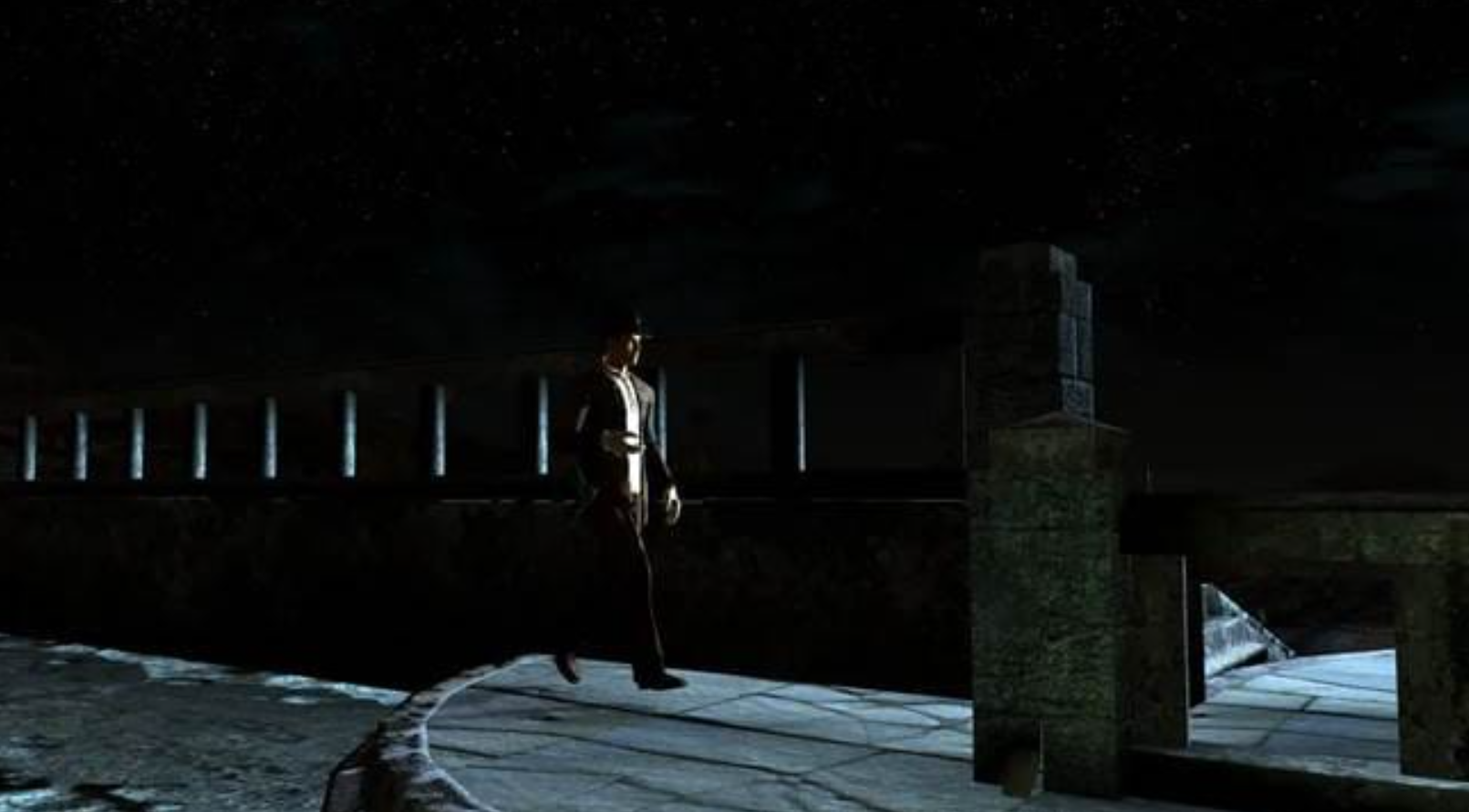
Source: Th3Overseer.
In 2025, however, things changed. Th3Overseer (just barely) makes ends meet doing various freelance writing gigs and is currently trying his hand at his own low-fantasy series. In the midst of his writing career, an idea came to him: Modmaking had many sloggish elements, and he admits he was never as competent as other modders. The Initiation, in particular, is a coding mess, as he freely admits. Modding also pays very poorly (which is to say not at all). Nevertheless, he wanted to finish the story he was telling and satisfy the fans, and the result is The Sunset Frontier.
The Sunset Frontier is Th3Overseer’s solution, a planned series of novels under the pen name J. Marshall, meant to retell the events of the mod series and eventually draw it out to its originally planned conclusion. The first novel, released on Amazon in September, titled Headhunting, largely adapts the plot of the bounty-hunting mod by the same name. Rather than have the Courier, the protagonist of Fallout: New Vegas, be the main character, Eliza is instead the heroine.
Although all Fallout intellectual property belongs to Bethesda, it was easy enough for Th3Overseer to lift his story lines into a new setting. Though Las Vegas is briefly teased at the start of the story, Eliza ultimately settles in the novel’s new main setting in the ruins of Barstow, California. The New California Republic (NCR) becomes the Western Government Coalition (WCG); Caesar’s Legion becomes the American Restoration Authority; the Fiends and the Great Khans become the Wreckers and the Kestrels. All original characters, such as Burke, Eliza, Sheridan, and so on, retain their names. A few gags are present for longtime fans of the mods, among them references to the prevalence of oldies tunes blaring across the wasteland’s airwaves, as well as the platoons of Legion hit squads that regularly ambush the vilified Courier outside the offices of Tully Headhunting.
The ease of the transition has been a pleasant surprise for Th3Overseer. The sole other main change was realism. “I made a decision very early on that I wanted the adaptations to hew to realism far closer than anything in the game settings would allow.” Though he likes learning things, he admits, “There’s still a lot more moving parts here [as opposed to] the mods, where I can just shrug and go: ‘Yeah, but the vanilla game doesn't care that much about making up fictional landmarks and hand-waving logistical details, so...’” This means no ghouls or other irradiated mutant monsters exist in Barstow that are easily found in the Mojave Wasteland; humans are the real monsters, after all.
Due to differences in storytelling between video games and books, Th3Overseer has a few advantages. The order of events can be more strictly controlled than in a video game, or shuffled around, and a greater sense of progression follows as a result. Headhunting takes place before the events of Eliza’s gang initiation, as told in the Eliza mod. The events of the Eliza mod take place before the events of Headhunting, for various story-related reasons. Other changes can be made based on how Th3Overseer’s writing has matured. Eliza, Th3Overseer felt, was obnoxious in her initial incarnation. With a second crack at things, he can fill out her character better.
Danger lurks behind every target Tully Headhunting wants dead. (Aside from the radio host.) Source: Th3Overseer.
As of right now, Th3Overseer plans to conclude the series eight years in the making. “Unless I hit some big financial emergency where I must drop everything and devote myself entirely to some horrible job, yes, I intend to finish the book series even if it doesn’t, in and of itself, pay my bills. It's a step in my desired path of being an author.” Eliza is the planned protagonist for most of the series, but other fan favorites from the mods, like depraved junkie Todd and traumatized hitwoman Charlie, are also intended to be point-of-view characters.
Scant literature exists that analyzes story mods in video games, despite their prevalence and popularity. Technically, all story mods are fanfiction, even if they do not contradict canon, and there is a history stretching back two decades now of authors creating successful book series based on their fanfiction. Tremaire by Naomi Novik began as Master and Commander fanfiction; Cassandra Claire's The Mortal Instruments series began as Harry Potter fanfiction; and Tamsyn Muir's breakout hit The Locked Tomb is theorized to have begun as Homestuck fanfiction.
Th3Overseer concedes the point about story mods and fanfiction, but says that "Mods are more technical than fanfiction, but the basic idea is more or less the same. It's unauthorized, third-party writing set in an existing IP that the author doesn't have official permission to use." There are degrees to it, he argues. "A quest mod that purports to give the player the untold early-life story of Fantastic, a vanilla NPC, is very deep in 'fanfiction territory,' whereas my own content, while originally utilizing the setting of FNV, was able to be very cleanly divorced from the Fallout IP and made into its own thing." In any case, Th3Overseer is travelling uncharted waters in the field of video games and literature.
Plenty of novels set in video game franchises exist; some of them are actually good. But a modder adapting their stories for another medium—and even making (some) money off of it—is an unprecedented move. The degree to which the series will become popular is currently unclear; it may only stay in the circle of Th3Overseer's dedicated fans and their immediate friends.
But perhaps one day Th3Overseer may be cited as one of the first transformational authors of the third millennium in a postmodern world. Or maybe he'll win the lottery like Oliver Swanick and ride into the sunset to bury some treasure in Lake Ivanpah before even publishing book two. Whatever the case, his fans can look forward to a true conclusion to the series and the ultimate confrontation with Sheridan and the Burke family.
You can download Th3Overseer’s mods on his Nexus page (be aware you may have to turn on “Show adult content” to see most of his story mods). You can buy the first book in The Sunset Frontier on its Amazon page.
As a child, my favorite type of video games (and the only ones I played) were platformers. I (and my parents) staunchly opposed “Traditional” video games, which I (and my parents) believed to be filled with violence and kissing and swearing—but most importantly, they cost money, and required downloading something to the computer! How frightening.
Browser platformers were different. Platformer games had none of the violence my parents might object to, required no downloading, and were free to play. As such, I essentially had free rein. I adored tackling the various Flash games on Nick Jr.’s website, along with Playmobil and Lego platformers as well. I became a skillful manipulator of the arrow keys and spacebar, conquered my fears of patrolling enemies, and rejoiced in my ability to get all (or at least most) of the points in each level—whether they be gears, bricks, or panda toys.
Happy is the robot protagonist of Monochrome Heights, a new platformer. Image courtesy of Patrick Knisely.
Over the years, I aged and moved on. Flash got discontinued. I got a Steam account. I would still dream sometimes about my old platformers, but I didn't touch a platform game for years. Then came the chance to review Monochrome Heights, released on Steam on October 7th, developed by Patrick Knisely’s company, One Frog Games.
Patrick Kniseley had previously worked in a variety of creative industries, such as puppetry, podcasting, sketch comedy, and many others, before releasing his debut, Monochrome Heights. The game was billed as “Traditional tough-as-nails platforming meets a novel phase mechanic where players must swap between black and white to avoid hazards and land on platforms.” I was greatly intrigued, especially by footage of the demo.
When I picked up Monochrome Heights to review for SUPERJUMP, I thought it’d be a throwback to my early gaming days, and the skills I picked up years ago would come in handy now. I forgot one key thing:
The reason I haven’t touched a platform game in years is that I have money and a computer and freedom; freedom to play Minecraft and Grand Theft Auto and Thief, freedom to play games that have three dimensions and voice acting, and above all else, no challenging jumping from here to there.
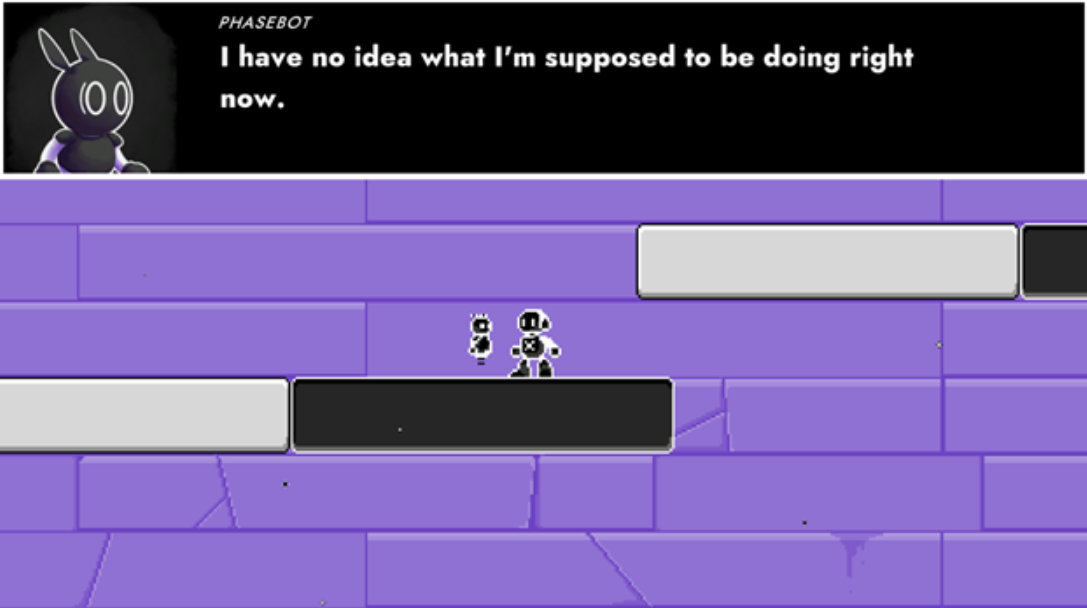
Monochrome Heights is a fantastic game, with such a simple yet fun twist: Aside from traditional platform mechanics and hazards, a primary mechanic of the game is phasing. The player can phase between black and white, allowing them to stand on similarly-colored platforms—they simply go right through the color they are not currently in. By phasing from black to white, protagonist Happy can scale obstacles, dodge enemies, and avoid traps.
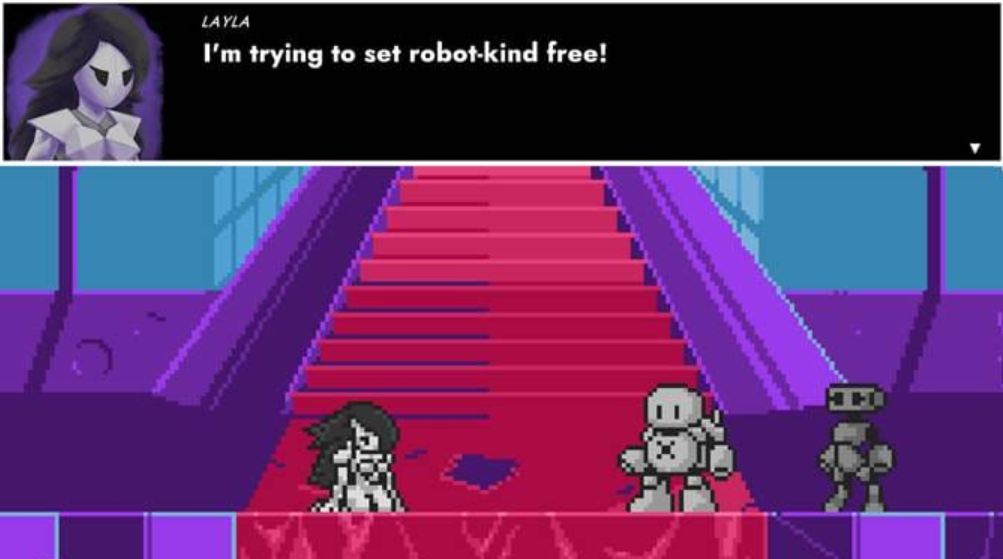
The themes of the game are rich and timely, tackling matters like transhumanism, consciousness and self-awareness, and the place of robots in society. The plot itself revolves around a robot, Happy, trying to stop another robot, Layla, who sees liberating robotkind as a worthy goal in a world ravaged by climate change. To stop the enemy, Happy must ascend Layla’s tower, using phasing powers while avoiding enemies and encountering other robots along the way.
I do, Phasebot. I’m supposed to be beating the game.
The plot is fascinating and the gameplay challenging. But I am terrible at platformers. I struggled with Adobe Flash games made for young children, and Monochrome Heights is “Tough-as-nails.” The game itself is fantastic. It requires considerable rewiring of the brain to acclimate to the simple notion that “Robot=black, robot stand on black, fall through white; Robot=white, robot stand on white, fall through black.” Nevertheless, once I started to get the hang of it, it became immensely satisfying.
I was able to beat the second level. I was phasing from black to white in mid-air, zipping back and forth, then dying and taking things slowly—both options suggested by the game: “Tight, simple controls that allow players to blaze forward with speed and momentum, or take it slow and patiently progress.” Watching Happy forge through platforming challenges that had stumped me ten minutes prior was like an injection of dopamine into my soul. Wait, is the soul affected by dopamine? There’s one for the metaphysicists.
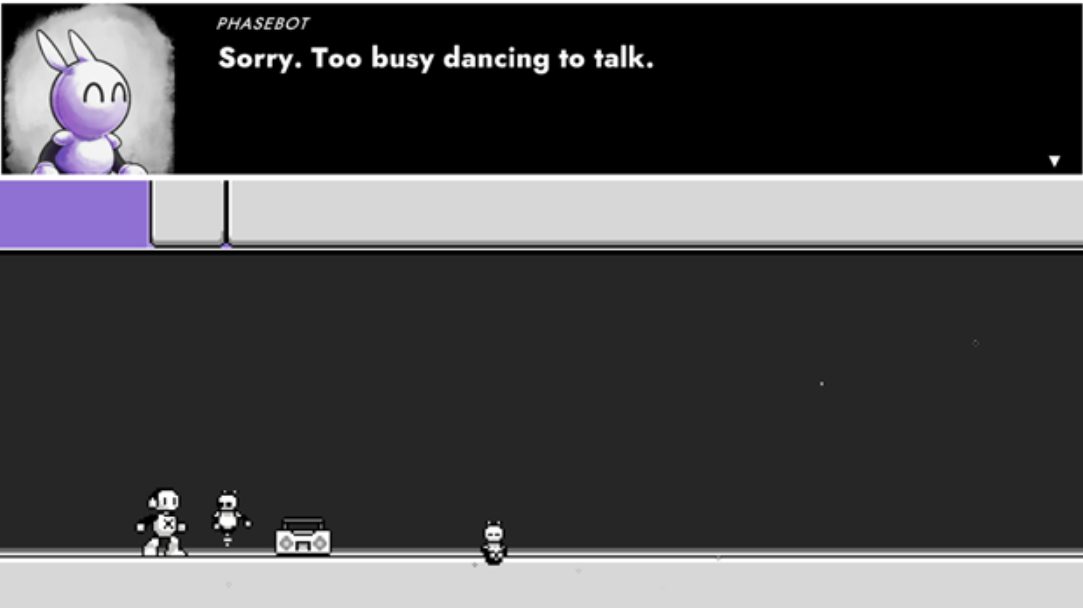
The nearly two-hour-long soundtrack, by video essayist and composer Bent Neatley, is sublime. Even as I racked up triple-digit deaths each level, the soundtrack was there, gassing me up and encouraging me to move along. Each level had its own leitmotif that imbued it with charm and kept things fresh.
In terms of complexity, the story itself isn’t the stuff of the Mahabharata, but it was still quite engaging. Happy has a mysterious relationship to the archnemesis Layla, and Layla’s motives are not entirely black-and-white. Each named robot has its own unique, equally simple and cute design—even Layla, who boasts a mop of black hair. (Hair? Do robots have hair? Can robots have hair? Should robots have hair?)
Move over, GLaDOS: You’ve got competition. Image courtesy of Patrick Knisely.
The game has a singular flaw that stands out to me: If Happy phases while touching the opposite color, Happy dies and gets reassembled at the nearest checkpoint. On numerous occasions, Happy must jump from one black square to one white square above. On such occasions, the blocks are spaced so far apart that it requires near-pixel-perfect timing to get on top of the platform above without dying. While I could easily move on from all the other frustrations, Happy’s jumping skills in that department irked me. (Can robots train and upgrade their skills at the robot gym?)
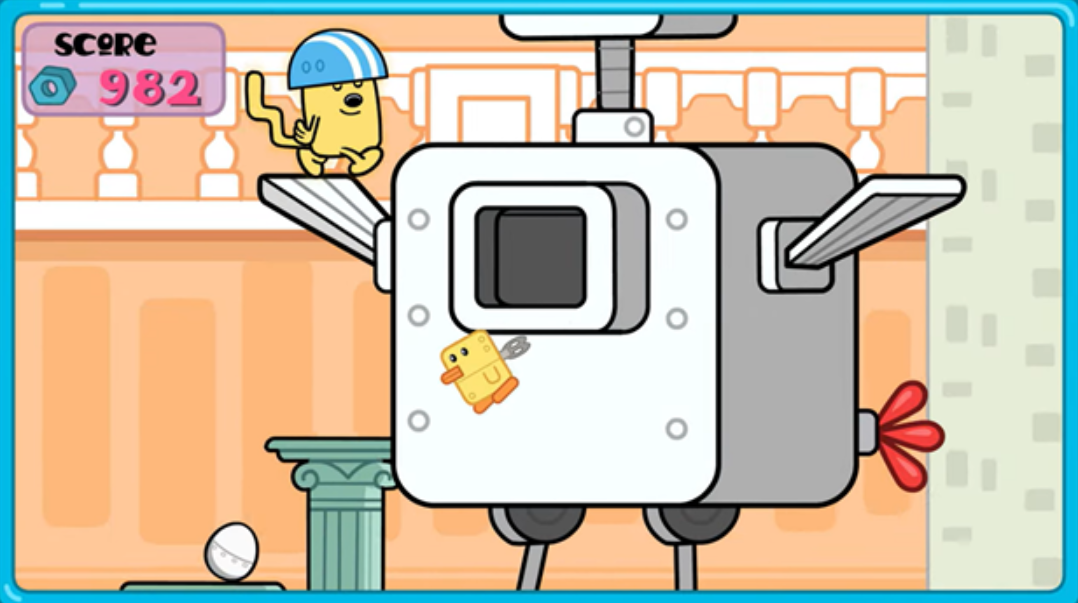
The challenge actually made me nostalgic in a way. Once I realized what I was in for and tempered my frustration, I felt a sort of fondness for my archnemeses of childhood: The Snappity-Snap Fish in Wubbzy’s Underwater Adventure; the heated vents in Junkbot; Francine in Prankster Planet 2. This was what I had been training for the whole time: To stop Layla.
The robot chicken in “Wubbzy’s Big Adventure” was sure to give any eight-year-old a run for their money.
In the end, Monochrome Heights is a fantastic platformer, a satisfying debut for One Frog Games. The next planned game by OFG, Detective Mane, is a cozy mystery revolving around the theft of a parallelogram, investigated by the eponymous lion, Detective Leonardo Mane. Patrick Knisley and his studio are going places, unlike me, trying to play Monochrome Heights.
For myself, I am forced to paraphrase Charles Farrar Browne: “For people who are good at the kind of video games like Monochrome Heights, Monochrome Heights is just the kind of video game such people are good at.”