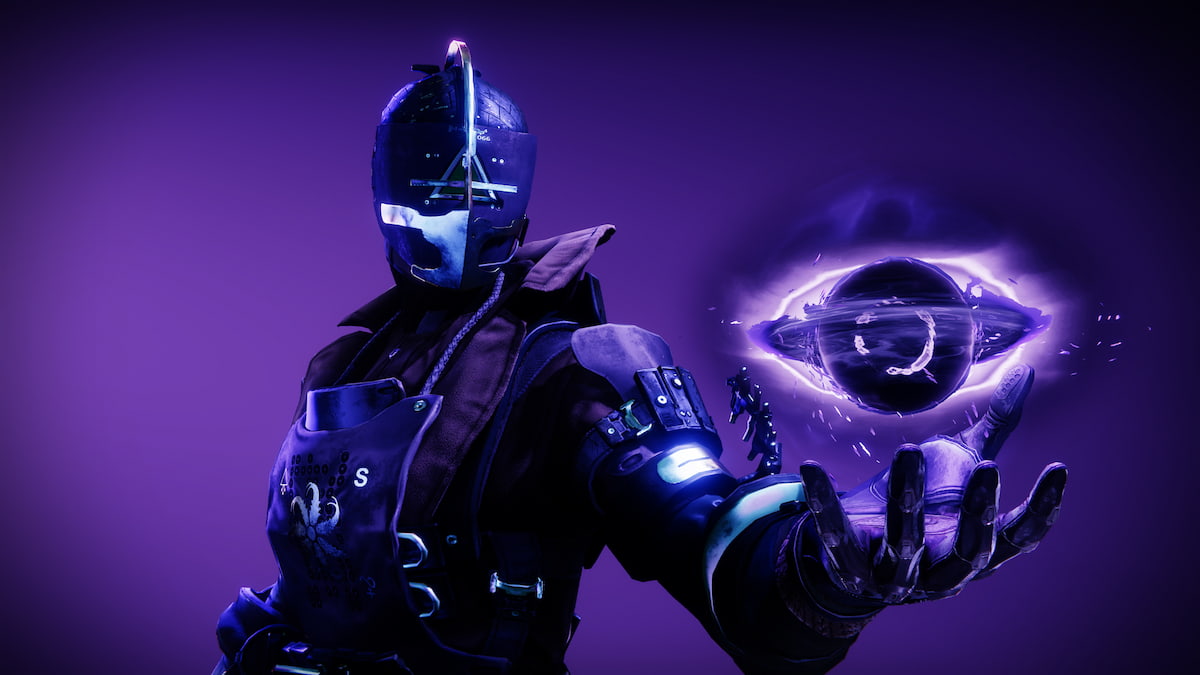
Nothing Manacles got a huge glow-up in Destiny 2, going off an individual balance pass in tandem with some general buffs to Void. You may have missed this Exotic when it released, but there's still a way to get it.
Nothing Manacles released in Season of the Lost, when the main way of getting new Exotics was by running higher-difficulty Lost Sectors. The process has since changed drastically and is now much easier. Here's how you can snag this Exotic for your Warlock.
How to unlock Nothing Manacles in Destiny 2
King of add-clear and king of fashion. Screenshot by Destructoid
You can get Nothing Manacles by focusing it with Master Rahool in the Tower. If you're looking for your first copy, go to the Novel Decryption tab in the Focused Decoding section of his inventory. This is where you can unlock the Exotic at the cost of one Exotic Engram and one Exotic Cipher.
That latter resource is slightly time-gated, but can be obtained from season passes, by exchanging Chronologs, and, of course, the classic way: by completing the Xenology quest from Xûr, who shows up at the Friday reset and flies off on Tuesday.
After you've unlocked Nothing Manacles, you can grab it from any suitable source of Exotic Engrams, including Master Rahool. He's the most reliable way to farm this, letting you choose to decode an Exotic Engram into Nothing Manacles as long as you're willing to pay 60,000 Glimmer and two Ascendant Shards. You can continue to use Novel Decryption if you'd rather save your golfballs, though.
What Nothing Manacles does (and why it's good)
Tie a Void MIRV to Graviton Lance, and that's kind of what Nothing Manacles feels. Screenshot by Destructoid
Scatter Charge: Gives you an extra Scatter Grenade charge, enables tracking for its submunitions, and final blows create more projectiles.
Nothing Manacles on its own can be quite strong, but it really shines with Chaos Accelerantand Feed the Voidequipped. Feed the Void grants an enhanced version of Devour, which should be glued to any Void subclass—especially one based on grenades.
Chaos Accelerant, on the other hand, improves the tracking of your Scatter Grenades and grants you an extra grenade charge. With that combination, you're heading into an activity carrying three high-powered, tracking Scatter Grenades.
This is one of the best add-clear builds for Warlocks. Think of it as a turbocharged Graviton Lance in your pocket. Damage isn't this build's strongest suit, however, so this mostly excels at taking down smaller enemies.
Destiny 2's Star Wars-inspired expansion is finally here. Renegades offers a campaign available in Legend and Normal difficulties, as has been standard fare since the wildly popular The Witch Queen started doing so in 2022. This presents a choice: should you do the campaign on Legendary or Normal?
Completing the campaign in either difficulty gets you access to most post-campaign activities, and in Renegades, this opens up the Lawless Frontier activity. It takes after The Nether in Heresy, lack of health regen included, and you can get a slew of goodies there by siding with different factions.
What do you get by completing the Renegades campaign in Legendary difficulty?
We're already at 550, so that's why the tooltip says we're getting gear this high. Screenshot by Destructoid
Based on the tooltip, completing the campaign on Legendary gets you a set of Powerful gear and the Renegades Exotic for your class (Deimosuffusion for Warlocks, Praxic Vestment for Titans, and Fortune's Favor). This means you'll get one set of armor at five levels above your maximum account level.
In The Edge of Fate, you could obtain the expansion's Exotics on your main character by doing the Legendary campaign, then unlock the others through the Sieve, Kepler's post-campaign activity. Renegades could see a similar formula.
Can you change the Renegades campaign difficulty in Destiny 2?
Click that node to open a list of selectable missions and difficulties. Screenshot by Destructoid
Going by The Edge of Fate, you can change the difficulty for the Renegades campaign before launching a mission. This lets you rerun missions in a different difficulty even after you've cleared the main story, so there's no harm in changing your settings along the way.
To redo your missions, click the node with the Renegades symbol in Tharsis Outpost. This opens a list of all missions, allowing you to retry them individually and change their difficulty. There are six main story missions, with some runs of Lawless Frontier sprinkled in between.
You can get all rewards from completing the campaign even if you change your difficulty along the way, but you must finish every mission on Legend difficulty to unlock the additional goodies.
Is it worth doing the Renegades campaign in Legendary difficulty?
That's a hard-hitting crew. Screenshot by Destructoid
There's no set answer for this since it depends on your skill level, your tolerance for a challenge, and how quickly you'd like to complete the campaign. If you can take on the Legendary campaign on your first try, it's worth accepting the challenge. If you're torn, give it a go and adjust the challenge as you see fit, and if you're just aiming for a quicker, more relaxing clear, normal can do the job just right.
WTF “Little guys for big jobs” is a profoundly weird way to describe bullets.
There’s nothing slick about Blood West. It’s a slow, lumbering thing – an exercise in patience, demanding to be taken on its own terms.
My first forays into this stealth focused, first-person shooter were mired in frustration, while my seemingly interminable failures put the main character’s immortality to the test. However, once I was willing to abandon my preconceived heuristics and fully lean into Blood West’s loop, I loved every second of it.
Recently resurrected by a talking cow skull of dubious origins, the player takes control of an unnamed, undead gunslinger tasked with defeating a great evil corrupting the land. Structured as small open-worlds, players will explore haunted canyons, swamps, and mountain ranges across the American old west. Light RPG elements allow for some character customization, but make no mistake, spirits, mutants, and gaggles of gun-toting birdmen offer stiff resistance to incautious players, and maintaining a low profile is crucial.
Impulse and quick reflexes find no purchase in Blood West – every action must be carefully considered, with a solid contingency plan in place should things go awry. Stand-up fights netted poor results for this spooky cowpoke, and each encounter turned into a tactical calculus.
Take the simple act of equipping weapons – players are only able to swap between two at a time, one large and one small. Is it more prudent to take the bow, able to stealthily dispatch weaker enemies from afar? Or is it better to knife them in the back, relying on the close quarters fury of a double-barreled shotgun should that colossal wendigo stomping in the background take notice? These questions become existential as health is fleeting, and death is severely punished on the plains of Blood West.
Each defeat (and subsequent resurrection) results in a “soul flaw” — a semi-permanent status effect that negatively impacts a core stat such as health, stamina, or sneaking ability. These compound with each death, worsening up to three times. While they can eventually be remedied, these flaws do nothing to make the hostile world of Blood West any easier.
While Blood West is punishing when approached as a typical first-person shooter, it is immensely rewarding as a tactical stealth experience. Its open-ended structure offers players abundant freedom in tackling objectives, and most areas can be approached from any direction. I came to organize my play into discreet sorties, probing further into the wilderness and systematically clearing areas of enemies before returning to base camp to trade treasure with the merchant and heal up. Defeated enemies stay dead until the player rests or resurrects, and I began to feel a measure of control over my environment when I realized I could stay alive much longer with the most important tactic of all – knowing when to cut bait.
Eventually, I came to realize the majority of my deaths in Blood West were a result of my own hubris – deciding to take a snap headshot without properly scouting the area, accidentally alerting a horde of monsters in the process, or pressing into uncharted territory despite a depleted health bar. Individual enemies are generally not difficult on their own, and most can be outrun should they become overwhelming. That’s not to say that every death is the player’s fault, but I rarely felt Blood West was unfair and often found my own stubbornness and inattention to be the source of any frustration.
Careful attention is not only important for combat but also exploration. Whether it’s a moored steamboat off the beaten track or a lonely cabin on a hilltop, there is sure to be loot worth finding. As I began to explore the more far-flung corners of the map, I found powerful, unique items that literally changed the way I approached Blood West – a rifle that heals forty health with every headshot, or a trinket that offered a twenty percent boost to health, stamina, and experience points. Some of these items shaped my play for hours to come, and it’s not an exaggeration to say that I might not have rolled credits in Blood West without them.
There is one area where Blood West falls short, however – the boss fights. Each act is structured around tracking and exterminating an evil entity, and the narrative revolves around the buildup to these encounters. Unfortunately, these battles are uniformly disappointing and rely on mechanics that stray from Blood West’s strengths. Whether it’s dexterity-based dodging or battles of attrition, gone is the emphasis on thoughtful, strategic play that forms Blood West’s foundation. While certainly a letdown, these criticisms amount to little more than quibbles in the wake of all that Blood West does right.
Blood West won’t be for everyone, but those willing to go along with its demanding play and deliberate pacing will find an engaging experience that celebrates the player’s wits as much as reflexes. I won’t soon forget the feeling of being low on ammo, even lower on health and deep behind enemy lines, knowing I should turn back, but forging ahead anyway, intoxicated by what treasure could be around the next corner – because more than likely, it’s worth it.
Disclosures: This game is developed by Hyperstrange and published by New Blood Interactive LLC. It is currently available on PC, PS5, and XBX/S.This copy of the game was obtained via publisher and reviewed on the PS5. Approximately 30 hours of play were devoted to the single-player mode, and the primary campaign was completed, but the DLC campaign was not completed. There are no multiplayer modes.
Parents: According to the ESRB, this game is rated M and contains Blood, Use of Alcoholand Tobacco, Violence. This game is definitely not aimed at children. While the visuals are generally low fidelity and rendered in a cartoony, non-realistic fashion, there is plenty of blood and gore. Enemies can be killed with various firearms, knives, and swords. When killed, enemies will spray blood out and can be partially dismembered with certain weapons. Alcohol and tobacco can be consumed as power-ups.
Colorblind Modes: There are nocolorblind modes available.
Deaf & Hard of Hearing Gamers: This game only offers subtitles in certain instances. Primary dialogue between characters is fully subtitled, but the player’s character makes many comments throughout gameplay that are not subtitled at all. While this game offers two options for text size, this only applies to certain menus and did not impact the text in subtitled dialogue. This game relies heavily on stealth, and when playing without sound I found it more difficult to remain unseen and, consequently, died more frequently due to enemy noises that are not represented visually. The missing in-game subtitles combined with the lack of visual indicators for key contextual noises means this game is not fully accessible.
Remappable Controls: Yes, this game offers fully remappable controls.
I never thought I'd catch myself missing Mars Base, those flickering red hallways and synth-wave beats, yet here I am feeling nostalgic for the greasy gearwork and hellfire that framed the modern saga, for the reassuring growl of the BFG muffled over a comm link. And still, as I carve through Doom: The Dark Ages, blade singing in a flickering torch-lit keep, a stupid grin spreads across my face. It's a brand-new monster: less cyberpunk, more spellbook; fewer tetrahedral demons, more horned warlords; less speed-metal, more mournful chants that cling to the walls like mildew. And that head-spinning tonal swap is the double-edged blade I keep attempting to tame.
The Forge of Worlds Awakens
Fire up Doom: The Dark Ages, and, sure, you think you know the ride ahead. You strap on virtual leather, grip the chainsaw, and leap into arenas bristling with howling demons. Except now those arenas are moss-covered crypts, wind-slashed castle keeps, and flagstone courtyards draped in shadow. The big guns have been scrapped for crooked crossbows and snorting hand cannons, and your old pals Pinky and the Cacodemon- have traded their skin for armored bastards and flame-breathing sentinels.
Yeah, it sounds wild. Still, the moment the first brutal guitar riff kicks in, soaring over thunderous drums, I feel that same electric tremor in my bones. The Dark Ages swapped out cyborg guts for glowing runes, but at heart, it's still DOOM: pure violence bottled up in sweaty palms and thundering heartbeats.
DOOM: The Dark Ages - A Genre Mash-Up That Defies Expectations
Scan the medieval FPS shelf, and Dark Ages slides into a strange little gap:
Chivalry 2 vs Mordhau: big-multiplayer brawls where every swing is a planned tango. Perfect for duelists and drunken tavern scraps, yet none deliver the stool-pushing single-player jolt.
Hellish Reign, a doomed wannabe, slotted Doom-style combat into a medieval world and fell flat-boring puzzles, copy-and-paste arenas, zero snap.
Doom: The Dark Ages doesn't just slap a helmet on the Slayer; it tweaks everything. Your shotgun shrinks to a hand cannon that punctures steel. The chainsaw becomes a greatsword that coats the floor in black ichor when you tear a foe in half. Movement feels heavy, yet quick-wall runs become vaults over barricades, and electric dashes swap for bright magic bursts from your gauntlets.
Medieval-fighting fans will love the way Dark Ages grafts DOOMs speed onto their favorite weapons, finally sending heavy swings flying instead of waiting for wonky timers. Die-hard DOOM addicts who started their shooter life with DOOM (2016) still eye it warily: where is my glory kill on that Mancubus?
Why a Classic DOOM Fan Should Care
The Ritual of Violence
DOOM is kinetic; you charge, you mow down, you glory kill, and Dark Ages keeps that rhythm inside fire-lit stone halls. Every dash, vault, or slice has the same snap as strafing and rocket-jumping. Combat flows like lava, dousing enemies before they can catch their breath.
The Weight Behind the Blade
There is a rare kind of thrill that rolls up your spine the moment you grip a sword so heavy it looks like it could bisect a golem. Each swing rattles your controller, while the crisp, clear ring of metal followed by the meaty crack of bone- gives every pixel of blood a reason to spill.
A New Kind of Arsenal
Think back to the agony of cornering an Archvile in classic DOOM made for players who buy PS5 shooter games. Now imagine that same foe dressed as a necromancer in tattered robes, calling skeletons to block your path while you nail him with burning crossbow bolts. Then you pull out the rune cannon: a semi-auto pistol that swaps fire, frost, or lightning with a flick of the thumb. Picture the Devil’s shotgun rebuilt for this age, and you'll have roughly the right idea.
Fresh Level Design Dreams
Instead of rusted labs and magma chasms, DOOM: The Dark Ages drops you into twisting citadels, skyward spires, and hidden sunken shrines. Chase down rune shards and unlock new moves-wall-slams, ground-shock waves, and even a brief takeover by your own summoned demon. That single question lies behind that crumbling arch?-is answered far more satisfyingly here than in any sterile research complex.
A Soundtrack That Haunts the Rampage
Mick Gordon's gritty industrial riffs have been traded for booming orchestral layers -thundering drums, roaring horns, and eerie chants. The guitars remain, yet they twist into a sound primal and tribal. It's less headbanging and more war dance, but my fists still pump in time.
Creative Leap or Risky Sidestep?
I'll admit part of me felt betrayed. I booted the game expecting DOOM, but more medieval yet landed on DOOM meets The Witcher, complete with side quests about peasant witches and demon-haunted villages. Where are the infinite ammo codes? The litanies of skull tokens? And why am I rescuing villagers instead of smashing everything in my path?
Yet, as the hours rolled on, I grew hooked. DOOM: The Dark Ages pauses its relentless assault to let quiet dread creep into a single torch-lit corridor, the distant howl of a demon hound. Those brief lulls make the next outbreak of violence feel electric.
Is it flawless? Far from it. The plot stumbles into a familiar territory-betrayed prince, vengeful cleric, lost artifact-and I found myself missing the bare-bones charm of the original DOOM lore. A few hunts drag on: grab three totems so I can call up the Demon Lord's anger. Several boss encounters lean hard on predictable scripts, melting the open, chaotic violence DOOM fans live for.
Yet for every slip, a glory moment arrives: finding a hidden vault and dropping a dragon-red demon with nothing but gauntlet uppercuts or clearing a moonlit courtyard while a ghostly choir screams overhead. Those scenes loop in my mind, pure DOOM, even as they bring fresh ideas.
Feature
Chivalry 2 / Mordhau
Warhammer 40K: Space Marine
Doom: The Dark Ages
Combat Fluidity
Medium
High
Very High
Weapon Variety
Swords, Spears, Bows
Bolter, Power Sword
Runes, Hand Cannons, Swords
Pacing
Tactical duels
Action set pieces
Non-stop brutality
Single-Player Focus
Low
Medium
Very High
Level Design
Arena / Open maps
Corridor + Battlefield
Organic castles + Catacombs
Soundtrack
Authentic medieval
Orchestral rock
Hybrid choir + riff assault
A Conflicted Heart Finds Its Beat
Look, just because I still spin Dark Force's vinyl doesn't mean I'll skip a DOOM night to learn about The Dark Ages. At their cores, both games feed the same wild hunger: sidestepping hell teeth, nailing that split-second glory kill, and roaring forward like an armored freight train.
Still, I wince at the shiny new skin-it feels like swapping a beat-up leather jacket for a polished suit of plate. All that clean sci-fi slaughter now wears scrollwork and capes, and the cold corridors I loved have given way to torchlit halls. I miss them, yet the heavier foes are a blast demon knight who splinters your block with one cut and an undead archer showering bone bolts from the rafters.
So yeah, part of me craves a lean sword-and-sorcery sim with real RPG weight, while the other half just wants to blast imp skulls at point-blank range. Dark Ages tries to sit between those stools, often lingering on lore and then retreating to chaos too quick. Yet every time I complain, I end up charging back in, blades humming and groans bouncing off stone walls.
Conclusion
At the end of the day, Doom: The Dark Ages isn't quite a straight DOOM title, and it's definitely not your usual sword-and-bow shooter; it's a fresh twist that grabs bits from both worlds. As with any mash-up, the mix can get sloppy, yet on rare occasions, it turns into something unforgettable. If you love DOOM, you'll spot familiar speed, blood, and a hurricane of motion- but they're layered over ruins, secrets, and a pace that pushes you to stop and breathe. Instead of floating hallways, this time, you wander castles, trade spells, and collect rusty lore that makes the air feel colder and older than any spaceship corridor.
So, if you're ready to drop one setting and yet carry its spirit forward, Dark Ages will probably grab you by the helm and drag you uphill. You're not losing a legacy; you're folding a new route into it, and that climb carries its own rewards. Gunpowder and magic collide, your name will echo off the stone, and you'll discover that sometimes the sweetest brand of hell looks a lot like a weather-beaten keep.