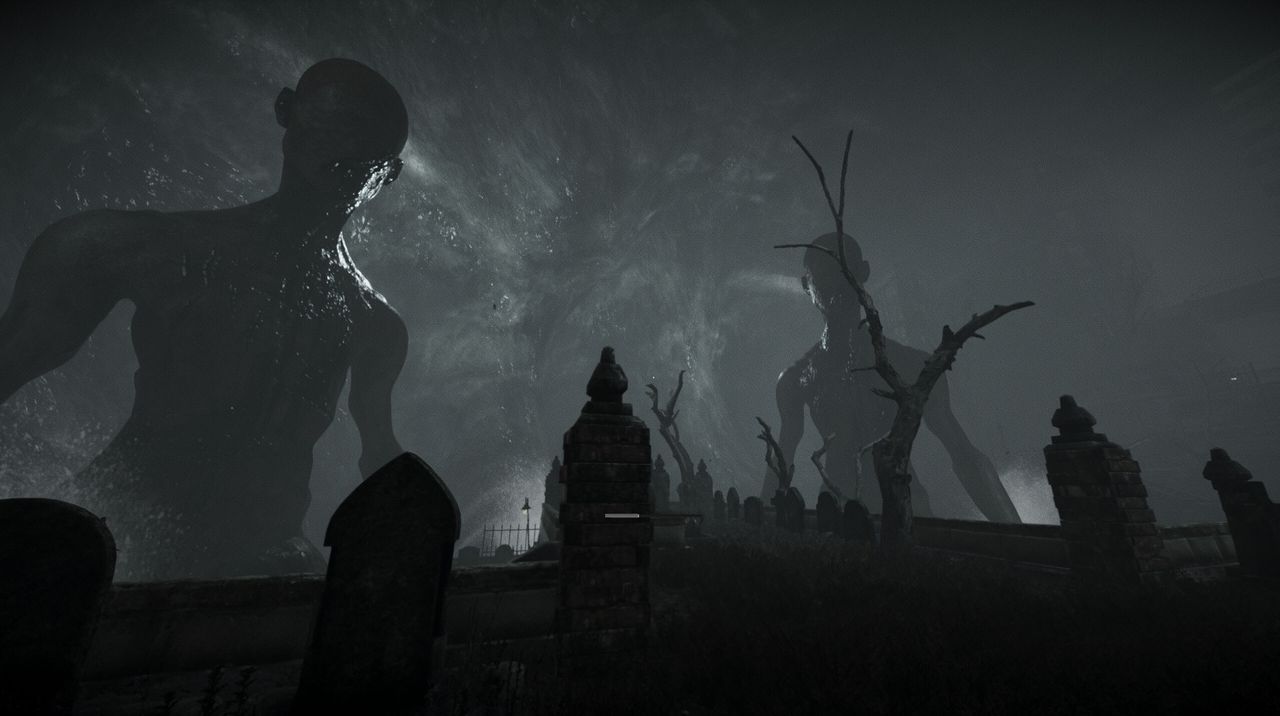
Tumor Necrosis Factor: Amen is an arcade-inspired rail shooter where you tear through decaying Earth as a mutant half-worm.
In Tumor Necrosis Factor: Amen, Angels once protected Earth as the planet’s white blood cells until the Shepherd Biosciences Corporation unleashed an otherworldly plague. Now Earth drowns under an ocean of blood as worms feed upon its gangrenous corpse. The few remaining seek “Rapture” – … Read More
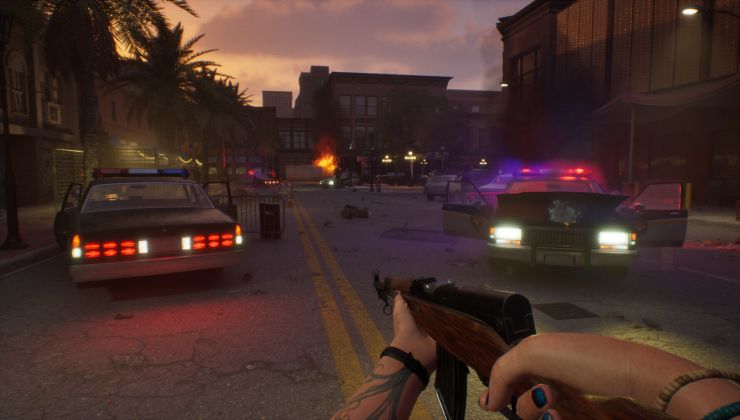
John Carpenter’s Toxic Commando is a 4-player co-op FPS where you obliterate hordes of terrifying monsters to save the world.
In John Carpenter’s Toxic Commando you’ll gather your squad and send the Sludge God and its undead horde back to hell. Jump in with fellow commandos online for pure co-op chaos – revive teammates, share ammo, cover backs, and laugh through the madness. When infected … Read More
INFERIUS is a first-person roguelike deckbuilder blending Dante’s Inferno with Lovecraftian horror across the nine levels of hell.
In INFERIUS, use Major Arcana Tarot Cards to strategize against horrors lurking in darkness. Build the perfect deck, challenge rulers embodying sins of their dominions – Limbo, Lust, Gluttony, Greed, Anger, Heresy, Violence, Fraud, and Treachery – die often, and repeat.
Pre-strategize and enhance cards before … Read More
Ironclad is a co-op horror game where you and a small crew pilot tanks to eradicate the monster infestation plaguing the world.
In Ironclad, work together with up to six players to harness ancient technology and end the scourge once and for all. Drive, shoot, repair, and upgrade tanks while traversing treacherous lands inhabited by powerful eldritch horrors searching for the ultimate weapon. Find … Read More
The Caribou Trail is a visceral first-person narrative-driven adventure where your goal isn’t to kill, but to survive the harsh realities of WWI.
In The Caribou Trail, Fisher leaves his quiet Newfoundland harbor town with friends to join the British war effort at Gallipoli in 1915. They expected a short adventure full of tales to bring home. What awaits is dirt, loss, and a … Read More
Meat Grinder is an open-world simulation-adventure where you run a hot dog shop and discover how far you’ll go to keep it running.
In Meat Grinder, you’ve opened your own hot dog shop in the foggy streets of Grimshore. Prepare, cook, and serve sausages to customers during the day. But when stock runs low, you’ll resort to unusual methods at night to replenish your … Read More
Villa Nocturne is a survival horror game where you face the ghosts of the past in a mansion shrouded in mist.
In Villa Nocturne, you’ll step into a dark mansion filled with mysterious notes, haunting sounds, and supernatural entities. Every corner hides secrets waiting to be uncovered. Explore shadowy corridors, follow cryptic clues, unlock hidden rooms, and face terrors that escalate with every step.… Read More
CAPTURED 2 is an anomaly hunting horror game where you’re trapped in an ever-changing apartment, capturing anomalies on camera while surviving deadly entities.
In CAPTURED 2, you play as Emily, a teenage girl who goes missing during unexplained disappearances and finds herself trapped in an endless hallway within her own apartment, slowly losing her memory. Strange anomalies appear throughout procedurally generated loops, and capturing … Read More
Forest Escape: Last Train is a co-op horror exploration game for 1-4 players where you escape through a deranged Warden’s fractured mind.
In Forest Escape, you’re a prison escapee trapped deep in a misty forest – but this isn’t ordinary wilderness. You’re traveling through the twisted mind of a crazy Warden whose madness has transformed reality into surreal horror. Death isn’t enough for him; … Read More
There's nothing more spooky than having to neatly get your message across in a limited number of words which may or may not have to rhyme or stick to iambic pentameter. That's something Polish horror devs Bloober Team clearly understand, since they whipped out some William Blake poetry over the weekend, in order to reveal that Layers of Fear 3 will be a thing.
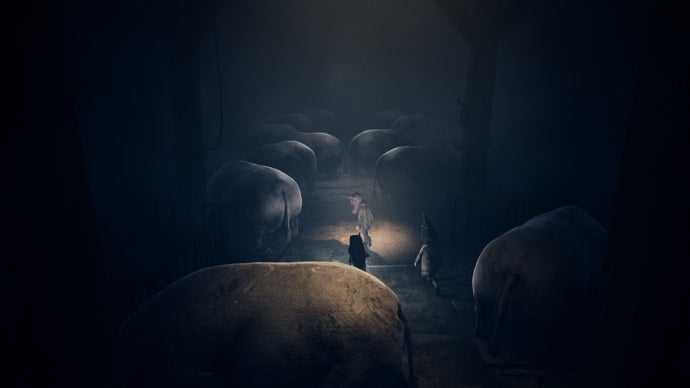
In an industry pestered by calls to "think of the children", Tarsier’s games are useful reminders that children can be utterly depraved in ways no coddling adult would ever dream. Later in Reanimal, the developer’s latest, strictly 'co-optional' horror game, two kids rip an eyeball out of a massive, sunken horse skull and shove it into what I sincerely hope is the eyesocket of a slumbering whale. Somehow, this is necessary to advance.
It’s the kind of thing that would only occur to children, because children do not reason like 'we' do, those disgusting creeps. They sense that they exist in a world that isn’t for them: a world of baffling laws, high shelves, and everyday monstrosity; a world they’re required to 'grow into' by means of repeated shedding and sprouting and subjection - milk teeth and pubic hair and doing your goddamn chores. So they instinctively come up with ways to screw with the system, twist its horrible logic against itself. Why not push a horse’s eyeball into a whale?
When I played Total Chaos at the end of the last year, my main takeaway was, 'This is scary, but could be scarier'. There are some fear inducing moments in Trigger Happy Interactive's remake of the Doom total conversion of the same name—particularly a bowel-quaking mid-game section involving a library. But compared to the dynamic terrors of Alien: Isolation and Amnesia: The Bunker, it didn't quite reach the same heights.
But Trigger Happy Interactive has taken a leaf from the rulebooks of those two terrifying games. The next update for the survival horror game will introduce a New Game+mode that aims to radically shake up the experience for veteran players.
From March 2 onward, players who return to Total Chaos for a second helping will find things are very different in its crumbling island town of Fort Oasis. New Game+ adds a persistent, dynamic enemy in the style of Alien: Isolation named the Hunter. "It does not patrol. It does not follow rules. It adapts," Trigger Happy explains in a Steam post. "Once it finds you, there is no way to stop it."
It seems this persistent-hunting mode will land on the extreme end of such mechanics, with Trigger Happy emphasising that "there are no safe zones. No scripted encounters. No comfort." Typically, Total Chaos' enemies leave you alone in areas that contain a record player, which acts as a save point much like Resident Evil's typewriters. But Trigger Happy's statement strongly implies the Hunter won't wait for you to step away before attacking you.
This isn't the only change New Game+ will bring. Trigger Happy says that the first seven chapters of the game have been "transformed into far more hostile gauntlets." Not only does this mean scarcer resources and more aggressive enemies, the levels themselves have been tweaked so that "routes are less predictable". Total Chaos' mazey maps weren't exactly straightforward in the base version, so I'd expect New Game+ to offer a stern navigational challenge.
While the first seven chapters are merely adjusted, Trigger Happy says that the final chapter is "completely new" in New Game+, and will lead to a different ending. "Reckoning reveals more about Fort Oasis, the forces that consumed it, and the true meaning behind your journey."
It sounds like an ambitious rework of the initial experience, akin to what Konami did in Silent Hill f. In any case, there's definitely room to up the challenge in Total Chaos. The base version tends to be overgenerous with its resources, so a run that makes you think harder about conserving weapons and equipment would certainly enhance the tension.
A new year dawns. January is usually a bit of a slow month for entertainment, video games not exempted. However, a lull in the quantity of releases says nothing about the quality, and there were still some interesting titles dropped this month.
There are only two games on display this month, which speaks to that lower release number but also signifies a bit of a policy change. Moving forward, we're going to feature fewer games while offering slightly longer, more in-depth reviews. Yes, I'd love to do twenty reviews a month and give exposure to the maximum number of people, but the limits of time and space make that impractical.
For now, enjoy the dancing robots before returning to your haunted hotel.
The Spirit Lift is a horror-themed deckbuilder following a series of 90s high school archetypes as they wander through an old hotel in which every spooky thing possible has happened. It's a familiar game that's set apart by an unusual presentation and an obsession with replayability.
The goal of each run is to guide a group of three characters through the halls of the Vexington Hotel, reach the 13th floor and defeat a boss waiting there. Initially there are only three characters available, but the roster grows to eight after enough attempts. The party determines opening cards and equipment, but more importantly they set which of the four colors of cards will be available in future draws.
The core gameplay loop is similar to most deckbuilders, save that the player isn't moving along a set path but rather exploring each floor in first person. One of the rooms always contains the lift to the next floor, while the others house enemies, events or empty rooms that can be looted for money and cards. There may also be enemies and traps outside of the rooms and the lift doesn't unlock unless the player has explored at least one other room, so beelining through each floor isn't necessarily an effective strategy.
Combat is also similar to other deckbuilders, with a few twists. The most noteworthy distinction is a complete lack of a block mechanic. The player will need to find some other means of avoiding damage - dodging it, reflecting it, stunning enemies or taking them down before they can do anything. In general, the ideal strategy involves focusing on one or two cards that can be scaled out, something that's critical to beating some of the bosses with the game's restrictive 13-turn imit.
All deckbuilders are designed for replay value, but few put as much of a focus on it as The Spirit Lift. There are unlockables for each character, each enemy, each boss - dozens in all, including not just cards and gear but new events. Each run earns spirit points used to purchase permanent upgrades. Certain events yield files that point to the history of the Vexington Hotel, and it can take many runs to find them all.
Whether or not it's worth playing through the game dozens of times will vary from person to person. By genre standards, The Spirit Lift isn't too hard, and it has a few features that make chasing unlockables nicer - such as those permanent upgrades and the ability to select any boss path previously seen. However, the small number of enemies and lack of challenge settings means that runs will start to seem a little similar after a while.
Overall, The Spirit Lift is a very interesting deckbuilder that mixes up the formula without changing things too much. It has a fun aesthetic and theme and it never feels too oppressive to play, making it a good choice for both veterans and newcomers.
The Spirit Lift is available for PC via Steam. A copy was provided for this review.
Steel Century Groove is a rhythm RPG set in a world where generations-old war machines called Tenzerks have been repurposed for the more noble sport of dance combat. It's an easy to learn, hard to master game with some unexpected complexity.
The core combat mechanics seem simple at first glance. For each stem, or phase of the fight, there is a curving line with numbered nodes. A dot moves along that line, and the player must hit a button when it passes through each node. The nodes follow the pulse of the music but aren't strictly locked to the beat, so there might be sets of tightly-grouped nodes followed by a break. Each successful hit builds the player's acclaim, and whichever character maxes out their acclaim bar first wins.
That's where the RPG mechanics come into play. While one can theoretically win by using a single button, most opponents won't give up that easily. Winning more difficult fights means mastering the special abilities.
Each Tenzerk - those available to the player and those used by opponents - has a unique set of traits and skills, and those skills only work if used in the right circumstances. For example, you might get a special attack that depletes the enemy's acclaim bar, but only if used during a part of the stem where the opponent isn't taking any action. Meanwhile, enemies have their own gimmicks and can throw status effects on the player, such as locking abilities or seeding the stem with decoy nodes.
Playing the game well requires keeping track of a lot of information at once - not just the nodes, but cooldowns, possible status conditions, and the enemy's predicted actions. It can be daunting, especially for one without great multitasking skills. However, most mechs have a few simple strategies that work well in a wide range of situations, demanding only an occasional tweak in response to an enemy gimmick.
Outside of combat, Steel Century Groove features a design with some definite Pokémon inspiration. The storyline is simple, following the protagonist and their friend on a journey to earn the right to compete in a tournament. Said entry requires defeating a series of expert opponents, all the while dealing with a rival who always seems to be one step ahead. There is another layer to the story, one involving the lost history of the Tenzerks that is revealed little by little over the course of the game.
The RPG elements are fairly basic but add a bit more mechanical complexity. There's no money or shops, but the player will find mods that can add minor mechanics or refine existing strategies. The overall loop also grows more complex as the player fights other pilots and gains levels.
Overall, Steel Century Groove is a solid addition to the burgeoning rhythm combat genre. It's not too hard to get the hang of it and there's just enough variety in the builds and enemies to keep things interesting.
Steel Century Groove is available for PC via Steam. A copy was provided for this review.
That wraps up our first go with the adjusted format, having looked at two indie games that caught our attention in January. Be sure to come back each month for more of those sweet, sweet indie games you need to know about!
The moment I arrived in Silent Hill f, I could tell the fog was back, and not just as eye candy, but as a choking and tangible entity. It is a character, and not a backdrop. It’s an impenetrable barrier, a veil that absorbs sound, muffles your footfalls, and time moves differently. There were moments where I caught myself standing still just watching the fog, convinced it was so painfully obvious, that I could see a figure or something ghastly moving just out of reach. The fog in this area is not meant as a simple decoration; it is the very essence of the terror, and it is something that truly works.
The feel of the sound is as important as the visual in the space. This part of the score might seem dissonant. In fact, it is jarring, static, and distortion corseted into some kind of rhythm, but certainly not something that you will want to hum. As you start playing it, the tune integrates into your body as if you are a puppet, every strung nerve maximally toned. And, finally, the silence comes—a thick silence, uncomfortable and constraining, and heavier than the sound ever could be. Every part of the space carries a threat, and, days later, I still remember going more slowly at the borders of the seats that day and, more than once, trying to decipher some shapes in the dim light. For me, this is precisely what Silent Hill should have been.
Return of a Veteran
I remember playing Silent Hill the moment it was released. Coming all the way to New Zealand, the first launch of Silent Hill was accompanied by a gag promotional item – a pair of underwear that was packed with the game. The reasoning was obvious, and trust me, I should have preserved it with the rest of my belongings for the latest sequel. I have to say, after the many sequel iterations and comparisons like the experimental misfires and genre offs, I have to say that Silent Hill f has emerged from the mist as the truest sequel. Homecoming and Downpour detours all, this is the bloodline the series was always meant to have. Appendices with the sound mixed to gnaw like a parasite – the steadfast fog once more is in position to the liege, and the narrative has found blasphemy in the lost, ravenous, cruel.
Language as a Layer of Dread
I put on the English voiceover at first, but switched to the Japanese audio and subtitles because I liked it better. This is perhaps the easiest, yet disquieting experience of the game. Each sentence in Japanese has a near ritualistic quality to it, as if the entire phrase is etched into stone or was whispered as a spell. It is not a matter of just listening to someone speak in a different language, it is all in the rhythm, the sharpness, the delivery, the breath. It is real and true dread that lies in these performances. When dubbed in English, part of that spellbinding quality is retained, but it is shrouded in something all too comfortable and all too clean. Each Japanese sentence, in its articulation, seems to be a blade cutting through the fog.
The Journal That Breathes
Within every game, even among PS5 horror games, there is a detail that is profound, tiny, and necessitates comment: the journal. It’s more than a menu, a script, or a set of notes. It is a relic, heavy in its binding, immersive in its design, and rests in a tactile silence. Each page turn tumbles more towards a violation. It is intricately woven with the anxiety of something confidential, something that should not be core sampled and brushed through, like a relic that contains more sinister than salubrious offerings.
Performances That Cut Through the Fog
Silent Hill f is a silent film which does not indulge in camp. No actors are making faces at the camera. No attempts at over-the-top drama that would soften the fear. The actors are silent and carry the horror through their intensity. They do not act out fear, but instead, dread. Their presence is enough to make sure the player does not escape from the experience. While most horror games emphasize caricature, Silent Hill focuses on real people, and the descent into horror becomes even more disturbing.
A Narrative Devoid of Clarification
Still lost, yet elated after a good ten hours of play, remains a joy in Silent Hill f. For the release of Silent Hill, the only time when I felt strongest was during the moments I was not able to understand the narrative of the game, mainly during the times of uncertainty. Every realization is another question.
There is no spoon feeding, there is no expository dumping to aid you. The narrative serves only as a construct maze, shrouded in fog, and I have yet to escape its confines. The fog is not purely a negative; it's a victory. It feels as though there is a story, and it functions as a story by resisting imagination, simulation, and interpretation.
Relentless Combat
Example, Silent Hill. On f, it is clear the game possesses real bite. It plays in a real, tangible, responsive world, pleasant to all players who buy PS5 games. Here, the combat is visceral. Automatically, there is no combat without complete precision. Every window of attack is small; the very rare double window of attack requires the enemy to be slightly in a precise position.
Every single encounter is less of a mash attack and feels more like a tactical puzzle of life. One particular boss, for every single encounter, a complete three hours of my life was devoted. In every aspect, every single attempt was another test of my patience and adaptability. Out of the countless dominations that it was able to withstand, each was like an individual lightning streak, a moment of mental alacrity.
You could say that on lower difficulties, the game nears a more pure horror rhythm, as the atmosphere does more of the work than the mechanics. But on Hard, the system shifts to a more punishment-duel system, nearly Soulslike in its relentlessness. It does have some issues; clunky moments do exist, but unlike any other game, it does reward mastery in a way that Silent Hill has rarely done before.
Tremors You Can’t Forget
The scarecrows take the trophy for the most terrifying. Their bodies are the most abstract of forms, with each of the movements bizarrely entrancing and terrifying. They do not just stalk you; rather, they inhabit the fog with grotesque elegance as they bend and contort. Then, there is the design element that is so obvious to everybody, they are the most horrid. It is a contradiction that you can’t take your eyes away from, pure horror mixed with pure lust, and pure disgust mixed with pure attraction. Silent Hill has never strayed from a contradiction, and in this scene, it strayed more than the others, with its creatures that disturb and distract in equal parts. Forget the first titles where nurses were overexposed; in Silent Hill f, it is the scarecrows that carry the real payload.
A Loop of Suffering and Mastery
Silent Hill f, at its core, is based on a loop of adaptation. The structure, much like Sekiro: Shadows Die Twice, is about mastery, but the spine-crushing atmosphere of Silent Hill alters the flavor. The dread, the atmosphere, is the first layer of punishment that one must peel off. The rest is a terrible bundle of collapse at the edge of which one must pay to find a shred of success. Exhausting it may be, but it is also a thrill.
On standard difficulty, the layer of punishment is lighter, and the dread is left to hover over the mechanical brutality. But in Hard mode, the game is a devotion asking for nothing less. Suffering, the loop of defeat and persistence, is, in a different way, easily submerged in the fog’s grasp.
A Resurrection, Not Just a Sequel
Silent Hill f is not just another entry in a series attempting to relive lost glory. It is a resurrection. The essence of the franchise has been rediscovered: the fog, the ambiguity, the intimate terror, all of which have been augmented with new designs, new performances, and new risks. It is not perfect. The combat can falter, the spikes in difficulty can be quite vexing, and the story will undoubtedly alienate most people.
It is not nostalgia. It is not imitation. It is a reclamation.
Final Reflection
Silent Hill f impressed me more than I had anticipated. It hit me differently, provoking not just fear, but something akin to inner pain, a discomfort that lingers after the controller has been set down. The fog feels alive again. The narrative is adamant in not explaining itself. The scarecrows disturb me with their paradox of horror and beauty. There is more than mere horror for the sake of horror. There is horror as the act of reflection, horror as the act of artistic expression, horror as the act of confronting something you wish you could turn away from but cannot. For the fans devoted to the series, those who like psychological horror that is more disturbing than startling, Silent Hill f is an intricate design of a nightmare to inhabit.
You Won’t Be Alone, But Your Friends Can’t Save You
HIGH Sweet tank vs (REDACTED) action!
LOW Secret-hunting into an absolute chore.
WTF How is a pelican this terrifying?
Would a rose, by any other name, still smell as sweet? From the opening moments of REANIMAL, it’s absolutely clear that the answer is yes as Tarsier, the developers behind Little Nightmares 1 and 2, have done it again.
On offer we have children struggling to explore a hostile world that’s too large for their tiny forms. Foreboding environments convince players that a threat is always just a few feet away. Grotesque body horror enemies challenge the player to keep looking at the screen, even in the middle of hectic chase sequences.
Four months ago I wrote that Little Nightmares does not require Tarsier to develop it. I still believe that’s true, but REANIMAL proves that Tarsier doesn’t need access to the IP in order to make Little Nightmares.
A truly harrowing experience, REANIMAL opens, appropriately enough, with the player controlling a little boy in a small boat, lost in a pitch-black ocean. From developers that seem to pride themselves on their ability to baffle fans, this is a perfect metaphor. Everything is obscured, nothing is safe, and the only thing to do is find something that plausibly looks like a clue and move in that direction. Soon enough the player’s task is clear – a boy and a girl are missing three friends. They’re scattered across a dead world, hiding amongst the wreckage left by a horrible war. Who won the war and who it was against are unimportant – all that matters is that somewhere in the rubble there are children who need help, and that’s motivation enough to drive the action.
One of REANIMAL’s most impactful elements is a tone of overhanging dread. Just as in its spiritual predecessors, the story here is oblique to the point of causing frustration. Why is this orphanage full of petrified children? Why has this flooded town been mined? Are those sloughed-off human skins moving? Yes, they are, and no explanations are offered for any of it. I think I have some idea of what’s going on and the ending certainly has a solid punch to it – but anyone hoping that Tarsier would make a move towards coherence will be disappointed. There is a story being told, but the aesthetics are doing the heavy lifting.
And what aesthetics they are! Every corner of the world is grey and decrepit, as if a layer of dust has settled atop the whole of it. This is a world that covers the player in filth just by interacting with it, making it impossible to come away clean.
As the action moves from the ocean, to a forest, through a city, and finally into an active war zone, the player is constantly faced with new threats, each more horrifying than the last. Nothing good or pure can exist, and it’s no accident that the main characters and their three friends wear tattered clothes and disturbing masks – they may be children, but they’re as corrupted as the world they inhabit.
From a gameplay standpoint, REANIMAL goes out of its way to differentiate itself from Little Nightmares, primarily in the relative paucity of environmental puzzles and chase scenes. They still pop up occasionally of course – including one with a large bird that can be considered an all-time classic – but fewer than I’d expected based on the developers’ previous work. I never found myself searching for fuses or pushing boxes. There are a few doors to unlock and one code to put in a computer, but by and large the action here is about slowly and methodically experiencing the world, one unpleasant step after another.
This means that the experience of REANIMAL ultimately leans on platforming and combat. The leaping is floaty, but fundamentally functional, and combat is mostly random flailing. I won’t say these elements feel good, but in a sense they work towards what the developers are trying to achieve by making the player feel like they’re intruding in a world that has no place for them, controlling characters who are so overmatched that it’s almost pitiable. I honestly don’t know that super-tight controls would have improved the experience they were trying to craft.
REANIMAL is a nightmare that won’t end. After beating the campaign I immediately started it up again, hoping that by finding all of the secrets I’d get some answers to the questions the ending raised. Sadly, it wasn’t to be, and I found myself with too many loose ends while also being unable to get the haunting aesthetic out of my head. This is a grim, nasty experience from the masters of the genre. It’s a singularly nasty journey, and while I can’t recommend it to everyone, anyone looking to take a trip through the dark side won’t find one much better.
Rating: 8.5 out of 10
Disclosures: This game is developed by Tarsier and published by THQ Nordic and Amplifier Studios. It currently available on PC, PS5, XBS/X and SW2. A copy of the game was obtained via publisher and reviewed on the PC. Approximately 12 hours of play were devoted to the single-player mode. The game was completed multiple times. 2 hours were spent in Multiplayer modes.
Parents: This game was rated M by the ESRB, and it features Violence, Blood and Gore, and Partial Nudity. It’s a testament to this game’s bleak subject matter that the ‘partial nudity’ referred to in the ESRB warning is discarded human skins left hanging from shelves and rafters all over one area. Beyond oppressive tone and endless brutality, this game requires a severe trigger warning for self-harm, as one of the levels is made up almost entirely of people blowing themselves up with grenades.
Colorblind Modes: The game contains no colorblind modes.
Deaf & Hard of Hearing Gamers: I played almost the entire game without sound and encountered zero difficulties. All dialogue is subtitled, and there are no audio-only cues for tasks that need to be completed. Subtitles cannot be resized. The game is fully accessible.
Remappable Controls: No, the game’s controls are not remappable while using controllers, but keyboard inputs can be rebound on PC.
Hi everyone. Eugene Sax here with another review from GameCritics.com.
The Spirit Lift is a roguelike deckbuilder that takes inspiration from haunted houses and creature feature films of the early ’80s and ’90s. A group of high school seniors get separated from their group on a field trip to a spooky hotel and get sucked into The Spirit Lift, where they must fight through 13 floors of terror in order to get back home.
Once a run begins, players take their group of teens through the cursed hotel floors in order to make it to the Penthouse and defeat the evil creature there. Each floor is different, with the theme depending on the boss that will be found at the end of the section. Every door along the way might hide cards or gear to help with the run, gold to buy cards from a shady wolf lurking around, or enemies trying their best to gobble the players up.
In combat, cards are played each turn to defeat enemies. Enemies telegraph what they will do when the player ends their turn, so using that information to plan out moves before enemies act is crucial. Unlike others in the genre, I have yet to find a card in Spirit Lift that actually serves as “defense” — there are no shields and no blocking. Options seem limited to attacking or debuffing enemies, which leads to a quick gameplay loop as it’s all-offense, all the time. That said, this speed is helpful in avoiding the maximum of 13 turns per battle — I haven’t found out what happens if a player uses up all of those turns, but I can’t imagine it’s good. Whether players win or lose a run, there will be points awarded that they can use for things like more starting health or starting with more gold on future runs.
There’s not much to the formula beyond what I’ve just described, so there’s not much depth in The Spirit Lift. There’s not much enemy variety, either. In my runs I’ve seen basic versions of bad guys, slightly healthier versions, and versions that do more status effects. There are some one-off enemies that introduce a new gimmick, but the well of new ideas seems to dry up fast.
What really kills the Spirit Lift, though, is the grind. It’s not the worst I’ve seen since each run is fairly short, maybe taking an hour to hit the final boss of the run, but the lack of variety is felt quickly.
On the plus side, players will eventually unlock five additional characters past the starting three after a few runs. Some are better with straight attacks, while others are better at buffing or damage-over-time, but they all tend to play fairly similar to each other. This means that after only a little while, The Spirit Lift has shown its entire hand.
That could be disappointing for players who love to dig deep into an experience like this, but despite how shallow it seems, I find that the spooky haunted house vibe is charming, it’s easy to grasp some of the powerful combinations quickly, and learning the full array of monsters allows players to quickly strategize each encounter.
The Spirit Lift won’t be a game for everyone, but there’s joy to be found for players who might like a smaller bite.
For me, The Spirit Lift gets 7.5 loops of elevator music out of 10.
Disclosures: This game is developed and published by prettysmart games. It is currently available on PC. This copy of the game was obtained via publisher and reviewed on the Steam. Approximately 8 hours of play were spent playing the game, and multiple runs of the game were completed. There are no multiplayer modes.
Parents: This game is not currently rated by the ESRB. However, it’s safe to say that it has fantasy violence as players use cards that represent items like guns, baseball bats, and tennis rackets to attack horror monsters. No blood, no foul language, just creepy atmosphere.
Colorblind Modes: Colorblind Modes are not present.
Deaf & Hard of Hearing Gamers: This game offers subtitles, but subtitles can not be altered and/or resized. There are no audio cues needed to play. The game is fully accessible.
Remappable controls: Controls are not remappable, and there is no control diagram. Movement is controlled by pressing WASD on the keyboard, or by using the mouse to click on the arrows on screen. Mouse is used to control everything else (card selection, selecting options in events, etc),
Das Spiel „MINICRAFT: Infinite World Edition“ ist eine 3D-Minecraft-Nachbildung mit einem besonderen Fokus auf Horror-Elemente.
Hier sind die wichtigsten Merkm...
Dark Tides is an adventure game where you play as a boardwalk psychic unravelling the demonic mysteries of a seaside Victorian town. Playing as Theodora Green, you are tasked with figuring out...