In a move that’s either incredibly ironic or just plain dark, Epic Games has chosen The Callisto Protocol as the mystery gift for December 24. While most people are settling in for festive cheer, Epic is sending us to a high-security prison colony on Jupiter’s dead moon to fight mutated horrors.
If this feels familiar, it’s because the game was previously offered for free back in August 2024. However, if you missed that window or were skeptical about the launch reviews, now is the perfect time to grab this AAA survival horror experience without spending a dime.
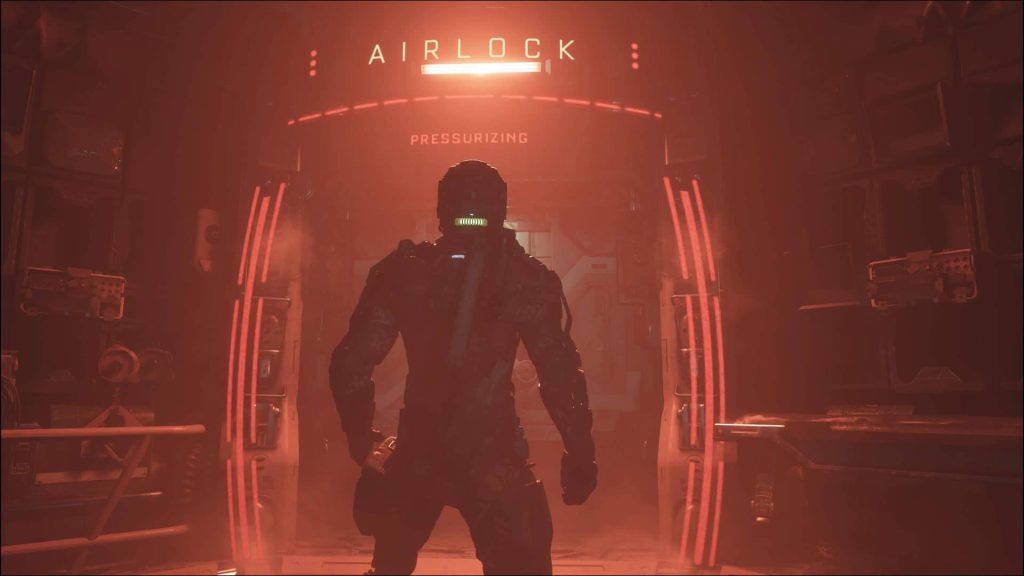
Callisto Protocol: Jakob Infront of the Airlock
The Spiritual Successor to Dead Space
Directed by Glen Schofield—the man who co-created the original Dead Space—this game was built to be the next evolution of sci-fi horror. You play as Jacob Lee, an inmate at Black Iron Prison who finds himself in the middle of a gruesome outbreak. The UI is integrated directly into the world (your health bar is a glowing implant on your neck), keeping the screen clean and the tension high.
Brutal, Up-Close Combat
Unlike many horror shooters where you keep your distance, The Callisto Protocol forces you to get personal. The combat system leans heavily on a rhythmic dodging mechanic and a powerful electrified baton. You’ll spend as much time parrying and bashing limbs in melee as you will firing your weapons.
Callisto Protocol: Hello Monster
The “GRP” gravity tool is the real star of the show. It allows you to pick up enemies and launch them into environmental hazards like spinning fans, wall spikes, or even off ledges. It adds a tactical layer to the encounters, making the gore feel almost like a puzzle.
A Technical Powerhouse
Say what you will about the gameplay pacing, but the visuals are undeniably some of the best in the genre. The lighting, character models (starring Josh Duhamel), and sound design are top-tier. It captures that oppressive, claustrophobic atmosphere perfectly, making the “holiday” setting of a derelict space prison feel genuinely unsettling.
The Callisto Protocol: Encountering Monster
Claim It Before the Big One
The Callisto Protocol is free until December 25 at 11:00 AM ET. Since tomorrow is the actual Christmas Day reveal, the community is expecting a massive title to close out the holiday peak. Don’t let the gore distract you—make sure you add this to your library before the mystery counter hits zero.
If you were hoping for another gritty shooter or a mainstream AAA title, today’s reveal might surprise you. Epic is continuing its streak of “hidden gem” picks with Sorry We’re Closed, a 2024 survival horror title that feels more like an underground art project than a standard video game.
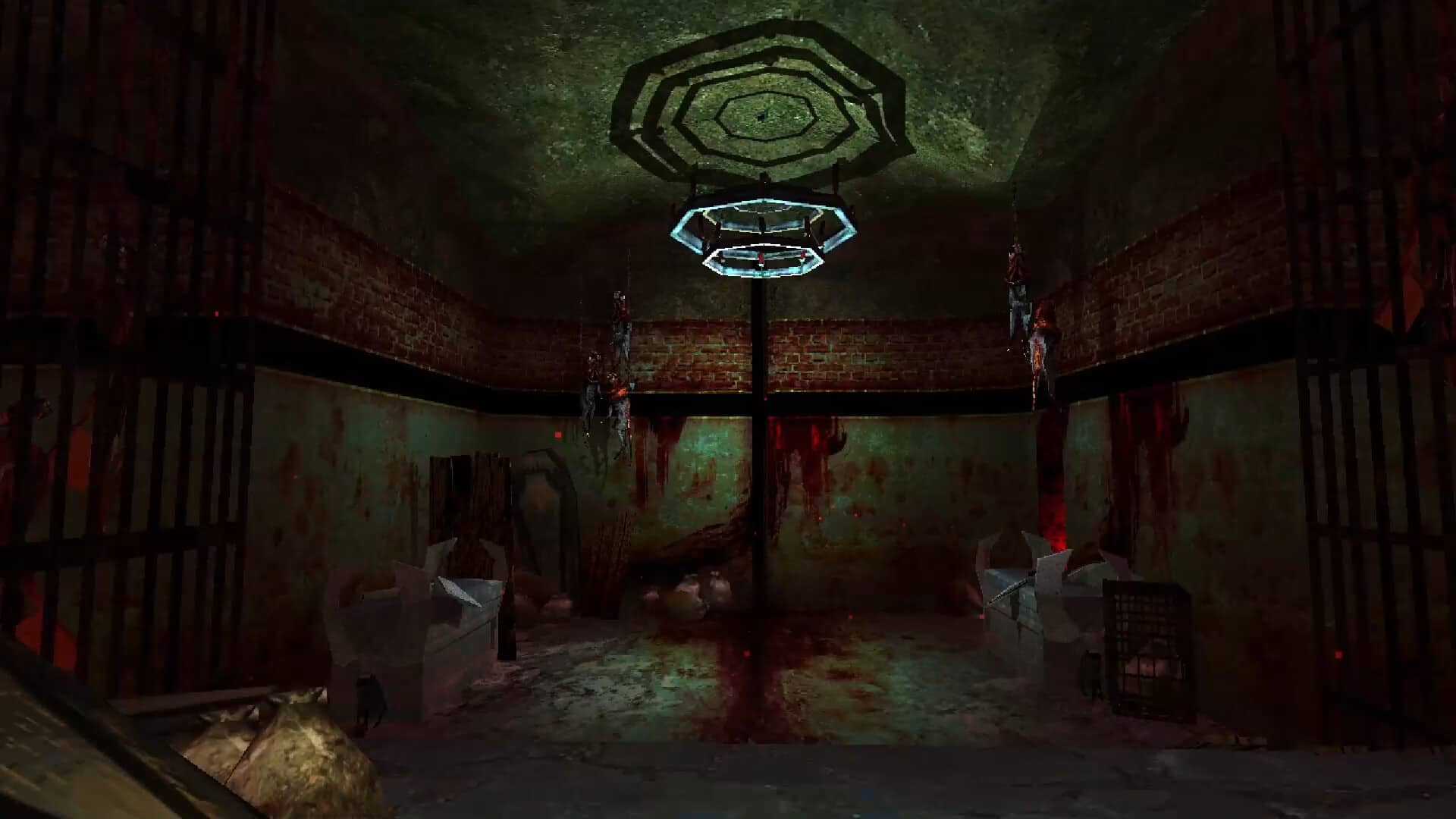
Sorry We Are Closed Survival Horror
Forget the tired tropes of the genre; this is survival horror with a high-fashion, punk-rock soul.
The Premise: A Literal Race Against Hell
You play as Michelle, a woman living a fairly mundane life until she is cursed by a powerful archdemon. You have exactly three days to find a way to break the curse or face eternal damnation. It’s a tight, stressful narrative where your dialogue choices and actions directly influence which of the multiple endings you’ll hit.
Why It’s a Great Grab
The “Third Eye” Mechanic: Michelle can open her “Third Eye” at any time to peer into a twisted, demonic version of her world. This isn’t just for show—it’s how you find secrets, solve puzzles, and reveal the literal hearts of your enemies to hit their weak points.
Old School Meets New School: The game uses the classic fixed-camera angles of Silent Hill and Resident Evil, but shifts into a slick, first-person arcade shooter perspective when you aim your gun. It solves the “clunky combat” problem of retro horror while keeping the cinematic tension.
Arthouse Aesthetic: The visuals are a wild mix of low-poly PS1 models and vibrant, neon-soaked colors. It looks like a “Club Kid” fever dream, making it one of the most visually distinct games Epic has given away this year.
Sorry We Are Closed – Gameplay kills
Last Thoughts
Sorry We’re Closed usually goes for $20. It’s short, punchy, and perfect for a weekend playthrough. If you want something that prioritizes atmosphere and unique storytelling over budget-bloat, this is a must-add to your library.
You have until December 22 at 11:00 AM ET to claim it for free
As the highly anticipated release of Resident Evil Requiem creeps ever closer, there has never been a better time to unearth the history of this pioneering series. Interconnected and deeply tangled like a tentacular T-Virus mutation, the events chronicling this nearly three-decade-long trailblazer are essential to understanding what will transpire in next year’s entry. So, grab your first-aid spray and check your ammo—let’s get started.
Resident Evil Zero: The Spark
Long before a steroid-obsessed Chris Redfield was punching boulders, the nightmare began with three architects of ruin: Edward Ashford, James Marcus, and the chillingly calculated Ozwell E. Spencer. After discovering the “Progenitor” virus in Africa – an ancient strain capable of radical biological restructuring – the trio founded the Umbrella Corporation. Their goal was nothing less than weaponised evolution, refined into what would become the T-Virus.
While the world saw a benevolent pharmaceutical giant, Umbrella’s real business lay in black-site laboratories and military contracts. This hubris inevitably backfired, culminating in a localised outbreak in the Arklay Mountains. Rookie S.T.A.R.S. medic Rebecca Chambers and escaped death-row inmate Billy Coen became the first unwilling witnesses aboard a derailed train crawling with infected horrors. Their investigation led them to a grotesquely mutated James Marcus, resurrected and driven by a desire for revenge. Though Marcus was finally destroyed, the damage was done – Rebecca fled toward the Spencer Mansion, while Billy disappeared into the forest, his fate deliberately left unresolved.
Resident Evil: The Mansion Incident
Dispatched to locate the missing Bravo Team, the S.T.A.R.S. Alpha Team – including Jill Valentine, Chris Redfield, Barry Burton, and their commander Albert Wesker – sought shelter in the ominous Spencer Mansion. What appeared abandoned was anything but: the estate was a sealed ecosystem of zombies, experimental predators, and the Tyrant, Umbrella’s crown-jewel bioweapon.
The greatest betrayal, however, came from within. Wesker revealed himself as an Umbrella operative, orchestrating the incident to collect live combat data by sacrificing his own team. The plan unravelled when the Tyrant turned on its handler, allowing the surviving S.T.A.R.S. members to escape and destroy the mansion. Chris, Jill, and Barry emerged alive – but marked. Umbrella would never allow witnesses to walk away unpunished.
Resident Evil 2 & 3: The Fall of Raccoon City
Only months later, the nightmare went public. A T-Virus leak spread through Raccoon City’s water supply, transforming a thriving Midwestern metropolis into a necropolis almost overnight. Rookie police officer Leon S. Kennedy crossed paths with Claire Redfield, who had come searching for her missing brother, Chris. Together, they fought through police stations, sewers, and laboratories, uncovering Umbrella’s sins piece by piece.
Central to the disaster was William Birkin, a scientist who had perfected the G-Virus, an unstable pathogen that drove relentless mutation and regeneration. His daughter Sherry became both a target and a symbol of Umbrella’s moral collapse. While Leon and Claire escaped with their lives, Jill Valentine was enduring her own hell nearby. In Resident Evil 3, she was hunted relentlessly by Nemesis, a bioweapon engineered specifically to eliminate surviving S.T.A.R.S. members.
With containment impossible, the U.S. government made the unthinkable decision to sterilise the city with a nuclear strike. Raccoon City was wiped from the map, and Umbrella’s public image collapsed alongside it.
Resident Evil Code: Veronica: The Legacy Continues
Umbrella’s downfall did not mean its extinction. Claire Redfield’s continued search for Chris led her to Rockfort Island, a remote prison facility controlled by the unhinged Ashford lineage. There, the siblings reunited amid yet another outbreak – this time fueled by lingering Umbrella experiments and old family grudges.
More importantly, Albert Wesker returned. Having survived the mansion incident through viral self-experimentation, he emerged superhuman, ruthless, and fully independent. Though the Redfields escaped the Ashford Antarctic base, Wesker vanished with invaluable virus samples, ensuring that Umbrella’s research would survive, no longer centralised, but scattered across the global black market.
Resident Evil 4 & 5: Global Bioterror
The series pivoted dramatically with Resident Evil 4. Leon S. Kennedy, now a hardened government agent, was dispatched to rural Spain to rescue the President’s kidnapped daughter, Ashley Graham. There, he encountered Las Plagas – an ancient parasitic organism capable of controlling hosts while preserving intelligence, signalling a shift from mindless zombies to deliberate, organised threats.
This evolution of bioweapons is carried directly into Resident Evil 5. Chris Redfield, now a founding member of the BSAA, deployed to Africa with partner Sheva Alomar. They uncovered TRICELL, a corporate successor exploiting Umbrella’s abandoned research. At its centre stood Wesker, intent on unleashing the Uroboros virus to “perfect” humanity through forced selection.
The conflict ended in spectacular excess (yes, including a volcanic showdown and the infamous boulder punch), but Wesker’s death marked a turning point. Bioterrorism was no longer an isolated conspiracy; it had become a permanent, global arms race.
Resident Evil 6: The Global Crisis
That arms race exploded in Resident Evil 6. Spanning multiple continents and intersecting storylines, the game followed Leon, Chris, and Jake Muller – Wesker’s estranged son and a living genetic anomaly – as they confronted Neo-Umbrella and its C-Virus. This new pathogen blurred the line between infection and weaponisation, capable of tailored mutations on a massive scale.
While the heroes prevented total annihilation, the cost was staggering. Entire cities were lost, alliances fractured, and the illusion of control finally collapsed. The age of clean victories was over.
Resident Evil 7 & Village: The Winters Saga
The series then narrowed its focus with Ethan Winters, an ordinary man searching for his missing wife in the swamps of Louisiana. What he found was Eveline and “The Mold” – a sentient fungal organism capable of imitation, control, and psychological manipulation. Gone were global conspiracies; the horror was intimate, claustrophobic, and deeply personal.
That intimacy carried into Resident Evil Village, where Ethan’s pursuit of his kidnapped daughter led him to an isolated European village ruled by Mother Miranda. The truth was brutal: Ethan himself had died in Louisiana, unknowingly sustained as a mold construct. Yet even that revelation couldn’t stop him from making the ultimate sacrifice to save Rose.
In the aftermath, a weary Chris Redfield took responsibility for Rose’s protection, having uncovered a final, unsettling truth – the BSAA, the organisation he helped create, had begun deploying bioweapons of its own. History, it seemed, was already starting to repeat itself.
Resident Evil Requiem: The Final Reckoning
This brings us to the present. Thirty years after the destruction of Raccoon City, Resident Evil Requiem seems set to bridge the gap between the franchise’s origins and its future. The story introduces Grace Ashcroft, daughter of Outbreak’s Alyssa Ashcroft, who returns to a decaying Midwest hotel to investigate a series of recent murders and, hopefully, solve her mother’s murder at the same time.
In a potentially legendary crossover, she looks set to join forces with fan-favourite Leon S. Kennedy as they both must face their pasts and uncover the truth behind the Raccoon City Incident. With rumours swirling about Leon’s own infection and a return to the restricted “Dead Zone” of Raccoon City, Requiem is set to be the ultimate survival horror experience – a culmination of three decades of fear, shadow, and the enduring resilience of the human spirit.
There's something about a survival horror game that's supposed to make your palms sweat and your pulse race, right? You expect to feel like you're barely scraping by, adrenaline coursing through your veins as you limp toward your next objective. 'The Callisto Protocol' tries hard to deliver on that promise. It places you in the blood-streaked boots of Jacob Lee, a man whose only goal is to escape the hellish prison of Black Iron on Jupiter's moon, Callisto. But here's the thing: for all its spine-chilling aesthetics and brutal combat, this game isn't quite the nightmare fuel I wanted it to be.
Instead, it's more like a beautifully made haunted house where the scares never quite land, but the lights and set design keep you walking through anyway.
The Atmosphere: Chilling, Yet Not Quite Terrifying
If there's one thing The Callisto Protocol nails, it's the vibe. Every corner of Black Iron Prison feels suffocatingly oppressive. The air hangs heavy with tension, and the distant hum of malfunctioning machinery makes it clear you're trapped somewhere that's long past redemption. The snowy expanses outside are just as grim. Callisto itself seems to exhale an icy breath, with wind whipping around you as snow piles on dilapidated structures. The lighting deserves special mention—whether it's flickering fluorescents in a dark hallway or the faint glow of bioluminescent spores in an alien-infested tunnel, every scene feels meticulously crafted.
But for all its craftsmanship, I never truly felt afraid. Unsettled? Sure. Occasionally tense? Yeah. But scared? Not even once. And for a survival horror game, that's kind of a problem. Fear is the beating heart of this genre, and The Callisto Protocol's atmosphere, while gorgeous, feels more like a heavy blanket than a shocking jolt to the system.
Combat: A Bloody Grind
Now, let's talk about the combat—the meat and bones (sometimes literally) of the gameplay. Right off the bat, melee combat takes center stage here, which is unusual. Normally, melee is a last resort in survival horror, but The Callisto Protocol flips the script. You're constantly dodging and countering, feeling every swing and impact like you're actually there. And I'll admit, those first few encounters feel raw and visceral in a way that's hard to shake.
But then it starts to drag. The dodge mechanic, while intuitive at first, becomes predictable, almost mechanical. Most enemies telegraph their moves so obviously that fights turn into a rinse-and-repeat cycle of "step left, swing pipe, repeat." And don't get me started on the GRP, the telekinesis glove that's supposed to add depth to combat. Sure, it's fun at first to hurl enemies into strategically placed spike walls or industrial fans, but after the 20th time, it starts to feel like the game's designers just couldn't think of more interesting ways for me to use it.
Resources are scarce, and every encounter feels like a gamble. Do you spend your last few bullets now or save them for a bigger threat later?
The Story: Enough to Keep You Going (Even If Thin by My Standard)
Jacob's journey through Callisto isn't exactly a narrative masterpiece, but it gets the job done. The basic setup—a prison outbreak leads to horrifying mutations—is nothing new, but it's the grim atmosphere that keeps you invested. As Jacob, you're constantly scavenging for scraps of information about what caused the outbreak and why. Jacob himself is a pretty blank slate, and while the supporting cast tries to inject some emotion into the story, their arcs feel more like set dressing than meaningful threads. And honestly? Sometimes that's enough.
The Gore: A Matter of Taste
The Callisto Protocol doesn't shy away from violence. It's the kind of gore that makes you wince the first few times but eventually feels more like a gimmick than a genuine shock factor. Personally, I found it less horrifying and more gross, where I would have certainly preferred the other way around. While this observation is probably a matter of test that should not stop those who buy PS5 horror games, I believe that it doesn't really add to the atmosphere, and I couldn't help but feel like it was trying too hard to impress me with its blood-soaked brutality.
In the End, Does It Worth the Struggle?
Debatable. I prefer survival games more like Death Stranding 2: On the Beach, and horror games more like Resident Evil 4. The Callisto Protocol is not for everyone. Its visuals and atmosphere are top-notch, creating a world that's as stunning as it is oppressive. But the gameplay—especially the combat—starts to feel like a chore after a while. And without genuine scares to keep the tension high, the whole experience feels a bit hollow. Just don't expect to be looking over your shoulder when you turn the game off. Because for all its effort, The Callisto Protocol feels more like a chilling stroll than a heart-pounding sprint through the dark.
We're back with a brand new Now Playing! Indies and retro titles have dominated the holidays for our team to wrap up 2025. No matter what we're playing, we want to share with you and maybe send you down the path to try something new. Let us know in the comments what you're playing and what news has you excited for the future!
James Burns (SUPERJUMP Editor-in-Chief)
I've been spending my end-of-year leave falling in love with all things Metroid (a series I had wanted to love for so long but could never really get into). After completing Metroid Prime 4: Beyond and Metroid Prime Remastered, I decided to go back to the beginning and check out Metroid Zero Mission on GBA.
For the uninitiated, Metroid Zero Mission is a remake of the original Metroid, which was released on the NES. I've been playing it on the glorious Analogue Pocket, which has been an utter delight.
Source: Nintendo.
Metroid Zero Mission takes the original game's concept and overall design and brings modern quality of life elements to it (including a highly functional map, massively updated/modernised controls, an entirely new art design, updated soundtrack, and a combination of completely new and "remixed" levels). These changes are great for me, because I don't really have the patience to play the original game without a guide (there's no in-game map, for example, so you'd have to draw your own as you go). Zero Mission not only adds a map, but it also injects far more save rooms into the game, so if you save frequently, you're never really spending a lot of time retracing your steps when you die. While this could be considered an over-correction, I think it's worth bearing in mind that Zero Mission is a handheld experience (unlike the original), which means it's geared towards smaller bite-sized play sessions and a faster overall pace.
Having just beaten Kraid - and several other newly-added mini-boss style combat encounters - I've completely fallen in love, and I feel that I finally "get" Metroid. I've had Zero Mission in my collection for a long time, but never played it. Now I'm really wondering why I waited so long; a combination of super sharp controls, lovely art and sound design, and incredible environmental/navigation puzzles make Zero Mission an unmissable classic. I can't wait to continue my Metroid journey!
Ben Rowan
I’ve been firing my way through the newly released Neon Inferno on Switch recently, Zenovia Interactive’s latest pixel-art run ’n’ gun. I covered their previous title, Steel Assault, for our Hidden Gems series back in October, so diving in has felt instantly comfortable. Zenovia's clear love of big, bold pixels is front and centre again, but Neon Inferno pushes past that mid-’90s look, back when Neo Geo cabinets were the vanguard of graphical wizardry. With its liberal use of coloured lighting, dense crowds of sprites, and dynamic shadow work, this title feels like something genuinely “retro next-gen,” like a classic 24-bit arcade machine supercharged with a modern GPU.
Neon Inferno. Source: Author.
Gameplay-wise, the big hook is the two-layered combat, which plays out like Huntdown mashed with the gallery shooting of Wild Guns. You’re constantly shifting focus between the enemies directly in your face and those lurking in the background. It’s a continual back-and-forth between the two modes, and once you get the hang of it, everything just works. It definitely adds a level of depth and challenge you won't find in most platforming shooters. Zenovia’s magnificent boss design is still their signature party trick. Every stage builds toward huge, ridiculous showdowns, the kind that take dozens of attempts as you start memorising every dodge, jump, and attack.
Neon Inferno. Source: Author.
The setting is great, too. It’s NYC in 2055, a cyberpunk sprawl where every street corner is soaked in neon, and the noir-leaning story throws in branching paths and light RPG elements to avoid a straight-line slog. With punchy sound effects, a killer soundtrack, and gorgeous design, the whole experience is loud, stylish, and gloriously over-the-top. If you love Metal Slug and Contra-style run ’n’ guns, miss that era of pixel-art excess, and you want something with a fresh mechanical twist, Neon Inferno is absolutely worth a squiz.
Cat Webling
After hearing about it for ages, I finally started playing Tiny Bookshop...and oh my goodness, why did I wait so long?! This adorable game about running - what else? - a tiny bookshop from a trailer in a little English coastal town is everything you need from a cozy game. It's got cute animals, lovable characters, and hours you can sink into managing your inventory, recommending books, and exploring all of the fun little side quests that come up as you set up shop around town.
You can decorate your shop, painting it cute colors and setting up little trinkets to make it exactly the right cozy spot for you. The best hidden gem in this game, though? You can adopt a bookshop dog! I named mine Buddy after a real-life bookshop dog in my town.
Vitor Costa
After many people recommended it, I decided to give Blue Prince a try. While doing some research, I was particularly intrigued by the fact that the developers were inspired by Raymond Smullyan’s logic puzzles. During my philosophy degree, I had a lot of fun solving his puzzles in Alice in Puzzle-Land: A Carrollian Tale for Children Under Eighty. Nowadays, I often recommend the book to students interested in logic.
Blue Prince. Source: Author.
I confess that, as a puzzle enthusiast, I was initially disappointed by how easy the logic puzzles in the game are. It didn’t take long, however, to realize that this difficulty is only the most superficial layer of Blue Prince’s puzzle-adventure design. The game is less about mechanical deduction and more about investigation and puzzle-adventure; at times, it strongly reminds me of Myst. I don’t enjoy roguelikes as much as I enjoy puzzles, so it annoys me slightly to rely on luck or repetition to solve “puzzles within puzzles.” Still, this design choice ultimately makes the solutions more rewarding, and each day spent inside the abandoned mansion makes the search for the mysterious forty-sixth room feel more concrete.
I’m currently on Day 36 and still haven’t reached it. I recently discovered underground areas that significantly expand the scope of exploration, and there are also many narrative mysteries yet to be solved. When I finish the game, I might write an essay about the layered puzzle-adventure design of Blue Prince, which is the aspect that has intrigued me the most.
Jahan Khan
Kovi Kovi. Source: Author.
My gaming over the last few years has been all about the off-ramp alternatives and supporting after-market releases for legacy hardware. Retro is cool again, and maybe it's due to the popularity of 90s media and shows like Stranger Things, but the kids are into Game Boys and Ataris. In 2025, I ordered homebrew releases from Atari Age, a community and publisher that gives homebrew projects the full retail treatment, like it was the 1970s all over again: cardboard box case and full instruction manuals, a true labor of love.
I was particularly excited for Kovi Kovi, which is a Puyo Puyo-style puzzle game, and oh so very addictive and nuanced. It's amazing to see programmers still squeezing new life out of the Atari 2600 console, and this dedicated (global!) homebrew scene only seems to be gaining more momentum.
Matthew Lawrence
I recently purchased an Xbox Series X and have been spending my time playing through some games that I had tried on my PC, but moved on from due to poor performance. One such game is the remaster of The Elder Scrolls IV: Oblivion.
While I played the original a few years back, I never really got very far into anything outside of the Dark Brotherhood questline. This time, however, I have found myself quite engrossed with the storyline quests, the guild quests, and the side quests. Skyrim was the only other Elder Scrolls game in which I've invested a serious amount of time. Still, I have been pleasantly surprised at the length, complexity, and variety of quests, particularly those within the Dark Brotherhood questline.
The Elder Scrolls IV: Oblivion Remastered. Source: Steam.
From a technical aspect, I have also been awe-struck with just how good the game looks and plays in relation to the original. Graphically, the game is beautiful and continues to impress me with the fluidity of the lighting and the depth it adds to the game. The updated UI, particularly the HUD, makes much better use of the screen by decluttering it and adding some much-needed space between the various HUD elements. These changes, in addition to the already rock-solid gameplay that has been largely preserved from the 2006 original, make it feel like a faithful remaster of an already great game. I'm excited to continue my current playthrough and the countless playthroughs I’ll surely do in the future.
Bryan Finck
Since we last talked, I've finished my time with Ghost of Yotei, and the final act was even better than the rest of the game. I thought Sucker Punch did a great job with Lord Saito's villain arc, and even though a lot of the lore around him was buried in notes and letters, the performance really sold the anger and cold savagery under the surface. I liked it a bit better overall than the original game, and I'm excited to see where the series goes from here.
I spent the rest of the month with Pacific Drive, a game that caught my eye as soon as it was revealed at the September 2022 Sony State of Play event. The early reviews were underwhelming, so I waited for a sale, and happily, it came to PS Plus in November. Very quickly, I realized this was going to be one of my favorite games of the year, as it is quite unlike anything I've ever played.
Pacific Drive. Source: Steam.
At its heart, Pacific Drive is a mix of survival horror and extraction-type gameplay. You find yourself mysteriously transported into the Olympic Exclusion Zone, the unfortunate epicenter of a government experiment gone wrong. There are all kinds of scary environmental dangers (radiation, crazy storms, exploding mannequins, etc) you must escape, with no way to fight back. What you do have is an ancient station wagon that becomes your protector and friend across 20+ missions.
Your job is to take your car into the Zone, collect all kinds of loot from the remains of the government experiments and various flora and fauna they created, and get out with your car and your body intact. Whatever you bring out with you goes toward souping up your car (and maybe some new threads for you, too); new gear, like lead-lined doors and armored bumpers, will help you survive as you delve deeper into the zone. It gets crazier and scarier as you go, and there's a compelling story to keep you pushing forward.
Pacific Drive. Source: Steam.
The action is fantastic, with really compelling discoverability and great driving mechanics. The extraction parts at the end of each level can be incredibly tense, and I routinely found I was holding my breath until I made it safely out. I really enjoyed the voice acting performances as well; they make you feel a little less lonely in this desolate wasteland. There's a ton of replayability here, with a vast area to explore, tons of loot to power dozens of upgrade possibilities, and even challenge runs to enjoy once the story is done. I hope a lot of folks play this through PS Plus, because I'd love to see what developer Ironwood Studios can pull off with their next game.
A big thank you to our writers for dropping by and to all our loyal fans for being here to check it out! Be sure to tell us what you're playing in the comments, and check back next month for more of what our team is getting into.
After a 13-year wait, it’s finally time to enter the abandoned lunar base and unravel the mysteries of what happened there in the first-person survival horror game Routine. Routine Developer: Lunar Software Price: $25 Platforms: Xbox One, Xbox Series X|S, PC (reviewed) MonsterVine was supplied with a PC code for review. Routine was originally announced […]
Silent Hill F is not only the first brand new survival horror game in the franchise in a long time, but also the series' first spin-off, bringing the action to new locales and situations. We leave the horrors of America for a trip to 1960s Japan. While the game presents a fresh take on the series, its gameplay feels like it's being pulled between two horrors.
Cursed All Over
The story follows Hinako, a teenage girl in a rural mountain town. One day, a fog rolls in that seems to cause everyone to disappear, and the town is now full of strange monsters out to get her. She not only needs to navigate the town with the remaining survivors, but a strange man haunts her nightmares.
The story is great, and the game avoids retreading the themes and plot of prior games in the series. Hinako is portrayed as a tomboy and someone who does not like that women are seen as nothing more than a traditional housewife to a man. This upsets her father, who views her as less than her older, married sister. The girls of the village treat her as an outsider and a freak because she doesn't act like the other girls, and because her best childhood friend is a boy. The impact of misogyny and how it can be inflicted by both men and women is on display here.
While the story may be different, you're still going to wander around seemingly normal environments, getting into fights and puzzle-solving. Silent Hill F, however, does things a bit differently with both.
Spooky Soulslike?
The combat system here feels like an attempt to mirror the more personal and methodical fighting of a Soulslike. You'll pick up weapons from the environment in the everyday world, while the nightmare world has stock weapons. The everyday weapons have durability and can break after being overused, but tool kits can be found to enact repairs. Inventory management is a big deal, as you start with limited inventory slots and will want to fill them up with the various recovery items that heal or provide other bonuses. You can find inventory upgrades that are definitely worth seeking.
Combat plays a far larger role here than in previous entries, which does distract from the exploration. Source: Author.
Sanity is a new resource that works with the advanced techniques for fighting. You have a light and heavy attack, which both drain stamina on use. By holding down the focus button, you'll consume sanity to either charge for a strong attack or attempt to counter the enemy when they flash to perform a stunning blow. Sanity can also drain if you are hit by certain attacks, and running out means you take increased damage. You can sell certain items for "faith" at the local shrines/save points that can be used to upgrade your stats and equip Omamoris that provide passive boosts.
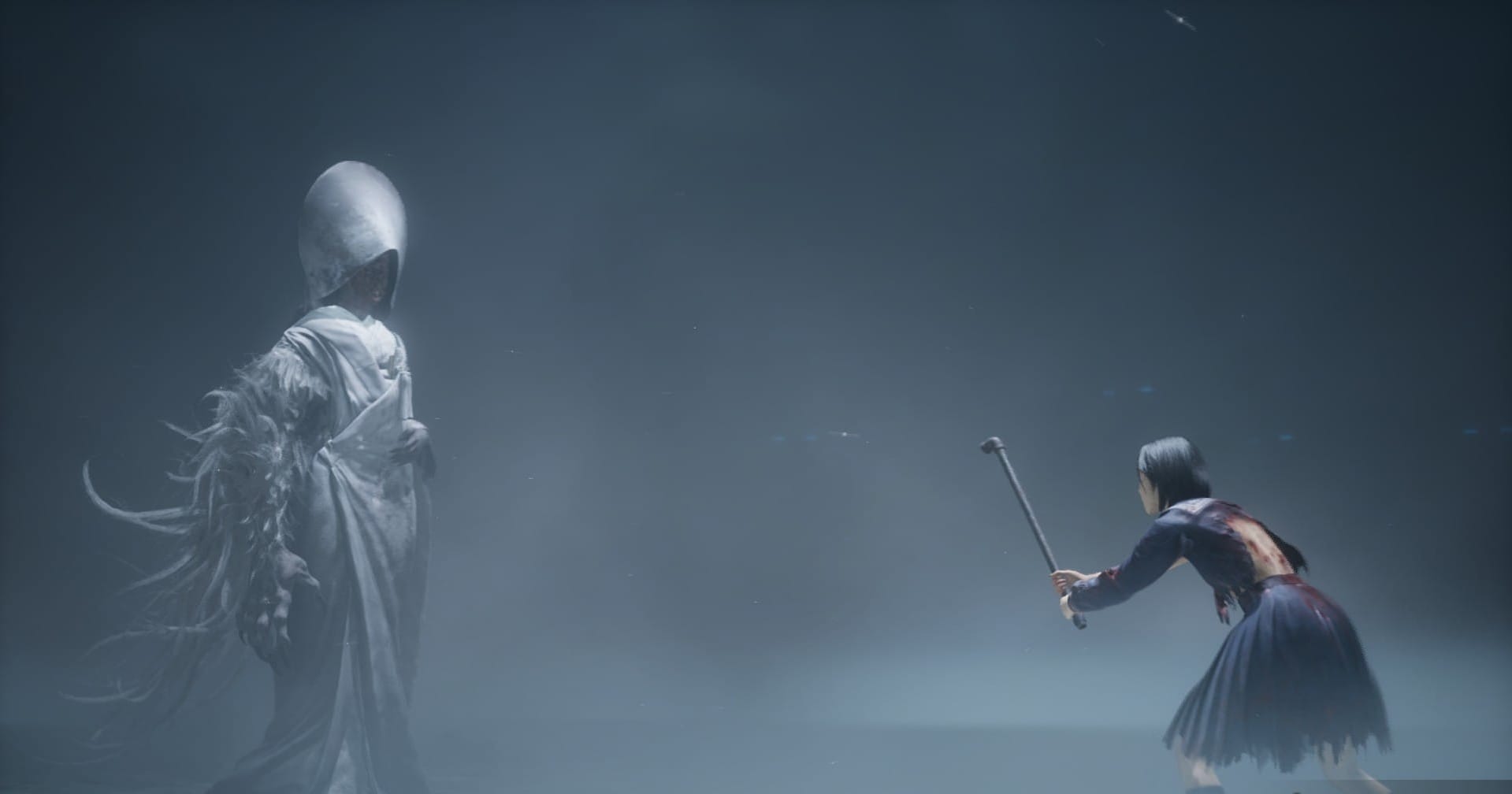
The enemy design here is great despite the presence of just a few main types. Each one moves and behaves differently, with a lot of idle animations and weird posturing to make it hard to read them. These are not your basic mannequin monsters from the previous games, and that extends to the newly designed boss fights that are far more lively than previous ones. I'll talk about this further down, but the combat feels less about survival horror and more like a slower take on a Soulslike.
Brain Scratching Scares
For those fearing that a new Silent Hill wouldn't have fiendishly difficult puzzles, I can put those fears to rest. The puzzle design returns to the roots of the series and survival horror, as you must use knowledge both in and outside of the game if you want to solve them.
I played on the highest puzzle difficulty, and it was certainly a challenge. Some of the puzzles require you to understand logic or information without giving you the reference points or material you need, which can lead to frustration. For the very first and last puzzles, I had to look up the solutions, and even knowing it, I had no idea how the clues were supposed to reference the answer. That represents a breakdown in puzzle design – if the clues still don't make sense after you solved it, then the puzzle and/or clues weren't good to begin with.
It's like asking someone to solve a puzzle related to John and Jane's favorite colors, but the game never tells you who John and Jane are and expects you to know who the game developer's friends are as a reference. This feels like a return to the player-unfriendly puzzle design that dominated the adventure genre starting in the 80s.
The one upside is that the puzzles come paired with an excellent journal system, not only keeping track of the characters and monsters, but also providing a collection of all found hints and their relation to each puzzle. This is something I would love to see standardized among adventure games. However, this does come at a cost; there are far fewer puzzles compared to previous entries, and a greater focus on combat, which takes me to my main issues with the game.
While the game purports to be survival horror, there are a lot of action game and Soulslike design features, including unblockable grabs. Source: Author.
All the Action and Survival Horror
Combat has never been the focus of a Silent Hill game, and has functionally been a bit janky at best. This is the first game to have a fully built combat engine; however, "combat engine" and "survival horror" don't really work together.
The aforementioned Soulslike style, on paper, seems like it would work for a survival horror game – Hinako has very long wind-up and recovery animations, so every attack has to be planned out. However, you also have a dodge with I-frames and a punish attack. The game is heavily focused on stunning enemies to deliver more damage, which heavy strikes, focus strikes, and your punish can achieve, and the game is really going to make you use them.
This is by far the most combat-intensive Silent Hill game I've seen yet. The horror of being in a town beset by a curse starts to fade after your umpteenth fight as you rip apart your enemies. What I really didn't like from a horror standpoint is that the game wants you to avoid combat and gives you the option to sneak by enemies in spots...and then it locks you into arenas to fight your way out. At one point, the game practically gives you a devil trigger and asks you to rip and tear until it is done.
Regarding enemy design, I understand the subtext of featuring an enemy that is about the horror of birth in a game about a girl struggling with misogyny. That said, having an enemy that can infinitely respawn other enemies, in a required arena, in a survival horror game, starts to get annoying, not scary.
When you are in those high-action segments, you are still using the very slow, very stilted combat system. While you can upgrade your stamina and sanity, along with the help of the Omamoris, they don't suddenly make the combat faster or provide a new dynamic, such as the auto locks featured in the Callisto Protocol. Sometimes, the enemies just refuse to use any counter-able attack, and you'll need to rely on hopefully getting the stagger off, or you will be attacked easily. There are some Omamori that are really good, but they are tied to the random draw, proving the real psychological horror is gacha. The very fact that there are repeated arena fights in a Silent Hill game makes it tempting for me to give this game an F just on that alone.
Even with different endings, you're still going to be hacking and slashing through the game's combat portions. Source: Author.
Not So Final
Perhaps the biggest disappointment is that all this was designed around playing the game a minimum of 3 times, with a total of 5 endings. This is the only horror game I could think of that actually adds new challenges and puzzles on repeated playthroughs of the main quest, but it's all built on the same annoying puzzle design and repetitive combat. I do like that the world is different, leading to more information and additional content, but you must go through the entire game again to begin seeing this. The best parts of this game are when you get to wander around looking for clues and investigating, and you can do far more of that on your second playthrough and beyond.
Besides having upgraded stats to decrease the difficulty, just having more inventory space to hold and experiment with the additional items also makes things easier. An item I neglected on my first run that would have helped tremendously is the one that gives you infinite stamina for a few minutes.
However, asking the player to repeat the majority of what they just did so that the story makes sense doesn't really work in my opinion. Either the game needs to feel like a different experience, such as Madhouse mode from Resident Evil 7, offer a brand new experience like the Route A/ Route B setup in Resident Evil 2, or just let the player tear through everything they've already done to get to the new stuff.
A Loud Failure
For me, Silent Hill F fails when it comes to puzzle and combat; as a survival or action horror game, it just doesn't work. I wonder if the developers saw the success of Resident Evil 7 and its successors, and felt that the solution to bring back Silent Hill was just to add more combat and action. The story and monster designs are great, but focusing so much on combat, even to the game's difficult final boss, feels like a bit of a betrayal of the series. It's hard to be introspective and learn more about yourself and society when you're busy dodging multi-hit combos from all sides while trying to find the punish tell.
(Note: This review was written with the 1.0 version of Silent Hill F. Following the release, the game has had a balance patch that has reduced the difficulty and the amount of encounters, but I have not had a chance to replay it to see the exact changes).
Be sure to follow me on Bluesky for all my updates on design talks and random game design questions
Despite it just being months away, we still know surprisingly little about Resident Evil Requiem. We’ve only seen a handful of short gameplay clips, and know the game introduces the brand new protagonist, FBI Agent Grace Ashcroft.
There’s already some connection to the series’ past in Requiem, as Grace is the daughter of Alyssa Ashcroft, a character from the PS2 title Resident Evil Outbreak. But it also seems like we will definitely see more past characters appear, according to the game’s producer, Masato Kumazawa.
In an interview with Well Played, Kumazawa was asked if we might see other characters from Outbreak appear. His answer was, “I would say that yes, there are going to be some characters from the past series to come in, but don’t over-expect or hype.”
That’s obviously a little vague, and Kumazawa adds just a little more by saying, “We can’t promise you anything about that, but the only thing I can say is that there will be characters that have been involved in the Raccoon City incident involved in the game.”
The big question on everyone’s mind, of course, is whether the series’ protagonist Leon Kennedy will feature in Requiem at all. Leon has been heavily, heavily rumoured since before the game was even announced, all the way back since May 2024. Further rumours have claimed that Leon’s “sections” will be heavily action-focused. But just earlier this month, Kumazawa himself called the Leon rumours “fake news.”
Based on Capcom’s cryptic marketing for the game, it’s starting to look incredibly likely that we won’t know the truth until the game is out and in everyone’s hands. On the other hand, it feels possible we might get a new look at Requiem at The Game Awards on December 11, which has the game nominated for the “Most Anticipated” category.
Resident Evil Requiem launches on February 27, 2026, for PS5, Xbox Series X|S, and PC.
My obsessive passion toward the Silent Hill series makes me evaluate the most recent release with excitement and anxiety at the same time. It's not a dread in a horror sense but a dread borne out of the fear of being disappointed. Walking through the Silent Hill foggy streets over a hundred times has and will always leave an imprint. Silent Hill 2 has left a benchmark which I consider so high that I regard it as impossible to touch. The new entries that have been released under the Silent Hill title always bring with them a certain burden. Unfortunately, most of them fail to deliver. The most recent release, Silent Hill f, has not been able to hold on to the Silent Hill name in terms of the setting and the lore, and has turned the entire franchise on its head. This game, Silent Hill f, is something completely new yet familiar, which has been transplanted into new soil.
The Setting: A Shift to 1960s Japan
Your first baffling moment of Silent Hill f is how the game world has ditched the Maine fog-inspired smalltown America for the rural Japan of the 1960s. This is the greatest challenge for me, yet the most interesting decision, as a lifetime Silent Hill addict. The diners, motels, rusting steelworks, crumbling hospitals, and mild Protestantism of my Silent Hill have been drenched in Americana. To replace that with Shinto shrines, paper sliding doors, and tatami mats is to risk desecrating the very essence of the franchise.
What other use does it serve aside from as a tool to flesh out the foundations of the game world? The village appears to have much history and to have suffered over the years, even without any of the game’s narrative to explain it. However, it appears history is a bit more complex and more imagined than history as a tool to disguise suffering, tradition, and unfulfilled. The genre of Japanese folklore ghost stories is more like integrating it with the Silent Hill form of psychological abuse/violence.
The game is also dipped with a metaphor, where snow is ash, like falling. The obstructed and rotting bloom showers the entire region with a debris of corruption, more so, delicate petals which almost seem out of place, comely to the counterpart of a horror. It is this factor of beauty within decay, or perhaps grace within the contempt, that lends the world of Silent Hill F a certain critic as some of the most skilled.
Themes and Narrative: Hinako’s Journey
Hinako Shimizu, too, appears to lack all the marks of mystique at rest. However, there is also much more than that. Silent Hill f has mastered the art of visual representation of the turmoil, abuse, and contempt which has been deeply implanted within. The protagonist, too, has the ability to slice and extract parts of themselves, helping at the same time to reinforce the fragments of the whole. This inner world of the Hero is weak to the external world in relation to the world, with the characters often appearing as a reflection of the player’s own turmoil and pain.
Silent Hill does capture the personal horrors, and I can think of no better example for that than Hinako’s journey. It is not fighting the inner demons that is of paramount importance, rather, it is the ability to endure what is able to be externalized, that is, what is done to the person during the school, the hallways, the decrepit shrines, the collapsing hopes and the all encompassing expectations that are imposed and which intersect and for which a description would be personal and yet horrific. It is stories which are vague enough and complex enough to ask for analysis and which do not seek to provide ready answers, in which the thinking person is challenged. How much of the pain is internalized and projected, externalized, or suffering?
Silent Hill f captures the essence of the individual’s internal battle to a fine point. It paints the broader iross of beneath which the individual’s pain is hidden, not in a reduced form of the gap between feeling and emotion, but in the elemental formlessness. It walks you through layer after layer, and what you always find is the pulse of the game.
Atmosphere: The Crown Jewel of the Game
Every horror game lives and dies by atmosphere, and Silent Hill f resonates with that deeply. Powered by Unreal Engine 5, environments are not only gorgeous but also infused with astonishing strokes of artistry and reality. The wood that creaks and cracks underfoot bends and crackles in old Japanese houses. Light from a flickering lantern casts shadows on walls that draw your attention, only to make you cringe. Flowers bloom and die such that their remnants, bathed in the sadness of withering, spin dreads that are spine-chillingly uncomfortable without direct bloodshed.
Even though he did not compose the soundtrack, the sound design does make an effort to honor the legacy. Yamaoka’s contribution, on the other hand, remains priceless, the very soul of the Silent Hill series, and Yamaoka's work on Silent Hill f attests to that principle. The sound in this game is not background; it is pure, distilled tension. The long silences are filled with whispers that you question the reality of. Sad strings retire to low grumbling that gnaws at your inner self and sinks you deeper into despair and tension. These details are very important to me, and no Shadow of the Colossus is weighted at thirty percent, I do recognize that Silent Hill f is capable of doing the same in order to maintain the tension.
Combat: A Counterproductive System
For me personally, an ever-present burden to carry represents the game’s biggest flaw. Why the developers decided to do away with ranged warfare is a mystery I will never understand. A greater emphasis has been placed on melee sorties. You would logically assume that this should make skirmishes more personal and scary. Your character light attacks with the left click and heavy swings with the right, dodges, and, if the fates align, can use focus mode to counter.
Monsters in Silent Hill f are associated with sight mechanics, which means you can completely ignore them if you want to. And honestly, that is what I suggest you do. Fighting is far more bothersome than rewarding, as most players who buy cheap PS4 games know from the previous games of the series. Enemies drop nothing of value, they respawn, and the weight of every blow is super exaggerated and breaks immersion. Silent Hill 2’s combat, in all its ease, achieved a grandmaster balance—every interaction felt meaningful, yet nothing was overly suffocating. Silent Hill f chose to ignore that. Instead, the game has overly complicated combat, all the while making it meaningless.
The experience becomes jarring as a result of this. The biggest horror comes from the inability to tame something, not from annoyance with mechanics that seem pointless. For the most genuine experience, turn on Hard Mode, then try to avoid combat as much as you can, and let the game do its thing. The tension of monsters lurking in the fog is far more thrilling than the satisfaction of swinging a weapon mindlessly. Where the monsters are unduly left behind, the tension of not knowing where they will emerge next is far more powerful.
Puzzles: Consideration for the player
Of all the timer surprises in Silent Hill f, the puzzles were the most surprising. On Hard difficulty, the puzzles are well-crafted, logical, and reasonable, and challenging, but do not descend into the abstract. They require a combination of observational skills, memory, logical reasoning, and, in some instances, lateral thinking, which, in turn, tests your patience and is rewarded with the satisfaction of the 'light-bulb' moment. Unlike seasoned players, newcomers to the story are able to immerse themselves in the narrative at their own pace.
The most remarkable feature of all is the most current example of 'Lost in the Fog' mode, which is available only after the first playthrough. In my estimation, this is the hardest of all considered. It presents a narrative puzzle that integrates the rest of the three, simultaneously overshadowed by the dual, Silent Hill ambiguity.
Technical Stability and Performance
This is one area where Silent Hill f has exceeded my expectations. Modern games, particularly those created using Unreal Engine 5, far too often launch with significant performance issues. Silent Hill f, however, manages to run smoothly and even consistently. The framerate stays stable, loading times are brief, and it’s overall very polished. For once, an early access period didn’t feel like an insult to those who paid more to play it early. It felt like the developers wanted to be paid for something. They owed it to the players to release something stable. In an oversaturated gaming market where so many remakes and reimaginings fall apart due to poor execution, Silent Hill f manages to work.
The Silent Hill Identity: Lost or Preserved?
Every fan who buys PS5 horror games has to deal with the following question one way or another: Is Silent Hill f really Silent Hill? One could argue that it has no American setting, no narrative elements concerning a cult, and lacks the atmosphere that hung over the first four installments. On this basis alone, I would say it could have been a Siren game, or quite easily, an entirely new franchise.
But at its core, Silent Hill was never really about the town itself. It was the trauma and personal suffering that reconfigured one’s reality. It is Silent Hill f that retains the very essence. There is a kind of inner decay, personified in Hinako’s story. Silent Hill, or in its spirit, the withering blossoms, the ghosts of ghosts, the expectations, and the expectations that linger in every corner, the beautiful, oppressive, and suffocating beauty of every corner.
So to answer the question, no, it is neither a revival of the franchise in the orthodox sense. If one looks at it from the lineage I would have wanted, it is certainly not Silent Hill 5.
Recommendations for Play
To enhance your experience, I suggest: forgoing the APK dub and using the Japanese voiceover, as it is more immersive and better captures the atmosphere. Try to keep your room dark, and if possible, use a gamepad instead of a keyboard for better immersion. Above all else, you must play on Hard difficulty. This is the only setting that fully restores tension to fights and ensures that puzzles are interesting and not arbitrary. If you are a fan of the genre, you can return for a second playthrough on "Lost in the Fog" mode.
Conclusion
Unlike the other installments in the Silent Hill franchise, like Silent Hill 2, for example, I do not find Silent Hill f to be a game I replay every year as a form of ritual, nor do I consider it to be part of my childhood. While its identity may stray and its combat may falter, the atmosphere and narrative are the most captivating. Silent Hill players will find it difficult not to have any expectations and see this new version for what it is instead.
Should you approach it expecting the American fog, the cult, the landmarks you are accustomed to, you will not get what you are looking for. However, granting yourself the ability to think about it as a tale of inner sorrow, wrapped in decaying flowers with unfurling, subtle folklore, may open your mind to a greater appreciation for it. Silent Hill f is an excellent and, perhaps, one of the better horror games. Even though it is not a renaissance for the franchise, it is a fitting addition to the series that not only should be played, but also discussed and revisited.