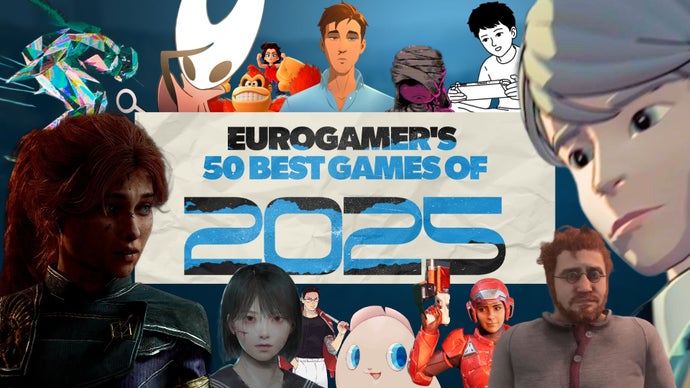
It's been another strange, difficult, and yet somehow also brilliant year for video games in 2025. Triple-A releases have been sparse again, compared to the boom times of old, with a great big GTA 6-shaped hole left in the final few months of the year. And yet once again, every gap left by the established order has been filled twice over with something brilliantly new.
Hello and welcome back to our regular feature where we write a little bit about some of the games we've been playing. This week it's not about what we've been playing, but what we hope to be playing on Christmas Day (you're reading this now, but we wrote this back in June or something as we plan ahead).
For months after Tiny Bookshop was released on Nintendo Switch in August, the indie game remained on the platform's bestseller list, hovering around the likes of Hades 2 and Hollow Knight: Silksong. But in late November, Tiny Bookshop dropped off the list—and off the Nintendo Switch eShop entirely—due to a discrepancy between its digital age and content rating and the rating tied to its upcoming physical version. Tiny Bookshop originally had an "E" rating—for everyone—but was upgraded to a "T for teens" rating.
The reason for the ratings upgrade? One word: "Arsehole," said Neoludic Games.
Tiny Bookshop remained off the Nintendo Switch store in all regions for nearly two weeks, cutting into sales on what Neoludic Games says is its most prolific platform. "The impact was immediate and severe," Neoludic co-CEO and creative director David Zapfe-Wildemann told Aftermath.
"We noticed [the game wasn’t on the store] when people started reaching out via DM asking what was going on," he said. "Because there is a small delay between the Switch backend and the public web version, we didn't understand what was happening at first."
Neoludic Games wasn't notified that Tiny Bookshop was removed from the eShop until after it was taken down. "The process was completely opaque," Skystone Games (which published Tiny Bookshop) publishing head Dmitry Muratov said.
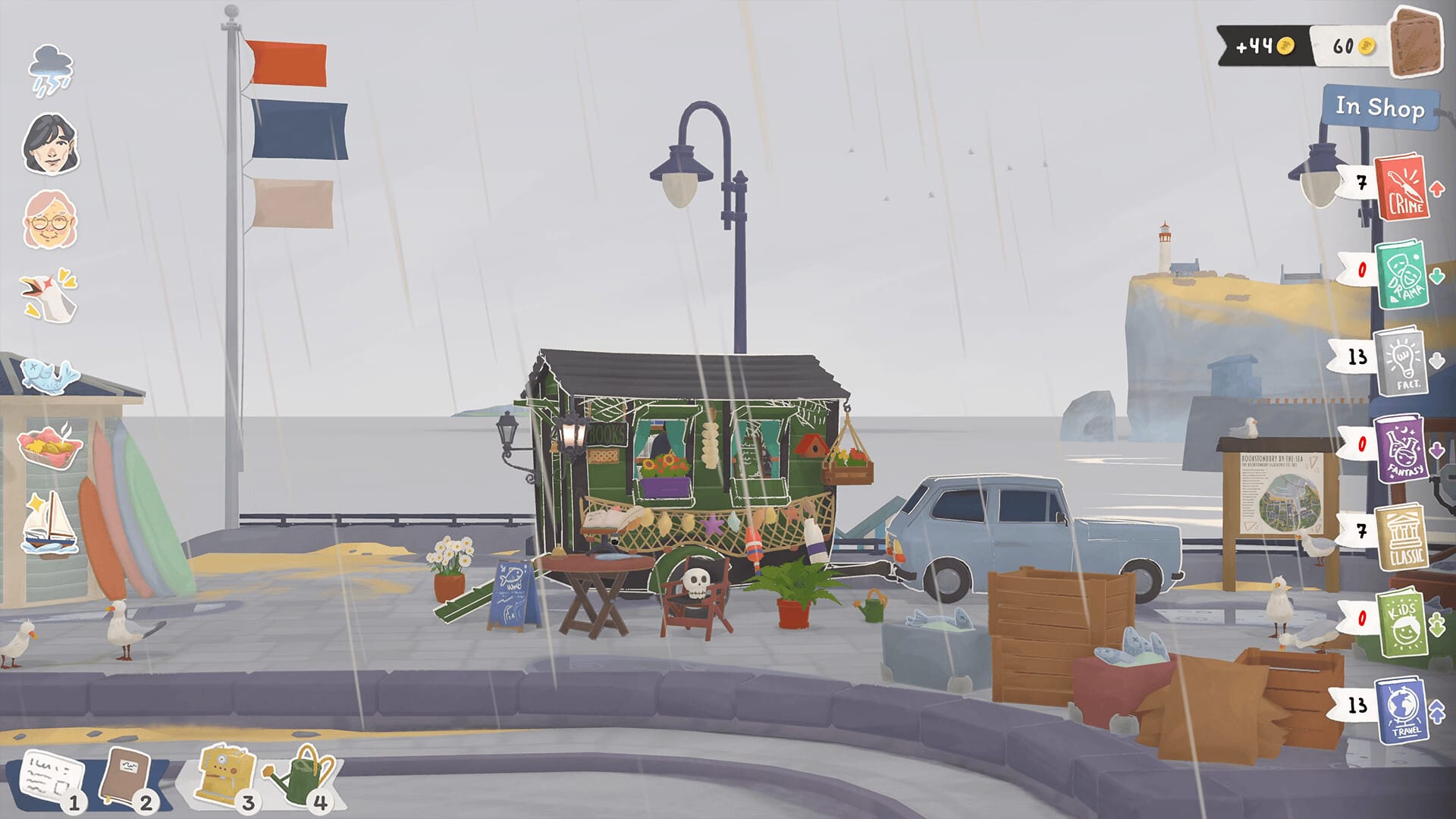
Tiny Bookshop is a management simulator set in a mobile bookshop by a beach. Acting as the bookseller, players design the little shop and then sell books to customers; the puzzles are in finding the right real-world and fictional books to recommend. Neoludic Games describes Tiny Bookshop as "cozy," and it certainly is. The quaint bookshop is the epitome of the word, and the low-stakes gameplay makes the game very chilled out.
Muratov called the ratings process that caused the eShop removal a "black box" that the studio and publisher got caught up in. Most games have a rating, but games that are sold physically have a more "official" rating than those that are only sold digitally. The digital ratings system is handled through an automated system with the International Age Rating Coalition (IARC), which works with the different ratings agencies, like the ESRB. Developers fill out a survey through the IARC system to self-evaluate their game, which spits out an automated rating based on the answers. Developers then provide a certification of that rating to storefronts to be able to sell digitally.
Image: Neoludic Games/Skystone Games
Zapfe-Wildemann said the digital certification through the IARC required very little detail and had "a lack of clear guidelines." Other developers who spoke to Aftermath about the IARC said the system can feel subjective—something that's especially relevant following the ratings debacle regarding Santa Ragione's Horses. Horses has been in the spotlight over the past several weeks after it was removed from the Epic Games Store for its rating; using the IARC process, Santa Ragione received a Mature rating. Epic Games filed its own IARC questionnaire and found the game to be ranked as Adults Only, therefore not publishable on its storefront. (Several developers and industry experts told Aftermath that they'd never heard of a platform filing for its own IARC rating.)
The IARC rating allows for games to display, for instance, an ESRB on a digital storefront. Crucially, it's a free-to-use tool that allows developers to get their games rated without much friction—and keeps rating bodies from being overwhelmed by having to have humans go through the hundreds of games released each month. IARC spits out a rating that's adaptable for the different regions a game is released in. One video game industry expert told Aftermath that rating bodies, like ESRB and PEGI, do run checks on IARC ratings to ensure accuracy, be it popular games or ones that get complaints.
Physical editions require a more detailed rating to be sold in stores, however, which made the ESRB and other countries' ratings processes necessary for Tiny Bookshop. That process is more robust and requires developers to submit footage, builds, and marketing materials, the expert said. The result is a formal rating from a thorough assessment of a game by a human.
"We started working together with a UK-based publisher for a physical release of Tiny Bookshop," Zapfe-Wildemann said. "That process mandated getting a detailed review by each target region's rating agency. In that re-review, the ESRB flagged the word 'Arsehole' in one of the 300+ book descriptions as severe enough to warrant a 'T' rating."
Neoludic Games only learned of the upgraded rating after Nintendo delisted the game and the process was completed. "It would have been five minutes of work to replace the word had we been informed, or had we had a way to track which swear word is considered severe in the IARC system," Zapfe-Wildemann said.
"A single word in more than 100,000 words of localization was caught and scrutinized without a chance for us to fix it pre-release," Muratov said. "It’s frustrating when you see massive AAA games with much more mature themes, while a cozy bookshop game gets pulled over a single instance of text."
The upgraded T rating triggered a "mandatory update to the digital store," Zapfe-Wildemann said, which resulted in the "immediate delisting" of Tiny Bookshop. On Oct. 17, which is the last date the best-sellers page was recorded by the Wayback Machine, Tiny Bookshop was in the ninth row of the U.S. bestsellers. (In September, it was listed 12th on the page, and in August, it was the second game. In the first month alone, Neoludic Games sold more than 300,000 copies of Tiny Bookshop. By December, that number surpassed 500,000.) Being removed from the Nintendo Switch eShop dropped Tiny Bookshop from the list, Neoludic Games said. Now, after being re-added in early December, it's much further down the page in the U.S. region. Neoludic Games estimated that it lost 10,000 sales due to the removal from the eShop and its subsequent absence from the bestsellers list.
"On Switch, the bestseller list is one of the most critical discoverability tools the platform has," Zapfe-Wildemann said. "Our release momentum was still carrying us in the charts of some regions when the incident happened. It is incredibly difficult to re-enter those charts once that momentum is broken."
Muratov said that getting back into the bestsellers list is "very hard or impossible," but that the studio managed to get back into the top 30 recently. "That couldn't have happened without an amazing worldwide community rallying behind us," he said.
We're back with a brand new Now Playing! Indies and retro titles have dominated the holidays for our team to wrap up 2025. No matter what we're playing, we want to share with you and maybe send you down the path to try something new. Let us know in the comments what you're playing and what news has you excited for the future!
James Burns (SUPERJUMP Editor-in-Chief)
I've been spending my end-of-year leave falling in love with all things Metroid (a series I had wanted to love for so long but could never really get into). After completing Metroid Prime 4: Beyond and Metroid Prime Remastered, I decided to go back to the beginning and check out Metroid Zero Mission on GBA.
For the uninitiated, Metroid Zero Mission is a remake of the original Metroid, which was released on the NES. I've been playing it on the glorious Analogue Pocket, which has been an utter delight.
Source: Nintendo.
Metroid Zero Mission takes the original game's concept and overall design and brings modern quality of life elements to it (including a highly functional map, massively updated/modernised controls, an entirely new art design, updated soundtrack, and a combination of completely new and "remixed" levels). These changes are great for me, because I don't really have the patience to play the original game without a guide (there's no in-game map, for example, so you'd have to draw your own as you go). Zero Mission not only adds a map, but it also injects far more save rooms into the game, so if you save frequently, you're never really spending a lot of time retracing your steps when you die. While this could be considered an over-correction, I think it's worth bearing in mind that Zero Mission is a handheld experience (unlike the original), which means it's geared towards smaller bite-sized play sessions and a faster overall pace.
Having just beaten Kraid - and several other newly-added mini-boss style combat encounters - I've completely fallen in love, and I feel that I finally "get" Metroid. I've had Zero Mission in my collection for a long time, but never played it. Now I'm really wondering why I waited so long; a combination of super sharp controls, lovely art and sound design, and incredible environmental/navigation puzzles make Zero Mission an unmissable classic. I can't wait to continue my Metroid journey!
Ben Rowan
I’ve been firing my way through the newly released Neon Inferno on Switch recently, Zenovia Interactive’s latest pixel-art run ’n’ gun. I covered their previous title, Steel Assault, for our Hidden Gems series back in October, so diving in has felt instantly comfortable. Zenovia's clear love of big, bold pixels is front and centre again, but Neon Inferno pushes past that mid-’90s look, back when Neo Geo cabinets were the vanguard of graphical wizardry. With its liberal use of coloured lighting, dense crowds of sprites, and dynamic shadow work, this title feels like something genuinely “retro next-gen,” like a classic 24-bit arcade machine supercharged with a modern GPU.
Neon Inferno. Source: Author.
Gameplay-wise, the big hook is the two-layered combat, which plays out like Huntdown mashed with the gallery shooting of Wild Guns. You’re constantly shifting focus between the enemies directly in your face and those lurking in the background. It’s a continual back-and-forth between the two modes, and once you get the hang of it, everything just works. It definitely adds a level of depth and challenge you won't find in most platforming shooters. Zenovia’s magnificent boss design is still their signature party trick. Every stage builds toward huge, ridiculous showdowns, the kind that take dozens of attempts as you start memorising every dodge, jump, and attack.
Neon Inferno. Source: Author.
The setting is great, too. It’s NYC in 2055, a cyberpunk sprawl where every street corner is soaked in neon, and the noir-leaning story throws in branching paths and light RPG elements to avoid a straight-line slog. With punchy sound effects, a killer soundtrack, and gorgeous design, the whole experience is loud, stylish, and gloriously over-the-top. If you love Metal Slug and Contra-style run ’n’ guns, miss that era of pixel-art excess, and you want something with a fresh mechanical twist, Neon Inferno is absolutely worth a squiz.
Cat Webling
After hearing about it for ages, I finally started playing Tiny Bookshop...and oh my goodness, why did I wait so long?! This adorable game about running - what else? - a tiny bookshop from a trailer in a little English coastal town is everything you need from a cozy game. It's got cute animals, lovable characters, and hours you can sink into managing your inventory, recommending books, and exploring all of the fun little side quests that come up as you set up shop around town.
You can decorate your shop, painting it cute colors and setting up little trinkets to make it exactly the right cozy spot for you. The best hidden gem in this game, though? You can adopt a bookshop dog! I named mine Buddy after a real-life bookshop dog in my town.
Vitor Costa
After many people recommended it, I decided to give Blue Prince a try. While doing some research, I was particularly intrigued by the fact that the developers were inspired by Raymond Smullyan’s logic puzzles. During my philosophy degree, I had a lot of fun solving his puzzles in Alice in Puzzle-Land: A Carrollian Tale for Children Under Eighty. Nowadays, I often recommend the book to students interested in logic.
Blue Prince. Source: Author.
I confess that, as a puzzle enthusiast, I was initially disappointed by how easy the logic puzzles in the game are. It didn’t take long, however, to realize that this difficulty is only the most superficial layer of Blue Prince’s puzzle-adventure design. The game is less about mechanical deduction and more about investigation and puzzle-adventure; at times, it strongly reminds me of Myst. I don’t enjoy roguelikes as much as I enjoy puzzles, so it annoys me slightly to rely on luck or repetition to solve “puzzles within puzzles.” Still, this design choice ultimately makes the solutions more rewarding, and each day spent inside the abandoned mansion makes the search for the mysterious forty-sixth room feel more concrete.
I’m currently on Day 36 and still haven’t reached it. I recently discovered underground areas that significantly expand the scope of exploration, and there are also many narrative mysteries yet to be solved. When I finish the game, I might write an essay about the layered puzzle-adventure design of Blue Prince, which is the aspect that has intrigued me the most.
Jahan Khan
Kovi Kovi. Source: Author.
My gaming over the last few years has been all about the off-ramp alternatives and supporting after-market releases for legacy hardware. Retro is cool again, and maybe it's due to the popularity of 90s media and shows like Stranger Things, but the kids are into Game Boys and Ataris. In 2025, I ordered homebrew releases from Atari Age, a community and publisher that gives homebrew projects the full retail treatment, like it was the 1970s all over again: cardboard box case and full instruction manuals, a true labor of love.
I was particularly excited for Kovi Kovi, which is a Puyo Puyo-style puzzle game, and oh so very addictive and nuanced. It's amazing to see programmers still squeezing new life out of the Atari 2600 console, and this dedicated (global!) homebrew scene only seems to be gaining more momentum.
Matthew Lawrence
I recently purchased an Xbox Series X and have been spending my time playing through some games that I had tried on my PC, but moved on from due to poor performance. One such game is the remaster of The Elder Scrolls IV: Oblivion.
While I played the original a few years back, I never really got very far into anything outside of the Dark Brotherhood questline. This time, however, I have found myself quite engrossed with the storyline quests, the guild quests, and the side quests. Skyrim was the only other Elder Scrolls game in which I've invested a serious amount of time. Still, I have been pleasantly surprised at the length, complexity, and variety of quests, particularly those within the Dark Brotherhood questline.
The Elder Scrolls IV: Oblivion Remastered. Source: Steam.
From a technical aspect, I have also been awe-struck with just how good the game looks and plays in relation to the original. Graphically, the game is beautiful and continues to impress me with the fluidity of the lighting and the depth it adds to the game. The updated UI, particularly the HUD, makes much better use of the screen by decluttering it and adding some much-needed space between the various HUD elements. These changes, in addition to the already rock-solid gameplay that has been largely preserved from the 2006 original, make it feel like a faithful remaster of an already great game. I'm excited to continue my current playthrough and the countless playthroughs I’ll surely do in the future.
Bryan Finck
Since we last talked, I've finished my time with Ghost of Yotei, and the final act was even better than the rest of the game. I thought Sucker Punch did a great job with Lord Saito's villain arc, and even though a lot of the lore around him was buried in notes and letters, the performance really sold the anger and cold savagery under the surface. I liked it a bit better overall than the original game, and I'm excited to see where the series goes from here.
I spent the rest of the month with Pacific Drive, a game that caught my eye as soon as it was revealed at the September 2022 Sony State of Play event. The early reviews were underwhelming, so I waited for a sale, and happily, it came to PS Plus in November. Very quickly, I realized this was going to be one of my favorite games of the year, as it is quite unlike anything I've ever played.
Pacific Drive. Source: Steam.
At its heart, Pacific Drive is a mix of survival horror and extraction-type gameplay. You find yourself mysteriously transported into the Olympic Exclusion Zone, the unfortunate epicenter of a government experiment gone wrong. There are all kinds of scary environmental dangers (radiation, crazy storms, exploding mannequins, etc) you must escape, with no way to fight back. What you do have is an ancient station wagon that becomes your protector and friend across 20+ missions.
Your job is to take your car into the Zone, collect all kinds of loot from the remains of the government experiments and various flora and fauna they created, and get out with your car and your body intact. Whatever you bring out with you goes toward souping up your car (and maybe some new threads for you, too); new gear, like lead-lined doors and armored bumpers, will help you survive as you delve deeper into the zone. It gets crazier and scarier as you go, and there's a compelling story to keep you pushing forward.
Pacific Drive. Source: Steam.
The action is fantastic, with really compelling discoverability and great driving mechanics. The extraction parts at the end of each level can be incredibly tense, and I routinely found I was holding my breath until I made it safely out. I really enjoyed the voice acting performances as well; they make you feel a little less lonely in this desolate wasteland. There's a ton of replayability here, with a vast area to explore, tons of loot to power dozens of upgrade possibilities, and even challenge runs to enjoy once the story is done. I hope a lot of folks play this through PS Plus, because I'd love to see what developer Ironwood Studios can pull off with their next game.
A big thank you to our writers for dropping by and to all our loyal fans for being here to check it out! Be sure to tell us what you're playing in the comments, and check back next month for more of what our team is getting into.