I recently came across a farming and building game called Ancient Farm on Keymailer, and I was actually pre-approved to claim it, which was awesome! Without hesitation, I grabbed it right away. I mean, a game set in ancient Egypt where you plant, farm, gather resources and build homes? That’s totally my kind of game.
I’ve always enjoyed games where you collect materials, craft items, and slowly build up your own little world. So from the moment I saw Ancient Farm, I already had a good feeling I was going to enjoy it. That excitement alone was enough reason for me to claim the game and redeem the Steam key.
After claiming it on Steam, I was ready to jump in and start playing. But things didn’t go as planned.
Plenty of amazing games go unnoticed and not widely played, for various reasons. Maybe it’s a diamond in the rough, or the marketing wasn’t there, or it could be a game ahead of its time. For this monthly series, I’ve asked my fellow writers at SUPERJUMP to pick a game they think is deserving of a chance in the spotlight. Please share your favorite hidden gems in the comments.
Josh Bycer
Evolution of Ages: Settlements (2018)
Source: Steam.
This month's pick is one of those titles that fits me perfectly. Settlements, in a way, is what happens if you take a city builder and treat it like an RPG.
You belong to a prehistoric tribe in a world ruled by monsters and an evil force known as the Blight. After years, you’ve finally found a spot of land that is safe to settle, and you begin constructing a town that will one day hopefully stand the test of time.
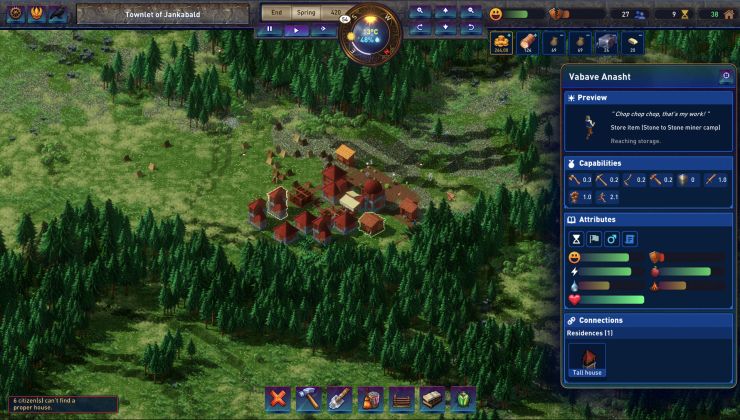
At the start, you have limited plots of land on which to build homes, with both crafters and resource gatherers to get the job done. Each person and their stats is randomly generated, and by performing jobs, they will unlock and upgrade the associated skills. Your early play revolves around unlocking as many things as possible and creating tools that assist with gathering and production.
The GUI, is unfortunately the weakest part of the game. Source: Steam.
Once you have things set up, it’s time to build weapons and equipment to send your best characters out into the world. By scouting, you can find resources and quests, and more importantly, new land to settle. When you run into enemies or they invade your town, you’ll need to defend in turn-based combat.
While people can live or die, it’s your settlements that define progression. You won’t be able to field all the constructors at the start due to limited space, and you’ll need to move characters around or delete buildings.
From there, the game continues to grow with special quests, finding and crafting rarer items, and the entire idea that you will age up and unlock new weapons, items, and nastier enemies to fight.
Settlements is a passion project through and through, but it has some major issues. The entire GUI is janky, to say the least, with the event box’s text so small it’s almost impossible to read. There are multiple screens featuring completely different GUIs, and the tutorial is just okay, explaining little beyond the initial steps. Specifically, they neglect the finer points of combat and how the different equipment types and skills work. This is important because unlocking new land plots will often require you to fight a boss.
There were plans to keep expanding the game, including a holdover image for world buildings, but the developer, unfortunately, had health issues and stopped work on the game. They have announced plans for a fully realized sequel, but there is nothing concrete about it at the time of writing
Ben Rowan
Celeste Classic (Pico-8)
Celeste Classic. Source: Author.
The funny thing about calling Celeste Classic a “hidden gem” is that it isn’t really hidden at all. It’s the tiny spark that eventually turned into one of the most famous indie platformers of all time. But the original still belongs here because it’s easy to miss: it’s small, free, and often forgotten, something you click once and mentally file away as just a prototype. But if you actually spend time with it, it’s still a very sharp little game with its own identity, and it gives a very good indication of just how legendary the full game would become.
After 2013’s TowerFall, Madeline “Maddy” Thorson and Noel Berry treated Lexaloffle Games’ PICO-8 like a creative pressure cooker, using its strict limits to strip an idea down to the essentials. They built Celeste Classic during a four-day sprint in 2015, and it shows in the best way: no grand framing, no extra padding, just a crisp little “hardcore platformer” that knows exactly what it wants to be. Berry even called out how close they came to maxing out the PICO-8's cartridge, which explains why the game feels so focused and tightly packed. It’s also a snapshot of a partnership that would soon become Extremely OK Games (EXOK), where this tiny experiment eventually grew into the full commercial release.
Celeste Classic. Source: Author.
For anyone who’s played Celeste, the core concept is identical: you jump, climb, dash, die, and retry many times. It starts at a reasonable level of difficulty for a single-screen platformer, but quickly ramps up into something ridiculous and then borderline insane, aka ‘hardcore’. When it works, you feel very skilled. When it doesn’t, you usually know exactly why you failed, which is the difference between a hard game and an annoying one. The instant restart is the secret sauce here. You don’t trudge back to the action or pay a time tax. You’re just instantly back at the start, trying again with a cleaner plan.
Over the past couple of weeks, I’ve been dipping in for a few hours here and there, and it’s one of those tough games that is still welcoming because it feels so good to play. At some point, the difficulty curve becomes a ladder you’re climbing by the skin of your teeth. The late rooms feel cruel until you realise what they’re demanding isn’t superhuman reflexes, it’s just basic memory and patience. You learn them like songs; it’s basically rhythmic. This jump sets up that dash, this wall cling is bait, and that corner is only safe if you arrive at the right height. I still haven’t finished it, even though it’s possible to finish the entire game in under 3 minutes, without dying, if you’re freakishly talented.
Celeste Classic. Source: Author.
For a Hidden Gems pick, it’s unusually accessible; no hunting down old hardware or delisted storefronts. You can play it in your browser, right now, and here’s the link to do just that (controller highly recommended). Thanks to the open nature of the PICO-8 platform, there’s a huge variety of modded versions and even a sequel waiting to be explored. Unlike many games covered in these pages, Celeste Classic’s not really hidden at all. If you’re even slightly curious, it’s an easy recommendation: hit start and see how long it takes before you say “one more try” out loud.
Anonymous
Disney’s Beauty and the Beast: Belle's Quest (1993)
Source: IGDB.
Mixtape, a coming-of-age adventure, came out weeks ago with a stylish 90s aesthetic and chapters tied to post-punk, new wave, and alternative rock hits. Discourse around it “playing itself” that overlooked its emotional payoffs reminded me of a Sega Genesis game from before “walking game simulator” comments were spammed under social posts, today’s equivalent of locker rooms.
This Beauty and the Beast tie-in video game’s hour-long length, curated soundtrack, and stunning art make for an interesting point of comparison, three decades later. Belle’s Quest takes you through the movie’s storyline, with recognizable character sprites and stages. All you do as Belle is talk to characters and jump/crouch to avoid obstacles or pick up items.
Disney also developed Roar of the Beast, a tie-in from the Beast’s perspective with a bit of combat for the violently inclined. The games’ lengths mean they’d have been better off combined, switching between protagonists across stages.
My favorites were the ballroom minigame, where the duo collects petals as they dance, and the final horse segment, involving timed jumps as difficult as other Disney tie-ins like Aladdin (1993) and The Lion King (1994). That the game was supposedly designed for girls was a poor choice then, as it is now, making Belle’s inability to clear obstacles frustrating. Dodging rats and bats gets tedious, even if the game was shorter than the film. Belle’s Quest would have been better as a pure walking sim that spent its budget on what worked: its visuals and soundtrack.
For people who don't play city builders, it may be easy to look at them as something mechanical and bureaucratic. Grids of streets, well-ordered manufacturing production lines, and carefully tailored catchment areas to ensure residential zones will efficiently staff nearby businesses, don't scream the stuff of life. Though, play enough of them and you will often see there can be a good deal of living going on at street level. Zoom in close on Cities: Skylines and you can follow people as they travel to work, hover over your town in Anno 1800 and you watch the carts take goods from the harbours to factories to markets to the doors of your townspeople.
Life Below may not be about constructing a city exactly, but this underwatcher cosy city builder still captures that sense of bustling life.
Why is everything rolling sideways on my desk all of a sudden? What’s this mysterious force, dragging my chair towards the wall? Why are all the cars in the vicinity tumbling and rolling in the direction of *checks press release* ...North Carolina, USA? It can only be gravitational disturbance caused by the impending 1.0 release of a massive strategy project. This time it’s Heart of the Machine, a “4X-style”, “dimension-busting” sci-fi game developed by Arcen Games and published by Hooded Horse.
Cities: Skylines 2 just received its first update from new developer Iceflake Studios, which replaced Colossal Order at the end of 2025. You might think this would be a prime opportunity to breathe new life into the struggling city-builder. To come out swinging with some big new features. To make the flowers bloom, the birds sing, the babies gurgle in a way that makes you think "Are they happy or about to barf?"
Nope! Instead, Iceflake's debut patch is utterly obsessed with death. Turns out your idiot citizens have been croaking in completely the wrong ways in Cities: Skylines 2, so Iceflake has donned its black robe and sharpened its scythe to sort things out.
Dubbed First Frost (though really it should be Last Rites) the update makes numerous tweaks to systems that govern the lights going out, the buckets being kicked, the farms being bought, etc. Chiefly, it fixes a bug that prevented time of day being taken into account when determining citizens' demises, which meant everyone was popping their clogs between midnight and six o'clock. It also quadruples the number of times the game calculates deaths from four to sixteen, in order to "further reduce the number of citizens dying at the same time".
In addition, the patch fixes an especially peculiar bug that made most of your citizens immortal when playing in easy mode. "Previously, about 80% of them never died of old age," Iceflake writes in a Steam post. An ageing population is difficult enough for modern governments to deal with, so I can imagine how challenging an immortal one would be. Shuffle off, grandad! How else am I to get a house in this economy?
Not everything in First Frost is about departures from the mortal realm. The patch also reduces trips made on the bicycles introduced by Colossal Order before it moved on to pastures new, by 80%. In short, your citizens are spending less time cycling and more time dying, which I suppose is how exercise works in real life too.
Elsewhere, the patch introduces a bunch of new UI icons for roundabouts, cul-de-sacs, road maintenance depots, pollution types, and more. It updates the onboarding tutorial for new players, makes terraforming tools less aggressive (otherwise known as a terrorforming tool), and makes a bunch of graphical improvements like improved shadow rendering, snow support for decal-based lots, and fog that adjusts according to weather conditions.
Oh, and the update finally switches autosave on by default, which is good, but also kinda wild that it's only happening now. It took two years, four months, and a change in developer, but Cities: Skylines 2 will now save automatically without player intervention.
While not bristling with new features, Iceflake's first patch still seems to have improved the sequel's immediate fortunes. Recent Steam reviews stand at 67% positive at the time of writing, compared to 54% positive overall. Let's hope this proves a new foundation for a brighter future for the sequel.
A new year dawns. January is usually a bit of a slow month for entertainment, video games not exempted. However, a lull in the quantity of releases says nothing about the quality, and there were still some interesting titles dropped this month.
There are only two games on display this month, which speaks to that lower release number but also signifies a bit of a policy change. Moving forward, we're going to feature fewer games while offering slightly longer, more in-depth reviews. Yes, I'd love to do twenty reviews a month and give exposure to the maximum number of people, but the limits of time and space make that impractical.
For now, enjoy the dancing robots before returning to your haunted hotel.
The Spirit Lift is a horror-themed deckbuilder following a series of 90s high school archetypes as they wander through an old hotel in which every spooky thing possible has happened. It's a familiar game that's set apart by an unusual presentation and an obsession with replayability.
The goal of each run is to guide a group of three characters through the halls of the Vexington Hotel, reach the 13th floor and defeat a boss waiting there. Initially there are only three characters available, but the roster grows to eight after enough attempts. The party determines opening cards and equipment, but more importantly they set which of the four colors of cards will be available in future draws.
The core gameplay loop is similar to most deckbuilders, save that the player isn't moving along a set path but rather exploring each floor in first person. One of the rooms always contains the lift to the next floor, while the others house enemies, events or empty rooms that can be looted for money and cards. There may also be enemies and traps outside of the rooms and the lift doesn't unlock unless the player has explored at least one other room, so beelining through each floor isn't necessarily an effective strategy.
Combat is also similar to other deckbuilders, with a few twists. The most noteworthy distinction is a complete lack of a block mechanic. The player will need to find some other means of avoiding damage - dodging it, reflecting it, stunning enemies or taking them down before they can do anything. In general, the ideal strategy involves focusing on one or two cards that can be scaled out, something that's critical to beating some of the bosses with the game's restrictive 13-turn imit.
All deckbuilders are designed for replay value, but few put as much of a focus on it as The Spirit Lift. There are unlockables for each character, each enemy, each boss - dozens in all, including not just cards and gear but new events. Each run earns spirit points used to purchase permanent upgrades. Certain events yield files that point to the history of the Vexington Hotel, and it can take many runs to find them all.
Whether or not it's worth playing through the game dozens of times will vary from person to person. By genre standards, The Spirit Lift isn't too hard, and it has a few features that make chasing unlockables nicer - such as those permanent upgrades and the ability to select any boss path previously seen. However, the small number of enemies and lack of challenge settings means that runs will start to seem a little similar after a while.
Overall, The Spirit Lift is a very interesting deckbuilder that mixes up the formula without changing things too much. It has a fun aesthetic and theme and it never feels too oppressive to play, making it a good choice for both veterans and newcomers.
The Spirit Lift is available for PC via Steam. A copy was provided for this review.
Steel Century Groove is a rhythm RPG set in a world where generations-old war machines called Tenzerks have been repurposed for the more noble sport of dance combat. It's an easy to learn, hard to master game with some unexpected complexity.
The core combat mechanics seem simple at first glance. For each stem, or phase of the fight, there is a curving line with numbered nodes. A dot moves along that line, and the player must hit a button when it passes through each node. The nodes follow the pulse of the music but aren't strictly locked to the beat, so there might be sets of tightly-grouped nodes followed by a break. Each successful hit builds the player's acclaim, and whichever character maxes out their acclaim bar first wins.
That's where the RPG mechanics come into play. While one can theoretically win by using a single button, most opponents won't give up that easily. Winning more difficult fights means mastering the special abilities.
Each Tenzerk - those available to the player and those used by opponents - has a unique set of traits and skills, and those skills only work if used in the right circumstances. For example, you might get a special attack that depletes the enemy's acclaim bar, but only if used during a part of the stem where the opponent isn't taking any action. Meanwhile, enemies have their own gimmicks and can throw status effects on the player, such as locking abilities or seeding the stem with decoy nodes.
Playing the game well requires keeping track of a lot of information at once - not just the nodes, but cooldowns, possible status conditions, and the enemy's predicted actions. It can be daunting, especially for one without great multitasking skills. However, most mechs have a few simple strategies that work well in a wide range of situations, demanding only an occasional tweak in response to an enemy gimmick.
Outside of combat, Steel Century Groove features a design with some definite Pokémon inspiration. The storyline is simple, following the protagonist and their friend on a journey to earn the right to compete in a tournament. Said entry requires defeating a series of expert opponents, all the while dealing with a rival who always seems to be one step ahead. There is another layer to the story, one involving the lost history of the Tenzerks that is revealed little by little over the course of the game.
The RPG elements are fairly basic but add a bit more mechanical complexity. There's no money or shops, but the player will find mods that can add minor mechanics or refine existing strategies. The overall loop also grows more complex as the player fights other pilots and gains levels.
Overall, Steel Century Groove is a solid addition to the burgeoning rhythm combat genre. It's not too hard to get the hang of it and there's just enough variety in the builds and enemies to keep things interesting.
Steel Century Groove is available for PC via Steam. A copy was provided for this review.
That wraps up our first go with the adjusted format, having looked at two indie games that caught our attention in January. Be sure to come back each month for more of those sweet, sweet indie games you need to know about!
Hi everyone. Eugene Sax here with another review from GameCritics.com.
The Spirit Lift is a roguelike deckbuilder that takes inspiration from haunted houses and creature feature films of the early ’80s and ’90s. A group of high school seniors get separated from their group on a field trip to a spooky hotel and get sucked into The Spirit Lift, where they must fight through 13 floors of terror in order to get back home.
Once a run begins, players take their group of teens through the cursed hotel floors in order to make it to the Penthouse and defeat the evil creature there. Each floor is different, with the theme depending on the boss that will be found at the end of the section. Every door along the way might hide cards or gear to help with the run, gold to buy cards from a shady wolf lurking around, or enemies trying their best to gobble the players up.
In combat, cards are played each turn to defeat enemies. Enemies telegraph what they will do when the player ends their turn, so using that information to plan out moves before enemies act is crucial. Unlike others in the genre, I have yet to find a card in Spirit Lift that actually serves as “defense” — there are no shields and no blocking. Options seem limited to attacking or debuffing enemies, which leads to a quick gameplay loop as it’s all-offense, all the time. That said, this speed is helpful in avoiding the maximum of 13 turns per battle — I haven’t found out what happens if a player uses up all of those turns, but I can’t imagine it’s good. Whether players win or lose a run, there will be points awarded that they can use for things like more starting health or starting with more gold on future runs.
There’s not much to the formula beyond what I’ve just described, so there’s not much depth in The Spirit Lift. There’s not much enemy variety, either. In my runs I’ve seen basic versions of bad guys, slightly healthier versions, and versions that do more status effects. There are some one-off enemies that introduce a new gimmick, but the well of new ideas seems to dry up fast.
What really kills the Spirit Lift, though, is the grind. It’s not the worst I’ve seen since each run is fairly short, maybe taking an hour to hit the final boss of the run, but the lack of variety is felt quickly.
On the plus side, players will eventually unlock five additional characters past the starting three after a few runs. Some are better with straight attacks, while others are better at buffing or damage-over-time, but they all tend to play fairly similar to each other. This means that after only a little while, The Spirit Lift has shown its entire hand.
That could be disappointing for players who love to dig deep into an experience like this, but despite how shallow it seems, I find that the spooky haunted house vibe is charming, it’s easy to grasp some of the powerful combinations quickly, and learning the full array of monsters allows players to quickly strategize each encounter.
The Spirit Lift won’t be a game for everyone, but there’s joy to be found for players who might like a smaller bite.
For me, The Spirit Lift gets 7.5 loops of elevator music out of 10.
Disclosures: This game is developed and published by prettysmart games. It is currently available on PC. This copy of the game was obtained via publisher and reviewed on the Steam. Approximately 8 hours of play were spent playing the game, and multiple runs of the game were completed. There are no multiplayer modes.
Parents: This game is not currently rated by the ESRB. However, it’s safe to say that it has fantasy violence as players use cards that represent items like guns, baseball bats, and tennis rackets to attack horror monsters. No blood, no foul language, just creepy atmosphere.
Colorblind Modes: Colorblind Modes are not present.
Deaf & Hard of Hearing Gamers: This game offers subtitles, but subtitles can not be altered and/or resized. There are no audio cues needed to play. The game is fully accessible.
Remappable controls: Controls are not remappable, and there is no control diagram. Movement is controlled by pressing WASD on the keyboard, or by using the mouse to click on the arrows on screen. Mouse is used to control everything else (card selection, selecting options in events, etc),
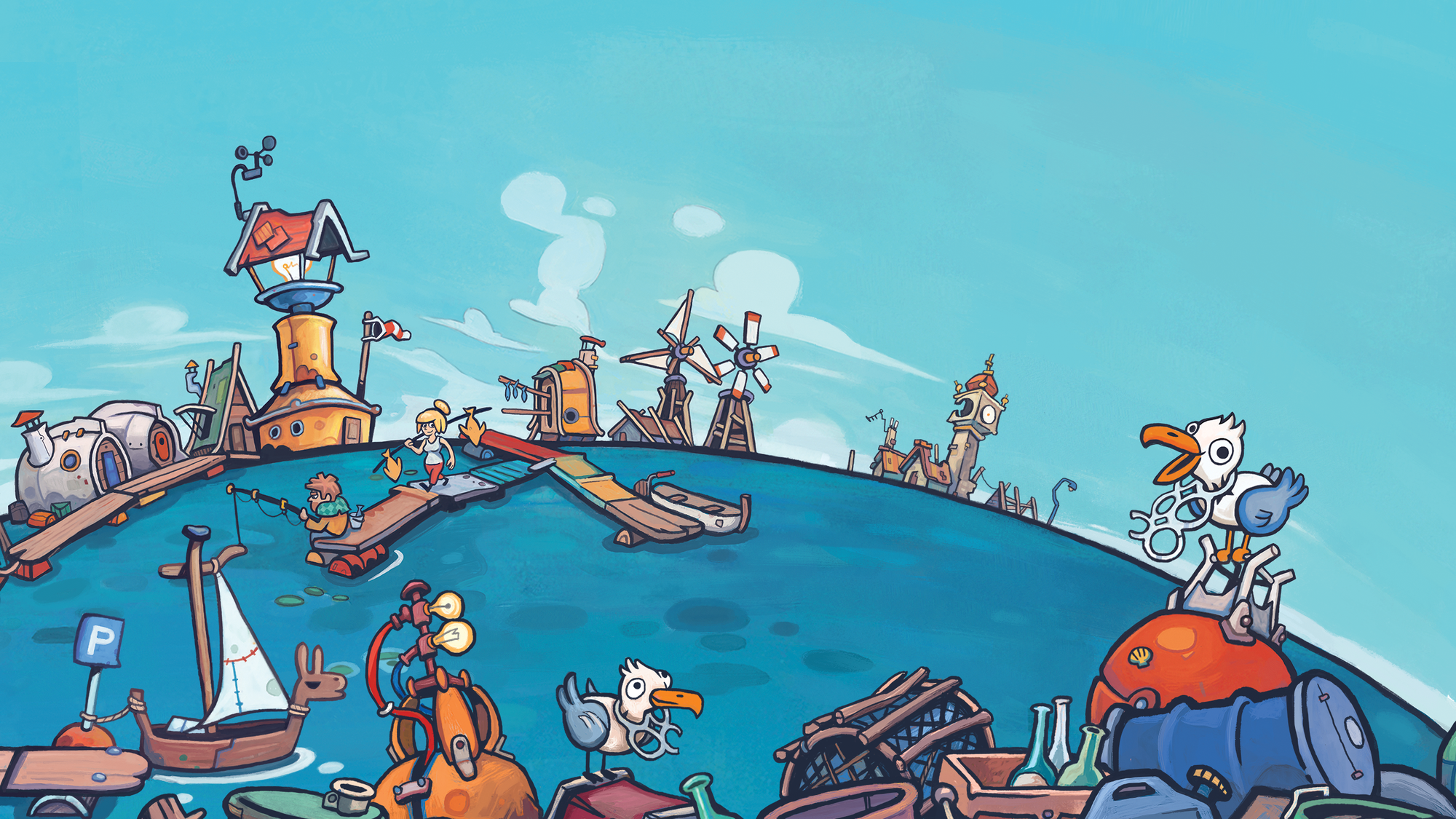
A survival city-builder in broadly the same vein as stuff like Frostpunk and Ixion, Flotsam is a game set at the end of the world that, thanks to its vibrant art style and optimistic outlooks, actually feels more like the start of the world instead.
You play as a tug boat that poots around a flooded world, ala Waterworld, and as you go--on a kind of strategic overworld map--you need to scrounge for resources and pick up survivors. Zoom in, though, and the game becomes a city-builder, where you can attach buildings to your boat and use those resources to craft stuff, build more buildings and keep everyone happy by giving them nicer houses and places to hang out.
The cheery, hand-crafted visuals are a joy to be around. For an apocalyptic game, Flotsam's glass is very much half-full, its flooded wastes featuring crystal-blue oceans, storybook islands and fantastic character art, while the survivor's chatter is mostly interested in everyone working together to build something new and communal from the wreckage. To give you an idea of just how cheery things are, here's the game's website:
The world of Flotsam is a colorful and cheerful place. It’s about going on adventures, seeing the world and cleaning it up as you go. The sun is shining, the sky is clear and the ocean is calm… mostly at least.
Does this change the way the game plays? Not really. Does it dictate the way I feel while playing it? Absolutely. As I've explainedin my impressions of Town To City, I like these games because they let me build stuff, and I hate the stresses so many of them bring along for the ride. Flotsam has those stresses--you need to keep everyone fed and supplied with fresh water--but meeting those needs is so straightforward, and everyone looks and works so happily while they're in danger, that it never feels like a crisis.
I should note that this isn't really a city-builder in the traditional sense. While you are definitely building a settlement around your boat, and it needs walkways and power and all that stuff, the overworld navigation is a place you spend a lot of time exploring, finding resources and picking up survivors. What's cool is that the two are linked; you cruise around a map screen where everything is abstract, but when you find something to explore, the view zooms into the boat-scaled view, and the objects that appeared as points on the map are now islands represented off the stern of your town, on which you can see your survivors clambering over and harvesting supplies.
Flotsam has a more involved supply chain and production management slant than many of its peers, which I really enjoyed; the loop of harvesting raw resources from the overworld, then using your city to refine them and turn them first into processed resources, then things, is always satisfying. There are a ton of different materials and items, some you can only get by scrounging, others that can be grown and others that you have to craft, and it's an interesting challenge having to prioritise your survivors and various buildings to churn out exactly the things you need at any given time.
I said earlier in the yearthat I'm tired of apocalyptic futures where humanity is resigned to living off scraps, where the overriding themes are those of defeat and despair. Flotsam's optimism and resolve to build something new from the ashes are exactly what I was talking about; the fact it's a game where you're directly responsible for the building only makes it better.
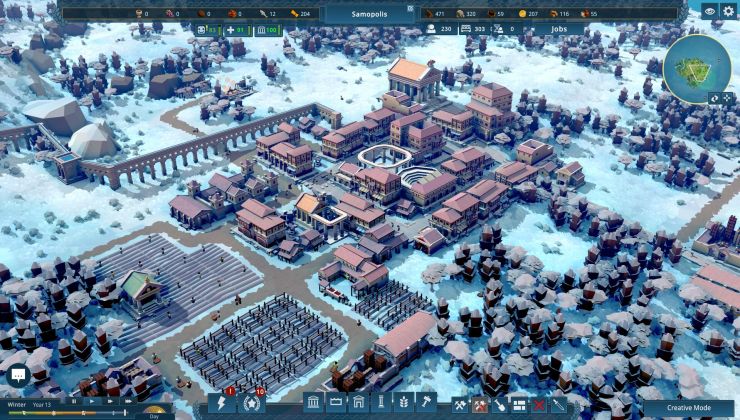
Kingdoms and Castles was great, and Nova Roma is shaping up to be a great city-builder but the developers at Lion Shield need more time to get it right.
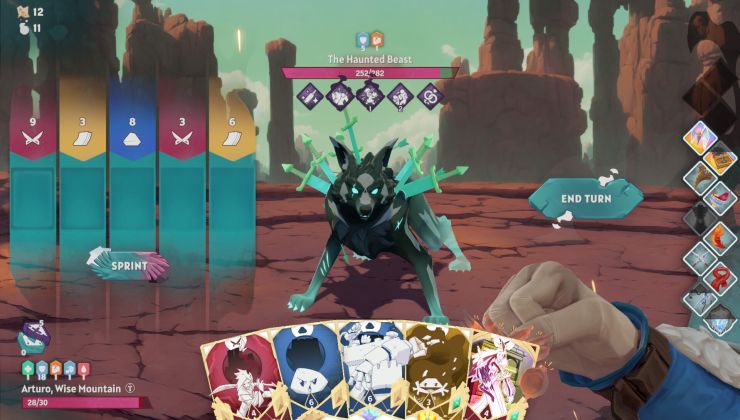
Death Howl is ambitious simply for the two genres it tries to fuse. Deckbuilders are almost always roguelikes, and Soulslikes are almost always action-heavy. The idea that you could blend these systems in a way that not only makes sense but actually feels good to play seems almost absurd. Yet Death Howl pulls it off, all while telling a moving, heart-wrenching story about grief.
You play as a mother who has lost her son and refuses to be consumed by the despair threatening to overwhelm her. Instead, she steps into the spirit world to search for him and bring him home. The writing is excellent, and the quieter, emotional moments between the violence are genuinely powerful. It hits especially hard if you’re a parent, but the struggle to push back against grief is something most of us understand in some way.
As for how it plays, you explore the world, interacting with objects to uncover new knowledge and gather items that can be turned into cards. You can refresh the spirit realm by resting at special stones, which restore your health but also revive the spirits, forcing you to push through them again.
Combat is turn-based and unfolds on a grid, with you and your enemies jockeying for position while you manage mana to play moves that attack, defend, or trigger entirely different effects. It’s a delicate balance and one that often feels stacked against you, but that only makes each victory more rewarding.
The challenge in every encounter reinforces the strength of the protagonist and her relentless fight to recover her son. Expect an uphill climb and a world that isn’t afraid to land emotional blows as you push forward.