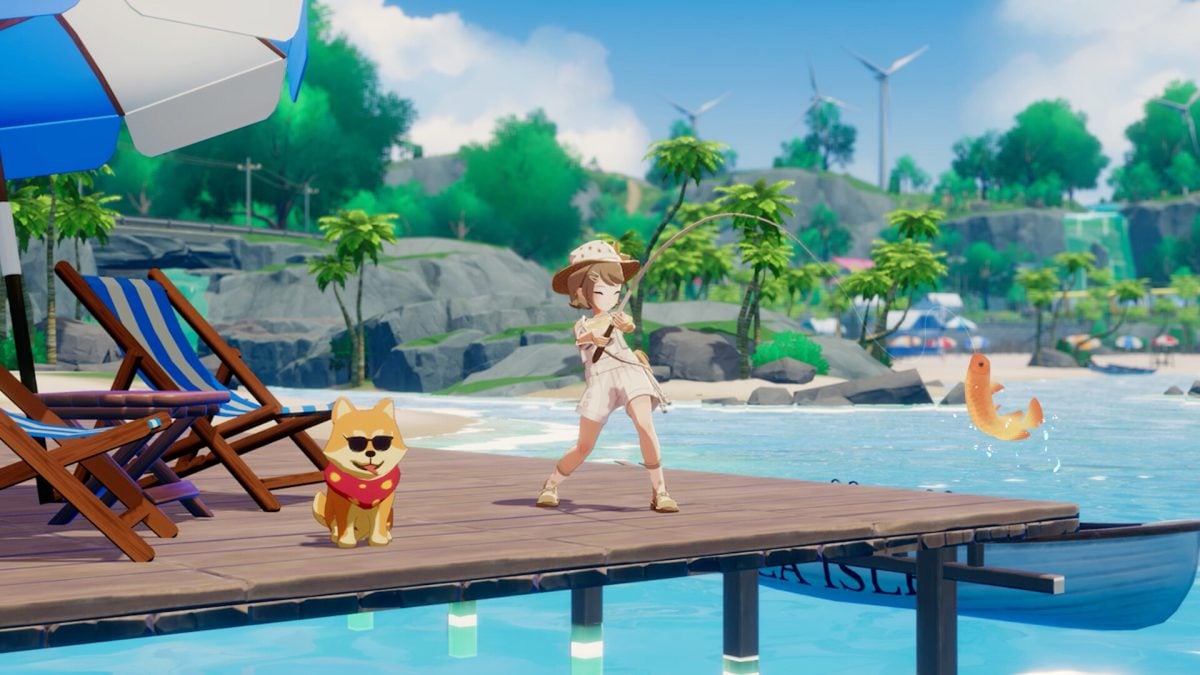
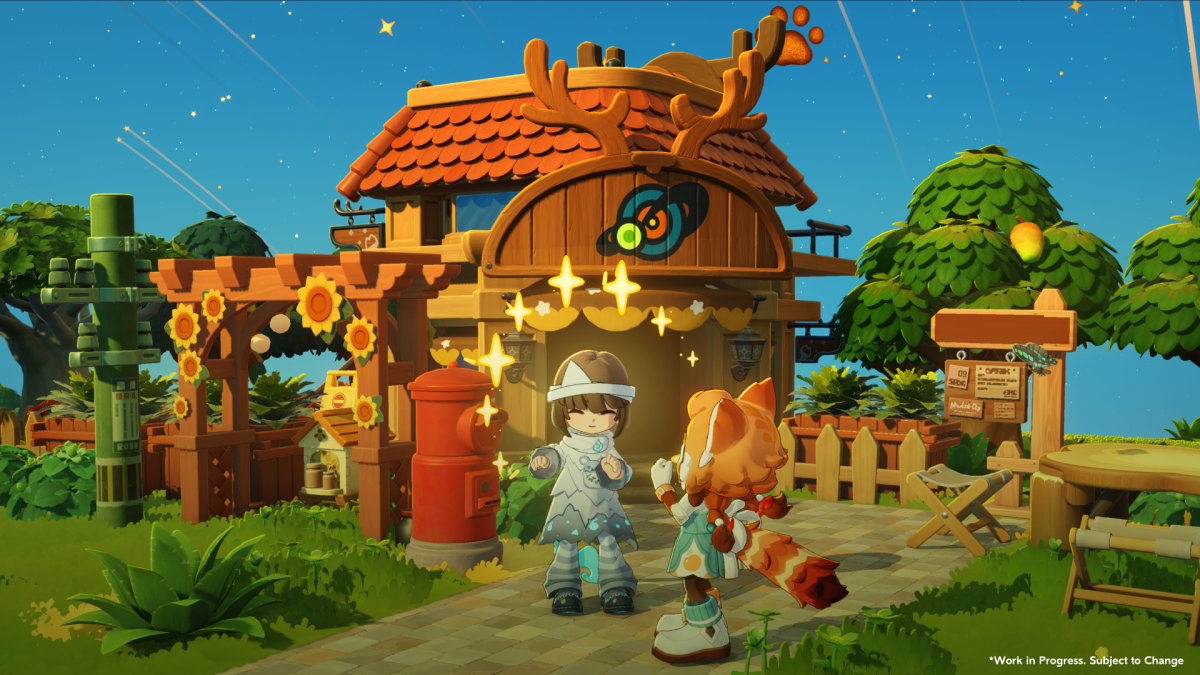
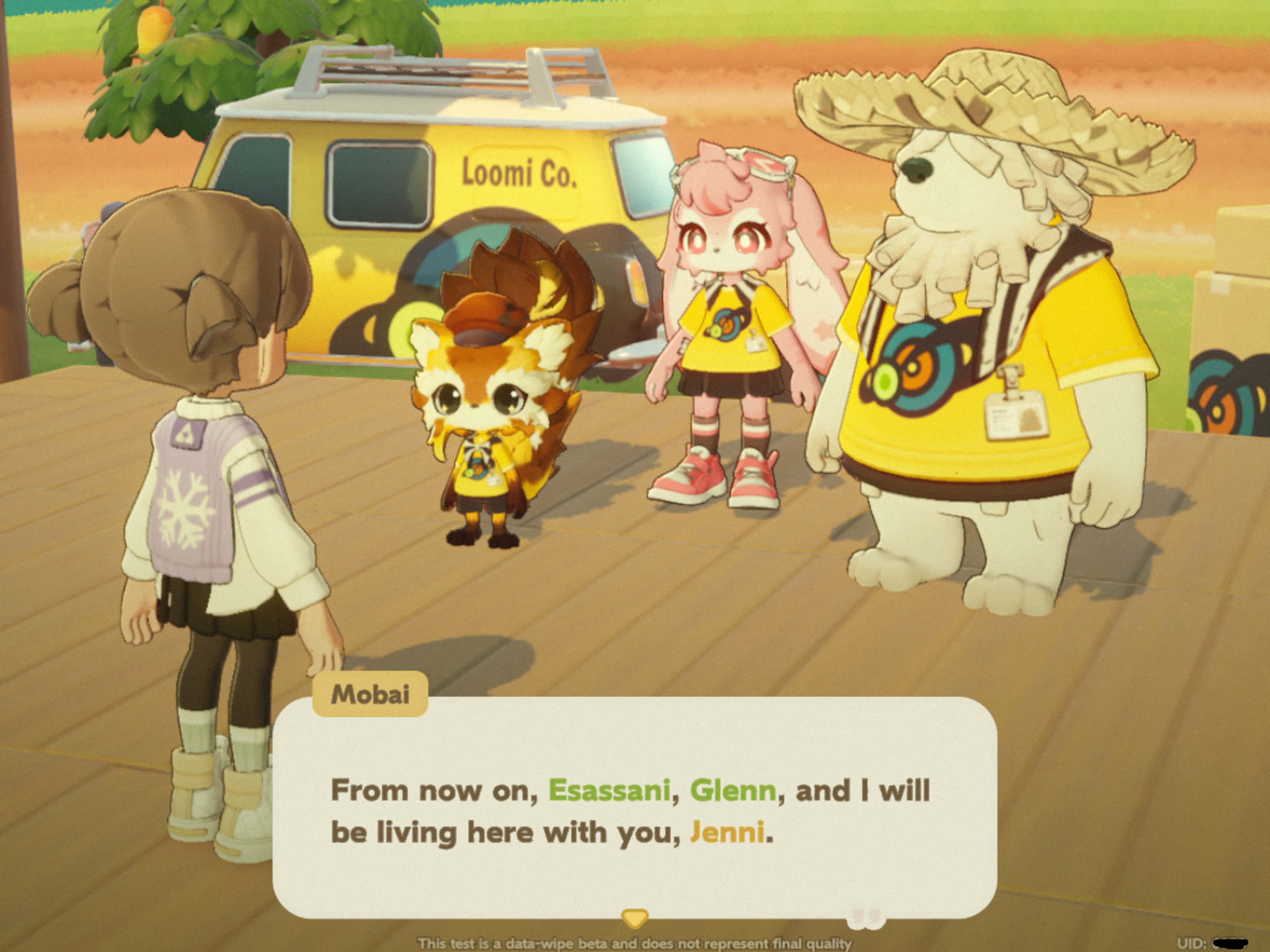
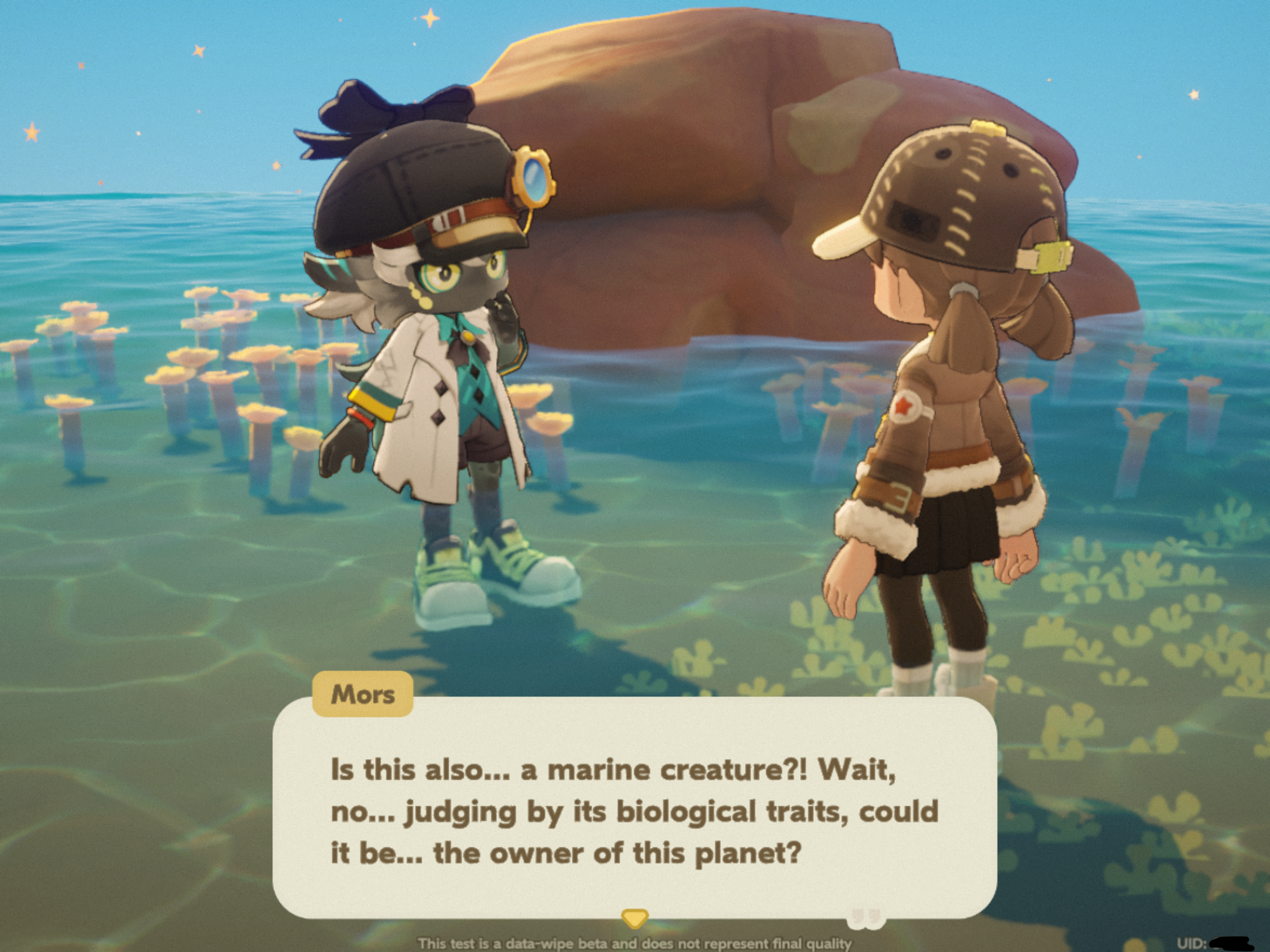
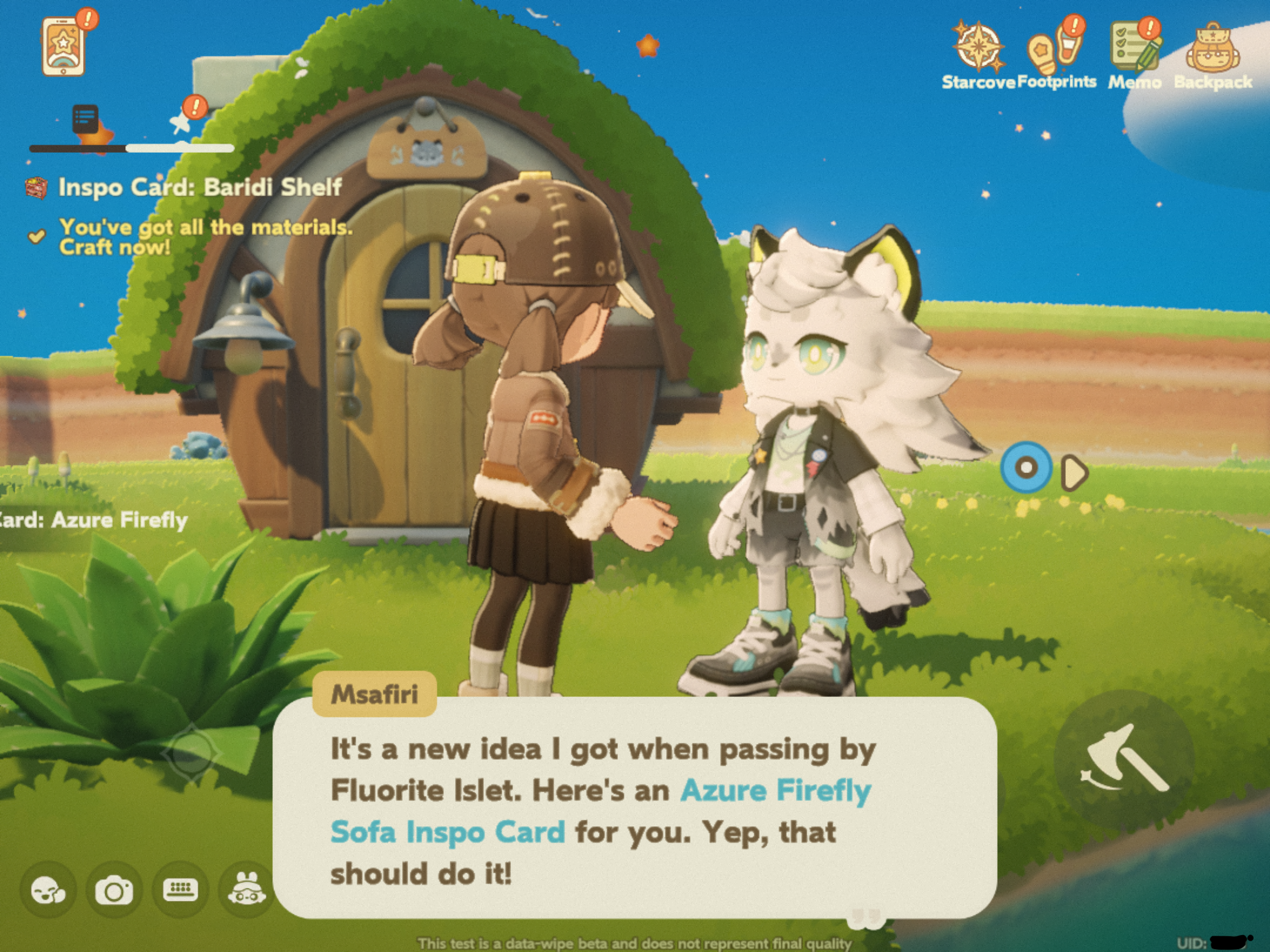
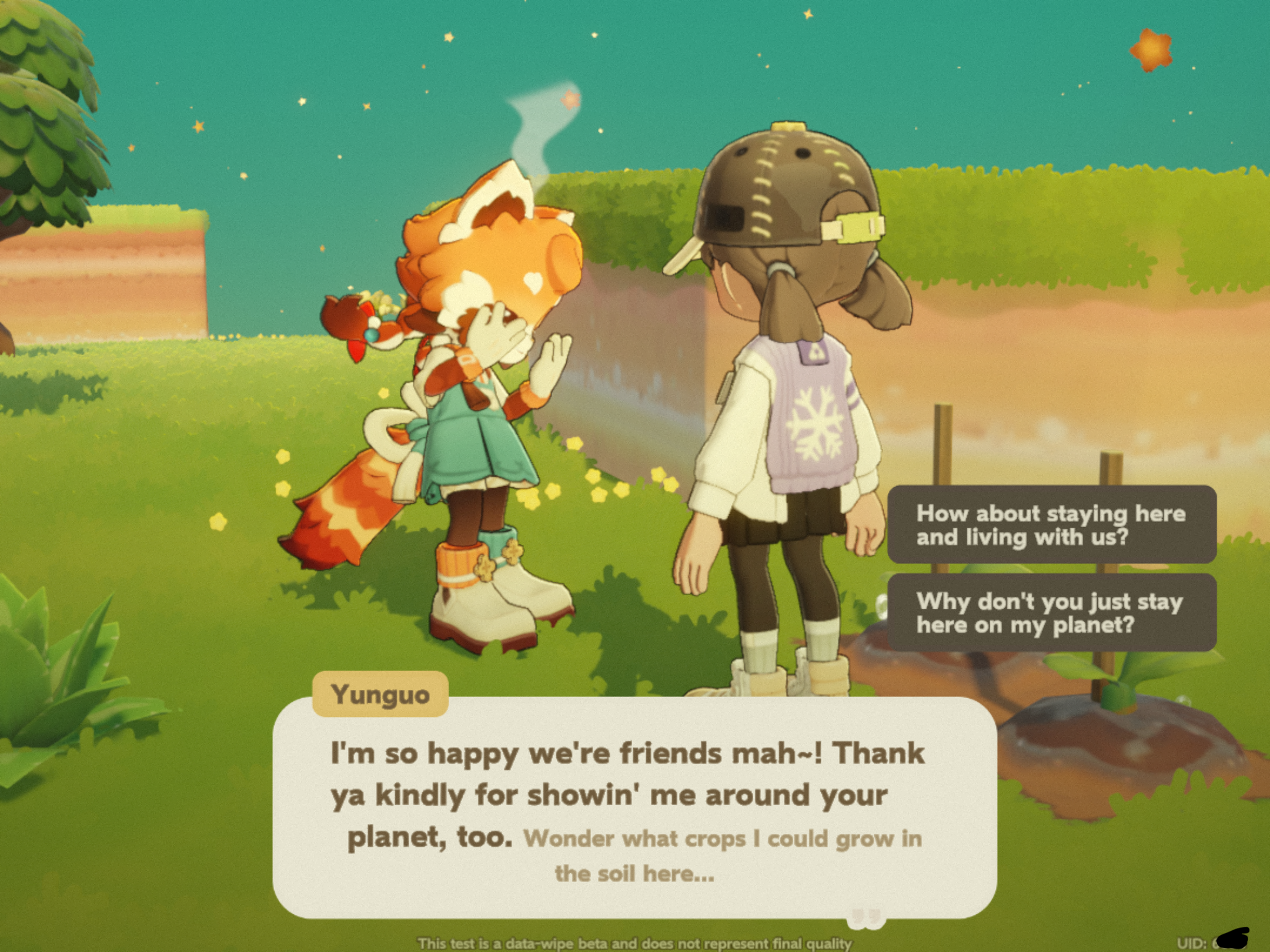
When I first played Starsand Island, it was early in development, not all the different types of professions were ready, and the build felt like a work in progress. Now that the game is properly in early access, it feels far more cohesive. Yes, not everything is there yet and I can’t live my virtual life to the fullest. Some balancing definitely needs to be done. But it does feel more pulled together and ready to go than it originally did.
As a quick refresher, Starsand Island is about moving to a rural community your character is already loosely connected to in order to start a new life. Previously, they’d only visited due to their grandpa living there. Now they inherited the home and, after a friend named Solara helps them settle in, they work on becoming part of the community.
https://www.youtube.com/watch?v=P5h-VhOriYs
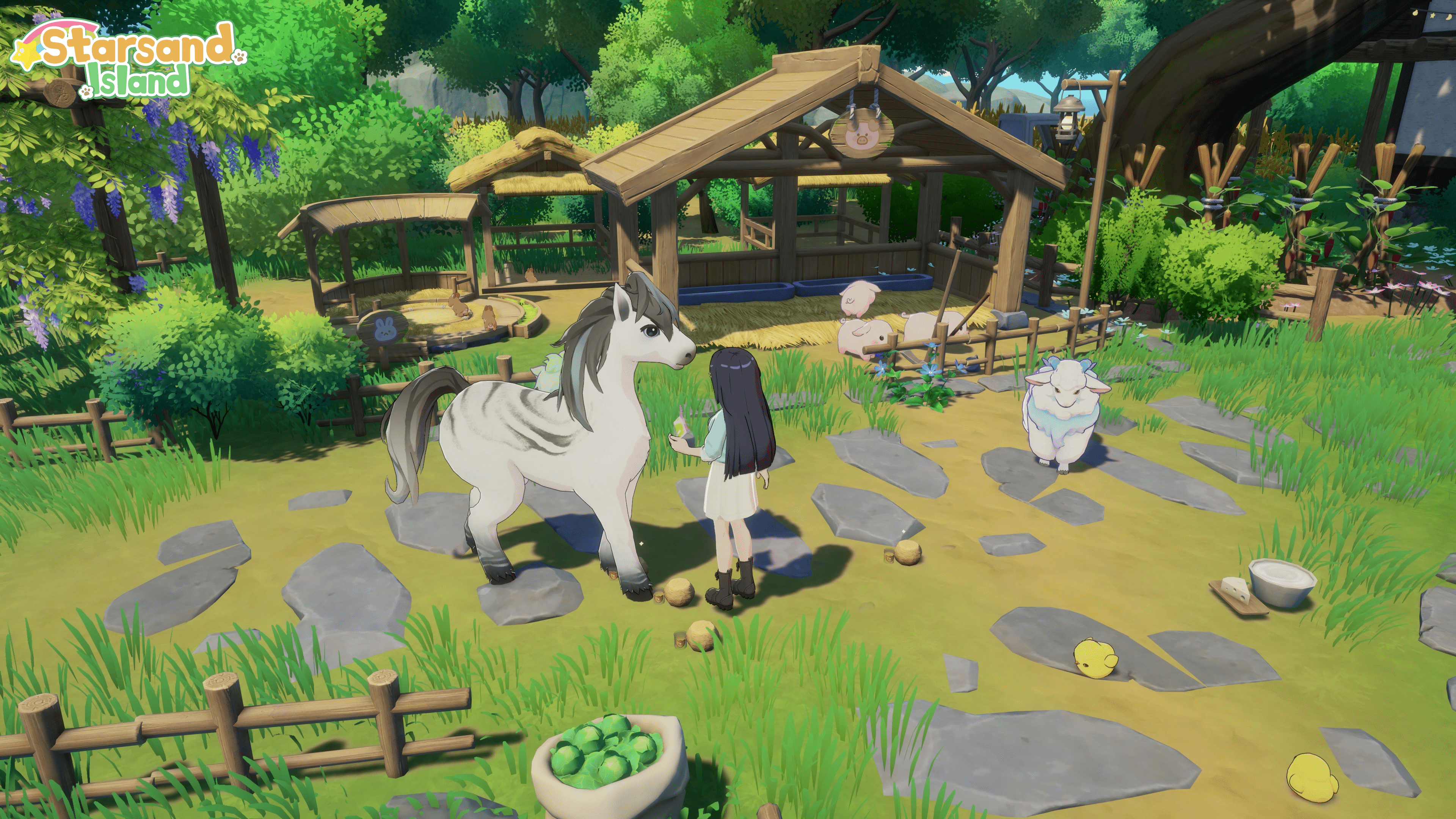
The biggest change I noticed between my initial Starsand Island experience and this return to the early access build is that there’s substantially more here. The Crafting, Exploration, Farming, Fishing, and Ranching professions feel much more fleshed out than before, with especially farming and fishing offering more variety in terms of yields, ranching adding more animal husbandry options, and many more recipes available when it comes to making things. These feel pretty full right now, though admittedly I haven’t completed any of the professions at this point. All of these seem advanced enough that I suspect I wouldn’t miss too much in 1.0 if I try and go ahead and do as much as possible now.
Some professions did really hook me in now in this build. Especially with the Farming and Ranching lines. It seems very easy to get settled, and the range of crops and animal is great right now. There are hybrids possible, if you spend enough time playing, and greenhouses are already present. Like getting to Expert Rancher and accessing the alpaca and ostrich are helpful for the extra eggs, feathers, and wool, not to mention riding them is quite cute. And the DNA element to it is helpful for breeding purposes, should someone focus on that lifestyle. However, I will note that exploration’s combat does seem to still need work. While bows are present as a weapon, adding a nice ranged option, there’s still not much there. We could use more enemies, as well as mechanics like dodging.
While the profession changes in Starsand Island probably the first and most obvious area to get a glow-up in early access, the relationship element feels pretty good right now too. This applies to both animals and people. The pet system reminds me a bit of Harvest Moon: Animal Parade, in that you aren’t just buying a new buddy. I mean, yes, Woof and Wow Pets does offer them. But we also adopt wild animals by befriending them and reaching basically three hearts. This means you’re going to need to work to get the fox or squirrel to be a friend.
Images via Seed Sparkle Lab
As for the human relationship element, it does feel pretty fleshed out even now in Starsand Island. There’s a decent number of love interests at 15 total (8 bachelorettes and 7 bachelors). These feature voice acting, though there’s not much yet, and there are more appearances in quests and interactions with folks that made me want to give gifts and check in daily. In some cases though, I felt like some of the folks were just pretty faces. There isn’t enough to them yet to make them lovable. However, it does seem like that could change. The team stated there will be more to the dating system come April 2026. I would like and hope to see marriage and kids in the endgame too.
However, I will say some stuff doesn’t feel completely balanced or 100% set yet. This is an issue acknowledged on the Steam product page and in the roadmap. I would like a little better performance when really racing through on mounts or on an item like a skateboard. Some character models could be adjusted a little. Getting your house and land built up does take a lot of time, and it doesn’t feel like it’s quite designed for us to get to the point of a massive complex with a home we could have a romance option move into yet. I do wonder if we might see rebalancing progression and development updates, since the crafting part does feel stronger than the pre-launch build I played and the team did mention that’s in the roadmap.
Starsand Island is essentially coming along, with the early access version showing a lot of progress from the initial build I played. There’s a lot more to every profession in the game, though exploration could use a bit more additions and adjusting. Romance is starting to seem more viable, and pet adoption is enjoyable. Some rebalancing would be great, but the foundation for the 1.0 version later this year seems pretty stable.
Starsand Island is in early access on the PC and Xbox Series X on February 11, 2026, and a full launch that also includes Switch 2 and PS5 versions is set for Summer 2026.
I need to be honest with you right from the start – Mewgenics is absolutely unhinged, and I mean that as the highest compliment I can give. Edmund McMillen and Tyler Glaiel have crafted something that sounds completely ridiculous on paper: a tactical RPG mixed with cat breeding simulator wrapped in roguelite mechanics. Yet somehow, this bizarre combination works far better than it has any right to.
After sinking about 35 hours into building mutant cat armies, I’m still discovering new mechanics and laughing at the sheer absurdity of it all. This isn’t your typical strategy game – it’s a weird, gross, surprisingly deep experience that manages to balance juvenile humor with genuinely complex tactical gameplay.
The Core Loop: Breeding Warriors and Watching Them Fight
Here’s how Mewgenics works at its most basic level. You manage a house full of cats who breed to produce new generations of fighters. These cats go on turn-based tactical adventures across three acts, battling through areas like alleys, sewers, deserts, and boneyards. Once a cat completes a run, they retire from combat duty and become dedicated to making more kittens. It sounds simple, but there’s massive depth hiding beneath this structure.
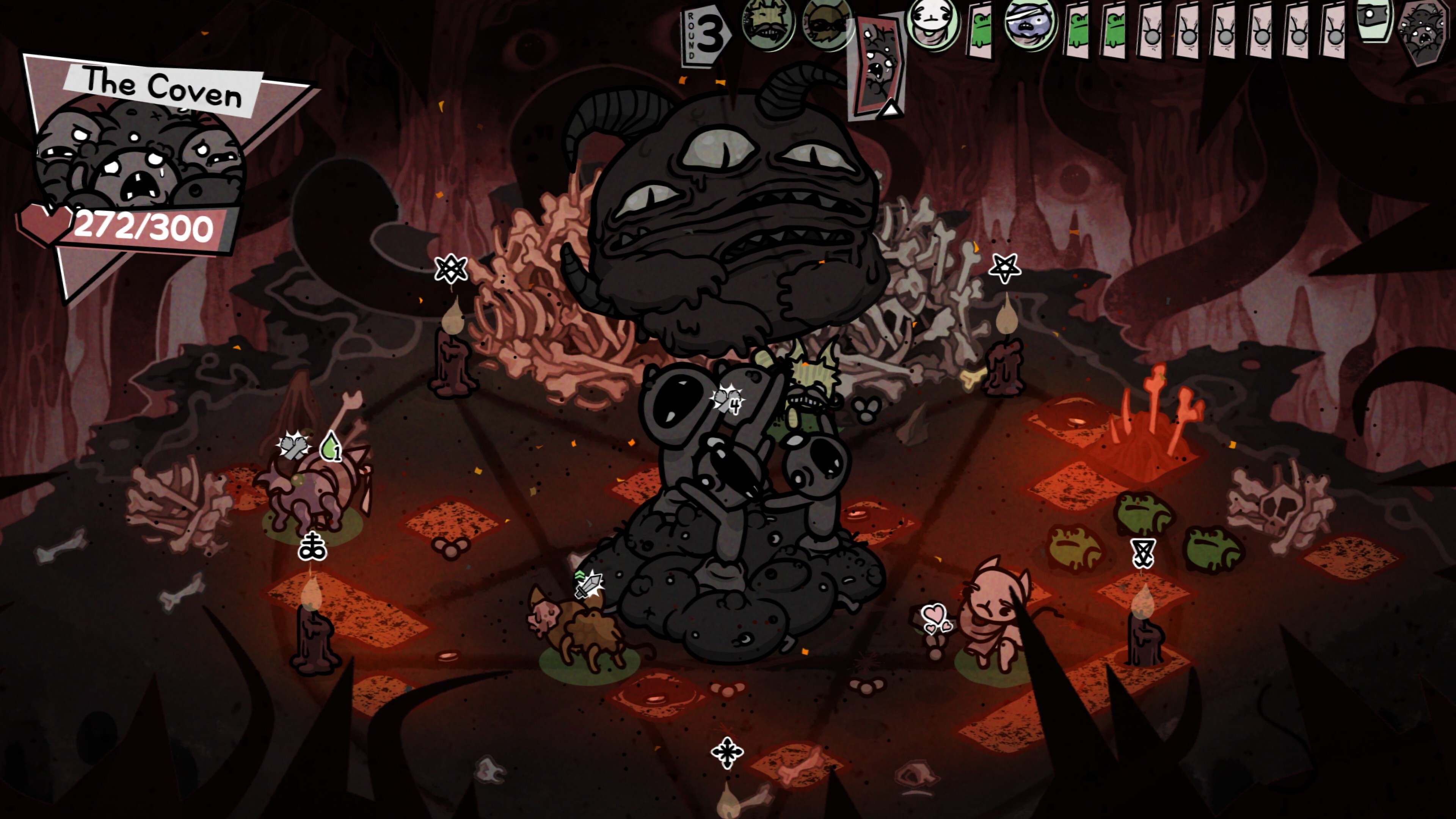
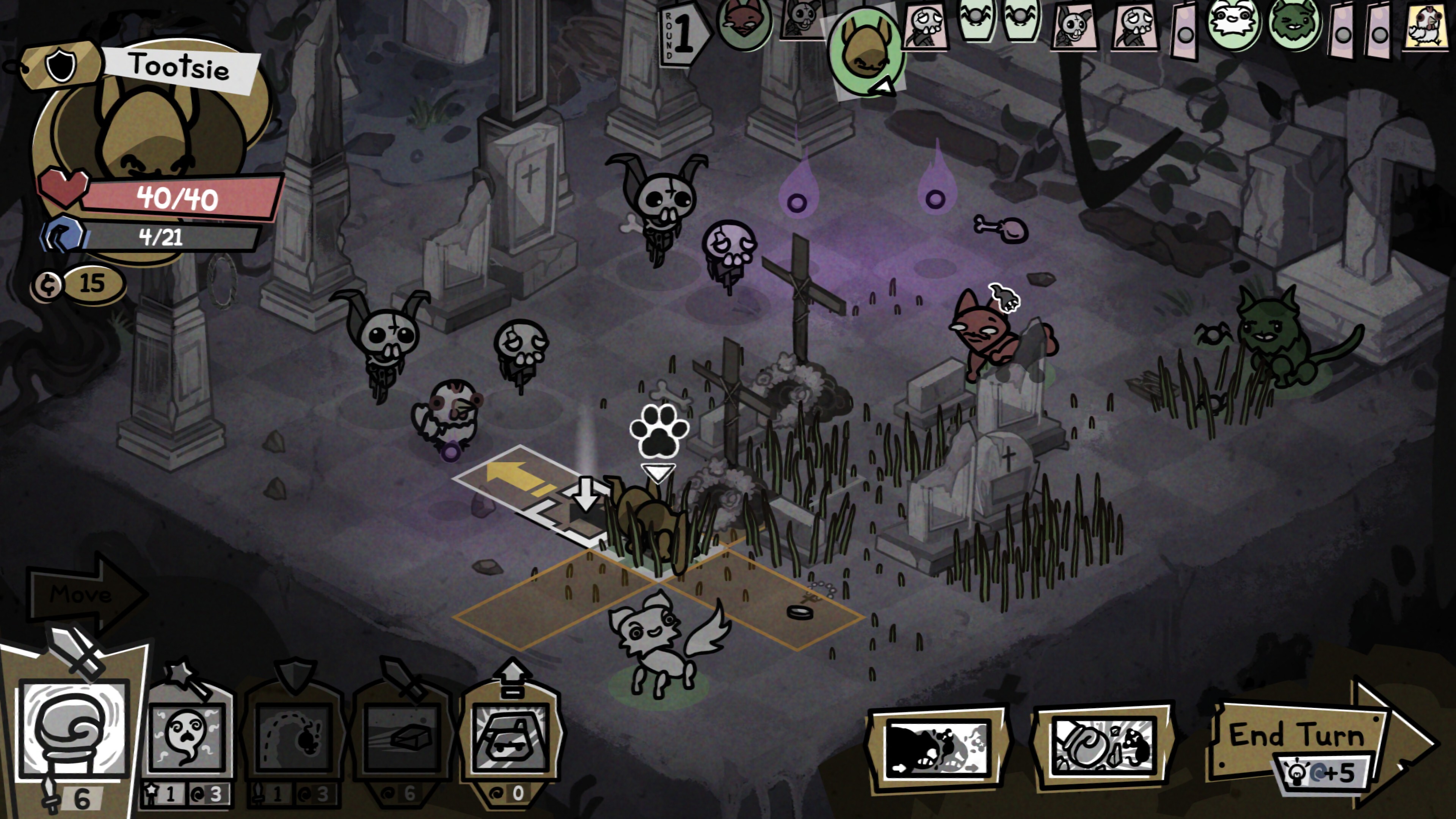
Combat happens on 10×10 isometric grids where positioning matters, environmental effects can completely change your strategy, and every action has consequences. Your cats have equipment slots, class-specific abilities determined by collars they wear, passive traits that can fundamentally alter how they function, and stats that influence everything from damage output to how likely they are to succeed at random events.
What sets Mewgenics apart from other tactics games is the sheer freedom it gives you. You can use almost any ability on allies or enemies. Got a skill that confuses a character but buffs their strength? Use it on an enemy to make them attack themselves, or risk using it on your own tank to deal massive damage if the confusion roll fails. Skills that petrify can protect your cats from incoming attacks or lock down dangerous foes. This flexibility creates scenarios I’ve never seen in other tactical RPGs.
The environmental systems add another layer of chaos. Puddles conduct electricity, grass can be frozen into damaging spikes, desert heat prevents natural healing between battles unless you have water-based abilities. I’ve had fights completely turned around by random lightning strikes during storms or rubber tire obstacles bouncing around the battlefield. The game constantly throws curveballs at you, and learning to adapt on the fly is essential.
Breeding Mechanics and Long-Term Progression
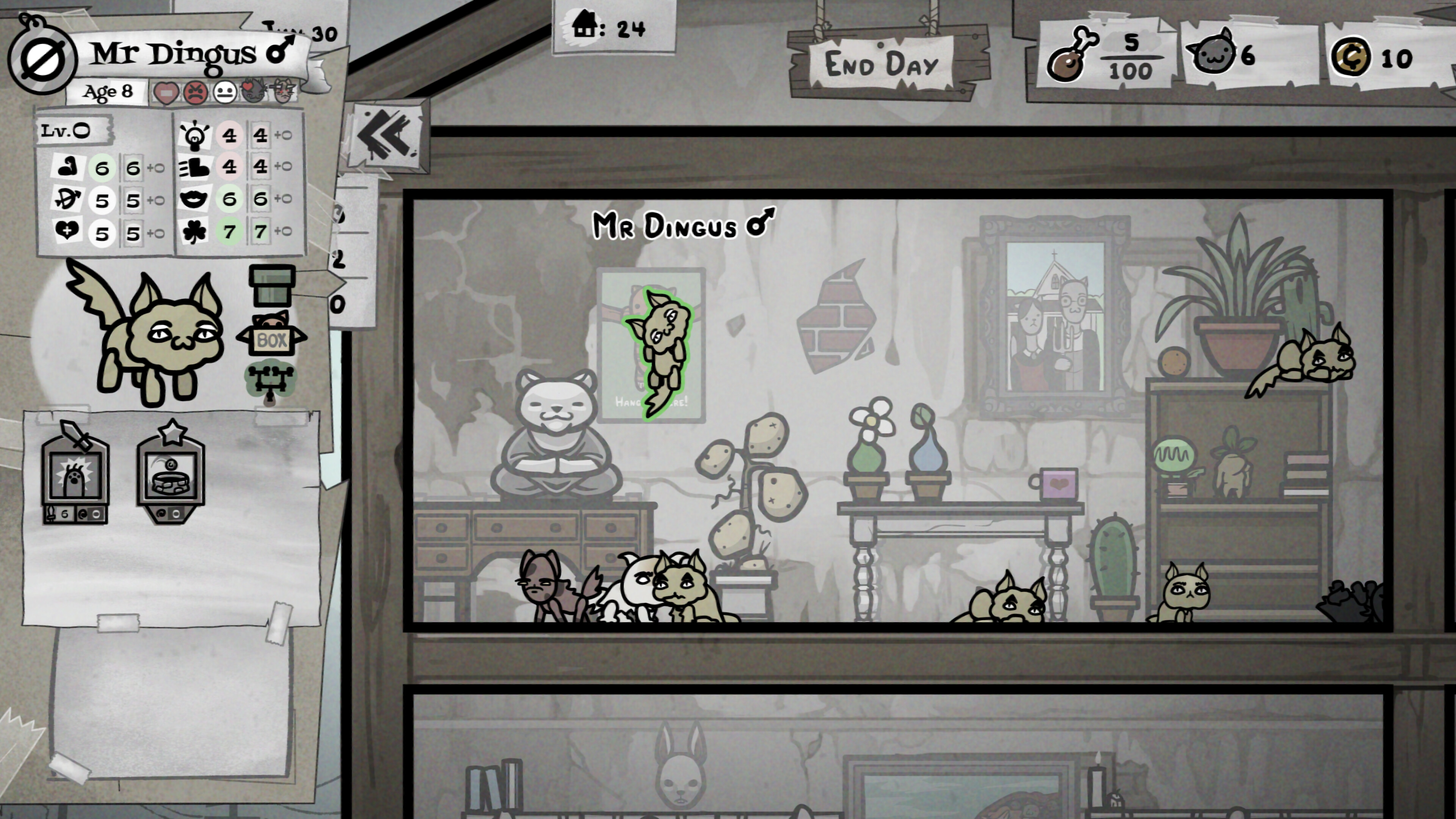
Between runs, you’re managing your cat house and hoping the right pairs breed to create superior offspring. You can’t directly control who mates with whom – instead, you influence breeding through furniture that affects house stats like comfort and stimulation. Too little stimulation and cats might fight each other instead of breeding. Make the house too unappealing and quality strays won’t show up at your door.
The randomness here is simultaneously frustrating and delightful. I’ve spent entire evenings trying to breed the perfect tank bloodline, only to end up with a bunch of half-cleric-half-fighter hybrids instead. But sometimes these accidents turn into happy surprises, like when I got a cat with incredible charisma and defensive stats who became an unkillable support unit.
Mutations add even more unpredictability to the breeding process. These genetic quirks provide mixed bonuses and penalties – my favorite was a mouth mutation that gave gills, providing constant health regeneration while wet. Combined with water-based abilities, this became incredibly powerful in certain environments. The game encourages experimentation and embracing the chaos rather than trying to perfectly min-max everything.
One minor frustration I’ve encountered is the cat management interface. Once your house fills up with dozens of cats across multiple generations, sorting through them to find specific traits or stats becomes tedious. I wish there was better filtering to highlight cats I need for particular runs rather than clicking through each one individually. It’s a small complaint in an otherwise excellent system, but it does slow down the pace between adventures.
Combat Depth and Class Combinations
The class system offers incredible variety through collar assignments. Tanks absorb damage and control space, necromancers summon minions and leech life, druids shapeshift into different forms, clerics heal and support. Each class has distinct ability trees that you build through level-ups after every battle, and the random nature of which abilities appear keeps each run feeling fresh.
What really makes combat shine is discovering broken ability combinations. I had a fighter with a passive trait that gave extra turns after killing enemies face a boss that split into multiple smaller units. I watched in amazement as he autonomously took eight consecutive turns, mowing through the entire enemy formation. Another time, I created a necromancer build that could multiply leech effects across the entire battlefield, dealing hundreds of damage per turn to enemies with barely 50 health.
The game actively wants you to break it. With around 1,000 items and countless ability combinations, finding overpowered synergies is part of the fun rather than something to avoid. That said, death is always lurking nearby. Cats can permanently die if their corpses get hit three times while downed, taking their equipped items with them. The brutality keeps you engaged even when you think you’ve created an unstoppable team.
The Edmund McMillen Aesthetic
You can’t talk about Mewgenics without addressing its distinctive style. This game features copious amounts of poop, weird mutations, gross-out humor, and sexual content that some players will find off-putting. It’s the same aesthetic McMillen brought to The Binding of Isaac, just applied to cats instead of crying children in basements.
Personally, I find the humor juvenile but charming in its commitment to being ridiculous. Ability descriptions that just say “he go” for movement, the absurd boss designs, the random events that can give your cats parasites or disorders that make them eat poop – it’s all so deliberately over-the-top that it loops back around to being funny. Your tolerance for this style will significantly impact your enjoyment of Mewgenics.
Verdict: A Weird Masterpiece of Strategic Chaos
Mewgenics isn’t for everyone. The learning curve is steep, the humor is polarizing, and the randomness can feel overwhelming at first. But if you embrace the chaos and dive into its systems, you’ll find one of the most unique tactical RPGs in recent memory.
The combination of meaningful tactical decisions, long-term breeding strategy, and absurd humor creates something special. I’m 35 hours in and still encountering new enemy types, items, and mechanics. McMillen estimates there’s 200 hours of content here, and I absolutely believe him.
This game rewards experimentation, adaptation, and creativity rather than perfect execution of optimal strategies. Every run tells a story – sometimes of triumph, sometimes of hilarious disaster. That’s exactly what makes Mewgenics so compelling. It’s messy, chaotic, occasionally frustrating, and absolutely brilliant.
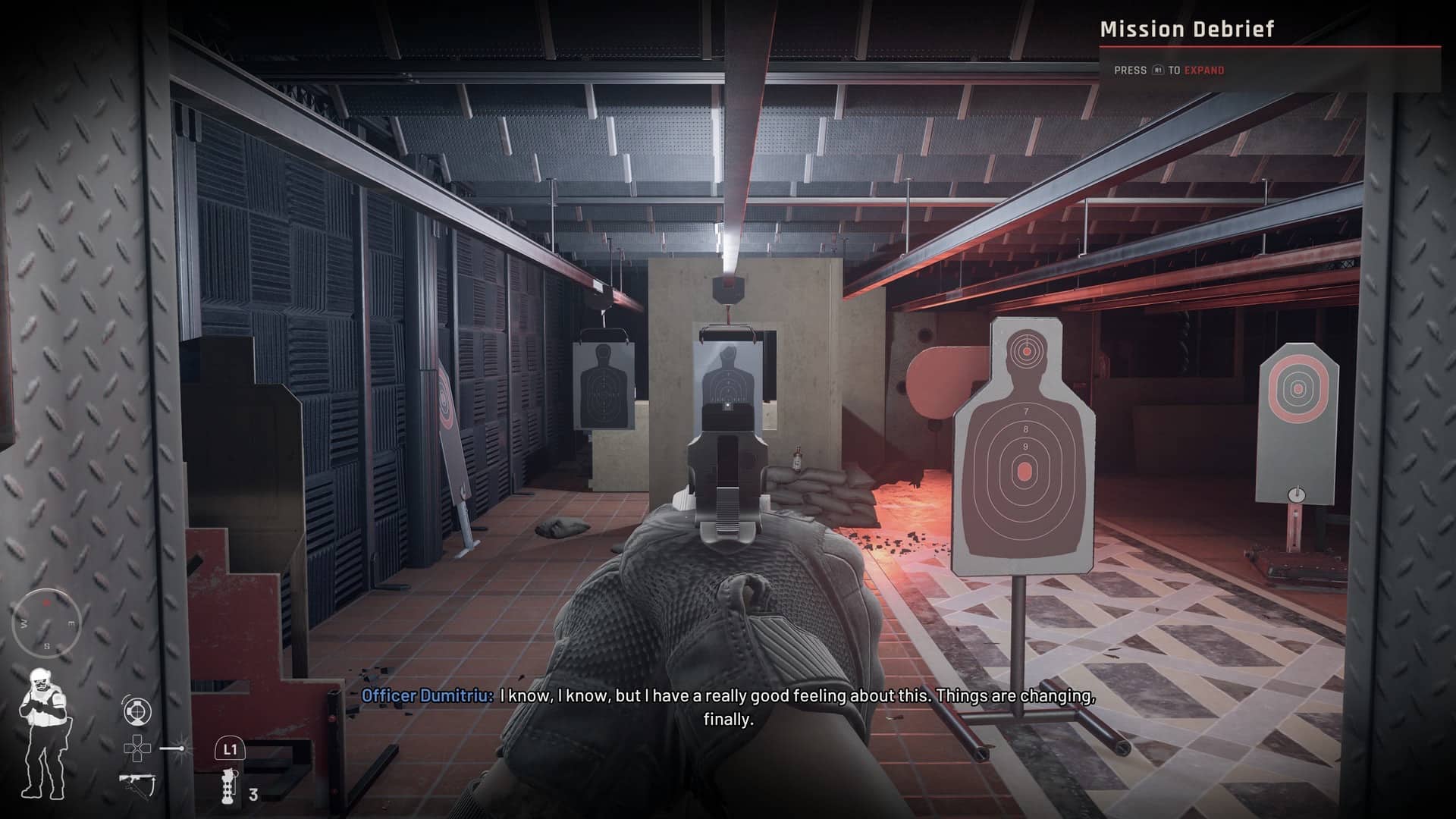
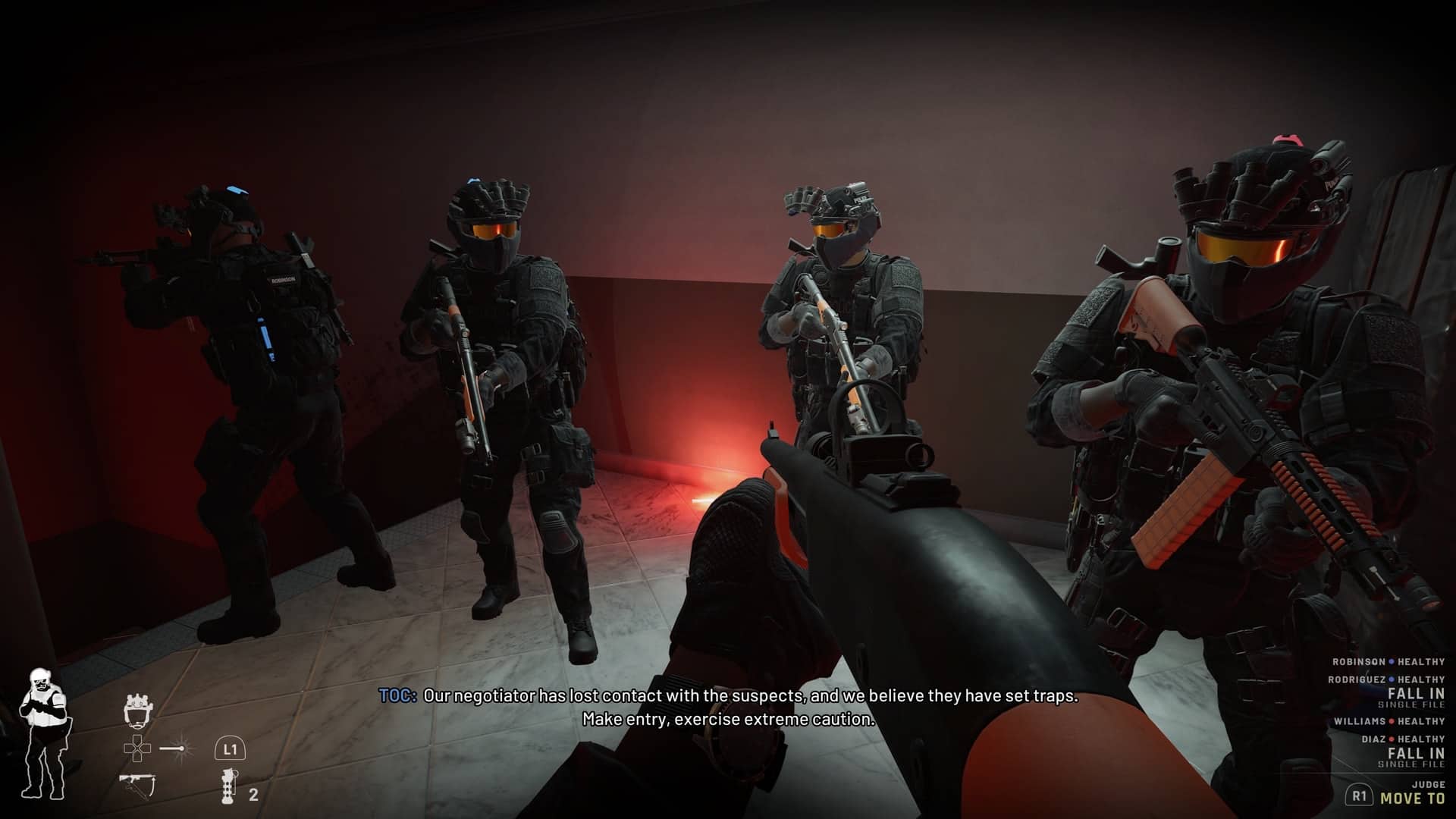
The work of security forces ranks among the most important in our society, and there’s no doubt that without their operations, it would descend into absolute chaos. The sight of a soldier, police officer, or even a member of special forces has always stirred in me not only respect but also curiosity. You probably won’t be surprised that I spent a substantial part of my childhood playing soldiers with a friend. Fortunately, I never came even remotely close to the kind of danger this work entails. Thanks to Ready or Not, I got to experience firsthand that wearing such a uniform conceals not only incredibly brave labor but also some pretty nasty stuff.
Weplaygames Youtube Channel: Ready or Not tactical FPS gameplay
Command Weight
You’re wondering what could be harder than doing the job of a special forces member? Well, the job of their commander. That’s exactly the role the creators of this tactical hardcore shooter put you in. In the singleplayer portion, which doesn’t hide any deeper story, you’re put in charge of several officers who will accompany you on various missions. You’ll primarily be eliminating terrorists, attempting to arrest wanted individuals, protecting civilians, or defusing explosives. That doesn’t mean, however, that you’ll only be barking orders, as was the case in the SWAT game series.
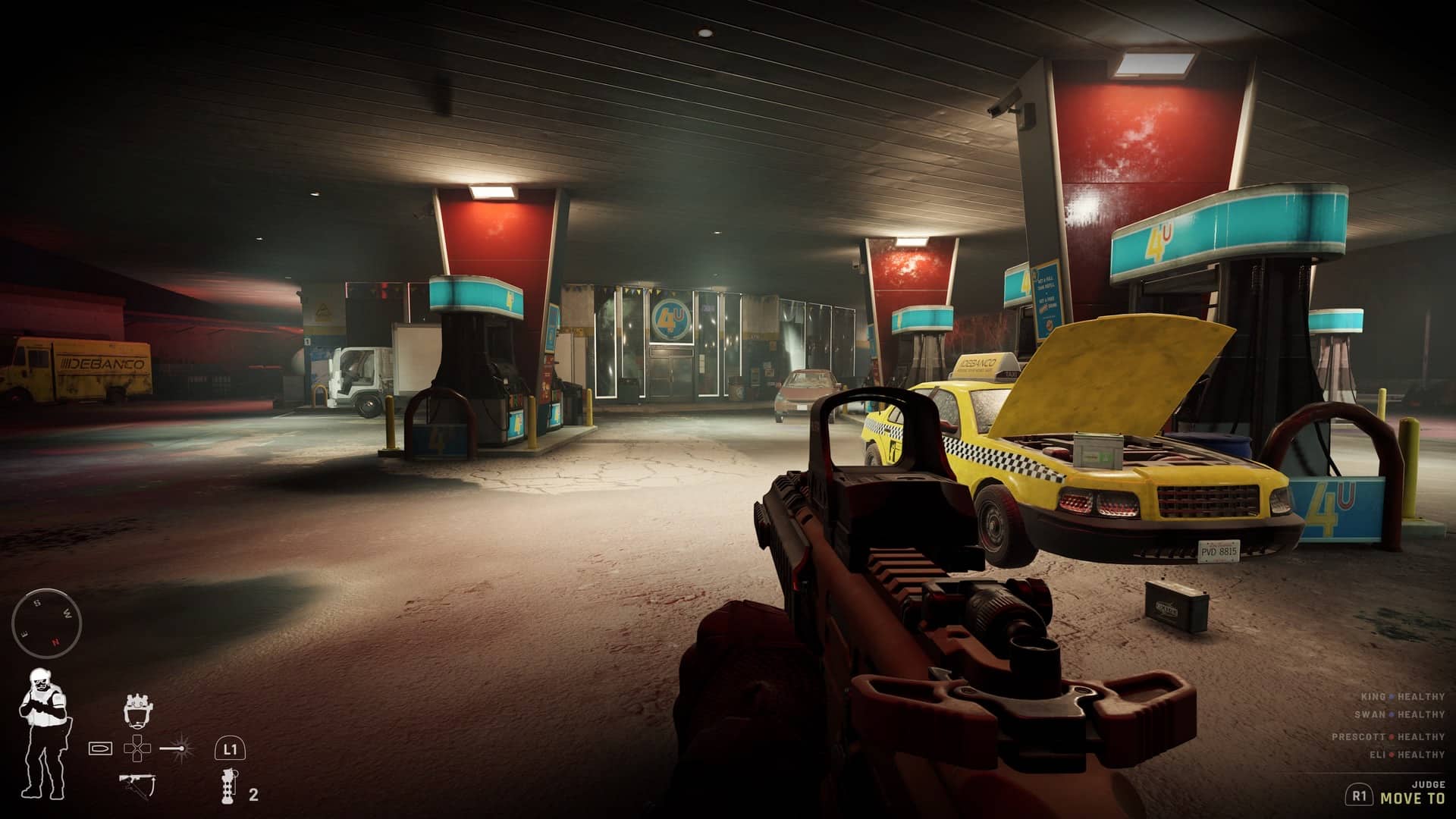
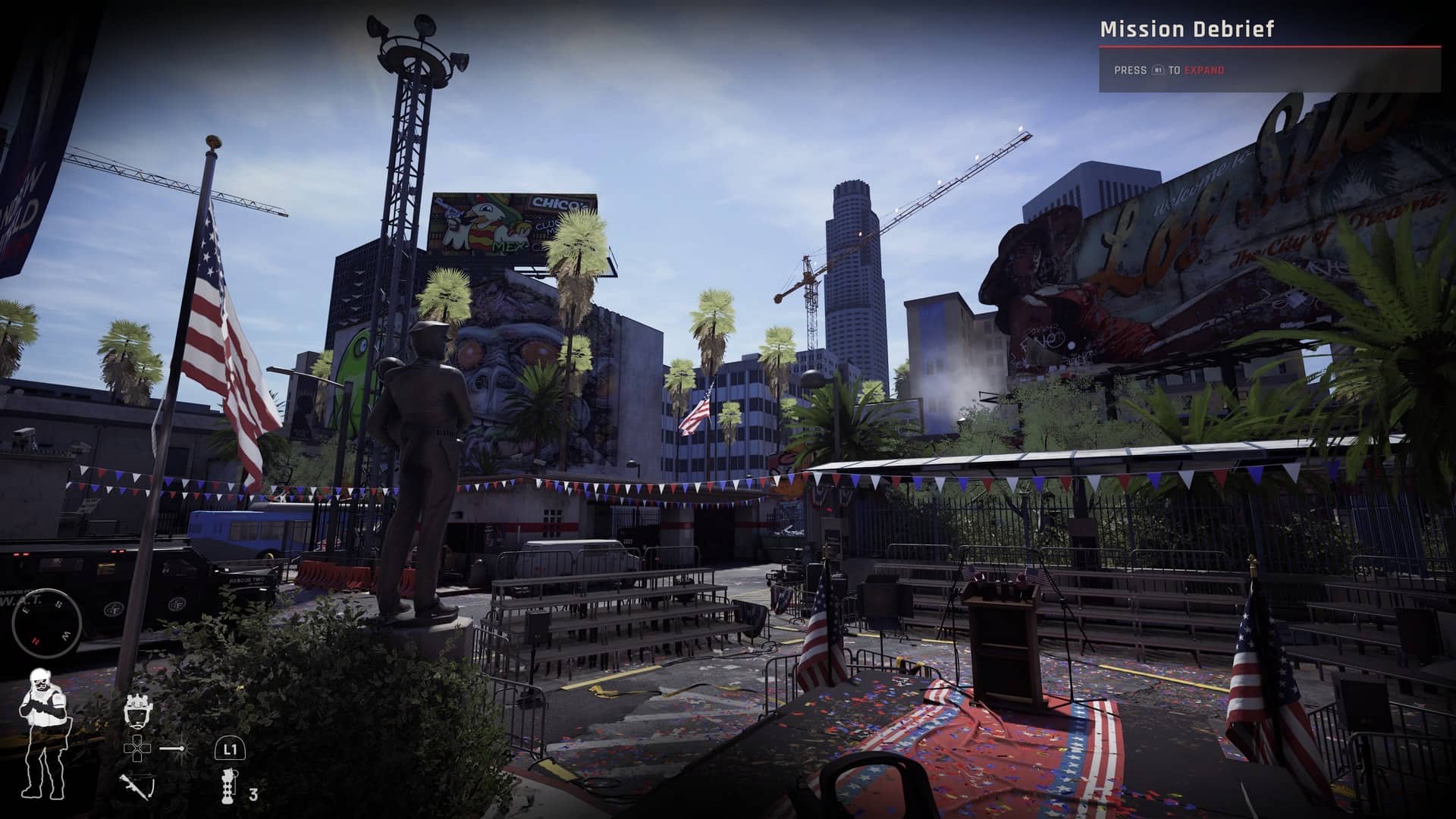
Ready or Not – Gas station mission 2
You’ll also be monitoring the mental state of your unit members. Officers are psychologically affected by injuries sustained in combat, the death of a colleague, or difficult situations where civilian casualties occurred. They can gradually find themselves stressed or depressed, which can also mean their complete departure from the team. It’s up to you whether you decide to be a good commander, care for them and send team members to therapy—which means their temporary removal from the squad—or be ruthless, firing them at the first opportunity and replacing them with new ones.
The stress system thus only functions as long as you want it to. In practice, this means that if instead of sending your officers to therapy you fire them and subsequently hire one after another, you won’t be penalized in any way. Hiring new officers costs nothing, and for many, this can mean an easy way to circumvent the system. If you don’t really immerse yourself in the game, you’ll miss out on a rather essential element revealing the issues of this profession. Although… it depends how you look at it. It’s still a game where massacre follows massacre, but while I wouldn’t want to in any way dishonor the work of these forces, the truth is that their deaths are rather rare. After all, these are trained unit members who are prepared for almost anything.
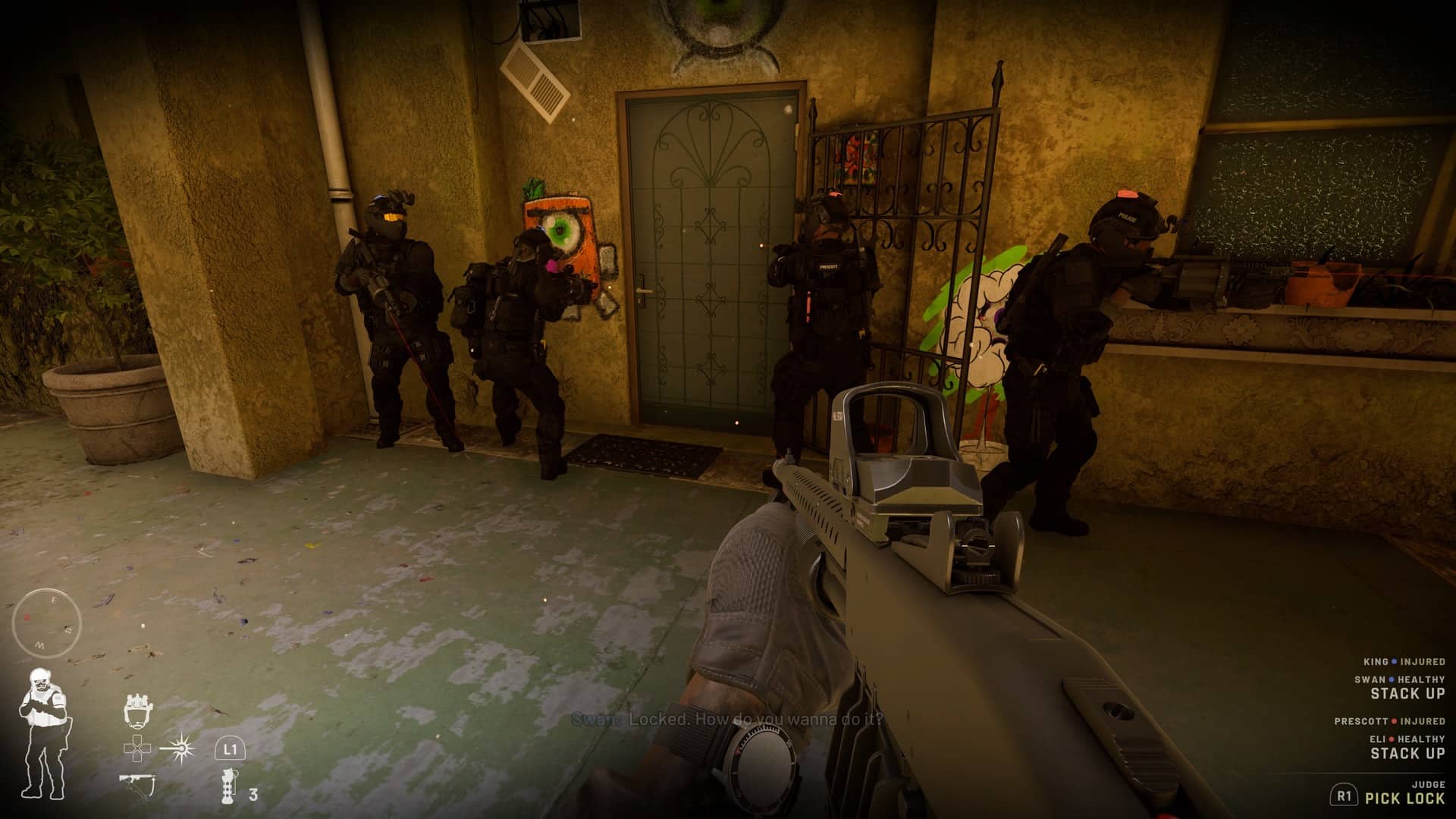
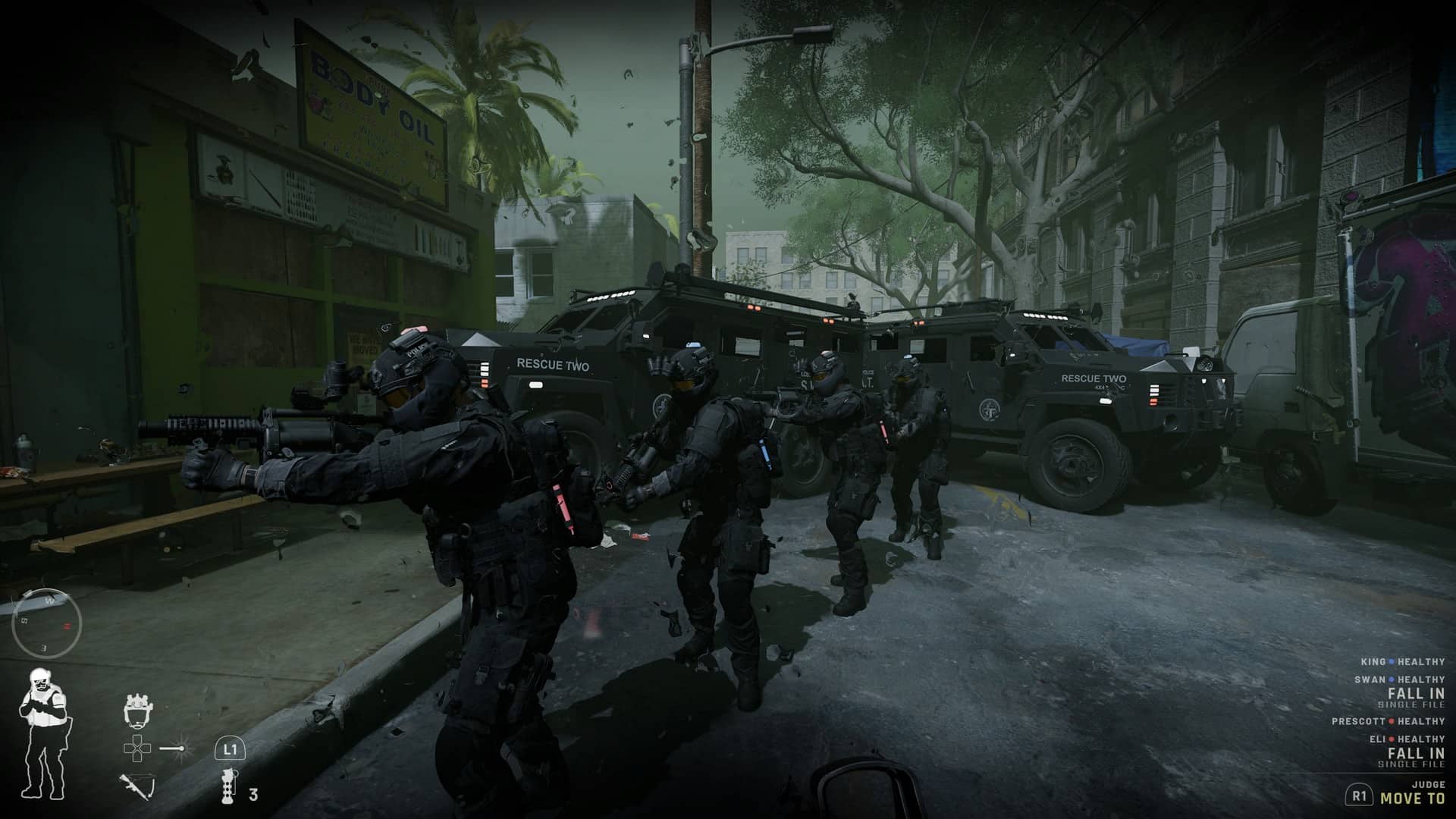
Ready or Not – Ready for breach
Missions That Stick
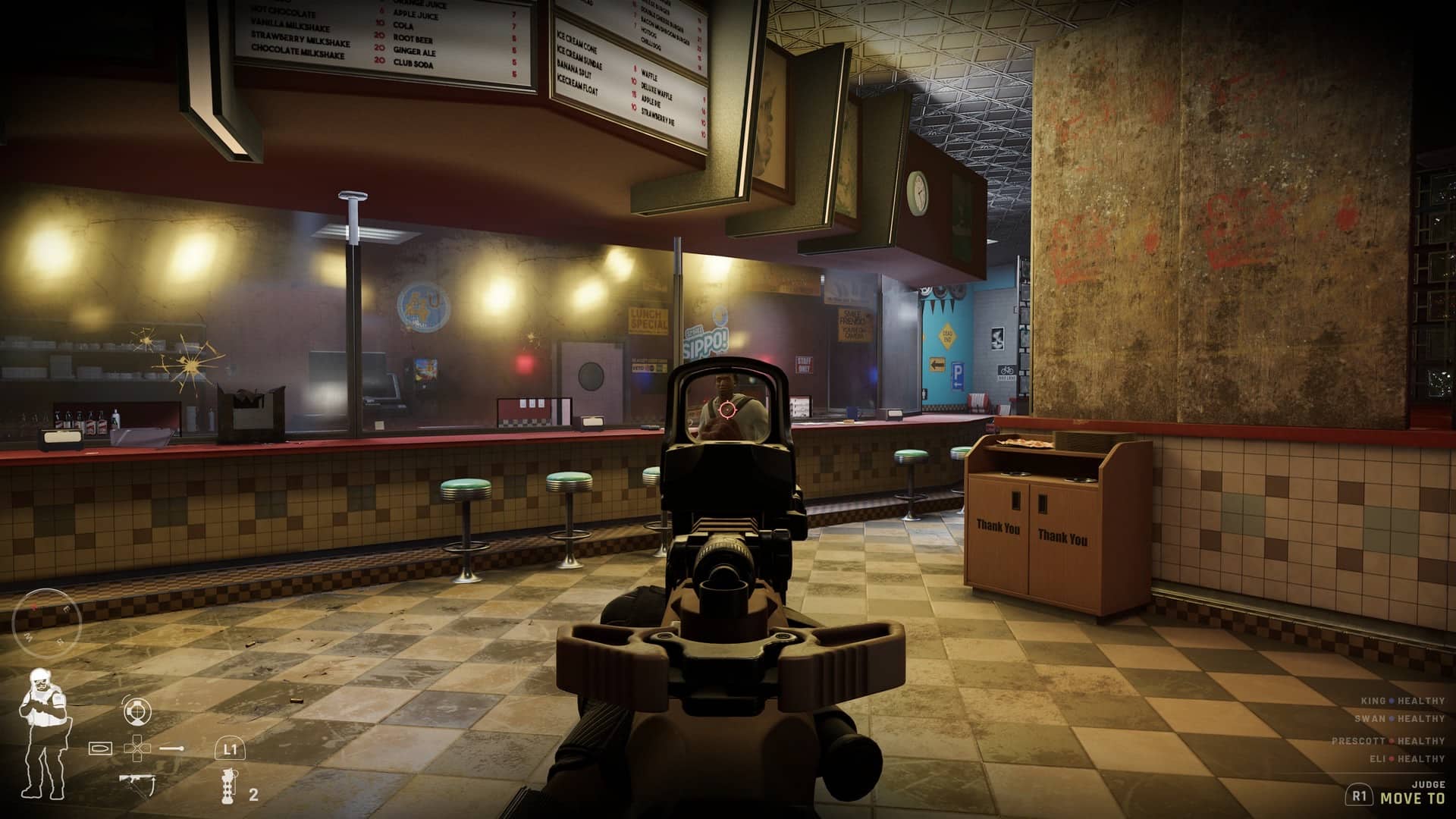
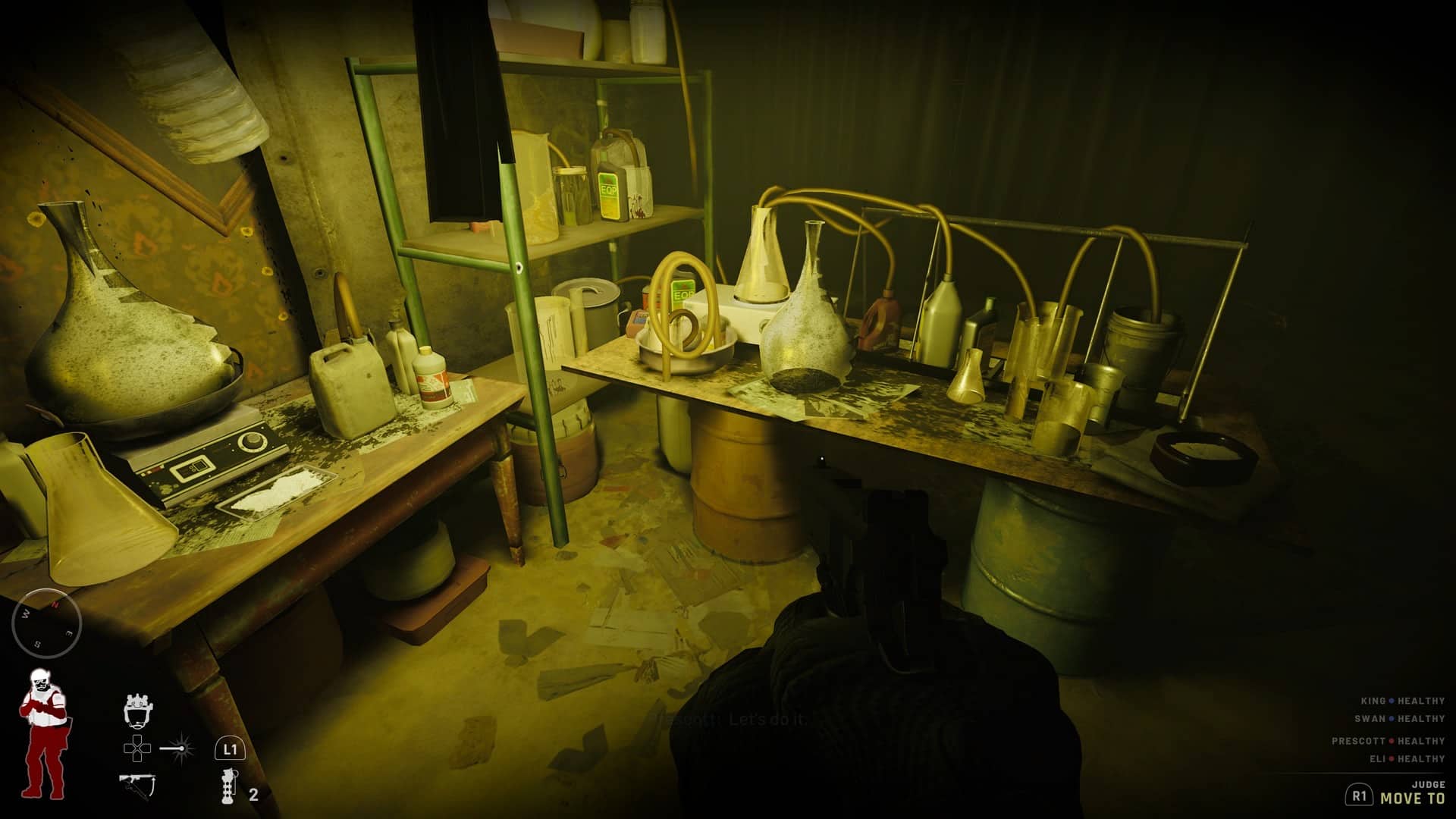
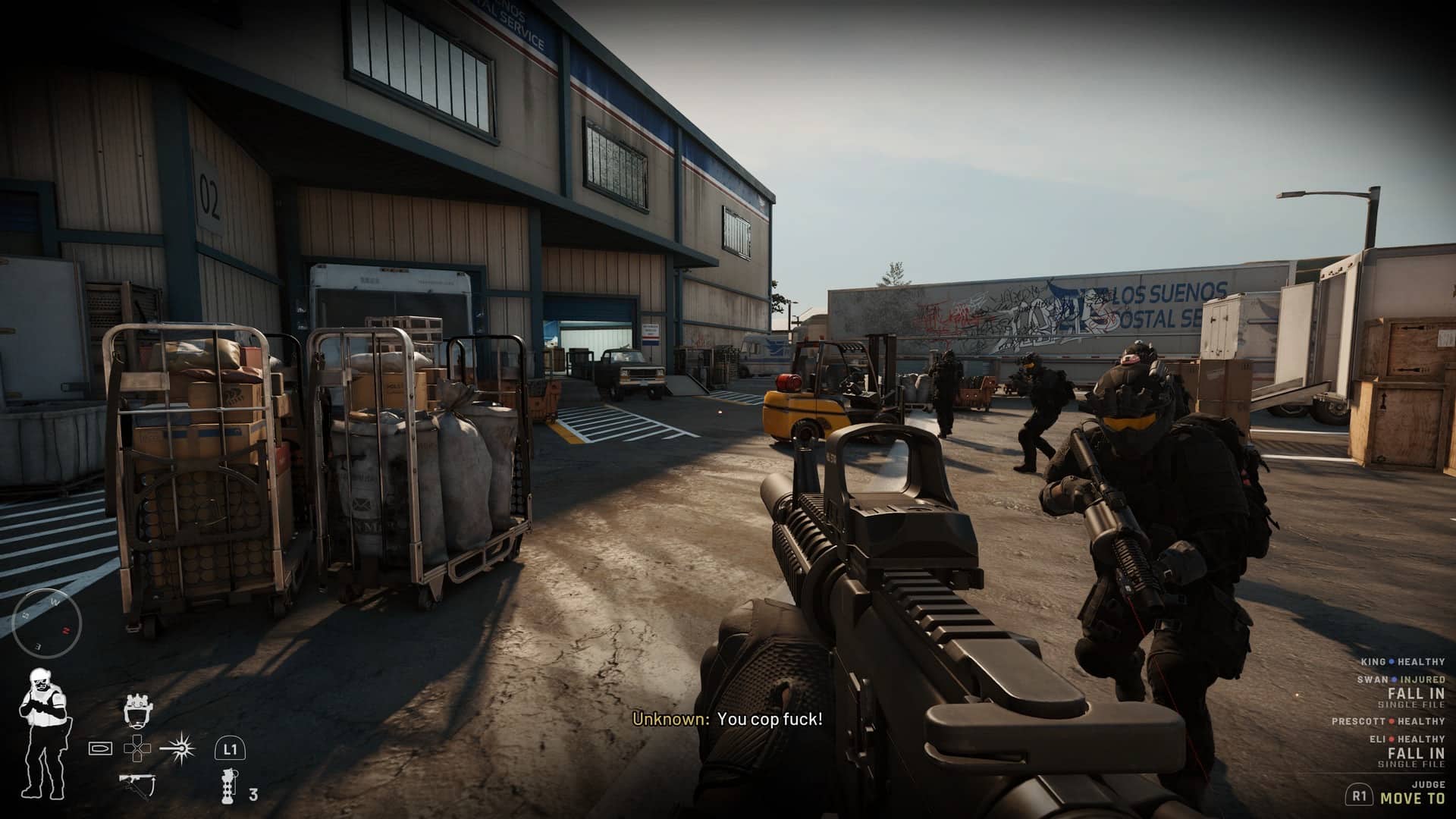
With my own eyes, I was deployed with my team against a gas station robbery, a hospital massacre, a village full of cultists with an atmosphere reminiscent of the horror game Resident Evil Village, a nightclub seemingly inspired by the John Wick films, or the lair of a crazed streamer. The believability of the levels is enhanced by meticulously crafted environments full of thematic elements that, upon closer examination, excellently connect the given cases. These aren’t just mere backdrops, quite the opposite. Each mission has a unique atmosphere that I’ll probably associate with this game forever. Ready or Not simply succeeds in showing an undistorted reality where in one second you can make a mistake that will mean lots of blood and unnecessary loss of life. And when I say unnecessary, I mean truly unnecessary. Among the terrorists and criminals move civilians whose survival is just as crucial as the actual neutralization of the enemy.
Ready or Not – Police station outside
Split-Second Calls
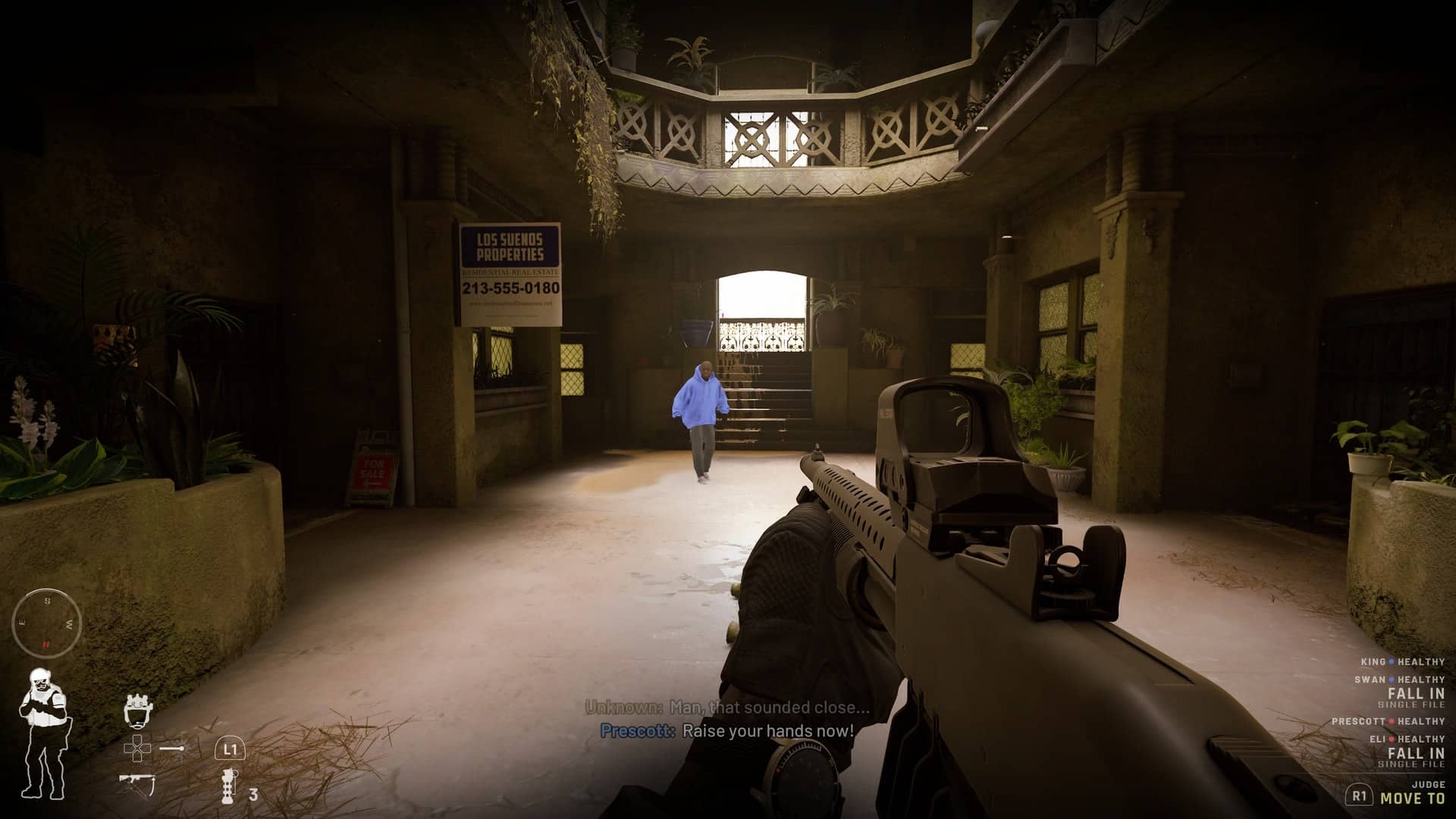
And here comes the risk factor. Correctly assessing a situation where it’s just an unarmed civilian is often complicated by their very behavior. Imagine, for example, a situation where part of your unit gets into a firefight and you, in haste and trying to support them, encounter a person who doesn’t comply with repeated commands to raise their hands and instead pulls out a phone. Even in relative calm, this is a situation that’s difficult to resolve. Let alone in chaos, during which your colleagues are dying nearby.
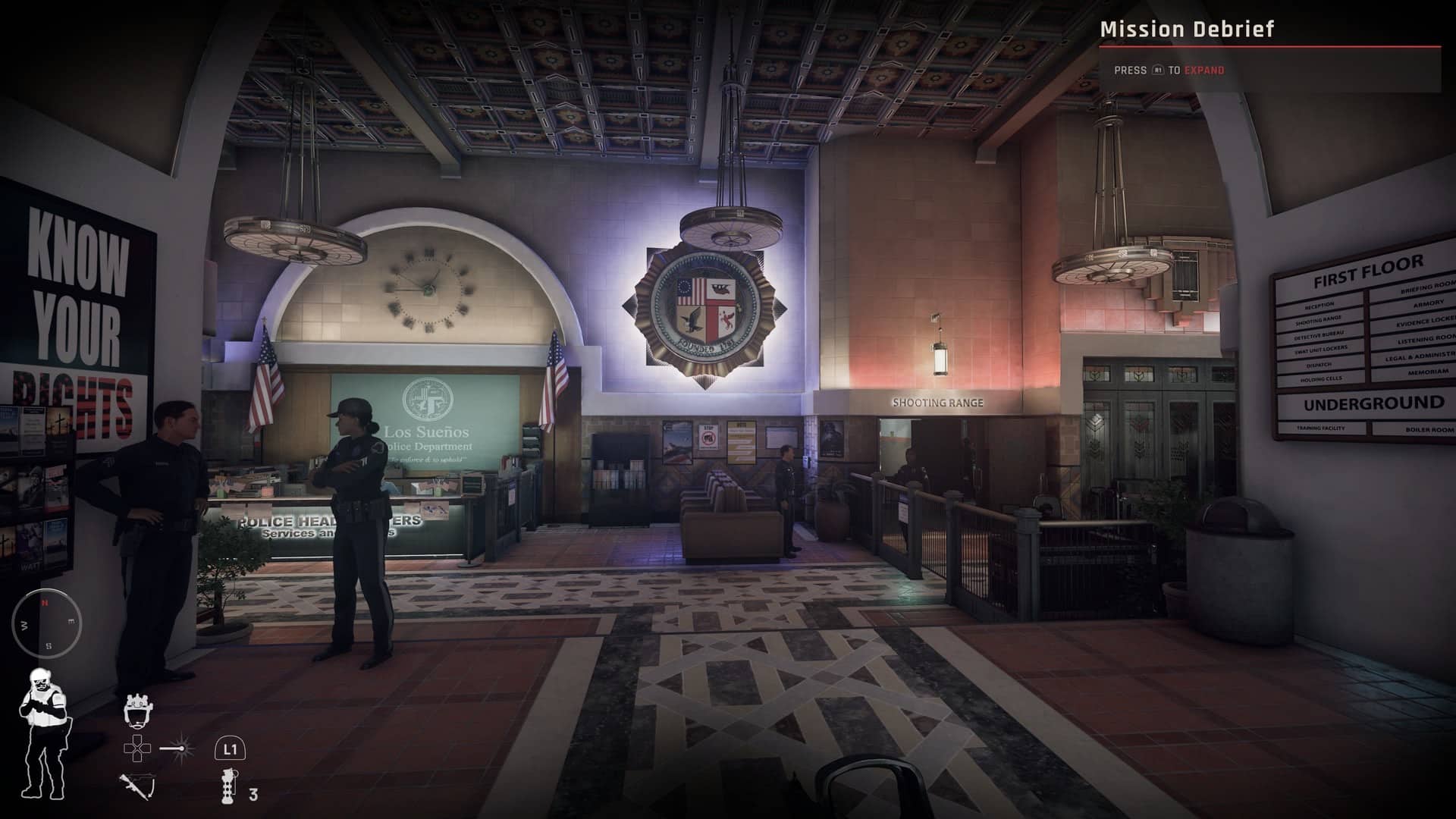
Even though the game is primarily designed as a cooperative title, the singleplayer portion can bring you at least a partially realistic view of the effort these forces put in, which most of us can’t even initially imagine. On the other hand, the game would be much better suited to dialogue cutscenes and perhaps the opportunity to peek behind the curtain of the daily lives of these forces, who must cope with the loss of their colleagues in addition to their own duties. Unfortunately, that didn’t make it in. Instead, I could only examine the unused detailed station environment and local characters who just stare at you without a single line of dialogue or mind their own business. The storyline, if it can be called that, is spread only across briefings that I could replay via audio track before deployment, yet I still felt that the story didn’t make it into the full version.
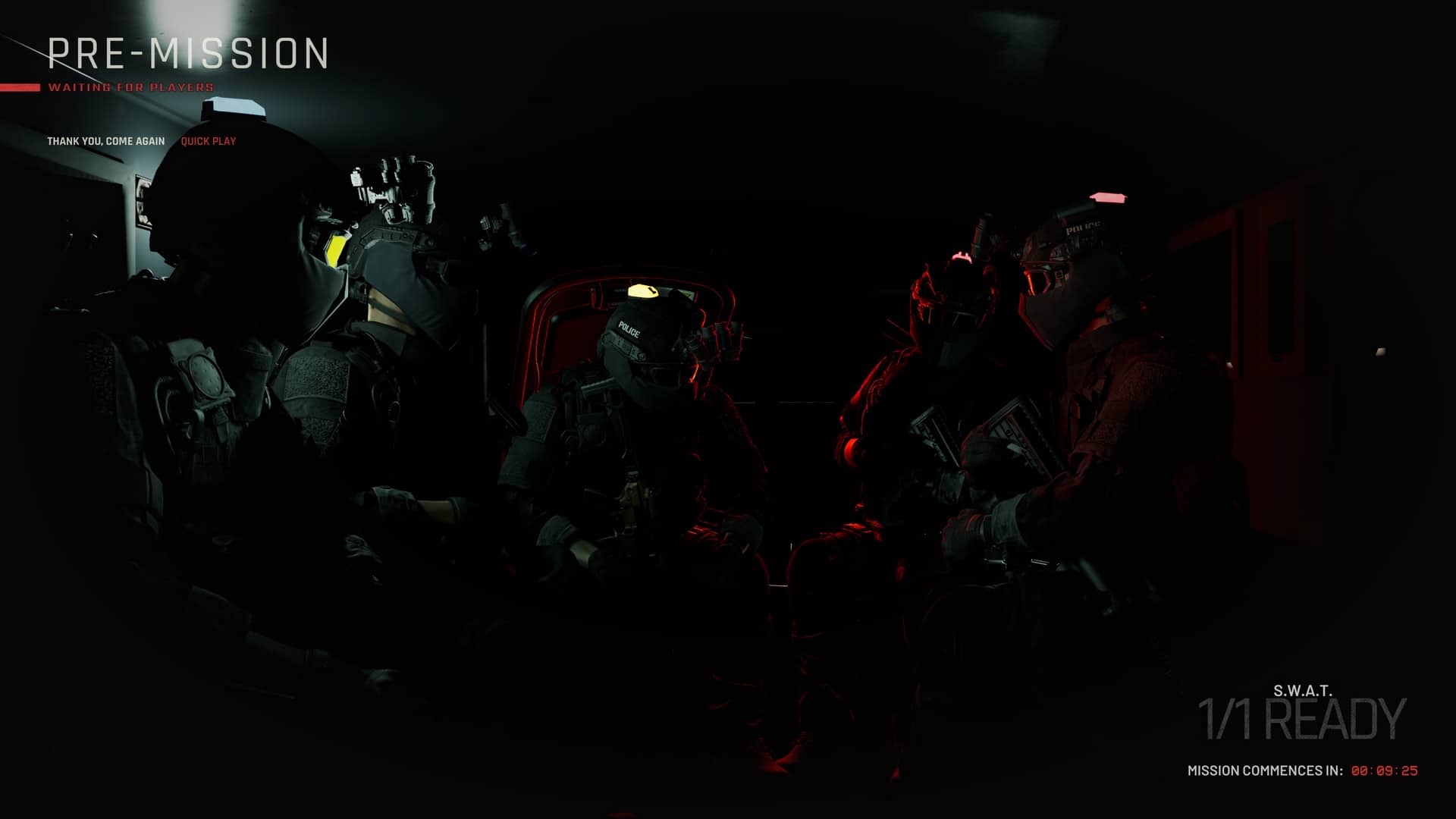
Ready or Not – Team ready
SWAT’s Heir
That doesn’t mean, however, that you won’t enjoy the singleplayer with AI colleagues playing through the same missions as in co-op. If you were a fan of the SWAT series, I wouldn’t be ashamed to call Ready or Not its spiritual successor, offering you more extensive options. You don’t necessarily have to kill enemies but can first incapacitate them with a flashbang and thus force them to surrender. In these cases, however, speed plays a major role, because if you don’t pacify the gunman in time, even after securing the firearm, they can pull out a backup weapon and make a big mess. But it’s not just the enemy who can do this—there are also non-lethal means like pepper spray or a taser in the arsenal, so completing the sub-task of arrest instead of killing doesn’t have to be necessarily unrealistic.
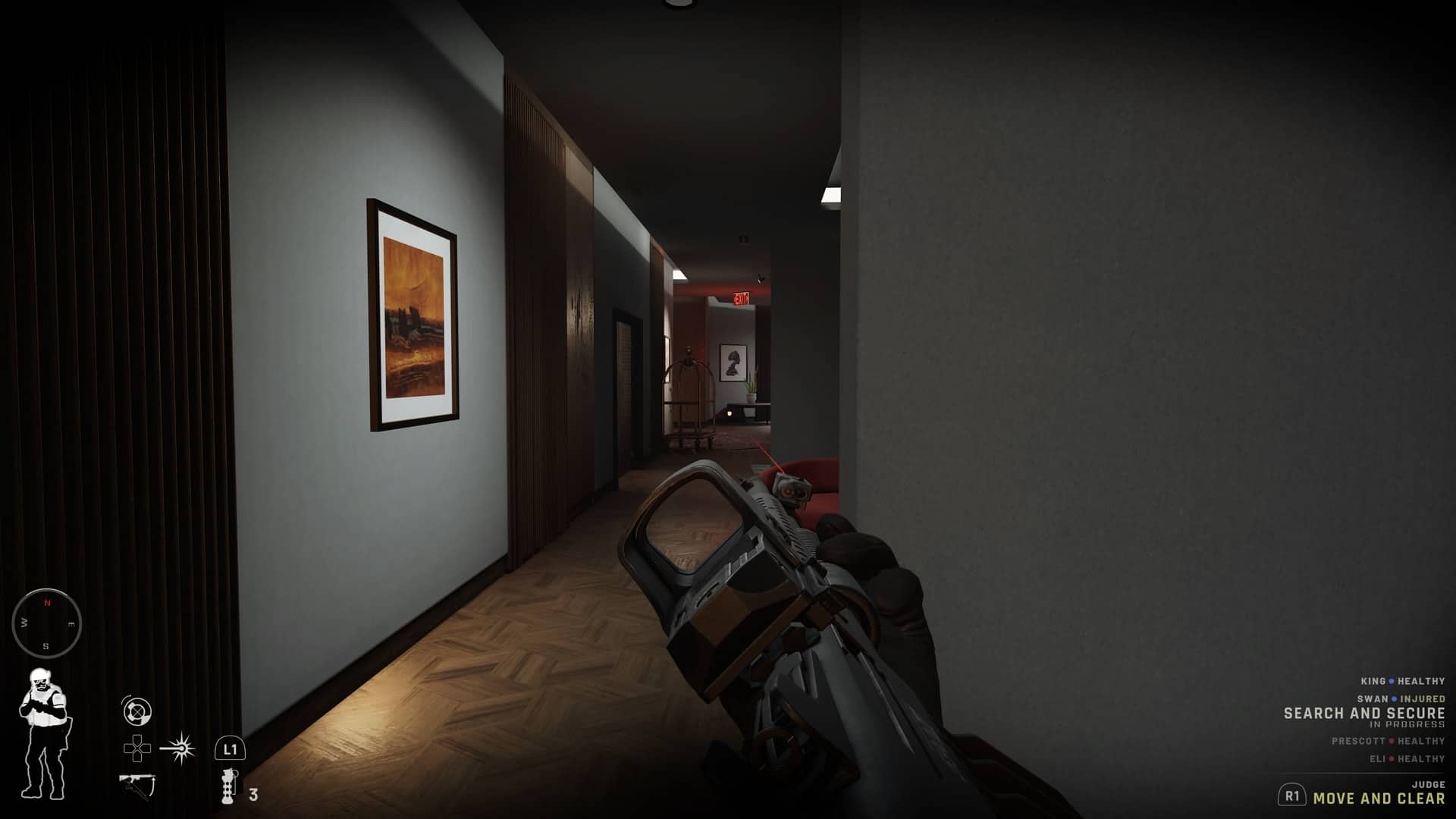
Ready or Not – Hotel hallway
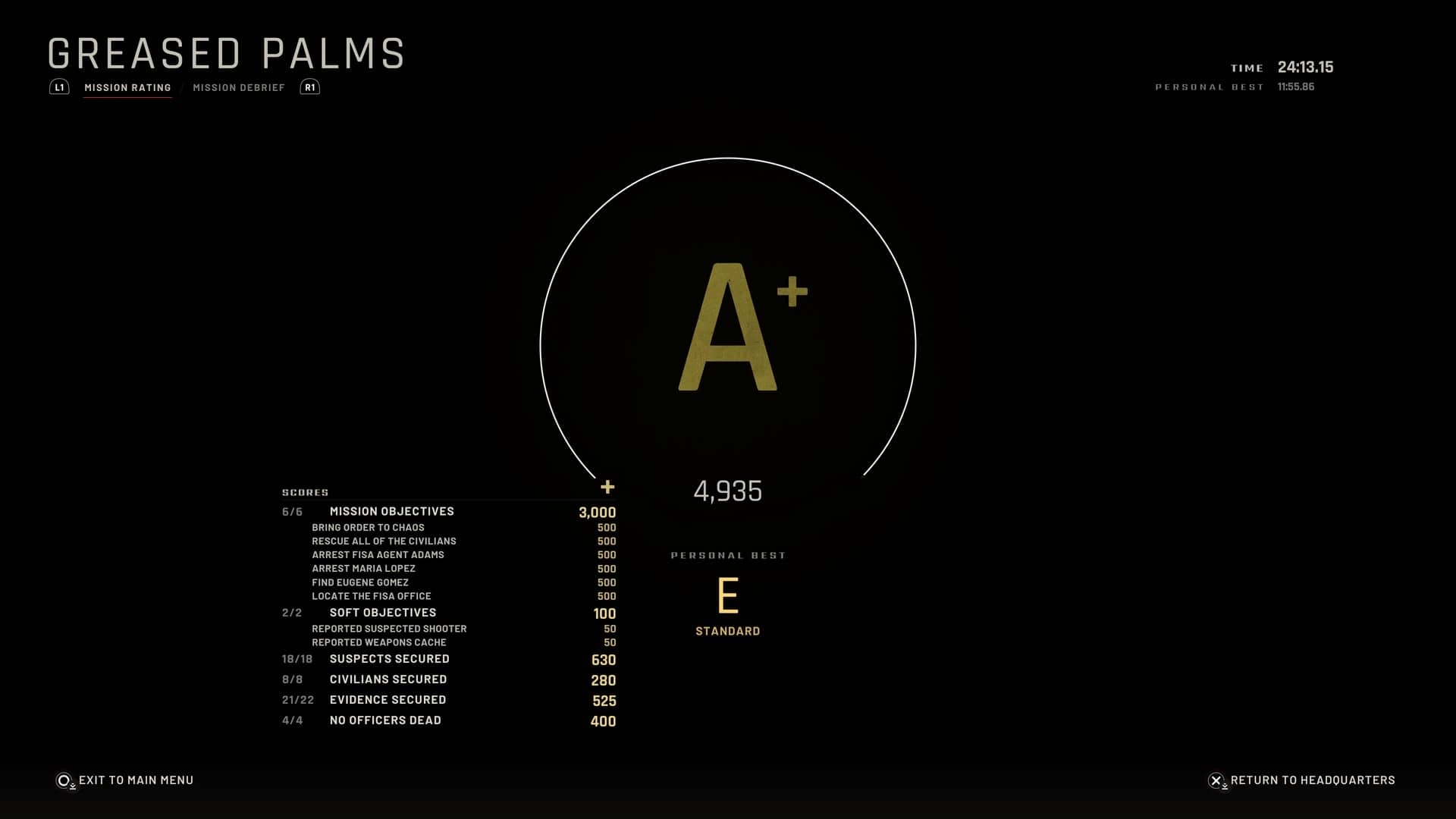
You’d be hard-pressed to find a better opportunity to try out the work of special forces. Still, I regret how close VOID Interactive studio came to perfection, yet some refinement is still needed even after the PS5 release that came later. I’m curious myself whether other types of rewards will be added beyond what’s currently available. Those are only cosmetic and exclusively clothing, not weapons, which are open from the start along with all other accessories. Each playthrough earns a grade at the end based on meeting certain criteria, such as whether your colleagues and all civilians survived. If you achieve the required grade, you’ll unlock, for example, a new tattoo or perhaps boots. But it won’t add any bonuses.
Where Co-op Lives
If you’re getting this title primarily for co-op and you actually have people to play with, I dare say you’re not looking at dozens but easily hundreds of hours of fun. I myself already have over 80 hours in the game and enjoyed most of them. Coordination of your team is key, and if you opt for anarchy and a solo approach, you’ll die. All of you, to the last man.
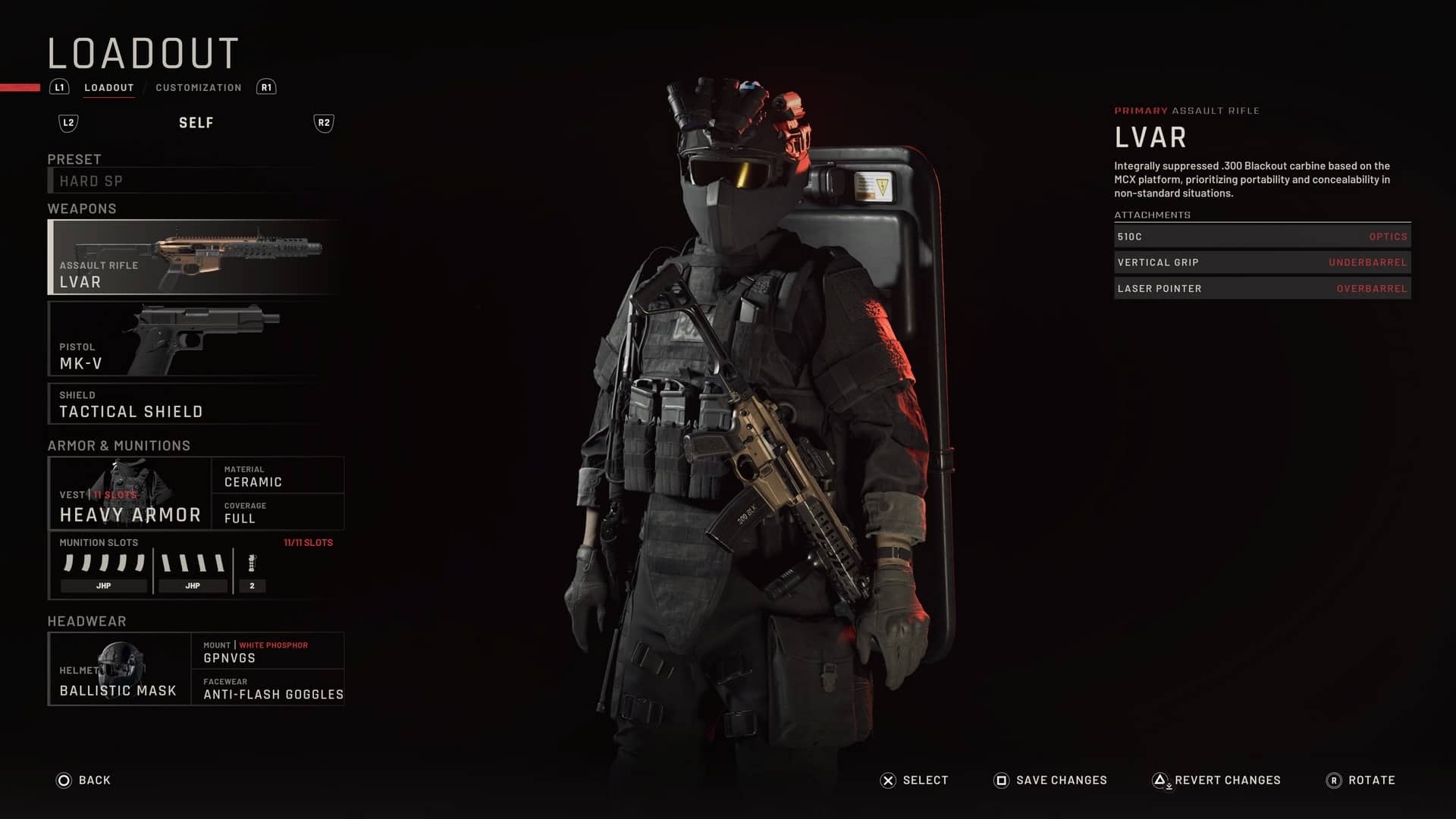
Ready or Not – Heavy armor loadout
Now it’s time to move on for a moment to the negatives. I can say right away that the enemy AI is sometimes simply unfair and equally demanding regardless of how many players you’re currently playing co-op with. It often happened to me that I carefully checked a room corner by corner and the strike came through a window. I admit, it’s realistic and I could indeed lose my life that way. However, any passage through the same level by the window often meant instant death or serious injury and absolutely perfect enemy accuracy. But it’s not just predetermined locations—for example, peeking through a hole in a fence. I barely glimpsed anything and took a bullet to the head. And that’s something that after 20 minutes of walking through the level really started to bother me, although we’re talking more about the higher difficulty.
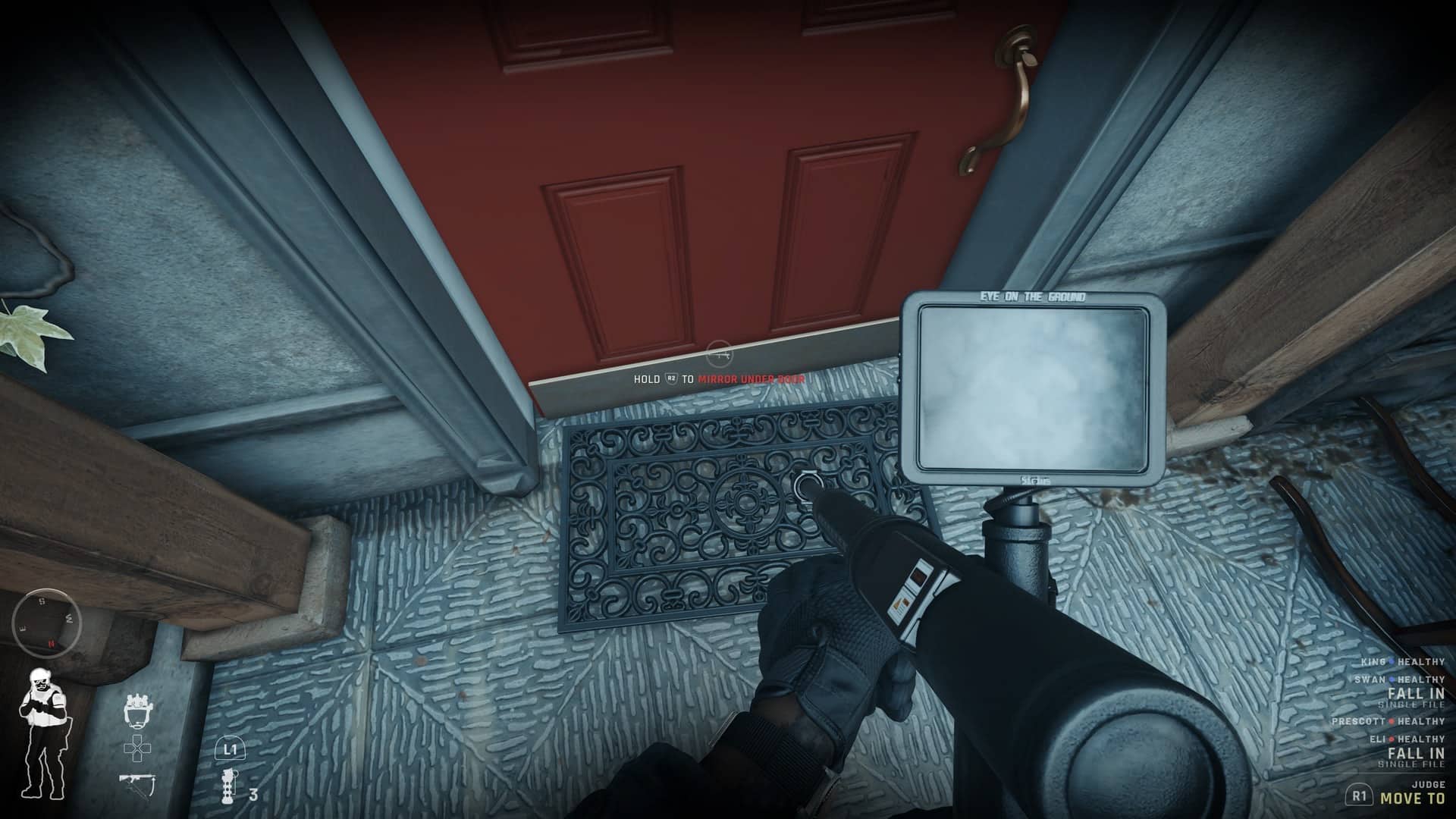
Fortunately, similar situations don’t happen that often, and in practice it means that while you won’t avoid the occasional cursing, the playthrough with your friends will still be really fun. Especially if you surround yourself with a team that strives for professionalism. If you really want to enjoy co-op, you should determine right at the start who will be breaching doors with a ram, checking under them with a mirror, covering with a shield… And most importantly—who will take on the role of commander. Uncoordinated movement through the level primarily means failure. Unlike a progression where you report the status room by room. And maybe in retrospect I’d recommend going through at least part of the aforementioned singleplayer, which can adequately prepare you for potential command.
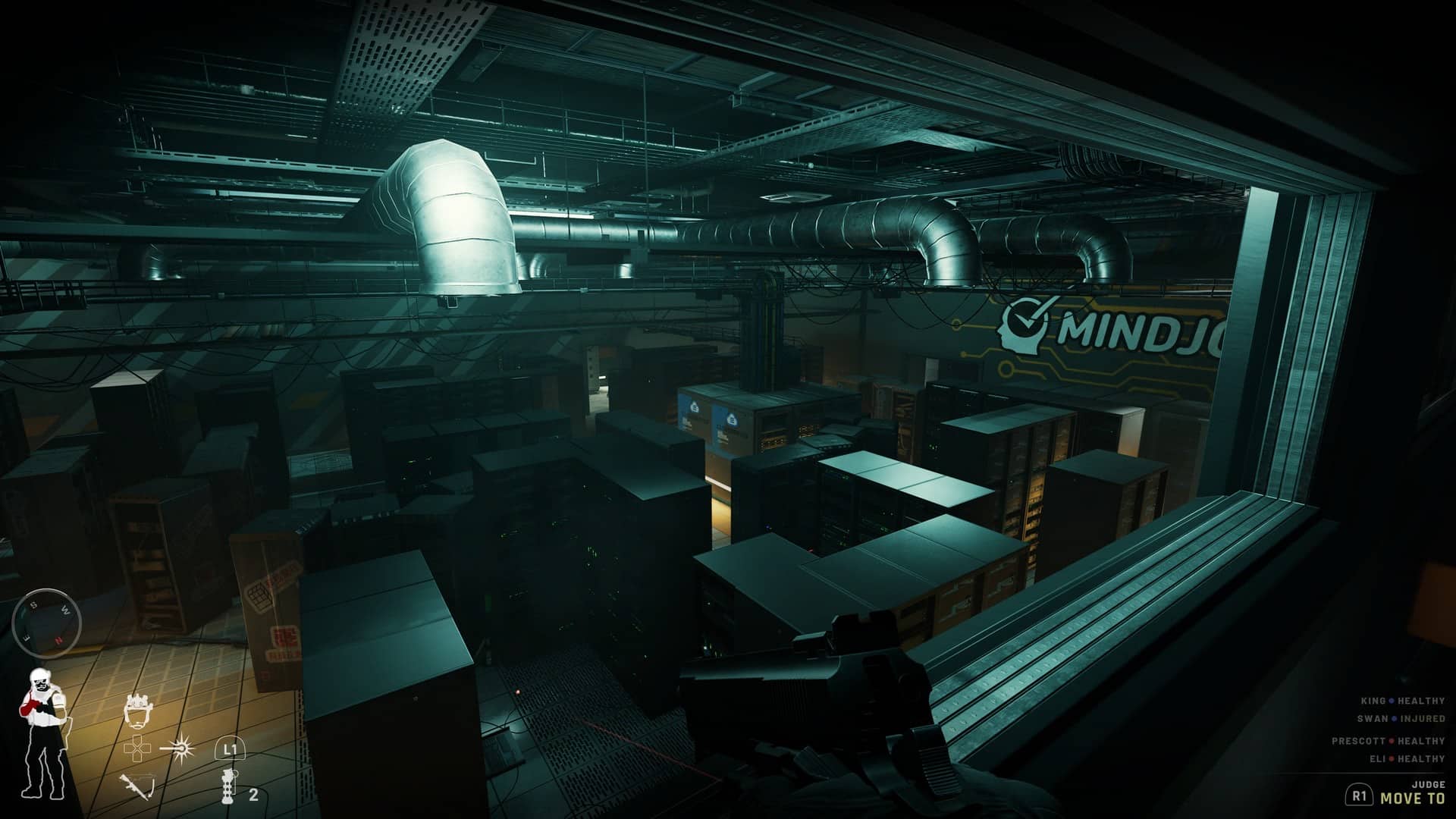
Ready or Not – Server room
Loadout Depth
The selection of equipment is rich. Besides specialization in carrying a shield, ram, or mirror, you can choose between different types of explosives and stunning devices. The type of armor and bulletproof vest is also important. While in lighter gear I could carry more ammunition, in heavy gear I could withstand more but had to conserve bullets. So everything depends on what playstyle suits you best. Personally, I preferred to choose more durable armor with fewer magazines for a more cautious approach than light armor with more ammunition. And this goes hand in hand with the arsenal of weapons. It’s rich and offers submachine guns, assault rifles, shotguns, and pistols. The feel of shooting is different for each weapon. They differ in recoil, animations, sound, and you simply know which weapon you’re currently using. You don’t need any colored skin or print to recognize the given weapon. A single shot is enough. And if Ready or Not excels at anything, it’s definitely the awareness of what power each of your rounds represents.
Ready or Not – Gas station mission
Tactical Pace
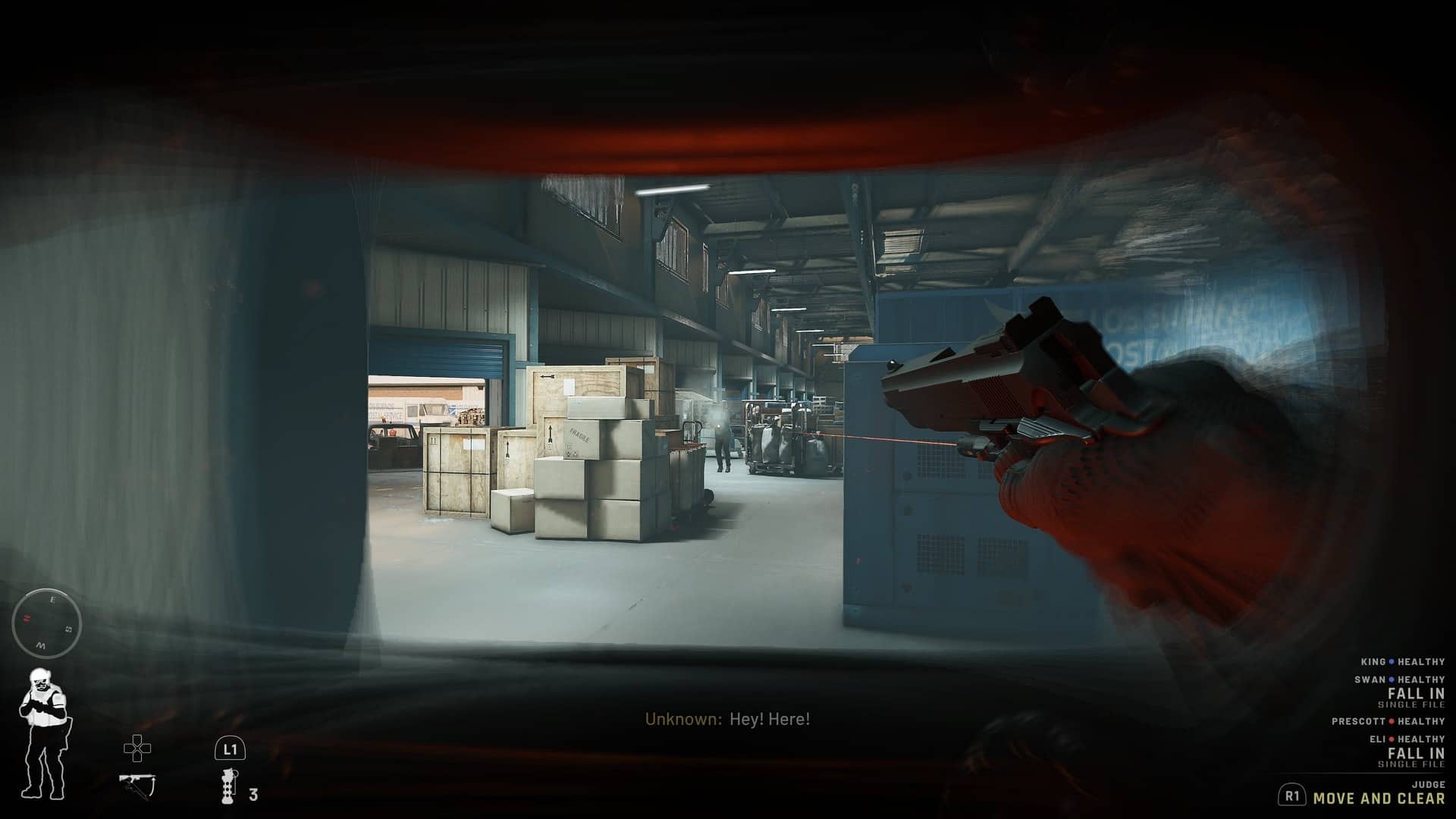
This is also aided by the slower pace. Ready or Not is first and foremost a tactical shooter that isn’t characterized by sprinting and frenzied shooting across the entire map. The freedom of movement is quite verified for players. Such common leaning left and right from around corners can be done smoothly and in increments here. Just as you can move your body up and down from standing to crouching. Thanks to this, you can examine each room and space to the smallest angle and thus avoid overlooking a possible enemy. Furthermore, immersion is characterized not only by magazine check options but also quick reloading, which although you’ll lose a half-empty magazine, you’ll load a new one into the weapon much faster. Or you can just swap the half-empty one for a full one when you know a bigger firefight awaits and you don’t want to get into a situation where you have to reload during combat chaos. I mustn’t forget the alternative aiming when hip-firing. The implementation of lasers when hip-firing deserves praise. They don’t serve here merely as a cool accessory that only shines where you’re aiming, but I actually achieved more accurate close-range hits with it than when using traditional sights.
Ready or Not – Securing a civilian
Your Rules, Your Mistakes
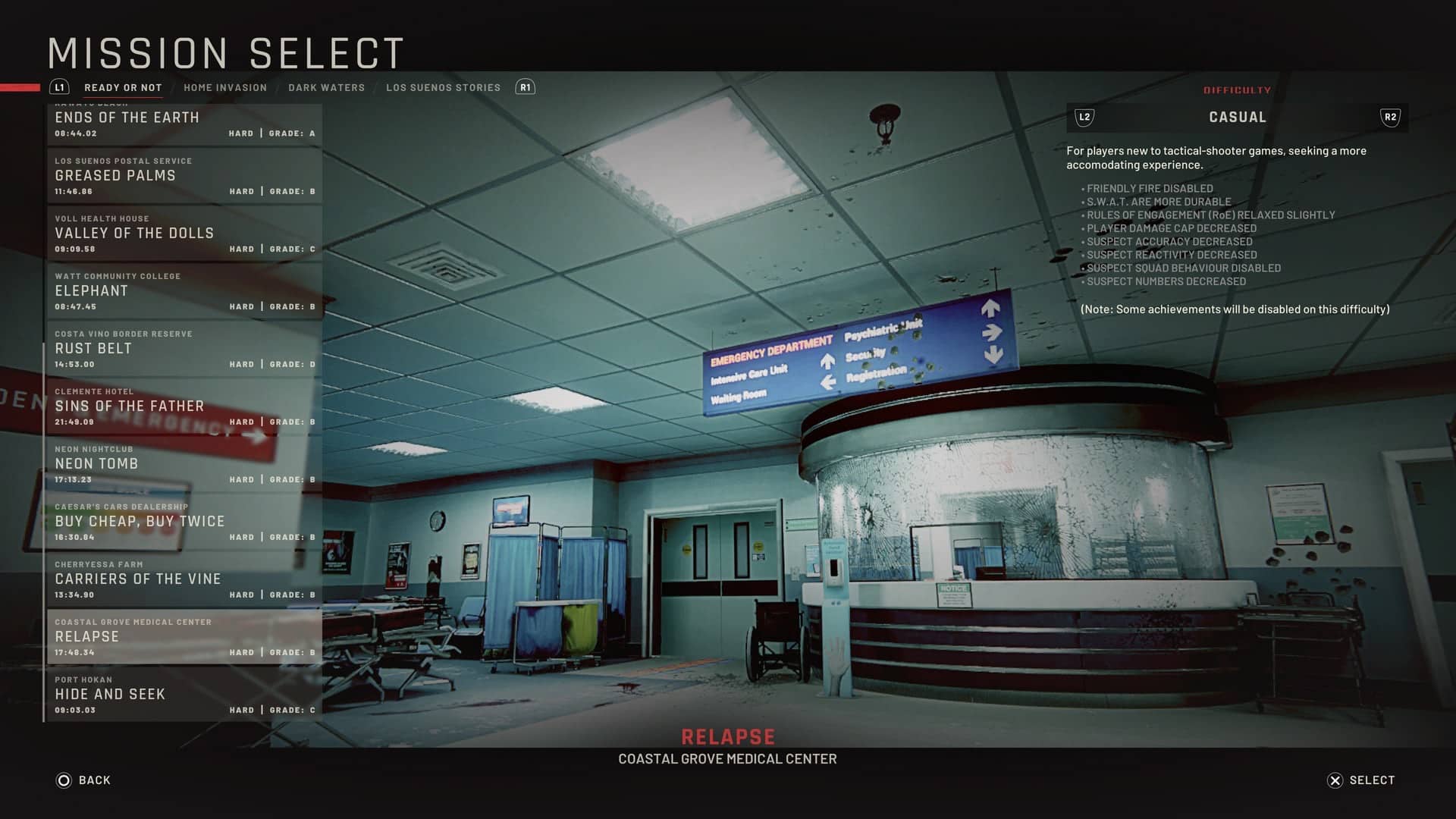
And it’s precisely in the absolute freedom and options of what and how you do things that the real fun lies. You find out that an armed enemy is standing right behind the door? You can get them by shooting through the door. Want to attack from the side? Or send each team through a different entrance? It’s entirely up to you. Even if it’s a stupid idea, you can go and kick down every door you encounter. Or first pry them open or shoot out the hinges with a shotgun. But without prior checking whether someone is standing behind the door or whether there’s a trap set right behind it, you can lose everything. You hold your life, including your unit’s, only in your own hands. So it happened to me a few times that I didn’t have time to think about potential danger and while clearing a hallway of residential units, I didn’t think to check the upper staircase, which resulted in one member after another starting to die, and if I hadn’t run upstairs, I would have been left completely alone. And in the case of scarier missions like Relapse, that wasn’t exactly what I was looking for.
Ready or Not – Using mirrorgun under the door
In case you maintain a cautious yet smooth pace of movement for your or other units, it will have an almost cinematic impression. I often even caught myself deliberately stopping in passage and examining individual environmental details. This is sometimes processed excellently to an absurd degree. You can see all sorts of inscriptions, flyers, objects hiding references to various game series or jokes. Although the game looks really great for the most part, some compromises that are occasionally an unwelcome thorn in the side are disappointing. Light bulbs cannot be shot out. Maybe that’s to some extent good, because the lighting across the entire game is more than solid. When I was admiring from a window overlooking the sea, I saw how it was divided by boundaries of repeating textures. Not a nice sight. On the other hand, it’s hard to estimate what’s behind this shortcoming. After all, it’s a background element and no title gets by without limitations.
Technical Rough Edges
It’s also too noticeable when members of my crew look identical to each other. The game offers customization of your character’s appearance, so there should be something to choose from. I wouldn’t be surprised, however, if the developers didn’t have time.
Ready or Not – Taking cover behind a shield
This suspicion is also manifested in insufficient optimization and overall technical state. Constantly disappearing random loadouts, enemies loading in at higher distances from which they can immediately shoot at you and often even hit, or unnecessarily long loading screens. I believe this will still be fixed; it’s clear that certain sacrifices had to be made for some aspects of the game before release. And speaking of those sacrifices, their screaming is unforgettable. Surprisingly, it’s not the civilians but mainly the shot enemies. These are often accompanied by screams that would wake the dead. Nice long screams…
Sound Design That Matters
Even though there’s no storyline and cutscenes in the game, the character dialogues and for example the audio recording of the briefing really do listen well and partially awaken a desire for the presence of a real story. Besides music, ambient sound also adds to the atmosphere, when for example after hitting a car its alarm goes off, in tunnels there’s an absolute echo, and each step of your colleague or enemy is distinctly audible. The musical backdrop is chosen differently for each level, but primarily it’s electronic music called breakbeat, which characterizes the given location more. What amused me most was the use of Bach, during which I as commander fell in battle while a string orchestra played. Simply classic. The weapons are also excellent sonically, which I’ve already raved about.
Ready or Not – Post-game rating
Despite obvious shortcomings such as balancing and bugginess of the AI or unfinished mechanics, this is a title that brings a unique experience. At the moment, it’s even the best tactical co-op game where you and your friends will have fun for more than a few dozen hours. You’ll simply melt over the sounds of gunfire or fallen enemies and won’t even have to use several hundred rounds to do so. The variety of levels is helped by the use of different color palettes and detailed environments, thanks to which you’ll feel as if you’re really deployed in a different place each time. All this is wrapped in an immersive execution in which each piece of equipment isn’t just a nice accessory but an actually functioning piece of gear that corresponds to reality
Final Words
Ready or Not offers the opportunity to taste the work of special forces, thanks to which some may create a much better picture of just how complex and underappreciated labor it truly is. Risking one’s own life to save civilians shows not only immense courage but also a dark side where the slightest mistake can turn into absolute catastrophe. Although it’s not the only title that has managed to at least partially approach the extreme conditions of this profession, I’m convinced that Ready or Not has succeeded in getting by far the closest so far. Poor coordination and leadership can put you in situations where you won’t be sure whether you’ve gotten lost. And once you lose control of your surroundings, you’ll barely have time to pull the trigger.
About the Game
Title: Ready or Not
Type of Game: Tactical First-Person Shooter
Developer: VOID Interactive
Publisher: VOID Interactive
Release Date: December 13, 2023 (PC Full Release); July 15, 2025 (Console Release)
Platforms: PC (Windows), PlayStation 5, Xbox Series X|S
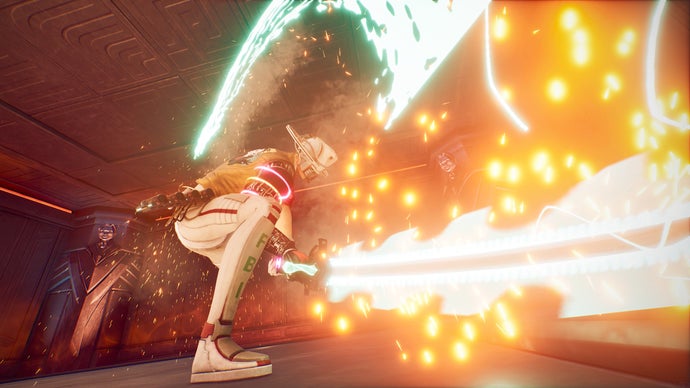
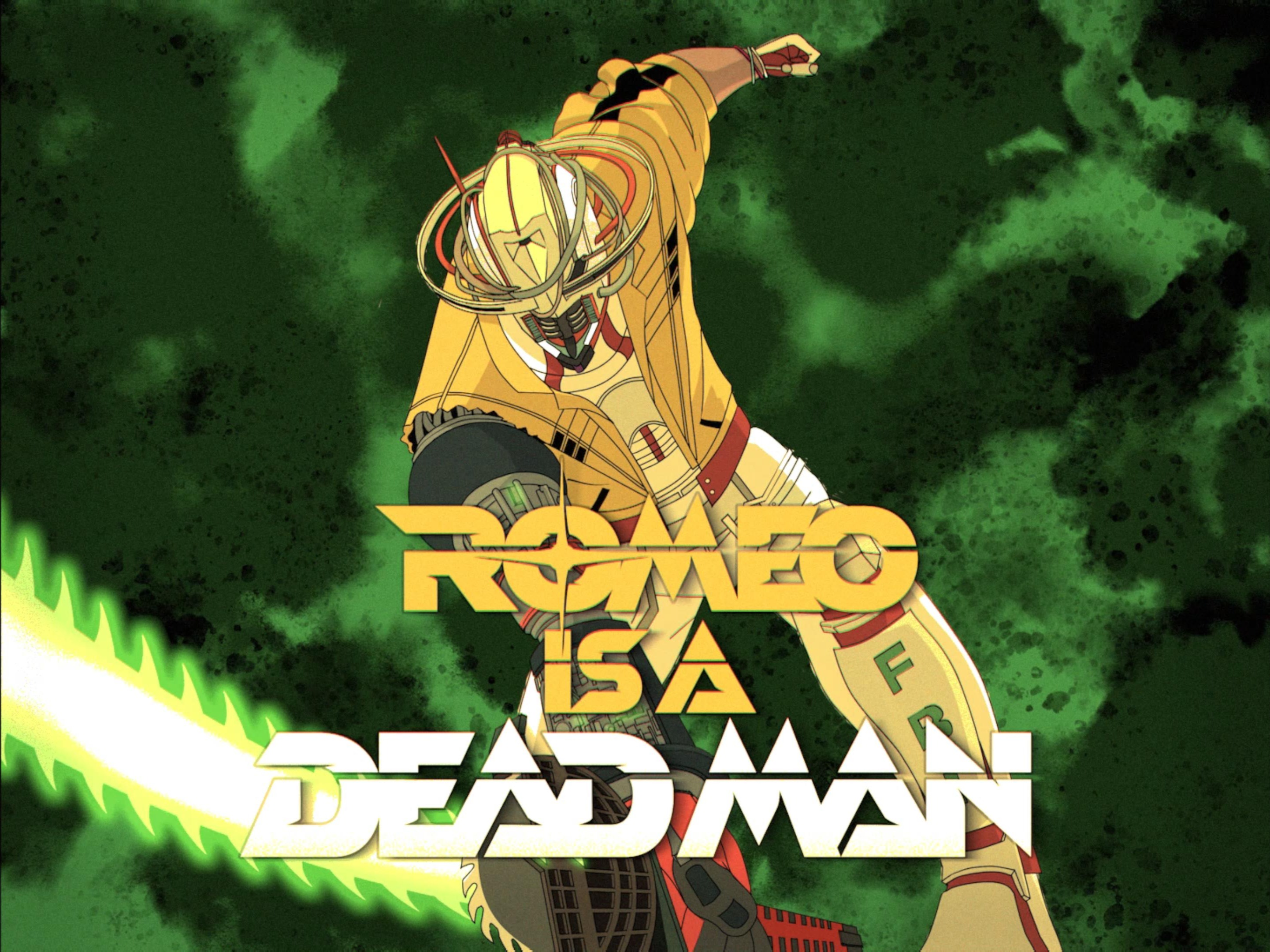
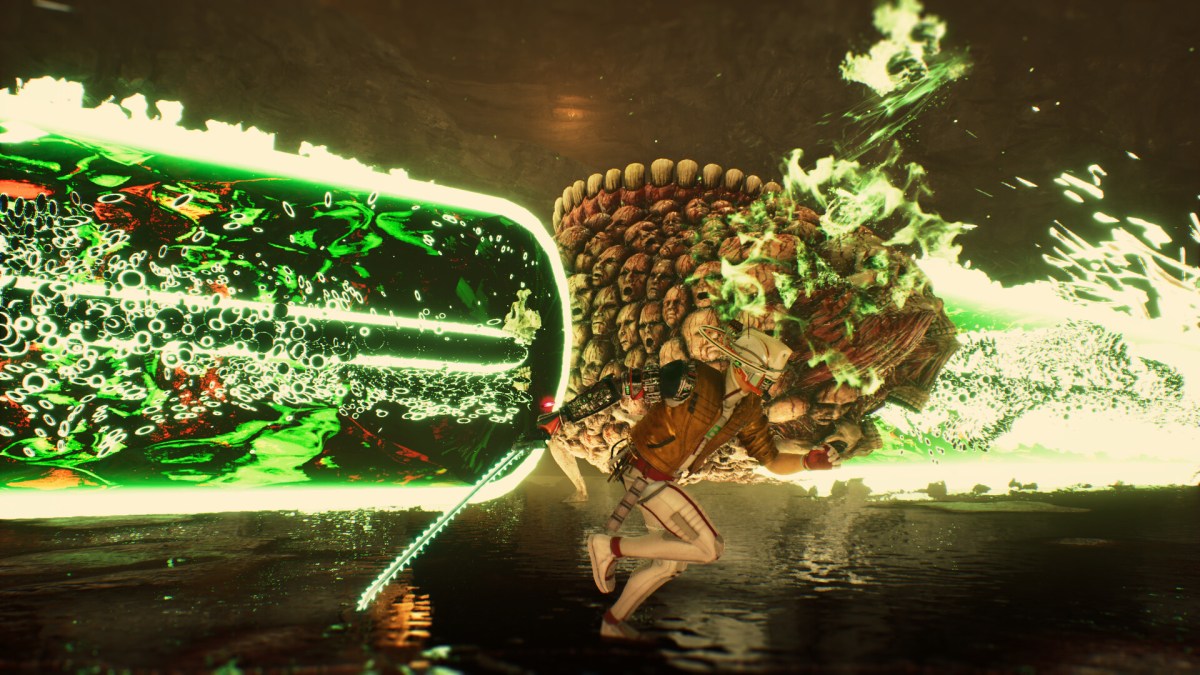
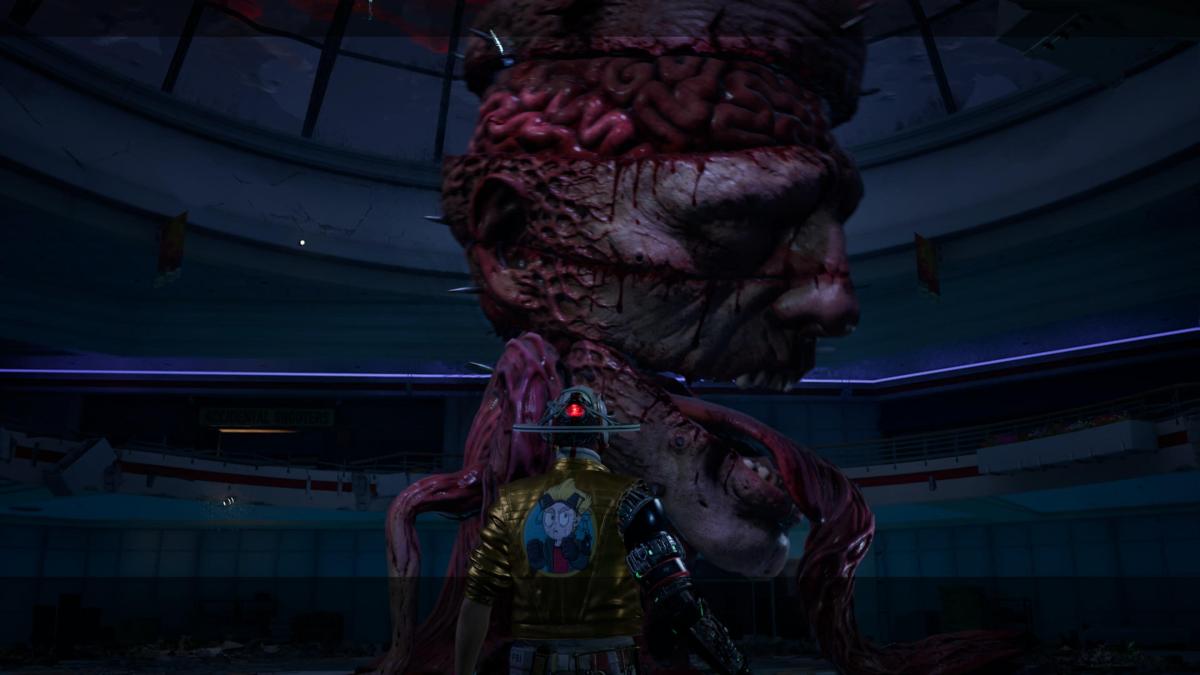
When zombies, no, interdimensional aliens, eat your face clean off your skull, the only thing to do is become a cybernetic agent of the Space-Time FBI. We’ve all had those weeks.
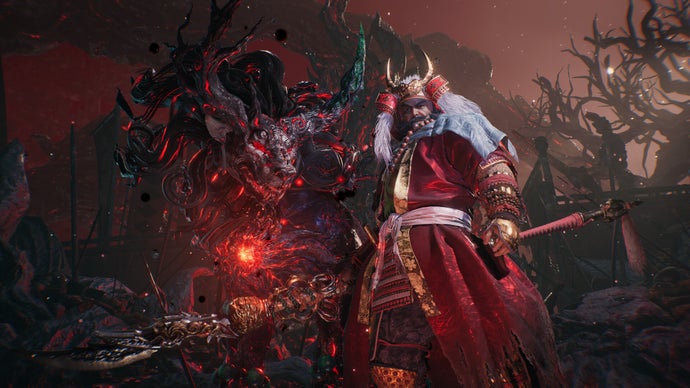
The moment Nioh 3 was revealed as Team Ninja’s next project, it immediately jumped to the top of my most anticipated games of 2026. That excitement was dampened somewhat when the studio revealed the game’s “open field” level design. I am very much over open-world games, but I was particularly worried that we were about to get the Nioh version of Rise of the Ronin - which, really, was itself Nioh-lite in an open world.
Last week, I received a text from my mom that the family dog, Sophie, who we got when I was in high school and who I really still think of as “my” dog, had broken her leg. It was scary news to receive about a dog who weighs maybe 15 pounds and is on the eve of her 15th birthday. I had to put it out of my mind for the moment as I was just a couple minutes away from joining an interview. When our chat finished, I quickly called my mom to hear what happened. In short, Sophie fell while at the vet, breaking her leg, but she’s doing fine now and should make a full recovery.
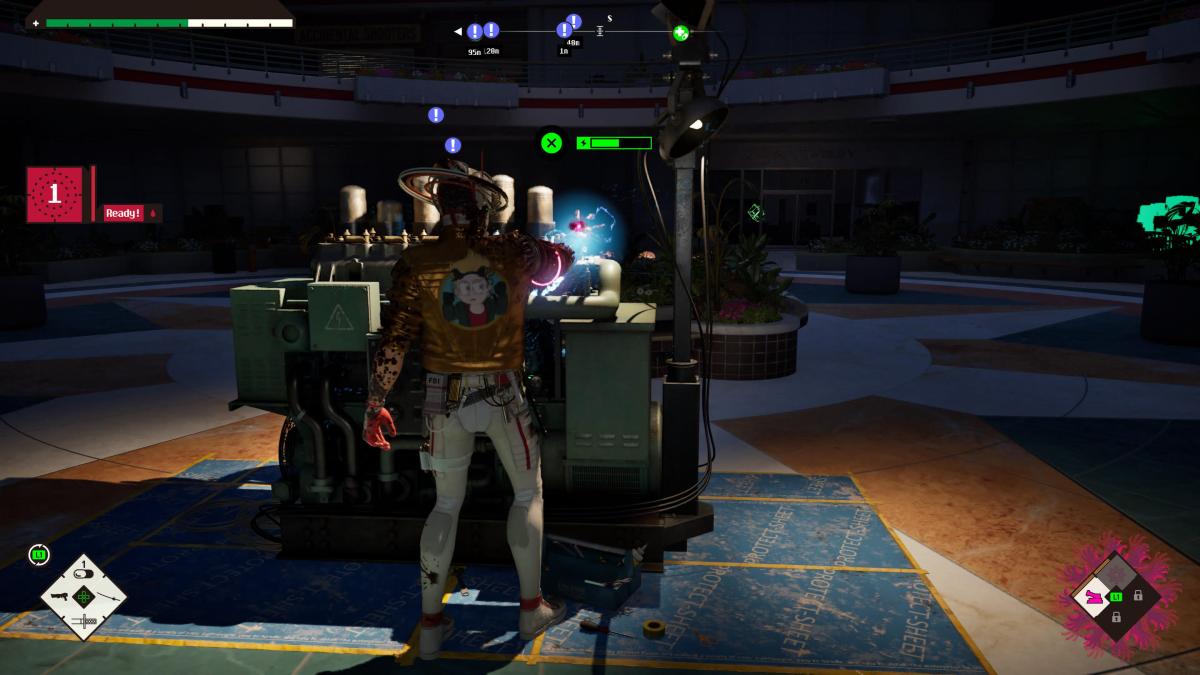
Time-travel, space FBI, floating TVs, zombie seeds, Pac-Man stat upgrades, and katsu curry. Romeo Is a Dead Man is pure Suda51 chaos — inventive, exhausting, occasionally brilliant, and just as often infuriating.
Escaping the Chaos: Why Lobby Racing Just Isn’t Enough
I started doing simracing a couple of years ago, and after some rocky days of learning where I was basically just trying to keep the car on the black stuff and not end up in the grass every second corner, I found myself playing Assetto Corsa Competizione the most. Eventually, you get tired of the AI. They are predictable and they don’t make the kind of human mistakes that make racing exciting, so you start to play online. And yeah, that’s a big difference, especially in ACC, playing the AI and playing the people. It’s much more unpredictable, much more fun, and much more crashes, which is the darker part of it.
Low Fuel Motosport – Total LFM registered users and currently racing
But yeah, this is very good overall. Assetto Corsa Competizione provides competition races within the game itself, but this service doesn’t have much deeper something in it. It’s quite boring after a while because there is only one option in one time, and sometimes when you don’t have all the stars for the given track, you cannot even join at all. But there is another option, the lobby service, which is where most people start their e-racing career – Low Fuel Motosport independent racing portal.
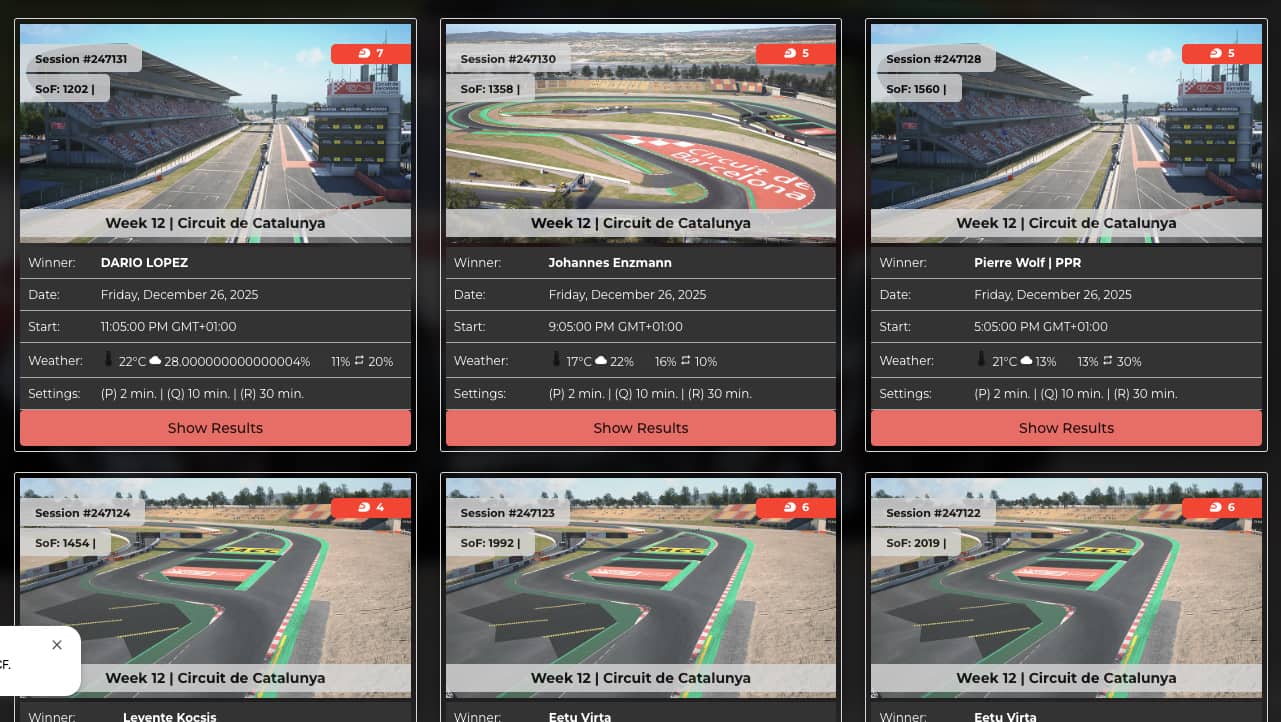
There is always around 900 active servers where you can race at any given moment. A lot of them have a pretty full list of people racing, so it’s a big fun when you get a good grid, but it’s dangerous, especially when you are not experienced enough. You will lose your safety rating very quickly because people are crashing like crazy over there. You have to build up the good SA and go to the lobby server where you have to have some amount of SA to join it. Those servers are much, much better than without any restriction, which is basically like Destruction Derby and killing your rating in ACC.
Low Fuel Motosport – Racing statistics
The Independent Powerhouse: Choosing LFM on PC
So after a lot of crashes, a lot of yeeting discussions in the chat where people are just screaming, and quite a lot of races actually on the lobby, I started to look around for even better option to race. And I came across Low Fuel Motorsport as the leading independent platform for racing. Low Fuel Motorsport is mostly focused on ACC, which is excellent for me, and it’s a big service. There are huge amount of organized races, they have a system when and how to join, and so forth. I chose another option on the market. This is for PC players only. If you have a PlayStation or Xbox, you would probably choose SimGrid, which goes for the consoles as well. Another option, similar, is Pitskill.io, but Low Fuel Motorsport is the largest sim racing platform at this very moment in 2025, by far. So this should be your first option, probably, if you are on PC and you want to race a lot with kind of the same quality persons like you on daily races. So I opted out for Low Fuel Motorsport like two years ago, and here is my experience with it.
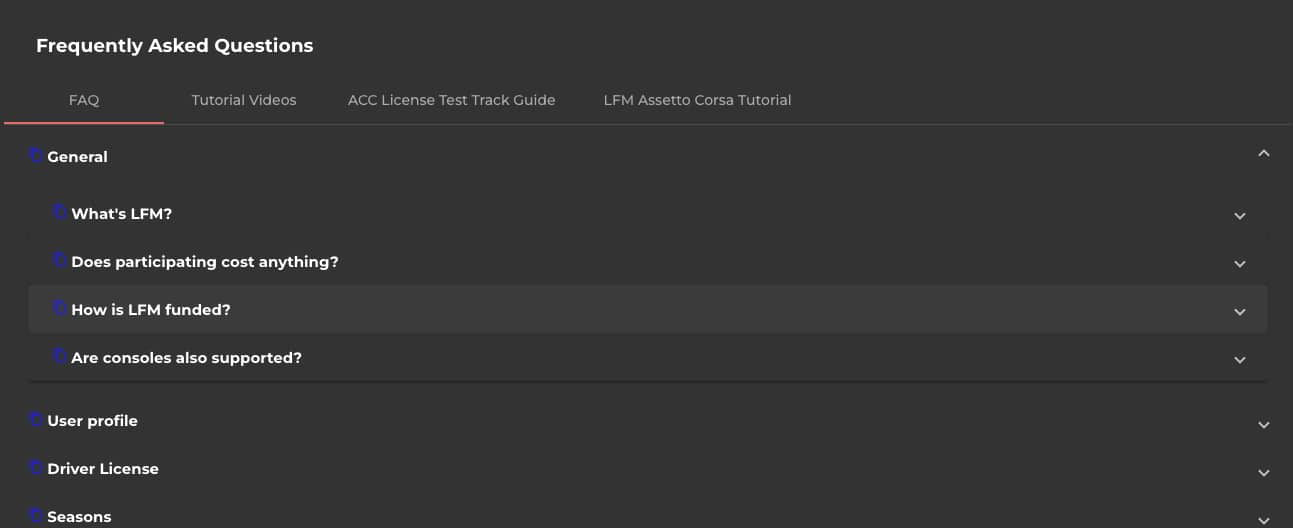
Low Fuel Motosport – FAQ is collabsible list, no search possible
The License Hurdle: Proving You Belong on the Grid
To join Low Fuel Motorsport and be able to race, you have to prove yourself as a kind of experienced driver, although you don’t need to be that super fast as the top of the race, but you have to be reasonably good. I like the system to join because it makes the good selection and those destruction derby players are filtered out with this system and this is a very good system. So if you want to join races, they have a practice server which is reachable via internet. You can find it within the free lobby servers. Just type in Low Fuel Motorsport LFM into the server selection and you got it. You have to find which is it on the server. To register you can use Steam or Discord. Then you have to go to the race and try to make 7 clean rounds and be within the range of the best times, maximum 5% on the top of the best times. This is the 107% rule they use to keep the pace consistent. After 2 or 3 attempts I was able to reach and I obtained the license to race. So my journey begins here. If you want to race Nordschleife, you have to make a similar license, but I didn’t go for Nordschleife yet. I just like shorter tracks and Nordschleife still has to wait for me. I’m not that interested to get into that.
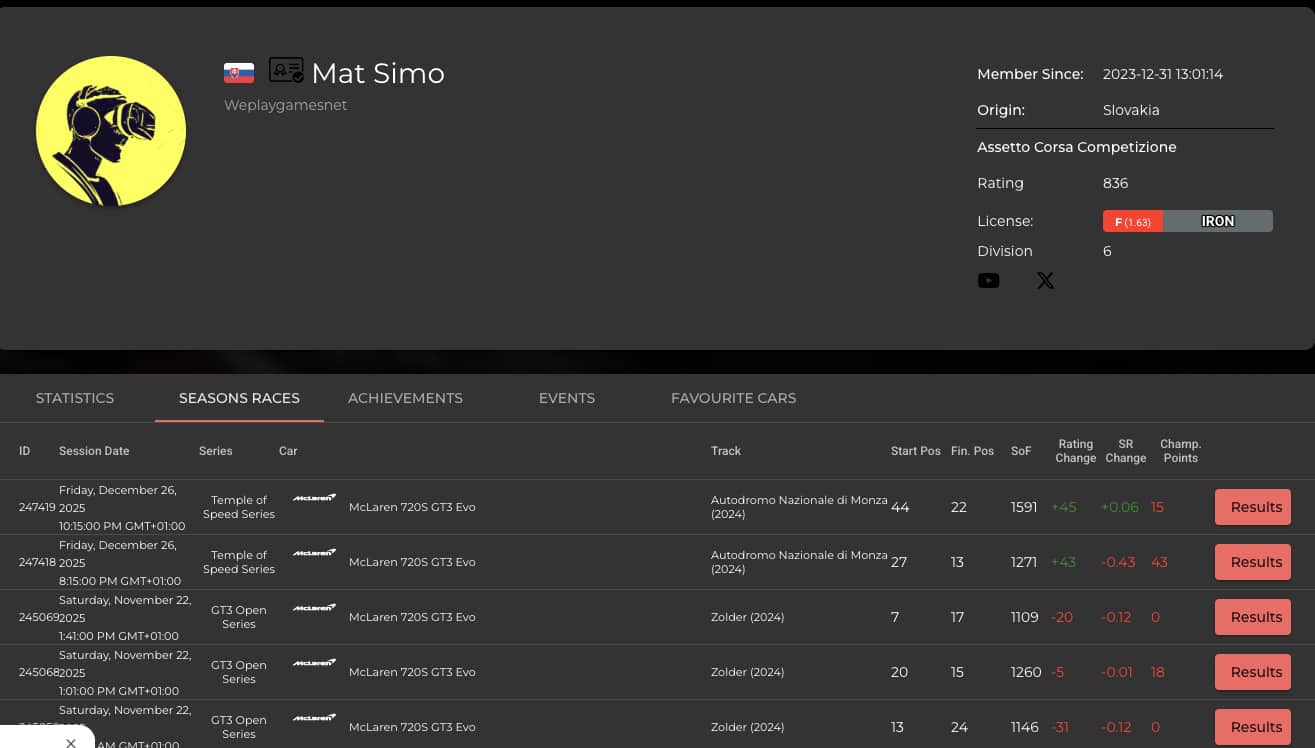
Low Fuel Motosport – History of my races
Tools of the Trade: Technical Requirements for Serious Racing
To join the races you have to obviously sign up for the specific race in time and the other thing you must have is to download the utility which is called ACC connector which somehow translate the IP address of the server to your local IP address and then you have to go to local servers like on the LAN and the server when it goes online it will appear there. This is one extra tool you have to have when you want to race on the Low Fuel Motorsport and well this is a decision they made because you know the ACC had some outages and actually they still have the outages of the network. Low Fuel Motorsport didn’t want to rely on the public multiplayer service of the game and they are building like local servers independent of the race so when the ACC multiplayer is down you can still play Low Fuel Motorsport. This is sometimes problem because when the network is down you cannot even load your LAN server somehow so sometimes it’s struggle but it’s better. It’s more stable the servers especially those which are located in European area has a great ping and technically the servers are very good. Another thing you may want is the LFM Livery Tool.
If you don’t have this, everyone is just driving around in a plain white or carbon car and you can’t see the cool designs that teams put together. It makes the grid look much more professional when you can actually see the sponsors and the colors of the other cars. You also have to get used to their custom Balance of Performance, or BoP. LFM adds weight or restrictors to certain cars to make sure the field is even. So even if the game developers made one car too fast, LFM balances it out so you can still drive an older car and not be totally out of the race. This keeps the variety high which is good.
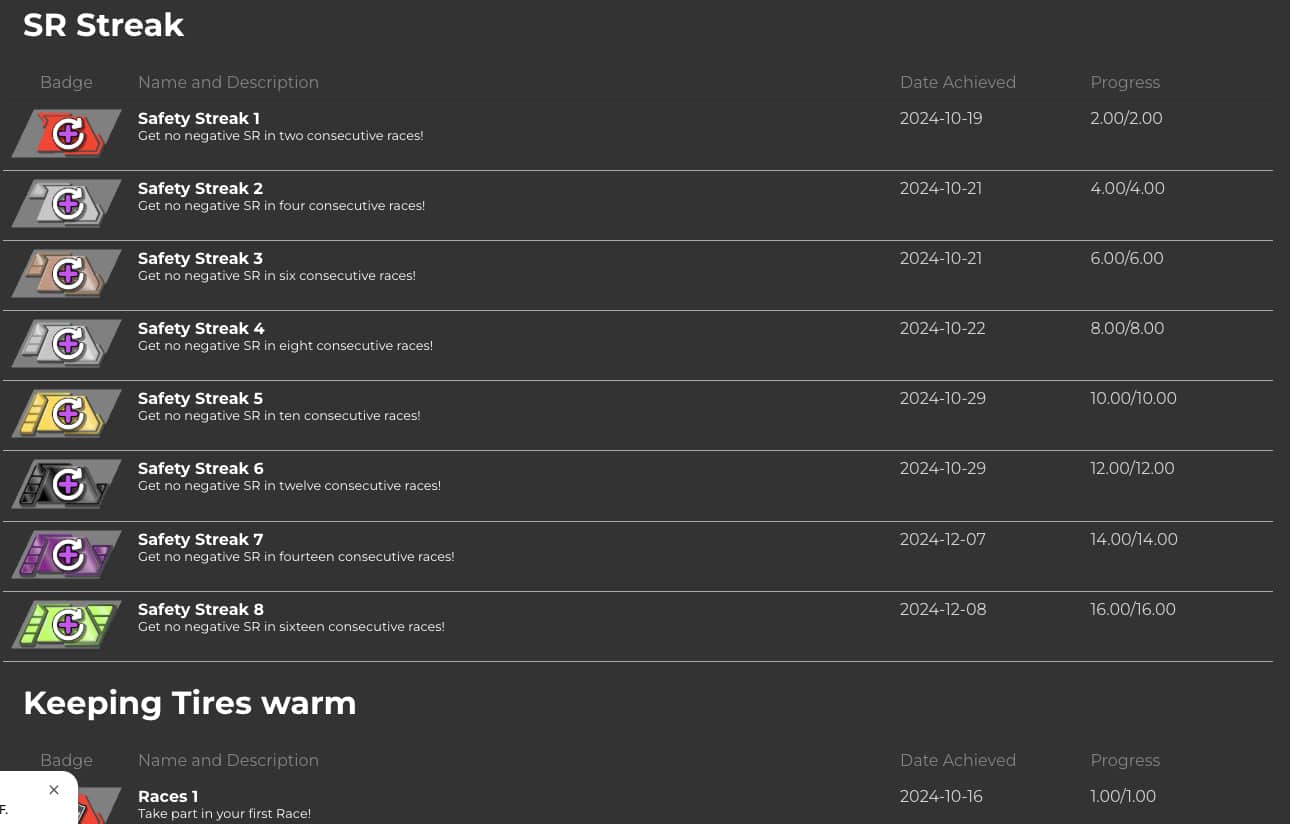
Low Fuel Motosport – Gamification is her as well . I got some trophies
The Daily Grind: Sprints and the Rating Struggle
So I did this basic license and I started to race. The options were to race, it’s quite big, but at the end you don’t have that much when you start. You can only race the 15 minute sprint races at the moment and that’s it because you are not building up your safety rating and your ELO enough yet. So you are doing these 15 minute races. Last year it was 20 minutes, now they push it to the 15 minutes. Well, that’s how they decided. So when you start to race you have to join the race. Every 45 minutes there is another 15 minute race. So you have plentiful options to race during the day, as much as you want, you don’t have any restrictions. You just click and wait a bit and you can join the races. So once you do that you go to practice. There is not allowed to race in the practice, it’s just to prepare your setups and so on. Then you go to qualification which is usually 7 minutes and then 15 minutes race. Races are much better than lobbies. This is the best advantage of Low Fuel Motorsport.
Low Fuel Motosport – Support via patreon
Here the races have its quality, even though when you are on the low tier the people are not trying to hit you as crazy and there are not that many accidents as there are on the ACC lobbies, especially those without SA filter. Here your journey starts, you are building up your ELO and you are building up your SA. When you reach the threshold you can join another races which are only filtered for the people with the higher ELO and higher safety rating. So ELO and safety rating decide everything. I’m not the greatest racer, so I was kind of struggling and stagnating because the ELO and SA rise slower than it falls. So you can build up for several clean races and then you have one wrong race where you get caught in someone else’s mess and it falls down instantly. But this is a fair play system which makes you focus on the safety first and then on the speed. This is the way how you should really learn driving in general. So you know your car, you know the spatial awareness and everything is much more important when racing here than when doing lobbies. So this really makes a big distinction and for those people who want real racing, they will like it a lot.
The Problem with Variety: GT4s and DLC Barriers
You are building up, and once you reach some threshold you can do the endurance racing 45 minutes or a higher league of 20-25 minutes races. They provide even the races for the GT4 cars or like specific BMW M2 races. But I don’t do that because especially those are the GT4 cars. You have to have the DLC and let’s be honest, how many people really do have this DLC? It’s a fraction of those having the base game. So if you really want to play all the races during the whole season, you have to have the DLCs actually because some tracks, some cars are not allowed in the base game so you have to pay for those DLCs of the base game. So here GT4 races are pretty empty. So if nobody is racing, it’s boring.
Low Fuel Motosport – Nobody much racing GT4 due to DLC restriction
I tried a couple of times but only a few players joined so I think this is almost useless category on the Low Fuel Motorsport. Endurance is good because and I really love to do the low tier endurance races last year. Because you have to make some tactics, there is always a pit stop so you don’t need to be the fastest but you have to think more strategically because of the pit stop and amount of fuel and it makes it really good. There is not that much players playing 45 minutes but quite enough to enjoy the race. Actually here I’m pretty angry on the Low Fuel Motorsport. They wanted to tweak it up for the ongoing season which is ending by the new year and they made a feedback and forum what to improve. I told them my way, what I want and actually everything happened was the opposite. So instead of 25 minutes like spring race, now we have only 15 minutes spring race and the 45 minutes endurance race is not yet reachable for me because I don’t have enough SA and ELO. So actually I can only do 15 minutes races right now which is ok but I was trying 45 minutes sprints and endurance like almost the same amount of races I did. So now it’s not possible for me. Yes, if I reach the level of SA, of the safety, I can join it but I’m not yet there. As I told you it’s quite tricky to improve but I’m not the best racer. What happened is that the options for me to race narrowed down pretty steeply and especially considering they were asking what to improve and they did the opposite, I’m not that happy with it.
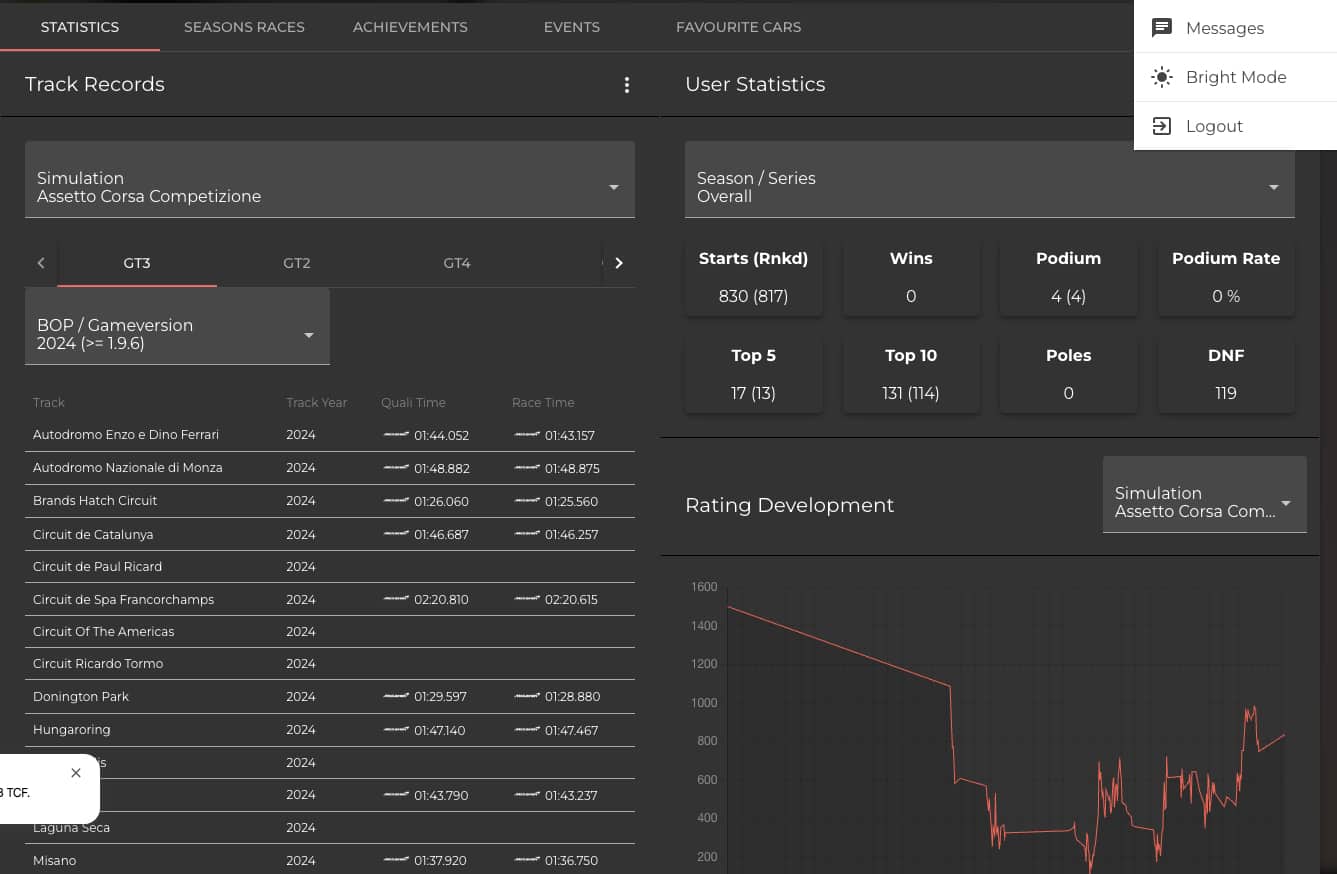
Low Fuel Motosport – Track records and ELO evolution graph
Climbing the Ranks: Licenses and Tier Divisions
Even though the sprint races are short, the system behind them is very deep. When you join for example the 15 minutes sprint, there are a lot of people really in the tables, so it’s divided to even six divisions. So you’re usually playing the lowest tier division and as your indexes go up you are joining the higher divisions in the tier, like tier one, tier two. So there are six divisions for example. So you are not just attending more professional races, but even within those races you are divided to the division, so it’s pretty complex and you are racing against people on the similar skill set that you have and comparing to them. This leads to the actual License Tiers which are the backbone of the whole thing. You start as a Rookie and you have to grind your way through Iron, Bronze, Silver, Gold, Platinum, and eventually the Alien tier if you are fast enough. Each of these tiers has specific Safety Rating (SR) and ELO requirements. It’s a proper hierarchy that keeps the racing clean because nobody wants to lose their hard-earned indexes. But like I said, when they change the rules and lock you out of the endurance races you used to love because your ELO isn’t high enough yet, it feels like the goalposts are moving.
The Frustrating Reality of the Appeal System
Now, how to handle all these situations like accidents, appeals, and penalties. This is something which works technically, but I have to say I don’t like it very much. If you think somebody crashed you, you can appeal, but you have to make a video on YouTube, you have to put some specific information into that video, and then you can place an appeal. You spend a lot of time doing videos and stuff, and then the appeal might go wrong anyway. I didn’t do this yet because it’s a pretty time-consuming process to appeal, so I don’t appeal when I’m being crashed by people, but other people do appeal against you. I had some penalties where you have to agree with the decision of the arbiter who said that you did a mistake. Usually, you get some deduction of your Elo and you lose some seconds in the race results. But when they decide that you hit someone by purpose, like a retaliatory accident, you can get even 28 days of ban, and I actually got one. The situation looked like I really did it on purpose, but I know myself and I know what really happened. The guy who went against me in this appeal made the video in a way that looks like I was the one at fault, but actually, it was his fault. Because I didn’t make my own video, I couldn’t prove anything. What really hurts me is that there is no easy possibility to appeal against these big ban penalties. For small penalties, you can appeal right away from the form, but for a 28-day ban, you have to go to some hidden menu, create a ticket, and it really sucks. They don’t give you any guidance or a simple button to click, so they really don’t care much about this process or hearing your side.
Assetto Corsa Competizione – New Liveries for Haas RT on Audi R8 LMS evo II
Utility Over Community: The Patreon Model
The communication with the creators and the arbiters is very weak in my opinion. Even though they have a sophisticated website and a Discord server, the feedback feels read-only. You make a question, they reply, and that’s it. If the reply isn’t good enough, you have to create a whole new thread. It makes Low Fuel Motorsport feel more like a utility or a tool rather than a community-building service. They will likely have a problem with this at some point because there is no emotional attachment. They are even very strict about the in-game chat; if you say “sorry” to someone you crashed by mistake, they might penalize you for chatting, which is crazy to me. This cold environment is visible in how they handle the business side too. There are premium options where you can become a Patreon donator. This gives you things like deeper statistics and the ability to sign up for races sooner. I think the early sign-up is pretty useless because the servers usually only get full right before the race starts anyway. They probably make a couple of ten thousand euros per month from these donations and affiliations with brands like Fanatec or Syncmesh, but it’s a donation model. I don’t donate yet, especially after being angry about how they handled my ban. Most people don’t donate, and since the communication is so weak, you don’t feel like you are part of something you want to support with money.
The Road Ahead: ACC Stagnation and Future Sim Titles
The system is super reliant on ACC, and as we know, ACC is getting less focus from the developers because of the new games they are building. This might be the end of the road at some point. LFM is trying to move into games like Le Mans Ultimate or the original Assetto Corsa, but those races are often empty or feel like a beta. 90% of the players are on ACC. They are scared that the game is at the end of its life cycle and they are making petitions like the #SaveACC one to the developers, but it feels like they are just trying to save their own business model rather than the community. Everyone is waiting to see if they will move to Assetto Corsa EVO in 2026. If you are looking at this from a global perspective, it is mostly a European service. During the day, the European servers are packed, but the US servers during the night are pretty empty. I estimate only 10-15% of the players are from outside of Europe. You can still join with a higher ping and it’s playable, but it’s not the same experience. To conclude, the racing on Low Fuel Motorsport is unmatched in the current environment—only iRacing is on this level. It’s a great service for the racing itself, but do not expect to join a community. It is a utility to get clean races, and the moment a better option comes along, people will probably just jump off to that. If you want real racing, go for it, but keep your expectations low for the social side.
There’s something deeply satisfying about watching tiny digital citizens haul rocks and berries across a bustling settlement you’ve built from scratch. Pioneers of Pagonia, the latest creation from Volker Wertich (the mind behind The Settlers series), delivers exactly that kind of meditative city-building experience – with enough depth to keep strategy fans engaged for hours.
This isn’t just another cookie-cutter city builder. Pagonia takes the genre’s familiar formula and adds its own distinctive flavor through visible, granular supply chains and a unique border expansion system. After spending considerable time with both the campaign and sandbox modes, I can confidently say this game scratches a very particular itch for management sim enthusiasts.
A Tutorial That Doesn’t Feel Like Homework
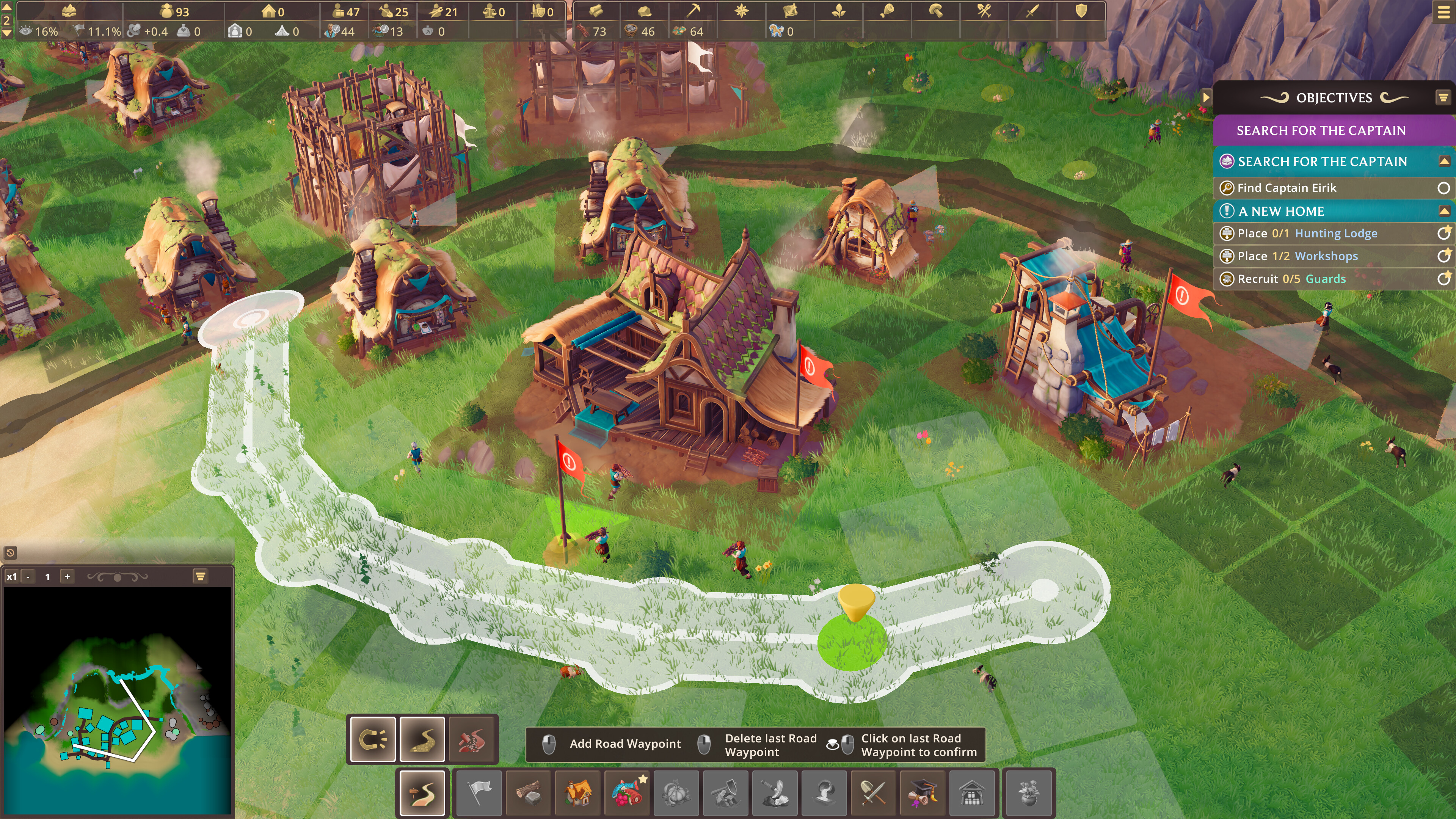
The campaign serves as your introduction to Pagonia’s systems, and honestly? It’s one of the best tutorial experiences I’ve encountered in this genre. You’re not drowning in tooltips or struggling to remember what the game threw at you in the first ten minutes. Instead, the story naturally introduces mechanics across seven chapters as you island-hop through a shattered continent.
Your pioneers are searching for other survivors in a world fragmented by magical catastrophe. Each new island brings fresh challenges – different terrain types, unique resources, abandoned villages, and increasingly dangerous threats. The narrative gives purpose to your building, transforming what could be dry tutorials into actual missions with stakes. By the time you finish the campaign (which clocks in around 30 hours), you’ve mastered everything from basic resource gathering to complex military operations.
Supply Chains That Actually Make Sense
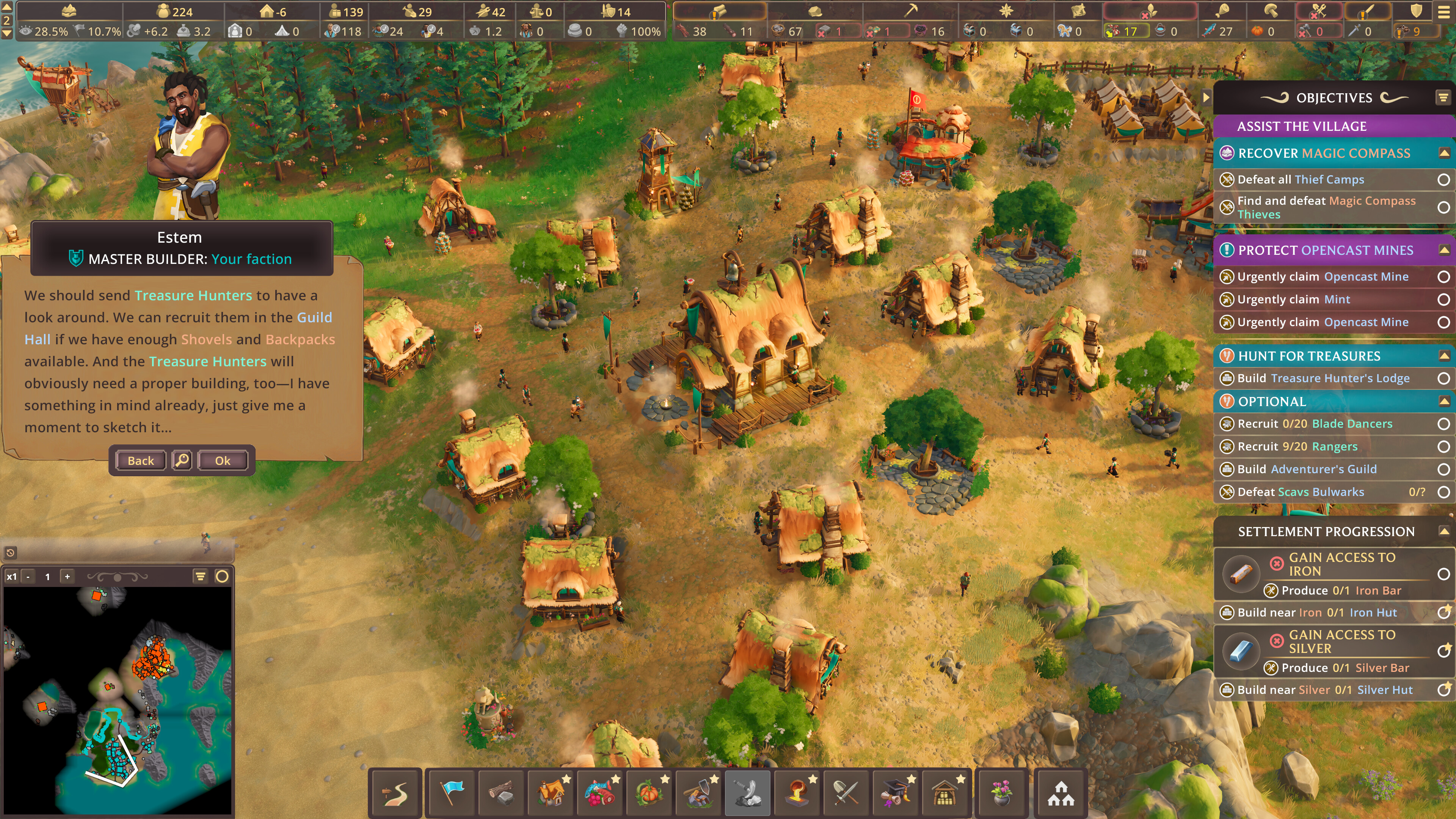
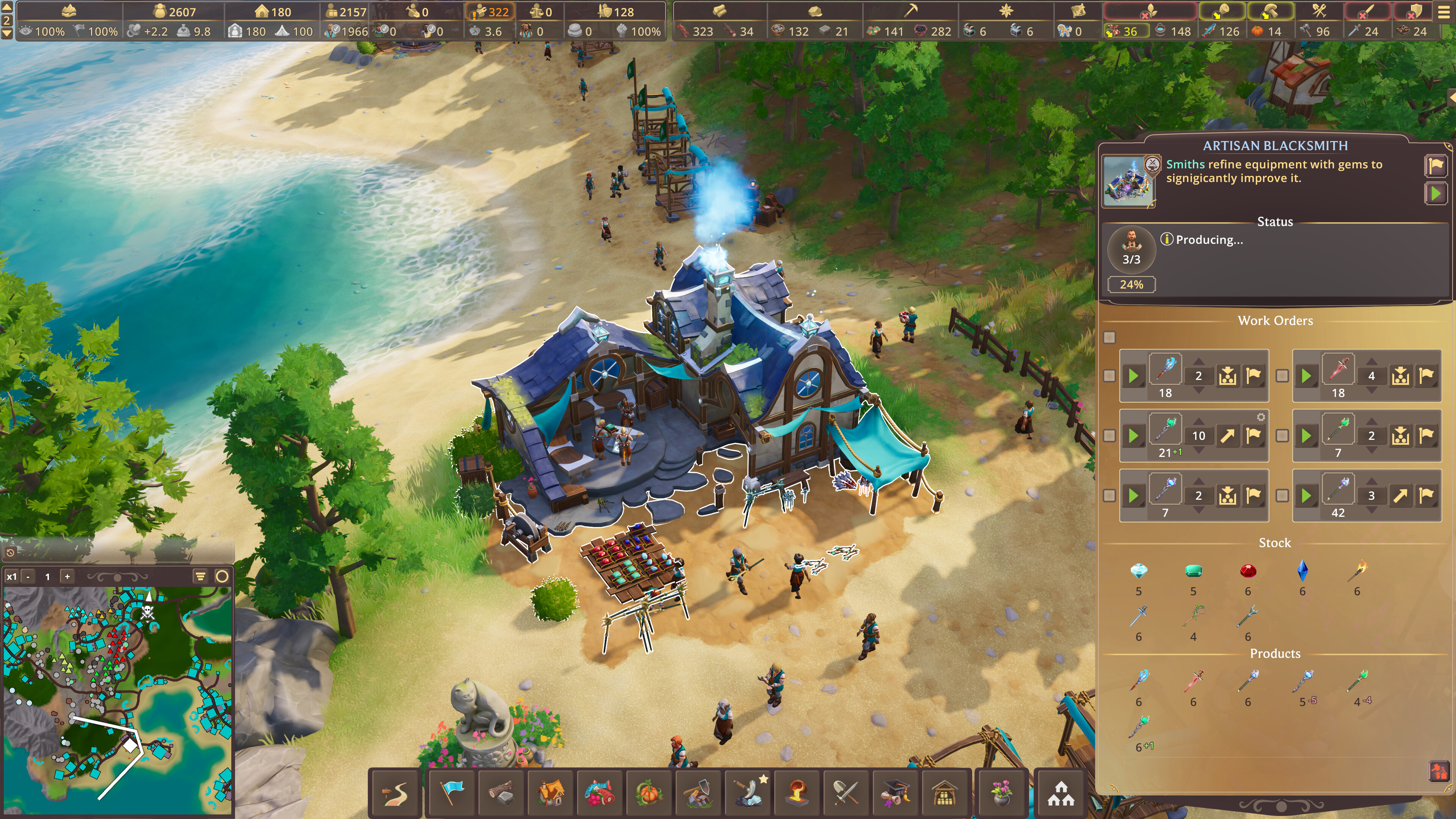
Here’s where Pioneers of Pagonia really shines. The production systems feel tangible in a way that many city builders miss. Want to staff a guard tower? You’ll need gatherers collecting stone and sticks, a workshop transforming those materials into spears, and then citizens trained at your town hall. Every finished good traces back through multiple steps you can actually watch happening.
The game gives you remarkable control over these chains too. Foresters can focus exclusively on softwood. Workshops switch between made-to-order and continuous production. This granularity prevents the common city-builder problem where your economy becomes an opaque black box. You always understand why something isn’t working – usually because you can literally see the traffic jam of carriers struggling to move goods around.
Progress ties directly to exploration through a discovery-based tech system. Finding iron veins or stone quarries unlocks new building tiers and production options. Guard towers extend your territory borders, giving access to the resources you need for advancement. It creates a compelling loop: build efficiently in your current space while pushing outward for the next tier of materials.
The Pacing Question
I should mention that Pioneers of Pagonia moves deliberately, especially early on. Your first guard tower might take fifteen minutes to complete at standard speed. Buildings in the early game require literal minutes to construct. The game includes speed controls, and you’ll probably use them frequently – which suggests the default pacing could use some adjustment.
There’s also no universal demolish tool, meaning town redesigns involve clicking buildings individually. Housing can’t be upgraded directly either; you demolish and rebuild larger versions instead. These quality-of-life gaps don’t break the experience, but they do add unnecessary friction when you want to reshape an established settlement.
Flexibility That Respects Your Playstyle
Once you’ve completed the campaign, Pagonia opens up considerably. The sandbox mode offers extensive customization – adjust map size, terrain types, resource distribution, enemy difficulty, or disable combat entirely. You can focus purely on building peaceful towns or create challenging scenarios with aggressive raiders and limited resources.
The game supports co-op for up to four players, though the slow pacing means this works better as a chill hangout session than a strategic multiplayer experience. There’s also a full map editor that lets the community create custom challenges, which should extend the game’s longevity significantly.
Military systems provide just enough variety without overwhelming non-combat players. Rangers counter thieves effectively while Blade Dancers handle armored foes. You’re defending against bandits and supernatural threats, not waging large-scale wars. If you prefer peaceful building, you can toggle combat off – though you’ll notice many military buildings sitting unused, which feels slightly wasteful.
Should You Build Your Settlement Here?
Pioneers of Pagonia won’t appeal to everyone. If you demand fast-paced gameplay or minimal micromanagement, look elsewhere. But for players who enjoy detailed logistics, watching systems interlock, and building settlements that feel genuinely alive, this delivers exactly what you’re seeking.
The game smartly simplifies population management (citizens won’t starve, housing expansion is straightforward) to make room for its complex production chains. This balance between accessibility and depth creates something approachable for newcomers while offering enough mechanical richness to engage veterans. The charming art style doesn’t hurt either – zooming in to watch individual pioneers doing their jobs never gets old.
It’s not perfect. The pacing could be tighter, the building placement grid occasionally fights you, and some quality-of-life features feel conspicuously absent. But these are scratches on an otherwise solid foundation. Pioneers of Pagonia understands what makes city builders compelling: the satisfaction of systems clicking together, the pleasure of watching your creation grow, and the endless “just one more turn” appeal of optimization. If that sounds like your kind of game, you’ll find plenty to love here.
When Polytron Corporation released Fez, we’d never really seen anything like it. A game that uses perspective to solve puzzles and make progress and shifting between 2D and 3D? Later, we’d see Superliminal and Viewfinder play with how we see things changing how the world works. Cassette Boy is a game in that same vein, only blinding The Legend of Zelda style action-RPG elements as we rotate our viewpoint to change the rules of the world. It’s also just as clever as many of these other games I’ve mentioned, and I hope this indie gets the attention it deserves.
Cassette Boy begins with our avatar being addressed by a sparkling entity. It cryptically explains that the moon is gone because our character wasn’t looking at it. This being explains that perspective is everything, and illustrates examples showing that objects, entities, and buttons can disappear if you can’t see them. As such, it’s now up to you to recover the Moon Fragments to restore them to the sky.
https://www.youtube.com/watch?v=Ic71W0L8SMo
While Cassette Boy is a The Legend of Zelda-like in some ways, it really prioritizes puzzles and experimenting with our view of the world in a way I appreciated. After the opening introduction and acquiring a sword, we’re given the ability to use the shoulder buttons to rotate the world. In town, it means getting access to houses where you couldn’t previously see doors. More importantly, it means opportunities to start “hiding” enemies, switches, and blockades to make progress to different areas or turning the world fast enough to cause squares to pop up to provide opportunities to reach higher areas or damage foes. So as some of the earliest examples, there’ll be a situation where you rotate 90 degrees to completely hide a huge slime you couldn’t otherwise defeat at that point to slip past to the next area in a forest. For one boss, you rotate the world 360 degrees as quickly at the switches that will make a piece of ground pop up when the opponent is about to get near to damage it five times to win. You stand on a switch to open a door, then rotate the world to block it so you can then move and safely go through the doorway. In one situation, you move a box to a point where you need to rotate 360 degrees to lift yourself and the box up so you can jump.
Keep in mind, these are the earliest kinds of progression. In a true The Legend of Zelda and even Metroidvania type of fashion, Cassette Boy also eventually encourages returning to past areas or temporarily blocks off access to certain spots by hiding them behind a type of “trick” you haven’t learned yet. So you might see a shrine in the first forest you can’t reach yet or an area of town blocked off, but need to wait until you can see things the right way to get to that new place. These come in the forms of cassettes for the headphones you acquire early on that help you "focus" to change the way you see the world.
Image via Wonderland Kazakiri and Pocketpair
Yes, I mentioned a shrine. Like The Legend of Zelda: Breath of the Wild and Tears of the Kingdom, there are portals to brief shrines in Cassette Boy. If you gain access to one of these optional spots, you’ll be posed with additional logic puzzles. I’ve never seen any combat-related ones in my time with the game. Each one I encountered seemed to build upon my knowledge of my abilities in ways that sometimes challenged me a bit more than the typical puzzles encountered when searching for bosses holding Moon Fragments. Which is good because, while the combat isn’t terrible, it does feel like closer to the earlier The Legend of Zelda NES and Game Boy games. The melee attacks with the sword didn’t have the sort of responsiveness and combos as some contemporaries, and aiming with the bow and arrow can be a pain even after you get used to knowing how long to hold it to shoot it proper distances.
Another thing I appreciate about Cassette Boy is that it is a really minimalistic game. It relies about the same Game Boy style greenscale palette. While there are a few indoor area tile situations where this can be a lot when multiple designs are combined, it generally is really effective and eye-catching, while still making visual distinctions quite clear. Which is important since you do need to be very precise about positioning to solve puzzles. That’s a little frustrating sometimes, especially when it involves ensuring a dangerous enemy is blocked or that a blockade is 100% hidden. But the design philosophy really adds to the experience.
Image via Wonderland Kazakiri and Pocketpair
Likewise, that comes a bit with the script. This is a rather simple game and doesn’t feature a super intense narrative. There are some occasionally clever lines, though! And again, there is a minimalistic approach to it. For example, while there’s not a lot of dialogue for NPCs, we will see reactions to certain events. This happens with our avatar’s neighbor, Nell. Our protagonist themselves will also occasionally think about things happening, and those asides can be entertaining.
Cassette Boy is at its best when challenging you to rethink your perspective to solve puzzles in this The Legend of Zelda and Fez style adventure. There are times when it can really test you and make you think! The minimalistic design direction is also a highlight. However, some combat elements can occasionally feel finicky, especially when the bow is involved. It definitely can be quite clever, and it’s well worth at the very least trying the demo if you also enjoyed games like Fez.
Cassette Boy will come to PCs via Steam on January 15, 2026, and a demo is available. It will also eventually appear on the Switch, PS4, PS5, Xbox One, and Xbox Series X.
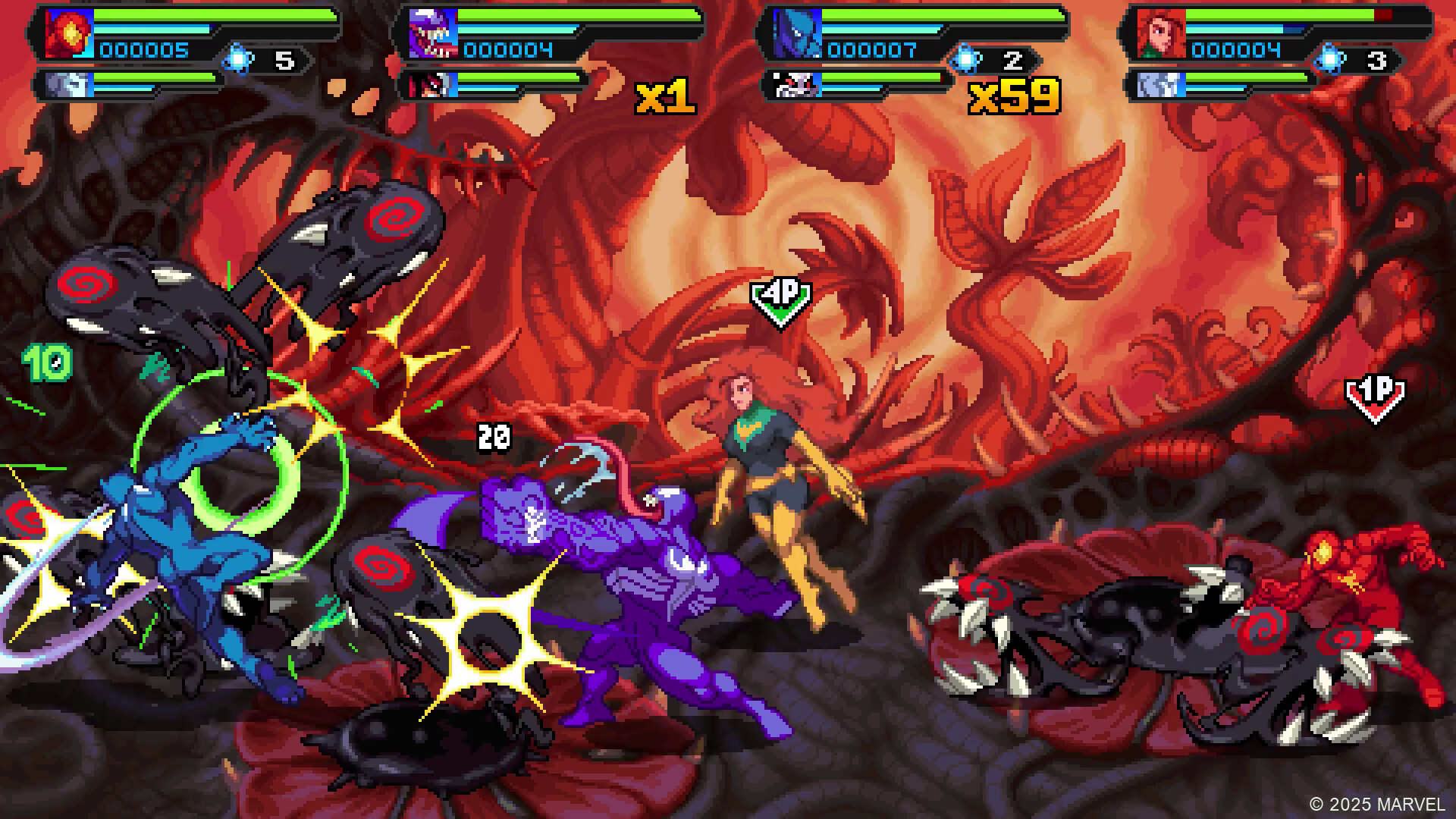
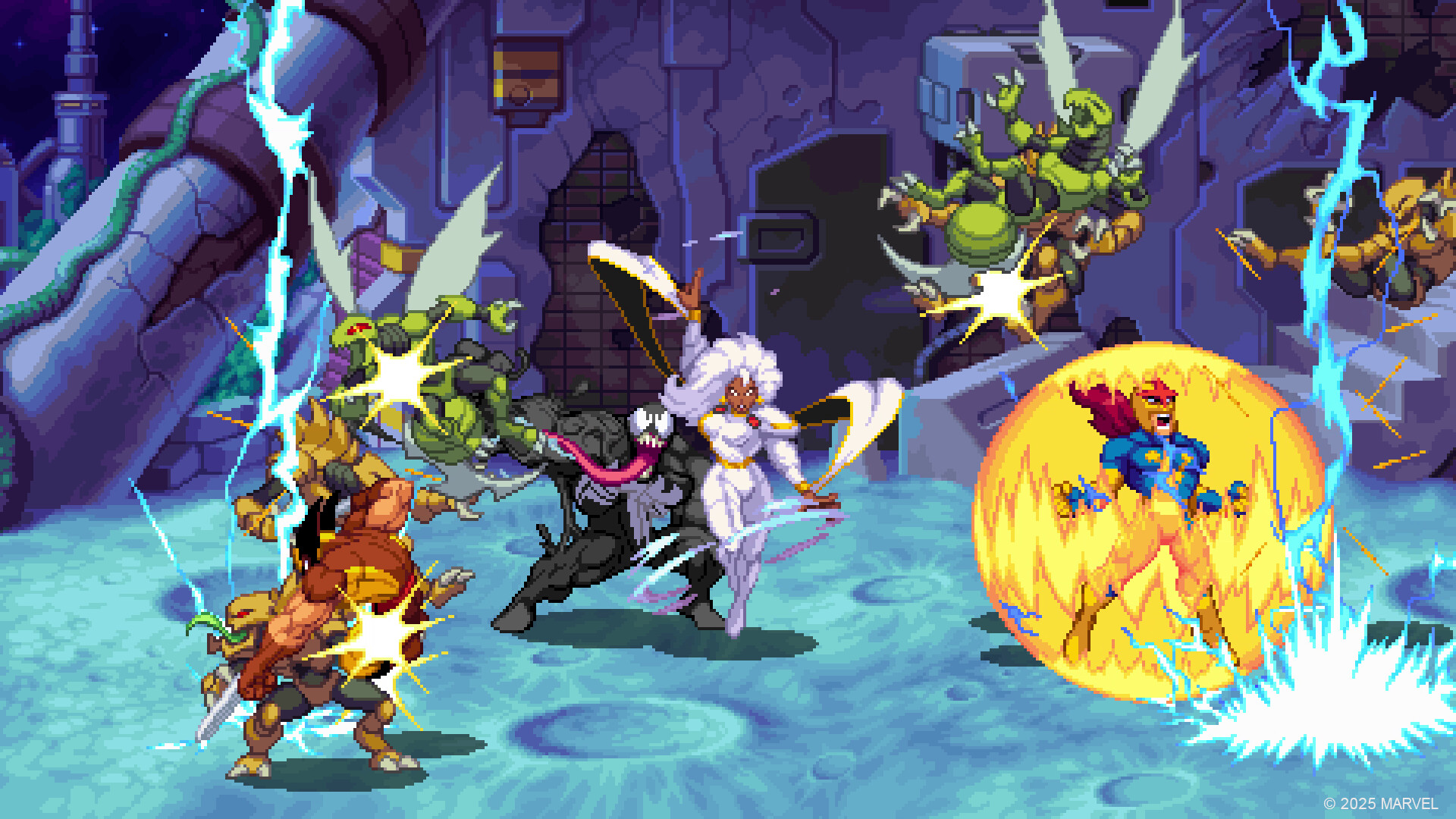
There’s something magical about gathering friends around a screen to punch through waves of enemies together. Marvel Cosmic Invasion understands this perfectly, delivering a beat ’em up that feels like it belongs in the golden age of arcade cabinets – except now you’ve got 15 Marvel heroes to choose from instead of feeding quarters into a machine.
Tribute Games, the masterminds behind TMNT: Shredder’s Revenge, have crafted another side-scrolling brawler that’s bursting with personality. From the moment you select your tag-team duo and dive into the campaign, it’s clear this isn’t just another licensed cash-grab. This is a carefully designed celebration of Marvel’s cosmic corner, wrapped in some of the most beautiful pixel art you’ll see this year.
A Roster That Actually Feels Different
The character selection screen is where Marvel Cosmic Invasion first shows its ambition. Sure, you’ve got your expected heavy hitters – Spider-Man, Iron Man, Captain America, Wolverine – but then things get interesting. She-Hulk functions as a full-blown grappler instead of just being “female Hulk.” Cosmic Ghost Rider brings his own bizarre flavor. Beta Ray Bill and Phyla-Vell might make casual fans scratch their heads, but their inclusion adds genuine depth to the roster.
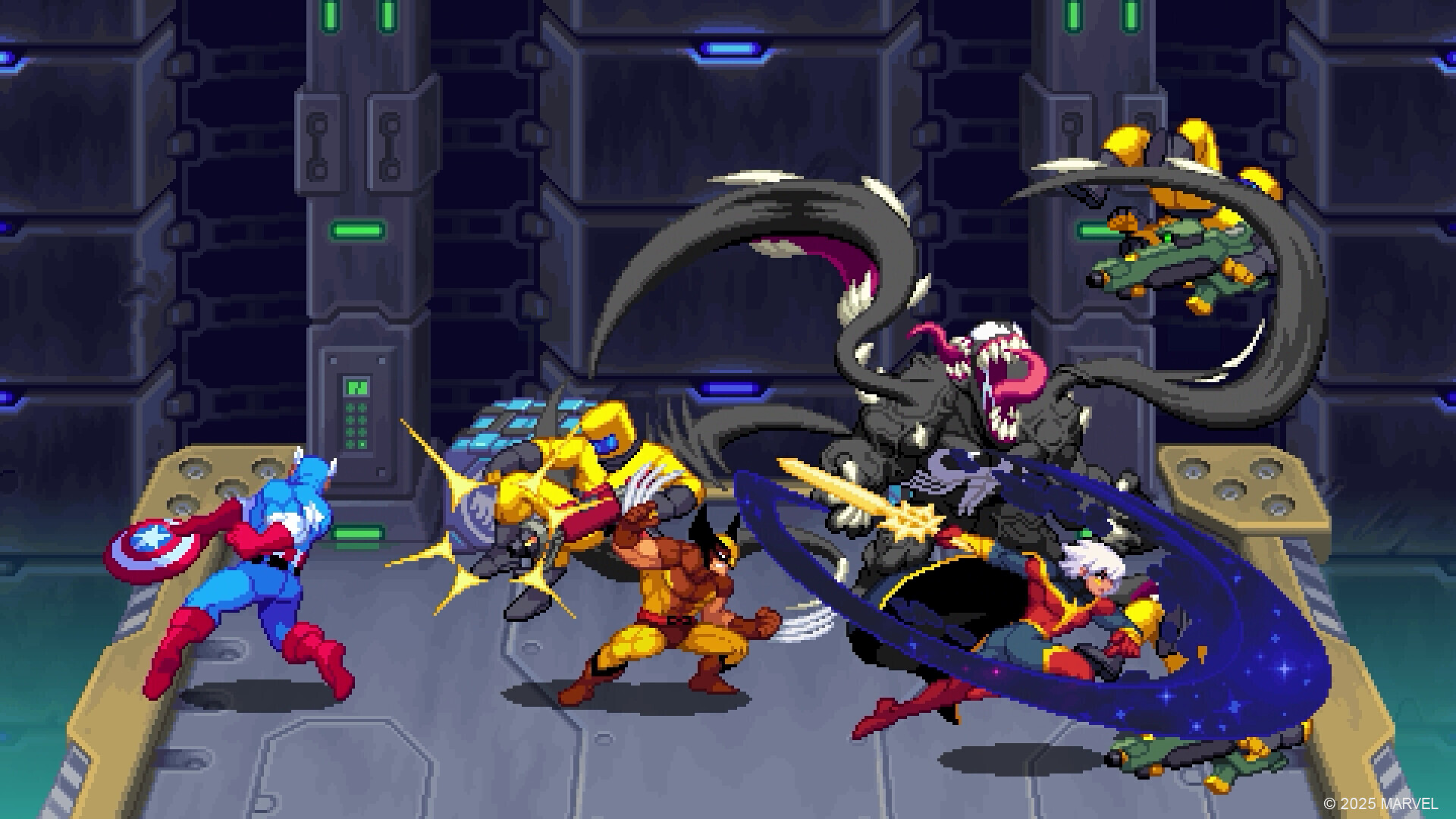
What impressed me most wasn’t just the quantity of characters, but how distinct each one feels. Captain America’s shield throw ricochets across the screen, juggling enemies in the air and creating combo opportunities that feel uniquely his. Wolverine plays like an absolute berserker, latching onto enemies with his claws and tearing them apart. She-Hulk’s wrestling-focused moveset was a genuine surprise – her grabs and throws create a completely different rhythm compared to traditional brawlers.
The flying characters (roughly half the roster) add another dimension to combat. Storm, Iron Man, Nova, and others can dominate aerial space, while grounded fighters like Captain America and Venom excel at controlling the floor. Some heroes block and parry, others dodge. These aren’t just cosmetic differences – they fundamentally change how you approach each encounter. Though I’ll admit, blocking feels way more useful than dodging since a well-timed block triggers a parry. The dodge mechanics could use some love.
Tag-Team Mechanics Add Surprising Depth
Here’s where Marvel Cosmic Invasion distinguishes itself from the pack. You don’t just pick one character – you select two heroes who fight as a tag-team. At any moment, you can swap between them or call your benched hero in for an assist attack. Each character maintains their own health bar and Focus gauge (used for special attacks), creating strategic layers beyond “mash buttons until everything dies.”
The assist system opens up creative combo possibilities. Launch an enemy into the air with Captain America, swap to Wolverine mid-flight, then call Cap back in for his special while Wolverine continues the assault. With four players each controlling two heroes, battles become absolute chaos in the best possible way. Enemy feet might not touch the ground once your team gets rolling. It’s the kind of over-the-top action that makes you grin like an idiot.
Though I should mention – some characters feel significantly stronger than others. Phyla-Vell’s special hits basically the entire screen, while Venom’s requires you to be uncomfortably close to enemies. These balance quirks aren’t game-breaking, but they’re noticeable when you’re experimenting with the full roster.
Campaign and Content: Gorgeous But Brief
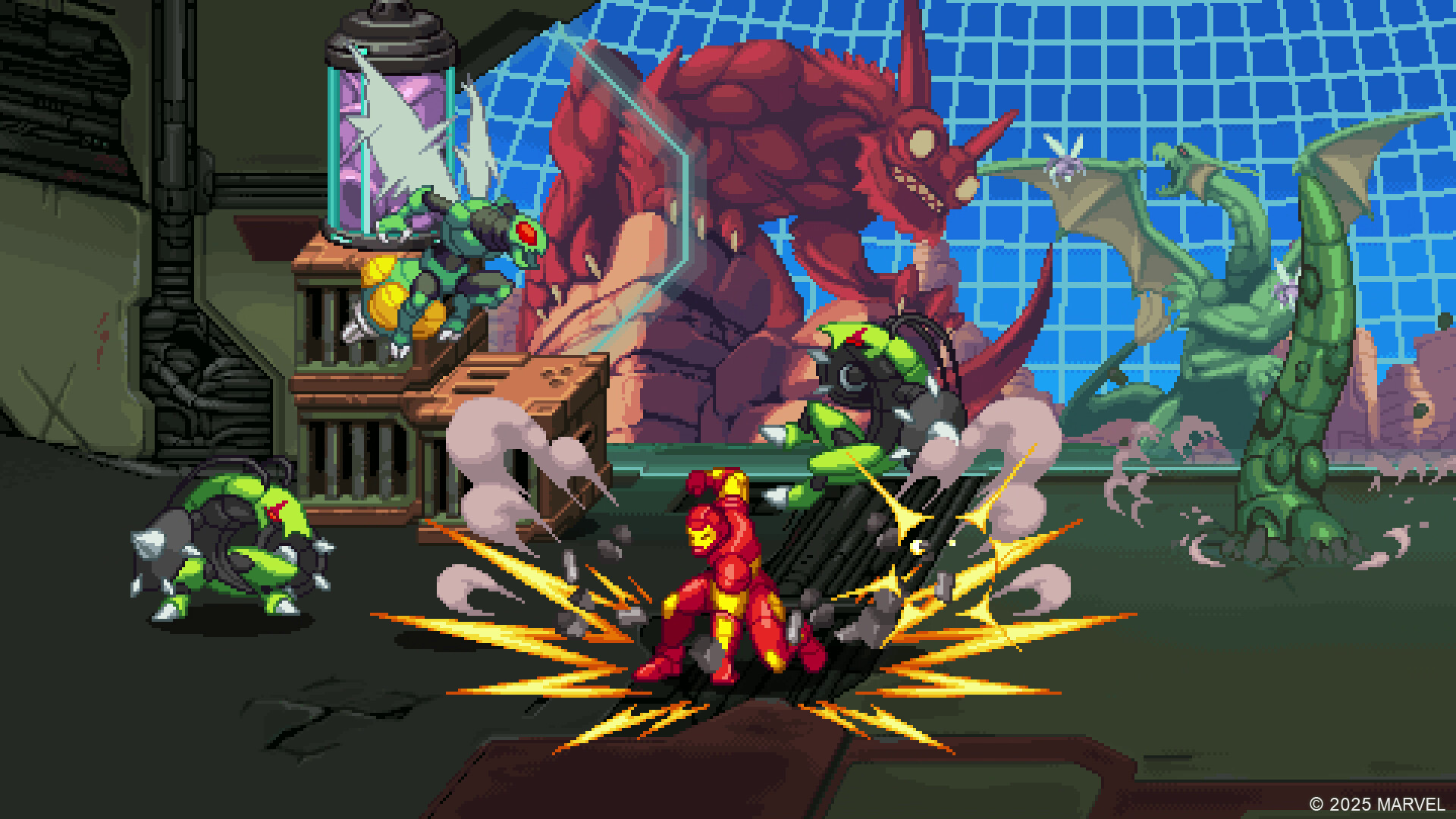
The campaign takes you through iconic Marvel locations rendered in stunning pixel art. From New York to Wakanda to literal cosmic realms like Valhalla, the visual variety is impressive. Tribute’s pixel artists deserve serious recognition – some backgrounds are almost distractingly beautiful. You’ll spot references to the Daily Bugle, witness the bug invasion happening in real-time behind your brawls, and encounter famous Marvel villains as bosses (some of whom join your roster afterward).
But here’s the reality check: the campaign lasts about 3-4 hours. That’s not a typo. For a $30 game, it feels surprisingly short, even by beat ’em up standards. Completionists might squeeze 15-20 hours by leveling every character, completing mission-specific challenges, and unlocking all the cosmetic rewards, but the core content is lean.
Arcade mode offers traditional beat ’em up structure with gameplay modifiers to increase difficulty, which helps with replayability. You can crank enemy counts to four-player levels while playing solo, double enemy health, or enable various other challenges. These modifiers add longevity for players who want to push the combat system to its limits, though the unlockables (palette swaps, music tracks, lore entries) aren’t particularly exciting rewards.
The levels themselves, while gorgeous, lack mechanical variety. You’re mostly walking left to right, fighting enemy waves, then facing a boss. No vehicle sections, no interesting traversal gimmicks – just straightforward brawling. Some boss fights feature clever gimmicks, but others feel disappointingly basic. The final boss, oddly enough, ranks among the least memorable despite being your climactic encounter.
The Verdict on This Cosmic Brawl
Marvel Cosmic Invasion nails what matters most in a beat ’em up: the moment-to-moment combat feels fantastic, especially with friends. The tag-team system adds genuine depth, the roster variety encourages experimentation (105 possible two-character combinations!), and the pixel art presentation is consistently gorgeous. Tee Lopes’ soundtrack provides an appropriately heroic backdrop, even if no individual track became an earworm for me.
The brevity stings, though. This feels like the foundation for something greater, and hints throughout the story suggest DLC might be coming (following the Shredder’s Revenge model). But right now, at launch, you’re getting a polished but compact experience that might leave you wanting more content to justify that price tag.
If you’re a Marvel fan who loves classic beat ’em ups, this is an easy recommendation, especially if you’ve got co-op partners ready to assemble. Just know you’re getting quality over quantity – a short but sweet cosmic adventure that respects your time while delivering genuine fun. Sometimes that’s exactly what you need.
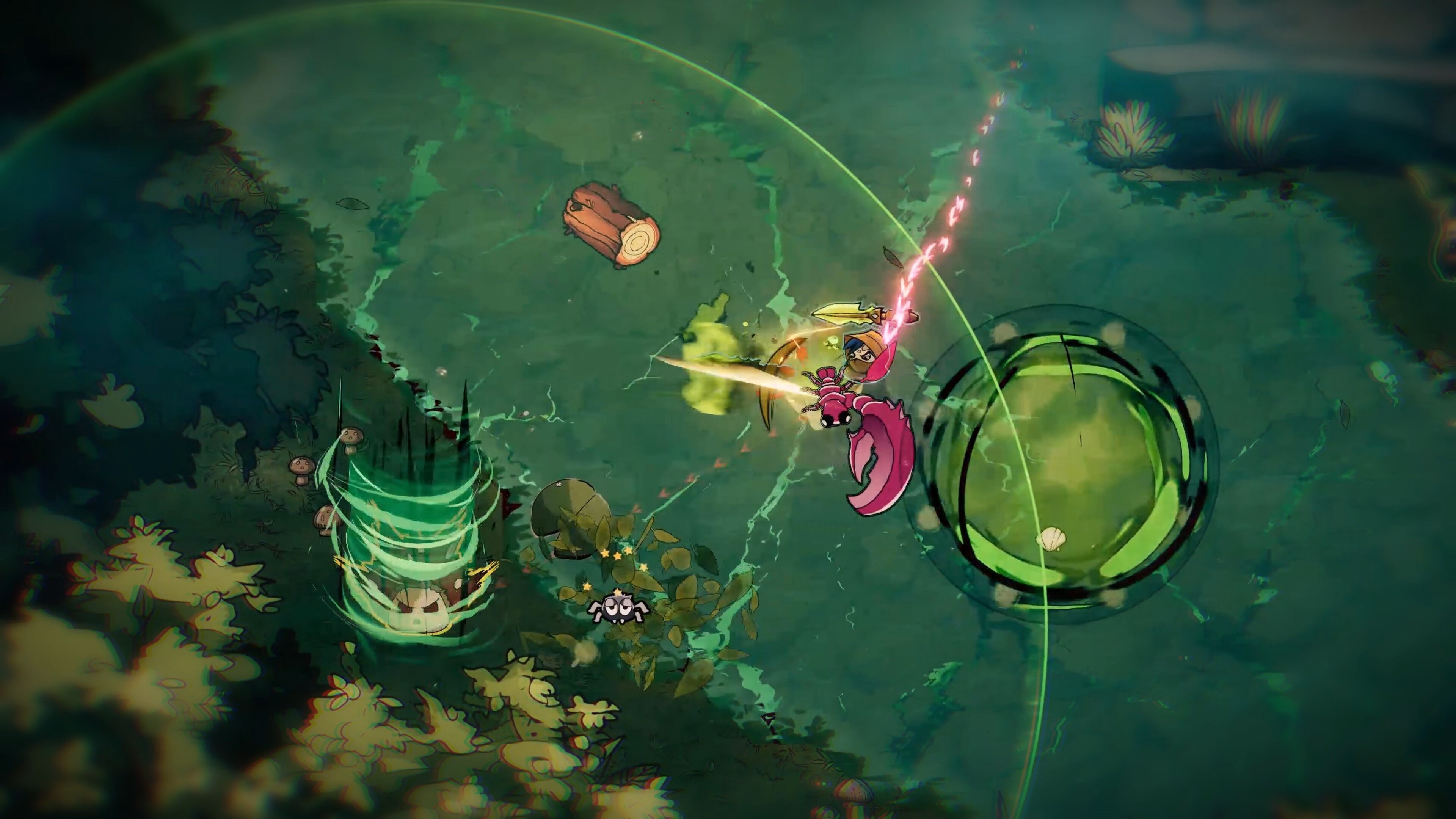
When a game drops you into a haunted swamp and keeps you there for the entire playthrough, you know you’re in for something different. Umigame, developed by Nimblegames and published by Phoenix Game, takes the roguelite formula and dunks it straight into murky waters. And honestly? I’m here for it.
This early access title wastes no time setting the stage. You’re an Umi – a water spirit – summoned by Witch Maeve who’s turned the swamp into her personal nightmare realm. The story unfolds through satisfying keyboard taps and soft lute music, creating an atmosphere that’s surprisingly cozy before everything goes sideways. It’s a charming introduction that quickly gives way to the chaos you’d expect from the genre.
Combat and Character Variety
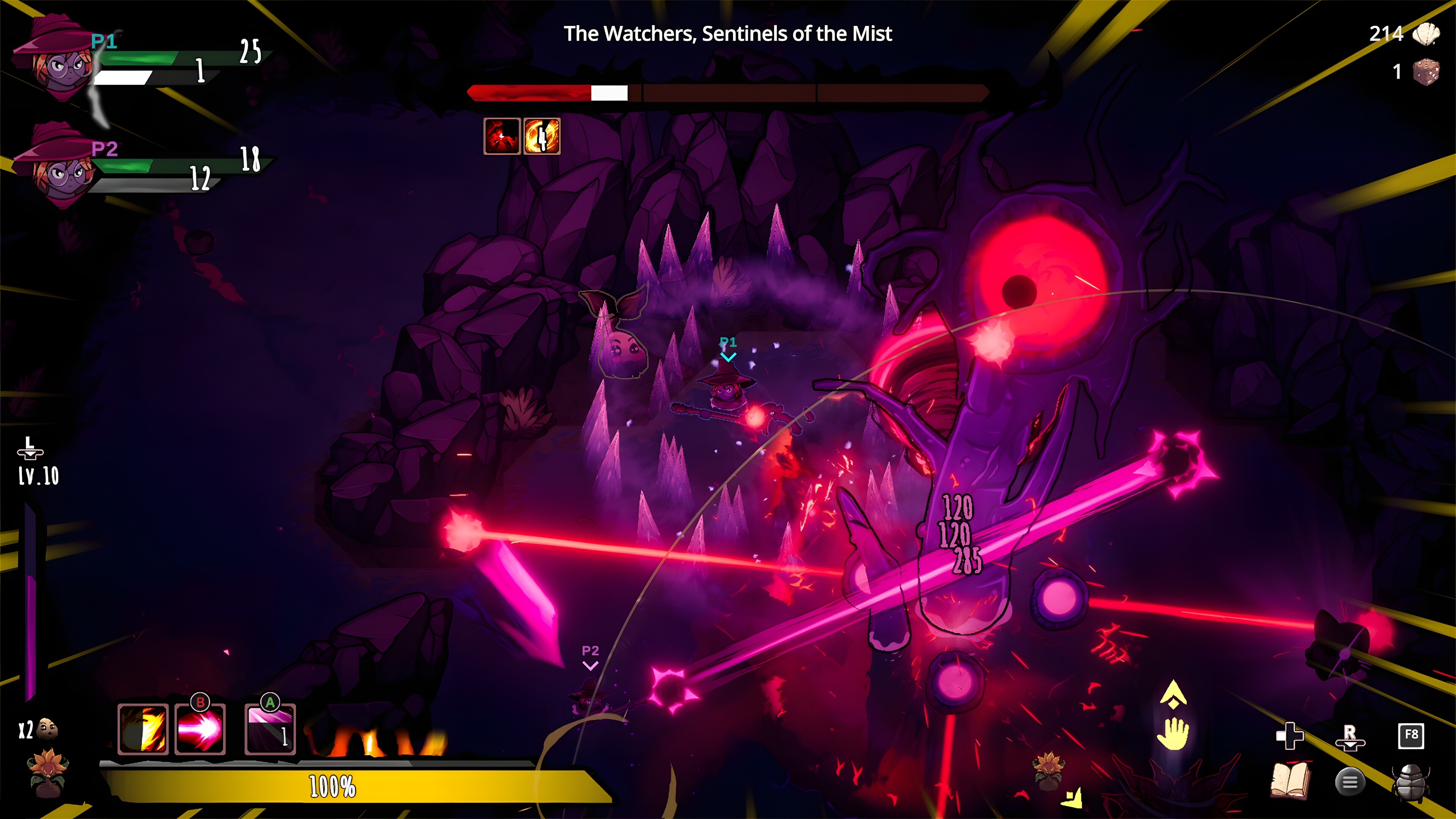
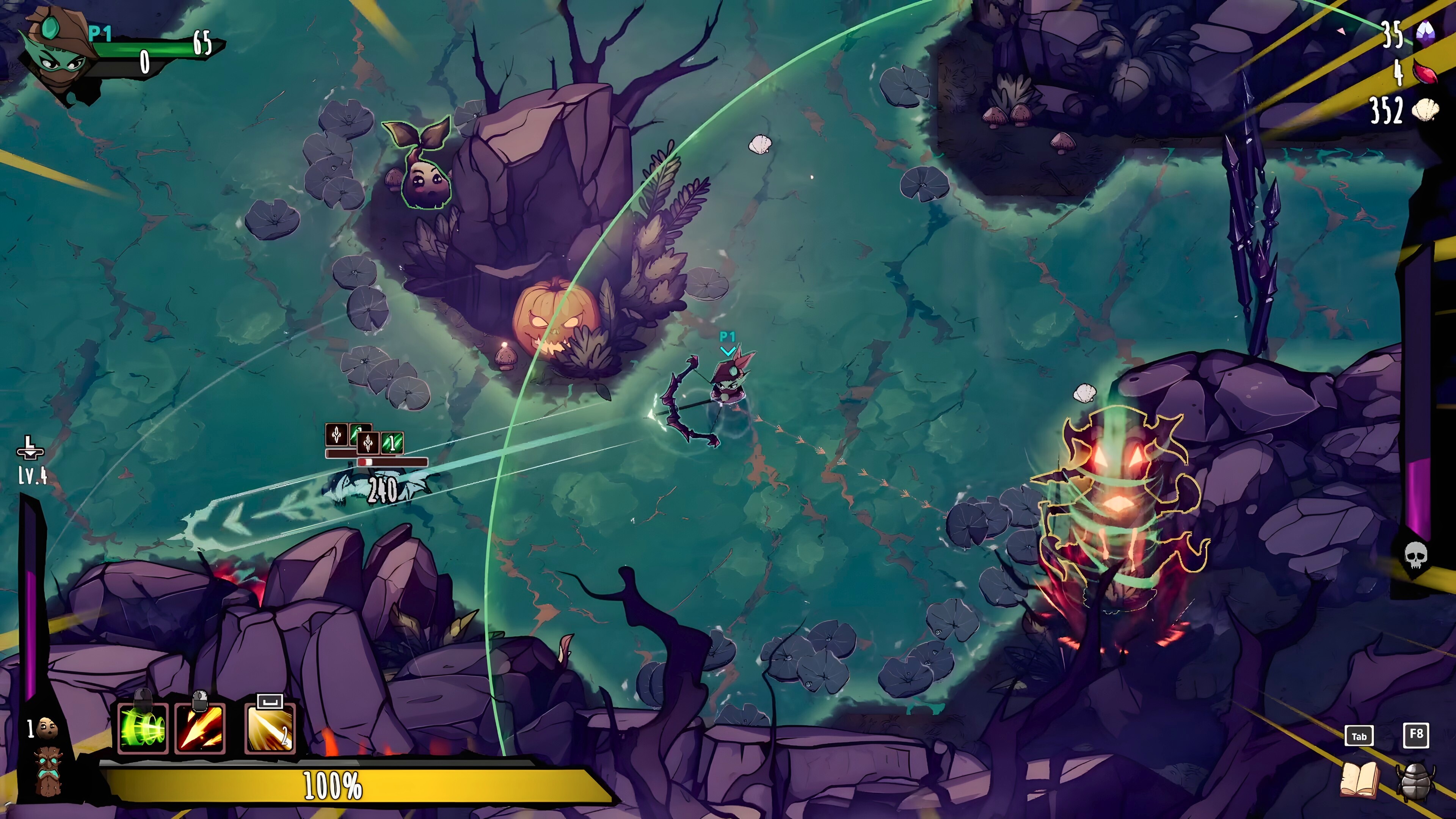
Umigame starts you off with Lyra (an archer) and Olaf (a melee fighter), but the roster expands to four unique heroes. Each character feels distinct, from their combat style to their exclusive skill upgrades. Pearl, the fire-staff wielder, became my personal favorite. She’s a glass cannon through and through – keeping enemies at arm’s length while melting health bars, but one wrong move and you’re toast. The trade-off makes every encounter feel meaningful.
The combat system itself is smooth and responsive. Whether you’re swinging axes, launching arrows, or slicing through corrupted creatures, the feedback is satisfying. With over 150 unlockable skills to discover, there’s genuine depth here. The variety encourages experimentation, which is exactly what you want in a roguelite that demands multiple runs.
I will say the dialogue choices with NPCs, while appreciated, don’t really impact much. They’re nice flavor text that adds personality, but don’t expect branching narratives. Still, it’s a touch that separates Umigame from more mechanical roguelites.
Guardians: Your Tactical Edge
Here’s where things get interesting. Guardians act as deployable turrets that you place at the start of each run. Think tower defense meets action roguelite. These companions can be leveled up using “petals” currency and positioned strategically in rooms. Place them right, and they’ll clear entire areas while you focus on dodging.
The limitation? You can only activate one guardian at a time, even if you’ve placed multiple. It shifts the strategy from “more is better” to “location and timing matter most.” You’re also locked into your guardian choice for the entire run. No swapping mid-adventure, which forces commitment to your strategy from the jump.
Progression systems layer on top of each other nicely. Soulshards provide permanent upgrades between runs, ensuring death never feels like a complete setback. The Omnicore Resonance system adds difficulty modifiers for completed runs, offering better rewards and extending replayability well beyond your first victory. A methodical run might take four hours, but skilled players can blaze through in under 30 minutes.
Atmosphere and Polish
The soundtrack deserves special mention. Bouzouki tones blend with lute melodies to create something genuinely enchanting. Boss fights ramp up the urgency perfectly, matching the intensity without becoming overbearing. It’s clear the two-person development team put serious thought into the audio design.
Visually, Umigame embraces rich, saturated colors that bring the haunted swamp to life. The digital art style is clean and fluid. Characters only show their upper bodies with water pooling below, but the animation work keeps everything feeling dynamic.
Controls work well whether you prefer controller or mouse and keyboard. I experienced one full freeze that required a restart, and there’s a quirk where nudging the keyboard during controller play locks input. These are minor early access hiccups that shouldn’t persist long.
The Verdict
Umigame already offers a robust experience despite its early access status. The roadmap promises a fourth biome with final boss, additional enemies and guardians, three-player co-op, and expanded build variety. For fans of Hades, Dead Cells, or even Vampire Survivors looking for something fresh, this waterlogged adventure delivers.
The core loop works. The progression systems respect your time. The atmosphere charms. What more do you need? Dive into this swamp – you might just find your new obsession.
Given that Kinmoku’s Videoverse is, in part, inspired by both Nintendo’s Miiverse and DS consoles, it seems only proper for the visual novel to be on one of the company’s devices. Fortunately for us, it now is. Even better, the fact that it’s also a thoughtful and nostalgic exploration of relationships on 2000s internet interactions and relationships means it feels even better to play on the Switch. It really is like we’re coming back to a period of time and moment in multiple ways due to the nature of it and this new port.
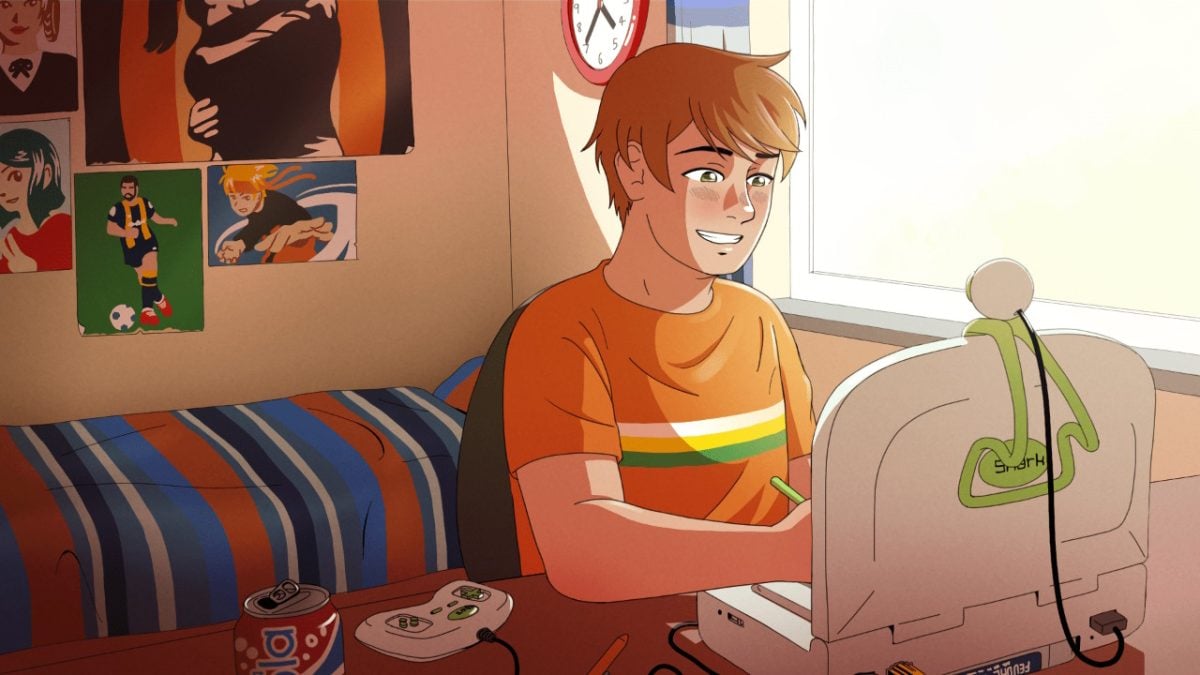
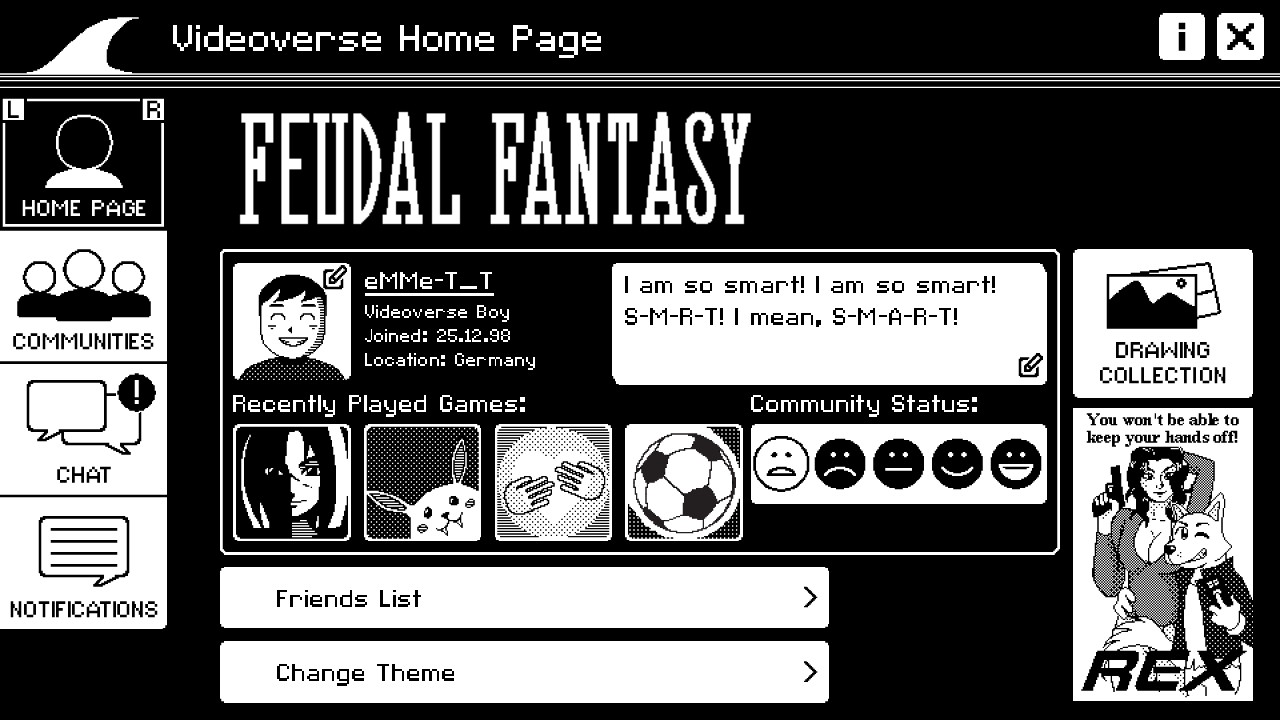
Videoverse follows a young man named Emmett at a critical point of his virtual life. The Kinmoku Shark console, which looks a bit like a Nintendo DS, is home to a social network called Videoverse. It allows people to chat and post about games, not unlike Miiverse, Facebook, Myspace, and other types of social networks that appeared in the late 1990s and 2000s. The thing is, it’s also taking place at the dawn of a new console generation and when internet culture is starting to take a more antagonistic and pessimistic turn. We get to help determine how Emmett reacts to this transition and manages his relationships online.
Screenshots by Siliconera
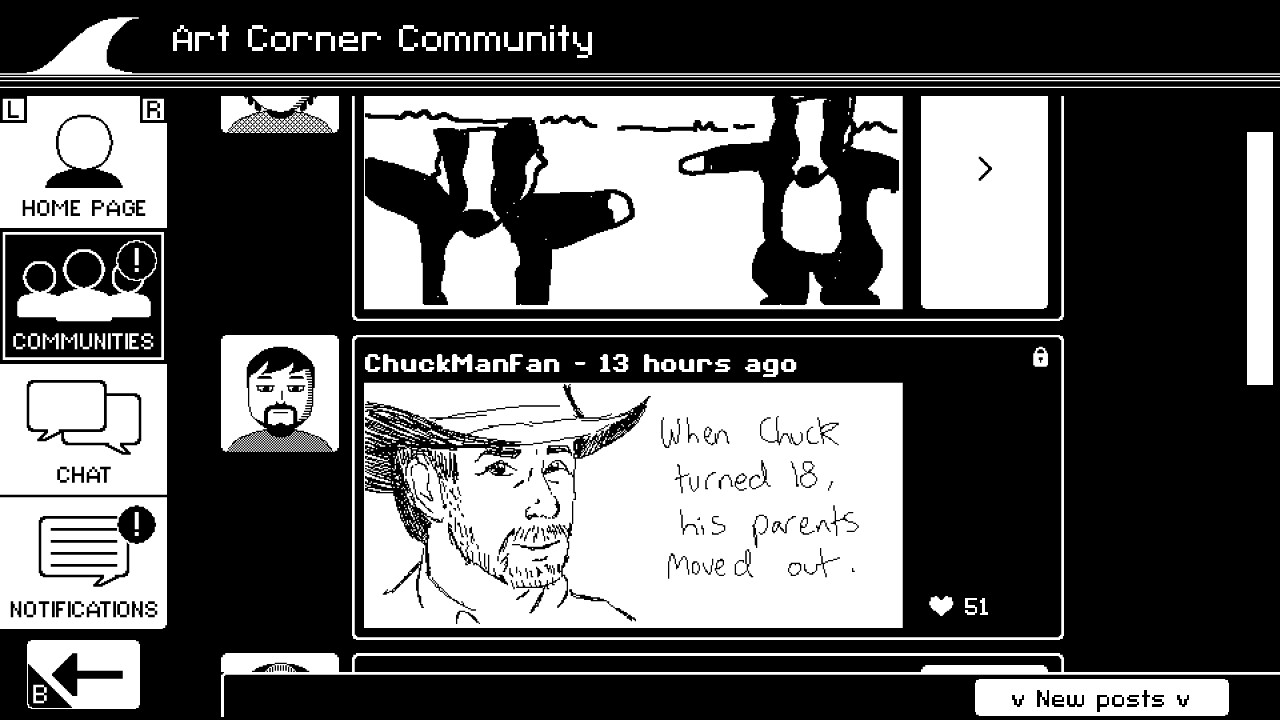
This means that while Videoverse is a visual novel and tells a story about the sunset of a media platform and its effect on a teenager, it’s also about capturing a moment in time. It’s harnessing the feeling of the experience of using one of these early social media services and online console communities. The technical limitations of the time period are embraced with the art direction and nature of the pages and forums we explore. The conversations are taking place in those types of messengers. In terms of a recreation of the kinds of UI and forums from those time periods, it is on-point. It looks great, and the limited color choices and design directions do make this feel a bit like a time capsule.
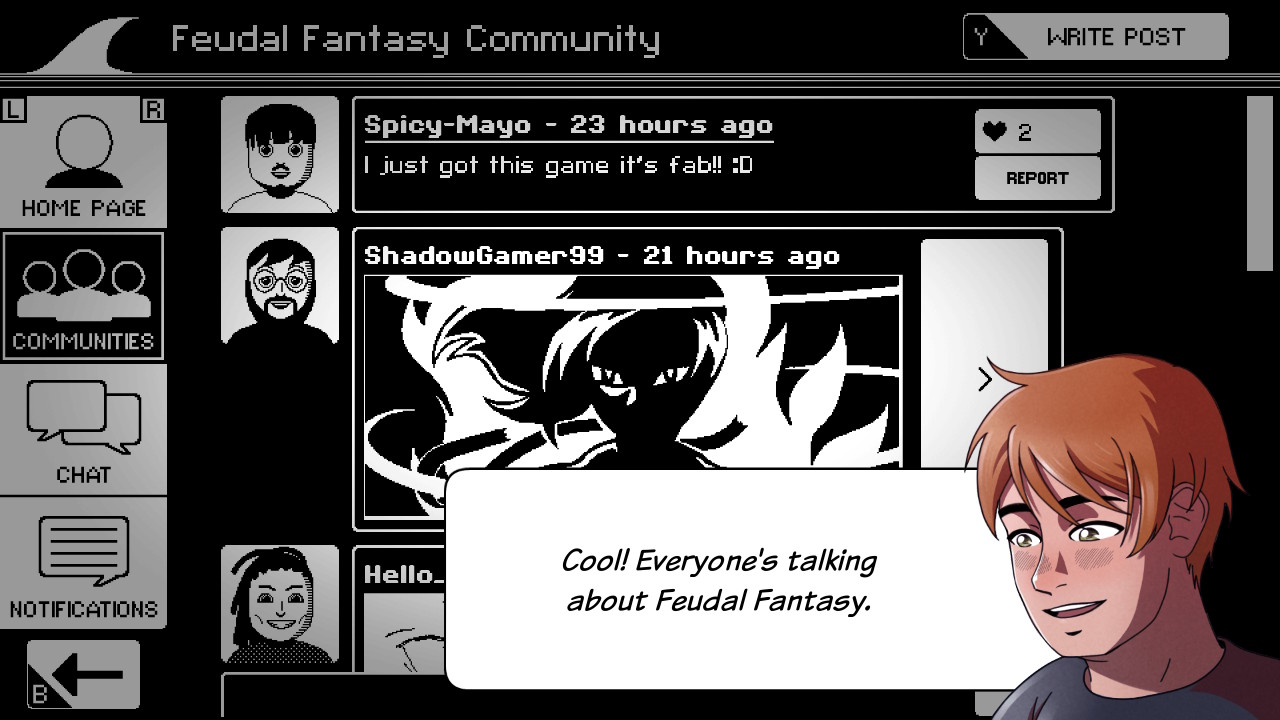
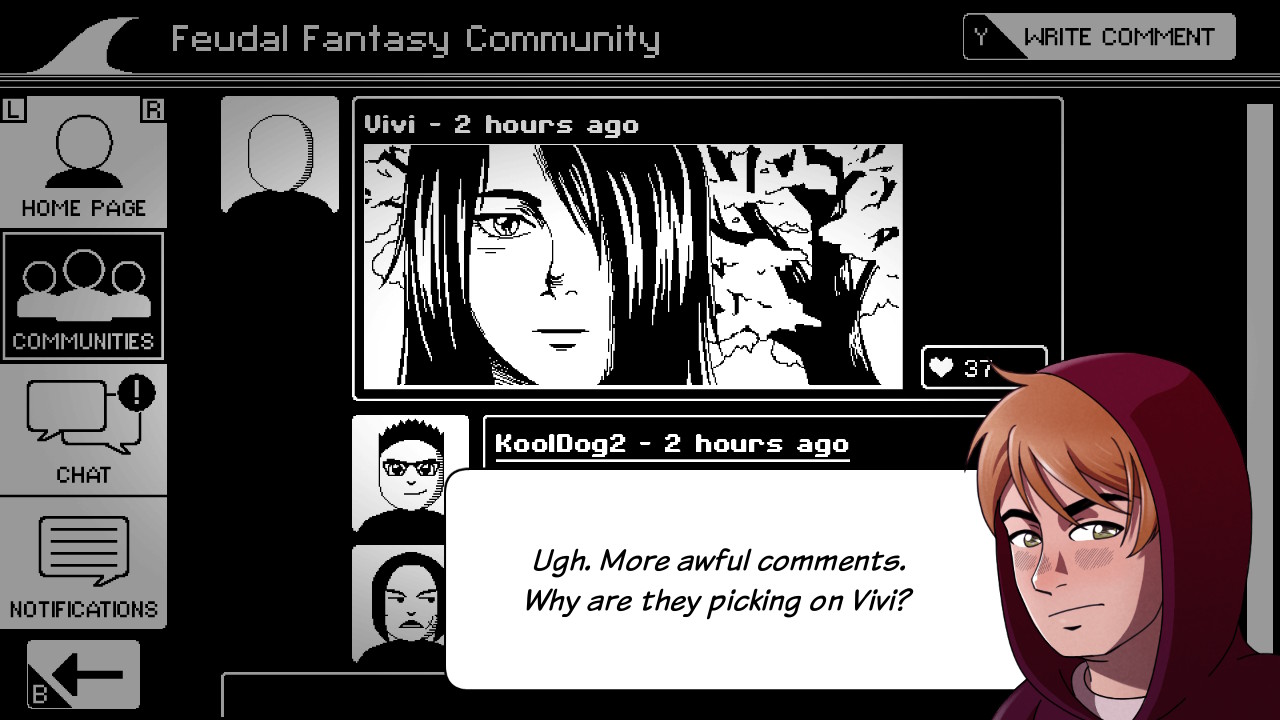
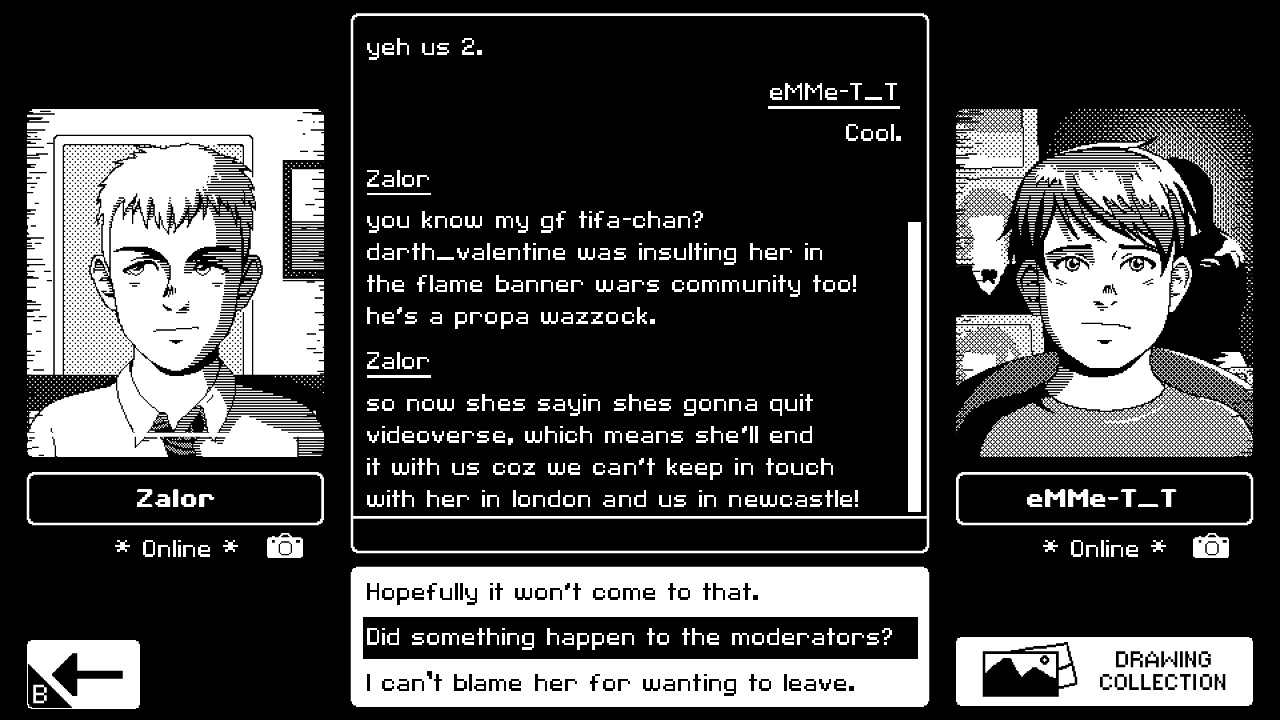
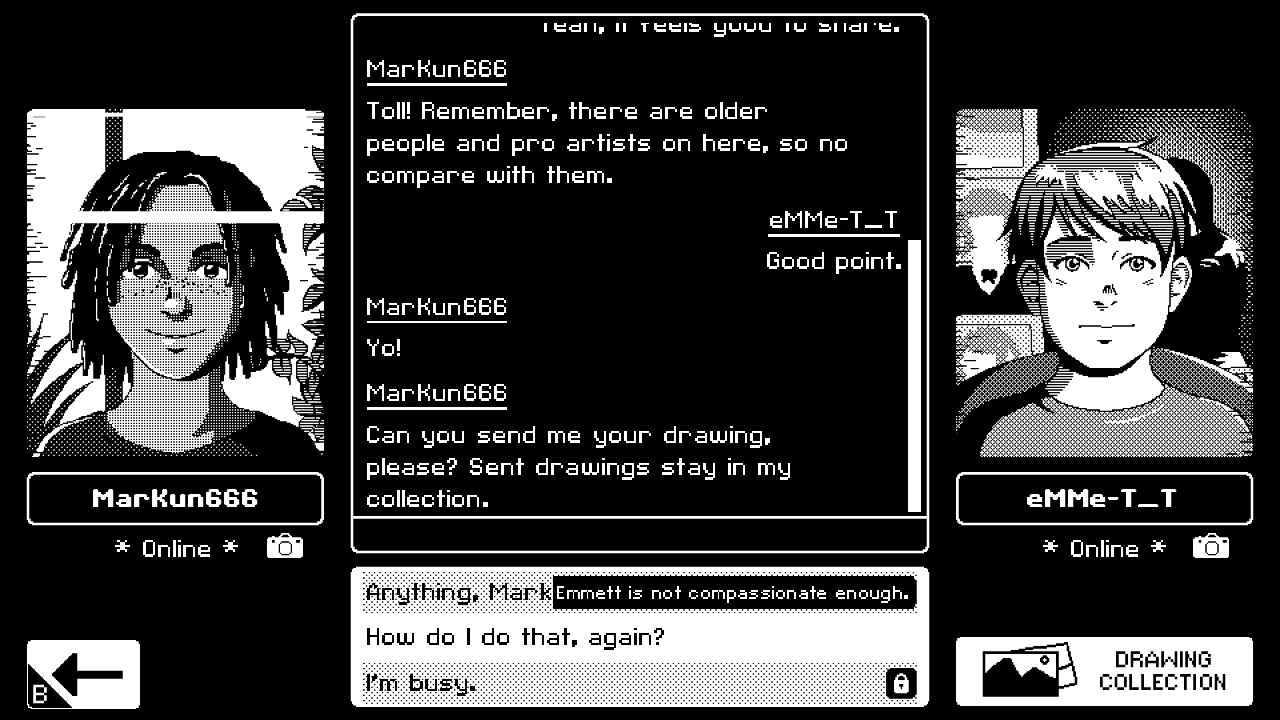
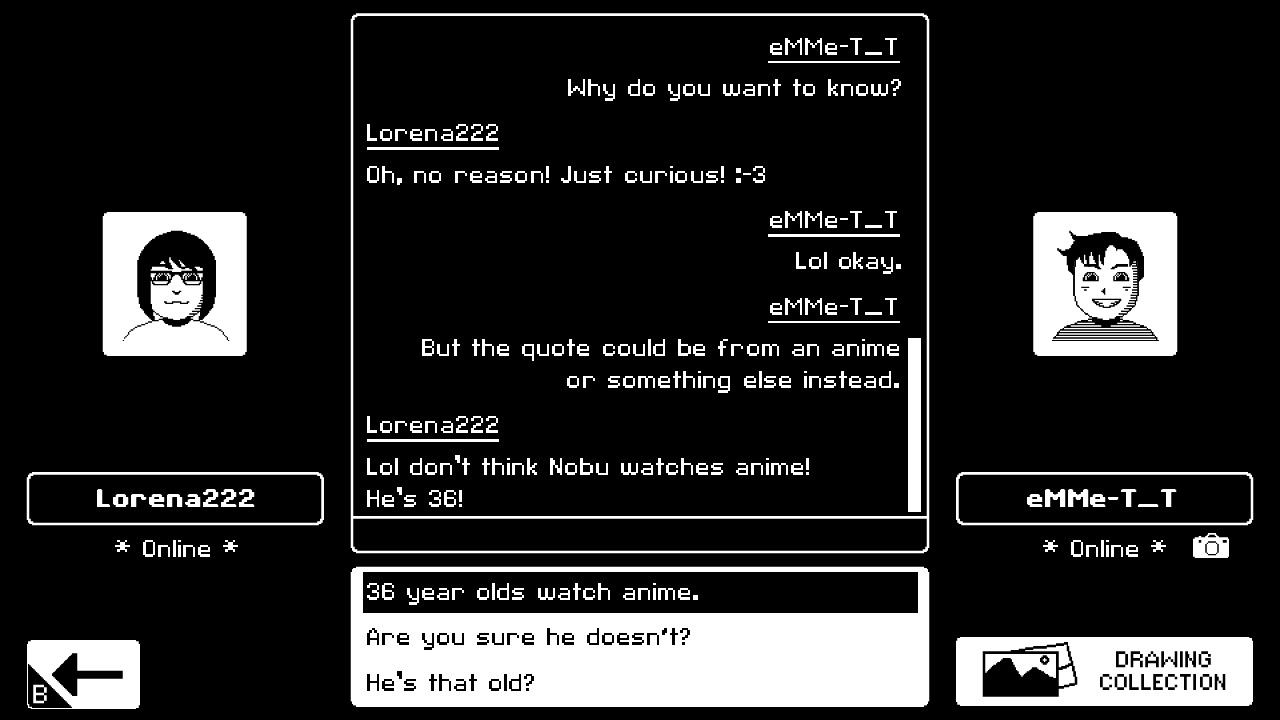
The primary narrative involves Emmett coming to terms with what is happening to Videoverse and exploring a potential relationship with Vivi, a fellow Feudal Fantasy fan and artist who posts in the community. However, it isn’t entirely straightforward. While we do interact directly with Vivi, Markus, Zalor, Lorena, Nobu, and his other associates, things are laid out in forum posts, instant messages, and notes Emmett takes on his own desk as things happen. It’s an interesting storytelling device.
Screenshots by Siliconera
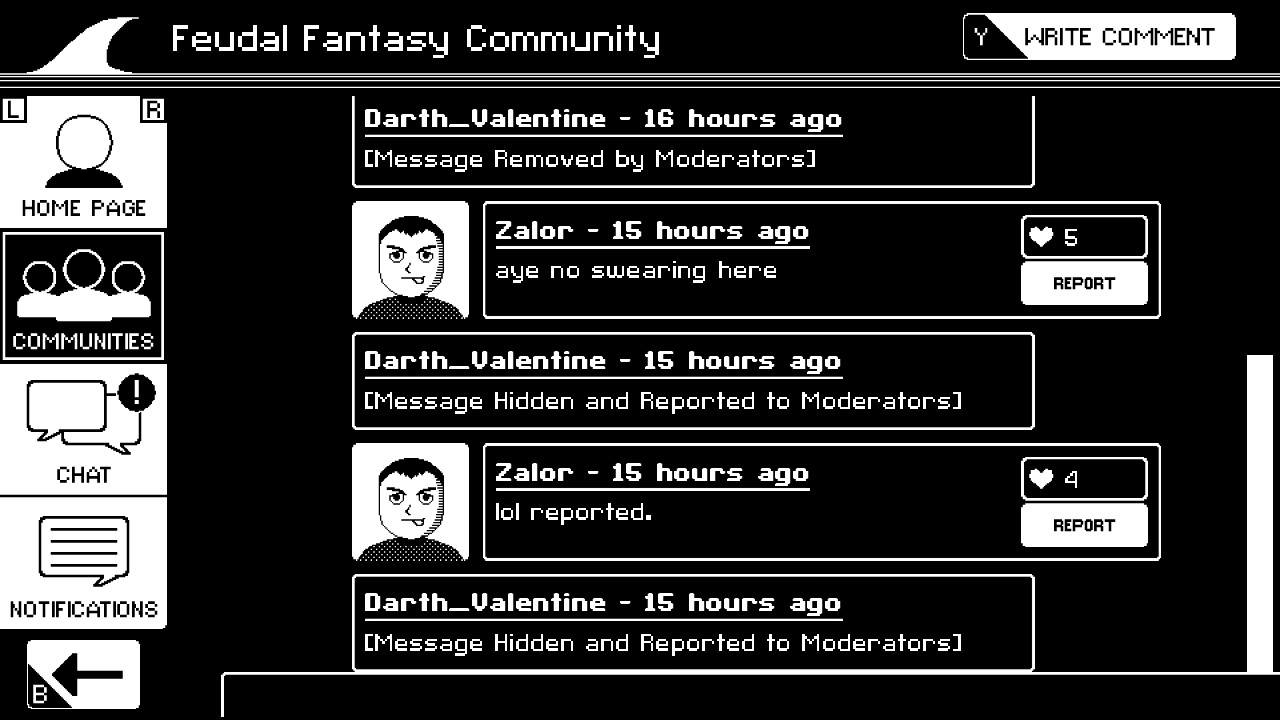
Especially as the nature of the narrative means the kinds of conversations and posts we’ll scour feel appropriate and highlight a sort of transition between time periods. As chapters go on, we can literally see the decline. Kinmoku’s captured it both in the amount of activity, responses from individuals, and ways in which “official” moderation slips, as well as in reactions from the people we meet.
The downside to it all is that this can be a bit awkward in two ways, especially with the Switch version of Videoverse. The first issue is that the UI isn’t entirely friendly to navigate using only controls. It can be difficult to tell if a button is highlighted for example, and scrolling through different posts in a community with the analog stick or directional pad sometimes gets awkward and won’t go down far enough. Another issue is that sometimes when I’d respond with a DM, image share, or comment, a box with three white dots that acted as a loading message would appear on the bottom right side of the screen and take longer than usual to advance.
Screenshots by Siliconera
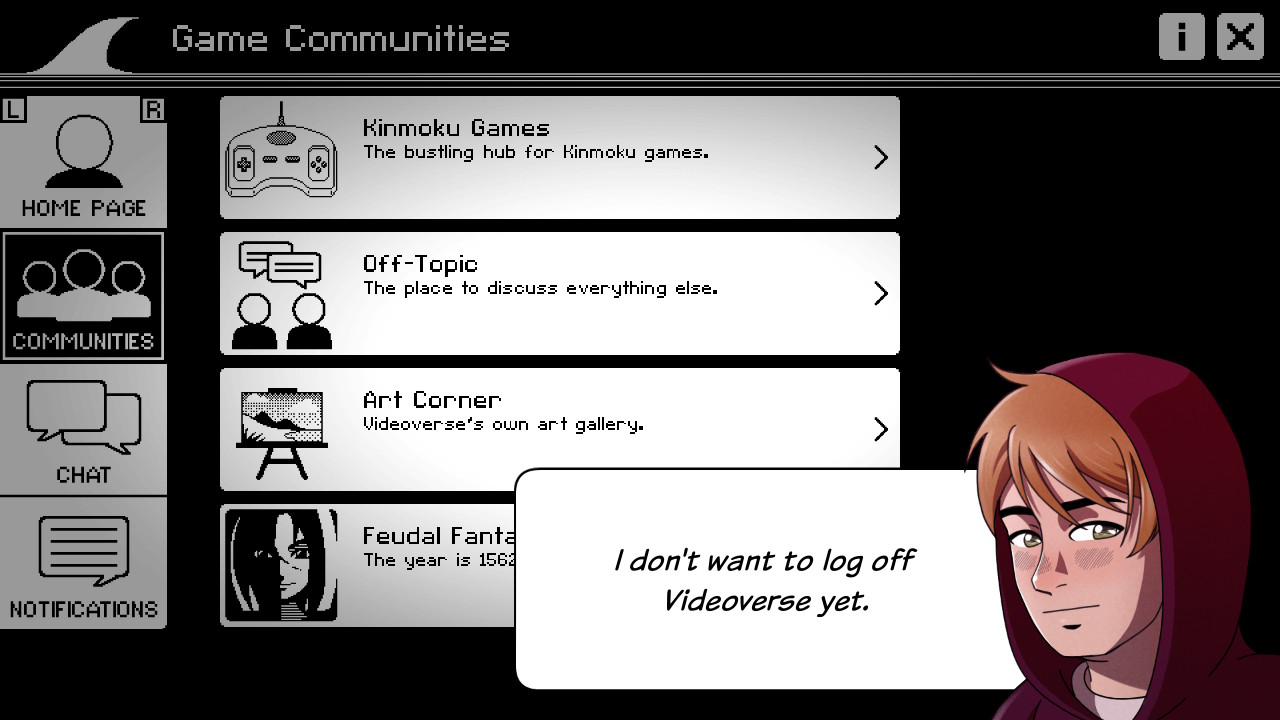
Speaking of advancing, there are times when Videoverse isn’t exactly intuitive when it comes to moving the plot along. It can seem like you’ve responded to everyone, commented where you could, and did all you can. However, if you try to back out of using the social network, Emmett will say, “I don’t want to log off Videoverse yet.” Which means you need to double back and check to see if there’s any place you can still comment, reply, or DM to try and move things along.
I really appreciate how Videoverse does capture the spirit of older online gaming communities like Miiverse. It definitely feels like exploring online in the 2000s, when we needed to embrace limitations and do all we could to work within them. The ambiance is impeccable and really does recreate the atmosphere of a waning console community in that time period. There are some times when the UI and progression system can be a little user-unfriendly. But aside from those instances, it’s a bit like playing through a game designed to feel like a time capsule from an internet era.
Zorana will die. Probably a few times. I’m sorry, but that’s just how it will go. It’s not your fault. I’m sure you’ll do your best the first few times going through Galaxy Princess Zorana, but as a Long Live the Queen successor in the Princess Maker-like category, it’s going to demand foresight and planning that only comes from multiple runs. And there will be multiple runs, as each death will make you even more determined to help her reach any ending where she’s still alive.
The emperor of the Celestial Empire is dead. When inspecting a lab to see progress on a type of teleportation technology, there was an unfortunate accident. In the rumble, it was discovered he was gone. Not long before he did, he pulled his daughter Zorana out of boarding school exile. Which is good! It means there are options, especially as the prepared heir, her elder brother, abandoned the empire and was disowned in the process. The bad news is, as she was the “spare,” she never had any formal leadership training.
https://www.youtube.com/watch?v=5i3rwFg-2ZE
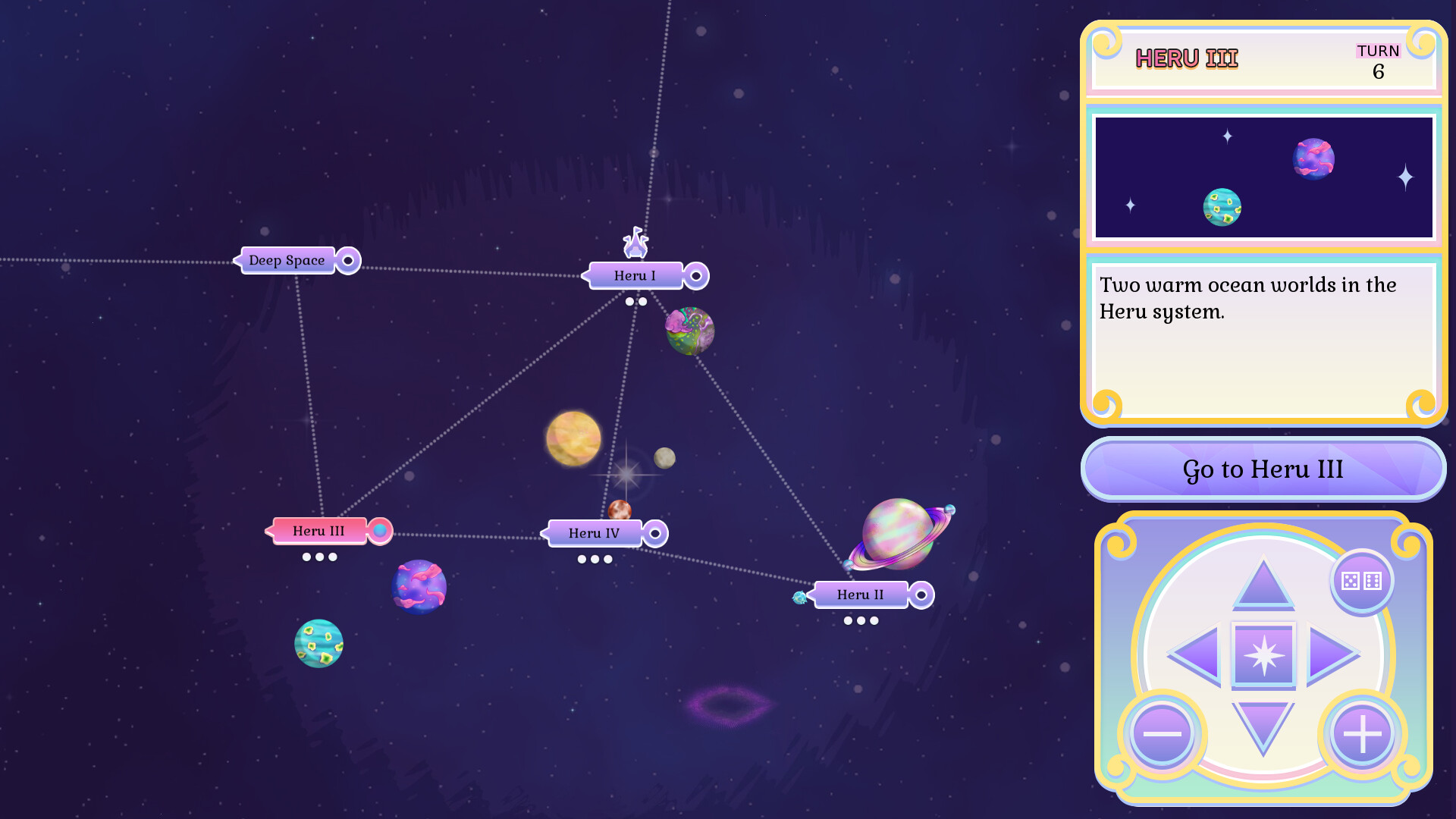
This means it is crunch time in Galaxy Princess Zorana, as there’s a little more pressure when building her stats like in Princess Maker than there was in Long Live the Queen. The first order of business is to ensure she starts to get some experience in various categories that relate to book smarts, street smarts, emotional intelligence, physical prowess, governing, and actually managing intergalactic travel and rule. The second is to manage her mood in order to get boosts in certain topics to build her up faster. The third is to travel around the galaxy to build ties, meet electors, and create a cabinet of her own officials to aid her. The fourth is to stay alive long enough for all of that to matter and maybe get her elected to the role of Celestial Empire empress.
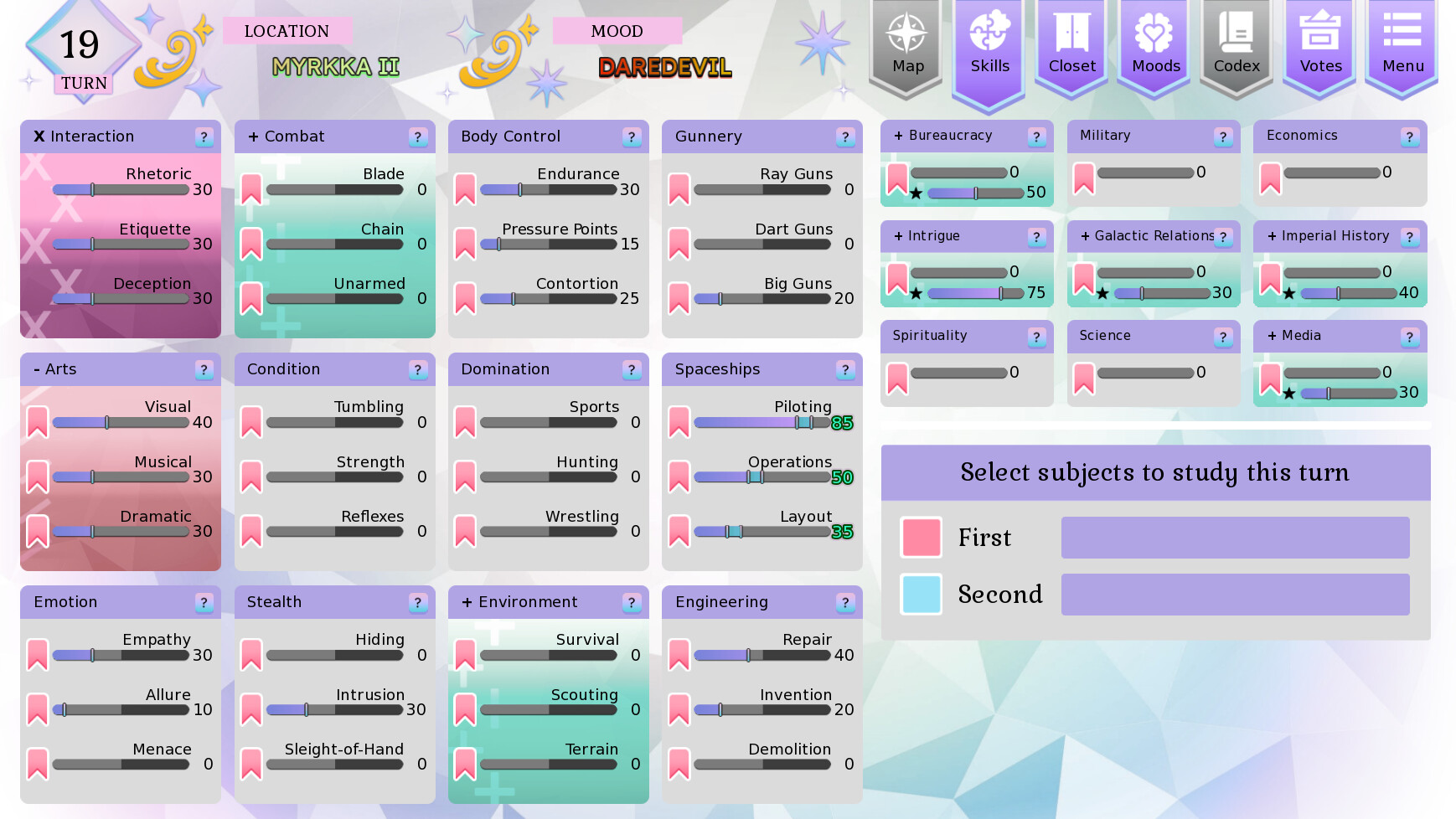
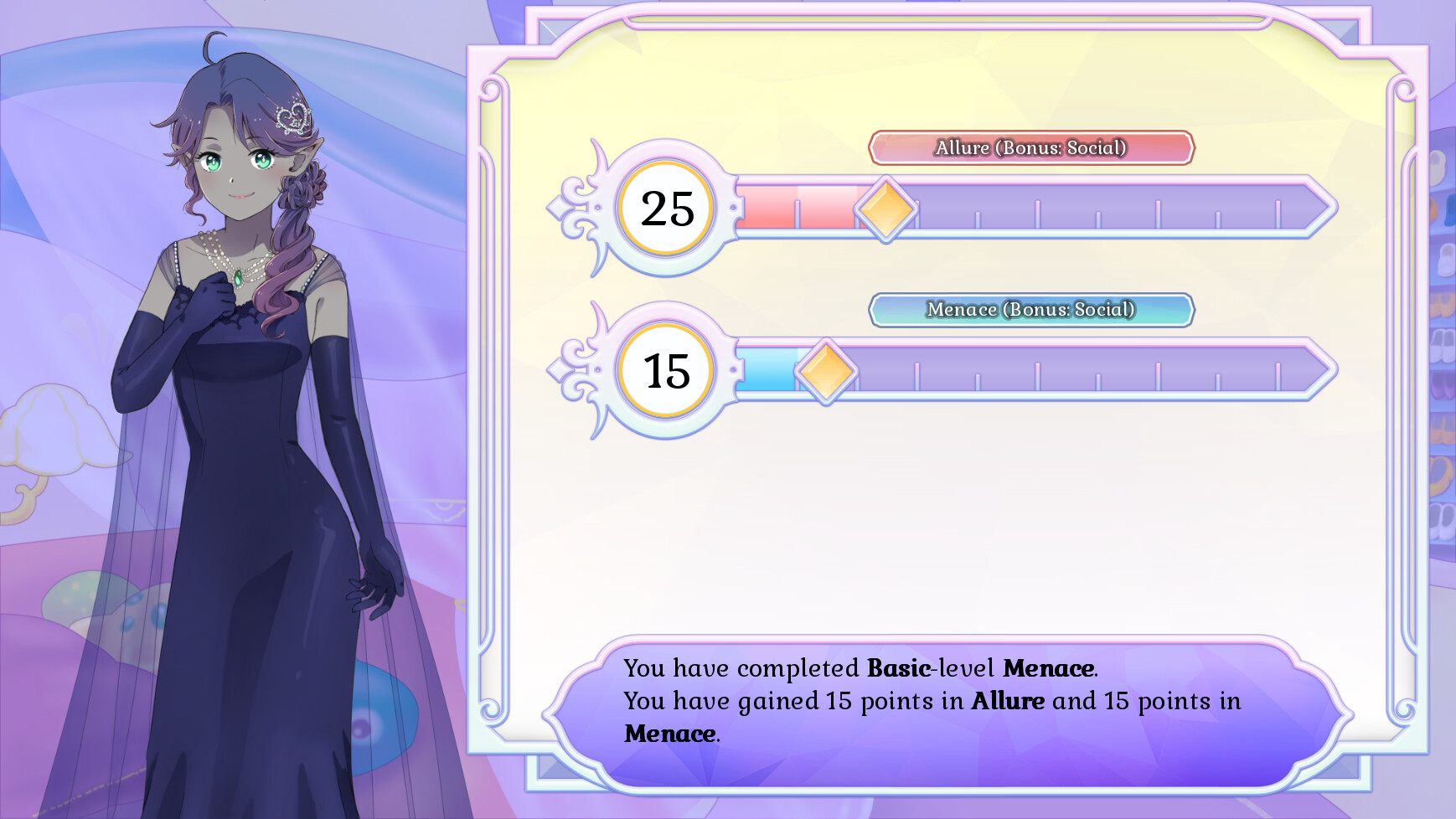
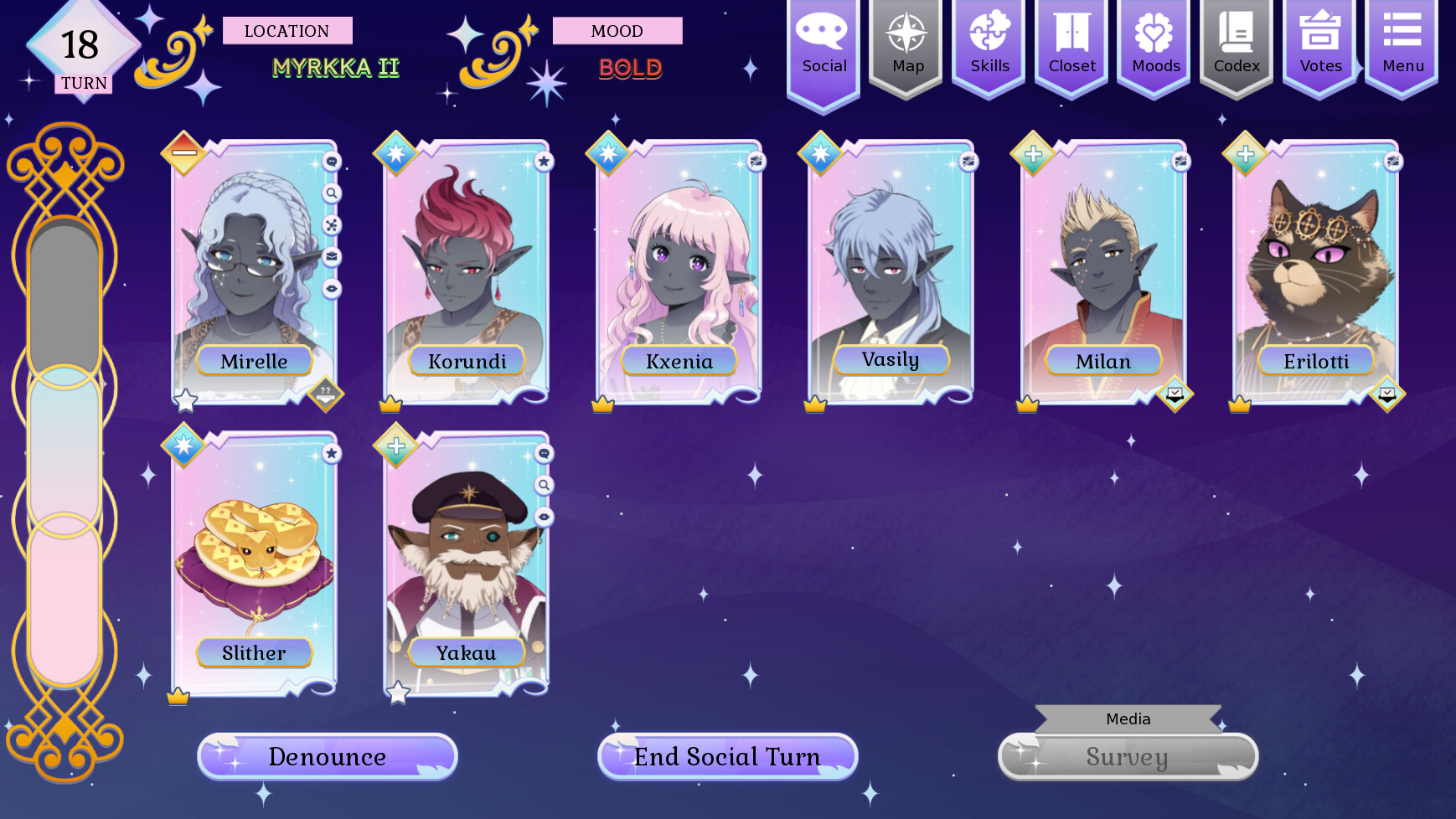
Compared to Long Live the Queen, there are already some types of quality of life adjustments in the actual scheduling element that help a little with Galaxy Princess Zorana survivability and personal development. It’s still putting a wall of boxes in front of us, which might be overwhelming! On the lefthand side, there are categories that feel like general knowledge she’d need that feature three specific spheres under them. So her Emotion area would feature Allure, Empathy, and Menace as areas to focus on, while Condition would involve Reflexes, Strength, and Tumbling. On the right are topics more focused on elements of ruling, like Bureaucracy, Galactic Relations, Imperial History, Intrigue, and Media. This time around, we always know what our subject’s mood is at the top of this grid. How that influences growth during that turn will also be immediately visible. If the background is green, it’ll result in a bonus if you study that topic during one of the two slots that turn. If it is a shade of red, you won’t do as well and it should be avoided.
Images via Hanako Games
The element of picking people for important roles to both ensure their votes in the election and offer support in different ways is also a boon. When we start the game, we pick a pet for Zorana that can help bolster two stats, making it easier to survive checks on them during events. When we pick cabinet members, their influence can also affect performance and provide a boost. However, it’s also important to know who to pick. Some folks will very easily support Zorana, which means you shouldn’t pick them. Others may have enemies of their own, and that makes her more of a target. They also might just have trash skills, which can hurt you.
As you’re probably gathering, Galaxy Princess Zorana is a game that will involve multiple playthroughs. The first two or three runs feel more like tutorials and learning experiences than genuine playthroughs. Those familiar with games like Long Live the Queen and Princess Maker will already be in a good place to approach Galaxy Princess Zorana and be fine, but for newcomers to the genre I imagine it will be daunting! Especially since, though there are some explanations, they aren’t especially extensive or helpful.
Images via Hanako Games
The general progression of a turn in Galaxy Princess Zorana follows a set pattern. You pick a destination on the Celestial Empire map. You pick two subjects to study that turn. You interact with people at that destination, which can involve investigating them, making a proposal to win them to your side, taking a side quest for them to prove yourself, proposing marriage, or blackmailing them. You also choose how she will spend some free time, thus changing her mood for studying the next turn. On some turns, you’ll be briefed about situations in the Celestial Empire that will affect your situation or require a decision, such as a potential hazard or a disease hitting a region. Other events can also come up when not studying, which in turn affect the experience.
But about 50% of the time, maybe more, those events can end in death. Is Zorana too oblivious about a topic to realize somebody is a threat? Dead. Did you ignore combat skills? Very dead. Is she unaware of some spiritual element? Dead! Oh, you forgot to teach her about how the internet works with Media classes? That will kill her dead. You decided she should spend her free time writing in her diary alone in her room? Turns out she wasn’t alone and she’s dead!
At least you might get to see some fun chibi art of dead Zorana whenever that happens!
Images via Hanako Games
Since Galaxy Princess Zorana is such a text-heavy game, the stories that come up need to be interesting to keep someone invested. Fortunately, the ones I’ve seen are fascinating. Early on, if you don’t invest in Empathy, you won’t pick up on folks’ intentions toward you when you first meet them, but I appreciated how even that could help set the tone for elements. The personal quests and “tests” from certain electors were interesting, and I loved how one basically involved helping a mother with her kid and, even if you aren’t perfect, there’s a pretty fun result. As expected from a game that can get quite political, there’s a lot of potential for intrigue here, and replaying can help provide opportunities in check out plotlines and learn more about some folks. The art is also pretty solid, and even portraits for characters like the Heru tend to have some distinguishing features for ones you should probably remember as a notable potential ally or enemy.
Because of the nature of Galaxy Princess Zorana, that does mean it isn’t going to be for everyone both due to the Princess Maker-like stat building demands and the Long Live the Queen degree of difficulty. Like it is the Dark Souls of simulations. When I played, I had a series of notes nearby to mark down areas I should focus on based on certain early altercations and experiences. I’d mention stat checks that came up a lot, so I’d know to invest in those. I’d mark down observations about certain electors and possible marriage prospects, so I’d know who was useful and dangerous. It demands patience and attention.
Galaxy Princess Zorana is a worthy successor to Long Live the Queen and a stat-management sim Princess Maker fans shouldn’t ignore. Is it harrowing? Absolutely. Will you need to keep notes and a slew of save files? Definitely. Is it worth all the trouble? I think so! However, if you’re unfamiliar with the Hanako Games’ previous entry or the genre, I’d recommend going with something more forgiving like a version of Princess Maker 2or Mushroom Musumebefore attempting to help Zorana take the throne.
I’ve been playing video games for 25 years, and I can count on one hand the number of times I’ve felt like I’ve been playing the next big thing. Fortnitewas one, back in 2018, during the original first season. Minecraftwas another, during the alpha days, when it was picked up by the odd YouTuber and all it had was trees, coal, and dirt. Arc Raiders feels like another one of those games.
Hoomanz flips the script on alien invasions by putting you in the paws of the local wildlife, scaring off clueless humans who’ve invaded your planet. It’s cute, quirky, and built on a fun premise — but after a couple of levels, the charm starts to wear thin, and you’ll be glad it wraps up before the novelty fades.
During the 2025 Tokyo Game Show, HoYoVerse officially announced Petit Planet, its life sim game designed to offer an Animal Crossing style experience. At the time, only initial teasers and the promise of a November 2025 Coziness Test closed beta appeared. Now that’s upon us and, as expected, this does feel inspired by Nintendo’s title. However, after spending some time testing an in-progress build out, I feel like it is a little more task-focused than something like Animal Crossing: New Horizons.
Petit Planet begins with Loomi Corp giving our avatars a chance to develop their own uninhabited planet, with the help of employees Mobai, Glenn, and Esassani. Mobai is something of the Tom Nook mentor here, though he jokes that initial residence comes without any kind of loan or financial commitment. Glenn handles the shop on our fledgeling planet. Esassani acts as our chauffeur to take us through the Starsea in our car. After picking our planet type, of which there were a Golden Prairie with a hot and dry Taffeh one and Verdant Plains warm and humid one in the Hexia galaxy during the beta, we head off. Upon landing, we get to set up a home and plant a Lucaseed that will grow into a tree that influences this world. As we go through different campaign tasks, we eventually get a special kind of Luca liquid that allows it to grow and unlock new elements like kinds of life, cosmetic changes, and features like the ability to dig up stuff or engage in more farming.
https://www.youtube.com/watch?v=7HyMwlxRcCg
From there, the gameplay flow HoYoVerse created in Petit Planet does feel a lot like life sims such as Animal Crossing and Hello Kitty: Island Adventure. It follows a real-world clock after you get past a certain point of the tutorial. So some quests, once completed, won’t completely go through and show the results until the next day. For example, Glenn’s shop will open the next day after you get the materials for it, and as will Mors’ ecological habitat for insects, fish, and shore-dwelling creatures you collect with tongs. The in-progress build in the test made a cooking station with pot available for recipes right away, with a crafting table and kiosk for purchases like larger houses, Starsea car-travel related items, and cosmetics.
Two types of currency are present in-game during this test. Dough is earned via things like quests or selling items you collect or craft. This can be spent at Glenn's store for items like furniture, seeds, and clothing. We collect stars earned via collecting Footsteps milestones for performing actions like hitting trees or rocks with your Mattock, crafting, collecting wildlife, and similar sorts of activities. This can be spent at the Loomi Co kiosk, specifically on new hairstyles, clothing, accessories, and furniture in this closed beta. Stamina is another element we need to manage, but it’s easily refilled by eating a quick prepared meal made from wildlife, fruit, and vegetables found on the island or a snack like a Mango.
Screenshots by Siliconera. The content may differ from the final Closed Beta version.
But as I mentioned at the outset, one of my strongest impressions in Petit Planet so far is that it feels like HoYoVerse prioritized completing quests more in this game than than Nintendo did in Animal Crossing: New Horizons, even though so much of it does feel like that title. I’d almost say it’s more like Hello Kitty: Island Adventure in terms of constantly available main and side missions. These can be found on the main and neighbor tabs in the menu, with the ability to track all of them. (Tracking can get extremely detailed, which I appreciate, since it can even be tied to specific materials needed for certain assignments.) After you get past a certain point in the tutorial, each day begins with a dispatch Tala’s Miracle Parade: Shortwave News Buzz, and then you move on to daily tasks. From there, you can go about collecting daily resources like wood and sap from trees, crops from farming plots, ore from regenerated rocks, and regrown flowers and grasses.
While there are those tasks constantly lining up, Petit Planet does feel a little more relaxed when it comes to maintaining relationships with the anthropomorphic animal neighbors who come to our island. There is a friendship system in place, with their page in our indexes showing their name, birthday, planet, bond level, gifts they love, like, and dislike, some initial about tidbits, a log of actions, and a Journey section that lets us put earned Archiboos from daily actions toward improving our relationships. There’s no threat of them moving away in this closed beta, and the nature of it makes me suspect that won’t be present in the full game. The two initial ones I encountered in this trial are Yunguo, a red panda, and Msafiri, who appears to be a snow leopard. The initial introductory neighbor-specific questlines for them involved helping them with initial tasks, asking them to move, placing their homes, getting and crafting them each three pieces of furniture for their new homes, getting their larger residences from the Loomi kiosk, and collecting the building materials for those. Talking to them casually could result in getting a free material. Checking in might result in a quick quest. But initially, it seems HoYoVerse designed them to offer Hello Kitty: Island Adventure style bonding quests and relationship tiers along with Animal Crossing companionship in Petit Planet.
Screenshots by Siliconera. The content may differ from the final Closed Beta version.
When I first saw Petit Planet, I absolutely saw how HoYoVerse used Animal Crossing as an inspiration for their own life sim, but after early hours with the in-progress game via the beta, it also feels more task-focused like Hello Kitty: Island Adventure too. It seems like there will be a lot of relaxing, low-pressure activities. However, it does seem very quest-focused, with mainline campaign and neighbor assignments to keep us busy each day. Of course, during my play sessions I was determined to do as much as possible as quickly as possible. Which would mean seeing a lot of constant mission notifications and assignments in my queue. But even so, my initial Petit Planet impressions is that this HoYoVerse approach to Animal Crossing will involve a lot more Hello Kitty: Island Adventure style assignments.
Petit Planet is in development for PCs and mobile devices, and the closed Coziness Test beta is live now.