Over twenty classic Warhammer PC games have returned to Steam under the Warhammer Classics label. Some of them are genuinely important pieces of PC gaming history. Some of them are Chainsaw Warrior. Here's the full picture, plus an interview with the people who spent years untangling the rights to bring them back.
I have 471 hours of Civilization VI on Steam. I have 18 hours of Civilization VII. Those numbers tell a story that no amount of patch notes can easily undo, and the Test of Time update has the unenviable job of changing the ending.
Gaming monetisation didn't arrive as a villain. It arrived as a reasonable proposition — a way to fund ongoing development and to reward engaged players. Then the reasonable proposition became a psychology experiment. Then the psychology experiment became the product. Here's how it happened and why you should be annoyed about it.
It’s officially June, and everybody is clamoring for a Nintendo Direct, to say the least. There hasn’t been a general Nintendo Direct since September 2025, and the announcements they have made have been done spontaneously or through the Nintendo Today app. This approach does make sense from a business perspective, unfortunately. In a Nintendo Direct, a majority of the announcements...
Crimson Desert is Pearl Abyss's latest single-player adventure, and it's a massive commercial success. Pearl Abyss published a press release on May 6th, 2026 (less than two months after its release), thanking fans for over five million copies sold worldwide. It's safe to say players have been absolutely enchanted by Crimson Desert. But after the dust starts to settle, cracks begin to show.
It’s officially June, and everybody is clamoring for a Nintendo Direct, to say the least. There hasn’t been a general Nintendo Direct since September 2025, and the announcements they have made have been done spontaneously or through the Nintendo Today app. This approach does make sense from a business perspective, unfortunately. In a Nintendo Direct, a majority of the announcements...
The Backrooms film is out, so here are four games to play if you want more of that liminal dread.
First, Escape the Backrooms. It’s a co-op horror game for one to four players, exploring unsettling levels watched over by strange entities. The aim is to escape each stage and push deeper into the facility, either the normal way or by no-clipping into hidden areas. Get separated and you’ll need to talk each other out while staying quiet. Eight levels so far, with more on the way.
If you’ve got a bigger group, there’s Backrooms: Escape Together. This one takes up to six players, with proximity voice chat, so you’ll hear your friends’ screams carry down the halls before you ever reach them. It runs on photorealistic environments and eleven procedurally generated levels, which means layouts, item spawns and entity encounters change every single run. You start in the yellow halls of Level Zero and claw your way down. It’s in Early Access, with more levels arriving over time.
Next, Transliminal: Beyond The Backrooms. It’s a rogue-lite set in 1983, where you wake on damp carpet under buzzing strip lights with no obvious way out. The levels reshape around you and react to your state of mind, all wrapped in a grainy VHS look. It’s sitting at ninety-four percent positive on Steam.
Finally, Exit 8. It’s not strictly a Backrooms game, but it nails that same liminal unease. You’re trapped in a looping underground station, and the only way out is to spot the anomalies. See something off, turn back. See nothing wrong, keep walking. It took that spot-the-difference idea and tied it to eerie empty spaces and SCP-style scares, and a lot of games have chased it since. Short, sharp and very replayable, with one nagging question hanging over it all: how did we get here?
When I dropped a Short of MOTORSLICE on the socials a few weeks back, one of the comments was a quick observation that “movement looks a bit clunky.” It picked up a couple of likes and stuck with me, because after spending some decent time with the game, I can confirm that yes, the movement is sometimes clunky. But the wider thing the commentor didn’t quite capture is that MOTORSLICE is also one of the most distinct and quietly compelling indie games of 2026 so far, and the clunkiness is the price of admission rather than the deciding factor.
MOTORSLICE is a third-person parkour-and-combat game from Brazilian indie studio Regular Studio, published by Top Hat Studios. It’s been compared to everything from Shadow of the Colossus to Mirror’s Edge to Nier: Automata, and the comparisons are all earned even if none of them really pin down what the game is.
The Setup
You play as P, a Slicer dropped into a vast, empty megastructure with the brief of destroying every machine inside. Your only companion is a hovering drone called Orbie, voiced through the game’s only sustained voice performance (Kira Buckland, doing some of her best work). The lore implies a post-human world where construction machines have gone rogue and somebody has decided that P is the person to clean them up.
What that “somebody” wants, why P agreed, and what any of it actually means are deliberately left vague. MOTORSLICE doesn’t believe in handing you its world on a plate, which is either thrilling or frustrating depending on how patient you are. I landed somewhere in the middle. By the closing chapter I wanted more context than the game was willing to give me, but I also accepted that the ambiguity is part of the design rather than a hole in it.
The World Earns the Hype
The first thing every review mentions and the first thing I want to talk about. The megastructure is glorious. Brutalist concrete pillars stretching into mists, brilliant blue-sky vistas glimpsed through dark corridors, vast architectural geometry that exists more to suggest impossible scale than to be physically navigable. It feels closer to a piece of speculative architecture than a video game environment, and I mean that as the highest compliment I can give it.
Regular Studio has taken the unusual decision to use Unreal Engine 5 not for photorealism but for restraint. Surfaces are simple, textures are minimal, the colour palette is muted, and the result is a world that lands harder emotionally than most thirty-million-dollar productions manage. There’s a recurring visual motif where darkness closes around P and then opens into a new cavern of light, and it never stopped landing for me. Easily the best-looking indie game I’ve played this year.
The sound design carries the same ambition. The score leans on cool electronic ambience, the diegetic audio of chainsaw against metal is genuinely satisfying, and the small audio cues (P’s gasps when she dies and reboots, Orbie’s clipped tones, the wind across the structures) all add to a sense of place that’s rare in a game this size.
The Motorslice Mechanic
This is the headline gameplay verb and where the game earns its name. P carries a chainsaw, and certain shaded panels around the world can be sliced into and ridden vertically or horizontally as a kind of mechanised wall-run. When it works, and most of the time it does, it feels properly cinematic. You stitch together jumps and slices and wall-runs into a flow state that wouldn’t look out of place in The Matrix.
The standard parkour around it covers all the moves you’d expect from the genre. Double jumps, ledge grabs, wall-runs, vaults, the lot. None of it is reinventing the wheel, but most of it feels good in the moment, and the Motorslice itself is the spice that makes the package worth eating.
Where It Stumbles
Now the clunkiness, because there’s no point pretending it isn’t there.
Movement has a slightly inconsistent edge that becomes more obvious the longer you play. Jumps have a floaty tail that occasionally over-shoots small platforms. Wall-runs sometimes lock you into a direction you didn’t quite mean. Pole climbing is introduced in a way that left me re-doing the same section three times to work out what the game wanted from me. None of these are catastrophic, but they’re real, and on precision sections they bite.
The bigger problem, and the one every other review I’ve read flags, is the camera. When you’re motor-slicing in a straight line, the camera follows you well. The moment you need to change direction mid-slice, particularly from horizontal to vertical, the camera and the controls start arguing with each other. You’re holding the slice button while trying to nudge the camera into the new heading while pressing jump and trying to land cleanly, and the result is a fail rate that feels more like fighting the controls than the level. Generous checkpointing keeps the frustration manageable, but it doesn’t make the friction disappear.
I died A LOT across my playthrough, which is not unusual for the genre, but a meaningful chunk of those deaths were the camera’s fault rather than mine (I like to think).
The Boss Fights
Each chapter ends with a colossal machine that needs taking down, and these encounters are the clearest Shadow of the Colossus tribute in the game. You climb, scan for weak points, slice into vulnerable patches, and gradually wear the thing down. They escalate well across the eight chapters, with the later ones introducing environmental puzzling alongside the climb-and-slice loop. Baiting a digger into a trap, spinning up industrial fans to unbalance it, parrying a chainsaw arm at exactly the right beat.
These fights are the showpieces and they mostly land. A couple are over-reliant on the directional motor-slicing I’ve been moaning about, which means the difficulty spike comes more from camera and control friction than from genuine challenge, but the conceptual ambition is genuinely impressive for an indie team this small.
P and Orbie
Between chapters, the game pauses for what it calls Slack Off sections. P leans against a wall, Orbie hovers next to her, and the two have a chat. The dialogue is the divisive bit. Some of it is playfully tender, some of it is genuinely funny, and some of it leans towards a flirty register that’s either charming or eye-rolling depending on your tolerance for that sort of thing.
Personally, I landed on charming. The relationship between P and Orbie carries more weight than I expected, and by the end of the game I was more invested in their dynamic than in the wider mystery of the megastructure. That’s a credit to the writing and Kira Buckland’s delivery, because the rest of the cast is essentially silent.
The frustrating bit is that the story keeps hinting at deeper lore (who built the megastructure, why P is doing this, who the other Slicers are) and then refuses to pay any of it off. There’s an interesting plot point introduced in the final act that I wanted at least another two hours of, and the game just ends. I closed it wanting a sequel rather than feeling satisfied, which is a strange middle ground. Less than fully satisfying, more than a waste of time.
How Long, How Much
Eight chapters, somewhere between ten and fourteen hours depending on how much side content you chase (or how many times you die). There are collectible orb drones scattered through the levels which act as one-hit-protection charms and feed achievements, but no lore reward, which feels like a missed opportunity. Completionists will probably add another two or three hours hunting them.
It’s currently on Game Pass on PC, which is also why it’s been getting more attention than most indie debuts this year. If you have a subscription, you have no excuse not to try it.
Is it worth it?
MOTORSLICE is the kind of indie game I want to recommend even though I can list its faults in detail. The world is stunning. The Motorslice mechanic is one of the most distinct movement systems I’ve used in a while. The boss fights mostly work. P and Orbie deserve a sequel.
The flaws are real but they’re the kind of flaws Regular Studio could iron out in a patch cycle or a follow-up. Camera issues during directional slicing, occasional movement inconsistency, a story that holds too much back. None of those are dealbreakers if you go in knowing they’re there.
If you’re a fan of Shadow of the Colossus, Mirror’s Edge, Nier Automata, or the kind of indie game that aims at something genuinely interesting rather than a safe clone, MOTORSLICE belongs on your list. It’s not a perfect game. It is a memorable one, and in a year stuffed with safe sequels and remakes, memorable counts for a lot.
A confident indie debut held back by camera friction and an under-told story, but the world design, boss fights, and Motorslice mechanic make it one of the most distinctive games of the year.
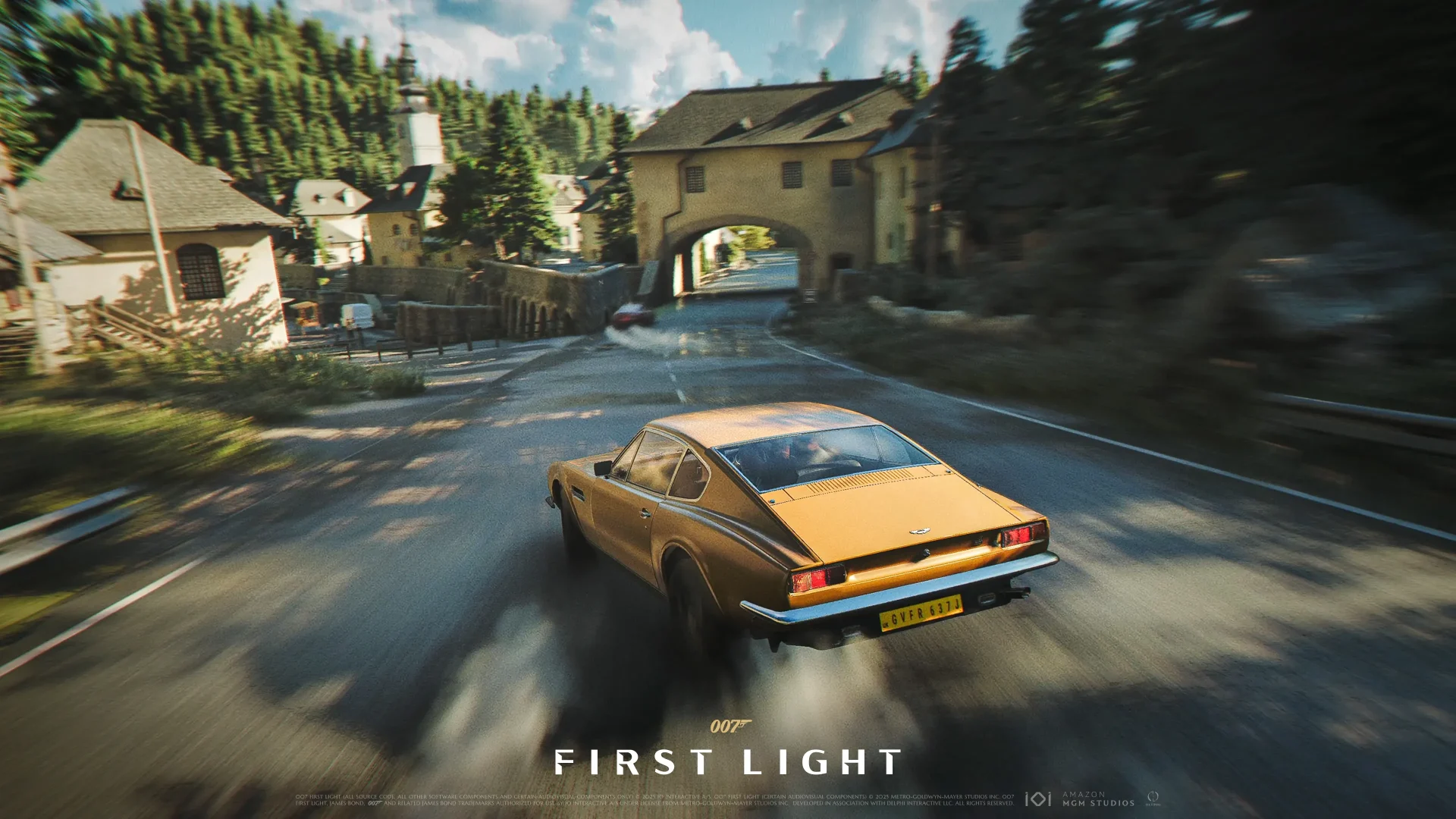
IO Interactive’s latest gaming venture, 007 First Light, has made an explosive debut, selling 1.5 million units within its first 24 hours on sale. The James Bond origin story has become the fastest-selling title in the Danish developer’s history, marking a significant milestone for the studio behind the acclaimed HITMAN franchise.
The game has received widespread critical acclaim, earning an impressive 88 rating on OpenCritic and 87 on Metacritic, making it the highest-rated release from IO Interactive to date. 007 First Light puts players in the shoes of a 26-year-old James Bond as he navigates MI6’s elite training programme and transforms from Royal Navy air crewman to fully-fledged spy.
The title features an all-star cast including Patrick Gibson as Bond, alongside Priyanka Burford as M and Lennie James as mentor John Greenway. Adding to the cinematic experience, Grammy-nominated artist Lana Del Rey has collaborated with legendary Bond composer David Arnold to create the game’s official theme song, “First Light”.
Players can experience Bond’s globe-trotting adventures through IO Interactive’s signature mission design, choosing between stealth infiltration, investigation, or direct confrontation. The game incorporates cutting-edge technology including NVIDIA’s DLSS 4.5 Dynamic Multi Frame Generation for enhanced visual performance on PC.
007 First Light is currently available on PlayStation 5, Xbox Series X|S, PC via Steam and Epic Games Store. A Nintendo Switch 2 version is planned for summer 2026. More information can be found at the official website: 007FirstLightGame.com
Frequently Asked Questions
What platforms is 007 First Light available on?
The game is currently available on PlayStation 5, Xbox Series X|S, and PC through Steam and Epic Games Store. A Nintendo Switch 2 version will launch later in summer 2026.
When did 007 First Light release?
007 First Light launched globally on 27th May 2026 and achieved 1.5 million units sold within its first 24 hours.
Who plays James Bond in 007 First Light?
Rising star Patrick Gibson voices James Bond in this reimagined origin story, supported by a cast including Priyanka Burford as M and Lennie James as John Greenway.
What is the critical reception of 007 First Light?
The game has received strong critical acclaim with an 88 rating on OpenCritic and 87 on Metacritic, making it IO Interactive’s highest-rated game to date.
Does 007 First Light have an original theme song?
Yes, Grammy-nominated artist Lana Del Rey collaborated with Bond film composer David Arnold to create the official theme song “First Light”.
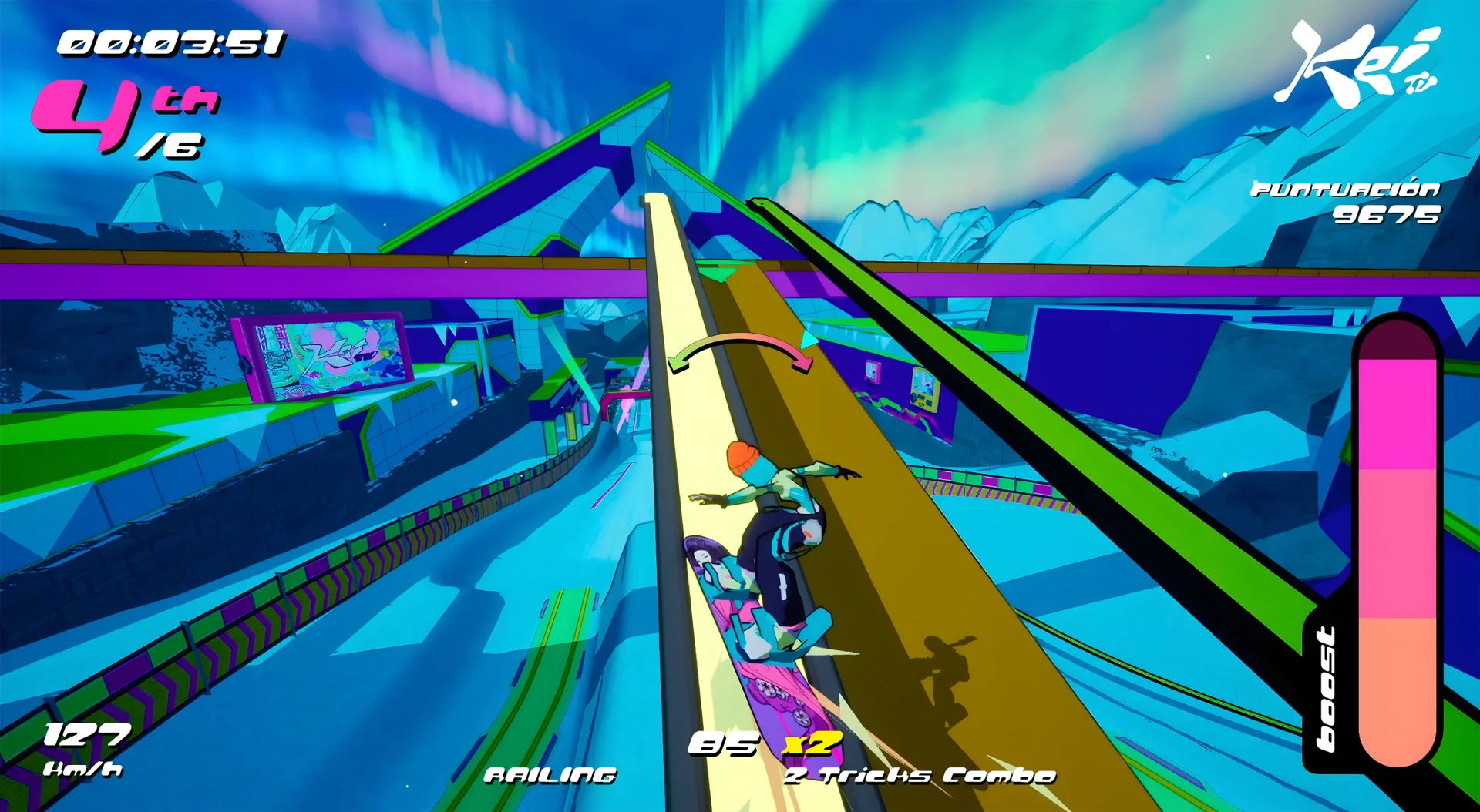
Mexican indie studio Wabisabi Games has unveiled a fresh gameplay trailer for HYPERyuki: Snowboard Syndicate, an arcade snowboarding game that draws clear inspiration from beloved classics like SSX and Jet Grind Radio. The trailer premiered during BitSummit in Kyoto, Japan, showcasing the game’s explosive trick-focused action and vibrant visual style.
The game promises a diverse roster of snowboarders across multiple game modes, including Challenge mode where players complete objectives for high scores, Race mode that balances style and speed against NPCs or other players, and Chill mode for a more relaxed endless experience. For those seeking social competition, multiplayer supports up to eight players online or local split-screen play.
One particularly quirky feature highlighted in the press materials is the ability to “bomb the slopes as a sentient snowboarding taco,” suggesting the game doesn’t take itself too seriously. The trailer demonstrates gravity-defying tricks across various snowy locations, with players able to ride rails, collect trinkets, and build boost meters through stylish performances.
Publisher Acclaim, the revived brand behind classic franchises like Mortal Kombat and NBA Jam, is bringing HYPERyuki: Snowboard Syndicate to PC and all major consoles. Wabisabi Games, the studio behind RKGK/Rakugaki, describes this as a “full-circle moment” given their childhood love of Japanese pop culture and gaming.
The game is set to launch across multiple platforms, though specific release dates haven’t been announced yet. Those interested can find more information through Acclaim’s official channels, with review keys available upon request.
Frequently Asked Questions
What platforms is HYPERyuki: Snowboard Syndicate available on?
The game is coming to PC and all major consoles, though specific platform details haven’t been fully announced yet.
When does HYPERyuki: Snowboard Syndicate release?
A specific release date hasn’t been announced, but the game was showcased at BitSummit 2026 in May.
Is HYPERyuki: Snowboard Syndicate multiplayer?
Yes, the game supports up to eight players online or local split-screen multiplayer.
What game modes are available in HYPERyuki: Snowboard Syndicate?
The game features Challenge mode for high scores, Race mode against NPCs or players, Chill mode for endless relaxed play, and full multiplayer support.
Who is developing HYPERyuki: Snowboard Syndicate?
The game is developed by Mexican indie studio Wabisabi Games and published by Acclaim.
Rival Stars Horse Racing has been on Steam and Meta Quest for a while now, but arriving on Xbox Series X felt like a genuine event. This is the horse management and racing game I’d been waiting to include in my Horse Games on Xbox video back in 2022, and it absolutely justifies that wait. Yes, it bears the hallmarks of its desktop origins with some UI quirks that occasionally frustrate, but the core experience of building a stable from scratch, breeding horses with purpose, and racing them across beautiful courses translates remarkably well to console. With a controller in hand, this is the best way to experience this charming equestrian adventure.
Building a Legacy, One Horse at a Time
Rival Stars Horse Racing is fundamentally about progression and legacy. You return to your family ranch after a personal tragedy and are tasked with restoring it to former glory. The story unfolds through stylised comic-book presentation and text rather than voice acting, which gives the narrative a readable, digestible quality without demanding constant attention.
The heart of the game is horse breeding and racing. You start with a single Grade 1 horse and gradually build upward through strategic breeding partnerships. The genetics system is accessible without being oversimplified. You’re presented with ideal breeding matches based on your horses’ types, ratings, and stats. Combine two horses thoughtfully, and you’ll produce foals with mixed traits that can grow into something special.
This breeding loop is addictive. You’re constantly making decisions about which horses to breed, which to race, which to sell, and which to invest in long-term. Early on, progression feels inevitable. But as you climb through the horse classes, strategy becomes crucial. Should you breed for incremental improvement or take risks on higher-class pairings? Should you upgrade a horse’s stats further or start fresh with a new bloodline? These decisions matter, and the game gives you enough freedom to approach them however you like.
Racing That Rewards Skill and Strategy
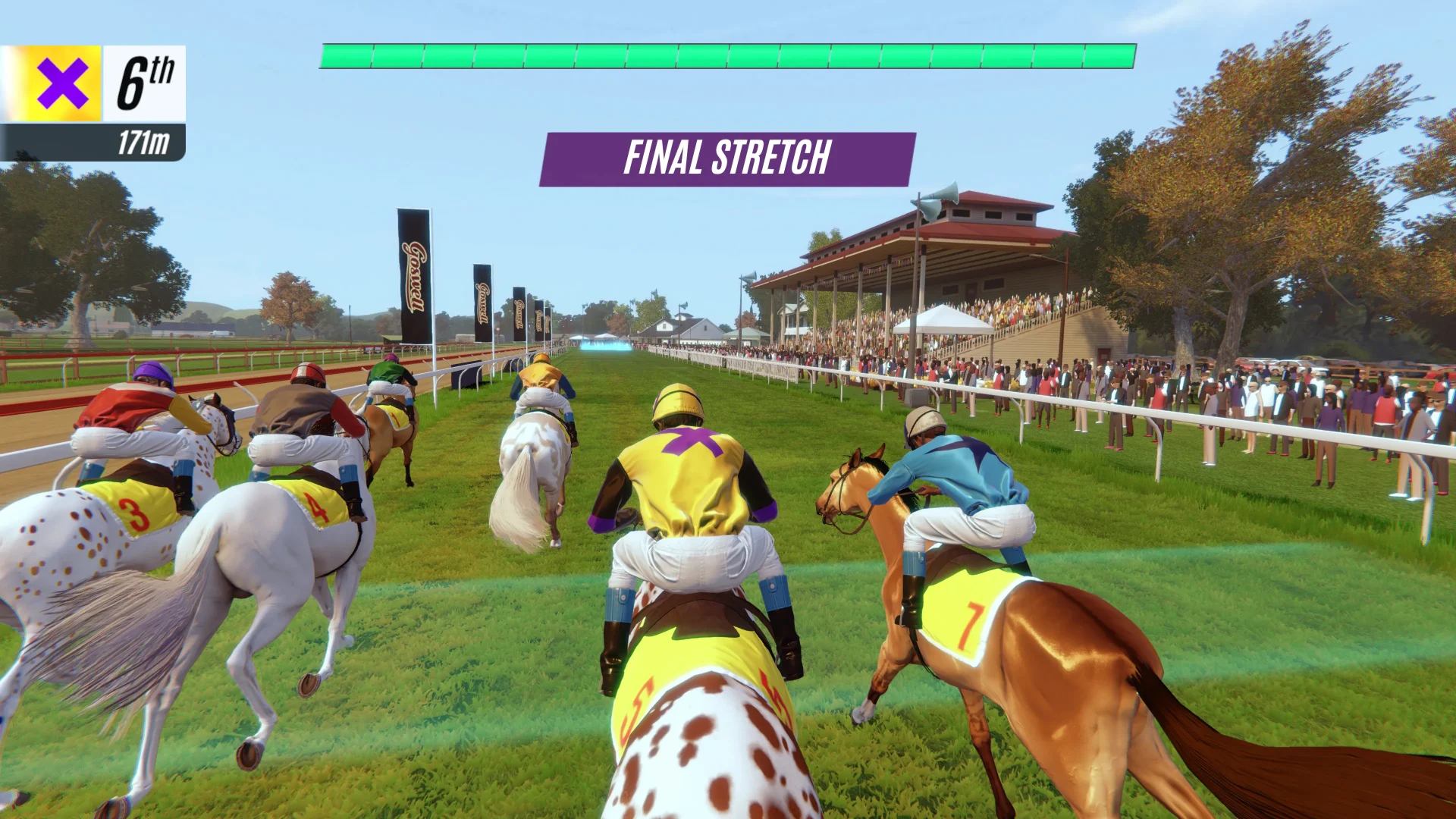
The racing itself is straightforward but engaging. You hit a timing window at the start for an ideal launch, then you’re steering and managing acceleration throughout the race. Sounds basic, and it is. But it’s also deceptively nuanced.
Each horse has a preferred position on the track. When positioned correctly, their sprint bar fills faster. The sprint system is divided into segments, with each segment granting acceleration boosts. Early races don’t demand careful sprint management, but higher-level competitions absolutely require it. You’ll need to observe how other horses position themselves, when they accelerate, and adjust your tactics accordingly.
“Perfect” button timing can trigger an even stronger acceleration boost, rewarding precision. Some horses thrive in the middle of the pack where they build sprint meter faster when surrounded by others. Others prefer leading from the front. Some excel from behind. This variety means you develop different strategies depending on which horse you’re racing. It’s not revolutionary, but it’s genuinely satisfying, and the short race lengths encourage you to jump into another one immediately.
If you’d rather not race yourself, you can hire a jockey to compete for you, though their services deduct from your winnings. It’s a nice option for when you want to progress without the active gameplay.
Free Roam and Relaxation
Beyond racing and breeding, Free Roam lets you simply explore and spend time with your horses. You unlock additional locations like Switzerland and beautiful desert areas. There’s no pressure here, just the satisfaction of riding around your ranch, looking at your horses grazing, and listening to the cosy soundtrack. This mode is relaxing and perfectly suited for controller play.
The game does something clever by removing UI elements when you’re idle, letting you simply appreciate your stables and horses in beautiful stillness. It’s a small touch, but it creates a relaxing atmosphere when you need a break from the menu systems.
The Controller Experience
Here’s what matters for console players: the controller handling is excellent for racing and free roam. The acceleration, steering, and sprint mechanics feel natural with a gamepad. The free roam exploration is smooth and intuitive. These are where the game shines on console.
However, and I need to be transparent here, the menu systems occasionally feel awkward with a controller. The game is clearly designed around mouse and keyboard interactions, and some menu navigation carries that DNA. There are moments where you’re unsure which button you currently have highlighted. More frustratingly, certain screens require you to press Start (the three-line menu button) to exit, when every other interaction uses the face buttons. Coming from hours of keyboard and mouse play, I’m used to moving through these systems at speed, so the inconsistency occasionally breaks flow.
But after extended play, you adapt. You learn the layouts, you remember which button exits which screen, and the frustration diminishes. It’s not a deal-breaker, just a minor inconsistency that reflects the game’s mobile heritage.
The Management Loop Works
The progression systems are incredibly well-designed. You’re always working toward something. Upgrading training facilities in jumping, agility, speed, and acceleration provides consistent income. Racing generates money, experience points, and skill points for upgrading your horse’s abilities. Early upgrades require cash and XP, but later stages demand skill points and additional resources. It’s a grind, but it’s a enjoyable grind that keeps pulling you back for “just one more thing.”
The visual representation of this progress is satisfying. Your ranch slowly transforms through upgrades. Stables improve. The main house renovates. Gates and fencing change. You’re constantly looking at something new, watching your initial run-down inheritance become something you can be proud of.
Visual and Audio Presentation
Visually, Rival Stars Horse Racing clearly originates from mobile. It’s simple, pleasant, and relaxing rather than flashy. The stylised UI looks attractive, and the 3D racing sections are nicely detailed, particularly the Japanese Sakura race track. Some textures are less polished, but nothing game-breaking. The oversized UI elements that might have bothered console purists are actually perfect for relaxed play on a television.
The audio design deserves particular praise. The music is cosy and warm during exploration and menu browsing, creating a relaxing atmosphere. But during races, the musical cues shift brilliantly. Coming in at 500 metres to the finish line, you feel the thrill through intelligent composition. The narrator has some great names to work with and hearing “Questionable Moustache, coming up the inside” did make me smile. And yes, those racing trumpets at the start of every race are absolutely iconic.
What This Means for Horse Game Enthusiasts
If you’ve been waiting for a proper horse game on Xbox, this is worth your time. It’s not Red Dead Redemption 2 level of detail or simulation (on the horse), but it’s also not trying to be. It’s a cosy, strategic management game with satisfying racing mechanics wrapped in beautiful presentation and excellent audio design.
The sheer amount of customisation in horse breeding is remarkable. The genetic system takes real liberties to remain accessible, but the breadth of coat colours, patterns, traits, and bloodlines makes each horse feel unique. The amount of terminology you’ll learn about horses is substantial.
There is no Rival!
Rival Stars Horse Racing is a charming equestrian adventure that absolutely justifies inclusion in any serious horse games list. The breeding and racing mechanics are satisfying, the progression loop is addictive, and the controller experience for racing and free roam is excellent. Yes, the menu systems bear their desktop/mobile origins and occasionally feel awkward with a gamepad. But after you adapt, this becomes a relaxing, cosy experience that rewards time investment with meaningful progression and genuine beauty. At £24.99, it’s excellent value for the depth it offers. Whether you’re a horse game enthusiast who’s been waiting for this console release or simply someone looking for a relaxing management experience, Rival Stars Horse Racing comes highly recommended. I’m glad to finally have it on Xbox, and I’m equally glad to finally add it to my horse games roundup.
Colombian indie studio Team Vultures has released their tactical turn-based survival horror game, Vultures – Scavengers of Death, on Steam after four years in development. The game draws heavy inspiration from PlayStation 1 classics like Resident Evil and Parasite Eve, combining nostalgic survival horror elements with strategic turn-based combat.
Players take control of two distinct agents, Leopoldo and Amber, each offering different tactical approaches to missions in the ruined city of Salento Valley. Leopoldo brings strength and environmental manipulation skills, whilst Amber offers analytical precision and a grappling gun for traversing dangerous terrain. The core gameplay revolves around extraction missions where stealth often proves more valuable than direct confrontation.
The game features classic survival horror mechanics including limited resources, weapon variety from pistols to katanas, and environmental puzzle-solving through keys and codes. Between missions, players can spend credits earned from scavenged valuables to upgrade weapons and unlock new gear through an in-game market system.
Vultures – Scavengers of Death is available now on Steam for £14.35 (approximately), with a 20% launch discount. A supporter edition bundle includes the original soundtrack, exclusive character skins, wallpapers, and concept art. The game has received praise from Cheat Code Central, with reviewer Matt Karoglou calling it an exceptional “Resident Evil-meets-tactics” experience that exceeds expectations.
Frequently Asked Questions
What platforms is Vultures – Scavengers of Death available on?
The game is currently available exclusively on Steam for PC.
When did Vultures – Scavengers of Death release?
The game launched on Steam on 13th May 2026.
Is Vultures – Scavengers of Death multiplayer?
Based on the available information, the game appears to be a single-player experience where you control two different agents.
What type of game is Vultures – Scavengers of Death?
It’s a tactical turn-based survival horror game inspired by 1990s classics like Resident Evil and Parasite Eve.
How much does Vultures – Scavengers of Death cost?
The game costs $17.99 USD with a 20% launch discount, and there’s a supporter edition bundle available for an additional $4.99.
Christmas 1997. I tore the wrapping paper off a box that was exactly the right shape, plugged the N64 into the family television, and spent the next six hours flying around Bob-omb Battlefield collecting stars while my mum repeatedly asked if I wanted any turkey. I did not want any turkey. I wanted to throw Bowser into a bomb for the third time, and I wanted to understand why the analogue stick already had a blister-shaped groove worn into it from the shop demo unit. That console; chunky, three-handled, absurdly underpowered compared to what was coming, defined my teenage years in a way no other piece of technology has managed since.
The N64 library is smaller than you’d think. Roughly 390 games across its lifespan, compared to the PlayStation’s 2,500-odd. But the hit rate was extraordinary. When the N64 got it right, it produced some of the greatest games ever made, full stop… titles that invented genres, perfected others, and set templates that developers are still following three decades later. This is the definitive ranked list, grouped by genre, written by someone who wore out two controllers and has very strong feelings about Oddjob. For context on where the N64 sits in the broader timeline, have a look at the evolution of gaming consoles – it was a pivotal moment, even if Sony ultimately won that generation.
The N64 didn’t invent the 3D platformer, but it perfected it so thoroughly that the genre barely evolved for a decade afterwards. These are the games that taught an entire generation how to navigate three-dimensional space, and then hid 900 collectibles in every corner of it.
Super Mario 64 (1996): The game that proved 3D platforming could work, and arguably the most influential title in the console’s library. Every movement, the triple jump, the wall kick, the long jump, was a revelation. Bob-omb Battlefield is still one of the finest opening levels in gaming history, and the camera (revolutionary then, occasionally maddening now) established conventions the entire industry adopted. 120 stars. I found them all. It took months.
Banjo-Kazooie (1998): Rare took the Mario 64 template, added a wisecracking bird in a backpack, and produced a collect-a-thon so charming it’s impossible to dislike. The worlds are dense and varied, the humour is genuinely funny (in a very British, fourth-wall-breaking way), and Grant Kirkhope’s soundtrack is one of the all-time greats. Better than Mario 64 in some respects, which is saying something.
Banjo-Tooie (2000): Bigger, more ambitious, and significantly more complex than the original. The interconnected worlds were ahead of their time, though the backtracking could be exhausting. A brilliant sequel that occasionally forgot that “more” isn’t always “better,” but the highs, Witchyworld, the FPS transformation, Canary Mary… are magnificent.
Donkey Kong 64 (1999): Rare’s maximalist collect-a-thon where five playable Kongs each had their own colour-coded bananas, coins, and blueprints. It’s either a staggering achievement or an elaborate prank depending on your tolerance for backtracking. The DK Rap alone secures its place in history, for better or worse.
Conker’s Bad Fur Day (2001): A foul-mouthed, blood-soaked, surprisingly brilliant platformer that parodied everything from Saving Private Ryan to The Matrix. Definitely not one for children, but the level design, voice acting, and sheer audacity of the thing make it one of the most memorable games on the system. The Great Mighty Poo boss fight is… well, you either know or you don’t.
Kirby 64: The Crystal Shards (2000): A gentler, 2.5D affair that let you combine copy abilities in genuinely creative ways. Fridge plus spark equals a walking refrigerator that shoots lightning. Quieter than the big hitters but polished, inventive, and endlessly replayable.
Shooters & Action
The N64 controller had no business being good for shooters, and yet this console produced two of the most important FPS games ever made. The C-buttons were doing a job the second analogue stick hadn’t been invented for yet, and somehow it worked.
GoldenEye 007 (1997): The game that proved console FPS could rival PC, and the game that ended more friendships than any other in the N64 library. The single-player campaign was superb – varied, replayable, with difficulty levels that added objectives rather than just bullet sponges, but the four-player splitscreen deathmatch was epoch-defining. Facility, no Oddjob, proximity mines. If you know, you know. Licence to kill mode with pistols only was the gentleman’s agreement. Nobody ever honoured it.
Perfect Dark (2000): Rare’s spiritual successor to GoldenEye was better in almost every measurable way: more weapons, more modes, bots for multiplayer, a counter-operative mode, and a campaign that dripped with Rare’s trademark personality. The frame rate was heroic at best, catastrophic at worst, but the ambition was staggering. The Laptop Gun (throw it on a ceiling, it becomes a sentry turret) remains one of the cleverest weapons in FPS history.
Star Fox 64 (1997): Known as Lylat Wars in PAL regions due to trademark issues, and one of the tightest rail shooters ever made. Branching paths gave it enormous replay value, the Rumble Pak support was a genuine novelty, and the voice acting (“Do a barrel roll!”) has lodged itself permanently in gaming culture. All-range mode battles against Star Wolf were breathtaking.
Turok: Dinosaur Hunter (1997): Acclaim’s fog-drenched shooter was one of the first games to prove the N64 could handle serious action. The Cerebral Bore remains one of gaming’s most horrifying weapons. The sequel, Turok 2: Seeds of Evil, was even better, the Oblivion Portals and that extraordinary opening level in the Port of Adia set a high bar.
Jet Force Gemini (1999): Rare’s third-person shooter with co-op, insectoid enemies, and a surprisingly dark tone for a game starring cartoon characters. Criminally overlooked at the time, probably because the Tribals-rescue requirement for the final level was controller-snappingly frustrating. Everything before that, though, was superb.
Adventure & RPGs
The N64 was cartridge-based in a CD-ROM era, which meant RPGs were scarce — you couldn’t fit a 40-hour JRPG with FMV cutscenes onto 32MB of ROM. But what did arrive was extraordinary, and the adventure games were generation-defining.
The Legend of Zelda: Ocarina of Time (1998): The greatest game ever made. I know that’s a bold claim, and I know people love to debate it, but Ocarina of Time earned that reputation through sheer craft. The transition from child Link to adult Link, the first time you step onto Hyrule Field, the Water Temple (yes, even the Water Temple), the final battle against Ganondorf, every element was so precisely calibrated that it felt less like a game and more like a landmark. It changed everything.
The Legend of Zelda: Majora’s Mask (2000): Darker, weirder, and more emotionally complex than Ocarina, built on a three-day time loop that created a sense of dread no Zelda game has matched since. The transformation masks, the doomed town of Clock Town, that moon… it’s not better than Ocarina, but it might be braver. Required the Expansion Pack, which was an annoying additional purchase, but absolutely worth it.
Paper Mario (2000/2001 PAL): The spiritual successor to Super Mario RPG, with a gorgeous papercraft art style and a combat system that balanced accessibility with depth. The chapter structure kept the pacing tight, the writing was genuinely witty, and the partner characters each brought something mechanically interesting. A perfect entry point for younger RPG players.
Ogre Battle 64: Person of Lordly Caliber (1999): A deep, tactical RPG with branching storylines, army management, and a morality system that actually mattered. It was niche even at release and commands absurd prices now, but it’s one of the finest strategy RPGs of the era. Never released in PAL regions, unfortunately.
Harvest Moon 64 (1999): The farming sim that launched a thousand imitators (including, eventually, Stardew Valley). Marrying the village girls, growing turnips, raising livestock, it was gentle, addictive, and surprisingly deep. Another one the PAL regions missed out on.
Racing & Sports
The N64 was a powerhouse for racing games. Something about the hardware; maybe the analogue stick, maybe the consistent frame rates from cartridge loading, made them sing.
Mario Kart 64 (1996/1997 PAL): Four-player split screen Mario Kart. That’s the entire pitch, and it was enough to sell millions. The tracks were iconic (Royal Raceway, Toad’s Turnpike, Rainbow Road), the blue shell was already ruining friendships, and Battle Mode on Block Fort was arguably better than the racing itself. It’s been surpassed since, but it was magical at the time.
F-Zero X (1998): Thirty vehicles, a locked 60fps, and courses that twisted, looped, and plunged with stomach-churning abandon. The track design was extraordinary, half-pipes, cylinders, jumps into the void, and the sense of speed was unmatched on the system. The X Cup generated random tracks, which was a revelation. Brutally difficult and utterly exhilarating.
Wave Race 64 (1996): Water physics that still look impressive today, a gorgeous day-to-night lighting cycle, and handling that rewarded mastery like few racing games before or since. It was a launch-window title and it was showing off what the hardware could do, but it backed up the spectacle with genuinely deep racing mechanics. The mist on Sunset Bay is seared into my memory.
Beetle Adventure Racing (1999): A game nobody expected to be good that turned out to be absolutely brilliant. Massive, shortcut-laden tracks, a surprisingly robust battle mode, and all of it wrapped in a Volkswagen Beetle licence that somehow worked. One of the best hidden gems in the entire library.
Diddy Kong Racing (1997): Rare’s answer to Mario Kart added an adventure mode, boss races, and three vehicle types (kart, hovercraft, plane). The single-player was substantially better than Mario Kart 64’s, and the Silver Coin challenges added genuine longevity. David Wise’s soundtrack was, predictably, outstanding.
1080 Snowboarding (1998): Nintendo’s snowboarding sim hit a sweet spot between arcade fun and technical depth. The trick system was satisfying, the course design was varied, and the two-player mode was a genuine time-sink. Criminally forgotten compared to its contemporaries.
ISS 64 / International Superstar Soccer 98 (1997/1998): Before Pro Evolution Soccer, before Konami became complicated, ISS on the N64 was the finest football game available on any platform. The passing was crisp, the AI was intelligent, and four-player matches were pandemonium. ISS 98 refined the formula further and remains a high point for the series.
The Multiplayer Legends
The N64 had four controller ports built in. Four. At a time when multiplayer meant buying a multitap, Nintendo just put them on the front of the console. That single design decision shaped an entire generation of local multiplayer gaming.
Super Smash Bros. (1999): The crossover fighting game that shouldn’t have worked but became one of Nintendo’s biggest franchises. Twelve characters, nine stages, and a control scheme so accessible that anyone could pick it up within minutes. It was rough compared to Melee and everything that followed, but the concept, Mario punching Pikachu off a floating platform, was irresistible. The sequels are better games. This was the better moment.
Mario Party 1, 2 & 3 (1998-2001): The board game series that destroyed palms (literally… the analogue stick rotation mini-games in Mario Party 1 caused actual blisters) and friendships in equal measure. Mario Party 2 is the best of the three, with tighter mini-games and less reliance on pure chance, though the star-stealing mechanics in all three games remain some of the most psychologically violent moments in Nintendo’s history.
WrestleMania 2000 / No Mercy (1999/2000): AKI Corporation’s wrestling games were, and I will die on this hill, the best wrestling games ever made. The grappling system was intuitive and deep, the create-a-wrestler mode was absurdly detailed, and the single-player career in No Mercy had branching storylines. No Mercy suffered from a save-erasing bug in early copies, which was less ideal.
Hidden Gems & Cult Classics
The N64’s library is top-heavy, everyone knows the big hitters. But dig a little deeper and there’s a seam of overlooked games that deserve far more attention than they ever received.
Blast Corps (1997): Rare’s demolition puzzler where you cleared a path for a runaway nuclear missile carrier by smashing buildings with a variety of vehicles. It was bizarre, frantic, and immensely satisfying. The later levels were fiendishly difficult, and finding all the scientists was a completionist’s nightmare, but the core loop of “drive thing into building, building explodes” never got old.
Mischief Makers (1997): Treasure’s 2D side-scrolling action game on a console defined by 3D. The “grab, shake, throw” mechanic was unique, the boss fights were spectacular, and the whole thing had a manic energy that nothing else on the N64 matched. It was dismissed at launch for being 2D, which, in hindsight, was absurd.
Sin and Punishment (2000): Treasure’s rail shooter was Japan-only at retail, but it became a cult classic through imports and eventually a Virtual Console release. Fast, furious, and mechanically brilliant, the scoring system rewarded aggressive play in a way that made every run feel different.
Space Station Silicon Valley (1998): DMA Design’s (pre-Grand Theft Auto Rockstar) puzzle-platformer where you inhabited robotic animals to solve environmental puzzles. A fox that breathes fire, a dog on wheels, a bear that bounces, it was wonderfully creative and deeply under-appreciated. A game-breaking bug prevented 100% completion, which was unfortunate.
Goemon’s Great Adventure (1999): Konami’s side-scrolling action game set in feudal Japan with robots, laugh tracks, and a giant transforming mech. Two-player co-op, tight platforming, and a tone that veered between charming and completely unhinged. The Mystical Ninja series never found its audience in the West, which is a genuine shame.
Pilotwings 64 (1996): A launch title that used its flight sim mechanics to show off the console’s 3D capabilities. Hang-gliding, rocketbelting, and gyrocoptering across a miniature version of the United States, with birdman mode unlockable for the dedicated. It was serene, beautiful, and surprisingly challenging, the kind of game you’d put on just to relax, until the gyrocopter missions made you swear at the television.
The N64 library is lean compared to its competitors, but pound for pound it might be the strongest first-party lineup any console has ever produced. If you grew up with it, these games aren’t just nostalgia, they’re the foundation of everything modern gaming became. And if you’re discovering them for the first time through the Switch Online Expansion Pack or emulation, you’re in for a treat… even if the controller takes some getting used to. For more retro deep-dives, including the best SNES JRPGs of all time, the retro section has you covered.
Frequently Asked Questions
What is the best N64 game of all time?
The Legend of Zelda: Ocarina of Time is the most critically acclaimed and widely regarded as the best N64 game ever made. Super Mario 64 and GoldenEye 007 are the other two games that consistently compete for the top spot, depending on whether you value innovation, adventure, or multiplayer.
How many N64 games were released?
Approximately 388 games were released for the N64 worldwide, with around 243 making it to North America and roughly 242 released in PAL regions. The cartridge format and higher development costs meant the library was significantly smaller than the PlayStation’s, but the average quality was remarkably high.
Can I play N64 games on Nintendo Switch?
Yes. Nintendo Switch Online + Expansion Pack includes a growing library of N64 games, including Super Mario 64, Ocarina of Time, Majora’s Mask, Mario Kart 64, Star Fox 64, Banjo-Kazooie, GoldenEye 007, and Perfect Dark. The emulation quality varies but is generally good, and online multiplayer has been added to several titles.
Why did the N64 use cartridges instead of CDs?
Nintendo chose cartridges for faster load times, durability, and anti-piracy benefits. The trade-off was significantly less storage space (up to 64MB versus a CD’s 700MB), higher manufacturing costs, and the loss of several major third-party developers — most notably Square, who took Final Fantasy VII to PlayStation. It was a decision that cost Nintendo the generation but produced a more consistent library.
What is the rarest N64 game?
The rarest commercially released N64 games include Sculptor’s Cut (a ClayFighter 63 1/3 Blockbuster exclusive), Stunt Racer 64, and the PAL version of Snowboard Kids 2. Complete-in-box copies of these can fetch over a thousand pounds. Worms Armageddon and Ogre Battle 64 are also notably expensive and difficult to find.
What was the N64’s best multiplayer game?
GoldenEye 007 is the iconic answer, and for good reason — four-player splitscreen deathmatch defined a generation. But Super Smash Bros., Mario Kart 64, and Mario Party 2 all have legitimate claims. Perfect Dark improved on GoldenEye’s multiplayer in almost every way, though it required the Expansion Pak for the full experience.
Did the N64 have any good RPGs?
The N64’s RPG library was thin compared to the PlayStation’s, but what it had was excellent. Paper Mario is the standout, with Ogre Battle 64 and Harvest Moon 64 also highly regarded. The Legend of Zelda games, while technically action-adventures, scratched a similar itch. The cartridge format’s storage limitations meant most JRPG developers went elsewhere, which is the console’s biggest library gap.
Aphelion arrives on Xbox Game Pass as a stunning reminder that the most compelling science fiction stories aren’t about aliens or intergalactic wars. They’re about people. Don’t Nod has crafted something genuinely special here, a game that captures the desperate, beautiful vulnerability of two former lovers searching for each other across a frozen alien world. The narrative is genuinely excellent, the emotional core absolutely lands, and the presentation is breathtaking. Yes, there are frustrating gameplay inconsistencies that occasionally derail momentum, but they’re minor blemishes on an otherwise remarkable experience.
The Story Is Everything
Aphelion opens with Ariane and Thomas awkwardly acknowledging they’ve just hooked up aboard their spacecraft. They’re astronauts on a mission called Hope-01, sent to evaluate whether Persephone, a newly discovered frozen planet, can sustain human life. Earth is dying, and this is humanity’s last chance. The stakes are impossibly high before the game even begins.
Then their ship crashes, and they’re separated. The narrative unfolds through their perspectives, mediated by audio logs and fragmented interactions. What makes this work is the personal stakes layered beneath the grand sci-fi premise. This isn’t just about saving humanity. It’s about two people who left each other trying to find each other again. Ariane spent years prioritising the mission at Thomas’s expense. Now, searching for him across an alien world, she confronts the feelings she buried. The voice performances from Vanessa Dolmen and Eric Geynes are exceptional, injecting genuine emotion into every line. You feel their desperation, their hope, their longing.
The game shares DNA with Interstellar in how it balances intimate human drama with cosmic scale. Like that film, Aphelion understands that the grandest adventures are ultimately about connection. The sci-fi elements serve the relationship, not the other way around.
Persephone Is Genuinely Alien
Visually, Aphelion is stunning. Persephone feels genuinely otherworldly. Ice sheets reflect light in ways that create this strange sense of hope amidst desolation. The few areas where ice has melted reveal rocky terrain that breaks up the visual monotony. The partnership with the European Space Agency shows—the technology feels grounded and authentic, which makes the sci-fi feel more immediate and believable.
The mysteries of the planet are intriguing enough to keep you engaged. Discovering that this wasn’t the first manned mission to Persephone raises questions that linger long after the credits roll. The environmental storytelling, combined with discoverable collectibles revealing the planet’s history, creates genuine intrigue.
The Gameplay Frustrations Are Real
Here’s where I need to be entirely honest. The climbing and parkour sections feel dated. Basic ledge-to-ledge progression works fine, but the inconsistencies are irritating. The game has taught you that ladder-like surfaces are climbable. Then you encounter what looks exactly like a climbable surface and… you can’t. It creates false expectations and breaks immersion.
Similarly, there are ledges clearly reachable by jumping that aren’t on the intended path. You’ll jump toward them, think you’ve found a shortcut, only to fall straight through them. It’s genuinely frustrating because the game’s own internal logic seems inconsistent.
The stealth sections are serviceable but shallow. Avoiding the Nemesis creature by hiding and setting off distractions works as a narrative beat, but there’s precious little strategic depth. The game sometimes even tells you when you need to activate a distraction, which undermines tension.
These issues prevent Aphelion from being truly exceptional at the moment-to-moment gameplay level. They’re not gamebreaking, but they’re noticeable enough to occasionally disrupt flow.
Everything Else Absolutely Sings
Despite those frustrations, almost everything else is brilliant. The emotional beats land perfectly because the writing is genuinely good. The relationship between Ariane and Thomas feels real, complicated, and worth caring about. Don’t Nod’s expertise in character-driven narrative shines throughout.
The score by Amine Bouhafa is masterful. It plays with your emotions at precisely the right moments, building tension and then releasing it with moments of beauty. The sound design reinforces the isolation and wonder of this alien world.
The pacing is excellent. The game knows exactly when to advance the plot, when to let you breathe, and when to hit you emotionally. The runtime feels right. You’re never waiting for the story to get somewhere. Every section serves the narrative.
The Bigger Picture
Aphelion asks genuinely interesting questions about what we’re willing to sacrifice for survival, what we owe to the planet that made us, and whether personal connections matter when humanity’s existence is at stake. The game doesn’t pretend to have easy answers. It just presents the dilemma through two people trying to navigate it together.
For a game available on Xbox Game Pass, this is absolutely worth your time. If you love science fiction with emotional weight (think Interstellar, Project Hail Mary, Gravity), you’ll find something genuinely special here. The gameplay frustrations are annoying but ultimately minor in the context of the whole experience.
Final Thoughts
Verdict: Aphelion is a beautifully crafted, emotionally resonant science fiction adventure that succeeds despite some frustrating gameplay inconsistencies. The narrative is genuinely excellent, the voice acting is superb, and the emotional core absolutely lands. Yes, the climbing and parkour sections feel dated, and some surface-interaction inconsistencies are genuinely annoying. But these issues don’t significantly undermine what is fundamentally a touching, ambitious story about two people searching for each other across an alien world. If you’re on Game Pass and appreciate narrative-driven experiences with genuine emotional weight, Aphelion is absolutely worth your time. It’s a reminder that the best adventures are ultimately about human connection.
Indie developers Ashley Peter and Adam deGrandis have released their latest creation, Ash & Adam’s Existential Treads, on Steam. The game combines city building mechanics with retro vehicle shooting in what the developers describe as a “post-post-apocalyptic” setting where humanity is ready to rebuild and move forward.
Players take control of a scrappy tank to tear down the remnants of the old world, gathering resources to construct new settlements. The gameplay blends tower defence elements with action sequences as survivors rescued from the wasteland help grow communities whilst defending against attacks from a rogue AI called “the Noise” that previously destroyed civilisation.
Each playthrough offers procedurally generated levels with randomised build orders, ensuring unique experiences. As settlements expand, players witness nature returning to barren landscapes, though constant vigilance remains essential as the hostile AI continues launching waves of attacks against growing communities.
Ash & Adam’s Existential Treads is available now on Steam for £5.49, currently discounted by 30% from its regular price. The game supports PC, Mac, and Steam Deck platforms. More information can be found on the game’s Steam store page.
Frequently Asked Questions
What platforms is Ash & Adam’s Existential Treads available on?
The game is currently available on Steam for PC, Mac, and Steam Deck.
How much does Ash & Adam’s Existential Treads cost?
The game costs $6.99 USD (approximately £5.49) and is currently available with a 30% launch discount.
What type of game is Ash & Adam’s Existential Treads?
It’s a mini action city-builder that combines settlement building, tower defence, and retro vehicle shooting mechanics in a post-apocalyptic setting.
Does Ash & Adam’s Existential Treads have replay value?
Yes, the game features procedural levels and random build orders that make every playthrough unique.
Who developed Ash & Adam’s Existential Treads?
The game was developed by Ash & Adam’s Games, a two-person indie studio comprising Ashley Peter and Adam deGrandis.
A disembodied hand searching for its missing arm might sound like the premise of a horror film, but Super Adventure Hand is taking a decidedly more lighthearted approach. Developer Devm Games and publisher Upscale Studio have announced their physics-based 3D platformer will launch on PlayStation, Xbox, and Nintendo Switch on 8th May 2026.
Players control a detached hand navigating over 50 levels filled with environmental hazards including saw blades, fires, and treacherous terrain. The game promises a unique control system where every finger movement matters as you walk, climb, and crawl through domestic settings and outdoor environments. The story follows a former glove salesman’s hand on a mission to reunite with its best friend, Arm, after a mysterious separation.
Beyond the unconventional protagonist, Super Adventure Hand offers extensive customisation options including manicures, rings, bracelets, and watches. The gameplay expands beyond traditional platforming with vehicular sections featuring tiny cars, toy trucks, and skateboards to navigate through stages.
The game will be available digitally across PlayStation Store, Xbox Store, and Nintendo eShop with full controller optimisation for each platform. With its blend of physics-driven gameplay and absurd humour, Super Adventure Hand appears to be targeting players looking for something genuinely different in the platformer genre.
Frequently Asked Questions
What platforms is Super Adventure Hand available on?
Super Adventure Hand launches on PlayStation 4, PlayStation 5, Xbox One, Xbox Series X|S, and Nintendo Switch.
When does Super Adventure Hand release?
The game officially launches on 8th May 2026 across all announced platforms.
How many levels does Super Adventure Hand have?
The game features over 50 handcrafted levels with diverse environments and physics-based puzzles.
Can you customise your character in Super Adventure Hand?
Yes, players can personalise their hand with various styles including manicures, rings, bracelets, and watches.
Does Super Adventure Hand include vehicle gameplay?
Yes, the game features vehicular sections where players can control skateboards, toy cars, and trucks to navigate through stages.
The cozy genre has had its biggest year on Xbox in a long time. What started as a quiet corner of the catalogue when Stardew Valley arrived back in 2016 has become one of the most consistently delivered genres on the platform, and the past few months alone have brought half a dozen genuinely good new entries. If you’re looking for something to wind down with after a long day, that doesn’t ask much of you beyond gentle attention, the choice is better in 2026 than it has ever been.
I’ve put together ten cozy games on Xbox worth your time right now, grouped by what kind of cozy you’re in the mood for. Farming and life sim. Building and exploration. Gentle storytelling. And one small section at the end for those of you who want your cozy with a slightly darker edge.
Before we get into the new picks, a quick mention of the games I haven’t included on the main list. Stardew Valley, Disney Dreamlight Valley, Coral Island, and the rest of the genre’s foundational titles are all still very much worth playing, and have been covered properly elsewhere. Treat them as cozy classics, the ones you’ve probably already heard of. This list is about what’s new, what’s recently arrived on Xbox, and what’s worth flagging if you’ve not been keeping up with the genre.
Farming and Life Sim
1. Wylde Flowers
The witchy farming sim that quietly built up a passionate following on Apple Arcade and PC has been on Xbox for a little while now, and it remains one of the warmest entries in the genre. By day you tend your inherited farm. By night you join a coven of witches and shape the seasons through magic. The voice acting is fully performed, which is rare for the genre, and the cast quickly become genuine companions rather than dialogue trees you’re optimising for hearts. Pitch perfect for cozy autumn evenings.
2. Sun Haven
If Stardew Valley left you wanting more depth and you’d quite like to romance an elf, Sun Haven is the natural next step. It scratches the same farming itch but layers on a fantasy world, multiple races to play as, six-player co-op, and combat that’s actually substantial enough to keep things varied. The art style won’t be for everyone (it’s busier than Stardew), but the people it clicks with sink hundreds of hours into it.
3. Plantera 2: Golden Acorn
A late entry to this category and a deceptively charming one. Plantera 2 is technically an idle clicker, where you build a garden, attract small round blue creatures called Mellows to harvest your crops, and watch the magical oak tree at the centre of it all grow. It’s the kind of game you’d happily leave running in the background, but the pixel art and gentle progression are charming enough to genuinely pull you in. Cheap, low-stakes, and perfect for a quiet hour while half-watching telly.
Building and Exploration
4. Outbound
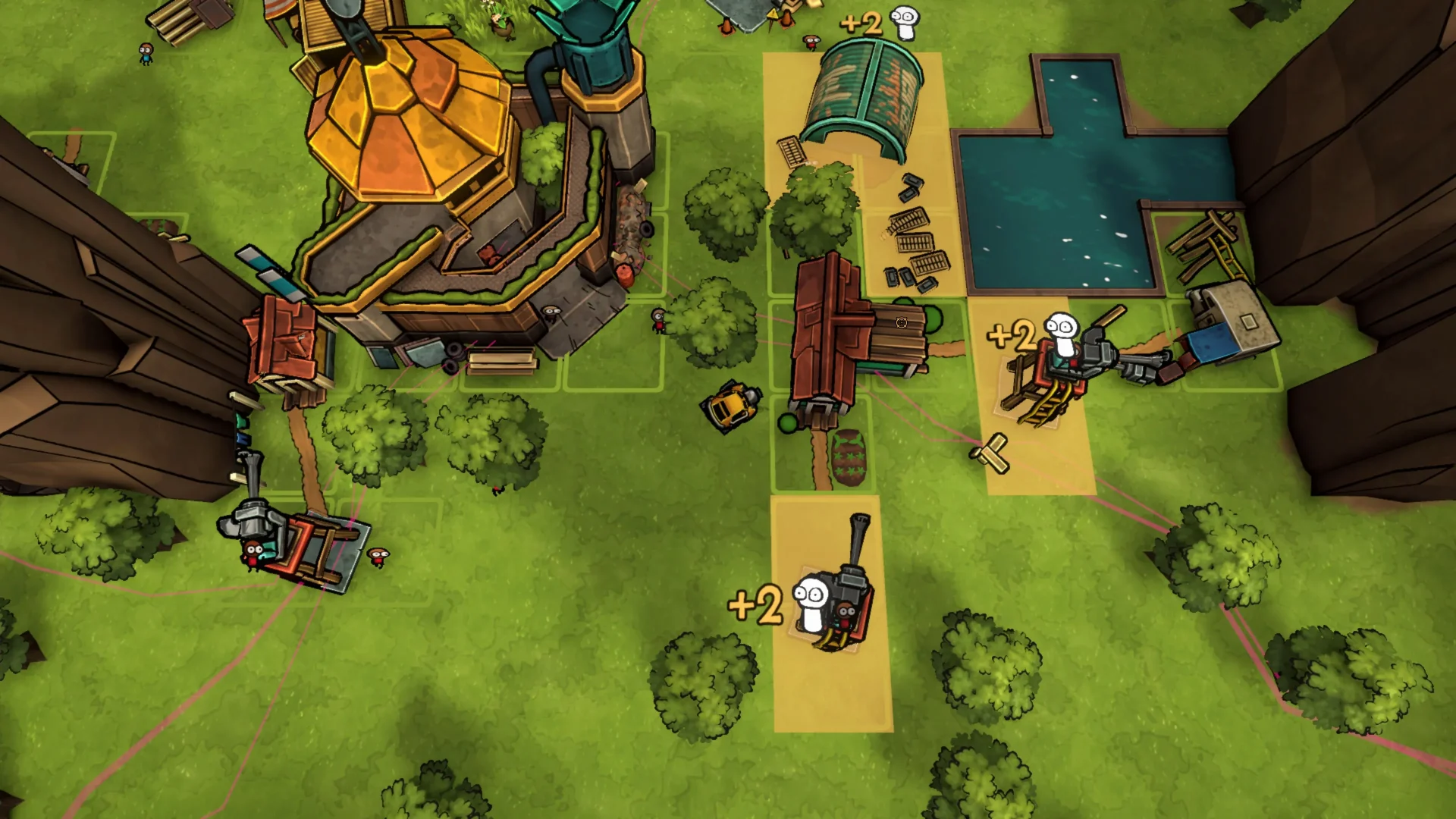
The most exciting cozy launch of the next month. Outbound, from Square Glade Games, drops you into a near-future utopia with nothing but an empty camper van and asks you to turn it into the home of your dreams. Modular building lets you customise the van inside and out, you generate your own power from solar, wind, or water, and you can either explore solo or with up to four players in co-op. The aesthetic is gorgeous, the pace is your own, and there’s no pressure or threat to undermine the chill. A free demo is available now on Xbox, and the full game launches 14 May 2026.
5. Lightyear Frontier
Cozy farming, but on an alien planet, in a giant mech. Lightyear Frontier asks you to terraform a strange new world by clearing weeds, growing alien crops, and customising your home base. It’s slower-paced than its premise suggests, with the mech feeling more like a gardening tool than a vehicle of destruction, and the soundtrack alone is worth showing up for. Up to four-player co-op makes it work as a wind-down game with a partner or friend.
6. A Short Hike
I’ll be upfront here, A Short Hike is one of my favourite small games of the last few years. You play as a small bird who’s hiking up a mountain to get phone signal. That’s it. That’s the whole pitch. You explore the island, chat to the other animals, gather feathers to climb higher, and when you reach the top, you walk back down feeling slightly better than you did when you started. It takes a couple of hours, costs almost nothing, and is the closest a video game has ever come to being a properly restful afternoon. If you’ve not played it yet, this is your sign.
Gentle Storytelling
7. Spiritfarer
Spiritfarer is the cozy game I push hardest at anyone who’ll listen. You play as Stella, ferryman to the dead, and your job is to look after departed spirits, build them homes on your boat, cook their favourite meals, and eventually take them to the everdoor when they’re ready to move on. It’s gentle, beautifully animated, and absolutely will make you cry in the third act. The cooking, building, and farming systems are wrapped around what is essentially a meditation on grief, friendship, and saying goodbye, and somehow it manages to be one of the most uplifting games on Xbox despite the subject matter. Available on Game Pass.
8. inKONBINI: One Store. Many Stories
The newest entry on this list, and one of the year’s quiet delights. inKONBINI launched on Xbox just yesterday, day one on Game Pass, with reviewers calling it one of their favourite games of 2026 so far. You play Makoto Hayakawa, a college student spending her summer working in a small-town Japanese convenience store in the early nineties. You stock shelves, tidy displays, and chat with the regulars. Through these small daily routines, larger stories about the neighbourhood gradually unfold. There’s no pressure, no optimisation, no failure state. Just observed, tactile, deeply human moments. If the genre has a current high-water mark, this is probably it.
9. Botany Manor
A puzzle game wrapped in cozy gardening. You play as Arabella Greene, a retired botanist using her time to coax life out of rare and stubborn plants. Each plant is essentially a research puzzle, requiring you to read journal entries, examine clues around the manor, and work out the precise conditions each species needs to bloom. It’s gentle, satisfying, and the kind of cozy game where the brain is engaged enough that you don’t drift off, without ever feeling stressed. Lovely for anyone who likes a bit of light puzzling with their tea.
Cozy with a Cleaning Twist
10. Clean Up Earth
A late entry that’s earned its spot. Clean Up Earth is essentially what would happen if PowerWash Simulator took its cozy core and pointed it at environmental restoration. You arrive in polluted environments armed with a vacuum-style Terra Cleaner, you suck up the rubbish, recycle the materials, and watch as the world responds in real time. Plants regrow. Wildlife returns. Up to 25 players can join the larger online sessions, and the game donates micro-payments to genuine environmental NGOs based on community progress. The cleaning loop is satisfying enough that the cause is a bonus rather than the whole sell.
A Note on Dark Cozy
The cozy genre has grown big enough that there’s now a proper subgenre of games which keep the warm aesthetic and gentle pacing but layer on something a bit more bittersweet, melancholy, or outright unsettling. Two worth knowing about, neither of which I’d put in the main cozy list because they’re not quite cozy enough for that, but both of which scratch a similar itch.
Dredge is a cozy fishing game where you sail your little boat around a quiet archipelago, catch fish, sell them at port, and gradually upgrade your equipment. Then it gets dark. Without spoiling anything, the things that lurk under the water and what happens to the islands at night give Dredge a Lovecraftian undercurrent that the rest of its presentation hides beautifully. If you like cozy gameplay loops with horror sneaking in around the edges, Dredge is brilliant.
Cult of the Lamb is even further from cozy proper, but it shares enough DNA to be worth flagging. You build a cult, gather followers, perform rituals, and manage your village’s needs. It’s cute, it’s pastel, and it’s very much about indoctrinating sheep into a death cult. Half base-builder, half action roguelike, fully unhinged. If you want pastel chaos, this is the one.
How I’d Pick
If I could only buy one from this list, it’d be inKONBINI, because it’s the freshest, the most quietly affecting, and it’s free on Game Pass right now. If you want something you’ll sink real hours into, Wylde Flowers or Sun Haven will eat your weekends in the best way. If you want to play with someone else, Outbound or Lightyear Frontier are the picks. And if you’ve not played Spiritfarer or A Short Hike yet, treat this as your gentle nudge that you really, really should.
The cozy genre keeps quietly proving that there’s an audience for games which respect your time, don’t ask you to optimise, and leave you feeling slightly better than when you sat down. Long may that continue.
When I first looked at Voidling Bound, I described it on TikTok as “Spore meets Pokemon” and the comparison stuck. People shared it, people argued about it, and one viewer in particular pointed out that it’s actually closer to “Spore meets Warframe” with a shooter loop layered in. They had a point. The “Spore meets Pokemon” framing has done its job as a quick hook for an unknown indie game, but the more I dig into how Voidling Bound’s evolution and creature systems actually work, the more I think the comparison both undersells and oversells what the game is doing.
So this is the proper version. What does Voidling Bound’s evolution system actually look like, how does it compare to the games people keep mentioning in the comments, and is it really the spiritual Spore successor we’ve been waiting for?
Voidling Bound launches on PC via Steam and the Epic Games Store on 9 June 2026, with console versions confirmed for “a later date” by developer Hatchery Games. There’s currently a limited Steam playtest running, and a free demo whose progress will carry over into the full game.
The Studio That’s Making It
Worth flagging upfront, because it answers a question a lot of people have. Hatchery Games is a Canadian indie studio based in Quebec City, founded by ex-Skylanders developers. The four co-founders previously worked together on Skylanders before branching off, with credits stretching across Borderlands 3, Rainbow Six: Siege, and Call of Duty on the games side, plus Alien Covenant and Stranger Things on the VFX side.
That pedigree matters because Skylanders, for all its toy-to-life gimmickry, was built around well-designed, distinct creature characters with strong silhouettes and personality. Voidling Bound clearly inherits that DNA. The Voidlings have the same kind of confident creature design language — colourful, weird, not quite cute, not quite menacing. If you played Skylanders and remember the bit where you actually liked the creatures, that sensibility is what’s been carried forward.
What Are Voidlings, Actually?
The premise is sci-fi. Humanity is being overrun by a parasitic infection that’s corrupting entire planets, and the only thing capable of fighting back is creatures called Voidlings. You’re a Space Wrangler, you bond neurally with these creatures, and you take direct control of them in third-person to clean up infested worlds.
So Pokemon comparison number one falls apart immediately. You’re not throwing a creature out from a Pokeball and watching it fight. You’re piloting it. Shooting, slashing, slamming, blasting. It’s more like Warframe in that respect, where the creature is essentially your character.
The Evolution System
This is where the genuine depth lives, and where the “is it Spore?” debate actually has substance.
The press materials confirm 8 playable species and up to 248 evolutions. That sounds like a lot, and it is, but the number includes every branching variant of every species across every evolutionary stage. Here’s how it appears to work based on the playtest information available.
Each species has multiple evolution stages, and at each stage you choose which branch to follow. The branches are differentiated by elemental alignment, appearance, and ability set. So a single base species can become several genuinely different creatures depending on the choices you make at each evolution gate. That’s the Spore comparison’s strongest territory — the idea that you guide a creature through evolutionary stages and end up with something that looks and plays differently from the same starting point.
But here’s where it diverges from Spore in a critical way. In Spore, the creature you ended up with was a function of your aesthetic choices and the parts you’d unlocked. In Voidling Bound, the evolution choices feed into a third-person shooter combat loop. You’re not designing a creature to look weird, you’re choosing a build. Strength, vitality, essence, recuperation, agility. Mutated perks that change how the creature plays. Element alignment that determines what it’s strong against.
This is the bit that one of the comments on my Short flagged accurately. They wrote: “looks like a lot of options like 30 plus then further splicing but you still seem to be limited to like 10 types of critters. it’s a lot of depth but no where near the numbers of Spore.”
That’s fair. Spore’s promise was theoretically infinite combinations across a creature designer. Voidling Bound’s promise is curated depth across a smaller pool of creatures, where every option is hand-designed to feel meaningful rather than parametric. It’s a deliberate trade. Less freedom, more polish.
DNA Splicing and Breeding
Here’s where the “Pokemon” half of the comparison earns its keep, because Voidling Bound has breeding systems that go beyond what most monster tamers attempt.
The press release talks about three distinct creature-crafting systems: hatching, breeding, and splicing. Each does something different.
Hatching is how you discover new Voidlings in the wild. You rescue eggs from infested locations and hatch them. Some hatch with rare natures, which empower the resulting Voidling beyond a standard hatch. This is the Pokemon-style discovery loop, where you’re hunting for the rare shiny equivalent.
Breeding combines natures and attributes from existing Voidlings to produce offspring with combined traits. This is closer to a competitive Pokemon breeding system than to Spore’s evolution model — you’re optimising for stat lines and trait combinations across generations.
DNA splicing is the wild one, and it’s the system the comments on my Short were arguing about. Splicing lets you craft custom Voidlings by combining body parts, colours, and eye genes from different specimens. You’re not breeding for traits, you’re literally building a creature from the parts of others.
There was real debate in my comments about whether the splicing system was deep enough, with one viewer initially disappointed that elemental alignment seemed to lock you into a single type rather than allowing bi-elemental combinations. A follow-up comment pointed out that the developer’s Discord had confirmed bi-elemental Voidlings would be in the full release. So the system appears to be more flexible than the playtest builds have shown so far.
So Is It Spore or Pokemon?
Honestly, neither, and that’s a good thing.
Voidling Bound takes the curated creature pool and competitive breeding systems of Pokemon, the branching evolution trees of Spore, the third-person creature-piloting fantasy of Warframe, and the run-based progression of something like Risk of Rain 2 (yes, that comparison from the comments was also valid). It’s a genuine genre crossover rather than an homage to any one of those games.
What it shares with Spore is the idea that your creature transforms across multiple evolutionary stages based on your choices, and the satisfaction of looking back at a final-form Voidling and remembering what it started as. What it shares with Pokemon is the breeding loop and the hunt for rare natures. What it shares with Warframe is the third-person shooter feel of actually playing a creature rather than commanding one. And what it shares with roguelike runners is the endgame Abyss mode, where you take your Voidlings into increasingly difficult procedurally-flavoured runs.
If you came to Voidling Bound expecting Spore’s creature creator, you’re going to be disappointed. If you came expecting Pokemon’s monster catalogue, the eight species count will feel small. But if you came expecting a third-person shooter where your character is a creature you’ve evolved, bred and DNA-spliced into something that nobody else will have, that’s exactly what the game appears to deliver.
What the Endgame Adds
The Abyss is Voidling Bound’s endgame mode, and it’s where the genre crossover gets most interesting. You take your Voidlings into increasingly difficult runs, presumably with rewards that feed back into the breeding and splicing systems. The press release describes it as “diving deeper into increasingly challenging and rewarding runs,” which is roguelike framing.
This is the bit that should genuinely excite anyone who liked the gameplay loop of Risk of Rain 2 or Warframe’s endless missions. The build optimisation in those games is what kept people playing for thousands of hours. If Voidling Bound’s Abyss mode lets you take a Voidling you’ve spent hours evolving and breeding and pit it against deeper and deeper runs, the long-term hook is real.
The current playtest caps Abyss at level 30. Whether that ceiling rises in the full release or whether it’s the intended cap is unclear, but the structure suggests this is where most of the post-launch hours will be spent.
Will It Come to Xbox?
The question I get asked more than any other in my Voidling Bound comments. The official answer, direct from Hatchery Games, is that console versions are planned but no specific date has been announced. The PC release is locked for 9 June 2026.
That’s good news for Xbox players, because “no date” is very different from “PC exclusive.” Indie studios with confirmed console plans typically follow PC launch by anywhere from three to twelve months, depending on certification, optimisation, and the studio’s resources. Hatchery is a small team, so I wouldn’t expect a same-day console release, but I’d be surprised if Xbox players are still waiting twelve months from now.
I’ll cover the Xbox question in more detail in a follow-up piece, because it’s worth its own focused breakdown.
The Honest Take
Voidling Bound is the kind of indie game that lives or dies on whether the systems hold up over a hundred hours rather than five. The premise is strong. The creature design is genuinely good. The fact that it’s being made by ex-Skylanders developers gives me confidence that the creature pool will feel meaningful rather than samey, and the third-person shooter loop is where the genre needed to go to escape the turn-based shadow Pokemon casts over everything else.
The “Spore meets Pokemon” comparison was a useful hook, and it’s how a lot of people are going to find this game. But the more accurate version, after digging into the actual systems, is that Voidling Bound is its own thing. A monster tamer that finally lets you take direct control of your monster. A breeding system with proper depth. An endgame mode that promises real long-term play.
Whether it sticks the landing, we’ll know on 9 June. The playtest impressions are promising, the demo is free and progress carries forward, and the developers have a track record of building creatures people care about. For now, this is one of the most interesting indie launches of 2026, and one I’ll be covering through to launch and beyond.
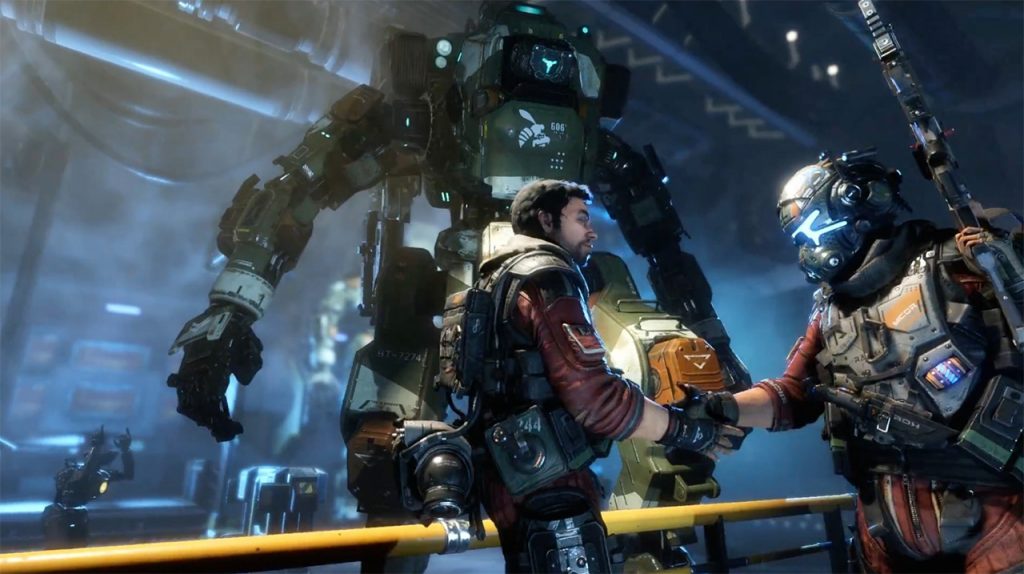
I played Titanfall 2 (and completed it) again recently, mostly because I needed something to play on a rainy bank holiday weekend and my wife had claimed the television for a period drama. I finished the campaign in two sittings, sat in stunned silence through the final act, and immediately messaged a couple of friends to ask if they had ever finished it. None of them had. A 90-rated shooter with one of the finest single-player campaigns in FPS history, and it might as well have been invisible. That experience — finding a game that’s substantially better than its reputation, its sales figures, or its review aggregate would suggest — is one of the quiet pleasures of being a lifelong gamer. Some games get unlucky with their launch window, some get misunderstood by critics chasing the next big thing, and some are simply ahead of their time. This is a list of those games, the ones that deserved more than they got.
Sometimes a game does everything right and the calendar does everything wrong. These titles had the misfortune of launching alongside juggernauts, during crowded seasons, or at moments when the audience simply wasn’t paying attention.
Titanfall 2 (2016) — Sandwiched between Battlefield 1 and Call of Duty: Infinite Warfare, EA’s own shooter cannibalised by EA’s own scheduling. The campaign is a masterclass in FPS design — the time-travel level “Effect and Cause” is one of the greatest single missions in the genre’s history — and the multiplayer was fast, inventive, and superbly balanced. Metacritic scores were excellent, but sales were catastrophic relative to quality. A genuine tragedy of timing.
Psychonauts 2 (2021) — Double Fine’s long-awaited sequel arrived to strong reviews but relatively modest commercial attention, partly because it launched on Game Pass and partly because 2021 was absurdly stacked. The level design is extraordinary — each mental world is a fully realised concept that tells its own story through environment and mechanic — and it handles themes of mental health with more nuance than most “serious” games manage. Deserved to be a cultural event. Wasn’t.
Enslaved: Odyssey to the West (2010) — Ninja Theory’s post-apocalyptic retelling of Journey to the West launched the same month as Fallout: New Vegas and Medal of Honor. Nobody stood a chance against that. Andy Serkis delivered a phenomenal performance-captured lead, the world design was lush and striking, and the relationship between Monkey and Trip was one of the best-written partnerships of its generation. A beautiful game that vanished without a trace.
Kingdoms of Amalur: Reckoning (2012) — An open-world RPG with a combat system so good it embarrassed games with ten times its budget, designed by the team behind Morrowind’s lore with a world built by R.A. Salvatore and art by Todd McFarlane. It launched weeks before Mass Effect 3, sold decently, but the studio’s financial implosion buried any momentum. The 2020 re-master gave it a deserved second life, but the original deserved a far louder reception.
Misunderstood on Arrival
These games were reviewed by people expecting one thing and receiving another. The disconnect between what critics wanted and what the developers delivered meant scores that simply didn’t reflect the experience of actually playing them for more than a few hours.
Death Stranding (2019) — Hideo Kojima made a game about delivering parcels across post-apocalyptic America and half the industry had a collective breakdown trying to categorise it. The walking is the gameplay, the isolation is the point, and the asynchronous multiplayer — leaving ladders and bridges for strangers — is one of the most quietly beautiful systems in modern gaming. It’s not for everyone, and the storytelling ambitions sometimes outpace the pacing, but calling it a “walking simulator” misses the point so thoroughly it’s almost impressive.
Spec Ops: The Line (2012) — Reviewed as a mediocre third-person shooter. Actually a devastating critique of military power fantasies that uses the medium of a shooter to interrogate why you’re pulling the trigger in the first place. The white phosphorus scene remains one of the most important moments in gaming narrative. Critics who scored the gunplay as average weren’t wrong about the mechanics, but they missed the forest for the trees so spectacularly that it should be studied in journalism courses.
Days Gone (2019) — Launched to mixed reviews citing technical issues and an overfamiliar open world. Patched extensively, found its audience on PC, and revealed itself to be a surprisingly emotional survival story with one of the better protagonists in Sony’s stable. The horde mechanics were genuinely innovative — hundreds of zombies moving as a fluid mass — and the late-game narrative shift caught most players off guard. Not a masterpiece, but substantially better than its 71 Metacritic average suggests.
Mad Max (2015) — Dismissed as “another open-world game” in a year drowning in them, Mad Max had some of the best vehicular combat ever put in a game and a wasteland that felt genuinely desolate and atmospheric. The on-foot sections were weaker, and the Ubisoft-style map markers didn’t help its case, but the car customisation, the storms, and the sheer tactile pleasure of ramming a War Boy off a cliff deserved far more recognition than a 69 average.
The Great Redemption Arcs
Some games launched in a state that justified poor reviews, then transformed themselves so completely that the original scores became historical artefacts rather than useful guidance.
No Man’s Sky (2016) — The most dramatic redemption arc in gaming history. Launched to justifiable fury over missing features and broken promises, Hello Games went quiet, put their heads down, and spent eight years adding everything they’d promised and substantially more. By 2026 it’s an extraordinary space exploration game with base building, multiplayer, fleet management, settlement governance, and a universe that actually feels alive. The original reviews were fair. They’re just completely irrelevant now.
Final Fantasy XIV (2010/2013) — So catastrophically bad at launch that Square Enix literally destroyed the in-game world and relaunched it as A Realm Reborn. The audacity of that move — narratively incorporating the failure into the game’s lore — deserves respect on its own, but the fact that it became one of the finest MMOs ever made makes it extraordinary. If you only ever saw the 1.0 reviews, you missed one of gaming’s greatest comeback stories.
Cyberpunk 2077 (2020) — Launched in a state that ranged from “rough” on PC to “unplayable” on last-gen consoles. Three years of patches, the Phantom Liberty expansion, and the anime tie-in turned it into the game it should have been at launch. The writing was always excellent — Judy’s questline, the Johnny Silverhand dynamic, the multiple endings — but the technical state at release poisoned the conversation so thoroughly that many players never came back to discover what it became.
Hidden Brilliance Beneath Rough Edges
These games had genuine flaws that reviewers rightly identified, but the brilliance underneath those rough edges was worth so much more than the aggregate score reflected.
Vampyr (2018) — Dontnod’s action RPG about a doctor-turned-vampire in 1918 London had clunky combat and some pacing issues, which critics correctly noted. What they undervalued was the extraordinary citizen system — every NPC in the game had relationships, secrets, and health conditions, and feeding on them permanently changed the district’s stability. The moral weight of each kill was heavier than in games with ten times the budget, and the atmosphere was thick enough to cut. A flawed gem, emphasis on the gem.
Dragon’s Dogma (2012) — Capcom’s open-world RPG reviewed decently but never broke through to mainstream recognition. The Pawn system was ingenious, the combat was the best in the genre (climbing onto a griffin mid-flight and stabbing it in the neck never got old), and the post-game twist was genuinely shocking. The 2023 sequel finally gave the series the spotlight it deserved, but the original was doing things in 2012 that most RPGs still can’t match. For a different kind of RPG villainy, see our list of games where you can play the bad guy.
Alpha Protocol (2010) — Obsidian’s spy RPG was a technical mess — buggy, visually dated, and with gunplay that felt like the weapons were made of wet cardboard. But the dialogue system and branching narrative were so far ahead of their time that BioWare should have been taking notes. Every conversation had consequences, every alliance could shift, and replaying with different choices produced genuinely different outcomes. A masterclass in reactive storytelling wrapped in a game that looked like it was made in a shed.
Ahead of Their Time
Some games anticipated trends that wouldn’t become fashionable for years. They were strange, niche, or simply too early for the audience they needed.
Prey (2017) — Arkane’s immersive sim launched to solid but unspectacular reviews and modest sales, overshadowed by the name confusion with the 2006 original. The Typhon Mimics — enemies that could disguise themselves as any object in the environment — created genuine paranoia, the space station was one of the best-designed game worlds of the decade, and the freedom of approach was staggering. It’s a game that gets better with every replay and worse with every glance at its sales figures.
Jade Empire (2005) — BioWare’s martial arts RPG, released between Knights of the Old Republic and Mass Effect, never achieved the recognition of either sibling. The setting was refreshingly original, the combat blended real-time martial arts with RPG progression, and the late-game twist was vintage BioWare at their sharpest. It sold well enough but vanished from the cultural conversation almost immediately, which is a shame because nothing else has really attempted what it did.
Singularity (2010) — Raven Software’s time-manipulation shooter launched with almost zero marketing and promptly disappeared. The Time Manipulation Device was a brilliant gameplay hook — ageing enemies to dust, reverting destroyed structures, creating time bubbles — and the Cold War-era setting was atmospheric and well-realised. It borrowed liberally from BioShock, but it borrowed the right bits. A game that deserved a sequel it was never going to get.
Binary Domain (2012) — Yakuza studio Ryu ga Gotoku made a squad-based shooter about fighting robots in near-future Tokyo, complete with a trust system where your AI companions reacted to your decisions and competence. The procedural damage on enemies — shooting limbs off robots that then crawled toward you — was superb, and the story had more heart than most prestige narrative games. It vanished entirely, which is criminal.
Every one of these games taught me something about the gap between critical consensus and personal experience, and about the quiet satisfaction of championing something brilliant that the wider world overlooked. If even one title on this list sends you off to track down a cheap copy or fire up a download, then this list has done its job. For more on the culture side of gaming — how we play, why we play, and what it all means — check out our gaming culture features… and maybe give that bargain bin another rummage while you’re at it.
Frequently Asked Questions
What is the most underrated game of all time?
It’s subjective, but Titanfall 2 and Spec Ops: The Line are frequently cited as the most egregious gaps between quality and recognition. Titanfall 2 had critical acclaim but disastrous sales, while Spec Ops was reviewed as an average shooter despite being one of the most important narrative games ever made. Both deserved far larger audiences than they received.
Can a game’s Metacritic score really be misleading?
Absolutely. Metacritic captures a snapshot of critical opinion at launch, which means games that improve over time (No Man’s Sky, Cyberpunk 2077) carry scores that no longer reflect the actual product. It also averages across reviewers with different priorities — a game with brilliant writing but average combat might score identically to a game with brilliant combat but average writing, despite offering completely different experiences.
Why do some great games sell poorly?
Launch timing is the biggest factor — releasing alongside a major franchise instalment is often fatal for smaller titles. Poor marketing, confusing branding (Prey 2017 vs Prey 2006), platform exclusivity, and genre fatigue all contribute. Sometimes a game is simply too unusual for mass-market appeal, which isn’t a quality problem but a positioning one.
Is No Man’s Sky actually good now?
Yes, emphatically. Hello Games has released dozens of free updates since 2016, adding multiplayer, base building, fleet management, settlement governance, improved exploration, and vastly better visuals. The game in 2026 bears almost no resemblance to the version that launched. It’s one of the best space exploration games available on any platform, and it’s a remarkable example of a developer making good on their promises, even if it took years.
Should I trust review scores when buying games?
Use them as a starting point, not a final verdict. Scores above 85 are generally safe bets, and scores below 50 usually indicate genuine problems. The 60-80 range is where personal taste matters most — a game scoring 72 might be your favourite of the year if it aligns with what you value. Read the text of reviews rather than just the number, and check user reviews a few months after launch for a more settled perspective.
What recent games are currently underrated?
Games that launched quietly or to mixed reviews but deserve more attention include Hi-Fi Rush (stunning rhythm-action, released shadow-drop style), Immortality (Sam Barlow’s most ambitious FMV project), and Jusant (a meditative climbing game from Don’t Nod). All three scored well critically but didn’t achieve the commercial success their quality warranted.
Do remasters help underrated games find their audience?
Sometimes, yes. Kingdoms of Amalur: Re-Reckoning, Dragon’s Dogma: Dark Arisen, and the Psychonauts remaster all brought renewed attention to games that deserved it. Game Pass and PS Plus have also given older titles a second life by reducing the financial risk of trying something unfamiliar. The challenge is that remasters cost money to produce, and publishers are less likely to remaster games that sold poorly the first time — which creates a frustrating catch-22 for the most deserving candidates.