Late this April, I was invited to play a few games early, and one of them happened to be a shiny new roguelike developed by a single person. In the sea of titles we tried out in those two days, this one really stood out, being the only one to really hook me within just a few minutes.
I’m talking about Chivalware, announced today. It’s a flashy “cyber-medieval” roguelike combining retro arcade aesthetics with medieval fantasy, putting you in control of a Disk Knight who, as the name implies, makes magical use of floppy disks that give him special powers. You move along squares as in chess and have to strike at and defend against enemies to progress between stages and gain further upgrades down the line.
Each stage then culminates in a boss fight, and the few bosses I fought were each unique, with some regular mobs sprinkled in.
Furthermore, since you get three color-coded attacks, some enemies can be resistant to a specific color, inviting you to switch up on the go and experiment with your arsenal for maximum effect. To call the game addictive would be an understatement, and the only reason I had to stop playing it is because, well, I was obliged to.
I had some other stuff lined up, and time with the game itself was limited. But if it were any other way, I would’ve locked myself up in that room playing Chivalware until the sun came up. Perhaps even longer.
It’s a simple, fast-paced, and incredibly satisfying experience. I had so much fun playing, I can’t even begin to describe it. The gameplay, combined with the retro-futuristic style and genuinely great soundtrack, results in a thoroughly impressive little gem of a game that I wholeheartedly recommend.
In truth, I even think this could be yet another indie roguelike hit, and God knows we’ve had more than a few of those lately. I guess it’s because solo developers and small teams in this genre always seem to find some new and unique way to innovate the genre, and I pray they’ll continue to do so.
Released more than a quarter of a century ago, Gothic was a sprawling open-world RPG that, while undeniably rough around the edges, offered a wonderfully scrappy adventure for RPG fans. It was the sort of game that would later help define the affectionate “Eurojank” label: ambitious, awkward, memorable, and full of personality.
That rough charm is a huge part of why Gothic still has such a devoted following today. Now, 25 years later, developer Alkimia Interactive and THQ Nordic are bringing it back with a full remake.
So, how does the Gothic 1 Remake improve on the original? Well, we’re glad you asked.
A Modern Engine for Modern Times
Game engine technology has come a long way since Gothic first launched in 2001, so it makes sense that the Gothic 1 Remake has been rebuilt from the ground up for modern hardware.
Powered by Unreal Engine 5, the remake features all-new assets, a huge increase in texture and lighting detail, support for higher frame rates and resolutions, and a generally much richer sense of place. In short, this classic European RPG is being dragged, kicking and screaming, into 2026.
The move to Unreal Engine 5 also allows for a much greater variety of NPCs. In the Gothic 1 Remake, more than 600 unique faces and body types populate the prison colony, giving the world a level of visual variety much more in line with modern RPG expectations. Compared to the more repetitive character models of the original, that alone should make the colony feel far more alive.
An Expanded, Enhanced World Filled With Cut Content
The original Gothic had more than a few areas that felt barren or incomplete, largely because of the technical limitations its developers were working with at the time. The Gothic 1 Remake addresses this directly, with a map that is roughly 20% larger than the original.
That extra space is not just there for the sake of it, either. Alkimia Interactive has used it to flesh out locations that could not be fully realised back in 2001, giving familiar areas more detail, purpose, and atmosphere.
The remake also builds on one of Gothic’s most impressive original features: its NPC schedule system. Back in the day, Gothic’s characters already felt more alive than those in many other RPGs because they followed daily routines. In the remake, those routines are broader and more reactive, with NPCs responding dynamically to changes in the world and story.
Female characters have also been extensively reworked. Rather than simply existing in the background, they now have their own names, appearances, dialogue trees, and interactions within the game world, giving them much more presence and agency.
Clunky No More: Combat and Controls That Actually Satisfy
One of the biggest reasons the original Gothic earned its “Eurojank” reputation was its control scheme. Let’s be honest: it was clunky. Very clunky. We may all have had a higher tolerance for that sort of thing back then, but by modern standards, it could be a bit of a struggle.
The Gothic 1 Remake completely refreshes the controls with modern expectations in mind. There is now a lock-on mechanic that actually works, more responsive hit feedback, reliable dodging, and attacks that look and feel like they properly connect.
As a result, moving through the world and getting stuck into combat should feel far more responsive and enjoyable. The original’s haphazard, keyboard-crunchingly frustrating encounters have been replaced with something that better matches the ambition of the game’s world and systems.
Worry Not: This Is Still a Punishing, Hands-Off Adventure
For all its modern improvements, the Gothic 1 Remake is not sanding away everything that made the original special. One of Gothic’s most appealing qualities was how punishing and hands-off it could be. It respected the intelligence of its players and encouraged them to find their own way through its dark fantasy world.
In an era of minimaps, quest markers, and UI screens packed with helpful pointers, Alkimia Interactive has been keen to preserve that essential Gothic feeling.
Combat remains dangerous. Enemies hit hard, and the Nameless Hero begins the game without much in the way of training or martial skill. Especially early on, every fight can feel hard-won, with victory or defeat often decided by just one or two hits.
Exploration is similarly old-school. There is no minimap and no flood of quest markers guiding you from one objective to the next. Instead, players must ask NPCs for directions, buy costly maps from vendors, and use landmarks to navigate the world.
Y’know, just like the good old days.
Big Story, Quest, and Lore Changes Could Make This the Definitive Version
Alongside its technical improvements, the Gothic 1 Remake also makes significant changes to the story, lore, and quest content.
One of the major criticisms of the original game was its English translation. The move from German to English left behind broken sentences, awkward storytelling, and important plot points that could feel muddled or underexplained. In the remake, the narrative has been refined so it unfolds more naturally, without the contradictions and inconsistencies that affected the original English release.
The late game has also been expanded. One common complaint about Gothic was that the quality and quantity of quest content began to thin out toward the end. The remake aims to address that with around 15 hours of new camp-specific content, including fresh questlines for both newcomers and returning fans.
The Orcs have received a major overhaul, too. They now function more fully as their own faction, with players able to learn the Orcish language and explore new questlines and story paths that were not present in the original release.
Taken together, these changes suggest that the Gothic 1 Remake is not just a visual upgrade. It is a broader reworking of a cult RPG classic, one that keeps the original’s punishing, hands-off spirit while making its world, combat, story, and characters feel far more complete.
For veterans, it could be the Gothic they remember, only richer and more playable. For newcomers, it may well be the definitive way to experience one of Europe’s most beloved RPGs.
June is here, which means warmer weather, a packed announcement calendar, and a seemingly endless stream of gaming reveals set to roll on all summer long. But while plenty of games will pop up unexpectedly, there are also loads of exciting indie titles with confirmed release dates to keep an eye on.
If you’re wondering which indie games deserve a spot on your wishlist already, here are some of the best and most exciting releases arriving throughout June.
Calx – 4th June
Calx is a gorgeous action game set on a corrupted planet, and it looks every bit as harsh as it is beautiful. You play as the Seeker, battling your way across a strange world where movement and combat seem equally vital to survival. With plenty of weapons to experiment with and a mysterious setting begging to be explored, this one already has a lot going for it.
Swan Song – 4th June
Swan Song looks like a wonderfully calm change of pace. Set inside a magical music box, this puzzle game blends music, exploration, and pathfinding into something far more delicate than most of the other games on this list. If June’s chaos is already getting a bit much, this could be the perfect excuse to slow things down.
Cursemark – 8th June
Cursemark is a dark action roguelike with loads of style and a very strong atmosphere. Launching in Early Access, it puts you in the role of a Mage Knight trying to survive the Unknown Lands, with each run giving you new spells, abilities, and builds to experiment with. It looks tough, moody, and full of the kind of secrets that make roguelikes so hard to put down.
Solarpunk – 8th June
Solarpunk immediately stands out thanks to its hopeful take on the survival genre. Set across floating islands where nature and technology exist in harmony, it’s all about exploring, building, and carving out a life in a brighter kind of future. The co-op play only makes it more appealing, especially when the world looks this inviting.
Voidling Bound – 9th June
Voidling Bound is a strange mix of third-person shooter and creature collector, but that odd combination is exactly what makes it so interesting. You’ll take control of a wide range of monsters and head to corrupted planets to fight back against the spreading threat. As your creatures evolve and unlock new abilities, there looks to be plenty of room for experimentation in how you approach each fight.
Witchspire – 10th June
Witchspire looks utterly enchanting. This open-world survival game lets you build, mine, and explore using magic, and yes, that includes flying around on a broom. It all sounds wonderfully cosy at first, but there’s clearly something darker lurking in the background, and that added sense of mystery makes it all the more appealing.
Denshattack! – 17th June
Denshattack! looks completely ridiculous in the best possible way. You play as a train, pulling off tricks, fighting rival gangs, and taking on a megacorporation while speeding through absolute chaos. It’s stylish, loud, and gloriously over the top, and if it can match the energy of its trailers, this could be one of the month’s most memorable releases.
Shift At Midnight – 18th June
Shift At Midnight mixes co-op horror with gas station management, which is already a strong start. As you work through each shift, you’ll need to serve customers, keep the place running, and figure out which visitors are actually doppelgangers in disguise. If one gets through, things quickly turn into a desperate scramble for survival, and that strange mix of routine and horror is exactly what makes this one stand out.
With its blend of deep-sea exploration, crafting, and survival sandbox gameplay, Subnautica quickly became a favourite among players when it launched in 2018. Now, Subnautica 2 from Unknown Worlds Entertainment builds on everything that made the original so memorable, adding a wave of fresh ideas to pull returning players back underwater.
As Subnautica 2 begins its Early Access journey, here is how it is already improving on the original experience.
Unreal Engine 5 Brings More Than Just Better Visuals
One of the biggest changes in Subnautica 2 is the move from Unity to Unreal Engine 5. While that shift obviously means a massive visual upgrade, the benefits go well beyond surface-level improvements.
Thanks to Unreal Engine 5’s Lumen lighting system, the ocean feels incredibly dynamic and atmospheric. Bioluminescence casts light convincingly across the environment, while sunlight filters through the water in a way that reacts naturally to movement on the surface. The result is an underwater world that feels richer, moodier, and far more immersive.
The water itself is also highly reactive. Dynamic currents push both players and vehicles around the environment, turning navigation into a much more active part of survival. In some areas, those currents act as a serious hazard rather than just background detail.
The engine also introduces fresh environmental threats, including Bloom zones. These infected areas are filled with thick, murky fog that limits visibility and makes exploration deeply tense, pushing Subnautica 2 closer to survival horror territory.
Multiplayer Co-op Is Finally Happening
For many fans, this is the big one. After years of requests, Subnautica 2 launches into Early Access with multiplayer co-op for up to four players.
What makes this feature especially impressive is how seamless it is. Players can start a world solo and open it up for friends to join later, without needing to build the whole experience around co-op from the beginning.
Shared progression is another major step forward. Blueprints, databank entries, materials, and recipes are all shared across the group, making teamwork feel meaningful rather than inconvenient.
Better still, players aren’t constantly forced to stay close together. Instead of imposing strict distance limits, Subnautica 2 gives co-op groups the freedom to split up, explore, and tackle tasks in their own way.
Base Building Looks Much More Flexible
Base building has received a major overhaul. The rigid modular construction of the first game is replaced by a flexible procedural building system that gives players far more control over how their bases look and function.
Rather than working within fixed room sizes and limited layouts, players can reshape corridors, rooms, and interiors freely. That opens the door to more personal, creative base designs and makes construction feel less restrictive overall.
There’s also more control over the finishing touches. Interior lighting can be adjusted in greater detail, including both colour and intensity, and a wide variety of window options make it easy to create bases that feel practical, stylish, or both.
Biomods Create New Progression Options
Character progression in the original Subnautica was mostly tied to gear upgrades. In Subnautica 2, that system expands in a much more interesting direction through Biomods.
By harvesting DNA from local wildlife and taking it back to a Biolab, players can unlock mutations that affect how their character develops. These upgrades sit within skill trees and offer active and passive benefits that go beyond simple stat boosts.
That means unlocking improved resistance to water pressure, faster swimming, or better visibility in hazardous areas like Bloom zones. It’s a layered progression system that adds another dimension to exploration and survival.
The Ocean Is More Dangerous Than Ever
The creatures of Subnautica 2 aren’t just threatening in appearance; they are highly advanced in how they behave.
New predators, such as the Collector Leviathan, provide large, intelligent threats that actively hunt players, attack vehicles, and flush explorers out of hiding spots. More broadly, the game’s fauna reacts to a wide range of factors, including prey relationships, water currents, and even the time of day.
This makes the world feel unpredictable and deeply alive – exactly what a game like Subnautica needs.
Meet the Tadpole
The original game’s Seamoth is replaced by a new modular vehicle called the Tadpole, and it is a massive upgrade in terms of flexibility.
Instead of relying on a single all-purpose design, players can swap out the Tadpole’s shell chassis depending on what they need for a particular expedition. A faster setup suits exploration, while a bulkier shell prioritises storage and endurance.
This level of customisation gives players complete control over how they approach each dive, making the vehicle system feel incredibly adaptable.
Final Thoughts
From upgraded visuals and smarter creature behaviour to co-op play, deeper progression systems, and more flexible base building, Subnautica 2 is a meaningful step forward rather than a simple follow-up. With all of these ideas already taking shape at the start of its Early Access journey, it is well on its way to becoming the sequel fans have been waiting for.
The Backrooms film is out, so here are four games to play if you want more of that liminal dread.
First, Escape the Backrooms. It’s a co-op horror game for one to four players, exploring unsettling levels watched over by strange entities. The aim is to escape each stage and push deeper into the facility, either the normal way or by no-clipping into hidden areas. Get separated and you’ll need to talk each other out while staying quiet. Eight levels so far, with more on the way.
If you’ve got a bigger group, there’s Backrooms: Escape Together. This one takes up to six players, with proximity voice chat, so you’ll hear your friends’ screams carry down the halls before you ever reach them. It runs on photorealistic environments and eleven procedurally generated levels, which means layouts, item spawns and entity encounters change every single run. You start in the yellow halls of Level Zero and claw your way down. It’s in Early Access, with more levels arriving over time.
Next, Transliminal: Beyond The Backrooms. It’s a rogue-lite set in 1983, where you wake on damp carpet under buzzing strip lights with no obvious way out. The levels reshape around you and react to your state of mind, all wrapped in a grainy VHS look. It’s sitting at ninety-four percent positive on Steam.
Finally, Exit 8. It’s not strictly a Backrooms game, but it nails that same liminal unease. You’re trapped in a looping underground station, and the only way out is to spot the anomalies. See something off, turn back. See nothing wrong, keep walking. It took that spot-the-difference idea and tied it to eerie empty spaces and SCP-style scares, and a lot of games have chased it since. Short, sharp and very replayable, with one nagging question hanging over it all: how did we get here?
When I dropped a Short of MOTORSLICE on the socials a few weeks back, one of the comments was a quick observation that “movement looks a bit clunky.” It picked up a couple of likes and stuck with me, because after spending some decent time with the game, I can confirm that yes, the movement is sometimes clunky. But the wider thing the commentor didn’t quite capture is that MOTORSLICE is also one of the most distinct and quietly compelling indie games of 2026 so far, and the clunkiness is the price of admission rather than the deciding factor.
MOTORSLICE is a third-person parkour-and-combat game from Brazilian indie studio Regular Studio, published by Top Hat Studios. It’s been compared to everything from Shadow of the Colossus to Mirror’s Edge to Nier: Automata, and the comparisons are all earned even if none of them really pin down what the game is.
The Setup
You play as P, a Slicer dropped into a vast, empty megastructure with the brief of destroying every machine inside. Your only companion is a hovering drone called Orbie, voiced through the game’s only sustained voice performance (Kira Buckland, doing some of her best work). The lore implies a post-human world where construction machines have gone rogue and somebody has decided that P is the person to clean them up.
What that “somebody” wants, why P agreed, and what any of it actually means are deliberately left vague. MOTORSLICE doesn’t believe in handing you its world on a plate, which is either thrilling or frustrating depending on how patient you are. I landed somewhere in the middle. By the closing chapter I wanted more context than the game was willing to give me, but I also accepted that the ambiguity is part of the design rather than a hole in it.
The World Earns the Hype
The first thing every review mentions and the first thing I want to talk about. The megastructure is glorious. Brutalist concrete pillars stretching into mists, brilliant blue-sky vistas glimpsed through dark corridors, vast architectural geometry that exists more to suggest impossible scale than to be physically navigable. It feels closer to a piece of speculative architecture than a video game environment, and I mean that as the highest compliment I can give it.
Regular Studio has taken the unusual decision to use Unreal Engine 5 not for photorealism but for restraint. Surfaces are simple, textures are minimal, the colour palette is muted, and the result is a world that lands harder emotionally than most thirty-million-dollar productions manage. There’s a recurring visual motif where darkness closes around P and then opens into a new cavern of light, and it never stopped landing for me. Easily the best-looking indie game I’ve played this year.
The sound design carries the same ambition. The score leans on cool electronic ambience, the diegetic audio of chainsaw against metal is genuinely satisfying, and the small audio cues (P’s gasps when she dies and reboots, Orbie’s clipped tones, the wind across the structures) all add to a sense of place that’s rare in a game this size.
The Motorslice Mechanic
This is the headline gameplay verb and where the game earns its name. P carries a chainsaw, and certain shaded panels around the world can be sliced into and ridden vertically or horizontally as a kind of mechanised wall-run. When it works, and most of the time it does, it feels properly cinematic. You stitch together jumps and slices and wall-runs into a flow state that wouldn’t look out of place in The Matrix.
The standard parkour around it covers all the moves you’d expect from the genre. Double jumps, ledge grabs, wall-runs, vaults, the lot. None of it is reinventing the wheel, but most of it feels good in the moment, and the Motorslice itself is the spice that makes the package worth eating.
Where It Stumbles
Now the clunkiness, because there’s no point pretending it isn’t there.
Movement has a slightly inconsistent edge that becomes more obvious the longer you play. Jumps have a floaty tail that occasionally over-shoots small platforms. Wall-runs sometimes lock you into a direction you didn’t quite mean. Pole climbing is introduced in a way that left me re-doing the same section three times to work out what the game wanted from me. None of these are catastrophic, but they’re real, and on precision sections they bite.
The bigger problem, and the one every other review I’ve read flags, is the camera. When you’re motor-slicing in a straight line, the camera follows you well. The moment you need to change direction mid-slice, particularly from horizontal to vertical, the camera and the controls start arguing with each other. You’re holding the slice button while trying to nudge the camera into the new heading while pressing jump and trying to land cleanly, and the result is a fail rate that feels more like fighting the controls than the level. Generous checkpointing keeps the frustration manageable, but it doesn’t make the friction disappear.
I died A LOT across my playthrough, which is not unusual for the genre, but a meaningful chunk of those deaths were the camera’s fault rather than mine (I like to think).
The Boss Fights
Each chapter ends with a colossal machine that needs taking down, and these encounters are the clearest Shadow of the Colossus tribute in the game. You climb, scan for weak points, slice into vulnerable patches, and gradually wear the thing down. They escalate well across the eight chapters, with the later ones introducing environmental puzzling alongside the climb-and-slice loop. Baiting a digger into a trap, spinning up industrial fans to unbalance it, parrying a chainsaw arm at exactly the right beat.
These fights are the showpieces and they mostly land. A couple are over-reliant on the directional motor-slicing I’ve been moaning about, which means the difficulty spike comes more from camera and control friction than from genuine challenge, but the conceptual ambition is genuinely impressive for an indie team this small.
P and Orbie
Between chapters, the game pauses for what it calls Slack Off sections. P leans against a wall, Orbie hovers next to her, and the two have a chat. The dialogue is the divisive bit. Some of it is playfully tender, some of it is genuinely funny, and some of it leans towards a flirty register that’s either charming or eye-rolling depending on your tolerance for that sort of thing.
Personally, I landed on charming. The relationship between P and Orbie carries more weight than I expected, and by the end of the game I was more invested in their dynamic than in the wider mystery of the megastructure. That’s a credit to the writing and Kira Buckland’s delivery, because the rest of the cast is essentially silent.
The frustrating bit is that the story keeps hinting at deeper lore (who built the megastructure, why P is doing this, who the other Slicers are) and then refuses to pay any of it off. There’s an interesting plot point introduced in the final act that I wanted at least another two hours of, and the game just ends. I closed it wanting a sequel rather than feeling satisfied, which is a strange middle ground. Less than fully satisfying, more than a waste of time.
How Long, How Much
Eight chapters, somewhere between ten and fourteen hours depending on how much side content you chase (or how many times you die). There are collectible orb drones scattered through the levels which act as one-hit-protection charms and feed achievements, but no lore reward, which feels like a missed opportunity. Completionists will probably add another two or three hours hunting them.
It’s currently on Game Pass on PC, which is also why it’s been getting more attention than most indie debuts this year. If you have a subscription, you have no excuse not to try it.
Is it worth it?
MOTORSLICE is the kind of indie game I want to recommend even though I can list its faults in detail. The world is stunning. The Motorslice mechanic is one of the most distinct movement systems I’ve used in a while. The boss fights mostly work. P and Orbie deserve a sequel.
The flaws are real but they’re the kind of flaws Regular Studio could iron out in a patch cycle or a follow-up. Camera issues during directional slicing, occasional movement inconsistency, a story that holds too much back. None of those are dealbreakers if you go in knowing they’re there.
If you’re a fan of Shadow of the Colossus, Mirror’s Edge, Nier Automata, or the kind of indie game that aims at something genuinely interesting rather than a safe clone, MOTORSLICE belongs on your list. It’s not a perfect game. It is a memorable one, and in a year stuffed with safe sequels and remakes, memorable counts for a lot.
A confident indie debut held back by camera friction and an under-told story, but the world design, boss fights, and Motorslice mechanic make it one of the most distinctive games of the year.
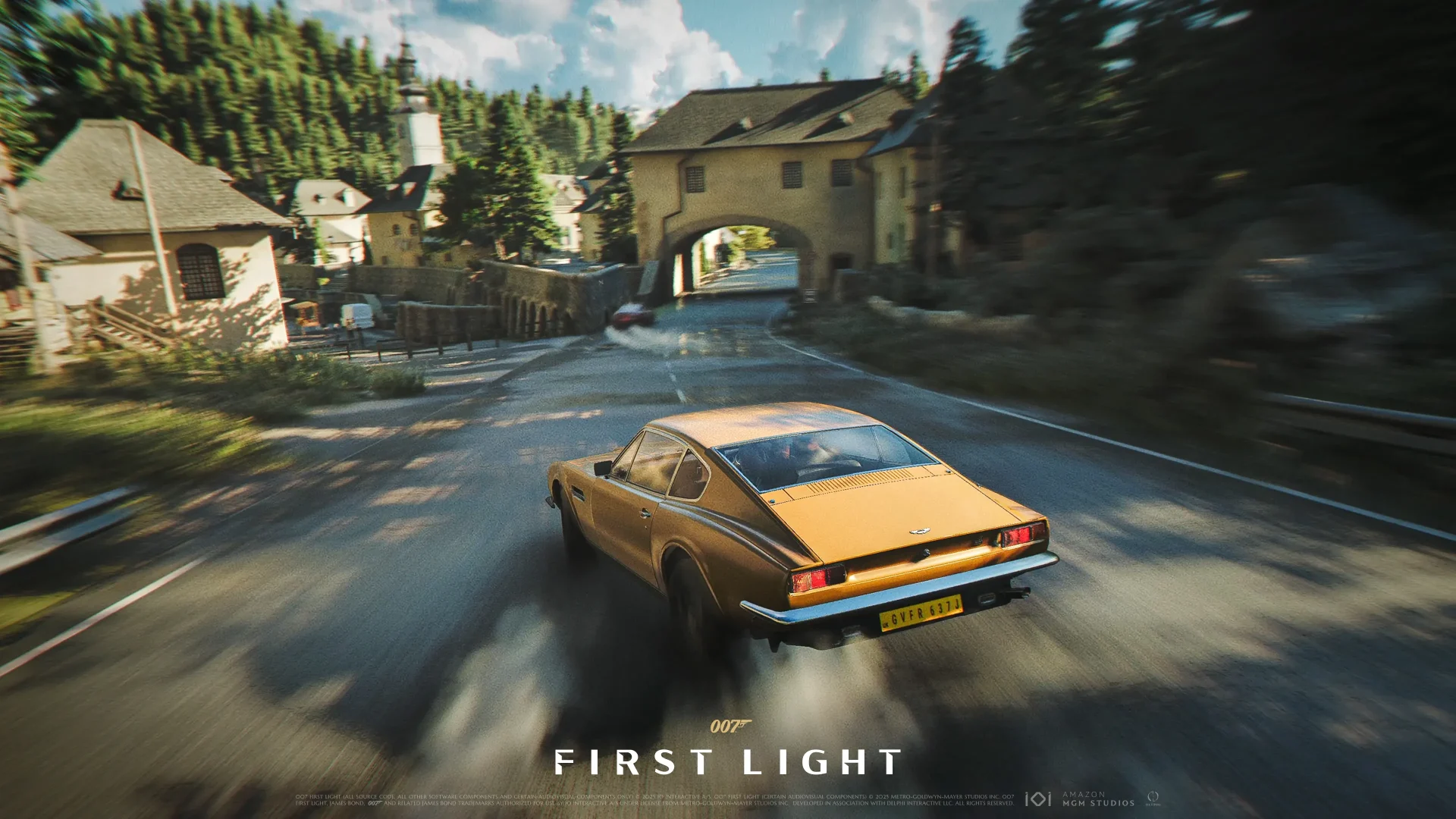
IO Interactive’s latest gaming venture, 007 First Light, has made an explosive debut, selling 1.5 million units within its first 24 hours on sale. The James Bond origin story has become the fastest-selling title in the Danish developer’s history, marking a significant milestone for the studio behind the acclaimed HITMAN franchise.
The game has received widespread critical acclaim, earning an impressive 88 rating on OpenCritic and 87 on Metacritic, making it the highest-rated release from IO Interactive to date. 007 First Light puts players in the shoes of a 26-year-old James Bond as he navigates MI6’s elite training programme and transforms from Royal Navy air crewman to fully-fledged spy.
The title features an all-star cast including Patrick Gibson as Bond, alongside Priyanka Burford as M and Lennie James as mentor John Greenway. Adding to the cinematic experience, Grammy-nominated artist Lana Del Rey has collaborated with legendary Bond composer David Arnold to create the game’s official theme song, “First Light”.
Players can experience Bond’s globe-trotting adventures through IO Interactive’s signature mission design, choosing between stealth infiltration, investigation, or direct confrontation. The game incorporates cutting-edge technology including NVIDIA’s DLSS 4.5 Dynamic Multi Frame Generation for enhanced visual performance on PC.
007 First Light is currently available on PlayStation 5, Xbox Series X|S, PC via Steam and Epic Games Store. A Nintendo Switch 2 version is planned for summer 2026. More information can be found at the official website: 007FirstLightGame.com
Frequently Asked Questions
What platforms is 007 First Light available on?
The game is currently available on PlayStation 5, Xbox Series X|S, and PC through Steam and Epic Games Store. A Nintendo Switch 2 version will launch later in summer 2026.
When did 007 First Light release?
007 First Light launched globally on 27th May 2026 and achieved 1.5 million units sold within its first 24 hours.
Who plays James Bond in 007 First Light?
Rising star Patrick Gibson voices James Bond in this reimagined origin story, supported by a cast including Priyanka Burford as M and Lennie James as John Greenway.
What is the critical reception of 007 First Light?
The game has received strong critical acclaim with an 88 rating on OpenCritic and 87 on Metacritic, making it IO Interactive’s highest-rated game to date.
Does 007 First Light have an original theme song?
Yes, Grammy-nominated artist Lana Del Rey collaborated with Bond film composer David Arnold to create the official theme song “First Light”.
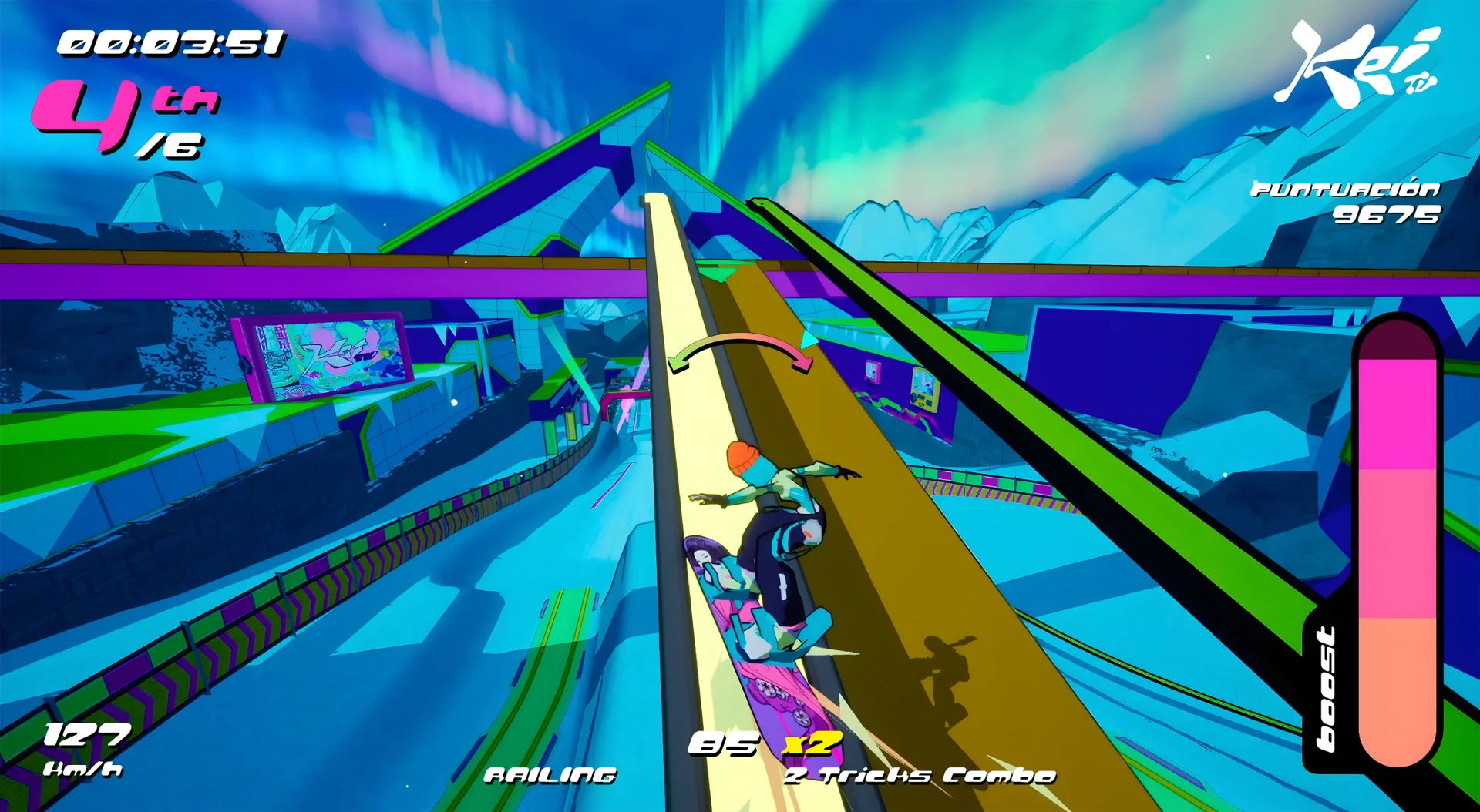
Mexican indie studio Wabisabi Games has unveiled a fresh gameplay trailer for HYPERyuki: Snowboard Syndicate, an arcade snowboarding game that draws clear inspiration from beloved classics like SSX and Jet Grind Radio. The trailer premiered during BitSummit in Kyoto, Japan, showcasing the game’s explosive trick-focused action and vibrant visual style.
The game promises a diverse roster of snowboarders across multiple game modes, including Challenge mode where players complete objectives for high scores, Race mode that balances style and speed against NPCs or other players, and Chill mode for a more relaxed endless experience. For those seeking social competition, multiplayer supports up to eight players online or local split-screen play.
One particularly quirky feature highlighted in the press materials is the ability to “bomb the slopes as a sentient snowboarding taco,” suggesting the game doesn’t take itself too seriously. The trailer demonstrates gravity-defying tricks across various snowy locations, with players able to ride rails, collect trinkets, and build boost meters through stylish performances.
Publisher Acclaim, the revived brand behind classic franchises like Mortal Kombat and NBA Jam, is bringing HYPERyuki: Snowboard Syndicate to PC and all major consoles. Wabisabi Games, the studio behind RKGK/Rakugaki, describes this as a “full-circle moment” given their childhood love of Japanese pop culture and gaming.
The game is set to launch across multiple platforms, though specific release dates haven’t been announced yet. Those interested can find more information through Acclaim’s official channels, with review keys available upon request.
Frequently Asked Questions
What platforms is HYPERyuki: Snowboard Syndicate available on?
The game is coming to PC and all major consoles, though specific platform details haven’t been fully announced yet.
When does HYPERyuki: Snowboard Syndicate release?
A specific release date hasn’t been announced, but the game was showcased at BitSummit 2026 in May.
Is HYPERyuki: Snowboard Syndicate multiplayer?
Yes, the game supports up to eight players online or local split-screen multiplayer.
What game modes are available in HYPERyuki: Snowboard Syndicate?
The game features Challenge mode for high scores, Race mode against NPCs or players, Chill mode for endless relaxed play, and full multiplayer support.
Who is developing HYPERyuki: Snowboard Syndicate?
The game is developed by Mexican indie studio Wabisabi Games and published by Acclaim.
Rival Stars Horse Racing has been on Steam and Meta Quest for a while now, but arriving on Xbox Series X felt like a genuine event. This is the horse management and racing game I’d been waiting to include in my Horse Games on Xbox video back in 2022, and it absolutely justifies that wait. Yes, it bears the hallmarks of its desktop origins with some UI quirks that occasionally frustrate, but the core experience of building a stable from scratch, breeding horses with purpose, and racing them across beautiful courses translates remarkably well to console. With a controller in hand, this is the best way to experience this charming equestrian adventure.
Building a Legacy, One Horse at a Time
Rival Stars Horse Racing is fundamentally about progression and legacy. You return to your family ranch after a personal tragedy and are tasked with restoring it to former glory. The story unfolds through stylised comic-book presentation and text rather than voice acting, which gives the narrative a readable, digestible quality without demanding constant attention.
The heart of the game is horse breeding and racing. You start with a single Grade 1 horse and gradually build upward through strategic breeding partnerships. The genetics system is accessible without being oversimplified. You’re presented with ideal breeding matches based on your horses’ types, ratings, and stats. Combine two horses thoughtfully, and you’ll produce foals with mixed traits that can grow into something special.
This breeding loop is addictive. You’re constantly making decisions about which horses to breed, which to race, which to sell, and which to invest in long-term. Early on, progression feels inevitable. But as you climb through the horse classes, strategy becomes crucial. Should you breed for incremental improvement or take risks on higher-class pairings? Should you upgrade a horse’s stats further or start fresh with a new bloodline? These decisions matter, and the game gives you enough freedom to approach them however you like.
Racing That Rewards Skill and Strategy
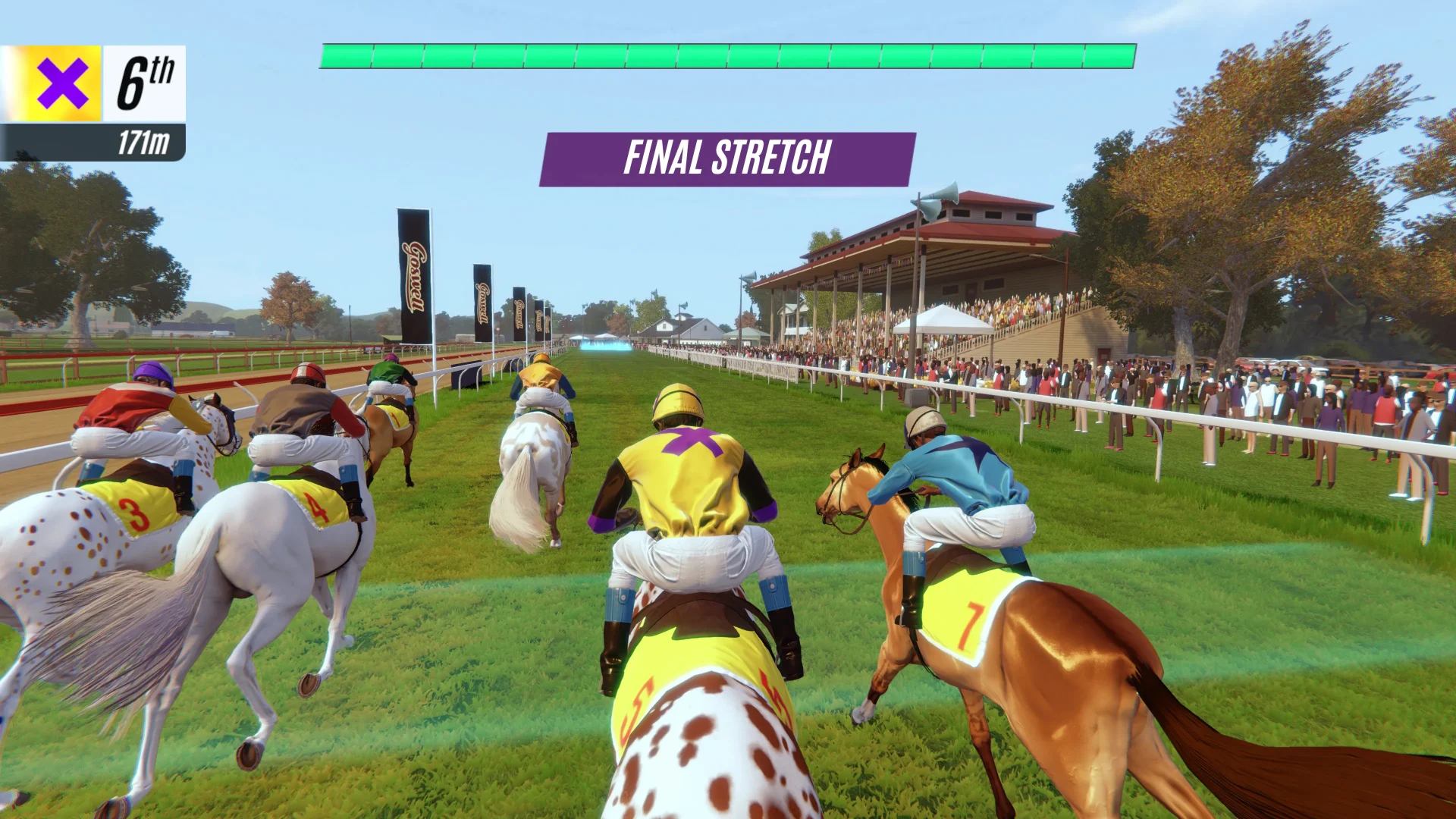
The racing itself is straightforward but engaging. You hit a timing window at the start for an ideal launch, then you’re steering and managing acceleration throughout the race. Sounds basic, and it is. But it’s also deceptively nuanced.
Each horse has a preferred position on the track. When positioned correctly, their sprint bar fills faster. The sprint system is divided into segments, with each segment granting acceleration boosts. Early races don’t demand careful sprint management, but higher-level competitions absolutely require it. You’ll need to observe how other horses position themselves, when they accelerate, and adjust your tactics accordingly.
“Perfect” button timing can trigger an even stronger acceleration boost, rewarding precision. Some horses thrive in the middle of the pack where they build sprint meter faster when surrounded by others. Others prefer leading from the front. Some excel from behind. This variety means you develop different strategies depending on which horse you’re racing. It’s not revolutionary, but it’s genuinely satisfying, and the short race lengths encourage you to jump into another one immediately.
If you’d rather not race yourself, you can hire a jockey to compete for you, though their services deduct from your winnings. It’s a nice option for when you want to progress without the active gameplay.
Free Roam and Relaxation
Beyond racing and breeding, Free Roam lets you simply explore and spend time with your horses. You unlock additional locations like Switzerland and beautiful desert areas. There’s no pressure here, just the satisfaction of riding around your ranch, looking at your horses grazing, and listening to the cosy soundtrack. This mode is relaxing and perfectly suited for controller play.
The game does something clever by removing UI elements when you’re idle, letting you simply appreciate your stables and horses in beautiful stillness. It’s a small touch, but it creates a relaxing atmosphere when you need a break from the menu systems.
The Controller Experience
Here’s what matters for console players: the controller handling is excellent for racing and free roam. The acceleration, steering, and sprint mechanics feel natural with a gamepad. The free roam exploration is smooth and intuitive. These are where the game shines on console.
However, and I need to be transparent here, the menu systems occasionally feel awkward with a controller. The game is clearly designed around mouse and keyboard interactions, and some menu navigation carries that DNA. There are moments where you’re unsure which button you currently have highlighted. More frustratingly, certain screens require you to press Start (the three-line menu button) to exit, when every other interaction uses the face buttons. Coming from hours of keyboard and mouse play, I’m used to moving through these systems at speed, so the inconsistency occasionally breaks flow.
But after extended play, you adapt. You learn the layouts, you remember which button exits which screen, and the frustration diminishes. It’s not a deal-breaker, just a minor inconsistency that reflects the game’s mobile heritage.
The Management Loop Works
The progression systems are incredibly well-designed. You’re always working toward something. Upgrading training facilities in jumping, agility, speed, and acceleration provides consistent income. Racing generates money, experience points, and skill points for upgrading your horse’s abilities. Early upgrades require cash and XP, but later stages demand skill points and additional resources. It’s a grind, but it’s a enjoyable grind that keeps pulling you back for “just one more thing.”
The visual representation of this progress is satisfying. Your ranch slowly transforms through upgrades. Stables improve. The main house renovates. Gates and fencing change. You’re constantly looking at something new, watching your initial run-down inheritance become something you can be proud of.
Visual and Audio Presentation
Visually, Rival Stars Horse Racing clearly originates from mobile. It’s simple, pleasant, and relaxing rather than flashy. The stylised UI looks attractive, and the 3D racing sections are nicely detailed, particularly the Japanese Sakura race track. Some textures are less polished, but nothing game-breaking. The oversized UI elements that might have bothered console purists are actually perfect for relaxed play on a television.
The audio design deserves particular praise. The music is cosy and warm during exploration and menu browsing, creating a relaxing atmosphere. But during races, the musical cues shift brilliantly. Coming in at 500 metres to the finish line, you feel the thrill through intelligent composition. The narrator has some great names to work with and hearing “Questionable Moustache, coming up the inside” did make me smile. And yes, those racing trumpets at the start of every race are absolutely iconic.
What This Means for Horse Game Enthusiasts
If you’ve been waiting for a proper horse game on Xbox, this is worth your time. It’s not Red Dead Redemption 2 level of detail or simulation (on the horse), but it’s also not trying to be. It’s a cosy, strategic management game with satisfying racing mechanics wrapped in beautiful presentation and excellent audio design.
The sheer amount of customisation in horse breeding is remarkable. The genetic system takes real liberties to remain accessible, but the breadth of coat colours, patterns, traits, and bloodlines makes each horse feel unique. The amount of terminology you’ll learn about horses is substantial.
There is no Rival!
Rival Stars Horse Racing is a charming equestrian adventure that absolutely justifies inclusion in any serious horse games list. The breeding and racing mechanics are satisfying, the progression loop is addictive, and the controller experience for racing and free roam is excellent. Yes, the menu systems bear their desktop/mobile origins and occasionally feel awkward with a gamepad. But after you adapt, this becomes a relaxing, cosy experience that rewards time investment with meaningful progression and genuine beauty. At £24.99, it’s excellent value for the depth it offers. Whether you’re a horse game enthusiast who’s been waiting for this console release or simply someone looking for a relaxing management experience, Rival Stars Horse Racing comes highly recommended. I’m glad to finally have it on Xbox, and I’m equally glad to finally add it to my horse games roundup.
Colombian indie studio Team Vultures has released their tactical turn-based survival horror game, Vultures – Scavengers of Death, on Steam after four years in development. The game draws heavy inspiration from PlayStation 1 classics like Resident Evil and Parasite Eve, combining nostalgic survival horror elements with strategic turn-based combat.
Players take control of two distinct agents, Leopoldo and Amber, each offering different tactical approaches to missions in the ruined city of Salento Valley. Leopoldo brings strength and environmental manipulation skills, whilst Amber offers analytical precision and a grappling gun for traversing dangerous terrain. The core gameplay revolves around extraction missions where stealth often proves more valuable than direct confrontation.
The game features classic survival horror mechanics including limited resources, weapon variety from pistols to katanas, and environmental puzzle-solving through keys and codes. Between missions, players can spend credits earned from scavenged valuables to upgrade weapons and unlock new gear through an in-game market system.
Vultures – Scavengers of Death is available now on Steam for £14.35 (approximately), with a 20% launch discount. A supporter edition bundle includes the original soundtrack, exclusive character skins, wallpapers, and concept art. The game has received praise from Cheat Code Central, with reviewer Matt Karoglou calling it an exceptional “Resident Evil-meets-tactics” experience that exceeds expectations.
Frequently Asked Questions
What platforms is Vultures – Scavengers of Death available on?
The game is currently available exclusively on Steam for PC.
When did Vultures – Scavengers of Death release?
The game launched on Steam on 13th May 2026.
Is Vultures – Scavengers of Death multiplayer?
Based on the available information, the game appears to be a single-player experience where you control two different agents.
What type of game is Vultures – Scavengers of Death?
It’s a tactical turn-based survival horror game inspired by 1990s classics like Resident Evil and Parasite Eve.
How much does Vultures – Scavengers of Death cost?
The game costs $17.99 USD with a 20% launch discount, and there’s a supporter edition bundle available for an additional $4.99.
Aphelion arrives on Xbox Game Pass as a stunning reminder that the most compelling science fiction stories aren’t about aliens or intergalactic wars. They’re about people. Don’t Nod has crafted something genuinely special here, a game that captures the desperate, beautiful vulnerability of two former lovers searching for each other across a frozen alien world. The narrative is genuinely excellent, the emotional core absolutely lands, and the presentation is breathtaking. Yes, there are frustrating gameplay inconsistencies that occasionally derail momentum, but they’re minor blemishes on an otherwise remarkable experience.
The Story Is Everything
Aphelion opens with Ariane and Thomas awkwardly acknowledging they’ve just hooked up aboard their spacecraft. They’re astronauts on a mission called Hope-01, sent to evaluate whether Persephone, a newly discovered frozen planet, can sustain human life. Earth is dying, and this is humanity’s last chance. The stakes are impossibly high before the game even begins.
Then their ship crashes, and they’re separated. The narrative unfolds through their perspectives, mediated by audio logs and fragmented interactions. What makes this work is the personal stakes layered beneath the grand sci-fi premise. This isn’t just about saving humanity. It’s about two people who left each other trying to find each other again. Ariane spent years prioritising the mission at Thomas’s expense. Now, searching for him across an alien world, she confronts the feelings she buried. The voice performances from Vanessa Dolmen and Eric Geynes are exceptional, injecting genuine emotion into every line. You feel their desperation, their hope, their longing.
The game shares DNA with Interstellar in how it balances intimate human drama with cosmic scale. Like that film, Aphelion understands that the grandest adventures are ultimately about connection. The sci-fi elements serve the relationship, not the other way around.
Persephone Is Genuinely Alien
Visually, Aphelion is stunning. Persephone feels genuinely otherworldly. Ice sheets reflect light in ways that create this strange sense of hope amidst desolation. The few areas where ice has melted reveal rocky terrain that breaks up the visual monotony. The partnership with the European Space Agency shows—the technology feels grounded and authentic, which makes the sci-fi feel more immediate and believable.
The mysteries of the planet are intriguing enough to keep you engaged. Discovering that this wasn’t the first manned mission to Persephone raises questions that linger long after the credits roll. The environmental storytelling, combined with discoverable collectibles revealing the planet’s history, creates genuine intrigue.
The Gameplay Frustrations Are Real
Here’s where I need to be entirely honest. The climbing and parkour sections feel dated. Basic ledge-to-ledge progression works fine, but the inconsistencies are irritating. The game has taught you that ladder-like surfaces are climbable. Then you encounter what looks exactly like a climbable surface and… you can’t. It creates false expectations and breaks immersion.
Similarly, there are ledges clearly reachable by jumping that aren’t on the intended path. You’ll jump toward them, think you’ve found a shortcut, only to fall straight through them. It’s genuinely frustrating because the game’s own internal logic seems inconsistent.
The stealth sections are serviceable but shallow. Avoiding the Nemesis creature by hiding and setting off distractions works as a narrative beat, but there’s precious little strategic depth. The game sometimes even tells you when you need to activate a distraction, which undermines tension.
These issues prevent Aphelion from being truly exceptional at the moment-to-moment gameplay level. They’re not gamebreaking, but they’re noticeable enough to occasionally disrupt flow.
Everything Else Absolutely Sings
Despite those frustrations, almost everything else is brilliant. The emotional beats land perfectly because the writing is genuinely good. The relationship between Ariane and Thomas feels real, complicated, and worth caring about. Don’t Nod’s expertise in character-driven narrative shines throughout.
The score by Amine Bouhafa is masterful. It plays with your emotions at precisely the right moments, building tension and then releasing it with moments of beauty. The sound design reinforces the isolation and wonder of this alien world.
The pacing is excellent. The game knows exactly when to advance the plot, when to let you breathe, and when to hit you emotionally. The runtime feels right. You’re never waiting for the story to get somewhere. Every section serves the narrative.
The Bigger Picture
Aphelion asks genuinely interesting questions about what we’re willing to sacrifice for survival, what we owe to the planet that made us, and whether personal connections matter when humanity’s existence is at stake. The game doesn’t pretend to have easy answers. It just presents the dilemma through two people trying to navigate it together.
For a game available on Xbox Game Pass, this is absolutely worth your time. If you love science fiction with emotional weight (think Interstellar, Project Hail Mary, Gravity), you’ll find something genuinely special here. The gameplay frustrations are annoying but ultimately minor in the context of the whole experience.
Final Thoughts
Verdict: Aphelion is a beautifully crafted, emotionally resonant science fiction adventure that succeeds despite some frustrating gameplay inconsistencies. The narrative is genuinely excellent, the voice acting is superb, and the emotional core absolutely lands. Yes, the climbing and parkour sections feel dated, and some surface-interaction inconsistencies are genuinely annoying. But these issues don’t significantly undermine what is fundamentally a touching, ambitious story about two people searching for each other across an alien world. If you’re on Game Pass and appreciate narrative-driven experiences with genuine emotional weight, Aphelion is absolutely worth your time. It’s a reminder that the best adventures are ultimately about human connection.
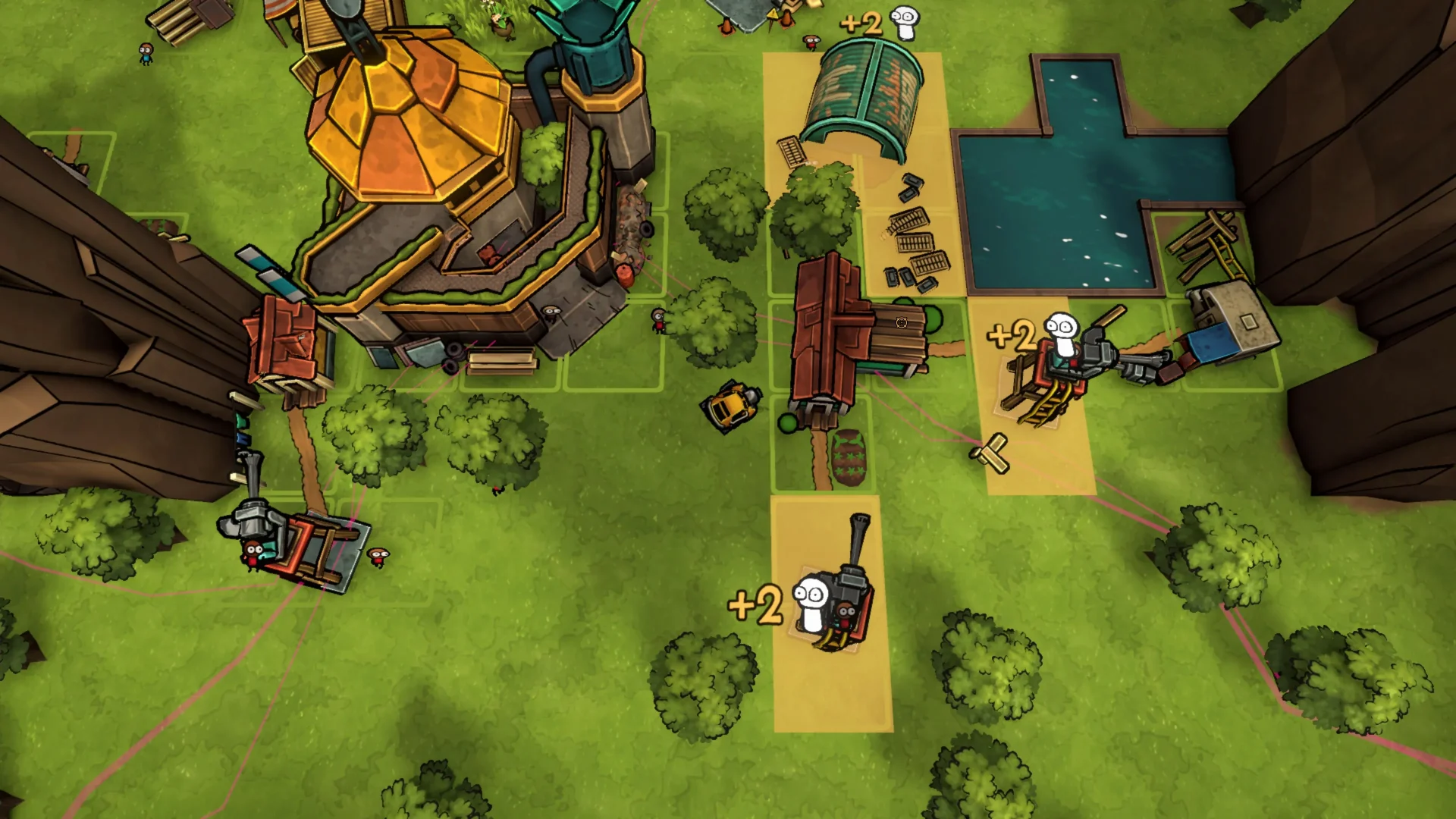
Indie developers Ashley Peter and Adam deGrandis have released their latest creation, Ash & Adam’s Existential Treads, on Steam. The game combines city building mechanics with retro vehicle shooting in what the developers describe as a “post-post-apocalyptic” setting where humanity is ready to rebuild and move forward.
Players take control of a scrappy tank to tear down the remnants of the old world, gathering resources to construct new settlements. The gameplay blends tower defence elements with action sequences as survivors rescued from the wasteland help grow communities whilst defending against attacks from a rogue AI called “the Noise” that previously destroyed civilisation.
Each playthrough offers procedurally generated levels with randomised build orders, ensuring unique experiences. As settlements expand, players witness nature returning to barren landscapes, though constant vigilance remains essential as the hostile AI continues launching waves of attacks against growing communities.
Ash & Adam’s Existential Treads is available now on Steam for £5.49, currently discounted by 30% from its regular price. The game supports PC, Mac, and Steam Deck platforms. More information can be found on the game’s Steam store page.
Frequently Asked Questions
What platforms is Ash & Adam’s Existential Treads available on?
The game is currently available on Steam for PC, Mac, and Steam Deck.
How much does Ash & Adam’s Existential Treads cost?
The game costs $6.99 USD (approximately £5.49) and is currently available with a 30% launch discount.
What type of game is Ash & Adam’s Existential Treads?
It’s a mini action city-builder that combines settlement building, tower defence, and retro vehicle shooting mechanics in a post-apocalyptic setting.
Does Ash & Adam’s Existential Treads have replay value?
Yes, the game features procedural levels and random build orders that make every playthrough unique.
Who developed Ash & Adam’s Existential Treads?
The game was developed by Ash & Adam’s Games, a two-person indie studio comprising Ashley Peter and Adam deGrandis.
A disembodied hand searching for its missing arm might sound like the premise of a horror film, but Super Adventure Hand is taking a decidedly more lighthearted approach. Developer Devm Games and publisher Upscale Studio have announced their physics-based 3D platformer will launch on PlayStation, Xbox, and Nintendo Switch on 8th May 2026.
Players control a detached hand navigating over 50 levels filled with environmental hazards including saw blades, fires, and treacherous terrain. The game promises a unique control system where every finger movement matters as you walk, climb, and crawl through domestic settings and outdoor environments. The story follows a former glove salesman’s hand on a mission to reunite with its best friend, Arm, after a mysterious separation.
Beyond the unconventional protagonist, Super Adventure Hand offers extensive customisation options including manicures, rings, bracelets, and watches. The gameplay expands beyond traditional platforming with vehicular sections featuring tiny cars, toy trucks, and skateboards to navigate through stages.
The game will be available digitally across PlayStation Store, Xbox Store, and Nintendo eShop with full controller optimisation for each platform. With its blend of physics-driven gameplay and absurd humour, Super Adventure Hand appears to be targeting players looking for something genuinely different in the platformer genre.
Frequently Asked Questions
What platforms is Super Adventure Hand available on?
Super Adventure Hand launches on PlayStation 4, PlayStation 5, Xbox One, Xbox Series X|S, and Nintendo Switch.
When does Super Adventure Hand release?
The game officially launches on 8th May 2026 across all announced platforms.
How many levels does Super Adventure Hand have?
The game features over 50 handcrafted levels with diverse environments and physics-based puzzles.
Can you customise your character in Super Adventure Hand?
Yes, players can personalise their hand with various styles including manicures, rings, bracelets, and watches.
Does Super Adventure Hand include vehicle gameplay?
Yes, the game features vehicular sections where players can control skateboards, toy cars, and trucks to navigate through stages.
There is one sound every old-school Star Wars gamer remembers.
Not a lightsaber. Not Vader breathing like he’s just discovered scuba gear. Not even John Williams going full goosebumps mode.
It’s the scream of a podracer engine in Star Wars: Episode I Racer, tearing through Tatooine at a speed that made your CRT television feel unsafe.
Now, with Star Wars: Galactic Racer reportedly lining up for an October 2026 release, it feels like Star Wars racing may finally be getting another proper lap around the galaxy. Star Wars: Gamers recently covered the Galactic Racer leak and possible release date, but the bigger question is more interesting than the date.
What does a modern Star Wars racing game actually need to get right?
And, more dangerously: what if Forza had the Star Wars licence?
Don’t Just Remake Episode I Racer
Let’s start with the obvious ghost in the garage.
Episode I Racer still works because it understood that podracing was not supposed to be elegant. It was fast, loud, dangerous, and built around the idea that small aliens strapped to jet engines was somehow a legitimate sporting format.
But Galactic Racer cannot simply be Episode I Racer with modern lighting and shinier dust.
That would be fun for about ten minutes. Then the nostalgia would wear off, and we’d be left asking why this galaxy of speeders, swoops, repulsorcraft, scavenged engines and criminally unsafe vehicles had been reduced to one idea from 1999.
Podracing should be there. Of course it should. But it should not be the whole game.
Super Bombad Racing: The Weird Cousin We Need to Mention
Then there is Super Bombad Racing.
Yes. That one.
The Star Wars kart racer where everyone looked like they had been inflated by a mischievous toy company executive. It was strange, silly, and absolutely not the grand blueprint for a modern racer.
But it is useful.
Why? Because it reminds us that Star Wars racing has never been one clean, serious thing. It has been arcade cabinets, podracers, party racing, speeder bikes, minigames, and odd little ideas that should not work but somehow became part of the wider gaming furniture.
That matters. A new Star Wars racer should not be afraid of being a bit weird.
This is a galaxy with Hutts, bounty hunters, smugglers, rich Core World idiots, Outer Rim death traps and mechanics who definitely do not follow safety regulations. A racing game that treats all of that too respectfully is missing the point.
The Forza Lesson: Make the Vehicles Matter
The Forza comparison is not about realism.
Star Wars has never cared about realism. This is a universe where spaceships bank in vacuum because it looks cool, and half the machinery appears to be repaired by hitting it with a wrench while shouting.
What Forza understands is ownership.
Cars matter because they feel specific. They have weight, history, performance, handling, upgrades and personality. GamingDebugged’s own Best Xbox Series X Games 2026 roundup highlights Forza Motorsport as a technical showcase, but the secret is not just shiny paint. It is that the game makes you care about the machine.
That is what Galactic Racer needs.
Give us podracers that feel terrifying on straights but fragile in corners. Swoop bikes that are twitchy, fast and stupidly dangerous. Heavier repulsor racers that handle like muscle cars from another galaxy. Old Imperial surplus machines modified by criminals. Junkyard nightmares that somehow win because the pilot knows every shortcut.
The player should not just pick a vehicle.
They should fall in love with a bad decision on engines.
Planets Should Change How You Race
A Star Wars track should never feel like a neutral loop with themed wallpaper.
Tatooine should punish visibility and control. Endor should be tight, fast and tree-shaped in all the worst ways. Coruscant should be vertical, neon and arrogant. Mustafar should feel like a track designer was personally angry with you.
This is where a modern Star Wars racer can become something more than fan service.
The planets should affect how you drive. Sand, ice, cities, forests, industrial zones, traffic, weather, hazards, shortcuts and moving machinery should all matter. If a course is set on Nar Shaddaa, it should feel crowded, dirty and probably illegal. If it is set in the Outer Rim, you should assume the organisers have skipped at least twelve safety inspections.
GamingDebugged has covered plenty of racing-adjacent fun before, including 15 multi-platform racing games you have got to play, and the best racers always understand one thing: the track is not just where the game happens. It is part of the game’s personality.
Give It a Career, Not Just Cups
If Galactic Racer wants to last, it needs structure.
Not a giant open-world checklist for the sake of it. Just a proper career mode with rival pilots, better parts, shady sponsors, tournaments, vehicle classes and that lovely feeling of starting with scrap and ending with something dangerous enough to make a Hutt investor smile.
The best version of this game would treat racing as a culture inside Star Wars.
Who funds it? Who cheats? Who watches? Who builds the vehicles? Who fixes them after a crash? Who is secretly working for a syndicate? Who is just there because they are very, very bad at making sensible life choices?
That is where the licence becomes exciting.
Not just “remember this planet?” Not just “remember this alien?” But a believable racing scene inside the galaxy.
Multiplayer Needs Chaos, Not Homework
Modern racers live longer when people have reasons to come back.
That does not mean turning Galactic Racer into a grindy seasonal obligation. Nobody wants to log in and feel like they have a second job polishing a landspeeder.
But online tournaments, custom lobbies, leaderboards, silly event modes, rival challenges and community time trials would all make sense here.
Star Wars fans will absolutely argue about whether one podracer build is overpowered, whether speeder bikes are broken on forest tracks, and whether some disgusting Outer Rim engine setup should be banned.
Good.
That is how you know people care.
The Hard Part: Make It Feel Like Star Wars
The real trick is not adding Star Wars things.
That part is easy. Put in familiar planets, a few species, some music cues, maybe a Hutt yelling at someone. Job done, right?
Not quite.
The best Star Wars games understand the feeling behind the setting. X-Wing made you feel like a pilot. Knights of the Old Republic made you feel like a legend being assembled one bad decision at a time. Episode I Racer made podracing feel like the galaxy’s most irresponsible sport.
Galactic Racer needs that same confidence.
It should not simply ask: do you remember podracing?
It should ask: what would speed culture look like in Star Wars?
If the answer involves illegal upgrades, dangerous tracks, rival pilots, strange vehicles, criminal sponsors and one machine that looks like it was welded together during a cantina argument, then we may be onto something.
Because if Forza had the Star Wars licence, the dream would not be realism.
It would be care. Structure. Progression. Obsession. A garage full of vehicles you probably should not be allowed to drive.
I was fifteen when I first played Resident Evil, sat on the floor of my best mate’s bedroom with the curtains drawn and the volume up too loud. The dogs came through the corridor window somewhere around midnight, and I genuinely shouted so loud his dad came upstairs to check on us. That was 1996. Nearly thirty years later, I’ve played every mainline entry, survived every remake, endured every misstep, and watched Capcom nearly destroy and then spectacularly resurrect the franchise I love most. This is every Resident Evil game ranked from worst to best — not a popularity contest, but a genuine verdict from someone who’s been here since the Spencer Mansion and doesn’t plan on leaving.
A note on scope: I’m covering mainline numbered entries, the remakes, Code Veronica, and the Revelations games. No Chronicles rail shooters, no Operation Raccoon City, no Umbrella Corps. Some things are better left in the quarantine zone.
Every franchise has its low points. Resident Evil’s were lower than most, and nearly cost us the series entirely.
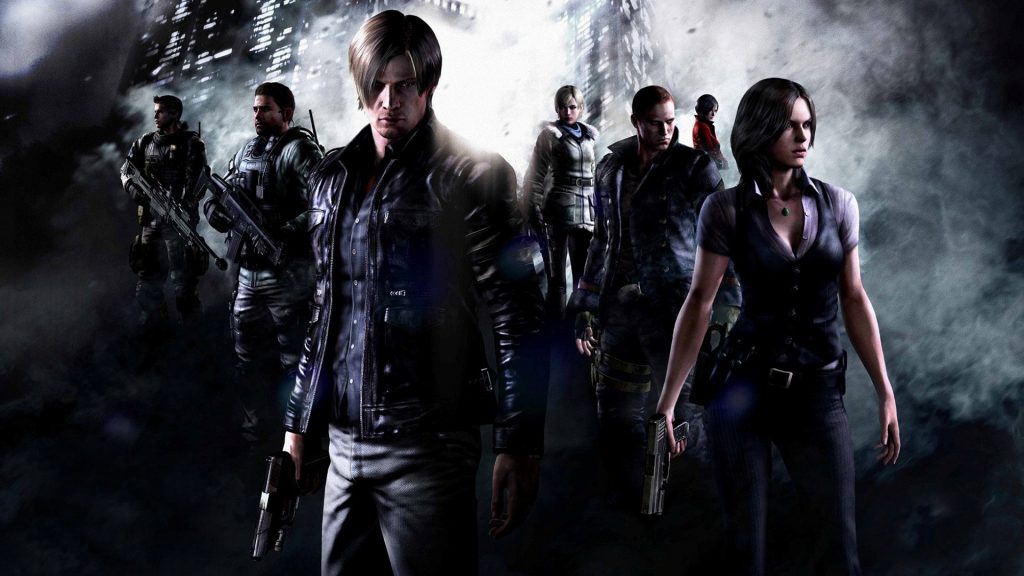
16. Resident Evil 6 (2012) — The game that tried to be everything and succeeded at almost nothing. Four campaigns, three different gameplay styles, QTEs plastered over every set piece, and a tone that lurched from survival horror to Michael Bay action movie without warning. Leon’s campaign had moments of genuine atmosphere, but they were buried under Chris’s cover-shooting slog and Jake’s insufferable chase sequences. This is how RE6 almost killed the franchise, and it’s a miracle Capcom recovered.
15. Resident Evil: Revelations 2 (2015) — Released episodically for reasons that benefited nobody, with a budget that showed in every muddy texture and recycled corridor. Claire and Barry’s return should have been a bigger deal, but the raid mode carried more weight than the campaign. Functional, occasionally tense, but thoroughly forgettable.
14. Resident Evil 0 (2002) — A prequel nobody asked for, with a partner-swapping mechanic that sounded clever on paper and played out as tedious inventory management across two characters. Rebecca and Billy had zero chemistry, the leech villain was laughable, and dropping the item boxes for a floor-littering system was a genuinely baffling decision. Pretty to look at, painful to play.
13. Resident Evil 5 (2009) — Sheva Alomar deserved a better game. The African setting was visually striking but narratively clumsy, the co-op was fun with a friend but miserable with AI, and the boulder-punching scene became a meme for good reason. It sold extraordinarily well, which probably delayed Capcom’s course correction by several years. The Mercenaries mode was excellent, though, and nearly redeems the whole thing.
The Middle Ground
Good games, some of them very good, but each carrying enough baggage to keep them out of the upper tier.
12. Resident Evil: Revelations (2012) — Originally a 3DS game, and it showed in the cramped environments and simplified mechanics. But the Queen Zenobia cruise ship was a strong setting, the pacing was solid, and it proved — right when the series needed it most — that Capcom hadn’t forgotten how to do atmosphere. The episodic structure worked well here, giving each chapter a TV-show cliffhanger quality.
11. Resident Evil: Code Veronica (2000) — The true sequel to RE2, released on Dreamcast and then PS2 while the numbered entries went elsewhere. Claire in a gothic European facility, the Ashford twins being gloriously unhinged, and a difficulty spike in the second half that punished anyone who’d wasted ammo early. Flawed but ambitious, and the story ties together more franchise threads than any other single entry.
10. Resident Evil 3: Nemesis (1999) — Nemesis himself was terrifying — a relentless, mutating pursuer who could follow you through doors and show up when you least expected it. The rest of the game was shorter and less inventive than RE2, leaning heavily on action and the dodge mechanic. Brilliant monster, good game, slightly disappointing sequel.
9. Resident Evil 3 Remake (2020) — A gorgeous, streamlined reimagining that cut a worrying amount of content from the original. The clocktower section was gutted, the branching paths were gone, and the whole thing was over in five hours. What remained was polished and intense, but it felt like half a game sold at full price. Nemesis was spectacular in the early stages, then became a scripted set piece too often.
8. Resident Evil Village (2021) — RE8 swung wildly between gothic horror, action romp, and psychological terror, and somehow held together through sheer confidence. Lady Dimitrescu’s castle was a highlight, House Beneviento was genuinely unsettling, and the Lycans brought a frantic energy the series hadn’t seen before. The factory section dragged, and the story went full soap opera, but the ride was never boring.
The Strong Contenders
These are the games where everything clicks — where Capcom’s design instincts, horror craft, and mechanical polish come together into something properly special.
7. Resident Evil (1996) — The original. Fixed cameras, tank controls, limited saves via ink ribbons, and a haunted mansion full of zombies, hunters, and one very hungry snake. The live-action intro was atrocious, the voice acting was legendary for all the wrong reasons, and the atmosphere was absolutely untouchable. It invented a genre. Nothing else on this list exists without it.
6. Resident Evil 7: Biohazard (2017) — The game that saved the franchise. First-person, a Louisiana bayou setting, and the Baker family — one of the most memorable villain groups in horror gaming. The first half is a masterpiece of tension, the VR version is the most frightening thing I’ve ever experienced in gaming, and Capcom proved they could completely reinvent Resident Evil without losing its soul. The back third dips into familiar bioweapon territory, but by then, the goodwill is banked.
5. Resident Evil 2 (1998) — Leon and Claire’s nightmare through the Raccoon City Police Department, with its dual-scenario structure, the Tyrant stalking you through corridors, and an atmosphere so thick you could choke on it. The A/B scenario system gave it enormous replay value, and the RPD station is one of the greatest game environments ever designed. A desert island PS1 game for me, no question.
4. Resident Evil Remake (2002) — The GameCube reimagining that proved remakes could surpass originals. The crimson head mechanic — burn your zombies or they come back faster and angrier — added a layer of resource management that transformed the entire experience. Lisa Trevor was a tragic, terrifying addition, and the pre-rendered backgrounds are still some of the most beautiful visuals in horror gaming. The definitive version of the Spencer Mansion.
The Best of the Best
Three games. Three absolute titans. Arguing over the order is half the fun.
3. Resident Evil 2 Remake (2019) — Capcom took one of the greatest horror games ever made and rebuilt it from scratch with the RE Engine, modern controls, and Mr. X as an ever-present stalking threat that turned every corridor into a risk assessment. The RPD station was reimagined with loving detail, the gore was visceral, and the tension was relentless. It’s the game that proved Capcom’s remake strategy wasn’t just viable — it was the future of the franchise.
2. Resident Evil 4 (2005) — The game that reinvented third-person action. The over-the-shoulder camera, the village siege, the Ganados, the merchant, the attache case inventory, Ashley’s escort sections that somehow didn’t ruin everything… Shinji Mikami threw out the rule book and wrote a new one that the entire industry photocopied. It’s less scary than the earlier games, but it’s one of the most perfectly paced action games ever made, and the Mercenaries mode is endlessly replayable.
1. Resident Evil 4 Remake (2023) — The impossible remake. Taking a game widely considered one of the greatest ever made and somehow improving it in nearly every conceivable way. The combat is weightier, the parry system adds depth, Ashley is a genuine character instead of a liability, the horror is dialled back up, and the Krauser knife fight is one of the most exhilarating boss encounters in modern gaming. Capcom at the absolute peak of their craft. If you only play one Resident Evil game, play this one. If you play two, play this and the RE2 Remake. If you play three… honestly, just play them all.
Special Mention:
Resident Evil Requiem
Resident Evil Requiem is widely regarded as a strong entry in the franchise, praised for its blend of survival horror and action, compelling characters, and polished gameplay. As I am yet to play it (it’s on the list) I didn’t include it… yet!
The Resident Evil franchise has had more deaths and resurrections than its own cast of characters. It’s stumbled badly, reinvented itself twice, and in 2026 stands as arguably the strongest it’s ever been. Whether you’re a survival horror purist who misses ink ribbons and fixed cameras, or a newcomer drawn in by the remakes, there’s never been a better time to work through this catalogue. If you’re hungry for more horror, our round-up of the best horror games of 2024-2025 covers what else is out there… but Resident Evil still wears the crown.
Frequently asked questions
What is the best Resident Evil game?
Resident Evil 4 Remake (2023) is our top pick. It took a game already considered one of the greatest ever made and improved it in almost every area — combat, story, pacing, and horror. The RE2 Remake is a very close second and the better choice if you prefer pure survival horror over action.
What order should I play the Resident Evil games?
For newcomers, we recommend release order of the modern remakes: RE2 Remake, RE3 Remake, RE4 Remake, then RE7, RE8 Village, and the RE1 Remake. This gives you the best gameplay experience while broadly following the story. Chronological order (RE0, RE1, RE2, RE3, etc.) is only for dedicated fans on a second run.
Is Resident Evil 4 Remake better than the original?
Yes, in our view. The original RE4 was revolutionary for its time, but the remake improves the combat, makes Ashley a proper character, restores horror elements the original lacked, and refines the pacing. The original still has its charms — the campy tone, the merchant’s iconic lines — but the remake is the definitive version.
Why is Resident Evil 6 considered bad?
RE6 tried to please everyone and pleased almost nobody. It split into four campaigns across different genres — survival horror, cover shooter, action brawler — and none of them were executed well enough. The QTEs were excessive, the story was convoluted, and the game abandoned the tension and resource management that define the series at its best.
Will there be a Resident Evil 9?
Capcom has not officially announced RE9 as of April 2026, but multiple credible reports suggest it is in active development. Given the commercial and critical success of the recent remakes and RE Village, a new mainline entry seems all but certain. Whether it continues the Winters saga or starts fresh remains to be seen.
Are the original PS1 Resident Evil games worth playing today?
Absolutely, with caveats. The fixed camera angles and tank controls take adjustment if you’re coming from modern games, but the atmosphere, puzzle design, and tension hold up remarkably well. The RE1 Remake (GameCube/HD Remaster) is the best way to experience the first game. RE2 and RE3 originals are worth playing after the remakes if you want to see what changed.
What is the scariest Resident Evil game?
Resident Evil 7 in VR is the most terrifying experience in the franchise, full stop. Without VR, the RE1 Remake and RE2 Remake are the scariest — the fixed cameras and tight corridors of the original, and the relentless Mr. X of the remake, create sustained dread that the more action-oriented entries can’t match.
Balatro has exploded in popularity since its release in 2024, introducing new players to the world of roguelike deckbuilders. Even the best poker players have been humbled by Balatro, where the strongest hand isn't always the winning hand.
I admit, I was not good at this game when it was released. Nevertheless, I persisted, and it took over a year to master the game. I will give credit where credit is due; my partner watched hundreds of hours of Balatro University (I watched maybe 10 hours, haha), and passed the knowledge on to me. Today, I collaborated with him to pass the knowledge on to you.
C++, or Completionist Plus Plus, is the flair you earn yourself once you have a gold seal on every deck and every Joker. It took a lot of time and patience, but it wasn’t extremely difficult. These tips will help you earn your C++ badge of honor or get closer to NanInf (the maximum displayable score). Let’s get started.
Unlock Every Deck and Every Joker
To have access to the most powerful decks and Jokers, you must unlock them. This is a good chance to become familiar with each deck. Some of the locked Jokers are the most powerful in the game; they will be necessary. Head to your collection and click on a Joker with the lock symbol to reveal the unlock requirement. I look at a few conditions and try to get a couple in one run, but sometimes you have to dedicate the entire run to an unlock condition.
Source: Author.
"Discard 5 Jacks at the same time" or "Play a hand that contains four 7 of clubs" may be a run focused solely on that challenge.
Money is Everything - Obtain a Money or Value Joker ASAP
Want a chance at the best Jokers, vouchers, and tarot cards? Well, you'll need money. You'll need to be able to re-roll often. Get a passive money Joker like Golden Joker, or take a money scaling Joker like Rocket, To The Moon, or Satellite. The most powerful money cards will be those you can exploit to make money multiple times per round, like Reserve Parking and Business Card.
Source: Author (created in Figma). Money Jokers.
Another option is a value Joker, specifically Cartomancer. This Joker gives you one tarot card per blind (two if you use Blueprint to copy it). Each tarot card has a chance to pop Temperance or The Hermit for money, or you can sell ones you don't find useful.
Source: Author.
Set Up the Trifecta
Right from the first booster pack you open, you must look for chips and +Mult. Do not worry about X-Mult until you have the chips and +Mult, because it won't have anything to multiply. Grab Blue Joker and Misprint, perfectly fine Jokers for the first few antes. Once you have your chips (blue) and +Mult (red), then you can worry about your X-Mult. Then the trifecta will be complete, and you will just be swapping out better Jokers from here.
Source: Author. X-Mult Driver's License to the Very Right.
Put Your Jokers and Hand in the Correct Order
Once the trifecta has been established, make sure your Jokers are in order. This is math after all, and the X-Mult must be on the very right since they are triggered left to right. Many new players do not order them or fail to realize they can be moved.
The same goes for your hand; If you have Hanging Chad, the power card goes first (lucky, red seal, or glass). Make the math work in your favor.
Source: Author. Red seal glass goes first because of Hanging Chad. Then the two normal cards. Then ended with a glass for x2. This is the correct order of cards.
Become Familiar with Scaling Jokers
Scaling Jokers are those that grow in power with your run, as long as you meet the condition. Some favorites are Supernova, Green Joker, Ride the Bus, and Spare Trousers. If these appear early, grab them- you may have to alter your hand or strategy around these Jokers. For instance, Green Joker is ideal for a high card or a pair run. With Ride the Bus, you may need to thin your deck and remove face cards.
Source: Author (Created in Figma). Scaling +Mult to Grab Early.
These ARE NOT good Jokers to grab late in the run; They need to build +Mult, therefore I wouldn't take them past ante 4 or 5.
You have a little more wiggle room on X-Mult, but the same rule applies; start building as early as possible.
Source: Author (Created in Figma). Scaling X-Mult.
Master High Card and Pair Runs
The most powerful hands in the game, especially if trying for NanInf, are high cards and pairs. To easily pass the gold stake, you need hands with a low fail rate to draw, and a hand that can make boss blinds obsolete.
The high card and pair are what you use to power up scaling Jokers and spam for your money Joker. For example, if you have 4 hands, 3 of those hands will go to raising a scaling Joker (like Green Joker) or exploiting money, then play a final winning hand. This can be tricky if your math is off, winning too quickly, or losing entirely.
Now obviously you cannot win early antes with a high card or pair, so you will use these to power up money and +Mult, then transition fully to them in later antes.
Avoid Straights and Flushes
Many people fall into the trap of straights and flushes. They seem tempting, but you want to avoid hands where you are constantly discarding to draw your 5th card. The first few antes are the only time you should play these hands.
Flushes scale slower in the late game, falling behind 3-of-a-kind and straights. Straights will have you sweating as you draw over and over for that gutshot on ante 7.
But if you want a hand that is more fun than pairs and high cards, it is much more strategic to transform cards and go for 4-of-a-kind, a powerful alternative later in the game.
Source: Author. Four of a Kind is a good alternative if high card and pairs are too boring. Note: Because I have Hanging Chad, the red seal goes in front.
This voucher seems risky on the surface: lose a hand or discard to go back one ante. But knowing when to go back in time will save your run. If you are barely squeaking by and still searching for the third Joker in your trifecta, lowering the stakes may be what you need to progress. Mathematically, you are extending your game by about 12.5%, which is pretty significant. If you use both vouchers, then you've extended the game 25% (of the original size).
I thought this card was useless at first, but sometimes you need more time to find the right Joker or get more money. The bottom line is, more scaling, more money, more Jokers, more planet cards, and more deck manipulation
Source: Author.
Think Outside the Box with Blueprint and Brainstorm
Copy your mult and chips? Sure. But what if you copied burglar and had 10 hands. What if you placed Blueprint to the left of Space Joker or Burnt Joker for the chance to upgrade your hand two levels? Use them on DNA to create a card-making machine? Or use either one to copy Reserved Parking, for the chance of double-digit money returns rather than single?
Source: Author (Created in Figma). Have a Great Card? Now Three Great Cards.Source: Author (Created in Figma). Each Discard is $15 Instead of $5Source: Author (Created in Figma). Using This With a Planet Card or Temperance is the Way
Move your Jokers around. That's why you play high cards and pairs; you do not need to search for a hand, you have the winning hand, and can play around with your Jokers. Exploit Blueprint and Brainstorm for money, hands, cards, and poker hand levels. Then, when you're ready to win, move these into the proper order for scoring.
Source: Author. Before the blind starts, Burglar goes on the very left- this gave me 12 hands. Then Baron is moved to left for scoring.
Sicko Mode
If you implement the above and want to score into exponents, you'll need to understand power hands and use Plasma Deck.
Source: Author (Created in Figma). Steel Kings with a Red Seal for NanInf.
Understand Power Hands
As wonderful and unique as this game is, unfortunately, there are only a few big-hitter power hands, and it's all about the re-trigger.
Source: Author (Created in Figma).
Start early to convert your cards to Kings. DNA and Blueprint are crucial, along with the tarot card Death and the spectral card Cryptid. You will want to start copying Kings once you have a steal or gold red seal King.
Source: Author. Red Seal King Conversion.
Use Plasma Deck for Big Numbers
Plasma Deck balances chips and mult. Since chips always outweigh the mult early in the game, you focus on chips first. The strategy is to go hard on chips and level your poker hand, then transition to power hands with high re-triggers. You can eventually replace your chip Jokers with retrigger Jokers (think Mime, Baron, Hanging Chad, Photograph, Blueprint, Brainstorm, etc.).
Plasma Deck is the only deck where the first ante is very easy to win: because chips are higher on flushes, you can play a flush here and save money for solid long-term Jokers rather than wasting money on purely surviving. Then transition to your pairs.
Source: Author.
The most important part of all this is to have fun and try different combinations. This game never gets old, even after two years of playing. I will start a new save, do the challenges, and collect the Jokers again; no two runs are ever the same. Watch Balatro University and practice your first NanInf run, or start collecting those gold seals!
Welcome to SUPERJUMP's annual Games of the Year celebration.As always, I like to introduce these awards by expressing gratitude for the year gone by.
Thank you game developers. You are creating marvels of art and science - important cultural artifacts - under increasingly difficult circumstances. Whether you work for a large studio or you're a solo developer: thank you. We continue to live in an increasingly turbulent and intolerant world; your creative talents not only give many of us a brief escape from this reality, but importantly, you remind us of the importance of human creativity and connection.
Thank you SUPERJUMP team. It is truly the honour of my life to work with so many extremely talented people who, aside from being brilliant creative minds, are also truly outstanding human beings. Our organisation is fuelled by talent, passion, and love: love for video games, love for the people who make them, and love for each other as friends and colleagues.
Thank you special guests. We are joined every year by special guests from across the games industry - whether game development/publishing or media - who give up their time to craft GOTY reflections to share with our audience.
Thank you to our Backers. Our ability to create that authors' coop environment is heavily influenced by our incredible Backers. Thanks to you, we are able to pay authors every single month. And thanks to you, we have avoided any need to gate our work behind pesky paywalls. On behalf of the entire team, I want to thank you for believing in us and supporting our hard work.
Thank you to our Editors. Without our brilliant Editors, I couldn't keep this publication humming so smoothly. They also contribute an enormous amount of their time to edit this unbelievably large Games of the Year feature every single year. Thank you to Bryan, Rachel, Briana, and Cat. You are true superstars!
We are purveyors of wonder, imagination, and insight from the world of video games.
Finally, I'd like to make one final point, just in case there is any doubt: at SUPERJUMP, we believe video games are for everyone. Everyone. Everybody deserves dignity, respect, and - above all - safety. No exceptions. Nobody left behind.
And now, on with the show. Please enjoy this extraordinary and comprehensive celebration of 2025's best video games. And if you like what we're doing, how about buying us a coffee?
We have very deliberately titled this feature 2025 Games of the Year. The plural matters. As per our tradition, SUPERJUMP does not award an overall “Game of the Year” trophy to any single game.
Rather, each contributor can select up to three of their favourite games released in 2025 to discuss. Naturally, some games have more contributions than others (so, if you like, you could deduce a “winner” on that basis).
In order for a game to be considered for this piece, it must have been released in 2025. This is a slightly rubbery criterion that also includes:
Games as a service experiences that have seen substantial updates in 2025.
Games that originally released in a previous year but were ported to a new platform this year or saw some form of new release.
SPECIAL GUESTS
This is our fifth Games of the Year feature, and as has become tradition, we've invited several special guests to join us. As always, our guests are people we love and admire from around the games industry. We're honoured that they took the time to join us in celebrating the best games of 2025.
Daryl Baxter
Naomi Jackson
James O'Connor
Amy Potter-Jarman
Nate Shearer
Jörg Tittel
Daryl Baxteris a writer, author, and podcaster. He is the author of three books (The Making of Tomb Raider, 50 Years of Boss Fights, and The Making of Tomb Raider: 1997 - 2000), and is a prolific tech and gaming journalist.
Naomi Jackson is a video editor and online presenter/community builder. In addition to editing national and international stories for the ABC Australia network desk, Naomi is a producer/podcast host at SIFTER and a video editor here at SUPERJUMP.
James O'Connor is a multi-award-winning author and narrative designer. His contributions to video game journalism are extensive (including a wide range of print publications from Edge and Hyper to IGN, GameSpot, and Game Informer among many others). James has also contributed to multiple video games as script editor, narrative lead, and narrative designer (including Power Rangers Mighty Force, Ava's Manor, and Kulebra and the Souls of Limbo). James' latest book project is about the making of Untitled Goose Game (check it out here).
Amy Potter-Jarman is the Director of Marketing at Synty Studios. She is the creative force behind Frosty Games Fest (a digital showcase of games made in Australia and Aotearoa, NZ), buzzbang.co (a boutique marketing service supporting ANZ indie game makers), and Pixel Explorers Club (a digital community for curious, short indie game lovers).
Nate Shearer is a video game journalist. He is a regular contributor to Qualbert (specialising in a wide range of game reviews) and NextPlay (crafting diverse stories from news and interviews to reviews and special features).
Jörg Tittel is a director, writer, producer, and publisher working across video games and film. He is the Founder and Creative Director of RapidEyeMovers, the studio behind the Golden Joystick-nominated C-Smash VRS. He is also the creative mind behind The Last Worker, and Skew.
THE GAMES
Presented in alphabetical order (this is not a ranking).
On a personal level, I’ll say this about 9 Kings: This is the first time I've followed a game throughout its Early Access period, putting each individual update through its paces. It was worth the effort.
9 Kings is a simple concept at heart, but one that provides a diverse wealth of content. With its hour-long, city builder meets turn-based tactics mechanics, it’s a game riding the quick strategy trend. However, while most of those games are rigidly recreating 4X gameplay in a smaller package, 9 Kings offers a gameplay loop designed from the ground up with the busy strategy fan in mind. As such, it outmaneuvers its competition and stands out by a clear mile.
9 Kings isn’t merely a good example of a burgeoning sub-genre —it’s something much closer to Slay the Spire, pushing out into brand new territory. It’s an ever-evolving game full of little surprises and details, and a must-have for anyone with an interest in strategy.
Afterlove EP. Source: Press Kit.
"The game's sense of grief feels very real, and its cartoony rendering of Jakarta is lovely."
I've decided to use my submissions in this list to point towards some games that have, in my mind, been underrepresented on end-of-year round-up lists, and Afterlove EP is a game that I have a deep fondness for. It follows a young man, Rama, who lost his girlfriend Cinta a year ago.
As the game opens, he starts to figure out how to pick up the pieces of his life and carry on. He needs to reunite with his band, attend therapy sessions, and decide whether or not he's ready to date again. How the game ends will depend on your actions and choices. It's a lovely and heartfelt experience that was created in the wake of the team's own loss: creative director Mohammad Fahmi died in the middle of development.
The game's sense of grief feels very real, and its cartoony rendering of Jakarta is lovely. It's not a perfectly tight experience, but in some ways that makes it more endearing.
ARC Raiders. Source: Press Kit.
"But for what it's worth, I feel like I'm part of an active, living community, something I haven't felt since Elden Ring."
I know my populist choice for 2025 GOTY might send me straight into SUPERJUMP's purgatory (where game writers like myself are strapped in for the video game equivalent of Clockwork Orange's chair sequence, with footage of Indie Game: The Movie beamed right into our retinas), but I have to go for Arc Raiders, AI-related discourse be damned.
This is an extraction shooter that has my favorite bits of Hunt: Showdown, including sound design, that crunchy gun feeling, and an infinite pool of adrenaline. It shares the post-apocalyptic horror/tension of The Last of Us (played out in real-time, no script!), with enough No Country for Old Men bullets-whizzing-past-your-head moments (while being chased for dear life) to sustain Coen-heads like myself through this cold winter.
However, no matter how good the mechanics and those ray-traced sunsets in Buried City are, the real star of Arc Raiders is the proximity chat. You can talk your way out of being turned into Swiss cheese or thank a random stranger for deciding to revive you after shooting you from a mile away (and turning you into their pet monkey). You can trash-talk a team of three when being cornered while knowing the chances of survival are Prosciutto-slice slim.
Listen, I played a lot of great games in 2025 – Silksong, Total Chaos, Clair Obscur, Baby Steps – but none of them felt as refreshing as this cyberpunk-dystopian extraction shooter where people either team up against deadly robots or shoot each other Wild West style for a lemon or two and a dog leash. Sure, Arc Raiders doesn't exactly shovel a great deal of matter into the tube marked "Evidence for Video Games’ Potential as capital-A art." But for what it's worth, I feel like I'm part of an active, living community, something I haven't felt since Elden Ring. And for that alone, this game gets my GOTY lemon.
And Roger. Source: Press Kit.
"And Roger is an unmissable example of the power of video games."
One thing about me is I love a one-sitting game experience. This is a game I strongly believe is best played with as little prior knowledge as possible, so I will keep this brief. If you’re interested in an emotionally resonant game, with a beautiful two-tone, hand-drawn aesthetic, that packs an enormous narrative punch into its short 1 hour runtime, And Roger is an unmissable example of the power of video games.
Baby Steps. Source: Press Kit.
"The dialogue and sound are hilarious - it’s all so wonderfully cruel and strangely affecting - there’s simply no other game like it..."
Developed by indie greats Bennett Foddy (QWOP, Getting Over It) Gabe Cuzzillo (Ape Out) and friends, I like to describe Baby Steps as Daft Stranding.
In this game, all you have to do is control a hapless loser’s legs and feet and make it up a sprawling mountain full of increasingly insane challenges.
The dialogue and sound are hilarious - it’s all so wonderfully cruel and strangely affecting - there’s simply no other game like it and the less I spoil here, the better.
Though the game came out in 2024, the community has absolutely exploded in 2025, unveiling collaborations with other popular titles like Don't Starve, Among Us, Stardew Valley, and even The Witcher 3! I became absolutely addicted; I now have the game on three different platforms, and I wouldn't have it any other way.
BallisticNG. Source: Press Kit.
"BallisticNG feels like both a love letter and a fully realised game in its own right."
In 2025, BallisticNG finally hit “feature complete” with its last major update, version 1.4. The update delivered a rebuilt physics mode, new ships and tracks, refreshed menus and UI, plus a stack of quality-of-life improvements including stronger modding tools and plenty of under-the-hood polish. More importantly, it marked the game’s final form and cemented it as one of 2025’s standout indies.
Boiled down, BallisticNG is the closest thing we have to a modern re-imagining of the classic PS1-era Wipeout series. It’s an anti-gravity racer that understands what made those original games so special: bold iconography, angular ship design, ridiculous speed, intense combat, razor-thin racing lines, and super satisfying airbrakes that let you carve through twisting hairpins and chicanes.
I still love Wipeout 3: Special Edition on the PS1, and I’ll drop back in anytime I need that hit of nostalgia and adrenaline. BallisticNG is the modern, fan-made follow-up to those late-90s classics that defined the genre. It nails the floaty rhythm that feels like surfing on magnets, where every mistake gets punished and you’ll lap a track so many times your left thumb starts to hurt.
First released in 2018 and refined over the past seven years, there’s a huge amount of accumulated content on offer too. Most ridiculous is the sheer number of tracks, with the quality matching the quantity. They’re gorgeous and varied, packed with smart lines, cheeky shortcuts and weapon placement that keeps every lap feeling fresh.
And when the speed classes get truly unhinged, the game stays smooth and responsive, letting you lock into the music and hit that tunnel-vision flow state. With the 2025 update putting the final polish on the whole package, BallisticNG feels like both a love letter and a fully realised game in its own right. It is easily one of this year’s best racers.
Blue Prince. Source: Press Kit.
"The game is a nesting doll of mysteries. You think you figure things out, at first, and then something surprises you on the next run."
The subtle double meaning behind the name of this game captures its charm perfectly. In 2025 this game had me intrigued, entranced and utterly, hopelessly absorbed.
The simple controls, muted colours and faint, elegant music rightfully allow Blue Prince's spectacular story to take precedence as the mystery of Mt Holly and its previous inhabitants worms its way into my brain where it re-emerges long after I step away, beckoning me back to explore its halls once more.
After raving about this incredible puzzle game I was reviewing early last year, I somehow managed to convince my partner to play it. After sitting down next to her and talking her through the basics of the game, I went completely hands off, not wanting to spoil the experience. It was magical to see the things that sparked so much joy in me a month prior were also beginning to electrify her mind in the same exact way.
The game is so subtly moreish and well designed that I don’t share a love of video games with Chloe, so to see her get home from work each day and practically jump right back into my world was so important to me. For weeks on end, I got to share the thing I love most in the world with the person I love most in the world. Blue Prince was my GOTY for 2025 not only because of what the game was, but what it gave me.
I used to love puzzle game growing up. Nancy Drew was my go-to, and recently I've taken a keener interest in low-key games that I can play in a few sessions or generally just pick up and put down.
Blue Prince is not that game. I found myself up far too late or playing for far too many hours trying to unlock all of the mysteries of the darned maze-like manor house.
Blue Prince does not, typically, test my patience, as some puzzle games might (and certainly have). It is curious enough in its slipping of secrets to you that I felt like a cat pawing at a new toy. All I wanted to do was figure it out. I've taken a great deal longer to do that than expected, because my tendency to rush the game meant I didn't linger in its many rooms or search for any deeper clues; but as I played, I realized I had to play more thoughtfully.
The game is a nesting doll of mysteries. You think you figure things out, at first, and then something surprises you on the next run. It is a rogue-like, a genre I've only really experienced through Hades, but it is delightfully different in how "just one more" feels too much like I'm in a gambling house.
The number of times I'd say that to myself – "just one more day" – and I'd inevitably wind up playing through 4 more. Each new potential door feels like it might be the one you need, and I don't know how it manages it, but Blue Prince's randomization mechanics and execution of item dispersal and acquisition (being that they reset everyday) makes it more compelling to play.
Clair Obscur: Expedition 33. Source: Press Kit.
"Clair Obscur is, to put it simply, a very important game."
Enough will be said about this game this year by many people, but it really is that fantastic. I'm usually story-aspected when it comes to games, but Clair Obscur's gameplay was one of the reasons I kept coming back. The entire system of timing parries, dodges, and jumps combined elements of action and turn-based gameplay that I, personally, hadn't seen before. I'm often lazy when it comes to games that require "grinding", something I tend to more so associate with turn-based RPGs, but Clair's combat cycle and enemy variation make its battles addictively repayable.
Clair Obscur excels, likewise, in its art direction; its expansive world and general commitment to its core aesthetics create a beautiful, cohesive visual narrative that really is unlike anything out today. Maybe Bioshock? It fills rich, florid environments with sketchpad creations against a haunting backdrop of pseudo-Victorian/Regency iconography. It is breathlessly artful throughout the entire run. There are some levels, such as the musical desert of Sirene, that are so achingly lovely I spent the entire time immersed in the music and the setting to the point of not wanting to progress past it. Sirene, siren: it certainly became its name.
The story, usually my make-or-break when it comes to enjoyment of a game, is lovingly melancholic. The color scheme betrays its mood – dark black, bright gold, deep red – and we are left to start the game on an opening scene that treats tragedy as a surety, nonetheless worth celebration. We play in the beginning as a character – however briefly, just a walk down a crowded, flower-strewn street – who is dead by the end of its opening scene. Clair Obscur is, to put it simply, a very important game.
Consume Me. Source: Steam.
"Since finishing it, I’ve found myself enjoying this hobby of gaming again."
Finishing Consume Me has been one of the most important gaming experiences I’ve had in a long time. Outside of the game’s clever, gamified design of everyday tasks and quirky art, I fell in love with the message of Consume Me. As someone that constantly puts too much on their plate, the game’s depictions of anxiety, societal pressures, and growing into oneself resonated with me on such a deep level.
Consume Me made me introspect more than I had done with any other piece of media last year, smacking me in the face with an ending that had me pondering the futility of stretching myself thin to the point of collapse. Since finishing it, I’ve found myself enjoying this hobby of gaming again. When I find myself beginning to slip, I know I can always revisit that tear-welling ending and reground myself.
It was a delight to play Contract Rush DX this year. You get the joy of a shooting game with a fun story and boss battles that keep you on your toes. Or on the ledge, depending on which contract you have decided to complete. I do wonder how we can be discreet when at least one target has a huge ceremony to attend on television. But discreet we have to be, or our characters don't get paid.
Contract Rush's premise is simple. Times are hard; how do you pay bills when the coffee shop has so few customers? Simple: you assassinate! Use coffee and other cafe items to keep you energized. And you'll need the firepower – portals to hell open up at the wrong time, or you might fail to get the right power-up just when the boss has appeared. Time to load up, hope for the best, and try again if needed. Just watch out for monsters and unwanted witnesses.
Contract Rush DX makes sure to balance a high difficulty level with plenty of alternative strategies and ample ways to practice in the tutorial. It helps that you get multiple lives and checkpoints, so you don't have to go all the way back to the beginning each time a bad fall ends in spikes. Not being penalized makes a huge difference in the fun factor of the play experience.
I adore the gorgeous 2D animation. The game is hand-drawn, and the developers show a unique style that lends well to the gameplay. I fell in love with this world - even through the tutorial level - which decides to get demonic while showing us the ropes.
Death Stranding 2. Source: Press Kit.
"Death Stranding 2 asserts its divisive and impressive storytelling regiment, reminding us that creativity is still possible in gaming's most expensive spaces."
There was a particular moment in Death Stranding 2, as I directed Sam Porter Bridges up a slope in Mexico. The overlarge moon was hanging like a luminescent disc over my destination, my sight artistically directed toward an unfamiliar bunker perched at the top of the ridge. The star-speckled sky oppressed the mountain ridge while Dancing Ghosts by Hania Rani played, and I thought, 'I'm home again.'
Death Stranding 2 accomplished what often seems artistically and mechanically impossible: Death Stranding is an incomparable experience, and somehow the sequel feels both immediately familiar and foreign, a tribute to both technical and creative expertise. Between the forest fires and the monorails and the endless trek through Australia, Death Stranding 2 asserts its divisive and impressive storytelling regiment, reminding us that creativity is still possible in gaming's most expensive spaces. Death Stranding, as a series, continues to not only be an outlet for Kojima's self-indulgence, but irrefutable proof that creative design and cohesive team-oriented development create spectacular experiences that cannot be replicated in any other form of media. Keep on keepin' on.
I never understood the first Death Stranding, despite it being a perfect fit during COVID, due to its delivery system and isolation. But with On the Beach, Kojima sprinkled some action into the mix, complete with a bunch of MGS references, especially at the end. Having become a dad in 2023, several moments hit me hard, which made me understand Sam Porter Bridges' motivations far more than the previous game. It's also a great showcase of the PS5's power, with fantastic landscapes and moments.
Why aren't more big budget games set in Australia? Sure, Death Stranding 2 isn't exactly an accurate depiction of my home country (although to be fair, it's set in a post-apocalyptic future, so it's not attempting any contemporary accuracy), but nevertheless, I think it does capture something about what makes this continent so magical and unique. From the vivid red soil of the outback to the strange liminality of massive pieces of infrastructure ferrying industrial cargo through empty deserts; there's something truly awe-inspiring about Death Stranding 2's depiction of Australia.
But even more importantly - and as Brandon said above - Death Stranding 2 really accomplishes something I didn't think possible: it brings back so many loveable elements from the first game while still ambitiously crafting its own identity that is truly compelling on its own terms. Yes, the emphasis has shifted: Death Stranding 2 assumes you've played the first game, resulting in a gameplay baseline that provides a platform for further expansion. This means there's less emphasis on finding your footing from moment to moment. Now you're delving into far more complex logistics management with much larger payloads and a significantly greater inclusion of combat (which feels so engaging and rewarding in and of itself).
In a world so focused on nostalgia, sequels, and risk aversion, Death Stranding 2 feels like something that really shouldn't exist in the current era (a big budget experience that is unapologetically weird on almost every level and doesn't rely on frequent callbacks from decades ago). But I'm so very glad it does exist. The art form of video games is all the better thanks to this series.
Dispatch. Source: Press Kit.
"I finished the game and immediately wanted to dive in again and see how my choices might play out differently for every character, which really made Dispatch a standout of the year for me."
This game reminded me how much I love the interactive narrative genre, as a worthy spiritual successor to the Telltale Games.
Half the game is dialogue-led story, and half is management style gameplay where you’re assigning a team of superhero misfits to a variety of jobs across an LA-like city. I found myself equally invested in the narrative cut scenes as I was in the management gameplay. I can’t believe how invested I was in playing what was ultimately call center work, but I really had a blast clocking gleefully in for each episode and learning the quirks of each character. And what a cast of ethically questionable super hero characters they are, thanks to the brilliant writing and incredible voice acting!
I’ve been burned by “choices matter” games in the past where decisions that should have been impactful were made to feel inconsequential, and vice versa. But in Dispatch I truly felt like I was building my own version of the protagonist. My choices were clearly played out in crucial narrative arcs, but also in minor interactions. I finished the game and immediately wanted to dive in again and see how my choices might play out differently for every character, which really made Dispatch a standout of the year for me.
As someone who loves games with branching stories that provide choices which can affect your relationships with other characters, I was cautiously optimistic about Dispatch. While I was confident in AdHoc Studio based on their seasoned pedigree, where many of the developers used to work at Telltale, I didn’t know what to expect from the story and gameplay. The idea of a superhero workplace comedy was intriguing to me, even though I wasn’t sure how I felt about the management-sim mechanics, where you choose which hero can compete a given task, like saving people's life's from a natural disaster or stopping a villain.
I was genuinely surprised by how much I enjoyed playing through Dispatch. It even ran well on my Steam Deck with no issues. This game had some of the funniest dialogue that I have heard in a video game, which made me burst out laughing multiple times. The voice cast was outstanding, with each performer given the chance to shine through compelling delivery. Playing as Robert, a disgraced superhero who had to manage a team of former supervillains, was interesting to see. Many of the choices I made felt like I was bonding with my team, as they became friends in my eyes, while I tried to steer them toward heroism and having fun with them as well.
While I have yet to replay Dispatch, I can’t wait to start a new playthrough and see what new decisions I make that could get me to a new ending.
Donkey Kong Bananza. Source: Press Kit.
"If you haven't played Donkey Kong Bananza and you have even a passing interest in 3D platformers, you are absolutely missing out. It's a must-play experience."
As much as I love me some nostalgia, I'm a firm believer that we're currently living through Nintendo's most bold and creative era. The Switch/Switch 2 period has been remarkable in terms of Nintendo's willingness to innovate and push its core franchises much further than ever before.
Donkey Kong Bananza is the latest - and perhaps the best - example of Nintendo's unflinching boldness at the moment. Although nowhere near as commercially successful as Mario in the modern era, Donkey Kong remains Nintendo's original breakout mascot. And with Donkey Kong Bananza, Nintendo didn't just give him a shiny 2020s facelift; they cast aside much of his gameplay history in order to unleash entirely new possibilities. The result is an experience that doesn't feel like an iteration on past Donkey Kong games. It is, rather, a surprising and clever new 3D platformer that dramatically reinterprets the entire genre. Its simple core premise (the ability to almost completely destroy entire levels with DK's fists) is the anchor for an array of cohesive and lovingly-crafted systems that intuitively stack on top of each other in ways that will keep a smile permanently plastered on your face.
If you haven't played Donkey Kong Bananza and you have even a passing interest in 3D platformers, you are absolutely missing out. It's a must-play experience. Donkey Kong - and Pauline in her vibrant and loveable new form - is far from a call to nostalgia here. These characters are now, again, ambassadors of the truly cutting edge as befits their legendary status.
Doom: The Dark Ages. Source: Press Kit.
"Flaws aside, Doom: The Dark Ages’ combat experiment largely succeeds, with the defensive shield confidently rewriting the rules of engagement in a 30-year-old franchise."
This year’s Doom keeps its kills bloody and its firearms ultra-violent. While rapid movement has been a pillar of its predecessors, there’s a different rhythm at play in Doom: The Dark Ages.
One key addition shifts its pacing: the Shield Saw. While Doom: Eternal had you evade enemy projectiles, you now block and parry them. The shield isn’t just a defensive tool; you can throw it to pin large enemies or tear through small ones.
A shield slam lets aggressive players zip toward enemies at incredible speeds. At this distance, crunchy melee weapons tempt you to go Whac-A-Mole on some poor demons. The slower combat loop works remarkably well in The Dark Ages’ larger battlegrounds, which are packed with environmental puzzles and high-density hordes.
Having a shield means you’re pelted with even more bullets, but with a well-timed parry, green projectiles are returned to their senders. Parrying in quick succession felt like boxing bouts more than cross-dimensional demon hunting.
Stepping out of combat is when The Dark Ages’ power fantasy cracks. Tame fistfights with a 30-foot-tall mech and hovering on a dragon to dodge fire from stationary turrets made for dull digressions. Flaws aside, Doom: The Dark Ages’ combat experiment largely succeeds, with the defensive shield confidently rewriting the rules of engagement in a 30-year-old franchise.
Elden Ring Nightreign. Source: Press Kit.
"Gaming studios should be reminded that interesting multiplayer experiences can continue to happen, should companies be brave enough to create something new."
Multiplayer gaming experiences feel fewer and farther between these days for gamers who are not interested in firing a motley of guns or building temporary structures. While FromSoftware has proven itself again and again, there was momentary doubt that the Elden Ring format could be so easily transferred over to a multiplayer, rogue-lite experience.
Endless hiccups and continual updates have marginally improved an experience that, while flawed, has become more than a bonding ritual for my siblings and I throughout 2025. Frustrating, difficult, and sometimes confusing, Nightreign might be a strange pick for Game of the Year, but after spending 200 hours in the game and playing it nearly every evening for months, the ritual has grown into something precious, the sort of experience that we have been woefully unable to find for nearly a decade. Gaming studios should be reminded that interesting multiplayer experiences can continue to happen, should companies be brave enough to create something new.
What do we think? Just one more run?
Expelled! An Overboard Game. Source: Press Kit.
"There are a lot of games built on good and evil, but not many on naughtiness in the way Expelled! is. It's a real delight."
There is perhaps no cooler narrative game studio than Inkle – in terms of both the games they make and the tools they've made available so that other people can also create narrative games. Expelled! is both a continuation and expansion of their previous "Overboard" concept, a reverse who-dunnit where each play session is focused on shifting blame and hiding your actions. It has a series of wicked, extremely fun twists hidden within, and the clockwork nature of the world they've built is truly a joy to poke at. There are a lot of games built on good and evil, but not many on naughtiness in the way Expelled! is. It's a real delight.
Final Fantasy Tactics: The Ivalice Chronicles. Source: Press Kit.
"The performances delivered within are continuously impressive, and made me feel like I was experiencing this well-trodden road for the first time again."
Does a thirty-year-old game deserve a spot on anyone's Game of the Year list? After seeing Final Fantasy Tactics make NPR's list of best games in 2025, it cemented for me what FFT has been for decades: the defining game of its genre.
It would be somewhat strange in any other genre for one game to completely dominate and dictate the good and bad for three decades, but Final Fantasy Tactics has continued to do just that, and with the many impeccable quality of life updates brought upon by the Ivalice Chronicles, it will be the defining version of the game from here on out. Not only is FFT: TIC responsible for bringing new players to this immaculate role-playing game, but it has again reminded gamers young and old that the life of a game is not beholden to launch cycles and updates and popularity contests. Final Fantasy Tactics has something to say, and as Yasumi Matsuno reminded us: "The will to resist is in our hands."
I imagine there existed a rather large club of Final Fantasy fans who trudged through less-than-ideal ways to play Final Fantasy Tactics over the years simply because we love that game. Playing it on an original PlayStation is great, but its aged complexion becomes noticeable, as we’ve grown accustomed to certain quality-of-life standards over time. The mobile version is fine. It works, it’s portable, but my hands and eyes would ache. It works well on a PlayStation 1 emulator, allowing for save states and the ability to fast-forward, but still, a void lingered.
Enter Final Fantasy Tactics: The Ivalice Chronicles, its final Pokemon-esque evolution. The wait was worth it. This game, existing somewhere between a remaster and remake, is just SO damn good. Within its hearty stew of improvements, one ingredient rises to the top: the addition of voice acting. This new creative avenue adds incredible depth to every character, and thus enhances the game's overall storytelling. All the voice actors absolutely crushed their performances. I’ve played FFT a dozen or more times over the years, but only now do I find myself reevaluating characters, including ones I previously wrote off as one-dimensional assholes. I can even empathize with their positions, and more deeply care about characters that I felt were ancillary to the story.
I could sing the praises of the many other improvements all day. It all blends together to create an experience that feels and plays great. Yet I cannot say enough about the voice acting. So many elements contribute towards a game’s narrative design, and the original Final Fantasy Tactics already did a wonderful job with what it had. The performances delivered within are continuously impressive, and made me feel like I was experiencing this well-trodden road for the first time again.
Hades 2. Source: Press Kit.
"I love everything I’ve played from Supergiant Games. You can feel their dedication, passion, and joy for the craft come through in their games."
Back in the original Hades days, I thoroughly devoured every bit of content the game had to offer. Months later I started anew and did it all over again. I wanted more Hades, even though it already provided a veritable smorgasbord of content and replayability. Thankfully, Supergiant felt the same!
There was zero doubt in my mind that Hades 2 would be an incredible game. Supergiant Games knows what they’re doing, and simply does not miss. As I expected, Hades 2 consumed a majority of my gaming hours from the moment of release to the moment I rolled credits.
Hades 2 gives you more, the flavor never fading over the many accrued hours and runs. Instead, it changes and develops as you continue to enjoy it. It makes me think of the everlasting gobstopper from Willy Wonka and the Chocolate Factory; You can likely enjoy this game for just as long! Each run feels unique thanks to the mindbogglingly intricate web of reactive dialogue, and the creative weapons, aspects, and customizations you can give Melinoe. One run can make you laugh, while another may stoke grim determination. One can frustrate you, while another results in you finishing triumphant and glowing with satisfaction.
The writing is phenomenal (of course), and so is the soundtrack (of course). I can give the same exact praise to every single aspect of this game, each with their own “(of course)”. I love everything I’ve played from Supergiant Games. You can feel their dedication, passion, and joy for the craft come through in their games. Some arcane spellwork of ethereal osmosis transmits that love and passion for their games into us, the players.
Hell Is Us. Source: Press Kit.
"...I feel it to be worthy of a mention here due to how uniquely special it set out to be."
There were a few games that had the unfortunate fate of releasing within the same window as Hollow Knight: Silksong. Hell Is Us was one of them, though as a AA game, it fared better than others. Nonetheless, while I believe there were better games in 2025, I feel it to be worthy of a mention here due to how uniquely special it set out to be.
Hell Is Us does not live in one genre alone. At heart, it is an immersive sim. There's no hand-holding in its semi-open world. You are thrown into the fictional nation of Hadea, a war-torn country based on Balkan culture. The atmosphere is bleak, the soundtrack liminal, the energy brooding like a constantly brewing storm on a hot summer day. It is held up by combat that is Souls-ish in style, though it refrains from falling into too many of the Souls genre's pitfalls. There are no RPG systems, really; it uses combat as a means to an end, keeping the game rather well-paced.
At times, it is also a puzzle game. Never a truly difficult one, mind you, but with puzzles along the lines of "comfortable" if nothing else. This works into my biggest lasting memory of Hell Is Us – the tone. The game is gritty and does not avoid the horrors of war when you're exploring. Some towns you'll visit are still burning, while another is still occupied, its civilians hauntingly gone as if vanished into thin air. Creative Director Jonathan Jacques-Belletête was a former Art Director on the Deus Ex series and that influence shines across the board here in what is one of the biggest hidden gems of 2025.
A fantastically challenging, frame-perfect test of technique, this Aussie-made sequel to the popular Hollow Knight has the polish you would expect from a game seven years in the making.
The springy, fast-paced yet methodical nature of the combat will delight and entice you to give it 'just one more try'. This game weaves a web in more ways than one — the intelligent way areas of the deceptive map are hidden adds to the fun of untangling this game's story as if it were a really tight silk knot, while tools and map resources can only be purchased with hard-to-come-by currency that is easy to lose, cleverly forcing hoarders like me to accept and surrender.
My love/hate relationship with this haunted kingdom that's a dream to unlock, but a nightmare as I try to unlock it, grows more and more affectionate every day I dare to play it.
Silksong is my top game of 2025. There’s little I can write that I haven’t already written about its game design. Instead, I offer my experience within the realm of Pharloom, and what it made me feel.
Hope: For breaking free of imprisonment to discover a new world. For seeing a respected game studio deliver on an ancient promise, and having fun doing it.
Sorrow and anger: For the countless lives churned through in service to a flailing would-be god. For those downtrodden and brainwashed masses serving in pursuit of an artificial enlightenment that demands complete servitude. And seeing the real world reflected therein.
Wonder and an adventurous spirit: For the map that continued to grow in size and magic beyond all expectations. It turns out that repeatedly finding whole new biomes through hidden walls is one of my love languages.
Grief: For relationships, both budding and blossomed, that were suddenly demolished by brutal turns in a story, and for knowing that loss intimately.
Admiration and empathy: For the rebellion of community amidst despair, and persisting in a world rife with danger, religious manipulation, and disguised cruelty. And for those with a unique song in their hearts, shared only when a welcoming tune is played.
Silksong’s story is divided into acts, but the story I experienced felt like movements in a symphony. Slow and somber beats mingle with playful, curious notes peeking throughout the measures. Rapid blasts of danger and excitement. A steady, building rhythm leading to an emotional crescendo. Pace and feeling tied together, pulling the listener into adventure, summoned from string and wind. I can tell you what beats happened in each act, but those alone are hollow when compared against what they came together to create.
How To Walk Out The Door. Source: Press Kit.
"It makes me appreciate the art that can only be told through a medium such as video games."
Stumbling upon this right before the end of last year was a gift. How To Walk Out The Door delivers a succinct and poignant narrative in a game that lasts less than half a minute; one of love lost and how those bonds break easier every time we try and walk away.
It’s a testament to the beauty of the creative mind and what it can achieve despite the limitations that can be placed on it. It makes me appreciate the art that can only be told through a medium such as video games.
Hyrule Warriors: Age of Imprisonment. Source: Press Kit.
"Overall, Hyrule Warriors: Age of Imprisonment is my game of the year because it surprised me as a musou game, having an endearing story with peaceful undertones, charming characters, and satisfying combat."
I often identify with the character designs, personalities, stories, and powers of supporting characters in media. This even includes designated damsels of distress like Zelda and their ironically elusive magical powers. Hyrule Warriors: Age of Imprisonment shines a light on the supporting characters within the Zelda: Breath of the Wild world. Kicking ass with a Korok, Zora Warriors, Zelda, and more, never felt so refreshing.
Zelda is woken up in a field by Rauru and Sonia, the king and queen of Hyrule. The group is then attacked, and Zelda holds her own using her explosive light magic. That alone got an astounding "YES, THIS IS WHAT I WANT" from me. The kingdom takes her in and teaches her how to hone her powers to help find her way back home.
Hyrule is later attacked by Ganon, creating a war throughout the continent. Zelda and company make allies from multiple tribes who have lost important people in their lives during battle. Rauru's approach to fighting for peace is to be cordial with other factions, even if there was recent tension. I found this premise to be quite inspirational, considering real-world current events.
Age of Imprisonment includes a cast of diverse and stylish characters. Raphica is a Rico who attacks with airborne spinning kicks and volleys of arrows, and his pompadour is amazing! Lago is a Zora warrior whose swift sword slashes kind of reminded me of fencing, and he mixes in whirlpools with his combos. Characters can even perform flashy team-up attacks to inflict more damage.
Overall, Hyrule Warriors: Age of Imprisonment is my game of the year because it surprised me as a musou game, having an endearing story with peaceful undertones, charming characters, and satisfying combat.
Into the Emberlands. Source: Press Kit.
"Into the Emberlands becomes empowering when dealing with a darkness that you can face and survive while helping those who have been lost for so long."
Into the Emberlands asks an allegorical question and makes it literal: how do we guide those who are lost out of the darkness? The answer: With a lot of patience, memory, and careful resource management.
When Miasma invaded the Emberlands, they deprived the Lightbringers of their magic and villages of their residents. Those lost in the Miasma fell to the darkness, unable to return home or travel to find others. When you enter a village in need of renovations, you are the first Lightbringer who hasn't gotten lost in ages. That means you can find everyone who wandered past the boundary and slowly rebuild people's homes and businesses. The trick is to know when your lantern will go out, or you will become lost as well. You also have an incomplete map (so, no pressure) as the Miasma lurks around you. With the right navigation, you can find tools to extend your lantern's light and carve paths back to the village.
A game about finding those struck by disaster and getting them to safety sure feels familiar. No one could predict the Miasma in Emberlands or the sheer cruelty in ours. It hits close to home to those suffering from similar nonsense, where you can't blame the evil on a purple fog. And yet, in here, you don't have to let it overwhelm you.
Into the Emberlands becomes empowering when dealing with a darkness that you can face and survive while helping those who have been lost for so long. The way back feels warm and comforting, while the way forward is mysterious and foreboding. Still, you have to go forward, or you will be mired in safety without knowing who else needs you.
Is This Seat Taken? Source: Press Kit.
"I love the cute little-shape characters and the simple yet challenging organization, as well as the convenience of being able to play it on my Switch 2 wherever I go."
This cute and quirky puzzle game is exactly the kind of relaxing, thoughtful, but not overthinking experience that people look for when the world is too stressful, and we need to feel in control of something. I love the cute little-shape characters and the simple yet challenging organization, as well as the convenience of being able to play it on my Switch 2 wherever I go.
Keeper. Source: Press Kit.
"...the point here is that there's a certain beauty to what Keeper provides, and how it speaks to why gaming as a medium is so meaningful."
When it comes to artistic vision in gaming, one of the games that I felt was most representative of that in 2025 was Keeper, a little game from the studio Double Fine. It was released in an awkward spot, between major releases from other members of the Big Three – Sony's Ghost of Yōtei and Pokémon Legends Z-A. Unfortunately, this caused Keeper to get brushed under the rug to a certain extent, and I was shocked to find it wasn't even nominated for Best Art Direction at The Game Awards. Though, the point here is that there's a certain beauty to what Keeper provides, and how it speaks to why gaming as a medium is so meaningful. Keeper is so blatantly different than those aforementioned games, yet they all coexist within the same medium.
Keeper is essentially a walking sim mixed with a puzzler. Though there are some light platforming segments, a majority of the gameplay involves the player in control of a living lighthouse, with a bird companion sitting atop it. There is no dialogue whatsoever, and any semblance of story must be assumed or taken from the player's own perspective. Lee Petty is the Creative Director, and he was an Art Director for games such as Broken Age. They use a Tim Burton-like art style here that strums the line of Grimbright and Noblebright in tone. At times it is dark and melancholic, while at others it is bright and hopeful. I'd love to delve into it further, but out of respect for Lee Petty's artistic vision, I would rather you experience Keeper for yourself. Petty himself even said as much, intending for players to preserve "some of the mystery for others wherever possible." May you always experience art on your own volition and terms.
Kirby and the Forgotten Land. Source: Press Kit.
"Star-Crossed World contains a multitude of beautiful additions to the already lovely levels contained in this forgotten land."
Kirby and the Forgotten Land + Star-Crossed World DLC
A stunning, sparkling wonderland awaits in this 2025 DLC. Star-Crossed World contains a multitude of beautiful additions to the already lovely levels contained in this forgotten land.
I inhaled the new small details and lore clues as if I were the pink blob himself and thoroughly enjoyed his new forms and the mechanics that came with them.
The game that saw my son and I through the pandemic was Berlin based Megagon Industries’ Lonely Mountains: Downhill.
Published by Thunderful, the hyper stylised mountain biker was hard as nails but the instant resets, beautiful visuals and sound - and the almost endless shortcuts and hidden corners made it a game we kept coming back to - and still do to this day.
For Snow Riders, Megagon have gone without a publisher but that hasn’t made them any less ambitious. This one’s about skiing and while it dons an equally great single player mode, Snow Riders shines in (crossplatform) multiplayer.
Now my daughter’s into the game, too, and we’ve all been competing against each other - crossplatform multiplayer with a super simple code system enabling play between PS5, a Steam Deck etc...
A recent update also added a chase camera (as opposed to the largely isometric semi-fixed cameras of Downhill) which has become my new default.
Letters to Arralla. Source: Press Kit.
"The unmistakable sights and sounds of coastal Australia fill this cozy, beautiful world which invites you to explore and become part of the community."
I’m being very self indulgent with my list of titles submitted for this, so there was no way I couldn’t include the cutest, coziest, juiciest ANZ-made game of 2025 (in my humble opinion).
On the surface, sure, this is a game about delivering mail in a new-to-you city, but on a deeper level this is a game about the impact one person can have if they are just the right amount of nosy… I mean curious. As you deliver (and open) the mail and meet the vegetable townsfolk, you learn what makes Arralla special, and you become a force for connection.
The unmistakable sights and sounds of coastal Australia fill this cozy, beautiful world which invites you to explore and become part of the community. ‘Letters to Arralla’ is a snack-size, wholesome experience which delivers many moments of humour, whimsy, and calm. Plus, you can take photos, which is what really matters to me in a game, let's be honest!
Mario Kart World. Source: Press Kit.
"My daughter and I love a good Vs Grand Prix, and it's safe to say I don't go easy on her, but I can see she enjoys the challenge. Either way, my daughter is obsessed with the game, and she especially loves playing with me and the time we spend together."
2025 was not the best year of gaming for me. I spent most of my time playing catch-up with my already large backlog, but there is one shining light for me from this past year.
Christmas of 2024 saw my daughter get her very own Switch Lite, and since then, she's been hooked. Her playing time was mostly dominated by Pokémon. A few months later, Nintendo unveiled the Switch 2, and the very thing that caught her eye was Mario Kart World. Instantly, she told me she wanted to play Mario Kart. She was already hooked on Mario Kart 8, but she would not stop begging. After every advert she'd see for it, there'd be a "Dad, can we get Mario Kart World?!"
Safe to say that June 5th was quite the wait. Eventually, the Switch 2 and the game launched, and for the first time, I had to share my new console with someone else.
Now I'm not saying Mario Kart World is a perfect game; in fact, it's far from it. It's made some serious changes over the insanely popular Mario Kart 8, and sadly, most changes have brought their detractors; I still haven’t gotten used to the wall jumps yet. But they tried something new, something different, and that’s sometimes all you can ask for.
My daughter and I love a good Vs Grand Prix, and it's safe to say I don't go easy on her, but I can see she enjoys the challenge. Either way, my daughter is obsessed with the game, and she especially loves playing with me and the time we spend together.
Gaming was always my thing, now it’s ours.
Metal Gear Solid Delta: Snake Eater. Source: Press Kit.
MGS returns, but as a way of reintroducing itself in 2025. Instead of reinventing the wheel, it was remaking it, with incredible graphics and a UI that helped cut down on that rare monotony of changing stolen gear and weapons. The crucial scenes still hit as they did when MGS3 came out in 2004, complete with the original voices. A true classic.
Monster Hunter Wilds. Source: Press Kit.
"Combat is fluid and punchy, and the open world is gorgeous to explore."
Looking through my Backloggd, it's easy to see that while I did a fair amount of gaming throughout the year, I didn't play very much that actually released this year. Observing everything new that I played, very few of those games compelled me to sink my teeth into them until the very end. One of those games was Monster Hunter Wilds.
I was bitten by the Monster Hunter bug ages ago, starting with Monster Hunter 3 Ultimate on the Wii U, then diving deep into 4 Ultimate on my Nintendo 3DS. Since then, I've enjoyed a little bit of everything the series has had to offer, and Wilds sits as a near-favorite entry in the series, right behind Rise. While design decisions have pushed Monster Hunter to become more about getting to hunt large monsters as opposed to the slower emphasis on Man vs Nature those earlier entries highlight, I can't help but sing its praises when talking about Wilds. The character customization Capcom continues to offer ever since Street Fighter VI is robust, amplified only further by the riddance of gender-locked cosmetics. Combat is fluid and punchy, and the open world is gorgeous to explore. I often find myself thinking about the developer showcases where one of the developers was fishing and birding instead of joining in on the hunt.
It's been a while since I booted up the game, admittedly. Once I rolled credits, I explored some of the Artian weapons and postgame hunts, but never took the time to explore all the subsequent updates. With the announcement that the final update to the base game will arrive in February, I'm stoked to go back and revisit the game to see all the content that's been piling up.
Moonlighter 2: The Endless Vault. Source: Press Kit.
"The dungeon-crawling, shopkeeping-sim mashup formula is back, but the pixel-art graphics have been replaced with a gorgeous 3D glow-up, and the experience is so much better for it."
Seven years on from the original, getting Moonlighter 2 in Early Access was a wonderful treat as 2025 came to a close. The dungeon-crawling, shopkeeping-sim mashup formula is back, but the pixel-art graphics have been replaced with a gorgeous 3D glow-up, and the experience is so much better for it.
The switch to 3D allows for the existence of stages with multiple levels, and the sheer amount of stuff going on immediately elevates it above the flat design of the original’s dungeons. The second biome, known as The Gallery, features a background of moving cubes filled with artifacts, some of them living creatures. And the third biome, a Grecian-inspired level of floating islands, sees you zip-lining up and across the area to reach the next piece of land, where you’ll battle your foes.
The graphical glow-up extends to the characters and enemies themselves. You can see Will’s backpack bounce along as he swings his sword, watch the expressions on the faces of your enemies as they attack and perish, and see the grass waving lazily in the breeze as sparks and explosions cascade across the screen. It’s a level of detail simply not possible with sprites, and it gives the sequel a level of personality that was sorely missing from the original.
More interesting levels and enemies help make the combat more interesting, too, and the devs have done a great job of taking advantage of the extra dimension this time around. Rolling away from one attack to immediately execute a lunging attack on a ground enemy, then firing off your pistol to take out an airborne enemy, all while avoiding fireballs and lobbed grenades, makes for a smooth and exhilarating gameplay loop. I’m extremely excited to get my hands on the rest of the game once Moonlighter 2 leaves Early Access.
OFF. Source: Press Kit.
"Everything has changed since the first build of OFF hit the web, but the tale of the Batter is as impactful as it ever was — maybe even more so."
The debt of gratitude that both indie developers and indie fans owe to people like Mortis Ghost is hard to wrap your head around.
OFF is, at its core, a very simple game, yet without simple games like this one, we wouldn’t have the landscape of games currently available. So yes, nearly every indie RPG is in the lineage of OFF, but with its formal release onto Steam, we can see that it’s also a brilliant little game. Where most RPG Maker titles of this era have aged in the worst of ways, OFF is every bit as elemental and engaging as it ever was.
Many developers have tried to imitate this cryptic, intentionally opaque style and fallen short, but the strange mystery at the heart of OFF is truly evergreen. Everything has changed since the first build of OFF hit the web, but the tale of the Batter is as impactful as it ever was — maybe even more so.
Old Skies. Source: Press Kit.
"I have a simple rule: if Wadjet Eye Games makes a new game, I play it."
I have a simple rule: if Wadjet Eye Games makes a new game, I play it. Old Skies is the latest title from director Dave Gilbert, and follows time-travelling agent Fia Quinn as she escorts wealthy clients to different eras as an agent of the ChronoZen agency. All the while, unbeknownst to most of the population, the present radically shifts based on their actions. Wadjet Eye Games has always celebrated and streamlined the classic point-and-click experience, and Old Skies is perhaps their most celebratory take on the medium yet. It's not just a lovely story in and of itself, but an ode to the kind of lovely stories you can tell within this genre space.
Pac-Man: Double Feature. Source: Press Kit.
"Pac-Man on Atari 2600 is still a fascinating artefact and surprisingly still fun and playable, while the newly commissioned Atari 7800 port is a fine piece of retro engineering that captures the magic of Pac-Mania."
The Atari x Namco collaboration in 2025 has just been a real dream-come-true for retro gamers. It gave fans more than just cool merchandise; it created an excellent Namco DLC pack for Atari 50, Pac-Man-themed Atari consoles, and an exclusive new Pac-Man release for Atari + platforms.
Pac-Man: Double Feature feels like an ultimate collector's edition for any retro and Pac-Man enthusiast. It brings together the highly controversial Atari 2600 port of Pac-Man with an all-new Atari 7800 port, all in one tasty cartridge featuring throwback 80s artwork. Pac-Man on Atari 2600 is still a fascinating artefact and surprisingly still fun and playable, while the newly commissioned Atari 7800 port is a fine piece of retro engineering that captures the magic of Pac-Mania.
Promise Mascot Agency. Source: Press Kit.
"It has that same goofy yet uplifting vibe that the most recent Like A Dragon games have, and that's the kind of wholesome-ish gaming I can get behind."
It’s a great credit to Promise Mascot Agency developer Kaizen Game Works that not only have they managed to create one of the year’s most memorable characters, but that character is a mascot shaped like a dismembered pinky finger. Pinky is the fiercely loyal and fiercely funny sidekick to Michi, a disgraced Yakuza member sent away to a dying town, tasked with resurrecting a failing mascot agency. As you can see, this game is quite a big mishmash of things. It’s part management game, part open-world game, part vehicle-based platformer, with a story that’s full of humour and heart and political commentary.
It all comes together as a cohesive whole, with a compelling gameplay loop of upgrades to your agency or your trusty, beat-up truck, which allows you to uncover a new story beat, meet a new mascot, or get more jobs from a local business. Then there are the constant problems arising during jobs that are a constant source of gags – your perpetually crying tofu black is stuck in a door, your goth jelly baby is getting attacked by teenagers, Pinky is running for Mayor and keeps threatening violence.
It has that same goofy yet uplifting vibe that the most recent Like A Dragon games have, and that's the kind of wholesome-ish gaming I can get behind.
Ratatan. Source: Press Kit.
"Ratatan isn’t the game I spent the most time with in 2025, but it’s the one I’ll remember in years and maybe decades to come."
Before Ratatan was announced, I really thought that the world had forgotten the rhythm/strategy hybrid game Patapon — an absolute shame, as it’s one of the most charming video games ever made. I wouldn’t have even dreamed that such a strange, wild, beautiful, innovative title would come back.
Yet here we are, looking at the independent successor that Patapon always deserved. I’ve shown you a lot of music-focused games, but with Ratatan, we have a game where the mechanics and the sound can’t be separated. What you hear, what you see, what you do — it’s all one free-flowing current that doesn’t resemble anything on the market, including its predecessor.
Ratatan isn’t the game I spent the most time with in 2025, but it’s the one I’ll remember in years and maybe decades to come. Like Patapon before it, it’s about the art and emotion of the package, and nothing else felt the same way.
Roguecraft DX. Source: Press Kit.
"Rogue Craft DX is a deceptively simple yet addictive roguelike RPG, using an isometric viewpoint to make its chess-like exploration engaging right from the get-go."
In 2025, Evercade went from compiling lost IPs to scoring major exclusives, and Rogue Craft DX was an enhanced edition of a homebrew Amiga game. The Amiga, as a vintage PC platform, continues to be a fascination for the British gaming scene. There's still a dedicated print magazine for it, while the Evercade platform itself captures the very vibe of retro gaming in the UK.
Rogue Craft DX is a deceptively simple yet addictive roguelike RPG, using an isometric viewpoint to make its chess-like exploration engaging right from the get-go. Plus, it has the meanest chickens ever seen in a video game since The Legend of Zelda: Link's Awakening.
Sektori. Source: Press Kit.
"I have died a gazillion times in this game - the most I’ve failed in a game since Celeste perhaps - and like in Maddy Thorson’s classic, I can’t stop coming back for more."
Released in mid November, Sektori may have come in under most people recap radars, but it quickly garnered a dedicated fan base and much deserved rave reviews.
Developed solo over five years by former Housemarque veteran Kimmo Lahtinen, the twin stick shooter is the work of a master at the top of his game. I lied, Kimmo did not compose the banging electronic soundtrack - the tunes are by his brother, Tommy Baynen, and it matches the game in intensity and ingenuity.
At first glance, Sektori most closely resembles Bizarre Creation’s Geometry Wars, but very quickly you realise that it’s much much more than that. The game moves - and makes you move - in the most kinetic ways and it’s been ages since a game has put me into a trance state, where your survival instincts fade into your subconscious and you just…flow.
A Gradius-style upgrade system coupled with rogue-like perks adds an infinite amount of possibilities - sure, luck is involved, but ultimately when you fail it’s only down to you. And fail you shall. I have died a gazillion times in this game - the most I’ve failed in a game since Celeste perhaps - and like in Maddy Thorson’s classic, I can’t stop coming back for more.
Silent Hill f. Source: Press Kit.
"They had an artistic vision when creating Silent Hill f, and it deserves to be experienced firsthand."
The return of the Silent Hill series arrived in the form of Silent Hill f, a brand-new mainline entry. It was one of the most unexpected surprises of the year in terms of storytelling. There are not enough games that dare to be different, to be so potently resonant with their themes that they have a lasting impact months later upon their player. Silent Hill f strives to bring the identity of the series back to something very imbued with Japanese culture, shunning the more Americanized approach. It does not pull its punches, and it shows that the concept of "Silent Hill" is much more than a town alone – it is a phenomenon, an occurrence that can happen anywhere.
While that is a great implication on its own, it is the psychological aspect of Silent Hill f that cuts so deeply. This is a game that is unafraid to tackle the themes the industry seems so afraid to handle in its storytelling. Going against the grain to this extent is very valuable to women, who the themes of this game represent in their entirety.
Spelling out what these themes are would be an absolute disservice to the creators of this game. They had an artistic vision when creating Silent Hill f, and it deserves to be experienced firsthand. In terms of 2025 releases, I believe Silent Hill f is the most important of them all, for how bold it intends to be, and for how willing it is to make its players uncomfortable.
Skate Story. Source: Press Kit.
"It has this great lo-fi, psychedelic aesthetic that still manages to be very readable, and a soundtrack to match."
I’m glad SUPERJUMP’s GOTY piece is published in January, because there is no fallow period for good games these days. December releases probably get the short shrift among the end-of-year lists and awards, so in a year where a bunch of great indie titles were competing for my top three, I’ve decided to give some props for the best game released this December.
Skate Story has a hell of an elevator pitch, figuratively and otherwise. You play as a demon who has one goal: they want to eat the Moon. The Devil gives you a skateboard to help you reach the Moon, but in exchange, turns you into a glass. You are going to skate through the underworld, and you are going to eat the Moon. If I was giving out specific awards, I would give this the Absolute Coolest Shit In A Game award. It has this great lo-fi, psychedelic aesthetic that still manages to be very readable, and a soundtrack to match. And there’s a streak of dry, absurdist humour throughout the game.
This is not to mention the skating itself, which is rock-solid. Well, not really, because your character shatters in a million pieces when you wipe out – but even that lends itself to the overwhelming style of Skate Story.
South of Midnight. Source: Press Kit.
"I love how the music flows throughout the game, crescendoing into vocal songs that explain the various bosses’ backstories, one of the many things that makes the game so engaging to play."
I feel like South of Midnight is a game that’s going to be overlooked by many people. I always enjoy a good story-driven adventure game with smooth platforming sections and a compelling narrative, but I didn’t think I was going to embrace the Southern Gothic aesthetic that this game gives out in spades. I love the handcrafted nature that the developers at Compulsion Games created, which makes South of Midnight one of the most visually appealing games of 2025. While I would have wanted an expansive combat system with multiple branching trees to spend my skill points on, I’m glad that the gameplay didn’t become overly complex, as I wanted to find collectibles that could improve the abilities that were present to me.
I love how the music flows throughout the game, crescendoing into vocal songs that explain the various bosses’ backstories, one of the many things that makes the game so engaging to play. I found it fascinating that you use your weaver powers to unravel enemies to heal the world instead of killing them outright. I’m glad I got to play it via Xbox Game Pass, as I would easily recommend it to someone who wants to play something that isn’t a traditional single-player adventure game.
Split Fiction. Source: Press Kit.
"The entire game is a testament to that wonder of creation – kernels of greatness nestled in half-finished ideas, some stories that might benefit from a rewrite, or old lullabies we sort of just sing to ourselves."
My fiancé and I eagerly played Split Fiction together, pretty quickly after release. We'd blown through It Takes Two, and Split Fiction was more of the same couch co-op we'd loved.
It also starred two authors, and as an aspiring one – and one existing in the world of AI – the game's themes of corporate and computational thievery rang unfortunately close to home. But beyond that tagline – the idea that our core memories manifest and help us build the stories we tell – Split Fiction's true shining achievement is in the tremendous variety of its level design. It has fantastic gameplay, requiring you to flip-flop through two very different genre trappings: science fiction and fantasy. Both are speculative arts, but drawing from often different foundational tones.
Our two protagonists have their own inner battles that unfold through the narrative, and they're well-done stories that take time to tell themselves. One story, or "chapter", might tackle identity, another loss. There are even side stories that you encounter throughout the game, which boil down to racing, platforming, or snowboarding mini-games, and they are all executed (and mapped on the controllers) wonderfully. None of these swaps of gameplay styles feels jarring. There was one particular level involving magic and general witchery, where you could transform yourself into yarn and fly on broomsticks. It was as joyful as opening a toy box. The entire game is a testament to that wonder of creation – kernels of greatness nestled in half-finished ideas, some stories that might benefit from a rewrite, or old lullabies we sort of just sing to ourselves. Split Fiction is a paean to creatives, and it's a damn fun time.
This game easily provided me with one of the most enjoyable co-op experiences that I've had in a long time. Each new level was creative and exciting to play through, where I never knew what would happen next. While I would have preferred to play with another player by my side in person, I enjoyed my time with my fellow SUPERJUMP editor, Bryan Finck, who was along for the ride as we constantly commented on what we saw on our screens, making jokes and helping each other out along the way. One moment, I was riding a futuristic bike in a cyberpunk city, and the next, I was playing as a yeti in a fantasy world.
It constantly switched between the fantasy and science fiction genres to mix up the gameplay, which I greatly appreciated. Even some of the side missions that I found gave me some laugh-out-loud moments that I still think about to this day. I became attached to the stories of Mio and Zoe as aspiring writers who needed to process their issues by helping each other as the narrative progressed. Split Fiction is easily one of the most beautiful games that I played this year, running on Unreal Engine 5, where I didn’t notice any slowdown or glitches whatsoever. I knew that Hazelight was going to put out another excellent game after It Takes Two, but I never expected to have such a fantastic time with Split Fiction.
Split Fiction can be described in many ways – bold, endlessly creative, bursting with brilliant set pieces; a best-in-class co-operative experience. What the game, and its developer Hazelight Studios, can’t be called is subtle. The studio is led by Josef Fares, perhaps best known for shouting ‘fuck the Oscars’ at The Game Awards, among other outlandish quotes (my favourite is telling a journalist they can break his legs if they don’t like A Way Out), but he can keep saying goofy stuff if he and Hazelight can keep walking the walk so emphatically.
Split Fiction is a game that you have to play with another person, about a tech magnate trying to suck up all the story ideas from authors' minds, under the guise of testing out supposedly revolutionary new technology. The villain of the piece may as well be called Sham Shaltman from ShenAI. Not subtle, but maybe this is not the time for subtlety.
The hook of the game, in which the imagined worlds of a fantasy and a sci-fi author intertwine, allows for a constant stream of new ideas. Every level provides something new and impressive, whether it be a fresh twist on the central puzzle-platforming, a fun, breezy side-level, or an impressive boss fight (or all of the above). And it all feels so carefully crafted, by people who have, you know, spent years honing their skills by working on this particular kind of game. Skills and experience you cannot generate out of thin air, or rather, ones you cannot generate from litres of water evaporated into thin air to cool a room full of pointless computers.
Split Fiction was a truly sublime experience and is easily my favorite of 2025. Hazelight Studios was already well-known for its co-op formula, following the excellent It Takes Two, but their latest title quickly became their most acclaimed and best-selling release.
Every level brings a new delight from a gameplay standpoint, with different perspectives, mechanics, mini-games, and hidden side-stories around every corner. With the game itself so good, the story didn't need to be the star of the show, but I found it to be my favorite part of the experience. Protagonists Mio and Zoe grow together as they work to escape their predicament, from a pair of feuding individuals into a true team that supports each other. Some truly excellent moments bring emotional weight to the story, elevating the entire game.
By the time you've worked your way through each incredible level, especially the final act where things get turned up to 11, you feel like you've been part of a true AAA title. Hazelight may not be the biggest studio, but they continue to punch well above their weight and have legions of fans, myself included, waiting impatiently for their next amazing adventure.
Star of Providence. Source: Press Kit.
"With its broader console release this year, it’s easy to recommend to basically anyone who likes action roguelites, shmups, or anything that rewards clean movement and smart builds, and it’s absolutely worth a nod on any end-of-year tier list."
In 2025, Star of Providence (originally called Monolith) finally broke out of its PC cult-classic bubble with a proper console release, including on Switch, and this gem absolutely deserves a place in the spotlight. The premise is simple: you’re a tiny ship climbing a mysterious tower, floor by floor, trying to reach the top. It’s twin-stick shooting meets bullet hell in a roguelite package, so you’re constantly moving, dodging, and threading the needle through dense patterns of enemy fire.
The movement feels great, and it’s backed up by a surprisingly deep loot and build system. Your starter weapon is fine, but you’ll quickly start finding guns with different firing styles, bullet sizes, ammo limits, and other quirks. On top of that, weapons can roll random modifiers that change their behaviour even more, so two runs with the same gun can feel completely different. Because secondary weapons have limited ammo and break when they’re empty, you’re constantly making decisions about what to carry and when to use it. Between floors, you’ll grab passive upgrades, stumble onto random modifiers, and choose buffs that slowly turn your tiny ship into something ridiculous. Then you hit the boss at the end of the floor, and that’s where this bullet hell really shows its teeth.
Since landing in 2017, Star of Providence has steadily grown into a much bigger beast, adding new enemies, room layouts, weapons, meaner endgame content, and an ascension-style difficulty ladder for anyone who wants the challenge to keep escalating. With its broader console release this year, it’s easy to recommend to basically anyone who likes action roguelites, shmups, or anything that rewards clean movement and smart builds, and it’s absolutely worth a nod on any end-of-year tier list.
Star Racer. Source: Press Kit.
"It’s super fun and impressively polished for an indie release, both in how it plays and how it looks."
Some games you buy after rewatching the trailer, reading a couple of reviews, and letting them sit on your wishlist for a while. Star Racer wasn’t one of those. I saw a few seconds of it pop up on YouTube, loved the retro sci-fi vibe and pixelated look, and thought, “Yep, this’ll be mine.” Five minutes later, it was downloading on Steam.
Even better, the game lived up to those first impressions. It’s super fun and impressively polished for an indie release, both in how it plays and how it looks. During races, you’ve got a mix of SNES-style 16-bit sprites, with environments leaning into a chunkier 3D look that feels very much like Star Fox 64. On top of that, the comic-book art style really brings the characters and cut scenes to life.
The gameplay itself is really fun too. Air brakes on the shoulder buttons let you strafe through corners, and the whole combat-racing loop is built on continual trade-offs. You can burn shield energy to boost and hold the lead, or play it safe and risk getting nailed by the pack. Every lap is high stakes, with even the best races coming unstuck at the final bend.
It’s not just pure racing either. You’ve got weapons, including the ability to bash rivals into walls, and even fire lasers during flying sections. There are airborne segments that crank up the Star Fox vibe even more, and they’re not just for show either. Flying drains your shields, so if you run dry mid-air, that’s it. Race over. You’re constantly balancing speed, aggression, and survival.
Plus, there are unlockable vehicles, a track editor for tinkerers, and four-player local split-screen, which is always a win. I still reckon it would be perfect on Switch, but even on Steam, it's firmly earned its place on my Top-Of-2025 list.
The Hundred Line: Last Defense Academy. Source: Press Kit.
"In what may be the most ambitious visual novel of all time, Kodaka and his co-authors have created a game with 100 different endings."
The Hundred Line comes straight from the twisted imagination of Kazutaka Kodaka, the writer of the despair-inducing Danganronpa franchise. In what may be the most ambitious visual novel of all time, Kodaka and his co-authors have created a game with 100 different endings. Some of these endings are comedic, some are tragic, and some are downright disturbing. It just wouldn’t be a Kodaka game if it didn’t make you feel deeply uncomfortable by some of its twists.
Whatever else this sprawling hydra of a story might be, it’s upheld by its lovably flawed cast and its ability to masterfully flip between the grim and the absurd.
Tiger-Heli. Source: senscritique.com.
"Tiger-Heli is a tough shooter with thrilling progression and great use of contrasting colours."
A brand new exclusive port for the Atari 7800 by a Japanese developer? Crazier things have happened in gaming, but for Toaplan to commission a new port for its seminal Tiger-Heli shoot 'em up in 2025 to commemorate its 40-year anniversary, it doesn't get crazier than this.
It's a marvelous release too; the arcade shooting classic translates perfectly to the Atari 7800's hardware specifications, and the experience is completely different from the NES port from way back. Tiger-Heli is a tough shooter with thrilling progression and great use of contrasting colours. The World War II energy here is like Capcom's 1942 turned up to 11.
Tomb Raider IV-VI: Remastered. Source: Press Kit.
"But of course, the standout here is Angel of Darkness..."
It's no secret that Tomb Raider IV-V were made under pressure, and by a (mostly) new team. But of course, the standout here is Angel of Darkness, a game that floundered at its foundations, due to huge bugs, a strange RPG system that's now a meme, and mostly away from Tombs.
It's my GOTY because the collection is an example of how a series strays away from what made it so good in the first place, despite good intentions from the team.
Winter Burrow. Source: Press Kit.
"The mechanics were simple to follow, and the map was fun to explore; though there were a few moments of confusion, I never felt frustrated enough to put the game down."
This game blew me away with how adorably deep and thoroughly cozy it was! It was a relatively short experience, but I never felt rushed; beautiful scenery, sweet characters, and charming music made me comfortable vibing for long play sessions.
The mechanics were simple to follow, and the map was fun to explore; though there were a few moments of confusion, I never felt frustrated enough to put the game down. I was thrilled to be able to play shortly after launch, and even moreso for the chance to chat with the devs directly!
While the Super Famicom in Japan was home to several tactical RPGs that rank among the most influential, acclaimed, and successful of all time, most titles in the genre were never released internationally. In subsequent console generations, tactical RPGs became especially prominent on portable platforms: their fully turn-based gameplay loop (movement and actions), small-scale maps, and stage-based progression proved well suited to systems with limited hardware capabilities, small (sometimes touch-sensitive) screens, and less ergonomic control design with fewer buttons.
In this SUPERJUMP series, we will present an overview of the history of tactical RPGs on portable consoles, from the original Game Boy to the current Switch Lite. We will show how the evolution of portable hardware went hand in hand with the development of tactical RPG mechanics, resulting in a diverse body of titles within this hybrid genre.
Two criteria are being used to include a video game in this chapter:
The title was released for early Game Boy models (GB) or Game Boy Color (GBC) between 1989 and 2003.
The title is a turn-based RPG whose main gameplay sessions are in grid-based scenarios, in which the player can move the units of a party or battalion. Although in some cases the player can control a single unit, combat primarily takes place against a coordinated party or battalion, not monsters that spawn or inhabit the world with relative independence. This is not a universal definition for tactical RPGs, but rather a functional definition of the genre for the Game Boy line of handheld consoles.
I. Hardware features I.i. Game Boy I.ii. Game Boy Pocket I.iii. Game Boy Light I.iv. Game Boy Color
II. Major tactical role-playing games II.i. Super Robot Taisen II.ii. Little Master II.iii. Little Master 2 II.iv. Yugioh Capsule Monster GB II.v. From TV Animation One Piece: Yume no Luffy Kaizokudan Tanjou
III. Minor tactical role-playing games
IV. Cronology
V. Honorable mentions
VI. Generation shift
I. Hardware Features
Announced in 1989, the Game Boy was conceived by Nintendo’s R&D1 team under Gunpei Yokoi as a portable gaming system that prioritized affordability, durability, and long battery life over cutting-edge specifications. It used low-power technology and debuted with a greenish dot-matrix screen and a simple control layout derived from the NES controller. The system’s early success was amplified by bundling the iconic Tetris with the hardware, a strategy that helped establish the Game Boy as a defining platform in portable gaming. The Pokémon series, of course, was also largely responsible for the success of this handheld console. Games like Tetris and Pokémon used Game Link cables for local co-op or multiplayer.
Two original Game Boys connected with a Game Link Cable. Source: Wikicommons/Authors.
Sprite Limits: Up to 40 sprites on screen; 8 × 8 or 8 × 16 pixels per sprite
Input: Digital D-pad; A / B buttons; Start / Select
Cartridge-Based Storage: Banked ROM and RAM via Memory Bank Controllers (MBCs)
The Game Boy and its direct evolutions (Game Boy Pocket, Game Boy Light, and Game Boy Color) sold approximately 118.69 million units worldwide; the family is currently the fourth best-selling video game platform of all time. However, while turn-based RPGs flourished on the system, tactical RPGs were scarce on that platform. The two most important tactical RPGs in the Game Boy line are Super Robot Taisen, which is the first in one of the most classic and prolific tactical RPG series, and Yu-Gi-Oh! Capsule Monster GB, which laid the groundwork for a spin-off sub-series in the Yu-Gi-Oh! video game franchise.
Despite their severe technical limitations, the Game Boy models offered a basic ground for tactical role-playing games. Their low-resolution grid-based displays, turn-based input model, and modest processing capabilities aligned with the requirements of small-scale tactical gameplay. Tactical RPGs developed for these handhelds often featured concise and episodic narratives, succinct dialogue, few simultaneous units, discreet movement with few variations, small top-down grid-based environments lacking verticality, few objects, menu-driven combat, and interfaces that simplified and sometimes omitted specific information (such as the chance to dodge or block an attack). Furthermore, the portable format encouraged short and intermittent gaming sessions. The Game Boy's D-pad is ideal for top-down grid movement, and the A / B buttons on this handheld are used to select a playable unit and its turn-based action.
Artwork depicting grid-map movement in a style typical of tactical RPGs on a Game Boy. Source: Authors.
Games often favored a top-down view for clear readability of the grid, and possible routes of movement were often shown by making unreachable tiles darker or by adding a mark like Little Master’s dark dot to indicate where players could take the currently selected unit. Simple cursors highlighting the current tile the player was interacting with were already a staple, letting players move units and check areas on the map. Cancelling movement wasn’t present on the first Super Robot Taisen, but other titles, like Little Master, had this function.
For battles, the most popular format was to use transitions from the map grid to a separate screen that showed the attacker and defender in action, in a similar fashion to Fire Emblem, but often with simpler movement animations. One exception was Yu-Gi-Oh! Monster Capsule GB, which represented attacks as hit animations directly on the map.
The video below offers a sample of the audiovisuals of a tactical RPG on the Game Boy. In the subsequent subtopics, we present, in general terms, updates to the original Game Boy that impacted the experience of playing a tactical RPG.
0:00
/0:26
Super Robot Taisen emulated via Visual Boy Advance. Source: Banpresto/Authors.
Color Capability: 32,768-color master palette; up to 56 colors on screen simultaneously, without advanced tricks
RAM: 32 KB system RAM; 16 KB VRAM (two banks)
Backward Compatibility: Full support for all original Game Boy titles
Color palettes enabled clearer unit differentiation, terrain encoding, and status signaling, while increased RAM and clock speed supported more complex AI routines and larger battlefields.
For GBC-exclusive games, the hardware supports a 15-bit RGB palette, but color usage is strictly palette-based: each background tile references a 4-color palette, with up to 8 background palettes and 8 sprite palettes available per frame. For sprites, one color is always transparent, resulting in a practical maximum of 56 on-screen colors (32 from backgrounds and 24 from sprites). When running original Game Boy games, the four grayscale tones of the monochrome game are mapped to predefined color palettes, either automatically selected based on the cartridge header or manually chosen by the player via button combinations at boot, preserving the original light–dark relationships while adding hue.
Yugioh Capsule Monster GB (GBC, JP: 2000) on Game Boy Color. Source: Authors.Little Master (GB, JP: 1991) on Game Boy Color. Source: Authors.
II. Major Tactical Role-Playing Games
We say that a tactical RPG (TRPG) is "major" when it satisfies at least one of the following criteria:
The title has an average score of 35/40 or higher on some review aggregator (EGM or Famitsu)
The title sold more than 100,000 copies
The title is part of a main series
The title is the first in a subseries
The title was significantly influential in the development of later major titles.
If a spin-off surpasses the original series in sales and critical acclaim, we say that it has become a main series. By that definition, Super Robot Wars and Tactics Ogre are main series, while Final Fantasy Tactics and Shin Megami Tensei: Devil Survivor are not.
In chronological order, this topic presents all the major tactical RPGs from the Game Boy line, including narrative introduction, gameplay, and critical and commercial reception. Each game is accompanied by cover art plus up to 6 screenshots from the game:
Tactical battle grid;
In-game dialogue (if any);
Transition to combat (if any);
World map (if any);
Exploration (if any);
Cutscene without in-game graphics (if any).
II.i. Super Robot Taisen (GB, 1991)
After having done a similar crossover project called Compati Hero back in 1990, Bandai’s subsidiary Banpresto decided to create a project to mix multiple mecha series into a single game. This gave birth to Super Robot Taisen, a tactical RPG that let players move various giant robot units through grid-based battlefields.
When starting the game, players have to choose which series they’d like to comprise their army. The choices include Mobile Suit Gundam, Mazinger, and Getter Robo, and the main unit can be selected as the player’s favorite from the list, allowing players to add extra points to their attack, HP, speed, or charisma. As the player progresses through the maps, it is possible to obtain more allies using a chance-based persuasion system.
0:00
/0:26
Super Robot Taisen emulated via Visual Boy Advance. Source: Banpresto/Authors.
Also known as Super Robot Wars in the West, the series would become very prolific, with over 70 releases across multiple systems, including Super Famicom, Game Boy Advance, DS, 3DS, and all PlayStation consoles and handhelds. Most titles remain available only in Japanese, but all games since Super Robot Wars OG: The Moon Dwellers (2016), have been released in English.
The first game sold 190,000 units and was a best-seller in the first years of Game Boy in Japan. While reviews from back in the day are hard to find online, back in 2020, Famitsu commented on how the title already introduced some of the appeal of the crossover franchise, even if, compared to later releases, it is noticeably limited:
“The story is unique, and the appeal of the series lies in how it skillfully blends together works with completely different settings into a single narrative. While it's common to read the story with excitement, wondering how your favorite works will connect, the adventure section of the first game was quite simple. [...] Due to hardware limitations, the battle animations in this game were simple, with missiles flying about, giving the game a feel similar to that of early command-based RPGs. However, with the background music from each game playing and the robots on both sides being depicted, it's interesting to see a glimpse of the powerful battles of today.”
Super Robot Taisen emulated via Visual Boy Advance. Source: Banpresto/Authors.
II.ii. Little Master (GB, JP: 1991)
Tokuma Shoten’s Little Master: Raikuban no Densetsu was another game starting a brand-new series on the GameBoy. The title would eventually span a sequel on the same platform in 1992 and another on the SNES in 1995. An English translation was planned, and the title would have been released as Doomsayer: A Hero’s Crusade, but this Western version was ultimately cancelled back in the day.
In Little Master, players control Raikuban and the kingdom’s troops, which include anthropomorphic animals. Land effects on the characters were presented right before each combat, which happened in a separate screen like the Fire Emblem series. Attack animations were considerably more detailed than Super Robot Taisen of the same year, with each individual moving towards the enemy to unleash an attack, and the battle background depicting which terrain they were on. It was also possible to fuse units to create even stronger allies.
Sales data or reviews from back in the day are hard to find, and the game remains an obscure gem from the Game Boy, which is also the case for its sequels. Nonetheless, in 2018, Zatos Hacks released an English fan translation of the game, pointing out some of its qualities:
“Little Master is the first game in the Little Master trilogy. This game and the series as a whole are quite terrific! The game is a strategy RPG which features great gameplay and music. Levels are varied to keep the gameplay fresh. The game also features a unity system, where you can combine troops to form more powerful ones! A standout game for the Game Boy!”
Little Master emulated via Visual Boy Advance. Source: Konami/Authors.
II.iii. Little Master 2 (GB, JP: 1992)
Coming a little less than a year after the first game, Little Master 2 is a straight sequel that keeps much of its structure. Even visually, the game is very similar, reusing units and some maps but expanding the game to have more than double the number of missions and adjusting the balance so that some units aren’t too strong and there’s more of a challenge overall.
As far as major additions to the genre, the game doesn’t truly bring anything major to the table, focusing on presenting what’s mostly a revamped, improved version of what Little Master offered. One of its few significant additions was introducing a healer unit to the team that can transform into a different fighter afterward.
0:00
/0:19
Little Master 2 emulated via Visual Boy Advance. Source: Konami/Authors.
Like its predecessor, there’s a lack of data on its sales and reviews available online. However, the series would continue with a third game, called Little Master: Nijiiro no Maseki on the Super Famicom, which would bring further gameplay improvements. Unfortunately, Little Master 2 is still only available in Japanese, not even receiving any English fan translations.
One of the only online reviews for the game comes from a user on the gaming site GameFAQs, commenting on how the game is now improved:
“Released less than a year after its predecessor, Little Master comes back to the Game Boy. Despite being, at first glance, almost the same exact game, this second entry is bigger and better in nearly every aspect. [...] But all in all, Little Master 2 is a compelling TRPG that deserves to be played. Although technically a sequel to the first game, it is not mandatory to play it before jumping into this one. Whether you’re looking for a great game to play on your original Game Boy or looking for a tactical RPG to satisfy your gray matter cravings, you can’t go wrong with Little Master 2: Knight of Lightning. A definite must.”
Little Master 2 emulated via Visual Boy Advance. Source: Konami/Authors.
II.iv. Yugioh Capsule Monster GB (GBC, JP: 2000)
Yu-Gi-Oh! Monster Capsule GB was developed and published by Konami for the Game Boy Color and released exclusively in Japan as part of the expansion of the Yu-Gi-Oh! franchise. The game is directly inspired by the “Monster World” and “Capsule Monsters” story arcs from the original manga, offering a self-contained adventure outside the traditional card-duel format that came to dominate the series. In the narrative, the iconic Yugi Muto confronts the antagonist Seto Kaiba, whose possession by the Millennium Ring precipitates a tournament-based journey through the “Monster World” in order to rescue friends and family.
In terms of gameplay, Monster Capsule GB employs a turn-based tactical RPG system in which players deploy and move “capsules” (each representing a monster) across square battlefields, exploiting movement ranges, unit-specific abilities, and terrain effects to defeat opponents. The system distinguishes itself from other portable tactical RPGs of the period by integrating traditional RPG progression with rigid spatial positioning and mechanics derived directly from the Yu-Gi-Oh! universe, resulting in a hybrid experience situated between board game design, role-playing progression, and tactical combat.
Battles take place on a 6x6 field, where each square represents a field. You can position up to four Monster Capsules (MCs), and on each turn, you move and attack a monster. If there are no more MCs on the field, you lose. Dice rolls determine the success of an attack; If the result is less than the hit rate, the attack is a hit. Hit rate and power can also be increased by field energy sources or support effects, such as enemies being within the attack range of other allies. Excepting battles, everything else, including route selection, is decided by dice.
0:00
/0:27
Yugioh Capsule Monster GB emulated via Visual Boy Advance. Source: Konami/Authors.
Commercially, Yu-Gi-Oh! Monster Capsule GB achieved a modest performance in the Japanese market, with cumulative sales of approximately 129,095 units (Wiki/GameDataLibrary/Famitsu). The title peaked at over 36,000 units sold in its first week (yugiohdata), securing prominent positions in domestic sales rankings throughout 2000. There is scarce information about reviews from the 2000s, but subsequently,in Yu-Gi-Oh! Monster Capsule GB has been praised in comparison to other titles in the franchise on the same platform.
“Although the subject matter differs, this title surpasses other GB Yu-Gi-Oh! games in quality and is definitely in the category of a good character game.”
Yugioh Capsule Monster GB emulated via Visual Boy Advance. Source: Konami/Authors.
II.v. From TV Animation One Piece: Yume no Luffy Kaizokudan Tanjou (GBC, JP: 2001)
With licenses to some anime at their disposal, Banpresto invested in creating an RPG adapting One Piece’s early events. As with all the other tactical RPGs for the handheld system, it was only released in Japan.
Gameplay has a structure very similar to the traditional command-based, turn-based games. Outside of battles, players can explore the world in a top-down perspective, moving around to reach specific points in the map to trigger dialogues with characters. When moving around specific areas, it’s possible to trigger random battles, which will take the player to grid-based, tactical combat. At first, the player starts only with the protagonist Luffy, though more characters join the team as the story progresses, and it’s possible to change the order of events compared to the original manga/anime.
0:00
/0:45
From TV Animation One Piece: Yume no Luffy Kaizokudan Tanjou emulated via Visual Boy Advance. Source: Banpresto/Authors.
From TV Animation One Piece: Yume no Luffy Kaizokudan Tanjou sold approximately 375,962 units (Video Game Sales Wiki). On release, Famitsu reviewed the game with a 23/40 (Wiki/Famitsu No. 646). When it comes to the game's qualities, Yuki Ogata points out the scenario variations as one of its big draws:
"You can create a pirate crew with your favorite characters and progress through the story however you like. It's a game where you can enjoy 'what if' One Piece scenarios, such as putting 'Sanji' and 'Gin' or 'Zoro' and 'Helmeppo' in the same party."
From TV Animation One Piece: Yume no Luffy Kaizokudan Tanjou emulated via Visual Boy Advance. Source: Banpresto/Authors.
III. Minor Tactical Role-Playing Games
Not all tactical RPGs released for the Game Boy line were prominent in their time, but all deserve their place in the chronology. Below, we present the minor tactical RPGs released for the Game Boy line.
Dai-2-ji Super Robot Taisen G (GB, JP: 1995)
Dai-2-ji Super Robot Taisen G (or “2nd Super Robot Wars G” in an English name translation effort) is a remake of Dai-2-Ji Super Robot Taisen, originally released for the Family Computer (Famicom). The game’s mostly similar to the first one in structure, though it offers a much denser narrative with pilots having a notable presence in dialogue (this would become the norm for later games in the series). Battle animations were also improved to better reflect damage. Upon release, Famitsu magazine (then known as Famicom Tsushin) reviewed the GB edition of Dai-2-ji Super Robot Taisen with a 28/40 (Wiki/Famitsu No. 342). In its release week, the game sold 57.163 units (Game Data Library).
Dai-2-ji Super Robot Taisen G emulated via Visual Boy Advance. Source: Banpresto/Authors.
Another Bible (GB, JP: 1995)
Another Bible was developed by Multimedia Intelligence Transfer and published by Atlus, exclusively in Japan, as a spin-off of the Megami Tensei series. While less philosophical than the mainline Megami Tensei titles, Another Bible preserves the series’ thematic interest in fate, moral conflict, and the ambiguity of divine authority. Unlike traditional tactical RPGs, the game integrates simplified demon management mechanics reminiscent of Megami Tensei. Another Bible was a niche release with scarce reviews, and there are no reliable sources for its sales.
Another Bible emulated via Visual Boy Advance. Source: Atlus/Authors.
Senkai Ibunroku Juntei Taisen (GBC, JP: 2000)
Another tactical RPG developed by Banpresto was Senkai Ibunroku Juntei Taisen, which was also based on an anime IP, in this case, Hoshin Engi. Like other games in this list, it was only released in Japan. The game was generally structured like the Super Robot Taisen games, with the interesting element of being able to spend a turn to recharge the energy gauge needed to activate special attacks with longer range, as well as having the ability to equip different skills to each ally unit. This is another obscure game with scarce reviews. In its release week, Senkai Ibunroku Juntei Taisen sold only 15,699 units (Game Data Library).
Senkai Ibunroku Juntei Taisen emulated via Visual Boy Advance. Source: Banpresto/Authors.
IV. Cronology
Source: Authors.
V. Honorable Mentions
We begin this timeline with the Game Boy, but there are handheld consoles released before the Game Boy line (Wiki) that don't have tactical RPGs in their libraries:
Microvision
Entex Select-A-Game
Entex Adventure Vision
Palmtex Portable Videogame System
Digi Casse
Epoch Game Pocket Computer
Etch A Sketch Animator 2000
The list below includes titles released for the Game Boy line between 1989 and 2003 that do not strictly fit the definition of a tactical RPG, but are close to or share important affinities with it.
Fushigi no Dungeon: Furai no Shiren GB2: Sabaku no Majou (GBC, JP: 2001)
Azure Dreams (GBC, JP: 1997, NA: 1998, EU: 1998)
Sakura Taisen GB (GBC, JP: 2000)
Sakura Taisen GB2 (GBC, JP: 2001)
Curiously, even though the Sakura Taisen franchise is composed of tactical RPG titles in its mainline, the GameBoy entries discard the grid, and instead, battles play in a traditional gridless turn-based structure. For the first game, battles are adapted to work within the LIP's choice frame, letting players pick an action like in a text adventure. Meanwhile, the second game is akin to traditional Japanese RPGs like Final Fantasy, with the player choosing commands in the menu once a unit’s turn comes around.
When one defines tactical RPGs to include those with turn-based grid movement and combat, it’s also important to highlight the Mystery Dungeon format of roguelikes. While not commonly associated with the genre due to not having organized enemy troops, they also share the grid structure in the exploration of the randomly generated dungeons. Three major examples of the genre were available on the GB and GBC: two Shiren entries and Azure Dreams, which is the only officially translated game in this whole retrospective of the handheld.
Finally, the SD Gundam: SD Sengokuden trilogy on Game Boy mixes the tactical format with action combat. Players move the units around a grid-based structure and then must directly control their robots to fight against the enemies in an action format. The game is closer to a mix of tactical strategy and action, seemingly not bringing significant RPG elements to the table.
VI. Generation shift
By the early 2000s, the Game Boy Color remained in production even after the arrival of its generational successor, the Game Boy Advance (GBA) in 2001, but both original and Color models were finally discontinued by March 2003. Even after nearly a decade and a half on the market, the Game Boy line never released any tactical RPGs with an official English translation, unlike its rival handheld consoles, such as the Neo Geo Pocket. In Part 2 of our series, we will discuss the history of tactical RPGs on the rival handhelds of the Game Boy family (i.e., the Game Boy line along with the Game Boy Advance line).
Running mobile applications and games should be a smooth experience, but many devices cannot offer flawless performance. Users are generally unable to access apps and games at their convenience due to low storage capacity, outdated hardware, or compatibility problems.
These disruptions eventually transform basic entertainment into a frustrating experience. Even high-end smartphones are not immune, and with every update, modern apps and games are becoming more memory-intensive and requiring more processing power. This is where the cloud-based access transforms everything.
Cloud technology allows you to stream the apps instead of using your device to install and use them. In this way, you can use your favorite applications and games immediately on any device, without having to worry about storage and performance constraints.
This story will discuss how mobile apps and games can be accessed in a seamless way, instantly available, and used flexibly when they are cloud-based.
Source: Freepik.
1. Immediate Browser-based Access Without Installation
The most evident benefit of cloud-based access is the possibility of opening apps and games immediately. Instead of downloading files or updating, one just opens a browser and proceeds to use the app.
This can be done through platforms like CloudMoon. Users have the ability torun mobile apps and games online via CloudMoon, which executes them on the cloud instead of on local devices. Since the processing occurs remotely, the users can use high-performance games and popular mobile applications directly in a browser without installations and storage issues.
Consequently, even large games like Roblox mini games can be launched in a few seconds, and social media applications such as TikTok can open without consuming local memory. It will save time on waiting and make your device clean and responsive.
2. Smoothly Play High-Performance Games
Mobile high-performance games tend to use sophisticated hardware, restricting access to a large number of users. Cloud-based access can eliminate this problem by rendering and processing graphics remotely.
As a result, your machine only transmits the visuals, which makes it possible to play even resource-intensive games without issues despite the local hardware constraints. This arrangement is particularly useful when it comes to games that may include complicated environments and real-time interactions.
Using cloud-based execution, the gameplay is stable and responsive, even on devices that would otherwise have been problematic. Consequently, you get to have a stable performance without having to fear overheating, crashing, or lower frame rates.
Source: Freepik.
3. Easy Access to Social Media Apps on All Browsers
The use of cloud-based access is not restricted to gaming. Browser-based execution is also useful in social media apps.
It is possible to open apps like TikTok in a web browser and still have all its features and responsiveness. This flexibility is quite convenient, particularly in cases of switching devices or working with a standard system.
The app experience is identical across platforms because the app environment is hosted in the cloud. Besides, you will not have to log in multiple times, update regularly, and use storage unnecessarily, which makes social interaction easier and more efficient.
4. Cross-Platform Flexibility and Device Independence
A major benefit of cloud-based access is that it is not device-dependent. Irrespective of whether you are using a smartphone, tablet, laptop, or desktop, you only require a compatible browser.
This eliminates the restrictions of a platform and enables you to use the same applications and games across various devices without the need to install any of them. Moreover, this flexibility allows for continuous use.
You are able to work on one device and resume the work on another. Because everything operates in the cloud, your experience will adapt to your lifestyle rather than you having to conform to device restrictions in work, travel, and everyday life.
Source: Freepik.
5. Less Storage Usage and Better Device Health
Storage limitation is still among the most prevalent issues among mobile users. Applications, stored information, and updates take over the available space, slowing down devices over time.
Cloud-based access avoids this problem by storing all the app data in the cloud. Consequently, your device is more effective, has a higher battery life, and is more responsive.
You do not have to delete photos, videos, or apps to create space in order to add anything new. Rather, you get what you require, as and when required, without any long-term storage obligation.
6. Entertainment and Everyday Use: Balanced Experience
Cloud-based access provides a leveled environment where both entertainment and daily use of apps are in harmony. You are able to play Roblox mini games, visit social networking sites, and try new apps without cluttering your device.
This approach encourages exploration without risk, allowing you to try apps freely and move on without consequences. Furthermore, browser-based access supports productivity by reducing setup time.
Whether for casual use or extended sessions, cloud execution ensures reliability and convenience across all app categories for users seeking flexibility and efficiency simultaneously.
Bringing It All Together
Cloud-based access to mobile apps and games represents a meaningful shift in how digital experiences are delivered and consumed. By removing downloads, reducing hardware dependency, and enabling instant browser-based usage, this approach addresses many of the frustrations users face today.
From running high-performance Roblox mini-games to accessing social platforms like TikTok, cloud technology ensures smooth performance, flexibility, and efficiency. It allows you to focus on the experience rather than technical limitations.
As cloud infrastructure continues to evolve, browser-based access will increasingly define how apps and games are used across devices. By embracing this model, you gain greater control, improved accessibility, and a cleaner digital environment that adapts seamlessly to your needs.
Kyoto-based developer 17-BIT has released a fresh demo for their upcoming physics-fueled co-op brawler AWAYSIS as part of Steam Next Fest. The game, which was featured in Day of the Devs – The Game Awards Edition 2025, promises a chaotic blend of momentum-based movement and slippery melee combat that’s bound to test friendships.
Players take control of a group of small critters on a mission to save the floating paradise of Awaysis from encroaching darkness. The gameplay combines momentum-based movement with both melee combat and ranged magic attacks, creating what the developers describe as inherent slapstick comedy. Battles against the Dark Lord’s “Grimlins” form the core of the adventure, which spans environments from lush grasslands to lava-filled underground caves.
The Steam Next Fest demo includes the first three campaign missions, giving players a taste of what’s to come when the full game launches with 24 levels. Beyond the main campaign, AWAYSIS offers various multiplayer modes including competitive minigames like King of the Hill and the football-inspired Brawly Ball. The game supports both local and Remote Play co-op, with online multiplayer modes also planned for the complete release.
AWAYSIS is heading to PC via Steam, Xbox Series X|S, and PlayStation 5, though no specific release date has been announced yet. The full game will support nine languages including English, Japanese, French, German, Spanish, Korean, Portuguese, and both Traditional and Simplified Chinese, though the current demo is English-only.
More information about AWAYSIS and 17-BIT can be found on the developer’s official website, with updates available through their social media channels on Instagram, Twitter, and YouTube.