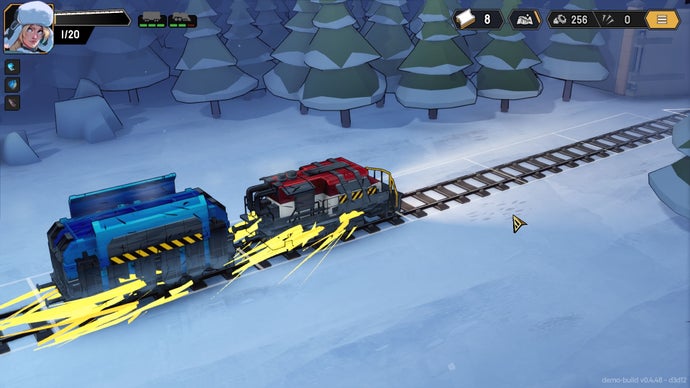
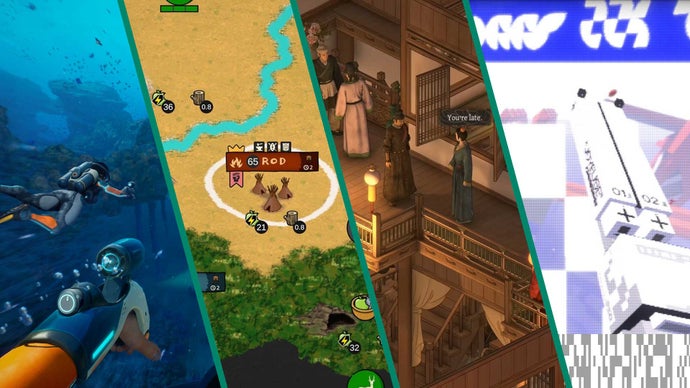
The thing you need to understand about Fogpiercer is that this deckbuilding roguelike, in which you control a train battling Mad Max-style road bandits, knows the secret joy of artillery. It is one of the few games that recognises that while it's satisfying to hit an enemy with a shell from a howitzer, it's even more satisfying to target the space next to them and use the force of the blast to give them a sideways shove into a wall.
It's a mechanic that puts Fogpiercer into the same fine company as Into The Breach.
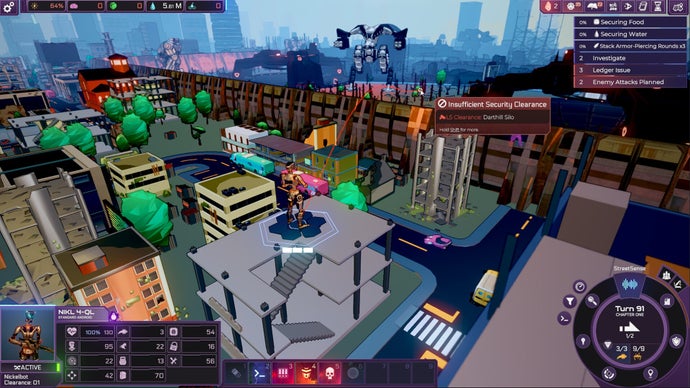
Why is everything rolling sideways on my desk all of a sudden? What’s this mysterious force, dragging my chair towards the wall? Why are all the cars in the vicinity tumbling and rolling in the direction of *checks press release* ...North Carolina, USA? It can only be gravitational disturbance caused by the impending 1.0 release of a massive strategy project. This time it’s Heart of the Machine, a “4X-style”, “dimension-busting” sci-fi game developed by Arcen Games and published by Hooded Horse.
I assumed, from its pretty hardcore cinematic - as well as everything else I'd read - that Menace was like XCOM for people who didn't like themselves. I was well up for that, filling each requirement perfectly. I love XCOM, with its super granular tactical turn-based goodness, and let's be honest, I'm only so-so.
I just wrapped up another hour in Albion Online, and this session turned out to be more interesting than I expected.
This time, I traveled to the city of Lymhurst to continue progressing my gathering journey. I had previously bought a horse for about 25,000 silver, so I assumed any upgrade from there would be more expensive. But nope — I was wrong.
The Ox I needed for “First Steps in Gathering” only cost me around 14,000 silver. Yes… cheaper than the horse. I was honestly surprised. You would think a big, heavy-duty Ox would cost more, right? Apparently not. Of course, the Ox is slower, but it carries way more weight, which makes it perfect for gathering runs.
Speaking of gathering, I finally completed the First Steps in Gathering quest. I also upgraded to Adept Leather Armor and made sure all my tools were at Journeyman tier. It feels good slowly progressing and becoming more efficient, even if gathering itself can be a bit repetitive.
And let’s be real — gathering can get boring.
So while I was farming resources, I watched a video from NerdSlayer Studios called “Death of a Game: Ashes of Creation.” It’s a deep dive into the downfall of Ashes of Creation, covering the drama, the crash, and the lawsuits that followed. The video was almost an hour long and gave a lot to think about.
It’s still unclear who is truly to blame for everything that happened. Lawsuits have been filed, and eventually the truth should come out. But one big question remains: will the players who spent money ever recover any of it? Right now, nobody really knows.
Overall, it was a productive stream. I made progress, learned something new about mounts, and had an interesting MMO discussion in the background. Not bad for an hour in Albion.
I recently went live for about an hour playing Albion Online on Steam, and honestly, it was one of those chill but satisfying sessions.
If you’ve never played Albion Online, it’s a sandbox MMORPG where you gather, craft, trade, and fight, all in a player-driven economy. I spent most of the stream doing what I normally do: gathering resources and stacking up silver. It’s relaxing in its own way. There’s something oddly satisfying about chopping trees, mining ore, and watching your inventory fill up.
But the highlight of the stream? I finally bought a horse.
Yep. I dropped 25,000 silver on it. In Albion Online, silver is the main in-game currency, so that was a pretty big purchase for me at this stage. Mounts make traveling way faster and safer, especially when you’re hauling resources. Still, spending that much at once definitely made me pause for a second. Was it worth it? So far... I think so. The speed boost alone feels like a game-changer.
While grinding, I also had a video playing in the background. I started watching Asmongold reacting to a video about Highguard and why it failed. It got me thinking. Highguard apparently launched with just one main game mode, similar to how PUBG focused heavily on battle royale. The difference is, PUBG’s gameplay loop was compelling enough to keep players coming back. From what I’ve seen and heard, Highguard didn’t quite hit that mark.
In my opinion, if you’re going to launch with just one game mode, it needs to be incredibly polished and tested with the public. Gamers today have tons of options. If something doesn’t immediately grab them, they move on fast.
Overall, the stream was a mix of chill grinding, a big in-game purchase, and some interesting thoughts about game design and why some titles succeed while others struggle. Not bad for an hour in Albion Online.
The head of Hooded Horse, a publishing house best known for Manor Lords and the upcoming Heroes of Might and Magic: Olden Era, Tim Bender, gave an interview to PC Gamer. During the conversation, he criticized the vast majority of indie publishers and essentially urged developers to self-publish their games.
Happy Year of the Horse, everyone! Horses are a great addition to games because they make traveling across large maps more fun, but each tends to have very specific problems, which make them even more fun. So, here's the definitive ranking of all the best horses in games.
Last place: the horse from Oblivion
Image via Bethesda
No matter how many awful horses they'll come up with for games in the future, this will always be the worst of them all. In truth, I have nothing about the szallionitself. I'm glad Oblivion gave players a faster option than their legs to explore the world, and a less stupid one than the game's instant fast travel method.
My problem with the horse is that it unknowingly became the vessel for one of the worst things to ever hit the world of gaming: microtransactions. Yes, this was the first time a game featured a cosmetic that players would have to pay for, and for a single-player only experience, no less. Players and games media criticized the decision in unison, which was then mostly seen as something dumb, and not necessarily world-ending. Bethesda did not relent, so that was the first domino falling to create the cursed gaming landscape of today.
To the glue factory with it.
5. Roach from The Witcher 3
Image via CD Projekt Red
The Witcher3 features one of the most alive worlds I've ever seen in a game. Even the bog-filled area of Velen spills life through its beautiful golden light and wind-blown greenery. Dashing through these places at high speed on the back of Roach greatly amplifies the already high immersion. Overall, the game puts Roach to great use, by also turning him into a fully-fledged racehorse in the minigames and a loyal companion in combat.
On a less serious but equally important note, however, Roach truly does feel like he underwent actual witcher training. He can run on two legs—front or rear—do flips, teleport to the top of houses, and never because that's what he was ordered to do. Roach is one of the most glitched-out horses in gaming, and somehow, none of that hurts his ranking, because every surprise he inevitably has in store for players throughout Geralt's adventures only makes Roach more fun.
Roach also carries extra stuff for you, which is really cool, especially when you learn of it before you're already halfway through the second DLC.
4. All horses from Red Dead Redemption 2
Image via Rockstar Games
If you're looking for realistic horses, look no further. Rockstar went to great lengths to make the horses look and behave as realistically as possible for Red Dead Redemption 2, down to little details they really needn't have bothered with.
They're also less prone to putting their heads right in front of your crosshair just as you're about to shoot, causing them to die immediately, than the horses from the original Red Dead Redemption, so that's another plus.
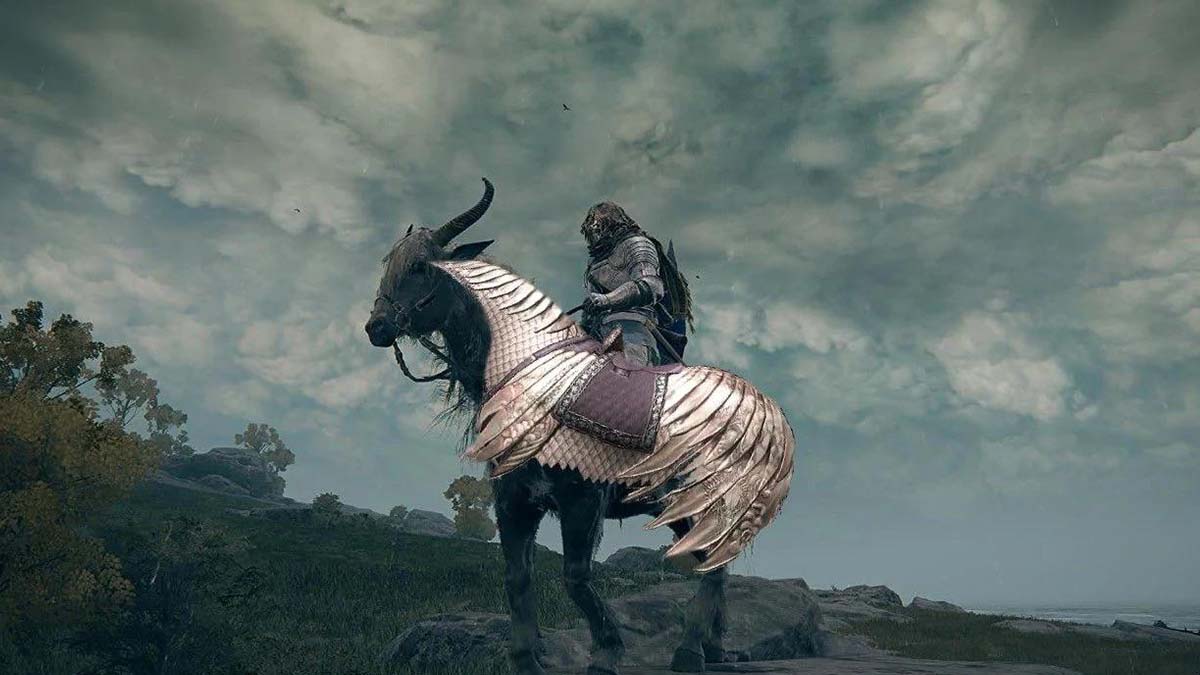
3. Torrent from Elden Ring
Image via Bandai Namco
The most immediately striking thing about Torrent from Elden Ring is that he doesn't really look like a traditional horse, but he's so good at his duties that his horsedom is never in question. If anything, Torrent is less of a horse and more of a Horse+. This is the first video game steed to unlock the double jump ability, which alone makes him the most useful companion you can have.
As soon as I learned from the previews that Torrent would have that ability, a terrible fear hit me that it could be buggy and result in even more deaths than normal in a Souls game, but he actually plays like a dream. I still died way more times than I should have for using his double leap ability to clear impossible distances, mind you, but that's totally on me.
2. Agro from Shadow Of The Colossus
Image via Sony
I don't even need to say it, but Agro is just majestic. I'd forgive it even if it were prone to absolutely ridiculous glitches, but it isn't. Agro is a necessary extension of the main character in Shadow of the Colossus, and he never falters. Not once did he cause me to die, even when I was making very questionable decisions (only for testing purposes, naturally). On top of making map traversal extremely fun and even soothing, Agro plays an essential role in some of the game's boss battles, somehow never causing the game to stumble or lag for it.
Agro might not feature a look as realistic as that of the horses from Red Dead Redemption 2, but that also means he never makes me look at his balls. Agro is the best.
1. Glitterhoof from Crusader Kings 2
Image via Paradox
So yeah, I know I just said that Agro is the best horse, but he's the best horse at being a horse. Glitterhoof is the best horse at being a person, and can even be the best world leader.
Because of a hilarious Easter Egg, a leader in Crusader Kings 2 with the lunatic trait may nominate his horse as an official member of his council. Play your cards right, and you will have your horse having horse babies who'll populate his dynasty and hopefully conquer the entire world.
Glitterhoof's history as the horse that went from belonging to a mad Viking to restoring the Roman Empire is the best-documented instance of this Easter Egg coming to glorious fruition, and hopefully, now that you've read this, it won't be the last.
In the midst of increasing AI usage across the board, one publisher is taking a firm stance against the technology, labeling it "cancerous." It has therefore issued a total ban on the use of AI in the games it publishes.
The publisher in question is Hooded Horse, known for supporting countless indie games, some of which are immensely popular and successful. Some of its most notable published games include Manor Lords, Against the Storm, Cataclismo, Endless Legend 2, and Darkwood 2, among others. It's certainly one of the most prominent indie publishers on the market, and it's now using its position to fight against what it perceives as a harmful technology.
In an interview with Kotaku, chief executive Tim Bender said the only thing AI ever did was "[make] our lives more difficult."
"I fucking hate Gen AI art," Bender said, adding that Hooded Horse's publishing contracts include a clause for "no fucking AI assets."
Bender went on to say that the publisher "got to the point" where it communicates to its potential partners that no AI should be used, even as placeholders, because there is always a chance it would "slip through" into the final build.
"Because of that, we’re constantly having to watch and deal with it and try to prevent it from slipping in, because it’s cancerous," he said.
Bender concluded by saying that it'd be a "betrayal" of all the people in the company's marketing team who produce all sorts of promotional art if they were to be forced into working with something that relies on generative AI. "I wouldn’t be able to face them if we had that," he said, indicating that this is more of an ethical stance than a PR-related one.
Enforcing these rules is difficult, but I for one believe it's the right course of action. Sure, some of these devs will use AI and mask it well, especially as the technology gets better, but it's important to have rules in place that openly stand in defiance of this worldwide corporate push toward a reality where things are purely artificial, built on the foundations of millennia of human work and effort just so some CEO somewhere could rake in even more cash than he does now.
At least before that selfsame CEO had to produce something of value, something original and striking enough for people to want to experience, so he could rake in the cash. Now, it's a machine doing everything, regurgitating borderline stolen art into pure slop for the enjoyment of absolutely no one and in the service of exclusively a small portion of people who never cared about art in the first place.
Hooded Horse, a publisher that made a name for itself when it picked up Manor Lords and has since been known to have a keen eye for strategy and city-building games, has drawn its line in the sand on GenAI tech. In an interview with Kotaku, Hooded Horse's chief executive officer, Tim Bender, made it clear that the publisher will not sign studios that use GenAI. The studio has even gone so far as to add a "no f***ing AI assets" line into its contracts, banning any studios that work with it from using generative AI technology in the process […]
In the midst of increasing AI usage across the board, one publisher is taking a firm stance against the technology, labeling it "cancerous." It has therefore issued a total ban on the use of AI in the games it publishes.
The publisher in question is Hooded Horse, known for supporting countless indie games, some of which are immensely popular and successful. Some of its most notable published games include Manor Lords, Against the Storm, Cataclismo, Endless Legend 2, and Darkwood 2, among others. It's certainly one of the most prominent indie publishers on the market, and it's now using its position to fight against what it perceives as a harmful technology.
In an interview with Kotaku, chief executive Tim Bender said the only thing AI ever did was "[make] our lives more difficult."
"I fucking hate Gen AI art," Bender said, adding that Hooded Horse's publishing contracts include a clause for "no fucking AI assets."
Bender went on to say that the publisher "got to the point" where it communicates to its potential partners that no AI should be used, even as placeholders, because there is always a chance it would "slip through" into the final build.
"Because of that, we’re constantly having to watch and deal with it and try to prevent it from slipping in, because it’s cancerous," he said.
Bender concluded by saying that it'd be a "betrayal" of all the people in the company's marketing team who produce all sorts of promotional art if they were to be forced into working with something that relies on generative AI. "I wouldn’t be able to face them if we had that," he said, indicating that this is more of an ethical stance than a PR-related one.
Enforcing these rules is difficult, but I for one believe it's the right course of action. Sure, some of these devs will use AI and mask it well, especially as the technology gets better, but it's important to have rules in place that openly stand in defiance of this worldwide corporate push toward a reality where things are purely artificial, built on the foundations of millennia of human work and effort just so some CEO somewhere could rake in even more cash than he does now.
At least before that selfsame CEO had to produce something of value, something original and striking enough for people to want to experience, so he could rake in the cash. Now, it's a machine doing everything, regurgitating borderline stolen art into pure slop for the enjoyment of absolutely no one and in the service of exclusively a small portion of people who never cared about art in the first place.
City builders and colony sims thrive on the satisfaction of the moment when you can finally watch your happy, healthy citizens buzzing about their daily tasks after days, weeks, and months of struggle. But the best games like Rimworld often have a darker side, and Architect of Ruin embraces that to its fullest. Putting you in charge of a growing cult, it's up to you to lead your followers to glory as they rebuild and revive an ancient temple under the watchful eye of a wrathful god, and it's already found a spot on my wishlist.
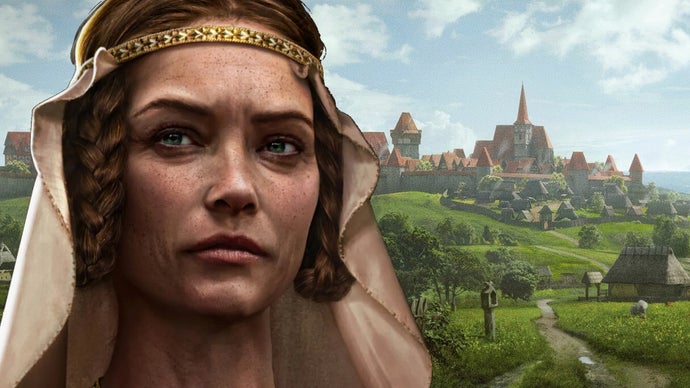
After a 2025 that was largely quiet on the Manor Lords front until the very end of the year, developer Slavic Magic and publisher Hooded Horse are intent that 2026 will see more regular updates for the breakout, million-selling medieval city-building game. As part of that new-look process, Hooded Horse is now handling its developer diaries, and CEO Tim Bender is back to give us a fresh look at what the team is currently hammering away at in the workshop. On the table for the next Manor Lords update are improvements to the progression for housing and workshops, and a deeper trade system that opens the door to more economic competition between rivals.
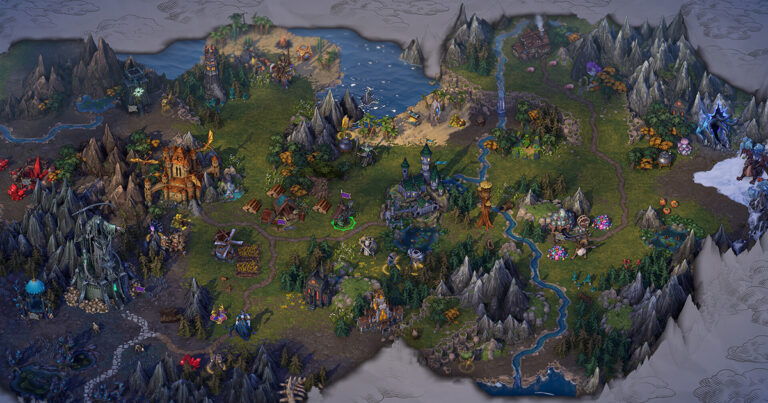
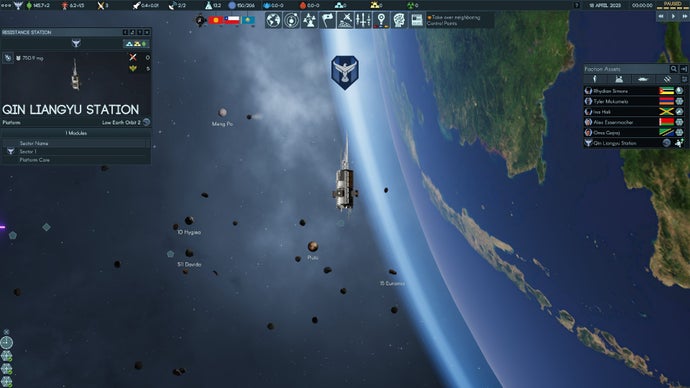
I often think about what XCOM 3 might look like, and ponder if we'll ever actually see it. At least there have been plenty of other excellent strategy games inspired by the iconic alien-battling series to fill that void, and another I've been eagerly awaiting the full release of is the ambitious Terra Invicta. While developer Pavonis Interactive is most well-known for making the beloved XCOM Long War mod, its new game escalates proceedings out of the realm of individual skirmishes and launches it into the stars in true grand strategy fashion.
Saturdays are for putting your hand in a bucket of ice, swallowing a mouthful of honey and lemon, and breathing a sigh of relief. All that practice you put into your welcome handshake and 'Here comes trouble!' paid off. Almost every member of the treehouse has been successfully greeted home.
Manor Lords and Terra Invicta publishers Hooded Horse are imposing a strict ban on generative AI assets in their games, with company co-founder Tim Bender describing it as an “ethics issue” and “a very frustrating thing to have to worry about”.
The second alien fleet appears on the edge of our solar system around two hours into my first game of Terra Invicta, which leaves early access today, but I don’t have time to fret about them because I’m busy jockeying with the Protectorate for the keys to Mozambique. The Protectorate are a secret org who believe human beings are incapable of defeating the game’s extra-terrestrial creatures. As such, they feel we must aspire to become the very finest doormats, appeasing the invader in return for continued existence as a subordinate species.
Saturdays are for eagerly sitting beside the front door to the Treehouse ready to jump up and greet writers as they return home. Sure, most of the team aren't due back until Monday, but this way I can get really good at saying 'Here comes trouble' in just the right intonation. 'Here comes trouble.' No, that's not it. 'Here comes trouble.' Better, but it still needs work.
Most anticipated? Oh reader, you gentle, innocent child. Hark at you, ambling in here with supple joints, eyes clear as springwater, and the scent of hope in your hair. I have grown old, dear reader. I no longer feel this emotion called "anticipation", anymore than I remember the taste of strawberries in the Shire. Years of waiting for another Legacy of Kain game have broken my spirit. My heart is a sponge of sorrow. My beard coils round my ankles like a listless cat. All has become grey.
It's easy to forget that Manor Lords was created by just one man. When it first started, developer Slavic Magic was the name for Grzegorz Styczeń's solo studio. Since the game's success - it's a regular feature on our list of the best city building games - he's expanded to hire more developers, but the team remains small. However, Styczeń excels in listening to the community, and the latest update is no different. It makes numerous quality of life improvements and fixes so many bugs that I barely know where to start.