I know I say this a lot, but I’m genuinely surprised that Tides of Tomorrow flew completely under my radar. You’d think with a career covering the games industry, I would be aware of almost every video game that’s on the horizon, but sometimes you can end up missing the trees for the forest.
However, I knew this would be something interesting when CGM’s Dayna Elieen messaged me, “K CAN WE PLEASE TALK ABOUT TIDES OF TOMORROW,” since she doesn’t often message me in all caps unless something is genuinely good. I’ve repeatedly said that the Indie scene is infinitely more interesting than the “AAA” one because of the bold choices developers make to advance the medium. Tides of Tomorrow is one such example of this.
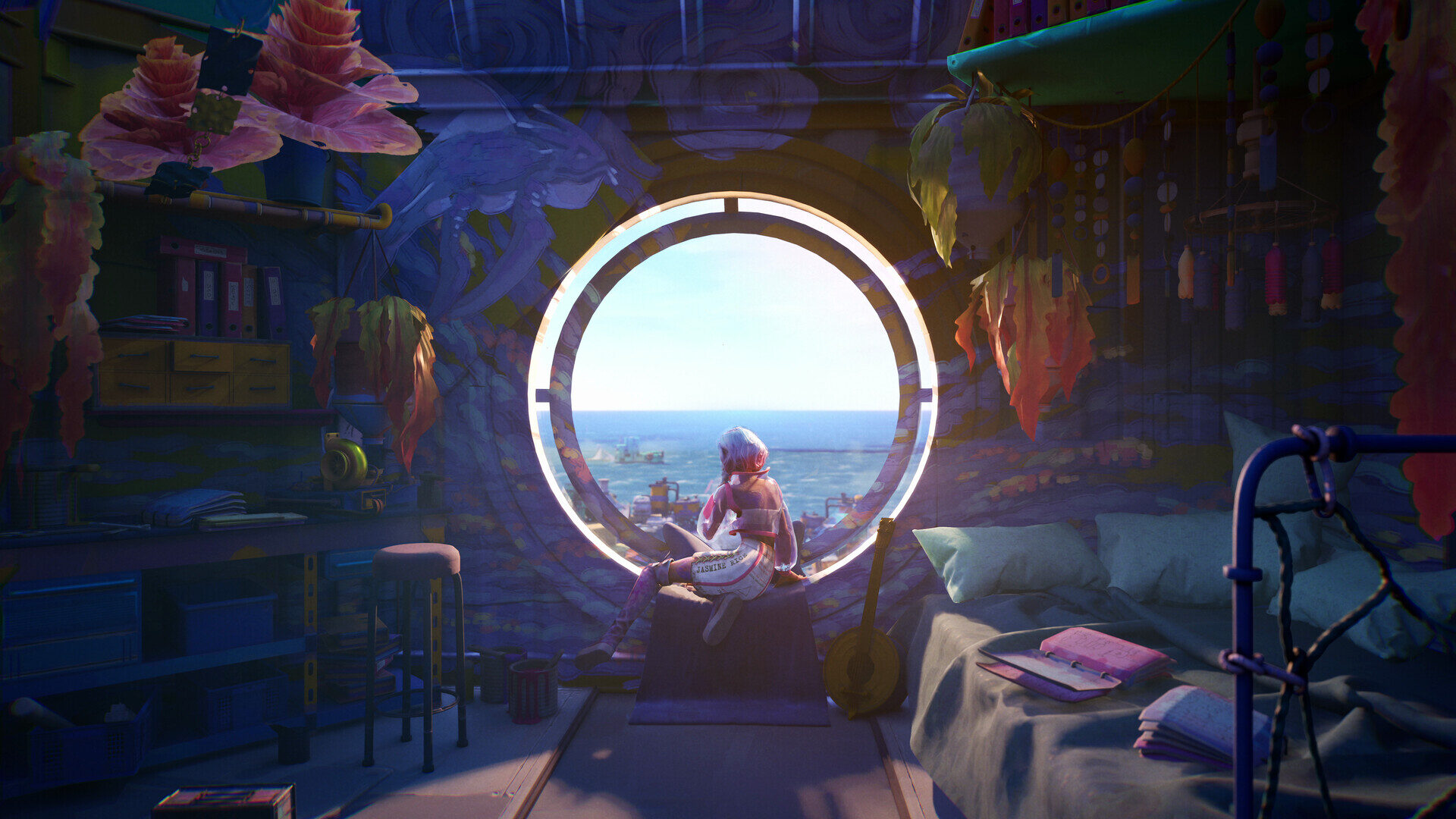
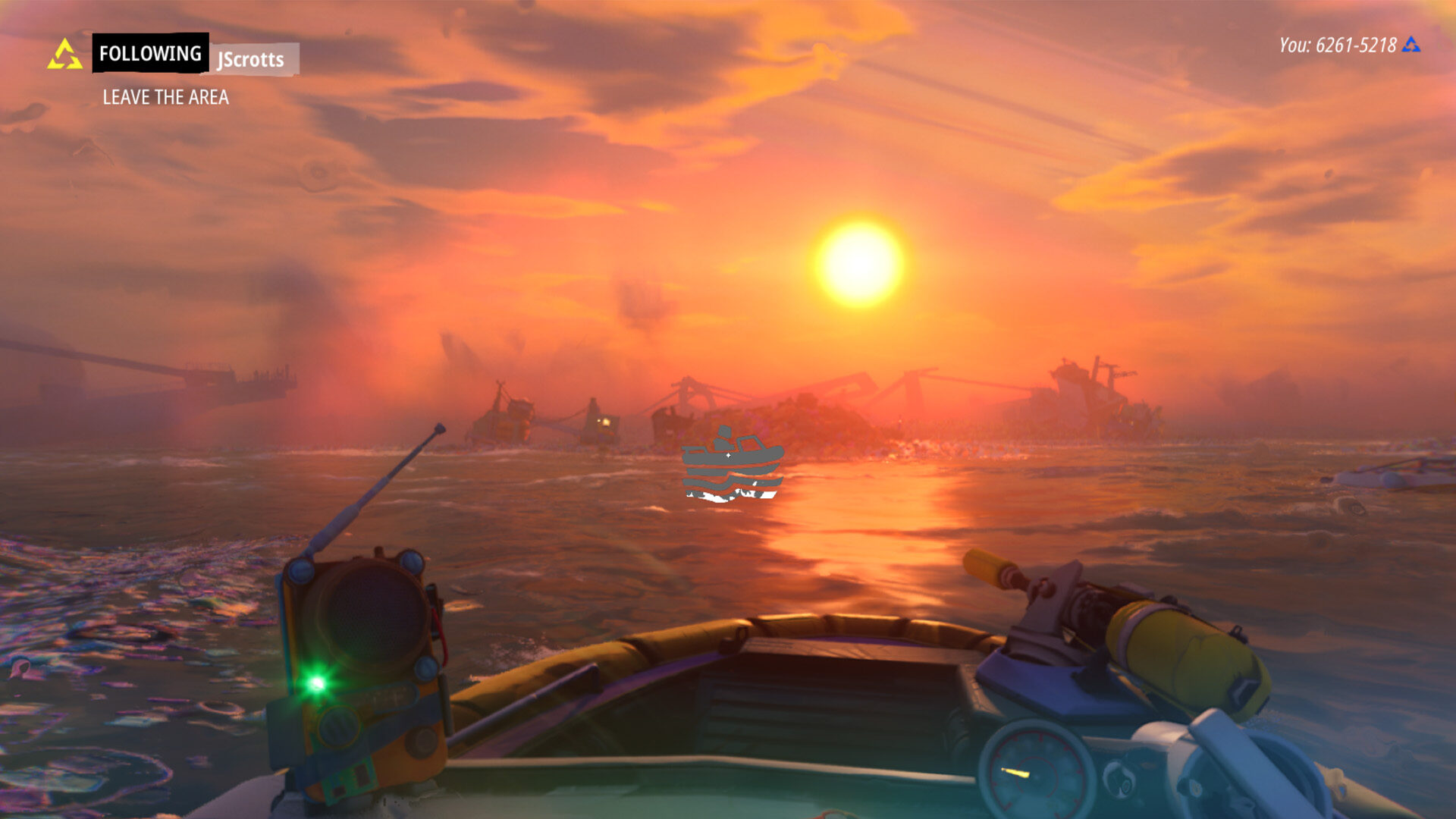
Developed by DigixArt, the studio behind Road 96 and Lost in Harmony, Tides of Tomorrow is a narrative adventure set in a vast, flooded world that has been all but destroyed by plastic pollution in the oceans. Players take on the role of a Tidewalker—unique humans who are able to connect with each other and harness visions of past events—suffering from the disease known as “Plastemia,” which is slowly killing them.
Players must navigate the world, fighting for not only their own survival, but the fate of the remaining mankind. Their choices will shape the world and potentially build a new one, or possibly destroy what little is left. It may sound simple, or like so many games that have come before it, but Tides of Tomorrow differentiates itself with its main gameplay mechanic: asynchronous multiplayer.
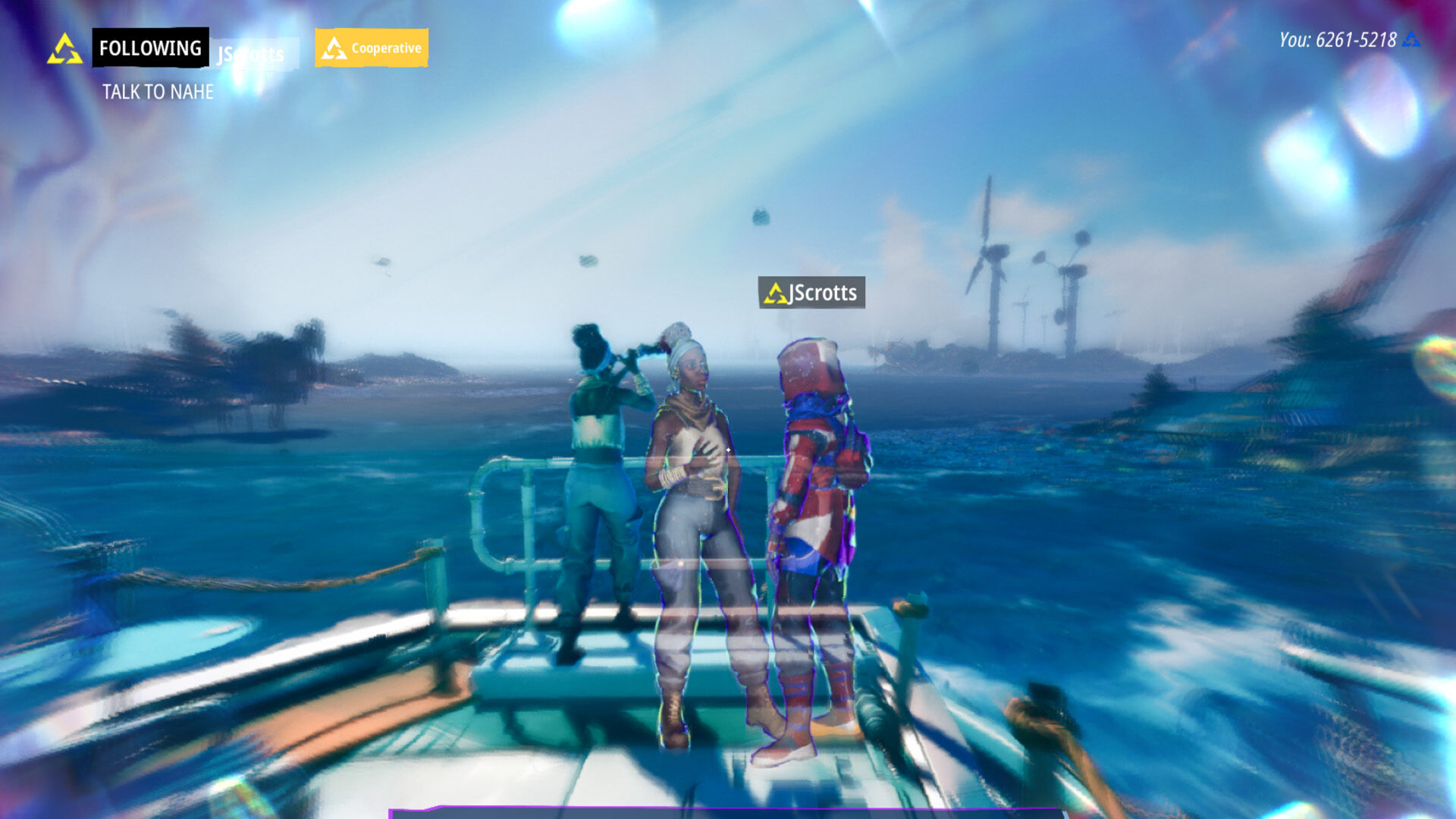
When players begin their game, they can choose to follow another player. As you play, you’ll be able to see what choices your followed player made both in dialogue and in action, how it affected the story and allow you to make decisions accordingly. You can either follow in their wake or attempt to diverge and see what new waters await you.
It’s an incredibly interesting idea that works on a lot of unique levels. In the moment-to-moment gameplay, it functions like a positive version of Dark Souls’Messages system, where players are actually trying to guide each other instead of sending them into bottomless pits. But in the macro-design, it connects in a meta way to the game’s overall narrative by allowing players to learn from each other’s mistakes and try to forge a better path forward.
“Even though my time with Tides of Tomorrow was relatively brief, I’m genuinely impressed with what it’s doing. “
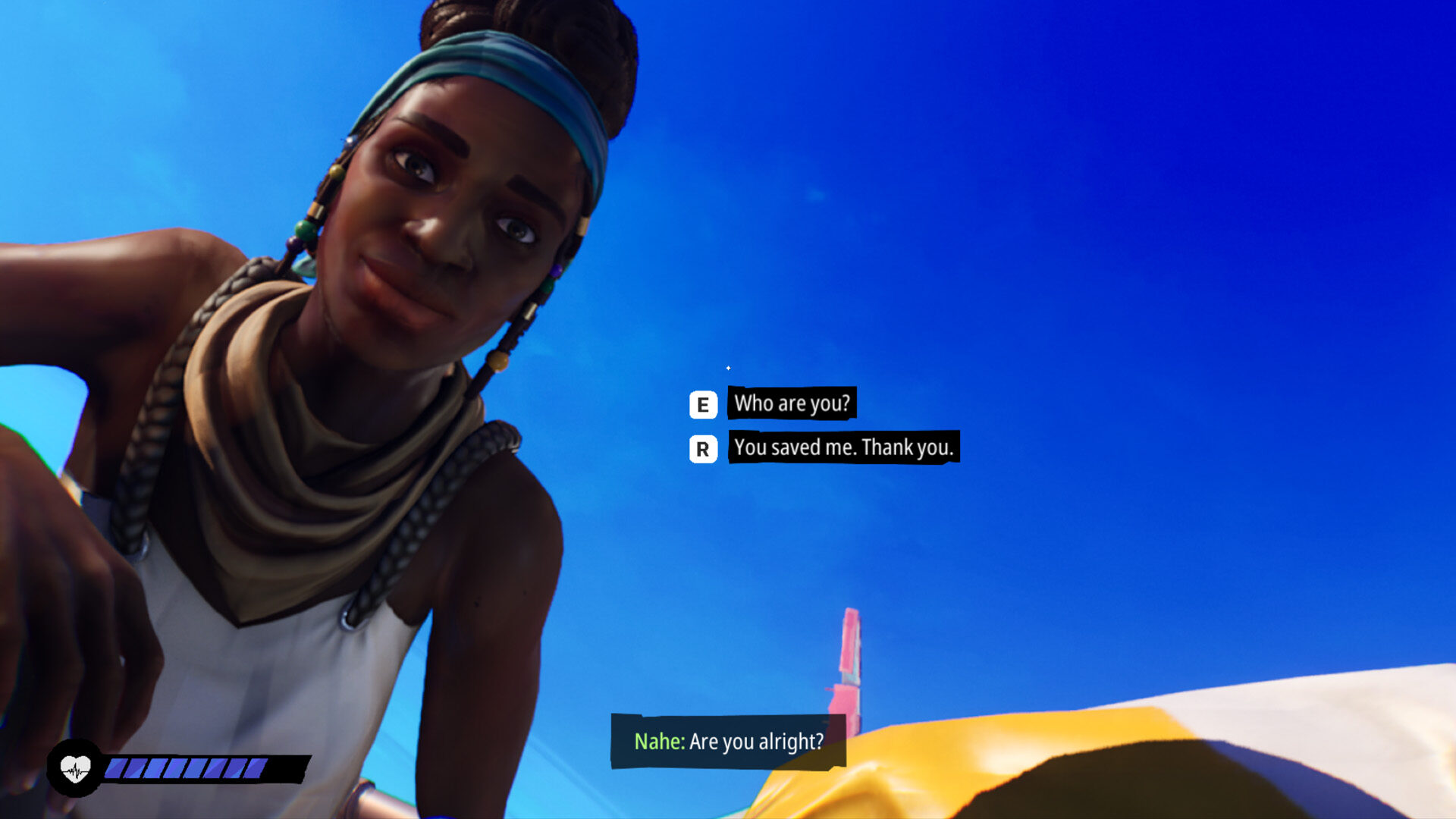
In the early moments of the game, I needed to collect some scrap in order to help one of the characters who was trying to guide me. There was a bunch littered around, but one of them was placed on a memorial to those who had died from Plastemia. By using my Tide-O-Vision, I was able to see that the player I was following had been reprimanded for taking some scrap that was on the monument.
In that moment, it gave me some pause to consider how else I could approach my current situation that wouldn’t put me in bad standing with the local population. Going forward, I tried to be extra considerate with my decisions, all while trying to navigate a whole that was being shaped by another player. It made the experience so incredibly interesting, as you can tangibly see how events were shaped by the person who came before you, and how I now had to move through newly opened doors as others were closed by another player.
And what’s even more interesting is that players are not bound to another player for the entirety of their journey. At certain critical moments, players can choose to follow others, giving them the freedom to explore other perspectives and follow different threads of fate. Digixart clearly wants Tides of Tomorrow to be a deeply social game as players can share game seeds with one another, and there’s a big push for players to follow their favourite streamers—expanding the experience to a much broader platform.
Even though my time with Tides of Tomorrow was relatively brief, I’m genuinely impressed with what it’s doing. Not only is it creating an interesting world and telling an engaging story with truly resonant themes, but it’s doing so with such an interesting and dynamic gameplay hook that it genuinely keeps you involved. It’s going to be really exciting to see how Tides of Tomorrow connects and challenges players.
My Hero Academia: All’s Justice launches on February 6th, 2026, a great way for the main series fans to play out the greatest battles from the final main series arc that just finished airing. This is a perfect drop time as it also coincides with the airing of the spin-off My Hero Academia: Vigilantes. Bandai Namco reached out to us to try out three specific parts of the upcoming game.
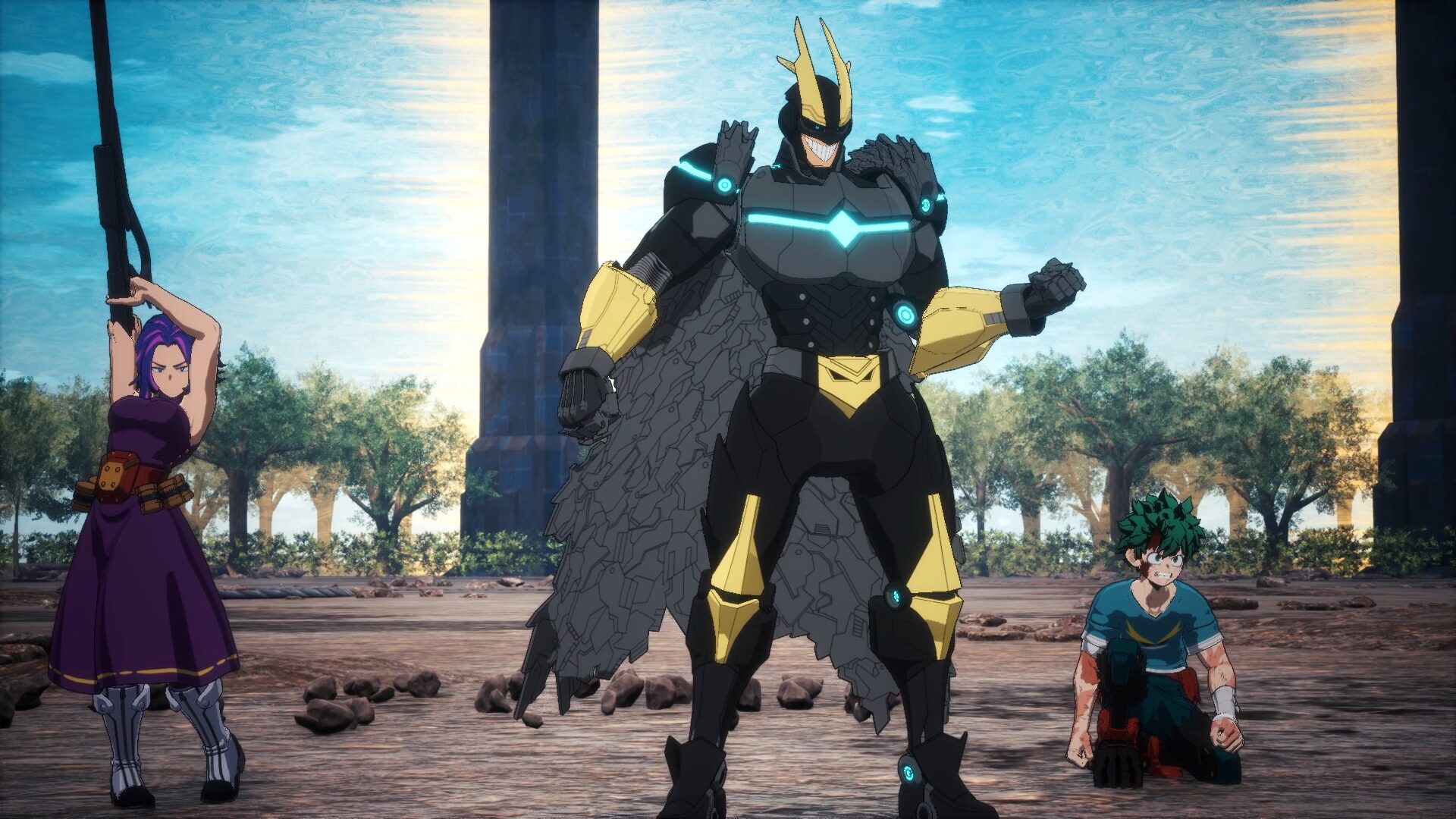
Like its predecessor games, My Hero One’s Justice 1 and 2, this is a 3D arena fighting game. However, the My Hero One’s Justice games are 1v1 battles; My Hero Academia: All’s Justice features a 3v3 tag-team format—containing free character swapping, dropping the assist system for a more dynamic, team-focused gameplay, building on the expanded roster and improved features of its predecessors. This upcoming game aims to do all this while covering the manga’s epic final arc with cinematic story elements.
Bandai Namco describes the game: “Smash through My Hero Academia’s final story arc and triumph over your foes in spectacular 3v3 battles! Follow Deku and the journeys of other characters in the Final War between Heroes and Villains, and experience the world-shaking, climactic clash between One For All and All For One in My Hero Academia: All’s Justice.”
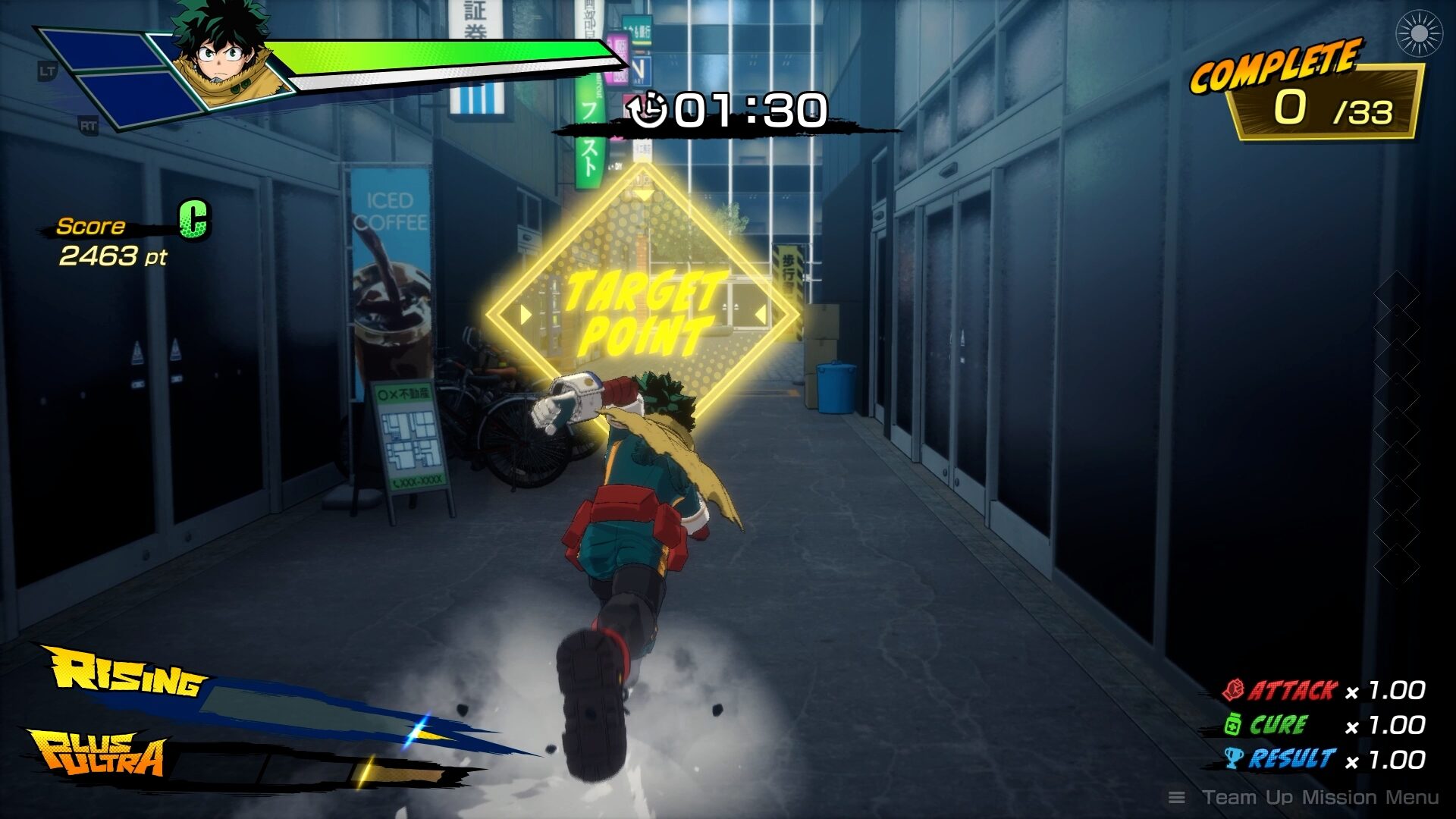
This game features classic fighting game controls and special abilities. One key caveat, however, is the Rising gauge. Rising mode enhances a character for a limited time, allowing players to use special actions that are available only while Rising is activated. As in similar fighting games, Plus Ultra is a separate gauge beneath the Rising gauge, and it activates the character’s ultimate ability.
For this first look at My Hero Academia: All’s Justice, we were able to try Story mode, Team Up Mission mode and Hero’s Diary mode, along with extended time exploring characters and stages in Battle mode. Story mode lets players relive many of the anime’s major battles, including clashes such as Ochaco Uraraka and Tsuyu Asui versus Himiko Toga. A central hub ties the experience together, with players assuming the role of protagonist Izuku Midoriya.
“One of the cool things is how Present Mic announced a win with a knockout with the Ultimate ability.”
Set in a semi-open-world structure, the game allows players to move freely through the city and interact with familiar faces from the anime. Team Up Mission mode expands on this by focusing on navigation and exploration around town. One standout mechanic is swinging through the city using Black Whip, one of the One For All quirks Deku can use.
In this preview build, we went hands-on with Katsuki Bakugo versus All For One in a climactic final battle. The matchup required focus and finesse, which is fitting given All For One’s role as one of the anime’s final bosses. Whether players are new to fighting games or seasoned veterans, there are still ways to deal consistent damage to All For One. These strategies rely heavily on long-range attacks, combined with well-timed, repeated strikes. A win is still a win, and the game’s control options help make that possible.
“My Hero Academia: All’s Justice appears to be shaping up as a well-crafted, expansive time capsule to the anime series.”
One of the standout control features in My Hero Academia: All’s Justice is the inclusion of two distinct control modes. Normal Control mode is described as allowing certain actions to activate automatically when attack commands are input. In this mode, the game can link Quirk skills, character swaps and Plus Ultra moves with a single button press. This setup is well-suited to beginners and players who do not regularly play action games. More experienced players can switch to Manual Control mode, which allows for greater freedom when chaining moves and executing combos. This option gives skilled players more precise control over timing and strategy.
Another memorable touch is how Present Mic announces a knockout achieved with an Ultimate ability. If an opponent is defeated with a Plus Ultra attack, he shouts “Plus Ultra!” on the victory screen. The 3v3 tag team battle mechanics also work well, with maximum damage possible when switching characters at the moment an enemy is locked in a damage animation. Not every fight follows a 3v3 format. Battles can also play out as 3v1, 2v1, 1v1 or 2v2 encounters.
For most of Story mode, the game relied on original-resolution footage, largely made up of still images, with original audio played over top. Given how Bandai Namco successfully recreated the Demon Slayer: Kimetsu no Yaiba anime in a refreshed form in Demon Slayer: Kimetsu no Yaiba – The Hinokami Chronicles and its sequel, I expected a similar level of care for My Hero Academia: All’s Justice. It is possible the final version of the game will present a cleaner, more polished look.
The game features dynamic camera work and action lines inspired by titles such as Dragon Ball: Sparking! Zero and the Dragon Ball Z: Budokai games. Environmental destruction also helps sell the impact of each fight, reinforcing the sense of power behind every hit. Being able to play as members of Class 1-A or pro heroes who receive limited screen time in the anime is a major bonus, particularly since most characters are presented with near-maximum power levels. Team Up Mission mode and Hero’s Diary mode help expand on this appeal.
While we could not capture and check out everything the game has to offer, My Hero Academia: All’s Justice appears to be shaping up as a well-crafted, expansive time capsule to the anime series. The fights and attacks felt true to the show, given the current move sets available. There is still plenty of room for improvement, but I look forward to seeing what the final version will look like.
System: Switch 2 (reviewed) / Switch Release date: January 15, 2026 Developer: Nihon Falcom Publisher: NIS America For more than two decades, The Legend of Heroes has been quietly building one of the most intricate and patient narratives in video game history. What began in 2004 with Trails in the Sky evolved into a sprawling, interconnected saga spanning multiple arcs,...
Escaping the Chaos: Why Lobby Racing Just Isn’t Enough
I started doing simracing a couple of years ago, and after some rocky days of learning where I was basically just trying to keep the car on the black stuff and not end up in the grass every second corner, I found myself playing Assetto Corsa Competizione the most. Eventually, you get tired of the AI. They are predictable and they don’t make the kind of human mistakes that make racing exciting, so you start to play online. And yeah, that’s a big difference, especially in ACC, playing the AI and playing the people. It’s much more unpredictable, much more fun, and much more crashes, which is the darker part of it.
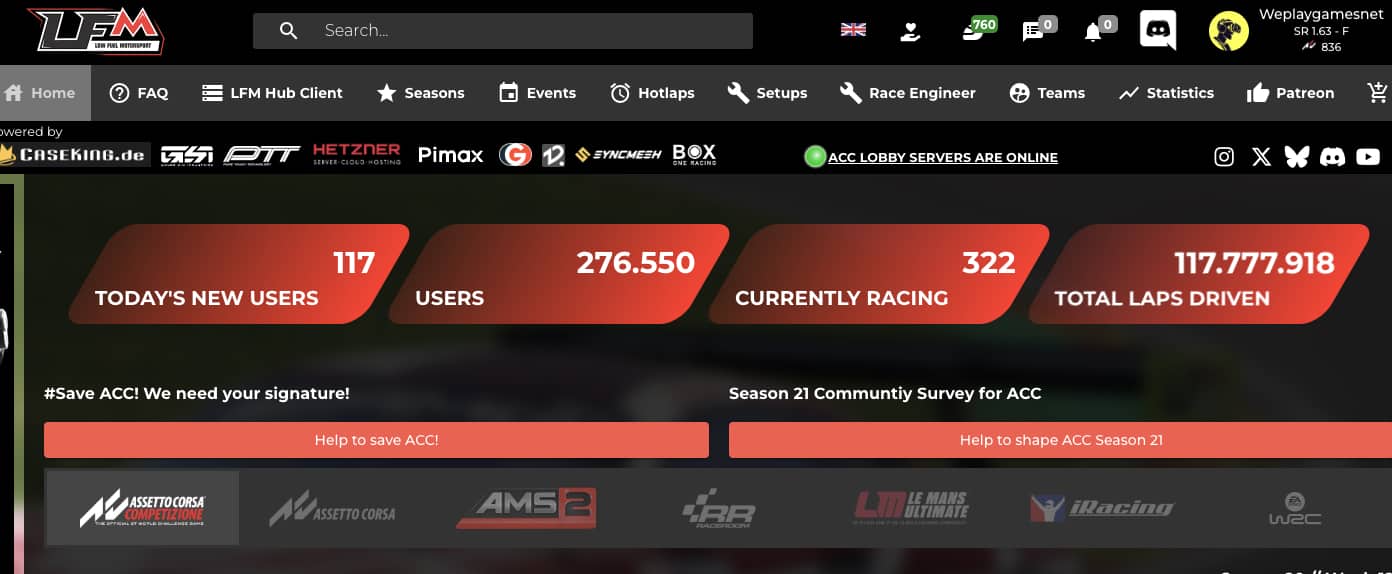
Low Fuel Motosport – Total LFM registered users and currently racing
But yeah, this is very good overall. Assetto Corsa Competizione provides competition races within the game itself, but this service doesn’t have much deeper something in it. It’s quite boring after a while because there is only one option in one time, and sometimes when you don’t have all the stars for the given track, you cannot even join at all. But there is another option, the lobby service, which is where most people start their e-racing career – Low Fuel Motosport independent racing portal.
There is always around 900 active servers where you can race at any given moment. A lot of them have a pretty full list of people racing, so it’s a big fun when you get a good grid, but it’s dangerous, especially when you are not experienced enough. You will lose your safety rating very quickly because people are crashing like crazy over there. You have to build up the good SA and go to the lobby server where you have to have some amount of SA to join it. Those servers are much, much better than without any restriction, which is basically like Destruction Derby and killing your rating in ACC.
Low Fuel Motosport – Racing statistics
The Independent Powerhouse: Choosing LFM on PC
So after a lot of crashes, a lot of yeeting discussions in the chat where people are just screaming, and quite a lot of races actually on the lobby, I started to look around for even better option to race. And I came across Low Fuel Motorsport as the leading independent platform for racing. Low Fuel Motorsport is mostly focused on ACC, which is excellent for me, and it’s a big service. There are huge amount of organized races, they have a system when and how to join, and so forth. I chose another option on the market. This is for PC players only. If you have a PlayStation or Xbox, you would probably choose SimGrid, which goes for the consoles as well. Another option, similar, is Pitskill.io, but Low Fuel Motorsport is the largest sim racing platform at this very moment in 2025, by far. So this should be your first option, probably, if you are on PC and you want to race a lot with kind of the same quality persons like you on daily races. So I opted out for Low Fuel Motorsport like two years ago, and here is my experience with it.
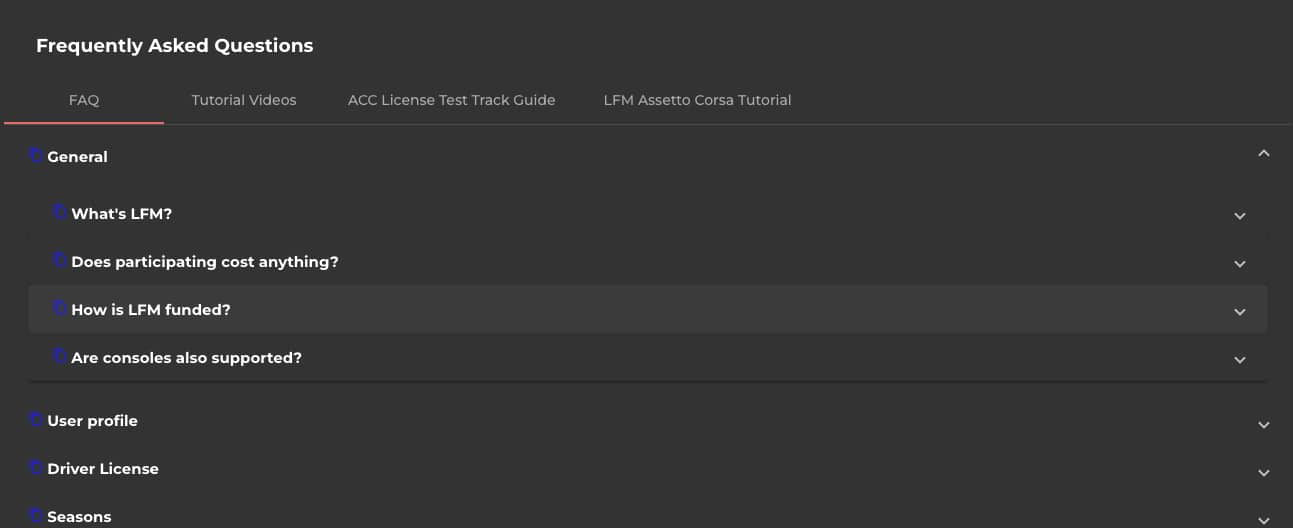
Low Fuel Motosport – FAQ is collabsible list, no search possible
The License Hurdle: Proving You Belong on the Grid
To join Low Fuel Motorsport and be able to race, you have to prove yourself as a kind of experienced driver, although you don’t need to be that super fast as the top of the race, but you have to be reasonably good. I like the system to join because it makes the good selection and those destruction derby players are filtered out with this system and this is a very good system. So if you want to join races, they have a practice server which is reachable via internet. You can find it within the free lobby servers. Just type in Low Fuel Motorsport LFM into the server selection and you got it. You have to find which is it on the server. To register you can use Steam or Discord. Then you have to go to the race and try to make 7 clean rounds and be within the range of the best times, maximum 5% on the top of the best times. This is the 107% rule they use to keep the pace consistent. After 2 or 3 attempts I was able to reach and I obtained the license to race. So my journey begins here. If you want to race Nordschleife, you have to make a similar license, but I didn’t go for Nordschleife yet. I just like shorter tracks and Nordschleife still has to wait for me. I’m not that interested to get into that.
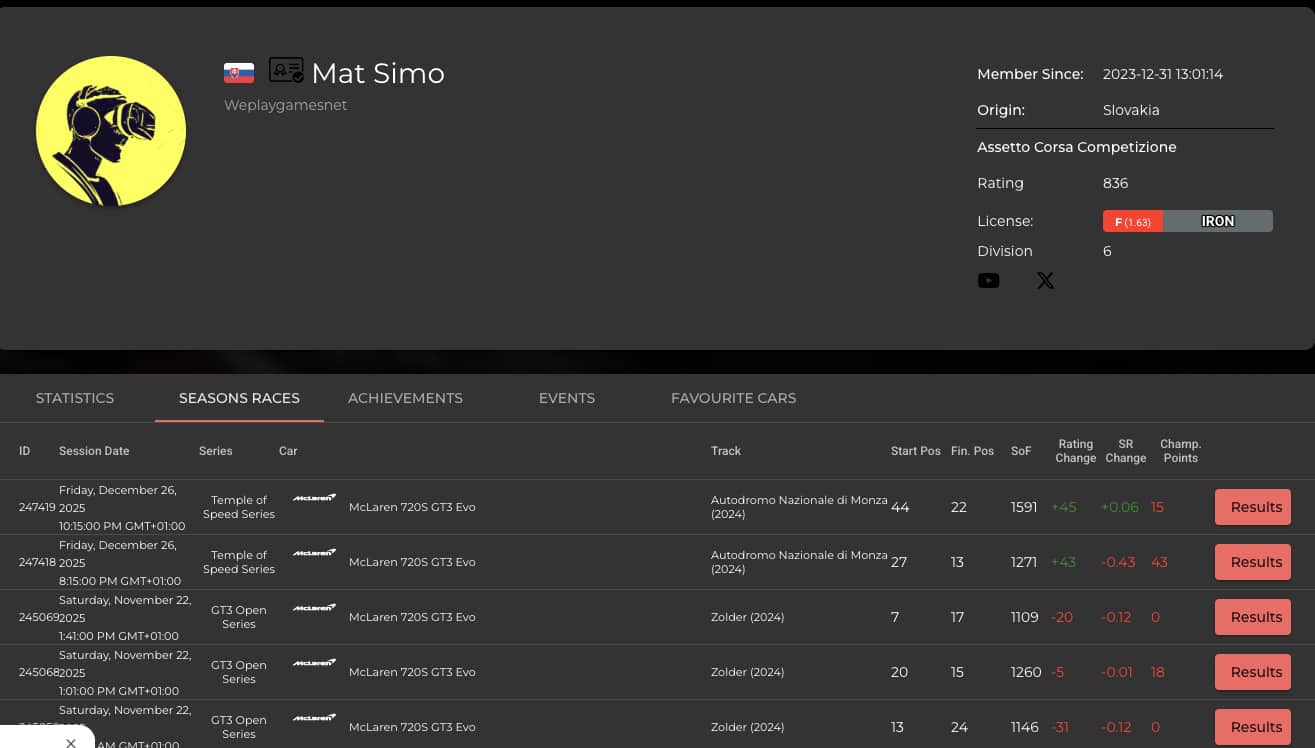
Low Fuel Motosport – History of my races
Tools of the Trade: Technical Requirements for Serious Racing
To join the races you have to obviously sign up for the specific race in time and the other thing you must have is to download the utility which is called ACC connector which somehow translate the IP address of the server to your local IP address and then you have to go to local servers like on the LAN and the server when it goes online it will appear there. This is one extra tool you have to have when you want to race on the Low Fuel Motorsport and well this is a decision they made because you know the ACC had some outages and actually they still have the outages of the network. Low Fuel Motorsport didn’t want to rely on the public multiplayer service of the game and they are building like local servers independent of the race so when the ACC multiplayer is down you can still play Low Fuel Motorsport. This is sometimes problem because when the network is down you cannot even load your LAN server somehow so sometimes it’s struggle but it’s better. It’s more stable the servers especially those which are located in European area has a great ping and technically the servers are very good. Another thing you may want is the LFM Livery Tool.
If you don’t have this, everyone is just driving around in a plain white or carbon car and you can’t see the cool designs that teams put together. It makes the grid look much more professional when you can actually see the sponsors and the colors of the other cars. You also have to get used to their custom Balance of Performance, or BoP. LFM adds weight or restrictors to certain cars to make sure the field is even. So even if the game developers made one car too fast, LFM balances it out so you can still drive an older car and not be totally out of the race. This keeps the variety high which is good.
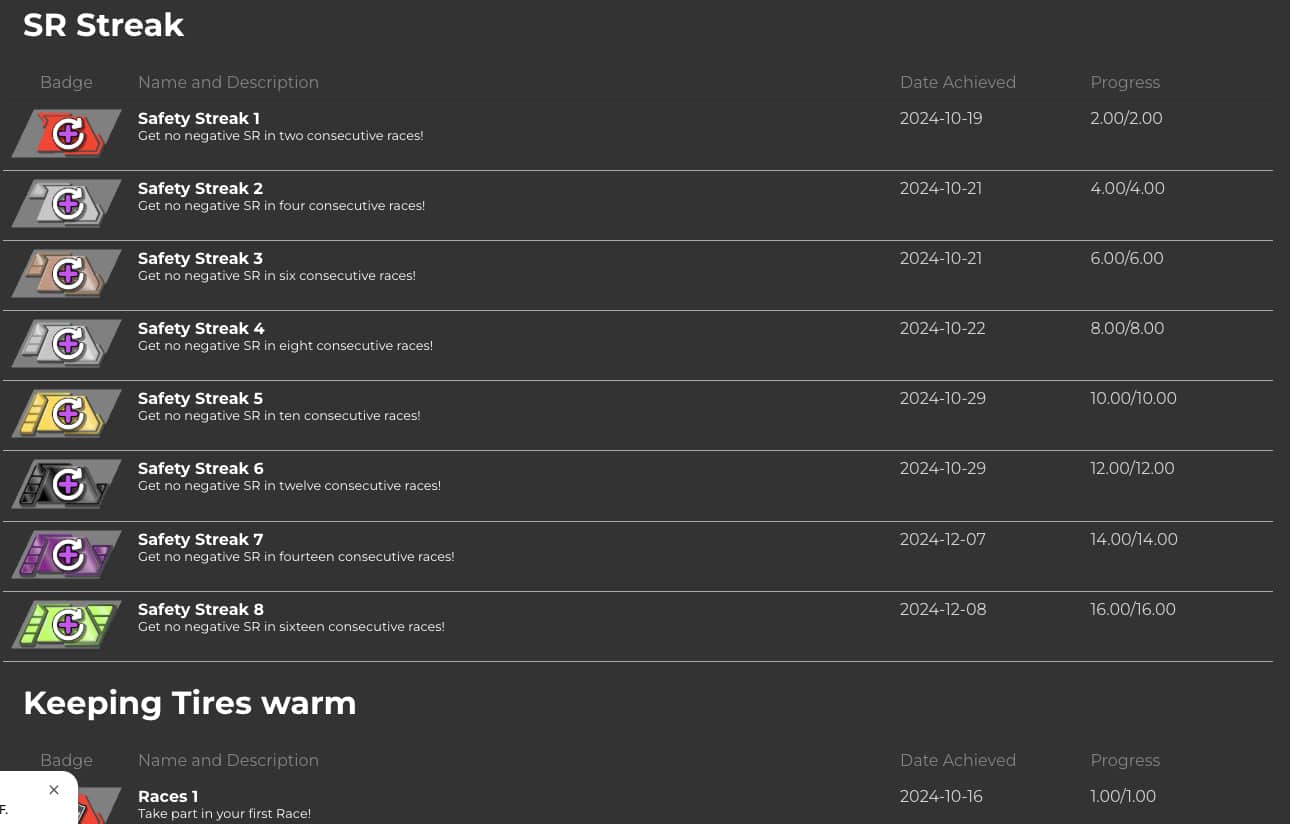
Low Fuel Motosport – Gamification is her as well . I got some trophies
The Daily Grind: Sprints and the Rating Struggle
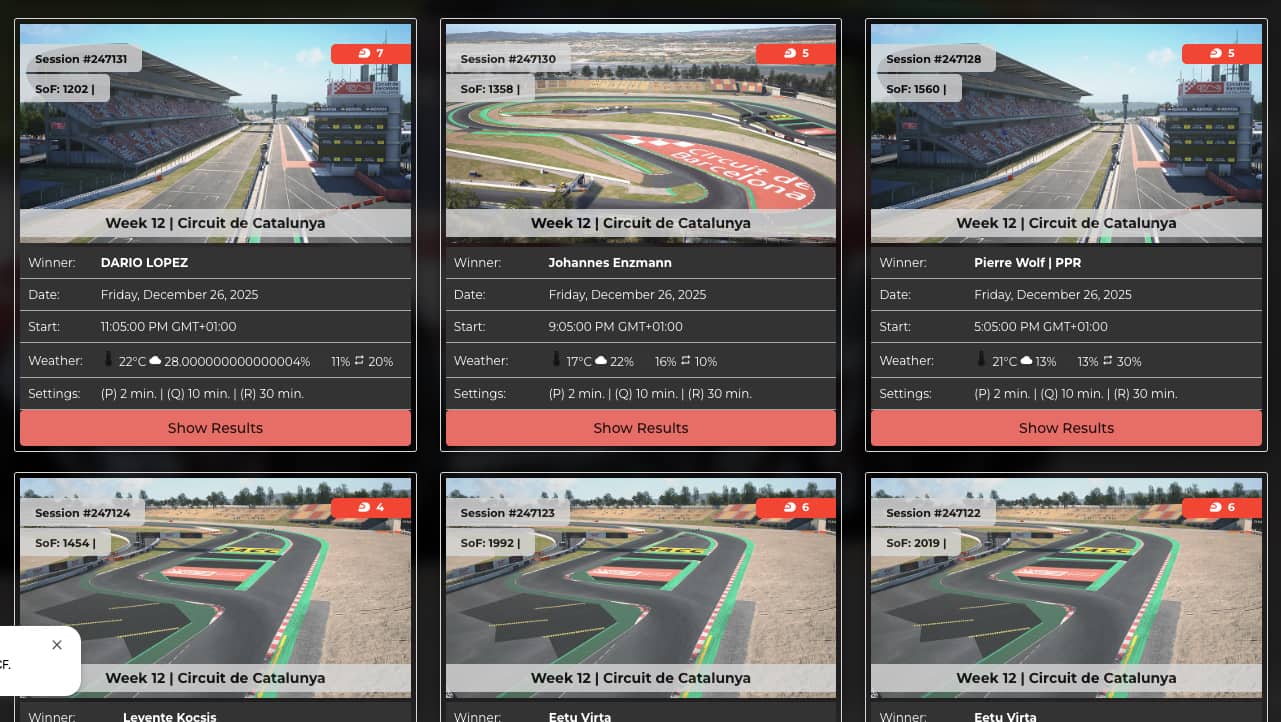
So I did this basic license and I started to race. The options were to race, it’s quite big, but at the end you don’t have that much when you start. You can only race the 15 minute sprint races at the moment and that’s it because you are not building up your safety rating and your ELO enough yet. So you are doing these 15 minute races. Last year it was 20 minutes, now they push it to the 15 minutes. Well, that’s how they decided. So when you start to race you have to join the race. Every 45 minutes there is another 15 minute race. So you have plentiful options to race during the day, as much as you want, you don’t have any restrictions. You just click and wait a bit and you can join the races. So once you do that you go to practice. There is not allowed to race in the practice, it’s just to prepare your setups and so on. Then you go to qualification which is usually 7 minutes and then 15 minutes race. Races are much better than lobbies. This is the best advantage of Low Fuel Motorsport.
Low Fuel Motosport – Support via patreon
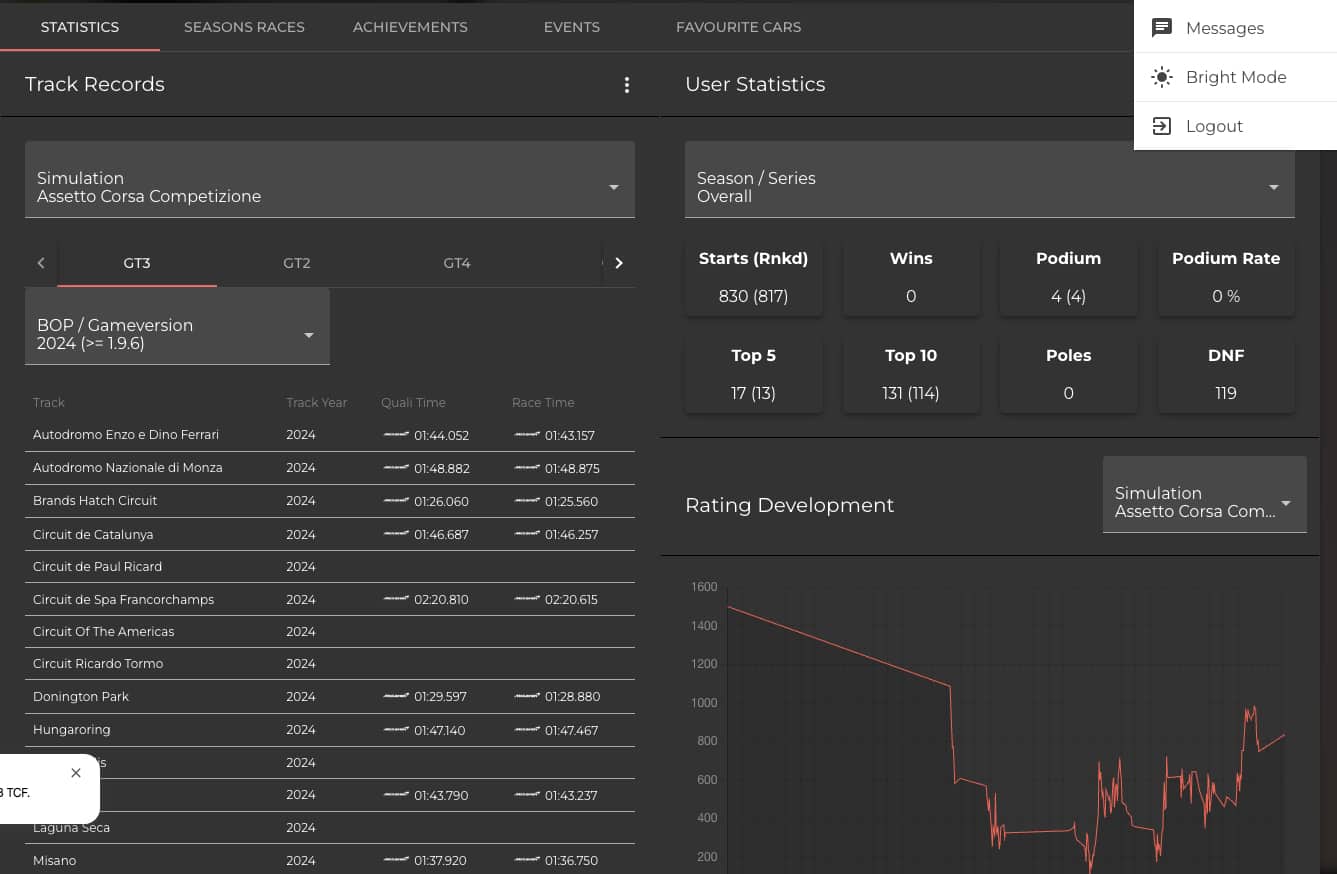
Here the races have its quality, even though when you are on the low tier the people are not trying to hit you as crazy and there are not that many accidents as there are on the ACC lobbies, especially those without SA filter. Here your journey starts, you are building up your ELO and you are building up your SA. When you reach the threshold you can join another races which are only filtered for the people with the higher ELO and higher safety rating. So ELO and safety rating decide everything. I’m not the greatest racer, so I was kind of struggling and stagnating because the ELO and SA rise slower than it falls. So you can build up for several clean races and then you have one wrong race where you get caught in someone else’s mess and it falls down instantly. But this is a fair play system which makes you focus on the safety first and then on the speed. This is the way how you should really learn driving in general. So you know your car, you know the spatial awareness and everything is much more important when racing here than when doing lobbies. So this really makes a big distinction and for those people who want real racing, they will like it a lot.
The Problem with Variety: GT4s and DLC Barriers
You are building up, and once you reach some threshold you can do the endurance racing 45 minutes or a higher league of 20-25 minutes races. They provide even the races for the GT4 cars or like specific BMW M2 races. But I don’t do that because especially those are the GT4 cars. You have to have the DLC and let’s be honest, how many people really do have this DLC? It’s a fraction of those having the base game. So if you really want to play all the races during the whole season, you have to have the DLCs actually because some tracks, some cars are not allowed in the base game so you have to pay for those DLCs of the base game. So here GT4 races are pretty empty. So if nobody is racing, it’s boring.
Low Fuel Motosport – Nobody much racing GT4 due to DLC restriction
I tried a couple of times but only a few players joined so I think this is almost useless category on the Low Fuel Motorsport. Endurance is good because and I really love to do the low tier endurance races last year. Because you have to make some tactics, there is always a pit stop so you don’t need to be the fastest but you have to think more strategically because of the pit stop and amount of fuel and it makes it really good. There is not that much players playing 45 minutes but quite enough to enjoy the race. Actually here I’m pretty angry on the Low Fuel Motorsport. They wanted to tweak it up for the ongoing season which is ending by the new year and they made a feedback and forum what to improve. I told them my way, what I want and actually everything happened was the opposite. So instead of 25 minutes like spring race, now we have only 15 minutes spring race and the 45 minutes endurance race is not yet reachable for me because I don’t have enough SA and ELO. So actually I can only do 15 minutes races right now which is ok but I was trying 45 minutes sprints and endurance like almost the same amount of races I did. So now it’s not possible for me. Yes, if I reach the level of SA, of the safety, I can join it but I’m not yet there. As I told you it’s quite tricky to improve but I’m not the best racer. What happened is that the options for me to race narrowed down pretty steeply and especially considering they were asking what to improve and they did the opposite, I’m not that happy with it.
Low Fuel Motosport – Track records and ELO evolution graph
Climbing the Ranks: Licenses and Tier Divisions
Even though the sprint races are short, the system behind them is very deep. When you join for example the 15 minutes sprint, there are a lot of people really in the tables, so it’s divided to even six divisions. So you’re usually playing the lowest tier division and as your indexes go up you are joining the higher divisions in the tier, like tier one, tier two. So there are six divisions for example. So you are not just attending more professional races, but even within those races you are divided to the division, so it’s pretty complex and you are racing against people on the similar skill set that you have and comparing to them. This leads to the actual License Tiers which are the backbone of the whole thing. You start as a Rookie and you have to grind your way through Iron, Bronze, Silver, Gold, Platinum, and eventually the Alien tier if you are fast enough. Each of these tiers has specific Safety Rating (SR) and ELO requirements. It’s a proper hierarchy that keeps the racing clean because nobody wants to lose their hard-earned indexes. But like I said, when they change the rules and lock you out of the endurance races you used to love because your ELO isn’t high enough yet, it feels like the goalposts are moving.
The Frustrating Reality of the Appeal System
Now, how to handle all these situations like accidents, appeals, and penalties. This is something which works technically, but I have to say I don’t like it very much. If you think somebody crashed you, you can appeal, but you have to make a video on YouTube, you have to put some specific information into that video, and then you can place an appeal. You spend a lot of time doing videos and stuff, and then the appeal might go wrong anyway. I didn’t do this yet because it’s a pretty time-consuming process to appeal, so I don’t appeal when I’m being crashed by people, but other people do appeal against you. I had some penalties where you have to agree with the decision of the arbiter who said that you did a mistake. Usually, you get some deduction of your Elo and you lose some seconds in the race results. But when they decide that you hit someone by purpose, like a retaliatory accident, you can get even 28 days of ban, and I actually got one. The situation looked like I really did it on purpose, but I know myself and I know what really happened. The guy who went against me in this appeal made the video in a way that looks like I was the one at fault, but actually, it was his fault. Because I didn’t make my own video, I couldn’t prove anything. What really hurts me is that there is no easy possibility to appeal against these big ban penalties. For small penalties, you can appeal right away from the form, but for a 28-day ban, you have to go to some hidden menu, create a ticket, and it really sucks. They don’t give you any guidance or a simple button to click, so they really don’t care much about this process or hearing your side.
Assetto Corsa Competizione – New Liveries for Haas RT on Audi R8 LMS evo II
Utility Over Community: The Patreon Model
The communication with the creators and the arbiters is very weak in my opinion. Even though they have a sophisticated website and a Discord server, the feedback feels read-only. You make a question, they reply, and that’s it. If the reply isn’t good enough, you have to create a whole new thread. It makes Low Fuel Motorsport feel more like a utility or a tool rather than a community-building service. They will likely have a problem with this at some point because there is no emotional attachment. They are even very strict about the in-game chat; if you say “sorry” to someone you crashed by mistake, they might penalize you for chatting, which is crazy to me. This cold environment is visible in how they handle the business side too. There are premium options where you can become a Patreon donator. This gives you things like deeper statistics and the ability to sign up for races sooner. I think the early sign-up is pretty useless because the servers usually only get full right before the race starts anyway. They probably make a couple of ten thousand euros per month from these donations and affiliations with brands like Fanatec or Syncmesh, but it’s a donation model. I don’t donate yet, especially after being angry about how they handled my ban. Most people don’t donate, and since the communication is so weak, you don’t feel like you are part of something you want to support with money.
The Road Ahead: ACC Stagnation and Future Sim Titles
The system is super reliant on ACC, and as we know, ACC is getting less focus from the developers because of the new games they are building. This might be the end of the road at some point. LFM is trying to move into games like Le Mans Ultimate or the original Assetto Corsa, but those races are often empty or feel like a beta. 90% of the players are on ACC. They are scared that the game is at the end of its life cycle and they are making petitions like the #SaveACC one to the developers, but it feels like they are just trying to save their own business model rather than the community. Everyone is waiting to see if they will move to Assetto Corsa EVO in 2026. If you are looking at this from a global perspective, it is mostly a European service. During the day, the European servers are packed, but the US servers during the night are pretty empty. I estimate only 10-15% of the players are from outside of Europe. You can still join with a higher ping and it’s playable, but it’s not the same experience. To conclude, the racing on Low Fuel Motorsport is unmatched in the current environment—only iRacing is on this level. It’s a great service for the racing itself, but do not expect to join a community. It is a utility to get clean races, and the moment a better option comes along, people will probably just jump off to that. If you want real racing, go for it, but keep your expectations low for the social side.
To steal a line from Unbeatable, I could feel the game's last chapter in the space between my eyes. It's the place where tension builds before you're about to cry—a unique feeling of feelings that manifests through pain. Played in episodes, the sixth of which is the culmination of it all, Unbeatable is set in a world where music is illegal. So illegal, in fact, that the world's become a fascist police state; musicians and music lovers still exist, but they’re pushed to the margins of society. Music is the key theme here both narratively and mechanically; the story is centered around it, tied to traditional rhythm-based gameplay where you push buttons to a beat.
Storywise, where Unbeatable lands is the idea that music and art are not only "amplifiers" of feelings, as Unbeatable's characters put it, but are feelings. The last chapter is where all of this becomes clear, and the game's rhythm gameplay, stylish animation, incredible music, and high-stakes story work together to reinforce that.
The problem is that it takes five episodes to get there. When Unbeatable is good, it's really good, but there's just too much time where it's not. Up until the last episode, I couldn't tell you why music is illegal, how the main character Beat was dropped into this world, or even who she really is. After the last episode, I still can't answer some of those questions, but it doesn't really matter. Unbeatable feels like the sort of game that's supposed to be a bit messy. This ending section of Unbeatable, though, is where the game gets to the heart of its characters, what drives it all—not the overly complicated story and slow pacing. For most of Unbeatable, the game gets in its own way.
Image: D-Cell Games/Playstack
Unbeatable is about music, but it's also about grief. It's about making mistakes, creating good and bad art, about feeling things. There's one scene, at the end, where the main character, Beat, is talking to her much younger companion, Quaver, about loss. The circumstances of their losses are different—from each others' and my own–but the feeling is universal. Just last night, I was talking about this: It's too painful to remember what I've lost. If I don't think about it, I don't feel it—that tension between my eyes. But in refusing to remember, I lose the overwhelming love that makes the loss much too painful. Beat and Quaver don't necessarily have the answers, and I don't either.
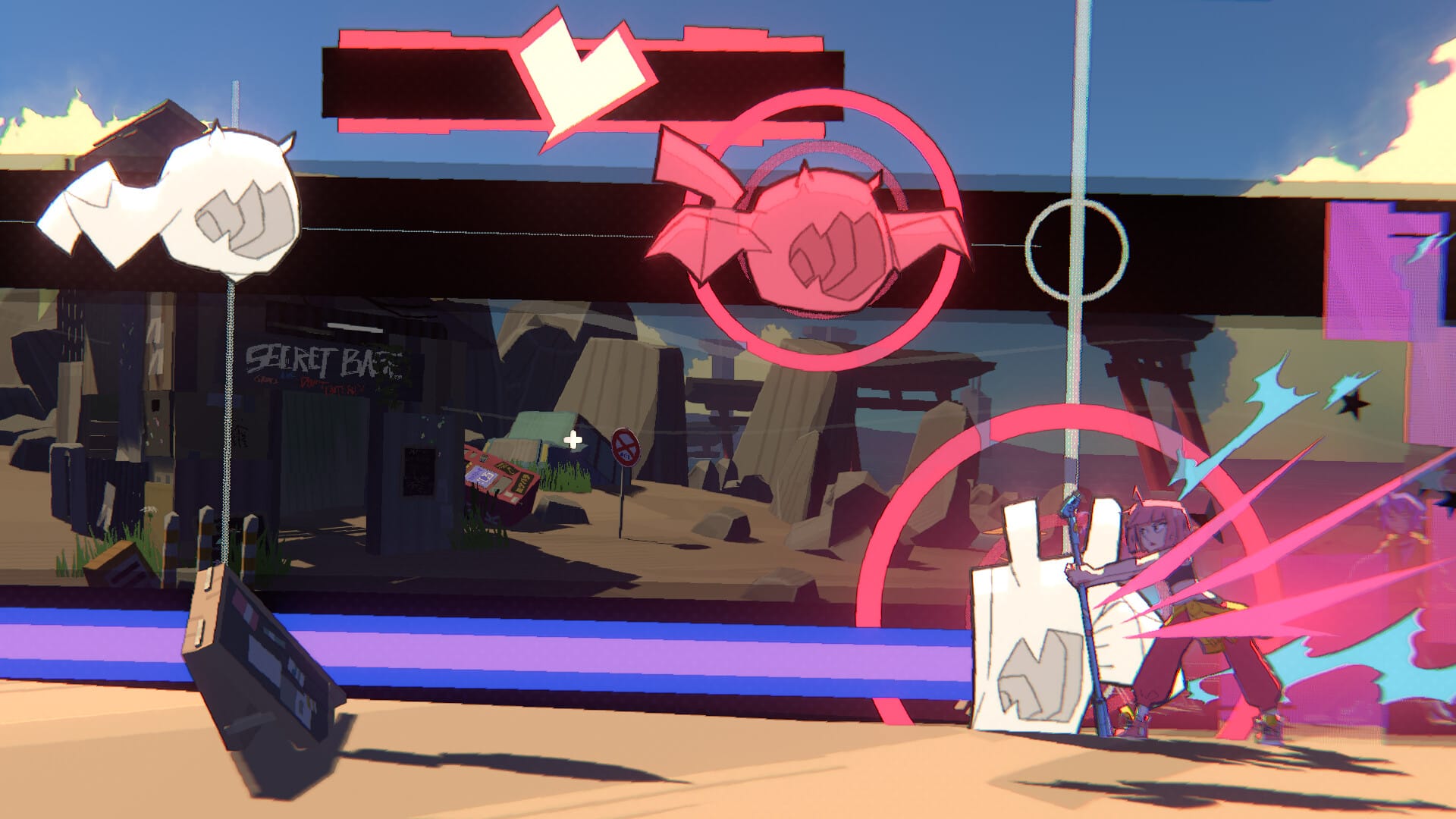
From this conversation, the screen cuts to white. Quaver starts to sing. The instruments come in, and I can start hitting stuff on beat—the perfect emotional release after the game's most poignant moment.
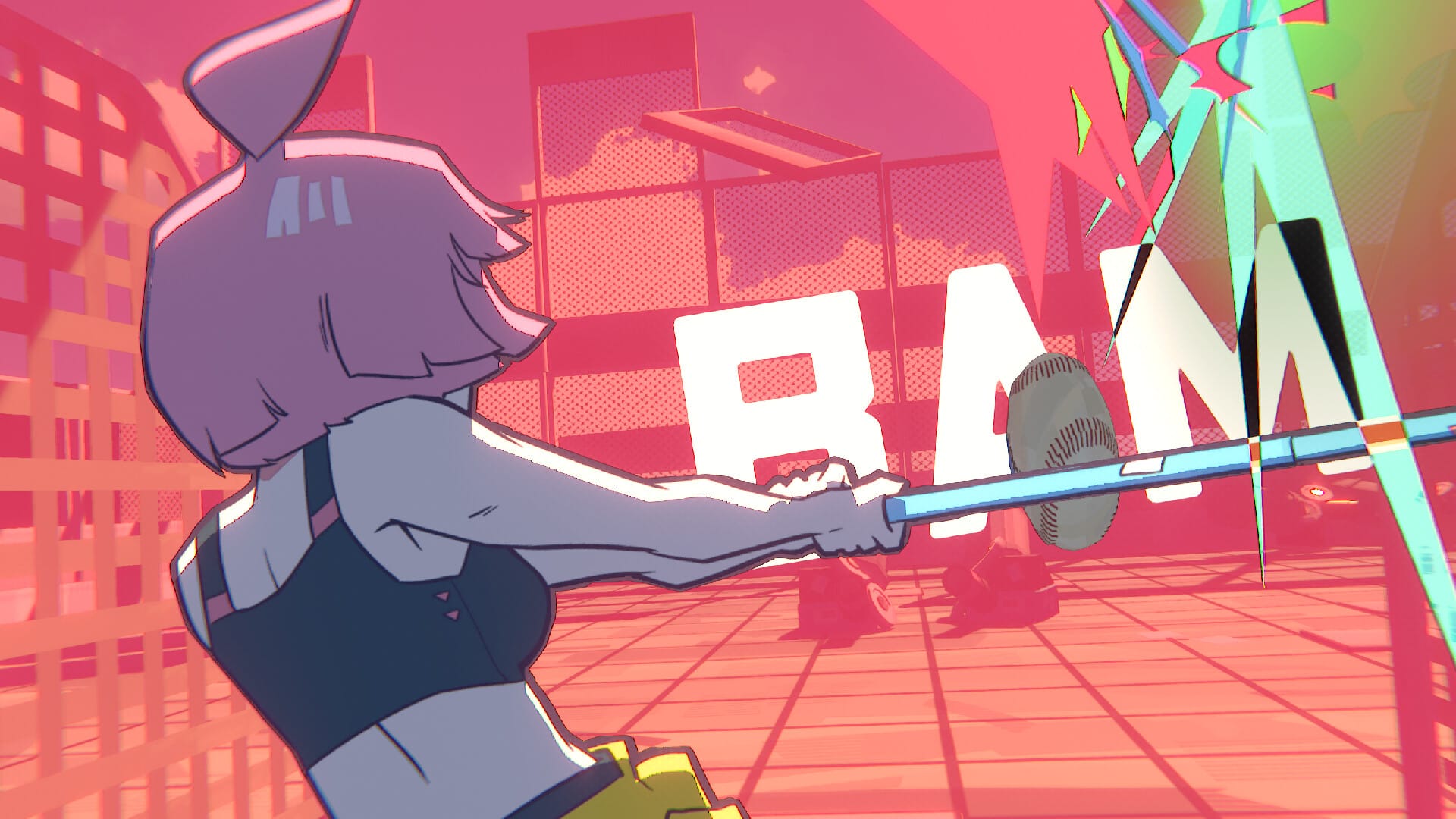
But the rest of the game, aside from several other moments here and there, move too slowly, with too many extraneous details, and way too much walking around. There's one section, early on, where the crew is trying to escape from prison. There's some rhythm elements, and it works as a sort of tutorial. There's a part where you get a prison job. A baseball minigame. A lot of walking around with bad camera work. It's so painfully slow, while also somehow moving way too fast—narratively, I have so many questions. Later, there's a random platforming part to restore power to an arcade that never comes back up in the story. The problem with these sections and several of the others is that the material within doesn't necessarily point towards the core of the story, what's at the center of the last chapter. Unbeatable is shrouded in a mystery that makes this feel intentional. I haven't mentioned this yet, but there's also a supernatural element: Cops are arrested musicians and music lovers, but there's also a big black hole that's threatening to engulf the whole world. You're kind of fighting both at the same time, but it's not until the last few chapters where Unbeatable reveals why. (I still don't entirely get it.)
There were a lot of times during Unbeatable when I wanted to quit the game's story mode. And right when I was thinking that, I hit one of the moments where the visuals, music, and writing really work. Those moments do a lot of work in forgiving the bad parts. It's easy to see the vision of developer D-Cell; the game drips both heart and an undeniable cool. But you can also see where the focus was—rightfully on these big, key moments—and where everything went off the rails.
Yet, by the end, I found myself shrugging off its failures. That's kind of the takeaway of Unbeatable, no? It's messy. Sometimes bad. And yet it still made me feel.
There’s something deeply satisfying about watching tiny digital citizens haul rocks and berries across a bustling settlement you’ve built from scratch. Pioneers of Pagonia, the latest creation from Volker Wertich (the mind behind The Settlers series), delivers exactly that kind of meditative city-building experience – with enough depth to keep strategy fans engaged for hours.
This isn’t just another cookie-cutter city builder. Pagonia takes the genre’s familiar formula and adds its own distinctive flavor through visible, granular supply chains and a unique border expansion system. After spending considerable time with both the campaign and sandbox modes, I can confidently say this game scratches a very particular itch for management sim enthusiasts.
A Tutorial That Doesn’t Feel Like Homework
The campaign serves as your introduction to Pagonia’s systems, and honestly? It’s one of the best tutorial experiences I’ve encountered in this genre. You’re not drowning in tooltips or struggling to remember what the game threw at you in the first ten minutes. Instead, the story naturally introduces mechanics across seven chapters as you island-hop through a shattered continent.
Your pioneers are searching for other survivors in a world fragmented by magical catastrophe. Each new island brings fresh challenges – different terrain types, unique resources, abandoned villages, and increasingly dangerous threats. The narrative gives purpose to your building, transforming what could be dry tutorials into actual missions with stakes. By the time you finish the campaign (which clocks in around 30 hours), you’ve mastered everything from basic resource gathering to complex military operations.
Supply Chains That Actually Make Sense
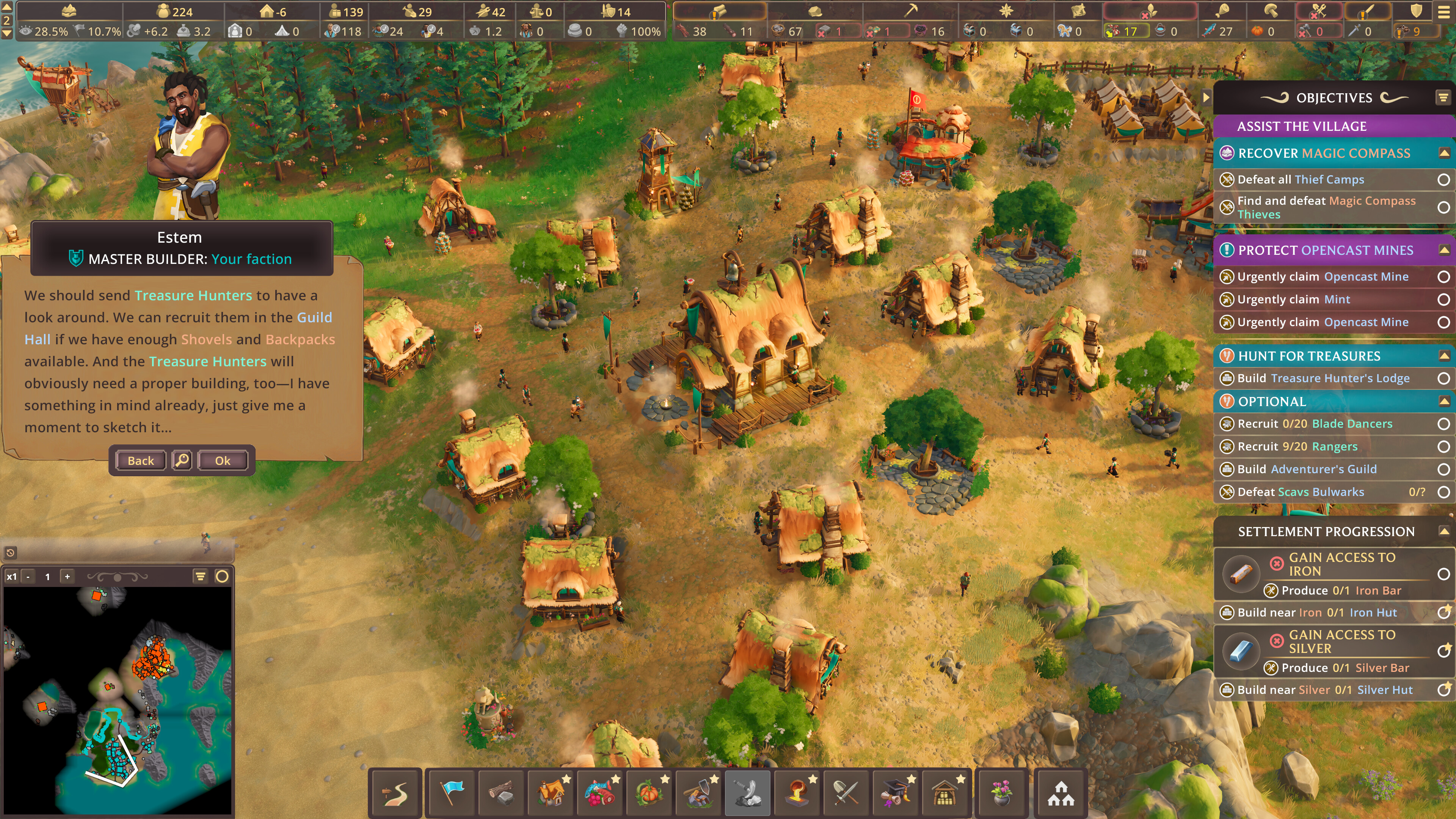
Here’s where Pioneers of Pagonia really shines. The production systems feel tangible in a way that many city builders miss. Want to staff a guard tower? You’ll need gatherers collecting stone and sticks, a workshop transforming those materials into spears, and then citizens trained at your town hall. Every finished good traces back through multiple steps you can actually watch happening.
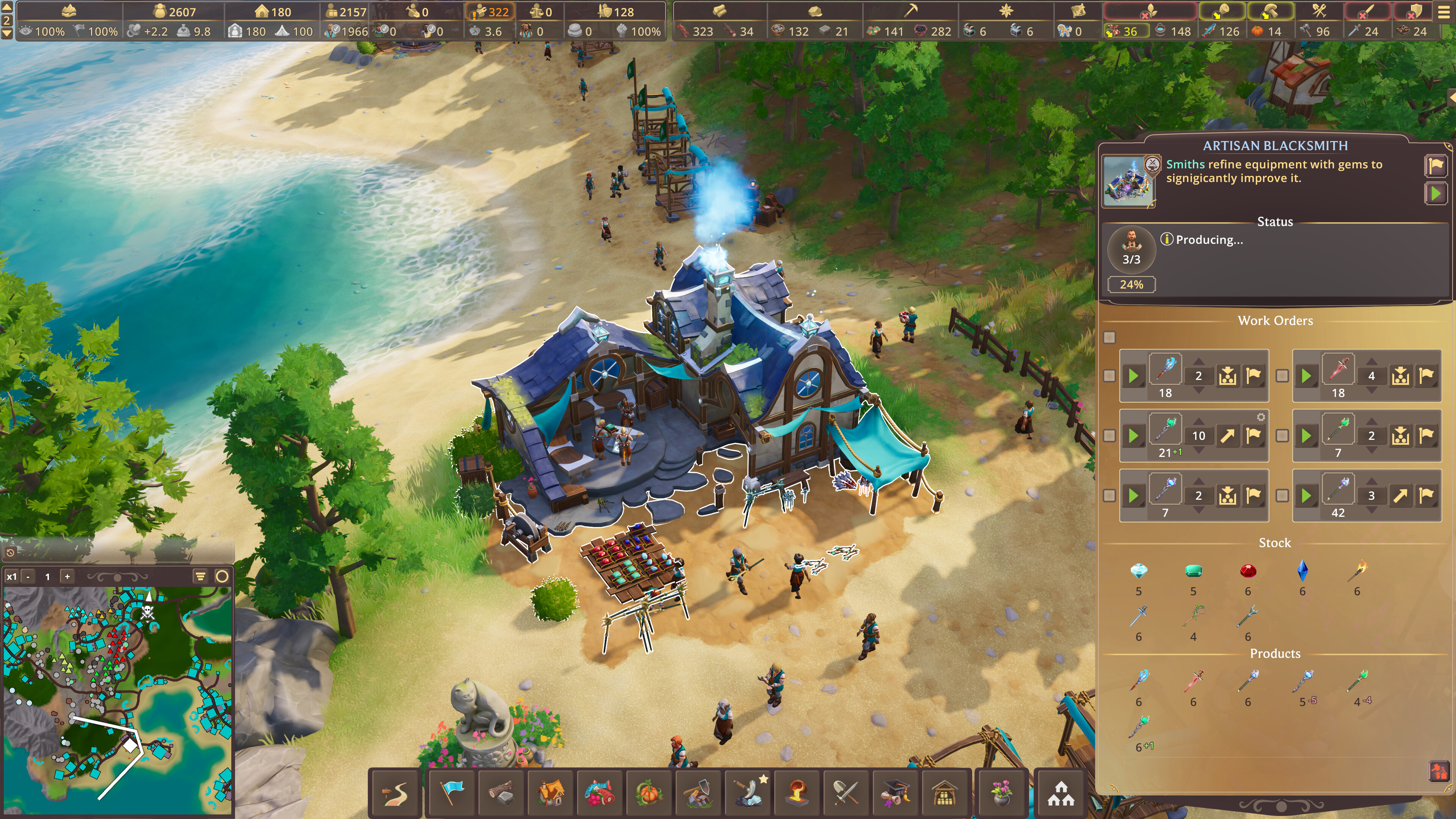
The game gives you remarkable control over these chains too. Foresters can focus exclusively on softwood. Workshops switch between made-to-order and continuous production. This granularity prevents the common city-builder problem where your economy becomes an opaque black box. You always understand why something isn’t working – usually because you can literally see the traffic jam of carriers struggling to move goods around.
Progress ties directly to exploration through a discovery-based tech system. Finding iron veins or stone quarries unlocks new building tiers and production options. Guard towers extend your territory borders, giving access to the resources you need for advancement. It creates a compelling loop: build efficiently in your current space while pushing outward for the next tier of materials.
The Pacing Question
I should mention that Pioneers of Pagonia moves deliberately, especially early on. Your first guard tower might take fifteen minutes to complete at standard speed. Buildings in the early game require literal minutes to construct. The game includes speed controls, and you’ll probably use them frequently – which suggests the default pacing could use some adjustment.
There’s also no universal demolish tool, meaning town redesigns involve clicking buildings individually. Housing can’t be upgraded directly either; you demolish and rebuild larger versions instead. These quality-of-life gaps don’t break the experience, but they do add unnecessary friction when you want to reshape an established settlement.
Flexibility That Respects Your Playstyle
Once you’ve completed the campaign, Pagonia opens up considerably. The sandbox mode offers extensive customization – adjust map size, terrain types, resource distribution, enemy difficulty, or disable combat entirely. You can focus purely on building peaceful towns or create challenging scenarios with aggressive raiders and limited resources.
The game supports co-op for up to four players, though the slow pacing means this works better as a chill hangout session than a strategic multiplayer experience. There’s also a full map editor that lets the community create custom challenges, which should extend the game’s longevity significantly.
Military systems provide just enough variety without overwhelming non-combat players. Rangers counter thieves effectively while Blade Dancers handle armored foes. You’re defending against bandits and supernatural threats, not waging large-scale wars. If you prefer peaceful building, you can toggle combat off – though you’ll notice many military buildings sitting unused, which feels slightly wasteful.
Should You Build Your Settlement Here?
Pioneers of Pagonia won’t appeal to everyone. If you demand fast-paced gameplay or minimal micromanagement, look elsewhere. But for players who enjoy detailed logistics, watching systems interlock, and building settlements that feel genuinely alive, this delivers exactly what you’re seeking.
The game smartly simplifies population management (citizens won’t starve, housing expansion is straightforward) to make room for its complex production chains. This balance between accessibility and depth creates something approachable for newcomers while offering enough mechanical richness to engage veterans. The charming art style doesn’t hurt either – zooming in to watch individual pioneers doing their jobs never gets old.
It’s not perfect. The pacing could be tighter, the building placement grid occasionally fights you, and some quality-of-life features feel conspicuously absent. But these are scratches on an otherwise solid foundation. Pioneers of Pagonia understands what makes city builders compelling: the satisfaction of systems clicking together, the pleasure of watching your creation grow, and the endless “just one more turn” appeal of optimization. If that sounds like your kind of game, you’ll find plenty to love here.
Over the years, I’ve reviewed a lot of games, especially mobile games, but few of the games are as universally acclaimed as Subways Surfers. And in this article I’m going to give a full blown review of Subway Surfers, the good, the bad, and the ugly.
As a part of my ...
Clawsocks (or Finger Sleeves) are not for all gamers, but if you have sweaty fingers, or if you’re a serious gamer, clawsocks are game-changing. My main game is Lords Mobile and so I don’t really need clawsocks for that. PUBG, though, could definitely use a finger sleeve as sweating is ...
Flotsam – much better than the actual Waterworld games (Stray Fawn Publishing)
Surviving the apocalypse has never been so relaxing as in this excellent mix of survival game and city builder, set on a waterlogged future Earth.
The post-apocalypse is a famously popular setting for video games. From Fallout’s survivalist role-players to the harrowing events of The Last Of Us, game makers have long been drawn to the idea of a world reset, primed for reimagining. And, naturally, such games tend to be rather gloomy affairs.
Not so Flotsam, which might be gaming’s most cheerful take on life after the end of everything. Finally released as a full game, following years in early access, Flotsam is set in a world almost entirely flooded, where a handful of small islands and building tops make up the remaining landscape. The population appears reduced to almost nothing, and there is next to nowhere left to grow food.
And yet developer Pajama Llama Games’ creation welcomes you to a place of glorious weather, rolling blue seas, oceanic beauty, and an optimistic effort to build a community and thrive.
The heart of the game is your new home: a plucky, pootling boat that you constantly expand with walkways, pontoons, and floating structures, until you find yourself piloting a vast, self-sufficient floating village. Everything you use to build that undersized empire will have to be pulled from the waves or constructed onboard. Which brings us to Flotsam’s other half, where you explore a vast map, scavenging for supplies and welcoming new survivors to your community.
When it comes to the fundamentals of building out a prosperous settlement with a functioning and balanced ecosystem, things are broadly comparable to the likes of classics such as SimCity; although in the case of Flotsam the focus is on the finer details of producing food, building housing, and workshops, purifying water, and keeping your residents happy and healthy.
So, where SimCity might have asked you to place an entire industrial region in a single click, in Flotsam the level of detail demands you have the correct ingredients for meals, enough wood dried and shaped to build your next extension, and all manner of other considerations.
That might make things sound like rather too much of a mundane chore list, but so brilliantly balanced are Flotsam’s systems that the game is deeply captivating and rewarding. Constantly working to keep going has never felt quite so wonderful. There’s an intimacy to the detail that really connects you with your floating home, making you really care about its survival.
Flotsam is a very hard game to put down, because there’s always a few more things you can do to improve your settlement. And with those tasks completed you’ll open up yet more ways to make your home a little more efficient, beautiful, or capable.
The game’s core loop sees you hopping back and forth between the map screen – where you’ll direct your boat to points of interest – and the zoomed in world screen where you scoop up resources, scavenge islands for everything from food to metal scraps, set your inhabitants to work, and maintain and expand your boat.
Some of the old world is still left to scavenge from (Stray Fawn Publishing)
After that, you can hop back to the map and let everyone carry on as you navigate. Early on, you’ll focus on gathering plastic and wood from the sea, to build the likes of storage areas and your first homes and workshops. Initially the workshops let you dry salt water-drenched driftwood, cut planks to shape, and form plastic into simple building materials. In the opening hour you might also craft a water purifying tower or expand a network of jetty-like pathways that let your residents – known as drifters – get about their work.
In time, you’ll even construct your own humming power network, schools, areas for rest and recreation, seaweed farms, smaller fishing and scavenging boats, and specialised workshops that create food, rope, firewood, and much else besides – all of which will have to work in balanced harmony.
Expert, exclusive gaming analysis
Sign up to the GameCentral newsletter for a unique take on the week in gaming, alongside the latest reviews and more. Delivered to your inbox every Saturday morning.
That harmony is yours to orchestrate. The Pajama Llama team’s greatest achievement, in the case of Flotsam, is making that effort a wonderfully relaxing, gentle, interesting experience, without watering down the wider genre’s complexity and nuance.
Nevertheless, Flotsam could do with having its tutorial integrated into the game’s opening, rather than existing as a separate entity. The opening chapter of the Flotsam experience does give you nudges in the right direction, but you might find yourself momentarily bewildered by an inability to source a certain material or reaching for your phone to search how a system works (and fortunately, there is plenty of information online, thanks to the game’s years in early access).
You’ll soon feel entirely in control though, a master of your floating future. Because the systems in Flotsam make such plain sense, and because of that close-up level of detail where you can see seaweed fluttering in the wind on racks and dried wood being carried to the sawmill. Despite its imperfect onboarding, Flotsam is the ideal game if you’ve always wanted to crack the city building genre, but never really found your gateway.
If you’re a genre obsessive, things might feel a little familiar in terms of the process of building out that bustling ecosystem. And yet the addition of the exploration and survival element should give you a taste of something distinct. And whatever kind of player you are, you may well long for more elaborate quests and missions, or maybe in-narrative events that drastically shift the dynamic of strategies you deploy. Still, even without those things, there are many, many hours of pleasure to be found in the waters of Flotsam.
The process of scooping up new survivors and integrating them into your community is always delightful, too. Rather than fuss over the fate of a city of millions, in Flotsam new recruits never arrive in crowds. Many hours in, you might still be able to count your populace on two hands – or maybe three. Again, Flotsam has a marvellous sense of knowing the world you build at an individual level, right down to the names of each resident.
The overall result is one of the most rewarding and charming city builders of recent times. The emphasis is almost always on progress, success, and community, and while you do have to knuckle down to the serious business of keeping Drifters fed, watered, and content, rarely is Flotsam a game about struggle or failure.
It wants you to do well, and that is a pleasure to experience. Even if you do squeeze yourself into a resource bottleneck, where your stores are full and you don’t have what you need to build a way forward, the solutions are always straightforward and typically immediate. Flotsam doesn’t patronise or keep things too easy; rather, it makes facing its challenges a joy.
And when that joy plays out over a blue and pleasant land, where people are collaborative and kind, it makes Flotsam a very nice place to escape to, even if a global disaster has struck. It is still a post-apocalyptic world, where survival dominates your every thought, but saving the future of humanity has rarely been so playful. And play is what video games are meant to do well.
Flotsam review summary
In Short: A relaxing and nuanced survival city builder, that has plenty of depth and variety but also an unusually laidback and optimistic tone.
Pros: An excellent city builder, that uses the established foundations of the genre in new and unusual ways, with a smaller and more intimate scale. Upbeat atmosphere is cheery without being saccharine.
Cons: The game could be clearer in introducing its concepts and the core gameplay may feel too familiar to genre veterans after the opening hours. More elaborate missions and quests would be welcome.
Score: 8/10
Format: PC Price: £19.99 Publisher: Stray Fawn Publishing Developer: Pajama Llama Games Release Date: 4th December 2025 Age Rating: N/A
You can’t save the world but you can rebuild it (Stray Fawn Publishing)
Killer Eyelashes is all about drag queens and a zombie apocalypse, bringing together a funny and well designed story, Did you think that drag queens take a break during the apocalypse? Well,...
Dinopunk: the Cacops Adventure is a side-scrolling arcade platformer with a lot of nostalgia in its (mesozoic) roots. You get to play a little dinosaur, who can use the power of water...
I Write Games Not Tragedies is a narrative-driven rhythm game about an emo kid going through life, battling with addiction, and growing up. There seems to be a narrative game for every...
RUMOUR is a horror game full of puzzles where you need to move objects from one world into another to save your brother. You hear some far-fetched tales about two worlds colliding...
The White Cat’s Dark Affair is a cyberpunk hitman thriller where you play as an assassin making lethal decisions in a point and click style. The main character is looking to take...
Crabs and Rats is a wall-jumping arcade game against chaotic enemies that will devour you if you don’t avoid the bottom of the screen. I played the game at BCN Game Fest...
Mycopsychosys: Project Jupiter is mystery game where you play as a young detective working in the middle of a global zombie-like infection. I played a demo of the game at BCN Game...
HIGH A one-handed mode and strong accessibility options.
LOW Lack of visible body/feet in first-person view.
WTF Witness testimonies reimagined as interactive, playable memories.
Courtroom drama is criminally underrepresented in gaming, and The Darkest files does its part to change that, bringing a rare mix of historical gravity, narrative agency, and emotional nuance to the table.
Set in post-WWII Germany, The Darkest Files follows a young prosecutor working under the stern eye of Fritz Bauer (a real historical figure) as they sift through evidence, interview witnesses, and try to untangle the lingering moral wreckage of a nation trying to rebuild.
The setting alone is enough to grab attention, but it’s the small touches that elevate the experience — picking dialogue responses, interrupting witness testimonies to present evidence mid-conversation, and risking rejection when submitting proof to the court. Unlike other titles where success is often telegraphed, The Darkest Files isn’t afraid to let players fail – reinforcing the idea that justice, like memory and life itself, are fragile.
Played from a first-person perspective, the hook to The Darkest Files lies in its approach to investigation. Witness interviews feel dynamic because players aren’t just passively listening — the memories described are fully playable scenes that players can explore, adjust, and challenge.
For example, in one moment an elderly woman describes a fleeting glimpse of a suspect, and within seconds, the player’s view shifts into a surreal reconstruction where one can move about, examine evidence, and try to piece together a credible timeline. However, in a move harkening back to the developers’ bravery via presenting opportunities to fail, certain parts of the reconstruction trigger the end of the investigation opportunity, whether or not the player has investigated all points of interest — and missing some could lead to a weaker case and a potential loss in court.
The gameplay is smooth and largely intuitive, and accessibility is clearly a high priority – one-handed mode being just one of many thoughtful options. Reconstructing events and organizing evidence flows naturally, with stakes added by the fact that even a seemingly complete compilation of proof can be rejected by the court. There is no hand-holding here — players are asked to think critically and advocate fiercely.
Not everything hits the mark, though. While the court scenes are engaging, they tend to resolve quickly, leaving little room for the kind of strategic maneuvering seen in other legal dramas. The inability to lay traps for the defense – such as baiting a lie and then revealing contradictory evidence – feels like a missed opportunity to add extra layers of tactical satisfaction.
Still, The Darkest Files manages to do something special. Its neo-noir art style – heavy on blues, whites, and yellows – beautifully complements the somber tone of its story, evoking a blend of 1960s comics and classic detective cinema. Meanwhile, characters like Simon Petere — an old rival initially rooting for the player’s failure — inject a sharp tension that prevents the narrative from sinking into being a dry historical rehash. Some of its best moments come from small, human details – things like retail stores half-heartedly justifying their wartime behavior, and citizens wrestling with guilt and denial – that paint a complicated portrait of post-war Germany that is rarely seen in games.
The Darkest Files doesn’t simply retread expected courtroom cliché — it asks hard questions, demands patience, and treats its players with the respect they deserve. Putting a few minor mechanical shortcomings aside, The Darkest Files succeeds by refusing to sanitize history and doesn’t oversimplify the complexities of justice and the human spirit.
Rating: 8 out of 10
— Patricio do Rosario
Disclosures: This game is developed and published by Paintbucket Games. It is available on PC. This copy of the game was obtained via publisher and reviewed on the PC. Approximately 8 hours of play were devoted to the single-player mode, and the game was not completed.
Parents: This game is Not Rated by the ESRB. There are depictions of Violence. A description about the game reads: Germany, 1956. The war is over, but justice is not served. Former Nazis walk free, while their victims lie in unmarked graves. As a prosecutor, you’ll unearth long-buried evidence, confront witnesses and hunt down perpetrators. Will you have the courage to bring these “ordinary men” to court? It’s not meant for children.
Colorblind Modes: Colorblind modes are not available.
Deaf & Hard of Hearing Gamers: The Darkest Files offers no options for audio accessibility other than subtitles, but there are no necessary audio cues and the game is playable without sound. This game is fully accessible. There are options to resize texts and subtitles. (See examples above.)
Remappable Controls: All controls are fully remappable.
HIGH Memorable characters and a clever combat mechanic.
LOW Enemies are frequently weak against words the player hasn’t found.
WTF But… what about the tournament?
Ringo is a typical 14-year-old kid. She tries to be fiercely independent, but is capable of great love and loyalty. She’s headstrong, lazy, snarky, and apparently doesn’t bathe enough. She’s also tremendously good at kicking people in the face.
Ringo dreams of two things — finding her missing brother, and someday winning the Kiai Tournament, which is the ultimate martial arts spectacle/competition/game show in the known universe.
When a mysterious ship bearing the ne’er do well Wolfe crash-lands on her planet, Ringo discovers that she carries part of the fabled Wanderstar map, which may give her both the answers she seeks and the training she needs to meet both her goals… provided evil pirates don’t get her first.
Wander Stars could be coarsely summed up as a menu-driven RPG featuring anime-inspired visuals that are a love letter to Akira Toriyama (Dragon Ball), but it’s so much more than that.
For starters, when I say “menu-driven RPG,” I’m sure many will immediately picture something where players are given options to Fight, Run, Use, or Magic on opponents ad nauseum for dozens, if not hundreds of hours. Wander Stars does indeed use menus, but… not like that.
During combat, Ringo is provided with a certain number of slots where the player can place words to use for attack, defense, and modifiers, with some words taking up more of those slots than others.
For example, “Kick” does a limited amount of damage, but only takes up one word slot, while “Dropkick” does more damage, but takes up more slots.
During her journey, Ringo also learns modifiers that can increase damage or hasten a word’s cooldown time, allowing it to be used again sooner. She also learns environmental effects which can do more damage, provide buffs, or cause status effects like “blind”.
When it all comes together, Ringo may choose to perform something multipart and fancy like a “Super Fire Dropkick” on her foe, causing massive damage. It sounds complicated, but it becomes second nature almost immediately.
What’s trickier (and takes more time to master) is the other amazing trick Wander Stars’ combat has up its sleeve — the goal in every fight is not to knock opponents’ health to zero, but instead, to get them to surrender.
Each enemy has a hit point range (near death) in which they’ll immediately give up. Beating them down but then allowing foes to leave the field with their dignity intact awards Honor points, which are then used to teach Ringo more words, improve health, and give more word slots for combat.
Accomplishing this is easier said than done, though. Every opponent’s range is different, and while Wander Stars tells the player exactly how much damage a move is capable of, it doesn’t mention weaknesses and resistances until a word is used — think “Not Very Effective” or “Super Effective” from the combat in Pokemon.
Discovering how to determine a baddie’s weaknesses and then making sure not to knock them out completely is a challenge, and it turns combat from simply clicking on words into choosing the right phrase at the right time. As a result, these fights are tense in a way I’ve never experienced in an RPG of this type.
So the combat lands, but what about the script? The story delves into heady topics such as love, loss, trauma, regret and sacrifice, while maintaining a sense of wonder and a healthy dose of humor along with the introspection.
In an homage to many famous JRPGs, the cast of Wander Stars is a motley crew of lost souls who come together using the power of friendship to thwart a great evil. While that sounds cliché, clever writing and witty banter gives the narrative immense charm. I found myself moved by Ringo’s drive to rebuild her lost family, and Wolfe’s checkered past hides a heart that has been broken beyond measure by his choices.
It’s a credit to the writing team that the story never falls into melodrama, and they know exactly when and how to change the mood with a quick joke or a poignant peek into a character’s psyche. I can’t describe it in any more detail without risking spoilers, but it’s fantastic — my only complaints about the script are that the story ends too soon, and the ending feels like setup for a sequel. Otherwise, the narrative is superb.
My biggest complaint, and frankly the only thing preventing me from giving Wander Stars a higher rating, is the fact that in addition to being a turn-based RPG, it also has roguelike elements which mean the adventure is designed to be played in multiple runs. It’s fully expected that players complete each of the “episodes” more than once, so Ringo can unlock more words to use in later runs. The problem is that many enemies are only weak against words Ringo may not learn until much later in the campaign, often making the combat more difficult than it needs to be, especially against bosses that have ridiculous amounts of health and must be completely defeated — bosses never surrender.
That aside, Wander Stars is one of — if not the best — games I’ve played this year. It is equal parts hilarious, touching, exciting, and clever. The interactions between characters and even the enemies is consistently moving or delightful, the combat is sharp and challenging, and the art style is top-notch. It’s a must-play, but just be prepared for a bit of a grind and know that it might be tough to find exactly the right words to do the job.
Disclosures: This game is developed by Paper Castle Games and published by Fellow Traveller. It is currently available on XBX/S, PS5, PC, and Switch. This copy of the game was obtained via publisher and reviewed on the XBX. Approximately 22 hours of play were devoted to the single-player mode, and the game was completed. There are no multiplayer modes.
Parents: According to the ESRB, this game is rated T and contains Fantasy Violence, Language, Use of Tobacco. The game implies violence against humanoid and non-humanoid creatures. All violence is stylized, and all damage received by characters is cartoonish in nature such as large bumps on the head, or comically swollen eyes. S— is used early and often in dialogue. The storyline features a self-sacrifice of a character which may be triggering for some. Parents may wish to use caution in allowing children to experience the game based on these two factors.
Colorblind Modes: There are nocolorblind modes available.
Deaf & Hard of Hearing Gamers: This game offers subtitles. The subtitles cannot be altered and/or resized. However, the UI titles can be re-colored for accessibility purposes, and the delay around subtitles can be changed as well. All dialogue is handled via subtitles. All audio cues are accompanied by a visual component. This game is fully accessible.
Remappable Controls: Yes, the controls can be remapped.