Announced at the CES trade show running this week in Las Vegas, NVIDIA is bringing more devices, more games and more ways to play to its GeForce NOW cloud gaming service. Powered by GeForce RTX 5080-class performance on the NVIDIA Blackwell RTX platform, GeForce NOW Ultimate continues to raise the bar for PC gamers streaming from the cloud.
GeForce RTX 5080-powered servers are live globally for Ultimate members, delivering up to 5K resolution 120 frames-per-second (fps) streaming and up to 360 fps at 1080p with NVIDIA Reflex technology support for ultralow-latency, competitive play. Cinematic-Quality Streaming mode enhances image clarity and text sharpness for visually rich single-player adventures on nearly any screen.
New this year, GeForce NOW is expanding that performance to more platforms than ever, headlined by a native Linux PC app and a new app for Amazon Fire TV sticks.
Flight-simulation fans are also getting flight controls support, and members everywhere gain faster access to more games thanks to new single sign-on integrations and upcoming AAA titles joining the cloud.
Here Come the Platforms
Linux PCs and Amazon Fire TV sticks are joining the GeForce NOW native app family, unlocking new ways to play in the cloud across desktops and living rooms.
These new apps build on GeForce NOW’s existing support for Windows PCs, macOS, Chromebooks, mobile devices, smart TVs, virtual-reality devices and handhelds, all tapping into the same GeForce RTX 5080-class performance wherever members log in.
Turn your Linux PC into an RTX gaming rig.
A new native GeForce NOW app for Linux PCs, supported with Ubuntu 24.04 and later distributions, answers one of the top requests from the PC gaming community. Linux users can transform their compatible systems into GeForce RTX-powered gaming rigs, streaming supported PC titles from the cloud at up to 5K and 120 fps or 1080p 360 fps.
With rendering handled in the cloud, high-end PC gaming is possible on Linux operating systems, breathing new life into older devices. Members can enjoy ray tracing, NVIDIA DLSS 4 and other RTX technologies without needing a local high-performance GPU. The app is designed to bring a seamless, native experience that fits naturally into Linux desktop workflows while giving access to the expansive GeForce NOW library, turning everyday Linux devices into RTX gaming powerhouses.
The app is expected to enter a beta release early this year.
Game on in the living room.
A new native GeForce NOW app for select Amazon Fire TV sticks — starting with the Fire TV Stick 4K Plus (2nd Gen) and Fire TV Stick 4K Max (2nd Gen) — can bring RTX-powered PC gaming to another big screen in the home. Members can stream their compatible PC game libraries directly to Fire TV-connected displays to turn a compact streaming stick into a powerful cloud gaming rig.
With support for gamepads and GeForce NOW’s familiar interface, Fire TV users can jump into their favorite supported games without a console or gaming PC attached to the TV. This builds on existing TV support and helps make GeForce NOW the easiest way to bring high-performance PC gaming into the living room.
The app is expected to be available in countries where compatible Amazon Fire TV sticks and GeForce NOW are offered and will be launching early this year.
Take Flight
No fight, just flight in the cloud.
GeForce NOW turns more devices into powerful cloud gaming rigs, and CES this year brings another of the community’s most-requested additions.
Simulation fans are getting a major upgrade with flight controls support on GeForce NOW. Popular flight sticks and throttle systems from leading brands such as Thrustmaster and Logitech can be used as affixed hands-on throttle-and-stick desktop units or as separately mounted stick-and-throttle setups for custom cockpits.
Combined with RTX 5080 performance, ultralow-latency streaming and NVIDIA Reflex in supported titles, flight controls let virtual pilots experience greater precision and deeper immersion in their favorite flight- and space-simulation games — including Microsoft Flight Simulator 2024, Elite Dangerous and War Thunder. Members can build out detailed simulation setups at home while streaming the heavy lifting from the cloud when it launches early this year..
Blockbusters in the Cloud
The GeForce NOW catalog includes thousands of supported games from top PC stores like Steam, Epic Games Store, Xbox and others, with more joining every week. Backed by RTX 5080-class performance, members can stream everything from competitive shooters to expansive role-playing games with high frame rates, advanced graphics features and low latency.
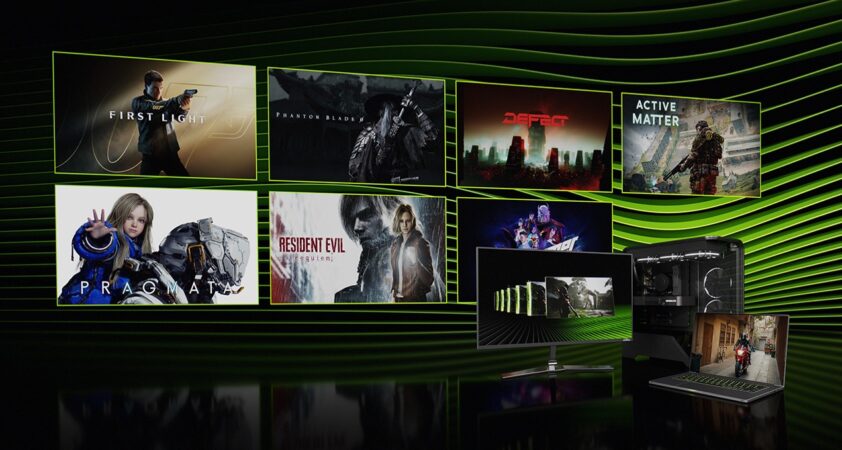
New AAA titles such as IO Interactive’s 007 First Light, Capcom’s Resident Evil Requiem, Pearl Abyss’ Crimson Desert, and Gaijin Entertainment’s Active Matter are coming to GeForce NOW when they launch on PC, adding to an already robust lineup of new releases and fan favorites.
License to stream.
007 First Light drops players into a modern James Bond origin story filled with stealth, espionage and cinematic action. Resident Evil Requiem continues the iconic survival-horror series with a new protagonist facing terrifying threats in a chilling new setting. Crimson Desert blends open-world exploration, cinematic storytelling and intense combat in a richly detailed fantasy world. Active Matter from Gaijin is a realistic military shooter where players join dangerous raids for loot or intense player vs. player battles set in a fractured multiverse.
Members can look forward to seeing these and other upcoming hits arrive on the service, with updates shared regularly on GFN Thursdays.
One Login, Many Worlds
Just sign in once. The rest is game history.
GeForce NOW is also making it faster to jump into gaming with new account and platform integrations. Recent updates introduced Battle.net automatic sign-in, letting members connect their accounts and access supported titles more quickly.
That seamless experience is expanding to additional game stores, with Gaijin.net set to soon support automatic sign-in on GeForce NOW early this year. Members will be able to authenticate once and jump into War Thunder and other titles with fewer steps.
Learn more about the latest NVIDIA-powered innovations at CES, running through Friday, Jan. 9.
See notice regarding software product information.
At the CES trade show, NVIDIA today announced DLSS 4.5, which introduces Dynamic Multi Frame Generation, a new 6X Multi Frame Generation mode and a second-generation transformer model for DLSS Super Resolution, so gamers can experience the latest and greatest titles with enhanced performance and visuals.
Over 250 games and apps now support NVIDIA DLSS 4 technology, with this year’s biggest titles adding support, including 007 First Light, Phantom Blade Zero, PRAGMATA and Resident Evil Requiem at launch.
In addition, RTX Remix Logic debuted, expanding the capabilities of the Remix modding platform to enable modders to trigger dynamic graphics effects throughout a game based on real-time game events.
Plus, NVIDIA ACE technology demonstrated in Total War: PHARAOH showcases how AI can assist players in navigating the complexities of the game’s many systems and mechanics.
In PUBG: BATTLEGROUNDS, PUBG Ally powered by NVIDIA ACE adds long-term memory, evolving its intelligence and capabilities.
And G-SYNC Pulsar monitors are available this week, delivering a tear-free experience together with a perceived 1,000Hz+ effective motion clarity and G-SYNC Ambient Adaptive Technology — all setting a new gold standard for gamers.
NVIDIA DLSS 4.5 Will Power 4K 240Hz Path-Traced Gaming
NVIDIA DLSS 4.5 introduces Dynamic Multi Frame Generation and a new 6X Multi Frame Generation mode.
DLSS 4.5 can generate up to five additional frames per traditionally rendered frame, dynamically boosting performance and enabling 240+ frames-per-second gaming with path tracing using GeForce RTX 50 Series GPUs. This delivers the smoothest gameplay experiences yet. Dynamic Multi Frame Generation and 6X Multi-Frame Generation are expected to be available in spring of this year.
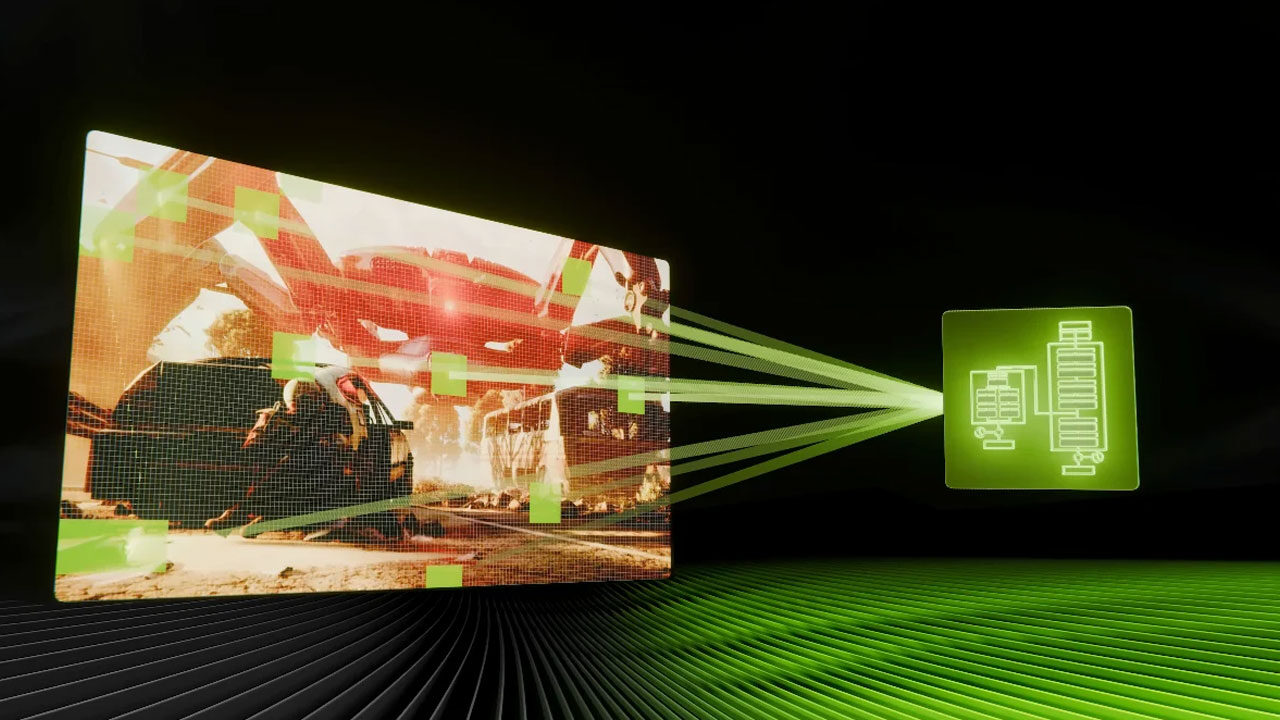
A second-generation transformer model for DLSS Super Resolution also arrives with NVIDIA DLSS 4.5, bringing state-of-the-art image quality to over 400 games and apps for all GeForce RTX GPUs. The second-generation transformer is available to try now via the NVIDIA App for all GeForce RTX GPUs. Learn more.
Over 250 DLSS 4 Games and Apps Available Now
DLSS 4 with Multi Frame Generation launched at CES last year with 75 games and apps supported. Now, more than 250 games and apps are supported, including 2025’s most-played titles, such as ARC Raiders,Battlefield 6, Clair Obscur: Expedition 33 and Where Winds Meet.
New and upgraded titles announced today that will support the latest GeForce RTX technologies include 007 First Light, Active Matter, DEFECT, Phantom Blade Zero, PRAGMATA, Resident Evil Requiem and Screamer. Learn more.
Next-Generation G-SYNC Pulsar Gaming Monitors Available Now
The launch of G-SYNC in 2013 revolutionized displays and gaming, introducing Variable Refresh Rate (VRR) technology that all major display manufacturers now incorporate. This meant gamers no longer had to experience screen-tearing glitches when optimizing for responsive gameplay.
G-SYNC Pulsar displays mark the latest evolution of NVIDIA’s pioneering VRR technology. Through the invention of variable frequency backlight strobing, they deliver effective motion clarity of over 1,000Hz, significantly increasing the clarity and visibility of content in motion so gamers can track targets with increased precision and maintain consistent smoothness in gameplay.
In addition, new G-SYNC Ambient Adaptive Technology uses a built-in light sensor, letting users automatically tune color temperature and brightness for optimal viewing at any hour, day or night. Learn more.
RTX Remix Logic Brings Dynamic Graphics Effects to Classic Games
Many iconic PC games remain beloved for their unforgettable stories, characters and gameplay. However, as technology advances, their visuals can become dated, making it harder for gamers to immerse themselves in the titles.
NVIDIA RTX Remix, a modding platform for RTX AI PCs built to reimagine the graphics of these timeless classics with cutting-edge path tracing, lets longtime fans relive their favorite adventures in stunning visual detail, while opening opportunities for a new wave of players.
A new RTX Remix update — RTX Remix Logic — will be available later this month via the NVIDIA App. Remix Logic is a logic system for making RTX Remix mods visually reactive to the moment-to-moment, in-game action, equipping modders with 900+ configurable settings to trigger dynamic graphics effects based on a wide variety of in-game events.
Historically, modifying a game’s graphics in response to real-time game events was restricted to those with source code or engine access. RTX Remix eliminates this barrier so modders can customize visuals across 165+ classic games without touching the original engine code. Learn more.
NVIDIA ACE Powers New AI Teammates and Advisors
Non-playable characters (NPCs) traditionally follow strict rules designed to provide scripted interactions with players. NVIDIA is expanding the NVIDIA ACE suite of AI technologies to turn conversational NPCs into autonomous game characters that use AI to perceive, plan and act like human players.
Creative Assembly, creator of the award-winning Total War franchise, is experimenting with NVIDIA ACE in Total War: PHARAOH to power a new, dynamic AI advisor that assists players in learning the game’s many systems and mechanics.
By processing the player’s prompts, current game state and data retrieved from the game’s complex database, the advisor delivers real-time, context-aware guidance that adapts to what the player is doing, while staying in-character and faithful to the game’s lore and time period.
KRAFTON is adding long-term memory for PUBG Ally — an NVIDIA ACE-powered AI teammate in PUBG: BATTLEGROUNDS that allows players to issue commands and communicate plans of attack or other tactical maneuvers with each other.
With long-term memory, the Ally can remember previous performances and gameplay interactions, and inject commentary into their responses that refers to past events. PUBG Ally will initially be released as part of a limited-time user test event in the first half of this year via PUBG: BATTLEGROUNDS Arcade for players using English, Korean or Chinese.
GeForce NOW Expands RTX Cloud Gaming Across More Devices
NVIDIA continues to push the limits of PC gaming accessibility with new GeForce NOW updates unveiled today at CES, delivering GeForce RTX 5080-class performance to an even broader range of devices. Gamers can now experience ultrahigh-fidelity RTX visuals through new native apps for Linux systems and Amazon Fire TV Sticks. This answers top community requests.
New support for hands-on throttle-and-stick flight control peripherals provide immersion in simulation titles, enabling precise input and smooth streaming responsiveness for flight and space combat games. GeForce NOW also introduces streamlined single sign-on for Gaijin titles, minimizing setup time and getting players into their favorite experiences faster.
GeForce NOW’s ever-expanding library continues to grow with day-and-date cloud launches of major upcoming titles — including 007 First Light, Active Matter, Resident Evil Requiem and Crimson Desert — ensuring that gamers can stream the latest blockbusters the same day they arrive on PC, all powered by NVIDIA RTX technology. Learn more.
RTX AI PCs Accelerate AI Video, Image and Text Generation
At CES, NVIDIA announced a wave of AI upgrades for GeForce RTX GPUs and laptops that unlock the performance and memory needed for developers to deploy generative AI on PC, including:
Up to 3x performance and 60% reduction in VRAM for video and image generative AI via PyTorch-CUDA optimizations and native NVFP4/FP8 precision support in ComfyUI.
NVIDIA NVFP8 optimizations for the open weights release of Lightricks’ state-of-the-art LTX-2 audio-video generation model.
A blueprint for generating 4K AI video using a 3D scene in Blender to precisely control outputs.
Up to 35% faster inference performance for SLMs via Ollama and llama.cpp.
RTX acceleration for Nexa.ai’s Hyperlink new video search capability.
These advancements will allow users to seamlessly run advanced video, image and language AI workflows with the privacy, security and low latency offered by local RTX AI PCs. Learn more.
See notice regarding software product information.
The PC graphics market might be in peril in hardware terms, with prices spiraling and availability inconsistent, but on the software side things are at least reliably moving forward - with Nvidia today announcing the latest upgrade to its DLSS technology.
Luckey, who initially made his fortune in VR and now runs the defense contractor Anduril, and Ohanian both seemed to agree: Stuff was better in the old days.
CES 2026 doesn’t technically end until tomorrow, but then if it were a football match, it’d be the kind where the home side gets battered 4-0 and the cameras keep cutting to a stream of season ticket holders slumping towards the doors with 20 minutes left. An all-timer in the history of Consumer Electronics Show, it has not been.
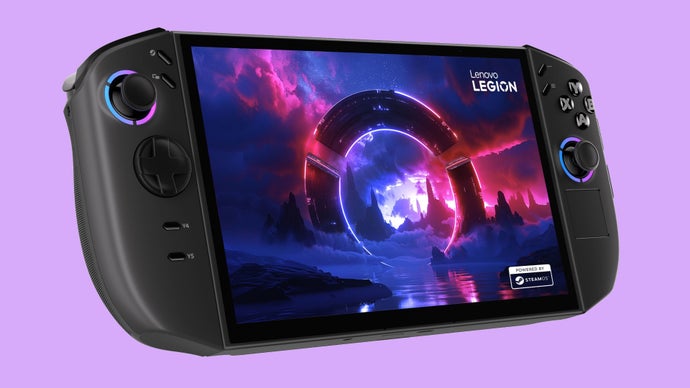
That poll I posted the other day suggests that over half of you RPS reader types play games on Linux, either in part or exclusively. And if a poll says it, I’m in no position to argue, so boy do I have just the CES 2026 story for you: Lenovo are making a SteamOS version of their premium Legion Go 2 portable, joining the lower-end Legion Go S in spreading the Linux-based SteamOS beyond the confines of Valve’s own Steam Decks.
In what has become CPU tradition, AMD have announced a new fastest-ever gaming processor to replace their last fastest-ever gaming processor. The newcomer, detailed at CES 2026, is the Ryzen 7 9850X3D, which actually shares the same architecture, socket, core and thread counts, and power usage rating as the erstwhile big dog, the Ryzen 7 9800X3D. It’s mainly a quicker maximum boost clock, up from 5.2GHz to 5.6GHz, that grants it a performance edge.
CES 2026 is underway in Las Vegas, and while Nvidia have passed on the opportunity to announce any new RTX 50 Super graphics cards – perhaps in the knowledge that they’d be hurled directly into the raging vortex of an ongoing component pricing snafu – the tech show has yielded some interesting GeForce news. Namely, there’s a new version of Nvidia DLSS, 4.5, launching today, that promises to sharpen up and boost performance on any RTX GPU.
Announced at CES 2026, NVIDIA G-Sync Pulsar is rolling out this month on a range of 27-inch QHD screens aimed squarely at competitive players.
If you have played PC games in the past decade, you have likely seen the NVIDIA G-Sync logo. At CES 2026, NVIDIA is pushing what is possible with gaming displays even further. NVIDIA G-Sync Pulsar is a new display technology designed to make fast games look sharper in motion, without the usual trade-offs associated with blur-reduction modes. The first wave of monitors with the feature is expected to arrive shortly, giving PC players a chance to try it at home sooner rather than later. Based on the demo NVIDIA showcased at the show, the results are impressive.
While NVIDIA is not manufacturing the monitors itself, it is working with MediaTek to integrate G-Sync technology directly into the display scaler. NVIDIA has explained that this approach would eliminate the need for dedicated G-Sync modules. G-Sync Pulsar builds on NVIDIA’s long-running variable refresh rate technology by adding a variable-frequency backlight that strobes in sync with the refresh cycle. Instead of lighting the entire panel at once, the backlight is divided into horizontal zones that fire sequentially as each line of the image is updated. This timing gives pixels more time to settle before they are lit, reducing smearing and the double images that can appear when you flick the mouse or track a fast-moving target.
Rather than forcing players to choose between strobing and variable refresh rate, Pulsar is designed to run both simultaneously, a move many esports and competitive players are likely to welcome. NVIDIA says this combination can deliver what it describes as more than 1,000 Hz of effective motion clarity on a 360 Hz panel, or roughly four times the perceived sharpness of the same screen without Pulsar enabled.
Based on demos showcased at CES 2026, the results are impressive. In games such as Anno 117: Pax Romana, improvements were noticeable in on-screen text, even when the camera moved quickly across the map. With Marvel Rivals, text clarity also improved significantly when characters moved rapidly through the environment. For the average player, these gains may seem minor. For competitive players, however, the added clarity provides better insight into what is happening during a match, helping support quick, split-second decisions that might otherwise be missed.
Four 27-inch QHD monitors with G-Sync Pulsar are launching around CES, all built around 2560 x 1440 IPS panels with a native 360Hz refresh rate. The list includes Acer’s Predator XB273U F5, AOC’s Agon Pro AG276QSG2, Asus’ ROG Strix XG27AQNGV and MSI’s MPG 272QRF X36, with prices starting near US$599 depending on region and retailer.
Alongside Pulsar, NVIDIA is rolling out G-Sync Ambient Adaptive, a feature that uses a built-in light sensor to adjust brightness and colour temperature based on the room. Some Pulsar models, including Asus’ ROG Strix XG27AQNGV, will support Ambient Adaptive out of the box.
You can find full coverage from CGMagazine from the CES 2026 show floor, including our Best of CES 2026 selections, along with additional news, features and previews from our time in Las Vegas.
Last year at CES, NVIDIA introduced its RTX 50-series GPUs and DLSS 4, offering an early look at what was possible with multi-frame generation. This year, the company has improved on that formula significantly.
NVIDIA used its CES 2026 stage to unveil DLSS 4.5, the latest update to its AI-powered upscaling technology for GeForce RTX graphics cards. The update promises smoother gameplay, cleaner image quality and a stronger push toward ultra-high frame rates in modern PC games. While DLSS 4 was impressive, it also came with several issues that critics, myself included, noted while evaluating the GPUs and the broader potential of the technology. The new version relies on a second-generation transformer model and a revised approach to frame generation. On RTX 50-series Blackwell GPUs, performance can scale up to 6X the original frame rate. Older RTX hardware also sees performance gains, although with clear limitations.
For anyone who has not been following the latest features introduced with each new DLSS launch, DLSS 4.5 builds on NVIDIA’s existing Deep Learning Super Sampling system. The technology renders games at a lower internal resolution and then uses AI to reconstruct a higher-resolution image, delivering genuinely impressive results.
The company says more than 250 games and applications already support DLSS features. The new version is designed to slot into existing integrations, allowing developers to roll it out through relatively simple updates rather than rebuilding pipelines or completely rewriting existing software. In practice, this means many current PC titles that already use DLSS could see image-quality and performance improvements once DLSS 4.5 support arrives through driver and application updates.
The biggest feature NVIDIA showcased during on-site demos at CES 2026 is what the company calls Dynamic Multi Frame Generation, paired with a new 6x Multi Frame Generation mode designed for RTX 50-series cards. In this mode, DLSS 4.5 can generate up to five AI-created frames for every frame the game actually renders. This allows the system to target 240 frames per second and beyond on supported high-refresh displays, even in path-traced games.
Dynamic Multi Frame Generation monitors how closely the GPU’s output aligns with a display’s refresh rate and adjusts the multiplier on the fly. The goal is to keep gameplay feeling fluid without overproducing frames when system load decreases, and surprisingly, it looked excellent during demonstrations. If you are trying to hit a specific frame-rate target, it makes sense to allocate resources toward reaching that goal rather than generating frames that will never be displayed. It is a smart approach, and one I am eager to test further as support rolls out across more titles.
DLSS 4.5 introduces a second-generation transformer model for DLSS Super Resolution, which sits at the core of how the technology cleans up and scales images. The updated model has been trained on a larger, higher-quality dataset and uses significantly more compute than the first transformer-based version introduced with DLSS 4. The goal is to make challenging scenes, including fast motion, fine detail and high-contrast edges, appear more stable and less noisy.
NVIDIA has also focused on addressing specific visual issues, such as shimmering on static surfaces and ghosting around weapons or objects close to the camera. These have been among the more common complaints with older DLSS versions. We have noted these issues before, so it is great to see NVIDIA taking the time to address them and deliver fixes that still allow users to enjoy the titles they prefer, even if they cannot afford the absolute best GPU on the market.
NVIDIA says the updated transformer model is available across all RTX generations, meaning RTX 20-, 30-, 40-, and 50-series owners can access the improved super-resolution path once they update to the latest software. That said, the largest performance gains are reserved for RTX 50-series GPUs. On that hardware, the combination of DLSS Super Resolution, 6x Multi Frame Generation and Reflex low-latency technology is designed to deliver the best 4K, path-traced experiences at more than 240 frames per second on supported monitors.
Earlier RTX generations are expected to see improved image stability and some performance uplift, but without access to the full 6x frame-generation feature set. That limitation makes sense based on what the technology allows, even if it is disappointing for those waiting on the next generation of NVIDIA GPUs, which were notably absent from this year’s CES.
NVIDIA is also positioning DLSS 4.5 as a straightforward upgrade path for developers already shipping DLSS-enabled games. The company’s latest PC app, currently available in beta, allows players and studios to move existing DLSS titles to the new version with only a few configuration changes. Future updates will roll out 6x frame-generation capabilities to RTX 50-series owners later in the year. For players, that means many games they already own could quietly gain higher, more consistent frame rates and cleaner visuals as studios patch in support.
You can find full coverage from CGMagazine from the CES 2026 show floor, including our Best of CES 2026 selections, along with additional news, features and previews from our time in Las Vegas.
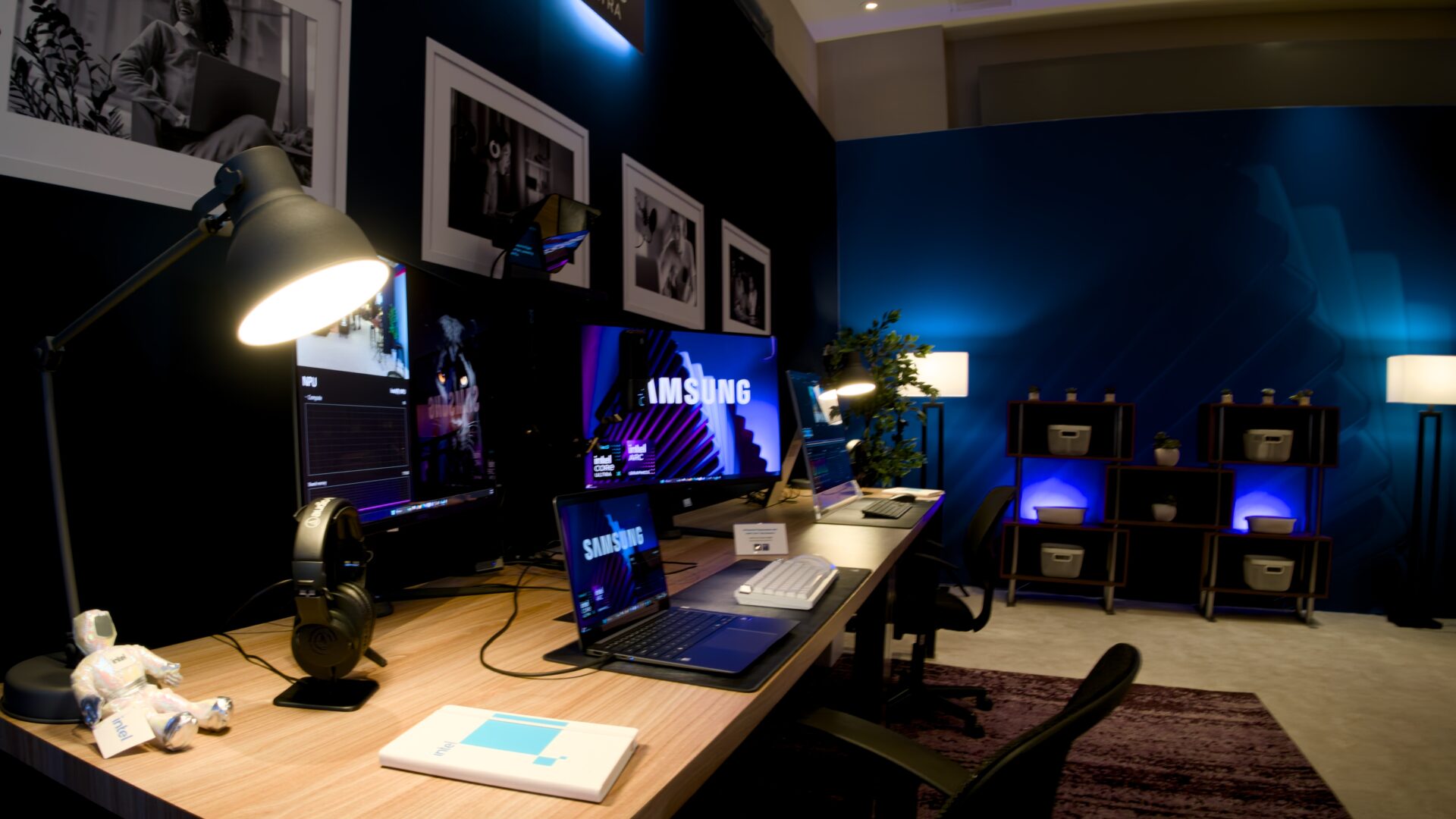
The laptop landscape is constantly changing, with the balance among power, longevity, and performance constantly shifting to deliver the best experience for users. This is where Intel is looking to innovate. With the new Intel Core Ultra Series 3 Processors—Panther Lake—the company is changing what is possible on a laptop that can last all day, while still delivering performance that overshadows some of the best mobile chips on the market.
After talking with General Manager of Intel Canada, Asma Aziz, it is clear that Intel is focused on being a one-stop shop for laptop users, bringing power, performance and AI to gamers, creators, and productivity users everywhere. “We’re laser-focused on delivering what I call the ‘true AI PC experience’ for everyday users,” she said.
CES 2026 is here, and several companies are already announcing their new Intel-based devices. But what does that mean for everyday users? We wanted to go beyond the numbers and dive into what makes Intel’s Panther Lake so exciting.
Intel is positioning Panther Lake as the moment the “AI PC” becomes something users can actually feel in their day-to-day lives. Instead of AI being a feature users activate or a mode they switch into, Intel says this generation is designed so AI becomes part of the natural rhythm of using a computer. According to the company, Panther Lake is more than just a faster processor we have seen released year over year. It marks a shift in how a PC understands users, adapts to them and works alongside them.
Intel suggests the most noticeable change will be how your device begins anticipating what you need. The platform is designed to learn your habits, understand which tasks require performance and which can be handled quietly in the background, and adjust in real time. In Intel’s vision, this means apps open faster, multitasking feels smoother, and your PC behaves more like a responsive partner than a passive tool.
Intel has been working to make its latest generation of chips stand out in several areas, including battery life and graphics, strengths the company has highlighted across recent generations of Intel Core Ultra processors. With Panther Lake, however, Intel has significantly raised the bar. Based on early figures provided by Intel and its OEM partners, this new generation of Core Ultra laptop processors is already exceeding what many viewed as an insurmountable lead held by Qualcomm. Intel has not only caught up, but surpassed its rival across several key benchmarks.
Creative work is another area where Intel promises a meaningful difference. The company says that with Panther Lake’s new graphics architecture and AI acceleration, tasks like video editing, photo enhancement, and design work should feel far more fluid. Effects are expected to apply quickly, previews should run smoothly, and large files shouldn’t interrupt your flow. Everyday enhancements—cleaning up audio, improving lighting in a photo, generating variations of an image—are meant to happen instantly and quietly, without slowing down the system.
Aziz explained how this is different from previous generations, “AI isn’t just an add-on anymore — it’s baked into the DNA of the chip. Users get real-time AI features like background noise cancellation and deepfake detection running locally on their device, not in the cloud. It’s the difference between having AI as a feature versus having a truly intelligent PC.”
Gaming is also an experience Intel promises will feel more effortless. Portable gaming has always involved trade-offs, but Panther Lake is designed to reduce them. “The moment you power on a Panther Lake AI PC, you’ll feel the difference. We’re talking about over 50% faster CPU and GPU performance compared to our previous generation,” Aziz explained, meaning users can expect smoother gameplay, richer visuals, and better battery behaviour, all while keeping devices cooler and quieter. The idea is that you spend less time adjusting settings and more time actually playing.
Where Intel places the biggest emphasis, though, is on how AI will weave itself into everyday tasks. The company highlights scenarios like real‑time translation during video calls, automatic photo enhancements, on‑device writing assistance, and AI‑powered organization tools—all running locally, without relying on the cloud. These are the kinds of features Intel believes will become invisible but indispensable, because they’re built directly into the hardware and optimized to run efficiently.
We discussed with Aziz how Panther Lake’s AI capabilities will benefit the everyday user, “Our Series 3 processors are designed for the multi-purpose user who needs one device that excels at everything—browsing, video calls, light gaming, content creation. The magic is in the balance: if you are a regular user who just wants to stream your favourite shows and movies, you can have up to 27 hours of battery life when streaming, for instance. It’s about giving mainstream users pro-level capabilities in a device that just works, all day long.”
Intel has the data to back up what they are saying, too. “Our new Xe3 integrated graphics with up to 12 Xe-cores delivers over 70% faster gaming performance compared to prior generation Intel CPUs,” says Aziz. Looking over the numbers ourselves, there is a lot to get excited about, especially if you are a gamer, content creator, or just someone who pushes their hardware as far as it can go.
What this means in real-world testing is impressive. Cyberpunk 2077 at 1080p averaged 104 fps on low settings and reached 60 fps on high settings without frame generation. The story is similar in Shadow of the Tomb Raider, with high settings reaching 117 fps with frame generation and 88 fps without it. That is a solid showing for a mid-range GPU, especially on a laptop without dedicated graphics. Even F1 25 delivered a strong performance, reaching about 141 fps on low settings. This makes it an extremely playable experience for anyone wanting to race while on the go.
Intel is announcing significant improvements that deliver multilayer effects across your device, creating a more unified experience that pushes beyond the previous limits of onboard graphics. Aziz gave us a glimpse of what this looks like in real-world use: ”You’re getting discrete GPU-level performance from integrated graphics, which means thinner, cooler devices that don’t sound like jet engines when you’re gaming or rendering.”
Intel’s Panther Lake marks a turning point: the moment when AI becomes something users feel rather than something they’re told about. The company envisions devices that are more intuitive, more responsive, and more capable of helping people create, play, work, and communicate in ways that feel natural. If Intel delivers on its promises, this could be the first generation of AI PCs that do more than compute. They collaborate.
The annual Consumer Electronics Show in Las Vegas always offers a glimpse into the future of technology. With that, we are regularly wowed as we walk the show floor, among massive booths, innovative devices, plenty of gimmicks, and even more AI. This year, CGM saw some amazing announcements and tested some of the coolest gear out there, and now we are ready to crown our Best of CES 2026!
Whether we were looking at simplified solutions for newer tech, like the Nintendo Switch 2, easy-to-use ranges to keep your kitchen safe, or gaming devices that look out of this world, there was always something that caught our eye. We sifted through the CES 2026 show floor at the Las Vegas Convention Center and the Venetian Expo, plus off-site events and meetings to bring you our Best of CES 2026, sharing some of our favourite devices and gadgets from this year’s show!
Belkin Charging Case Pro for Nintendo Switch 2
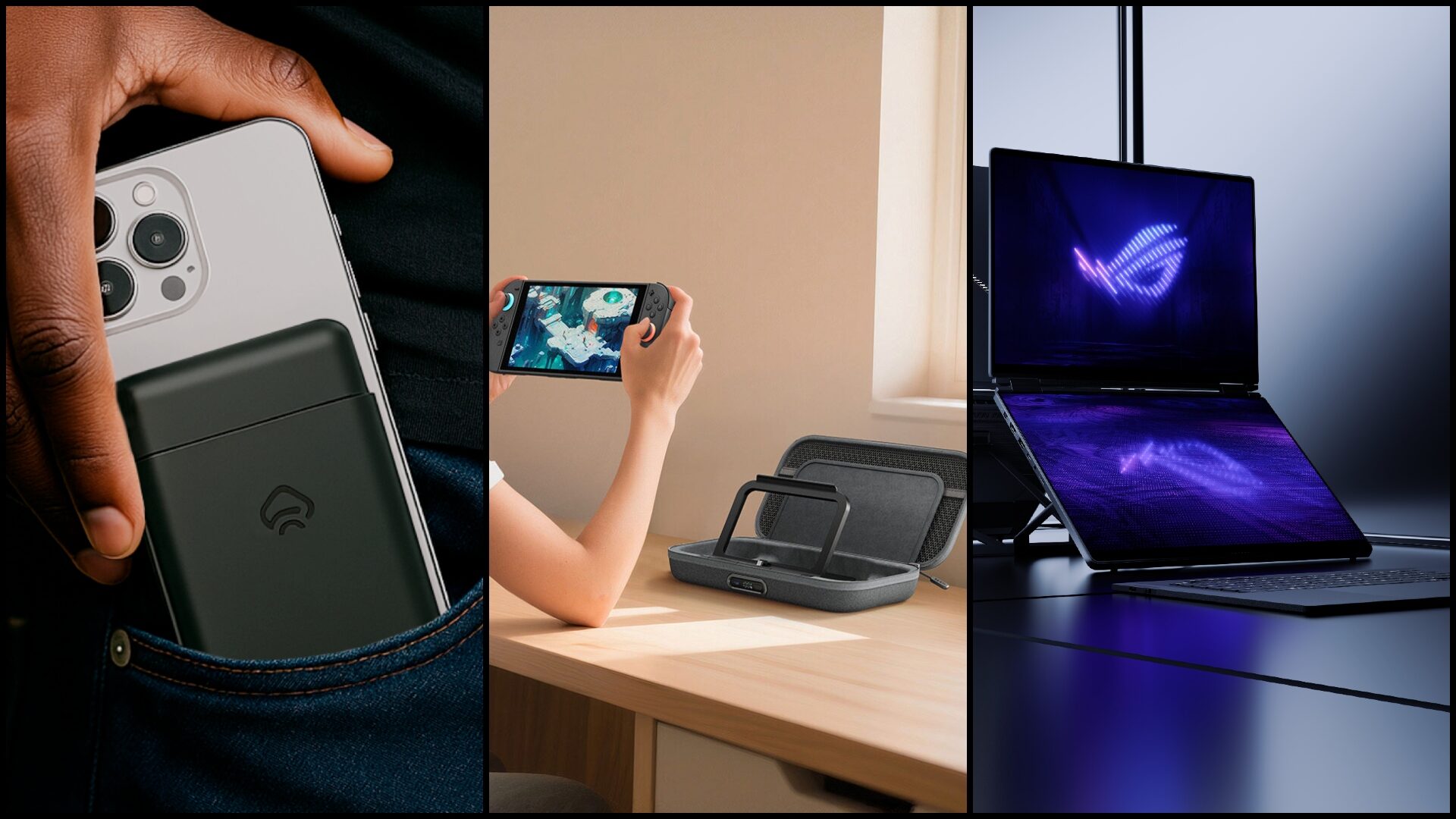
One of our Best for CES 2026 winners comes from Belkin, which is banking on the recent 2025 release of the Nintendo Switch 2. The Belkin Charging Case Pro for Nintendo Switch 2 is far more than just another protective case for the new console. It also houses a 10,000 mAh power bank to charge your Switch 2 on the go. The internal power bank can charge your Switch 2 while travelling between locations and can also serve as a stand for the device, allowing it to charge while in use.
The power bank can be charged without removing it from the case and features a small LCD screen on the outside to monitor remaining power. The Nintendo Switch 2 is a fussy device to power, charge or capture from, so devices that make any of those processes easier are welcome, and doing it while pulling double duty with everything a great case brings earns it one of our Best of CES 2026 awards.
Aspura PRO Smart Range Hood
The Aspura PRO Smart Range Hood is a 36″ side suction range hood that blends patented IQV (Inclined Quad-Vortex) technology with multiple airflows to keep your kitchen free from fumes and smoke. This technology combines inclined high-speed airflow, quad-vortex, and an anti-leakage air curtain, all at a noise level below 66dB. The best part? It does it all with a filter-free design, for a low-maintenance hood you can count on.
The Aspura PRO features a high-velocity centrifugal airflow system that uses up to 500g of force to stop grease in its tracks. Its easy-to-clean design lets you wipe away any grease that gets through in seconds. Our favourite part is the PM2.5 display, which offers touch controls and real-time gas monitoring, giving you peace of mind when cooking at home.
Komutr MagSafe Earbuds
What started as a prototype at CES 2025 and IFA 2025 is now a full-fledged product, and we are impressed. The Komutr MagSafe Earbuds are a compact pair of earbuds whose case snaps onto the back of your MagSafe smartphone or case. These buds come with a boasted 50 hours of battery life with the case, and ensure you won’t lose track of them when you need them most.
Not only does this case, which is about the size of a battery pack, house these earbuds, but it also doubles as a kickstand. The buds also feature active noise cancellation, Apple Find My compatibility, and on-board smart touch controls, meaning you aren’t sacrificing features for a new form factor.
ASUS ROG Zephyrus DUO
ASUS always seems to find a way onto our Best of CES lists, and for two years in a row, it is a member of the Zephyrus lineup that has impressed us. The 2026 ROG Zephyrus DUO takes gaming laptops and amplifies them by 100. Not only is this gaming laptop powered by the upcoming Panther Lake next-gen Intel Core Ultra Processor and an NVIDIA GeForce ETX 5090 Laptop GPU, but it also comes loaded with up to 2 TB of storage and 64 GB of LPDDR5X RAM. This could be perfect for gaming or content creation.
That isn’t all that earned it a spot on our Best of CES 2026 list, though. The ASUS ROG Zephyrus DUO features not one but TWO 3K OLED displays, following in the footsteps of the Zenbook DUO. These displays have a 120Hz refresh rate and a 0.2ms response time, and they are all powered by a 90Wh battery that supports fast charging. ROG boasts a 50% charge in just 30 minutes. Of course, testing will need to be done on our end when review units come out, but for now, the ROG Zephyrus DUO has us impressed.
JSAUX 6-in-1 Gaming Dock for Switch
CES 2026 is seeing no shortage of gaming accessories, especially for the recently released Nintendo Switch 2. Like Belkin, JSAUX has made it to our Best of CES 2026 list with a Switch 2 accessory, the 6-in-1 Gaming Dock for Switch. Compatible with the Nintendo Switch 2, this dock does it all. Just look at the ports it features:
HDMI 2.1 ×1 – Supports up to 4K@120Hz (2D), 4K@60Hz (3D), backward compatible with 2K/1080p
USB-C PD ×1 – Fast charging up to 100W (5A max), provides 60W for Switch 2 console.
USB 2.0 Type-A ×2 – Data transfer up to 480Mbps, supports 5V/1A output for connecting keyboard, mouse, storage devices, or other peripherals.
RJ45 Ethernet ×1 – 1000Mbps wired connection
Joy-Con Charging Slots ×4 –5V⎓0.25A max per slot, Charge up to 4 Joy-Cons simultaneously
Pro Controller / Console Slot ×1 – Charge Switch 2 Pro controller or console (cannot charge both at the same time)
This Switch 2 dock not only supports charging for up to four Joy-Cons (both generations) and a Pro Controller, but it also offers 4K@120Hz video for 2D gameplay and 4K@60Hz video for 3D gameplay. It also supports 2K and 1080P resolutions. For even more storage options, it can support eight game cartridges and four SD cards, too, making it a one-stop shop for all things Switch!
NEX Playground
We first saw the NEX Playground at CES a few years back, and it was a great time. In 2023, they launched their pre-orders, and this Christmas, it was out-selling major gaming systems! Now the company has put the system on display at CES 2026, and the system is ready for gamers, landing it on our Best of CES 2026 list. For those unfamiliar, the NEX Playground would be best compared to a mix between the Nintendo Wii and the Xbox Kinect, only controller-free and better—and it’s a great way to keep families active. It can also nearly fit in the palm of your hand.
Now that the system is ready for players, they have managed to secure licenses with some major companies, including Hasbro, Mattel, Paramount, Sesame Street, Spin Master, Universal and more. You can play Fruit Ninja with your whole body, or head over and score some goals in NHL Puck Rush. Even Blueyfound a home on the NEX Playground with Bluey Bust-a-Move. There is no shortage of games to purchase, and you’re likely to find something for every age range, too!
COMPLETE BUNDLE INCLUDES: Nex Playground Active Play System (with 5 starter games), Official Travel Case for protection and portability, and 12-Month Play Pass that unlocks 30+ games featuring beloved characters like Barbie, TMNT, Peppa Pig, and more
TRANSFORM YOUR LIVING ROOM INTO AN ACTIVE PLAY SPACE: Simply connect to your TV via HDMI and start playing immediately – no controllers needed! Built-in camera tracks natural body movements for up to 4 players, perfect for family game nights, playdates, and parties
Among the many big promises at CES 2026, UGREEN’s NASync iDX6011 series offers a reason to be excited about AI. The company is pitching a device that makes the technology work for users, focusing less on flashy demos and more on day-to-day file management with real-world potential. The iDX6011 and iDX6011 Pro are NAS boxes with Intel Core Ultra processors, up to 64 GB of LPDDR5x memory and storage that can scale to 196 TB across six SATA bays and two NVMe slots. That should be enough capacity for all but the most demanding creators and users. Both models include dual 10-gigabit Ethernet ports that can be bonded for transfers of up to 20 Gbps. That is useful for creators or studios moving large video projects, and for families backing up several devices at once.
What impressed us most, compared with the many AI-enabled devices launched at CES 2026, was the push for local AI. It keeps your data directly on the device instead of in the cloud, and offers a clear reason why the technology makes sense in a NAS system like this. A built-in AI engine powers semantic search, offline chat with your stored files, automatic tagging for photos and albums, and on-device transcription for voice memos. All of it works without sending documents or recordings to third-party servers. The Pro model adds an OCuLink port for connecting an external GPU or high-speed expansion. That turns it into a compact workstation for heavier AI or rendering workloads.
Creality SPARKX i7 3D Printer
3D printing can be daunting, especially for people just starting out with the hobby. At CES 2026, Creality unveiled the new SPARKX i7, a printer that feels built for a wide range of users, including busy creators who want colour, speed and smart features without spending a weekend wrestling with hardware. The compact, open-frame desktop machine has a 260 x 260 x 255 mm build volume in an aluminum body. It is accented by a programmable RGB light bar that doubles as a live status indicator while it prints. At CGMagazine, we have a soft spot for RGB. Out of the box, the SPARKX i7 is designed to go from unboxed to a first print in a few minutes. Automatic bed levelling and motion tuning handle the usual calibration tasks, an area where many smaller printers struggled in the past.
What stood out on the CES 2026 floor was how the SPARKX i7 relies on AI and multi-colour control to keep things simple, while offering a versatile machine that can work across a wide range of applications. An onboard camera supports AI-based monitoring and time-lapse capture, while Creality Cloud offers remote control and access to a large library of ready-to-print models that can be sent straight to the machine. When paired with the optional colour system, the printer can handle four filaments simultaneously and is tuned to reduce material waste compared to typical multi-colour setups, making it easier to add custom accents to figures, accessories, or desk gear without endless tweaking. It is a great all-around package, one that makes the jump into what can be an incredibly complex hobby feel accessible and exciting for a wide range of people, and was an easy pick for Best of CES 2026.
ROG XREAL R1
XREAL has been a leader in AR glasses for the past few years, so the news of its partnership with ASUS ROG makes sense. By pairing XREAL’s core features with gamer-focused additions, the new ROG XREAL R1 aims to appeal to a wide range of gamers, especially those who want high refresh rates and more demanding experiences that have not been possible until now. The R1 offers a 240 Hz refresh rate while keeping a sleek, compact form factor, with a few ROG accents. Those touches help land it on our Best of CES 2026 list, and make it one of the products we are most eager to try when it is released.
ASUS ROG did not stop with a simple spec bump to XREAL glasses already on the market. Instead, it delivered a product that brings the best of both brands into one device. ASUS also launched the new ROG Control Dock, which features two HDMI 2.0 ports and a DisplayPort 1.4 input. That allows users to connect both a PC and a console, then switch between them with a single button press. It makes using the R1 in a gaming setup straightforward. The ROG XREAL R1 is a well-rounded package that gives gamers what they need to get the most from the AR experience, in glasses that do not compromise on performance or features, with a design that is unmistakably ASUS ROG.
Hisense DécoTV
The Hisense DécoTV isn’t new this year, but it still managed to catch our eye, even with all the stunning RGB MiniLED TVs on display. Lifestyle TVs are becoming more and more popular, and Hisense has added some retro flair paired with a space-conscious design to create something truly unique. The Hisense DécoTV doesn’t require a stand; it is built into the design of the television’s frame. It also brings back physical dials, something you don’t see often anymore. If you do want a stand, there is one available that carries on its unique style.
Of course, it has to be a decent TV too. It features Hi-QLED Colour, DTS Virtual: X Audio, and smart features, since it’s a Fire TV. That means it also comes with Alexa built in. Though it primarily came in a 32” model, several sizes were on display at CES 2026. This won’t be your home theatre, gaming television, but the Hisense DécoTV fills a need we didn’t know we had, and it just looks great.
Razer Project Madison
Razer always manages to wow at CES, and of course, this year was no different. Our stand-out this year was Project Madison, an all-new design for a completely immersive gaming chair. You might remember past Razer concepts like Project Esther, which turned into the Freyja and Project Carol, which became the Clio. Well, this year they used these pieces of tech and pushed even further into a chair that combines comfort, haptics and audio to truly pull you into your media and games.
Project Madison uses Razer Sensa HD Haptics to let you feel every rumble, shot and bump throughout your body. THX Spatial Audio can be paired with additional speakers to create 5.1 or 7.1 surround sound, or the chair’s speaker can be used as a standalone device. And of course, it wouldn’t be Razer without Razer Chroma RGB. Project Madison feels like the future of immersive gaming, and we are were for it.
8BitDo Ultimate 3E Controller for Xbox
We always love a good 8BitDo controller, but this time they have teamed up with Xbox just in time for CES 2026 to announce the Ultimate 3E Controller. This modular device brings pro-level controls to your Xbox. This controller feels great in your hand, and the buttons have that extra satisfying click to them. It features swappable parts, including ABXY modules, joysticks and D-pads.
You can choose silicone or micro-switch ABXY modules, two different D-pads that offer “Classic precision or smooth directional rolls”, and you can either stick with the standard joysticks or choose between the extras, which include two tall joysticks, one thick-neck joystick, and one dome joystick. This pro-controller features two back buttons and additional buttons near the triggers. The hall-effect triggers have two stops, there are TMR joysticks, and 2.4G wireless, low-latency connectivity to your PC or Xbox. Oh, and we can’t forget that it is officially supported by Apple for iPhone, iPad, Mac, Apple TV, and the Apple Vision Pro. We can’t wait to spend more time with this controller, which is why it is on our Best of CES 2026 list!
That wraps up our Best of CES 2026, but make sure to check out more of our dedicated CES 2026 news here.



_lkEvjfO.jpg?width=690&quality=85&format=jpg&auto=webp)